

An audit of sample sizes for pilot and feasibility trials being undertaken in the United Kingdom registered in the United Kingdom Clinical Research Network database
Open accessThe DOI matches its Crossref record; 14 of the 14 references it cites were found in a registry or an index.
Abstract
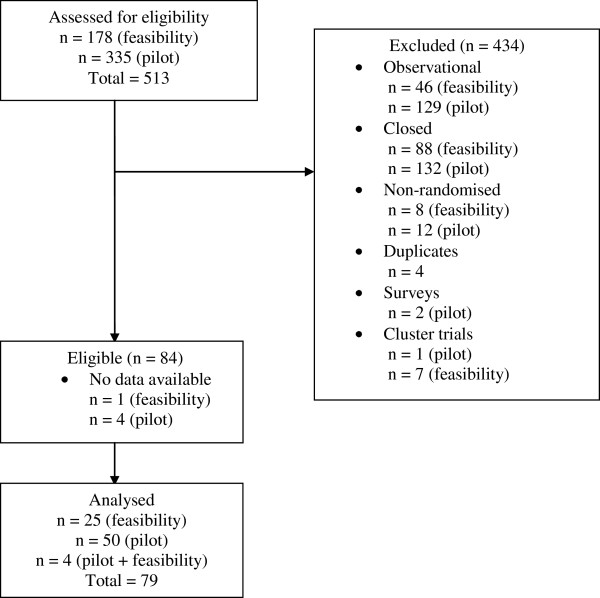
Background: There is little published guidance as to the sample size required for a pilot or feasibility trial despite the fact that a sample size justification is a key element in the design of a trial. A sample size justification should give the minimum number of participants needed in order to meet the objectives of the trial. This paper seeks to describe the target sample sizes set for pilot and feasibility randomised controlled trials, currently running within the United Kingdom. Methods: Data were gathered from the United Kingdom Clinical Research Network (UKCRN) database using the search terms ‘pilot’ and ‘feasibility’. From this search 513 studies were assessed for eligibility of which 79 met the inclusion criteria. Where the data summary on the UKCRN Database was incomplete, data were also gathered from: the International Standardised Randomised Controlled Trial Number (ISRCTN) register; the clinicaltrials.gov website and the website of the funders. For 62 of the trials, it was necessary to contact members of the research team by email to ensure completeness. Results: Of the 79 trials analysed, 50 (63.3%) were labelled as pilot trials, 25 (31.6%) feasibility and 14 were described as both pilot and feasibility trials. The majority had two arms (n = 68, 86.1%) and the two most common endpoints were continuous (n = 45, 57.0%) and dichotomous (n = 31, 39.2%). Pilot trials were found to have a smaller sample size per arm (median = 30, range = 8 to 114 participants) than feasibility trials (median = 36, range = 10 to 300 participants). By type of endpoint, across feasibility and pilot trials, the median sample size per arm was 36 (range = 10 to 300 participants) for trials with a dichotomous endpoint and 30 (range = 8 to 114 participants) for trials with a continuous endpoint. Publicly funded pilot trials appear to be larger than industry funded pilot trials: median sample sizes of 33 (range = 15 to 114 participants) and 25 (range = 8 to 100 participants) respectively. Conclusion: All studies should have a sample size justification. Not all studies however need to have a sample size calculation. For pilot and feasibility trials, while a sample size justification is important, a formal sample size calculation may not be appropriate. The results in this paper describe the observed sample sizes in feasibility and pilot randomised controlled trials on the UKCRN Database.
Overview
The claims and statistics of this paper haven’t been checked yet.
Free: it reads the open-access text and checks the first 5 claims that cite a source we can check. Create a free account to check every claim.
Integrity signals
Registry
Cites
Statistics
Figures
Verification
Claims the paper makes
The claims and statistics of this paper haven’t been checked yet.
Free: it reads the open-access text and checks the first 5 claims that cite a source we can check. Create a free account to check every claim.
Claims other papers make about this one
Each is checked against this paper’s own text: does it say what the citing paper says it does?
The source backs part of the claim, not all of it — or backs it for a different population, condition or comparison.
In the citing paper
“More recently, research has begun to explore the differences between internal and external pilot studies and their contribution to main trials, and the appropriateness of pilot and feasibility studies for estimating the sample size.”
From Role of feasibility and pilot studies in randomised controlled trials: a cross-sectional study (2018) · cites this paper as [12]
Experimental — accuracy not yet measuredThe source backs part of the claim, not all of it — or backs it for a different population, condition or comparison.
In the citing paper
“Current recommendations for sample sizes of pilot/feasibility studies vary, have a single rather than a multi-criterion basis, and do not necessarily link directly to formal progression criteria.”
From Determining sample size for progression criteria for pragmatic pilot RCTs: the hypothesis test strikes back! (2021) · cites this paper as [16]
Experimental — accuracy not yet measuredThe source backs part of the claim, not all of it — or backs it for a different population, condition or comparison.
In the citing paper
“When looking at hybrid human delivered pilot studies, a sample size of 40 is on par with comparable research [105, 106].”
From Personalized machine learning guided intervention for optimizing lifestyle behaviors in depression: a pilot study (2026) · cites this paper as [106]
Experimental — accuracy not yet measuredThe source backs part of the claim, not all of it — or backs it for a different population, condition or comparison.
In the citing paper
“Feasibility studies are not designed to evaluate effects, and there is no definitive approach to estimating their correct sample size [49].”
From Changes in pain, daily occupations, lifestyle, and health following an occupational therapy lifestyle intervention: a secondary analysis from a feasibility study in patients with chronic high-impact pain (2024) · cites this paper as [49]
Experimental — accuracy not yet measuredThe source backs part of the claim, not all of it — or backs it for a different population, condition or comparison.
In the citing paper
“There is no consensus but recommendations vary from 10 to 12 per group through to 60–75 per group depending on the main objective of the study.”
From Determining sample size for progression criteria for pragmatic pilot RCTs: the hypothesis test strikes back! (2021) · cites this paper as [16]
Experimental — accuracy not yet measured
9 more claims about this paper
Create a free account to see every claim other papers make about this one.
Self-check
Percentages, sums and reported differences re-computed from the paper’s own numbers.
The self-check needs the paper’s full text.
Citations
Cites
A tutorial on pilot studies: the what, why and how
Thabane, L., Ma, J., Chu, R., Cheng, J., Ismaila, A., Rios, L. P., Robson, R., Thabane, M., Giangregorio, L., & Goldsmith, C. H. (2010) · BMC Medical Research Methodology · doi:10.1186/1471-2288-10-1 · Cited by 3,384
Sample size of 12 per group rule of thumb for a pilot study
Julious, S. A. (2005) · Pharmaceutical Statistics · doi:10.1002/pst.185 · Cited by 3,068 · cited 6×
“Julious [9] recommends a minimum sample size of 12 per group as a rule of thumb and justifies this based on rationale about feasibility and precision about the mean and variance;”
BackgroundInfluentialSelf-citationDesign and analysis of pilot studies: recommendations for good practice
Lancaster, G. A., Dodd, S., & Williamson, P. R. (2004) · Journal of Evaluation in Clinical Practice · doi:10.1111/j..2002.384.doc.x · Cited by 2,572 · cited 3×
“There is the additional issue that setting the sample size too high may lead to a preventable failure to reach the recruitment target [12].”
BackgroundResultConsiderations in determining sample size for pilot studies
Hertzog, M. A. (2008) · Research in Nursing & Health · doi:10.1002/nur.20247 · Cited by 2,337 · cited 2×
“Hertzog [6] recommends the Julious and Patterson [7] method of using confidence intervals for a given precision constructed around the anticipated value to set the sample size;”
BackgroundMethodWhat is a pilot or feasibility study? A review of current practice and editorial policy
Arain, M., Campbell, M. J., Cooper, C. L., & Lancaster, G. A. (2010) · BMC Medical Research Methodology · doi:10.1186/1471-2288-10-67 · Cited by 1,483 · cited 9×
“[2] concluded that pilot trials are poorly reported and that the authors are often not explicit as to the purpose of their pilot trial.”
BackgroundResultInfluentialSim, J., & Lewis, M. (2012) · Journal of Clinical Epidemiology · doi:10.1016/j.jclinepi.2011.07.011 · Cited by 1,036 · cited 6×
“Continuous 6 43 (15, 60) [10, 60] However, Arain et al.”
BackgroundInfluentialOn the use of a pilot sample for sample size determination
Browne, R. H. (1995) · Statistics in Medicine · doi:10.1002/sim.4780141709 · Cited by 1,007 · cited 2×
“Trial description Pilot 50 30 (20, 45) [8, 114]”
BackgroundRecommendations for Planning Pilot Studies in Clinical and Translational Research
Moore, C. G., Carter, R. E., Nietert, P. J., & Stewart, P. W. (2011) · Clinical and Translational Science · doi:10.1111/j.1752-8062.2011.00347.x · Cited by 661 · cited 2×
“[16] highlighted that it is not unusual for study proposal reviewers to come across a statement such as “No sample size justification is needed because of the pilot nature of the proposed study”, but they state that pilot trials are not exempt from needing a clear rationale for the number of patients to be included.”
BackgroundStatistics and ethics in medical research: III How large a sample?
Altman, D. G. (1980) · BMJ · doi:10.1136/bmj.281.6251.1336 · Cited by 580 · cited 1×
“If a study is too large it may be judged to be unethical as participants may be unnecessarily exposed to risks and burdens [11].”
BackgroundCampbell, M. J., Julious, S. A., & Altman, D. G. (1995) · BMJ · doi:10.1136/bmj.311.7013.1145 · Cited by 476
Self-citation
Research works printed but not linked: 1
- 14. SPSS Inc: Released 2009. PASW statistics for windows, version 18.0. Chicago: SPSS Inc; 2009.
Cited by
Guidance for conducting feasibility and pilot studies for implementation trials
Pearson, N., Naylor, P.-J., Ashe, M. C., Fernandez, M., Yoong, S. L., & Wolfenden, L. (2020) · Pilot and Feasibility Studies · doi:10.1186/s40814-020-00634-w · Cited by 475
Can digital technology enhance social connectedness among older adults? A feasibility study
Barbosa Neves, B., Franz, R., Judges, R., Beermann, C., & Baecker, R. (2019) · Journal of Applied Gerontology · doi:10.1177/0733464817741369 · Cited by 384
Lewis, M., Bromley, K., Sutton, C. J., McCray, G., Myers, H. L., & Lancaster, G. A. (2021) · Pilot and Feasibility Studies · doi:10.1186/s40814-021-00770-x · Cited by 330
Rhee, C. M., Ahmadi, S., Kovesdy, C. P., & Kalantar‐Zadeh, K. (2018) · Journal of Cachexia, Sarcopenia and Muscle · doi:10.1002/jcsm.12264 · Cited by 234
Role of feasibility and pilot studies in randomised controlled trials: a cross-sectional study
Blatch-Jones, A. J., Pek, W., Kirkpatrick, E., & Ashton-Key, M. (2018) · BMJ Open · doi:10.1136/bmjopen-2018-022233 · Cited by 139
Beets, M. W., Weaver, R. G., Ioannidis, J. P. A., Geraci, M., Brazendale, K., Decker, L., Okely, A. D., Lubans, D., van Sluijs, E., Jago, R., et al. (2020) · International Journal of Behavioral Nutrition and Physical Activity · doi:10.1186/s12966-020-0918-y · Cited by 138
Totton, N., Lin, J., Julious, S. A., Chowdhury, M., & Brand, A. (2023) · Pilot and Feasibility Studies · doi:10.1186/s40814-023-01416-w · Cited by 188
Self-citationYeung, L.-F., Ockenfeld, C., Pang, M., Wai, H., Soo, O.-Y., Li, S.-W., & Tong, R. K. (2018) · Journal of NeuroEngineering and Rehabilitation · doi:10.1186/s12984-018-0394-7 · Cited by 152
“Taking into consideration ethical concerns and available resources [35], we referenced the sample size based on the single-arm pilot study of the Anklebot (n = 8) [25], which involved similar functional training at ankle except the training was carried out in seated position.”
MethodA Pilot Study: Vital Methodological Issues
Hazzi, O. A., & Maldaon, I. (2015) · Verslas teorija ir praktika · doi:10.3846/btp.2015.437 · Cited by 280
Spiering, W., Williams, B., der Heyden, J. V., van Kleef, M. E. A. M., Lo, R. H., Versmissen, J., Moelker, A. D., Kroon, A. A., Reuter, H., Ansel, G. M., et al. (2017) · The Lancet · doi:10.1016/s0140-6736(17)32337-1 · Cited by 127
Talan, D. A., Saltzman, D. J., Mower, W. R., Krishnadasan, A., Jude, C. M., Amii, R. N., DeUgarte, D. A., Wu, J. X., Pathmarajah, K., Morim, A., et al. (2016) · Annals of Emergency Medicine · doi:10.1016/j.annemergmed.2016.08.446 · Cited by 120
Beets, M. W., von Klinggraeff, L., Weaver, R. G., Armstrong, B., & Burkart, S. A. (2021) · Pilot and Feasibility Studies · doi:10.1186/s40814-021-00909-w · Cited by 130
“Prior reviews indicate the median sample size of pilot studies is ~ 30 participants per arm [15].”
Seo, Y. B., Lee, J., Kim, Y. K., Lee, S. S., Lee, J.-A., Kim, H. Y., Uh, Y., Kim, H.-S., & Song, W. (2017) · BMC Infectious Diseases · doi:10.1186/s12879-017-2502-x · Cited by 124
“Accordingly, the sample size was only 33 participants in each group except the cefepime group; however, this is a common pilot sample study size for a two-arm trial [39].”
Mahfoud, F., Renkin, J., Sievert, H., Bertog, S., Ewen, S., Böhm, M., Lengelé, J.-P., Wojakowski, W., Schmieder, R., van der Giet, M., et al. (2020) · JACC: Cardiovascular Interventions · doi:10.1016/j.jcin.2019.10.048 · Cited by 106
“The number of patients needed to establish trial device feasibility was informed by the sample sizes in similar feasibility studies assessing continuous endpoints (14).”
BackgroundWoolf, C., Caute, A., Haigh, Z., Galliers, J., Wilson, S., Kessie, A., Hirani, S., Hegarty, B., & Marshall, J. (2016) · Clinical Rehabilitation · doi:10.1177/0269215515582074 · Cited by 104
Muke, S. S., Tugnawat, D., Joshi, U., Anand, A., Khan, A., Shrivastava, R., Singh, A., Restivo, J. L., Bhan, A., Patel, V., et al. (2020) · International Journal of Environmental Research and Public Health · doi:10.3390/ijerph17176368 · Cited by 103
“This sample size was considered sufficient for achieving our primary goal of assessing acceptability and feasibility of the training programs [42] and was also selected to ensure we had the minimum number of participants for in-person instruction in the face-to-face training (n = 15).”
BackgroundCormack, F., McCue, M., Taptiklis, N., Skirrow, C., Glazer, E., Panagopoulos, E., van Schaik, T. A., Fehnert, B., King, J., & Barnett, J. H. (2019) · JMIR Mental Health · doi:10.2196/12814 · Cited by 79
“A recruitment target of 30 was set for this study, commensurate with usual practice for feasibility studies [33].”
Mair, J. L., Hayes, L. D., Campbell, A. K., Buchan, D. S., Easton, C., & Sculthorpe, N. F. (2022) · JMIR Formative Research · doi:10.2196/34662 · Cited by 90
“As this was a feasibility study, a sample size calculation was not necessary [36].”
Mone, F., Mulcahy, C., McParland, P., Breathnach, F., Downey, P., McCormack, D., Culliton, M., Stanton, A. V., Cody, F., Morrison, J. J., et al. (2018) · BMJ Open · doi:10.1136/bmjopen-2018-022056 · Cited by 77
Morphine Versus Clonidine for Neonatal Abstinence Syndrome
Bada, H. S., Sithisarn, T., Gibson, J., Garlitz, K. L., Caldwell, R., Capilouto, G. J., Li, Y., Leggas, M. L., & Breheny, P. J. (2015) · PEDIATRICS · doi:10.1542/peds.2014-2377 · Cited by 82
Scott, W., Chilcot, J., Guildford, B., Daly‐Eichenhardt, A., & McCracken, L. M. (2018) · European Journal of Pain · doi:10.1002/ejp.1236 · Cited by 69
“However, a sample of 30–36 participants per arm has been suggested based on the median sample size identified in a systematic review of feasibility studies (Billingham et al., 2013).”
BackgroundFairclough, S. J., McGrane, B., Sanders, G., Taylor, S. L., Owen, M. B., & Curry, W. B. (2016) · BMC Public Health · doi:10.1186/s12889-016-3550-7 · Cited by 78
“Sample size was not determined by a formal calculation as this was deemed unnecessary for a pilot study of this nature [26, 27].”
BackgroundBressington, D. T., Mui, J. H. C., Yu, C. T. K., Leung, S. F., Cheung, K., Wu, C. S. T., Bollard, M., & Chien, W. T. (2019) · Journal of Affective Disorders · doi:10.1016/j.jad.2019.01.030 · Cited by 82
“Our sample size estimation was based on previous literature that recommends feasibility studies adopt sample sizes of between 24 and 50 (Sim and Lewis, 2012; Julious, 2005) and a review of feasibility studies registered on the United Kingdom Clinical Research Network, which reported that the median sample size for stu…”
BackgroundMethodAfshar, K., Feichtner, A., Boyd, K. J., Murray, S. A., Jünger, S., Wiese, B., Schneider, N., & Müller-Mundt, G. (2018) · BMC Palliative Care · doi:10.1186/s12904-018-0283-7 · Cited by 63
“With 28 participants the sample size in this pilot study is close to these recommendations [25, 26].”
ResultLaser Acupuncture for Neonatal Abstinence Syndrome: A Randomized Controlled Trial
Raith, W., Schmölzer, G. M., Resch, B., Reiterer, F., Avian, A., Köestenberger, M., & Urlesberger, B. (2015) · PEDIATRICS · doi:10.1542/peds.2015-0676 · Cited by 73
Sharma, S., Jensen, M. P., Moseley, G. L., & Abbott, J. H. (2019) · BMJ Open · doi:10.1136/bmjopen-2018-026874 · Cited by 61
Cooper, C. L., Whitehead, A., Pottrill, E., Julious, S. A., & Walters, S. J. (2018) · Clinical Trials · doi:10.1177/1740774517752113 · Cited by 59
“The sample size calculation is an essential step in the design of a RCT.(5,6) An important aspect of a sample size calculation is that it provides the researcher with an estimate of the number of evaluable participants required in the dataset at the end of the study in order to investigate the study hypothesis with th…”
BackgroundInfluentialSelf-citationHackett, K., Lehman, S. M., Divers, R. M., Ambrogi, M., Gomes, L., Tan, C. C., & Giovannetti, T. (2020) · Neuropsychological Rehabilitation · doi:10.1080/09602011.2020.1794909 · Cited by 67
“A relatively small sample size (N = 10) was recruited for this pilot study, yet the sample size range falls within that of the typical pilot or phase 0 studies involving preliminary assessment of an experimental device within clinical populations (Billingham et al., 2013; Marchetti & Schellens, 2007), and also suffice…”
BackgroundMethodInfluentialZhang, H., Jiang, Y., Nguyen, H. D., Poo, D. C. C., & Wang, W. (2017) · Health and Quality of Life Outcomes · doi:10.1186/s12955-017-0623-y · Cited by 57
“[36] recommended that the sample size for a pilot study should be 36 per group.”
BackgroundGrebosz‐Haring, K., & Thun‐Hohenstein, L. (2018) · Heliyon · doi:10.1016/j.heliyon.2018.e01014 · Cited by 67
“[40, 72]), the target sample size of 20 patients per intervention (i.”
BackgroundPractical guide to sample size calculations: an introduction
Flight, L., & Julious, S. A. (2015) · Pharmaceutical Statistics · doi:10.1002/pst.1709 · Cited by 61
Self-citationCantillo-Negrete, J., Carino-Escobar, R. I., Carrillo‐Mora, P., Rodríguez-Barragán, M. A., Hernández-Arenas, C., Quinzaños-Fresnedo, J., Hernandez-Sanchez, I. R., Galicia-Alvarado, M. A., Miguel‐Puga, J. A., & Arias-Carrión, Ó. (2021) · Frontiers in Human Neuroscience · doi:10.3389/fnhum.2021.656975 · Cited by 63
Kaur, N., Figueiredo, S. M., Bouchard, V., Moriello, C., & Mayo, N. E. (2017) · Clinical Rehabilitation · doi:10.1177/0269215517692129 · Cited by 67
Platelet-rich plasma (PRP) therapy for knee arthritis: a feasibility study in primary care
Glynn, L. G., Mustafa, A., Casey, M., Krawczyk, J., Blom, J., Galvin, R., Hannigan, A., Dunne, C. P., Murphy, A. W., & Mallen, C. D. (2018) · Pilot and Feasibility Studies · doi:10.1186/s40814-018-0288-2 · Cited by 51
Serfaty, M., Armstrong, M., Vickerstaff, V., Davis, S., Gola, A., McNamee, P., Omar, R. Z., King, M., Tookman, A., Jones, L., et al. (2019) · Psycho-Oncology · doi:10.1002/pon.4960 · Cited by 50
“5) Gender, female 31 (74) 14 (70) 17 (77) Ethnicity, White 34 (81) 17 (85) 17 (77) Marital status Married/cohabiting 19 (46) 8 (40) 11 (50) Divorced 5 (12) 3 (15) 2 (9) Widowed 3 (7) 3 (15) 0 (0) Single 15 (36) 6 (30) 9 (41) Highest level of education Degree or above 19 (45) 8 (40) 11 (52) Diploma or equivalent 9 (21)…”
Thomas, C., Otis, N. G., Abraham, J., Markus, H. R., & Walton, G. M. (2020) · Proceedings of the National Academy of Sciences · doi:10.1073/pnas.1917046117 · Cited by 66
“Because of limited budgets and the need to move quickly, pilots are often very small: N = 30 is a commonly recommended sample size per condition (47, 48).”
BackgroundSleep disorders in breast cancer survivors
Otte, J. L., Davis, L. L., Carpenter, J. S., Krier, C., Skaar, T. C., Rand, K. L., Weaver, M. T., Landis, C. A., Chernyak, Y., & Manchanda, S. (2016) · Supportive Care in Cancer · doi:10.1007/s00520-016-3247-6 · Cited by 56
“The 38 observations available for this study is consistent with literature reports of a median pilot or feasibility study sample size of 30 [40] and recommendations for minimum sample size of 24 [41].”
MethodTexting to Increase Adolescent Physical Activity: Feasibility Assessment
Thompson, D., Cantu, D., Ramirez, B., Cullen, K. W., Baranowski, T., Mendoza, J., Anderson, B., Jago, R., Rodgers, W., & Liu, Y. (2016) · American Journal of Health Behavior · doi:10.5993/ajhb.40.4.9 · Cited by 48
Determining sample size for pilot trials: a tutorial
Ying, X., Freedland, K. E., Powell, L. H., Stuart, E. A., Ehrhardt, S., & Mayo‐Wilson, E. (2025) · BMJ · doi:10.1136/bmj-2024-083405 · Cited by 77
“21 In this tutorial, we explain how investigators can determine and justify sample sizes for pilot trials.”
Whitaker, A. K., Quinn, M. T., Munroe, E. S., Martins, S. L., Mistretta, S. Q., & Gilliam, M. L. (2016) · Patient Education and Counseling · doi:10.1016/j.pec.2016.05.011 · Cited by 46
“While there is a lack of formal guidance on sample size estimation for pilot trials, 30 per arm is within standard practice [19].”
BackgroundAggarwal, M., Hutchison, B. G., Abdelhalim, R., & Baker, G. R. (2023) · Milbank Quarterly · doi:10.1111/1468-0009.12674 · Cited by 66
Using Facebook in a Healthy Lifestyle Intervention: Feasibility and Preliminary Efficacy
Ling, J., Robbins, L. B., Zhang, N., Kerver, J. M., Lyons, H., Wieber, N., & Zhang, M. (2018) · Western Journal of Nursing Research · doi:10.1177/0193945918756870 · Cited by 49
Connell, L., McMahon, N. E., Simpson, L. A., Watkins, C. L., & Eng, J. J. (2014) · Archives of Physical Medicine and Rehabilitation · doi:10.1016/j.apmr.2014.05.025 · Cited by 48
Schwartz, D. G., Ataiants, J., Roth, A. M., Marcu, G. M., Yahav, I., Cocchiaro, B. F., Khalemsky, M., & Lankenau, S. E. (2020) · EClinicalMedicine · doi:10.1016/j.eclinm.2020.100474 · Cited by 51
“The sample size for this observational feasibility study was determined by the sample sizes of other feasibility studies in the literature and resources provided by the grant mechanism for study staff and participant-related costs [30].”
MethodTaraldsen, K., Mikolaizak, A. S., Maier, A. B., Boulton, E., Aminian, K., Ancum, J. M. V., Bandinelli, S., Becker, C., Bergquist, R., Chiari, L., et al. (2019) · BMJ Open · doi:10.1136/bmjopen-2018-023526 · Cited by 49
Improving patients’ experience and outcome of total joint replacement: the RESTORE programme
Blom, A. W., Artz, N. J., Beswick, A. D., Burston, A., Dieppe, P. A., Elvers, K. T., Gooberman‐Hill, R., Horwood, J. P., Jepson, P., Johnson, E. C., et al. (2016) · Programme Grants for Applied Research · doi:10.3310/pgfar04120 · Cited by 53
“The average sample size for feasibility studies assessing trial design and the acceptability of interventions is approximately 60 patients.(553) A minimum of 80 patients (40 per arm) was deemed an appropriate sample size for this trial to allow an estimate of recruitment and retention rates and explore the acceptabili…”
BackgroundImam, B., Miller, W. C., Finlayson, H. C., Eng, J. J., & Jarus, T. (2015) · Clinical Rehabilitation · doi:10.1177/0269215515623601 · Cited by 41
Paterson, C. C., Primeau, C., & Nabi, G. (2018) · European Journal of Oncology Nursing · doi:10.1016/j.ejon.2018.10.007 · Cited by 38
“However, we carefully considered the optimum sample size justification for the pilot study using guidance from (Billingham et al., 2013; Whitehead et al., 2016).”
MethodRollo, M. E., Baldwin, J. N., Hutchesson, M., Aguiar, E. J., Wynne, K., Young, A., Callister, R., Haslam, R., & Collins, C. E. (2020) · International Journal of Environmental Research and Public Health · doi:10.3390/ijerph17197115 · Cited by 39
“As this was a pilot study, a power calculation was not performed to determine sample size [26].”
MethodFeasibility and Acceptability of an Asthma App to Monitor Medication Adherence: Mixed Methods Study
Jácome, C. I. O., Almeida, R., Pereira, A. M., Amaral, R., Mendes, S., Alves‐Correia, M., Vidal, C., Freire, S., Méndez‐Brea, P., Araújo, L. M., et al. (2021) · JMIR mhealth and uhealth · doi:10.2196/26442 · Cited by 45
“Centers were asked to recruit at least 2 patients as a minimum of 20 adolescents and 20 adults were targeted [19,20].”
Raith, W., Marschik, P. B., Sommer, C., Maurer-Fellbaum, U., Amhofer, C., Avian, A., Löwenstein, E., Soral, S., Müller, W. D., Einspieler, C., et al. (2015) · BMC Complementary and Alternative Medicine · doi:10.1186/s12906-016-0984-5 · Cited by 50
“subject withdrawal or other unforeseen postenrollment exclusions from the study [54, 55].”
BackgroundMethodFerrando, C., Tusman, G., Suárez-Sipmann, F., León, I., Pozo, N., Carbonell, J., Puig, J., Pastor, E., Gracia, E., Gutiérrez, A., et al. (2018) · Acta Anaesthesiologica Scandinavica · doi:10.1111/aas.13082 · Cited by 38
Efficacy of a Breastfeeding Pain Self-Management Intervention: A Pilot Randomized Controlled Trial
Lucas, R., Zhang, Y., Walsh, S. J., Evans, H., Young, E. E., & Starkweather, A. R. (2019) · Nursing Research · doi:10.1097/nnr.0000000000000336 · Cited by 45
Worobetz, A., Retief, P. J., Loughran, S. T., Walsh, J. C., Casey, M., Hayes, P., Bengoechea, E. G., O’Regan, A., Woods, C. B., Kelly, D., et al. (2020) · BMC Medical Education · doi:10.1186/s12909-020-02097-2 · Cited by 44
“A formal sample size for this feasibility study was not calculated [25].”
BackgroundCarter, S. E., Draijer, R., Maxwell, J. D., Morris, A. S., Pedersen, S., Graves, L., Thijssen, D. H. J., & Hopkins, N. D. (2020) · International Journal of Environmental Research and Public Health · doi:10.3390/ijerph17238942 · Cited by 42
“There is no formal requirement to conduct a sample size calculation for feasibility studies [51,52].”
BackgroundEvans, H. E. L., Galvao, D. A., Forbes, C. C., Girard, D., Vandelanotte, C., Newton, R. U., Vincent, A. D., Wittert, G., Kichenadasse, G., Chambers, S. K., et al. (2021) · Cancers · doi:10.3390/cancers13235925 · Cited by 35
“This sample size was considered sufficient, based on previous similar pilot studies to reasonably estimate performance against our prespecified criteria for success [57,58].”
BackgroundMethodVaughan, E. M., Johnston, C. A., Cardenas, V. J., Moreno, J. P., & Foreyt, J. P. (2017) · The Science of Diabetes Self-Management and Care · doi:10.1177/0145721717737742 · Cited by 40
“In addition, published literature has shown high attrition rates in low-income settings.(52,53)”
BackgroundYu, L., Kioskli, K., & McCracken, L. M. (2021) · The Journal of Pain · doi:10.1016/j.jpain.2021.02.011 · Cited by 35
Schramm, E., Elsaesser, M., Jenkner, C., Hautzinger, M., & Herpertz, S. C. (2024) · World Psychiatry · doi:10.1002/wps.21204 · Cited by 34
“Following Billingham et al 44 , a sample size of 30 patients per group was regarded as reasonable, resulting in a total of 60 patients.”
BackgroundAmbulatory Oxygen in Fibrotic Interstitial Lung Disease
Khor, Y. H., Holland, A. E., Goh, N. S. L., Miller, B., Vlahos, R., Bozinovski, S., Lahham, A., Glaspole, I., & McDonald, C. F. (2020) · CHEST Journal · doi:10.1016/j.chest.2020.01.049 · Cited by 37
A feasibility study of an unsupervised, pre‐operative exercise program for adults with lung cancer
Finley, D. J., Fay, K. A., Batsis, J. A., Stevens, C. J., Sacks, O. A., Darabos, C., Cook, S. B., & Lyons, K. D. (2020) · European Journal of Cancer Care · doi:10.1111/ecc.13254 · Cited by 41
Walshe, C., Roberts, D., Calman, L. A., Appleton, L., Croft, R., Skevington, S. M., Lloyd‐Williams, M., Grande, G., & Algorta, G. P. (2020) · BMC Palliative Care · doi:10.1186/s12904-020-00631-z · Cited by 41
“A sample size of 33 patients per arm of the trial was estimated to be required based on feasibility study literature [26], and attrition from our past qualitative study of 0% at 4 weeks and 7.”
MethodSharma, S., Jensen, M. P., Moseley, G. L., & Abbott, J. H. (2018) · BMJ Open · doi:10.1136/bmjopen-2018-022423 · Cited by 33
Couper, K., Quinn, T., Booth, K., Lall, R., Devrell, A., Orriss, B., Regan, S. E., Yeung, J., & Perkins, G. D. (2020) · Resuscitation · doi:10.1016/j.resuscitation.2020.09.033 · Cited by 39
CE: Defining and Understanding Pilot and Other Feasibility Studies
Morris, N. S., & Rosenbloom, D. A. (2017) · AJN American Journal of Nursing · doi:10.1097/01.naj.0000513261.75366.37 · Cited by 51
Morris, J. H., Kelly, C., Joice, S. A., Kroll, T., Mead, G. E., Donnan, P. T., Toma, M., & Williams, B. (2017) · Disability and Rehabilitation · doi:10.1080/09638288.2017.1370499 · Cited by 33
“The sample size, of 40 participants per group, was based on guidance that a sample of that size was adequate to provide fairly accurate estimates of direction and magnitude of effects and variability [21].”
BackgroundCook, J. A., Julious, S. A., Sones, W. R., Hampson, L. V., Hewitt, C. E., Berlin, J. A., Ashby, D., Emsley, R., Fergusson, D. A., Walters, S. J., et al. (2019) · Health Technology Assessment · doi:10.3310/hta23600 · Cited by 43
Self-citationRobbins, L. B., Ling, J., Clevenger, K. A., Voskuil, V. R., Wasilevich, E. A., Kerver, J. M., Kaciroti, N., & Pfeiffer, K. A. (2018) · The Journal of School Nursing · doi:10.1177/1059840518791290 · Cited by 35
A descriptive study of samples sizes used in agreement studies published in the PubMed repository
Han, O., Tan, H. W., Julious, S. A., Sutton, L., Jacques, R., Lee, E. C., Lewis, J., & Walters, S. J. (2022) · BMC Medical Research Methodology · doi:10.1186/s12874-022-01723-5 · Cited by 44
“The finding of larger sample sizes for categorical compared to continuous outcomes is consistent with research in the context of pilot studies [8] and definitive outcome trials, as inferred from the target standardised effect sizes reported by Rothwell et al.”
ResultSelf-citationHelms, J., Curtiaud, A., Séverac, F., Tschirhart, M., Merdji, H., Bourdin, M., Contant, G., Depasse, F., Rjeily, R. A., Sattler, L., et al. (2024) · Anesthesiology · doi:10.1097/aln.0000000000004980 · Cited by 30
Carr, E., Wallace, J. E., Pater, R., & Gross, D. P. (2019) · International Journal of Environmental Research and Public Health · doi:10.3390/ijerph16081472 · Cited by 42
“The average sample size for detecting the occurrence of a problem in a feasibility or pilot study has been determined to be 30 participants per group [35] and a minimum of 30 participants is reasonable as a starting point for pre-tests of questionnaires [36].”
BackgroundBenfield, J. K., Hedstrom, A., Everton, L. F., Bath, P. M., & England, T. J. (2023) · Journal of Oral Rehabilitation · doi:10.1111/joor.13437 · Cited by 33
Juul, L., Pallesen, K. J., Bjerggaard, M., Nielsen, C., & Fjorback, L. O. (2020) · BMC Public Health · doi:10.1186/s12889-020-08470-6 · Cited by 29
Metzemaekers, J., Haazebroek, P., Smeets, M. J. G. H., English, J., Blikkendaal, M. D., Twijnstra, A. R. H., Adamson, G. D., Keckstein, J., & Jansen, F. W. (2020) · Human Reproduction Open · doi:10.1093/hropen/hoaa053 · Cited by 33
“Given the overarching aim of this proof of concept study (explore the correctness and usability of digital classification), a power calculation was not conducted, which is common practice amongst pilot studies (Billingham et al., 2013).”
Jaffar, A., Sidik, S. M., Foo, C. N., Muhammad, N. A., Manaf, R. A., & Suhaili, N. (2022) · International Journal of Environmental Research and Public Health · doi:10.3390/ijerph19042332 · Cited by 38
“Previous analysis suggested a minimum of 12–30 participants per group as an appropriate sample in feasibility studies [33] and pilot studies [34].”
BackgroundUzzaman, N., Jackson, T., Uddin, A., Rowa‐Dewar, N., Chisti, M. J., Habib, G. M., Pinnock, H., Collaborators, R., Campbell, H., Cunningham, S., et al. (2020) · BMC Family Practice · doi:10.1186/s12875-020-01270-2 · Cited by 35
Lim, J. E., Wong, W. T., Teh, T. A., Lim, S. H., Allen, J. C., Quah, J. H. M., Malhotra, R., & Tan, N. C. (2021) · Frontiers in Aging Neuroscience · doi:10.3389/fnagi.2020.604670 · Cited by 33
“25 participants with MoCA score ≥ 26 will be enrolled in each of the following 10-year age groups to determine the VR performance: A sample size of 12–30 individuals is recommended for feasibility studies (Billingham et al., 2013).”
Houchen‐Wolloff, L., Gardiner, N., Devi, R., Robertson, N., Jolly, K. B., Marshall, T. P., Furze, G., Doherty, P., Szczepura, A. K., powell, J. A., et al. (2018) · Open Heart · doi:10.1136/openhrt-2018-000860 · Cited by 30
“Furthermore, a recent audit of UK feasibility studies found that the median sample size for a two-arm trial was 36 and 30 per arm, respectively, for dichotomous and continuous endpoints.(40)”
Kaur, H., Schneider, J. M., & Orrell, M. W. (2021) · Clinical Interventions in Aging · doi:10.2147/cia.s323994 · Cited by 34
Smith, Y., Louw, Q. A., & Brink, Y. (2016) · BMC Pediatrics · doi:10.1186/s12887-016-0736-1 · Cited by 31
Mone, F., Mulcahy, C., McParland, P., Stanton, A. V., Culliton, M., Downey, P., McCormack, D., Tully, E. C., Dicker, P., Breathnach, F., et al. (2016) · Contemporary Clinical Trials · doi:10.1016/j.cct.2016.07.003 · Cited by 54
“As the proposed study is determining the feasibility of such a study 500 subjects are more than adequate as literature dictates that 3% of the sample required for a substantive study with a primary outcome of reduction in pre-eclampsia (n=450) [22].”
Christopher, M., Bowen, S., & Witkiewitz, K. (2020) · Trials · doi:10.1186/s13063-020-4165-y · Cited by 23
Bannell, D. J., France-Ratcliffe, M., Buckley, B. J. R., Crozier, A., Davies, A. P., Hesketh, K. L., Jones, H., Cocks, M., Sprung, V. S., & on behalf of the MOTIVATE Team (2023) · DIGITAL HEALTH · doi:10.1177/20552076231183552 · Cited by 25
“Such a sample size is higher than the median value for pilot studies (36 participants per arm) reported in an audit of pilot and feasibility trials registered in the UK clinical research network.(37) Sample sizes between 24 and 50 have been recommended for feasibility trials.”
BackgroundPicariello, F., Moss-Morris, R. E., Macdougall, I. C., Norton, S., Silva‐Gane, M. D., Farrington, K., Clayton, H., & Chilcot, J. (2018) · BMJ Open · doi:10.1136/bmjopen-2017-020842 · Cited by 35
Tan, N. C., Lim, J. E., Allen, J. C., Wong, W. T., Shen, M. L. W., Quah, J. H. M., Muthulakshmi, P., Teh, T. A., Lim, S. H., & Malhotra, R. (2022) · Frontiers in Psychology · doi:10.3389/fpsyg.2022.847590 · Cited by 34
Tadlock, M. D., Olson, E. J., Gasques, D., Champagne, R., Krzyżaniak, M., Belverud, S. A., Ravindra, V. M., Kerns, J., Choi, P. M., Deveraux, J., et al. (2022) · Surgery · doi:10.1016/j.surg.2022.06.034 · Cited by 26
Han, C. Y., Sharma, Y., Yaxley, A., Baldwin, C. E., Woodman, R. J., & Miller, M. (2023) · Clinical Interventions in Aging · doi:10.2147/cia.s405144 · Cited by 33
Fu, M. R., McTernan, M. L., Qiu, J. M., Ko, E., Yazicioglu, S., Axelrod, D., Guth, A. A., Fan, Z., Sang, A., Miaskowski, C. A., et al. (2021) · Integrative Cancer Therapies · doi:10.1177/15347354211026757 · Cited by 30
Rosenthal, J. L., Sauers‐Ford, H. S., Williams, J., Ranu, J., Tancredi, D. J., & Hoffman, K. R. (2021) · Academic Pediatrics · doi:10.1016/j.acap.2021.03.007 · Cited by 30
“24 This pilot trial was not powered to test the null hypothesis that virtual FCR is equivalent to standard of care, 25–27 as that effectiveness question will be answered in our future trial.”
BackgroundZhang, A., Weaver, A., Walling, E., Zebrack, B., Levin, N. J., Stuchell, B., & Himle, J. A. (2022) · Journal of Psychosocial Oncology · doi:10.1080/07347332.2021.2011530 · Cited by 30
Savaşan, A., & Çam, O. (2017) · Archives of Psychiatric Nursing · doi:10.1016/j.apnu.2017.01.002 · Cited by 35
“The value of 1− β showing the power of the study (0.80) was chosen as the least power value which could be obtained in clinical studies (Billingham, Whitehead, and Julious, 2013).”
MethodInfluentialNguyen, T., Morel-Kopp, M., Pepperell, D., Cumming, R., Hilmer, S., & Ward, C. (2017) · Aging Clinical and Experimental Research · doi:10.1007/s40520-017-0733-8 · Cited by 22
“This pilot study aims to recruit at least 30 participants in each treatment arm (anticoagulants/ no antithrombotics) [18, 19].”
MethodKioskli, K., Scott, W., Winkley, K., Godfrey, E., & McCracken, L. M. (2020) · Pain Medicine · doi:10.1093/pm/pnaa110 · Cited by 24
Brain Development in Fetuses of Mothers with Diabetes: A Case-Control MR Imaging Study
Denison, F. C., Macnaught, G., Semple, S. I. K., Terris, G., Walker, J., Anblagan, D., Serag, A., Reynolds, R. M., & Boardman, J. P. (2017) · American Journal of Neuroradiology · doi:10.3174/ajnr.a5118 · Cited by 26
“Statistical Analysis This was a feasibility study, so a formal power calculation for sample size was not required.(42,43) For normally distributed data, the mean and SD are reported, and for non-normally distributed data, the median and interquartile range are reported.”
MethodOdetunde, M. O., Binuyo, O. T., Maruf, F. A., Ayenowowon, S. O., Okonji, A. M., Odetunde, N. A., & Mbada, C. E. (2020) · International Journal of Telerehabilitation · doi:10.5195/ijt.2020.6321 · Cited by 29
Sarro, Y. D. S., Butzler, M. A., Sanogo, F. B., Kodio, O., Tolofoudié, M., Goumane, M., Baya, B., Diabaté, S., Diallo, I., Daniogo, D., et al. (2021) · EBioMedicine · doi:10.1016/j.ebiom.2021.103527 · Cited by 24
“As such, a sample size calculation was not needed, but most feasibility studies range between 10 and 300 participants.[24] In this particular study, a total of 190 participants were enrolled in 4 disease groups and a control group (Table 3).”
BackgroundA personalized mobile app for physical activity: An experimental mixed-methods study
Tong, H. L., Quiroz, J. C., Kocaballi, A. B., Ijaz, K., Coiera, E. W., Chow, C. K., & Laranjo, L. (2022) · Digital Health · doi:10.1177/20552076221115017 · Cited by 39
“Given that our main aim is to evaluate the feasibility of the be.well app and its unique personalization approach (and not to test ef fi cacy/effectiveness), we followed published heuristics 40,41”
MethodNg, P. E. M., Nicholas, S. O., Wee, S. L., Yau, T. Y., Chan, A., Chng, I., Yap, L. K. P., & Ng, T. P. (2021) · Scientific Reports · doi:10.1038/s41598-021-83408-5 · Cited by 24
Sari, Y. M., Burton, E., Lee, D. A., & Hill, K. (2023) · International Journal of Environmental Research and Public Health · doi:10.3390/ijerph20043397 · Cited by 25
“A sample size of 30 dyads of older people with dementia and their carers (i.e., 30 people living with dementia and 30 carers in total) was deemed sufficient to evaluate the feasibility of delivering the intervention, and determine the demand, implementation, practicality (including safety), adaptation and acceptabilit…”
MethodGordon, K., Dainty, K. N., Gray, C. S., DeLacy, J., Shah, A., Resnick, M., & Seto, E. (2020) · JMIR Nursing · doi:10.2196/22118 · Cited by 37
“A sample of 15 to 25 participants based on specific inclusion criteria was deemed to provide sufficient data to explore the feasibility of TM in a nurse-led clinic, including reaching saturation for the patient interview data [50,51].”
Background
Metadata
- Authors
- Billingham, S. A., Whitehead, A. L., & Julious, S. A.
- Affiliations
- University of Sheffield (GB)
- Corresponding author
- Julious, Steven A
- Venue
- BMC Medical Research Methodology
- Published
- 2013-08-20
- Volume
- 13
- Issue
- 1
- Pages
- 104-104
- ISSN
- 1471-2288 (ISSN-L)
- PMC
- PMC3765378
- OpenAlex
- W2027748528
- Semantic Scholar
- 725b8e2a2b7f8a509bf11fd9dc8782de9cb9966f
- Cited by
- 962
- References
- 14
- Citations by year
- 2026: 117 · 2025: 124 · 2024: 132 · 2023: 102 · 2022: 148 · 2021: 98 · 2020: 86 · 2019: 46 · 2018: 44 · 2017: 21 · 2016: 22 · 2015: 14 · 2014: 8
- FWCI
- 11.92
- Type
- journal article
- Language
- en
- Open access
- gold
- doi.org
- Licence
- Locations
- BMC Medical Research Methodology (publishedVersion, cc-by)
- Europe PMC (PubMed Central) (publishedVersion, cc-by)
- PubMed Central (publishedVersion, cc-by)
- PubMed (publishedVersion)
- White Rose Research Online (University of Leeds, The University of Sheffield, University of York) (acceptedVersion)
- ePrints Soton (University of Southampton) (acceptedVersion)
- Topics
- Physical Sciences › Mathematics › Statistics and Probability › Statistical Methods in Clinical Trials
- Social Sciences › Decision Sciences › Statistics, Probability and Uncertainty › Meta-analysis and systematic reviews
- Physical Sciences › Mathematics › Statistics and Probability › Statistical Methods in Epidemiology
- Keywords
- pilot trial, feasibility trial, sample size justification, sample size determination, randomized controlled trials, trial design, funding sources, ClinicalTrials.gov
- MeSH terms
- Feasibility Studies, United Kingdom, Humans, Pilot Projects, Randomized Controlled Trials as Topic, Databases, Factual, Sample Size, Biomedical Research
About these checks
Registry, retraction, Cites and statistics results are computed, not judged, with one exception: a printed reference that no index lists is read once by a model before it counts as a citation error. Claims are extracted by a model and kept only when their quote appears verbatim in the text; each cited source is then checked, with a model’s help, for whether it says what the claim relies on. Those verdicts can be wrong — read the claim’s quote and the cited source before relying on one.
Statistics and arithmetic are recomputed, not judged.
Confidence bands are shown only for fields calibrated on our annotated test set. None is calibrated yet, so no band is shown.
What counts as a claim ›How we measure confidence ›How we check this ›
Are you an author, or do you see a problem with this page? Request a review
Data sources
Bibliographic data: Semantic Scholar, OpenAlex, Crossref.
Contains information from the Semantic Scholar Academic Graph Datasets, made available under the ODC Attribution License (ODC-BY 1.0).
Semantic Scholar’s data is described in: Kinney, R., et al. (2023). The Semantic Scholar Open Data Platform. arXiv:2301.10140.
