

A standard procedure for creating a frailty index
Open accessThe DOI matches its Crossref record; 42 of the 43 references it cites were found in a registry or an index, and 1 are not checked yet; 8 of the 50 sources its claims cite were checked for support.
Abstract
Background: Frailty can be measured in relation to the accumulation of deficits using a frailty index. A frailty index can be developed from most ageing databases. Our objective is to systematically describe a standard procedure for constructing a frailty index. Methods: This is a secondary analysis of the Yale Precipitating Events Project cohort study, based in New Haven CT. Non-disabled people aged 70 years or older (n = 754) were enrolled and re-contacted every 18 months. The database includes variables on function, cognition, co-morbidity, health attitudes and practices and physical performance measures. Data came from the baseline cohort and those available at the first 18-month follow-up assessment. Results: Procedures for selecting health variables as candidate deficits were applied to yield 40 deficits. Recoding procedures were applied for categorical, ordinal and interval variables such that they could be mapped to the interval 0–1, where 0 = absence of a deficit, and 1= full expression of the deficit. These individual deficit scores were combined in an index, where 0= no deficit present, and 1= all 40 deficits present. The values of the index were well fit by a gamma distribution. Between the baseline and follow-up cohorts, the age-related slope of deficit accumulation increased from 0.020 (95% confidence interval, 0.014–0.026) to 0.026 (0.020–0.032). The 99% limit to deficit accumulation was 0.6 in the baseline cohort and 0.7 in the follow-up cohort. Multivariate Cox analysis showed the frailty index, age and sex to be significant predictors of mortality. Conclusion: A systematic process for creating a frailty index, which relates deficit accumulation to the individual risk of death, showed reproducible properties in the Yale Precipitating Events Project cohort study. This method of quantifying frailty can aid our understanding of frailty-related health characteristics in older adults.
Verified 2026-10-11 · 1 reference not checked yet
Overview
CoChat Summary
## TL;DR
This paper presents a step-by-step procedure for constructing a frailty index from health deficits in older adults, using the Yale Precipitating Events Project cohort. In this cohort, a 40-deficit index showed a gamma-like distribution, an age-related deficit accumulation rate of 0.020/year at baseline and 0.026/year at follow-up, and significant prediction of mortality.
## Key findings
- The authors selected 40 deficits that met all frailty-index criteria at both baseline and 18-month follow-up.
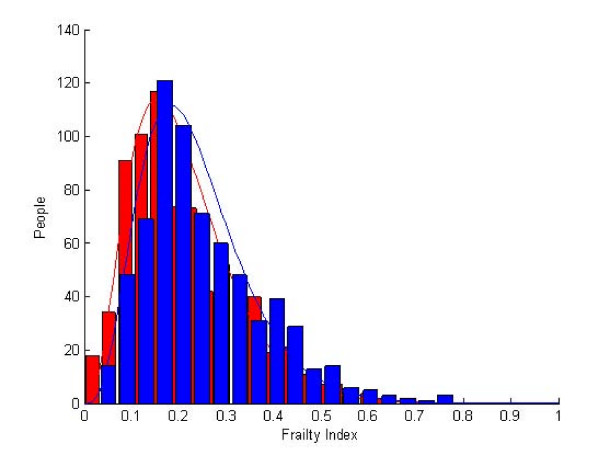
- The frailty index distribution was well fit by a gamma distribution with r² > 0.90.
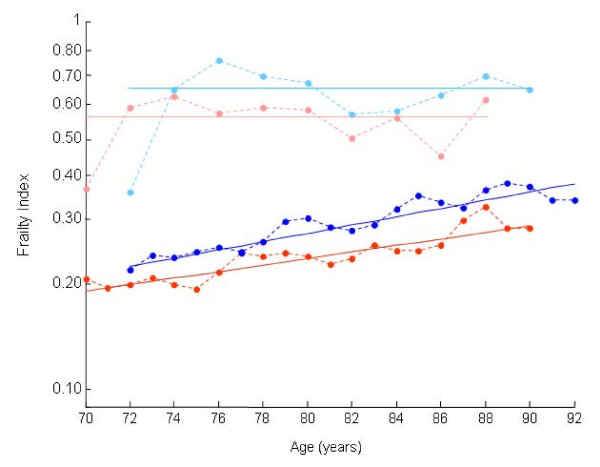
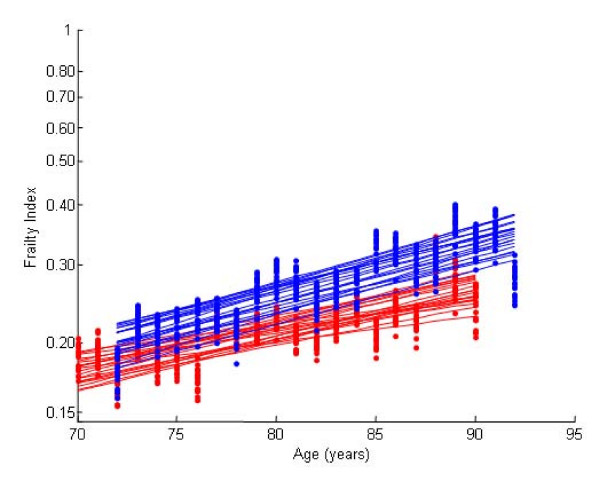
- The age-related slope of deficit accumulation was 0.020 per year at baseline (95% CI 0.014–0.026) and 0.026 per year at follow-up (95% CI 0.020–0.032).
- The 99% upper limit of the frailty index was about 0.6 at baseline and 0.7 at follow-up, and the frailty index, age, and sex were significant predictors of mortality in Cox models.
## Methods
- Secondary analysis of the Yale Precipitating Events Project (PEP) cohort in New Haven, CT; 754 community-dwelling, English-speaking, non-disabled adults aged 70+ were enrolled, with baseline and 18-month follow-up assessments.
- Candidate deficits were drawn from survey variables on function, cognition, comorbidity, attitudes/practices, physical performance, self-rated health, and mood; binary, ordinal, and continuous variables were recoded onto a 0–1 scale.
- Analysis included best-fit log(frailty index) vs age slopes, 1000 re-sampling (bootstrap-like) iterations using 80% of variables, comparison with a gamma distribution, 99th-percentile upper-limit plots, and bivariate and multivariable Cox regression for mortality.
## Limitations
- The paper states that not all items had established cut-points and that cut-points can be difficult to apply across a sample that covers many ages.
- The authors note the sample is small, so individual estimates can be unstable; they present re-sampling as a way to help with this.
- Evident from the text: the analysis is based on a single cohort and only baseline and 18-month follow-up data for constructing and comparing the indices, so generalizability beyond this dataset is not directly tested here.
Model-written summary. Check it against the paper before relying on it.
Integrity signals
Registry
Cites
Statistics
Figures
Verification
Claims the paper makes
6 Valid · 0 Not valid · 16 Not checked · 37 Own results and interpretations
The sources with a verdict support this claim; the rest weren’t checked yet, have no full text we could read, or their verdicts aren’t rated yet.
In the paper
“In each study, the frailer the person is (the higher the deficit count) the more vulnerable they are to adverse outcomes [5,8,11].”
§ A standard procedure for creating a frailty index > Background
What the sources say
- Not checked yetcites [5] Rockwood K, Mitnitski A: Frailty in relation to the accumulation of deficits. J Gerontol Biol Sci Med Sci. 2007, 62A: 722-727. source
- Supportedcites [8] Kulminski A, Yashin A, Arbeev K, Akushevich I, Ukraintseva S, Land K: Cumulative index of health disorders as an indicator of aging-associated processes in the elderly: Results from analyses of the National Long Term Care Survey. Mech Ageing Dev. 2007, 128: 250-258. 10.1016/j.mad.2006.12.004. source
The Results (3.3, p. n/a) state that 'individuals with smaller numbers of deficits live longer' and that 'having a large FI irrespective of age can be predictive of death', and Section 3.6 reports relative risks of death rising with each 1% increment in the FI (a deficit count/fraction). The Introduction also records that the FI is 'a robust concept predicting short- and long-term mortality outcomes and institutionalization' and permits stratification of health risks. Thus our copy supports the attributed point that greater deficit accumulation means greater frailty and greater vulnerability to adverse outcomes in this NLTCS elderly cohort; the 'in each study' framing belongs to the citing paper's pooling of several sources. (LLM, conf=0.85)
- Not checked yetcites [11] Woo J, Goggins W, Sham A, Ho SC: Social determinants of frailty. Gerontology. 2005, 51: 402-408. 10.1159/000088705. source
plainstates an association- Asserted: passes — The authors put it forward as true.
- Checkable: passes — It can be checked against evidence.
- Load-bearing: passes — The paper’s conclusions depend on it.
- Based: passes — The paper gives a reason why it holds.
Every source the paper cites for this claim was checked and supports it.
In the paper
“Frailty can be measured in relation to the accumulation of deficits using a frailty index.”
§ A standard procedure for creating a frailty index > Abstract > Background
What the sources say
- Supportedcites [4] Mitnitski AB, Mogilner AJ, Rockwood K: Accumulation of deficits as a proxy measure of aging. The Scientific World. 2001, 1: 323-336. source
The abstract (p. 1) states 'A frailty index was defined as the proportion of accumulated deficits (symptoms, signs, functional impairments, and laboratory abnormalities)', and METHODS defines the index as the proportion of deficits incurred by an individual, used as a measure of health status. The 'Frailty Index and Survival Probability' section explicitly links this accumulation-of-deficits index to the clinical syndrome of frailty ('We suggest that this correspond to the clinical syndrome of frailty'), and the CONCLUSIONS restate that the frailty index is the proportion of deficits present at the time of health appraisal. The paraphrase therefore matches what this paper does. (LLM, conf=0.92)
plainstates an association- Asserted: passes — The authors put it forward as true.
- Checkable: passes — It can be checked against evidence.
- Load-bearing: passes — The paper’s conclusions depend on it.
- Based: passes — The paper gives a reason why it holds.
- Supported
The cited sources support only part of this claim — read each source’s verdict below.
In the paper
“the results yielded by the frailty index have been consistent between surveys evaluated by our group [4-7] and by others [8-11] even though not every frailty index considers the same deficits, or even the same number of deficits.”
§ A standard procedure for creating a frailty index > Background
What the sources say
- Partly supportedcites [4] Mitnitski AB, Mogilner AJ, Rockwood K: Accumulation of deficits as a proxy measure of aging. The Scientific World. 2001, 1: 323-336. sourceExperimental — accuracy not yet measured
In “Accumulation of Deficits with Age” (page unavailable), the paper reports similar age-related results when the frailty index uses different selections and numbers of deficits. Its Methods describe data from the Canadian Study of Health and Aging; the paper does not establish consistency across surveys evaluated by the authors and by others. (LLM, conf=0.86)
- Not checked yetcites [5] Rockwood K, Mitnitski A: Frailty in relation to the accumulation of deficits. J Gerontol Biol Sci Med Sci. 2007, 62A: 722-727. source
- Not checked yetcites [6] Mitnitski A, Xiaowei S, Skoog I, Broe GA, Cox JL, Grunfeld E, Rockwood K: Relative fitness and frailty of elderly men and women in developed countries and their relationship with mortality. J Am Geriatr Soc. 2005, 53 (12): 2184-5189. 10.1111/j.1532-5415.2005.00506.x. source
- Not checked yetcites [7] Rockwood K, Andrew M, Mitnitski A: A Comparison of two approaches to measuring frailty in elderly people. J Gerontol A Biol Sci Med Sci. 2007, 62A (No 7): 738-743. source
- Partly supportedcites [8] Kulminski A, Yashin A, Arbeev K, Akushevich I, Ukraintseva S, Land K: Cumulative index of health disorders as an indicator of aging-associated processes in the elderly: Results from analyses of the National Long Term Care Survey. Mech Ageing Dev. 2007, 128: 250-258. 10.1016/j.mad.2006.12.004. sourceExperimental — accuracy not yet measured
The Introduction says the frailty-index approach works in various settings and depends on the aggregate of deficits rather than specific traits; Results §3.3 reports a similar age pattern in NLTCS and other data. But the paper does not establish consistency across surveys using different numbers of deficits, and the Introduction notes a difference between Canadian and Chinese findings about whether the index predicts death better than chronological age. (LLM, conf=0.84)
- Not checked yetcites [9] Kulminski A, Ukraintseva SV, Akushevich IV, Arbeev KG, Yashin AI: Cumulative index of health deficiencies as a characteristic of long life. J Am Geriatr Soc. 2007, 55 (6): 935-40. 10.1111/j.1532-5415.2007.01155.x. source
- Not checked yetcites [10] Goggins WB, Woo J, Sham A, Ho SC: Frailty index as a measure of personal biological age in a Chinese population. J Gerontol A Biol Sci Med Sci. 2005, 60A: 1046-1051. source
- Not checked yetcites [11] Woo J, Goggins W, Sham A, Ho SC: Social determinants of frailty. Gerontology. 2005, 51: 402-408. 10.1159/000088705. source
plain- Asserted: passes — The authors put it forward as true.
- Checkable: passes — It can be checked against evidence.
- Load-bearing: passes — The paper’s conclusions depend on it.
- Based: passes — The paper gives a reason why it holds.
- Partly supported
The cited sources support only part of this claim — read each source’s verdict below.
In the paper
“it does not matter if study A considered 40 deficits from set X of deficits and study B considered 60 deficits from set Y of deficits; the estimates from each (e.g. the rate of deficit accumulation, the relationship between deficit accumulation and mortality, or the limit to deficit accumulation) appear to be similar.”
§ A standard procedure for creating a frailty index > Background
What the sources say
- Partly supportedcites [4] Mitnitski AB, Mogilner AJ, Rockwood K: Accumulation of deficits as a proxy measure of aging. The Scientific World. 2001, 1: 323-336. sourceExperimental — accuracy not yet measured
In “Accumulation of Deficits with Age” (page not available), the paper reports similar age-related accumulation rates using randomly selected sets of 40 and 60 deficits. Its Conclusions report an association between the frailty index and survival, but do not show that the mortality relationship is similar across different deficit sets. The cited passages also do not establish a similar limit to deficit accumulation or compare independent studies. (LLM, conf=0.88)
- Not checked yetcites [5] Rockwood K, Mitnitski A: Frailty in relation to the accumulation of deficits. J Gerontol Biol Sci Med Sci. 2007, 62A: 722-727. source
- Not checked yetcites [6] Mitnitski A, Xiaowei S, Skoog I, Broe GA, Cox JL, Grunfeld E, Rockwood K: Relative fitness and frailty of elderly men and women in developed countries and their relationship with mortality. J Am Geriatr Soc. 2005, 53 (12): 2184-5189. 10.1111/j.1532-5415.2005.00506.x. source
- Not checked yetcites [7] Rockwood K, Andrew M, Mitnitski A: A Comparison of two approaches to measuring frailty in elderly people. J Gerontol A Biol Sci Med Sci. 2007, 62A (No 7): 738-743. source
- Partly supportedcites [8] Kulminski A, Yashin A, Arbeev K, Akushevich I, Ukraintseva S, Land K: Cumulative index of health disorders as an indicator of aging-associated processes in the elderly: Results from analyses of the National Long Term Care Survey. Mech Ageing Dev. 2007, 128: 250-258. 10.1016/j.mad.2006.12.004. sourceExperimental — accuracy not yet measured
The Introduction says frailty is characterized by the aggregate of deficits rather than the specific traits selected, and that this approach works in various settings. Methods §2.2 constructs an index from 32 questions, while Results §3.6 says its observed maximum is consistent with other studies. The paper does not establish that indices built from 40 versus 60 different deficits yield similar accumulation rates, mortality relationships, and limits. (LLM, conf=0.83)
- Not checked yetcites [9] Kulminski A, Ukraintseva SV, Akushevich IV, Arbeev KG, Yashin AI: Cumulative index of health deficiencies as a characteristic of long life. J Am Geriatr Soc. 2007, 55 (6): 935-40. 10.1111/j.1532-5415.2007.01155.x. source
- Not checked yetcites [10] Goggins WB, Woo J, Sham A, Ho SC: Frailty index as a measure of personal biological age in a Chinese population. J Gerontol A Biol Sci Med Sci. 2005, 60A: 1046-1051. source
- Not checked yetcites [11] Woo J, Goggins W, Sham A, Ho SC: Social determinants of frailty. Gerontology. 2005, 51: 402-408. 10.1159/000088705. source
hedged- Asserted: passes — The authors put it forward as true.
- Checkable: passes — It can be checked against evidence.
- Load-bearing: passes — The paper’s conclusions depend on it.
- Based: passes — The paper gives a reason why it holds.
- Partly supported
The cited sources support only part of this claim — read each source’s verdict below.
In the paper
“mortality exponentially increases with the accumulation of deficits [5,8,19].”
§ A standard procedure for creating a frailty index > Discussion
What the sources say
- Not checked yetcites [5] Rockwood K, Mitnitski A: Frailty in relation to the accumulation of deficits. J Gerontol Biol Sci Med Sci. 2007, 62A: 722-727. source
- Partly supportedcites [8] Kulminski A, Yashin A, Arbeev K, Akushevich I, Ukraintseva S, Land K: Cumulative index of health disorders as an indicator of aging-associated processes in the elderly: Results from analyses of the National Long Term Care Survey. Mech Ageing Dev. 2007, 128: 250-258. 10.1016/j.mad.2006.12.004. sourceExperimental — accuracy not yet measured
The Discussion and Conclusions (page unavailable) gives an approximate exponential relationship between mortality risk and the frailty index under a condition that approximately holds for males. But the Results, §3.5 (page unavailable), report that a logistic function fits the observed frailty-index-specific mortality rates better than an exponential function. The unqualified claim overstates the paper’s finding. (LLM, conf=0.84)
- Not checked yetcites [19] Rockwood K, Mitnitski A, Song X, Steen B, Skoog I: Long-term risks of death and institutionalization of elderly people in relation to deficit accumulation at age 70. J Am Geriatr Soc. 2006, 54 (6): 975-979. 10.1111/j.1532-5415.2006.00738.x. source
plainstates a cause- Asserted: passes — The authors put it forward as true.
- Checkable: passes — It can be checked against evidence.
- Load-bearing: passes — The paper’s conclusions depend on it.
- Based: passes — The paper gives a reason why it holds.
21 more claims
Create a free account to see all 59 claims and to verify the 42 references still open.
- Probably not a substantial claim. 16
- It may state two separate claims as one. 19
Claims other papers make about this one
Each is checked against this paper’s own text: does it say what the citing paper says it does?
In the citing paper
“The phenotype and cumulative deficit models demonstrate overlap in identification of frailty (82)”
From Frailty in elderly people (2013) · cites this paper as [82]
In the citing paper
“Frailty was assessed with the Frailty Index (FI), a commonly used tool which is based on the concept that frailty is the result of an accumulation of deficits during lifetime [3].”
From Frailty index predicts poor outcome in COVID-19 patients (2020) · cites this paper as [3]
In the citing paper
“Overall, we assessed 43 variables, which provided our index with a sufficient amount of robustness [3].”
From Frailty index predicts poor outcome in COVID-19 patients (2020) · cites this paper as [3]
In the citing paper
“Variables were selected because they are associated with health status, generally increase with age, are not universal in older age, and cover a range of systems (14).”
From Frailty as determined by a comprehensive geriatric assessment-derived deficit-accumulation index in older patients with cancer who receive chemotherapy (2016) · cites this paper as [14]
In the citing paper
“The Frailty Index was initially operationalized from a CGA by Jones et al and a standard procedure for creating a Frailty Index as described by Searle et al in 2008 (12,14), and shown to predict the risk of death, length of stay, and discharge to long term care in hospitalized older patients.(13)”
From Frailty as determined by a comprehensive geriatric assessment-derived deficit-accumulation index in older patients with cancer who receive chemotherapy (2016) · cites this paper as [14]
Citations
Cites
Folstein, M. F., Folstein, S. E., & McHugh, P. R. (1975) · Journal of Psychiatric Research · doi:10.1016/0022-3956(75)90026-6 · Cited by 88,282
An Introduction to the Bootstrap
Efron, B., & Tibshirani, R. J. (1994) · doi:10.1201/9780429246593 · Cited by 40,500
Frailty in Older Adults: Evidence for a Phenotype
Fried, L. P., Tangen, C. M., Walston, J., Newman, A. B., Hirsch, C., Gottdiener, J., Seeman, T., Tracy, R., Kop, W. J., Burke, G., et al. (2001) · The Journals of Gerontology Series A: Biological Sciences and Medical Sciences · doi:10.1093/gerona/56.3.m146 · Cited by 24,907
An Introduction to the Bootstrap
Efron, B., & Tibshirani, R. J. (1993) · doi:10.1007/978-1-4899-4541-9 · Cited by 21,230
Hirono, N., Mori, E., Ikejiri, Y., Imamura, T., Shimomura, T., Hashimoto, M., Yamashita, H., & Ikeda, M. (1997) · Brain and nerve · Cited by 21,039
Kok, J. S., Berg, I. J., & Scherder, E. J. A. (2013) · Dementia and Geriatric Cognitive Disorders Extra · doi:10.1159/000353441 · Cited by 20,589
Older Adults' Reasons for Using Technology while Aging in Place
Peek, S. T. M., Luijkx, K. G., Rijnaard, M. D., Nieboer, M. E., van der Voort, C. S., Aarts, S., van Hoof, J., Vrijhoef, H. J. M., & Wouters, E. J. M. (2016) · Gerontology · doi:10.1159/000430949 · Cited by 19,690
Sensitivity and False Alarm Rate of a Fall Sensor in Long-Term Fall Detection in the Elderly
Kangas, M., Korpelainen, R., Vikman, I., Nyberg, L., & Jämsä, T. (2015) · Gerontology · doi:10.1159/000362720 · Cited by 18,909
Health Measurement Scales: A Practical Guide to Their Development and Use
Streiner, D. L., Norman, G. R., & Cairney, J. (1989) · Cited by 9,595
Gompertz, B. (1825) · Philosophical Transactions of the Royal Society of London · doi:10.1098/rstl.1825.0026 · Cited by 3,816
Research works printed but not linked: 1
- Bergman H, Ferrucci L, Guralnik J, Hogan DB, Hummel S, Karunananthan S, Wolfson C: Frailty: an emerging research and clinical paradigm–issues and controversies. J Gerontol A Biol Sci Med Sci. 2007, 62 (7): 731-737. · DOI · Paper page
Cited by
Items 401–500 of 1,013
Amblàs-Novellas, J., Espaulella, J., Rexach, L., Fontecha, B., Inzitari, M., Blay, C., & Gómez‐Batiste, X. (2015) · European Geriatric Medicine · doi:10.1016/j.eurger.2015.01.002 · Cited by 81
Randles, M., O’Mahony, D., & Gallagher, P. (2022) · Drugs & Aging · doi:10.1007/s40266-022-00952-z · Cited by 80
Castrejón‐Pérez, R. C., Gutiérrez‐Robledo, L. M., Cesari, M., & Pérez‐Zepeda, M. U. (2016) · Geriatrics and gerontology international/Geriatrics & gerontology international · doi:10.1111/ggi.12805 · Cited by 80
Kim, D., Lee, J., Park, R., Oh, C., & Moon, S. (2024) · Journal of Cachexia, Sarcopenia and Muscle · doi:10.1002/jcsm.13397 · Cited by 80
Hoogendijk, E. O., van Kan, G. A., Guyonnet, S., Vellas, B. J., & Cesari, M. (2015) · Journal of the American Medical Directors Association · doi:10.1016/j.jamda.2015.04.007 · Cited by 80
Association between sarcopenia and frailty in elderly patients with chronic kidney disease
Wang, C., Guo, X., Xu, X., Liang, S., Wang, W., Zhu, F.-L., Wang, S., Wu, J., Zhang, L., Sun, X., et al. (2023) · Journal of Cachexia Sarcopenia and Muscle · doi:10.1002/jcsm.13275 · Cited by 80
Neuropathologic burden and the degree of frailty in relation to global cognition and dementia
Wallace, L. M. K., Theou, O., Darvesh, S., Bennett, D. A., Buchman, A. S., Andrew, M. K., Kirkland, S. A., Fisk, J. D., & Rockwood, K. (2020) · Neurology · doi:10.1212/wnl.0000000000010944 · Cited by 79
Self-citationAging as a Process of Deficit Accumulation: Its Utility and Origin
Mitnitski, A., & Rockwood, K. (2015) · Interdisciplinary Topics in Gerontology and Geriatrics · doi:10.1159/000364933 · Cited by 79
Self-citationJiang, M., Foebel, A. D., Kuja‐Halkola, R., Karlsson, I., Pedersen, N. L., Hägg, S., & Jylhävä, J. (2017) · Aging · doi:10.18632/aging.101352 · Cited by 79
Detecting and categorizing frailty status in older adults using a self-report screening instrument
Barreto, P. D. S., Greig, C. A., & Ferrandez, A. (2011) · Archives of Gerontology and Geriatrics · doi:10.1016/j.archger.2011.08.003 · Cited by 79
Frailty and sarcopenia: From theory to clinical implementation and public health relevance
Cesari, M., Nobili, A., & Vitale, G. (2016) · European Journal of Internal Medicine · doi:10.1016/j.ejim.2016.07.021 · Cited by 79
Kane, A. E., Keller, K. M., Heinze-Milne, S., Grandy, S. A., & Howlett, S. E. (2019) · The Journals of Gerontology: Series A · doi:10.1093/gerona/gly117 · Cited by 79
Frailty, Guideline-Directed Medical Therapy, and Outcomes in HFrEF
Khan, M. S., Segar, M. W., Usman, M., Singh, S., Greene, S. J., Fonarow, G. C., Anker, S. D., Felker, G. M., Januzzi, J. L., Butler, J., et al. (2022) · JACC Heart Failure · doi:10.1016/j.jchf.2021.12.004 · Cited by 79
Abdulle, A. E., de Koning, M. E., van der Horn, H. J., Scheenen, M. E., Roks, G., Hageman, G., Spikman, J. M., & van der Naalt, J. (2018) · Journal of Head Trauma Rehabilitation · doi:10.1097/htr.0000000000000368 · Cited by 80
Woo, J., Zheng, Z., Leung, J. C. S., & Chan, P. (2015) · BMC Geriatrics · doi:10.1186/s12877-015-0160-7 · Cited by 79
Sutorius, F. L., Hoogendijk, E. O., Prins, B. A. H., & van Hout, H. P. J. (2016) · BMC Family Practice · doi:10.1186/s12875-016-0487-y · Cited by 79
Gut microbiome in healthy aging versus those associated with frailty
Lim, M. Y., & Nam, Y. (2023) · Gut Microbes · doi:10.1080/19490976.2023.2278225 · Cited by 78
Lee, D. R., Santo, E. C., Lo, J. C.-M., Weintraub, M. R., Patton, M., & Gordon, N. P. (2018) · BMC Family Practice · doi:10.1186/s12875-018-0851-1 · Cited by 78
Frailty and depression: Reciprocal influences or common causes?
Mayerl, H., Stolz, E., & Freidl, W. (2020) · Social Science & Medicine · doi:10.1016/j.socscimed.2020.113273 · Cited by 78
Frailty among Older Adults and Its Distribution in England
Sinclair, D. R., Maharani, A., Chandola, T., Bower, P., Hanratty, B., Nazroo, J. Y., O’Neill, T. W., Tampubolon, G., Todd, C. J., Wittenberg, R., et al. (2021) · The Journal of Frailty & Aging · doi:10.14283/jfa.2021.55 · Cited by 78
the METHOD study investigators, So, R. K. L., Bannard‐Smith, J., Subbe, C. P., Jones, D. A., van Rosmalen, J., & Lighthall, G. K. (2018) · Critical Care · doi:10.1186/s13054-018-2136-4 · Cited by 78
Frailty is associated with elevated CRP trajectories and higher numbers of neutrophils and monocytes
Samson, L. D., Boots, A. M. H., Verschuren, W. M. M., Picavet, H. S. J., Engelfriet, P., & Buisman, A.-M. (2019) · Experimental Gerontology · doi:10.1016/j.exger.2019.110674 · Cited by 77
Ambagtsheer, R. C., Visvanathan, R., Dent, E., Yu, S., Schultz, T., & Beilby, J. (2019) · The Journals of Gerontology Series A · doi:10.1093/gerona/glz260 · Cited by 77
Androgen effects on skeletal muscle: implications for the development and management of frailty
Wu, F., & O’Connell, M. D. L. (2014) · Asian Journal of Andrology · doi:10.4103/1008-682x.122581 · Cited by 77
Association between Diet Quality and Frailty Prevalence in the Physicians’ Health Study
Ward, R. E., Orkaby, A. R., Chen, J., Hshieh, T. T., Driver, J. A., Gaziano, J. M., & Djoussé, L. (2019) · Journal of the American Geriatrics Society · doi:10.1111/jgs.16286 · Cited by 77
Definitions of Frailty in Qualitative Research: A Qualitative Systematic Review
Lekan, D. A., Collins, S. K. R., & Hayajneh, A. A. (2021) · Journal of Aging Research · doi:10.1155/2021/6285058 · Cited by 78
External validation of the adult spinal deformity (ASD) frailty index (ASD-FI)
The European Spine Study Group, Miller, E. K., The International Spine Study Group, Vila-Casademunt, A., Neuman, B. J., Sciubba, D. M., Kebaish, K. M., Smith, J. S., Alanay, A., Acaroglu, E. R., et al. (2018) · European Spine Journal · doi:10.1007/s00586-018-5575-3 · Cited by 77
Hyde, Z., Flicker, L. A., Smith, K., Atkinson, D. N., Fenner, S. G., Skeaf, L., Malay, R., & Giudice, D. L. (2016) · Maturitas · doi:10.1016/j.maturitas.2016.02.013 · Cited by 77
Uccheddu, D., Gauthier, A. H., Steverink, N., & Emery, T. (2019) · Social Science & Medicine · doi:10.1016/j.socscimed.2019.112517 · Cited by 77
Staging the Host: Personalizing Risk Assessment for Radical Cystectomy Patients
Psutka, S. P., Barocas, D. A., Catto, J. W. F., Gore, J. L., Lee, C. T., Morgan, T. M., Master, V. A., Necchi, A., Rouprêt, M., & Boorjian, S. A. (2018) · European Urology Oncology · doi:10.1016/j.euo.2018.05.010 · Cited by 77
Carroll, J. E., Bower, J. E., & Ganz, P. A. (2022) · Nature Reviews Clinical Oncology · doi:10.1038/s41571-021-00580-3 · Cited by 76
Case management for integrated care of older people with frailty in community settings
Sadler, E., Khadjesari, Z., Ziemann, A., Sheehan, K. J., Whitney, J. C., Wilson, D., Bakolis, I., Sevdalis, N., Sandall, J., Soukup, T., et al. (2023) · Cochrane Database of Systematic Reviews · doi:10.1002/14651858.cd013088.pub2 · Cited by 76
Badrasawi, M., Shahar, S., Manaf, Z. A., Rajab, N. F., & Devinder, K. A. S. (2016) · Clinical Interventions in Aging · doi:10.2147/cia.s113287 · Cited by 76
Loneliness as a risk factor for frailty transition among older Chinese people
Sha, S., Xu, Y., & Chen, L. (2020) · BMC Geriatrics · doi:10.1186/s12877-020-01714-5 · Cited by 76
Thompson, M. Q., Theou, O., Yu, S., Adams, R., Tucker, G., & Visvanathan, R. (2017) · Australian Journal on Ageing · doi:10.1111/ajag.12487 · Cited by 76
Ye, B., Chen, H., Huang, L., Ruan, Y., Qi, S., Guo, Y., Huang, Z., Sun, S., Chen, X., Shi, Y., et al. (2020) · BMC Geriatrics · doi:10.1186/s12877-020-01530-x · Cited by 77
Costenoble, A., Knoop, V., Vermeiren, S., Vella-Azzopardi, R., Debain, A., Rossi, G. M. P., Bautmans, I., Verté, D., Gorus, E., & VRIENDT, P. D. (2019) · The Gerontologist · doi:10.1093/geront/gnz147 · Cited by 76
He, D., Li, J., Li, Y., Zhu, J., Zhou, T., Xu, Y., Wu, Q., Cheng, Z., Chen, Q., Liu, Z., et al. (2022) · Diabetes Research and Clinical Practice · doi:10.1016/j.diabres.2022.110145 · Cited by 76
Zeng, P., Li, M., Cao, J., Zeng, L., Jiang, C. S., & Lin, F. (2024) · Cardiovascular Diabetology · doi:10.1186/s12933-024-02379-9 · Cited by 76
Screening for frailty: older populations and older individuals
Santos‐Eggimann, B., & Sirven, N. (2016) · Public health reviews · doi:10.1186/s40985-016-0021-8 · Cited by 75
Cohen, R., Lagoo‐Deenadayalan, S. A., Heflin, M. T., Sloane, R. J., Eisen, I., Thacker, J., & Whitson, H. E. (2012) · Journal of the American Geriatrics Society · doi:10.1111/j.1532-5415.2012.04109.x · Cited by 75
A pilot trial to predict frailty syndrome: The Japanese Health Research Volunteer Study
Doba, N., Tokuda, Y., Goldstein, N. E., Kushiro, T., & Hinohara, S. (2012) · Experimental Gerontology · doi:10.1016/j.exger.2012.05.016 · Cited by 75
Kremer, K.-M., Braisch, U., Rothenbacher, D., Denkinger, M., Dallmeier, D., & for the ActiFE Study Group (2021) · Hypertension · doi:10.1161/hypertensionaha.121.17530 · Cited by 77
Wang, Y., Zhang, R., Shen, Y., Su, L., Dong, B., & Hao, Q. (2019) · Clinical Interventions in Aging · doi:10.2147/cia.s201873 · Cited by 75
Socioeconomic status as a moderator between frailty and mortality at old ages
Gu, D., Yang, F., & Sautter, J. M. (2016) · BMC Geriatrics · doi:10.1186/s12877-016-0322-2 · Cited by 75
Stolz, E., Mayerl, H., Waxenegger, A., & Freidl, W. (2017) · European Journal of Public Health · doi:10.1093/eurpub/ckx079 · Cited by 75
Atrial remodeling and atrial fibrillation in acquired forms of cardiovascular disease
Jansen, H. J., Bohne, L. J., Gillis, A. M., & Rose, R. A. (2020) · Heart Rhythm O2 · doi:10.1016/j.hroo.2020.05.002 · Cited by 74
“Frailty can be quantified in both the clinical and laboratory setting using a frailty index (FI).(141,145) Accordingly, frailty can be used as a powerful tool to investigate heterogeneity in the effects of age on cardiovascular function and arrhythmogenesis.”
BackgroundMethodHussien, H., Nastasa, A., Apetrii, M., Nistor, I., Petrović, M., & Covic, A. C. (2021) · BMC Geriatrics · doi:10.1186/s12877-021-02316-5 · Cited by 74
Mousa, A., Savva, G. M., Mitnitski, A., Rockwood, K. J., Jagger, C., Brayne, C., & Matthews, F. E. (2018) · Age and Ageing · doi:10.1093/ageing/afy077 · Cited by 74
Self-citationPayne, C., Wade, A. N., Kabudula, C. W., Davies, J. I., Chang, A. Y., Gómez-Olivé, F. X., Kahn, K., Berkman, L. F., Tollman, S. M., Salomon, J. A., et al. (2017) · BMC Geriatrics · doi:10.1186/s12877-017-0694-y · Cited by 74
Kojima, G., Iliffe, S., Morris, R. W., Taniguchi, Y., Kendrick, D., Skelton, D. A., Masud, T., & Bowling, A. (2016) · Quality of Life Research · doi:10.1007/s11136-015-1213-2 · Cited by 74
HRAS1 and LASS1 with APOE are associated with human longevity and healthy aging
Jazwinski, S. M., Kim, S., Dai, J., Li, L., Bi, X.-H., Jiang, J. C., Arnold, J., Batzer, M. A., Walker, J. A., Welsh, D. A., et al. (2010) · Aging Cell · doi:10.1111/j.1474-9726.2010.00600.x · Cited by 74
Mian, H. S., Wildes, T. M., Vij, R., Pianko, M. J., Major, A., & Fiala, M. A. (2023) · Blood Cancer Journal · doi:10.1038/s41408-023-00843-5 · Cited by 74
Tsui, A., Searle, S. D., Bowden, H., Hoffmann, K., Hornby, J., Goslett, A., Weston-Clarke, M., Hamill Howes, L., Street, R., Perera, R., et al. (2022) · The Lancet Healthy Longevity · doi:10.1016/s2666-7568(22)00013-7 · Cited by 73
Self-citationKelm, D. J., Bonnes, S. L., Jensen, M. D., Eiken, P. W., Hathcock, M. A., Kremers, W. K., & Kennedy, C. C. (2016) · Clinical Transplantation · doi:10.1111/ctr.12683 · Cited by 73
Atrial structure, function and arrhythmogenesis in aged and frail mice
Jansen, H. J., Moghtadaei, M., Mackasey, M., Rafferty, S. A., Bogachev, O., Sapp, J. L., Howlett, S. E., & Rose, R. A. (2017) · Scientific Reports · doi:10.1038/srep44336 · Cited by 73
High prevalence of frailty in end-stage renal disease
Drost, D., Kalf, A., Vogtländer, N. P. J., & Munster, B. C. V. (2016) · International Urology and Nephrology · doi:10.1007/s11255-016-1306-z · Cited by 73
Hanlon, P., Morton, F. R., Siebert, S., Jani, B., Nicholl, B. I., Lewsey, J., McAllister, D., & Mair, F. S. (2022) · RMD Open · doi:10.1136/rmdopen-2021-002111 · Cited by 73
Nichols, M. K., Andrew, M. K., Hatchette, T. F., Ambrose, A., Boivin, G., Bowie, W., Chit, A., Santos, G. D., ElSherif, M. S., Green, K., et al. (2018) · Vaccine · doi:10.1016/j.vaccine.2018.02.093 · Cited by 73
Fluctuations in frailty among older adults
Stolz, E., Mayerl, H., & Freidl, W. (2019) · Age and Ageing · doi:10.1093/ageing/afz040 · Cited by 73
Lagró, J. (2013) · Radboud Repository (Radboud University) · Cited by 73
Nguyen, T. N., Harris, K., Woodward, M., Chalmers, J., Cooper, M., Hamet, P., Harrap, S., Heller, S., MacMahon, S., Mancia, G., et al. (2021) · Diabetes Care · doi:10.2337/dc20-2664 · Cited by 72
Salaffi, F., Farah, S., & Carlo, M. D. (2020) · Acta bio-medica dell'Ateneo parmense/Acta biomedica · doi:10.23750/abm.v91i2.9094 · Cited by 72
A comparison of physical activity (PA) assessment tools across levels of frailty
Theou, O., Jakobi, J. M., Vandervoort, A. A., & Jones, G. R. (2011) · Archives of Gerontology and Geriatrics · doi:10.1016/j.archger.2011.12.005 · Cited by 72
Si, H., Jin, Y., Qiao, X., Tian, X., Liu, X., & Wang, C. (2021) · International Journal of Nursing Studies · doi:10.1016/j.ijnurstu.2021.103875 · Cited by 72
Assessment of geriatric syndromes and physical function in people living with HIV
Greene, M. L., Justice, A. C., & Covinsky, K. E. (2016) · Virulence · doi:10.1080/21505594.2016.1245269 · Cited by 72
Callahan, K. E., Clark, C. J., Edwards, A. F., Harwood, T. N., Williamson, J. D., Moses, A. W., Willard, J. J., Cristiano, J. A., Meadows, K., Hurie, J., et al. (2021) · Journal of the American Geriatrics Society · doi:10.1111/jgs.17027 · Cited by 72
Impact of Geroscience on Therapeutic Strategies for Older Adults With Cardiovascular Disease
Forman, D. E., Kuchel, G. A., Newman, J. C., Kirkland, J. L., Volpi, E., Taffet, G. E., Barzilai, N., Pandey, A., Kitzman, D. W., Libby, P., et al. (2023) · Journal of the American College of Cardiology · doi:10.1016/j.jacc.2023.05.038 · Cited by 71
Frailty Index and Mortality in Nursing Home Residents in France: Results From the INCUR Study
Tabué-Teguo, M., Kelaiditi, E., Demougeot, L., Dartigues, J., Vellas, B. J., & Cesari, M. (2015) · Journal of the American Medical Directors Association · doi:10.1016/j.jamda.2015.02.002 · Cited by 71
Cohen, A. A., Li, Q., Milot, E., Leroux, M., Faucher, S. J., Morissette-Thomas, V., Legault, V., Fried, L. P., & Ferrucci, L. (2015) · PLoS ONE · doi:10.1371/journal.pone.0122541 · Cited by 71
The prevalence and characteristics of frailty by frailty phenotype in rural Tanzania
Lewis, E. G., Coles, S., Howorth, K., Kissima, J., Gray, W. K., Urasa, S. J., Walker, R. W., & Dotchin, C. L. (2018) · BMC Geriatrics · doi:10.1186/s12877-018-0967-0 · Cited by 71
Predictability of frailty index and its components on mortality in older adults in China
Yang, F., & Gu, D. (2016) · BMC Geriatrics · doi:10.1186/s12877-016-0317-z · Cited by 71
Bartley, M. M., Geda, Y. E., Christianson, T. J. H., Pankratz, V. S., Roberts, R. O., & Petersen, R. C. (2016) · Journal of the American Geriatrics Society · doi:10.1111/jgs.13821 · Cited by 71
Operationalizing a frailty index using routine blood and urine tests
Ritt, M., Jäger, J., Ritt, J., Sieber, C. C., & Gaßmann, K. (2017) · Clinical Interventions in Aging · doi:10.2147/cia.s131987 · Cited by 71
O’Connell, M. D. L., Savva, G. M., Fan, C. W., & Kenny, R. A. (2015) · Archives of Gerontology and Geriatrics · doi:10.1016/j.archger.2015.01.008 · Cited by 71
Tan, H. L., Chia, S., Nadkarni, N. V., Ang, S. Y., Seow, D. C. C., & Wong, T. H. (2019) · World Journal of Emergency Surgery · doi:10.1186/s13017-019-0280-z · Cited by 71
F railty I ndex in E uropeans: Association with determinants of health
Romero‐Ortuño, R. (2013) · Geriatrics and gerontology international/Geriatrics & gerontology international · doi:10.1111/ggi.12122 · Cited by 71
Frequency, intensity and localization of pain as risk factors for frailty in older adults
Rodríguez-Sánchez, I., García‐Esquinas, E., Mesas, A. E., Martin-Moreno, J. M., Rodríguez‐Mañas, L., & Rodríguez‐Artalejo, F. (2018) · Age and Ageing · doi:10.1093/ageing/afy163 · Cited by 70
Frailty Index to Measure Health Status in People with Systemic Sclerosis
Rockwood, M. R. H., MacDonald, E., Sutton, E. D., Rockwood, K. J., & Baron, M. G. (2014) · The Journal of Rheumatology · doi:10.3899/jrheum.130182 · Cited by 70
Self-citationFrailty and life satisfaction in Shanghai older adults: The roles of age and social vulnerability
Yang, F., Gu, D., & Mitnitski, A. (2016) · Archives of Gerontology and Geriatrics · doi:10.1016/j.archger.2016.07.001 · Cited by 70
Self-citationSarcopenia and Frailty: Challenges in Mainstream Nephrology Practice
Wong, L., Duque, G., & McMahon, L. P. (2021) · Kidney International Reports · doi:10.1016/j.ekir.2021.05.039 · Cited by 70
Petermann-Rocha, F., Hanlon, P., Gray, S. R., Welsh, P., Gill, J. M. R., Foster, H., Katikireddi, S. V., Lyall, D., Mackay, D. F., O’Donnell, C. A., et al. (2020) · BMC Medicine · doi:10.1186/s12916-020-01822-4 · Cited by 70
FRAIL-NH predicts outcomes in long term care
Kaehr, E. W., Pape, L., Malmstrom, T. K., & Morley, J. E. (2016) · The journal of nutrition health & aging · doi:10.1007/s12603-016-0682-5 · Cited by 70
Li, M., Kong, Y., Chen, H., Chu, A., Song, G., & Cui, Y. (2019) · Brazilian Journal of Medical and Biological Research · doi:10.1590/1414-431x20198204 · Cited by 71
Kim, D. J., Massa, M. S., Potter, C., Clarke, R., & Bennett, D. (2022) · Systematic Reviews · doi:10.1186/s13643-022-02052-w · Cited by 71
Reske-Nielsen, C., & Medzon, R. (2016) · Emergency Medicine Clinics of North America · doi:10.1016/j.emc.2016.04.004 · Cited by 71
Fogg, C., Fraser, S. D., Roderick, P., de Lusignan, S., Clegg, A. P., Brailsford, S., Barkham, A., Patel, H. P., Windle, V., Harris, S., et al. (2022) · BMC Geriatrics · doi:10.1186/s12877-021-02684-y · Cited by 70
Godin, J., Armstrong, J. J., Rockwood, K., & Andrew, M. K. (2017) · Journal of Alzheimer's Disease · doi:10.3233/jad-161280 · Cited by 69
Self-citationAttitudes to Ageing and Change in Frailty Status: The English Longitudinal Study of Ageing
Galé, C. R., & Cooper, C. C. (2017) · Gerontology · doi:10.1159/000477169 · Cited by 69
Wang, C., Song, X., Mitnitski, A., Yu, P., Fang, X., Tang, Z., Shi, J., & Rockwood, K. J. (2012) · The Journals of Gerontology Series A · doi:10.1093/gerona/gls166 · Cited by 69
Self-citationMusculoskeletal health and frailty
McGuigan, F. E., Bartosch, P., & Åkesson, K. (2017) · Best Practice & Research Clinical Rheumatology · doi:10.1016/j.berh.2017.11.002 · Cited by 69
Schöttker, B., Saum, K.-U., Perna, L., Ordóñez-Mena, J. M., Holleczek, B., & Brenner, H. (2014) · European Journal of Epidemiology · doi:10.1007/s10654-014-9894-3 · Cited by 69
Association Between Cardiac Rehabilitation and Frailty
Kehler, D. S., Giacomantonio, N., Firth, W., Blanchard, C. M., Rockwood, K. J., & Theou, O. (2019) · Canadian Journal of Cardiology · doi:10.1016/j.cjca.2019.08.032 · Cited by 69
Self-citationGut microbial features and circulating metabolomic signatures of frailty in older adults
Pu, Y., Sun, Z., Zhang, H., Huang, Q., Wang, Z., Mei, Z., Wang, P., Kong, M., Yang, W., Lin, C., et al. (2024) · Nature Aging · doi:10.1038/s43587-024-00678-0 · Cited by 68
Guler, S. A., Kwan, J. M., Leung, J. M., Khalil, N., Wilcox, P., & Ryerson, C. J. (2019) · European Respiratory Journal · doi:10.1183/13993003.00647-2019 · Cited by 68
Klausen, H. H., Petersen, J., Bandholm, T., Juul‐Larsen, H. G., Tavenier, J., Eugen‐Olsen, J., & Andersen, O. (2017) · BMC Geriatrics · doi:10.1186/s12877-017-0434-3 · Cited by 68
Ke, Z., Wen, H., Huang, R., Xu, X., Yang, K., Liu, W., Wang, S.-S., Zhang, X., Guo, Y., Liao, X., et al. (2024) · Journal of Cachexia Sarcopenia and Muscle · doi:10.1002/jcsm.13516 · Cited by 68
Burn, R., Hubbard, R. E., Scrase, R. J., Abey‐Nesbit, R., Peel, N. M., Schlüter, P. J., & Jamieson, H. A. (2018) · BMC Geriatrics · doi:10.1186/s12877-018-1016-8 · Cited by 67
Marzetti, E., Lorenzi, M., Antocicco, M., Bonassi, S., Celi, M., Mastropaolo, S., Settanni, S., Valdiglesias, V., Landi, F., Bernabei, R., et al. (2014) · Frontiers in Aging Neuroscience · doi:10.3389/fnagi.2014.00233 · Cited by 67
Wallace, L. M. K., Theou, O., Kirkland, S. A., Rockwood, M. R. H., Davidson, K. W., Shimbo, D., & Rockwood, K. (2014) · PLoS ONE · doi:10.1371/journal.pone.0090475 · Cited by 67
Self-citation
Metadata
- Authors
- Searle, S. D., Mitnitski, A., Gahbauer, E. A., Gill, T. M., & Rockwood, K.
- Affiliations
- Dalhousie University (CA)
- Yale University (US)
- Corresponding author
- Rockwood, Kenneth
- Venue
- BMC Geriatrics
- Published
- 2008-09-30
- Volume
- 8
- Issue
- 1
- Pages
- 24-24
- ISSN
- 1471-2318 (ISSN-L)
- PMC
- PMC2573877
- OpenAlex
- W2105092978
- Cited by
- 3,568
- References
- 42
- Citations by year
- 2026: 373 · 2025: 411 · 2024: 408 · 2023: 379 · 2022: 367 · 2021: 324 · 2020: 288 · 2019: 227 · 2018: 169 · 2017: 167 · 2016: 127 · 2015: 91 · 2014: 80 · 2013: 60 · 2012: 40
- FWCI
- 7.68
- Type
- journal article
- Language
- en
- Open access
- gold
- doi.org
- Licence
- Locations
- BMC Geriatrics (publishedVersion, cc-by)
- PubMed Central (publishedVersion, cc-by)
- PubMed (publishedVersion)
- DOAJ (DOAJ: Directory of Open Access Journals) (submittedVersion, cc-by-sa)
- Research Explorer (The University of Manchester) (submittedVersion)
- Funders
- Robert Wood Johnson Foundation
- American Federation for Aging Research
- Patrick and Catherine Weldon Donaghue Medical Research Foundation
- Dalhousie Medical Research Foundation
- Dalhousie University
- Canadian Institutes of Health Research
- National Institute on Aging (R01AG022993, R37AG017560, K24AG021507)
- Topics
- Health Sciences › Medicine › Geriatrics and Gerontology › Frailty in Older Adults
- Health Sciences › Medicine › Epidemiology › Chronic Disease Management Strategies
- Health Sciences › Medicine › Public Health, Environmental and Occupational Health › Aging, Health, and Disability
- Keywords
- frailty index, frailty assessment, deficit accumulation, older adults, mortality risk, health deficits, gamma distribution
- MeSH terms
- Activities of Daily Living, Age Factors, Aged, Aged, 80 and over, Attitude to Health, Cognition Disorders, Disability Evaluation, Health Status Indicators, Humans, Male, Mortality, Physical Fitness, Probability, Sensitivity and Specificity, Sex Factors, Cohort Studies, Geriatric Assessment, Prevalence, Multivariate Analysis, Proportional Hazards Models, Frail Elderly, Vulnerable Populations
About these checks
Registry, retraction, Cites and statistics results are computed, not judged, with one exception: a printed reference that no index lists is read once by a model before it counts as a citation error. Claims are extracted by a model and kept only when their quote appears verbatim in the text; each cited source is then checked, with a model’s help, for whether it says what the claim relies on. Those verdicts can be wrong — read the claim’s quote and the cited source before relying on one.
The claim verdicts this report counts are experimental: their accuracy is not yet measured.
A language model drew the claims from the paper on 2026-10-11, under version 3 of the claim definition (model deepseek-v4.1-flash, prompt extract-v3).
A second model labelled each claim on 2026-10-11 (model jev-1.13-20260917, definition revision gold-guideline-v0.2).
Cited sources are checked with a language model’s help (qwen3.8-omni-flash and gpt-6-sol).
Statistics and arithmetic are recomputed, not judged.
Confidence bands are shown only for fields calibrated on our annotated test set. None is calibrated yet, so no band is shown.
What counts as a claim ›How we measure confidence ›How we check this ›
Are you an author, or do you see a problem with this page? Request a review
Data sources
Bibliographic data: Semantic Scholar, OpenAlex, Crossref.
Contains information from the Semantic Scholar Academic Graph Datasets, made available under the ODC Attribution License (ODC-BY 1.0).
Semantic Scholar’s data is described in: Kinney, R., et al. (2023). The Semantic Scholar Open Data Platform. arXiv:2301.10140.
