

The DOI matches its Crossref record; 66 of the 66 references it cites were found in a registry or an index.
Is computerised CBT really helpful for adult depression?-A meta-analytic re-evaluation of CCBT for adult depression in terms of clinical implementation and methodological validity
Open accessAbstract
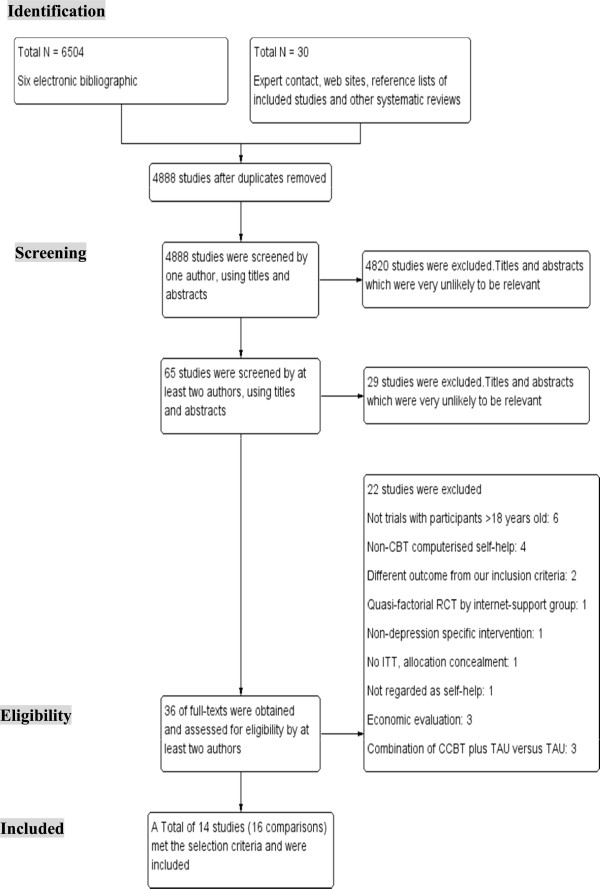
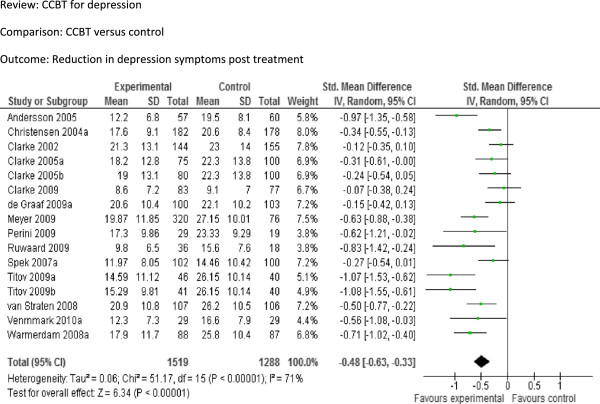
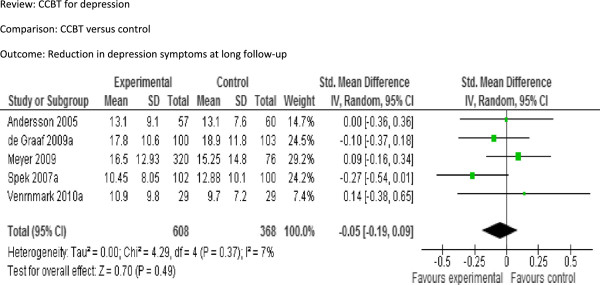
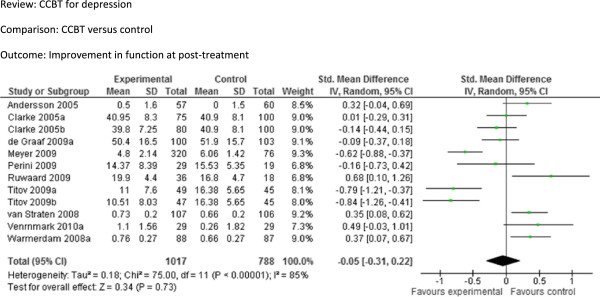
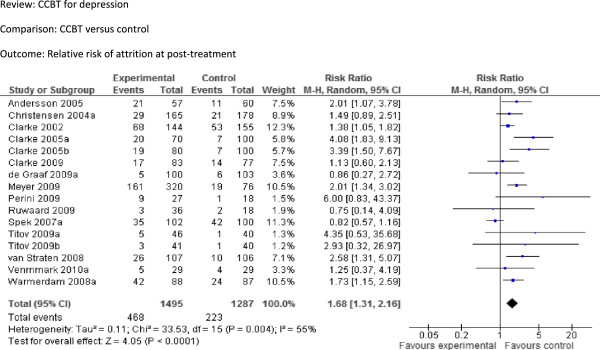
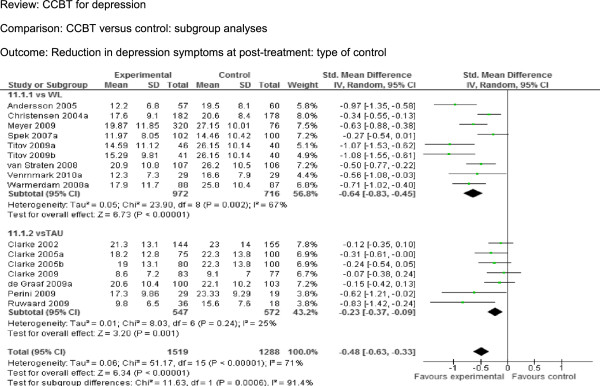
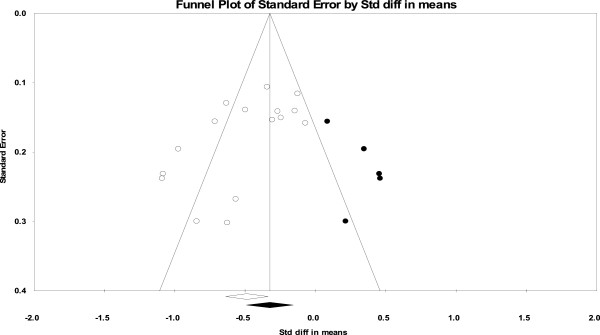
BACKGROUND: Depression is a major cause of disability worldwide, and computerised cognitive behavioural therapy (CCBT) is expected to be a more augmentative and efficient treatment. According to previous meta-analyses of CCBT, there is a need for a meta-analytic revaluation of the short-term effectiveness of this therapy and for an evaluation of its long-term effects, functional improvement and dropout. METHODS: Five databases were used (MEDLINE, PsycINFO, EMBASE, CENTRAL and CiNii). We included all RCTs with proper concealment and blinding of outcome assessment for the clinical effectiveness of CCBT in adults (aged 18 and over) with depression. Using Cohen's method, the standard mean difference (SMD) for the overall pooled effects across the included studies was estimated with a random effect model. The main outcome measure and the relative risk of dropout were included in the meta-analysis. RESULTS: Fourteen trials met the inclusion criteria, and sixteen comparisons from these were used for the largest meta-analysis ever. All research used appropriate random sequence generation and Intention-to-Treat analyses (ITT), and employed self-reported measures as the primary outcome. For the sixteen comparisons (2807 participants) comparing CCBT and control conditions, the pooled SMD was -0.48 [95% IC -0.63 to -0.33], suggesting similar effect to the past reviews. Also, there was no significant clinical effect at long follow-up and no improvement of function found. Furthermore, a significantly higher drop-out rate was found for CCBT than for controls. When including studies without BDI as a rating scale and with only modern imputation as sensitivity analysis, the pooled SMD remained significant despite the reduction from a moderate to a small effect. Significant publication bias was found in a funnel plot and on two tests (Begg's p = 0.09; Egger's p = 0.01). Using a trim and fill analysis, the SMD was -0.32 [95% CI -0.49 to -0.16]. CONCLUSION: Despite a short-term reduction in depression at post-treatment, the effect at long follow-up and the function improvement were not significant, with significantly high drop-out. Considering the risk of bias, our meta-analysis implied that the clinical usefulness of current CCBT for adult depression may need to be re-considered downwards in terms of practical implementation and methodological validity.
Overview
The claims and statistics of this paper haven’t been checked yet.
Run the check — free, no account needed. It reads the open-access text and checks the sources it cites.
Integrity signals
Registry
Cites
Statistics
Figures
Verification
Claims the paper makes
The claims and statistics of this paper haven’t been checked yet.
Run the check — free, no account needed. It reads the open-access text and checks the sources it cites.
Claims other papers make about this one
Each is checked against this paper’s own text: does it say what the citing paper says it does?
The cited source says what the claim attributes to it.
In the citing paper
“the effects were observed to be transient and the participants’ drop-out rate was high [5].”
The cited source says what the claim attributes to it.
In the citing paper
“A number of studies in the broader CCBT literature have found evidence of a publication bias. Studies reporting negative findings are less likely to be published [26,49,50].”
From Computerized cognitive behavior therapy for anxiety and depression in rural areas:a systematic review (2015) · cites this paper as [50]
In the citing paper
“Effect sizes have been estimated at d=0.44-1.90 for clinician-supported, and d=0.21-0.70 for self-guided, interventions [42-45,47,48].”
From MoodHacker Mobile Web App With Email for Adults to Self-Manage Mild-to-Moderate Depression: Randomized Controlled Trial (2016) · cites this paper as [45]
In the citing paper
“Thus there is currently ample evidence for the short and long term benefits for eHealth delivered Cognitive Behavioural Therapy (CBT) for treating anxiety and depressive conditions in both general population and clinical settings [21–23], with greater improvement shown for those interventions that include guidance throughout the intervention period [21,24].”
From Effectiveness of eHealth interventions for reducing mental health conditions in employees: A systematic review and meta-analysis (2017) · cites this paper as [22]
In the citing paper
“Internet-delivered CBT-based programs for depression symptom management have been shown to be effective both for adults with major depressive disorder and those with elevated, but subthreshold, depression symptoms, although one recent review identified concerns with dropout and lack of long-term effects [42-45].”
From MoodHacker Mobile Web App With Email for Adults to Self-Manage Mild-to-Moderate Depression: Randomized Controlled Trial (2016) · cites this paper as [45]
In the citing paper
“Although our results are consistent with a recent meta-analysis of computerized CBT programs showing that results of computer-based CBT programs typically attenuate over time [45]”
From MoodHacker Mobile Web App With Email for Adults to Self-Manage Mild-to-Moderate Depression: Randomized Controlled Trial (2016) · cites this paper as [45]
Self-check
Percentages, sums and reported differences re-computed from the paper’s own numbers.
The self-check needs the paper’s full text.
Citations
Cites
Bias in meta-analysis detected by a simple, graphical test
Egger, M., Smith, G. D., Schneider, M., & Minder, C. (1997) · BMJ · doi:10.1136/bmj.315.7109.629 · Cited by 56,722 · cited 3×
“Also, there was significant statistical evidence for study bias using both Begg’s test (p = 0.009) and Egger’s test (p = 0.01).”
MethodInfluentialAn inventory for measuring depression
BECK, A. T. (1961) · Archives of General Psychiatry · doi:10.1001/archpsyc.1961.01710120031004 · Cited by 38,032 · cited 1×
“I, BDI- I [30], and II [31], or according to the difference”
BackgroundOperating characteristics of a rank correlation test for publication bias
Begg, C. B., & Mazumdar, M. (1994) · Biometrics · doi:10.2307/2533446 · Cited by 16,955 · cited 1×
“Begg’s [33] and Egger’s [34] tests were also conducted for statistical checking.”
Method(1975) · Medical Entomology and Zoology · Cited by 7,245
Comparison of Beck Depression Inventories -IA and -II in psychiatric outpatients
Beck, A. T., Steer, R. A., Ball, R., & Ranieri, W. F. (1996) · Journal of Personality Assessment · doi:10.1207/s15327752jpa6703_13 · Cited by 5,965 · cited 1×
“I, BDI- I [30], and II [31], or according to the difference”
BackgroundDepression, chronic diseases, and decrements in health: results from the World Health Surveys
Moussavi, S., Chatterji, S., Verdes, E., Tandon, A., Patel, V., & Ustun, B. (2007) · The Lancet · doi:10.1016/s0140-6736(07)61415-9 · Cited by 4,070 · cited 1×
“over the world [1].”
The empirical status of cognitive-behavioral therapy: A review of meta-analyses
Butler, A. C., Chapman, J. E., Forman, E. M., & Beck, A. T. (2006) · Clinical Psychology Review · doi:10.1016/j.cpr.2005.07.003 · Cited by 3,215 · cited 1×
“as an alternative or addition to pharmacotherapy [5,6].”
BackgroundA Nonparametric “Trim and Fill” Method of Accounting for Publication Bias in Meta-Analysis
Duval, S., & Tweedie, R. (2000) · Journal of the American Statistical Association · doi:10.1080/01621459.2000.10473905 · Cited by 2,955 · cited 1×
“When a significant small study effect was noted, we assessed its influence through the trim-and-fill method [35].”
MethodCognitive Therapy and the Emotional Disorders
Ince, L. P. (1977) · American Journal of Psychotherapy · doi:10.1176/appi.psychotherapy.1977.31.4.633 · Cited by 2,889
Dimidjian, S., Hollon, S. D., Dobson, K. S., Schmaling, K. B., Kohlenberg, R. J., Addis, M. E., Gallop, R., McGlinchey, J. B., Markley, D. K., Gollan, J. K., et al. (2006) · Journal of Consulting and Clinical Psychology · doi:10.1037/0022-006x.74.4.658 · Cited by 1,607 · cited 1×
“reduction of symptoms [7].”
Internet-based cognitive behaviour therapy for symptoms of depression and anxiety: A meta-analysis
SPEK, V., CUIJPERS, P., NYKLÍČEK, I., RIPER, H., KEYZER, J., & POP, V. (2007) · Psychological Medicine · doi:10.1017/s0033291706008944 · Cited by 1,586 · cited 2×
“In the former, three meta-analytic studies [18,19,21] dealt with depression and other disor-”
BackgroundInternet-Based and Other Computerized Psychological Treatments for Adult Depression: A Meta-Analysis
Andersson, G., & Cuijpers, P. (2009) · Cognitive Behaviour Therapy · doi:10.1080/16506070903318960 · Cited by 1,368 · cited 2×
“In the former, three meta-analytic studies [18,19,21] dealt with depression and other disor-”
BackgroundAndrews, G., Cuijpers, P., Craske, M. G., McEvoy, P., & Titov, N. (2010) · PLoS ONE · doi:10.1371/journal.pone.0013196 · Cited by 1,311 · cited 2×
“In contrast, two other meta-analyses [22,20] exclusively dealt with depression.”
BackgroundResultBarak, A., Hen, L., Boniel-Nissim, M., & Shapira, N. (2008) · Journal of Technology in Human Services · doi:10.1080/15228830802094429 · Cited by 1,283 · cited 3×
“In fact, it has been reported that applying CCBT to patients with a personality suitable for it [64] or to those from a technologically-literate generation [19] may contribute to better outcomes.”
BackgroundDelivering interventions for depression by using the internet: randomised controlled trial
Christensen, H. (2004) · BMJ · doi:10.1136/bmj.37945.566632.ee · Cited by 928 · cited 5×
“For the seven comparisons that were reported to have an acceptable dropout rate (<20%) [37,40,43,45,46,48], the SMD was −0.”
BackgroundMethodInfluentialMerry, S. N., Stasiak, K., Shepherd, M., Frampton, C., Fleming, T., & Lucassen, M. F. G. (2012) · BMJ · doi:10.1136/bmj.e2598 · Cited by 716
Clark, D. M. (2011) · International Review of Psychiatry · doi:10.3109/09540261.2011.606803 · Cited by 699
How much loss to follow-up is acceptable in long-term randomised trials and prospective studies?
Fewtrell, M. S., Kennedy, K., Singhal, A., Martin, R. M., Ness, A., Hadders-Algra, M., Koletzko, B., & Lucas, A. (2008) · Archives of Disease in Childhood · doi:10.1136/adc.2007.127316 · Cited by 601
Internet-based self-help for depression: randomised controlled trial
Andersson, G., Bergström, J., Holländare, F., Carlbring, P., Kaldo, V., & Ekselius, L. (2005) · British Journal of Psychiatry · doi:10.1192/bjp.187.5.456 · Cited by 529 · cited 2×
“The control was a waitlist in nine comparisons [36,37,41,44,45-47,48], while it was TAU in seven comparisons [38-40,42,43,49].”
BackgroundYonkers, K. A., Wisner, K. L., Stewart, D. E., Oberlander, T. F., Dell, D. L., Stotland, N., Ramin, S., Chaudron, L., & Lockwood, C. (2009) · General Hospital Psychiatry · doi:10.1016/j.genhosppsych.2009.04.003 · Cited by 469
Enduring Effects for Cognitive Behavior Therapy in the Treatment of Depression and Anxiety
Hollon, S. D., Stewart, M. O., & Strunk, D. (2006) · Annual Review of Psychology · doi:10.1146/annurev.psych.57.102904.190044 · Cited by 466 · cited 4×
“SH MA is a lecturer at the Department of Psychology and Humanities, Edogawa University College of Sociology.”
BackgroundInfluentialPreventing the Onset of Depressive Disorders: A Meta-Analytic Review of Psychological Interventions
Cuijpers, P., van Straten, A., Smit, F., Mihalopoulos, C., & Beekman, A. (2008) · American Journal of Psychiatry · doi:10.1176/appi.ajp.2008.07091422 · Cited by 456
GELLATLY, J., BOWER, P., HENNESSY, S., RICHARDS, D., GILBODY, S., & LOVELL, K. (2007) · Psychological Medicine · doi:10.1017/s0033291707000062 · Cited by 419 · cited 4×
“Only a metaregression [20] had an identical finding to ours, although the analysis was conducted by using only four (10.”
BackgroundResultInfluentialTitov, N., Andrews, G., Davies, M., McIntyre, K., Robinson, E., & Solley, K. (2010) · PLoS ONE · doi:10.1371/journal.pone.0010939 · Cited by 406 · cited 5×
“For the seven comparisons that were reported to have an acceptable dropout rate (<20%) [37,40,43,45,46,48], the SMD was −0.”
BackgroundResultInfluentialWaller, R., & Gilbody, S. (2009) · Psychological Medicine · doi:10.1017/s0033291708004224 · Cited by 393 · cited 5×
“The reason for the latter is that high dropout rates were expected [27], thus we also performed an analysis excluding research with attrition rates higher than 20% (such rates probably had an influence on the results irrespective of ITT according to Cochran handbook) [32], significantly higher dropout RRs or non-moder…”
ResultInfluentialLong-term Treatment of Anxiety and Risk of Withdrawal
Rickels, K. (1988) · Archives of General Psychiatry · doi:10.1001/archpsyc.1988.01800290060008 · Cited by 384 · cited 1×
“outs, usually by LOCF [56].”
Clarke, G., Eubanks, D., Reid, E., Kelleher, C., O'Connor, E., DeBar, L. L., Lynch, F., Nunley, S., & Gullion, C. (2005) · Journal of Medical Internet Research · doi:10.2196/jmir.7.2.e16 · Cited by 372 · cited 4×
“On the other hand, for the eight comparisons from seven trials with modern imputation techniques [38,39, 43-45,47,49], the SMD was −0.”
BackgroundMethodResultInfluentialMcCrone, P., Knapp, M., Proudfoot, J., Ryden, C., Cavanagh, K., Shapiro, D. A., Ilson, S., Gray, J. A., Goldberg, D., Mann, A., et al. (2004) · British Journal of Psychiatry · doi:10.1192/bjp.185.1.55 · Cited by 371 · cited 2×
“This can be supported by the poor results of three available cost-utility analyses of depression CCBT [23-25].”
BackgroundResultSelf-citationMeyer, B., Berger, T., Caspar, F., Beevers, C. G., Andersson, G., & Weiss, M. (2009) · Journal of Medical Internet Research · doi:10.2196/jmir.1151 · Cited by 363 · cited 2×
“Meyer (2009) [41] community guided iCBT, 8 396 BDI WSAS WL 6 months 31% replaced by pretreatment scores German”
BackgroundKaltenthaler, E., Brazier, J., De Nigris, E., Tumur, I., Ferriter, M., Beverley, C., Parry, G., Rooney, G., & Sutcliffe, P. (2006) · Health Technology Assessment · doi:10.3310/hta10330 · Cited by 357 · cited 2×
“In addition to long follow-up outcomes, it also has not been meta-analysed until our study about whether CCBT can contribute to functional improvement, even though this outcome is critically important in view of evaluating cost-utility, which is referred to as a distinctive advantage of CCBT [15].”
BackgroundWright, J. H., Wright, A. S., Albano, A. M., Basco, M. R., Goldsmith, L. J., Raffield, T., & Otto, M. W. (2005) · American Journal of Psychiatry · doi:10.1176/appi.ajp.162.6.1158 · Cited by 319 · cited 2×
“[26] that were included in all of the five prior meta-analyses mentioned above, because we ultimately judged one trial by Selmi et al.”
BackgroundMethodSPEK, V., NYKLÍČEK, I., SMITS, N., CUIJPERS, P., RIPER, H., KEYZER, J., & POP, V. (2007) · Psychological Medicine · doi:10.1017/s0033291707000542 · Cited by 307
Computer-administered cognitive-behavioral therapy for depression
(1990) · American Journal of Psychiatry · doi:10.1176/ajp.147.1.51 · Cited by 304
van Straten, A., Cuijpers, P., & Smits, N. (2008) · Journal of Medical Internet Research · doi:10.2196/jmir.954 · Cited by 297
Clinician-Assisted Internet-Based Treatment is Effective for Panic: A Randomized Controlled Trial
Wims, E., Titov, N., Andrews, G., & Choi, I. (2010) · Australian & New Zealand Journal of Psychiatry · doi:10.3109/00048671003614171 · Cited by 290 · cited 3×
“Perini (2009) [42] community guided iCBT, 8 45 PHQ-9, BDI-ii SDS WL 8 weeks 27% replaced by pretreatment scores Australia”
BackgroundLast observation carry‐forward and last observation analysis
Shao, J., & Zhong, B. (2003) · Statistics in Medicine · doi:10.1002/sim.1519 · Cited by 279 · cited 1×
“[57] and Unnebrink et al.”
Unnebrink, K., & Windeler, J. (2001) · Statistics in Medicine · doi:10.1002/sim.1149 · Cited by 258 · cited 1×
“[58] claim that old-type imputations, such as LOCF, mean imputation and worst observation carry-forward (WOCF), can cause significant differences in results when the attrition rate is higher than 20%.”
MethodClarke, G., Reid, E., Eubanks, D., O'Connor, E., DeBar, L. L., Kelleher, C., Lynch, F., & Nunley, S. (2002) · Journal of Medical Internet Research · doi:10.2196/jmir.4.3.e14 · Cited by 256 · cited 4×
“On the other hand, for the eight comparisons from seven trials with modern imputation techniques [38,39, 43-45,47,49], the SMD was −0.”
BackgroundMethodInfluentialInternet-Based Treatment for Adults with Depressive Symptoms: Randomized Controlled Trial
Warmerdam, L., van Straten, A., Twisk, J., Riper, H., & Cuijpers, P. (2008) · Journal of Medical Internet Research · doi:10.2196/jmir.1094 · Cited by 255 · cited 4×
“On the other hand, for the eight comparisons from seven trials with modern imputation techniques [38,39, 43-45,47,49], the SMD was −0.”
InfluentialPsychological treatments of subthreshold depression: a meta‐analytic review
Cuijpers, P. J., Smit, F., & van Straten, A. (2007) · Acta Psychiatrica Scandinavica · doi:10.1111/j.1600-0447.2007.00998.x · Cited by 233 · cited 1×
“ing attention paid to CBT because of several of its advantages, including its significant effectiveness against mild-to-moderate depression [8], the enhancement of quality of life [9], increase in adherence to pharmacotherapy [3], comparative advantage for pregnant women [10] and patients’ preferences [11].”
BackgroundZung, Beck and Hamilton Rating Scales as measures of treatment outcome: a meta-analytic comparison.
Lambert, M. J., Hatch, D. R., Kingston, M. D., & Edwards, B. C. (1986) · Journal of Consulting and Clinical Psychology · doi:10.1037/0022-006x.54.1.54 · Cited by 232
Clinician-Assisted Internet-Based Treatment is Effective for Depression: Randomized Controlled Trial
Perini, S., Titov, N., & Andrews, G. (2009) · Australian & New Zealand Journal of Psychiatry · doi:10.1080/00048670902873722 · Cited by 231 · cited 3×
“Perini (2009) [42] community guided iCBT, 8 45 PHQ-9, BDI-ii SDS WL 8 weeks 27% replaced by pretreatment scores Australia”
BackgroundVernmark, K., Lenndin, J., Bjärehed, J., Carlsson, M., Karlsson, J., Öberg, J., Carlbring, P., Eriksson, T., & Andersson, G. (2010) · Behaviour Research and Therapy · doi:10.1016/j.brat.2010.01.005 · Cited by 226 · cited 4×
“Venrnmark (2010) [46] community guided iCBT, 8 88 BDI, MADRS QOL WL 6 months 14% LOCF Sweden”
BackgroundInfluentialLovell, K., & Richards, D. (2000) · Behavioural and Cognitive Psychotherapy · doi:10.1017/s1352465800004070 · Cited by 216 · cited 1×
“Nevertheless, making CBT widely used requires addressing inevitable resource allocation problems, including accessibility and costeffectiveness [14].”
BackgroundConcordance Between Clinical Assessments and Patients' Self-Report in Depression
Prusoff, B. A. (1972) · Archives of General Psychiatry · doi:10.1001/archpsyc.1972.01750240058009 · Cited by 208
Long‐term social functioning after depression treated by psychiatrists: a review
Kennedy, N., Foy, K. C., Sherazi, R., McDonough, M., & McKeon, P. (2007) · Bipolar Disorders · doi:10.1111/j.1399-5618.2007.00326.x · Cited by 202 · cited 1×
“The attainment of social functions such as returning to work has been commonly recognised as being more difficult than simply reducing depressive symptoms [52].”
Backgroundde Graaf, L. E., Gerhards, S. A. H., Arntz, A., Riper, H., Metsemakers, J. F. M., Evers, S. M. A. A., Severens, J. L., Widdershoven, G., & Huibers, M. J. H. (2009) · British Journal of Psychiatry · doi:10.1192/bjp.bp.108.054429 · Cited by 190
Ruwaard, J., Schrieken, B., Schrijver, M., Broeksteeg, J., Dekker, J., Vermeulen, H., & Lange, A. (2009) · Cognitive Behaviour Therapy · doi:10.1080/16506070802408086 · Cited by 183 · cited 6×
“For the seven comparisons that were reported to have an acceptable dropout rate (<20%) [37,40,43,45,46,48], the SMD was −0.”
BackgroundInfluentialRevicki, D. A. (1998) · Journal of Affective Disorders · doi:10.1016/s0165-0327(97)00117-1 · Cited by 180 · cited 1×
“also referred to the property of generic measures that improvements in those scores are less sensitive in less depressive patients [53].”
BackgroundWarmerdam, L., Smit, F., van Straten, A., Riper, H., & Cuijpers, P. (2010) · Journal of Medical Internet Research · doi:10.2196/jmir.1436 · Cited by 158 · cited 3×
“This can be supported by the poor results of three available cost-utility analyses of depression CCBT [23-25].”
BackgroundResultClarke, G., Kelleher, C., Hornbrook, M., DeBar, L., Dickerson, J., & Gullion, C. (2009) · Cognitive Behaviour Therapy · doi:10.1080/16506070802675353 · Cited by 154 · cited 5×
“On the other hand, for the eight comparisons from seven trials with modern imputation techniques [38,39, 43-45,47,49], the SMD was −0.”
BackgroundMethodInfluentialPsychotherapy for depression among children and adolescents: a systematic review
Watanabe, N., Hunot, V., Omori, I. M., Churchill, R. C., & Furukawa, T. A. (2007) · Acta Psychiatrica Scandinavica · doi:10.1111/j.1600-0447.2007.01018.x · Cited by 150 · cited 1×
“However, another likely cause is that the reason for this is due to the tendency for it to be fundamentally easier for an intervention group to indicate a greater effect size relative to a waitlist than active placebo in psychotherapy research [55].”
BackgroundSelf-citationGerhards, S. A. H., de Graaf, L. E., Jacobs, L. E., Severens, J. L., Huibers, M. J. H., Arntz, A., Riper, H., Widdershoven, G., Metsemakers, J. F. M., & Evers, S. M. A. A. (2010) · British Journal of Psychiatry · doi:10.1192/bjp.bp.109.065748 · Cited by 135
Common mental health disorders — identification and pathways to care: NICE clinical guideline
Kendrick, T., & Pilling, S. (2011) · British Journal of General Practice · doi:10.3399/bjgp12x616481 · Cited by 128
Mergl, R., Henkel, V., Allgaier, A.-K., Kramer, D., Hautzinger, M., Kohnen, R., Coyne, J., & Hegerl, U. (2011) · Psychotherapy and Psychosomatics · doi:10.1159/000318772 · Cited by 126 · cited 1×
“ing attention paid to CBT because of several of its advantages, including its significant effectiveness against mild-to-moderate depression [8], the enhancement of quality of life [9], increase in adherence to pharmacotherapy [3], comparative advantage for pregnant women [10] and patients’ preferences [11].”
BackgroundThree- to 5-year prospective follow-up of outcome in major depression
van Londen, L., Molenaar, R. P. G., Goekoop, J. G., Zwinderman, A. H., & Rooijmans, H. G. M. (1998) · Psychological Medicine · doi:10.1017/s0033291797006466 · Cited by 126
COMPUTERIZED COGNITIVE BEHAVIOUR THERAPY: A SYSTEMATIC REVIEW
Kaltenthaler, E., Parry, G., & Beverley, C. (2004) · Behavioural and Cognitive Psychotherapy · doi:10.1017/s135246580400102x · Cited by 92 · cited 1×
“There are now even greater expectations of CCBT, owing to its increased potential due to technological progress in terms of interactivity, multimedia functions and flexibility [16].”
BackgroundEdwards, B. C., Lambert, M. J., Moran, P. W., McCully, T., Smith, K. C., & Ellingson, A. G. (1984) · British Journal of Clinical Psychology · doi:10.1111/j.2044-8260.1984.tb00632.x · Cited by 92
Cognitive Behaviour Therapy Self-Help: Who Does it Help and What are its Drawbacks?
MacLeod, M., Martinez, R., & Williams, C. (2008) · Behavioural and Cognitive Psychotherapy · doi:10.1017/s1352465808005031 · Cited by 59 · cited 1×
“be addressed as a serious issue [54].”
Relapse and Recurrence of Depression
Thase, M. E., & Sullivan, L. R. (1995) · CNS Drugs · doi:10.2165/00023210-199504040-00004 · Cited by 57
The Impact of Psychotherapy, Pharmacotherapy, and Their Combination on Quality of Life in Depression
IsHak, W. W., Ha, K., Kapitanski, N., Bagot, K. S., Fathy, H., Swanson, B. N., Vilhauer, J. S., Balayan, K., Bolotaulo, N. I., & Rapaport, M. H. (2011) · Harvard Review of Psychiatry · doi:10.3109/10673229.2011.630828 · Cited by 57 · cited 1×
“ing attention paid to CBT because of several of its advantages, including its significant effectiveness against mild-to-moderate depression [8], the enhancement of quality of life [9], increase in adherence to pharmacotherapy [3], comparative advantage for pregnant women [10] and patients’ preferences [11].”
BackgroundGerhards, S. A. H., de Graaf, L. E., Jacobs, L. E., Severens, J. L., Huibers, M. J. H., Arntz, A. R., Riper, H. M., Widdershoven, G. A. M., Metsemakers, J. F. M., & Evers, S. (2011) · Research Publications (Maastricht University) · Cited by 23
Combined Treatment of Depression
Busch, F. N., & Sandberg, L. S. (2011) · Psychiatric Clinics of North America · doi:10.1016/j.psc.2011.10.002 · Cited by 18 · cited 2×
“Furthermore, the I-squared (I [2]) statistic for heterogeneity was also used for confirmation of Cochrane’s Q statistic.”
BackgroundMethodVangberg, H. C. B., Lillevoll, K. R., Waterloo, K. K., & Eisemann, M. R. (2012) · Depression Research and Treatment · doi:10.1155/2012/593068 · Cited by 13 · cited 1×
“In fact, it has been reported that applying CCBT to patients with a personality suitable for it [64] or to those from a technologically-literate generation [19] may contribute to better outcomes.”
BackgroundComputerised CBT self‐help for depression in Higher Education: Reflections on a pilot
Mitchell, N. (2009) · Counselling and Psychotherapy Research · doi:10.1080/14733140902993343 · Cited by 6 · cited 1×
“Also, further development of CCBT in terms of sophistication and attractiveness accompanying the rapid progress of information technology [65] might enhance the effectiveness of and adherence to CCBT, such as in the format of a therapeutic computer game [66].”
BackgroundCombined Pharmacotherapy and Psychological Treatment for Depression: A Systematic Review
Pampallona, S., Bollini, P., Tibaldi, G., Kupelnick, B., & Munizza, C. (2004) · Archives of General Psychiatry · doi:10.1001/archpsyc.61.7.714 · Cited by 5
Research works printed but not linked: 3
- Department of Health: Treatment choice in psychological therapies and counselling. Evidence-based clinical practice guideline. 2001, In. London: DOH
- Moran PW, Lambert JM: A review of current assessment tools for monitoring changes in depression. The Measurement of Psychotherapy Outcome in Research and Evaluation. Edited by: Lambert MJ, Christensen ER, De Julio SS. 1983, New York: Wiley, 263-303.
- Moran PW: A Review of Current Assessment Tools for Monitoring Changes in Depression. 1982, Brigham Young University: Department of Psychology
Cited by
Sorted by citations
Philippe, T. J., Sikder, N., Jackson, A., Koblanski, M. E., Liow, E., Pilarinos, A., & Vasarhelyi, K. (2022) · JMIR Mental Health · doi:10.2196/35159 · Cited by 436
Gilbody, S., Littlewood, E., Hewitt, C., Brierley, G., Tharmanathan, P., Araya, R., Barkham, M., Bower, P., Cooper, C., Gask, L., et al. (2015) · BMJ · doi:10.1136/bmj.h5627 · Cited by 409
“33”
Insights from user reviews to improve mental health apps
Alqahtani, F., & Orji, R. (2020) · Health Informatics Journal · doi:10.1177/1460458219896492 · Cited by 286
Stratton, E., Lampit, A., Choi, I., Calvo, R. A., Harvey, S. B., & Glozier, N. (2017) · PLOS ONE · doi:10.1371/journal.pone.0189904 · Cited by 252
Kuester, A., Niemeyer, H., & Knaevelsrud, C. (2016) · Clinical Psychology Review · doi:10.1016/j.cpr.2015.11.004 · Cited by 261
Metadata
- Authors
- So, M., Yamaguchi, S., Hashimoto, S., Sado, M., Furukawa, T. A., & McCrone, P.
- Affiliations
- King's College London (GB)
- National Center of Neurology and Psychiatry (JP)
- Edogawa University (JP)
- Keio University (JP)
- Kyoto University (JP)
- Corresponding author
- So, Mirai
- Venue
- BMC Psychiatry
- Published
- 2013-04-15
- Volume
- 13
- Issue
- 1
- Pages
- 113-113
- ISSN
- 1471-244X (ISSN-L)
- PMC
- PMC3638010
- OpenAlex
- W1998160684
- Cited by
- 129
- References
- 66
- Citations by year
- 2026: 3 · 2025: 3 · 2024: 6 · 2023: 8 · 2022: 8 · 2021: 9 · 2020: 11 · 2019: 9 · 2018: 18 · 2017: 15 · 2016: 14 · 2015: 16 · 2014: 8 · 2013: 1
- FWCI
- 19.87
- Type
- journal article
- Language
- en
- Open access
- gold
- doi.org
- Licence
- Locations
- BMC Psychiatry (publishedVersion, cc-by)
- Europe PMC (PubMed Central) (publishedVersion, cc-by)
- PubMed Central (publishedVersion, cc-by)
- PubMed (publishedVersion)
- Research Portal (King's College London) (submittedVersion, other-oa)
- Funders
- Japan Society for the Promotion of Science (25293150)
- Topics
- Social Sciences › Psychology › Applied Psychology › Digital Mental Health Interventions
- Social Sciences › Psychology › Experimental and Cognitive Psychology › Anxiety, Depression, Psychometrics, Treatment, Cognitive Processes
- Social Sciences › Psychology › Clinical Psychology › Psychotherapy Techniques and Applications
- Keywords
- computerized cognitive behavioral therapy, adult depression, treatment effectiveness, long-term follow-up, functional improvement, dropout, publication bias, risk of bias, methodological validity, clinical implementation
- MeSH terms
- Adult, Depressive Disorder, Humans, Therapy, Computer-Assisted, Cognitive Behavioral Therapy, Treatment Outcome
About these checks
Registry, retraction, Cites and statistics results are computed, not judged, with one exception: a printed reference that no index lists is read once by a model before it counts as a citation error. Claims are extracted by a model and kept only when their quote appears verbatim in the text; each cited source is then checked, with a model’s help, for whether it says what the claim relies on. Those verdicts can be wrong — read the claim’s quote and the cited source before relying on one.
Statistics and arithmetic are recomputed, not judged.
Confidence bands are shown only for fields calibrated on our annotated test set. None is calibrated yet, so no band is shown.
What counts as a claim ›How we measure confidence ›How we check this ›
Are you an author, or do you see a problem with this page? Request a review
