

The DOI matches its Crossref record; 66 of the 66 references it cites were found in a registry or an index.
Is computerised CBT really helpful for adult depression?-A meta-analytic re-evaluation of CCBT for adult depression in terms of clinical implementation and methodological validity
Open accessAbstract
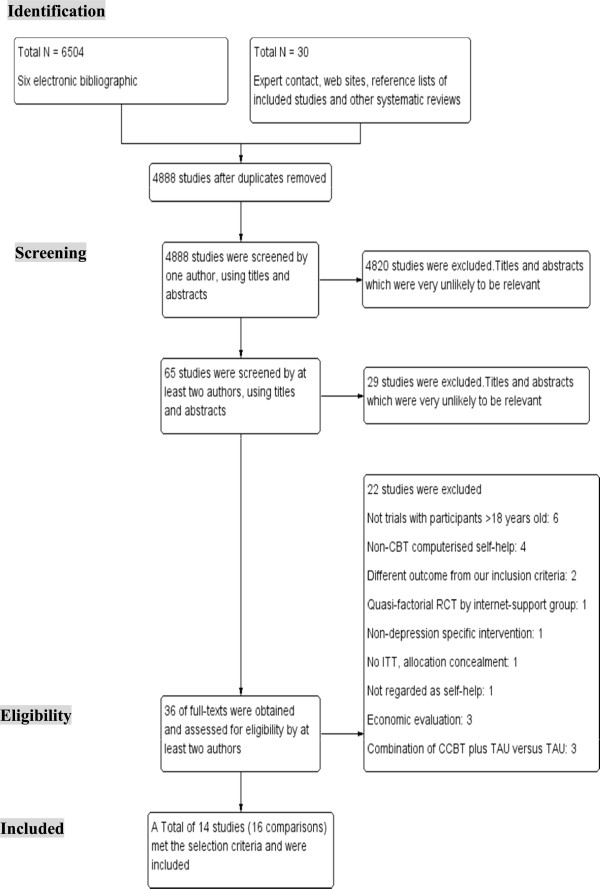
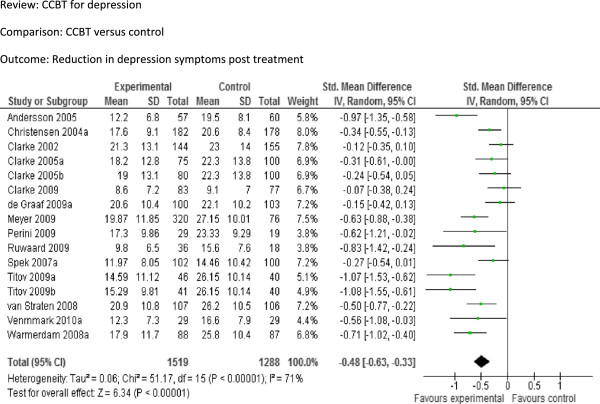
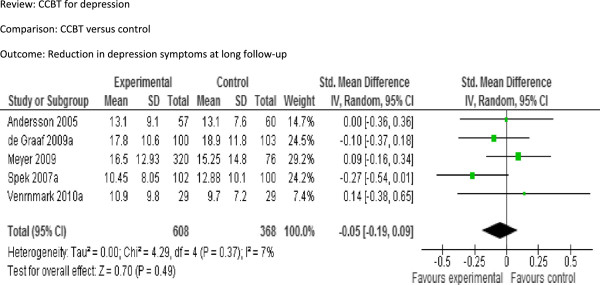
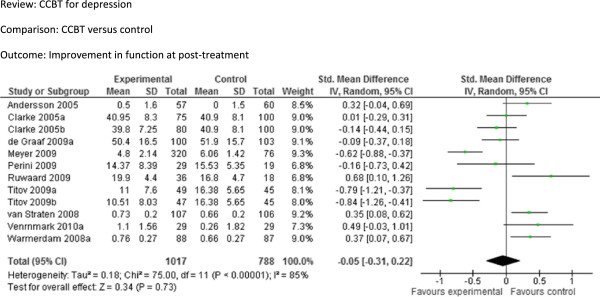
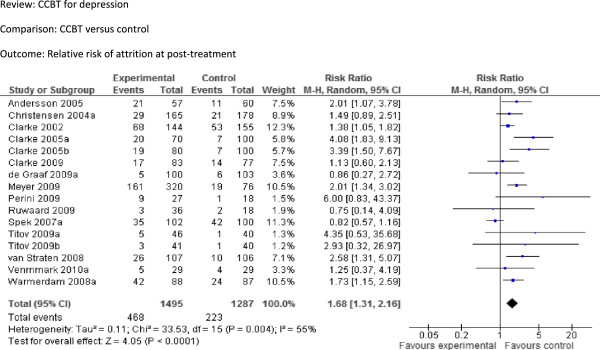
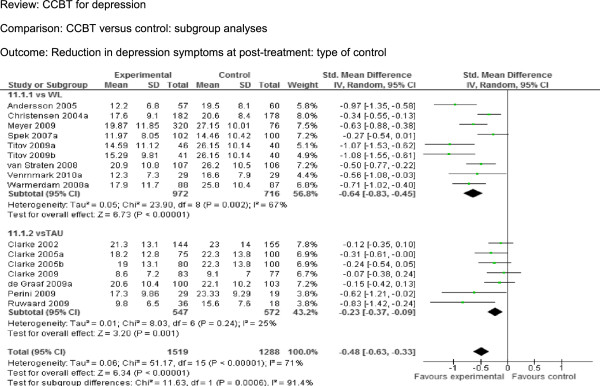
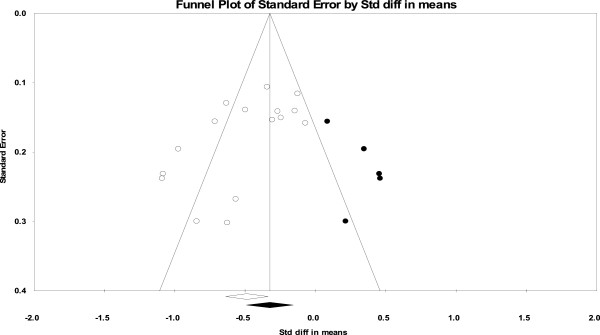
BACKGROUND: Depression is a major cause of disability worldwide, and computerised cognitive behavioural therapy (CCBT) is expected to be a more augmentative and efficient treatment. According to previous meta-analyses of CCBT, there is a need for a meta-analytic revaluation of the short-term effectiveness of this therapy and for an evaluation of its long-term effects, functional improvement and dropout. METHODS: Five databases were used (MEDLINE, PsycINFO, EMBASE, CENTRAL and CiNii). We included all RCTs with proper concealment and blinding of outcome assessment for the clinical effectiveness of CCBT in adults (aged 18 and over) with depression. Using Cohen's method, the standard mean difference (SMD) for the overall pooled effects across the included studies was estimated with a random effect model. The main outcome measure and the relative risk of dropout were included in the meta-analysis. RESULTS: Fourteen trials met the inclusion criteria, and sixteen comparisons from these were used for the largest meta-analysis ever. All research used appropriate random sequence generation and Intention-to-Treat analyses (ITT), and employed self-reported measures as the primary outcome. For the sixteen comparisons (2807 participants) comparing CCBT and control conditions, the pooled SMD was -0.48 [95% IC -0.63 to -0.33], suggesting similar effect to the past reviews. Also, there was no significant clinical effect at long follow-up and no improvement of function found. Furthermore, a significantly higher drop-out rate was found for CCBT than for controls. When including studies without BDI as a rating scale and with only modern imputation as sensitivity analysis, the pooled SMD remained significant despite the reduction from a moderate to a small effect. Significant publication bias was found in a funnel plot and on two tests (Begg's p = 0.09; Egger's p = 0.01). Using a trim and fill analysis, the SMD was -0.32 [95% CI -0.49 to -0.16]. CONCLUSION: Despite a short-term reduction in depression at post-treatment, the effect at long follow-up and the function improvement were not significant, with significantly high drop-out. Considering the risk of bias, our meta-analysis implied that the clinical usefulness of current CCBT for adult depression may need to be re-considered downwards in terms of practical implementation and methodological validity.
Overview
The claims and statistics of this paper haven’t been checked yet.
Run the check — free, no account needed. It reads the open-access text and checks the sources it cites.
Integrity signals
Registry
Cites
Statistics
Figures
Verification
Claims the paper makes
The claims and statistics of this paper haven’t been checked yet.
Run the check — free, no account needed. It reads the open-access text and checks the sources it cites.
Claims other papers make about this one
Each is checked against this paper’s own text: does it say what the citing paper says it does?
The cited source says what the claim attributes to it.
In the citing paper
“the effects were observed to be transient and the participants’ drop-out rate was high [5].”
The cited source says what the claim attributes to it.
In the citing paper
“A number of studies in the broader CCBT literature have found evidence of a publication bias. Studies reporting negative findings are less likely to be published [26,49,50].”
From Computerized cognitive behavior therapy for anxiety and depression in rural areas:a systematic review (2015) · cites this paper as [50]
In the citing paper
“Effect sizes have been estimated at d=0.44-1.90 for clinician-supported, and d=0.21-0.70 for self-guided, interventions [42-45,47,48].”
From MoodHacker Mobile Web App With Email for Adults to Self-Manage Mild-to-Moderate Depression: Randomized Controlled Trial (2016) · cites this paper as [45]
In the citing paper
“Thus there is currently ample evidence for the short and long term benefits for eHealth delivered Cognitive Behavioural Therapy (CBT) for treating anxiety and depressive conditions in both general population and clinical settings [21–23], with greater improvement shown for those interventions that include guidance throughout the intervention period [21,24].”
From Effectiveness of eHealth interventions for reducing mental health conditions in employees: A systematic review and meta-analysis (2017) · cites this paper as [22]
In the citing paper
“Internet-delivered CBT-based programs for depression symptom management have been shown to be effective both for adults with major depressive disorder and those with elevated, but subthreshold, depression symptoms, although one recent review identified concerns with dropout and lack of long-term effects [42-45].”
From MoodHacker Mobile Web App With Email for Adults to Self-Manage Mild-to-Moderate Depression: Randomized Controlled Trial (2016) · cites this paper as [45]
In the citing paper
“Although our results are consistent with a recent meta-analysis of computerized CBT programs showing that results of computer-based CBT programs typically attenuate over time [45]”
From MoodHacker Mobile Web App With Email for Adults to Self-Manage Mild-to-Moderate Depression: Randomized Controlled Trial (2016) · cites this paper as [45]
Self-check
Percentages, sums and reported differences re-computed from the paper’s own numbers.
The self-check needs the paper’s full text.
Citations
Cites
Bias in meta-analysis detected by a simple, graphical test
Egger, M., Smith, G. D., Schneider, M., & Minder, C. (1997) · BMJ · doi:10.1136/bmj.315.7109.629 · Cited by 56,722 · cited 3×
“Also, there was significant statistical evidence for study bias using both Begg’s test (p = 0.009) and Egger’s test (p = 0.01).”
MethodInfluentialAn inventory for measuring depression
BECK, A. T. (1961) · Archives of General Psychiatry · doi:10.1001/archpsyc.1961.01710120031004 · Cited by 38,032 · cited 1×
“I, BDI- I [30], and II [31], or according to the difference”
BackgroundOperating characteristics of a rank correlation test for publication bias
Begg, C. B., & Mazumdar, M. (1994) · Biometrics · doi:10.2307/2533446 · Cited by 16,955 · cited 1×
“Begg’s [33] and Egger’s [34] tests were also conducted for statistical checking.”
Method(1975) · Medical Entomology and Zoology · Cited by 7,245
Comparison of Beck Depression Inventories -IA and -II in psychiatric outpatients
Beck, A. T., Steer, R. A., Ball, R., & Ranieri, W. F. (1996) · Journal of Personality Assessment · doi:10.1207/s15327752jpa6703_13 · Cited by 5,965 · cited 1×
“I, BDI- I [30], and II [31], or according to the difference”
BackgroundDepression, chronic diseases, and decrements in health: results from the World Health Surveys
Moussavi, S., Chatterji, S., Verdes, E., Tandon, A., Patel, V., & Ustun, B. (2007) · The Lancet · doi:10.1016/s0140-6736(07)61415-9 · Cited by 4,070 · cited 1×
“over the world [1].”
The empirical status of cognitive-behavioral therapy: A review of meta-analyses
Butler, A. C., Chapman, J. E., Forman, E. M., & Beck, A. T. (2006) · Clinical Psychology Review · doi:10.1016/j.cpr.2005.07.003 · Cited by 3,215 · cited 1×
“as an alternative or addition to pharmacotherapy [5,6].”
BackgroundA Nonparametric “Trim and Fill” Method of Accounting for Publication Bias in Meta-Analysis
Duval, S., & Tweedie, R. (2000) · Journal of the American Statistical Association · doi:10.1080/01621459.2000.10473905 · Cited by 2,955 · cited 1×
“When a significant small study effect was noted, we assessed its influence through the trim-and-fill method [35].”
MethodCognitive Therapy and the Emotional Disorders
Ince, L. P. (1977) · American Journal of Psychotherapy · doi:10.1176/appi.psychotherapy.1977.31.4.633 · Cited by 2,889
Dimidjian, S., Hollon, S. D., Dobson, K. S., Schmaling, K. B., Kohlenberg, R. J., Addis, M. E., Gallop, R., McGlinchey, J. B., Markley, D. K., Gollan, J. K., et al. (2006) · Journal of Consulting and Clinical Psychology · doi:10.1037/0022-006x.74.4.658 · Cited by 1,607 · cited 1×
“reduction of symptoms [7].”
Research works printed but not linked: 3
- Department of Health: Treatment choice in psychological therapies and counselling. Evidence-based clinical practice guideline. 2001, In. London: DOH
- Moran PW, Lambert JM: A review of current assessment tools for monitoring changes in depression. The Measurement of Psychotherapy Outcome in Research and Evaluation. Edited by: Lambert MJ, Christensen ER, De Julio SS. 1983, New York: Wiley, 263-303.
- Moran PW: A Review of Current Assessment Tools for Monitoring Changes in Depression. 1982, Brigham Young University: Department of Psychology
Cited by
Sorted by citations
Philippe, T. J., Sikder, N., Jackson, A., Koblanski, M. E., Liow, E., Pilarinos, A., & Vasarhelyi, K. (2022) · JMIR Mental Health · doi:10.2196/35159 · Cited by 436
Gilbody, S., Littlewood, E., Hewitt, C., Brierley, G., Tharmanathan, P., Araya, R., Barkham, M., Bower, P., Cooper, C., Gask, L., et al. (2015) · BMJ · doi:10.1136/bmj.h5627 · Cited by 409
“33”
Insights from user reviews to improve mental health apps
Alqahtani, F., & Orji, R. (2020) · Health Informatics Journal · doi:10.1177/1460458219896492 · Cited by 286
Stratton, E., Lampit, A., Choi, I., Calvo, R. A., Harvey, S. B., & Glozier, N. (2017) · PLOS ONE · doi:10.1371/journal.pone.0189904 · Cited by 252
Kuester, A., Niemeyer, H., & Knaevelsrud, C. (2016) · Clinical Psychology Review · doi:10.1016/j.cpr.2015.11.004 · Cited by 261
Deady, M., Choi, I., Calvo, R. A., Glozier, N., Christensen, H., & Harvey, S. B. (2017) · BMC Psychiatry · doi:10.1186/s12888-017-1473-1 · Cited by 222
Stawarz, K., Preist, C., Tallon, D., Wiles, N., & Coyle, D. (2018) · Journal of Medical Internet Research · doi:10.2196/10120 · Cited by 198
“Much of this work has focused on the development and evaluation of computerized cognitive behavioral therapy (CBT) [5,8-13].”
Carroll, K. M., Kiluk, B. D., Nich, C., Gordon, M. A., Portnoy, G. A., Marino, D. R., & Ball, S. A. (2014) · American Journal of Psychiatry · doi:10.1176/appi.ajp.2013.13070987 · Cited by 177
“The strengths of this protocol include methodological features of importance for rigorous clinical trials of computer-assisted therapies (20, 21) and therapist-delivered behavioral therapies more broadly (38).”
BackgroundMethodBirney, A. J., Gunn, R., Russell, J. K., & Ary, D. V. (2016) · JMIR mHealth and uHealth · doi:10.2196/mhealth.4231 · Cited by 159
“70 for self-guided, interventions [42-45,47,48].”
Telemental health: A status update
Aboujaoude, E., Salame, W., & Naim, L. (2015) · World Psychiatry · doi:10.1002/wps.20218 · Cited by 154
“…(RCTs) and 2,976 subjects compared both assisted and unassisted cCBT to either waitlist or traditional CBT in the treatment of adult depression (13). cCBT showed a moderate post-treatment effect size on depressive symptoms when compared to the waitlist group, with equivalent outcomes compared…”
ResultAn evaluation of a peer support intervention for student mental health
Byrom, N. (2018) · Journal of Mental Health · doi:10.1080/09638237.2018.1437605 · Cited by 146
“The mid-point retention is comparable to computerised CBT, a NICE recommend psycho-social intervention for mild to moderate depression, which has a 50% attrition (So et al., 2013).”
MethodWu, A. C., Donnelly-McLay, D., Weisskopf, M. G., McNeely, E., Betancourt, T. S., & Allen, J. G. (2016) · Environmental Health · doi:10.1186/s12940-016-0200-6 · Cited by 143
“Concerns toward ICBT include a meta-analysis published in 2013 of effectiveness of computerized CBT on adult depression showing the lack of significant effect of long-term treatment outcomes compared to short-term treatment duration and significantly high participant drop-out [48].”
BackgroundAref-Adib, G., McCloud, T., Ross, J., O'Hanlon, P., Appleton, V., Rowe, S., Murray, E., Johnson, S., & Lobban, F. (2019) · The Lancet Psychiatry · doi:10.1016/s2215-0366(18)30302-x · Cited by 118
Sztein, D. M., Koransky, C. E., Fegan, L., & Himelhoch, S. (2018) · Journal of Telemedicine and Telecare · doi:10.1177/1357633x17717402 · Cited by 135
“Of note, there was one meta-analysis investigation in which follow-up rates of depressive symptoms were found to be not significantly different from the control group.(25) The present meta-analysis also examined whether clinician assistance was a necessary prerequisite for the success of an iCBT program.”
ResultImproving the Efficiency of Psychotherapy for Depression: Computer-Assisted Versus Standard CBT
Thase, M. E., Wright, J. H., Eells, T. D., Barrett, M. S., Wisniewski, S. R., Balasubramani, G. K., McCrone, P., & Brown, G. K. (2018) · American Journal of Psychiatry · doi:10.1176/appi.ajp.2017.17010089 · Cited by 131
Self-citationFish, J., Brimson, J., & Lynch, S. (2016) · Mindfulness · doi:10.1007/s12671-016-0548-2 · Cited by 126
“Additional therapist support appears to be more effective than those without (ES=1 vs .2; Spek et al. 2007) and reduce attrition rates (So et al. 2013), so there is some loss of effectiveness when direct contact with a therapist is lost.”
BackgroundResultInfluentialJuegos serios para el tratamiento o la prevención de la depresión: una revisión sistemática
Fleming, T. M., Cheek, C., Merry, S. N., Thabrew, H., Bridgman, H., Stasiak, K., Shepherd, M., Perry, Y., & Hetrick, S. (2015) · Revista de Psicopatología y Psicología Clínica · doi:10.5944/rppc.vol.19.num.3.2014.13904 · Cited by 120
“Attrition (non-completion) rates have been shown to range from 2 to 83% (Melville, Casey, & Kavanagh, 2010;Richards et al., 2012;So et al., 2013).”
BackgroundWeb-Based Bereavement Care: A Systematic Review and Meta-Analysis
Wagner, B., Rosenberg, N., Hofmann, L., & Maaß, U. (2020) · Frontiers in Psychiatry · doi:10.3389/fpsyt.2020.00525 · Cited by 129
Vallury, K. D., Jones, M., & Oosterbroek, C. (2015) · Journal of Medical Internet Research · doi:10.2196/jmir.4145 · Cited by 105
“Studies reporting negative findings are less likely to be published [26,49,50].”
Stawarz, K., Preist, C., & Coyle, D. (2019) · JMIR Mental Health · doi:10.2196/12546 · Cited by 107
“For example, they tend to have short-term effects [13] and only when supported by a therapist, rather than as stand-alone interventions [14,15].”
BackgroundZwerenz, R., Becker, J., Knickenberg, R. J., Siepmann, M., Hagen, K., & Beutel, M. E. (2017) · Psychotherapy and Psychosomatics · doi:10.1159/000481177 · Cited by 108
“Findings on the applicability of online self-help for primary care patients have been mixed, especially when offered in usual care settings [13] .”
BackgroundPatient experience of computerised therapy for depression in primary care
Knowles, S. E., Lovell, K., Bower, P., Gilbody, S., Littlewood, E., & Lester, H. (2015) · BMJ Open · doi:10.1136/bmjopen-2015-008581 · Cited by 89
Computer-Assisted Cognitive-Behavior Therapy and Mobile Apps for Depression and Anxiety
Wright, J. H., Mishkind, M., Eells, T. D., & Chan, S. R. (2019) · Current Psychiatry Reports · doi:10.1007/s11920-019-1031-2 · Cited by 93
Lattie, E. G., Nicholas, J., Knapp, A. A., Skerl, J. J., Kaiser, S. M., & Mohr, D. C. (2019) · Administration and Policy in Mental Health and Mental Health Services Research · doi:10.1007/s10488-019-00979-2 · Cited by 85
Systematic review of universal and targeted workplace interventions for depression
Yunus, W. M. A. W. M., Musiat, P., & Brown, J. S. L. (2017) · Occupational and Environmental Medicine · doi:10.1136/oemed-2017-104532 · Cited by 80
Duffecy, J., Grekin, R., Hinkel, H., Gallivan, N., Nelson, G., & O'Hara, M. W. (2019) · JMIR Mental Health · doi:10.2196/10778 · Cited by 60
“Internet interventions for the treatment of depression are widely accepted as efficacious [14-18].”
Backgroundvan Beugen, S., Ferwerda, M., Koulil, S. S., Smit, J. V., Zeeuwen-Franssen, M. E. J., Kroft, E. B. M., de Jong, E. M. G. J., Otero, M. E., Donders, A. R. T., van de Kerkhof, P. C. M., et al. (2016) · Psychotherapy and Psychosomatics · doi:10.1159/000447267 · Cited by 72
Thase, M. E., McCrone, P., Barrett, M. S., Eells, T. D., Wisniewski, S. R., Balasubramani, G. K., Brown, G. K., & Wright, J. H. (2020) · Psychotherapy and Psychosomatics · doi:10.1159/000508143 · Cited by 60
Self-citationBaker, F. R. L., Baker, K. L., & Burrell, J. (2021) · Journal of Occupational and Organizational Psychology · doi:10.1111/joop.12340 · Cited by 92
Nishi, D., Susukida, R., Usuda, K., Mojtabai, R., & Yamanouchi, Y. (2018) · Journal of Affective Disorders · doi:10.1016/j.jad.2018.07.016 · Cited by 68
Depression in primary care: part 2—management
Ramanuj, P., Ferenchick, E. K., & Pincus, H. A. (2019) · BMJ · doi:10.1136/bmj.l835 · Cited by 68
Yang, H., Gao, S., Li, J., Yu, H., Xu, J., Lin, C., Yang, H., Teng, C., Ma, H., & Zhang, N. (2022) · Frontiers in Psychiatry · doi:10.3389/fpsyt.2022.915689 · Cited by 70
The Implementation of Internet Interventions for Depression: A Scoping Review
Drozd, F., Vaskinn, L., Bergsund, H. B., Haga, S. M., Slinning, K., & Bjørkli, C. A. (2016) · Journal of Medical Internet Research · doi:10.2196/jmir.5670 · Cited by 67
“In the last few years there has been increasing evidence for the efficacy of internet interventions for treating depression (Andersson & Cuijpers, 2009; Foroushani, Schneider, & Assareh, 2011; So et al., 2013; Spek et al., 2007).”
A Psychodynamic Perspective on a Systematic Review of Online Psychotherapy for Adults
Machado, D. D. B., Laskoski, P. B., Severo, C. T., Bassols, A. M. S., Sfoggia, A., Kowacs, C., Krieger, D. V., Torres, M. B., Gastaud, M. B., Wellausen, R. S., et al. (2016) · British Journal of Psychotherapy · doi:10.1111/bjp.12204 · Cited by 65
Fordham, B., Sugavanam, T., Edwards, K., Hemming, K., Howick, J., Copsey, B. J., Lee, H., Kaidesoja, M., Kirtley, S., Hopewell, S., et al. (2021) · Health Technology Assessment · doi:10.3310/hta25090 · Cited by 62
Stratton, E., Lampit, A., Choi, I., Gavelin, H. M., Aji, M., Taylor, J., Calvo, R. A., Harvey, S. B., & Glozier, N. (2022) · Journal of Medical Internet Research · doi:10.2196/37776 · Cited by 67
Huffman, J. C., Adams, C. N., & Celano, C. M. (2017) · Psychosomatics · doi:10.1016/j.psym.2017.09.003 · Cited by 49
“some question about the impact of this approach alone (79).”
Nakao, S., Nakagawa, A., Oguchi, Y., Mitsuda, D., Kato, N., Nakagawa, Y., Tamura, N., Kudo, Y., Abe, T., Hiyama, M., et al. (2018) · Journal of Medical Internet Research · doi:10.2196/10743 · Cited by 45
Internet‐Based Psychotherapy for Adult Depression: What About the Mechanisms of Change?
Mogoaşe, C., Cobeanu, O., David, D., Giosan, C., & Szentágotai, A. (2016) · Journal of Clinical Psychology · doi:10.1002/jclp.22326 · Cited by 48
Six, S. G., Byrne, K., Aly, H., & Harris, M. W. (2022) · JMIR Mental Health · doi:10.2196/39516 · Cited by 31
“One caveat of this type of therapy is its low adherence rate [32,33].”
BackgroundWright, J. H., Owen, J. J., Eells, T. D., Antle, B. F., Bishop, L. B., Girdler, R. V., Harris, L. M., Wright, R. B., Wells, M. J., Gopalraj, R. K., et al. (2022) · JAMA Network Open · doi:10.1001/jamanetworkopen.2021.46716 · Cited by 41
Chan, C., West, S., & Glozier, N. (2017) · Journal of Medical Internet Research · doi:10.2196/jmir.5639 · Cited by 32
“In their study, So et al [5] reported limited long-term gains from CCBT, along with an increased rate of participant withdrawal.”
InfluentialMontero‐Marín, J., Prado-Abril, J., Botella, C., Mayoral, F., Baños, R., Herrera‐Mercadal, P., Romero‐Sanchiz, P., Gili, M., Castro, A., Nogueira‐Arjona, R., et al. (2015) · Journal of Medical Internet Research · doi:10.2196/jmir.3985 · Cited by 38
“Several studies show that Web-based psychological treatments are effective for the treatment of depression, in both unguided and guided interventions, although the effects are more favorable in the latter case [33,36-38].”
Rasing, S. P. A., Stikkelbroek, Y. A. J., & Bodden, D. H. M. (2019) · International Journal of Environmental Research and Public Health · doi:10.3390/ijerph17010153 · Cited by 35
“, outside controlled research settings, has smaller effects and a higher attrition rate when compared to computerized CBT in adults who are recruited for participation in research [22].”
BackgroundMehrotra, S., Sudhir, P. M., Rao, G. N., Thirthalli, J., & Srikanth, T. K. (2018) · Behavioral Sciences · doi:10.3390/bs8040036 · Cited by 34
“Moderate effect sizes in terms of reductions in depressive symptoms have been noted in CBT based online interventions, but a meta-analysis indicated low impact on functioning [10,54].”
BackgroundDuffy, D. J., Richards, D., Hisler, G. C., & Timulák, L. (2024) · Journal of Medical Internet Research · doi:10.2196/47927 · Cited by 34
“First, a plethora of articles stated a lack of research that details the process of implementing iCBT in naturalistic settings; therefore, more research is needed to understand and improve iCBT uptake [38,44,52,56-58, 60, 64, 65 ].”
Srivastava, P., Mehta, M., Sagar, R., & Ambekar, A. (2020) · Asian Journal of Psychiatry · doi:10.1016/j.ajp.2020.101970 · Cited by 37
Abrahamsson, N., Ahlund, L., Ahrin, E., & Alfonsson, S. (2018) · Journal of Behavior Therapy and Experimental Psychiatry · doi:10.1016/j.jbtep.2018.06.010 · Cited by 33
Klein, N. S., Bockting, C., Wijnen, B. F. M., Kok, G. D., van Valen, E., Riper, H. M., Cuijpers, P. J., Dekker, J., van der Heiden, C., Burger, H., et al. (2018) · Journal of Medical Internet Research · doi:10.2196/10437 · Cited by 31
“al [48] that found short-term effects of internet-based treatments for MDD but no effects beyond 6 months posttreatment.”
Telepsychiatry in an Era of Digital Mental Health Startups
Achtyes, E. D., Glenn, T., Monteith, S., Geddes, J. R., Whybrow, P. C., Martini, J., & Bauer, M. (2023) · Current Psychiatry Reports · doi:10.1007/s11920-023-01425-9 · Cited by 32
Watanabe, N., Horikoshi, M., Yamada, M., Shimodera, S., Akechi, T., Miki, K., Inagaki, M., Yonemoto, N., Imai, H., Tajika, A., et al. (2015) · Trials · doi:10.1186/s13063-015-0805-z · Cited by 27
“63) in the shortterm follow up than those in control conditions, whilst to neither superiority nor inferiority in the long term [8].”
BackgroundMethodInfluentialSelf-citationJonassaint, C. R., Gibbs, P., Belnap, B. H., Karp, J. F., Abebe, K. Z., & Rollman, B. L. (2017) · BJPsych Open · doi:10.1192/bjpo.bp.116.003657 · Cited by 30
Noguchi, R., Sekizawa, Y., So, M., Yamaguchi, S., & Shimizu, E. (2017) · BMC Psychiatry · doi:10.1186/s12888-017-1248-8 · Cited by 25
“Although the potential effects of iCBT in reducing depressive symptoms have been shown in meta-analyses [3, 4], the effects were observed to be transient and the participants’ drop-out rate was high [5].”
BackgroundSelf-citationAkechi, T., Yamaguchi, T., Uchida, M., Imai, F., Momino, K., Katsuki, F., Sakurai, N., Miyaji, T., Horikoshi, M., Furukawa, T. A., et al. (2018) · BMJ Open · doi:10.1136/bmjopen-2018-024794 · Cited by 27
Self-citationAutomatic Identification of Depression Using Facial Images with Deep Convolutional Neural Network
Kong, X., Yao, Y., Wang, C., Wang, Y., Teng, J., & Qi, X. (2022) · Medical Science Monitor · doi:10.12659/msm.936409 · Cited by 34
Computer-Assisted CBT and Mobile Apps for Depression: Assessment and Integration Into Clinical Care
Wright, J. H., & Mishkind, M. C. (2020) · FOCUS The Journal of Lifelong Learning in Psychiatry · doi:10.1176/appi.focus.20190044 · Cited by 27
He, R., Wei, J., Huang, K., Yang, H., Chen, Y., Liu, Z., Ma, L., Jia, Y., & Chen, L. (2022) · Psychiatry Research · doi:10.1016/j.psychres.2022.114897 · Cited by 29
Purkayastha, S., Addepally, S. A., & Bucher, S. (2019) · JMIR Human Factors · doi:10.2196/14146 · Cited by 28
“Thus, current literature suggests supplementing pharmacological interventions with cognitive behavioral therapy (CBT) as the most effective combination treatment for the management of major depression in most patients [11,12].”
BackgroundGunn, J., Cameron, J., Densley, K., Davidson, S., Fletcher, S., Palmer, V., Chondros, P., Dowrick, C., & Pirkis, J. (2018) · Patient Education and Counseling · doi:10.1016/j.pec.2017.07.008 · Cited by 25
Testing a stepped care model for binge-eating disorder: a two-step randomized controlled trial
Tasca, G. A., Koszycki, D., Brugnera, A., Chyurlia, L., Hammond, N. G., Francis, K., Ritchie, K., Ivanova, I. V., Proulx, G., Wilson, B., et al. (2018) · Psychological Medicine · doi:10.1017/s0033291718001277 · Cited by 24
“However, longterm remission rates from depression or anxiety symptoms after low-intensity treatment appear to be low (Ali et al., 2017) and dropout rates are high (So et al., 2013), which may result in further demoralization and reduced treatment seeking.”
BackgroundResultInfluentialGiosan, C., Cobeanu, O., Mogoaşe, C., Szentagotai, A., Mureşan, V., & Boian, R. (2017) · Trials · doi:10.1186/s13063-017-1960-1 · Cited by 23
“Moreover, the benefits of treatment have been reported to be rather short lived, the impact on functioning was found to be minimal, and high attrition rates seriously limited the potential clinical benefits [17].”
BackgroundYu, S., Liu, Y., Cao, M., Tian, Q., Xu, M., Yu, L., Yang, S., & Zhang, W. (2025) · Cancer Nursing · doi:10.1097/ncc.0000000000001274 · Cited by 22
Taylor, A., Tallon, D., Kessler, D. S., Peters, T. J., Shafran, R., Williams, C., & Wiles, N. (2019) · Cognitive Behaviour Therapy · doi:10.1080/16506073.2019.1641146 · Cited by 25
“Whilst some investigators have found that computerised CBT is acceptable to both patients and therapists, trial outcomes have been mixed (Gilbody et al., 2015; So et al., 2013).”
BackgroundBrief Online Self-help Exercises for Postnatal Women to Improve Mood: A Pilot Study
Ayers, S., Fitzgerald, G., & Thompson, S. (2015) · Maternal and Child Health Journal · doi:10.1007/s10995-015-1755-5 · Cited by 22
Integrating the Digital and the Traditional to Deliver Therapy for Depression
Stawarz, K., Preist, C., Tallon, D., Thomas, L., Turner, K. M., Wiles, N., Kessler, D. S., Shafran, R., & Coyle, D. (2020) · CHI Conference on Human Factors in Computing Systems · doi:10.1145/3313831.3376510 · Cited by 27
“They can be an effective first-step approach in treating symptoms of depression [1, 29, 57], but cCBT has been predominantly used for low-intensity treatment [53] and improvements in depression tend to be short-term and drop-out rates high [34, 66].”
BackgroundPihlaja, S., Lahti, J. M. T., Lipsanen, J. O., Ritola, V., Gummerus, E.-M., Stenberg, J., & Joffe, G. (2020) · Journal of Medical Internet Research · doi:10.2196/15732 · Cited by 23
Are Trials of Computerized Therapy Generalizable? A Multidimensional Meta-analysis
Wilks, C. R., Zieve, G. G., & Lessing, H. K. (2016) · Telemedicine and e-Health · doi:10.1089/tmj.2015.0129 · Cited by 18
Rodriguez-Pulido, F., Castillo-Sánchez, G., Hamrioui, S., Martin, L. D., Vazquez-Beltrán, P., Díez, I. D. L. T., & Franco, M. (2020) · Journal of Medical Systems · doi:10.1007/s10916-020-1543-7 · Cited by 21
Klein, N. S., Kok, G. D., Burger, H., van Valen, E., Riper, H. M., Cuijpers, P. J., Dekker, J., Smit, F., van der Heiden, C., & Bockting, C. (2018) · Psychotherapy and Psychosomatics · doi:10.1159/000485039 · Cited by 20
Krejtz, I., Holas, P., Rusanowska, M., & Nezlek, J. B. (2018) · Journal of Clinical Psychology · doi:10.1002/jclp.22617 · Cited by 20
Yokomitsu, K., Irie, T., Sekiguchi, M., Shimizu, A., Matsuoka, H., Merry, S., & Stasiak, K. (2020) · JMIR Research Protocols · doi:10.2196/15164 · Cited by 16
“Considering these findings, we assumed a similar effect size (0.60) to that of internet-based and other computerized psychological treatments or game-based digital interventions against wait-list [22,35,36] for the reduction of primary outcomes assessed using Patient Health Questionnaire-9 (PHQ-9).”
InfluentialRodríguez-Fernández, J. M., Danies, E., Hoertel, N., Galanter, W., Saner, H. E., & Franco, O. H. (2021) · Journal of Applied Gerontology · doi:10.1177/07334648211056231 · Cited by 17
“Telemedicine alternatives in mental health care can facilitate therapy delivery, information resources, counseling, and networking (Cooper, 2013; Dölemeyer et al., 2013; So et al., 2013).”
BackgroundLobban, F. A., Appelbe, D. E., Appleton, V., Billsborough, J., Fisher, N. R., Foster, S., Gill, B., Glentworth, D., Harrop, C. E., Johnson, S., et al. (2020) · BMC Health Services Research · doi:10.1186/s12913-020-5002-4 · Cited by 18
“Despite substantial investment, many DHIs are either not adopted by their intended users, are abandoned, fail to scale up locally or spread to other settings, or are not sustained over time [9, 10].”
BackgroundMoving towards the benign: automatic interpretation bias modification in dysphoria
Cowden Hindash, A. H., & Rottenberg, J. A. (2017) · Behaviour Research and Therapy · doi:10.1016/j.brat.2017.09.005 · Cited by 15
Yoshizaki, A., Murata, E., Yamamoto, T., Fujisawa, T. X., Hanaie, R., Hirata, I., Matsumoto, S., Mohri, I., & Taniike, M. (2023) · JMIR mhealth and uhealth · doi:10.2196/40836 · Cited by 18
“One of the goals of remote interventions such as mHealth or computerized cognitive behavioral therapy is to minimize dropouts and maintain intervention adherence—high dropout rates, which can reach up to 80%, have been one of the main issues plaguing remote cognitive behavioral therapy [44-47].”
Kanapathy, J., & Bogle, V. (2019) · Journal of Health Psychology · doi:10.1177/1359105317713360 · Cited by 14
Patient experience of supported computerized CBT in an inner-city IAPT service: a qualitative study
Perera-Delcourt, R. P., & Sharkey, G. (2019) · The Cognitive Behaviour Therapist · doi:10.1017/s1754470x18000284 · Cited by 14
“…be less impressive and have shorter-term effect, and also be compromised by higher drop-out, than previously considered (de Graaf et al. , 2009); particularly when publication bias and detail of study findings are taken into account, according to the largest meta-analysis to date (So et al. , 2013).”
BackgroundGiosan, C., Cobeanu, O., Mogoaşe, C., Szentágotai Tătar, A., Mureşan, V., & Boian, R. (2016) · Trials · doi:10.1186/s13063-016-1740-3 · Cited by 13
Internetbasierte Therapie in der Versorgung von Patienten mit depressiven Störungen: Ein Überblick
Backenstrass, M., & Wolf, M. (2018) · Zeitschrift für Psychiatrie Psychologie und Psychotherapie · doi:10.1024/1661-4747/a000339 · Cited by 8
Psychology in the Age of Austerity
Ferraro, D. J. (2016) · Psychotherapy and Politics International · doi:10.1002/ppi.1369 · Cited by 12
Rajeshkumar, L., Mishkind, M. C., Coleman, J. J., Pahwa, M., LaPreze, D., Solenske, S., & Wright, J. H. (2024) · Journal of Psychiatric Practice · doi:10.1097/pra.0000000000000815 · Cited by 12
Szigethy, E., Solano, F., Wallace, M., Perry, D. L., Morrell, L., Scott, K., Bell, M. J., & Oser, M. (2018) · BMJ Open · doi:10.1136/bmjopen-2017-019108 · Cited by 10
In-Depth Co-Design of Mental Health Monitoring Technologies by People with Lived Experience
Patrickson, B., Musker, M., Thorpe, D., van Kasteren, Y., Bidargaddi, N. P., & The Consumer and Carer Advisory Group (CCAG) (2023) · Future Internet · doi:10.3390/fi15060191 · Cited by 11
Computerised cognitive behaviour therapy for major depression: a reply to the REEACT trial
Andrews, G., Hobbs, M., & Newby, J. (2016) · Evidence-Based Mental Health · doi:10.1136/eb-2015-102293 · Cited by 13
Dissemination of computer-assisted cognitive-behavior therapy for depression in primary care
Antle, B. F., Owen, J. J., Eells, T. D., Wells, M. J., Harris, L. M., Cappiccie, A., Wright, B., Williams, S. M., & Wright, J. H. (2018) · Contemporary Clinical Trials · doi:10.1016/j.cct.2018.11.001 · Cited by 10
Fulford, H., McSwiggan, L. C., Kroll, T., & MacGillivray, S. A. (2016) · JMIR Mental Health · doi:10.2196/mental.5966 · Cited by 9
“However, in a recent meta-analysis of computerized cognitive behavioral therapy (cCBT) by So et al [9] only short-term reductions in symptoms were noted, long-term follow-up and functional improvement were not significant and there was a recommendation that the clinical usefulness of cCBT should be reconsidered downwa…”
Psychological Wellbeing and Work
Stolk, C. V., Hofman, J., Hafner, M., & Janta, B. (2014) · Cited by 8
Amer, N. A., Shohieb, S. M., Eladrosy, W., Liu, S., Nam, Y., & Abdelrazek, S. M. (2024) · Digital Health · doi:10.1177/20552076241263317 · Cited by 8
Mental Health and the Self-Tracking Student
Weinberg, L. (2021) · Catalyst Feminism Theory Technoscience · doi:10.28968/cftt.v7i1.34039 · Cited by 7
“…online measures involving selfadministration and mindfulness techniques have been shown to have “high dropout rates” and “no long-term benefits” (So et al. 2013), and yet is increasingly advocated for in a range of institutional contexts, including schools, workplaces, | Catalyst: Feminism,…”
BackgroundΠαπαδάτου-Παστού, Μ., Goozée, R., Barley, E. A., Haddad, M., & Tzotzoli, P. (2015) · Pilot and Feasibility Studies · doi:10.1186/s40814-015-0029-8 · Cited by 8
Computerised self help for depression in primary care
Dowrick, C. F. (2015) · BMJ · doi:10.1136/bmj.h5942 · Cited by 7
Exploring the use of mobile information and communication technologies by people with mood disorders
Fulford, H., McSwiggan, L. C., Kroll, T., & MacGillivray, S. A. (2019) · International Journal of Mental Health Nursing · doi:10.1111/inm.12632 · Cited by 6
Wood, M. J. A., Wilson, H. M., & Parry, S. L. (2021) · Medicine Access Point of Care · doi:10.1177/23992026211018087 · Cited by 6
Du, E., Quayle, E., & Macleod, H. (2021) · The Cognitive Behaviour Therapist · doi:10.1017/s1754470x21000210 · Cited by 5
“Furthermore, the use and uptake of CCBT to date is still low, which remains a challenge and a cause for concern (Clarke et al., 2015; Gilbody et al., 2015; Richards and Richardson, 2012; So et al., 2013; Wright et al., 2019).”
Internet-Delivered Psychotherapy for Anxiety Disorders and Depression
Titov, N., Dear, B. F., & Andersson, G. (2014) · Focus · doi:10.1176/appi.focus.12.3.299 · Cited by 5
Practical Development of a Robot to Assist Cognitive Reconstruction in Psychiatric Day Care
Akiyoshi, T., Sumioka, H., Kumazaki, H., Nakanishi, J., Kato, H., & Shiomi, M. (2023) · ACM/IEEE International Conference on Human-Robot Interaction (HRI) · doi:10.1145/3568294.3580150 · Cited by 5
“Although such support is necessary, the number of psychiatrists, nurses, and counselors who specialize in CBT is still limited [26].”
BackgroundMethodCan Cognitive Therapy Be Conducted by Computers?
Eells, T. D., Barrett, M. S., Wright, J. H., & Thase, M. E. (2015) · Current Behavioral Neuroscience Reports · doi:10.1007/s40473-015-0051-4 · Cited by 5
“A meta-analysis by So and colleagues [22] explicitly focused on two issues of concern raised in the Richards and”
MethodMacKinnon, D. F., & Chen, L. N. (2024) · Springer eBooks · doi:10.1007/978-3-030-51366-5_20 · Cited by 5
Luberto, C. M., Perez, G. K., Finkelstein‐Fox, L., Millstein, R. A., Fell, L. A., Chad‐Friedman, E., Park, E. R., & Kuhlthau, K. A. (2021) · Global Advances in Health and Medicine · doi:10.1177/21649561211047804 · Cited by 4
Barriers to Implementation of a Technology-Based Mental Health Intervention in a Rural Setting
Antle, B. F., Harris, L. M., Wright, J. H., Eells, T. D., Cappiccie, A., Williams, S. M., Katz, R., Logsdon, A. R., & Owen, J. J. (2021) · Contemporary Rural Social Work Journal · doi:10.61611/2165-4611.1220 · Cited by 3
“…compared to waitlist controls, information control, treatment as usual, or placebo (Andrews et al., 2018; Thase et al., 2018; Wright et al., 2018; So et al., 2013; Wilks et al., 2016; Richards & Richardson, 2012; Andrews et al., 2010), with changes sustained six weeks to six months post…”
Background
Metadata
- Authors
- So, M., Yamaguchi, S., Hashimoto, S., Sado, M., Furukawa, T. A., & McCrone, P.
- Affiliations
- King's College London (GB)
- National Center of Neurology and Psychiatry (JP)
- Edogawa University (JP)
- Keio University (JP)
- Kyoto University (JP)
- Corresponding author
- So, Mirai
- Venue
- BMC Psychiatry
- Published
- 2013-04-15
- Volume
- 13
- Issue
- 1
- Pages
- 113-113
- ISSN
- 1471-244X (ISSN-L)
- PMC
- PMC3638010
- OpenAlex
- W1998160684
- Cited by
- 129
- References
- 66
- Citations by year
- 2026: 3 · 2025: 3 · 2024: 6 · 2023: 8 · 2022: 8 · 2021: 9 · 2020: 11 · 2019: 9 · 2018: 18 · 2017: 15 · 2016: 14 · 2015: 16 · 2014: 8 · 2013: 1
- FWCI
- 19.87
- Type
- journal article
- Language
- en
- Open access
- gold
- doi.org
- Licence
- Locations
- BMC Psychiatry (publishedVersion, cc-by)
- Europe PMC (PubMed Central) (publishedVersion, cc-by)
- PubMed Central (publishedVersion, cc-by)
- PubMed (publishedVersion)
- Research Portal (King's College London) (submittedVersion, other-oa)
- Funders
- Japan Society for the Promotion of Science (25293150)
- Topics
- Social Sciences › Psychology › Applied Psychology › Digital Mental Health Interventions
- Social Sciences › Psychology › Experimental and Cognitive Psychology › Anxiety, Depression, Psychometrics, Treatment, Cognitive Processes
- Social Sciences › Psychology › Clinical Psychology › Psychotherapy Techniques and Applications
- Keywords
- computerized cognitive behavioral therapy, adult depression, treatment effectiveness, long-term follow-up, functional improvement, dropout, publication bias, risk of bias, methodological validity, clinical implementation
- MeSH terms
- Adult, Depressive Disorder, Humans, Therapy, Computer-Assisted, Cognitive Behavioral Therapy, Treatment Outcome
About these checks
Registry, retraction, Cites and statistics results are computed, not judged, with one exception: a printed reference that no index lists is read once by a model before it counts as a citation error. Claims are extracted by a model and kept only when their quote appears verbatim in the text; each cited source is then checked, with a model’s help, for whether it says what the claim relies on. Those verdicts can be wrong — read the claim’s quote and the cited source before relying on one.
Statistics and arithmetic are recomputed, not judged.
Confidence bands are shown only for fields calibrated on our annotated test set. None is calibrated yet, so no band is shown.
What counts as a claim ›How we measure confidence ›How we check this ›
Are you an author, or do you see a problem with this page? Request a review
