

Posttraumatic stress disorder is associated with an enhanced spontaneous production of pro-inflammatory cytokines by peripheral blood mononuclear cells
Open accessThe DOI matches its Crossref record; 44 of the 44 references it cites were found in a registry or an index.
Abstract
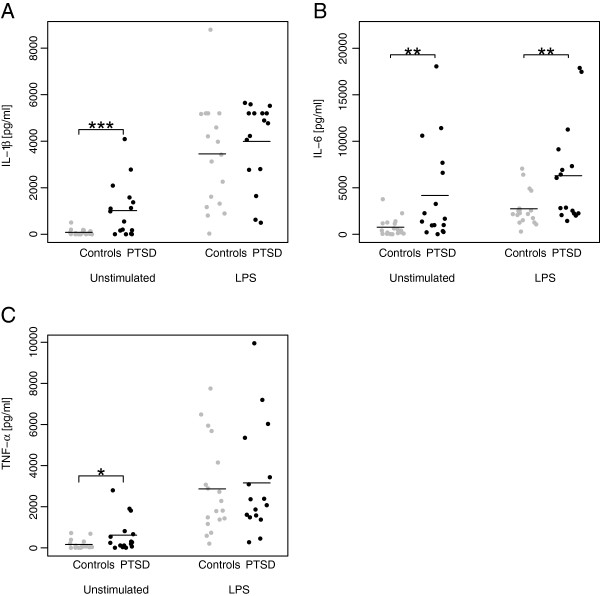
BACKGROUND: Posttraumatic stress disorder (PTSD) is associated with an enhanced risk for cardiovascular and other inflammatory diseases. Chronic low-level inflammation has been suggested as a potential mechanism linking these conditions. METHODS: We investigated plasma cytokine levels as well as spontaneous and lipopolysaccharide (LPS)-stimulated cytokine production by peripheral blood mononuclear cells (PBMCs) in a group of 35 severely traumatized PTSD patients compared to 25 healthy controls. RESULTS: Spontaneous production of interleukin (IL)-1β, IL-6 and tumor necrosis factor (TNF)-α by isolated PBMCs was significantly higher in the PTSD compared to the control group and even correlated with PTSD symptom severity within the PTSD group. In contrast, circulating plasma levels of pro- and anti-inflammatory cytokines such as IL-6, IL-8, IL-10, TNF-α, or monocyte chemotactic protein (MCP)-1 were not significantly altered in PTSD patients compared to healthy controls. CONCLUSIONS: Our findings indicate that PBMCs of PTSD patients are already pre-activated in vivo, providing further evidence for low-grade inflammation in PTSD. This might possibly represent one psychobiological pathway from PTSD to poor physical health.
Overview
The claims and statistics of this paper haven’t been checked yet.
Free: it reads the open-access text and checks the first 5 claims that cite a source we can check. Create a free account to check every claim.
Integrity signals
Registry
Cites
Statistics
Figures
Verification
Claims the paper makes
The claims and statistics of this paper haven’t been checked yet.
Free: it reads the open-access text and checks the first 5 claims that cite a source we can check. Create a free account to check every claim.
Claims other papers make about this one
Each is checked against this paper’s own text: does it say what the citing paper says it does?
The cited source says what the claim attributes to it.
In the citing paper
“There has also been one report that increased spontaneous production of IL-1 and TNF-α in PBMCs is present in individuals with PTSD compared with healthy controls (Gola et al, 2013).”
From Inflammation in Fear- and Anxiety-Based Disorders: PTSD, GAD, and Beyond (2017) · cites this paper as Gola et al, 2013
In the citing paper
“Peripheral blood cells isolated from stressed individuals show increased production of spontaneous IL-6 and in response to immune challenge [12, 13].”
From Interleukin-6 Induced by Social Stress Promotes a Unique Transcriptional Signature in the Monocytes That Facilitate Anxiety (2019) · cites this paper as [13]
Self-check
Percentages, sums and reported differences re-computed from the paper’s own numbers.
The self-check needs the paper’s full text.
Citations
Cites
R: A Language and Environment for Statistical Computing
R Core Team (2025) · doi:10.32614/r.manuals · Cited by 352,181
Hamilton, M. (1960) · Journal of Neurology, Neurosurgery & Psychiatry · doi:10.1136/jnnp.23.1.56 · Cited by 32,817 · cited 1×
“In addition, depressive symptoms were assessed with the Hamilton Depression Rating Scale HAM-D, [29].”
MethodA Simple Sequentially Rejective Multiple Test Procedure
(1979) · Scandinavian Journal of Statistics · doi:10.2307/4615733 · Cited by 21,526 · cited 1×
“In addition, we report p values corrected for multiple comparisons with Holm’s stepwise procedure [35], applied first for the five cytokines measured in plasma and then for the three cytokines produced by PBMCs measured in presence or absence of LPS.”
Method(1998) · The Journal of Clinical Psychiatry · Cited by 19,139
(1998) · PubMed · Cited by 10,216
Diagnostic and Statistical Manual of Mental Disorders (DSM-IV)
Hu, R. J. (2003) · Encyclopedia of the Neurological Sciences · doi:10.1016/b0-12-226870-9/01070-4 · Cited by 9,117
Inflammation in atherosclerosis
Libby, P. (2002) · Nature · doi:10.1038/nature01323 · Cited by 8,315
The mini international neuropsychiatric interview
Lecrubier, Y., Sheehan, D., Hergueta, T., & Weiller, E. (1998) · European Psychiatry · doi:10.1016/s0924-9338(99)80239-9 · Cited by 5,872
The development of a Clinician-Administered PTSD Scale
Blake, D. D., Weathers, F. W., Nagy, L. M., Kaloupek, D. G., Gusman, F. D., Charney, D. S., & Keane, T. M. (1995) · Journal of Traumatic Stress · doi:10.1002/jts.2490080106 · Cited by 5,024 · cited 7×
“Subsequently, PTSD symptom frequency and severity were assessed with the CAPS [25].”
BackgroundMethodInfluentialInflammation in Atherosclerosis
Libby, P. (2012) · Arteriosclerosis, Thrombosis, and Vascular Biology · doi:10.1161/atvbaha.108.179705 · Cited by 3,736 · cited 2×
“In addition, clinical studies affirm a correlation of circulating markers of inflammation with propensity to develop ischemic events and with prognosis after acute coronary syndromes [13,14].”
BackgroundResult
Research works printed but not linked: 1
- Schauer M Neuner F Elbert T Narrative Exposure Therapy 2011 2nd Göttingen, Germany: Hogrefe & Huber
Cited by
So depression is an inflammatory disease, but where does the inflammation come from?
Berk, M., Williams, L. J., Jacka, F. N., O’Neil, A., Pasco, J. A., Moylan, S., Allen, N. B., Stuart, A. L., Hayley, A. C., Byrne, M. L., et al. (2013) · BMC Medicine · doi:10.1186/1741-7015-11-200 · Cited by 1,423
Inflammation in Fear- and Anxiety-Based Disorders: PTSD, GAD, and Beyond
Michopoulos, V., Powers, A., Gillespie, C. F., Ressler, K. J., & Jovanovic, T. (2017) · Neuropsychopharmacology · doi:10.1038/npp.2016.146 · Cited by 786
“…256 ................................................................................................................................................... Neuropsychopharmacology REVIEWS PBMCs is present in individuals with PTSD compared with healthy controls (Gola et al, 2013).”
Inflammation and post‐traumatic stress disorder
Hori, H., & Kim, Y. (2019) · Psychiatry and Clinical Neurosciences · doi:10.1111/pcn.12820 · Cited by 407
O’Donovan, A., Cohen, B. E., Seal, K. H., Bertenthal, D., Margaretten, M., Nishimi, K., & Neylan, T. C. (2015) · Biological Psychiatry · doi:10.1016/j.biopsych.2014.06.015 · Cited by 284
Blast-related traumatic brain injury
Rosenfeld, J. V., McFarlane, A. C., Bragge, P., Armonda, R. A., Grimes, J. B., & Ling, G. S. (2013) · The Lancet Neurology · doi:10.1016/s1474-4422(13)70161-3 · Cited by 282
Karabatsiakis, A., Böck, C., Salinas-Manrique, J., Kolassa, S., Calzia, E., Dietrich, D. E., & Kolassa, I.-T. (2014) · Translational Psychiatry · doi:10.1038/tp.2014.44 · Cited by 234
Self-citationPsychedelics in Psychiatry: Neuroplastic, Immunomodulatory, and Neurotransmitter Mechanisms
Inserra, A., De Gregorio, D., & Gobbi, G. (2021) · Pharmacological Reviews · doi:10.1124/pharmrev.120.000056 · Cited by 232
Is Post-Traumatic Stress Disorder Associated with Premature Senescence? A Review of the Literature
Lohr, J. B., Palmer, B. W., Eidt, C. A., Aailaboyina, S., Mausbach, B. T., Wolkowitz, O. M., Thorp, S. R., & Jeste, D. V. (2015) · The American Journal of Geriatric Psychiatry · doi:10.1016/j.jagp.2015.04.001 · Cited by 232
Renna, M. E., O'Toole, M. S., Spaeth, P. E., Lekander, M., & Mennin, D. S. (2018) · Depression and Anxiety · doi:10.1002/da.22790 · Cited by 220
Association of trauma exposure with proinflammatory activity: a transdiagnostic meta-analysis
Tursich, M., Neufeld, R. W. J., Frewen, P. A., Harricharan, S., Kibler, J. L., Rhind, S. G., & Lanius, R. A. (2014) · Translational Psychiatry · doi:10.1038/tp.2014.56 · Cited by 204
Kim, T. D., Lee, S., & Yoon, S. (2020) · Antioxidants · doi:10.3390/antiox9020107 · Cited by 168
“Furthermore, for studies that included a healthy control group who have not been exposed to any type of trauma, consistent results were shown where individuals exposed to trauma – regardless of their diagnosis for PTSD—did not show any between-group differences in IL-10 levels as compared to the control [69,71].”
ResultNeuroinflammatory pathways in anxiety, posttraumatic stress, and obsessive compulsive disorders
Furtado, M., & Katzman, M. A. (2015) · Psychiatry Research · doi:10.1016/j.psychres.2015.05.036 · Cited by 173
The microbiota, immunoregulation, and mental health: implications for public health
Lowry, C. A., Smith, D. G., Siebler, P. H., Schmidt, D., Stamper, C. E., Hassell, J. E., Yamashita, P. S., Fox, J. H., Reber, S. O., Brenner, L. A., et al. (2016) · Current Environmental Health Reports · doi:10.1007/s40572-016-0100-5 · Cited by 172
Systemic low-grade inflammation in post-traumatic stress disorder: a systematic review
Speer, K., Upton, D., Semple, S., & McKune, A. (2018) · Journal of Inflammation Research · doi:10.2147/jir.s155903 · Cited by 171
“The researchers from both studies attribute this conclusion to a suggested correlation between PTSD symptom severity and TNF-α levels in the PTSD sample, such that the more severe the PTSD symptoms, the higher the levels of TNF-α.(18,25) Based upon the limitations discussed above, it appears that there is a definite n…”
InfluentialInflammasomes in neurological diseases: emerging pathogenic and therapeutic concepts
Mamik, M. K., & Power, C. (2017) · Brain · doi:10.1093/brain/awx133 · Cited by 161
Stress-induced blood brain barrier disruption: Molecular mechanisms and signaling pathways
Welcome, M. O., & Mastorakis, N. E. (2020) · Pharmacological Research · doi:10.1016/j.phrs.2020.104769 · Cited by 159
Gill, J., Mustapic, M., Diaz-Arrastia, R., Lange, R., Gulyani, S., Diehl, T., Motamedi, V., Osier, N., Stern, R. A., & Kapogiannis, D. (2018) · Brain Injury · doi:10.1080/02699052.2018.1471738 · Cited by 150
“We were surprised to find that this elevation was related most to symptoms of PTSD, as previous studies measuring IL-10 in peripheral blood have not reported IL-10 to differ between patients with and without PTSD (19,57).”
Pathophysiological Bases of Comorbidity: Traumatic Brain Injury and Post-Traumatic Stress Disorder
Kaplan, G. B., Leite-Morris, K. A., Wang, L., Rumbika, K. K., Heinrichs, S. C., Zeng, X., Wu, L., Arena, D. T., & Teng, Y. D. (2018) · Journal of Neurotrauma · doi:10.1089/neu.2016.4953 · Cited by 145
Brudey, C., Park, J., Wiaderkiewicz, J., Kobayashi, I., Mellman, T. A., & Marvar, P. J. (2015) · American Journal of Physiology-Regulatory, Integrative and Comparative Physiology · doi:10.1152/ajpregu.00343.2014 · Cited by 132
“Moreover, peripheral blood mononuclear cells produced more IL-1 , IL-6, and TNF- in those with PTSD than in healthy controls (31).”
BackgroundSympathetic Release of Splenic Monocytes Promotes Recurring Anxiety Following Repeated Social Defeat
McKim, D. B., Patterson, J. M., Wohleb, E. S., Jarrett, B. L., Reader, B. F., Godbout, J. P., & Sheridan, J. F. (2016) · Biological Psychiatry · doi:10.1016/j.biopsych.2015.07.010 · Cited by 137
“Moreover, posttraumatic stress disorder symptoms significantly correlated with pro-inflammatory NFκB signaling in leukocytes and with GC-resistance in monocytes (21,22).”
BackgroundPeruzzolo, T. L., Pinto, J. V., Roza, T. H., Shintani, A. O., Anzolin, A. P., Gnielka, V., Kohmann, A. M., Marin, A. S., Lorenzon, V. R., Brunoni, A. R., et al. (2022) · Molecular Psychiatry · doi:10.1038/s41380-022-01564-0 · Cited by 140
The neuroimmunology of social-stress-induced sensitization
Biltz, R. G., Sawicki, C. M., Sheridan, J. F., & Godbout, J. P. (2022) · Nature Immunology · doi:10.1038/s41590-022-01321-z · Cited by 132
Wohleb, E. S., & Delpech, J.-C. (2016) · Progress in Neuro-Psychopharmacology and Biological Psychiatry · doi:10.1016/j.pnpbp.2016.04.013 · Cited by 142
Smith, K. L., Kassem, M. S., Clarke, D. J., Kuligowski, M. P., Bedoya-Pérez, M. A., Todd, S. M., Lagopoulos, J., Bennett, M. R., & Arnold, J. C. (2019) · Brain, Behavior, and Immunity · doi:10.1016/j.bbi.2019.05.042 · Cited by 124
Boeck, C., Koenig, A. M., Schury, K., Geiger, M. L., Karabatsiakis, A., Wilker, S., Waller, C., Gündel, H., Fegert, J. M., Calzia, E., et al. (2016) · Mitochondrion · doi:10.1016/j.mito.2016.08.006 · Cited by 131
Self-citationRoberts, A. L., Malspeis, S., Kubzansky, L. D., Feldman, C. H., Chang, S., Koenen, K. C., & Costenbader, K. H. (2017) · Arthritis & Rheumatology · doi:10.1002/art.40222 · Cited by 133
Biomarkers of stress in behavioural medicine
Nater, U. M., Skoluda, N., & Strahler, J. (2013) · Current Opinion in Psychiatry · doi:10.1097/yco.0b013e328363b4ed · Cited by 125
Niraula, A., Witcher, K. G., Sheridan, J. F., & Godbout, J. P. (2019) · Biological Psychiatry · doi:10.1016/j.biopsych.2018.09.030 · Cited by 124
Endocannabinoid concentrations in hair are associated with PTSD symptom severity
Wilker, S., Pfeiffer, A., Elbert, T. R., Ovuga, E., Karabatsiakis, A., Krumbholz, A., Thieme, D., Schelling, G., & Kolassa, I. (2016) · Psychoneuroendocrinology · doi:10.1016/j.psyneuen.2016.02.010 · Cited by 127
Self-citationMicroglial deletion and inhibition alleviate behavior of post-traumatic stress disorder in mice
Li, S., Liao, Y., Dong, Y., Li, X., Li, J., Cheng, Y., Cheng, J., & Yuan, Z. (2021) · Journal of Neuroinflammation · doi:10.1186/s12974-020-02069-9 · Cited by 128
Role of interleukin 8 in depression and other psychiatric disorders
Tsai, S. (2020) · Progress in Neuro-Psychopharmacology and Biological Psychiatry · doi:10.1016/j.pnpbp.2020.110173 · Cited by 117
Neuroinflammation in Post-Traumatic Stress Disorder
Lee, D.-H., Lee, J.-Y., Hong, D.-Y., Lee, E.-C., Park, S.-W., Lee, M. R., & Oh, J. S. (2022) · Biomedicines · doi:10.3390/biomedicines10050953 · Cited by 118
Psychological and biological mechanisms linking trauma with cardiovascular disease risk
Sumner, J. A., Cleveland, S., Chen, T., & Gradus, J. L. (2023) · Translational Psychiatry · doi:10.1038/s41398-023-02330-8 · Cited by 104
“Immune function can also be captured, for example, by considering in vitro stimulated measures of inflammatory cytokine- and/or chemokine-producing immune cells [78].”
BackgroundJuengst, S. B., Kumar, R. G., Arenth, P. M., & Wagner, A. K. (2014) · Brain Behavior and Immunity · doi:10.1016/j.bbi.2014.05.020 · Cited by 102
Bhatnagar, S. (2021) · Trends in Neurosciences · doi:10.1016/j.tins.2021.09.005 · Cited by 99
Bam, M., Yang, X., Zumbrun, E. E., Yin, Z., Zhou, J., Ginsberg, J. P., Leyden, Q., Zhang, J., Nagarkatti, P. S., & Nagarkatti, M. (2016) · Scientific Reports · doi:10.1038/srep31209 · Cited by 98
Devoto, C., Arcurio, L., Fetta, J., Ley, M., Rodney, T., Kanefsky, R., & Gill, J. (2017) · Cell Transplantation · doi:10.1177/0963689717714098 · Cited by 86
Welcome, M. O. (2020) · Inflammopharmacology · doi:10.1007/s10787-020-00712-8 · Cited by 96
The Need to Take a Staging Approach to the Biological Mechanisms of PTSD and its Treatment
McFARLANE, A. C., Lawrence-Wood, E., Hooff, M. V., Malhi, G. S., & Yehuda, R. (2017) · Current Psychiatry Reports · doi:10.1007/s11920-017-0761-2 · Cited by 97
Posttraumatic Stress Disorder: An Immunological Disorder?
Wang, Z., Caughron, B., & Young, M. R. I. (2017) · Frontiers in Psychiatry · doi:10.3389/fpsyt.2017.00222 · Cited by 70
“TNF-α (22) Leukocyte cytokine secretion may not reflect plasma levels”
BackgroundInfluentialMetabolomic analysis of male combat veterans with post traumatic stress disorder
Mellon, S. H., Bersani, F. S., Lindqvist, D., Hammamieh, R., Donohue, D., Dean, K., Jett, M., Yehuda, R., Flory, J., Reus, V. I., et al. (2019) · PLOS ONE · doi:10.1371/journal.pone.0213839 · Cited by 85
Lisboa, S. F. D. S., Niraula, A., Resstel, L. B. M., Guimarães, F. S., Godbout, J. P., & Sheridan, J. F. (2018) · Neuropsychopharmacology · doi:10.1038/s41386-018-0064-2 · Cited by 99
Short overview on metabolomic approach and redox changes in psychiatric disorders
Erjavec, G. N., Konjevod, M., Perković, M. N., Štrac, D. Š., Tudor, L., Barbas, C., Grune, T., Žarković, N., & Pivac, N. (2017) · Redox Biology · doi:10.1016/j.redox.2017.09.002 · Cited by 93
Böbel, T. S., Hackl, S. B., Langgartner, D., Jarczok, M. N., Rohleder, N., Rook, G. A., Lowry, C. A., Gündel, H., Waller, C., & Reber, S. O. (2018) · Proceedings of the National Academy of Sciences · doi:10.1073/pnas.1719866115 · Cited by 81
“Compared with rural participants raised in the presence of animals, urban participants raised in the absence of animals showed unaffected (A) basal and (B) lipopolysaccharide (LPS), but increased (C) Con A-induced ex vivo secretion of interleukin-6 (IL-6), both at the −5-min and the 120-min time point of the TSST. IL-…”
BackgroundInfluentialThe Relationship Between Inflammation and Post-traumatic Stress Disorder
Sun, Y., Qu, Y., & Zhu, J. (2021) · Frontiers in Psychiatry · doi:10.3389/fpsyt.2021.707543 · Cited by 88
“According to previous studies, PTSD is related to changes in the immune system, which may increase the level of inflammatory factors such as IFN-γ, IL6, TNF-α, and IL-17 and a reduction in the level of antiinflammatory factors (e.g., IL-4 and IL-10).”
BackgroundInfluentialWilliamson, J. B., Heilman, K. M., Porges, E. C., Lamb, D. G., & Porges, S. W. (2013) · Frontiers in Neuroengineering · doi:10.3389/fneng.2013.00013 · Cited by 81
Meyer, P.-W., Müller, L. E., Zastrow, A., Schmidinger, I., Bohus, M., Herpertz, S. C., & Bertsch, K. (2016) · Journal of Neural Transmission · doi:10.1007/s00702-016-1584-8 · Cited by 91
Jones, M., Lebonville, C. L., Paniccia, J. E., Balentine, M. E., Reissner, K. J., & Lysle, D. T. (2017) · Brain Behavior and Immunity · doi:10.1016/j.bbi.2017.09.016 · Cited by 91
Effects of Psychotherapy on DNA Strand Break Accumulation Originating from Traumatic Stress
Morath, J., Moreno-Villanueva, M., Hamuni, G., Kolassa, S., Ruf-Leuschner, M., Schauer, M., Elbert, T., Bürkle, A., & Kolassa, I.-T. (2014) · Psychotherapy and Psychosomatics · doi:10.1159/000362739 · Cited by 73
Self-citationOld Friends, immunoregulation, and stress resilience
Langgartner, D., Lowry, C. A., & Reber, S. O. (2018) · Pflügers Archiv - European Journal of Physiology · doi:10.1007/s00424-018-2228-7 · Cited by 81
White matter integrity alterations in post‐traumatic stress disorder
O'Doherty, D. C. M., Ryder, W., Paquola, C., Tickell, A. M., Chan, C., Hermens, D. F., Bennett, M. R., & Lagopoulos, J. (2017) · Human Brain Mapping · doi:10.1002/hbm.23920 · Cited by 79
“These abnormalities may be the result of proinflammatory cytokines, such as interleukin-12, overstimulating the hypothalamic–pituitary–adrenal (HPA) axis’ production of cortisol (Baker, Nievergelt, & O’connor, 2012; Gola et al., 2013; Passos et al., 2015).”
BackgroundPTSD, a Disorder with an Immunological Component
Wang, Z., & Young, M. R. I. (2016) · Frontiers in Immunology · doi:10.3389/fimmu.2016.00219 · Cited by 61
“For example, immune mediators, such as IL-1, IL-6, and TNF-α, are able to cross the blood–brain barrier, and this is one way in which peripheral immune reactivity can have CNS impacts (48).”
InfluentialPsychoneuroimmunoendocrinology: clinical implications
González-Díaz, S. N., Arias-Cruz, A., Elizondo-Villarreal, B., & Monge-Ortega, O. P. (2017) · World Allergy Organization Journal · doi:10.1186/s40413-017-0151-6 · Cited by 53
“Gill J, Page G 2008 [128] Gola et al. 2013 [129] Sutherland, A., Alexander, D. Hutchison, J.2003 [130] von Kanel et al. 2006 [131] von Kanel et al. 2007 [132] Baker et al. 2001 [133] Maes et al. 1999 [134] Newport D, Nemeroff C. 2000 [135] Research showed that people with post-traumatic stress…”
BackgroundSun, R., Zhang, Z., Lei, Y., Liu, Y., Lu, C., Rong, H., Sun, Y., Zhang, W., Ma, Z., & Gu, X. (2016) · Molecular Pain · doi:10.1177/1744806916679166 · Cited by 76
“Recently, many clinical studies suggested that PTSD was also associated with an excess of inflammatory immune activities.(41,45) Animal studies showed that hippocampal levels of pro-inflammatory cytokines were elevated in PTSD rats.”
BackgroundChoi, M. Y., & Costenbader, K. H. (2022) · Frontiers in Immunology · doi:10.3389/fimmu.2022.890522 · Cited by 74
PTSD is associated with an increase in aged T cell phenotypes in adults living in Detroit
Aiello, A. E., Dowd, J. B., Jayabalasingham, B., Feinstein, L., Uddin, M., Simanek, A. M., Cheng, C. K., Galea, S., Wildman, D. E., Koenen, K., et al. (2016) · Psychoneuroendocrinology · doi:10.1016/j.psyneuen.2016.01.024 · Cited by 66
“Indeed, increases in serum or mitogen-induced levels of inflammatory cytokines including IL-1β, IL-6, TNF-α and dysregulation of the complement cascade have been observed among PTSD patients (Gill et al., 2008; Gola et al., 2013; Hovhannisyan et al., 2010; Spivak et al., 1997; Tucker et al., 2010; von Känel et al., 20…”
BackgroundDell’Oste, V., Fantasia, S., Gravina, D., Palego, L., Betti, L., Dell’Osso, L., Giannaccini, G., & Carmassi, C. (2023) · International Journal of Environmental Research and Public Health · doi:10.3390/ijerph20042937 · Cited by 68
“[29] 2013 Germany 60 35 Refugees; 37/31% were taking psychotropic medications War 32/29 IL-6; TNF-α Plasma CAPS No difference”
BackgroundJergović, M., Bendelja, K., Savić Mlakar, A., Vojvoda, V., Aberle, N., Jovanovic, T., Rabatić, S., Sabioncello, A., & Vidović, A. (2015) · Frontiers in Psychiatry · doi:10.3389/fpsyt.2015.00049 · Cited by 63
“Moreover, its measurements were associated with poor reproducibility which may in some extent explain different findings across studies (22, 45, 84).”
BackgroundResultOveractive Bladder and Mental Health Symptoms in Recently Deployed Female Veterans
Bradley, C. S., Nygaard, I., Torner, J. C., Hillis, S. L., Johnson, S. R., & Sadler, A. G. (2013) · The Journal of Urology · doi:10.1016/j.juro.2013.11.100 · Cited by 63
Wang, W., Wang, L., Xu, H., Cao, C., Liu, P., Luo, S., Duan, Q., Ellenbroek, B. A., & Zhang, X. (2019) · Journal of Affective Disorders · doi:10.1016/j.jad.2019.01.029 · Cited by 63
Bruenig, D., Mehta, D., Morris, C. P., Harvey, W., Lawford, B. R., Young, R. M., & Voisey, J. (2017) · Comprehensive Psychiatry · doi:10.1016/j.comppsych.2017.01.015 · Cited by 64
Reber, S. O., Langgartner, D., Foertsch, S., Postolache, T. T., Brenner, L. A., Guendel, H., & Lowry, C. A. (2016) · Psychoneuroendocrinology · doi:10.1016/j.psyneuen.2016.08.031 · Cited by 59
Epigenetic alterations associated with war trauma and childhood maltreatment
Ramo‐Fernández, L., Schneider, A., Wilker, S., & Kolassa, I. (2015) · Behavioral Sciences & the Law · doi:10.1002/bsl.2200 · Cited by 59
Self-citationNatural disaster and immunological aging in a nonhuman primate
Watowich, M. M., Chiou, K. L., Montague, M. J., Simons, N. D., Horvath, J. E., Ruiz-Lambides, A. V., Martínez, M. I., Higham, J. P., Brent, L. J. N., Platt, M. L., et al. (2022) · Proceedings of the National Academy of Sciences · doi:10.1073/pnas.2121663119 · Cited by 59
A review of the pathology and treatment of TBI and PTSD
Monsour, M., Ebedes, D. M., & Borlongan, C. V. (2022) · Experimental Neurology · doi:10.1016/j.expneurol.2022.114009 · Cited by 59
Liu, F., Yang, L., Sun, X., Zhang, H., Pan, W., Wang, X., Yang, J., Ji, M., & Yuan, H. (2015) · Molecular Neurobiology · doi:10.1007/s12035-015-9571-x · Cited by 61
“This hypothesis is supported by the findings that upregulated lipid peroxidation levels and proinflammatory cytokines are observed in PTSD patients [8, 9].”
BackgroundLee, S., Mattingly, A. J., Lin, A., Sacramento, J. A., Mannent, L., Castel, M., Canolle, B., Delbary-Gossart, S., Ferzaz, B., Morganti, J. M., et al. (2016) · Journal of Neuroinflammation · doi:10.1186/s12974-016-0544-4 · Cited by 59
“, interleukin-1 beta (IL-1β), interleukin-6 (IL-6), and tumor necrosis factor-alpha (TNF-α), providing evidence that PBMCs can be a circulating biological indicator or biomarker of neuroinflammation after injury [18].”
BackgroundOjo, J. O., Greenberg, M. B., Leary, P., Mouzon, B., Bachmeier, C., Mullan, M., Diamond, D. M., & Crawford, F. (2014) · Frontiers in Behavioral Neuroscience · doi:10.3389/fnbeh.2014.00213 · Cited by 53
Prasad, K. N., & Bondy, S. C. (2014) · Brain Research · doi:10.1016/j.brainres.2014.12.038 · Cited by 57
“Furthermore, the extent of increase in the levels of these pro-in fl ammatory cytokines correlated with the severity of PTSD symptoms (Gola et al., 2013).”
Duke, J. M., Randall, S. M., Palanivelu, V. T., McGarry, S., Boyd, J., Rea, S. M., & Wood, F. M. (2018) · Burns & Trauma · doi:10.1186/s41038-018-0134-z · Cited by 60
Wieck, A., Grassi-Oliveira, R., Hartmann do Prado, C., Teixeira, A. L., & Bauer, M. E. (2014) · Neuroimmunomodulation · doi:10.1159/000356552 · Cited by 51
Metabolite profiling in posttraumatic stress disorder
Karabatsiakis, A., Hamuni, G., Wilker, S., Kolassa, S., Renu, D., Kadereit, S., Schauer, M., Hennessy, T., & Kolassa, I.-T. (2015) · Journal of Molecular Psychiatry · doi:10.1186/s40303-015-0007-3 · Cited by 52
“PTSDassociated alterations have been reported in the neuroendocrine system [4,5] and the immune system [6-8].”
BackgroundResultSelf-citationWang, Z., Mandel, H., Levingston, C. A., & Young, M. R. I. (2016) · Human Immunology · doi:10.1016/j.humimm.2016.05.018 · Cited by 51
“The effect sizes (Cohen’s d) are as follows: IL-2 = 4.453, IFN-γ = 1.690, IL-6 = 2.605, IL-17 = 2.781, TNF-α = 2.067, IL-4 = 3.400, IL-10 = 1.186.”
BackgroundResultInfluentialModulators affecting the immune dialogue between human immune and colon cancer cells
Djaldetti, M., & Bessler, H. (2014) · World Journal of Gastrointestinal Oncology · doi:10.4251/wjgo.v6.i5.129 · Cited by 53
Early-life inflammation with LPS delays fear extinction in adult rodents
Doenni, V. M., Song, C. M., Hill, M. N., & Pittman, Q. J. (2016) · Brain Behavior and Immunity · doi:10.1016/j.bbi.2016.11.022 · Cited by 55
Metabolic, autonomic and immune markers for cardiovascular disease in posttraumatic stress disorder
Kibler, J. L. (2014) · World Journal of Cardiology · doi:10.4330/wjc.v6.i6.455 · Cited by 47
Low glucocorticoids in stress-related disorders: the role of inflammation
Sarapultsev, A., Sarapultsev, P., Dremencov, E., Komelkova, M. V., Tseilikman, O. B., & Цейликман, В. Э. (2020) · Stress · doi:10.1080/10253890.2020.1766020 · Cited by 51
Agorastos, A., Hauger, R. L., Barkauskas, D. A., Lerman, I. R., Moeller‐Bertram, T., Snijders, C., Haji, U., Patel, P. M., Geracioti, T. D., Chrousos, G. P., et al. (2018) · Psychoneuroendocrinology · doi:10.1016/j.psyneuen.2018.09.009 · Cited by 49
Adversity in preschool-aged children: Effects on salivary interleukin-1β
Tyrka, A. R., Parade, S. H., Valentine, T. R., Eslinger, N. M., & Seifer, R. (2015) · Development and Psychopathology · doi:10.1017/s0954579415000164 · Cited by 51
“There is now also substantial evidence in adults that PTSD is associated with inflammation (Baker, Nievergelt, & O’Connor, 2012; Gola et al., 2013; O’Donovan et al., 2011; Pace et al., 2012).”
BackgroundJones, M., Paniccia, J. E., Lebonville, C. L., Reissner, K. J., & Lysle, D. T. (2018) · Neuroscience · doi:10.1016/j.neuroscience.2018.07.015 · Cited by 55
Toft, H., Bramness, J. G., Lien, L., Abebe, D., Wampold, B. E., Tilden, T., Hestad, K. A., & Neupane, S. P. (2018) · Neuropsychiatric Disease and Treatment · doi:10.2147/ndt.s173659 · Cited by 50
“As many studies suggest that PTSD patients differ in immunological response, 30,31 we stratified the sample according to PTSD diagnosis.”
Gärtner, A., Behnke, A., Conrad, D., Kolassa, I.-T., & Rojas, R. (2019) · Frontiers in Psychology · doi:10.3389/fpsyg.2018.02744 · Cited by 40
“Interestingly, accumulated stress has been associated with chronic low-grade inflammation which in turn represents an underlying biological mechanism in the development of mental disorders such as depression and PTSD (Berk et al., 2013; Gola et al., 2013; Boeck et al., 2016).”
BackgroundInfluentialSelf-citationYoung, M. B., Howell, L. L., Hopkins, L. S., Moshfegh, C. M., Yu, Z., Clubb, L. M., Seidenberg, J., Park, J., Swiercz, A. P., & Marvar, P. J. (2018) · Psychoneuroendocrinology · doi:10.1016/j.psyneuen.2018.05.012 · Cited by 48
“, 2014), increased in vitro cytokine release from peripheral blood mononuclear cells (Gola et al., 2013), and altered proportion or activity of T lymphocytes (Jergović et al.”
BackgroundResultKao, C.-Y., He, Z., Zannas, A. S., Hahn, O., Kühne, C., Reichel, J. M., Binder, E. B., Wotjak, C. T., Khaitovich, P., & Turck, C. W. (2016) · Journal of Psychiatric Research · doi:10.1016/j.jpsychires.2016.02.003 · Cited by 50
A conceptual framework for a neurophysiological basis of art therapy for PTSD
Malhotra, B., Jones, L. C., Spooner, H., Levy, C. E., Kaimal, G., & Williamson, J. B. (2024) · Frontiers in Human Neuroscience · doi:10.3389/fnhum.2024.1351757 · Cited by 50
Moreno-Villanueva, M., Morath, J., Vanhooren, V, Elbert, T., Kolassa, S., Libert, C., Bürkle, A., & Kolassa, I.-T. (2013) · Translational Psychiatry · doi:10.1038/tp.2013.93 · Cited by 42
Self-citationBehavioral immune system activity predicts downregulation of chronic basal inflammation
Gassen, J., Prokosch, M. L., Makhanova, A., Eimerbrink, M. J., White, J. D., Leyva, R. P. P., Peterman, J. L., Nicolas, S. C. A., Reynolds, T. A., Maner, J. K., et al. (2018) · PLoS ONE · doi:10.1371/journal.pone.0203961 · Cited by 44
Règue, M., Poilbout, C., Martin, V., Franc, B., Lanfumey, L., & Mongeau, R. (2019) · Translational Psychiatry · doi:10.1038/s41398-019-0431-8 · Cited by 39
Renner, V., Schellong, J., Bornstein, S. R., & Petrowski, K. (2022) · Translational Psychiatry · doi:10.1038/s41398-022-01921-1 · Cited by 43
“In PTSD, higher levels of pro-inflammatory markers compared with healthy controls were found, leading to the assumption of a ‘low-grade inflammation’ in PTSD [8, 9, 16].”
BackgroundThe (neuro)inflammatory system in anxiety disorders and PTSD: Potential treatment targets
Sah, A., & Singewald, N. (2025) · Pharmacology & Therapeutics · doi:10.1016/j.pharmthera.2025.108825 · Cited by 48
Pollard, H. B., Shivakumar, C., Starr, J. M., Eidelman, O., Jacobowitz, D. M., Dalgard, C. L., Srivastava, M., Wilkerson, M. D., Stein, M. B., & Ursano, R. J. (2016) · Frontiers in Molecular Neuroscience · doi:10.3389/fnmol.2016.00087 · Cited by 41
“(Gill et al., 2009; Gola et al., 2013; Zhou et al., 2014; Breen et al., 2015).”
Male infants and birth complications are associated with increased incidence of postnatal depression
Myers, S., & Johns, S. E. (2018) · Social Science & Medicine · doi:10.1016/j.socscimed.2018.10.008 · Cited by 43
Candesartan ameliorates impaired fear extinction induced by innate immune activation
Quiñones-Cordero, M. M., Maldonado, L., Velázquez, B., & Porter, J. T. (2015) · Brain Behavior and Immunity · doi:10.1016/j.bbi.2015.10.017 · Cited by 43
Central and peripheral nervous systems: master controllers in cancer metastasis
Shi, M., Liu, D., Yang, Z., & Guo, N. (2013) · Cancer and Metastasis Reviews · doi:10.1007/s10555-013-9440-x · Cited by 43
Eve, D. J., Steele, M., Sanberg, P. R., & Borlongan, C. V. (2016) · Neuropsychiatric Disease and Treatment · doi:10.2147/ndt.s110126 · Cited by 42
Smid, G. E., van Zuiden, M., Geuze, E., Kavelaars, A., Heijnen, C. J., & Vermetten, E. (2015) · Psychoneuroendocrinology · doi:10.1016/j.psyneuen.2014.07.010 · Cited by 38
Increased number of monocytes and plasma levels of MCP ‐1 and YKL ‐40 in first‐episode psychosis
Orhan, F., Schwieler, L., Fatouros‐Bergman, H., Malmqvist, A., Červenka, S., Collste, K., Flyckt, L., Farde, L., Sellgren, C. M., Piehl, F., et al. (2018) · Acta Psychiatrica Scandinavica · doi:10.1111/acps.12944 · Cited by 39
“However, this notion is not supported by previous studies, which did not report any consistent differences in blood MCP-1 between patients suffering from chronic stress conditions and healthy controls (43, 44).”
ResultOgłodek, E. A., Szota, A. M., Moś, D., Araszkiewicz, A. S., & Szromek, A. R. (2015) · Pharmacological Reports · doi:10.1016/j.pharep.2015.05.023 · Cited by 37
Lai, S., Wu, G.-W., & Jiang, Z. (2018) · Cellular Physiology and Biochemistry · doi:10.1159/000488271 · Cited by 38
Carleial, S., Nätt, D., Unternäehrer, E., Elbert, T. R., Robjant, K., Wilker, S., Vukojević, V., Kolassa, I., Rukundo-Zeller, A. C., & Koebach, A. (2021) · Scientific Reports · doi:10.1038/s41598-021-98067-9 · Cited by 38
Self-citation
Metadata
- Authors
- Gola, H., Engler, H., Sommershof, A., Adenauer, H., Kolassa, S., Schedlowski, M., Groettrup, M., Elbert, T., & Kolassa, I.-T.
- Affiliations
- University of Konstanz (DE)
- Essen University Hospital (DE)
- Systems, Applications & Products in Data Processing (Switzerland) (CH)
- Corresponding author
- Kolassa, Iris-Tatjana
- ORCID
- Venue
- BMC Psychiatry
- Published
- 2013-01-29
- Volume
- 13
- Issue
- 1
- Pages
- 40-40
- ISSN
- 1471-244X (ISSN-L)
- PMC
- PMC3574862
- OpenAlex
- W2001986928
- Cited by
- 225
- References
- 44
- Citations by year
- 2026: 5 · 2025: 13 · 2024: 15 · 2023: 12 · 2022: 20 · 2021: 16 · 2020: 14 · 2019: 14 · 2018: 30 · 2017: 24 · 2016: 21 · 2015: 14 · 2014: 15 · 2013: 11
- FWCI
- 22.62
- Type
- journal article
- Language
- en
- Open access
- gold
- doi.org
- Licence
- cc-by
- creativecommons.org/licenses/by/2.0 (tdm)
- creativecommons.org/licenses/by/2.0 (vor)
- Locations
- BMC Psychiatry (publishedVersion, cc-by)
- Europe PMC (PubMed Central) (publishedVersion, cc-by)
- PubMed Central (publishedVersion, cc-by)
- PubMed (publishedVersion)
- DOAJ (DOAJ: Directory of Open Access Journals) (submittedVersion, cc-by-sa)
- Lancaster EPrints (Lancaster University) (submittedVersion)
- KOPS (University of Konstanz) (submittedVersion)
- Funders
- Deutsche Forschungsgemeinschaft (FOR751)
- Universität Ulm
- Universität Konstanz
- European Refugee Fund
- Topics
- Social Sciences › Psychology › Clinical Psychology › Posttraumatic Stress Disorder Research
- Life Sciences › Neuroscience › Behavioral Neuroscience › Stress Responses and Cortisol
- Life Sciences › Neuroscience › Biological Psychiatry › Tryptophan and brain disorders
- Keywords
- post-traumatic stress disorder, inflammatory cytokines, peripheral blood mononuclear cells, spontaneous cytokine production, lipopolysaccharide stimulation, IL-1β, interleukin-6, TNF-α, low-grade inflammation, plasma cytokines, PTSD symptom severity, cardiovascular risk
- MeSH terms
- Adolescent, Adult, Female, Humans, Leukocytes, Mononuclear, Male, Middle Aged, Stress Disorders, Post-Traumatic, Tumor Necrosis Factor-alpha, Interleukin-6, Case-Control Studies, Cytokines, Interleukin-8, Interleukin-10, Chemokine CCL2, Interleukin-1beta, Young Adult
About these checks
Registry, retraction, Cites and statistics results are computed, not judged, with one exception: a printed reference that no index lists is read once by a model before it counts as a citation error. Claims are extracted by a model and kept only when their quote appears verbatim in the text; each cited source is then checked, with a model’s help, for whether it says what the claim relies on. Those verdicts can be wrong — read the claim’s quote and the cited source before relying on one.
Statistics and arithmetic are recomputed, not judged.
Confidence bands are shown only for fields calibrated on our annotated test set. None is calibrated yet, so no band is shown.
What counts as a claim ›How we measure confidence ›How we check this ›
Are you an author, or do you see a problem with this page? Request a review
Data sources
Bibliographic data: Semantic Scholar, OpenAlex, Crossref.
Contains information from the Semantic Scholar Academic Graph Datasets, made available under the ODC Attribution License (ODC-BY 1.0).
Semantic Scholar’s data is described in: Kinney, R., et al. (2023). The Semantic Scholar Open Data Platform. arXiv:2301.10140.
