

Posttraumatic stress disorder is associated with an enhanced spontaneous production of pro-inflammatory cytokines by peripheral blood mononuclear cells
Open accessThe DOI matches its Crossref record; 44 of the 44 references it cites were found in a registry or an index.
Abstract
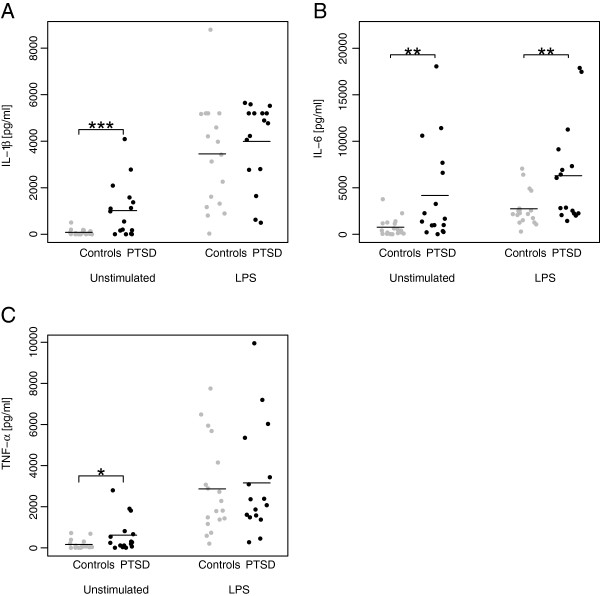
BACKGROUND: Posttraumatic stress disorder (PTSD) is associated with an enhanced risk for cardiovascular and other inflammatory diseases. Chronic low-level inflammation has been suggested as a potential mechanism linking these conditions. METHODS: We investigated plasma cytokine levels as well as spontaneous and lipopolysaccharide (LPS)-stimulated cytokine production by peripheral blood mononuclear cells (PBMCs) in a group of 35 severely traumatized PTSD patients compared to 25 healthy controls. RESULTS: Spontaneous production of interleukin (IL)-1β, IL-6 and tumor necrosis factor (TNF)-α by isolated PBMCs was significantly higher in the PTSD compared to the control group and even correlated with PTSD symptom severity within the PTSD group. In contrast, circulating plasma levels of pro- and anti-inflammatory cytokines such as IL-6, IL-8, IL-10, TNF-α, or monocyte chemotactic protein (MCP)-1 were not significantly altered in PTSD patients compared to healthy controls. CONCLUSIONS: Our findings indicate that PBMCs of PTSD patients are already pre-activated in vivo, providing further evidence for low-grade inflammation in PTSD. This might possibly represent one psychobiological pathway from PTSD to poor physical health.
Overview
The claims and statistics of this paper haven’t been checked yet.
Free: it reads the open-access text and checks the first 5 claims that cite a source we can check. Create a free account to check every claim.
Integrity signals
Registry
Cites
Statistics
Figures
Verification
Claims the paper makes
The claims and statistics of this paper haven’t been checked yet.
Free: it reads the open-access text and checks the first 5 claims that cite a source we can check. Create a free account to check every claim.
Claims other papers make about this one
Each is checked against this paper’s own text: does it say what the citing paper says it does?
The cited source says what the claim attributes to it.
In the citing paper
“There has also been one report that increased spontaneous production of IL-1 and TNF-α in PBMCs is present in individuals with PTSD compared with healthy controls (Gola et al, 2013).”
From Inflammation in Fear- and Anxiety-Based Disorders: PTSD, GAD, and Beyond (2017) · cites this paper as Gola et al, 2013
In the citing paper
“Peripheral blood cells isolated from stressed individuals show increased production of spontaneous IL-6 and in response to immune challenge [12, 13].”
From Interleukin-6 Induced by Social Stress Promotes a Unique Transcriptional Signature in the Monocytes That Facilitate Anxiety (2019) · cites this paper as [13]
Self-check
Percentages, sums and reported differences re-computed from the paper’s own numbers.
The self-check needs the paper’s full text.
Citations
Cites
R: A Language and Environment for Statistical Computing
R Core Team (2025) · doi:10.32614/r.manuals · Cited by 352,181
Hamilton, M. (1960) · Journal of Neurology, Neurosurgery & Psychiatry · doi:10.1136/jnnp.23.1.56 · Cited by 32,817 · cited 1×
“In addition, depressive symptoms were assessed with the Hamilton Depression Rating Scale HAM-D, [29].”
MethodA Simple Sequentially Rejective Multiple Test Procedure
(1979) · Scandinavian Journal of Statistics · doi:10.2307/4615733 · Cited by 21,526 · cited 1×
“In addition, we report p values corrected for multiple comparisons with Holm’s stepwise procedure [35], applied first for the five cytokines measured in plasma and then for the three cytokines produced by PBMCs measured in presence or absence of LPS.”
Method(1998) · The Journal of Clinical Psychiatry · Cited by 19,139
(1998) · PubMed · Cited by 10,216
Diagnostic and Statistical Manual of Mental Disorders (DSM-IV)
Hu, R. J. (2003) · Encyclopedia of the Neurological Sciences · doi:10.1016/b0-12-226870-9/01070-4 · Cited by 9,117
Inflammation in atherosclerosis
Libby, P. (2002) · Nature · doi:10.1038/nature01323 · Cited by 8,315
The mini international neuropsychiatric interview
Lecrubier, Y., Sheehan, D., Hergueta, T., & Weiller, E. (1998) · European Psychiatry · doi:10.1016/s0924-9338(99)80239-9 · Cited by 5,872
The development of a Clinician-Administered PTSD Scale
Blake, D. D., Weathers, F. W., Nagy, L. M., Kaloupek, D. G., Gusman, F. D., Charney, D. S., & Keane, T. M. (1995) · Journal of Traumatic Stress · doi:10.1002/jts.2490080106 · Cited by 5,024 · cited 7×
“Subsequently, PTSD symptom frequency and severity were assessed with the CAPS [25].”
BackgroundMethodInfluentialInflammation in Atherosclerosis
Libby, P. (2012) · Arteriosclerosis, Thrombosis, and Vascular Biology · doi:10.1161/atvbaha.108.179705 · Cited by 3,736 · cited 2×
“In addition, clinical studies affirm a correlation of circulating markers of inflammation with propensity to develop ischemic events and with prognosis after acute coronary syndromes [13,14].”
BackgroundResult
Research works printed but not linked: 1
- Schauer M Neuner F Elbert T Narrative Exposure Therapy 2011 2nd Göttingen, Germany: Hogrefe & Huber
Cited by
Items 101–200 of 239
Anti-inflammatory effects of minocycline are mediated by retinoid signaling
Clemens, V., Regen, F., Bret, N. L., Heuser, I., & Hellmann‐Regen, J. (2018) · BMC Neuroscience · doi:10.1186/s12868-018-0460-x · Cited by 37
Dib, P. S., Zhang, Y., Ihnat, M. A., Gallucci, R. M., & Standifer, K. M. (2021) · Frontiers in Psychiatry · doi:10.3389/fpsyt.2021.721999 · Cited by 40
“TNF-α production in peripheral blood mononuclear cells (PBMCs) fromPTSDpatients was increased in response to LPS (23), compared to cells from non-PTSD control subjects, suggesting sensitization of the immune response with PTSD.”
BackgroundBam, M., Yang, X., Busbee, P. B., Aiello, A. E., Uddin, M., Ginsberg, J. P., Galea, S., Nagarkatti, P. S., & Nagarkatti, M. (2020) · Molecular Medicine · doi:10.1186/s10020-020-00238-3 · Cited by 34
The link between post-traumatic stress disorder and systemic lupus erythematosus
Goldschen, L., Ellrodt, J., Amonoo, H. L., Feldman, C. H., Case, S., Koenen, K. C., Kubzansky, L. D., & Costenbader, K. H. (2022) · Brain Behavior and Immunity · doi:10.1016/j.bbi.2022.12.012 · Cited by 35
Environment and systemic autoimmune rheumatic diseases: an overview and future directions
Choi, M. Y., Costenbader, K. H., & Fritzler, M. J. (2024) · Frontiers in Immunology · doi:10.3389/fimmu.2024.1456145 · Cited by 34
Gola, H., Engler, A., Morath, J., Adenauer, H., Elbert, T., Kolassa, I.-T., & Engler, H. (2014) · PLoS ONE · doi:10.1371/journal.pone.0086333 · Cited by 30
“The reduced expression of the functionally active GRa isoform in the peripheral blood of PTSD subjects might be linked to the heightened inflammatory activity and immune dysregulation that has previously been found in subjects suffering from PTSD [22,40–43].”
BackgroundSelf-citationSuárez-Roca, H., Quintero, L., Ávila, R., Medina, S., Freitas, M. D., & Cardenas, R. (2013) · Brain Research Bulletin · doi:10.1016/j.brainresbull.2013.11.003 · Cited by 32
Bruton’s tyrosine kinase drives neuroinflammation and anxiogenic behavior in mouse models of stress
Ghosh, S., Mohammed, Z., & Singh, I. (2021) · Journal of Neuroinflammation · doi:10.1186/s12974-021-02322-9 · Cited by 30
“PBMCs isolated from subjects with PTSD also exhibit significantly higher spontaneous production of IL1β and other proinflammatory cytokines, which correlate well with the severity of the PTSD symptoms [40].”
BackgroundTsai, J., & Shen, J. (2017) · Psychiatric Quarterly · doi:10.1007/s11126-017-9508-9 · Cited by 32
Bam, M., Yang, X., Zumbrun, E. E., Ginsberg, J. P., Leyden, Q., Zhang, J., Nagarkatti, P. S., & Nagarkatti, M. (2017) · Translational Psychiatry · doi:10.1038/tp.2017.185 · Cited by 31
Zhang, K., Qu, S., Chang, S., Li, G., Cao, C., Fang, K., Olff, M., Wang, L., & Wang, J. (2017) · Neuroscience & Biobehavioral Reviews · doi:10.1016/j.neubiorev.2017.08.021 · Cited by 29
“However, studies in human subjects have suggested a linkage between immune alterations with PTSD. Increased levels of pro-inflammatory cytokines, such as interleukin (IL)-1β, IL-6 and tumor necrosis factor (TNF)-α, has been found in PTSD patients (Gola et al., 2013; Newton et al., 2014).”
BackgroundInterleukin 1B gene (IL1B) variation and internalizing symptoms in maltreated preschoolers
Ridout, K. K., Parade, S. H., Seifer, R., Price, L. H., Gelernter, J., Feliz, P., & Tyrka, A. R. (2014) · Development and Psychopathology · doi:10.1017/s0954579414001023 · Cited by 28
Hassell, J. E., Fox, J. H., Arnold, M. R., Siebler, P. H., Lieb, M. W., Schmidt, D., Spratt, E. J., Smith, T. M., Nguyen, K. T., Gates, C. A., et al. (2019) · Brain Behavior and Immunity · doi:10.1016/j.bbi.2019.06.008 · Cited by 29
Adverse childhood experience and rheumatic diseases
Luiz, A. P. L., Antico, H. D. A., Skare, T. L., Boldt, A. B. W., & Nisihara, R. (2018) · Clinical Rheumatology · doi:10.1007/s10067-018-4200-5 · Cited by 29
Parekh, S. V., Paniccia, J. E., Adams, L. O., & Lysle, D. T. (2021) · Molecular Neurobiology · doi:10.1007/s12035-021-02322-z · Cited by 28
Department of Psychological Medicine, K. C. L., Hussein, S., Himmerich, H., Department of Psychiatry, P. A. P., Willmund, G. D., Department of Psychiatry, P. A. P., Ibrahim, M. A. A., Department of Immunological Medicine and Allergy, K. H. P., Dalton, B., & Department of Psychological Medicine, K. C. L. (2017) · Psychiatria Danubina · doi:10.24869/psyd.2017.407 · Cited by 26
“2015) and another study provided data on invivo and in-vitro measurements of TNF-α (Gola et al. 2013).”
ResultBusbee, P. B., Bam, M., Yang, X., Abdulla, O. A., Zhou, J., Ginsberg, J. P., Aiello, A. E., Uddin, M., Nagarkatti, M., & Nagarkatti, P. S. (2022) · Frontiers in Immunology · doi:10.3389/fimmu.2021.815840 · Cited by 28
“In an early report by Gola et al, researchers found that peripheral blood mononuclear cells (PBMCs) from PTSD patients exhibited a more pre-activated phenotype, having higher levels of secreting inflammatory cytokines, such as interleukin-6 (IL-6), tumor necrosis factor-alpha (TNF-a), and IL-1b when compared to contro…”
ResultInnate and adaptive immune system consequences of post-traumatic stress disorder
Lauten, T. H., Natour, T., & Case, A. J. (2024) · Autonomic Neuroscience · doi:10.1016/j.autneu.2024.103159 · Cited by 29
“For example, when subjected to cytokine response tests using mitogens like LPS, PBMCs from individuals with PTSD have demonstrated heightened production of pro-inflammatory cytokines such as IL-6, IL-1 β , and TNF α (Rohleder et al., 2004; Gola et al., 2013).”
Li, H., Li, X., Smerin, S. E., Zhang, L., Jia, M., Xing, G., Su, Y. A., Wen, J., Benedek, D., & Ursano, R. (2014) · Frontiers in Neurology · doi:10.3389/fneur.2014.00164 · Cited by 25
“TNF-α and related anti-inflammatory cytokines in the peripheral blood have been correlated with symptoms of PTSD, including re-experiencing, avoidance, and hyperarousal, and with PTSD total symptom score (23,24,26).”
BackgroundAre there early inflammatory biomarkers that affect neurodevelopment in infancy?
Voltas, N., Arija, V., Hernández‐Martínez, C., Jiménez‐Feijoo, R., Ferré, N., & Canals, J. (2017) · Journal of Neuroimmunology · doi:10.1016/j.jneuroim.2017.01.017 · Cited by 25
Toft, H., Neupane, S. P., Bramness, J. G., Tilden, T., Wampold, B. E., & Lien, L. (2018) · BMC Psychiatry · doi:10.1186/s12888-018-1677-z · Cited by 25
“Other factors that might cause variations are sample characteristics like comorbidity, type of trauma experienced, and time elapsed since the trauma [10, 13].”
BackgroundPost-traumatic stress disorder and asthma risk: A nationwide longitudinal study
Hung, Y.-H., Cheng, C., Lin, W.-C., Bai, Y., Su, T., Li, C., Tsai, S., Pan, T., Chen, T., & Chen, M. (2019) · Psychiatry Research · doi:10.1016/j.psychres.2019.04.014 · Cited by 28
Dorsal hippocampal interleukin-1 signaling mediates heroin withdrawal-enhanced fear learning
Parekh, S. V., Paniccia, J. E., Lebonville, C. L., & Lysle, D. T. (2020) · Psychopharmacology · doi:10.1007/s00213-020-05645-2 · Cited by 26
Waheed, A., Dalton, B., Wesemann, U., Ibrahim, M. A. A., & Himmerich, H. (2018) · Journal of Interferon & Cytokine Research · doi:10.1089/jir.2017.0088 · Cited by 23
Malik, S., Alnaji, O., Malik, M., Gambale, T., & Rathbone, M. P. (2022) · Brain Sciences · doi:10.3390/brainsci12010102 · Cited by 25
“02) levels that are significantly related to condition severity [43].”
BackgroundAlgamal, M., Saltiel, N. A., Pearson, A., Ager, B. J., Burca, I., Mouzon, B., Diamond, D. M., MULLAN, M. J., Ojo, J. O., & Crawford, F. (2019) · Journal of Neurotrauma · doi:10.1089/neu.2018.6314 · Cited by 26
In immune defense: redefining the role of the immune system in chronic disease
Rubinow, K. B., & Rubinow, D. R. (2017) · Dialogues in Clinical Neuroscience · doi:10.31887/dcns.2017.19.1/drubinow · Cited by 28
Chemokines in post-traumatic stress disorder: A network meta-analysis
Pan, X., Kaminga, A. C., Wen, S. W., & Liu, A. (2020) · Brain Behavior and Immunity · doi:10.1016/j.bbi.2020.11.033 · Cited by 24
Kim, G. S., Smith, A. K., Xue, F., Michopoulos, V., Lori, A., Armstrong, D. L., Aiello, A. E., Koenen, K. C., Galea, S., Wildman, D. E., et al. (2019) · Brain Behavior and Immunity · doi:10.1016/j.bbi.2019.06.025 · Cited by 20
“Two PTSD studies that reported monocyte counts based on white blood cell differential count found no significant difference in monocyte proportions (Rohleder et al., 2004; Gola, 2013), which is consistent with our results in both sexes, but did not conduct sex-stratified analyses.”
ResultMerino, J. J., Muñetón‐Gómez, V. C., Muñetón-Gómez, C. A., Pérez-Izquierdo, M. Á., Loscertales, M., & Tolédano, A. (2020) · Biomolecules · doi:10.3390/biom10020212 · Cited by 21
“These hippocampal Il-6 elevations in footshock-trained rats could reflect Pavlovian conditioning (fear memory consolidation) at 24 h after the CFC training session [30].”
BackgroundResultInfluentialHarb, H., González-de-la-Vara, M. D. R., Thalheimer, L., Klein, U., Renz, H., Rose, M., Kruse, J., Potaczek, D. P., & Peters, E. M. J. (2017) · Psychoneuroendocrinology · doi:10.1016/j.psyneuen.2017.09.007 · Cited by 19
Rhein, C., Hepp, T., Kraus, O., von Majewski, K., Lieb, M., Rohleder, N., & Erim, Y. (2021) · Journal of Neural Transmission · doi:10.1007/s00702-021-02346-8 · Cited by 21
The role of IL-6 in TBI and PTSD, a potential therapeutic target?
Monsour, M., Croci, D. M., & Agazzi, S. (2022) · Clinical Neurology and Neurosurgery · doi:10.1016/j.clineuro.2022.107280 · Cited by 19
Minocycline attenuates interferon-α-induced impairments in rat fear extinction
Bi, Q., Shi, L., Yang, P., Wang, J., & Qin, L. (2016) · Journal of Neuroinflammation · doi:10.1186/s12974-016-0638-z · Cited by 20
“Several clinical studies have shown that levels of the innate immune cytokines, such as interleukin (IL)-1, IL-6, and tumor necrosis factor (TNF)-α, are correlated with impaired fear extinction [7–9].”
BackgroundLanggartner, D., Marks, J., Nguyen, T. C., & Reber, S. O. (2020) · Psychoneuroendocrinology · doi:10.1016/j.psyneuen.2020.104880 · Cited by 18
Chitrala, K. N., Nagarkatti, P. S., & Nagarkatti, M. (2016) · PLoS ONE · doi:10.1371/journal.pone.0168404 · Cited by 19
Holbrook, E. M., Zambrano, C. A., Wright, C. T. O., Dubé, E. M., Stewart, J. R., Sanders, W. J., Frank, M. G., MacDonald, A. S., Reber, S. O., & Lowry, C. A. (2023) · International Journal of Molecular Sciences · doi:10.3390/ijms24065176 · Cited by 21
“Indeed, growing up on a farm provides protection against allergic asthma [8], while healthy young persons raised in a city, without daily exposure to pets for the first 15 years of life, respond to a psychosocial stressor with exaggerated increases in numbers of circulating peripheral blood mononuclear cells (PBMCs) a…”
BackgroundWang, Y., Karstoft, K., Nievergelt, C. M., Maihofer, A. X., Stein, M. B., Ursano, R. J., Bybjerg‐Grauholm, J., Bækvad‐Hansen, M., HOUGAARD, D. M., Andreassen, O. A., et al. (2019) · Journal of Affective Disorders · doi:10.1016/j.jad.2019.04.070 · Cited by 20
Anwar, F., Sparrow, N. A., Rashid, M. H., Guidry, G., Gezalian, M. M., Ley, E. J., Koronyo‐Hamaoui, M., Danovitch, I., Ely, E. W., Karumanchi, S. A., et al. (2022) · Critical Care · doi:10.1186/s13054-022-04159-x · Cited by 19
Koirala, R., Aass, H. C. D., Søegaard, E. G. I., Dhakal, H. P., Ojha, S. P., Hauff, E., & Thapa, S. B. (2023) · PLoS ONE · doi:10.1371/journal.pone.0281125 · Cited by 17
Impaired PARP activity in response to the β-adrenergic receptor agonist isoproterenol
Thomas, M., Palombo, P., Schuhmacher, T., von Scheven, G., Bazylianska, V., Salzwedel, J., Schäfer, N., Bürkle, A., & Moreno‐Villanueva, M. (2018) · Toxicology in Vitro · doi:10.1016/j.tiv.2018.02.001 · Cited by 16
D'Elia, A. T., Juruena, M. F., Coimbra, B. M., Mello, M. F., & Mello, A. F. (2022) · Journal of Psychiatric Research · doi:10.1016/j.jpsychires.2022.08.028 · Cited by 18
Toft, H., Bramness, J. G., & Lien, L. (2022) · Neuropsychiatric Disease and Treatment · doi:10.2147/ndt.s357797 · Cited by 16
Sood, R., Ritov, G., Boltyansky, B., Spector-Chotiner, A., Richter‐Levin, G., & Barki‐Harrington, L. (2014) · Psychoneuroendocrinology · doi:10.1016/j.psyneuen.2014.06.015 · Cited by 15
Loneliness in Posttraumatic Stress Disorder: A Neglected Factor in Accelerated Aging?
Palmer, B. W., Hussain, M., & Lohr, J. B. (2022) · Journal of Ageing and Longevity · doi:10.3390/jal2040027 · Cited by 18
Koraishy, F. M., Salas, J., Neylan, T. C., Cohen, B. E., Schnurr, P. P., Clouston, S., & Scherrer, J. F. (2019) · Chronic Stress · doi:10.1177/2470547019877651 · Cited by 14
The Impact of Stress Within and Across Generations: Neuroscientific and Epigenetic Considerations
Miller, C. W. T. (2021) · Harvard Review of Psychiatry · doi:10.1097/hrp.0000000000000300 · Cited by 14
Effects of Psychosocial Stress on Subsequent Hemorrhagic Shock and Resuscitation in Male Mice
Langgartner, D., Wachter, U. A., Hartmann, C., Gröger, M., Vogt, J. A., Merz, T., McCook, O., Fink, M., Kress, S., Georgieff, M., et al. (2018) · Shock · doi:10.1097/shk.0000000000001204 · Cited by 15
Brenner, L. A., Stearns‐Yoder, K. A., Stamper, C. E., Hoisington, A. J., Brostow, D. P., Hoffmire, C. A., Forster, J. E., Donovan, M. L., Ryan, A. T., Postolache, T. T., et al. (2022) · Contemporary Clinical Trials Communications · doi:10.1016/j.conctc.2022.100960 · Cited by 13
Are Mood and Anxiety Disorders Inflammatory Diseases?
Boorman, E., Romano, G. F., Russell, A., Mondelli, V., & Pariante, C. M. (2015) · Psychiatric Annals · doi:10.3928/00485713-20150501-06 · Cited by 15
Brouwers, C. J., Wolf, J. M., & von Känel, R. (2016) · Springer eBooks · doi:10.1007/978-3-319-08359-9_54 · Cited by 13
COVID-19 vaccination exacerbates ex vivo IL-6 release from isolated PBMCs
Langgartner, D., Winkler, R., Brunner-Weisser, J., Rohleder, N., Jarczok, M. N., Gündel, H., Weimer, K., & Reber, S. O. (2023) · Scientific Reports · doi:10.1038/s41598-023-35731-2 · Cited by 13
“Of note, many stress-associated mental disorders are accompanied by an over-reactive immune system and chronic low-grade inflammation 11,12 .”
Chebotaryova, L., Kovalenko, O., Solonovych, A. S., & Solonovych, O. S. (2023) · Family medicine European practices · doi:10.30841/2786-720x.2.2023.282496 · Cited by 16
Neurobiological Findings in Post-traumatic Stress Disorder
Kolassa, I., Illek, S., Wilker, S., Karabatsiakis, A., & Elbert, T. R. (2015) · Springer eBooks · doi:10.1007/978-3-319-07109-1_4 · Cited by 15
Self-citationTucker, P. M., Pfefferbaum, B. J., Nitiéma, P., Khan, Q., Aggarwal, R., & Walling, E. (2017) · Cytokine · doi:10.1016/j.cyto.2017.04.025 · Cited by 13
Tuchina, O. P., Sidorova, M. V., Turkin, A., Shvaiko, D. A., Shalaginova, I. G., & Vakoliuk, I. A. (2018) · Genes and Cells · doi:10.23868/201808019 · Cited by 12
Posttraumatic Stress Disorder and the Gut Microbiome
Loupy, K. M., & Lowry, C. A. (2020) · Oxford University Press eBooks · doi:10.1093/oxfordhb/9780190931544.013.10 · Cited by 13
Anti-Inflammatory Therapy as a Promising Target in Neuropsychiatric Disorders
Ballaz, S., & Bourin, M. (2023) · Advances in experimental medicine and biology · doi:10.1007/978-981-19-7376-5_20 · Cited by 17
Network analysis of plasma proteomes in affective disorders
Rhee, S. J., Shin, D., Shin, D., Song, Y., Joo, E.-J., Jung, H. Y., Roh, S., Lee, S.-H., Kim, H.-Y., Bang, M., et al. (2023) · Translational Psychiatry · doi:10.1038/s41398-023-02485-4 · Cited by 10
“Dysregulation is also observed in those with post-traumatic stress disorder [48], and there was a report that multiple traumatic events were directly proportional to the degree of systemic inflammation [49].”
BackgroundAn Immunological Perspective to Non-syndromic Sensorineural Hearing Loss
Sindura, K. P., & Banerjee, M. (2019) · Frontiers in Immunology · doi:10.3389/fimmu.2019.02848 · Cited by 11
Yamin, J. B., Sudan, S., Lumley, M. A., Dhalimi, A., Arnetz, J. E., Stemmer, P. M., Burghardt, P. R., Jamil, H. J., & Arnetz, B. B. (2021) · The Journal of Nervous and Mental Disease · doi:10.1097/nmd.0000000000001360 · Cited by 10
“There is evidence that inflammation may predict, augment, or reinforce the development of PTSD symptoms (Eraly et al., 2014; Gola et al., 2013; Speer et al., 2018), although some studies have not found this relationship (Söndergaard et al., 2004), and others suggested this relation may differ by…”
BackgroundWang, J., Shao, Y., Deng, X., & Du, J. (2024) · Brain and Behavior · doi:10.1002/brb3.70073 · Cited by 9
Geiger, M. L., Boeck, C., Koenig, A. M., Schury, K., Waller, C., Kolassa, S., Karabatsiakis, A., & Kolassa, I. (2018) · Mental Health & Prevention · doi:10.1016/j.mhp.2018.04.002 · Cited by 10
Self-citationArcan, C., Hou, W., Hoffman, K. M., Reichardt, A., Yang, X., Clouston, S., Bromet, E. J., & Luft, B. J. (2023) · Obesity Science & Practice · doi:10.1002/osp4.725 · Cited by 10
“…study, it is noteworthy that both groups experienced a significant reduction in PCL scores. and systemic inflammation, all risk factors for PTSD. 14,15,53,54 Trials among military and veteran populations with PTSD have shown that first ‐ line psychotherapy approaches have high dropout rates and…”
BackgroundDorsal hippocampal astrocytes mediate the development of heroin withdrawal-enhanced fear learning
Parekh, S. V., Adams, L. O., Barkell, G. A., Paniccia, J. E., Reissner, K. J., & Lysle, D. T. (2024) · Psychopharmacology · doi:10.1007/s00213-024-06562-4 · Cited by 10
“Collectively, these studies support the idea that astrocytes may mediate PTSD-OUD comorbidity following heroin use and withdrawal.”
BackgroundInfluentialDNA damage in lymphocytes of patients suffering from complex traumatization
Bergholz, L. M., Subič-Wrana, C., Heylmann, D., Beutel, M. E., Wiltink, J., & Kaina, B. (2017) · DNA repair · doi:10.1016/j.dnarep.2017.02.006 · Cited by 11
Uldall, S. W., Lundell, H., Baaré, W. F. C., Siebner, H. R., Rostrup, E., & Carlsson, J. M. (2021) · NeuroImage Clinical · doi:10.1016/j.nicl.2021.102929 · Cited by 8
Altered cellular immune reactivity in traumatized women with and without major depressive disorder
Hellmann‐Regen, J., Spitzer, C., Kuehl, L. K., Schultebraucks, K., Otte, C., & Wingenfeld, K. (2018) · Psychoneuroendocrinology · doi:10.1016/j.psyneuen.2018.10.023 · Cited by 9
“Our findings of an increased immune response in ACE are also in line with findings in individuals with PTSD (Rohleder et al., 2010; Sommershof et al., 2009; Gola et al., 2013; Grassi-Oliveira et al., 2017).”
Brouwers, C. J., Wolf, J. M., & von Känel, R. (2015) · Springer eBooks · doi:10.1007/978-3-319-08613-2_54-1 · Cited by 6
King, A. P. J. (2018) · Integrating psychiatry and primary care · doi:10.1007/978-3-319-74736-1_10 · Cited by 8
Gebauer, D., Schimmele, T., Mazzari, G., Krüger, B. T., Zemui, M., Ignatius, A. A., Langgartner, D., Haffner‐Luntzer, M., & Reber, S. O. (2025) · NeuroImmunoModulation · doi:10.1159/000543507 · Cited by 6
Langgartner, D., Weimer, K., Brunner-Weisser, J., Winkler, R., Mannes, M., Huber-Lang, M. S., Sterrett, J. D., Lowry, C. A., Rohleder, N., Bajrami, B., et al. (2025) · Brain Behavior and Immunity · doi:10.1016/j.bbi.2025.03.013 · Cited by 5
“Many of these disorders are accompanied by an over-reactive immune system and chronic low-grade inflammation (Gola et al., 2013; Pace et al., 2006b), and prospective human and mechanistic animal studies strengthen the idea that an exaggerated immune (re)activity plays a causal role in their…”
Langgartner, D., Weiss, A.-L. J., Amoroso, M., Sterrett, J. D., Lowry, C. A., & Reber, S. O. (2025) · Frontiers in Neuroscience · doi:10.3389/fnins.2024.1488603 · Cited by 6
Atwater, A. Q., & Castañón‐Cervantes, O. (2023) · International Journal of Nursing and Health Care Research · doi:10.29011/2688-9501.101466 · Cited by 4
“For example, in stressed individuals, isolated peripheral blood cells show high production of IL-6 both at baseline and in response to immune challenges [91-92].”
FLI1 in PBMCs contributes to elevated inflammation in combat-related posttraumatic stress disorder
Li, P., Liu, L., Liu, S., Lu, Z., Halushka, P. V., Sidles, S. J., LaRue, A. C., Wang, Z., & Fan, H. (2024) · Frontiers in Psychiatry · doi:10.3389/fpsyt.2024.1436690 · Cited by 4
Yang, L., Meng, M., Tian, M., Zhang, C., Zou, J., Cai, L., Qian, C., Jiang, H., Li, C., Liu, Z., et al. (2025) · Behavioural Brain Research · doi:10.1016/j.bbr.2025.115881 · Cited by 4
Stress-Related Blood Biomarkers
Szczepek, A. J., & Mazurek, B. (2017) · Springer eBooks · doi:10.1007/978-3-319-58397-6_6 · Cited by 4
Rhein, C., Apelt, I., Werner, F., Schäflein, E., Adler, W., Reichel, M., Schug, C., Morawa, E., & Erim, Y. (2024) · Journal of Neural Transmission · doi:10.1007/s00702-024-02770-6 · Cited by 4
“Other studies also suggest a distinct immunological response in PTSD (Gola et al. 2013).”
BackgroundSterrett, J. D., Andersen, N. D., & Lowry, C. A. (2022) · Progress in inflammation research · doi:10.1007/978-3-030-91051-8_10 · Cited by 4
Akóṣílè, W. (2021) · Queensland University of Technology · doi:10.5204/thesis.eprints.210971 · Cited by 4
Gryksa, K., Schmidtner, A. K., Schäfer, T., Reber, S. O., & Neumann, I. D. (2025) · Brain Behavior and Immunity · doi:10.1016/j.bbi.2025.106104 · Cited by 3
van Beers, E., de Vries, I., Planting, C. H. M., Christ, C., de Beurs, E., & van den Berg, E. M. (2025) · Frontiers in Psychiatry · doi:10.3389/fpsyt.2025.1523269 · Cited by 3
Current Topics on Military Medicine
Gorbunov, N. V. (2021) · IntechOpen eBooks · doi:10.5772/intechopen.87358 · Cited by 3
Trejo, A. N., Tate, A. D., Noser, A. E., Wieling, E. A., Kunin‐Batson, A., Trofholz, A. C., & Berge, J. M. (2025) · Journal of Racial and Ethnic Health Disparities · doi:10.1007/s40615-025-02422-9 · Cited by 3
“Traumatic stress, which can develop in response to childhood maltreatment, has also been linked to poor health outcomes, including increased pain and increased inflammation [39, 40].”
Karimzadeh, A., Nabavifard, S., Beirami, E., & Valian, N. (2025) · Journal of Psychiatric Research · doi:10.1016/j.jpsychires.2025.07.007 · Cited by 3
Glecaprevir/Pibrentasvir for Post Traumatic Stress Disorder
Watts, B. V., Hoyt, J. E., DiSano, K. D., Noller, C. M., Rozema, L. R., Foster, D. M., Vincenti, M. P., & Shiner, B. R. (2026) · Psychopharmacology Bulletin · doi:10.64719/pb.15419 · Cited by 2
Tiwari, S., Mohammed, Z., Atta, S. R., Tiwari, A., Yadav, E., Kaushik, S., Chopra, A., Singh, I., & Ghosh, S. (2026) · ACS Chemical Neuroscience · doi:10.1021/acschemneuro.5c00993 · Cited by 2
The Neuroimmune System in Psychiatric Disorders
Leyrer‐Jackson, J. M., DeKrey, G. K., & Thomas, M. P. (2016) · Springer eBooks · doi:10.1007/978-3-319-44022-4_39 · Cited by 2
Vetlugina, T. P., Prokopieva, V. D., Epimakhova, E. V., Boiko, A. S., Nikitina, V. B., & Bokhan, N. A. (2022) · Bulletin of Experimental Biology and Medicine · doi:10.1007/s10517-022-05511-5 · Cited by 2
“A low level of spontaneously produced cytokines by blood cells of healthy people has also been reported [7,15].”
BackgroundBiomarkers Unveiling the Interplay of Mind, Nervous System, and Immunity
Doifode, T., Maziero, M. P., Quevedo, J., & Barichello, T. (2024) · Methods in molecular biology · doi:10.1007/978-1-0716-4200-9_5 · Cited by 2
The Neuroimmune System in Psychiatric Disorders
Hassan, Y., ESTEVES, S. C., Leyrer‐Jackson, J. M., & Thomas, M. P. (2024) · Springer eBooks · doi:10.1007/978-3-031-68237-7_56 · Cited by 3
Wang, L., Luo, G., Liu, S., Xu, Z., Wei, W., & Li, X. (2025) · Diseases · doi:10.3390/diseases13100323 · Cited by 2
“Our study showed that clusterA displays a more robust and hyperactive immunoinflammatory profile, which represents a subtype characterized by elevated immune infiltration and enhanced activation status and may secret relevant pro-inflammatory cytokines consistent with previous findings [64].”
Journal of Molecular Psychiatry
Thome, J. (2013) · Journal of Molecular Psychiatry · doi:10.1186/2049-9256-1-1 · Cited by 2
Schiele, J., Mazzari, G., Struck, A., Bailer, Y., Langgartner, D., & Reber, S. O. (2024) · Scientific Reports · doi:10.1038/s41598-024-61581-7 · Cited by 1
Xiao, Z., Zheng, N., Chen, H., Yang, Z., Wang, R., & Liang, Z. (2024) · Translational Psychiatry · doi:10.1038/s41398-024-03056-x · Cited by 1
Jones, L. C., Spooner, H., Waters, A. B., Penhale, S. H., Lamb, D. G., Levy, C. E., Malhotra, B., Stickley, K. S., Valldejuli, K., Kaimal, G., et al. (2026) · The Arts in Psychotherapy · doi:10.1016/j.aip.2026.102517 · Cited by 1
Barman, R. (2014) · Journal of Traumatic Stress Disorders & Treatment · doi:10.4172/2324-8947.1000132 · Cited by 1
Peritraumatic Dissociation and PTSD: a Shortcut to Neurodegeneration?
Mattos, P. F., Mozzambani, A. C. F., Pedrini, J. A., Fiks, J. P., Juruena, M. F., & Mello, M. F. (2018) · Neuropsychiatry · doi:10.4172/neuropsychiatry.1000424 · Cited by 1
“A range of evidence, in cross-sectional genetic and epigenetic studies, suggests that higher inflammation is associated with increased PTSD severity [16-18].”
Background„Old Friends“, Immunregulation und Stressresilienz: Teil 1: Theoretische Grundlagen
Langgartner, D., Lowry, C. A., & Reber, S. O. (2020) · Nervenheilkunde · doi:10.1055/a-1037-0710 · Cited by 2
“: peripheral blood mononuclear cells; PBMCs) von Individuen mit PTBS im Vergleich zu denen von gesunden Kontrollen eine erhöhte spontane sowie Lipopolysaccharid (LPS)-induzierte Sekretion von proinflammatorischen Zytokinen wie Interleukin (IL)-6 und IL-1β in vitro [83].”
BackgroundBlakey, S. M., Dillon, K. H., McFARLANE, A. C., & Beckham, J. C. (2023) · Springer eBooks · doi:10.1007/978-3-030-42825-9_59-1 · Cited by 1
Metadata
- Authors
- Gola, H., Engler, H., Sommershof, A., Adenauer, H., Kolassa, S., Schedlowski, M., Groettrup, M., Elbert, T., & Kolassa, I.-T.
- Affiliations
- University of Konstanz (DE)
- Essen University Hospital (DE)
- Systems, Applications & Products in Data Processing (Switzerland) (CH)
- Corresponding author
- Kolassa, Iris-Tatjana
- ORCID
- Venue
- BMC Psychiatry
- Published
- 2013-01-29
- Volume
- 13
- Issue
- 1
- Pages
- 40-40
- ISSN
- 1471-244X (ISSN-L)
- PMC
- PMC3574862
- OpenAlex
- W2001986928
- Cited by
- 225
- References
- 44
- Citations by year
- 2026: 5 · 2025: 13 · 2024: 15 · 2023: 12 · 2022: 20 · 2021: 16 · 2020: 14 · 2019: 14 · 2018: 30 · 2017: 24 · 2016: 21 · 2015: 14 · 2014: 15 · 2013: 11
- FWCI
- 22.62
- Type
- journal article
- Language
- en
- Open access
- gold
- doi.org
- Licence
- cc-by
- creativecommons.org/licenses/by/2.0 (tdm)
- creativecommons.org/licenses/by/2.0 (vor)
- Locations
- BMC Psychiatry (publishedVersion, cc-by)
- Europe PMC (PubMed Central) (publishedVersion, cc-by)
- PubMed Central (publishedVersion, cc-by)
- PubMed (publishedVersion)
- DOAJ (DOAJ: Directory of Open Access Journals) (submittedVersion, cc-by-sa)
- Lancaster EPrints (Lancaster University) (submittedVersion)
- KOPS (University of Konstanz) (submittedVersion)
- Funders
- Deutsche Forschungsgemeinschaft (FOR751)
- Universität Ulm
- Universität Konstanz
- European Refugee Fund
- Topics
- Social Sciences › Psychology › Clinical Psychology › Posttraumatic Stress Disorder Research
- Life Sciences › Neuroscience › Behavioral Neuroscience › Stress Responses and Cortisol
- Life Sciences › Neuroscience › Biological Psychiatry › Tryptophan and brain disorders
- Keywords
- post-traumatic stress disorder, inflammatory cytokines, peripheral blood mononuclear cells, spontaneous cytokine production, lipopolysaccharide stimulation, IL-1β, interleukin-6, TNF-α, low-grade inflammation, plasma cytokines, PTSD symptom severity, cardiovascular risk
- MeSH terms
- Adolescent, Adult, Female, Humans, Leukocytes, Mononuclear, Male, Middle Aged, Stress Disorders, Post-Traumatic, Tumor Necrosis Factor-alpha, Interleukin-6, Case-Control Studies, Cytokines, Interleukin-8, Interleukin-10, Chemokine CCL2, Interleukin-1beta, Young Adult
About these checks
Registry, retraction, Cites and statistics results are computed, not judged, with one exception: a printed reference that no index lists is read once by a model before it counts as a citation error. Claims are extracted by a model and kept only when their quote appears verbatim in the text; each cited source is then checked, with a model’s help, for whether it says what the claim relies on. Those verdicts can be wrong — read the claim’s quote and the cited source before relying on one.
Statistics and arithmetic are recomputed, not judged.
Confidence bands are shown only for fields calibrated on our annotated test set. None is calibrated yet, so no band is shown.
What counts as a claim ›How we measure confidence ›How we check this ›
Are you an author, or do you see a problem with this page? Request a review
Data sources
Bibliographic data: Semantic Scholar, OpenAlex, Crossref.
Contains information from the Semantic Scholar Academic Graph Datasets, made available under the ODC Attribution License (ODC-BY 1.0).
Semantic Scholar’s data is described in: Kinney, R., et al. (2023). The Semantic Scholar Open Data Platform. arXiv:2301.10140.
