

The Four-Dimensional Symptom Questionnaire (4DSQ): a validation study of a multidimensional self-report questionnaire to assess distress, depression, anxiety and somatization
Open accessThe DOI matches its Crossref record; 53 of the 54 references it cites were found in a registry or an index.
Abstract
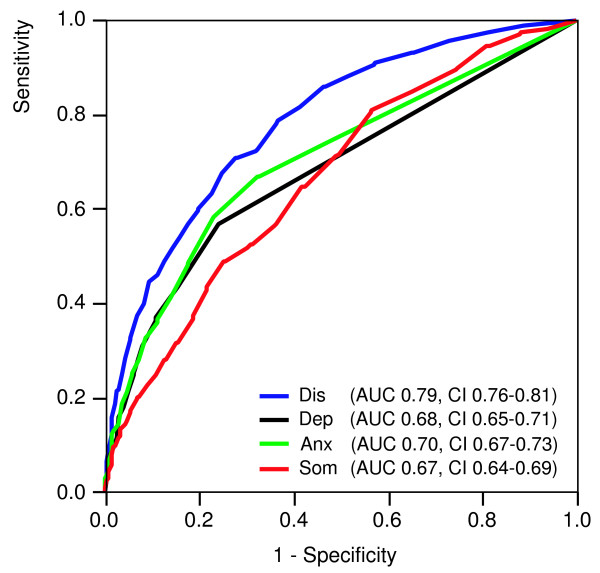
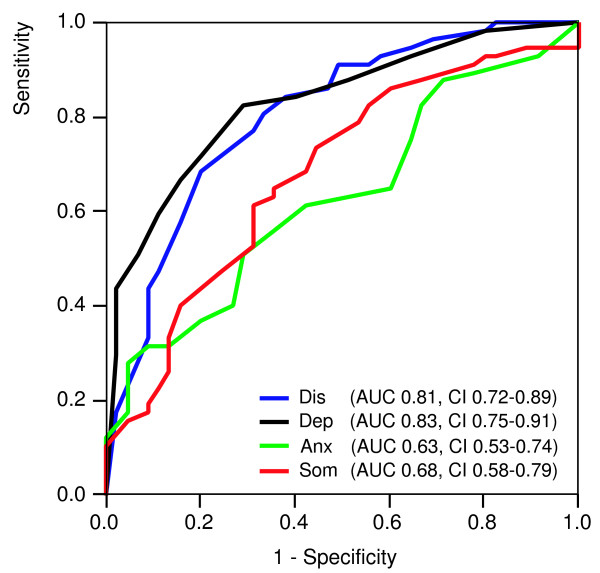
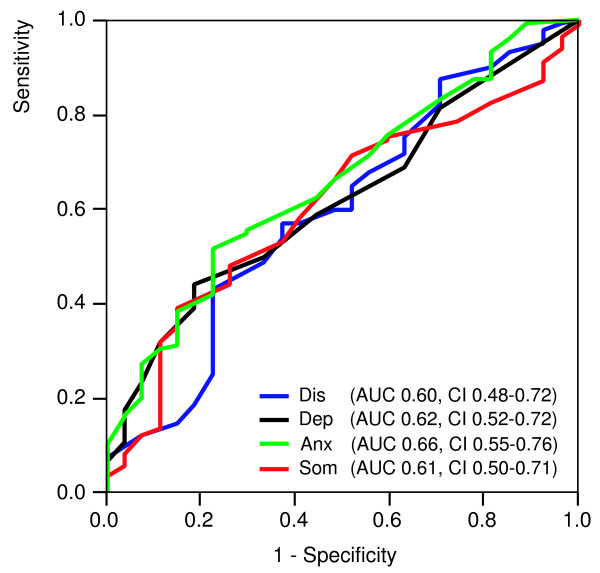
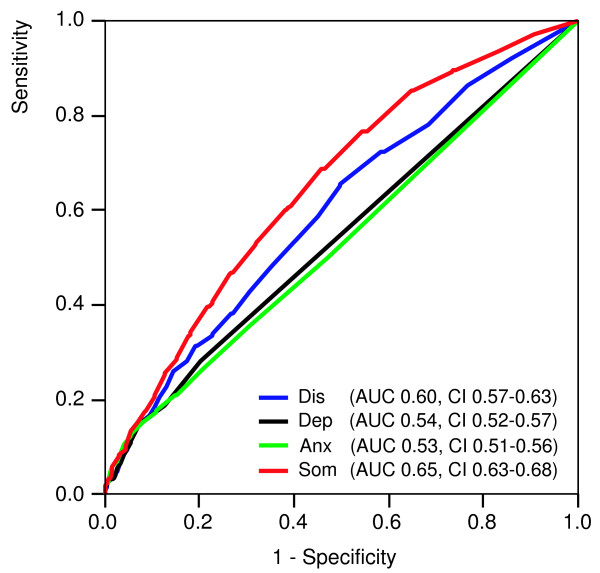
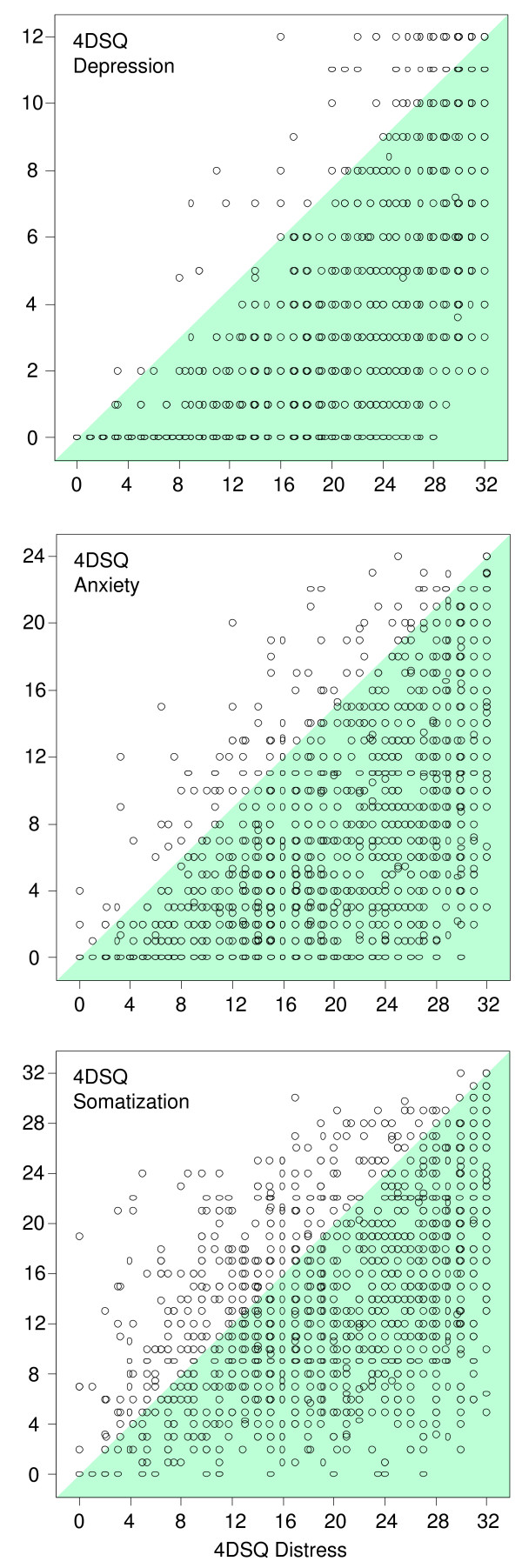
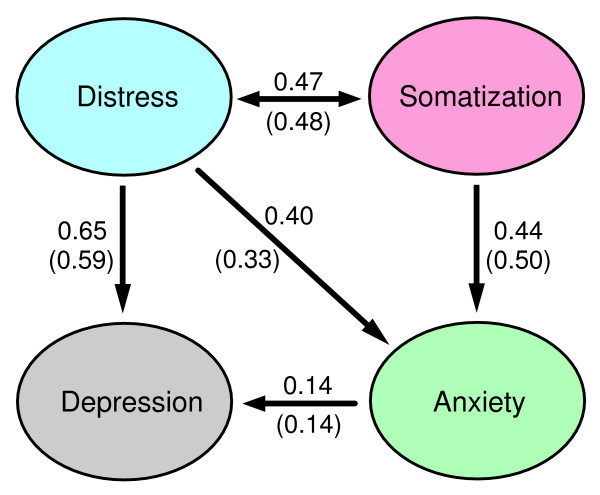
BACKGROUND: The Four-Dimensional Symptom Questionnaire (4DSQ) is a self-report questionnaire that has been developed in primary care to distinguish non-specific general distress from depression, anxiety and somatization. The purpose of this paper is to evaluate its criterion and construct validity. METHODS: Data from 10 different primary care studies have been used. Criterion validity was assessed by comparing the 4DSQ scores with clinical diagnoses, the GPs' diagnosis of any psychosocial problem for Distress, standardised psychiatric diagnoses for Depression and Anxiety, and GPs' suspicion of somatization for Somatization. ROC analyses and logistic regression analyses were used to examine the associations. Construct validity was evaluated by investigating the inter-correlations between the scales, the factorial structure, the associations with other symptom questionnaires, and the associations with stress, personality and social functioning. The factorial structure of the 4DSQ was assessed through confirmatory factor analysis (CFA). The associations with other questionnaires were assessed with Pearson correlations and regression analyses. RESULTS: Regarding criterion validity, the Distress scale was associated with any psychosocial diagnosis (area under the ROC curve [AUC] 0.79), the Depression scale was associated with major depression (AUC = 0.83), the Anxiety scale was associated with anxiety disorder (AUC = 0.66), and the Somatization scale was associated with the GPs' suspicion of somatization (AUC = 0.65). Regarding the construct validity, the 4DSQ scales appeared to have considerable inter-correlations (r = 0.35-0.71). However, 30-40% of the variance of each scale was unique for that scale. CFA confirmed the 4-factor structure with a comparative fit index (CFI) of 0.92. The 4DSQ scales correlated with most other questionnaires measuring corresponding constructs. However, the 4DSQ Distress scale appeared to correlate with some other depression scales more than the 4DSQ Depression scale. Measures of stress (i.e. life events, psychosocial problems, and work stress) were mainly associated with Distress, while Distress, in turn, was mainly associated with psychosocial dysfunctioning, including sick leave. CONCLUSION: The 4DSQ seems to be a valid self-report questionnaire to measure distress, depression, anxiety and somatization in primary care patients. The 4DSQ Distress scale appears to measure the most general, most common, expression of psychological problems.
Overview
The claims and statistics of this paper haven’t been checked yet.
Free: it reads the open-access text and checks the first 5 claims that cite a source we can check. Create a free account to check every claim.
Integrity signals
Registry
Cites
Statistics
Figures
Verification
Claims the paper makes
The claims and statistics of this paper haven’t been checked yet.
Free: it reads the open-access text and checks the first 5 claims that cite a source we can check. Create a free account to check every claim.
Self-check
Percentages, sums and reported differences re-computed from the paper’s own numbers.
The self-check needs the paper’s full text.
Citations
Cites
Diagnostic and Statistical Manual of Mental Disorders
Williams, J. B. W., & First, M. (2013) · Encyclopedia of Social Work · doi:10.1093/acrefore/9780199975839.013.104 · Cited by 109,519
The Hospital Anxiety and Depression Scale
Zigmond, A. S., & Snaith, R. P. (1983) · Acta Psychiatrica Scandinavica · doi:10.1111/j.1600-0447.1983.tb09716.x · Cited by 47,139
An inventory for measuring depression
BECK, A. T. (1961) · Archives of General Psychiatry · doi:10.1001/archpsyc.1961.01710120031004 · Cited by 38,032
(1970) · Cited by 24,983
Depression and quality of life in older persons: A review
Sivertsen, H., Bjørkløf, G. H., Engedal, K., Selbæk, G., & Helvik, A.-S. (2015) · Dementia and Geriatric Cognitive Disorders · doi:10.1159/000437299 · Cited by 14,152
A self-rating depression scale
ZUNG, W. W. K. (1965) · Archives of General Psychiatry · doi:10.1001/archpsyc.1965.01720310065008 · Cited by 9,813
EQS : structural equations program manual
Bentler, P. M. (1989) · Medical Entomology and Zoology · Cited by 9,669
Cognitive Therapy for Depression: (675542012-001)
(2012) · PsycEXTRA Dataset · doi:10.1037/e675542012-001 · Cited by 9,663
Pearlin, L. I., & Schooler, C. (1978) · Journal of Health and Social Behavior · doi:10.2307/2136319 · Cited by 7,791 · cited 3×
“Study F included the Neuroticism scale of the NEO Five Factor Inventory (NEO-FFI) [46], studies B and C a measure of mastery [47], and study H a measure of trait anxiety [41].”
MethodScoville, W. B. (1949) · Journal of neurosurgery · doi:10.3171/jns.1949.6.1.0065 · Cited by 7,381
Research works printed but not linked: 14
- Terluin B De Vierdimensionale Klachtenlijst (4DKL). Een vragenlijst voor het meten van distress, depressie, angst en somatisatie [The Four-Dimensional Symptom Questionnaire (4DSQ). A questionnaire to measure distress, depression, anxiety, and somatization] Huisarts Wet 1996 39 538 547
- Terluin B Overspanning onderbouwd. Een onderzoek naar de diagnose surmenage in de huisartspraktijk [Nervous breakdown substantiated. A study of the general practitioner's diagnosis of surmenage] 1994 Utrecht, Universiteit Utrecht
- Terluin B Gill K Winnubst JAM Hoe zien huisartsen surmenage? [General practitioners' perception of "nervous breakdown"] Huisarts Wet 1992 35 311 315
- Romeijnders ACM Vriezen JA Van der Klink JJL Hulshof CTJ Terluin B Flikweert S Baart PC Landelijke Eerstelijns Samenwerkings Afspraak Overspanning [National Primary Care Collaboration Agreement on Nervous Breakdown] Huisarts Wet 2005 48 20 23
- Bentler P Wu E EQS for Windows user's guide 1995 Encino, Multivariate Software
- Dijkstra P Van Praag HM and Rooymans HGM De zelfbeoordelingsschaal voor depressie van Zung [The self-rating depression scale of Zung] Stemming en ontstemming Theorie en praktijk bij de diagnostiek van depressies 1974 Amsterdam, Erven Bohn 98 120
- Beck AT Steer RA Beck Anxiety Inventory manual 1993 2nd San Antonio TX, Psychological Corporation
- Van der Ploeg HM Defares PB Spielberger CD Handleiding bij de Zelf-Beoordelings Vragenlijst (ZBV) Een Nederlandstalige bewerking van de Spielberger State-Trait Anxiety Inventory STAI-DY [Manual of the Self-Assessment Questionnaire A Dutch adaptation of the Spielberger State-Trait Anxiety Inventory STAI-DY] 1980 Lisse, Swets & Zeitlinger
- Hosman CMH Psychosociale problematiek en hulpzoeken. Een sociaal-epidemiologische studie ten behoeve van de preventieve geestelijke gezondheidszorg [Psychosocial problems and seeking help. A socio-epidemiological study for the preventive mental health care] 1983 Nijmegen, Katholieke Universiteit Nijmegen
- Ormel J Moeite met leven of een moeilijk leven. Een vervolgonderzoek naar de invloed van psychosociale belasting op het welbevinden van driehonderd Nederlanders [A troublesome life, or trouble with living. A follow-up study of the influence of psycosocial stress on the well-being of threehundred Dutch inhabitants] 1980 Groningen, Rijksuniversiteit Groningen
- Hoekstra HA Ormel J De Fruyt F De NEO-PI-R/NEO-FFI; Big Five persoonlijkheidsvragenlijsten Handleiding [Manual of the Dutch version of the NEO-PI-R/NEO-FFI] 1996 Lisse, Swets en Zeitlinger
- Costa PT McCrae RR Revised NEO Personality Inventory (NEO-PI-R) and NEO Five Factor Inventory (NEO-FFI): professional manual 1992 Odessa FL, Psychological Assessment Resources
- Van der Zee KL Sanderman R Het meten van de gezondheidstoestand met de RAND-36 Een handleiding [Measuring the health status with the RAND-36 A manual] 1993 Groningen, Noordelijk Centrum voor Gezondheidsvraagstukken
- Terluin B Factoranalyse van drie klachtenlijsten [Factor analysis of three symptom questionnaires] Tijdschrift voor psychosomatische fysiotherapie 1999 4 25 31
Cited by
Items 201–300 of 470
Tebbe, B. B. M., Terluin, B., & Koelewijn, J. M. (2012) · Midwifery · doi:10.1016/j.midw.2012.05.004 · Cited by 21
Self-citationResistance to fear of child birth and stability of mother-child bond
Klabbers, G. A., Wijma, K., van Bakel, H. J. A., Paarlberg, K. M., & Vingerhoets, A. J. J. M. (2018) · Early Child Development and Care · doi:10.1080/03004430.2018.1461093 · Cited by 20
“maternal symptoms of distress, depression, general anxiety and somatization, as measured with the four-dimensional symptoms questionnaire (4DSQ) (Tebbe, Terluin, & Koelewijn, 2013; Terluin et al., 2006).”
MethodInfluentialHoff, A., Fisker, J. P., Poulsen, R. M., Hjorthøj, C. R., Rosenberg, N., Nordentoft, M., Bojesen, A. B., & Eplov, L. F. (2022) · Scandinavian Journal of Work Environment & Health · doi:10.5271/sjweh.4021 · Cited by 21
“Pre-planned exploratory outcomes were total numbers of weeks at work at 12 months, at and at 6, 12 and 24 months the following self-reported outcomes: 4 Dimensional Symptoms Questionnaire (4DSQ) (22), exhaustion (23), illness perception (24), quality of life (25, 26), self-efficacy (27, 28), presenteeism (29), and int…”
BackgroundBolte, J. F. B., Baliatsas, C., Eikelboom, T., & KAMP, I. V. (2014) · Environmental Pollution · doi:10.1016/j.envpol.2014.10.011 · Cited by 18
Willems, R., Drossaert, C., Miedema, H., & Bohlmeijer, E. (2021) · Frontiers in Public Health · doi:10.3389/fpubh.2021.699116 · Cited by 16
de Vries, H., Kamphuis, W., van der Schans, C., Sanderman, R., & Oldenhuis, H. K. E. (2022) · Healthcare · doi:10.3390/healthcare10010144 · Cited by 22
“The Dutch version of the Four-Dimensional Symptom Questionnaire (4DSQ) was used to measure stress, anxiety, depression, and somatisation every 5 weeks [42].”
MethodMental health difficulties among professional footballers: A narrative review
Woods, G., McCabe, T., & Mistry, A. (2022) · Sports Psychiatry · doi:10.1024/2674-0052/a000010 · Cited by 25
“Distress was measured in several publications via a “ Distress Screener ” based on the Four-Dimensional Symptom Questionnaire ( 4 DSQ) [ 43 ].”
MethodHutting, N., Staal, J. B., Heerkens, Y. F., Engels, J. A., & der Sanden, M. W. G. N. (2013) · Trials · doi:10.1186/1745-6215-14-258 · Cited by 21
The Interrelated Physiological and Psychological Effects of EcoMeditation
Groesbeck, G., Bach, D., Stapleton, P., Blickheuser, K., Church, D., & Sims, R. (2018) · Journal of Evidence-Based Integrative Medicine · doi:10.1177/2515690x18759626 · Cited by 17
Traini, E., Martens, A. L., Slottje, P., Vermeulen, R. C. H., & Huss, A. (2022) · The Science of The Total Environment · doi:10.1016/j.scitotenv.2022.159240 · Cited by 20
Li, J., Kaltiainen, J., & Hakanen, J. (2023) · Frontiers in Psychology · doi:10.3389/fpsyg.2023.1020494 · Cited by 27
“Depression symptoms were measured by six items drawn from the Four-Dimensional Symptom Questionnaire (Terluin et al., 2006).”
BackgroundMethodInfluentialReliability and Validity of the Work and Well-Being Inventory (WBI) for Employees
Vendrig, A. A., & Schaafsma, F. G. (2017) · Journal of Occupational Rehabilitation · doi:10.1007/s10926-017-9729-7 · Cited by 18
“Since Cronbach’s alpha is an estimate of the proportion of the total variance of a scale that is error free, and R2 is the proportion of the total variance that the scale shares with the other scales, the difference between alpha and R2 is an estimate of the unique variance of the scale [11].”
BackgroundMethodInfluentialReedijk, M., Lenters, V. C., Slottje, P., Pijpe, A., Peeters, P. H. M., Korevaar, J. C., Bueno-de-Mesquita, B. H., Verschuren, W. M. M., Verheij, R. A., Pieterson, I., et al. (2018) · BMJ Open · doi:10.1136/bmjopen-2017-018504 · Cited by 21
Feleus, A., Miedema, H. S., Bierma‐Zeinstra, S., Hoekstra, T., Koes, B. W., & Burdorf, A. (2016) · Occupational and Environmental Medicine · doi:10.1136/oemed-2016-103624 · Cited by 19
Dijkstra-Kersten, S. M. A., Sitnikova, K., Terluin, B., Penninx, B. W. J. H., Twisk, J. W. R., van Marwijk, H. W. J., van der Horst, H. E., & van der Wouden, J. C. (2017) · Journal of Psychosomatic Research · doi:10.1016/j.jpsychores.2017.04.015 · Cited by 15
“Multiple physical symptoms were measured at baseline (T1) and two-year follow-up (T2) by the Four-Dimensional Symptom Questionnaire (4DSQ) somatization subscale.”
InfluentialSelf-citationValidation of the 4DSQ Somatization Subscale in the Occupational Health Care Setting as a Screener
de Vroege, L., Emons, W. H. M., Sijtsma, K., Hoedeman, R., & Feltz-Cornelis, C. M. V. D. (2014) · Journal of Occupational Rehabilitation · doi:10.1007/s10926-014-9529-2 · Cited by 15
“6, which was the mean attained with somatizing patients in the primary care setting [3, 8].”
BackgroundMethodInfluentialSinnema, H., Terluin, B., Wensing, M., Volker, D., Franx, G. C., van Balkom, A. J. L. M., & de Lange, J. (2013) · BMC Family Practice · doi:10.1186/1471-2296-14-94 · Cited by 19
“depression and anxiety disorders) [20].”
Self-citationPellekooren, S., Ben, Â. J., Bosmans, J. E., Ostelo, R., van Tulder, M. W., Maas, E. T., Huygen, F. J. P. M., Oosterhuis, T., Apeldoorn, A. T., van Hooff, M. L., et al. (2022) · Quality of Life Research · doi:10.1007/s11136-022-03082-6 · Cited by 17
“Further research is needed to explore whether other mapping methods, such as response mapping approaches like non-parametric and multinomial logistic regression [16, 54, 55], result in better predictive accuracy in estimating individual utility values of preference-based measures, such as the EQ-5D.”
BackgroundBiesheuvel-Leliefeld, K. E. M., Dijkstra‐Kersten, S. M. A., van der Horst, H. E., van Schaik, A., Bockting, C., Bosmans, J. E., Smit, F., & van Marwijk, H. (2012) · BMC Psychiatry · doi:10.1186/1471-244x-12-59 · Cited by 19
Wanders, R. B. K., Wardenaar, K. J., Penninx, B. W. J. H., Meijer, R. R., & de Jonge, P. (2015) · Journal of Affective Disorders · doi:10.1016/j.jad.2015.03.043 · Cited by 15
“Of the Four Dimensional Symptom Questionnaire (4DSQ; Terluin et al., 2006), the distress (16 items, range 0–32) and somatization (16 items, range 0–31) scales were used as continuous indicators.”
MethodSelf-citationPsychological and hormonal stress response patterns during a blood donation
Hoogerwerf, M. D., Veldhuizen, I. J. T., Merz, E., de Kort, W. L. A. M., Frings‐Dresen, M. H. W., & Sluiter, J. K. (2017) · Vox Sanguinis · doi:10.1111/vox.12556 · Cited by 16
Wortman, M. S. H., van der Wouden, J. C., Twisk, J. W. R., Visser, B., Assendelft, W. J., van der Horst, H. E., & Hartman, T. O. (2023) · Journal of Psychosomatic Research · doi:10.1016/j.jpsychores.2023.111178 · Cited by 15
Porsius, J. T., Martens, A. L., Slottje, P., Claassen, L., Korevaar, J. C., Timmermans, D. R. M., Vermeulen, R. C. H., & Smid, T. (2015) · Journal of Psychosomatic Research · doi:10.1016/j.jpsychores.2015.09.006 · Cited by 15
“The scores were trichotomized before analysis (no = 0; sometimes = 1, regularly/often/constantly = 2) [21].”
MethodKnoop, J., van Lankveld, W., Geerdink, F. J. B., Soer, R., & Staal, J. B. (2020) · BMC Musculoskeletal Disorders · doi:10.1186/s12891-020-3132-9 · Cited by 14
Song, Z., Boezeman, E. J., Nieuwenhuijsen, K., Li, X., & de Boer, A. G. E. M. (2020) · Journal of Occupational Health · doi:10.1002/1348-9585.12174 · Cited by 13
Terluin, B., Barends, H., van der Horst, H. E., Dekker, J., & van der Wouden, J. C. (2022) · Journal of Psychosomatic Research · doi:10.1016/j.jpsychores.2022.111031 · Cited by 15
Self-citationRasmussen, N. H., Agerter, D. C., Colligan, R. C., Baird, M. A., Yunghans, C. E., & Cha, S. S. (2008) · PubMed Central · Cited by 16
Gidding, L. G., Spigt, M., Winkens, B., Herijgers, O., & Dinant, G. (2017) · British Journal of General Practice · doi:10.3399/bjgp17x694109 · Cited by 15
van Westrienen, P. E., Pisters, M. F., Toonders, S. A. J., Gerrits, M. M. J. G., Veenhof, C., & de Wit, N. J. (2018) · JMIR Research Protocols · doi:10.2196/resprot.9404 · Cited by 14
“This questionnaire consists of 4 subscales, namely distress, depression, anxiety, and somatization [33,34].”
Core Symptom Index (CSI): testing for bifactor model and differential item functioning
Wongpakaran, N., Wongpakaran, T., Lertkachatarn, S., Sirirak, T., & Kuntawong, P. (2019) · International Psychogeriatrics · doi:10.1017/s1041610219000140 · Cited by 16
Jurcik, T., Sunohara, M., Yakobov, E., Solopieieva‐Jurcikova, I., Ahmed, R., & Ryder, A. G. (2019) · Journal of Community Psychology · doi:10.1002/jcop.22183 · Cited by 19
Bekhuis, E., Gol, J. M., Burton, C. D., & Rosmalen, J. G. M. (2019) · British Journal of General Practice · doi:10.3399/bjgp19x707369 · Cited by 15
Norder, G., Roelen, C. A. M., van der Klink, J. J. L., Bültmann, U., Sluiter, J. K., & Nieuwenhuijsen, K. (2016) · Journal of Occupational Rehabilitation · doi:10.1007/s10926-016-9646-1 · Cited by 14
“range 0–24; scores B8 represented absence and scores[8 presence of anxiety symptoms [14].”
BackgroundJoosen, M. C. W., van Beurden, K. M., Rebergen, D. S., Loo, M. A. J. M., Terluin, B., van Weeghel, J., van der Klink, J. J. L., & Brouwers, E. P. M. (2019) · BMC Health Services Research · doi:10.1186/s12913-019-4058-5 · Cited by 17
Self-citationSinnema, H., Franx, G. C., Spijker, J., Ruiter, M., van Haastrecht, H., Verhaak, P. F. M., & Nuyen, J. (2013) · European Journal of General Practice · doi:10.3109/13814788.2013.780018 · Cited by 14
“One third of the GPs indicated to using a screening instrument, mostly the four-dimensional symptom questionnaire (4DSQ) (18).”
BackgroundNieuwenhuijsen, K., Schoutens, A. M. C., Frings‐Dresen, M. H. W., & Sluiter, J. K. (2017) · BMC Public Health · doi:10.1186/s12889-017-4720-y · Cited by 13
The association between natural outdoor environments and common somatic symptoms
Watson, C., Nieuwenhuijsen, M. J., Mas, M. T., Cirach, M., Maas, J., Gidlow, C. J., Kruize, H., Andrušaitytė, S., Gražulevičienė, R., & Zijlema, W. L. (2020) · Health & Place · doi:10.1016/j.healthplace.2020.102381 · Cited by 15
Poulsen, R. M., Fisker, J. P., Hoff, A., Hjorthøj, C. R., & Eplov, L. F. (2017) · Trials · doi:10.1186/s13063-017-2273-0 · Cited by 16
“Questionnaires Symptoms of distress, anxiety, depression, and somatization by Four-Dimensional Symptom Questionnaire (4DSQ) [5] X X X X”
BackgroundMethodInfluentialDevelopment of Prediction Model for the Prognosis of Sick Leave Due to Low Back Pain
Bosman, L. C., Twisk, J. W. R., Geraedts, A. S., & Heymans, M. W. (2019) · Journal of Occupational and Environmental Medicine · doi:10.1097/jom.0000000000001749 · Cited by 12
Waarde van de Vierdimensionale Klachtenlijst (4DKL) voor het detecteren van depressieve stoornissen
Terluin, B., Rijmen, F., van Marwijk, H., & Stalman, W. A. B. (2007) · Huisarts en Wetenschap · doi:10.1007/bf03085226 · Cited by 12
Self-citationden Berg, S. G. M. S., van Poppel, M. N. M., Hendriksen, I. J. M., Bruinvels, D. J., Uegaki, K., de Bruijne, M. C., & van Mechelen, W. (2007) · BMC Public Health · doi:10.1186/1471-2458-7-43 · Cited by 24
“The factor structure of the 4DSQ has been confirmed[28].”
BackgroundTerluin, B., Unalan, P. C., Sipahioğlu, N. T., Özkul, S. A., & van Marwijk, H. (2016) · BMC Family Practice · doi:10.1186/s12875-016-0449-4 · Cited by 14
Self-citationvan Beurden, K. M., Joosen, M. C. W., Terluin, B., van Weeghel, J., van der Klink, J. J. L., & Brouwers, E. P. M. (2017) · Disability and Rehabilitation · doi:10.1080/09638288.2017.1347209 · Cited by 16
“They concerned age, gender, severity of distress, depression, anxiety and somatization (measured by the FourDimensional Symptom Questionnaire (4-DSQ)) [25], work-related self-efficacy (measured by the return to work self-efficacy (RTW-SE) scale) [26], and perceived workability (measured using a single question of the…”
MethodSelf-citationCohort profile: Netherlands Longitudinal Study on Hearing (NL-SH)
van Wier, M. F., Jansen, L. A., Goderie, T. P. M., Stam, M., Nachtegaal, J., van Beek, J. H. M., Lemke, U., Anema, J. R., Lissenberg-Witte, B. I., Smits, C., et al. (2023) · BMJ Open · doi:10.1136/bmjopen-2022-070180 · Cited by 12
Development of Prediction Models for Sick Leave Due to Musculoskeletal Disorders
Bosman, L. C., Roelen, C. A. M., Twisk, J. W. R., Eekhout, I. E., & Heymans, M. W. (2019) · Journal of Occupational Rehabilitation · doi:10.1007/s10926-018-09825-y · Cited by 13
de Wit, M., Wind, H., Snippen, N. C., Sluiter, J. K., Hulshof, C. T. J., & Frings‐Dresen, M. H. W. (2019) · Journal of Occupational and Environmental Medicine · doi:10.1097/jom.0000000000001596 · Cited by 11
“on behalf of t Four-Dimensional Symptom Questionnaire was reported to be used to assess fear-avoidance beliefs and optimism/pessimism.(12)”
MethodUlyukin, I. M., Kiseleva, N. V., Рассохин, В. В., Орлова, Е. С., & Сечин, А. А. (2021) · Medical academic journal · doi:10.17816/maj79127 · Cited by 12
Cape, J. D., Morris, E., Burd, M., & Buszewicz, M. (2008) · British Journal of General Practice · doi:10.3399/bjgp08x299281 · Cited by 11
Momsen, A. H., Nielsen, C. V., Nielsen, M. B. D., Rugulies, R., & Jensen, C. (2015) · Public Health · doi:10.1016/j.puhe.2015.10.018 · Cited by 12
Bjørkedal, S. T. B., Fisker, J. P., Hellström, L. C., Hoff, A., Poulsen, R. M., Hjorthøj, C. R., Bojesen, A. B., Rosenberg, N. G., & Eplov, L. F. (2023) · International Archives of Occupational and Environmental Health · doi:10.1007/s00420-023-01968-7 · Cited by 16
“1992); the 10-item Cohens Perceived Stress Scale (PSS) (Lee 2012); the 50-item Four-Dimensional Symptom Questionnaire (4DSQ) that assesses common psychological symptoms of distress, depression, anxiety and somatization as separate dimensions, using four scores to indicate symptom level (Terluin et al. 2006), and the 2…”
MethodNegative experiences and predonation blood pressure at the subsequent donation in blood donors
Hoogerwerf, M. D., Veldhuizen, I. J. T., van den Hurk, K., de Kort, W. L. A. M., Sluiter, J. K., & Frings‐Dresen, M. H. W. (2015) · Vox Sanguinis · doi:10.1111/vox.12319 · Cited by 12
A validation study of the Four-Dimensional Symptom Questionnaire (4DSQ) in insurance medicine
Langerak, W., Langeland, W., van Balkom, A. J. L. M., Draisma, S., Terluin, B., & Draijer, N. (2012) · Work · doi:10.3233/wor-2012-1393 · Cited by 12
“In receiver operating characteristic (ROC) analyses the 4DSQ depression score was found to be a fairly good discriminator between patients with and without a major depressive disorder [26,30].”
InfluentialSelf-citationExner, A., Kleinstäuber, M., Maier, W., Fuchs, Â., Petersen, J. J., Schäfer, I., Gensichen, J. S., Riedel-Heller, S. G., Weyerer, S. B., Bickel, H., et al. (2018) · Quality of Life Research · doi:10.1007/s11136-018-1924-2 · Cited by 11
Self-citationWortman, M. S. H., van der Wouden, J. C., Grutters, J. P. C., Visser, B., Assendelft, W. J., van der Horst, H. E., & Hartman, T. O. (2019) · Trials · doi:10.1186/s13063-019-3913-3 · Cited by 13
Grobler, H. B., Plooy, K. D., Krüger, P., & Ellis, S. M. (2021) · South African Journal of Psychology · doi:10.1177/00812463211009422 · Cited by 14
“This questionnaire has been validated in different languages, including English (test–retest coefficients ⩾0.89; criterion-related validity: area under receiver operating characteristic [ROC] curve ⩾0.79) (Braam et al., 2009; Terluin et al., 2006).”
MethodInfluentialRicke, E., & Bakker, E. W. P. (2023) · International Journal of COPD · doi:10.2147/copd.s401023 · Cited by 11
“Depression was assessed at baseline by four depression questions of the Four-Dimensional Symptom Questionnaire (4DSQ).(26) The 4DSQ is a self-report questionnaire that has been developed in primary care to distinguish non-specific general distress from depression, anxiety and somatization.”
MethodKoorevaar, R. C. T., Terluin, B., Riet, E. V. ‘., Madden, K., & Bulstra, S. K. (2015) · Journal of Orthopaedic Research® · doi:10.1002/jor.23051 · Cited by 10
“This is the group for which the 4DSQ has been validated in primary care.(11) Both the selection of twice as many primary care patients as orthopedic patients and oversampling for mental health disorders was deliberately done to prevent computational problems due to a lack of high scores for each of the 4DSQ items in t…”
BackgroundMethodSelf-citationGussenhoven, A. H. M., Anema, J. R., Goverts, S. T., Bosmans, J. E., Festen, J. Μ., & Kramer, S. E. (2012) · BMC Public Health · doi:10.1186/1471-2458-12-151 · Cited by 15
Martens, A. L., Slottje, P., Smid, T., Kromhout, H., Vermeulen, R. C. H., & Timmermans, D. R. M. (2018) · Journal of Psychosomatic Research · doi:10.1016/j.jpsychores.2018.07.008 · Cited by 11
BAT-TR: Tükenmişlik Ölçme Aracı’nın (BAT) Türkçeye Uyarlanması
KOÇAK, Ö. F., Gencay, O., & Schaufeli, W. B. (2022) · Psikoloji Çalışmaları / Studies in Psychology · doi:10.26650/sp2020-799817 · Cited by 15
Lammerts, L., van der Burg-Vermeulen, S. J., Schaafsma, F. G., van Mechelen, W., & Anema, J. R. (2014) · BMC Public Health · doi:10.1186/1471-2458-14-594 · Cited by 13
“Severity of mental disorder symptoms will be assessed using the Four-Dimensional Symptom Questionnaire (4DSQ) [34].”
MethodGussenhoven, A. H. M., Anema, J. R., Lissenberg-Witte, B. I., Goverts, S. T., & Kramer, S. E. (2017) · Trends in Hearing · doi:10.1177/2331216517692304 · Cited by 16
“The subscale of the Four-Dimensional Symptom Questionnaire (Terluin et al., 2006) was used to assess distress.”
MethodInfluentialPsychosocial work characteristics and long-term sickness absence due to mental disorders
van Hoffen, M. F. A., Roelen, C. A. M., van Rhenen, W., Schaufeli, W. B., Heymans, M. W., & Twisk, J. W. R. (2018) · Journal of Mental Health · doi:10.1080/09638237.2018.1437603 · Cited by 13
“Baseline mental health was assessed with the 16-item distress scale of the Four-Dimensional Symptom Questionnaire (Terluin et al., 2006), which measures symptoms elicited by stressors or the efforts to maintain psychosocial functioning (e.g. worrying, irritability, tension, listlessness, poor concentration, sleeping p…”
MethodKitselaar, W. M., van der Vaart, R., den Boeft, M., Vos, H. M. M., Numans, M. E., & Evers, A. W. M. (2021) · BMC Family Practice · doi:10.1186/s12875-021-01525-6 · Cited by 12
“In contrast, the literature shows that there are a variety of training options [38], concise and validated screening questionnaires [26, 39, 40], and referral options [3, 13, 41] available to GPs.”
BackgroundWhat is the effect of haptotherapy on patients with chronic pain?
Klabbers, G. A., & Vingerhoets, A. J. J. M. (2021) · International Journal of Haptonomy and Haptotherapy · doi:10.61370/xzug1370 · Cited by 9
Ford, J., Littleton, H., Lutes, L., Wuensch, K., Benton, C., Cahill, J., Hudson, C., Nekkanti, R., Gehi, A., & Sears, S. (2019) · Pacing and Clinical Electrophysiology · doi:10.1111/pace.13654 · Cited by 8
Lazauskaitė‐Zabielskė, J., Žiedelis, A., Žiauberytė-Jakštienė, R., Urbanavičiūtė, I., & Witte, H. D. (2023) · Frontiers in Psychology · doi:10.3389/fpsyg.2023.1287368 · Cited by 11
van Westrienen, P. E., de Wit, N. J., Toonders, S. A. J., Veenhof, C., Gerrits, M. M. J. G., & Pisters, M. F. (2023) · PLoS ONE · doi:10.1371/journal.pone.0283162 · Cited by 9
“Severity of psychosocial symptoms was assessed with the Four-Dimensional Symptom Questionnaire (4DSQ) [41,42].”
MethodUnderstanding Ferguson's δ: time to say good-bye?
Terluin, B., Knol, D. L., Terwee, C. B., & de Vet, H. C. W. (2009) · Health and Quality of Life Outcomes · doi:10.1186/1477-7525-7-38 · Cited by 8
Self-citationQuality of life in primary care patients with moderate medically unexplained physical symptoms
van Westrienen, P. E., Pisters, M. F., Toonders, S. A. J., Gerrits, M. M. J. G., de Wit, N. J., & Veenhof, C. (2019) · Quality of Life Research · doi:10.1007/s11136-019-02358-8 · Cited by 12
de Beurs, E., Oudejans, S. C. C., & Terluin, B. (2022) · European Journal of Psychological Assessment · doi:10.1027/1015-5759/a000740 · Cited by 15
Self-citationMeasuring patient well-being: an exploratory study of the Haptotherapeutic Well-Being Scale (HWS)
Klabbers, G. A., & Vingerhoets, A. J. J. M. (2022) · International Journal of Haptonomy and Haptotherapy · doi:10.61370/vnby4466 · Cited by 8
Brunner, E., Dankaerts, W., O’Sullivan, K., Meichtry, A., Bauer, C. M., & Probst, M. (2019) · European Journal of Physiotherapy · doi:10.1080/21679169.2019.1672786 · Cited by 7
“The 4DSQ depression scale (0–12) and the anxiety scale (0–24) refer to the very core of these mental disorders [19].”
BackgroundMethodInfluentialKitselaar, W. M., Numans, M. E., Sutch, S. P., Faiq, A., Evers, A. W. M., & van der Vaart, R. (2021) · BMJ Open · doi:10.1136/bmjopen-2021-049907 · Cited by 12
Stanić, G., Marinković, S., Milin-Lazovic, J. S., & Ristić, D. I. (2023) · PLoS ONE · doi:10.1371/journal.pone.0290066 · Cited by 7
Li, J., Kaltiainen, J., & Hakanen, J. (2024) · BMC Public Health · doi:10.1186/s12889-024-18430-z · Cited by 6
“Depression symptoms were measured using six items drawn from the Four-Dimensional Symptom Questionnaire [12] that represent loss of meaning, joy, and overall helplessness.”
BackgroundMethodVries, A. V. D., van Bokhoven, M. A., Terluin, B., van der Weijden, T., & van Eijk, J. T. M. (2013) · BMC Family Practice · doi:10.1186/1471-2296-14-77 · Cited by 7
Self-citationYakhno, N. N., Parfenov, V. A., Владимирович, Р. Д., Belostotsky, А. V., & Сергеевич, А. В. (2015) · S S Korsakov Journal of Neurology and Psychiatry · doi:10.17116/jnevro20151155127-33 · Cited by 7
“Необходимость разработки инструментов, которые позволили бы за короткий промежуток времени провести амбулаторную диагностику достаточно высокого уровня достоверности, а также в процессе и по окончании терапии оценить ее эффективность, побудила группу экспертов из области неврологии и психиатрии в РФ провести поиск под…”
Chambe, J., Reste, J. Y. L., Maisonneuve, H., Sanselme, A.-E., Oho-Mpondo, J., Nabbé, P., & Terluin, B. (2015) · Family Practice · doi:10.1093/fampra/cmv025 · Cited by 10
Self-citationBrief EcoMeditation Associated With Psychological Improvements: A Preliminary Study
Church, D., Stapleton, P., & Sabot, D. (2020) · Global Advances in Health and Medicine · doi:10.1177/2164956120984142 · Cited by 7
Stanić, G., Marinković, S., & Ignjatović, D. R. (2022) · Iranian Journal of Public Health · doi:10.18502/ijph.v51i8.10264 · Cited by 9
“The Somatization scale contains 16 items and has a range of 0–32, mild [0-10], moderate [11-20] and severe [21-32] (19).”
BackgroundThe prevalence of common mental health problems and associated psychosocial issues in elite swimmers
Howarth, H., Evans, G., Krüger, P., Dilkes, E., Bell, G., & Kipps, C. (2023) · Sports Psychiatry · doi:10.1024/2674-0052/a000035 · Cited by 14
“The Distress Screener (three items on a three-point scale) is based on the Four-Dimensional Symptom Questionnaire [17], [18].”
MethodKumar, N., Singal, P., & Chakladar, A. (2023) · Indian Journal of Psychiatry · doi:10.4103/indianjpsychiatry.indianjpsychiatry_65_23 · Cited by 9
“[22,23] The lack of a comprehensive review of previous medication trials in participants who failed to respond to them may limit the interpretation of the findings in the study.”
Maxwell, M., & Pratt, R. J. (2008) · PubMed · Cited by 12
van Gils, A., Hanssen, D. J. C., van Asselt, A. D. I., Burger, H., & Rosmalen, J. G. M. (2019) · JMIR Research Protocols · doi:10.2196/13738 · Cited by 7
“The 4DSQ is a validated 50-item Dutch self-report questionnaire, developed and widely used in general practice to assess somatization, distress, anxiety, and depression [14].”
Simons, I. A., Goderie, T. P. M., Lissenberg-Witte, B. I., Versfeld, N. J., Kramer, S. E., & van Wier, M. F. (2022) · Ear and Hearing · doi:10.1097/aud.0000000000001323 · Cited by 10
“These were assessed using the “Four-dimensional symptom questionnaire,” a multidimensional self-report questionnaire (4DSQ) (Terluin et al. 2006).”
Methodvan Hoffen, M. F. A., Twisk, J. W. R., Heymans, M. W., de Bruin, J., Joling, C. I., & Roelen, C. A. M. (2016) · European Journal of Public Health · doi:10.1093/eurpub/ckw034 · Cited by 9
Boezeman, E. J., Nieuwenhuijsen, K., & Sluiter, J. K. (2018) · European Journal of Public Health · doi:10.1093/eurpub/cky052 · Cited by 7
van Bebber, J., Meijer, R., Wigman, J. T., Sytema, S., & Wunderink, L. (2018) · JMIR Mental Health · doi:10.2196/mental.9488 · Cited by 7
“The construction of items banks [3-5] and the derivation of parameter estimates for these item banks have been described elsewhere [6-9].”
Muntingh, A., de Heer, E. W., van Marwijk, H., Adèr, H. J., van Balkom, A. J. L. M., Spinhoven, P., & Feltz-Cornelis, C. M. V. D. (2013) · BMC Psychiatry · doi:10.1186/1471-244x-13-192 · Cited by 8
“adequate characteristics, such as the Generalised Anxiety Disorder-7 item scale (GAD-7) [38], the Hospital Anxiety and Depression Scale [39], and the Four Dimensional Symptom Questionnaire (4DSQ) [40].”
BackgroundSelf-citationMayevskaya, M. V., Ivashkin, V. T., Lunkov, V. D., Kryzhanovskiy, S. P., Pirogova, I. Y., Pavlov, C. S., Жаркова, М. С., Герович, Б. А., & Ma, M. (2018) · Russian Journal of Gastroenterology Hepatology Coloproctology · doi:10.22416/1382-4376-2018-28-5-77-97 · Cited by 5
“Четырехмерный опросник дистресса, депрессии, тревоги и соматизации (4DSQ) был разработан группой голландских ученых для разграничения неспецифического общего дистресса от депрессии, тревоги и соматизации и апробирован в условиях первичного звена здравоохранения [10].”
Los, F. S., van der Molen, H. F., Hulshof, C. T. J., & de Boer, A. G. E. M. (2021) · International Journal of Environmental Research and Public Health · doi:10.3390/ijerph18041939 · Cited by 7
“For example, to guide OPs in implementing a WHS for nurses focused on mental health complaints, an e-learning module will be developed with information about frequently occurring work-related mental health complaints in nurses, appropriate screening instruments, such as the four dimensional symptoms questionnaire [40]…”
BackgroundReliability and Validity of the Current Anxiety Level Measure
Marris, M., Sladyk, K., Pierre, B. S., & Dey, E. C. (2017) · Occupational Therapy in Mental Health · doi:10.1080/0164212x.2017.1312662 · Cited by 7
“questionnaire Terluin et al. (2006) Measures frequency of symptoms”
van der Zwaard, A.-J., Geraedts, A. S., Norder, G., Heymans, M. W., & Roelen, C. A. M. (2019) · European Journal of Public Health · doi:10.1093/eurpub/ckz008 · Cited by 7
Wiegersma, S., Hidajat, M., Schrieken, B., Veldkamp, B. P., & Olff, M. (2022) · JMIR Mental Health · doi:10.2196/21111 · Cited by 7
“The DIPP questionnaire consists of the Dutch version [26] of the Four-Dimensional Symptom Questionnaire [27,28], complemented with several multiple-choice and open questions.”
MethodInfluentialHartzell, M. M., Choi, Y., Neblett, R., Williams, M., Mayer, T. G., & Gatchel, R. J. (2013) · Journal of Applied Biobehavioral Research · doi:10.1111/jabr.12006 · Cited by 6
Suijkerbuijk, Y. B., Schaafsma, F. G., Jansen, L. P., Audhoe, S. S., Lammerts, L., Anema, J. R., & Nieuwenhuijsen, K. (2023) · International Journal of Mental Health Systems · doi:10.1186/s13033-023-00613-7 · Cited by 5
Kitselaar, W. M., Büchner, F. L., van der Vaart, R., Sutch, S. P., Bennis, F. C., Evers, A. W. M., & Numans, M. E. (2023) · BMJ Open · doi:10.1136/bmjopen-2022-066183 · Cited by 9
Яхно, Н. Н., Ab, S., Terluin, B., Владимирович, Р. Д., Захарова, Е. К., Andriushchenko, A. V., Parfenov, V. A., Zamergrad, M. V., & Сергеевич, А. В. (2014) · S S Korsakov Journal of Neurology and Psychiatry · doi:10.17116/jnevro2014114121112-122 · Cited by 5
Self-citationWeiland, A., Blankenstein, A. H., van Saase, J. L., van der Molen, H. T., Kosak, D., Vernhout, R. M., & Arends, L. R. (2016) · The International Journal of Person Centered Medicine · doi:10.5750/ijpcm.v6i1.490 · Cited by 6
Metadata
- Authors
- Terluin, B., van Marwijk, H. W., Adèr, H. J., de Vet, H. C., Penninx, B. W., Hermens, M. L., van Boeijen, C. A., van Balkom, A. J., van der Klink, J. J., & Stalman, W. A.
- Affiliations
- Amsterdam Public Health (NL)
- Amsterdam UMC Location Vrije Universiteit Amsterdam (NL)
- Corresponding author
- Terluin, Berend
- Venue
- BMC Psychiatry
- Published
- 2006-08-22
- Volume
- 6
- Issue
- 1
- Pages
- 34-34
- ISSN
- 1471-244X (ISSN-L)
- PMC
- PMC1590008
- OpenAlex
- W2115145758
- Cited by
- 469
- References
- 54
- Citations by year
- 2026: 16 · 2025: 10 · 2024: 25 · 2023: 30 · 2022: 32 · 2021: 36 · 2020: 27 · 2019: 21 · 2018: 26 · 2017: 42 · 2016: 37 · 2015: 35 · 2014: 24 · 2013: 22 · 2012: 18
- FWCI
- 15.95
- Type
- journal article
- Language
- en
- Open access
- gold
- doi.org
- Licence
- cc-by
- creativecommons.org/licenses/by/2.0 (tdm)
- Locations
- BMC Psychiatry (publishedVersion, cc-by)
- Europe PMC (PubMed Central) (publishedVersion, cc-by)
- PubMed (publishedVersion)
- Pure Amsterdam UMC (publishedVersion, other-oa)
- Amsterdam UMC (VU Amsterdam) - Institutional Repository (publishedVersion, other-oa)
- VU Research Portal (publishedVersion, other-oa)
- Data Archiving and Networked Services (DANS) (submittedVersion, other-oa)
- Digital Academic REpository of VU University Amsterdam (Vrije Universiteit Amsterdam) (submittedVersion)
- UvA-DARE (University of Amsterdam) (submittedVersion, cc-by)
- DOAJ (DOAJ: Directory of Open Access Journals) (submittedVersion)
- Data Archiving and Networked Services (DANS) (submittedVersion)
- Funders
- ZonMw (22000113)
- Nederlandse Organisatie voor Wetenschappelijk Onderzoek
- Topics
- Social Sciences › Psychology › Experimental and Cognitive Psychology › Anxiety, Depression, Psychometrics, Treatment, Cognitive Processes
- Health Sciences › Medicine › Psychiatry and Mental health › Psychosomatic Disorders and Their Treatments
- Social Sciences › Decision Sciences › Management Science and Operations Research › Psychometric Methodologies and Testing
- Keywords
- Four-Dimensional Symptom Questionnaire, distress, depression, anxiety, somatization, psychosomatic symptoms, primary care, questionnaire validation, criterion validity, construct validity, psychosocial problems, sick leave, occupational stress, life events, psychosocial functioning, self-report questionnaire, factor structure, psychometric properties, general practitioner diagnosis, social functioning
- MeSH terms
- Anxiety, Depression, Family Practice, Humans, Psychiatric Status Rating Scales, Surveys and Questionnaires, Somatoform Disorders, Stress, Psychological, Reproducibility of Results
About these checks
Registry, retraction, Cites and statistics results are computed, not judged, with one exception: a printed reference that no index lists is read once by a model before it counts as a citation error. Claims are extracted by a model and kept only when their quote appears verbatim in the text; each cited source is then checked, with a model’s help, for whether it says what the claim relies on. Those verdicts can be wrong — read the claim’s quote and the cited source before relying on one.
Statistics and arithmetic are recomputed, not judged.
Confidence bands are shown only for fields calibrated on our annotated test set. None is calibrated yet, so no band is shown.
What counts as a claim ›How we measure confidence ›How we check this ›
Are you an author, or do you see a problem with this page? Request a review
Data sources
Bibliographic data: Semantic Scholar, OpenAlex, Crossref.
Contains information from the Semantic Scholar Academic Graph Datasets, made available under the ODC Attribution License (ODC-BY 1.0).
Semantic Scholar’s data is described in: Kinney, R., et al. (2023). The Semantic Scholar Open Data Platform. arXiv:2301.10140.
