

The Four-Dimensional Symptom Questionnaire (4DSQ): a validation study of a multidimensional self-report questionnaire to assess distress, depression, anxiety and somatization
Open accessThe DOI matches its Crossref record; 53 of the 54 references it cites were found in a registry or an index.
Abstract
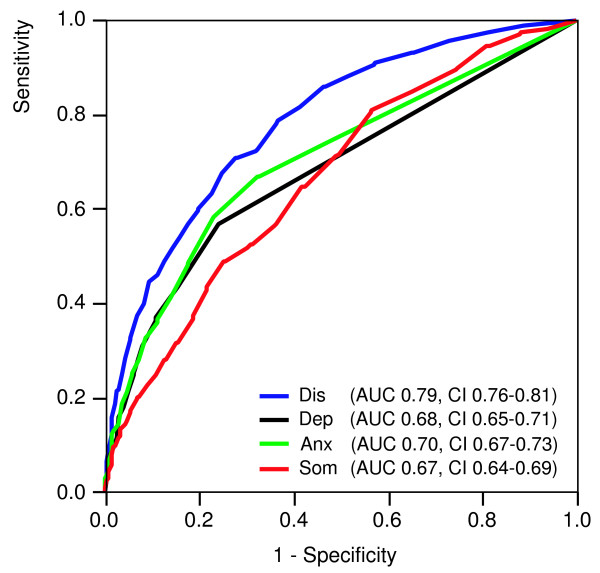
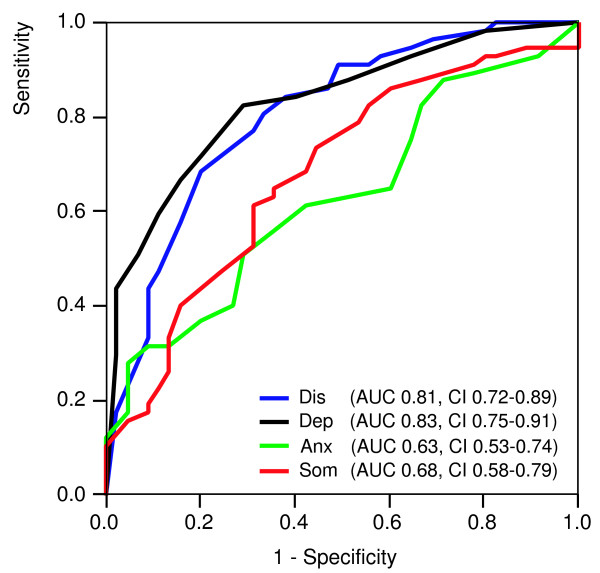
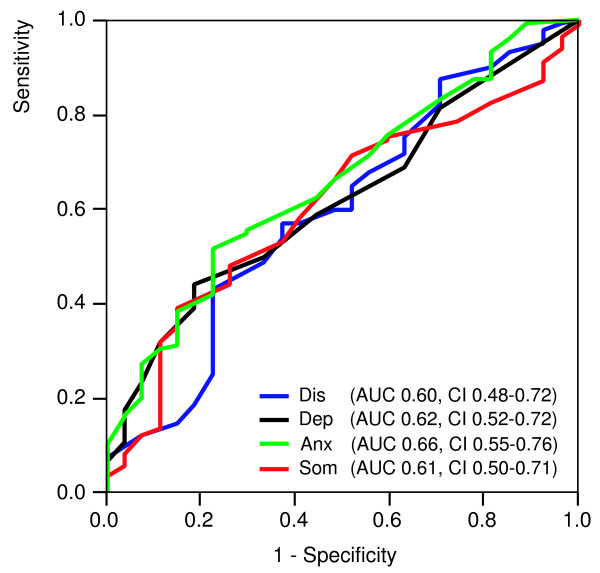
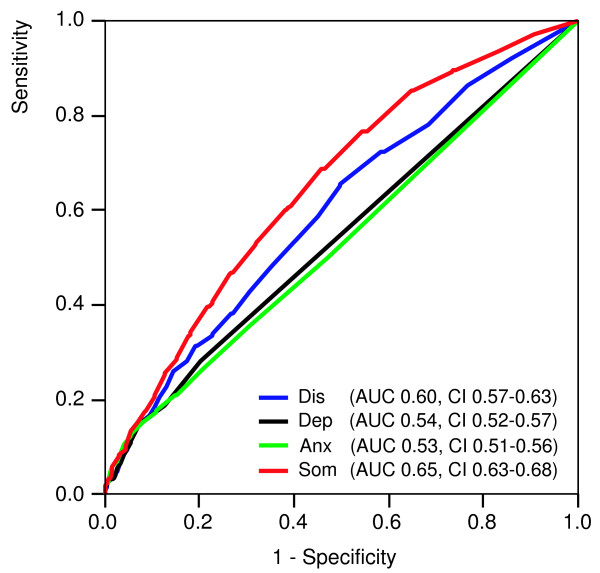
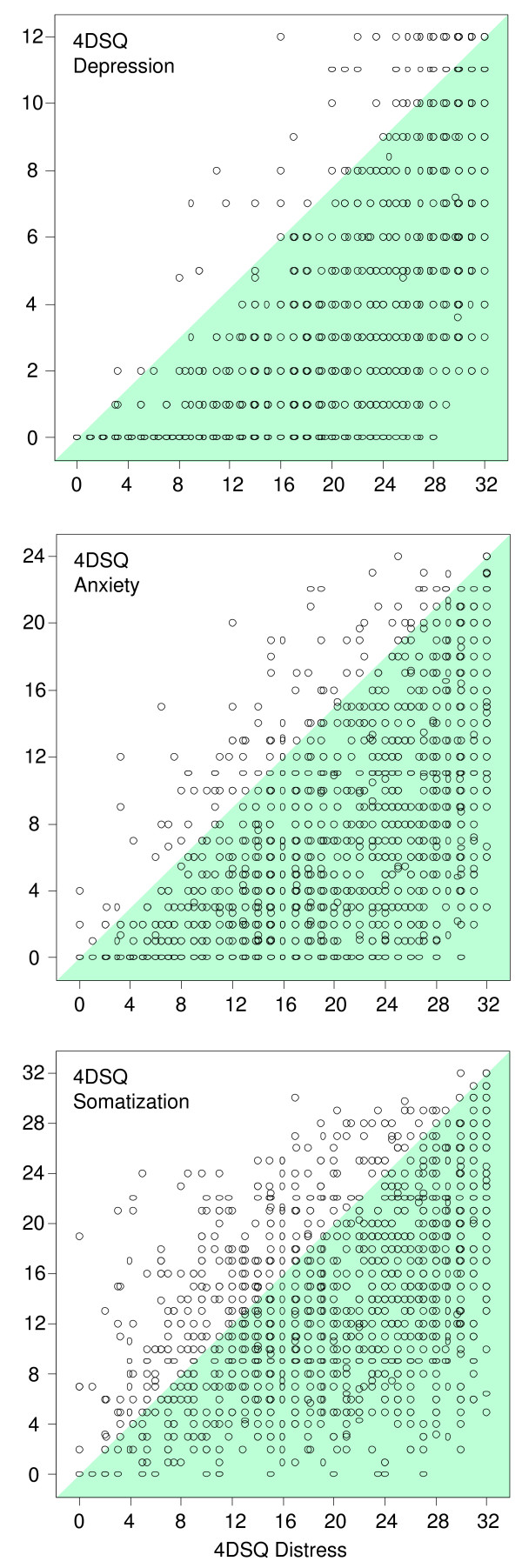
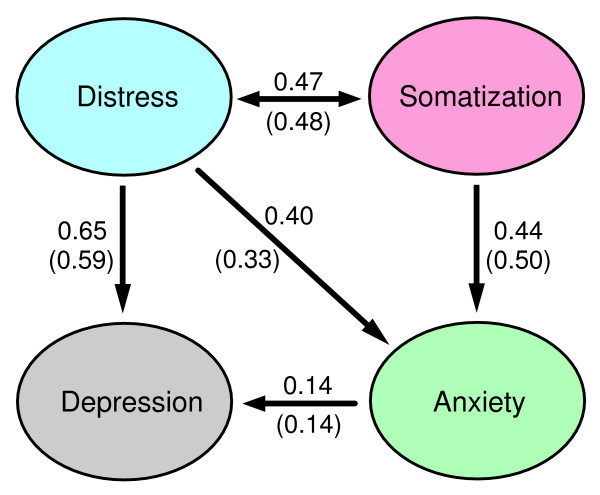
BACKGROUND: The Four-Dimensional Symptom Questionnaire (4DSQ) is a self-report questionnaire that has been developed in primary care to distinguish non-specific general distress from depression, anxiety and somatization. The purpose of this paper is to evaluate its criterion and construct validity. METHODS: Data from 10 different primary care studies have been used. Criterion validity was assessed by comparing the 4DSQ scores with clinical diagnoses, the GPs' diagnosis of any psychosocial problem for Distress, standardised psychiatric diagnoses for Depression and Anxiety, and GPs' suspicion of somatization for Somatization. ROC analyses and logistic regression analyses were used to examine the associations. Construct validity was evaluated by investigating the inter-correlations between the scales, the factorial structure, the associations with other symptom questionnaires, and the associations with stress, personality and social functioning. The factorial structure of the 4DSQ was assessed through confirmatory factor analysis (CFA). The associations with other questionnaires were assessed with Pearson correlations and regression analyses. RESULTS: Regarding criterion validity, the Distress scale was associated with any psychosocial diagnosis (area under the ROC curve [AUC] 0.79), the Depression scale was associated with major depression (AUC = 0.83), the Anxiety scale was associated with anxiety disorder (AUC = 0.66), and the Somatization scale was associated with the GPs' suspicion of somatization (AUC = 0.65). Regarding the construct validity, the 4DSQ scales appeared to have considerable inter-correlations (r = 0.35-0.71). However, 30-40% of the variance of each scale was unique for that scale. CFA confirmed the 4-factor structure with a comparative fit index (CFI) of 0.92. The 4DSQ scales correlated with most other questionnaires measuring corresponding constructs. However, the 4DSQ Distress scale appeared to correlate with some other depression scales more than the 4DSQ Depression scale. Measures of stress (i.e. life events, psychosocial problems, and work stress) were mainly associated with Distress, while Distress, in turn, was mainly associated with psychosocial dysfunctioning, including sick leave. CONCLUSION: The 4DSQ seems to be a valid self-report questionnaire to measure distress, depression, anxiety and somatization in primary care patients. The 4DSQ Distress scale appears to measure the most general, most common, expression of psychological problems.
Overview
The claims and statistics of this paper haven’t been checked yet.
Free: it reads the open-access text and checks the first 5 claims that cite a source we can check. Create a free account to check every claim.
Integrity signals
Registry
Cites
Statistics
Figures
Verification
Claims the paper makes
The claims and statistics of this paper haven’t been checked yet.
Free: it reads the open-access text and checks the first 5 claims that cite a source we can check. Create a free account to check every claim.
Self-check
Percentages, sums and reported differences re-computed from the paper’s own numbers.
The self-check needs the paper’s full text.
Citations
Cites
Diagnostic and Statistical Manual of Mental Disorders
Williams, J. B. W., & First, M. (2013) · Encyclopedia of Social Work · doi:10.1093/acrefore/9780199975839.013.104 · Cited by 109,519
The Hospital Anxiety and Depression Scale
Zigmond, A. S., & Snaith, R. P. (1983) · Acta Psychiatrica Scandinavica · doi:10.1111/j.1600-0447.1983.tb09716.x · Cited by 47,139
An inventory for measuring depression
BECK, A. T. (1961) · Archives of General Psychiatry · doi:10.1001/archpsyc.1961.01710120031004 · Cited by 38,032
(1970) · Cited by 24,983
Depression and quality of life in older persons: A review
Sivertsen, H., Bjørkløf, G. H., Engedal, K., Selbæk, G., & Helvik, A.-S. (2015) · Dementia and Geriatric Cognitive Disorders · doi:10.1159/000437299 · Cited by 14,152
A self-rating depression scale
ZUNG, W. W. K. (1965) · Archives of General Psychiatry · doi:10.1001/archpsyc.1965.01720310065008 · Cited by 9,813
EQS : structural equations program manual
Bentler, P. M. (1989) · Medical Entomology and Zoology · Cited by 9,669
Cognitive Therapy for Depression: (675542012-001)
(2012) · PsycEXTRA Dataset · doi:10.1037/e675542012-001 · Cited by 9,663
Pearlin, L. I., & Schooler, C. (1978) · Journal of Health and Social Behavior · doi:10.2307/2136319 · Cited by 7,791 · cited 3×
“Study F included the Neuroticism scale of the NEO Five Factor Inventory (NEO-FFI) [46], studies B and C a measure of mastery [47], and study H a measure of trait anxiety [41].”
MethodScoville, W. B. (1949) · Journal of neurosurgery · doi:10.3171/jns.1949.6.1.0065 · Cited by 7,381
Research works printed but not linked: 14
- Terluin B De Vierdimensionale Klachtenlijst (4DKL). Een vragenlijst voor het meten van distress, depressie, angst en somatisatie [The Four-Dimensional Symptom Questionnaire (4DSQ). A questionnaire to measure distress, depression, anxiety, and somatization] Huisarts Wet 1996 39 538 547
- Terluin B Overspanning onderbouwd. Een onderzoek naar de diagnose surmenage in de huisartspraktijk [Nervous breakdown substantiated. A study of the general practitioner's diagnosis of surmenage] 1994 Utrecht, Universiteit Utrecht
- Terluin B Gill K Winnubst JAM Hoe zien huisartsen surmenage? [General practitioners' perception of "nervous breakdown"] Huisarts Wet 1992 35 311 315
- Romeijnders ACM Vriezen JA Van der Klink JJL Hulshof CTJ Terluin B Flikweert S Baart PC Landelijke Eerstelijns Samenwerkings Afspraak Overspanning [National Primary Care Collaboration Agreement on Nervous Breakdown] Huisarts Wet 2005 48 20 23
- Bentler P Wu E EQS for Windows user's guide 1995 Encino, Multivariate Software
- Dijkstra P Van Praag HM and Rooymans HGM De zelfbeoordelingsschaal voor depressie van Zung [The self-rating depression scale of Zung] Stemming en ontstemming Theorie en praktijk bij de diagnostiek van depressies 1974 Amsterdam, Erven Bohn 98 120
- Beck AT Steer RA Beck Anxiety Inventory manual 1993 2nd San Antonio TX, Psychological Corporation
- Van der Ploeg HM Defares PB Spielberger CD Handleiding bij de Zelf-Beoordelings Vragenlijst (ZBV) Een Nederlandstalige bewerking van de Spielberger State-Trait Anxiety Inventory STAI-DY [Manual of the Self-Assessment Questionnaire A Dutch adaptation of the Spielberger State-Trait Anxiety Inventory STAI-DY] 1980 Lisse, Swets & Zeitlinger
- Hosman CMH Psychosociale problematiek en hulpzoeken. Een sociaal-epidemiologische studie ten behoeve van de preventieve geestelijke gezondheidszorg [Psychosocial problems and seeking help. A socio-epidemiological study for the preventive mental health care] 1983 Nijmegen, Katholieke Universiteit Nijmegen
- Ormel J Moeite met leven of een moeilijk leven. Een vervolgonderzoek naar de invloed van psychosociale belasting op het welbevinden van driehonderd Nederlanders [A troublesome life, or trouble with living. A follow-up study of the influence of psycosocial stress on the well-being of threehundred Dutch inhabitants] 1980 Groningen, Rijksuniversiteit Groningen
- Hoekstra HA Ormel J De Fruyt F De NEO-PI-R/NEO-FFI; Big Five persoonlijkheidsvragenlijsten Handleiding [Manual of the Dutch version of the NEO-PI-R/NEO-FFI] 1996 Lisse, Swets en Zeitlinger
- Costa PT McCrae RR Revised NEO Personality Inventory (NEO-PI-R) and NEO Five Factor Inventory (NEO-FFI): professional manual 1992 Odessa FL, Psychological Assessment Resources
- Van der Zee KL Sanderman R Het meten van de gezondheidstoestand met de RAND-36 Een handleiding [Measuring the health status with the RAND-36 A manual] 1993 Groningen, Noordelijk Centrum voor Gezondheidsvraagstukken
- Terluin B Factoranalyse van drie klachtenlijsten [Factor analysis of three symptom questionnaires] Tijdschrift voor psychosomatische fysiotherapie 1999 4 25 31
Cited by
Items 301–400 of 470
Eisen, T., Kooijstra, E. M., Groeneweg, R., Verseveld, M., & Hidding, J. T. (2021) · Frontiers in Pain Research · doi:10.3389/fpain.2021.675302 · Cited by 7
Афузова, Г. В., Naidonova, H. O., & Кротенко, В. (2022) · Habitus · doi:10.32782/2663-5208.2022.41.49 · Cited by 5
Silies, K., Vonthein, R., Pohontsch, N. J., Huckle, T., Sill, J., Olbrich, D., Inkrot, S., Frielitz, F., Lühmann, D., Scherer, M., et al. (2023) · BMJ Open · doi:10.1136/bmjopen-2023-072955 · Cited by 5
Сергеевич, А. В., Владимирович, Р. Д., Ab, S., Yakhno, N. N., Terluin, B., Захарова, Е. К., Andryushchenko, A. V., Parfenov, V. A., Zamergrad, M. V., & Romanov, D. V. (2015) · BMC Research Notes · doi:10.1186/s13104-015-1766-8 · Cited by 5
“The analysis of the responses allow for the determination of the nature of the predominant component in the structure of patients’ mental disorders [4].”
BackgroundSelf-citationPredictive value and construct validity of the work functioning screener‐healthcare (WFS‐H)
Boezeman, E. J., Nieuwenhuijsen, K., & Sluiter, J. K. (2016) · Journal of Occupational Health · doi:10.1539/joh.15-0056-oa · Cited by 7
Ivetić, V., Pašić, K., & Selič, P. (2016) · Slovenian Journal of Public Health · doi:10.1515/sjph-2017-0012 · Cited by 5
“The patients were also asked to complete Questionnaire D, which included theEQ-5D-3L (EuroQoL 5D-3L) instrument rating quality of life (16), as well as the 4DSQ (Four-Dimensional Symptom Questionnaire) for assessing depression, anxiety, stress and somatisation (17), the WI (Whiteley Hypochondriasis Index) (18), the MI…”
MethodNeuroimaging in Breast Implant Illness: An fMRI Pilot Study
Miseré, R. M. L., Rutten, S., van den Hurk, J., Colaris, M. J. L., & van der Hulst, R. R. W. J. (2022) · Aesthetic Surgery Journal · doi:10.1093/asj/sjac216 · Cited by 7
Ivashkin, V. T., Okhlobystina, O. Z., Mayevskaya, M. V., Shifrin, O. S., Mamieva, Z. A., & Azimova, Y. É. (2019) · Russian Journal of Gastroenterology Hepatology Coloproctology · doi:10.22416/1382-4376-2018-28-6-38-50 · Cited by 5
Sucher, C. M., Allen, D., Laird, E., Boisvert, I., & Ferguson, M. (2025) · Journal of Clinical Medicine · doi:10.3390/jcm14217697 · Cited by 4
Terluin, B., Hoff, A., & Eplov, L. F. (2020) · Scandinavian Journal of Public Health · doi:10.1177/1403494820942074 · Cited by 4
“[5] Terluin B, Van Marwijk HWJ, Adèr HJ, et al.”
BackgroundMethodInfluentialSelf-citationRevisiting Job Rotation and Stress
Sood, H., & Ong, C. E. (2022) · Advances in human resources management and organizational development book series · doi:10.4018/978-1-6684-3937-1.ch017 · Cited by 5
Kivi, H. G., Miyanroudi, F. J., Mousavi, S., & Ghavibazou, E. (2023) · Practice in Clinical Psychology · doi:10.32598/jpcp.11.4.807.2 · Cited by 6
Gidding, L. G., Spigt, M., Maris, J. G., Herijgers, O., & Dinant, G. (2015) · European Psychiatry · doi:10.1016/j.eurpsy.2015.06.002 · Cited by 4
“The 4DSQ is an instrument to facilitate differentiation between distress, anxiety, depression and somatization [41,42].”
BackgroundMethodDizziness and anxiety disorders in the elderly
Котова, О. В., & Zamergrad, M. V. (2016) · Terapevticheskii arkhiv · doi:10.17116/terarkh2016889131-134 · Cited by 6
Vendrig, L., Wijnvoord, L., & Schaafsma, F. G. (2018) · Journal of Occupational Rehabilitation · doi:10.1007/s10926-018-9821-7 · Cited by 4
Supported self-help to prevent relapse or recurrence of depression: Who benefits most?
Dijkstra‐Kersten, S. M. A., Biesheuvel-Leliefeld, K. E. M., van der Wouden, J. C., van Schaik, A., Bosmans, J. E., van Marwijk, H., & van der Horst, H. E. (2019) · Journal of Affective Disorders · doi:10.1016/j.jad.2019.07.006 · Cited by 6
van Tilburg, M. L., van Westrienen, P. E., & Pisters, M. F. (2020) · BMC Public Health · doi:10.1186/s12889-020-09415-9 · Cited by 5
“A higher score defines an increased probability of a disorder [30, 31].”
BackgroundMethodA hierarchical logistic regression predicting rapid respiratory rates from post-exertional malaise
Cotler, J. H., Katz, B. Z., Reurts-Post, C., Vermeulen, R. C., & Jason, L. A. (2020) · Fatigue Biomedicine Health & Behavior · doi:10.1080/21641846.2020.1845287 · Cited by 4
“The four-dimensional symptom questionnaire (4DSQ) [26] is a 50-item self-assessment comprised of four subscales: Somatization, Distress, Depression, and Anxiety.”
BackgroundMenon, B., & Gadiraju, P. (2023) · Indian Journal of Medical and Paediatric Oncology · doi:10.1055/s-0043-1766132 · Cited by 5
“12 In simple terms, psychological distress is described as a state of emotional suffering associated with stressors and demands that are dif fi cult to cope with, which is indicative of physical, mental, or emotional exhaustion.”
BackgroundJansen, L. A., van Wier, M. F., Vernimmen, F. P. J., Goderie, T. P. M., van de Berg, R., Lemke, U., Lissenberg-Witte, B. I., & Kramer, S. E. (2024) · BMC Public Health · doi:10.1186/s12889-024-18187-5 · Cited by 6
“…(T0 or T1) ; hearing aid use (“none or < 2 years” or “ ≥ 2 years”); depression levels measured by the Four-Dimensional Symptom Questionnaire (4DSQ) [41] (“moderate to severe” or “not pre-sent to mild”); loneliness levels measured by the De Jong Gierveld Scale [42] (“moderate to severe” or “not…”
MethodMagnée, T., Beurs, D. P. D., Terluin, B., & Verhaak, P. F. M. (2017) · JMIR Mental Health · doi:10.2196/mental.6545 · Cited by 4
“It has been found that most responders need 7 minutes to complete the full version and 75% of all responders complete the 4DSQ within 10 minutes [4].”
Self-citationvan Bebber, J., Wigman, J. T. W., Wunderink, L., Tendeiro, J. N., Wichers, M., Broeksteeg, J., Schrieken, B., Sytema, S., Terluin, B., & Meijer, R. R. (2017) · BMC Psychiatry · doi:10.1186/s12888-017-1552-3 · Cited by 4
“Terluin [9] found that the scores on the four scales can be described adequately by unidimensional (common) factor models, and all four scales were found to be invariant with van Bebber et al.”
BackgroundInfluentialSelf-citationSSRI’s in de Nederlandse huisartsenpraktijk
Ketelaar, M. H., & Grundmeijer, H. G. L. M. (2010) · Huisarts en Wetenschap · doi:10.1007/s12445-010-0139-8 · Cited by 4
Ketelaar, S. M., Schaafsma, F. G., Geldof, M. F., Boot, C. R. L., Kraaijeveld, R. A., Shaw, W. S., Bültmann, U., Twisk, J. W. R., & Anema, J. R. (2016) · Journal of Occupational Rehabilitation · doi:10.1007/s10926-016-9659-9 · Cited by 7
“account as possible confounders or effect modifiers: age, sex, level of education, job insecurity [23] (3 items), organization (university or university medical center), general health [24] (1 item; 1 = excellent, 5 = poor), being at risk for sick leave at baseline (2 items; yes/no), being at sick leave at baseline (y…”
BackgroundMagnée, T., Beurs, D. P. D., Kok, T. Y., & Verhaak, P. F. M. (2017) · Family Practice · doi:10.1093/fampra/cmx084 · Cited by 4
Four-Dimensional Symptom Questionnaire (4DSQ)
Terluin, B. (2021) · Springer eBooks · doi:10.1007/978-3-319-69909-7_1082-2 · Cited by 4
Self-citationBrand, A. M., Waterink, W., & van Lankveld, J. J. D. M. (2024) · Open Research Europe · doi:10.12688/openreseurope.16138.2 · Cited by 3
Tebbe, B. B. M., Terluin, B., & van Poppel, M. N. M. (2016) · Midwifery · doi:10.1016/j.midw.2016.06.017 · Cited by 3
Self-citationBaumgartner-Dupuits, M., Sep, S. J. S., Verbunt, J., Bosma, H., & van Eijk, J. T. M. (2021) · Frontiers in Neurology · doi:10.3389/fneur.2021.647773 · Cited by 4
“The Four-Dimensional Symptom Questionnaire (4DSQ) is a questionnaire consisting of 50 items that measures psychological well-being in four domains: psychosocial complaints, distress, depression, and anxiety (19).”
BackgroundA Persian validation of the burnout assessment tool
Kalani, S., Esfahani, M. D., & Khanlari, P. (2024) · BMC Public Health · doi:10.1186/s12889-024-19314-y · Cited by 8
“However, Schaufeli, Desart and De Witte [18] noted that such a distinction was previously made by Terluin, van Marwijk [59].”
BackgroundLettinga, H., van Oostrom, S. H., Zijlstra, H. P., Anema, J. R., & Proper, K. I. (2024) · BMC Public Health · doi:10.1186/s12889-024-19773-3 · Cited by 5
“Stress-related symptoms are measured with the 4DSQ [19, 24].”
Klabbers, G. A., & Vingerhoets, A. J. J. M. (2024) · International Journal of Haptonomy and Haptotherapy · doi:10.61370/wtwr3927 · Cited by 3
Gidding, L. G., Spigt, M., & Dinant, G. (2017) · European Journal of General Practice · doi:10.1080/13814788.2017.1359536 · Cited by 4
Terluin, B., van der Wouden, J. C., & de Vet, H. C. W. (2019) · PLoS ONE · doi:10.1371/journal.pone.0221904 · Cited by 3
“Internal consistency reliability (Cronbach’s alpha) of the distress scale is > 0.90 across a range of populations [8].”
InfluentialSelf-citationЧабан, О., Khaustova, O. O., & Sak, L. V. (2020) · Psychosomatic Medicine and General Practice · doi:10.26766/pmgp.v5i1.229 · Cited by 6
Brunner, E., Meichtry, A., Vancampfort, D., Imoberdorf, R., Gisi, D., Dankaerts, W., Graf, A., Rebsamen, S., Suter, D., Wildi, L. M., et al. (2021) · BMC Musculoskeletal Disorders · doi:10.1186/s12891-021-04529-6 · Cited by 4
“In the four-dimensional model of the 4DSQ, distress is conceptualized as the most basic, most general or “normal” expression of psychological problems [19].”
BackgroundLarionow, P. (2020) · Izvestia Herzen University Journal of Humanities & Sciences · doi:10.33910/1992-6464-2020-198-140-154 · Cited by 3
Gadjradj, P. S., Depauw, P. R. A. M., Schutte, P. J., Vreeling, A., & Harhangi, B. S. (2022) · Global Spine Journal · doi:10.1177/21925682221105271 · Cited by 3
“15,16 Mean differences and odds ratio ’ s (OR ’ s) are presented with their 95% con fi dence intervals (95% CI).”
BackgroundIdentifying patients with psychosocial problems in general practice: A scoping review
Schwenker, R., Deutsch, T., Unverzagt, S., & Frese, T. (2023) · Frontiers in Medicine · doi:10.3389/fmed.2022.1010001 · Cited by 3
“Four-Dimensional Symptom Questionnaire (4DSQ)* Terluin (108) Common psychological symptoms, distinguish non-specific general distress from depression, anxiety and somatisation; distress: worry, irritability, tension, listlessness, poor concentration, sleeping problems, demoralisation Adults”
Brand, A. M., Waterink, W., & van Lankveld, J. J. D. M. (2023) · Open Research Europe · doi:10.12688/openreseurope.16138.1 · Cited by 3
“In addition, the presence and severity of Pelvic Pain (PP) were questioned using question 5 from the Four-Dimensional Symptom Questionnaire (4DSQ) 46,47 in addition to low back pain, pelvic pain, and coccyx pain was included in the question because these pain complaints are often presented in PPT…”
Comprehensive prevention of occupational burnout of teachers
Ponamareva, О. P., Kontorovich, E. P., & Zabolotnikova, D. A. (2018) · Russian Journal of Occupational Health and Industrial Ecology · doi:10.31089/1026-9428-2018-7-27-33 · Cited by 3
Impact of Verb Tense on Response to the Four-Dimensional Symptom Questionnaire (4DSQ)
Terluin, B., Marchand, M. A. G., de Vet, H. C. W., & Brouwers, E. P. M. (2014) · European Journal of Psychological Assessment · doi:10.1027/1015-5759/a000226 · Cited by 4
Self-citationSchoutens, A. M. C., Frings‐Dresen, M. H. W., & Sluiter, J. K. (2016) · BMC Public Health · doi:10.1186/s12889-016-3276-6 · Cited by 4
Porsius, J. T., Claassen, L., Woudenberg, F., Smid, T., & Timmermans, D. R. M. (2017) · Risk Analysis · doi:10.1111/risa.12786 · Cited by 3
Jansen, L. A., van Wier, M. F., Lissenberg-Witte, B. I., Smits, C., & Kramer, S. E. (2025) · Ear and Hearing · doi:10.1097/aud.0000000000001700 · Cited by 4
“This questionnaire comprises 50 items reflecting psychological symptoms experienced during the past 7 days, assessed using 5-point Likert scale from “no” (0) to “very often or constantly” (4) (Terluin et al. 2006).”
Birkinshaw, H., Pincus, T., Hughes, S. F., Stuart, B., Chew-Graham, C. A., Little, P. S., Moore, M. V., Shivji, N., & Geraghty, A. W. A. (2026) · Pain · doi:10.1097/j.pain.0000000000003926 · Cited by 2
“16,17,44 The distinction between distress and depression potentially addresses the concerns regarding the overlap of distress related to persistent pain symptoms with depressive disorder.”
Romo‐Nava, F., Awosika, O. O., Basu, I., Blom, T. J., Welge, J. A., Datta, A., Guillen, A. R., Guerdjikova, A. I., Fleck, D. E., Georgiev, G. P., et al. (2023) · Molecular Psychiatry · doi:10.1038/s41380-023-02349-9 · Cited by 3
“Additionally, the Four-Dimensional Symptom Questionnaire (4DSQ) [58] was used to measure distress, somatization and anxiety symptoms; the Binge Eating Scale (BES) was used to measure eating behaviors and aspects of body perception [59]; and the multidimensional assessment of interoceptive awareness…”
Method., A., Singh, A., Ranjan, P., Kaur, T., Rawat, N., Sarkar, S., Kaloiya, G. S., Sahu, A., Deb, K. S., & Baitha, U. (2024) · Cureus · doi:10.7759/cureus.55956 · Cited by 2
Geraghty, A. W. A., Holt, S., Chew-Graham, C. A., Santer, M., Moore, M. V., Kendrick, T., Terluin, B., Little, P. S., Stuart, B. L., Mistry, M., et al. (2024) · British Journal of General Practice · doi:10.3399/bjgp.2023.0574 · Cited by 6
“10,11 It involves a multidimensional assessment with patients’ symptoms reported and scored across four areas: distress, depression, anxiety, and physical symptoms.”
Self-citationAlzaben, M. B. L., & Shawaqfeh, B. S. (2024) · American Journal of Alzheimer s Disease & Other Dementias® · doi:10.1177/15333175241248056 · Cited by 3
Smashna, O. (2024) · Psychiatry Neurology and Medical Psychology · doi:10.26565/2312-5675-2024-24-07 · Cited by 3
Maternal Distress-Every Unhappy Pregnant Woman is Unhappy in Her Own Way
Kuipers, Y. (2016) · Journal of Psychiatry and Mental Health · doi:10.16966/2474-7769.106 · Cited by 3
“On the other hand, severe maternal distress [11,12] interferes with a woman’s bio-psychosocial homeostasis and impairs her social functioning [13] and can also have detrimental short and longer-term effects [11,12].”
BackgroundExercise therapy for Stress-related mental disorder, a randomised controlled trial in primary care
Quartero, A. O., Burger, H., Donker, M. N. V. D., & de Wit, N. J. (2011) · BMC Family Practice · doi:10.1186/1471-2296-12-76 · Cited by 3
Schadé, A., & van Grootheest, G. (2016) · Journal of AIDS & Clinical Research · doi:10.4172/2155-6113.1000547 · Cited by 2
“Four Dimensional Symptom Questionnaire (4DSQ) [28]: The somatization scale is one of the 4 scales of the Four-Dimensional Symptom Questionnaire, a self-report questionnaire designed to assess common psychological symptoms in primary care.”
Backgroundvan Bebber, J., Wigman, J. T. W., Meijer, R. R., Terluin, B., Sytema, S., & Wunderink, L. (2019) · BMC Psychiatry · doi:10.1186/s12888-019-2070-2 · Cited by 2
Self-citationGestures in patients’ presentation of medically unexplained symptoms (MUS)
Sowińska, A., & Boruta-Żywiczyńska, M. (2020) · Gesture · doi:10.1075/gest.17011.sow · Cited by 2
Latent Dysphoria in the Structure of Emotional Disorders in Patients with Functional Constipation
Ma, M., Rupchev, G. E., Alekseev, A. A., Ulyanin, A. I., Poluektova, E. A., & Ivashkin, V. T. (2021) · Clinical Psychology and Special Education · doi:10.17759/cpse.2021100404 · Cited by 2
Émeriau-Farges, C., Dussault, M., & Deschênes, A.-A. (2022) · Ad machina l avenir de l humain au travail · doi:10.1522/radm.no5.1410 · Cited by 3
SYNDROMAL COMORBIDITY IN PATIENTS WITH NON-CHEMICAL ADDICTION
Мозгова, Т. П., Skrypnikov, A. M., Vyun, V. V., Asieieva, Y., Leshchyna, I. V., Kozhyn, M. I., & Khaustov, M. M. (2021) · World of Medicine and Biology · doi:10.26724/2079-8334-2021-2-76-98-103 · Cited by 2
Four-Dimensional Symptom Questionnaire
Terluin, B. (2010) · PsycTESTS Dataset · doi:10.1037/t12310-000 · Cited by 2
Self-citationFear and Safety Learning in Anxiety- and Stress-Related Disorders: An Updated Meta-AnalysisPreprint
Kausche, F. M., Carsten, H. P., Sobania, K. M., & Riesel, A. (2024) · doi:10.31234/osf.io/qb5dh · Cited by 2
Stanić, G., & Marinković, S. (2021) · Medicinski glasnik Specijalne bolnice za bolesti štitaste žlezde i bolesti metabolizma · doi:10.5937/medgla2180007s · Cited by 1
“Zatim, skeletnomišićni simptomi (bol u leđima, vratu, mišićima, trnjenje u prstima), gastointestinalni simptomi (neprijatan osećaj u trbuhu, mučnina u želucu, bol u abdomenu ili u predelu želuca), kao i opšti simptomi (vrtoglavica ili osećaj vrtoglavice, nesvestica, glavobolja, zamagljen vid ili tačkice ispred očiju)…”
InfluentialРsychopathological disorders in adolescents with recurrent headaches
Kostyuchenko, Y. R., Evert, L. S., Potupchik, T. V., Gromov, M. S., Zhaga, M. V., & Varushckina, A. S. (2025) · Vestnik nevrologii psihiatrii i nejrohirurgii (Bulletin of Neurology Psychiatry and Neurosurgery) · doi:10.33920/med-01-2507-14 · Cited by 1
Stelcer, B., Człapka-Matyasik, M., Woźniewicz, M., Campos, M. J., & Anioła, J. (2026) · Healthcare · doi:10.3390/healthcare14050598 · Cited by 2
Vendrig, L., Parsowa-Maikoe, M., & van Wijhe, E.-J. (2015) · Tijdschrift voor bedrijfs- en verzekeringsgeneeskunde · doi:10.1007/s12498-015-0045-x · Cited by 1
Brouwers, E. P. M., Tiemens, B. G., Terluin, B., & Verhaak, P. F. M. (2007) · Huisarts en Wetenschap · doi:10.1007/bf03085196 · Cited by 1
Self-citationKan alopecia areata een beroepsziekte zijn? Een analyse naar aanleiding van een casus
Elders, L. A. M., Burdorf, A., Muris, E., & de van der Waard-Spek, F. B. (2011) · Tijdschrift voor bedrijfs- en verzekeringsgeneeskunde · doi:10.1007/s12498-011-0035-6 · Cited by 1
Frieberg, O.-P., Millqvist, E., Nilsson, J., & From, I. (2017) · Scandinavian Journal of Public Health · doi:10.1177/1403494817728668 · Cited by 1
“[26] Terluin B, van Marwijk HW, Ader HJ, et al.”
BackgroundTrauma- and Stressor-Related Disorders
Lee, D. J., Kleiman, S. E., & Weathers, F. W. (2018) · Cambridge University Press eBooks · doi:10.1017/9781108140416.014 · Cited by 1
Christensen, T. N., Poulsen, C. H., Ebersbach, B. K., & Eplov, L. F. (2022) · Trials · doi:10.1186/s13063-022-06718-7 · Cited by 2
“The Four-Dimensional Symptom Questionnaire (4DSQ) is a 50-item questionnaire designed to assess self-reported common psychological symptoms in the last week and has a special focus on distinguishing general distress from depression, anxiety, and somatization [15].”
BackgroundJansen, L. A., van Wier, M. F., Lissenberg-Witte, B. I., & Kramer, S. E. (2023) · International Journal of Audiology · doi:10.1080/14992027.2023.2210755 · Cited by 2
“The 4DSQ, measuring the first four domains, has reported good reliability and validity (Terluin et al. 2006).”
Clinical reasoning in Haptotherapy: Use of the SCEBS and Questions about Affectivity
Klabbers, G. A. (2023) · International Journal of Haptonomy and Haptotherapy · doi:10.61370/idvx9733 · Cited by 1
Vermeulen, C. K. M., Tunnissen, W., Coolen, A.-L. W. M., Veen, J., Dietz, V., van Leijsen, S. A. L., & Bongers, M. Y. (2024) · International Urogynecology Journal · doi:10.1007/s00192-023-05697-w · Cited by 1
“In our study, we used the lower cut-off score to identify anomalies [23].”
InfluentialValiditeit van de Vierdimensionale Klachtenlijst (4DKL) in de ambulante geestelijke gezondheidszorg
Terluin, B., & Verbraak, M. J. P. M. (2014) · Pure Amsterdam UMC · Cited by 3
Self-citationPsychosocial Issues in Hepatocellular Carcinoma
Steel, J. L., DiMartini, A. F., & Dew, M. A. (2009) · Humana Press eBooks · doi:10.1007/978-1-60327-376-3_24 · Cited by 3
(2017) · Oral Surgery Oral Medicine Oral Pathology and Oral Radiology · doi:10.1016/j.oooo.2017.08.005 · Cited by 1
Stress-related mental disorders with sick leave: a minimal intervention in general practice
Bakker, I. M. C. (2007) · Socio-Environmental Systems Modeling · Cited by 1
Caring for healthcare professionals: improving prevention in occupational healthcare
Ketelaar, S. M. (2014) · UvA-DARE (University of Amsterdam) · Cited by 3
Commentary: Good primary mental health care is simple
van Marwijk, H., & Terluin, B. (2008) · British Journal of General Practice · doi:10.3399/bjgp08x302691 · Cited by 1
Self-citationZorgbehoefte cognitief niet beperkte bejaarden duurt betrekkelijk kort
Ponsioen, B. P. (2010) · Huisarts en Wetenschap · doi:10.1007/s12445-010-0159-4 · Cited by 1
Het beloop en de prognose van schouderklachten: verschillen tussen acute en chronische klachten
Reilingh, M. L., Kuijpers, T., & van der Windt, D. (2008) · Huisarts en Wetenschap · doi:10.1007/bf03086934 · Cited by 2
Towards integrated nurse-led self-management support in routine diabetes care
Vries, A. V. D. (2015) · Research Publications (Maastricht University) · doi:10.26481/dis.20151216ad · Cited by 4
From non-adaptive depression to general distress
Geraghty, A. W. A., Terluin, B., Kendrick, T., & Moore, M. V. (2017) · Brain Behavior and Immunity · doi:10.1016/j.bbi.2017.12.001 · Cited by 1
Self-citationTeleScreen as a novel internet-based tool for classifying mental disorders presented in primary care
Dijksman (2018) · Research Publications (Maastricht University) · doi:10.26481/dis.20181011id · Cited by 1
Four-Dimensional Symptom Questionnaire (4DSQ)
Terluin, B. (2023) · Springer eBooks · doi:10.1007/978-3-031-17299-1_1082 · Cited by 1
Self-citationHughes, S. F., Pincus, T., Geraghty, A. W. A., Chew-Graham, C. A., Stuart, B. L., Little, P. S., Moore, M. V., & Birkinshaw, H. (2024) · medRxiv · doi:10.1101/2024.09.27.24314271 · Cited by 1
Smashna, O. Y. (2024) · Psychiatry, Neurology and Medical Psychology · doi:10.26565/2312-5675-2024-25-02
“Крім того, рівень клінічної симптоматики оціню-вався за допомогою Чотиривимірного опитуваль-ника симптомів (The Four-Dimensional Symptom Questionnaire – 4DSQ) [29], що складається з 50 пунктів, які оцінюють стан пацієнта за останні 7 днів.”
Hogen-Koster, V. S. (2011) · doi:10.3990/1.9789036532303
Fatigue in Primary Care : Course, Prognosis and Diagnoses
Nijrolder, I. (2009) · Pure Amsterdam UMC
Functionele benauwdheid en de rol van de psychosomatisch oefentherapeut
de Lint, M. C., & Hartman, T. O. (2012) · Bijblijven · doi:10.1007/s12414-012-0043-1 · Cited by 1
Hooftman, W. E., van Kesteren, N. M. C., van Poppel, M. N. M., Lanting, C. I., Wouwe, J. P. V., & Verheijden, M. W. (2013) · TSG - Tijdschrift voor gezondheidswetenschappen · doi:10.1007/s12508-013-0097-1
“De score op de schaal is gedichotomiseerd in hoge (>=10) en lage (<10) distress, aangezien een score tussen de 10 en de 20 op deze schaal in verband wordt gebracht met aan stress gerelateerde spanning.(24,25) Tabel 1 Variabelen in de analyses meegenomen.”
BackgroundSomatisatie of SOLK? Herkenning van somatisatie bij verzuimende werknemers
Hoedeman, R., Koopmans, P. C., & Groothoff, J. W. (2012) · Tijdschrift voor bedrijfs- en verzekeringsgeneeskunde · doi:10.1007/s12498-012-0217-x
Stelselwijziging ggz: uitdaging voor de huisarts
Beeres, M., & Oud, M. (2015) · Huisarts en Wetenschap · doi:10.1007/s12445-015-0080-y
ICT – vooruitgang met valkuilen
Donker, G., & Pruys, T. (2011) · Bijblijven · doi:10.1007/s12414-011-0020-0
“De 4DKL laat een matig verhoogde score op somatisatie zien (11) en scores van 0 op distress, angst en depressie.”
BackgroundPrevention of Depression and Anxiety in Residential Homes for the Elderly
Dozeman, E. (2011) · Pure Amsterdam UMC · Cited by 1
Collaborative care in de huisartspraktijk
Huijbregts, K. M. L., & Muntingh, A. (2015) · Psychopraktijk · doi:10.1007/s13170-015-0088-9
Goel, K. S. (2011) · VTechWorks (Virginia Tech)
Screening of mental disorders in workplace
Tsutsumi, A. (2016) · Health Evaluation and Promotion · doi:10.7143/jhep.43.313
5 Schouderklachten bij een volleybalster
D'hondt, N. E., & List, M. (2010) · Bohn Stafleu van Loghum eBooks · doi:10.1007/978-90-313-7728-2_5 · Cited by 1
Metadata
- Authors
- Terluin, B., van Marwijk, H. W., Adèr, H. J., de Vet, H. C., Penninx, B. W., Hermens, M. L., van Boeijen, C. A., van Balkom, A. J., van der Klink, J. J., & Stalman, W. A.
- Affiliations
- Amsterdam Public Health (NL)
- Amsterdam UMC Location Vrije Universiteit Amsterdam (NL)
- Corresponding author
- Terluin, Berend
- Venue
- BMC Psychiatry
- Published
- 2006-08-22
- Volume
- 6
- Issue
- 1
- Pages
- 34-34
- ISSN
- 1471-244X (ISSN-L)
- PMC
- PMC1590008
- OpenAlex
- W2115145758
- Cited by
- 469
- References
- 54
- Citations by year
- 2026: 16 · 2025: 10 · 2024: 25 · 2023: 30 · 2022: 32 · 2021: 36 · 2020: 27 · 2019: 21 · 2018: 26 · 2017: 42 · 2016: 37 · 2015: 35 · 2014: 24 · 2013: 22 · 2012: 18
- FWCI
- 15.95
- Type
- journal article
- Language
- en
- Open access
- gold
- doi.org
- Licence
- cc-by
- creativecommons.org/licenses/by/2.0 (tdm)
- Locations
- BMC Psychiatry (publishedVersion, cc-by)
- Europe PMC (PubMed Central) (publishedVersion, cc-by)
- PubMed (publishedVersion)
- Pure Amsterdam UMC (publishedVersion, other-oa)
- Amsterdam UMC (VU Amsterdam) - Institutional Repository (publishedVersion, other-oa)
- VU Research Portal (publishedVersion, other-oa)
- Data Archiving and Networked Services (DANS) (submittedVersion, other-oa)
- Digital Academic REpository of VU University Amsterdam (Vrije Universiteit Amsterdam) (submittedVersion)
- UvA-DARE (University of Amsterdam) (submittedVersion, cc-by)
- DOAJ (DOAJ: Directory of Open Access Journals) (submittedVersion)
- Data Archiving and Networked Services (DANS) (submittedVersion)
- Funders
- ZonMw (22000113)
- Nederlandse Organisatie voor Wetenschappelijk Onderzoek
- Topics
- Social Sciences › Psychology › Experimental and Cognitive Psychology › Anxiety, Depression, Psychometrics, Treatment, Cognitive Processes
- Health Sciences › Medicine › Psychiatry and Mental health › Psychosomatic Disorders and Their Treatments
- Social Sciences › Decision Sciences › Management Science and Operations Research › Psychometric Methodologies and Testing
- Keywords
- Four-Dimensional Symptom Questionnaire, distress, depression, anxiety, somatization, psychosomatic symptoms, primary care, questionnaire validation, criterion validity, construct validity, psychosocial problems, sick leave, occupational stress, life events, psychosocial functioning, self-report questionnaire, factor structure, psychometric properties, general practitioner diagnosis, social functioning
- MeSH terms
- Anxiety, Depression, Family Practice, Humans, Psychiatric Status Rating Scales, Surveys and Questionnaires, Somatoform Disorders, Stress, Psychological, Reproducibility of Results
About these checks
Registry, retraction, Cites and statistics results are computed, not judged, with one exception: a printed reference that no index lists is read once by a model before it counts as a citation error. Claims are extracted by a model and kept only when their quote appears verbatim in the text; each cited source is then checked, with a model’s help, for whether it says what the claim relies on. Those verdicts can be wrong — read the claim’s quote and the cited source before relying on one.
Statistics and arithmetic are recomputed, not judged.
Confidence bands are shown only for fields calibrated on our annotated test set. None is calibrated yet, so no band is shown.
What counts as a claim ›How we measure confidence ›How we check this ›
Are you an author, or do you see a problem with this page? Request a review
Data sources
Bibliographic data: Semantic Scholar, OpenAlex, Crossref.
Contains information from the Semantic Scholar Academic Graph Datasets, made available under the ODC Attribution License (ODC-BY 1.0).
Semantic Scholar’s data is described in: Kinney, R., et al. (2023). The Semantic Scholar Open Data Platform. arXiv:2301.10140.
