

The Four-Dimensional Symptom Questionnaire (4DSQ): a validation study of a multidimensional self-report questionnaire to assess distress, depression, anxiety and somatization
Open accessThe DOI matches its Crossref record; 53 of the 54 references it cites were found in a registry or an index.
Abstract
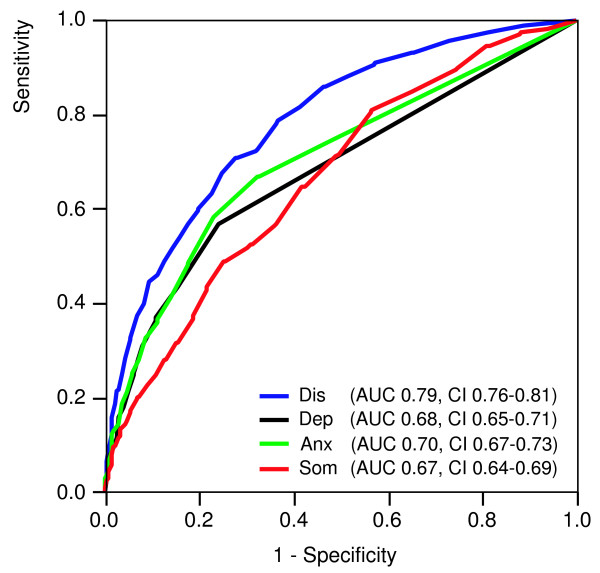
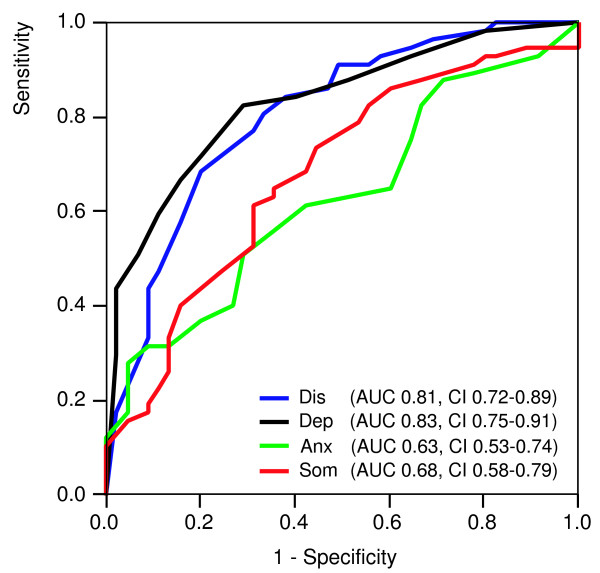
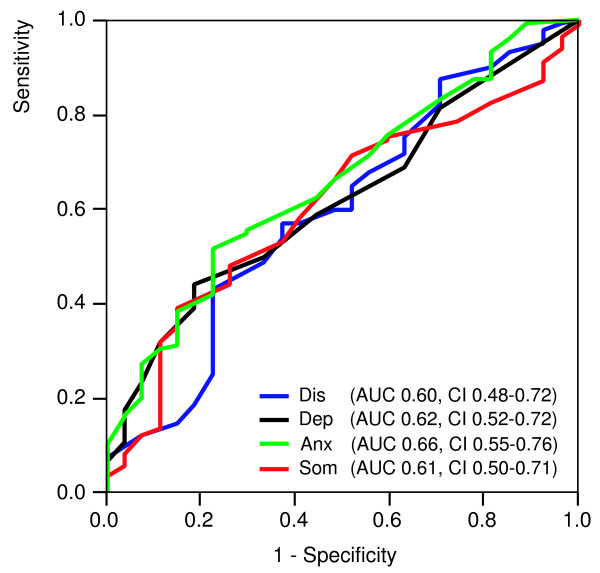
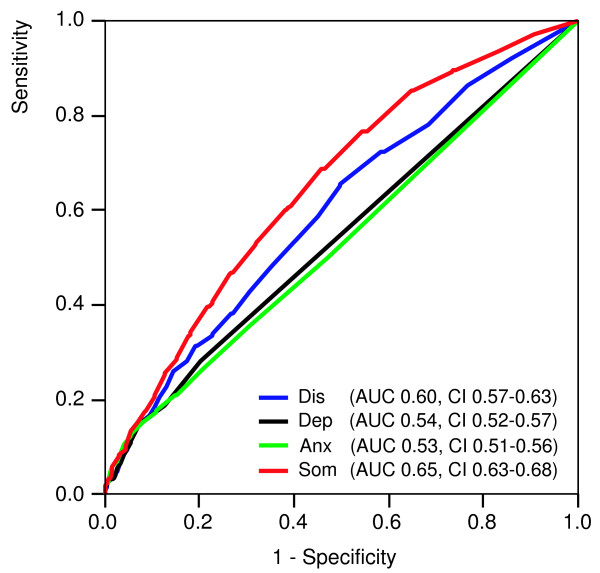
BACKGROUND: The Four-Dimensional Symptom Questionnaire (4DSQ) is a self-report questionnaire that has been developed in primary care to distinguish non-specific general distress from depression, anxiety and somatization. The purpose of this paper is to evaluate its criterion and construct validity. METHODS: Data from 10 different primary care studies have been used. Criterion validity was assessed by comparing the 4DSQ scores with clinical diagnoses, the GPs' diagnosis of any psychosocial problem for Distress, standardised psychiatric diagnoses for Depression and Anxiety, and GPs' suspicion of somatization for Somatization. ROC analyses and logistic regression analyses were used to examine the associations. Construct validity was evaluated by investigating the inter-correlations between the scales, the factorial structure, the associations with other symptom questionnaires, and the associations with stress, personality and social functioning. The factorial structure of the 4DSQ was assessed through confirmatory factor analysis (CFA). The associations with other questionnaires were assessed with Pearson correlations and regression analyses. RESULTS: Regarding criterion validity, the Distress scale was associated with any psychosocial diagnosis (area under the ROC curve [AUC] 0.79), the Depression scale was associated with major depression (AUC = 0.83), the Anxiety scale was associated with anxiety disorder (AUC = 0.66), and the Somatization scale was associated with the GPs' suspicion of somatization (AUC = 0.65). Regarding the construct validity, the 4DSQ scales appeared to have considerable inter-correlations (r = 0.35-0.71). However, 30-40% of the variance of each scale was unique for that scale. CFA confirmed the 4-factor structure with a comparative fit index (CFI) of 0.92. The 4DSQ scales correlated with most other questionnaires measuring corresponding constructs. However, the 4DSQ Distress scale appeared to correlate with some other depression scales more than the 4DSQ Depression scale. Measures of stress (i.e. life events, psychosocial problems, and work stress) were mainly associated with Distress, while Distress, in turn, was mainly associated with psychosocial dysfunctioning, including sick leave. CONCLUSION: The 4DSQ seems to be a valid self-report questionnaire to measure distress, depression, anxiety and somatization in primary care patients. The 4DSQ Distress scale appears to measure the most general, most common, expression of psychological problems.
Overview
The claims and statistics of this paper haven’t been checked yet.
Free: it reads the open-access text and checks the first 5 claims that cite a source we can check. Create a free account to check every claim.
Integrity signals
Registry
Cites
Statistics
Figures
Verification
Claims the paper makes
The claims and statistics of this paper haven’t been checked yet.
Free: it reads the open-access text and checks the first 5 claims that cite a source we can check. Create a free account to check every claim.
Self-check
Percentages, sums and reported differences re-computed from the paper’s own numbers.
The self-check needs the paper’s full text.
Citations
Cites
Diagnostic and Statistical Manual of Mental Disorders
Williams, J. B. W., & First, M. (2013) · Encyclopedia of Social Work · doi:10.1093/acrefore/9780199975839.013.104 · Cited by 109,519
The Hospital Anxiety and Depression Scale
Zigmond, A. S., & Snaith, R. P. (1983) · Acta Psychiatrica Scandinavica · doi:10.1111/j.1600-0447.1983.tb09716.x · Cited by 47,139
An inventory for measuring depression
BECK, A. T. (1961) · Archives of General Psychiatry · doi:10.1001/archpsyc.1961.01710120031004 · Cited by 38,032
(1970) · Cited by 24,983
Depression and quality of life in older persons: A review
Sivertsen, H., Bjørkløf, G. H., Engedal, K., Selbæk, G., & Helvik, A.-S. (2015) · Dementia and Geriatric Cognitive Disorders · doi:10.1159/000437299 · Cited by 14,152
A self-rating depression scale
ZUNG, W. W. K. (1965) · Archives of General Psychiatry · doi:10.1001/archpsyc.1965.01720310065008 · Cited by 9,813
EQS : structural equations program manual
Bentler, P. M. (1989) · Medical Entomology and Zoology · Cited by 9,669
Cognitive Therapy for Depression: (675542012-001)
(2012) · PsycEXTRA Dataset · doi:10.1037/e675542012-001 · Cited by 9,663
Pearlin, L. I., & Schooler, C. (1978) · Journal of Health and Social Behavior · doi:10.2307/2136319 · Cited by 7,791 · cited 3×
“Study F included the Neuroticism scale of the NEO Five Factor Inventory (NEO-FFI) [46], studies B and C a measure of mastery [47], and study H a measure of trait anxiety [41].”
MethodScoville, W. B. (1949) · Journal of neurosurgery · doi:10.3171/jns.1949.6.1.0065 · Cited by 7,381
Research works printed but not linked: 14
- Terluin B De Vierdimensionale Klachtenlijst (4DKL). Een vragenlijst voor het meten van distress, depressie, angst en somatisatie [The Four-Dimensional Symptom Questionnaire (4DSQ). A questionnaire to measure distress, depression, anxiety, and somatization] Huisarts Wet 1996 39 538 547
- Terluin B Overspanning onderbouwd. Een onderzoek naar de diagnose surmenage in de huisartspraktijk [Nervous breakdown substantiated. A study of the general practitioner's diagnosis of surmenage] 1994 Utrecht, Universiteit Utrecht
- Terluin B Gill K Winnubst JAM Hoe zien huisartsen surmenage? [General practitioners' perception of "nervous breakdown"] Huisarts Wet 1992 35 311 315
- Romeijnders ACM Vriezen JA Van der Klink JJL Hulshof CTJ Terluin B Flikweert S Baart PC Landelijke Eerstelijns Samenwerkings Afspraak Overspanning [National Primary Care Collaboration Agreement on Nervous Breakdown] Huisarts Wet 2005 48 20 23
- Bentler P Wu E EQS for Windows user's guide 1995 Encino, Multivariate Software
- Dijkstra P Van Praag HM and Rooymans HGM De zelfbeoordelingsschaal voor depressie van Zung [The self-rating depression scale of Zung] Stemming en ontstemming Theorie en praktijk bij de diagnostiek van depressies 1974 Amsterdam, Erven Bohn 98 120
- Beck AT Steer RA Beck Anxiety Inventory manual 1993 2nd San Antonio TX, Psychological Corporation
- Van der Ploeg HM Defares PB Spielberger CD Handleiding bij de Zelf-Beoordelings Vragenlijst (ZBV) Een Nederlandstalige bewerking van de Spielberger State-Trait Anxiety Inventory STAI-DY [Manual of the Self-Assessment Questionnaire A Dutch adaptation of the Spielberger State-Trait Anxiety Inventory STAI-DY] 1980 Lisse, Swets & Zeitlinger
- Hosman CMH Psychosociale problematiek en hulpzoeken. Een sociaal-epidemiologische studie ten behoeve van de preventieve geestelijke gezondheidszorg [Psychosocial problems and seeking help. A socio-epidemiological study for the preventive mental health care] 1983 Nijmegen, Katholieke Universiteit Nijmegen
- Ormel J Moeite met leven of een moeilijk leven. Een vervolgonderzoek naar de invloed van psychosociale belasting op het welbevinden van driehonderd Nederlanders [A troublesome life, or trouble with living. A follow-up study of the influence of psycosocial stress on the well-being of threehundred Dutch inhabitants] 1980 Groningen, Rijksuniversiteit Groningen
- Hoekstra HA Ormel J De Fruyt F De NEO-PI-R/NEO-FFI; Big Five persoonlijkheidsvragenlijsten Handleiding [Manual of the Dutch version of the NEO-PI-R/NEO-FFI] 1996 Lisse, Swets en Zeitlinger
- Costa PT McCrae RR Revised NEO Personality Inventory (NEO-PI-R) and NEO Five Factor Inventory (NEO-FFI): professional manual 1992 Odessa FL, Psychological Assessment Resources
- Van der Zee KL Sanderman R Het meten van de gezondheidstoestand met de RAND-36 Een handleiding [Measuring the health status with the RAND-36 A manual] 1993 Groningen, Noordelijk Centrum voor Gezondheidsvraagstukken
- Terluin B Factoranalyse van drie klachtenlijsten [Factor analysis of three symptom questionnaires] Tijdschrift voor psychosomatische fysiotherapie 1999 4 25 31
Cited by
The Netherlands Study of Depression and Anxiety (NESDA): rationale, objectives and methods
Penninx, B. W. J. H., Beekman, A. T. F., Smit, J. H., Zitman, F. G., Nolen, W. A., Spinhoven, P., Cuijpers, P., De Jong, P. J., Van Marwijk, H. W. J., Assendelft, W. J. J., et al. (2008) · International Journal of Methods in Psychiatric Research · doi:10.1002/mpr.256 · Cited by 927
Self-citationBurnout Assessment Tool (BAT)—Development, Validity, and Reliability
Schaufeli, W. B., Desart, S., & De Witte, H. (2020) · International Journal of Environmental Research and Public Health · doi:10.3390/ijerph17249495 · Cited by 759
“The BAT does not include a subscale for depressed mood, but we recommend using the 6-item depression subscale from the 4-DSQ [32].”
BackgroundMethodInfluentialRivas, C., Ramsay, J., Sadowski, L., Davidson, L. L., Dunne, D., Eldridge, S., Hegarty, K., Taft, A., & Feder, G. (2015) · Cochrane Database of Systematic Reviews · doi:10.1002/14651858.cd005043.pub3 · Cited by 392
van Dessel, N., den Boeft, M., van der Wouden, J. C., Kleinstäuber, M., Leone, S. S., Terluin, B., Numans, M. E., van der Horst, H. E., & van Marwijk, H. (2014) · Cochrane Database of Systematic Reviews · doi:10.1002/14651858.cd011142.pub2 · Cited by 302
Self-citationSchäfer, I., Hansen, H., Schön, G., Höfels, S., Altiner, A., Dahlhaus, A., Gensichen, J., Riedel-Heller, S., Weyerer, S., Blank, W. A., et al. (2012) · BMC Health Services Research · doi:10.1186/1472-6963-12-89 · Cited by 296
“gender, age, marital status, household type, education, autonomy at former occupation, home ownership, morbidity measured by 46 diagnosis groups, the four subscales of the Four-Dimensional Symptom Questionnaire [26], the Geriatric Depression Scale [27], the Clinical Dementia Rating Scale [28], the Barthel Index [29],…”
MethodInfluentialHow to assess common somatic symptoms in large-scale studies: A systematic review of questionnaires
Zijlema, W. L., Stolk, R. P., Löwe, B., Rief, W., White, P. D., & Rosmalen, J. G. M. (2013) · Journal of Psychosomatic Research · doi:10.1016/j.jpsychores.2013.03.093 · Cited by 268
“4DSQ [25] 16 somatization 5 categories: no to very often or constantly past week primary care patients yes”
BackgroundBier, J. D., Scholten-Peeters, W. G. M., Staal, J. B., Pool, J., van Tulder, M. W., Beekman, E., Knoop, J., Meerhoff, G., & Verhagen, A. P. (2018) · Physical Therapy · doi:10.1093/ptj/pzx118 · Cited by 255
Natural outdoor environments and mental health: stress as a possible mechanism
Triguero-Mas, M., Donaire-Gonzalez, D., Seto, E., Valentín, A., Martínez, D., Smith, G., Hurst, G., Carrasco-Turigas, G., Masterson, D., van den Berg, M., et al. (2017) · Environmental Research · doi:10.1016/j.envres.2017.08.048 · Cited by 208
“Seven questions were used from an adaptation of the four-dimensional symptom questionnaire (4DSQ) (Terluin et al., 2006) to measure daily lack of somatisation (rather than in the last week) with two additional questions.”
MethodThe Netherlands Mental Health Survey and Incidence Study‐2 (NEMESIS‐2): design and methods
de Graaf, R., ten Have, M., & van Dorsselaer, S. (2010) · International Journal of Methods in Psychiatric Research · doi:10.1002/mpr.317 · Cited by 200
Nachtegaal, J., Smit, J. H., Smits, C., Bezemer, P. D., van Beek, J. H. M., Festen, J. M., & Kramer, S. E. (2009) · Ear & Hearing · doi:10.1097/aud.0b013e31819c6e01 · Cited by 201
“However, elevated levels of distress with symptoms such as worry, irritability, tension, poor concentration, and insomnia may force a person to give up and withdraw from major social roles, especially the occupational role (Terluin et al. 2006).”
BackgroundMethodInfluentialSelf-rated health in multimorbid older general practice patients: a cross-sectional study in Germany
Nützel, A., Dahlhaus, A., Fuchs, A., Gensichen, J., König, H.-H., Riedel-Heller, S., Maier, W., Schäfer, I., Schön, G., Weyerer, S., et al. (2014) · BMC Family Practice · doi:10.1186/1471-2296-15-1 · Cited by 200
“Psychological characteristics Psychological variables ascertained in the patient-interview included perceived social support (F-SOZU K-14) [21], patients’ self-efficacy expectation (SWE) [22], depression (GDS) [23] and symptoms belonging to the four dimensions somatization, depression, anxiety and distress (4 DBL) [24…”
BackgroundInfluentialWardenaar, K. J., van Veen, T., Giltay, E. J., de Beurs, E., Penninx, B. W. J. H., & Zitman, F. G. (2010) · Psychiatry Research · doi:10.1016/j.psychres.2009.03.005 · Cited by 192
Self-citationInterventions to facilitate return to work in adults with adjustment disorders
Arends, I., Bruinvels, D. J., Rebergen, D. S., Nieuwenhuijsen, K., Madan, I., Neumeyer-Gromen, A., Bültmann, U., & Verbeek, J. H. (2012) · Cochrane Database of Systematic Reviews · doi:10.1002/14651858.cd006389.pub2 · Cited by 182
Gesch, D., Bernhardt, O., Alte, D., Schwahn, C., Kocher, T., John, U., & Hensel, E. (2004) · PubMed · Cited by 230
Ribeiro, A. I., Triguero-Mas, M., Jardim Santos, C., Gómez-Nieto, A., Cole, H., Anguelovski, I., Silva, F. M., & Baró, F. (2021) · Environment International · doi:10.1016/j.envint.2021.106664 · Cited by 171
“As in a previous study (Triguero-Mas, 2017), seven questions were used from an adaptation of the four-dimensional symptom questionnaire (4DSQ) (Terluin, 2006) to measure somatization plus two additional questions (Cronbach’s α = 0.82 for Portugal and Cronbach’s α = 0.78 for Spain).”
MethodInfluentialDifferential associations of specific depressive and anxiety disorders with somatic symptoms
Bekhuis, E., Boschloo, L., Rosmalen, J. G. M., & Schoevers, R. A. (2015) · Journal of Psychosomatic Research · doi:10.1016/j.jpsychores.2014.11.007 · Cited by 159
“As the somatization scale of the 4DSQ is a proper indicator of the general practitioner's suspicion of somatization [43], and the prevalence of somatic symptoms in our study was substantially higher than can be explained by medical conditions, we suggest that a major proportion of the somatic symptoms reported in the…”
BackgroundMethodFull endoscopic versus open discectomy for sciatica: randomised controlled non-inferiority trial
Gadjradj, P. S., Rubinstein, S. M., Peul, W. C., Depauw, P. R. A. M., Vleggeert-Lankamp, C. L. A., Seiger, A., van Susante, J. L., de Boer, M. R., van Tulder, M. W., & Harhangi, B. S. (2022) · BMJ · doi:10.1136/bmj-2021-065846 · Cited by 185
Van Dessel, N., Den Boeft, M., van der Wouden, J. C., Kleinstäuber, M., Leone, S. S., Terluin, B., Numans, M. E., van der Horst, H. E., & van Marwijk, H. (2014) · Cochrane Database of Systematic Reviews · doi:10.1002/14651858.cd011142 · Cited by 148
Self-citationvan Oostrom, S. H., van Mechelen, W., Terluin, B., de Vet, H. C. W., Knol, D. L., & Anema, J. R. (2010) · Occupational and Environmental Medicine · doi:10.1136/oem.2009.050849 · Cited by 134
“Between April 2006 and May 2008, all employees sick-listed for more than 1 week received a letter from their occupational physician together with a screening questionnaire. The screening questionnaire was based on the distress scale of the Four-Dimensional Symptom Questionnaire (4DSQ).”
MethodSelf-citationThe mental health of elite athletes in the United Kingdom
Foskett, R. L., & Longstaff, F. (2018) · Journal of Science and Medicine in Sport · doi:10.1016/j.jsams.2017.11.016 · Cited by 125
Vert, C., Gascón, M., Ranzani, O., Márquez, S., Mas, M. T., Carrasco‐Turigas, G., Arjona, L., Koch, S., Llopis, M., Donaire-González, D., et al. (2020) · Environmental Research · doi:10.1016/j.envres.2020.109812 · Cited by 171
Terluin, B., Brouwers, E. P., van Marwijk, H. W., Verhaak, P. F., & van der Horst, H. E. (2009) · BMC Family Practice · doi:10.1186/1471-2296-10-58 · Cited by 115
“The 4DSQ is a 50-item selfrating questionnaire measuring ‘distress’, ‘depression’, ‘anxiety’ and ‘somatization’ [18].”
InfluentialSelf-citationGouttebarge, V., Jonkers, R., Moen, M., Verhagen, E., Wylleman, P., & Kerkhoffs, G. (2017) · Journal of Sports Sciences · doi:10.1080/02640414.2016.1258485 · Cited by 112
“(Braam et al., 2009; Terluin et al., 2006).”
BackgroundMethodInfluentialGouttebarge, V., BACKX, F. J. G., Aoki, H., & Kerkhoffs, G. M. M. J. (2015) · Europe PMC (PubMed Central) · Cited by 141
Mental health in chronic disease patients during the COVID-19 quarantine in Greece
Louvardi, M., Pelekasis, P., Chrousos, G. P., & Darviri, C. (2020) · Palliative & Supportive Care · doi:10.1017/s1478951520000528 · Cited by 132
Course and prognosis of shoulder symptoms in general practice
Reilingh, M. L., Kuijpers, T., Tanja-Harfterkamp, A. M., & van der Windt, D. (2008) · Rheumatology · doi:10.1093/rheumatology/ken044 · Cited by 130
“Anxiety (0–24), depression (0–12), somatization (0–32) and distress (0–32), were measured with the 50-item Four-Dimensional Symptoms Questionnaire (4DSQ) [ 25 , 26].”
MethodAdams, G. R., Gandhi, W., Harrison, R. N., van Reekum, C. M., Wood-Anderson, D., Gilron, I., & Salomons, T. V. (2022) · Pain · doi:10.1097/j.pain.0000000000002830 · Cited by 127
“The questionnaires used to assess anxiety were DASS21 [67], 4DSQ [125], HADS-A [146], the Symptom Checklist 90 anxiety subscale (SCL90-A) [14], the State and Trait Anxiety Inventory (STAI) [81], the Brief Symptom Inventory (BSI) [34], the Beck Anxiety Inventory (BAI) and the Hamilton Anxiety Rating…”
MethodArends, I., van der Klink, J. J. L., van Rhenen, W., de Boer, M. R., & Bültmann, U. (2014) · Occupational and Environmental Medicine · doi:10.1136/oemed-2013-101412 · Cited by 101
An introduction to Rasch analysis for Psychiatric practice and research
da Rocha, N. S., Chachamovich, E., Fleck, M. P. D. A., & Tennant, A. (2012) · Journal of Psychiatric Research · doi:10.1016/j.jpsychires.2012.09.014 · Cited by 117
“The ascertainment of latent constructs such as anxiety, depression and self harm has seen a steady increase in the number of instruments designed to measure such attributes (Bowen et al., 2008; Brunner et al., 2007; Fliege et al., 2009; Gamez et al., 2007; Garlow et al., 2008; Honarmand and Feinstein, 2009; King et al…”
BackgroundValidation of the Japanese Version of the Burnout Assessment Tool
Sakakibara, K., Shimazu, A., Toyama, H., & Schaufeli, W. B. (2020) · Frontiers in Psychology · doi:10.3389/fpsyg.2020.01819 · Cited by 94
“The remaining secondary dimension, depressed mood, was not included in the new burnout instrument because other wellvalidated depression questionnaires, such as the depression subscale of the 4-Dimensional Symptom Questionnaire (Terluin et al., 2006), are available.1 Although burnout is not recognized as a formal diag…”
BackgroundGouttebarge, V., Kerkhoffs, G. M. M. J., & Lambert, M. (2015) · European Journal of Sport Science · doi:10.1080/17461391.2015.1086819 · Cited by 118
“The 4DSQ, that is, Distress Screener has been validated in several languages including English and French (test–retest coefficients≥ 0.89; criterionrelated validity: Area Under Receiver Operating Characteristic (ROC) Curve ≥ 0.79) (Braam et al., 2009; Terluin et al., 2006).”
MethodInfluentialPredicting Return to Work in Employees Sick-Listed Due to Minor Mental Disorders
Brouwers, E. P. M., Terluin, B., Tiemens, B. G., & Verhaak, P. F. M. (2009) · Journal of Occupational Rehabilitation · doi:10.1007/s10926-009-9198-8 · Cited by 111
“In addition, the Four-Dimensional Symptom Questionnaire (4DSQ) [ 18 , 19] was used to measure four dimensions of common psychopathology: distress, depression, anxiety and somatisation.”
Self-citationDeveloping and Validating Clinical Questionnaires
Rosellini, A. J., & Brown, T. A. (2021) · Annual Review of Clinical Psychology · doi:10.1146/annurev-clinpsy-081219-115343 · Cited by 129
Gouttebarge, V., Aoki, H., Ekstrand, J., Verhagen, E. A. L. M., & Kerkhoffs, G. M. M. J. (2016) · Knee Surgery, Sports Traumatology, Arthroscopy · doi:10.1007/s00167-015-3729-y · Cited by 91
Wang, Y., Zekveld, A. A., Naylor, G., Ohlenforst, B., Jansma, E. P., Lorens, A., Lunner, T., & Kramer, S. E. (2016) · PLoS ONE · doi:10.1371/journal.pone.0153566 · Cited by 108
“Stress in hearing impaired adults might result in withdrawal from major social roles, especially occupational roles [16, 20, 21].”
BackgroundBekhuis, E., Schoevers, R. A., van Borkulo, C. D., Rosmalen, J. G. M., & Boschloo, L. (2016) · Psychological Medicine · doi:10.1017/s0033291716001550 · Cited by 89
“Somatic symptoms were assessed with the somatization scale of the Four-Dimensional Symptom Questionnaire.”
MethodInfluentialvan Oostrom, S. H., van Mechelen, W., Terluin, B., de Vet, H. C. W., & Anema, J. R. (2009) · Journal of Occupational Rehabilitation · doi:10.1007/s10926-009-9170-7 · Cited by 113
“Eligible for this study were employees who had been on sick leave from regular work for 2–8 weeks with distress, and were selected by a three-item distress screener based on the four-dimensional symptom questionnaire (4DSQ) [20, 21 ].”
MethodSelf-citationReturn to Work Perceptions and Actual Return to Work in Workers with Common Mental Disorders
Nieuwenhuijsen, K., Noordik, E., van Dijk, F. J. H., & van der Klink, J. J. (2012) · Journal of Occupational Rehabilitation · doi:10.1007/s10926-012-9389-6 · Cited by 105
“The range of Cronbach’s alpha for the 4 subscales has been shown to be from 0.84 to 0.90 [28].”
BackgroundInfluentialGouttebarge, V., Aoki, H., & Kerkhoffs, G. (2015) · Journal of Human Kinetics · doi:10.1515/hukin-2015-0130 · Cited by 85
“The 4DSQ i.e. Distress Screener had been validated in several languages including English, French and Spanish (internal consistency: 0.6 - 0.7; test-retest coefficients ≥ 0.89; criterion-related validity: Area Under ROC Curve ≥ 0.79) (Braam et al., 2009; Terluin et al., 2006).”
InfluentialGouttebarge, V., Hopley, P., Kerkhoffs, G., Verhagen, E., Viljoen, W., Wylleman, P., & Lambert, M. (2018) · European Journal of Sport Science · doi:10.1080/17461391.2018.1466914 · Cited by 80
“The 4DSQ i.e. Distress Screener in English, French and Spanish has been validated for a recall period of up to several weeks (internal consistency: 0.6–0.7; test-retest coefficients: ≥ 0.9; criterion-related validity: Area Under ROC Curve≥ 0.79) (Braam et al., 2009; Terluin et al., 2006).”
MethodInfluentialValidation Study of a Distress Screener
Braam, C., van Oostrom, S. H., Terluin, B., Vasse, R., de Vet, H. C. W., & Anema, J. R. (2009) · Journal of Occupational Rehabilitation · doi:10.1007/s10926-009-9178-z · Cited by 79
“Discrimination between ‘cases’ and ‘non-cases’ were established for distress score [10, somatisation score [10, depression score [2, and anxiety score [7 [17, 18, 24].”
BackgroundMethodSelf-citationBakker, I. M., Terluin, B., van Marwijk, H. W. J., van der Windt, D. A. W. M., Rijmen, F., van Mechelen, W., & Stalman, W. A. B. (2007) · PLoS Clinical Trials · doi:10.1371/journal.pctr.0020026 · Cited by 79
Self-citationThe impact of somatic symptoms on the course of major depressive disorder
Bekhuis, E., Boschloo, L., Rosmalen, J. G. M., de Boer, M. K., & Schoevers, R. A. (2016) · Journal of Affective Disorders · doi:10.1016/j.jad.2016.06.030 · Cited by 94
“The self-report somatization scale of the Four-Dimensional Symptom Questionnaire (4DSQ; Terluin et al., 2006) was used to score the frequency of 16 somatic symptoms (scoring 1¼ ’never’ to 5¼ ’often’) in the past week.”
MethodInfluentialSchäfer, I., Hansen, H., Schön, G., Maier, W., Höfels, S., Altiner, A., Fuchs, Â., Gerlach, F. M., Petersen, J. J., Gensichen, J. S., et al. (2009) · BMC Health Services Research · doi:10.1186/1472-6963-9-145 · Cited by 85
Feleus, A., van Dalen, T., Bierma-Zeinstra, S. M., Bernsen, R. M., Verhaar, J. A., Koes, B. W., & Miedema, H. S. (2007) · BMC Musculoskeletal Disorders · doi:10.1186/1471-2474-8-117 · Cited by 73
“reported that the applicability of their depression scale was limited in an unselected sample of primary care patients (n = 2,127) because of the low mean scores on depression, due to the relatively low prevalence of depressive disorders; they further concluded that the distress score that was measured, gives an indic…”
BackgroundMethodKegelaers, J., Wylleman, P., van Bree, I. (. N. A., Wessels, F., & Oudejans, R. R. D. (2021) · International Sport Coaching Journal · doi:10.1123/iscj.2020-0066 · Cited by 71
Cost-effectiveness of full endoscopic versus open discectomy for sciatica
Gadjradj, P. S., Broulíková, H. M., van Dongen, J. M., Rubinstein, S. M., Depauw, P. R. A. M., Vleggeert-Lankamp, C. L. A., Seiger, A., Peul, W. C., van Susante, J. L., van Tulder, M. W., et al. (2022) · British Journal of Sports Medicine · doi:10.1136/bjsports-2021-104808 · Cited by 81
Suffering indicators in terminally ill children from the parental perspective
Montoya‐Juárez, R., García-Caro, M. P., Schmidt‐RioValle, J., Campos-Calderón, C. P., Sorroche-Navarro, C., Sánchez-García, R., & Cruz‐Quintana, F. (2013) · European Journal of Oncology Nursing · doi:10.1016/j.ejon.2013.04.004 · Cited by 69
“, 2007) Other authors have created more complex questionnaires in which they try to cover the different dimensions of suffering: physical, psychological, social and spiritual or existential (Terluin et al., 2006).”
BackgroundPrediction of delirium after cardiac surgery and the use of a risk checklist
Koster, S., Hensens, A. G., Schuurmans, M. J., & van der Palen, J. A. M. (2012) · European Journal of Cardiovascular Nursing · doi:10.1177/1474515112450244 · Cited by 68
Smolders, M., Laurant, M., Verhaak, P., Prins, M., van Marwijk, H., Penninx, B., Wensing, M., & Grol, R. (2010) · Medical Care · doi:10.1097/mlr.0b013e3181ca27f6 · Cited by 68
Self-citationGouttebarge, V., Aoki, H., Lambert, M., Stewart, W., & Kerkhoffs, G. (2017) · The Physician and Sportsmedicine · doi:10.1080/00913847.2017.1376572 · Cited by 67
“A total score ranging from 0 to 6 was obtained by summing up the answers on the three items, a score of 4 or more indicating the presence of distress [18,19].”
MethodForced Retirement from Professional Rugby Union is Associated with Symptoms of Distress
Brown, J., Kerkhoffs, G., Lambert, M., & Gouttebarge, V. (2017) · International Journal of Sports Medicine · doi:10.1055/s-0043-103959 · Cited by 67
“Expecting a response rate of around 25 % (based on previous similar studies in other sports), we intended to contact at least 700 retired players [6, 28].”
BackgroundNoordik, E., van der Klink, J. J., Geskus, R. B., de Boer, M. R., van Dijk, F. J., & Nieuwenhuijsen, K. (2013) · Scandinavian Journal of Work, Environment & Health · doi:10.5271/sjweh.3320 · Cited by 67
“The following were considered to be secondary outcomes: time to partial RTW, the number of recurrences of sick leave, symptoms of distress, anxiety, depression and somatization [Four-Dimensional Symptom Questionnaire (4DSQ) (27)], and satisfaction with the OP, all within the one-year follow-up period.”
Haptotherapy as a new intervention for treating fear of childbirth: a randomized controlled trial
Klabbers, G. A., Wijma, K., Paarlberg, K. M., Emons, W. H. M., & Vingerhoets, A. J. J. M. (2019) · Journal of Psychosomatic Obstetrics & Gynecology · doi:10.1080/0167482x.2017.1398230 · Cited by 67
“Distress, anxiety, depression and somatization were assessed using the Four Dimensional Symptom Questionnaire (4DSQ) [44].”
Gouttebarge, V., Tol, J. L., & Kerkhoffs, G. M. M. J. (2016) · The Physician and Sportsmedicine · doi:10.1080/00913847.2016.1185385 · Cited by 66
Schadé, A., van Grootheest, G., & Smit, J. H. (2013) · BMC Psychiatry · doi:10.1186/1471-244x-13-35 · Cited by 65
Brunner, E., Dankaerts, W., Meichtry, A., O’Sullivan, K., & Probst, M. (2018) · Physical Therapy · doi:10.1093/ptj/pzy012 · Cited by 73
Hoedeman, R., Blankenstein, A. H., Krol, B., Koopmans, P. C., & Groothoff, J. W. (2010) · Journal of Occupational Rehabilitation · doi:10.1007/s10926-010-9239-3 · Cited by 64
“(e) Distress, with the distress module of the 4-Dimensional Symptom Questionnaire (4DSQ) [9, 23].”
BackgroundEikelenboom, N., Smeele, I. J. M., Faber, M. J., Jacobs, A., Verhulst, F. C., Lacroix, J. P. W., Wensing, M., & van Lieshout, J. (2015) · BMC Family Practice · doi:10.1186/s12875-015-0381-z · Cited by 74
“Using available data from 2127 patients in general practice [36], we computed correlations between the items, and removed items that had a correlation >0.”
BackgroundMethodInfluentialSchuring, N., Kerkhoffs, G., Gray, J., & Gouttebarge, V. (2017) · The Physician and Sportsmedicine · doi:10.1080/00913847.2017.1386069 · Cited by 63
“A total score ranging from 0 to 6 was obtained by summing up the answers on the three items, a score of 4 or more indicating the presence of distress [16,17].”
MethodGouttebarge, V., Johnson, U., Rochcongar, P., Rosier, P., & Kerkhoffs, G. M. M. J. (2016) · The Physician and Sportsmedicine · doi:10.1080/00913847.2017.1248796 · Cited by 69
“The 4DSQ i.e. Distress Screener in English and French has been validated for a recall period of up to several weeks (internal consistency: 0.6 – 0.7; test-retest coefficients: ≥ 0.9; criterion-related validity: area under ROC curve ≥ 0.79) [11,12].”
MethodInfluentialArends, I., van der Klink, J. J., van Rhenen, W., de Boer, M. R., & Bültmann, U. (2013) · Scandinavian Journal of Work Environment & Health · doi:10.5271/sjweh.3384 · Cited by 68
Pool, J. J. M., Ostelo, R. W. J. G., Knol, D. L., Vlaeyen, J. W. S., Bouter, L. M., & de Vet, H. C. W. (2010) · Spine · doi:10.1097/brs.0b013e3181c212ee · Cited by 61
Assessing Depression in Cardiac Patients: What Measures Should Be Considered?
Ceccarini, M., Manzoni, G. M., & Castelnuovo, G. (2014) · Depression Research and Treatment · doi:10.1155/2014/148256 · Cited by 60
Gärtner, F. R., Nieuwenhuijsen, K., van Dijk, F. J. H., & Sluiter, J. K. (2012) · International Archives of Occupational and Environmental Health · doi:10.1007/s00420-011-0649-0 · Cited by 59
“Second, the 16-item distress subscale of the Four-Dimensional Symptoms Questionnaire (4DSQ) was used (Terluin 1998; Terluin et al. 2006).”
MethodThe associations between psychosocial workload and mental health complaints in different age groups
Zoer, I., Ruitenburg, M. M., Botje, D., Frings‐Dresen, M. H. W., & Sluiter, J. K. (2011) · Ergonomics · doi:10.1080/00140139.2011.606920 · Cited by 74
“The 4DSQ subscale is a valid questionnaire to measure distress (Terluin et al. 2006, Braam et al. 2009).”
MethodInfluentialvan Ramele, S., Aoki, H., Kerkhoffs, G. M. M. J., & Gouttebarge, V. (2016) · Psychology of sport and exercise · doi:10.1016/j.psychsport.2016.10.009 · Cited by 80
van Oostrom, S. H., Anema, J. R., Terluin, B., de Vet, H. C., Knol, D. L., & van Mechelen, W. (2008) · BMC Public Health · doi:10.1186/1471-2458-8-12 · Cited by 58
“The 4DSQ is a valid self-report questionnaire to measure distress, depression, anxiety and somatization in a working population [17,23].”
InfluentialSelf-citationInsomnia Really Hurts: Effect of a Bad Night's Sleep on Pain Increases With Insomnia Severity
Wei, Y., Blanken, T. F., & Someren, E. J. W. V. (2018) · Frontiers in Psychiatry · doi:10.3389/fpsyt.2018.00377 · Cited by 63
“The Four-Dimensional Symptom Questionnaire (37) comprises 4 subscales: distress, somatization, anxiety, and depression.”
BackgroundGouttebarge, V., & Kerkhoffs, G. M. M. J. (2017) · The Physician and Sportsmedicine · doi:10.1080/00913847.2017.1338497 · Cited by 53
“‘Did you recently suffer from worry?’) [12,13].”
MethodWhittle, R., Mansell, G., Jellema, P., & van der Windt, D. (2017) · European Journal of Pain · doi:10.1002/ejp.964 · Cited by 54
“Distress was measured using the distress subscale from the Four Dimensional Symptom Questionnaire (4DSQ; Terluin et al., 2006), containing 16 items (range 0–32).”
MethodKoorevaar, R. C. T., Riet, E. V. ‘., Gerritsen, M. J. J., Madden, K., & Bulstra, S. K. (2016) · PLoS ONE · doi:10.1371/journal.pone.0166555 · Cited by 66
“The 4DSQ is a 50-item self-report inventory that is able to identify four common psychological symptoms: distress, depression, anxiety and somatisation [25].”
BackgroundTest-retest reliability of the PRIME-MD: limitations in diagnosing mental disorders in primary care
Bakker, I. M., Terluin, B., van Marwijk, H. W. J., van Mechelen, W., & Stalman, W. A. B. (2009) · The European Journal of Public Health · doi:10.1093/eurpub/ckn149 · Cited by 54
Self-citationKilic, Ö., Aoki, H., Haagensen, R., Jensen, C., Johnson, U., Kerkhoffs, G. M. M. J., & Gouttebarge, V. (2017) · European Journal of Sport Science · doi:10.1080/17461391.2017.1381768 · Cited by 54
“The 4DSQ, i.e. Distress Screener has been validated in several languages among which Danish (test– retest coefficients ≥0.89; criterion-related validity: Area Under the Receiver Operating Characteristics (ROC) Curve ≥0.79) (Braam et al., 2009; Terluin et al., 2006).”
MethodInfluentialDiagnoses during follow-up of patients presenting with fatigue in primary care
Nijrolder, I., van der Windt, D., de Vries, H., & van der Horst, H. (2009) · Canadian Medical Association Journal · doi:10.1503/cmaj.090647 · Cited by 51
“†As indicated by elevated score on the Four-dimensional Symptom Questionnaire (4DSQ).(26) ‡As indicated by elevated score on the Symptom Checklist-90 (SCL-90).”
Are psychological factors prognostic indicators of outcome in patients with sub-acute neck pain?
Pool, J. J. M., Ostelo, R., Knol, D. L., Bouter, L. M., & de Vet, H. C. W. (2009) · Manual Therapy · doi:10.1016/j.math.2009.08.001 · Cited by 63
“Furthermore, the 4 Dimensional Symptom Questionnaire (4DSQ), which is a valid questionnaire, with acceptable reliability (Terluin et al., 2006), was used to measure somatisation, distress, depression and fear.”
MethodRebergen, D. S., Bruinvels, D. J., Bos, C. M., van der Beek, A. J., & van Mechelen, W. (2010) · Scandinavian Journal of Work Environment & Health · doi:10.5271/sjweh.3084 · Cited by 65
“The OP were encouraged to use specific tools, such as the four-dimensional symptom questionnaire (4DSQ) (23), patient information leaflets on stress, and day-structuring exercises.”
Predictors for postpartum pelvic girdle pain in working women: The Mom@Work cohort study
den Berg, S. G. M. S., Hendriksen, I. J. M., Bruinvels, D. J., Twisk, J. W. R., van Mechelen, W., & van Poppel, M. N. M. (2012) · Pain · doi:10.1016/j.pain.2012.08.003 · Cited by 67
“81 [44]), and depression (Edinburgh Postnatal Depression Scale [EPDS]; Cronbach’s a of 0.”
BackgroundGouttebarge, V., Aoki, H., Verhagen, E. A. L. M., & Kerkhoffs, G. M. M. J. (2017) · Clinical Journal of Sport Medicine · doi:10.1097/jsm.0000000000000388 · Cited by 53
“Distress in the previous 4 weeks (baseline) and in the previous 6 months (follow-up) was measured using the Distress Screener (3 items scored on a 3-point scale), which is based on the 4-dimensional symptom questionnaire (4DSQ) (eg, “Did you recently suffer from worry?”).(13,14) The 4DSQ, that is, Distress Screener in…”
MethodRivas, C. A., Ramsay, J., Sadowski, L. S., Davidson, L. L., Dunnes, D., Eldridge, S. M., Hegarty, K. L., Taft, A., & Feder, G. S. (2016) · Campbell Systematic Reviews · doi:10.4073/csr.2016.2 · Cited by 66
Koorevaar, R. C. T., Riet, E. V. ‘., Ipskamp, M., & Bulstra, S. K. (2017) · Archives of Orthopaedic and Trauma Surgery · doi:10.1007/s00402-016-2589-3 · Cited by 58
Lever-van Milligen, B. A., Verhoeven, J. E., Schmaal, L., van Velzen, L. S., Révész, D., Black, C. N., Han, L. K. M., Horsfall, M., Batelaan, N. M., van Balkom, A. J. L. M., et al. (2019) · BMC Psychiatry · doi:10.1186/s12888-019-2404-0 · Cited by 51
Self-citationHendriks, E. P., Voogt, L. P., Lenoir, D., Coppieters, I., & Ickmans, K. (2020) · Pain Medicine · doi:10.1093/pm/pnaa276 · Cited by 60
Hermens, M. L., Muntingh, A., Franx, G. C., van Splunteren, P., & Nuyen, J. (2014) · BMC Family Practice · doi:10.1186/1471-2296-15-5 · Cited by 60
Self-citationEconomic evaluation of a workplace intervention for sick-listed employees with distress
van Oostrom, S. H., Heymans, M. W., de Vet, H. C. W., van Tulder, M. W., van Mechelen, W., & Anema, J. R. (2010) · Occupational and Environmental Medicine · doi:10.1136/oem.2009.051979 · Cited by 49
“Baseline measurement included data regarding the personal and work characteristics of the study population and stress-related symptoms measured by the FourDimensional Symptom Questionnaire (4DSQ).(17)”
MethodAssessment of Somatization and Medically Unexplained Symptoms in Later Life
van Driel, D. T. J. W., Hilderink, P. H., Hanssen, D. J. C., Boer, P. D., Rosmalen, J. G. M., & Voshaar, R. C. O. (2017) · Assessment · doi:10.1177/1073191117721740 · Cited by 64
Prognosis of Fatigue and Functioning in Primary Care: A 1-Year Follow-up Study
Nijrolder, I., van der Windt, D., & van der Horst, H. E. (2008) · The Annals of Family Medicine · doi:10.1370/afm.908 · Cited by 57
“Time awake before sleeping Mean (SD), minutes 30 (31) 36 (38) 18 (14) 31 (30) 26 (24) <.”
Seekles, W., van Straten, A., Beekman, A., van Marwijk, H., & Cuijpers, P. (2009) · BMC Health Services Research · doi:10.1186/1472-6963-9-90 · Cited by 48
Osteoarthritis is associated with symptoms of common mental disorders among former elite athletes
Schuring, N., Aoki, H., Gray, J., Kerkhoffs, G. M. M. J., Lambert, M., & Gouttebarge, V. (2017) · Knee Surgery, Sports Traumatology, Arthroscopy · doi:10.1007/s00167-016-4255-2 · Cited by 48
“Distress in the previous 4 weeks was measured using the distress screener (three items scored on a three-point scale), which is based on a four-dimensional symptom questionnaire (4DSQ) [14, 30].”
Methodvan Dijk, D. M., van Rhenen, W., Murre, J. M. J., & Verwijk, E. (2020) · PLoS ONE · doi:10.1371/journal.pone.0231906 · Cited by 70
“It has proven to be a reliable and valid instrument in primary care [48] but also in a working population [49].”
BackgroundHow older adults self-manage distress – does the internet have a role? A qualitative study
Moult, A., Burroughs, H., Kingstone, T., & Chew-Graham, C. A. (2018) · BMC Family Practice · doi:10.1186/s12875-018-0874-7 · Cited by 55
“Distress can be comprised of symptoms including feeling low, worrying, irritability, poor concentration and sleep problems [13].”
BackgroundThe association between somatization and disability in primary care patients
van der Leeuw, G., Gerrits, M. J., Terluin, B., Numans, M. E., van der Feltz-Cornelis, C. M., van der Horst, H. E., Penninx, B. W. J. H., & van Marwijk, H. W. J. (2015) · Journal of Psychosomatic Research · doi:10.1016/j.jpsychores.2015.03.001 · Cited by 46
“Somatization Somatization was measured with the 16-item Somatization scale of the Four-Dimensional Symptom Questionnaire (4DSQ), as it is a valid questionnaire to measure somatization in the primary care setting [24].”
MethodSelf-citationSinnema, H., Majo, M. C., Volker, D., Hoogendoorn, A., Terluin, B., Wensing, M., & van Balkom, A. (2015) · Implementation Science · doi:10.1186/s13012-015-0210-8 · Cited by 45
“anxiety and depressive disorders) [31].”
Self-citationTerluin, B., Smits, N., Brouwers, E. P. M., & de Vet, H. C. W. (2016) · Health and Quality of Life Outcomes · doi:10.1186/s12955-016-0533-4 · Cited by 57
“Background The Four-Dimensional Symptom Questionnaire (4DSQ) is a self-report questionnaire comprising four scales measuring distress, depression, anxiety and somatization [1].”
BackgroundResultInfluentialSelf-citationNabbé, P., Reste, J. Y. L., Guillou-Landréat, M., Perez, M. A. M., Argyriadou, S., Clavería, A., Martin, M., Czachowski, S., Lingner, H., Lygidakis, C., et al. (2016) · European Psychiatry · doi:10.1016/j.eurpsy.2016.08.004 · Cited by 48
“For example, the 4DSQ [35] is validated against a population-based mathematical model and not against clinical comparison criteria [36].”
MethodClinimetric evaluations of patients with chronic widespread pain
Salaffi, F., Sarzi‐Puttini, P., Ciapetti, A., & Atzeni, F. (2011) · Best Practice & Research Clinical Rheumatology · doi:10.1016/j.berh.2011.01.004 · Cited by 48
Czachowski, S., Terluin, B., Izdebski, A., & Izdebski, P. K. (2012) · Family Practice · doi:10.1093/fampra/cms016 · Cited by 44
Self-citationDe Vierdimensionale Klachtenlijst (4DKL) spoort psychische problemen op
Terluin, B., Terluin, M., Prince, K. J. A. H., & van Marwijk, H. (2008) · Huisarts en Wetenschap · doi:10.1007/bf03086756 · Cited by 44
Self-citationThe patient health questionnaire (PHQ)
Iglesias-González, M., & Díez, C. (2021) · Elsevier eBooks · doi:10.1016/b978-0-12-817933-8.00029-3 · Cited by 44
Effects of a Mindfulness-Based Intervention for Police Officers
Hoeve, M., de Bruin, E. I., van Rooij, F. B., & Bögels, S. M. (2021) · Mindfulness · doi:10.1007/s12671-021-01631-7 · Cited by 58
“Second, physical stress was measured by the somatization subscale of the four-dimensional symptom questionnaire (4DSQ; Terluin et al. 2006).”
Method
Metadata
- Authors
- Terluin, B., van Marwijk, H. W., Adèr, H. J., de Vet, H. C., Penninx, B. W., Hermens, M. L., van Boeijen, C. A., van Balkom, A. J., van der Klink, J. J., & Stalman, W. A.
- Affiliations
- Amsterdam Public Health (NL)
- Amsterdam UMC Location Vrije Universiteit Amsterdam (NL)
- Corresponding author
- Terluin, Berend
- Venue
- BMC Psychiatry
- Published
- 2006-08-22
- Volume
- 6
- Issue
- 1
- Pages
- 34-34
- ISSN
- 1471-244X (ISSN-L)
- PMC
- PMC1590008
- OpenAlex
- W2115145758
- Cited by
- 469
- References
- 54
- Citations by year
- 2026: 16 · 2025: 10 · 2024: 25 · 2023: 30 · 2022: 32 · 2021: 36 · 2020: 27 · 2019: 21 · 2018: 26 · 2017: 42 · 2016: 37 · 2015: 35 · 2014: 24 · 2013: 22 · 2012: 18
- FWCI
- 15.95
- Type
- journal article
- Language
- en
- Open access
- gold
- doi.org
- Licence
- cc-by
- creativecommons.org/licenses/by/2.0 (tdm)
- Locations
- BMC Psychiatry (publishedVersion, cc-by)
- Europe PMC (PubMed Central) (publishedVersion, cc-by)
- PubMed (publishedVersion)
- Pure Amsterdam UMC (publishedVersion, other-oa)
- Amsterdam UMC (VU Amsterdam) - Institutional Repository (publishedVersion, other-oa)
- VU Research Portal (publishedVersion, other-oa)
- Data Archiving and Networked Services (DANS) (submittedVersion, other-oa)
- Digital Academic REpository of VU University Amsterdam (Vrije Universiteit Amsterdam) (submittedVersion)
- UvA-DARE (University of Amsterdam) (submittedVersion, cc-by)
- DOAJ (DOAJ: Directory of Open Access Journals) (submittedVersion)
- Data Archiving and Networked Services (DANS) (submittedVersion)
- Funders
- ZonMw (22000113)
- Nederlandse Organisatie voor Wetenschappelijk Onderzoek
- Topics
- Social Sciences › Psychology › Experimental and Cognitive Psychology › Anxiety, Depression, Psychometrics, Treatment, Cognitive Processes
- Health Sciences › Medicine › Psychiatry and Mental health › Psychosomatic Disorders and Their Treatments
- Social Sciences › Decision Sciences › Management Science and Operations Research › Psychometric Methodologies and Testing
- Keywords
- Four-Dimensional Symptom Questionnaire, distress, depression, anxiety, somatization, psychosomatic symptoms, primary care, questionnaire validation, criterion validity, construct validity, psychosocial problems, sick leave, occupational stress, life events, psychosocial functioning, self-report questionnaire, factor structure, psychometric properties, general practitioner diagnosis, social functioning
- MeSH terms
- Anxiety, Depression, Family Practice, Humans, Psychiatric Status Rating Scales, Surveys and Questionnaires, Somatoform Disorders, Stress, Psychological, Reproducibility of Results
About these checks
Registry, retraction, Cites and statistics results are computed, not judged, with one exception: a printed reference that no index lists is read once by a model before it counts as a citation error. Claims are extracted by a model and kept only when their quote appears verbatim in the text; each cited source is then checked, with a model’s help, for whether it says what the claim relies on. Those verdicts can be wrong — read the claim’s quote and the cited source before relying on one.
Statistics and arithmetic are recomputed, not judged.
Confidence bands are shown only for fields calibrated on our annotated test set. None is calibrated yet, so no band is shown.
What counts as a claim ›How we measure confidence ›How we check this ›
Are you an author, or do you see a problem with this page? Request a review
Data sources
Bibliographic data: Semantic Scholar, OpenAlex, Crossref.
Contains information from the Semantic Scholar Academic Graph Datasets, made available under the ODC Attribution License (ODC-BY 1.0).
Semantic Scholar’s data is described in: Kinney, R., et al. (2023). The Semantic Scholar Open Data Platform. arXiv:2301.10140.
