

The Four-Dimensional Symptom Questionnaire (4DSQ): a validation study of a multidimensional self-report questionnaire to assess distress, depression, anxiety and somatization
Open accessThe DOI matches its Crossref record; 53 of the 54 references it cites were found in a registry or an index.
Abstract
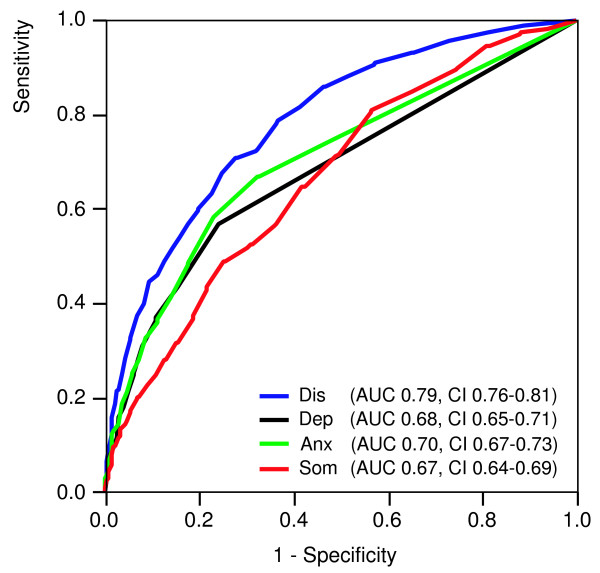
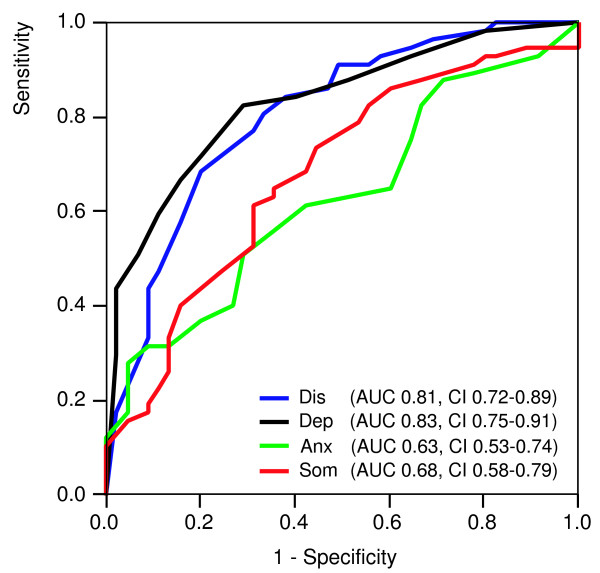
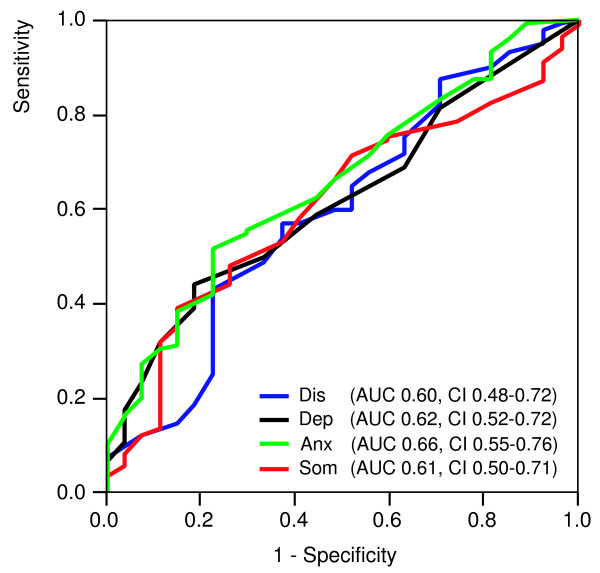
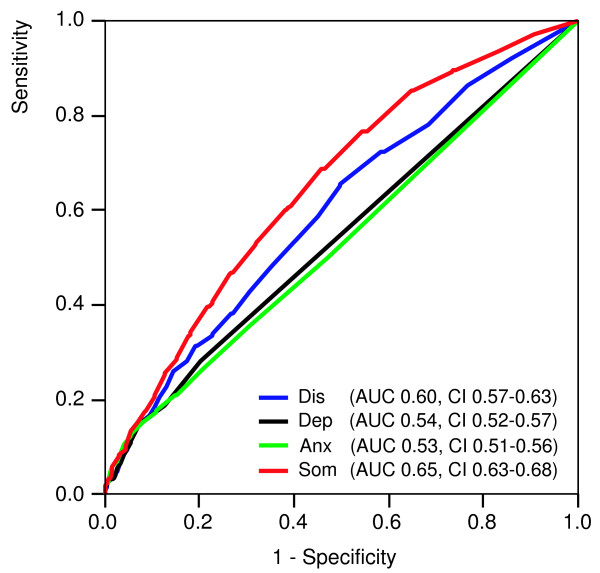
BACKGROUND: The Four-Dimensional Symptom Questionnaire (4DSQ) is a self-report questionnaire that has been developed in primary care to distinguish non-specific general distress from depression, anxiety and somatization. The purpose of this paper is to evaluate its criterion and construct validity. METHODS: Data from 10 different primary care studies have been used. Criterion validity was assessed by comparing the 4DSQ scores with clinical diagnoses, the GPs' diagnosis of any psychosocial problem for Distress, standardised psychiatric diagnoses for Depression and Anxiety, and GPs' suspicion of somatization for Somatization. ROC analyses and logistic regression analyses were used to examine the associations. Construct validity was evaluated by investigating the inter-correlations between the scales, the factorial structure, the associations with other symptom questionnaires, and the associations with stress, personality and social functioning. The factorial structure of the 4DSQ was assessed through confirmatory factor analysis (CFA). The associations with other questionnaires were assessed with Pearson correlations and regression analyses. RESULTS: Regarding criterion validity, the Distress scale was associated with any psychosocial diagnosis (area under the ROC curve [AUC] 0.79), the Depression scale was associated with major depression (AUC = 0.83), the Anxiety scale was associated with anxiety disorder (AUC = 0.66), and the Somatization scale was associated with the GPs' suspicion of somatization (AUC = 0.65). Regarding the construct validity, the 4DSQ scales appeared to have considerable inter-correlations (r = 0.35-0.71). However, 30-40% of the variance of each scale was unique for that scale. CFA confirmed the 4-factor structure with a comparative fit index (CFI) of 0.92. The 4DSQ scales correlated with most other questionnaires measuring corresponding constructs. However, the 4DSQ Distress scale appeared to correlate with some other depression scales more than the 4DSQ Depression scale. Measures of stress (i.e. life events, psychosocial problems, and work stress) were mainly associated with Distress, while Distress, in turn, was mainly associated with psychosocial dysfunctioning, including sick leave. CONCLUSION: The 4DSQ seems to be a valid self-report questionnaire to measure distress, depression, anxiety and somatization in primary care patients. The 4DSQ Distress scale appears to measure the most general, most common, expression of psychological problems.
Overview
The claims and statistics of this paper haven’t been checked yet.
Free: it reads the open-access text and checks the first 5 claims that cite a source we can check. Create a free account to check every claim.
Integrity signals
Registry
Cites
Statistics
Figures
Verification
Claims the paper makes
The claims and statistics of this paper haven’t been checked yet.
Free: it reads the open-access text and checks the first 5 claims that cite a source we can check. Create a free account to check every claim.
Self-check
Percentages, sums and reported differences re-computed from the paper’s own numbers.
The self-check needs the paper’s full text.
Citations
Cites
Diagnostic and Statistical Manual of Mental Disorders
Williams, J. B. W., & First, M. (2013) · Encyclopedia of Social Work · doi:10.1093/acrefore/9780199975839.013.104 · Cited by 109,519
The Hospital Anxiety and Depression Scale
Zigmond, A. S., & Snaith, R. P. (1983) · Acta Psychiatrica Scandinavica · doi:10.1111/j.1600-0447.1983.tb09716.x · Cited by 47,139
An inventory for measuring depression
BECK, A. T. (1961) · Archives of General Psychiatry · doi:10.1001/archpsyc.1961.01710120031004 · Cited by 38,032
(1970) · Cited by 24,983
Depression and quality of life in older persons: A review
Sivertsen, H., Bjørkløf, G. H., Engedal, K., Selbæk, G., & Helvik, A.-S. (2015) · Dementia and Geriatric Cognitive Disorders · doi:10.1159/000437299 · Cited by 14,152
A self-rating depression scale
ZUNG, W. W. K. (1965) · Archives of General Psychiatry · doi:10.1001/archpsyc.1965.01720310065008 · Cited by 9,813
EQS : structural equations program manual
Bentler, P. M. (1989) · Medical Entomology and Zoology · Cited by 9,669
Cognitive Therapy for Depression: (675542012-001)
(2012) · PsycEXTRA Dataset · doi:10.1037/e675542012-001 · Cited by 9,663
Pearlin, L. I., & Schooler, C. (1978) · Journal of Health and Social Behavior · doi:10.2307/2136319 · Cited by 7,791 · cited 3×
“Study F included the Neuroticism scale of the NEO Five Factor Inventory (NEO-FFI) [46], studies B and C a measure of mastery [47], and study H a measure of trait anxiety [41].”
MethodScoville, W. B. (1949) · Journal of neurosurgery · doi:10.3171/jns.1949.6.1.0065 · Cited by 7,381
Research works printed but not linked: 14
- Terluin B De Vierdimensionale Klachtenlijst (4DKL). Een vragenlijst voor het meten van distress, depressie, angst en somatisatie [The Four-Dimensional Symptom Questionnaire (4DSQ). A questionnaire to measure distress, depression, anxiety, and somatization] Huisarts Wet 1996 39 538 547
- Terluin B Overspanning onderbouwd. Een onderzoek naar de diagnose surmenage in de huisartspraktijk [Nervous breakdown substantiated. A study of the general practitioner's diagnosis of surmenage] 1994 Utrecht, Universiteit Utrecht
- Terluin B Gill K Winnubst JAM Hoe zien huisartsen surmenage? [General practitioners' perception of "nervous breakdown"] Huisarts Wet 1992 35 311 315
- Romeijnders ACM Vriezen JA Van der Klink JJL Hulshof CTJ Terluin B Flikweert S Baart PC Landelijke Eerstelijns Samenwerkings Afspraak Overspanning [National Primary Care Collaboration Agreement on Nervous Breakdown] Huisarts Wet 2005 48 20 23
- Bentler P Wu E EQS for Windows user's guide 1995 Encino, Multivariate Software
- Dijkstra P Van Praag HM and Rooymans HGM De zelfbeoordelingsschaal voor depressie van Zung [The self-rating depression scale of Zung] Stemming en ontstemming Theorie en praktijk bij de diagnostiek van depressies 1974 Amsterdam, Erven Bohn 98 120
- Beck AT Steer RA Beck Anxiety Inventory manual 1993 2nd San Antonio TX, Psychological Corporation
- Van der Ploeg HM Defares PB Spielberger CD Handleiding bij de Zelf-Beoordelings Vragenlijst (ZBV) Een Nederlandstalige bewerking van de Spielberger State-Trait Anxiety Inventory STAI-DY [Manual of the Self-Assessment Questionnaire A Dutch adaptation of the Spielberger State-Trait Anxiety Inventory STAI-DY] 1980 Lisse, Swets & Zeitlinger
- Hosman CMH Psychosociale problematiek en hulpzoeken. Een sociaal-epidemiologische studie ten behoeve van de preventieve geestelijke gezondheidszorg [Psychosocial problems and seeking help. A socio-epidemiological study for the preventive mental health care] 1983 Nijmegen, Katholieke Universiteit Nijmegen
- Ormel J Moeite met leven of een moeilijk leven. Een vervolgonderzoek naar de invloed van psychosociale belasting op het welbevinden van driehonderd Nederlanders [A troublesome life, or trouble with living. A follow-up study of the influence of psycosocial stress on the well-being of threehundred Dutch inhabitants] 1980 Groningen, Rijksuniversiteit Groningen
- Hoekstra HA Ormel J De Fruyt F De NEO-PI-R/NEO-FFI; Big Five persoonlijkheidsvragenlijsten Handleiding [Manual of the Dutch version of the NEO-PI-R/NEO-FFI] 1996 Lisse, Swets en Zeitlinger
- Costa PT McCrae RR Revised NEO Personality Inventory (NEO-PI-R) and NEO Five Factor Inventory (NEO-FFI): professional manual 1992 Odessa FL, Psychological Assessment Resources
- Van der Zee KL Sanderman R Het meten van de gezondheidstoestand met de RAND-36 Een handleiding [Measuring the health status with the RAND-36 A manual] 1993 Groningen, Noordelijk Centrum voor Gezondheidsvraagstukken
- Terluin B Factoranalyse van drie klachtenlijsten [Factor analysis of three symptom questionnaires] Tijdschrift voor psychosomatische fysiotherapie 1999 4 25 31
Cited by
Items 101–200 of 470
Change in Psychosocial Health Status Over 5 Years in Relation to Adults’ Hearing Ability in Noise
Stam, M., Smit, J. H., Twisk, J. W. R., Lemke, U., Smits, C., Festen, J. Μ., & Kramer, S. E. (2016) · Ear and Hearing · doi:10.1097/aud.0000000000000332 · Cited by 43
“” We used the scoring algorithm as proposed by the developers (Terluin et al. 2006): the coding of these categories was 0 (no), 1 (sometimes), or 2 (regularly; often; very often or constantly).”
MethodInfluentialSitnikova, K., Dijkstra-Kersten, S. M. A., Mokkink, L. B., Terluin, B., van Marwijk, H. W. J., Leone, S. S., van der Horst, H. E., & van der Wouden, J. C. (2017) · Journal of Psychosomatic Research · doi:10.1016/j.jpsychores.2017.10.005 · Cited by 42
“Twenty-two studies described in eight papers assessed the measurement properties of the FourDimensional Symptom Questionnaire (4DSQ) somatization subscale (3, 30-36).”
BackgroundMethodInfluentialSelf-citationSeiger, A., Gadjradj, P. S., Harhangi, B. S., van Susante, J. L., Peul, W. C., van Tulder, M. W., de Boer, M. R., & Rubinstein, S. M. (2017) · BMJ Open · doi:10.1136/bmjopen-2017-018230 · Cited by 47
Martens, A. L., Slottje, P., Timmermans, D. R. M., Kromhout, H., Reedijk, M., Vermeulen, R. C. H., & Smid, T. (2017) · American Journal of Epidemiology · doi:10.1093/aje/kwx041 · Cited by 41
“According to the Four-Dimensional Symptom Questionnaire manual (45), participants indicated for each symptom whether they had been bothered by it during the previous week on a 5-point scale (ranging from “no” to “constantly”).”
van Beurden, K. M., van der Klink, J. J. L., Brouwers, E. P. M., Joosen, M. C. W., Mathijssen, J. J. P., Terluin, B., & van Weeghel, J. (2015) · BMC Public Health · doi:10.1186/s12889-015-2125-3 · Cited by 40
“The 4DSQ has been shown to be a reliable and valid instrument [34].”
Self-citationThe Prevalence of Mental Ill Health in Elite Counter-Strike Athletes
Birch, P. D. J., Smith, M. J., Arumuham, A., de Gortari, A. B. O., & Sharpe, B. T. (2024) · Journal of Electronic Gaming and Esports · doi:10.1123/jege.2024-0006 · Cited by 40
Goorden, M., Muntingh, A., van Marwijk, H., Spinhoven, P., Adèr, H. J., van Balkom, A. J. L. M., Feltz-Cornelis, C. M. V. D., & Roijen, L. H. (2014) · Journal of Psychosomatic Research · doi:10.1016/j.jpsychores.2014.04.005 · Cited by 52
“Intervention The intervention consisted of four integrated evidence-based treatment steps (Figure 1): Guided selfhelp [36,37], cognitive behavioural therapy, antidepressants according to a medication algorithm and optimization of medication in primary care or referral to secondary care.”
MethodSelf-citation(2015) · PubMed Central · doi:10.2450/2015.0139-14 · Cited by 40
Keijsers, E., Feleus, A., Miedema, H. S., Koes, B. W., & Bierma‐Zeinstra, S. (2010) · Journal of Clinical Epidemiology · doi:10.1016/j.jclinepi.2010.01.015 · Cited by 44
“Psychosocial characteristics Somatization and distress were both measured with the Four-Dimensional Symptom Questionnaire [15].”
MethodHoedeman, R., Krol, B., Blankenstein, N., Koopmans, P. C., & Groothoff, J. W. (2009) · BMC Public Health · doi:10.1186/1471-2458-9-440 · Cited by 48
“Compared to the diagnosis of General Practitioners (GPs) of somatisation, the Area Under the Curve (AUC) was 0.62 [ 25 ].”
BackgroundInfluentialTerluin, B., Oosterbaan, D. B., Brouwers, E. P. M., van Straten, A., van de Ven, P. M., Langerak, W., & van Marwijk, H. (2014) · BMC Psychiatry · doi:10.1186/1471-244x-14-121 · Cited by 48
Self-citationShift work, and burnout and distress among 7798 blue-collar workers
Hulsegge, G., van Mechelen, W., Proper, K. I., Paagman, H., & Anema, J. R. (2020) · International Archives of Occupational and Environmental Health · doi:10.1007/s00420-020-01536-3 · Cited by 54
Ketelaar, S. M., Nieuwenhuijsen, K., Gärtner, F. R., Bolier, L., Smeets, O., & Sluiter, J. K. (2013) · PLoS ONE · doi:10.1371/journal.pone.0072546 · Cited by 38
“Distress Four-Dimensional Symptoms Questionnaire, distress subscale [32,33] Total score$11 [34]”
BackgroundMethodPain assessment strategies in patients with musculoskeletal conditions
Salaffi, F., Ciapetti, A., & Carotti, M. (2012) · Reumatismo · doi:10.4081/reumatismo.2012.216 · Cited by 38
“Symptom Questionnaire (4DSQ) (78), the Symptom Checklist (SCL-90) (79), and the Rotterdam Symptom Checklist (80).”
MethodHenschke, N., Ostelo, R., Terwee, C. B., & van der Windt, D. (2012) · Arthritis Care & Research · doi:10.1002/acr.21665 · Cited by 45
“Based on previous studies in the literature about prognostic factors for musculoskeletal pain, the influence of the following factors was investigated: demographic variables (age, sex, and level of education), pain characteristics (severity, frequency, previous episodes of pain, and reporting of pain in many places),…”
BackgroundLehmann, M., Pohontsch, N. J., Zimmermann, T., Scherer, M., & Löwe, B. (2021) · BMC Family Practice · doi:10.1186/s12875-021-01397-w · Cited by 37
den Boeft, M., Twisk, J. W. R., Terluin, B., Penninx, B. W. J. H., van Marwijk, H., Numans, M. E., van der Wouden, J. C., & van der Horst, H. E. (2016) · BMC Health Services Research · doi:10.1186/s12913-016-1332-7 · Cited by 39
“However, the 4DSQ highly correlates with the PHQ15 and SCL-90, questionnaires that are widely used to measure MUPS [27], and may be considered as an adequate proxy measure for MUPS.”
MethodInfluentialSelf-citationTingulstad, A., Meneses-Echavez, J. F., Evensen, L. H., Bjerk, M., & Berg, R. C. (2022) · Systematic Reviews · doi:10.1186/s13643-022-02055-7 · Cited by 45
“We also included symptom reduction and physical/ social/cognitive function as measured by scales such as the Short Form 36 Health Survey [19], EuroQol 5 Dimension [20], the Four-Dimensional Symptom Questionnaire [21], and Work Limitations Questionnaire [22].”
MethodArends, I., van der Klink, J. J., & Bültmann, U. (2010) · BMC Public Health · doi:10.1186/1471-2458-10-132 · Cited by 47
“The 4DSQ has been validated in a primary care and working population [33, 34 ].”
MethodHutting, N., Staal, J. B., Engels, J. A., Heerkens, Y. F., Detaille, S. I., & der Sanden, M. W. G. N. (2015) · Occupational and Environmental Medicine · doi:10.1136/oemed-2015-103089 · Cited by 45
Maas, E. T., Juch, J. N. S., Groeneweg, G., Ostelo, R., Koes, B. W., Verhagen, A. P., van Raamt, M., Wille, F., Huygen, F. J. P. M., & van Tulder, M. W. (2012) · BMC Musculoskeletal Disorders · doi:10.1186/1471-2474-13-260 · Cited by 39
“Distress, depression, anxiety, somatisation, pain acceptance and pain coping strategies will be assessed with the Four-Dimensional Symptoms Questionnaire (4DSQ) [21,22], the Chronic Pain Acceptance Questionnaire (CPAQ) [23,24], Hospital Anxiety”
MethodKlabbers, G. A., Wijma, K., Paarlberg, K. M., Emons, W. H. M., & Vingerhoets, A. J. J. M. (2014) · BMC Complementary and Alternative Medicine · doi:10.1186/1472-6882-14-385 · Cited by 36
“Distress, Anxiety, Depression and Somatization will all be measured with the `Four Dimensional Symptom Questionnaire` (4DSQ) [38].”
A prospective cohort study on symptoms of common mental disorders among Dutch elite athletes
Gouttebarge, V., Jonkers, R., Moen, M., Verhagen, E., Wylleman, P., & Kerkhoffs, G. (2017) · The Physician and Sportsmedicine · doi:10.1080/00913847.2017.1370987 · Cited by 35
“‘Did you recently suffer from worry?’) [12,13].”
MethodYzermans, J. C., Baliatsas, C., van Dulmen, S., & KAMP, I. V. (2015) · International Journal of Hygiene and Environmental Health · doi:10.1016/j.ijheh.2015.08.006 · Cited by 41
“…validation studies on broadly used questionnaires such as the PHQ (patient health questionnaire)-15 and PSC (physical symptom checklist)-51, while the SaP outperformed the somatization scale of the four-dimensional symptom questionnaire (4DSQ) (de Vroege et al., 2015 and Terluin et al., 2006).”
MethodVlaar, E. M., van Valkengoed, I. G., Nierkens, V., Nicolaou, M., Middelkoop, B. J., & Stronks, K. (2012) · BMC Public Health · doi:10.1186/1471-2458-12-371 · Cited by 34
“We will measure distress with the 16 distress questions of the Four-Dimensional Symptom Questionnaire (distress, depression, anxiety, and somatization) [32].”
BackgroundMethodGouttebarge, V., Hopley, P., Kerkhoffs, G. M. M. J., Verhagen, E. A. L. M., Viljoen, W., Wylleman, P., & Lambert, M. (2017) · International Journal of Sports Medicine · doi:10.1055/s-0043-114010 · Cited by 38
“A total score ranging from 0 to 6 was obtained by summing up the answers on the three items, with a score of 4 or more indicating the presence of symptoms of distress [3, 30].”
BackgroundMethodGärtner, F. R., Nieuwenhuijsen, K., Ketelaar, S. M., van Dijk, F. J. H., & Sluiter, J. K. (2013) · Journal of Occupational & Environmental Medicine · doi:10.1097/jom.0b013e31829f310a · Cited by 34
“0 caregivers WHS OP-care 53/151 (35) 33/101 (33) 45/87 (52)”
Management Decisions in Nontraumatic Complaints of Arm, Neck, and Shoulder in General Practice
Feleus, A., Bierma‐Zeinstra, S., Bernsen, R. M. D., Miedema, H. S., Verhaar, J. A. N., & Koes, B. W. (2009) · The Annals of Family Medicine · doi:10.1370/afm.993 · Cited by 34
Development and validation of the Diagnostic Interview Adjustment Disorder (DIAD)
Cornelius, L. R., Brouwer, S., de Boer, M. R., Groothoff, J. W., & van der Klink, J. J. L. (2014) · International Journal of Methods in Psychiatric Research · doi:10.1002/mpr.1418 · Cited by 39
Psychometric Properties of the Nurses Work Functioning Questionnaire (NWFQ)
Gärtner, F. R., Nieuwenhuijsen, K., van Dijk, F. J. H., & Sluiter, J. K. (2011) · PLoS ONE · doi:10.1371/journal.pone.0026565 · Cited by 36
“Of the 4DSQ, which was developed to assess common mental health complaints, the 16-item distress subscale was used [29,30].”
MethodKliem, S., Lohmann, A., Klatt, T., Mößle, T., Rehbein, F., Hinz, A., Beutel, M. E., & Brähler, E. (2017) · Journal of Psychosomatic Research · doi:10.1016/j.jpsychores.2017.02.003 · Cited by 34
Martens, A. L., Reedijk, M., Smid, T., Huss, A., Timmermans, D. R. M., Strak, M., Swart, W., Lenters, V. C., Kromhout, H., Verheij, R. A., et al. (2018) · The Science of The Total Environment · doi:10.1016/j.scitotenv.2018.05.007 · Cited by 39
van Dongen, D., Smid, T., & Timmermans, D. R. M. (2013) · Perspectives in Public Health · doi:10.1177/1757913913492931 · Cited by 36
Symptom reporting after the introduction of a new high-voltage power line: A prospective field study
Porsius, J. T., Claassen, L., Smid, T., Woudenberg, F., Petrie, K. J., & Timmermans, D. R. M. (2015) · Environmental Research · doi:10.1016/j.envres.2015.02.009 · Cited by 31
Maintenance Treatment for GERD: Residual Symptoms Are Associated with Psychological Distress
van der Velden, A. W., de Wit, N. J., Quartero, A. O., Grobbee, D. E., & Numans, M. E. (2008) · Digestion · doi:10.1159/000143796 · Cited by 35
Prediction of outcome in patients presenting with fatigue in primary care
Nijrolder, I., van der Windt, D., & van der Horst, H. E. (2009) · British Journal of General Practice · doi:10.3399/bjgp09x420329 · Cited by 40
“Treatment for fatigue 52 (8) 8 (6) 28 (12) Treatment for other reasons 181 (28) 38 (29) 76 (33) Medication 146 (23) 32 (24) 57 (25) Psychologist or social work 44 (7) 8 (6) 22 (10) Physiotherapy or manual therapy 63 (10) 9 (7) 32 (14) Alternative/complementary treatment 40 (6) 11 (8) 13 (6)”
BackgroundInfluentialTerluin, B., Smits, N., & Miedema, B. B. (2014) · European Journal of General Practice · doi:10.3109/13814788.2014.905826 · Cited by 33
Self-citationGouttebarge, V., Aoki, H., Verhagen, E. A. L. M., & Kerkhoffs, G. M. M. J. (2016) · Asian Journal of Sports Medicine · doi:10.5812/asjsm.28447 · Cited by 37
“Distress in the previous four weeks was measured using the Distress screener (three items scored on a 3-point scale) which is based on the four-dimensional symptom questionnaire (4DSQ) (20, 21).”
MethodPsychological symptoms and the MCID of the DASH score in shoulder surgery
Koorevaar, R. C. T., Kleinlugtenbelt, Y. V., Landman, E. B. M., Riet, E. V. ‘., & Bulstra, S. K. (2018) · Journal of Orthopaedic Surgery and Research · doi:10.1186/s13018-018-0949-0 · Cited by 32
Psychological symptoms and subsequent sickness absence
Terluin, B., van Rhenen, W., Anema, J. R., & Taris, T. W. (2011) · International Archives of Occupational and Environmental Health · doi:10.1007/s00420-011-0637-4 · Cited by 37
“The HADS depression scale correlates 0.49 with the 4DSQ depression scale but 0.67 with the 4DSQ distress scale, illustrating the distress component in the HADS depression scale (Terluin et al. 2006).”
BackgroundMethodInfluentialSelf-citationAljemaiah, A. I., Osman, M., Alharbi, S., Alshehri, R., Aldggag, E. M., Aljoudi, A. T., Abdulsomad, D. S., Abdulghani, M., & Alotaibi, F. S. (2021) · BJPsych Open · doi:10.1192/bjo.2020.166 · Cited by 27
Gärtner, F. R., Ketelaar, S. M., Smeets, O., Bolier, L., Fischer, E., van Dijk, F. J., Nieuwenhuijsen, K., & Sluiter, J. K. (2011) · BMC Public Health · doi:10.1186/1471-2458-11-290 · Cited by 29
Biesheuvel-Leliefeld, K. E. M., Dijkstra-Kersten, S. M. A., van Schaik, D. J. F., van Marwijk, H. W. J., Smit, F., van der Horst, H. E., & Bockting, C. L. H. (2017) · Psychotherapy and Psychosomatics · doi:10.1159/000472260 · Cited by 29
Ketelaar, S. M., Gärtner, F. R., Bolier, L., Smeets, O., Nieuwenhuijsen, K., & Sluiter, J. K. (2013) · Journal of Occupational & Environmental Medicine · doi:10.1097/jom.0b013e318289ee3e · Cited by 29
“Impaired work functioning Nurses Work Functioning Questionnaire (7 subscales) (18) Red score on 1 or more subscales, orange score on 3 or more subscales, or both (13) Distress Four-Dimensional Symptoms Questionnaire, Distress subscale (19, 20) Total score ≥11 (21)”
BackgroundKetelaar, S. M., Nieuwenhuijsen, K., Bolier, L., Smeets, O., & Sluiter, J. K. (2014) · Safety and Health at Work · doi:10.1016/j.shaw.2014.08.002 · Cited by 27
“Stress was measured with the distress subscale of the FourDimensional Symptoms Questionnaire (4DSQ) [19,20].”
MethodUegaki, K., Bakker, I., de Bruijne, M., van der Beek, A., Terluin, B., van Marwijk, H., Heymans, M., Stalman, W., & van Mechelen, W. (2010) · Journal of Affective Disorders · doi:10.1016/j.jad.2009.04.012 · Cited by 18
“Distress was measured with three questions of the FourDimensional Symptom Questionnaire (4DSQ) distress scale (Terluin et al., 2006).”
MethodSelf-citationFranck, E., Goossens, E., Haegdorens, F., Geuens, N., Portzky, M., Tytens, T., Dilles, T., Beeckman, K., Timmermans, O., Slootmans, S., et al. (2021) · Nursing Open · doi:10.1002/nop2.1159 · Cited by 28
Somatisation as a risk factor for incident depression and anxiety
Dijkstra‐Kersten, S. M. A., Sitnikova, K., van Marwijk, H., Gerrits, M. M. J. G., van der Wouden, J. C., Penninx, B. W. J. H., van der Horst, H. E., & Leone, S. S. (2015) · Journal of Psychosomatic Research · doi:10.1016/j.jpsychores.2015.07.007 · Cited by 32
Self-citationSlottje, P., Yzermans, J. C., Korevaar, J. C., Hooiveld, M., & Vermeulen, R. C. H. (2014) · BMJ Open · doi:10.1136/bmjopen-2014-005858 · Cited by 29
Cost-utility of collaborative care for major depressive disorder in primary care in the Netherlands
Goorden, M., Huijbregts, K. M. L., van Marwijk, H. W. J., Beekman, A. T. F., van der Feltz-Cornelis, C. M., & Hakkaart-van Roijen, L. (2015) · Journal of Psychosomatic Research · doi:10.1016/j.jpsychores.2015.06.006 · Cited by 26
Sinnema, H., Franx, G. C., Volker, D., Majo, C., Terluin, B., Wensing, M., & van Balkom, A. J. L. M. (2011) · Implementation Science · doi:10.1186/1748-5908-6-75 · Cited by 29
“, depression and anxiety disorders) [39].”
Self-citationKiliç, Ö., Hopley, P., Kerkhoffs, G. M. M. J., Lambert, M., Verhagen, E. A. L. M., Viljoen, W., Wylleman, P., & Gouttebarge, V. (2019) · BMJ Open Sport & Exercise Medicine · doi:10.1136/bmjsem-2019-000693 · Cited by 29
Petersen, M. W., Rosendal, M., Ørnbøl, E., Fink, P., Jørgensen, T., Dantoft, T. M., & Schröder, A. (2020) · BMJ Open · doi:10.1136/bmjopen-2020-042880 · Cited by 29
Tiksnadi, B. B., Triani, N., Fihaya, F. Y., Allo, I. J. T., Iskandar, S., & Putri, D. A. E. (2023) · Family Medicine and Community Health · doi:10.1136/fmch-2022-001775 · Cited by 47
Ketelaar, S. M., Nieuwenhuijsen, K., Gärtner, F. R., Bolier, L., Smeets, O., & Sluiter, J. K. (2013) · International Archives of Occupational and Environmental Health · doi:10.1007/s00420-013-0893-6 · Cited by 29
“Distress was measured with the distress subscale of the Four-Dimensional Symptoms Questionnaire (4DSQ) (Terluin 1998; Terluin et al. 2006).”
MethodPoulsen, R. M., Hoff, A., Fisker, J. P., Hjorthøj, C. R., & Eplov, L. F. (2017) · Trials · doi:10.1186/s13063-017-2272-1 · Cited by 31
“The 4DSQ is a 50-item questionnaire designed to assess common psychological symptoms in the last week and has a special focus on distinguishing general distress from depression, anxiety, and somatization [46].”
BackgroundMethodInfluentialFactors contributing to the recognition of anxiety and depression in general practice
Sinnema, H., Terluin, B., Volker, D., Wensing, M., & van Balkom, A. J. L. M. (2018) · BMC Family Practice · doi:10.1186/s12875-018-0784-8 · Cited by 30
“Although instruments used in these studies were different from our study (respectively the Beck Anxiety Inventory, the Depression Screening questionnaire, General Health Questionnaire, Center for Epidemiological Studies – Depression Scale, the Composite International Diagnostic Interview and the Patient Health Questio…”
MethodSelf-citationde Vries, H., Pennings, H. J. M., van der Schans, C. P., Sanderman, R., Oldenhuis, H. K. E., & Kamphuis, W. (2022) · Sensors · doi:10.3390/s23010332 · Cited by 32
“The baseline questionnaire included two items on gender and birthdate, as well as full questionnaires on personality traits (the Big Five Inventory; BFI) [44], symptoms of distress, somatization, depression, and anxiety (the Four-Dimensional Symptom Questionnaire; 4DSQ) [45], burnout (the Oldenburg Burnout Inventory;…”
Methodvan Dijk-de Vries, A., van Bokhoven, M. A., Winkens, B., Terluin, B., Knottnerus, J. A., van der Weijden, T., & van Eijk, J. T. M. (2015) · BMJ Open · doi:10.1136/bmjopen-2014-007014 · Cited by 25
Self-citationDevelopment and validation of 21-item outcome inventory (OI-21)
Wongpakaran, N., Wongpakaran, T., & Kövi, Z. (2022) · Heliyon · doi:10.1016/j.heliyon.2022.e09682 · Cited by 28
“Consistent with other questionnaires such as 4DSQ (Terluin et al., 2006) and SQ-48 (Carlier et al., 2012), the new tool should cover 3 to 4 main symptoms to save time for administration, while it was also determined not to be too lengthy a questionnaire.”
MethodVadvilavičius, T., Varnagirytė, E., Jarašiūnaitė–Fedosejeva, G., & Gustainienė, L. (2023) · Journal of Police and Criminal Psychology · doi:10.1007/s11896-022-09570-2 · Cited by 50
Aarts, N., Noordam, R., Hofman, A., Tiemeier, H. W., Stricker, B. H. C., & Visser, L. E. (2016) · International Journal of Clinical Pharmacy · doi:10.1007/s11096-016-0371-9 · Cited by 31
van Hoffen, M. F. A., Rijnhart, J. J. M., Norder, G., Labuschagne, L. J. E., & Twisk, J. W. R. (2020) · Journal of Occupational Rehabilitation · doi:10.1007/s10926-020-09931-w · Cited by 36
Romero, J. C. G., Domínguez, A. P., Villa, E. G., & Lugo, S. G. (2021) · School Psychology International · doi:10.1177/01430343211066461 · Cited by 32
“Distress is a manifestation of symptoms, including worry, poor concentration, irritability, and tension, associated with the effort to maintain psychosocial homeostasis when confronting life-stress circumstances (Terluin et al., 2006).”
BackgroundPorsius, J. T., Claassen, L., Smid, T., Woudenberg, F., & Timmermans, D. R. M. (2014) · BMC Public Health · doi:10.1186/1471-2458-14-237 · Cited by 24
Wortman, M. S. H., Lucassen, P. L., van Ravesteijn, H. J., Bor, H. H. J., Assendelft, W. J., Lucas, C., & Hartman, T. O. (2016) · Family Practice · doi:10.1093/fampra/cmw023 · Cited by 26
Arrindell, W. A., Urbán, R., Carrozzino, D., Bech, P., Demetrovics, Z., & Roozen, H. G. (2017) · Psychiatry Research · doi:10.1016/j.psychres.2017.05.019 · Cited by 24
“…et al. (2004) who in an exploratory inter-battery, scale-level analysis determined the higher-order factor structure underlying the SCL-90-R and Four Dimensional Symptom Questionnaire [4DSQ] (Terluin et al., 2006) using pretreatment data of 279 subjects who were treated for an adjustment disorder.”
InfluentialFranck, E., Haegdorens, F., Goossens, E., van Gils, Y., Portzky, M., Somville, F., Abuawad, M., Slootmans, S., & Van Bogaert, P. (2021) · Frontiers in Psychology · doi:10.3389/fpsyg.2021.684618 · Cited by 23
“4DSQ—Distress and 4DSQ—Somatization The Four-dimensional symptom checklist is a Dutch selfreport questionnaire designed to assess common psychological symptoms (Terluin et al., 2006).”
BackgroundGeraghty, A. W. A., Stuart, B. L., Terluin, B., Kendrick, T., Little, P. S., & Moore, M. V. (2015) · Journal of Affective Disorders · doi:10.1016/j.jad.2015.05.064 · Cited by 27
“The Four Dimensional Symptom Questionnaire (4DSQ) The 4DSQ (Terluin et al., 2006) comprises four subscales measuring distress (16 items), depression (6 items), anxiety (12 items) and somatisation (16 items).”
BackgroundMethodInfluentialSelf-citationvan Beurden, K. M., Brouwers, E. P. M., Joosen, M. C. W., Terluin, B., van der Klink, J. J. L., & van Weeghel, J. (2013) · BMC Public Health · doi:10.1186/1471-2458-13-193 · Cited by 26
Self-citationvan Hoffen, M. F. A., Joling, C. I., Heymans, M. W., Twisk, J. W. R., & Roelen, C. A. M. (2015) · BMC Public Health · doi:10.1186/s12889-015-2580-x · Cited by 24
Lammerts, L., Schaafsma, F. G., Bonefaas-Groenewoud, K., van Mechelen, W., & Anema, J. R. (2016) · Scandinavian Journal of Work Environment & Health · doi:10.5271/sjweh.3588 · Cited by 23
“The 4DSQ consists of four scales measuring perceived symptoms of distress, anxiety, depression and somatization [28].”
BackgroundMethodWardenaar, K. J., Riese, H., Giltay, E. J., Eikelenboom, M., van Hemert, A. M., Beekman, A. T. F., Penninx, B. W. J. H., & Schoevers, R. A. (2021) · Journal of Affective Disorders · doi:10.1016/j.jad.2021.06.029 · Cited by 26
Self-citationFatigue in primary care: Longitudinal associations with pain
Nijrolder, I., van der Windt, D., Twisk, J. W. R., & van der Horst, H. E. (2010) · Pain · doi:10.1016/j.pain.2010.05.030 · Cited by 23
“Distress was measured with the Four-Dimensional Symptom Questionnaire (4DSQ), which has been validated in primary care populations [34].”
MethodTerluin, B., Brouwers, E. P. M., Marchand, M. A. G., & de Vet, H. C. W. (2018) · Quality of Life Research · doi:10.1007/s11136-018-1816-5 · Cited by 40
“’ In order to calculate sum scores, the responses are coded on a 3-point scale: ‘no’ (0 points), ‘sometimes’ (1 point), ‘regularly,’ ‘often,’ and ‘very often or constantly’ (2 points) [21].”
Self-citationNachtegaal, J., Festen, J. Μ., & Kramer, S. E. (2011) · Audiology Research · doi:10.4081/audiores.2011.e9 · Cited by 27
“Psychosocial health status was measured using three questionnaires covering six variables (distress, depression, anxiety, somatisation, loneliness, and self-efficacy) (Terluin et al. 2006; Van Tilburg & De Jong Gierveld 1999; Bosscher & Smit 1998).”
MethodOltmans, E., Confectioner, K., Jonkers, R., Kerkhoffs, G. M. M. J., Moen, M. H., Verhagen, E. A. L. M., Wylleman, P., & Gouttebarge, V. (2020) · The Physician and Sportsmedicine · doi:10.1080/00913847.2020.1868276 · Cited by 26
“A total score ranging from 0 to 6 was obtained by summing up the answers on the three items, a total score of 4 or more indicating the presence of distress [16,17].”
MethodSpies-Dorgelo, M. N., van der Windt, D., van der Horst, H. E., Prins, A. P. A., & Stalman, W. A. B. (2007) · Rheumatology · doi:10.1093/rheumatology/kem253 · Cited by 23
“A cut-off score of >10 for both distress and somatization discriminates between ‘cases’ and ‘non-cases’ [19, 20 ].”
BackgroundSelf-citationvan Leeuwen, L. M., Goderie, T. P. M., van Wier, M. F., Lissenberg-Witte, B. I., Lemke, U., & Kramer, S. E. (2021) · Ear and Hearing · doi:10.1097/aud.0000000000000983 · Cited by 25
Hoff, A., Poulsen, R. M., Fisker, J. P., Hjorthøj, C. R., Rosenberg, N., Nordentoft, M., Bojesen, A. B., & Eplov, L. F. (2021) · Occupational and Environmental Medicine · doi:10.1136/oemed-2021-107894 · Cited by 26
den Boeft, M., Twisk, J. W. R., Hoekstra, T., Terluin, B., Penninx, B. W. J. H., van der Wouden, J. C., Numans, M. E., & van der Horst, H. E. (2016) · BMC Family Practice · doi:10.1186/s12875-016-0443-x · Cited by 23
“Additionally, in order to facilitate clinical use and to overcome the fact that there is no linear relationship between MUPS and work functioning, we repeated the analyses with a dichotomized scale using 11 points as a clinical cut-off score, since a score of 11 or higher is considered to indicate MUPS [25].”
BackgroundMethodSelf-citationManagement of patients with persistent medically unexplained symptoms: a descriptive study
Sitnikova, K., Pret-Oskam, R., Dijkstra‐Kersten, S. M. A., Leone, S. S., van Marwijk, H., van der Horst, H. E., & van der Wouden, J. C. (2018) · BMC Family Practice · doi:10.1186/s12875-018-0791-9 · Cited by 21
“Having administered the recommended symptom checklist enquiring about distress, depression, anxiety and somatisation symptoms, the 4-Dimensional Symptom Questionnaire (4DSQ) [22], was only recorded once (0.”
MethodNoordik, E., van Dijk, F. J. H., Nieuwenhuijsen, K., & van der Klink, J. J. (2009) · BMC Public Health · doi:10.1186/1471-2458-9-140 · Cited by 29
Williams, S. P., Malik, H. T., Nicolay, C. R., Chaturvedi, S., Darzi, A. W., & Purkayastha, S. (2017) · Journal of Healthcare Risk Management · doi:10.1002/jhrm.21284 · Cited by 28
Randomised, placebo-controlled trial of dexamethasone for quality of life in pulmonary sarcoidosis
Vis, R., van de Garde, E. M. W., Meek, B., Korenromp, I. H. E., & Grutters, J. C. (2020) · Respiratory Medicine · doi:10.1016/j.rmed.2020.105936 · Cited by 23
Nazzal, Z. A. S., Maraqa, B. N., Zant, M. A., Qaddoumi, L., & Abdallah, R. A. M. (2021) · BMC Health Services Research · doi:10.1186/s12913-021-06671-2 · Cited by 29
“, stomach pain and palpitation and muscle aches) may indicate SSD [15].”
BackgroundGoderie, T. P. M., van Wier, M. F., Lissenberg-Witte, B. I., Merkus, P., Smits, C., Leemans, C. R., & Kramer, S. E. (2022) · Ear and Hearing · doi:10.1097/aud.0000000000001250 · Cited by 25
Karim, J., & Shah, S. H. A. (2013) · Applied Research in Quality of Life · doi:10.1007/s11482-013-9267-1 · Cited by 31
Clinical course and prognosis of hand and wrist problems in primary care
Spies-Dorgelo, M. N., van der Windt, D., Prins, A. P. A., Dziedzic, K., & van der Horst, H. E. (2008) · Arthritis Care & Research · doi:10.1002/art.24019 · Cited by 21
“Distress and somatization were measured using the two 16-item subscales of the 4-Dimensional Symptom Questionnaire (0–32 scale) (19), where a cutoff score 10 for both distress and somatization discriminates between cases and noncases (20,21).”
MethodRoelen, C. A. M., Hoedeman, R., van Rhenen, W., Groothoff, J. W., van der Klink, J. J. L., & Bültmann, U. (2013) · European Journal of Public Health · doi:10.1093/eurpub/ckt034 · Cited by 23
Kraaijeveld, R. A., Schaafsma, F. G., Boot, C. R. L., Shaw, W. S., Bültmann, U., & Anema, J. R. (2013) · BMC Public Health · doi:10.1186/1471-2458-13-750 · Cited by 19
“[22], the UWES-9 [23], and the ‘need for recovery’ scale [24].”
Backgroundvan Hoffen, M. F. A., Norder, G., Twisk, J. W. R., & Roelen, C. A. M. (2019) · Journal of Occupational Rehabilitation · doi:10.1007/s10926-019-09852-3 · Cited by 19
Arslan, G., Türk, N., & Kaya, A. (2024) · Current Psychology · doi:10.1007/s12144-024-05913-w · Cited by 26
“These individuals may also experience depres - sion, anxiety, or somatization disorders due to the distress that causes emotional problems (Terluin et al., 2006).”
Momsen, A. H., Jensen, O. K., Nielsen, C. V., & Jensen, C. (2014) · The Spine Journal · doi:10.1016/j.spinee.2014.01.062 · Cited by 23
Nocebo responses to high-voltage power lines: Evidence from a prospective field study
Porsius, J. T., Claassen, L., Woudenberg, F., Smid, T., & Timmermans, D. R. M. (2015) · The Science of The Total Environment · doi:10.1016/j.scitotenv.2015.11.038 · Cited by 21
Geraghty, A. W. A., Santer, M., Williams, S. J., McSharry, J., Little, P. S., Muñoz, R. F., Kendrick, T., & Moore, M. V. (2016) · Health An Interdisciplinary Journal for the Social Study of Health Illness and Medicine · doi:10.1177/1363459316674786 · Cited by 23
“…whose talk had moved from concern about the stressor to concern about the emotion may indicate an important shift: when difficulty with emotion regulation begins to take primacy over stress-coping processes (Terluin et al., 2006), narratives regarding dysfunction may be more appropriate.”
BackgroundConijn, J. M., van der Ark, L. A., & Spinhoven, P. (2017) · Assessment · doi:10.1177/1073191117714557 · Cited by 21
Jongen, P. J., Ruimschotel, R. P., Museler-Kreijns, Y., Dragstra, C., Duyverman, L., Valkenburg-Vissers, J., Cornelissen, J., Lagrand, R. S., Donders, R. A. R. T., & Hartog, A. (2017) · Journal of Pain Research · doi:10.2147/jpr.s137609 · Cited by 19
“The 4DSQ is a validated self-rating questionnaire that measures nonspecific general distress, depression, anxiety, and somatization.(18) The 4DSQ comprises 50 items distributed over four scales, the reference period is the past week, and the response categories are “no,” “sometimes,” “regularly,” “often,” and “very of…”
InfluentialMiedema, H. S., Feleus, A., Bierma‐Zeinstra, S., Hoekstra, T., Burdorf, A., & Koes, B. W. (2015) · Physical Therapy · doi:10.2522/ptj.20150226 · Cited by 24
Kiliç, Ö., Johnson, U., Kerkhoffs, G. M. M. J., Rosier, P., & Gouttebarge, V. (2018) · BMJ Open Sport & Exercise Medicine · doi:10.1136/bmjsem-2017-000306 · Cited by 21
Metadata
- Authors
- Terluin, B., van Marwijk, H. W., Adèr, H. J., de Vet, H. C., Penninx, B. W., Hermens, M. L., van Boeijen, C. A., van Balkom, A. J., van der Klink, J. J., & Stalman, W. A.
- Affiliations
- Amsterdam Public Health (NL)
- Amsterdam UMC Location Vrije Universiteit Amsterdam (NL)
- Corresponding author
- Terluin, Berend
- Venue
- BMC Psychiatry
- Published
- 2006-08-22
- Volume
- 6
- Issue
- 1
- Pages
- 34-34
- ISSN
- 1471-244X (ISSN-L)
- PMC
- PMC1590008
- OpenAlex
- W2115145758
- Cited by
- 469
- References
- 54
- Citations by year
- 2026: 16 · 2025: 10 · 2024: 25 · 2023: 30 · 2022: 32 · 2021: 36 · 2020: 27 · 2019: 21 · 2018: 26 · 2017: 42 · 2016: 37 · 2015: 35 · 2014: 24 · 2013: 22 · 2012: 18
- FWCI
- 15.95
- Type
- journal article
- Language
- en
- Open access
- gold
- doi.org
- Licence
- cc-by
- creativecommons.org/licenses/by/2.0 (tdm)
- Locations
- BMC Psychiatry (publishedVersion, cc-by)
- Europe PMC (PubMed Central) (publishedVersion, cc-by)
- PubMed (publishedVersion)
- Pure Amsterdam UMC (publishedVersion, other-oa)
- Amsterdam UMC (VU Amsterdam) - Institutional Repository (publishedVersion, other-oa)
- VU Research Portal (publishedVersion, other-oa)
- Data Archiving and Networked Services (DANS) (submittedVersion, other-oa)
- Digital Academic REpository of VU University Amsterdam (Vrije Universiteit Amsterdam) (submittedVersion)
- UvA-DARE (University of Amsterdam) (submittedVersion, cc-by)
- DOAJ (DOAJ: Directory of Open Access Journals) (submittedVersion)
- Data Archiving and Networked Services (DANS) (submittedVersion)
- Funders
- ZonMw (22000113)
- Nederlandse Organisatie voor Wetenschappelijk Onderzoek
- Topics
- Social Sciences › Psychology › Experimental and Cognitive Psychology › Anxiety, Depression, Psychometrics, Treatment, Cognitive Processes
- Health Sciences › Medicine › Psychiatry and Mental health › Psychosomatic Disorders and Their Treatments
- Social Sciences › Decision Sciences › Management Science and Operations Research › Psychometric Methodologies and Testing
- Keywords
- Four-Dimensional Symptom Questionnaire, distress, depression, anxiety, somatization, psychosomatic symptoms, primary care, questionnaire validation, criterion validity, construct validity, psychosocial problems, sick leave, occupational stress, life events, psychosocial functioning, self-report questionnaire, factor structure, psychometric properties, general practitioner diagnosis, social functioning
- MeSH terms
- Anxiety, Depression, Family Practice, Humans, Psychiatric Status Rating Scales, Surveys and Questionnaires, Somatoform Disorders, Stress, Psychological, Reproducibility of Results
About these checks
Registry, retraction, Cites and statistics results are computed, not judged, with one exception: a printed reference that no index lists is read once by a model before it counts as a citation error. Claims are extracted by a model and kept only when their quote appears verbatim in the text; each cited source is then checked, with a model’s help, for whether it says what the claim relies on. Those verdicts can be wrong — read the claim’s quote and the cited source before relying on one.
Statistics and arithmetic are recomputed, not judged.
Confidence bands are shown only for fields calibrated on our annotated test set. None is calibrated yet, so no band is shown.
What counts as a claim ›How we measure confidence ›How we check this ›
Are you an author, or do you see a problem with this page? Request a review
Data sources
Bibliographic data: Semantic Scholar, OpenAlex, Crossref.
Contains information from the Semantic Scholar Academic Graph Datasets, made available under the ODC Attribution License (ODC-BY 1.0).
Semantic Scholar’s data is described in: Kinney, R., et al. (2023). The Semantic Scholar Open Data Platform. arXiv:2301.10140.
