

Effectiveness of home visiting programs on child outcomes: a systematic review
Open accessThe DOI matches its Crossref record; 35 of the 37 references it cites were found in a registry or an index.
Abstract
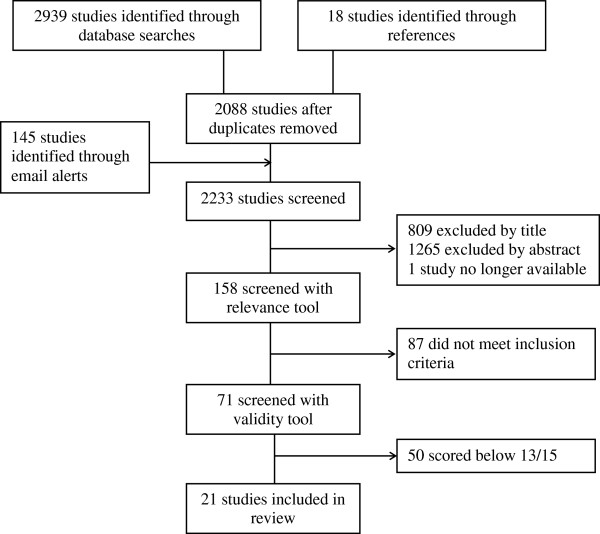
BACKGROUND: The effectiveness of paraprofessional home-visitations on improving the circumstances of disadvantaged families is unclear. The purpose of this paper is to systematically review the effectiveness of paraprofessional home-visiting programs on developmental and health outcomes of young children from disadvantaged families. METHODS: A comprehensive search of electronic databases (e.g., CINAHL PLUS, Cochrane, EMBASE, MEDLINE) from 1990 through May 2012 was supplemented by reference lists to search for relevant studies. Through the use of reliable tools, studies were assessed in duplicate. English language studies of paraprofessional home-visiting programs assessing specific outcomes for children (0-6 years) from disadvantaged families were eligible for inclusion in the review. Data extraction included the characteristics of the participants, intervention, outcomes and quality of the studies. RESULTS: Studies that scored 13 or greater out of a total of 15 on the validity tool (n = 21) are the focus of this review. All studies are randomized controlled trials and most were conducted in the United States. Significant improvements to the development and health of young children as a result of a home-visiting program are noted for particular groups. These include: (a) prevention of child abuse in some cases, particularly when the intervention is initiated prenatally; (b) developmental benefits in relation to cognition and problem behaviours, and less consistently with language skills; and (c) reduced incidence of low birth weights and health problems in older children, and increased incidence of appropriate weight gain in early childhood. However, overall home-visiting programs are limited in improving the lives of socially high-risk children who live in disadvantaged families. CONCLUSIONS: Home visitation by paraprofessionals is an intervention that holds promise for socially high-risk families with young children. Initiating the intervention prenatally and increasing the number of visits improves development and health outcomes for particular groups of children. Future studies should consider what dose of the intervention is most beneficial and address retention issues.
Overview
The claims and statistics of this paper haven’t been checked yet.
Free: it reads the open-access text and checks the first 5 claims that cite a source we can check. Create a free account to check every claim.
Integrity signals
Registry
Cites
Statistics
Figures
Verification
Claims the paper makes
The claims and statistics of this paper haven’t been checked yet.
Free: it reads the open-access text and checks the first 5 claims that cite a source we can check. Create a free account to check every claim.
Self-check
Percentages, sums and reported differences re-computed from the paper’s own numbers.
The self-check needs the paper’s full text.
Citations
Cites
Encyclopedia on Early Childhood Development
Munakata, Y., Michaelson, L., Barker, J. E., & Chevalier, N. (2013) · Cited by 825
Sweet, M. A., & Appelbaum, M. I. (2004) · Child Development · doi:10.1111/j.1467-8624.2004.00750.x · Cited by 798
Grantham-McGregor, S. M., Powell, C. A., Walker, S. P., & Himes, J. H. (1991) · The Lancet · doi:10.1016/0140-6736(91)90001-6 · Cited by 685
Support for breastfeeding mothers
Britton, C., McCormick, F. M., Renfrew, M. J., Wade, A., & King, S. E. (2007) · Cochrane Database of Systematic Reviews · doi:10.1002/14651858.cd001141.pub3 · Cited by 567
Programs for parents of infants and toddlers: recent evidence from randomized trials
Olds, D. L., Sadler, L., & Kitzman, H. (2007) · Journal of Child Psychology and Psychiatry · doi:10.1111/j.1469-7610.2006.01702.x · Cited by 548 · cited 1×
“There are a number of systematic reviews and metaanalyses that explore the effectiveness of HV programs with disadvantaged families [4-7], many of which focus on the prevention of child maltreatment [8-10].”
BackgroundMacLeod, J., & Nelson, G. (2000) · Child Abuse & Neglect · doi:10.1016/s0145-2134(00)00178-2 · Cited by 394
Jorde, R., Sneve, M., Torjesen, P. A., Figenschau, Y., Hansen, J.-B., & Grimnes, G. (2010) · Nutrition Journal · doi:10.1186/1475-2891-9-1 · Cited by 323
Randomized trial of a statewide home visiting program: impact in preventing child abuse and neglect
Duggan, A., McFarlane, E., Fuddy, L., Burrell, L., Higman, S. M., Windham, A., & Sia, C. (2004) · Child Abuse & Neglect · doi:10.1016/j.chiabu.2003.08.007 · Cited by 300
Elkan, Kendrick, Hewitt, Robinson, Tolley, Blair, Dewey, Williams, & Brummell (2000) · Health Technology Assessment · doi:10.3310/hta4130 · Cited by 297 · cited 1×
“There are a number of systematic reviews and metaanalyses that explore the effectiveness of HV programs with disadvantaged families [4-7], many of which focus on the prevention of child maltreatment [8-10].”
BackgroundNair, P., Schuler, M. E., Black, M. M., Kettinger, L., & Harrington, D. (2003) · Child Abuse & Neglect · doi:10.1016/s0145-2134(03)00169-8 · Cited by 285
Research works printed but not linked: 1
- Necoechea DM Children at-risk for poor school readiness: The effect of an early intervention home visiting program on children and parents [dissertation] 2007 Riverside: University of California
Cited by
Items 201–300 of 391
Conti, G., Sandner, M., Brand, T., & Kliem, S. (2025) · Child Abuse & Neglect · doi:10.1016/j.chiabu.2025.107513 · Cited by 9
Cultural adaptation of a preventive program for ultra-Orthodox preschool boys
Gilboa, Y. (2016) · Journal of Occupational Therapy Schools & Early Intervention · doi:10.1080/19411243.2016.1207214 · Cited by 6
Advancing Evidence-Based Action for Mental Health Promotion
Barry, M. M. (2019) · Springer eBooks · doi:10.1007/978-3-030-23455-3_3 · Cited by 7
Novak, A. S. (2022) · Journal of Developmental and Life-Course Criminology · doi:10.1007/s40865-022-00192-0 · Cited by 8
“…3 wellbeing in children and caregivers, reduce adversity in home environments, and improve long-term outcomes for children and caregivers (Peacock et al., 2013), it is possible participation in these programs may also reduce experiences of exclusionary discipline in early learning…”
BackgroundHarwood, J., Fernández, L., Vallejo-Correa, V., & Day, C. (2022) · Journal of Prevention · doi:10.1007/s10935-022-00685-0 · Cited by 6
“With mixed success, task-sharing, peer-led and paraprofessional approaches have been developed as methods to increase the availability and acceptability of parenting interventions, particularly for low income and socially excluded families (Day et al., 2012; Olds et al., 2002; Peacock et al., 2013).”
MethodRising Rates of Homicide of Children and Adolescents: Preventable and Unacceptable
Haddad, D. N., & Kaufman, E. J. (2022) · Archives of Pediatrics and Adolescent Medicine · doi:10.1001/jamapediatrics.2022.4946 · Cited by 7
Developing tailored positive parenting messages for a clinic‐based communication programme
Weaver, N. L., Weaver, T. L., Nicks, S. E., Jupka, K. A., Sallee, H., Jacobsen, H. A., Henley, W. B., & Jaques, M. L. (2016) · Child Care Health and Development · doi:10.1111/cch.12418 · Cited by 5
Ward, T. C. S., McPherson, J., & Kogan, S. M. (2021) · International Journal of Environmental Research and Public Health · doi:10.3390/ijerph18084133 · Cited by 6
“MBS is delivered within the home because home visits: (a) have demonstrated effectiveness for delivering services to expectant women and mothers of young children [58,59], (b) are particularly important for families with limited incomes who may experience barriers to accessing office-based services, (c) are convenient…”
BackgroundAnastasio, R. J., Leventhal, T., & Amadon, S. (2021) · Early Childhood Research Quarterly · doi:10.1016/j.ecresq.2021.11.002 · Cited by 8
Outcomes of Planned Home Visits of Intern Public Health Nurses: An Example from Turkey
Özkan, Ö., & Ozdemir, S. (2017) · Annals of Global Health · doi:10.1016/j.aogh.2016.06.004 · Cited by 5
“In this respect, these families ultimately need both the home visits of the public health nurses and accompanying primary health services.(21,23) The average home visit number of the intern public health nurses per family in uninterrupted 2-year- and 2-month-long practice training over 8 educational years turned out t…”
BackgroundResultEvidence of Effectiveness of a Home Visitation Program on Infant Weight Gain and Breastfeeding
Scharff, D. P., Elliott, M., Rechtenwald, A., Allen, J., & Strand, G. (2020) · Maternal and Child Health Journal · doi:10.1007/s10995-020-03072-5 · Cited by 5
PENGEMBANGAN APLIKASI UNTUK PEMANTAUAN DAN EVALUASI PENDIDIKAN ANAK USIA DINI
Sudirman, S. (2020) · INFOTECH Jurnal Informatika & Teknologi · doi:10.37373/infotech.v1i2.61 · Cited by 5
Online System on Monitoring and Feedback for Education
Bagu, U. Q. H. B., & Sudirman, S. (2021) · JISA(Jurnal Informatika dan Sains) · doi:10.31326/jisa.v4i1.900 · Cited by 24
Al-Adhami, M., Kornaros, K. G., & Lönnberg, G. (2025) · BMC Family Practice · doi:10.1186/s12875-025-02983-y · Cited by 7
“The results are particularly promising for multiprofessional interventions with increased visits initiated prenatally, which target socio-economically disadvantaged families with young children [1].”
Lang, C., Kerr, D. C., & Chi, D. L. (2021) · The Journal of the American Dental Association · doi:10.1016/j.adaj.2021.04.022 · Cited by 4
Evaluation of the impact of the MECSH programme in England: A mixed methods study
Kemp, L., Elcombe, E. L., Sumpton, W., Hook, B., Cowley, S., & Byrne, F. (2022) · Journal of Health Visiting · doi:10.12968/johv.2022.10.5.200 · Cited by 5
Deshmukh, V., John, S., Pakhare, A. P., Dasgupta, R., Joshi, A., Chaturvedi, S., Goswami, K., Das, M. K., Mukhopadhyay, R., Singh, R. K., et al. (2022) · Frontiers in Public Health · doi:10.3389/fpubh.2022.956422 · Cited by 8
Rates of Recent Adverse Childhood Experiences Among Indigenous Children
Waterman, E. A., Edwards, K. M., Mullet, N. D., Herrington, R., Hopfauf, S. L., Trujllo, P., Even-Aberle, N., & Wheeler, L. A. (2023) · Journal of Child & Adolescent Trauma · doi:10.1007/s40653-023-00587-1 · Cited by 5
“How - ever, other home visiting programs may be protective and address a number of concerns in the home with positive out - comes (Peacock et al., 2013).”
A Qualitative Inquiry into Nurse-Family Partnership Black Client Perspectives
Holliman, B. D., Dieujuste, N., Yost, E., & Allison, M. A. (2024) · Prevention Science · doi:10.1007/s11121-024-01709-3 · Cited by 6
“Home visiting programs are useful in bridging the gap between surviving and thriving for mothers and children (Peacock et al., 2013; Sawyer et al., 2013).”
Zeldman, J., Jake‐Schoffman, D. E., Gurka, M. J., Shelnutt, K. P., & Mobley, A. R. (2025) · Journal of the Academy of Nutrition and Dietetics · doi:10.1016/j.jand.2025.01.003 · Cited by 4
Parental Expectations of Maternal and Child Health Services
Bradt, L., Vandenbroeck, M., Lammertyn, J., & Bie, M. B. (2015) · Social Work in Public Health · doi:10.1080/19371918.2014.992586 · Cited by 11
Approaches to better engage parent–child in health home-visiting programmes: A content analysis
Lam, W., Dawson, A. J., & Fowler, C. (2016) · Journal of Child Health Care · doi:10.1177/1367493516653260 · Cited by 6
“Systematic reviews in the literature are focused on the association of home-visiting programmes either to child health outcome (Peacock et al., 2013) or to child maltreatment (Mikton and Butchart, 2009).”
BackgroundCho, J., Bae, D., Terris, D. D., Glisson, R. E., & Brown, A. (2018) · Child & Family Social Work · doi:10.1111/cfs.12448 · Cited by 6
The Evidence Base for the Maternal, Infant, and Early Childhood Home Visiting Program Constructs
Campos, S., Kapp, J. M., & Simões, E. J. (2018) · Public Health Reports · doi:10.1177/0033354918764383 · Cited by 6
Harries, M., & O’Donnell, M. (2019) · Child maltreatment · doi:10.1007/978-3-030-05858-6_15 · Cited by 4
Bell, K. J., Bloor, K. E., & Hewitt, C. E. (2019) · Maternal and Child Health Journal · doi:10.1007/s10995-019-02749-w · Cited by 12
Utilizing Principles of Private Enterprise to Improve Maternal and Child Health Programs
Rotheram‐Borus, M. J., & Tomlinson, M. (2020) · International Journal of Maternal and Child Health and AIDS · doi:10.21106/ijma.384 · Cited by 4
“Journal International journal of MCH and AIDS, 9(2)”
BackgroundFranzén, C., & Nilsson, E.-L. (2021) · International Journal of Social Science Studies · doi:10.11114/ijsss.v9i6.5281 · Cited by 4
Variations in sustained home visiting care for mothers and children experiencing adversity
Kanda, K., Blythe, S. L., Grace, R., Elcombe, E. L., & Kemp, L. (2021) · Public Health Nursing · doi:10.1111/phn.13014 · Cited by 6
Public Health Nurses’ Activities toward Child Abuse Prevention before Childbirth in Japan
Yokobori, H., Iwasaki‐Motegi, R., Naruse, T., & Yamamoto‐Mitani, N. (2022) · Public Health Nursing · doi:10.1111/phn.13122 · Cited by 5
Coy, D., & Doyle, O. (2023) · Journal of Human Capital · doi:10.1086/728055 · Cited by 7
“For example, Peacock et al. (2013) examine 21 studies and find evidence of effects on the prevention of maltreatment and birth weight, yet the benefits are mainly limited to disadvantaged families and countries that have limited social security.”
BackgroundTaplin, S., Richmond, G., & McArthur, M. (2014) · doi:10.24268/fhs.8348 · Cited by 4
Törmänen, M. R. K., Schaub, S., Ramseier, E., Koch, C., Kalkusch, I., Rodcharoen, P., Neuhauser, A., Lanfranchi, A., & Klaver, P. (2025) · Frontiers in Developmental Psychology · doi:10.3389/fdpys.2025.1503647 · Cited by 4
Haight, J., Tremblay, M., Wood, L., Rattlesnake, C., & Downie, H. (2025) · International Journal for Equity in Health · doi:10.1186/s12939-025-02698-7 · Cited by 3
“These programs have been shown to promote family wellbeing and healthy child development [12], as well as enhance vaccination uptake [13–15].”
Kotake, C., Fauth, R. C., Stetler, K., Goldberg, J. L., Silva, C. F., & Manning, S. E. (2023) · Children and Youth Services Review · doi:10.1016/j.childyouth.2023.106995 · Cited by 4
Kanda, K., Blythe, S. L., Grace, R., Elcombe, E. L., Rodgers, K., & Kemp, L. (2023) · Journal of Advanced Nursing · doi:10.1111/jan.15736 · Cited by 5
Lukanga, I., & Nyanda, S. S. (2023) · European Journal of Education and Pedagogy · doi:10.24018/ejedu.2023.4.5.637 · Cited by 5
“This enhanced social workers to offer appropriate ECD services through tailored counselling sessions to meet children's needs (Peacock et al., 2013).”
BackgroundAgyemang, G. K., Lamina, Y., Adeyeye, Y. I., Musongong, J. A., Ajayi, J. E., Awotipe, T., Bakare, O. I., & Kyeremeh, N. (2023) · International Journal of Scientific Research in Science and Technology · doi:10.32628/ijsrst23121165 · Cited by 6
Preyde, M., Bartlett, D., Carter, J., Walraven, K., Ogilvie, S., & Ashbourne, G. (2018) · Residential Treatment for Children & Youth · doi:10.1080/0886571x.2018.1485127 · Cited by 5
Promoting the Mental Health of Children and Families in the Early Years
Clarke, A. M. (2019) · Springer eBooks · doi:10.1007/978-3-030-23455-3_8 · Cited by 4
Implementation of a telehealth-enhanced home visiting programme for families of young children
Jetelina, K. K., Oke, O., Rodriguez, P., Weerakoon, S. M., & Barlow, S. E. (2020) · Journal of Telemedicine and Telecare · doi:10.1177/1357633x20938282 · Cited by 4
Förderung ab Geburt mit dem Programm «PAT – Mit Eltern Lernen»: Effekte im ersten Kindergartenjahr
Schaub, S., Eberli, R., Ramseier, E., Neuhauser, A., & Lanfranchi, A. (2021) · Swiss Journal of Educational Research · doi:10.24452/sjer.43.2.8 · Cited by 5
Mohammadi, F., Kohan, S., Yarmohammadian, M., Savabi-Esfahani, M., & Rastegari, Z. (2022) · PubMed Central · doi:10.30476/ijcbnm.2021.89368.1605 · Cited by 6
Williams, A. A., & Johnson, E. E. (2021) · Hispanic Health Care International · doi:10.1177/15404153211063639 · Cited by 3
“They also acknowledge that future studies are needed to determine the recommended frequency for positive effect and how to increase retention among participants (Peacock et al., 2013).”
BackgroundTorres, C., Rosenblum, K. L., Jester, J. M., Julian, M. M., Niec, L. N., & Muzik, M. (2022) · Maternal and Child Health Journal · doi:10.1007/s10995-021-03369-z · Cited by 5
“1 3 child maltreatment, reduced doctor visits for accidental injuries, increased immunization and nutrition, fewer behavioral problems, and more secure attachment relationships (Kendrick et al., 2000; Lyons-Ruth & Melnick, 2004; Peacock et al., 2013; Roggman et al., 2008).”
BackgroundPlott, C. F., Thornton, R. L. J., Punwani, E. S., Dankwa‐Mullan, I., Karunakaram, H., Craig, K. J. T., Rhee, K. B. L., & Sharfstein, J. M. (2022) · Health Services Research · doi:10.1111/1475-6773.14018 · Cited by 2
Jannat, K., Agho, K., Parvez, S. M., Rahman, M. M., Thomson, R. J., Amin, M. B., & Merom, D. (2023) · Nutrients · doi:10.3390/nu15132986 · Cited by 6
“The greater effect we saw in the yogurt-plus group on meeting the recommendation for optimal feeding practice may be explained by increased frequency of contact with the study team; a systematic review on the effectiveness of home visiting programs on child outcomes revealed that frequent home visits were associated w…”
BackgroundPowe, P. M., VanHook, C., Collier, A., Nakhla, M., Crum, I., Hamm, M., & Miller, E. P. (2023) · Families in Society The Journal of Contemporary Social Services · doi:10.1177/10443894231193867 · Cited by 4
“While imperfect, such interventions have led to improved child outcomes, including stronger cognitive skills, decreased child abuse and neglect, and decreased risk factors for toxic stress (i.e., harsh parenting practices) (Avellar & Supplee, 2013; Filene et al., 2013; Peacock et al., 2013).”
Lundgren, J. S., Nilses, Å., Eckerdal, E.-L., & Bernhardsson, S. (2024) · Frontiers in Health Services · doi:10.3389/frhs.2024.1335559 · Cited by 4
Khang, Y., Kim, Y., Kim, J. H., Yu, J., Oh, R., June, K. J., Cho, S., Lee, J. Y., & Cho, H. (2024) · BMJ Open · doi:10.1136/bmjopen-2023-082434 · Cited by 5
Refugee mothers’ mental health in Denmark: possibilities and limits of home visiting programs
Castaner, M. M., Poulsen, V. R., Nucci, E. D., & Villadsen, S. F. (2024) · Archives of Women s Mental Health · doi:10.1007/s00737-024-01529-y · Cited by 3
“NHV has exhibited positive impacts on parental responsiveness, infant survival (Wüst 2012), child development (Henwood et al. 2020; Peacock et al. 2013; Richter et al. 2017), and maternal mental health (Goldfeld et al. 2021).”
Blevins, E. J., Slopen, N. B., Koenen, K. C., Mikesell, C., & Basu, A. (2025) · Harvard Review of Psychiatry · doi:10.1097/hrp.0000000000000413 · Cited by 4
Wolfenden, L., Albers, B., & Shlonsky, A. (2018) · Campbell Systematic Reviews · doi:10.1002/cl2.201 · Cited by 6
Reducing Hospital Readmissions in Upstate New York
Summers, M. L., & Atav, S. (2019) · Professional Case Management · doi:10.1097/ncm.0000000000000371 · Cited by 5
Mixed-Methods Evaluation of the Initial Implementation of Advanced Home Visits in Chile
Garcia‐Huidobro, D., Verges, A. J., Basualto, P., Miranda, C. C., Boetto, C., Soto, M., Kopplin, E., Martínez, M., & Aracena, M. (2021) · Health Promotion Practice · doi:10.1177/1524839920982674 · Cited by 3
Eisenberg, D., & Raghavan, R. (2023) · Oxford University Press eBooks · doi:10.1093/oso/9780190942014.003.0004 · Cited by 3
Kompetenzentwicklung in den Frühen Hilfen: Erkenntnisse aus der Psychotherapieforschung
Taubner, S. (2015) · Psychotherapeut · doi:10.1007/s00278-015-0054-3 · Cited by 3
Simplifying care: when is the treatment burden too much for patients living in poverty?
Nwadiuko, J., & Sander, L. D. (2017) · BMJ Quality & Safety · doi:10.1136/bmjqs-2017-006968 · Cited by 3
Evaluating the effectiveness of Home-Start support in Dutch families
Smallegange, E. S., Hermanns, J. M. A., & Oort, F. J. (2018) · Journal of Social Work · doi:10.1177/1468017318761165 · Cited by 5
Welker, E. B., Lott, M. E., Sundermann, J., Bussel, J. B., & Story, M. T. (2018) · Journal of the Academy of Nutrition and Dietetics · doi:10.1016/j.jand.2018.08.167 · Cited by 3
Modernizing the Traditional Psychologist Role: Paraprofessionals in Psychological Health Care
McGrath, P. J., Crombach, A., Preston, J. M., & Kaltenbach, E. (2021) · Elsevier eBooks · doi:10.1016/b978-0-12-818697-8.00148-5 · Cited by 4
Frankel, L. A., Umemura, T., Pfeffer, K. A., Powell, E. M., & Hughes, K. R. (2021) · Frontiers in Public Health · doi:10.3389/fpubh.2021.630201 · Cited by 3
Intervenções precoces para a redução de vulnerabilidades e melhora do desenvolvimento infantil
da Sílva, A. A. M. (2019) · Cadernos de Saúde Pública · doi:10.1590/0102-311x00030519 · Cited by 3
Mentalisierungsbasierte Prävention mit Familien
Taubner, S. (2018) · Psychoanalytische Familientherapie · doi:10.30820/8217.02 · Cited by 2
Increasing Home Visiting Enrollment through Enhanced Outreach
Jacob, R. T., Friedman, M. F., & Meeks, O. M. (2024) · Social Service Review · doi:10.1086/730140 · Cited by 2
“Although there are different models of home visiting (e.g., Nurse-Family Partnership, Healthy Families America, Parents as Teachers), outcomes remain positive across different provider and model types (Avellar and Supplee 2013; Kendrick et al. 2000; Michalopoulos et al. 2019; Peacock et al. 2013).”
BackgroundLara, H., Nevarez-Brewster, M., Manning, C., Reid, M. J., Parade, S. H., Mason, G. M., & Rojo‐Wissar, D. M. (2024) · Frontiers in Sleep · doi:10.3389/frsle.2024.1405398 · Cited by 2
Community-Engaged Research in Early Home Visiting: A Scoping Review of Peer-Reviewed Literature
West, A. L., Eldreth, D. L., DANIELS, J. P., & Bower, K. M. (2025) · Prevention Science · doi:10.1007/s11121-025-01812-z · Cited by 2
“Given its broad dissemination, home visiting has the potential to reduce disparities among families at increased risk for poor health outcomes, yet model impact studies have shown only modest effects on intended outcomes (Michalo-poulos et al., 2019; Peacock et al., 2013).”
Parenting styles and interventions for the child health clinician
McMahon, E. L., Ward, B. T., Aston, H., & Scholer, S. J. (2025) · Current problems in pediatric and adolescent health care · doi:10.1016/j.cppeds.2025.101864 · Cited by 9
Barboza, M., Wennergren, M., Nilses, Å., Bernhardsson, S., & Lundgren, J. S. (2026) · BMC Health Services Research · doi:10.1186/s12913-026-14092-2 · Cited by 3
“Previous research has shown short-and long-term positive effects on conditions important for children’s early development [23–25].”
An innovative recruitment strategy in a pediatric clinical trial
Bhatnagar, S., Hoberman, A., Kurs‐Lasky, M., Kearney, D. H., Haralam, M. A., Nagg, J. P., & Shaikh, N. (2020) · Clinical Trials · doi:10.1177/1740774520910396 · Cited by 2
“21 3–11 12 (11) 1 (4) 2 (4) 3 (18) 12–35 12 (11) 4 (16) 7 (15) 1 (6) 36 or older 82 (77) 20 (80) 38 (81) 13 (76) Unknown 3 (3) 5 (17) 1 (2) 1 (6) Race 0.”
MethodInfluentialKelly, C. L., & LeCroy, C. W. (2022) · Children and Youth Services Review · doi:10.1016/j.childyouth.2022.106571 · Cited by 2
Miller, S. J., Dunne, L., Millen, S., Early, E., Grant, L., Davison, J., & McGeady, C. (2023) · Irish Educational Studies · doi:10.1080/03323315.2023.2185275 · Cited by 3
“…behaviours, improved parent behaviours, attachment and child wellbeing and development (Council on Community Pediatrics 2009; Filene et al. 2013; Kendrick et al. 2000; Paulsell, Del Grosso, and Supplee 2014; Peacock et al. 2013; Ryan, O ’ Far-relly, and Ramchandani 2017; Sweet and Appelbaum 2004).”
Post-Natal Short-Term Home Visiting Programs: An Overview and a Volunteers-Based Program Pilot
Gross‐Manos, D., Bader, N. G., & Cohen, A. (2023) · International Journal of Environmental Research and Public Health · doi:10.3390/ijerph20176650 · Cited by 3
Franck, L. S., Johnson, I., Mehra, R., Remy, L. L., & Rienks, J. (2023) · Journal of Public Health Management and Practice · doi:10.1097/phh.0000000000001820 · Cited by 2
Yepez, C. E., Isbell, A. M., Anderson, C. E., & Whaley, S. E. (2024) · Infants & Young Children · doi:10.1097/iyc.0000000000000262 · Cited by 2
“HVPs have an established record of improving children’s development (Peacock et al., 2013) and this study adds to that literature.”
ResultZhou, Y., Rodriguez, I., Manz, P. H., Zuniga, C., & Ross, A. M. (2024) · Journal of Social Service Research · doi:10.1080/01488376.2024.2419594 · Cited by 2
“…of ECHV programs in the United States (US) on maternal, child, and family outcomes (Casillas et al., 2016; Filene et al., 2013; Lowell et al., 2011; Peacock et al., 2013; Sama-Miller et al., 2018), leading to widespread adoption of evidence-based ECHV models that are now available in all 50 states…”
Oladimeji, O. I., Ohene‐Agyei, P., Lin, L., Franke, N., Rogers, J., Crowther, C. A., & Harding, J. E. (2024) · Journal of Diabetes Research · doi:10.1155/jdr/6543458 · Cited by 2
Lannen, P., & Duss, I. (2020) · Frühförderung interdisziplinär · doi:10.2378/fi2020.art19d · Cited by 2
Succinct Pediatrics: Evaluation and Management for Common and Critical Care
Feld, L. G., & Mahan, J. D. (2015) · American Academy of Pediatrics eBooks · doi:10.1542/9781581109689 · Cited by 2
Kaitz, M., Chriki, M., Tessler, N., & Levy, J. (2018) · Infant Mental Health Journal · doi:10.1002/imhj.21693 · Cited by 2
Henry Kempe’s Vision: Preventing child abuse then and now
Chaiyachati, B. H., & Leventhal, J. M. (2014) · Clinical Child Psychology and Psychiatry · doi:10.1177/1359104513519554 · Cited by 3
Promoting equity through health services
Burström, B. (2020) · Oxford University Press eBooks · doi:10.1093/oso/9780198837206.003.0003 · Cited by 2
Should Early Health Investments Work? Evidence from an RCT of a Home Visiting ProgrammePreprint
Coy, D., & Doyle, O. (2020) · RePEc: Research Papers in Economics · Cited by 2
Familienbegleiter*innen in Frühen Hilfen – über die ambivalente Bearbeitung von Mutterschaft
Posmek, J., & Bastian, P. (2019) · Soziale Passagen · doi:10.1007/s12592-019-00328-y · Cited by 1
“Die Ergebnisse von Metaanalysen (Peacock et al. 2013; Howard und Brooks-Gunn 2009; Geeraert et al. 2004; Sweet und Appelbaum 2004; Layzer et al. 2001; MacLeod und Nelson 2000) bekräftigen die Effektivität solcher Maßnahmen.”
BackgroundA realist model for home visitation program evaluation
Roane, J. S., & Jones, T. (2022) · Journal of Pediatric Nursing · doi:10.1016/j.pedn.2022.01.012 · Cited by 2
Gómez, A., Mersky, J. P., Lee, C. P., Zhang, L., Shlafer, R. J., & Jackson, D. B. (2023) · Child and Adolescent Social Work Journal · doi:10.1007/s10560-023-00924-1 · Cited by 2
“Finally, generalizability of the findings may be limited to low-income households receiving perinatal home visiting services in Wisconsin, especially considering that home visiting programs have been linked to positive child social–emotional outcomes (Peacock et al., 2013; Sweet & Appelbaum, 2004).”
Trillingsgaard, T., Fentz, H. N., & Simonsen, M. (2024) · Social Science & Medicine · doi:10.1016/j.socscimed.2024.116741 · Cited by 1
Motivational interviewing at home
Cartes‐Velásquez, R., & Machuca, L. H. L. (2024) · The Journal of the American Dental Association · doi:10.1016/j.adaj.2024.09.012 · Cited by 3
Powe, P. M., Cameron, F. D. A., Tan, A., Alston, T. L., & Bellamy, J. L. (2025) · Children and Youth Services Review · doi:10.1016/j.childyouth.2025.108256 · Cited by 2
Khoza‐Shangase, K., & Maluleke, N. P. (2025) · Child Care Health and Development · doi:10.1111/cch.70090 · Cited by 1
“Furthermore, home visits mitigate the documented distance challenges associated with accessing EHDI services (Khoza-Shangase 2019; Maluleke et al. 2023); and allow HCPs to offer a more tailored approach to service delivery (Peacock et al. 2013).”
Home visiting for families without a home: findings from a qualitative study
Dworsky, A., Carreon, E. D., McDaniel, B., & Griffin, A. M. (2025) · Children and Youth Services Review · doi:10.1016/j.childyouth.2025.108543 · Cited by 1
Stackhouse, M., Wallace, L., Simmons, H., Robertson, C., Caissie, J., & Magalhaes, S. (2025) · BMC Pregnancy and Childbirth · doi:10.1186/s12884-025-08150-6 · Cited by 1
“While existing research shows improved child development and health outcomes for mothers enrolled prenatally in perinatal programs [24] previous HFHB program-initiated research did not demonstrate the impact of the prenatal program and identified the necessity for more evidence on needs of the…”
Young Family Professional Mentoring: Promoting Early Relational Health
Willis, D. W., & Russo, J. E. (2026) · Springer eBooks · doi:10.1007/978-3-032-05580-4_34 · Cited by 1
A Scoping Review of Strategies to Increase Newcomer Family Access to Early Childhood Services
Miles, E., Doyle, E., Bose, S., & Bernstein, H. (2026) · Prevention Science · doi:10.1007/s11121-025-01867-y · Cited by 2
“…Filene et al., 2013), including reduced incidence of low birth weight, health problems, emergency department visits, and child welfare involvement and enhanced child development, cognitive abilities, and reductions in child behavioral concerns (Michalopoulos et al., 2019; Peacock et al., 2013).”
Conrad-Hiebner, A., Wojciak, A. S., & Ronnenberg, M. M. (2026) · Child Maltreatment · doi:10.1177/10775595261456614 · Cited by 2
Magalhães, S., Cookson, S. R., & Jones, B. (2026) · Canadian Journal of Public Health · doi:10.17269/s41997-026-01232-8 · Cited by 1
“The greatest overall benefits of participating in public health perinatal programs are reported in studies with prenatal enrolment, more visits, and longer program duration (Peacock et al., 2013), with families at the highest risk benefiting most from participation (Olds, 2008).”
Lutzker, J. R., & Casillas, K. L. (2016) · Child Abuse & Neglect · doi:10.1016/j.chiabu.2016.01.005 · Cited by 1
Jungmann, T., Dähne, V., Sierau, S., Serbati, S., Dugravier, R., & Lanfranchi, A. (2017) · Research and reviews: journal of nursing and health sciences · Cited by 4
Kelly, C. L. (2018) · Cited by 1
Quasinatural Experiment of Postnatal Home Visiting: An Independent Impact Study of Family Connects
Mersky, J. P., Choi, C., & Lee, C. P. (2022) · American Journal of Preventive Medicine · doi:10.1016/j.amepre.2022.05.008 · Cited by 2
Metadata
- Authors
- Peacock, S., Konrad, S., Watson, E., Nickel, D., & Muhajarine, N.
- Affiliations
- University of Saskatchewan (CA)
- Corresponding author
- Peacock, Shelley
- Venue
- BMC Public Health
- Published
- 2013-01-09
- Volume
- 13
- Issue
- 1
- Pages
- 17-17
- ISSN
- 1471-2458 (ISSN-L)
- PMC
- PMC3546846
- OpenAlex
- W2102101140
- Cited by
- 392
- References
- 37
- Citations by year
- 2026: 20 · 2025: 20 · 2024: 26 · 2023: 34 · 2022: 45 · 2021: 26 · 2020: 43 · 2019: 27 · 2018: 43 · 2017: 23 · 2016: 31 · 2015: 28 · 2014: 19 · 2013: 6
- FWCI
- 3.37
- Type
- journal article
- Language
- en
- Open access
- gold
- doi.org
- Licence
- cc-by
- creativecommons.org/licenses/by/2.0 (tdm)
- Locations
- BMC Public Health (publishedVersion, cc-by)
- Europe PMC (PubMed Central) (publishedVersion, cc-by)
- PubMed Central (publishedVersion, cc-by)
- PubMed (publishedVersion)
- HARVEST (University of Saskatchewan) (submittedVersion)
- DOAJ (DOAJ: Directory of Open Access Journals) (submittedVersion)
- Topics
- Health Sciences › Medicine › Pediatrics, Perinatology and Child Health › Child and Adolescent Health
- Health Sciences › Medicine › Pediatrics, Perinatology and Child Health › Maternal and Neonatal Healthcare
- Health Sciences › Nursing › Nutrition and Dietetics › Child Nutrition and Water Access
- Keywords
- home visits, disadvantaged families, child development, child health outcomes, child abuse prevention, prenatal intervention, low birth weight, cognitive development, behavioral problems, language skills, intervention dosage, intervention retention
- MeSH terms
- Child, Child, Preschool, House Calls, Humans, Infant, Program Evaluation, Randomized Controlled Trials as Topic, Outcome Assessment, Health Care, Vulnerable Populations
About these checks
Registry, retraction, Cites and statistics results are computed, not judged, with one exception: a printed reference that no index lists is read once by a model before it counts as a citation error. Claims are extracted by a model and kept only when their quote appears verbatim in the text; each cited source is then checked, with a model’s help, for whether it says what the claim relies on. Those verdicts can be wrong — read the claim’s quote and the cited source before relying on one.
Statistics and arithmetic are recomputed, not judged.
Confidence bands are shown only for fields calibrated on our annotated test set. None is calibrated yet, so no band is shown.
What counts as a claim ›How we measure confidence ›How we check this ›
Are you an author, or do you see a problem with this page? Request a review
Data sources
Bibliographic data: Semantic Scholar, OpenAlex, Crossref.
Contains information from the Semantic Scholar Academic Graph Datasets, made available under the ODC Attribution License (ODC-BY 1.0).
Semantic Scholar’s data is described in: Kinney, R., et al. (2023). The Semantic Scholar Open Data Platform. arXiv:2301.10140.
