

Falls in young, middle-aged and older community dwelling adults: perceived cause, environmental factors and injury
Open accessThe DOI matches its Crossref record; 41 of the 41 references it cites were found in a registry or an index.
Abstract
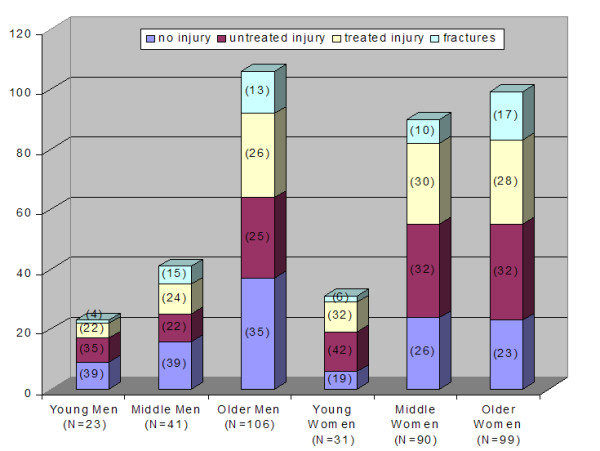
Background: Falls in older people have been characterized extensively in the literature, however little has been reported regarding falls in middle-aged and younger adults. The objective of this paper is to describe the perceived cause, environmental influences and resultant injuries of falls in 1497 young (20–45 years), middle-aged (46–65 years) and older (> 65 years) men and women from the Baltimore Longitudinal Study on Aging. Methods: A descriptive study where participants completed a fall history questionnaire describing the circumstances surrounding falls in the previous two years. Results: The reporting of falls increased with age from 18% in young, to 21% in middle-aged and 35% in older adults, with higher rates in women than men. Ambulation was cited as the cause of the fall most frequently in all gender and age groups. Our population reported a higher percentage of injuries (70.5%) than previous studies. The young group reported injuries most frequently to wrist/hand, knees and ankles; the middle-aged to their knees and the older group to their head and knees. Women reported a higher percentage of injuries in all age groups. Conclusion: This is the first study to compare falls in young, middle and older aged men and women. Significant differences were found between the three age groups with respect to number of falls, activities engaged in prior to falling, perceived causes of the fall and where they fell.
Overview
The claims and statistics of this paper haven’t been checked yet.
Free: it reads the open-access text and checks the first 5 claims that cite a source we can check. Create a free account to check every claim.
Integrity signals
Registry
Cites
Statistics
Figures
Verification
Claims the paper makes
The claims and statistics of this paper haven’t been checked yet.
Free: it reads the open-access text and checks the first 5 claims that cite a source we can check. Create a free account to check every claim.
Self-check
Percentages, sums and reported differences re-computed from the paper’s own numbers.
The self-check needs the paper’s full text.
Citations
Cites
1 retracted
Interventions for preventing falls in elderly people
Gillespie, L. D., Gillespie, W. J., Robertson, M. C., Lamb, S. E., Cumming, R. G., & Rowe, B. H. (2003) · The Cochrane Database of Systematic Reviews · doi:10.1002/14651858.cd000340 · Cited by 1,422
RetractedThe CES-D Scale: A Self-Report Depression Scale for Research in the General Population
Radloff, L. S. (1977) · Applied Psychological Measurement · doi:10.1177/014662167700100306 · Cited by 53,267
Sensitivity and False Alarm Rate of a Fall Sensor in Long-Term Fall Detection in the Elderly
Kangas, M., Korpelainen, R., Vikman, I., Nyberg, L., & Jämsä, T. (2015) · Gerontology · doi:10.1159/000362720 · Cited by 18,909
Risk Factors for Falls among Elderly Persons Living in the Community
Tinetti, M. E., Speechley, M., & Ginter, S. F. (1988) · New England Journal of Medicine · doi:10.1056/nejm198812293192604 · Cited by 6,509 · cited 3×
“Tinetti et al [32] found in a prospective study that 24% of the falls in community dwelling older aged persons resulted in serious injury and 6 percent had fractures.”
BackgroundResultThe cochrane database of systematic reviews
Geddes, J. (1996) · Journal of Psychosomatic Research · doi:10.1016/s0022-3999(96)90063-x · Cited by 5,989
Verbrugge, L. M., & Jette, A. M. (1994) · Social Science & Medicine · doi:10.1016/0277-9536(94)90294-1 · Cited by 3,310 · cited 1×
“In older people, falls are a risk factor for disability and frailty, and exacerbate the disablement process [3,4].”
BackgroundThe Cochrane Database of Systematic Reviews
Handoll, H. H. (2004) · The British Journal of Hand Therapy · doi:10.1177/175899830400900201 · Cited by 1,513
FALLS BY ELDERLY PEOPLE AT HOME: PREVALENCE AND ASSOCIATED FACTORS
BLAKE, A. J., MORGAN, K., BENDALL, M. J., DALLOSSO, H., EBRAHIM, S. B. J., ARIE, T. H. D., FENTEM, P. H., & BASSEY, E. J. (1988) · Age and Ageing · doi:10.1093/ageing/17.6.365 · Cited by 1,261 · cited 1×
“Most older fallers reported tripping as the cause for their fall [18,23], with a large percentage unable to give any reason in a one year retrospective study [24].”
BackgroundCAMPBELL, A. J., BORRIE, M. J., SPEARS, G. F., JACKSON, S. L., BROWN, J. S., & FITZGERALD, J. L. (1990) · Age and Ageing · doi:10.1093/ageing/19.2.136 · Cited by 803 · cited 2×
“Campbell et al [17] found in a prospective study of participants (over 69 years) from a rural setting no gender difference in fall rate; however men were more likely to fall outside and at more intense levels of activity.”
BackgroundResultFactors Associated with Falls in the Elderly: A Community Study
Prudham, D., & Evans, J. G. (1981) · Age and Ageing · doi:10.1093/ageing/10.3.141 · Cited by 803 · cited 2×
“Most older fallers reported tripping as the cause for their fall [18,23], with a large percentage unable to give any reason in a one year retrospective study [24].”
Background
Research works printed but not linked: 2
- 26. Adler-Traines M Falls in the senior population. Physical Therapy Forum 1994 9 14 17
- 38. Metter EJ Yim-Chipless PK Musiol R Talbot LA Balance Training: Preventing Falls in Older Adults The American Journal of Medicine and Sports 2003 5 94 99
Cited by
Items 101–200 of 691
Explicit Action Switching Interferes with the Context-Specificity of Motor Memories in Older Adults
Sombric, C. J., Harker, H. M., Sparto, P. J., & Torres‐Oviedo, G. (2017) · Frontiers in Aging Neuroscience · doi:10.3389/fnagi.2017.00040 · Cited by 51
“Thus, it is possible that the aged motor system exploits prior experiences rather than exploring new movements to avoid risks such as falling, which havemore serious consequences in old than young populations (Talbot et al., 2005; Mitchell et al., 2010).”
BackgroundRelationship Between Measures of Balance and Strength in Middle-Aged Adults
Muehlbauer, T., Gollhofer, A., & Granacher, U. (2011) · The Journal of Strength and Conditioning Research · doi:10.1519/jsc.0b013e31823f8c41 · Cited by 51
“, walking, stair climbing) in middle-aged adults (31),”
BackgroundSégaux, L., Broussier, A., Oubaya, N., Leissing-Desprez, C., Laurent, M., Naga, H., Fromentin, I., David, J., & Bastuji‐Garin, S. (2021) · Scientific Reports · doi:10.1038/s41598-021-88410-5 · Cited by 44
Characterization of fall patients: Does age matter?
James, M. K., Victor, M. C., Saghir, S. M., & Gentile, P. A. (2017) · Journal of Safety Research · doi:10.1016/j.jsr.2017.12.010 · Cited by 42
Lee, B.-C., Kim, C.-S., & Seo, K.-H. (2019) · IEEE Transactions on Neural Systems and Rehabilitation Engineering · doi:10.1109/tnsre.2019.2921710 · Cited by 47
“FALLS and the resulting fractures and injuries [1], [2] are a significant health concern, particularly for older people and people with balance disorders [3].”
BackgroundHu, B., Li, S., Chen, Y., Kavi, R. R., & Coppola, S. M. (2021) · Applied Ergonomics · doi:10.1016/j.apergo.2021.103414 · Cited by 43
Kulmala, J., Sihvonen, S. E., Kallinen, M., Alén, M., Kiviranta, I., & Sipilä, S. (2007) · Journal of Geriatric Physical Therapy · doi:10.1519/00139143-200712000-00006 · Cited by 42
Ioannidis, G., Jantzi, M., Bucek, J., Adachi, J. D., Giangregorio, L., Hirdes, J. P., Pickard, L. E., & Παπαϊωάννου, Α. (2017) · BMJ Open · doi:10.1136/bmjopen-2017-016477 · Cited by 41
A Review on Fall Detection Systems Using Data from Smartphone Sensors
Islam, M. M., Neom, N., Imtiaz, M. N., Nooruddin, S., Islam, M. N., & Islam, M. N. (2019) · Ingénierie des systèmes d information · doi:10.18280/isi.240602 · Cited by 41
“20% of falls cause fatal injury, for example, head trauma, or complex bone fracture [5, 6].”
BackgroundDebelle, H., Harkness‐Armstrong, C., Hadwin, K., Maganaris, C. N., & O’Brien, T. D. (2020) · Frontiers in Sports and Active Living · doi:10.3389/fspor.2020.00082 · Cited by 41
Effect of Tai Chi on gait and obstacle crossing behaviors in middle-aged adults
Ramachandran, A. K., Rosengren, K. S., Yang, Y., & Hsiao‐Wecksler, E. T. (2006) · Gait & Posture · doi:10.1016/j.gaitpost.2006.09.005 · Cited by 44
The contribution of alcohol to falls at home among working-aged adults
Kool, B., Ameratunga, S. N., Robinson, E., Crengle, S. M., & Jackson, R. (2008) · Alcohol · doi:10.1016/j.alcohol.2008.04.004 · Cited by 41
Self‐Reported Hearing Loss and Nonfatal Fall‐Related Injury in a Nationally Representative Sample
Heitz, E. R., Gianattasio, K. Z., Prather, C. P., Talegawkar, S. A., & Power, M. C. (2019) · Journal of the American Geriatrics Society · doi:10.1111/jgs.15849 · Cited by 39
“Younger patients (18-44 years old), middleaged patients (45-64 years old), and older adults (65 years and older) often have different clinical factors contributing to falls and different injury patterns.(23,24) Just as the complex multifactorial process leading to increased fall risk evolves over decades, so does the…”
BackgroundIs multimorbidity associated with higher risk of falls among older adults in India?
Barik, M., Panda, S. N., Tripathy, S. S., Sinha, A., Ghosal, S., Acharya, A. S., Kanungo, S., & Pati, S. (2022) · BMC Geriatrics · doi:10.1186/s12877-022-03158-5 · Cited by 42
“Around one-third of adults aged ≥ 65 years have experienced at least one fall every year [4].”
BackgroundFatores socioambientais associados à ocorrência de quedas em idosos
Pereira, G. N., Morsch, P., Lopes, D. G. C., Trevisan, M. D., Ribeiro, A. D. A., Navarro, J. H. D. N., Bós, D. D. S. G., Vianna, M. S. D. S., & Bós, Â. J. G. (2013) · Ciência & Saúde Coletiva · doi:10.1590/s1413-81232013001200007 · Cited by 39
Etman, A., Wijlhuizen, G. J., van Heuvelen, M. J. G., Chorus, A. M. J., & Hopman-Rock, M. (2012) · Age and Ageing · doi:10.1093/ageing/afr178 · Cited by 44
“Of these falls, approximately 70% results in injuries [2, 3].”
BackgroundKönig, M., Epro, G., Seeley, J. R., Catalá-Lehnen, P., Potthast, W., & Karamanidis, K. (2018) · Journal of Biomechanics · doi:10.1016/j.jbiomech.2018.12.011 · Cited by 38
Raina, P. S., Sohel, N., Oremus, M., Shannon, H. S., Mony, P. K., Kumar, R., Li, W., Wang, Y., Wang, X., Yusoff, K., et al. (2015) · Injury Prevention · doi:10.1136/injuryprev-2014-041476 · Cited by 42
Health-related predictors of falls and fractures in women over 40
Nitz, J. C., Stock, L., & Khan, A. (2012) · Osteoporosis International · doi:10.1007/s00198-012-2004-z · Cited by 42
“Middle-aged adults (45– 65 years) have been shown to represent 21 % of falls recorded in adults [13].”
BackgroundAssociation of dual-task walking performance and leg muscle quality in healthy children
Beurskens, R., Muehlbauer, T., & Granacher, U. (2015) · BMC Pediatrics · doi:10.1186/s12887-015-0317-8 · Cited by 38
“Background Epidemiologic studies indicate that the risk of sustaining a fall is particularly high in children and seniors [1,2] and a large number of falls occur during ambulation [3].”
BackgroundGan-El, E., Djomo, W. N., Ciobanu, A. M. P., Kaufman, L., Djiélé, F. N., Ulrix, M., Kreps, B., Plumacker, A., Malinverni, S., Bartiaux, M., et al. (2022) · European Journal of Trauma and Emergency Surgery · doi:10.1007/s00068-022-02019-5 · Cited by 35
“On the other hand, younger patients have better postural stability and shorter reaction times than older patients, which could mitigate the severity of an accidental fall [20].”
BackgroundA study on correlation between depression, fear of fall and quality of life in elderly individuals
Mishra, N., Mishra, A. K., & Bidija, M. (2017) · International Journal of Research in Medical Sciences · doi:10.18203/2320-6012.ijrms20171245 · Cited by 43
Sock-Type Wearable Sensor for Estimating Lower Leg Muscle Activity Using Distal EMG Signals
Isezaki, T., Kadone, H., Niijima, A., Aoki, R., Watanabe, T., Kimura, T., & Suzuki, K. (2019) · Sensors · doi:10.3390/s19081954 · Cited by 36
“In addition, there is a certain amount of people in the young group (20–45 years) that experience falling [3].”
BackgroundDisparity in prehospital scene time for geriatric trauma patients
Ordoobadi, A. J., Peters, G. A., Westfal, M. L., Kelleher, C. M., & Chang, D. C. (2021) · The American Journal of Surgery · doi:10.1016/j.amjsurg.2021.10.031 · Cited by 35
Leavy, B., Byberg, L., Michaëlsson, K., Melhus, H., & Åberg, A. C. (2015) · BMC Geriatrics · doi:10.1186/s12877-015-0036-x · Cited by 38
“Most previous investigations of fall circumstances have reported falls in general and not specifically those resulting in hip fracture [54-57], which limits the comparability of our findings.”
ResultDuclos, C., Miéville, C., Gagnon, D. H., & Leclerc, C. (2012) · Journal of NeuroEngineering and Rehabilitation · doi:10.1186/1743-0003-9-28 · Cited by 46
“In addition to these socalled external perturbations, self-induced disequilibrium is also known to cause falls in older persons during activities [6-9].”
BackgroundGashaw, M., Janakiraman, B., Minyihun, A., Belay, G. J., & Sany, K. (2020) · BMC Public Health · doi:10.1186/s12889-020-08628-2 · Cited by 35
Detecting falls with X-Factor Hidden Markov Models
Khan, S. S., Karg, M. E., Kulić, D., & Hoey, J. (2017) · Applied Soft Computing · doi:10.1016/j.asoc.2017.01.034 · Cited by 35
“of them are similar to falls, this may increase FDRwith an increase in FARin the proposed XHMMs. E. Discussion Fall detectors are mostly aimed at older people because they are at more risk of falling [32]; therefore, their involvement is desirable in the development of such technologies. However, very few studies use…”
BackgroundAnderson, C. B., Miller, M. J., Murray, A. M., Fields, T. T., So, N. F., & Christiansen, C. L. (2020) · PM&R · doi:10.1002/pmrj.12376 · Cited by 35
Pinto, S. M., Cheung, J. P. Y., Samartzis, D., Karppinen, J. I., Zheng, Y., Pang, M. Y. C., & Wong, A. Y. L. (2020) · Frontiers in Neurology · doi:10.3389/fneur.2020.605787 · Cited by 36
“The finding may inform clinical management such as proprioceptive training to decrease the fall risk (22) or back injuries in middle-aged adults.”
BackgroundRadiographic technique modification and evidence‐based practice: A qualitative study
Rawle, M., Pighills, A., Méndez, D., & Dobeli, K. (2022) · Journal of Medical Radiation Sciences · doi:10.1002/jmrs.616 · Cited by 33
COGNITIVE DEMAND AND PREDICTIVE ADAPTATIONAL RESPONSES IN DYNAMIC STABILITY CONTROL
Böhm, S., Mersmann, F., Bierbaum, S., Dietrich, R., & Arampatzis, A. (2012) · Journal of Biomechanics · doi:10.1016/j.jbiomech.2012.07.009 · Cited by 35
Cockayne, S., Pighills, A., Adamson, J., Fairhurst, C. M., Crossland, S., Drummond, A. E., Hewitt, C. E., Rodgers, S., Ronaldson, S. J., McCaffery, J. M., et al. (2021) · Health Technology Assessment · doi:10.3310/hta25460 · Cited by 35
Gerards, M. H. G., Sieben, J. M., Marcellis, R. G. J., de Bie, R. A., Meijer, K., & Lenssen, A. F. (2022) · BMJ Open · doi:10.1136/bmjopen-2021-056623 · Cited by 31
Morgan, P. E., McDonald, R. L., & McGinley, J. L. (2015) · Rehabilitation Research and Practice · doi:10.1155/2015/196395 · Cited by 38
“Ambulation has been cited as the predominant activity undertaken prior to a fall in normative studies, in all gender and age groups [8].”
BackgroundMethodInfluentialManaging HIV infection in patients older than 50 years
McMillan, J. M., Krentz, H. B., Gill, M. J., & Hogan, D. B. (2018) · Canadian Medical Association Journal · doi:10.1503/cmaj.171409 · Cited by 36
Age-Related Risk of Serious Fall Events and Opioid Analgesic Use
Hopkins, R. E., Bharat, C., Buizen, L., Close, J., Ivers, R., Draper, B., Pearson, S., Degenhardt, L. J., & Gisev, N. (2024) · JAMA Internal Medicine · doi:10.1001/jamainternmed.2023.8154 · Cited by 32
Coutinho, E. S. F., Bloch, K. V., & Rodrigues, L. C. (2009) · Cadernos de Saúde Pública · doi:10.1590/s0102-311x2009000200024 · Cited by 30
Cates, B., Sim, T., Heo, H. M., Kim, B., Kim, H., & Mun, J. H. (2018) · Sensors · doi:10.3390/s18041227 · Cited by 36
“This low-acceleration only design is applicable for a portion of the elderly population, but most falls for the population at large occur during dynamic, high-acceleration activities [22], and this fact requires the creation of models that can distinguish falls from such activities.”
BackgroundChepisheva, M. (2023) · PeerJ · doi:10.7717/peerj.15040 · Cited by 31
“, 2012), many of them more than once, and around 70%—acquire an injury after the fall (Stel et al., 2004; Talbot et al., 2005).”
BackgroundChanges in postural sway and gait characteristics as a consequence of anterior load carriage
Roberts, M., Talbot, C., Kay, A. D., Price, M., & Hill, M. W. (2018) · Gait & Posture · doi:10.1016/j.gaitpost.2018.08.039 · Cited by 30
“This is an important finding because most falls occur during dynamic activities [23] and fallers tend to demonstrate greater gait variability compared to non-fallers [24].”
BackgroundSilva, C. R. D., Magalhães, L. F. R., Chaves, F. M. G., Vieira, E. C. D. N., Adames, A. P. R., & Brauns, I. D. S. D. (2020) · Fisioterapia Brasil · doi:10.33233/fb.v21i3.3459 · Cited by 65
“Within the young population, such phenomenon occurs, in most times, during physical activity practice, especially in the case of running, while in elderly persons, such incident occurs during basic daily activities, such as walking [2].”
BackgroundAdam, C. E., Fitzpatrick, A. L., Leary, C. S., Hajat, A., Phelan, E. A., Park, C., & Semmens, E. O. (2021) · International Journal of Environmental Research and Public Health · doi:10.3390/ijerph18073712 · Cited by 32
“These impairments are strongly linked to fall risk in a community setting [13,15] but are not tested in wellcontrolled clinical or research assessments of gait speed, where a participant is asked to”
BackgroundHerssens, N., How, D., van de Berg, R., & McCrum, C. L. (2022) · JAMA Otolaryngology–Head & Neck Surgery · doi:10.1001/jamaoto.2021.3673 · Cited by 35
Intermittent Visual Occlusions Increase Balance Training Effectiveness
Symeonidou, E.-R., & Ferris, D. P. (2022) · Frontiers in Human Neuroscience · doi:10.3389/fnhum.2022.748930 · Cited by 29
Older people living at home: associations between falls and health complaints in men and women
Hedman, A. R., Fonad, E., & Sandmark, H. (2013) · Journal of Clinical Nursing · doi:10.1111/jocn.12279 · Cited by 35
“The reporting of falls increases with age and higher rates in women than in men are found (Talbot et al. 2005, Yoshida 2007).”
BackgroundRosic, G., Milston, A., Richards, J., & Dey, P. (2019) · BMC Obesity · doi:10.1186/s40608-019-0230-z · Cited by 32
Huang, M., Yick, K., Ng, S., Yip, J. Y. W., & Cheung, R. T. H. (2020) · PLoS ONE · doi:10.1371/journal.pone.0234140 · Cited by 29
Fall experiences of persons with fibromyalgia over 6 months
Rutledge, D. N., Martinez, A., Traska, T. K., & Rose, D. J. (2013) · Journal of Advanced Nursing · doi:10.1111/j.1365-2648.2012.06026.x · Cited by 28
“(Talbot et al. 2005), although dizziness was only noted as a potential causative factor in near-fall reports.”
BackgroundResultInfluentialDoes quadriceps neuromuscular activation capability explain walking speed in older men and women?
Clark, D. J., Reid, K. F., Patten, C., Phillips, E. M., Ring, S. A., Wu, S. S., & Fielding, R. A. (2014) · Experimental Gerontology · doi:10.1016/j.exger.2014.03.019 · Cited by 27
“, 2000), including a higher risk of falling throughout the adult lifespan (Talbot et al., 2005).”
Incidence and circumstances of falls among middle-aged women: a cohort study
Wang, M., Wu, F., Callisaya, M. L., Jones, G., & Winzenberg, T. M. (2020) · Osteoporosis International · doi:10.1007/s00198-020-05617-4 · Cited by 27
Ronel, D., Keren, Y., Muallem, A., & Gabyzon, M. E. (2021) · Geriatric Nursing · doi:10.1016/j.gerinurse.2021.10.018 · Cited by 28
Association of frailty with fall events in older adults: A 12-year longitudinal study in Korea
Kim, Y., Yao, Y., Lee, S.-W., Veronese, N., Ma, S.-J., Park, Y., & Ju, S.-Y. (2022) · Archives of Gerontology and Geriatrics · doi:10.1016/j.archger.2022.104747 · Cited by 27
Roshanaei, G., Khoshravesh, S., Abdolmaleki, S., Bathaei, T., Farzian, M., & Saatian, M. R. (2022) · BMC Emergency Medicine · doi:10.1186/s12873-022-00756-9 · Cited by 27
Characterizing Fall Circumstances in Community-Dwelling Older Adults: A Mixed Methods Approach
Cai, Y., Leveille, S. G., Andreeva, O., Shi, L., Chen, P., & You, T. (2023) · The Journals of Gerontology Series A · doi:10.1093/gerona/glad130 · Cited by 29
Lu, C., Hsu, P.-C., Shen, H.-N., Chang, Y., Chen, H.-F., & Li, C. (2015) · Medicine · doi:10.1097/md.0000000000001339 · Cited by 27
“Previous studies rarely reported the risk of falls among the young and middle-aged patients.(17) Fall-related injuries usually resulted in physical activity restrictions, functional declines, and impaired societal relationship in the elderly,(27) they may also resulted in work days loss and interference of family in y…”
BackgroundResultInfluentialTexting during stair negotiation and implications for fall risk
Hashish, R., Toney-Bolger, M. E., Sharpe, S. S., Lester, B. D., & Mulliken, A. D. (2017) · Gait & Posture · doi:10.1016/j.gaitpost.2017.09.004 · Cited by 27
Timed Up and Go in men and women with Multiple Sclerosis: Effect of muscular strength
Pau, M., Casu, G., Porta, M., Pilloni, G., Frau, J., Coghe, G., & Cocco, E. E. (2020) · Journal of Bodywork and Movement Therapies · doi:10.1016/j.jbmt.2020.06.014 · Cited by 27
MacNeil, L., Tarnopolsky, M. A., & Crane, J. D. (2020) · The Journals of Gerontology Series A · doi:10.1093/gerona/glaa310 · Cited by 27
“These age limits were selected to avoid middle-aged adults, commonly identified as being in the range of 45–65 (21) and are nearly identical to age groups used in other aging cohorts (22).”
MethodCharacteristics of non-fatal fall injuries in rural India
Dandona, R., Kumar, G. A., Ivers, R., Joshi, R., Neal, B. C., & Dandona, L. (2010) · Injury Prevention · doi:10.1136/ip.2009.023663 · Cited by 29
Rutledge, D. N., Cherry, B. J., Rose, D. J., Rakovski, C., & Jones, C. J. (2010) · Research in Nursing & Health · doi:10.1002/nur.20376 · Cited by 29
Age‐related differences in dual task performance: A cross‐sectional study on women
Brustio, P. R., Magistro, D., Rabaglietti, E., & Liubicich, M. E. (2015) · Geriatrics and gerontology international/Geriatrics & gerontology international · doi:10.1111/ggi.12700 · Cited by 29
“6 For instance, a higher decrease in spatio-temporal gait parameters, 7 as well as a higher risk of falling 8 have been observed in older women compared with older men.”
BackgroundAge- and gender-specific associations between insomnia and falls in Boston Puerto Rican adults
Zhang, Y., Cifuentes, M., Gao, X., Amaral, G., & Tucker, K. L. (2016) · Quality of Life Research · doi:10.1007/s11136-016-1374-7 · Cited by 26
Stark, S. L., Somerville, E. K., Keglovits, M., Conte, J., Li, M., Hu, Y., & Yan, Y. (2017) · BMC Geriatrics · doi:10.1186/s12877-017-0478-4 · Cited by 26
“The majority of falls experienced by older adults, particularly more frail, high-risk older adults, occur in the home [1, 13, 14], and measurable home hazards are associated with an increased risk of older persons falling in the US [15].”
BackgroundAge-related changes in the control of whole-body angular momentum during stepping
Begue, J., Peyrot, N., Dalleau, G., & Caderby, T. (2019) · Experimental Gerontology · doi:10.1016/j.exger.2019.110714 · Cited by 25
Crilly, R. G., Tanner, D. A., Kloseck, M., & Chesworth, B. M. (2010) · Journal of Aging Research · doi:10.4061/2010/291258 · Cited by 25
“Hip fractures are a complicated phenomenon produced in part by increasing fragility of the bones with age, an increasing tendency to fall, and a change in the manner of falling in older life, where the fall is more likely to be sideways or backwards [10, 11].”
BackgroundBladh, S., Nilsson, M. H., Carlsson, G., & Lexell, J. E. (2013) · PM&R · doi:10.1016/j.pmrj.2013.01.006 · Cited by 25
“Furthermore, FOF is associated with falls [2,5,7,12,21,27], and falls among older people commonly occur during walking (44%-57%) [38-40].”
BackgroundThomas, N. D. A., Gardiner, J., Crompton, R. H., & Lawson, R. (2020) · PeerJ · doi:10.7717/peerj.8838 · Cited by 25
“Complex surfaces increase fall risk for all age groups as a result of poor stability (Nyman et al., 2013; Talbot et al., 2005).”
BackgroundLim, J., Jang, S., Park, W., Oh, M. K., Kang, E. K., & Paik, N. (2011) · Archives of Physical Medicine and Rehabilitation · doi:10.1016/j.apmr.2010.12.041 · Cited by 28
Bhatt, T. S., Wang, Y., Wang, S., & Kannan, L. (2021) · Frontiers in Sports and Active Living · doi:10.3389/fspor.2021.697169 · Cited by 27
“Large environmental postural disturbances most often lead to slip- or trip-related falls, which comprise 28–53% of outdoor falls (Luukinen et al., 2000; Talbot et al., 2005; Antes et al., 2013).”
BackgroundLam, C., Kang, J., Lin, H.-Y., Huang, H.-C., Wu, C., & Chen, P. (2016) · PLoS ONE · doi:10.1371/journal.pone.0149887 · Cited by 24
“conducted a comparative study on falling among different age groups; 21% of middle-aged adults reported falling at least once in a 2-year period [38].”
BackgroundAssessment and Management of Older People in the General Hospital Setting
Singh, I. (2016) · InTech eBooks · doi:10.5772/64294 · Cited by 26
“One-third of older adults over 65 years and half of older people above 80 years could experience one fall in a year [14, 15].”
BackgroundChmielewska, D. D., Stania, M., Słomka, K. J., Błaszczak, E., Taradaj, J., Dolibog, P., & Juras, G. (2017) · Neurourology and Urodynamics · doi:10.1002/nau.23222 · Cited by 24
“Talbot et al found that the reporting of falls increased with age from 18% in young, to 21% in middle-aged and 35% in older adults.(27) In this study, significant changes were observed in the postural sway of women with incontinence tested under the full bladder.”
BackgroundFalls are unintentional: Studying simulations is a waste of faking time
Stack, E. L. (2017) · Journal of Rehabilitation and Assistive Technologies Engineering · doi:10.1177/2055668317732945 · Cited by 28
Pighills, A., Tynan, A., Furness, L., & Rawle, M. (2019) · Australian Occupational Therapy Journal · doi:10.1111/1440-1630.12560 · Cited by 26
Thomas, N. D. A., Gardiner, J., Crompton, R. H., & Lawson, R. (2020) · Human Movement Science · doi:10.1016/j.humov.2020.102615 · Cited by 24
Functional and cognitive responses to caffeine intake in middle-aged women are dose depending
Waer, F. B., Laatar, R., Jouira, G., Srihi, S., Rebai, H., & Sahli, S. (2020) · Behavioural Brain Research · doi:10.1016/j.bbr.2020.112956 · Cited by 26
Prevention of Hip Fractures in Long‐Term Care: Relevance of Community‐Derived Data
Crilly, R. G., Hillier, L. M., Mason, M., Gutmanis, I., & Cox, L. (2010) · Journal of the American Geriatrics Society · doi:10.1111/j.1532-5415.2010.02766.x · Cited by 26
“There is evidence that there are important age-related differences in how people fall.(64) Young people fall about half as often as old people, and they fall in a different way; falls in young people are more likely to be in a faster forward motion, and the sideways fall that characterizes falls in older adults is unc…”
BackgroundYelvar, G. D. Y., Çırak, Y., Dalkılınç, M., Demir, Y. P., BALTACI, G. Y., & Kömürcü, M. (2016) · Journal of Back and Musculoskeletal Rehabilitation · doi:10.3233/bmr-160729 · Cited by 24
“Talbot demonstrated that gait and balance problems are the most frequently cited causes in all age and gender groups and that falls are also affected by environmental and behavioural factors, as well as diseases, which reduce balance and stability [12].”
Thiamwong, L., Ng, B. P., Kwan, R. Y. C., & Suwanno, J. (2021) · Clinical Gerontologist · doi:10.1080/07317115.2021.1950254 · Cited by 23
Ito, S., Asai, H., Kawai, Y., Suto, S., Ohta, S., & Fukushima, H. (2022) · BMC Emergency Medicine · doi:10.1186/s12873-022-00718-1 · Cited by 23
Physical Design Factors Contributing to Patient Falls
Pati, D., Valipoor, S., Cloutier, A., Yang, J., Freier, P., Harvey, T. E., & Lee, J. (2017) · Journal of Patient Safety · doi:10.1097/pts.0000000000000339 · Cited by 25
Hooren, B. V., Meijer, K., & McCrum, C. L. (2019) · Frontiers in Physiology · doi:10.3389/fphys.2018.01934 · Cited by 24
“The latter has been the focus of much research, as many falls occur due to slipping or tripping (Berg et al., 1997; Talbot et al., 2005).”
BackgroundHsiao, M., Li, C.-M., Lu, I.-S., Lin, Y., Wang, T., & Han, D. (2017) · Clinical Rehabilitation · doi:10.1177/0269215517730117 · Cited by 23
Pana, A., Sourtzi, P., Kalokairinou, A., Pastroudis, A., Chatzopoulos, S.-T., & Velonaki, V. S. (2021) · International Journal of Orthopaedic and Trauma Nursing · doi:10.1016/j.ijotn.2021.100867 · Cited by 24
Adaptability to perturbation as a predictor of future falls: a preliminary prospective study.
Pai, Y., Wang, E., Espy, D. D., & Bhatt, T. S. (2010) · Journal of Geriatric Physical Therapy · doi:10.1097/jpt.0b013e3181defbb1 · Cited by 28
Ramdharry, G. M., Reilly‐O'Donnell, L., Grant, R., & Reilly, M. M. (2017) · Physiotherapy Research International · doi:10.1002/pri.1702 · Cited by 22
Cockayne, S., Pighills, A., Adamson, J., Fairhurst, C. M., Drummond, A. E., Hewitt, C. E., Rodgers, S., Ronaldson, S. J., Lamb, S. E., Crossland, S., et al. (2018) · BMJ Open · doi:10.1136/bmjopen-2018-022488 · Cited by 28
Acuña, S. A., Francis, C. A., Franz, J. R., & Thelen, D. G. (2018) · Journal of Electromyography and Kinesiology · doi:10.1016/j.jelekin.2018.11.003 · Cited by 23
“Accordingly, the risk of falling can increase when walking in environments that challenge those effects of aging (Lord et al., 2006; Talbot et al., 2005).”
BackgroundAraya, B. M., & Minyihun, A. (2019) · HIV/AIDS - Research and Palliative Care · doi:10.2147/hiv.s221941 · Cited by 22
Cole, T., Nicks, R. J., Ferris, S. I., Paul, E. M., O’Brien, L., & Pritchard, E. (2020) · Journal of Hand Therapy · doi:10.1016/j.jht.2019.08.002 · Cited by 24
Psychosocial Factors Associated With Physical Activity in Older Adults
Greaney, M. L., Lees, F. D., Blissmer, B. J., Riebe, D. A., & Clark, P. G. (2015) · Annual Review of Gerontology and Geriatrics · doi:10.1891/0198-8794.36.273 · Cited by 24
Contribution of arm movements to balance recovery after tripping in older adults
Bruijn, S. M., Sloot, L. H., Kingma, I., & Pijnappels, M. A. G. M. (2022) · Journal of Biomechanics · doi:10.1016/j.jbiomech.2022.110981 · Cited by 21
Hiscock, A., Dewar, L., Parton, M. J., Machado, P., Hanna, M. G., & Ramdharry, G. M. (2013) · Physiotherapy · doi:10.1016/j.physio.2013.06.002 · Cited by 21
Bailey, C., Jones, D. E., & Goodall, D. (2014) · Disability and health journal · doi:10.1016/j.dhjo.2014.02.001 · Cited by 25
“25, 38-49]; 7 full-text articles were excluded at this stage [50-56].”
BackgroundPorras, D. C., Jacobs, J. V., Inzelberg, R., Bahat, Y., Zeilig, G., & Plotnik, M. (2021) · Journal of NeuroEngineering and Rehabilitation · doi:10.1186/s12984-021-00836-0 · Cited by 24
“Losses of balance associated with vertical maneuvers are common in daily life, such as when experiencing mis-steps on uneven ground or reacting to unexpected steps or street curbs [1-4].”
Age differences in fall‐related injury hospitalisations and trauma presentations
Mitchell, R. J., Curtis, K. A., Watson, W. L., & Nau, T. (2010) · Australian Journal on Ageing · doi:10.1111/j.1741-6612.2010.00413.x · Cited by 21
Seniors Falls Investigative Methodology (SFIM): A Systems Approach to the Study of Falls in Seniors
Zecevic, A., Salmoni, A. W., Lewko, J. H., & Vandervoort, A. A. (2007) · Canadian Journal on Aging / La Revue canadienne du vieillissement · doi:10.3138/cja.26.3.281 · Cited by 21
“Canadian Journal on Aging / La Revue canadienne du vieillissement 26 (3) : 281 - 290 (2007) 281 doi: 10.3138/cja.26.3.281 personal and environmental risk factors (Gill, Taylor, & Pengelly, 2005; Rubenstein & Josephson, 2002; Talbot, Musiol, Witham, & Metter, 2005 ), has documented the multifactorial nature of falling…”
BackgroundInfluentialIdentifying trippers and non-trippers based on knee kinematics during obstacle-free walking
Benson, L. C., Cobb, S. C., Hyngstrom, A. S., Keenan, K. G., Luo, J., & O’Connor, K. M. (2018) · Human Movement Science · doi:10.1016/j.humov.2018.09.009 · Cited by 21
Serious Falls in Middle‐Aged Veterans: Development and Validation of a Predictive Risk Model
Womack, J. A., Murphy, T. E., Bathulapalli, H., Smith, A. C., Bates, J., Jarad, S., Redeker, N. S., Luther, S. L., Gill, T. M., Brandt, C., et al. (2020) · Journal of the American Geriatrics Society · doi:10.1111/jgs.16773 · Cited by 20
Metadata
- Authors
- Talbot, L. A., Musiol, R. J., Witham, E. K., & Metter, E. J.
- Affiliations
- Uniformed Services University of the Health Sciences (US)
- Holy Cross Hospital (US)
- Henry M. Jackson Foundation (US)
- National Institutes of Health (US)
- Corresponding author
- Talbot, Laura A
- ORCID
- Talbot, Laura A
- Venue
- BMC Public Health
- Published
- 2005-08-18
- Volume
- 5
- Issue
- 1
- Pages
- 86-86
- ISSN
- 1471-2458 (ISSN-L)
- PMC
- PMC1208908
- OpenAlex
- W2118856586
- Cited by
- 654
- References
- 41
- Citations by year
- 2026: 27 · 2025: 48 · 2024: 54 · 2023: 43 · 2022: 55 · 2021: 57 · 2020: 56 · 2019: 44 · 2018: 37 · 2017: 29 · 2016: 35 · 2015: 28 · 2014: 29 · 2013: 20 · 2012: 20
- FWCI
- 17.37
- Type
- journal article
- Language
- en
- Open access
- gold
- doi.org
- Licence
- Locations
- BMC Public Health (publishedVersion, cc-by)
- PubMed Central (publishedVersion, cc-by)
- PubMed (publishedVersion)
- DOAJ (DOAJ: Directory of Open Access Journals) (submittedVersion, cc-by-sa)
- Funders
- Johns Hopkins University
- National Institutes of Health
- National Institute on Aging
- Topics
- Health Sciences › Health Professions › Physical Therapy, Sports Therapy and Rehabilitation › Balance, Gait, and Falls Prevention
- Health Sciences › Medicine › Public Health, Environmental and Occupational Health › Injury Epidemiology and Prevention
- Health Sciences › Medicine › Surgery › Hip and Femur Fractures
- Keywords
- falls, fall-related injuries, environmental factors, age differences, young adults, middle-aged adults, older adults, ambulation, sex differences, wrist injuries, knee injury, traumatic brain injury, community-dwelling adults
- MeSH terms
- Accidental Falls, Activities of Daily Living, Adult, Aged, Aged, 80 and over, Cross-Sectional Studies, District of Columbia, Female, Humans, Longitudinal Studies, Male, Middle Aged, Surveys and Questionnaires, Wounds and Injuries, Baltimore, Age Distribution, Sex Distribution, Risk Assessment
About these checks
Registry, retraction, Cites and statistics results are computed, not judged, with one exception: a printed reference that no index lists is read once by a model before it counts as a citation error. Claims are extracted by a model and kept only when their quote appears verbatim in the text; each cited source is then checked, with a model’s help, for whether it says what the claim relies on. Those verdicts can be wrong — read the claim’s quote and the cited source before relying on one.
Statistics and arithmetic are recomputed, not judged.
Confidence bands are shown only for fields calibrated on our annotated test set. None is calibrated yet, so no band is shown.
What counts as a claim ›How we measure confidence ›How we check this ›
Are you an author, or do you see a problem with this page? Request a review
Data sources
Bibliographic data: Semantic Scholar, OpenAlex, Crossref.
Contains information from the Semantic Scholar Academic Graph Datasets, made available under the ODC Attribution License (ODC-BY 1.0).
Semantic Scholar’s data is described in: Kinney, R., et al. (2023). The Semantic Scholar Open Data Platform. arXiv:2301.10140.
