

Falls in young, middle-aged and older community dwelling adults: perceived cause, environmental factors and injury
Open accessThe DOI matches its Crossref record; 41 of the 41 references it cites were found in a registry or an index.
Abstract
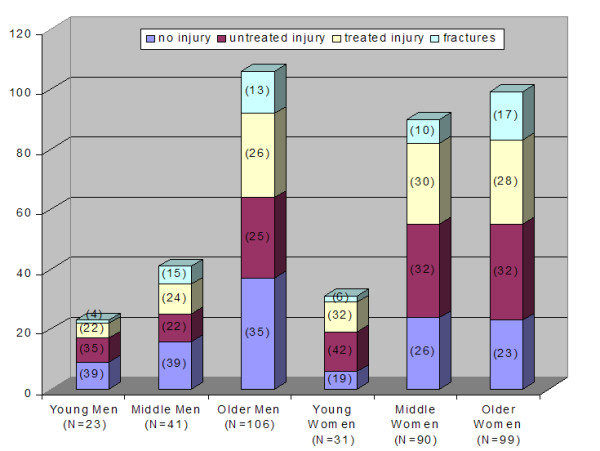
Background: Falls in older people have been characterized extensively in the literature, however little has been reported regarding falls in middle-aged and younger adults. The objective of this paper is to describe the perceived cause, environmental influences and resultant injuries of falls in 1497 young (20–45 years), middle-aged (46–65 years) and older (> 65 years) men and women from the Baltimore Longitudinal Study on Aging. Methods: A descriptive study where participants completed a fall history questionnaire describing the circumstances surrounding falls in the previous two years. Results: The reporting of falls increased with age from 18% in young, to 21% in middle-aged and 35% in older adults, with higher rates in women than men. Ambulation was cited as the cause of the fall most frequently in all gender and age groups. Our population reported a higher percentage of injuries (70.5%) than previous studies. The young group reported injuries most frequently to wrist/hand, knees and ankles; the middle-aged to their knees and the older group to their head and knees. Women reported a higher percentage of injuries in all age groups. Conclusion: This is the first study to compare falls in young, middle and older aged men and women. Significant differences were found between the three age groups with respect to number of falls, activities engaged in prior to falling, perceived causes of the fall and where they fell.
Overview
The claims and statistics of this paper haven’t been checked yet.
Free: it reads the open-access text and checks the first 5 claims that cite a source we can check. Create a free account to check every claim.
Integrity signals
Registry
Cites
Statistics
Figures
Verification
Claims the paper makes
The claims and statistics of this paper haven’t been checked yet.
Free: it reads the open-access text and checks the first 5 claims that cite a source we can check. Create a free account to check every claim.
Self-check
Percentages, sums and reported differences re-computed from the paper’s own numbers.
The self-check needs the paper’s full text.
Citations
Cites
1 retracted
Interventions for preventing falls in elderly people
Gillespie, L. D., Gillespie, W. J., Robertson, M. C., Lamb, S. E., Cumming, R. G., & Rowe, B. H. (2003) · The Cochrane Database of Systematic Reviews · doi:10.1002/14651858.cd000340 · Cited by 1,422
RetractedThe CES-D Scale: A Self-Report Depression Scale for Research in the General Population
Radloff, L. S. (1977) · Applied Psychological Measurement · doi:10.1177/014662167700100306 · Cited by 53,267
Sensitivity and False Alarm Rate of a Fall Sensor in Long-Term Fall Detection in the Elderly
Kangas, M., Korpelainen, R., Vikman, I., Nyberg, L., & Jämsä, T. (2015) · Gerontology · doi:10.1159/000362720 · Cited by 18,909
Risk Factors for Falls among Elderly Persons Living in the Community
Tinetti, M. E., Speechley, M., & Ginter, S. F. (1988) · New England Journal of Medicine · doi:10.1056/nejm198812293192604 · Cited by 6,509 · cited 3×
“Tinetti et al [32] found in a prospective study that 24% of the falls in community dwelling older aged persons resulted in serious injury and 6 percent had fractures.”
BackgroundResultThe cochrane database of systematic reviews
Geddes, J. (1996) · Journal of Psychosomatic Research · doi:10.1016/s0022-3999(96)90063-x · Cited by 5,989
Verbrugge, L. M., & Jette, A. M. (1994) · Social Science & Medicine · doi:10.1016/0277-9536(94)90294-1 · Cited by 3,310 · cited 1×
“In older people, falls are a risk factor for disability and frailty, and exacerbate the disablement process [3,4].”
BackgroundThe Cochrane Database of Systematic Reviews
Handoll, H. H. (2004) · The British Journal of Hand Therapy · doi:10.1177/175899830400900201 · Cited by 1,513
FALLS BY ELDERLY PEOPLE AT HOME: PREVALENCE AND ASSOCIATED FACTORS
BLAKE, A. J., MORGAN, K., BENDALL, M. J., DALLOSSO, H., EBRAHIM, S. B. J., ARIE, T. H. D., FENTEM, P. H., & BASSEY, E. J. (1988) · Age and Ageing · doi:10.1093/ageing/17.6.365 · Cited by 1,261 · cited 1×
“Most older fallers reported tripping as the cause for their fall [18,23], with a large percentage unable to give any reason in a one year retrospective study [24].”
BackgroundCAMPBELL, A. J., BORRIE, M. J., SPEARS, G. F., JACKSON, S. L., BROWN, J. S., & FITZGERALD, J. L. (1990) · Age and Ageing · doi:10.1093/ageing/19.2.136 · Cited by 803 · cited 2×
“Campbell et al [17] found in a prospective study of participants (over 69 years) from a rural setting no gender difference in fall rate; however men were more likely to fall outside and at more intense levels of activity.”
BackgroundResultFactors Associated with Falls in the Elderly: A Community Study
Prudham, D., & Evans, J. G. (1981) · Age and Ageing · doi:10.1093/ageing/10.3.141 · Cited by 803 · cited 2×
“Most older fallers reported tripping as the cause for their fall [18,23], with a large percentage unable to give any reason in a one year retrospective study [24].”
Background
Research works printed but not linked: 2
- 26. Adler-Traines M Falls in the senior population. Physical Therapy Forum 1994 9 14 17
- 38. Metter EJ Yim-Chipless PK Musiol R Talbot LA Balance Training: Preventing Falls in Older Adults The American Journal of Medicine and Sports 2003 5 94 99
Cited by
Items 201–300 of 691
Narcolepsy: Beyond the Classic Pentad
Morse, A. M., Kim, S., Harris, S. F., & Gow, M. (2025) · CNS Drugs · doi:10.1007/s40263-024-01141-9 · Cited by 24
“All patients should be counseled to take their dose of SXB while in bed and lie down immediately after administration [49, 50, 147]; this is particularly important for older patients, owing to the increased risk of falls with advanced age [148].”
Trauma in Guilan (North of Iran): An Epidemiologic Study
Anoosh, D., Maleksari, H. M., Dafchahi, M. A., Somayeh, S., Hemmati, H., & Shahrokh, Y. C. (2009) · DOAJ (DOAJ: Directory of Open Access Journals) · Cited by 20
Parameters of Gait Among Community-Dwelling Older Adults
Paulson, S., & Gray, M. (2014) · Journal of Geriatric Physical Therapy · doi:10.1519/jpt.0000000000000018 · Cited by 21
Jacobs, E., McCrum, C. L., Senden, R. H. J., van Rhijn, L. W., Meijer, K., & Willems, P. C. P. H. (2019) · Aging Clinical and Experimental Research · doi:10.1007/s40520-019-01203-9 · Cited by 20
Hospitalisations and deaths due to unintentional falls at home among working-aged New Zealanders
Kool, B., Ameratunga, S. N., Robinson, E., & Jackson, R. (2007) · Injury · doi:10.1016/j.injury.2006.10.014 · Cited by 20
What Factors Predict Falls in Older Adults Living in Nursing Homes: A Pilot Study
Datta, A., Datta, R., & Elkins, J. (2018) · Journal of Functional Morphology and Kinesiology · doi:10.3390/jfmk4010003 · Cited by 21
“Increased age [7], fear of falling [8–10], cognition [11], mobility device usage [12], health status [13,14], the living environment [15,16], and medication [17] have all been linked to falls.”
BackgroundBegin risk assessment for falls in women at 45, not 65
Harmon, K., Hakenewerth, A. M., Waller, A. E., Ising, A., & Tintinalli, J. E. (2018) · Injury Prevention · doi:10.1136/injuryprev-2018-042875 · Cited by 19
Grabiner, M. D., & Kaufman, K. R. (2021) · Frontiers in Sports and Active Living · doi:10.3389/fspor.2021.722363 · Cited by 20
“In addition, there is also the ambiguous, if not necessary, fall type that include “other”, “non-classifiable,” and “unknown” that can often account for meaningful percentages of the total number retrospectively and prospectively reported falls (Talbot et al., 2005; Pai et al., 2014b).”
BackgroundAssociation between prescription medications and falls at home among young and middle-aged adults
Kool, B., Ameratunga, S. N., & Robinson, E. (2012) · Injury Prevention · doi:10.1136/injuryprev-2011-040202 · Cited by 19
“A previous study in New Zealand found falls account for 24% of injury admissions among people aged 20e64 years,(3) the consequences of which can pose significant problems for both work productivity and family life.(4) Almost 30% of fall injuries in this age group that result in admission to hospital in New Zealand occ…”
BackgroundEffects of external loads on postural sway during quiet stance in adults aged 20–80 years
Hill, M. W., Duncan, M. J., Oxford, S. W., Kay, A. D., & Price, M. (2017) · Applied Ergonomics · doi:10.1016/j.apergo.2017.08.007 · Cited by 19
Brutto, Ó. H. D., Mera, R. M., Peinado, C. D., & Sedler, M. J. (2019) · Journal of Community Health · doi:10.1007/s10900-019-00664-3 · Cited by 19
Ren, X., Lutter, C., Kebbach, M., Bruhn, S., Bader, R., & Tischer, T. (2022) · BMC Geriatrics · doi:10.1186/s12877-022-03354-3 · Cited by 20
“Background More than a quarter of the older population (over 65 years old) fall at least once a year [1], and the percentage is gradually rising, which seriously affects the quality of life of older subjects (OS) and imposes a huge socioeconomic burden on health care [2].”
BackgroundThe Transtheoretical Model, Physical Activity, and Falls Risks Among Diverse Older Adults
Kosma, M., & Cardinal, B. J. (2016) · Activities Adaptation & Aging · doi:10.1080/01924788.2016.1127051 · Cited by 21
Riddle, D. L., & Golladay, G. J. (2016) · Age and Ageing · doi:10.1093/ageing/afw126 · Cited by 19
Jung, D., Shin, K., Kang, Y., Kang, J.-S., & Kim, K.-H. (2008) · Korean Journal of Adult Nursing · Cited by 19
Lin, C.-C., Meardon, S. A., & O’Brien, K. M. (2022) · Advances in Geriatric Medicine and Research · doi:10.20900/agmr20220008 · Cited by 18
“…with health, functional conditions, and environment, including postural hypotension [19], depression [14], vision impairment [20], sensation loss in the feet [21,22], fear of falling [23], neuromuscular and musculoskeletal disorders [24–26], polypharmacy [26,27], and environmental aspects [28,29].”
BackgroundArnold, C. M., Lanovaz, J. L., Farthing, J. P., Legg, H. S., Weimer, M., & Kim, S. (2022) · Clinical Rehabilitation · doi:10.1177/02692155221087963 · Cited by 21
“Younger adults are more likely to experience less serious hand and wrist injuries as compared to older adults who are more likely to sustain serious injuries to the head.(29) In fact, video surveillance studies in long-term care facilities have observed a high number of falls where head impact occurred with hand impac…”
BackgroundEveld, M. E., King, S. T., Zelik, K. E., & Goldfarb, M. T. (2022) · Journal of NeuroEngineering and Rehabilitation · doi:10.1186/s12984-022-01070-y · Cited by 19
“These results are consistent with several studies of healthy (non-prosthesis user) older and younger adults, in which the older adults fell more [19, 41] which was attributed to delayed and/or diminished muscle responses [16, 19].”
ResultHallal, C. Z., Marques, N. R., Vieira, E. R., Brunt, D., Spinoso, D. H., Castro, A., Cardozo, A. C., & Gonçalves, M. (2013) · Motriz Revista de Educação Física · doi:10.1590/s1980-65742013000300013 · Cited by 21
“Talbot, L. A., Musiol, R. J., Witham, E. K., & Metter, E. J. (2005).”
Drum, S. N., Rappelt, L., Held, S., & Donath, L. (2023) · International Journal of Environmental Research and Public Health · doi:10.3390/ijerph20054501 · Cited by 21
“[16] observed a prevalence of one or more reported falls within a two-year period in 18.”
BackgroundKoo, Y.-J., Hwangbo, J., & Koo, S. (2023) · Scientific Reports · doi:10.1038/s41598-023-49865-w · Cited by 20
“Nonetheless, carrying out falling experiments during human walking is problematic due to ethical and safety concerns 41,42 .”
BackgroundDecomposing sensorimotor variability changes in ageing and their connection to falls in older people
Lin, C., & Faisal, A. A. (2018) · Scientific Reports · doi:10.1038/s41598-018-32648-z · Cited by 17
Circadian amplitude and homeostatic buildup rate in postural control
Forsman, P., & Hæggström, E. (2012) · Gait & Posture · doi:10.1016/j.gaitpost.2012.11.011 · Cited by 18
“Falls can cause injuries that range from cuts and bruises to bone fractures and head injuries [7,8].”
BackgroundElevator-Related Injuries to Older Adults in the United States, 1990 to 2006
Steele, G. K., O’Neil, J., Huisingh, C., & Smith, G. A. (2010) · The Journal of Trauma: Injury, Infection, and Critical Care · doi:10.1097/ta.0b013e3181b2302b · Cited by 17
Crilly, R. G., Kloseck, M., & Mequanint, S. (2016) · Clinical Medicine Insights Arthritis and Musculoskeletal Disorders · doi:10.4137/cmamd.s38531 · Cited by 18
Falls prevention interventions for older adults with low vision: A scoping review
Blaylock, S. E., & Vogtle, L. K. (2017) · Canadian Journal of Occupational Therapy · doi:10.1177/0008417417711460 · Cited by 17
Arkkukangas, M., Bååthe, K. S., Ekholm, A., & Tonkonogi, M. (2020) · Preventive Medicine Reports · doi:10.1016/j.pmedr.2020.101126 · Cited by 24
“This indicates that falls and fall-related injuries represent a significant threat to public health at all ages (Verma et al., 2016; Talbot et al., 2005).”
BackgroundChu, Y., Tang, P., Chen, H., & Cheng, C. (2009) · Clinical Biomechanics · doi:10.1016/j.clinbiomech.2009.06.012 · Cited by 21
“Most of these falls occur in the forward direction and occur outdoors when middle-aged individuals are performing physical activities and/or encountering potential postural threats in the environment (Li et al., 2006; Talbot et al., 2005).”
BackgroundInfluentialAlmarzouki, R., Bains, G., Lohman, E., Bradley, B., Nelson, T., Alqabbani, S., Alonazi, A., & Daher, N. (2020) · PLOS ONE · doi:10.1371/journal.pone.0235734 · Cited by 16
Pilates Reducing Falls Risk Factors in Healthy Older Adults: A Systematic Review and Meta-Analysis
da Silva, L. D., Shiel, A., & McIntosh, C. D. (2021) · Frontiers in Medicine · doi:10.3389/fmed.2021.708883 · Cited by 63
Kang, S., Park, I., & Ha, M. (2024) · BMC Women s Health · doi:10.1186/s12905-024-02972-w · Cited by 16
“Middle age is a period generally characterized by dete-riorating physical changes [1], and can also involve exposure to chronic stress, which leads to a higher incidence of chronic diseases [2].”
BackgroundOral Frailty as a Risk Factor for Fall Incidents among Community-Dwelling People
Yokoyama, H., & Kitano, Y. (2024) · Geriatrics · doi:10.3390/geriatrics9020054 · Cited by 16
“A study, which compared the situations of falls in young, middle and older community-dwelling people, reported that most people fell during walking regardless of age group, while young men fell during exercise or running [57].”
ResultNørgaard, J. E., Andersen, S., Ryg, J., Andreasen, J., Oliveira, A. S., Stevenson, A. J. T., Danielsen, M. B., & Jørgensen, M. G. (2024) · BMJ Open · doi:10.1136/bmjopen-2023-080550 · Cited by 16
Moniz-Pereira, V., Carnide, F., Machado, M., André, H., & Veloso, A. (2012) · PubMed · Cited by 16
Epidemiology of falls and fall-related injuries among middle-aged adults with kidney disease
Kistler, B. M., Khubchandani, J., Wiblishauser, M. J., Wilund, K. R., & Sosnoff, J. J. (2019) · International Urology and Nephrology · doi:10.1007/s11255-019-02148-8 · Cited by 18
Berner, K., Strijdom, H., Essop, M. F., Webster, I., Morris, L. D., & Louw, Q. A. (2019) · Open Forum Infectious Diseases · doi:10.1093/ofid/ofz401 · Cited by 16
“6 • ofid • Berner et al consistent fall predictors in community-dwelling adults of all ages, including PWH [5, 10, 35].”
BackgroundBannon, S. M., Kumar, R. G., Bogner, J. A., O’Neil-Pirozzi, T. M., Spielman, L. A., Watson, E. M., & Dams-O’Connor, K. (2020) · Journal of Head Trauma Rehabilitation · doi:10.1097/htr.0000000000000586 · Cited by 17
Mechanisms that stabilize human walking
Leeuwen, M. V., Bruijn, S. M., & van Dieën, J. H. (2022) · Brazilian Journal of Motor Behavior · doi:10.20338/bjmb.v16i5.321 · Cited by 16
Falls and spinal muscular atrophy: Exploring cause and prevention
Montes, J., McIsaac, T. L., Young, S. D., Kamil‐Rosenberg, S., Sproule, D. M., Garber, C. E., Vivo, D. C. D., & Rao, A. K. (2012) · Muscle & Nerve · doi:10.1002/mus.23656 · Cited by 16
The Relationship Between Falls and Psychological Well-Being in a Brazilian Community Sample
Morsch, P., Shenk, D., & Bós, Â. J. G. (2014) · Journal of Cross-Cultural Gerontology · doi:10.1007/s10823-014-9249-2 · Cited by 16
Granacher, U., Roth, R., Muehlbauer, T., Laser, T., & Steinbrueck, K. (2011) · Swiss Medical Weekly · doi:10.4414/smw.2011.13182 · Cited by 18
Singh, I., & Okeke, J. (2016) · BMJ Quality Improvement Reports · doi:10.1136/bmjquality.u210921.w4741 · Cited by 20
“BACKGROUND Worldwide populations are ageing.(4) The prevalence of falls increases with age, from 35% in older adults (>65 years) to 45% in adults over the age of 80.”
BackgroundWalsh, M. E., Galvin, R., Williams, D. J., Harbison, J. A., Murphy, S., Collins, R., McCabe, D. J. H., Crowe, M. J., & Horgan, F. (2018) · European Stroke Journal · doi:10.1177/2396987318764961 · Cited by 19
A systematic review of upper extremity responses during reactive balance perturbations in aging
Alissa, N., Akinlosotu, R. Y., Shipper, A. G., Wheeler, L., & Westlake, K. P. (2020) · Gait & Posture · doi:10.1016/j.gaitpost.2020.08.134 · Cited by 17
Hill, M. W., Hosseini, E.-A., McLellan, A. G., Price, M., Lord, S. R., & Kay, A. D. (2020) · Frontiers in Physiology · doi:10.3389/fphys.2020.544559 · Cited by 18
“Although walking is an essential prerequisite to quality of life and independent living (Lee and Buchner, 2008) most falls occur during ambulation (Berg et al., 1997; Robinovitch et al., 2013; Talbot et al., 2005).”
BackgroundFalls and Depression in Men: A Population-Based Study
Stuart, A. L., Pasco, J. A., Jacka, F. N., Berk, M., & Williams, L. J. (2015) · American Journal of Men s Health · doi:10.1177/1557988315609111 · Cited by 16
Assessment of stabilizing feedback control of walking: A tutorial
van Dieën, J. H., Bruijn, S. M., & Afschrift, M. (2024) · Journal of Electromyography and Kinesiology · doi:10.1016/j.jelekin.2024.102915 · Cited by 15
Forechi, L., Silveira‐Nunes, G., Barbosa, M. A., Barbosa, É. G., dos Santos, D. L., Vieira, E. R., & Barbosa, A. C. (2018) · Tropical Medicine & International Health · doi:10.1111/tmi.13154 · Cited by 15
“The majority of serious older adult falls occur during walking; impaired balance and gait are reported as the most common causes of falls [47].”
BackgroundHill, M. W., Duncan, M. J., & Price, M. (2020) · Experimental Gerontology · doi:10.1016/j.exger.2020.111076 · Cited by 15
“Jo ur na l P re -p ro of Given that most falls occur during ambulatory tasks, such as walking or transfers (Talbot et al. 2005), spatial-temporal gait characteristics and ground reaction forces were used in the present study to characterise our sample.”
BackgroundMethodDíaz-Cañestro, C., Pentz, B., Sehgal, A., & Montero, D. (2022) · Critical Care Explorations · doi:10.1097/cce.0000000000000608 · Cited by 17
Johansson, I. S., Bachrach‐Lindström, M., Struksnes, S., & Hedelin, B. (2009) · Journal of research in nursing · doi:10.1177/1744987107086423 · Cited by 15
Age-Related Changes in Postural Sway Are Not Consistent Between Land and Aquatic Environments
Bressel, E., Louder, T. J., & Dolny, D. G. (2016) · Journal of Geriatric Physical Therapy · doi:10.1519/jpt.0000000000000081 · Cited by 17
Huang, C. X., Momma, H., Niu, K., Chujo, M., Otomo, A., Cui, Y., & Nagatomi, R. (2016) · Age and Ageing · doi:10.1093/ageing/afw043 · Cited by 15
“As a geriatric syndrome, falls occur in one-third of community-dwelling older adults aged 72 years and older in America [12], and these falls are responsible for 70% of all unintentional injuries that are observed in this population [13, 14].”
BackgroundMäättä, M. (2012) · Cited by 15
Gervásio, F. M., Santos, G. A., Ribeiro, D. M., & de Menezes, R. L. (2016) · Fisioterapia e Pesquisa · doi:10.1590/1809-2950/15661923042016 · Cited by 16
Yuan, H., Yu, H., Zhu, Y., Xiang, L., & Wang, H. (2022) · Orthopaedic Surgery · doi:10.1111/os.13410 · Cited by 16
“Equally important, and perhaps even more so with increasing age, is the tendency to fall and to fall in a different way.(15,20) Visual acuity, hypofunction of the nervous and motor systems, and a loss of coordination increase the occurrence of spinal fractures,(21,22) which are also important causes of femoral fractur…”
BackgroundPainter, J. A., & Elliott, S. J. (2009) · Physical & Occupational Therapy In Geriatrics · doi:10.3109/02703180903259576 · Cited by 14
“Findings from current and past research determined that most falls occurred while walking (Ellis & Trent, 2001; Talbot et al., 2005).”
BackgroundResultInfluentialAssessment of turning performance and muscle coordination in individuals post-stroke
Lewallen, L. K., Srivastava, S., Kautz, S. A., & Neptune, R. R. (2020) · Journal of Biomechanics · doi:10.1016/j.jbiomech.2020.110113 · Cited by 16
“Falling while turning can be extremely dangerous, with 70% of those falls leading to injury (Talbot et al., 2005).”
BackgroundHörauf, J.-A., Nau, C., Mühlenfeld, N., Verboket, R. D., Marzi, İ., & Störmann, P. (2022) · Journal of Clinical Medicine · doi:10.3390/jcm11030697 · Cited by 14
“On the other hand, younger people in particular are more likely to be affected by outdoor falls due to their higher activity level [14].”
BackgroundHenriques, M., Saliba‐Serre, B., Martrille, L., Blum, A., Chaumoître, K., Donato, P., Campos, N. M. F., Cunha, E. M., & Adalian, P. (2023) · Forensic Sciences Research · doi:10.1093/fsr/owad006 · Cited by 18
The Effects of Listening to Music on Postural Balance in Middle-Aged Women
Waer, F. B., Sahli, S., Alexe, C. I., Man, M. C., Alexe, D. I., & Burchel, L. O. (2023) · Sensors · doi:10.3390/s24010202 · Cited by 16
Honda, M., Iida, T., Komiyama, O., Masuda, M., Uchida, T., Nishimura, H., Okubo, M., Shimosaka, M., Narita, N., Niwa, H., et al. (2015) · Journal of Oral Science · doi:10.2334/josnusd.57.355 · Cited by 14
McCrum, C. L., Vaes, A. W., Delbressine, J. M., Koopman, M., Liu, W.-Y., Willems, P. J. B., Meijer, K., & Spruit, M. A. (2021) · Clinical Biomechanics · doi:10.1016/j.clinbiomech.2021.105538 · Cited by 15
Peters, S., Eng, J. J., Liu-Ambrose, T. Y. L., Borich, M. R., Dao, E. A., Amanian, A., & Boyd, L. A. (2019) · Brain and Behavior · doi:10.1002/brb3.1349 · Cited by 13
Postural Balance and Peripheral Neuropathy
Jáuregui‐Renaud, K. (2013) · InTech eBooks · doi:10.5772/55344 · Cited by 14
“Balance and gait difficulties are the most frequently cited cause of falling in all age and gender groups [107] A fall is often defined as inadvertently coming to rest on the ground, floor or other lower level, excluding intentional change in position to rest in furniture, wall or other objects [108].”
Risk Factors of Falling among the Elderly in Taiwan: A Longitudinal Study
Hsu, H., & Jhan, L. J. (2008) · doi:10.29461/tgg.200805.0007 · Cited by 15
Development of accelerometry-based fall detection : from laboratory environment to real life
Kangas, M. (2011) · Cited by 22
Trinh, L. T. T., Achat, H. M., & Assareh, H. (2016) · Health Information Management Journal · doi:10.1177/1833358316653490 · Cited by 14
Chippendale, T. L., Gentile, P. A., & James, M. K. (2017) · Australian Occupational Therapy Journal · doi:10.1111/1440-1630.12380 · Cited by 13
“Variables were chosen for the logistic regression analyses based on data available as well as the results of prior studies examining patient and fall characteristics associated with hospital length of stay, discharge disposition and/or injury severity (Bergland & Wyller, 2004; Harvey et al., 2016; Lloyd et al., 2009;…”
BackgroundMethodResultInfluentialDeterminants of gait stability while walking on a treadmill: A machine learning approach
Reynard, F., & Terrier, P. (2017) · Journal of Biomechanics · doi:10.1016/j.jbiomech.2017.10.020 · Cited by 13
“ject to a higher fall risk while walking than are younger adults. A large retrospective study showed that middle-aged adults experienced more falls than younger adults, especially during ambulation. (Talbot et al., 2005). A cohort study analyzing the circumstances leading to a spinal cord injury showed that middle-age…”
BackgroundActivity and Safety Recognition using Smart Work Shoes for Construction Worksite
Wang, C., Kim, Y., Lee, S. H., Sung, N.-J., Min, S. D., & Choi, M. (2020) · KSII Transactions on Internet and Information Systems · doi:10.3837/tiis.2020.02.010 · Cited by 15
“Most of the fall-related accidents were reported to be in high teens or low twenties [11-17] and appeared particularly evident for the middle-aged adults [15-17].”
BackgroundHirase, T., Makizako, H., Okubo, Y., Lord, S. R., Okita, M., Nakai, Y., Takenaka, T., Kubozono, T., & Ohishi, M. (2020) · International Journal of Environmental Research and Public Health · doi:10.3390/ijerph17144960 · Cited by 15
“Pain can interfere with attention in older adults [12,25], and insufficient or divided attention when negotiating environment hazards may lead to trips and slips [26,27].”
BackgroundTallis, J. A., Bradford, C., Duncan, M. J., Wright, S. L., Higgins, M. F., & Hill, M. W. (2020) · Nutrients · doi:10.3390/nu12123653 · Cited by 16
Health implications of age and gender injury patterns of non-vehicle pedestrian trauma
Rod, J. E., King, M., Senserrick, T. M., & Oviedo-Trespalacios, Ó. (2021) · Journal of Transport & Health · doi:10.1016/j.jth.2021.101130 · Cited by 14
Preoperative Falls and Their Association with Functional Dependence and Quality of Life
Kronzer, V. L., Tang, R., Schelble, A. P., Abdallah, A. B., Wildes, T. S., McKinnon, S., Sadiq, F., Lin, N., Helsten, D. L., Sharma, A., et al. (2016) · Anesthesiology · doi:10.1097/aln.0000000000001167 · Cited by 12
Acute effects of low versus high caffeine dose consumption on postural balance in middle-aged women
Waer, F. B., Laatar, R., Srihi, S., Jouira, G., Rebai, H., & Sahli, S. (2020) · Journal of Women & Aging · doi:10.1080/08952841.2020.1735288 · Cited by 14
“They also reduce their physical activity level and increase medication use (Talbot et al., 2005).”
BackgroundPlanning for Safe Hospital Discharge by Identifying Patients Likely to Fall After Discharge
Wright, J. R., Koch-Hanes, T., Cortney, C., Lutjens, K., Raines, K., Shan, G., & Young, D. L. (2021) · Physical Therapy · doi:10.1093/ptj/pzab264 · Cited by 13
Yang, F., Su, X., Sanchez, M. C., Hackney, M. E., & Butler, A. J. (2023) · Aging Clinical and Experimental Research · doi:10.1007/s40520-023-02362-6 · Cited by 12
“During the baseline test, self-reported all-cause falls from the past year were recorded using a questionnaire detailing the frequency, location, and type of fall(s) and associated injuries [40].”
MethodNamayeshi, T., Haddara, R., Ackland, D. C., & Lee, P. V. S. (2023) · Frontiers in Sports and Active Living · doi:10.3389/fspor.2023.1153229 · Cited by 12
Prevalence and risk factors for falls among community-dwelling adults in Riyadh area
Alenazi, A. M., Alanazi, M. F., Elnaggar, R. K., Alshehri, M. M., Alqahtani, B. A., Alhowimel, A., Alhwoaimel, N. A., Alanazi, A., Alotaibi, M., Almutairi, S. M., et al. (2023) · PeerJ · doi:10.7717/peerj.16478 · Cited by 12
“The prevalence of fall reported in these studies were 21% and 23.1%, respectively ( Talbot et al., 2005 ; Richardson, Bennett & Kenny, 2015 ).”
BackgroundMethodInfluentialMorbilidad, factores de riesgo y consecuencias de las caídas en ancianos
Gama, Z. A. D. S., & Conesa, A. G. (2008) · Fisioterapia · doi:10.1016/s0211-5638(08)72972-9 · Cited by 37
Yang, F. (2021) · Physical Therapy · doi:10.1093/ptj/pzab119 · Cited by 12
Balducci, S., Conti, F., Sacchetti, M., Russo, C. R., Argento, G., Haxhi, J., Orlando, G., Rapisarda, G., D’Errico, V., Cardelli, P., et al. (2019) · BMJ Open · doi:10.1136/bmjopen-2018-027429 · Cited by 13
The role of reinvestment in conservative gait in older adults
Mak, T. C. T., Young, W. R., & Wong, T. W. L. (2020) · Experimental Gerontology · doi:10.1016/j.exger.2020.110855 · Cited by 13
Inpatient hip fractures: understanding and addressing the risk of this common injury
Singh, I., Hooton, K., Edwards, C., Lewis, B., Anwar, A., & Johansen, A. (2019) · Age and Ageing · doi:10.1093/ageing/afz179 · Cited by 12
Sayed, M. J. E., Ismail, R., Sibai, R. H. E., Dakessian, A., & Bachir, R. H. (2020) · Journal of Emergencies Trauma and Shock · doi:10.4103/jets.jets_84_19 · Cited by 14
“Home injuries were most common, consistent with studies showing that falls at home increase with age.[7] This was expected because of the homebound lifestyle associated with that age.”
BackgroundRietdyk, S., Ambike, S., Amireault, S., Haddad, J. M., Lin, G., Newton, D. A., & Richards, E. A. (2022) · PLoS ONE · doi:10.1371/journal.pone.0277406 · Cited by 14
“revealed by cluster analysis for sex and BMI are not consistent with generally observed associations, including: (i) females are more likely to fall and sustain fall-related injuries [21, 39, 40, 50], which is also observed in our bivariate analysis (Fig 2), and (ii) individuals with higher BMI and/or larger waist cir…”
ResultBalance training in older adults enhances feedback control after perturbations
Koster, R. A. J., Alizadehsaravi, L., Muijres, W., Bruijn, S. M., Dominici, N., & van Dieën, J. H. (2024) · PeerJ · doi:10.7717/peerj.18588 · Cited by 12
“Loss of balance poses a signi fi cant health risk, particularly in older adults, who frequently experience injurious falls ( Talbot et al., 2005 ).”
Biomechanics of Balance and Falling
Sturnieks, D. L. (2021) · Cambridge University Press eBooks · doi:10.1017/9781108594455.006 · Cited by 11
Which lower limb joints compensate for destabilizing energy during walking in humans?
Golyski, P. R., & Sawicki, G. S. (2022) · Journal of The Royal Society Interface · doi:10.1098/rsif.2022.0024 · Cited by 13
“In both younger and older adults, falls occur more often during walking than any other locomotor task, with external disturbances such as slips and trips being the predominant perceived cause of falls [6,7].”
BackgroundLower extremity joint power and work during recovery following trip-induced perturbations
Shokouhi, S., Mokhtarzadeh, H., & Lee, P. V. S. (2023) · Gait & Posture · doi:10.1016/j.gaitpost.2023.09.005 · Cited by 12
Sikandar, T., Rabbi, M. F., Ghazali, K. H., Altwijri, O., Almijalli, M., & Ahamed, N. U. (2023) · Scientific Reports · doi:10.1038/s41598-023-43428-9 · Cited by 11
Takla, T. N., Matsuda, P. N., Herring, T. E., Daugherty, A. M., & Fritz, N. E. (2024) · Frontiers in Psychology · doi:10.3389/fpsyg.2024.1336078 · Cited by 12
“Importantly, we acknowledge that walking up/down the stairs is a challenging activity that often results in falls and subsequent injuries or death (Hamel et al., 2005; Talbot et al., 2005; Lee and Chou, 2007; Verghese et al., 2008).”
BackgroundOn the clinical interpretation of overground gait stability indices in children with cerebral palsy
Sangeux, M., Viehweger, E., Romkes, J., & Bracht-Schweizer, K. (2024) · Scientific Reports · doi:10.1038/s41598-024-76598-1 · Cited by 11
“Similarly, walking on uneven ground is associated with increased risk of falling and is perceived as a more challenging walking condition 33–36 .”
Vincenzo, J. L., Glenn, J. M., Gray, S. M., & Gray, M. (2015) · Aging Clinical and Experimental Research · doi:10.1007/s40520-015-0471-8 · Cited by 11
“Self-report and recall of falls among older adults are often underestimated [42, 43].”
BackgroundAn External Focus of Attention is Effective for Balance Control when Sleep-deprived
Diekfuss, J. A., Janssen, J. A., Slutsky, A. B., Berry, N. T., Etnier, J. L., Wideman, L., & Raisbeck, L. D. (2018) · International journal of exercise science · doi:10.70252/vany4236 · Cited by 11
“It would also be valuable to explore the influence of attentional focus for older adults who are at higher risk of falling than young adults (37).”
BackgroundCommingled crypts: Comparative health among Byzantine monastics in the Levant
Judd, M. A. (2020) · American Journal of Physical Anthropology · doi:10.1002/ajpa.23993 · Cited by 12
Mechanisms of accidental fall injuries and involved injury factors: a registry-based study
Unguryanu, T. N., Grjibovski, A. M., Trovik, T. A., Ytterstad, B., & Kudryavtsev, A. V. (2020) · Injury Epidemiology · doi:10.1186/s40621-020-0234-7 · Cited by 11
Castro, M. Y. R., Orriols, L., Contrand, B., Dupuy, M., Sztal-Kutas, C., Avalos, M., & Lagarde, E. (2021) · PLoS ONE · doi:10.1371/journal.pone.0248162 · Cited by 11
“However, research on the impact of health risk factors among young and middleaged adults is scarce [14].”
Backgroundda Silva, L. P., Moreira, N. B., de Freitas, P. B., Pereira, G., & Rodacki, A. L. F. (2021) · Gerontology · doi:10.1159/000513601 · Cited by 11
Metadata
- Authors
- Talbot, L. A., Musiol, R. J., Witham, E. K., & Metter, E. J.
- Affiliations
- Uniformed Services University of the Health Sciences (US)
- Holy Cross Hospital (US)
- Henry M. Jackson Foundation (US)
- National Institutes of Health (US)
- Corresponding author
- Talbot, Laura A
- ORCID
- Talbot, Laura A
- Venue
- BMC Public Health
- Published
- 2005-08-18
- Volume
- 5
- Issue
- 1
- Pages
- 86-86
- ISSN
- 1471-2458 (ISSN-L)
- PMC
- PMC1208908
- OpenAlex
- W2118856586
- Cited by
- 654
- References
- 41
- Citations by year
- 2026: 27 · 2025: 48 · 2024: 54 · 2023: 43 · 2022: 55 · 2021: 57 · 2020: 56 · 2019: 44 · 2018: 37 · 2017: 29 · 2016: 35 · 2015: 28 · 2014: 29 · 2013: 20 · 2012: 20
- FWCI
- 17.37
- Type
- journal article
- Language
- en
- Open access
- gold
- doi.org
- Licence
- Locations
- BMC Public Health (publishedVersion, cc-by)
- PubMed Central (publishedVersion, cc-by)
- PubMed (publishedVersion)
- DOAJ (DOAJ: Directory of Open Access Journals) (submittedVersion, cc-by-sa)
- Funders
- Johns Hopkins University
- National Institutes of Health
- National Institute on Aging
- Topics
- Health Sciences › Health Professions › Physical Therapy, Sports Therapy and Rehabilitation › Balance, Gait, and Falls Prevention
- Health Sciences › Medicine › Public Health, Environmental and Occupational Health › Injury Epidemiology and Prevention
- Health Sciences › Medicine › Surgery › Hip and Femur Fractures
- Keywords
- falls, fall-related injuries, environmental factors, age differences, young adults, middle-aged adults, older adults, ambulation, sex differences, wrist injuries, knee injury, traumatic brain injury, community-dwelling adults
- MeSH terms
- Accidental Falls, Activities of Daily Living, Adult, Aged, Aged, 80 and over, Cross-Sectional Studies, District of Columbia, Female, Humans, Longitudinal Studies, Male, Middle Aged, Surveys and Questionnaires, Wounds and Injuries, Baltimore, Age Distribution, Sex Distribution, Risk Assessment
About these checks
Registry, retraction, Cites and statistics results are computed, not judged, with one exception: a printed reference that no index lists is read once by a model before it counts as a citation error. Claims are extracted by a model and kept only when their quote appears verbatim in the text; each cited source is then checked, with a model’s help, for whether it says what the claim relies on. Those verdicts can be wrong — read the claim’s quote and the cited source before relying on one.
Statistics and arithmetic are recomputed, not judged.
Confidence bands are shown only for fields calibrated on our annotated test set. None is calibrated yet, so no band is shown.
What counts as a claim ›How we measure confidence ›How we check this ›
Are you an author, or do you see a problem with this page? Request a review
Data sources
Bibliographic data: Semantic Scholar, OpenAlex, Crossref.
Contains information from the Semantic Scholar Academic Graph Datasets, made available under the ODC Attribution License (ODC-BY 1.0).
Semantic Scholar’s data is described in: Kinney, R., et al. (2023). The Semantic Scholar Open Data Platform. arXiv:2301.10140.
