

Falls in young, middle-aged and older community dwelling adults: perceived cause, environmental factors and injury
Open accessThe DOI matches its Crossref record; 41 of the 41 references it cites were found in a registry or an index.
Abstract
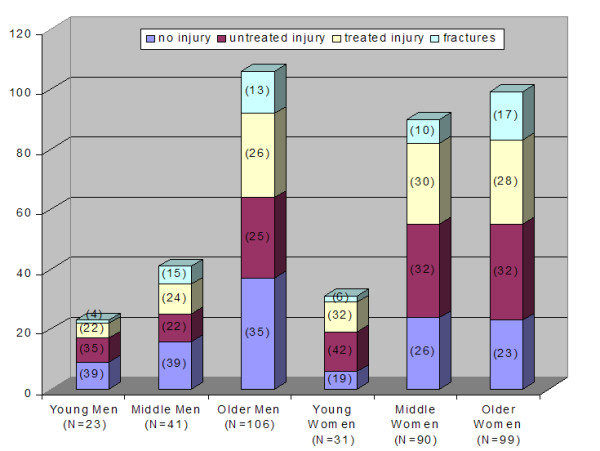
Background: Falls in older people have been characterized extensively in the literature, however little has been reported regarding falls in middle-aged and younger adults. The objective of this paper is to describe the perceived cause, environmental influences and resultant injuries of falls in 1497 young (20–45 years), middle-aged (46–65 years) and older (> 65 years) men and women from the Baltimore Longitudinal Study on Aging. Methods: A descriptive study where participants completed a fall history questionnaire describing the circumstances surrounding falls in the previous two years. Results: The reporting of falls increased with age from 18% in young, to 21% in middle-aged and 35% in older adults, with higher rates in women than men. Ambulation was cited as the cause of the fall most frequently in all gender and age groups. Our population reported a higher percentage of injuries (70.5%) than previous studies. The young group reported injuries most frequently to wrist/hand, knees and ankles; the middle-aged to their knees and the older group to their head and knees. Women reported a higher percentage of injuries in all age groups. Conclusion: This is the first study to compare falls in young, middle and older aged men and women. Significant differences were found between the three age groups with respect to number of falls, activities engaged in prior to falling, perceived causes of the fall and where they fell.
Overview
The claims and statistics of this paper haven’t been checked yet.
Free: it reads the open-access text and checks the first 5 claims that cite a source we can check. Create a free account to check every claim.
Integrity signals
Registry
Cites
Statistics
Figures
Verification
Claims the paper makes
The claims and statistics of this paper haven’t been checked yet.
Free: it reads the open-access text and checks the first 5 claims that cite a source we can check. Create a free account to check every claim.
Self-check
Percentages, sums and reported differences re-computed from the paper’s own numbers.
The self-check needs the paper’s full text.
Citations
Cites
1 retracted
Interventions for preventing falls in elderly people
Gillespie, L. D., Gillespie, W. J., Robertson, M. C., Lamb, S. E., Cumming, R. G., & Rowe, B. H. (2003) · The Cochrane Database of Systematic Reviews · doi:10.1002/14651858.cd000340 · Cited by 1,422
RetractedThe CES-D Scale: A Self-Report Depression Scale for Research in the General Population
Radloff, L. S. (1977) · Applied Psychological Measurement · doi:10.1177/014662167700100306 · Cited by 53,267
Sensitivity and False Alarm Rate of a Fall Sensor in Long-Term Fall Detection in the Elderly
Kangas, M., Korpelainen, R., Vikman, I., Nyberg, L., & Jämsä, T. (2015) · Gerontology · doi:10.1159/000362720 · Cited by 18,909
Risk Factors for Falls among Elderly Persons Living in the Community
Tinetti, M. E., Speechley, M., & Ginter, S. F. (1988) · New England Journal of Medicine · doi:10.1056/nejm198812293192604 · Cited by 6,509 · cited 3×
“Tinetti et al [32] found in a prospective study that 24% of the falls in community dwelling older aged persons resulted in serious injury and 6 percent had fractures.”
BackgroundResultThe cochrane database of systematic reviews
Geddes, J. (1996) · Journal of Psychosomatic Research · doi:10.1016/s0022-3999(96)90063-x · Cited by 5,989
Verbrugge, L. M., & Jette, A. M. (1994) · Social Science & Medicine · doi:10.1016/0277-9536(94)90294-1 · Cited by 3,310 · cited 1×
“In older people, falls are a risk factor for disability and frailty, and exacerbate the disablement process [3,4].”
BackgroundThe Cochrane Database of Systematic Reviews
Handoll, H. H. (2004) · The British Journal of Hand Therapy · doi:10.1177/175899830400900201 · Cited by 1,513
FALLS BY ELDERLY PEOPLE AT HOME: PREVALENCE AND ASSOCIATED FACTORS
BLAKE, A. J., MORGAN, K., BENDALL, M. J., DALLOSSO, H., EBRAHIM, S. B. J., ARIE, T. H. D., FENTEM, P. H., & BASSEY, E. J. (1988) · Age and Ageing · doi:10.1093/ageing/17.6.365 · Cited by 1,261 · cited 1×
“Most older fallers reported tripping as the cause for their fall [18,23], with a large percentage unable to give any reason in a one year retrospective study [24].”
BackgroundCAMPBELL, A. J., BORRIE, M. J., SPEARS, G. F., JACKSON, S. L., BROWN, J. S., & FITZGERALD, J. L. (1990) · Age and Ageing · doi:10.1093/ageing/19.2.136 · Cited by 803 · cited 2×
“Campbell et al [17] found in a prospective study of participants (over 69 years) from a rural setting no gender difference in fall rate; however men were more likely to fall outside and at more intense levels of activity.”
BackgroundResultFactors Associated with Falls in the Elderly: A Community Study
Prudham, D., & Evans, J. G. (1981) · Age and Ageing · doi:10.1093/ageing/10.3.141 · Cited by 803 · cited 2×
“Most older fallers reported tripping as the cause for their fall [18,23], with a large percentage unable to give any reason in a one year retrospective study [24].”
Background
Research works printed but not linked: 2
- 26. Adler-Traines M Falls in the senior population. Physical Therapy Forum 1994 9 14 17
- 38. Metter EJ Yim-Chipless PK Musiol R Talbot LA Balance Training: Preventing Falls in Older Adults The American Journal of Medicine and Sports 2003 5 94 99
Cited by
Items 401–500 of 691
Stairway visual contrast enhancement to reduce fall-related eventsPreprint
Harper, S. A., Long, C., Corbridge, S., Barrett, T. S., Braeger, A., Zollinger, B. J., Hale, A. E., Brown, C. B., Harrison, K., Poulsen, S. L., et al. (2022) · medRxiv · doi:10.1101/2022.03.25.22271716 · Cited by 5
Tracy, J., Hafer, J. F., Reimann, J. H., Buckley, T. A., Allen, J. L., & Crenshaw, J. R. (2025) · Journal of Biomechanics · doi:10.1016/j.jbiomech.2025.112599 · Cited by 4
Li, Y., Liu, J., & Yao, L. (2025) · Biochemical and Biophysical Research Communications · doi:10.1016/j.bbrc.2025.151708 · Cited by 4
Optimizing Fall Risk Diagnosis in Older Adults Using a Bayesian Classifier and Simulated Annealing
Hernandez-Laredo, E., Estévez-Pedraza, Á. G., Santiago-Fuentes, L. M., & Parra‐Rodríguez, L. (2024) · Bioengineering · doi:10.3390/bioengineering11090908 · Cited by 4
“About 35% of older adults have at least one fall per year [2,3], and this percentage increases to 32–42% for those over 70 years, making this population group one of the most vulnerable to injury or even death from a fall [1,3].”
BackgroundHypnotics Use and Falls in Hospital Inpatients Stratified by Age
Zaitsu, M., Kurita, Y., Iwahana, M., Akiyama, H., Watanabe, F., Higashikawa, A., Kaneko, R., Konishi, R., Itoh, M., & Kobayashi, Y. (2016) · Global Journal of Health Science · doi:10.5539/gjhs.v9n4p148 · Cited by 4
“However, earlier studies that investigated fall risks are few, and research on fall risks among younger patients is inconclusive (Talbot et al., 2005; Cashin & Yang, 2011; Kolla et al., 2013).”
MethodResultAssistive Technologies for the Older People: Physical Activity Monitoring and Fall Detection
Lee, R., Luo, J., Le, C. H., Phan, P. A., Le, T., & Minh, H. L. (2017) · World Congress on Medical Physics and Biomedical Engineering, September 7 - 12, 2009, Munich, Germany · doi:10.1007/978-981-10-4361-1_113 · Cited by 4
“PA is important in the promotion of musculoskeletal health [6,7]; however, falls often happen during physical exercise, walking and various forms of PA [8,9].”
BackgroundCastro, M. Y. R., Avalos, M., Contrand, B., Dupuy, M., Sztal-Kutas, C., Orriols, L., & Lagarde, E. (2021) · Injury Prevention · doi:10.1136/injuryprev-2020-044033 · Cited by 4
Apport de la posturographie dans l’évaluation de l’équilibre de la personne âgée
Quijoux, F., Nicolaï, A., Aflalo, J., Bertin‐Hugault, F., & Ricard, D. (2021) · Pratique Neurologique - FMC · doi:10.1016/j.praneu.2021.10.006 · Cited by 4
Cronström, A., Cole, M. H., Chalkley, D., van Andel, S., Pepping, G., & Creaby, M. W. (2022) · Aging Clinical and Experimental Research · doi:10.1007/s40520-021-02066-9 · Cited by 4
dos Santos, L. O., Batistela, R. A., & Moraes, R. (2022) · Experimental Gerontology · doi:10.1016/j.exger.2022.111716 · Cited by 4
Sonthikul, C., Kaewmunee, W., Sriwannawit, P., Kasipan, J., Khuatjit, N., Kimakhom, D., & Rueangsuk, P. (2019) · Journal of Health Science and Medical Research · doi:10.31584/jhsmr.201950 · Cited by 4
“related injuries.(9) The incidence of falling continues to rise after middle age(2), due to a physiological deterioration associated with age, including: the impairment of cognitive, sensory systems, reduction in lower limb muscle strength, muscle capacity in the core muscles of the body, proprioception, joint range o…”
BackgroundLlamosas, J. R. S. (2012) · UVaDOC UVaDOC University of Valladolid Documentary Repository (University of Valladolid) · doi:10.35376/10324/1027 · Cited by 4
Visual acuity in relation to functional performance, falls and mortality in old age
Kulmala, J. (2010) · Jyväskylä University Digital Archive (University of Jyväskylä) · Cited by 13
Wende, M. E., Lohman, M. C., Friedman, D. B., McLain, A. C., Whitsel, E. A., Crandall, C. J., Cauley, J. A., Allison, M., Shadyab, A. H., Sealy-Jefferson, S. M., et al. (2025) · JBMR Plus · doi:10.1093/jbmrpl/ziaf024 · Cited by 5
“49 Next, individual-level measures, such as low physical functioning and walking level, were self-reported at baseline, which may not capture changes to these characteristics and behaviors over time.”
Harrabi, M. A., Ayed, R., Chaari, F., Hdadi, A., Boughattas, W., Mezghani, I., Fendri, T., Kallel, C., Rebai, H., Turki, M., et al. (2025) · European Journal of Applied Physiology · doi:10.1007/s00421-025-06057-w · Cited by 3
“Notably, 80.6% of affected young women reported injuries (Talbot et al. 2005).”
InfluentialDynamic Gait Stability Estimated Using One or Two Inertial Measurement Units Worn on the Human Body
Peng, H., Okamoto, S., Watanabe, H., & AKIYAMA, Y. (2026) · Sensors · doi:10.3390/s26041211 · Cited by 3
Chen, Y., Yang, J., Zhang, N., Tong, M., Chen, L., Li, Y., Dong, W., Li, X., Wang, Y. C., Ren, B., et al. (2026) · Annals of Medicine · doi:10.1080/07853890.2026.2656513 · Cited by 3
“…were the leading cause of TBI among adolescents, plausibly reflecting sport and recreational injuries [41], school/workplace exposures (including falls from height) [42], and other environmental hazards, rather than the frailty-related mechanisms that typically characterise falls in older adults.”
TEDAVİ GÖREN ERİŞKİN KANSER HASTALARINDA YAŞAM KALİTESİ VE KAS KUVVETİNİN DEĞERLENDİRİLMESİ
Ayşegül, A. T. L. I., & Düger, T. (2020) · Türk fizyoterapi ve rehabilitasyon dergisi · doi:10.21653/tjpr.495603 · Cited by 3
Akodu, B. A., Okonkwo, C., Balogun, M. R., Alabi, E. O., Iloh, G., Olokodana-Adesalu, O. A., Orumbie, P., Oghide, O., Ojikutu, M., & Agunbiade, T. H. (2023) · Journal of Clinical Sciences · doi:10.4103/jcls.jcls_88_22 · Cited by 3
Koopmans, I. W., Geerse, D. J., de Ridder, L., Roerdink, M., Juachon, M. J., Muehlan, C., Dingemanse, J., van Gerven, J., Groeneveld, G. J., & Zuiker, R. G. J. A. (2024) · Clinical and Translational Science · doi:10.1111/cts.13875 · Cited by 5
“14,15 Walking adaptability thus seems to be an essential determinant of fall risk.”
BackgroundFall-related mortality in Spain: trends and disparities by age and gender
Cayuela, L., García‐Muñoz, C., Achaval, V., Ortega‐Calvo, M., & Cayuela, A. (2025) · Injury Prevention · doi:10.1136/ip-2024-045538 · Cited by 3
Polo-Ferrero, L., Torres-Alonso, J., Sánchez-Sánchez, M. C., Puente-González, A. S., Iglesias, F. J. B., & Sánchez, R. M. (2025) · Journal of Functional Morphology and Kinesiology · doi:10.3390/jfmk10020154 · Cited by 3
“Our results do not align with previous studies reporting an increased incidence of falls with advancing age [32,33], as no statistically significant age differences were found between fallers and non-fallers in our sample.”
Ciemer, C., Schott, N., Klotzbier, T. J., & Ghellal, S. (2025) · Frontiers in Psychology · doi:10.3389/fpsyg.2025.1610377 · Cited by 4
“Most falls occur during locomotion (Talbot et al., 2005), highlighting that gait impairments are a key cause of falls.”
Junata, M., Cheng, K. C., Man, H. S., Wang, X., & Tong, R. K. (2018) · Annual International Conference of the IEEE Engineering in Medicine and Biology Society (EMBC) · doi:10.1109/embc.2018.8512822 · Cited by 3
“The training platform can be applied to train older adults balance as they are at higher risks of falling than younger adults [5].”
BackgroundYamashiro, H., Nonaka, H., & Carreón, E. C. A. (2019) · IEEE Symposium Series on Computational Intelligence (SSCI) · doi:10.1109/ssci44817.2019.9002985 · Cited by 3
“For decades, when an accident occurs where a product may be at fault, analysis of the accident has been extremely important to increase safety, and danger and harm investigations are conducted to address issues with the product and prevent future accidents [1]–[5].”
BackgroundComparing tools of balance tests in assessing balance of middle-aged women with or without exercises
Prastowo, N. A., Budiarta, M. O., Suryawinata, K., & Haryono, I. R. (2020) · Jurnal kedokteran dan kesehatan Indonesia · doi:10.20885/jkki.vol11.iss1.art4 · Cited by 3
Determining the relative risk of hospitalisation and surgery of fall injury patients
Pai, D. R., Hosseini, H. M., & Rosito, S. R. (2021) · Health Systems · doi:10.1080/20476965.2021.1966323 · Cited by 3
“Talbot et al. (2005) focus on cohorts across age and sex, and describe the perceived cause, environmental influences and resultant injuries of falls in young (20–45 years), middle-aged (46– 65 years) and older (> 65 years) men and women.”
BackgroundBlood volume primarily determines orthostatic tolerance in women
Díaz-Cañestro, C., & Montero, D. (2021) · Journal of Internal Medicine · doi:10.1111/joim.13397 · Cited by 3
Load Carriage Modes and Limb Crossing Patterns Altered Gait during Obstacle Negotiation
Luo, Y. G., Yang, F., Yerebakan, M. O., Zhang, J., & Hu, B. (2022) · Journal of Motor Behavior · doi:10.1080/00222895.2021.2017837 · Cited by 3
“The falls are also more dangerous for older adults, with fractures occurring three times more frequently than for young adults (Talbot et al., 2005).”
BackgroundJohnson, S. T., Anens, E., Johansson, A., & Hellström, K. (2022) · Gerontology and Geriatric Medicine · doi:10.1177/23337214221098900 · Cited by 4
“The concept of “walking” has been defined in some studies as indoor or outdoor walking (Boye et al., 2014; Duckham et al., 2013) but in other studies walking has been unclearly defined (Berg et al., 1997; Nachreiner et al., 2007) or has been described as “ambulation” (Talbot et al., 2005).”
BackgroundAssociation Between Regional Levels of Particulate Matter and Recurrent Falls in Korea
Yang, J.-H., Jeong, J.-A., Kweon, S., & Shin, M. (2022) · Journal of Korean Medical Science · doi:10.3346/jkms.2023.38.e19 · Cited by 3
Raz, D., Yang, L., Umberger, B. R., & Özay, N. (2023) · European Control Conference (ECC) · doi:10.23919/ecc57647.2023.10178282 · Cited by 3
“Falls that occur during daily activities are a leading cause of injury and death in the geriatric population [1], and can cause harm across the lifespan [2], [3].”
BackgroundCare of Geriatric Trauma Patients
Magidson, P. D., & Derry-Ehrler, A. (2024) · Current Geriatrics Reports · doi:10.1007/s13670-024-00404-z · Cited by 3
“Compared to younger and middle age adults, older adults are more likely to fall with older women the most likely demographic to suffer from a fall related injury [47].”
Hamstrings-quadriceps strength ratio could be related to falls in community-living older adults
Yang, F., Simpkins, C., Trammell, A. R., & Pagnussat, A. S. (2024) · Journal of Electromyography and Kinesiology · doi:10.1016/j.jelekin.2024.102900 · Cited by 4
The effects of perturbation intensities on backward slip-falls induced by a split-belt treadmill
Lee, C., Ahn, J., & Lee, B.-C. (2025) · Scientific Reports · doi:10.1038/s41598-025-89531-x · Cited by 3
Falls and associated complications in adults with haemophilia
Flaherty, L. M., Flaherty, B. P., Kruse‐Jarres, R., & Konkle, B. A. (2016) · The Journal of Haemophilia Practice · doi:10.17225/jhp00080 · Cited by 3
Смертность пожилых от внешних причин в России
Андреевна, Д. И. (2014) · Демографическое обозрение · doi:10.17323/demreview.v1i2.1817 · Cited by 3
Overview of the Important Physical Health Concerns
Burke, E. A., O’Dwyer, M., McGlinchey, E., Foran, S., Phadraig, C. M. G., Carroll, R. E., McCallion, P., & McCarron, M. (2018) · Springer eBooks · doi:10.1007/978-3-319-90083-4_3 · Cited by 4
How does body symmetry influence standing balance?
Bučinel, A. K., Supej, M., Petrone, N., & Čuk, I. (2019) · Kinesiology · doi:10.26582/k.51.1.1 · Cited by 3
“917, which was in accordance with Tyson et al. (2006) and Chien et al.”
ResultCockayne, S., Pighills, A., Fairhurst, C. M., Adamson, J., Crossland, S., Drummond, A. E., Hewitt, C. E., Rodgers, S., Ronaldson, S. J., McCaffery, J., et al. (2021) · F1000Research · doi:10.12688/f1000research.52313.1 · Cited by 3
Telles, A. C. M. (2008) · Digital Library of Theses and Dissertations (Universidade de São Paulo) · doi:10.11606/d.7.2008.tde-13062008-102235 · Cited by 10
Национальный исследовательский университет «Высшая школа экономики»
Manita, L. A., & Ronzhina, M. I. (2018) · Cited by 3
McCrum, C. L., Grevendonk, L., Schaart, G., Moonen‐Kornips, E., Jörgensen, J. A., Gemmink, A., Meijer, K., & Hoeks, J. (2021) · bioRxiv (Cold Spring Harbor Laboratory) · doi:10.1101/2021.11.26.470167 · Cited by 4
“The majority of falls in community-dwelling older adults occur following large balance disturbances (like trips and slips) during walking [20-27].”
BackgroundInfluentialWorld AIDS Day 2022: Putting ourselves to the test: achieving equity to end HIV
(2024) · Frontiers research topics · doi:10.3389/978-2-8325-5615-3 · Cited by 2
Smit, F., van Zwieten, A., Sherrington, C., Franco, M. R., Cullati, S., Blyth, F., & Khalatbari‐Soltani, S. (2025) · BMJ Open · doi:10.1136/bmjopen-2024-087971 · Cited by 2
Krelove, L. M., & Mochizuki, G. (2025) · Neuroscience · doi:10.1016/j.neuroscience.2025.01.026 · Cited by 2
“Between ages 45 – 55, the risk of a fall requiring hospitalization increases and continues rising with age (Harmon et al., 2019; Talbot et al., 2005).”
Batcir, S., Gimmon, Y., Kurz, I., Edelman, S., Levitsky, N., Adar, R., Rabaev, E., Debi, R., Shani, G., Shapiro, A., et al. (2025) · Gerontology · doi:10.1159/000545480 · Cited by 2
“Many falls among older adults living in the community take place while walking and are typically attributed to unexpected balance loss resulting from trips and slips [9, 10].”
The size of the functional base of support decreases with age
Sloot, L. H., Gerhardy, T. H., Mombaur, K., & Millard, M. (2025) · Scientific Reports · doi:10.1038/s41598-025-22630-x · Cited by 2
“Falls are a recurrent problem in the ageing population, with one in every three adults above 65 years of age falling yearly 1–3 .”
Reduced postural stability in men and women aged 55–65 following 14 days of head-down bed rest
Rabineau, J., Fournier, R., Hedge, E. T., Mastrandrea, C. J., & Hughson, R. L. (2025) · Scientific Reports · doi:10.1038/s41598-025-21828-3 · Cited by 2
Association of Overactive Bladder With Fall Risk Among US Adults Aged 20−69 Years
Linder, B. J., Miller, L. S., Bhattacharyya, S., Noblett, K. L., Turner, E., Copeland, S., & Ketchandji, M. (2026) · Neurourology and Urodynamics · doi:10.1002/nau.70270 · Cited by 2
Age-dependent electroencephalogram alterations under remimazolam anesthesia
Bae, J., Bae, M. I., Han, D. W., Kwon, J., & Song, Y. R. (2026) · Korean Journal of Anesthesiology · doi:10.4097/kja.25686 · Cited by 2
“Additionally, we categorized participants into three age groups for categorical comparisons, based on previous studies [6,22,23]: the young age group (< 45 years), the middle age group (45–65 years), and the old age group (≥ 65 years).”
Is the room moving? Muscle responses following visual perturbations
Porras, D. C., Jacobs, J. V., Inzelberg, R., Keren, O., Zeilig, G., & Plotnik, M. (2019) · International Conference on Virtual Rehabilitation · doi:10.1109/icvr46560.2019.8994515 · Cited by 2
“balance is often related to vertical perturbations [20, 21], research has historically focused on horizontal perturbations.”
BackgroundTough, D., Batterham, A. M., Loughran, K., Robinson, J., Dixon, J., Ryan, C. G., Wellburn, S., & Harrison, S. L. (2021) · Physiotherapy Practice and Research · doi:10.3233/ppr-210511 · Cited by 2
Efficacy of Exercise for Fall Prevention in Older Adults
Bechtel, M. L., & Garber, C. E. (2022) · ACSMʼs Health & Fitness Journal · doi:10.1249/fit.0000000000000766 · Cited by 2
“(5) reported that approximately 21% of middle-aged people (46–65 years) fall at least once within a 2-year period, versus 35% of older adults (>65 years).”
BackgroundKitkamchon, A., Dissorn, K., & Bunnjaweht, D. (2021) · Biomedical Engineering International Conference · doi:10.1109/bmeicon53485.2021.9745209 · Cited by 2
Falls in community-dwelling women with bipolar disorder: a case–control study
Stuart, A. L., Pasco, J. A., Berk, M., Quirk, S. E., Koivumaa-Honkanen, H. T., Honkanen, R., Mohebbi, M., & Williams, L. J. (2022) · BMC Psychiatry · doi:10.1186/s12888-022-04258-7 · Cited by 2
“Falling has been reported to be more common among the elderly and women [9].”
BackgroundNintendo Ring Fit Adventure improves balance ability in sedentary young adults
Siriphorn, A., Jirawadeenichada, C., Kotcharak, J., Kiatkaiwansiri, K., & Siriphorn, S. V. (2024) · Physiotherapy Quarterly · doi:10.5114/pq.2024.135425 · Cited by 2
Gallibois, M., Hennah, C., Sénéchal, M., Diaz, M. F. F., Leadbetter, B., & B̀ouchard, D. R. (2024) · Journal of Aging Research and Lifestyle · doi:10.14283/jarlife.2024.14 · Cited by 2
“The Baltimore Longitudinal Study of Aging found that 21% of middle-aged adults reported falling in the past two years (7).”
BackgroundLin, H., Ren, X., Lutter, C., Liang, H., Qi, F., Yang, Q., Kebbach, M., Schlegel, M., Bruhn, S., Bader, R., et al. (2024) · IEEE Transactions on Neural Systems and Rehabilitation Engineering · doi:10.1109/tnsre.2024.3495514 · Cited by 2
Frailty is associated with poor outcomes in midlife trauma patients
Galet, C., Bloeser, C., Engelbart, J., Eyck, P. T., Torner, J. C., & Skeete, D. A. (2024) · The American Journal of Surgery · doi:10.1016/j.amjsurg.2024.116157 · Cited by 2
How Older Adults Can Avoid Falls via Proactive and Reactive Gait Adaptability: A Brief Introduction
McCrum, C. L., & van der Hulst, E. G. (2024) · Springer eBooks · doi:10.1007/978-3-031-74123-4_3 · Cited by 2
Quality of life among community-dwelling elderly persons with a history of previous falls
Llamosas, J. R. S., & Vicente, V. (2014) · Fisioterapia · doi:10.1016/j.ft.2014.03.001 · Cited by 2
Hallal, C. Z., Spinoso, D. H., Morcelli, M. H., Fonseca, L. C. S., Gonçalves, M., & Marques, N. R. (2015) · Fisioterapia em Movimento · doi:10.1590/0103-5150.028.004.ao07 · Cited by 3
Gender Differences in Intra Limb Coordination while Walking in Older People
Ghanavati, T., Karimi, N., Salavati, M., Negahban, H., Mehravar, M., Hessam, M., & Ebrahimi, E. (2014) · DOAJ (DOAJ: Directory of Open Access Journals) · Cited by 2
The Validity and Reliability of the Six-Spot Step Test (SSST) in Older Adults
Kondori, R. E., Çetin, S. Y., & Erel, S. (2020) · Topics in Geriatric Rehabilitation · doi:10.1097/tgr.0000000000000263 · Cited by 2
Does Treadmill Training Improve Balance Function of Healthy Untrained Young Adult Male?
Theodora, S., Tinduh, D., & Wardhani, R. I. L. (2019) · Surabaya Physical Medicine and Rehabilitation Journal · doi:10.20473/spmrj.v1i2.16175 · Cited by 3
Jamshidi, K., Jalali, S., Roghani, T., Sarhan, G., Azadeh, H., & Rezaeian, Z. S. (2020) · Muscles Ligaments and Tendons Journal · doi:10.32098/mltj.03.2020.11 · Cited by 2
“balance capabilities (13,14) and increase falling risk (15);”
BackgroundAcute and chronic back pain in adults and elderly in southern Brazil: A population-based study
Saes-Silva, E., Viero, V. D. S. F., Meller, F. D. O., Schäfer, A. A., Canena, M. V. P., Saes, M. D. O., & Dumith, S. C. (2021) · Scientia Medica · doi:10.15448/1980-6108.2021.1.39824 · Cited by 2
“In middle-aged adults, this episode may be linked to a higher incidence of disease and medication use, and low levels of physical activity and physiological changes that begin to alter postural stability (21).”
Riddle, D. L., & Golladay, G. J. (2017) · Age and Ageing · doi:10.1093/ageing/afx003 · Cited by 2
“Females consistently show a higher fall risk and higher risk of injurious falls relative to males [5].”
BackgroundForça de pés e mãos e a relação da independência em idosos
Hausen, L., Fuhr, J. C., Ramos, M. E. K., & Siqueira, L. D. O. (2023) · Revista da Faculdade de Ciências Médicas de Sorocaba · doi:10.23925/1984-4840.2022v24i1/4a2 · Cited by 2
QUANTIFYING GAIT ADAPTABILITY: FRACTALITY, COMPLEXITY, AND STABILITY DURING ASYMMETRIC WALKING
Ducharme, S. W. (2017) · Scholarworks (University of Massachusetts Amherst) · doi:10.7275/10668508.0 · Cited by 5
Smadi, O., Alim, M. A., Masad, I. S., & Almashaqbeh, S. (2021) · Journal of Biomedical Physics and Engineering · doi:10.31661/jbpe.v0i0.2007-1143 · Cited by 1
“Stair injuries have caused higher risks of mortality or significant injuries such as traumatic injuries to the brain and integral joint fractures than level walking [20-25].”
BackgroundRisk and Influence Factors of Fall in Immobilization Period after Arthroscopic Interventions
Rüther, J., Boban, L., Paus, C., Loose, K., Willauschus, M., Bail, H. J., & Millrose, M. (2022) · Journal of Personalized Medicine · doi:10.3390/jpm12111912 · Cited by 1
“stated fall rates between 12 and 38 percent in the first 6 months after surgery [7].”
BackgroundThe Correlation of the Four Square Step Test and Fall Index in Healthy Adults
Eom, S.-Y., Choi, J.-E., & Park, D.-S. (2023) · Physical therapy rehabilitation science · doi:10.14474/ptrs.2023.12.4.481 · Cited by 1
Rao, R. R., & SINGH, S. (2024) · Noble Science Press eBooks · doi:10.52458/9788196897444.nsp2024.eb.ch-07 · Cited by 1
Floor-hugging Intervention: A Perspective on Floor Exposure and After-Fall Contingency Intervention
Ghai, S., & Ghai, I. (2024) · Advances in Rehabilitation Science and Practice · doi:10.1177/27536351241271548 · Cited by 1
Criekinge, T. V., Sahu, U., Claeys, K., & Bhatt, T. S. (2024) · Journal of Biomechanics · doi:10.1016/j.jbiomech.2024.112341 · Cited by 1
Dynamic balance control in healthy young women during stair descent: a plantar pressure-based study
Wang, R., Cao, J., Xu, H., Guo, P., Li, Y., Fan, Y. F., Gui, Y., Li, L., Adams, R. D., Han, J., et al. (2025) · Frontiers in Bioengineering and Biotechnology · doi:10.3389/fbioe.2025.1517471 · Cited by 1
Cura, A. J., Tozzi, W. A., Battistotti, R., Esperón, F. J. L., Greschner, M. N., Orsenigo, J. M. M., Muhafara, G. J., Ochoa, F., Prota, M., & Schneir, J. (2025) · Argentinian Journal of Respiratory & Physical Therapy · doi:10.58172/ajrpt.v7i1.340 · Cited by 1
Martins, A. C., Moreira, J., Silva, C., Tonelo, C., & Rocha, C. (2025) · Applied Sciences · doi:10.3390/app15084370 · Cited by 1
Exploring the effects of wearing facemasks on stair safety characteristics in young adults
Skervin, T. K., Ellmers, T. J., Kal, E. C., Young, W. R., Walker, R. L., Wharton, E., Thomas, N. M., Maganaris, C. N., Hollands, M. A., & Foster, R. J. (2025) · PLoS ONE · doi:10.1371/journal.pone.0324333 · Cited by 1
Analyzing the Role of Physical Therapy in Recovery From Sport-Related Orthopedic Injuries
Ullah, S., Zafar, M. A., Saleem, K., Tayyab, M., Khan, K., Jan, A. A., Khan, H. D., & Ahmad, B. (2025) · Cureus · doi:10.7759/cureus.88613 · Cited by 1
“These demographic patterns are consistent with other research that found that young to middle-aged persons are more likely to sustain sports injuries because they engage in greater physical activity [17,18].”
Reference Values Derived From The 90+ Study: The Five Times Sit to Stand Test
Colcord, K. A., Arnold, N. J., Jiang, L., Melikyan, Z. A., Al‐Darsani, Z., Kawas, C. H., & Corrada, M. M. (2025) · Journal of Geriatric Physical Therapy · doi:10.1519/jpt.0000000000000471 · Cited by 1
Harper, L., Reed, W. R., McDonald, B., Antonio, M., Buford, K., Steingold, E., Anderson, K., Taddia, V., & Hester, G. M. (2025) · Sports Medicine and Health Science · doi:10.1016/j.smhs.2025.08.001 · Cited by 1
Exposure to ambient air pollution and falls risk in a community-dwelling adult population
Su, D., Chang, J., & Chan, P. (2025) · Maturitas · doi:10.1016/j.maturitas.2025.108712 · Cited by 1
Knowledge, attitudes, and beliefs about balance among adults in the United States
Rovzar, C., Tee, S., Calvachi, P., Ganapathy, A., Knauer, A., Brezoczky, K. L., Phelan, E. A., & Kado, D. M. (2025) · SAGE Open Medicine · doi:10.1177/20503121251374966 · Cited by 1
“33 Our finding that younger and middle-aged adults reported higher fall rates than typically observed in prior studies may reflect several factors.”
InfluentialRecreational Ballet Practice Is Associated with Improved Fall Risk Factors in Older Adults
Simpkins, C., Ahn, J., & Yang, F. (2025) · Journal of Dance Medicine & Science · doi:10.1177/1089313x251380085 · Cited by 1
Reyes-Ortiz, C. A., Villamizar, C. M. P., Campo‐Arias, A., Ocampo-Chaparro, J. M., Sosa-Sarmiento, P. V., Horne, E., Brito, R., Gil-Arana, A., Luque, J. S., & Harris, C. M. (2025) · The Journals of Gerontology Series A · doi:10.1093/gerona/glaf292 · Cited by 1
Age related alteration in EEG evoked responses to balance perturbations on an inclined surface
Lim, Y. C., Sidarta, A., González, P. C., ZHANG, J. J., Kwong, P. W.-H., & Chua, K. S. G. (2026) · Scientific Reports · doi:10.1038/s41598-026-39139-6 · Cited by 1
A Terrain-Aware Active Stumble Prevention Strategy of Lower Limb Exoskeletons
Lanl, S., Zhao, Y., Yu, J., Yang, J., Han, J., & Huo, W. (2025) · IEEE International Conference on Robotics and Biomimetics (ROBIO) · doi:10.1109/robio66223.2025.11375932 · Cited by 1
“However, a substantial proportion of fall incidents occur outdoors, as walking in outdoor environments faces many complex terrains that commonly lead to falls, such as uneven pavements, curbs, and stairs [3].”
Mayo, N. E., Abou-Sharkh, A., Dawes, H., Donkers, S. J., Gillis, C., Goulding, K. A., Hill, E., Mate, K., & Tomita, Y. (2026) · Sensors · doi:10.3390/s26051716 · Cited by 1
King, S. T., Eveld, M. E., Vailati, L. G., Zelik, K. E., & Goldfarb, M. (2026) · Wearable Technologies · doi:10.1017/wtc.2026.10040 · Cited by 1
“…survey and experimental studies demonstrate that transfemoral prosthesis users experience a higher fall risk compared to able-bodied individuals (Talbot et al., 2005; Hafner et al., 2007; Kahle et al., 2008; Verma et al., 2016; King et al., 2019; King et al., 2024), with 47% of transfemoral…”
Gebre, A. K., Smith, C. S., Webster, J., Saleem, A., Gilani, S. Z., Suter, D., Zhang, Y., Duque, G., Daly, R. M., Duncan, E. L., et al. (2026) · Journal of Bone and Mineral Research · doi:10.1093/jbmr/zjag084 · Cited by 1
D’Angelo, S., Westbury, L. D., Laskou, F., Walker-Bone, K. E., & Dennison, E. M. (2026) · BMJ Open · doi:10.1136/bmjopen-2026-118710 · Cited by 1
“31 One possibility is that the age range in our sample is too narrow to observe significant differences.”
The prospective efficacy of stumble recovery responses in a powered knee prosthesis
King, S. T., Eveld, M. E., Zelik, K. E., & Goldfarb, M. (2026) · Frontiers in Robotics and AI · doi:10.3389/frobt.2026.1791652 · Cited by 1
“Able-bodied individuals rarely fall due to stumbling with previous survey studies reporting only one fall approximately every 3 years across all age groups (Talbot et al., 2005; Verma et al., 2016).”
Smit, F., Franco, M. R., Sherrington, C., Cullati, S., Blyth, F., van Zwieten, A., & Khalatbari‐Soltani, S. (2026) · Journal of Epidemiology & Community Health · doi:10.1136/jech-2025-225014 · Cited by 1
Kehrer-Dunlap, A. L., Randolph, S. B., Samih, M. S., Lewis, S. K., Bollinger, R. M., Poiter, C., & Foster, E. R. (2026) · Journal of Frailty Sarcopenia and Falls · doi:10.22540/jfsf-11-192 · Cited by 1
Milanowski, A. M. (2012) · UWM Digital Commons (University of Wisconsin–Milwaukee) · Cited by 1
Quedas de idosos em uma clínica-escola: prevalência e fatores associados
Lopes, R. A., Carvalho, B. S. D. A., Mourão, D. M. P., Dias, M. G., Mitre, N. C. D., & de Morais, G. A. (2010) · ConScientiae Saúde · doi:10.5585/conssaude.v9i3.2327 · Cited by 1
Establishing Normative Values for the Barnett Balance Assessment Tool: A Preliminary Study
Cercone, M. L., Grulke-Kidd, K. M., Haskin, A. S., Medearis, K. M., Wegner, C. J., & Herlache-Pretzer, E. (2014) · The Open Journal of Occupational Therapy · doi:10.15453/2168-6408.1081 · Cited by 1
Metadata
- Authors
- Talbot, L. A., Musiol, R. J., Witham, E. K., & Metter, E. J.
- Affiliations
- Uniformed Services University of the Health Sciences (US)
- Holy Cross Hospital (US)
- Henry M. Jackson Foundation (US)
- National Institutes of Health (US)
- Corresponding author
- Talbot, Laura A
- ORCID
- Talbot, Laura A
- Venue
- BMC Public Health
- Published
- 2005-08-18
- Volume
- 5
- Issue
- 1
- Pages
- 86-86
- ISSN
- 1471-2458 (ISSN-L)
- PMC
- PMC1208908
- OpenAlex
- W2118856586
- Cited by
- 654
- References
- 41
- Citations by year
- 2026: 27 · 2025: 48 · 2024: 54 · 2023: 43 · 2022: 55 · 2021: 57 · 2020: 56 · 2019: 44 · 2018: 37 · 2017: 29 · 2016: 35 · 2015: 28 · 2014: 29 · 2013: 20 · 2012: 20
- FWCI
- 17.37
- Type
- journal article
- Language
- en
- Open access
- gold
- doi.org
- Licence
- Locations
- BMC Public Health (publishedVersion, cc-by)
- PubMed Central (publishedVersion, cc-by)
- PubMed (publishedVersion)
- DOAJ (DOAJ: Directory of Open Access Journals) (submittedVersion, cc-by-sa)
- Funders
- Johns Hopkins University
- National Institutes of Health
- National Institute on Aging
- Topics
- Health Sciences › Health Professions › Physical Therapy, Sports Therapy and Rehabilitation › Balance, Gait, and Falls Prevention
- Health Sciences › Medicine › Public Health, Environmental and Occupational Health › Injury Epidemiology and Prevention
- Health Sciences › Medicine › Surgery › Hip and Femur Fractures
- Keywords
- falls, fall-related injuries, environmental factors, age differences, young adults, middle-aged adults, older adults, ambulation, sex differences, wrist injuries, knee injury, traumatic brain injury, community-dwelling adults
- MeSH terms
- Accidental Falls, Activities of Daily Living, Adult, Aged, Aged, 80 and over, Cross-Sectional Studies, District of Columbia, Female, Humans, Longitudinal Studies, Male, Middle Aged, Surveys and Questionnaires, Wounds and Injuries, Baltimore, Age Distribution, Sex Distribution, Risk Assessment
About these checks
Registry, retraction, Cites and statistics results are computed, not judged, with one exception: a printed reference that no index lists is read once by a model before it counts as a citation error. Claims are extracted by a model and kept only when their quote appears verbatim in the text; each cited source is then checked, with a model’s help, for whether it says what the claim relies on. Those verdicts can be wrong — read the claim’s quote and the cited source before relying on one.
Statistics and arithmetic are recomputed, not judged.
Confidence bands are shown only for fields calibrated on our annotated test set. None is calibrated yet, so no band is shown.
What counts as a claim ›How we measure confidence ›How we check this ›
Are you an author, or do you see a problem with this page? Request a review
Data sources
Bibliographic data: Semantic Scholar, OpenAlex, Crossref.
Contains information from the Semantic Scholar Academic Graph Datasets, made available under the ODC Attribution License (ODC-BY 1.0).
Semantic Scholar’s data is described in: Kinney, R., et al. (2023). The Semantic Scholar Open Data Platform. arXiv:2301.10140.
