

Overweight and obesity in urban Africa: A problem of the rich or the poor?
Open accessThe DOI matches its Crossref record; 47 of the 47 references it cites were found in a registry or an index.
Abstract
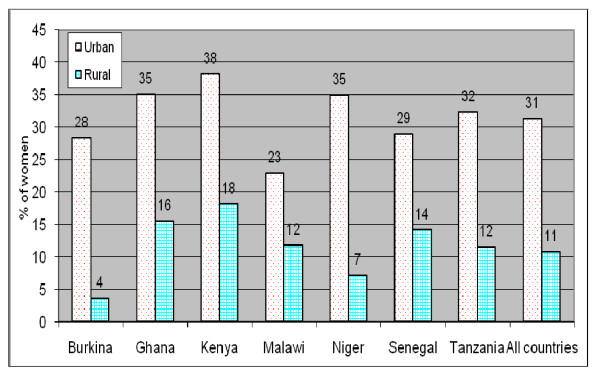
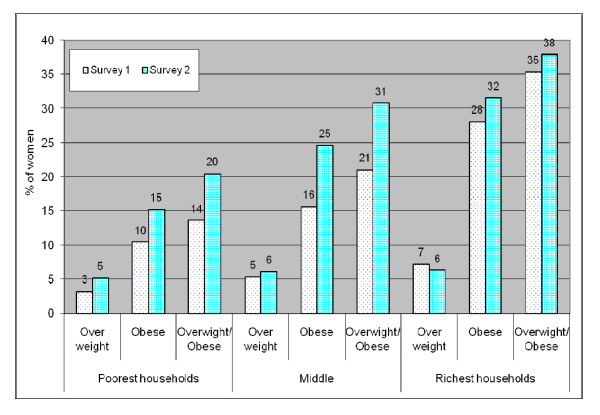
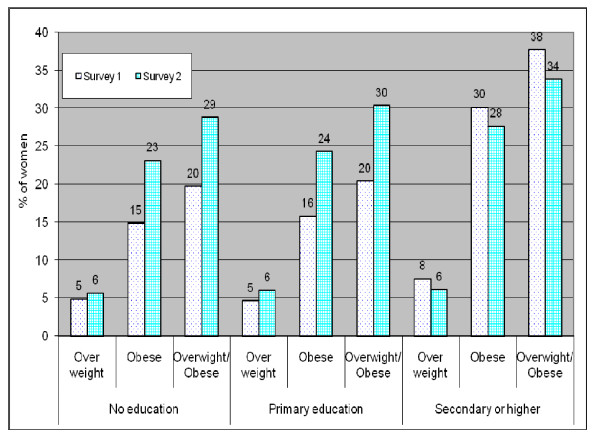
BACKGROUND: Obesity is a well recognized risk factor for various chronic diseases such as cardiovascular diseases, hypertension, and type 2 diabetes mellitus. The aim of this study was to shed light on the patterns of overweight and obesity in sub-Saharan Africa, with special interest in differences between the urban poor and the urban non-poor. The specific goals were to describe trends in overweight and obesity among urban women; and examine how these trends vary by education and household wealth. METHODS: The paper used Demographic and Health Surveys data from seven African countries where two surveys had been carried out with an interval of at least 10 years between them. Among the countries studied, the earliest survey took place in 1992 and the latest in 2005. The dependent variable was body mass index coded as: Not overweight/obese; Overweight; Obese. The key covariates were time lapse between the two surveys; woman's education; and household wealth. Control variables included working status, age, marital status, parity, and country. Multivariate ordered logistic regression in the context of the partial proportional odds model was used. RESULTS: Descriptive results showed that the prevalence of urban overweight/obesity increased by nearly 35% during the period covered. The increase was higher among the poorest (+50%) than among the richest (+7%). Importantly, there was an increase of 45-50% among the non-educated and primary-educated women, compared to a drop of 10% among women with secondary education or higher. In the multivariate analysis, the odds ratio of the variable time lapse was 1.05 (p < 0.01), indicating that the prevalence of overweight/obesity increased by about 5% per year on average in the countries in the study. While the rate of change in urban overweight/obesity did not significantly differ between the poor and the rich, it was substantially higher among the non-educated women than among their educated counterparts. CONCLUSION: Overweight and obesity are on the rise in Africa and might take epidemic proportions in the near future. Like several other public health challenges, overweight and obesity should be tackled and prevented early as envisioned in the WHO Global strategy on diet, physical activity and health.
Overview
The claims and statistics of this paper haven’t been checked yet.
Free: it reads the open-access text and checks the first 5 claims that cite a source we can check. Create a free account to check every claim.
Integrity signals
Registry
Cites
Statistics
Figures
Verification
Claims the paper makes
The claims and statistics of this paper haven’t been checked yet.
Free: it reads the open-access text and checks the first 5 claims that cite a source we can check. Create a free account to check every claim.
Claims other papers make about this one
Each is checked against this paper’s own text: does it say what the citing paper says it does?
In the citing paper
“African families are classified as families that include multiple caregivers [13] such as grandparents and other extended family members (aunts, uncles, brothers, and sisters)”
From Digital Health Technologies for Maternal and Child Health in Africa and Other Low- and Middle-Income Countries: Cross-disciplinary Scoping Review With Stakeholder Consultation (2023) · doi:10.2196/42161 · cites this paper as [13]
Self-check
Percentages, sums and reported differences re-computed from the paper’s own numbers.
The self-check needs the paper’s full text.
Citations
Cites
Lopez, A. D., Mathers, C. D., Ezzati, M., Jamison, D. T., & Murray, C. J. (2006) · The Lancet · doi:10.1016/s0140-6736(06)68770-9 · Cited by 5,630
Filmer, D., & Pritchett, L. H. (2001) · Demography · doi:10.1353/dem.2001.0003 · Cited by 5,238
Filmer, D., & Pritchett, L. H. (2001) · Demography · doi:10.2307/3088292 · Cited by 2,972
Global Burden of Disease and Risk Factors
(2006) · World Bank, Washington, DC eBooks · doi:10.1596/978-0-8213-6262-4 · Cited by 2,605
Global strategy on diet, physical activity and health
Samuelson, G. (2004) · Food & Nutrition Research · doi:10.3402/fnr.v48i2.1503 · Cited by 2,319
Generalized Ordered Logit/Partial Proportional Odds Models for Ordinal Dependent Variables
Williams, R. (2006) · The Stata Journal: Promoting communications on statistics and Stata · doi:10.1177/1536867x0600600104 · Cited by 2,118
Global strategy on diet, physical activity and health
Samuelson, G. (2004) · Scandinavian Journal of Nutrition · doi:10.1080/11026480410034349 · Cited by 1,720
Preventing chronic diseases: a vital investment
Vita-Finzi, L., & Who, G. E. (2005) · Cited by 1,679
The nutrition transition: worldwide obesity dynamics and their determinants
Popkin, B. M., & Gordon-Larsen, P. (2004) · International Journal of Obesity · doi:10.1038/sj.ijo.0802804 · Cited by 1,538 · cited 1×
“With increasing urbanization, there might be a shift of the obesity burden to sections of the poor urban population who may not have the knowledge or financial resources to adopt healthier lifestyles [28-30].”
BackgroundCohen, B. (2004) · World Development · doi:10.1016/j.worlddev.2003.04.008 · Cited by 846
Research works printed but not linked: 3
- United Nations: World Urbanization Prospectus: The 2005 Revision. New York: United Nations, Department of Economic and Social Affairs, Population Division; 2006.
- UNFPA: The State of the World Population 1996. Changing Places: Population, Development and the Urban Poor. New York: United Nations; 1996.
- UN: United Nations Millennium Declaration. Fifty-fifth Ses- sion of the United Nations General Assembly. New York: United Nations; 2000.
Cited by
Items 101–200 of 434
Arika, W. M., Kibiti, C. M., Njagi, J. M., & Ngugi, M. P. (2019) · Heliyon · doi:10.1016/j.heliyon.2019.e02800 · Cited by 48
Household food insecurity access: a predictor of overweight and underweight among Kenyan women
Keino, S., Plasqui, G., & van den Borne, B. H. P. (2014) · Agriculture & Food Security · doi:10.1186/2048-7010-3-2 · Cited by 42
“Overweight and obesity and their risk factors are in the increase in sub-Saharan Africa with higher increase among urban-poor dwellers [1-4].”
BackgroundResultInfluentialPrevalence and Determinants of Adult Under-Nutrition in Botswana
Letamo, G., & Navaneetham, K. (2014) · PLoS ONE · doi:10.1371/journal.pone.0102675 · Cited by 45
“A number of studies found that several African countries have high prevalence of overweight and obesity [26].”
BackgroundAdom, T., de Villiers, A., Puoane, T. R., & Kengne, A. P. (2019) · BMC Obesity · doi:10.1186/s40608-019-0234-8 · Cited by 50
“Moreover, studies in developed and developing countries have linked socioeconomic status to obesity prevalence [4, 20, 21].”
BackgroundResultOni, T., Assah, F. K., Erzse, A., Foley, L. S., Govia, I., Hofman, K. J., Lambert, E. V., Micklesfield, L. K., Shung-King, M., Smith, J., et al. (2020) · Globalization and Health · doi:10.1186/s12992-020-00630-y · Cited by 42
Urbanization, nutrition and development in Southern African cities
Frayne, B., Crush, J., & McLachlan, M. H. (2014) · Food Security · doi:10.1007/s12571-013-0325-1 · Cited by 58
“Another review of seven countries in West and East Africa found that the prevalence of urban overweight/obesity increased by nearly 35 % between 1992 and 2005 (Ziraba et al. 2009; Villamor et al. 2006).”
Anteneh, Z. A., Gedefaw, M., Tekletsadek, K. N., Tsegaye, M., & Alemu, D. (2015) · Advances in Preventive Medicine · doi:10.1155/2015/294902 · Cited by 39
Nutrition transition, overweight and obesity among rural-to-urban migrant women in Kenya
Peters, R., Amugsi, D. A., Mberu, B. U., Ensor, T., Hill, A. J., Newell, J. N., & Elsey, H. (2019) · Public Health Nutrition · doi:10.1017/s1368980019001204 · Cited by 46
“Similar classifications for migration status have been used in previous research in SSA context (31 – 33) .”
InfluentialBoysen, O., Boysen-Urban, K., Bradford, H., & Balié, J. (2019) · World Development · doi:10.1016/j.worlddev.2019.03.006 · Cited by 37
Mukora-Mutseyekwa, F., Zeeb, H., Nengomasha, L., & Adjei, N. K. (2019) · International Journal of Environmental Research and Public Health · doi:10.3390/ijerph16152758 · Cited by 45
“Elsewhere in similar settings, prevalence of overweight and obesity seems significantly higher among women who have attained at least a high school education and above [11,14,26] which is thought to be explained by the resultant shifts from manual labor to more sedentary occupations among the more educated [26].”
BackgroundStroke-Risk Factors Differ between Rural and Urban Communities: Population Survey in Central Uganda
Nakibuuka, J., Sajatovic, M., Nankabirwa, J. I., Furlan, A. J., Kayima, J., Ddumba, E., Katabira, E. T., & Byakika-Tusiime, J. (2015) · Neuroepidemiology · doi:10.1159/000381453 · Cited by 36
Perceptions and Experiences of Overweight among Women in the Ga East District, Ghana
Aryeetey, R. (2016) · Frontiers in Nutrition · doi:10.3389/fnut.2016.00013 · Cited by 44
Gupta, R. D., Sajal, I. H., Hasan, M., Sutradhar, I., Haider, M. R., & Sarker, M. (2019) · BMJ Open · doi:10.1136/bmjopen-2018-024680 · Cited by 40
Kamau, L. N., Mbaabu, M. P., Mbaria, J. M., Karuri, G. P., & Kiama, S. G. (2016) · Journal of Ethnopharmacology · doi:10.1016/j.jep.2016.05.021 · Cited by 39
“These observations concurred with other findings (Mehta et al., 2006; WHO, 2007; Ziraba et al., 2009).”
ResultVijayalakshmi, P., Thimmaiah, R., Gandhi, S., & Math, S. B. (2018) · Community Mental Health Journal · doi:10.1007/s10597-018-0333-x · Cited by 38
Determinants, Health Problems, and Food Insecurity in Urban Areas of the Largest City in Cape Verde
Craveiro, I. M. R., Alves, D. A., Amado, M., Santos, Z., Fortes, A., Delgado, A., Correia, A. J., & Gonçalves, L. A. P. (2016) · International Journal of Environmental Research and Public Health · doi:10.3390/ijerph13111155 · Cited by 41
“In general, this type of food is rich in complex carbohydrates, fat, sugar, and cholesterol—and low in fiber and vitamins [9,10].”
BackgroundAhmed, K. Y., Abrha, S., Page, A., Arora, A., Shiferaw, S., Tadese, F., Seifu, C. N., Yeneabat, T., Alemu, E., Yilma, D., et al. (2020) · BMC Public Health · doi:10.1186/s12889-020-09345-6 · Cited by 35
Perry, B. D., & Grace, D. (2015) · EcoHealth · doi:10.1007/s10393-015-1091-7 · Cited by 43
“With economic growth, obesity in China and India has increased several-fold; nearly one in three of African urbandwellers is overweight or obese, and the fastest rates of weight increase are among the poor (Ziraba et al. 2009).”
BackgroundMacia, E., Cohen, E., Guéye, L., Boëtsch, G., & Duboz, P. (2017) · Cardiovascular journal of South Africa/Cardiovascular journal of Southern Africa · doi:10.5830/cvja-2017-034 · Cited by 36
“Indeed, while studies regularly report that obesity is significantly more likely to occur in the highest SES group,(8) Ziraba and colleagues observed that the increase in obesity was higher among the poorest than among the richest African urban dwellers during the period 1995 to 2005.(18) In line with the epidemiologi…”
BackgroundPrevalence and sociodemographic trends of weight misperception in Korean adolescents
Kim, S., & So, W.-Y. (2014) · BMC Public Health · doi:10.1186/1471-2458-14-452 · Cited by 34
Reasons why West Africa continues to be a hotbed for hepatocellular carcinoma
Ladep, N., Tognarelli, J. M., Crossey, M. M., Okeke, E. N., Duguru, M. J., Banwat, E. B., & Taylor-Robinson, S. D. (2015) · Nigerian Medical Journal · doi:10.4103/0300-1652.165032 · Cited by 33
Nyangasa, M. A., Buck, C., Kelm, S., Sheikh, M. A., Brackmann, L. K., & Hebestreit, A. (2019) · BMJ Open · doi:10.1136/bmjopen-2018-025397 · Cited by 32
Predictors of Overweight and Obesity Among Women in Ghana
Agbeko, M. P., Kumi-Kyereme, A., Andrews, D. A., & Berchie, G. O. (2013) · The Open Obesity Journal · doi:10.2174/1876823701305010072 · Cited by 37
“Whereas obesity in industrialized countries is more prevalent within the lower socio-economic class, studies in Africa and Ghana have demonstrated by contrast a strong positive relationship between obesity and high socio-economic status [47, 50, 51].”
BackgroundResultSocio-demographic trends in overweight and obesity among parous and nulliparous women in Ghana
Tuoyire, D. A., Kumi-Kyereme, A., & Doku, D. T. (2016) · BMC Obesity · doi:10.1186/s40608-016-0124-2 · Cited by 36
“In sub-Saharan Africa in particular, overweight and obesity are estimated to increase by about 35 % within the next 10 years at a rate of about 5 % per annum [7].”
BackgroundHaregu, T., Oti, S. O., Egondi, T., & Kyobutungi, C. K. (2016) · BMC Obesity · doi:10.1186/s40608-016-0126-0 · Cited by 36
“As prevalences of overweight and obesity rise in SSA, rates of cardio-metabolic diseases are expected to rise [30].”
BackgroundInfluentialPhysical Activity, Sleep, and BMI Percentile in Rural and Urban Ugandan Youth
Christoph, M. J., Grigsby‐Toussaint, D. S., Baingana, R. K., & Ntambi, J. M. (2017) · Annals of Global Health · doi:10.1016/j.aogh.2017.04.005 · Cited by 35
Cohen, E., Gradidge, P. J.-L., Ndao, A., Duboz, P., Macia, E., Guéye, L., Boëtsch, G., Pasquet, P., Holdsworth, M., & Chapuis-Lucciani, N. (2018) · Journal of Biosocial Science · doi:10.1017/s0021932018000287 · Cited by 32
“…areas, higher SES was not associated with 655 overweight/obesity, implying that the advanced stage of nutrition transition in Senegal is not 656 specifically associated with wealth but rather the industrialization of lifestyle and the 657 valorization of stoutness (Ziraba et al., 2009).”
BackgroundDaran, B., Levasseur, P., & Clément, M. (2023) · Obesity Reviews · doi:10.1111/obr.13601 · Cited by 34
Zou, Y., Zhang, R., Zhou, B., Huang, L.-C., Jiang, C., Gu, F., Zhang, H., Fang, Y., & Ding, G. (2015) · BMJ Open · doi:10.1136/bmjopen-2015-008417 · Cited by 30
van de Vijver, S. J. M., Oti, S. O., Gomez, G. B., Agyemang, C. O., Egondi, T., van Charante, E. P. M., Brewster, L. M., Hankins, C. A., Tanović, Z., Ezeh, A., et al. (2016) · Global Health Action · doi:10.3402/gha.v9.30922 · Cited by 32
“The increase in both groups of insufficient intake of fruits and vegetables and inadequate physical activity is in line with other studies from the continent [20] and one of the causes for the rapid growth for overweight and obesity in these settings [21].”
ResultTadesse, Y., Derso, T., Alene, K. A., & Wassie, M. M. (2017) · BMC Research Notes · doi:10.1186/s13104-016-2308-8 · Cited by 35
“Previous studies conducted in various setting identified several risk factors for overweight and obesity among children, including: socio-economic status of the family [15], family size [8, 16], educational status of mothers [17], physical activities [8, 14, 18], dietary habit and a family history of overweight and ob…”
BackgroundDeterminan Status Gizi Obesitas pada Orang Dewasa di Perkotaan: Tinjauan Sistematis
Safitri, D. E., & Rahayu, N. S. (2020) · ARKESMAS (Arsip Kesehatan Masyarakat) · doi:10.22236/arkesmas.v5i1.4853 · Cited by 56
“Tingkat pendidikan berbanding lurus dengan risiko obesitas pada wilayah India (Rai, 2012), Sri Lanka (Somasundaram et al., 2019), Indonesia (Khusun et al., 2015) dan beberapa negara di 8 ~ Debby Endayani Safitri, Nur Setiawati Rahayu Determinan Status Gizi Obesitas pada Orang Dewasa… Afrika (Ziraba et al., 2009), namu…”
Flax, V. L., Thakwalakwa, C., Schnefke, C., Phuka, J. C., & Jaacks, L. M. (2020) · Appetite · doi:10.1016/j.appet.2020.104855 · Cited by 36
Maternal–child overweight/obesity and undernutrition in Kenya: a geographic analysis
Pawloski, L. R., Curtin, K. M., Gewa, C., & Attaway, D. F. (2012) · Public Health Nutrition · doi:10.1017/s1368980012000110 · Cited by 30
“These findings confirm the results reported by Gewa((13)) and others((25,26)) that showed a greater prevalence of overweight and obese mothers and children living in urban areas, even when controlling for socio-economic factors((10,27)).”
ResultKabwama, S. N., Kirunda, B. E., Mutungi, G. N., Wesonga, R., Bahendeka, S., & Guwatudde, D. Y. (2018) · BMC Obesity · doi:10.1186/s40608-018-0217-1 · Cited by 38
“Cross country comparisons have shown steady increases in the prevalence of overweight and obesity in Africa which are envisaged to reach epidemic proportions in the near future if left unabated [1].”
BackgroundAfrica in Transition: Growth Trends in Children and Implications for Nutrition
Norris, S. A., Wrottesley, S. V., Mohamed, R. S., & Micklesfield, L. K. (2014) · Annals of Nutrition and Metabolism · doi:10.1159/000365122 · Cited by 40
Wanjohi, M., Pradeilles, R., Asiki, G., Holdsworth, M., Kimani-Murage, E. W., Muthuri, S. K., Irache, A., Laar, A. K., Zotor, F. B., Tandoh, A., et al. (2022) · Public Health Nutrition · doi:10.1017/s1368980022002270 · Cited by 37
“However, we conducted 142 in-depth interviews across the three cities and gathered a large volume of data and photographs which provided a detailed, rich and comprehensive account of the drivers of dietary behaviours in the targeted African cities.”
InfluentialMunyogwa, M. J., & Mtumwa, A. H. (2018) · Advances in Medicine · doi:10.1155/2018/6123156 · Cited by 31
“If this is not controlled, it may take epidemic proportions in the very near future [13].”
BackgroundMasibo, P. K., Humwa, F., & Macharia, T. N. (2020) · Journal of Nutritional Science · doi:10.1017/jns.2019.39 · Cited by 33
“The overweight/obese mother–stunted phenomenon has been reported in a poor urban slum in Kenya((6)) and other parts of sub-Saharan Africa((35)).”
BackgroundInfluentialAsiki, G., Mohamed, S. F., Wambui, D. W., Wainana, C., Muthuri, S. K., Ramsay, M., & Kyobutungi, C. K. (2018) · Global Health Action · doi:10.1080/16549716.2018.1470738 · Cited by 31
“An analysis of Demographic and Health Survey (DHS) data from seven countries in Sub-Saharan Africa (SSA) including Kenya showed that the prevalence of urban overweight and obesity increased by nearly 35% between 1992 and 2005 [6].”
MethodAdom, T., Kengne, A. P., de Villiers, A., & Puoane, T. R. (2019) · Obesity Science & Practice · doi:10.1002/osp4.355 · Cited by 38
“In some cultures in Africa for instance, overweight/obesity is perceived as an indicator of beauty, good health and wealth particularly among women (76,77).”
BackgroundNyanhanda, T., Mwanri, L., & Mude, W. (2023) · International Journal of Environmental Research and Public Health · doi:10.3390/ijerph20105860 · Cited by 29
“Studies also showed that urbanization and socio-economic transformation result in increased access to energy-dense and nutrient-poor foods and sedentary jobs, resulting in individuals becoming overweight [8].”
BackgroundGovender, L., Pillay, K., Siwela, M., Modi, A. T., & Mabhaudhi, T. (2021) · Nutrients · doi:10.3390/nu13092920 · Cited by 41
“In most cases, individuals that are most affected by overweight and obesity are women that have less than a primary school education [73].”
BackgroundDiet diversity, malnutrition and health: Evidence from Kenya
Korir, L., Rizov, M., & Ruto, E. (2022) · Journal of Agricultural Economics · doi:10.1111/1477-9552.12519 · Cited by 36
Profile of people with hypertension in Nairobi’s slums: a descriptive study
Hulzebosch, A., van de Vijver, S. J. M., Oti, S. O., Egondi, T., & Kyobutungi, C. K. (2015) · Globalization and Health · doi:10.1186/s12992-015-0112-1 · Cited by 26
“Our study shows a higher rate of participants classifying as overweight or obese than a recent study on overweight in Korogocho that found overweight and obesity rates similar to that of a national survey; around 40 % in women and 17 % in men [27, 28].”
ResultPradeilles, R., Griffiths, P. L., Norris, S. A., Feeley, A. B., & Rousham, E. K. (2015) · Public Health Nutrition · doi:10.1017/s1368980015000415 · Cited by 30
Christian, A. K., Steiner‐Asiedu, M., Bentil, H., Rohner, F., Wegmüller, R., Petry, N., Wirth, J. P., Donkor, W., Amoaful, E. F., & Adu‐Afarwuah, S. (2022) · Nutrients · doi:10.3390/nu14071427 · Cited by 28
“This result corroborates other researchers that found that while overweight/obesity is on the rise among the poor, the wealthy are still the most affected in some developing countries like Ghana [48].”
ResultRossier, C., Soura, A., Duthé, G., & Findley, S. E. (2014) · PLoS ONE · doi:10.1371/journal.pone.0113780 · Cited by 25
“More sedentary lifestyles, unhealthier diets, and increases in tobacco and alcohol intake, lead to higher levels of blood pressure, cholesterol and obesity, and to more NCDs [2, 5].”
BackgroundMorales‐Suárez‐Varela, M., Rubio-López, N., Julve, C. R., González, A. L., Ruiz-Rojo, E., Redondo, M., & Picó, Y. (2015) · International Journal of Environmental Research and Public Health · doi:10.3390/ijerph121215045 · Cited by 25
“Many developed countries are undergoing epidemiological and health transitions with rapid increases in the incidence of overweight, obesity and chronic diseases [9–14] across all age groups as a result of changes in dietary and physical activity patterns [13,15,16].”
BackgroundSteyn, N. P., Jaffer, N., Nel, J. H., Levitt, N. S., Steyn, K., Lombard, C. J., & Peer, N. (2016) · Nutrients · doi:10.3390/nu8050285 · Cited by 32
Wariri, O., Alhassan, J. A. K., Mark, G., Adesiyan, O., & Hanson, L. (2020) · International Health · doi:10.1093/inthealth/ihaa093 · Cited by 30
Prevalence and Socio-Demographic Determinants of Overweight and Obesity in a Nigerian Population
Maruf, F. A., & Udoji, N. V. (2015) · Journal of Epidemiology · doi:10.2188/jea.je20140099 · Cited by 30
Atuahene, M. D., Ganle, J. K., Adjuik, M., Atuahene, N. F., & Kampitib, G. B. (2017) · BMC Obesity · doi:10.1186/s40608-017-0153-5 · Cited by 24
“In contrast, evidence from a number of African settings show a strong positive association between high socioeconomic status and obesity [8].”
Long, K. Z., Beckmann, J., Lang, C., Seelig, H., Nqweniso, S., Probst-Hensch, N. M., Müller, I., Pühse, U., Steinmann, P., du Randt, R., et al. (2022) · BMC Medicine · doi:10.1186/s12916-021-02223-x · Cited by 27
Nsatimba, P. A. A., Pathak, K., & Soares, M. J. (2015) · European Journal of Nutrition · doi:10.1007/s00394-015-1000-4 · Cited by 27
Food, Place, and Culture in Urban Africa: Comparative Consumption in Gaborone and Blantyre
Legwegoh, A. F., & Riley, L. (2014) · Journal of Hunger & Environmental Nutrition · doi:10.1080/19320248.2013.845868 · Cited by 30
“Prevalence rate of obesity for the region are estimated at about 7% among people age 20 and above.(30,31) Obesity rates are even higher in some countries, particularly in the Southern African region where rates are as high as 33% in the Republic of South Africa, 23% in Swaziland, 17% in Lesotho, and 11% in Botswana.”
BackgroundFeeding the World in 2050: Trade-offs, synergies and tough choices for the livestock sector
Smith, J. W., Tarawali, S. A., Grace, D., & Sones, K. R. (2013) · Tropical Grasslands - Forrajes Tropicales · doi:10.17138/tgft(1)125-136 · Cited by 33
“Livestock products themselves are not major contributors to the increasing burden of obesity in poor countries; but they are often fried or otherwise processed in ways that make them unhealthy choices (Ziraba et al. 2009).”
BackgroundPredictors of Overweight/Obesity in Urban Ghanaian Women
Appiah, C. A., Steiner‐Asiedu, M., & Otoo, G. E. (2014) · International journal of clinical nutrition · doi:10.12691/ijcn-2-3-3 · Cited by 37
“The results were comparable to findings from elsewhere in sub-Saharan Africa [4,20,21].”
BackgroundResultInfluentialAtherosclerotic Cardiovascular Disease
Holligan, S. D., Berryman, C. E., Wang, L., Flock, M. R., Harris, K. A., & Kris‐Etherton, P. M. (2012) · Wiley eBooks · doi:10.1002/9781119946045.ch48 · Cited by 26
Low potassium and high sodium intakes: a double health threat to Cape Verdeans
Alves, D. A., Santos, Z., Amado, M., Craveiro, I. M. R., Delgado, A., Correia, A. J., & Gonçalves, L. A. P. (2018) · BMC Public Health · doi:10.1186/s12889-018-5911-x · Cited by 26
Rahman, M. A., Rahman, M. M., Rahman, M. M., & Jesmin, S. S. (2019) · PLoS ONE · doi:10.1371/journal.pone.0219968 · Cited by 27
Food and Water Insecurity in Sexual and Gender Minority Groups Living With HIV in Lagos, Nigeria
Hamill, M. M., Hu, F., Adebajo, S. B., Kokogho, A., Tiamiyu, A. B., Parker, Z., Charurat, M., Ake, J. A., Baral, S., Nowak, R. G., et al. (2023) · JAIDS Journal of Acquired Immune Deficiency Syndromes · doi:10.1097/qai.0000000000003183 · Cited by 23
Wande, D. P., Sangeda, R. Z., Tibalinda, P., Mutta, I. K., Mkumbwa, S., Bitegeko, A., & Kaale, E. A. (2019) · PLoS ONE · doi:10.1371/journal.pone.0220701 · Cited by 22
Reddy, P., Dukhi, N., Sewpaul, R., Ellahebokus, M. A. A., Kambaran, N. S., & Jobe, W. (2021) · Frontiers in Public Health · doi:10.3389/fpubh.2021.604439 · Cited by 22
Seifu, B. L., Mare, K. U., Legesse, B. T., & Tebeje, T. M. (2024) · BMJ Open · doi:10.1136/bmjopen-2023-073447 · Cited by 32
“42 80 There is increasing evidence that heavy smokers tend to have greater body weight than do light smokers or non-smokers, which likely reflects a clustering of risky behaviours (eg, low degree of physical activity, poor diet and smoking) that is conducive to weight gain.”
BackgroundClaim Your Space: Leadership Development as a Research Capacity Building Goal in Global Health
Airhihenbuwa, C. O., Ogedegbe, G. G., Iwelunmor, J., Jean‐Louis, G., Williams, N. J., Zizi, F., & Okuyemi, K. S. (2016) · Health Education & Behavior · doi:10.1177/1090198116633455 · Cited by 26
Beyen, T. K., & Gebregergs, G. B. (2013) · Journal of Obesity & Weight loss Therapy · doi:10.4172/2165-7904.1000165 · Cited by 24
“This transformation comes with increased access to energy-dense foods and less strenuous jobs resulting into many people having a positive energy balance and hence becoming overweight or obese [7,8].”
BackgroundStringhini, S., & Bovet, P. (2013) · International Journal of Epidemiology · doi:10.1093/ije/dyt084 · Cited by 22
Needs-led human resource planning for Sierra Leone in support of oral health
Ghotane, S. G., Don-Davis, P., Kamara, D., Harper, P. R., Challacombe, S. J., & Gallagher, J. E. (2021) · Human Resources for Health · doi:10.1186/s12960-021-00623-x · Cited by 22
Ntenda, P. A. M., & Kazambwe, J. F. (2018) · International Health · doi:10.1093/inthealth/ihy093 · Cited by 24
Obesity in Africa: The challenges of a rising epidemic in the midst of dwindling resources
Azeez, T. A. (2022) · Obesity Medicine · doi:10.1016/j.obmed.2022.100397 · Cited by 25
Katchunga, P. B., Cikomola, J. C., Muhindo, C. T., Baleke, A., Kaishusha, D. S., Mirindi, P. N., Tamburhe, T., Kluyskens, Y., Kishabongo, A. S., Bwanamudogo, S., et al. (2016) · BMC Endocrine Disorders · doi:10.1186/s12902-016-0143-5 · Cited by 25
“In addition, the prevalence of being overweight/obese was significantly lower in rural areas than in urban areas of sub-Saharan Africa [10, 23].”
BackgroundTarekegne, F. E., Padyab, M., Schröders, J., & Williams, J. S. (2018) · BMJ Open Diabetes Research & Care · doi:10.1136/bmjdrc-2017-000449 · Cited by 20
Tesfaw, L. M., & Muluneh, E. K. (2021) · SAGE Open Medicine · doi:10.1177/20503121211016156 · Cited by 20
Azomahou, T. T., Diène, B., & Gosselin-Pali, A. (2022) · Food Policy · doi:10.1016/j.foodpol.2022.102303 · Cited by 30
Owobi, O. U., Okonji, O. C., Nzoputam, C. I., & Ekholuenetale, M. (2022) · Women · doi:10.3390/women2040029 · Cited by 27
“We believe that this regional disparity is related to the respective countries’ levels of economic development and urbanization [42,43].”
BackgroundExamining the risk factors for overweight and obesity among women in Ghana: A multilevel perspective
Asosega, K. A., Aidoo, E. N., Adebanji, A., & Owusu‐Dabo, E. (2023) · Heliyon · doi:10.1016/j.heliyon.2023.e16207 · Cited by 22
Atsu, P., Mohammed, A., Adu, C., Aboagye, R. G., Ahinkorah, B. O., & Seidu, A. (2024) · Tropical Medicine and Health · doi:10.1186/s41182-024-00593-5 · Cited by 22
“The positive association between these socioeconomic indices and overweight/obesity have been reported in several previous studies in SSA [32, 35, 50].”
ResultPradhananga, P., Shrestha, A., Adhikari, N., Shrestha, N., Adhikari, M., Ide, N., Dhungel, S., Bajracharya, S., & Aryal, A. (2022) · PLoS ONE · doi:10.1371/journal.pone.0273485 · Cited by 23
“The prevalence of overweight amongst children was higher in Pakistan (7%) and Maldives(9%) and lower in Nepal, India, and Bangladesh (between 2% and 4%) [10, 11].”
BackgroundPeer, N., Lombard, C. J., Steyn, K., Gwebushe, N., & Levitt, N. S. (2014) · PLoS ONE · doi:10.1371/journal.pone.0107471 · Cited by 26
“The positive link between wealth and employment (in men) with increased BMI and WC is in keeping with other South African studies where socioeconomic status defined by various measures including education, occupation, income and household amenities was related to increased adiposity [26,27] as well as with studies fro…”
BackgroundResultGray, W. N., Crawford, M. J., Follansbee-Junger, K. W., Dumont-Driscoll, M. C., & Janicke, D. M. (2012) · Childhood Obesity · doi:10.1089/chi.2011.0033 · Cited by 21
Amegah, A. K., Lumor, S., & Vidogo, F. (2011) · African Journal of Food Agriculture Nutrition and Development · doi:10.4314/ajfand.v11i3.66635 · Cited by 22
Soura, A., Lankoandé, B., Millogo, R., & Bangha, M. W. (2014) · Global Health Action · doi:10.3402/gha.v7.25523 · Cited by 18
“Urban poor may also consume more energetically dense foods because they seem inexpensive but which, combined with physical inactivity, expose them more to NCDs (15).”
BackgroundPerformance of newly developed body mass index cut-off for diagnosing obesity among Ethiopian adults
Sinaga, M., Yemane, T., Tegene, E., Lidstrom, D., & Belachew, T. (2019) · Journal of PHYSIOLOGICAL ANTHROPOLOGY · doi:10.1186/s40101-019-0205-2 · Cited by 19
Dessalegn, A. B., Jemal, H., Meles, G. G., & Desta, H. (2017) · International Journal of Nutrition and Metabolism · doi:10.5897/ijnam2017.0218 · Cited by 17
“In Africa, the DBM has become an emerging public health problem due to the increased access to energy-dense foods consumption and less strenuous jobs resulting into many people having a positive energy balance leading to overweight/obesity indicating a challenge for program and policy-makers in transitional countries…”
Diet Quality and Urbanization in Mozambique
Smart, J. C., Tschirley, D., & Smart, F. (2020) · Food and Nutrition Bulletin · doi:10.1177/0379572120930123 · Cited by 18
“Representative items of each category include (1) unprocessed and nonperishable: pulses (peanuts, butter beans, pieonpea), coconut, fresh cassava, potato and sweet potato, oilseeds, wheat, rice, and other cereals (white maize); (2) unprocessed and perishable foods: fresh fish, fresh vegetables (tomato, onion, squash,…”
BackgroundMethodInfluentialKasapila, W., & Shaarani, S. M. (2012) · Food Control · doi:10.1016/j.foodcont.2012.08.006 · Cited by 17
Fontbonne, A., Cournil, A., Cames, C., Mercier, S., Coly, A. N., Lacroux, A., Dupuy, A., Diop, S. N., Cristol, J., & Bork, K. (2010) · Diabetes & Metabolism · doi:10.1016/j.diabet.2010.07.008 · Cited by 16
Rejecting the Demise of Vertical-Banded Gastroplasty: a Long-Term Single-Institute Experience
Bekheit, M., Katri, K. M., Abdelsalam, W. N., Abdel‐Aziz, T., & El-Kayal, E.-S. (2013) · Obesity Surgery · doi:10.1007/s11695-013-0969-0 · Cited by 16
“It is well recognized in developing countries as well [2, 3].”
BackgroundPaul, E., Mtumwa, A. H., Ntwenya, J. E., & Vuai, S. A. H. (2016) · Journal of Obesity · doi:10.1155/2016/1420673 · Cited by 15
Boua, P. R., Sorgho, H., Rouamba, T., Diallo, S. N., Bognini, J. D., Konkobo, S. Z., Valia, D., Lingani, M., Ouoba, S., Tougma, A. S., et al. (2018) · Global Health Action · doi:10.1080/16549716.2018.1527557 · Cited by 17
Diabetes in sub-Saharan Africa: from clinical care to health policy
Atun, R. A., Davies, J. I., Gale, E. A. M., Bärnighausen, T., Beran, D., & Kengne, A. P. (2018) · Yearbook of pediatric endocrinology · doi:10.1530/ey.15.13.10 · Cited by 17
Jaja, T., & Yarhere, I. E. (1970) · Nigerian Journal of Paediatrics · doi:10.4314/njp.v42i2.13 · Cited by 19
Madise, N., & Letamo, G. (2017) · BMC Obesity · doi:10.1186/s40608-016-0141-1 · Cited by 20
“also showed evidence of large relative increases between national surveys in levels of obesity and overweight among the poor in urban Africa, and they alluded to the cheapness of high-fat and high-sugar foods relative to healthier options [43].”
BackgroundObesity and obstructive sleep apnea risk among Nigerians
Akanbi, M. O., Agaba, P. A., Ozoh, O. B., Ocheke, A., Gimba, Z., Ukoli, C., & Agaba, E. I. (2017) · Journal of Medicine in the Tropics · doi:10.4103/jomt.jomt_17_17 · Cited by 17
“The contribution of obesity to obstructive sleep apnea (OSA) is poorly described in Nigeria.”
ResultInfluentialPrevalence of Underweight, Overweight and Obesity among Adults in Urban Bissau, Western Africa
Turé, R., Damasceno, A., Djicó, M., & Lunet, N. (2021) · Nutrients · doi:10.3390/nu13124199 · Cited by 19
“The new migrants with low socioeconomic status tend to adapt to the urban lifestyles that predispose them to becoming overweight or obese [37].”
BackgroundBaruwa, O. J., Gbadebo, B. M., Adeleye, O. J., Tabana, H., & Fagbamigbe, A. F. (2023) · BMC Women s Health · doi:10.1186/s12905-023-02813-2 · Cited by 18
“Moreover, being overweight and obese increases the likelihood of developing type 2 diabetes, hypertension, coronary heart disease, obstructive sleep apnea, osteoarthritis, and various cancers (e.g., ovarian, breast, prostate, endometrial, liver, kidney, gallbladder, and colon cancers) [6, 21, 22].”
BackgroundGaillard, T. R. (2014) · Journal of Clinical Medicine · doi:10.3390/jcm3030897 · Cited by 16
“[6] found that the prevalence of overweight and obesity grew by almost one-third between 1992 and 2005 in a sample of women from SSA countries.”
BackgroundEarly determinants of chronic disease in developing countries
Crowther, N. J. (2012) · Best Practice & Research Clinical Endocrinology & Metabolism · doi:10.1016/j.beem.2012.03.006 · Cited by 19
Amoakoh‐Coleman, M., Alangea, D. O., Modey, E. J., Ntumy, M. Y., Adanu, R., & Oppong, S. A. (2017) · PLoS ONE · doi:10.1371/journal.pone.0188671 · Cited by 19
Metadata
- Authors
- Ziraba, A. K., Fotso, J. C., & Ochako, R.
- Affiliations
- African Population and Health Research Center (KE)
- Corresponding author
- Ziraba, Abdhalah K
- Venue
- BMC Public Health
- Published
- 2009-12
- Volume
- 9
- Issue
- 1
- Pages
- 465-465
- ISSN
- 1471-2458 (ISSN-L)
- PMC
- PMC2803188
- OpenAlex
- W1989483002
- Cited by
- 433
- References
- 47
- Citations by year
- 2026: 21 · 2025: 11 · 2024: 18 · 2023: 28 · 2022: 28 · 2021: 38 · 2020: 26 · 2019: 34 · 2018: 28 · 2017: 32 · 2016: 31 · 2015: 43 · 2014: 26 · 2013: 24 · 2012: 24
- FWCI
- 14.79
- Type
- journal article
- Language
- en
- Open access
- gold
- doi.org
- Licence
- cc-by
- creativecommons.org/licenses/by/2.0 (tdm)
- Locations
- BMC Public Health (publishedVersion, cc-by)
- PubMed Central (publishedVersion, cc-by)
- PubMed (publishedVersion)
- LSHTM Research Online (London School of Hygiene and Tropical Medicine) (acceptedVersion)
- DOAJ (DOAJ: Directory of Open Access Journals) (submittedVersion)
- Funders
- London School of Hygiene and Tropical Medicine
- African Population and Health Research Center
- Topics
- Health Sciences › Medicine › Public Health, Environmental and Occupational Health › Obesity, Physical Activity, Diet
- Health Sciences › Nursing › Nutrition and Dietetics › Nutrition, Health and Food Behavior
- Health Sciences › Medicine › Endocrinology, Diabetes and Metabolism › Diabetes, Cardiovascular Risks, and Lipoproteins
- Keywords
- overweight, obesity, urban women, sub-Saharan Africa, household wealth, educational attainment, body mass index trends, urban poverty, chronic disease risk factors
- MeSH terms
- Africa, Educational Status, Employment, Female, Humans, Income, Male, Obesity, Urban Health, Prevalence, Multivariate Analysis, Logistic Models, Overweight
About these checks
Registry, retraction, Cites and statistics results are computed, not judged, with one exception: a printed reference that no index lists is read once by a model before it counts as a citation error. Claims are extracted by a model and kept only when their quote appears verbatim in the text; each cited source is then checked, with a model’s help, for whether it says what the claim relies on. Those verdicts can be wrong — read the claim’s quote and the cited source before relying on one.
Statistics and arithmetic are recomputed, not judged.
Confidence bands are shown only for fields calibrated on our annotated test set. None is calibrated yet, so no band is shown.
What counts as a claim ›How we measure confidence ›How we check this ›
Are you an author, or do you see a problem with this page? Request a review
Data sources
Bibliographic data: Semantic Scholar, OpenAlex, Crossref.
Contains information from the Semantic Scholar Academic Graph Datasets, made available under the ODC Attribution License (ODC-BY 1.0).
Semantic Scholar’s data is described in: Kinney, R., et al. (2023). The Semantic Scholar Open Data Platform. arXiv:2301.10140.
