

Overweight and obesity in urban Africa: A problem of the rich or the poor?
Open accessThe DOI matches its Crossref record; 47 of the 47 references it cites were found in a registry or an index.
Abstract
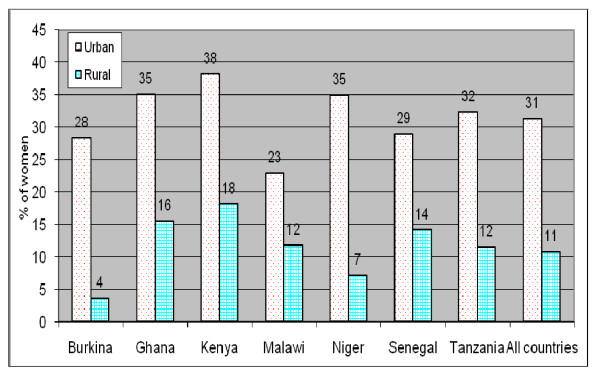
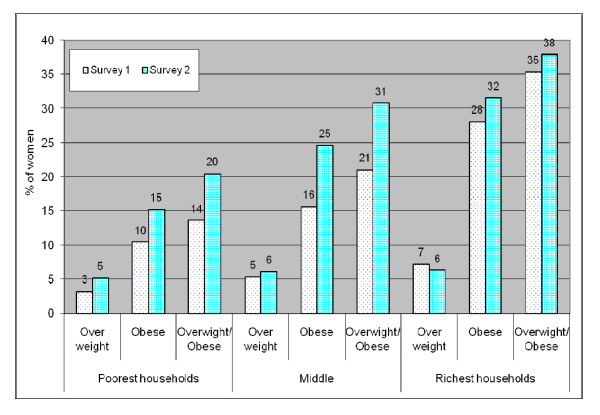
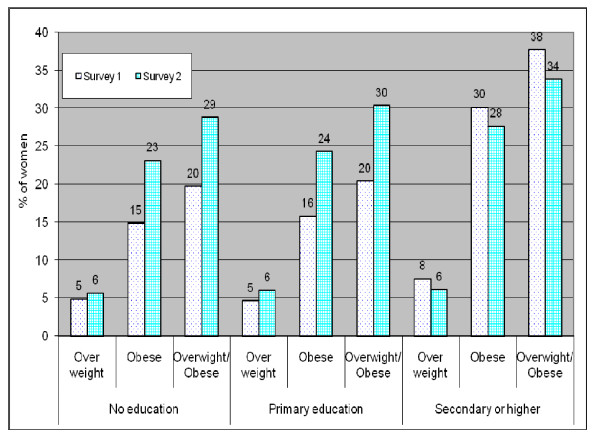
BACKGROUND: Obesity is a well recognized risk factor for various chronic diseases such as cardiovascular diseases, hypertension, and type 2 diabetes mellitus. The aim of this study was to shed light on the patterns of overweight and obesity in sub-Saharan Africa, with special interest in differences between the urban poor and the urban non-poor. The specific goals were to describe trends in overweight and obesity among urban women; and examine how these trends vary by education and household wealth. METHODS: The paper used Demographic and Health Surveys data from seven African countries where two surveys had been carried out with an interval of at least 10 years between them. Among the countries studied, the earliest survey took place in 1992 and the latest in 2005. The dependent variable was body mass index coded as: Not overweight/obese; Overweight; Obese. The key covariates were time lapse between the two surveys; woman's education; and household wealth. Control variables included working status, age, marital status, parity, and country. Multivariate ordered logistic regression in the context of the partial proportional odds model was used. RESULTS: Descriptive results showed that the prevalence of urban overweight/obesity increased by nearly 35% during the period covered. The increase was higher among the poorest (+50%) than among the richest (+7%). Importantly, there was an increase of 45-50% among the non-educated and primary-educated women, compared to a drop of 10% among women with secondary education or higher. In the multivariate analysis, the odds ratio of the variable time lapse was 1.05 (p < 0.01), indicating that the prevalence of overweight/obesity increased by about 5% per year on average in the countries in the study. While the rate of change in urban overweight/obesity did not significantly differ between the poor and the rich, it was substantially higher among the non-educated women than among their educated counterparts. CONCLUSION: Overweight and obesity are on the rise in Africa and might take epidemic proportions in the near future. Like several other public health challenges, overweight and obesity should be tackled and prevented early as envisioned in the WHO Global strategy on diet, physical activity and health.
Overview
The claims and statistics of this paper haven’t been checked yet.
Free: it reads the open-access text and checks the first 5 claims that cite a source we can check. Create a free account to check every claim.
Integrity signals
Registry
Cites
Statistics
Figures
Verification
Claims the paper makes
The claims and statistics of this paper haven’t been checked yet.
Free: it reads the open-access text and checks the first 5 claims that cite a source we can check. Create a free account to check every claim.
Claims other papers make about this one
Each is checked against this paper’s own text: does it say what the citing paper says it does?
In the citing paper
“African families are classified as families that include multiple caregivers [13] such as grandparents and other extended family members (aunts, uncles, brothers, and sisters)”
From Digital Health Technologies for Maternal and Child Health in Africa and Other Low- and Middle-Income Countries: Cross-disciplinary Scoping Review With Stakeholder Consultation (2023) · doi:10.2196/42161 · cites this paper as [13]
Self-check
Percentages, sums and reported differences re-computed from the paper’s own numbers.
The self-check needs the paper’s full text.
Citations
Cites
Lopez, A. D., Mathers, C. D., Ezzati, M., Jamison, D. T., & Murray, C. J. (2006) · The Lancet · doi:10.1016/s0140-6736(06)68770-9 · Cited by 5,630
Filmer, D., & Pritchett, L. H. (2001) · Demography · doi:10.1353/dem.2001.0003 · Cited by 5,238
Filmer, D., & Pritchett, L. H. (2001) · Demography · doi:10.2307/3088292 · Cited by 2,972
Global Burden of Disease and Risk Factors
(2006) · World Bank, Washington, DC eBooks · doi:10.1596/978-0-8213-6262-4 · Cited by 2,605
Global strategy on diet, physical activity and health
Samuelson, G. (2004) · Food & Nutrition Research · doi:10.3402/fnr.v48i2.1503 · Cited by 2,319
Generalized Ordered Logit/Partial Proportional Odds Models for Ordinal Dependent Variables
Williams, R. (2006) · The Stata Journal: Promoting communications on statistics and Stata · doi:10.1177/1536867x0600600104 · Cited by 2,118
Global strategy on diet, physical activity and health
Samuelson, G. (2004) · Scandinavian Journal of Nutrition · doi:10.1080/11026480410034349 · Cited by 1,720
Preventing chronic diseases: a vital investment
Vita-Finzi, L., & Who, G. E. (2005) · Cited by 1,679
The nutrition transition: worldwide obesity dynamics and their determinants
Popkin, B. M., & Gordon-Larsen, P. (2004) · International Journal of Obesity · doi:10.1038/sj.ijo.0802804 · Cited by 1,538 · cited 1×
“With increasing urbanization, there might be a shift of the obesity burden to sections of the poor urban population who may not have the knowledge or financial resources to adopt healthier lifestyles [28-30].”
BackgroundCohen, B. (2004) · World Development · doi:10.1016/j.worlddev.2003.04.008 · Cited by 846
Research works printed but not linked: 3
- United Nations: World Urbanization Prospectus: The 2005 Revision. New York: United Nations, Department of Economic and Social Affairs, Population Division; 2006.
- UNFPA: The State of the World Population 1996. Changing Places: Population, Development and the Urban Poor. New York: United Nations; 1996.
- UN: United Nations Millennium Declaration. Fifty-fifth Ses- sion of the United Nations General Assembly. New York: United Nations; 2000.
Cited by
Items 301–400 of 434
Understanding nutrition transition among internal rural-to-urban migrant women in Nairobi, Kenya
Peters, R., Elsey, H., Newell, J. N., & Hill, A. J. (2018) · Proceedings of The Nutrition Society · doi:10.1017/s0029665118001957 · Cited by 4
Physical Activity Measured by Pedometer in a Peri-Urban Mozambican Population
Macicame, I., Katzmarzyk, P. T., Lauchande, C., Uate, J., Cavele, N., Manhiça, C., Saathoff, E., Parhofer, K. G., & Prista, A. (2022) · Journal of Physical Activity and Health · doi:10.1123/jpah.2022-0003 · Cited by 4
Ochola, S., Kanerva, N., Wachira, L.-J. M., Owino, G., Anono, E. L., Walsh, H. M., Okoth, V., Erkkola, M., Swindell, N. J., Stratton, G., et al. (2023) · PLOS Global Public Health · doi:10.1371/journal.pgph.0000331 · Cited by 8
“[28] showed that the proportion with obesity increased more rapidly in Sub-Saharan countries among those with lower education.”
BackgroundBonsu, I. M., Brandt, C., Ajidahun, A. T., Moses, M. O., & Myezwa, H. (2023) · African Journal of Primary Health Care & Family Medicine · doi:10.4102/phcfm.v15i1.3781 · Cited by 5
Overview on main nutrition-related diseases in three countries from North Africa
Diaf, M., & Khaled, M. B. (2017) · The North African Journal of Food and Nutrition Research · doi:10.51745/najfnr.1.1.20-29 · Cited by 5
Dagnew, G. W., & Asresie, M. B. (2021) · Nutrition and Health · doi:10.1177/0260106020982346 · Cited by 4
“However, there is a significant disparity between urban and rural African women, with overweight/obesity being higher among urban women (Ziraba et al., 2009).”
BackgroundAccess to Cigarettes by Daily Smokers in Florida's Public Middle Schools and High Schools
Saunders, C. (2011) · Nicotine & Tobacco Research · doi:10.1093/ntr/ntr047 · Cited by 6
Obulutsa, J. N. (2015) · University of Nairobi Research Archive (University of Nairobi) · Cited by 5
Shibeshi, A. H., Asfaw, Z. G., Hasen, A. A., Arge, K. G., Hussen, N. M., Seid, A. A., Moloro, A. H., Asebe, H. A., Anbesu, E. W., Asgedom, D. K., et al. (2026) · Advances in Nutrition · doi:10.1016/j.advnut.2026.100594 · Cited by 5
“This shift away from traditional diets toward more processed, energy-dense, and often imported foods is particularly pronounced in urban areas and among higher socioeconomic groups, which aligns with our subgroup findings of higher prevalence in these settings [4,64].”
An Examination of Socioeconomic Determinants of Average Body Mass Indices in Rwanda
Mutandwa, E. (2015) · The Open Obesity Journal · doi:10.2174/1876823701507010001 · Cited by 3
“Keywords: Gauss-Markov, multiple regressions, obesity, rwanda, socio-economic, vision 2020.”
Researching vs. Reifying Race: The Case of Obesity Research
Maglo, K. N., & Martin, L. J. (2012) · DOAJ (DOAJ: Directory of Open Access Journals) · Cited by 3
Un regard sur l’obésité en Afrique
Correia, J. C., & Golay, A. (2016) · Médecine des Maladies Métaboliques · doi:10.1016/s1957-2557(16)30047-5 · Cited by 4
The challenges of breastfeeding in poor urban areas in sub-Saharan Africa
Kimani-Murage, E. W., Wekesah, F. M., Wanjohi, M., Nyamasege, C. K., Mutoni, S., & Macharia, T. N. (2020) · African Sun Media eBooks · doi:10.18820/9781928357759/07 · Cited by 3
Shibre, G., Zegeye, B., Woldeamanuel, G. G., Negash, W., Lemma, G., & Taderegew, M. M. (2021) · Archives of Public Health · doi:10.1186/s13690-021-00658-5 · Cited by 3
“Nonavailability of natural foods and increased the attraction by western products (may be seen as a status symbol) the urban communities are high likely to consume such sedentary foods and then to be obese than rural (39).”
BackgroundDeterminants of energy intake in Central African populations experiencing nutrition transition
Amougou, N., Pasquet, P., Bernard, J. Y., Ponty, A., Fotso, M., Mohamed, R. S., & Cohen, E. (2021) · British Journal Of Nutrition · doi:10.1017/s0007114521003159 · Cited by 3
“In Benin, women with secondary or higher education were about 60 % more likely to be obese than those with no formal education, and working women were 13% more likely to be obese compared to those who were not working (46) .”
Dietary intake and prevalence of metabolic syndrome among tanker truck drivers in Ghana
Apprey, C., Baah-Nuako, B. A., Annaful, V. T., Adebanji, A., & Dzogbefia, V. P. (2022) · Nutrition & Food Science · doi:10.1108/nfs-08-2021-0250 · Cited by 3
Athieno, J., Seera, G., Namayengo, F. M. M., Galabuzi, J. N., & Namasaba, M. (2023) · BMC Women s Health · doi:10.1186/s12905-023-02679-4 · Cited by 4
“Ziraba et al., [65] is another study that pointed out that even in sub–Saharan African countries, the highest increases in the prevalence of BMI-defined obesity over time are observed among the poorest—as high as 50% over a span of 10 years, compared to 7% among the rich-est subgroups.”
BackgroundAndrew, A. K., Micheal, M., & James, M. (2016) · Journal of Food Research · doi:10.5539/jfr.v5n6p7 · Cited by 3
Is the cardiovascular health of South Africans today comparable with African Americans 45 years ago?
Breet, Y., Lackland, D. T., Ovbiagele, B. I., Owolabi, M. O., Ogedegbe, G. G., Kruger, I. M., & Schutte, A. E. (2019) · Journal of Hypertension · doi:10.1097/hjh.0000000000002082 · Cited by 3
“Within sub-Saharan Africa, obesity is particularly an issue inwomen,with the largest increases occuring in urban women with a low socioeconomic status [34].”
BackgroundIntroduction: What This Book Is All About
Roodt, G., Jansen, P. G. W., & Crous, F. (2014) · Springer eBooks · doi:10.1007/978-94-017-9242-4_1 · Cited by 3
Obesity and hypertension among market men and women in the Tamale metropolis
Yakong, V. N., Dapare, P. P. M., Boateng, B., Shittu, S. O., Ziba, F. A., Sakyi-Djan, I. N. O., Tiah, H. A., & Baidoo, F. A. R. (2016) · Journal of Medical and Biomedical Sciences · doi:10.4314/jmbs.v4i3.2 · Cited by 4
Kuuire, V. Z., Bisung, E., & Were, J. M. (2018) · Journal of Public Health · doi:10.1007/s10389-018-0983-8 · Cited by 3
Socioeconomic and demographic factors associated with abdominal obesity in women of childbearing age
Kurspahić-Mujčić, A., & Zećo, E. (2017) · Medicinski Glasnik · doi:10.17392/897-17 · Cited by 4
“Even in developing countries obesity is significantly more common among the urban population than rural (29).”
BackgroundEberwein, J. D., Oddo, V. M., Akuoku, J. K., Okamura, K. S., Popkin, B. M., & Shekar, M. (2020) · World Bank, Washington, DC eBooks · doi:10.1596/978-1-4648-1491-4_ch2 · Cited by 4
Being overweight and its association with risky sexual behaviour among female youth in Ghana
Christian, A. K., Biney, A. A. E., Atiglo, D. Y., Dodoo, N. D., Obeng-Dwamena, A. D., Owoo, N. S., & Dodoo, F. N. (2021) · SN Social Sciences · doi:10.1007/s43545-021-00084-y · Cited by 3
Macnab, A. J., Daar, A. S., Pauw, J. C., & Stellenbosch Institute for Advanced Study (2020) · African Sun Media eBooks · doi:10.18820/9781928357759 · Cited by 4
Urban food security in Gaborone, Botswana
Legwegoh, A. F. (2012) · The Atrium (University of Guelph) · Cited by 5
Kitara, D. L., Ikoona, E. N., Touré, M. A., Njenga, A., Namulemo, L., Kaluya, R., Kamara, K., Oyat, F. W. D., Aloyo, J., & Matovu, J. B. (2022) · Research Square · doi:10.21203/rs.3.rs-1992723/v1 · Cited by 3
A multivariate decomposition analysis of drivers of overweight and obesity among Ghanaian women
Mensah, J. P., Akparibo, R., Atuobi‐Yeboah, A., Anaba, E. A., Gray, L. A., Boadu, I., Konlan, M. B., & Aryeetey, R. (2026) · Communications Medicine · doi:10.1038/s43856-026-01391-2 · Cited by 2
“More speci fi cally, in Sub Saharan Africa, estimates suggest that between 23% and 38% of adults living in urban areas have obesity or overweight 11 .”
Aglago, E. K., Landais, E., Zotor, F. B., Nicolas, G., Gunter, M. J., Amuna, P., & Slimani, N. (2017) · Proceedings of The Nutrition Society · doi:10.1017/s0029665117004141 · Cited by 2
“The current double burden of malnutrition and the nutrition transition require the inclusion of the multiple aspects of the nutrition monitoring and surveillance in order to better prevent the diet-related non-communicable diseases trends across Africa((20)).”
BackgroundAyza, A., Tadesse, E., & Handiso, Y. H. (2021) · Cogent Medicine · doi:10.1080/2331205x.2021.1965709 · Cited by 3
Poverty from a Nonmonetary Perspective
Beegle, K., Christiaensen, L., Dabalen, A., & Gaddis, I. (2016) · World Bank, Washington, DC eBooks · doi:10.1596/978-1-4648-0723-7_ch3 · Cited by 2
Njororai, F., & Njororai, W. W. S. (2017) · Palgrave Macmillan US eBooks · doi:10.1057/978-1-349-95297-7_10 · Cited by 2
Psychological Impact of Fear of Fatness Moderated by Personality in a Sample of University Students
Abikoye, G. E. (2014) · British Journal of Applied Science & Technology · doi:10.9734/bjast/2014/10311 · Cited by 2
“Overweight and obesity are on the increase in Africa and might assume an epidemic dimension in the near future [3,4].”
BackgroundOmech, B., Jose-Gaby, T., Amone‐P’Olak, K., Julius, M., Tsima, B. M., & Nkomazana, O. (2017) · Journal of Diabetes and Endocrinology · doi:10.5897/jde2016.0102 · Cited by 4
“Owing to the increasing prevalence of overweight individuals, obesity and sedentary lifestyles (Ziraba et al., 2009), T2D accounts for over 90% of cases of diabetes globally (Chen et al., 2011).”
BackgroundKamanga, P., Zhang, B., & Kaphera, S. (2022) · International Journal of Child Health and Nutrition · doi:10.6000/1929-4247.2022.11.03.2 · Cited by 3
Risk of Obesity on Woman Health in Baghdad City
Fakhry, F. A. (2018) · Iraqi Journal of Science · doi:10.24996/ijs.2017.58.4b.6 · Cited by 3
Theuri, G. (2012) · Kenyatta University Institutional Repository (Kenyatta University) · Cited by 2
Obesity Among Women in Rural Kenya: Knowledge, Beliefs, and Perceptions
Mugo, A. W. (2016) · ScholarWorks (Walden University) · Cited by 6
Ijoma, U., Ezeala‐Adikaibe, B., Onodugo, O., Innocent, O. C., Ernest, N., Mbadiwe, N. C., Orah-Okpala, C., Onodugo, P. N., & Anyim, O. B. (2021) · Annals of African Medicine · doi:10.4103/aam.aam_20_20 · Cited by 3
Limon, M. A., Mamun, A. S. M. A., Yeasmin, K., Islam, M. M., & Hossain, M. G. (2021) · Springer eBooks · doi:10.1007/978-981-16-1919-9_4 · Cited by 1
Raihan, H., Khan, M. N. A., & Islam, M. A. (2022) · Dr Sulaiman Al Habib Medical Journal · doi:10.1007/s44229-022-00015-w · Cited by 1
“Although obesity and being overweight were once considered a sign of prosperity, they are now widely recognized as severe health problems; men and women are both in danger, particularly those in low- and lower-middle-income nations [6, 7].”
BackgroundTareke, A. A., Mohammed, A., Muche, A., & Ali, Y. (2025) · Frontiers in Public Health · doi:10.3389/fpubh.2024.1467747 · Cited by 1
Breasail, M. Ó., Mesinovic, J., Madanhire, T., Mukwasi-Kahari, C., Ebeling, P. R., Simms, V. M., Ferrand, R. A., Ward, K. A., & Gregson, C. L. (2025) · Climacteric · doi:10.1080/13697137.2025.2496685 · Cited by 2
Mazumder, A., Chakraborty, P. A., Gupta, A. D., Haider, S. S., & Gupta, R. D. (2026) · PLOS Global Public Health · doi:10.1371/journal.pgph.0005555 · Cited by 2
“These changes are occurring in the context of socioeconomic development, urban expansion, and shifting dietary and physical activity patterns [10,11].”
The Epidemiology of the Global Syndemic in Africa: New Evidence and Key Insights
Simfukwe, R., Chilunga, F. P., & Agyemang, C. O. (2026) · Current Obesity Reports · doi:10.1007/s13679-026-00717-4 · Cited by 1
“Empirical evidence from Nairobi and Dar es Salaam further demonstrated that urban poor populations were simultaneously experiencing chronic undernutrition and rising obesity [11].”
Sengwayo, D. G., Moraba, M. M., & Motaung, S. (2013) · South African Family Practice · doi:10.1080/20786204.2013.10874414 · Cited by 1
Nucci, L. B., Zangirolani, L. T. O., Mafra, A. C. C. N., de Medeiros, M. A. T., & Cordeiro, R. (2012) · Public Health Nutrition · doi:10.1017/s1368980011003363 · Cited by 1
“Multinomial logistic regression is already widely used in epidemiological studies and can identify different patterns in the levels or categories of the response variable((46,47)).”
MethodLipid profile in type 2 diabetic subjects aged 40 years and over living in Benin
Akpovi, C. D., Segbo, J., Medehouenou, M., Eugénie, A., Akakpo, B. H., & Loko, F. (2015) · International Journal of Biomedical Research · doi:10.7439/ijbr.v6i10.2617 · Cited by 2
“4% [13].”
Crook, S. E. S., An, L., Weeks, J. R., & Stow, D. A. (2016) · Spatial Demography · doi:10.1007/s40980-016-0024-6 · Cited by 3
“Yet Ziraba et al. (2009) lament the lack of a consistent definition of the broad classifications of urban and rural, implying the importance of the concept but current lack of adequate representation.”
BackgroundCraveiro, I. M. R., & Alves, D. A. (2016) · Biomedical and Biopharmaceutical Research · doi:10.19277/bbr.13.1.128 · Cited by 1
“Studies conducted mainly in the USA present correlations between health status and food insecurity, including increased depression[39] and nutritional inadequacies in adults[40,41], and psychosocial[42,43] and physical[21,22]”
BackgroundInfluentialKnowledge of Sugar in Sugar-Sweetened Beverages in South Africa: A Survey of Postgraduate Students
NETSHIDZIVHANI, M. V., Mosa, S., & John, M. (2022) · Education and human development · doi:10.5772/intechopen.106904 · Cited by 1
McPake, B. (2024) · Social Science & Medicine · doi:10.1016/j.socscimed.2023.116535 · Cited by 1
Wakilongo, W., Abbeddou, S., Vanhoutte, L., Amougou, N., Mubagwa, M., Elmira, C., Pasquet, P., & Cohen, E. (2024) · Frontiers in Nutrition · doi:10.3389/fnut.2024.1341710 · Cited by 1
Assefa, D. T., Berbada, D. A., Merkina, M. M., Haftu, D., Belete, N. K., Kefene, S. W., & Gutema, B. T. (2025) · International Journal of Public Health · doi:10.3389/ijph.2025.1608161 · Cited by 2
“In developing countries such as Ethiopia, educated individuals are more likely to consume energy-dense food and follow a sedentary lifestyle, which might be a reason for the increased prevalence of overweight/ obesity among this group [35 – 37].”
Quantification of cardiovascular disease research in West Africa
Okwechime, I. O., Segunmaru, H., Egarievwe, S. U., Mzayek, F., Kabagambe, E. K., & Aliyu, M. H. (2013) · International Journal of Behavioural and Healthcare Research · doi:10.1504/ijbhr.2013.058850 · Cited by 1
“The increase in mortality rate may be attributed to hypertension and lifestyle factors such as diet, physical inactivity and smoking (Kadiri, 2005; BeLue et al., 2009; Sossa et al., 2013; Seck et al., 2013; Ziraba et al., 2009).”
BackgroundGyamfi, A., Brown, C. A., & Antwi-Baffour, S. S. (2019) · Current Developments in Nutrition · doi:10.1093/cdn/nzz037.p15-014-19 · Cited by 1
“13 Overweight and obesity was found to be prevalent among women in urban areas and lower education levels (Puoane et al., 2002; Ziraba et al., 2009).”
BackgroundFactors Associated with Hyperuricaemia in a Tertiary Care Center in Ghana
Micah, F. B., Nkum, B. C., & Yeboah, F. A. (2015) · Cited by 2
Obesity and Reproductive Health Outcomes among Women in India
Gouda, J., & Shekhar, C. (2015) · Social science spectrum · Cited by 1
Kaur, A., & Gupta, S. (2019) · Journal of Housing and the Built Environment · doi:10.1007/s10901-019-09660-4 · Cited by 1
Religion and Weight Status in Nigeria: Analysis from the Nigeria Demographic and Health Survey
Fagunwa, O. (2020) · African Journal of Health Nursing and Midwifery · doi:10.52589/ajhnm-qrg3q55q
[Overweight and obesity in the population over 20 years in urban Bamako (Mali)].
Ba, H., Menta, I., Camara, Y., Sangaré, I., Sidibé, N., Doumbia, S., & Diarra, M. B. (2014) · PubMed Central · doi:10.11604/pamj.2014.19.352.4381 · Cited by 1
Aitsi-Selmi, A. (2013) · Doctoral thesis, UCL (University College London). · Cited by 1
The socioeconomic inequalities in and determinants of obesity in developing countries
Dinsa, G. D. (2015) · UEA Digital Repository (University of East Anglia) · Cited by 1
Atim, P. O., Alema, N. O., Pebolo, P. F., Okot, C., Ochula, D., Okot, S. G., Ikoona, E. N., Touré, M. A., Namulemo, L., Kamara, K., et al. (2023) · Research Square · doi:10.21203/rs.3.rs-3152575/v1 · Cited by 1
Jonathan, J. W. A., Baba, S., Kezia, E. K., Abambila, S., Gyan, C., & Chinenye, I. O. (2024) · Qeios · doi:10.32388/pgknln · Cited by 1
The role of endoplasmic reticulum in human adipose tissue
Alhusaini, S. (2026) · Warwick Research Archive Portal (University of Warwick) · doi:10.82444/warw.33602866
Habte, T. Y., & Krawinkel, M. B. (2015) · Journal of Nutrition and Health Sciences · doi:10.15744/2393-9060.2.302
Epidemiology of Adiposity in Childbearing Ghanaian Women
Mrs, K., & Roselyne, E. (2010)
Msengi, I. G., Killion, L., & Msengi, C. (2013) · International Journal of Health Promotion and Education · doi:10.1080/14635240.2013.844558
“Such factors include globalization where multinational corporations penetrate local markets and creating wholesalers or retails, and supermarkets which leads to significant drop in food prices and poverty (Ziraba, Fotso, and Ochako 2009; Gupta et al. 2012).”
BackgroundMethodSpringhorn, C. (2012) · SUNScholar (Stellenbosch University) · Cited by 1
Reddy, P. S., Resnicow, K., Funani, I. N., Kambaran, N. S., Omardien, R. G., Masuka, P., Sewpaul, R., VAUGHAN, R. D., & Mbewu, A. D. (2012)
James, A. E., & Palmer, G. H. (2015) · Annals of Global Health · doi:10.1016/j.aogh.2015.02.713
“These changes include less physical activity, availability of inexpensive ready-to-eat foods, and the substitution of calorically dense foods in place of healthier foods [18, 40-43].”
BackgroundEssays on health trends and health care efficiency
Gearhart, R. S. (2013) · TigerPrints (Clemson University)
Mbolla, B. F. E., N’guiet, P. O., Loumingou, R. M., Ikama, M. S., Ngangoue, N., Gombet, T. R., Monabeka, H. G., Mbenza, B. L., & Kaky, G. K. (2018) · World Journal of Cardiovascular Diseases · doi:10.4236/wjcd.2018.84024
“The increasing prevalence of obesity being related to the Westernization of lifestyle in Africa, it also denotes a larger increase in disadvantaged populations, this seems related to low education and job insecurity [2] [13].”
BackgroundDevanathan, R., & Devanathan, V. (2018) · InTech eBooks · doi:10.5772/intechopen.74644
Nega, A. (2019) · Journal of Health, Medicine and Nursing · doi:10.7176/jhmn/60-03
“This transformation comes with increased access to energy-dense foods and less strenuous jobs resulting into many people having a positive energy balance and hence becoming overweight or obese (5, 6).”
BackgroundWomen Empowerment and Child Obesity: Evidence in Comoros, Malawi, and Mozambique
Chisadza, C., Yitbarek, E. A., & Nicholls, N. (2019) · Gender, development and social change · doi:10.1007/978-3-030-14935-2_15
Dinbabo, M. F., Belebema, M. N., & Mensah, C. (2019) · Ghana Journal of Development Studies · doi:10.4314/gjds.v16i3.3
Weight, chronic disease risk and physical activity levels of rural and urban women in Zimbabwe.
Mhlanga, S. (2017) · ResearchSpace (University of KwaZulu-Natal)
Jonathan, J. W. A., Baba, S., Kezia, E. K., Abambila, S., Gyan, C., & Chinenye, I. O. (2021) · Preprints.org · doi:10.20944/preprints202101.0267.v1
Makori, W. A. (2019) · Kenyatta University Institutional Repository (Kenyatta University)
Mubasyiroh, R., Kusumawardani, N., Rachmalina, R., Arfines, P. P., Puspita, T., & Sudikno, S. (2021) · Global Journal of Health Science · doi:10.5539/gjhs.v13n11p25
Sarkar, C., Webster, C. J., & Gallacher, J. (2014) · Edward Elgar Publishing eBooks · doi:10.4337/9781781955727.00017
Pop, A. L., Onisei, T., Varlas, V. N., & Năsui, B. A. (2020) · OSF Preprints (OSF Preprints) · doi:10.31219/osf.io/7bh6v
Overview on main nutrition-related diseases in three countries from North Africa
Diaf, M., & Khaled, M. B. (2017) · The North African Journal of Food and Nutrition Research · doi:10.51745/najfnr.1.01.19-27
Peer-reviewed Nutrition-Affiliated Journals from Sub-Saharan Africa: A Regional Snapshot
Benajiba, N., Bernstein, J., Aboul-Enein, B. H., & Khaled, M. B. (2022) · Journal of Health Care for the Poor and Underserved · doi:10.1353/hpu.2022.0054
“7 For example, Ziraba, et al. 8 conclude that in a decade (1992– 2005), overweight and obesity increased by approximately 33% in SSA countries, with the prevalence of obesity in urban and rural areas increasing by 42% and 14.5%, respectively; they further suggest that the total estimated increase…”
InfluentialInterdisciplinary Participative Platforms to Ensure the Wellbeing of African City Dwellers
Fournet, F. (2022) · Urban health and wellbeing · doi:10.1007/978-981-19-2523-8_11
Recreation Planning and Management
Njororai, W. W. S. (2022) · Springer eBooks · doi:10.1007/978-3-031-06089-2_11
Data from Global Patterns of Cancer Incidence and Mortality Rates and Trends
Jemal, A., Desantis, C. E., & Ward, E. (2023) · doi:10.1158/1055-9965.c.6515107.v1
Data from Global Patterns of Cancer Incidence and Mortality Rates and Trends
Jemal, A., Desantis, C. E., & Ward, E. M. (2023) · doi:10.1158/1055-9965.c.6515107
Supplementary Figure 8 from Global Patterns of Cancer Incidence and Mortality Rates and Trends
Jemal, A., Desantis, C. E., & Ward, E. (2023) · doi:10.1158/1055-9965.22435798
Bett, S. J. (2019) · Digital Commons - Andrews University (Andrews University) · doi:10.32597/dnp/6/
“Ziraba et al. (2009) recommend that the matter of obesity be addressed as a matter of urgency in Kenya—as it should be all over the world.”
BackgroundSurgical Oncological Mortalities: A Fifteen Year Analysis in Korle Bu Teaching Hospital, Ghana
Bediako‐Bowan, A., Nsaful, J., & Dakubo, J. C. B. (2022) · Postgraduate Medical Journal of Ghana · doi:10.60014/pmjg.v5i2.160
Kapuralalage, T. N. E. (2021) · Queensland University of Technology · doi:10.5204/thesis.eprints.209308
Diana, A. F., Abidemi, O. M., Eniola, A. I., Dorcas, F. O., Toyin, A. A., & Chioma, D. S. (2023) · Path of Science · doi:10.22178/pos.94-20
“Research carried out in different environments has recognised multiple factors contributing to adolescent obesity, such as the family's socioeconomic status [14], the size of the family [15], and the occupational status of parents [16].”
Background
Metadata
- Authors
- Ziraba, A. K., Fotso, J. C., & Ochako, R.
- Affiliations
- African Population and Health Research Center (KE)
- Corresponding author
- Ziraba, Abdhalah K
- Venue
- BMC Public Health
- Published
- 2009-12
- Volume
- 9
- Issue
- 1
- Pages
- 465-465
- ISSN
- 1471-2458 (ISSN-L)
- PMC
- PMC2803188
- OpenAlex
- W1989483002
- Cited by
- 433
- References
- 47
- Citations by year
- 2026: 21 · 2025: 11 · 2024: 18 · 2023: 28 · 2022: 28 · 2021: 38 · 2020: 26 · 2019: 34 · 2018: 28 · 2017: 32 · 2016: 31 · 2015: 43 · 2014: 26 · 2013: 24 · 2012: 24
- FWCI
- 14.79
- Type
- journal article
- Language
- en
- Open access
- gold
- doi.org
- Licence
- cc-by
- creativecommons.org/licenses/by/2.0 (tdm)
- Locations
- BMC Public Health (publishedVersion, cc-by)
- PubMed Central (publishedVersion, cc-by)
- PubMed (publishedVersion)
- LSHTM Research Online (London School of Hygiene and Tropical Medicine) (acceptedVersion)
- DOAJ (DOAJ: Directory of Open Access Journals) (submittedVersion)
- Funders
- London School of Hygiene and Tropical Medicine
- African Population and Health Research Center
- Topics
- Health Sciences › Medicine › Public Health, Environmental and Occupational Health › Obesity, Physical Activity, Diet
- Health Sciences › Nursing › Nutrition and Dietetics › Nutrition, Health and Food Behavior
- Health Sciences › Medicine › Endocrinology, Diabetes and Metabolism › Diabetes, Cardiovascular Risks, and Lipoproteins
- Keywords
- overweight, obesity, urban women, sub-Saharan Africa, household wealth, educational attainment, body mass index trends, urban poverty, chronic disease risk factors
- MeSH terms
- Africa, Educational Status, Employment, Female, Humans, Income, Male, Obesity, Urban Health, Prevalence, Multivariate Analysis, Logistic Models, Overweight
About these checks
Registry, retraction, Cites and statistics results are computed, not judged, with one exception: a printed reference that no index lists is read once by a model before it counts as a citation error. Claims are extracted by a model and kept only when their quote appears verbatim in the text; each cited source is then checked, with a model’s help, for whether it says what the claim relies on. Those verdicts can be wrong — read the claim’s quote and the cited source before relying on one.
Statistics and arithmetic are recomputed, not judged.
Confidence bands are shown only for fields calibrated on our annotated test set. None is calibrated yet, so no band is shown.
What counts as a claim ›How we measure confidence ›How we check this ›
Are you an author, or do you see a problem with this page? Request a review
Data sources
Bibliographic data: Semantic Scholar, OpenAlex, Crossref.
Contains information from the Semantic Scholar Academic Graph Datasets, made available under the ODC Attribution License (ODC-BY 1.0).
Semantic Scholar’s data is described in: Kinney, R., et al. (2023). The Semantic Scholar Open Data Platform. arXiv:2301.10140.
