

Assessment of phytochemical content, polyphenolic composition, antioxidant and antibacterial activities of Leguminosae medicinal plants in Peninsular Malaysia
Open accessThe DOI matches its Crossref record; 53 of the 53 references it cites were found in a registry or an index; none of the 3 sources its claims cite is checked for support yet.
Abstract
This paper focused on the assessment of antioxidant potential, antibacterial activity and classes of phytochemicals of nine plants from the Leguminosae family. Methods: Acacia auriculiformis, Bauhinia kockiana, Bauhinia purpurea, Caesalpinia pulcherrima, Calliandra tergemina, Cassia surattensis, Leucaena leucocephala, Peltophorum pterocarpum, and Samanea saman were extracted with aqueous methanol and dichloromethane:methanol mixture to test for antioxidant and antibacterial activities.
Overview
CoChat Summary
TL;DR
This study screened nine Leguminosae medicinal plants from Peninsular Malaysia for phytochemical classes, total phenolic content, DPPH antioxidant activity, and antibacterial activity. The strongest antioxidant/antibacterial candidates were B. kockiana, C. pulcherrima, C. tergemina, and P. pterocarpum, with particularly notable activity against MRSA.
Key findings
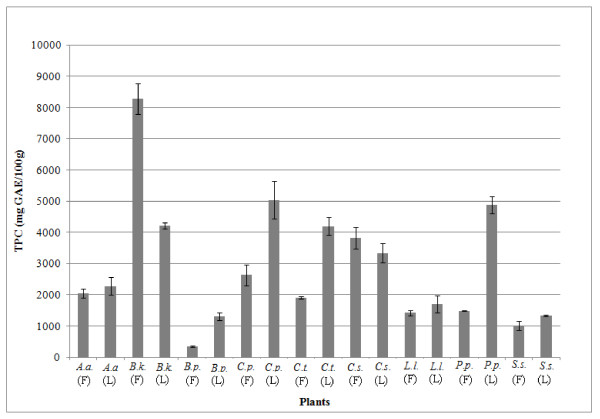
- Bauhinia kockiana flowers had the highest antioxidant measures reported: TPC 8280 ± 498 mg GAE/100 g, AEAC 14,600 ± 2360 mg AA/100 g, and IC50 27.0 ± 5.0 μg/mL for DPPH scavenging.
- Caesalpinia pulcherrima leaves also showed strong antioxidant activity, with TPC 5030 ± 602 mg GAE/100 g and IC50 50.0 ± 5.0 μg/mL.
- Across the set, TPC and free-radical scavenging were positively correlated; the paper reports R² = 0.9747 for TPC vs AEAC and R² = 0.9753 for TPC vs IC50.
- Most extracts inhibited Gram-positive bacteria at 1 mg, but none inhibited Gram-negative bacteria at the same dose; all extracts except Samanea saman flower inhibited the two MRSA strains, with MID values of 100–500 μg/disc.
Methods
- Nine plants were studied: A. auriculiformis, B. kockiana, B. purpurea, C. pulcherrima, C. tergemina, C. surattensis, L. leucocephala, P. pterocarpum, and S. saman; flowers and leaves were collected from Klang Valley, Peninsular Malaysia and voucher specimens MUM-LEGUM-001 to MUM-LEGUM-009 were deposited.
- Antioxidant assays used aqueous methanol extracts with Folin-Ciocalteu for total phenolics and DPPH for radical scavenging; antibacterial testing used dichloromethane:methanol and methanol crude extracts in Kirby-Bauer disc diffusion, followed by minimum inhibitory dosage (MID) testing for active extracts.
- Phytochemical screening used standard qualitative tests for flavonoids, tannins, saponins, alkaloids, steroids, and terpenoids; data were analyzed by one-way ANOVA with Duncan’s multiple range test.
Limitations
- The paper explicitly describes the findings as preliminary and says they are a guide for further pharmacological study and bioassay-guided isolation of active compounds.
- The text makes evident that the antibacterial work was limited to disc diffusion and MID screening, so it does not identify the specific compounds responsible for activity.
- The study only used qualitative phytochemical screening rather than quantifying individual phytochemicals in these extracts; this is evident from the methods and results.
Model-written summary. Check it against the paper before relying on it.
Integrity signals
Registry
Cites
Statistics
Figures
Verification
Claims the paper makes
0 Valid · 0 Not valid · 3 Not checked · 34 Own results and interpretations
A result the paper reports from its own data — it cites no other source for it, so there is none to check. The quote shows it is in the paper.
In the paper
“steroid (13 extracts)”
§ Assessment of phytochemical content, polyphenolic composition, antioxidant and antibacterial activities of Leguminosae medicinal plants in Peninsular Malaysia > Results > Phytochemical screening
plain- Asserted: passes — The authors put it forward as true.
- Checkable: passes — It can be checked against evidence.
- Load-bearing: unclear — It is unclear whether the paper’s conclusions depend on it.
- Based: passes — The paper gives a reason why it holds.
A result the paper reports from its own data — it cites no other source for it, so there is none to check. The quote shows it is in the paper.
In the paper
“S. saman flower did not exhibit any antibacterial activities towards both Gram positive and negative bacteria tested in this study.”
§ Assessment of phytochemical content, polyphenolic composition, antioxidant and antibacterial activities of Leguminosae medicinal plants in Peninsular Malaysia > Results > Antibacterial activity and minimum inhibitory dosage (MID) of extracts
plain- Asserted: passes — The authors put it forward as true.
- Checkable: passes — It can be checked against evidence.
- Load-bearing: unclear — It is unclear whether the paper’s conclusions depend on it.
- Based: passes — The paper gives a reason why it holds.
A result the paper reports from its own data — it cites no other source for it, so there is none to check. The quote shows it is in the paper.
In the paper
“Alkaloid was only present in 4 extracts”
§ Assessment of phytochemical content, polyphenolic composition, antioxidant and antibacterial activities of Leguminosae medicinal plants in Peninsular Malaysia > Results > Phytochemical screening
plain- Asserted: passes — The authors put it forward as true.
- Checkable: passes — It can be checked against evidence.
- Load-bearing: unclear — It is unclear whether the paper’s conclusions depend on it.
- Based: passes — The paper gives a reason why it holds.
A result the paper reports from its own data — it cites no other source for it, so there is none to check. The quote shows it is in the paper.
In the paper
“Tannin was detected in most of the extracts (14 extracts)”
§ Assessment of phytochemical content, polyphenolic composition, antioxidant and antibacterial activities of Leguminosae medicinal plants in Peninsular Malaysia > Results > Phytochemical screening
plain- Asserted: passes — The authors put it forward as true.
- Checkable: passes — It can be checked against evidence.
- Load-bearing: unclear — It is unclear whether the paper’s conclusions depend on it.
- Based: passes — The paper gives a reason why it holds.
A result the paper reports from its own data — it cites no other source for it, so there is none to check. The quote shows it is in the paper.
In the paper
“B. kockiana flowers and C. pulcherrima leaves contained high total phenolic content (TPC) and strong DPPH radical scavenging ability with TPC of 8280 ± 498 mg GAE/100 g, IC50 of 27.0 ± 5.0 μg/mL and TPC of 5030 ± 602 mg GAE/100 g, IC50 of 50.0 ± 5.0 μg/mL respectively.”
§ Assessment of phytochemical content, polyphenolic composition, antioxidant and antibacterial activities of Leguminosae medicinal plants in Peninsular Malaysia > Abstract > Results
plain- Asserted: passes — The authors put it forward as true.
- Checkable: passes — It can be checked against evidence.
- Load-bearing: passes — The paper’s conclusions depend on it.
- Based: passes — The paper gives a reason why it holds.
23 more claims
Create a free account to see all 37 claims and every source verdict.
- It may state two separate claims as one. 8
- Probably not a substantial claim. 1
Claims other papers make about this one
Each is checked against this paper’s own text: does it say what the citing paper says it does?
In the citing paper
“In plants, phytochemicals often act as protective agents against external stress and pathogenic invasion14, and some plant phytochemicals possess antimicrobial effects15.”
From Chiloscyphenol A derived from Chinese liverworts exerts fungicidal action by eliciting both mitochondrial dysfunction and plasma membrane destruction (2018) · cites this paper as [14]
Self-check
Percentages, sums and reported differences re-computed from the paper’s own numbers.
Rated major: it would touch a result — a value a result rests on, reported and recomputed p-values on opposite sides of the significance level, two passages that conflict with no sign which is right, or a cited work retracted before this paper was published.
In the paper
“B. purpurea flower consists of much lower TPC and AEAC (349 ± 26 mg GAE/100 g and 235 ± 35 mg AA/100 g respectively), and higher concentration of extract was needed to scavenge 50% of the free radicals (1690 ± 280 mg/mL).”
§ Assessment of phytochemical content, polyphenolic composition, antioxidant and antibacterial activities of Leguminosae medicinal plants in Peninsular Malaysia > Results > TPC and DPPH scavenging activity
Reported 1690 · recomputed 1410
Citations
Cites
Natural products as sources of new drugs over the last 25 years
Newman, D. J., & Cragg, G. M. (2007) · Journal of Natural Products · doi:10.1021/np068054v · Cited by 5,517 · cited 1×
“With the emergence of multiple strains of antibiotic resistance microorganism, great interest has been generated in search for potential compounds from plants for therapeutic, medicinal, aromatic and aesthetic uses [2,3].”
Antioxidant properties of resveratrol: A structure–activity insight
Gülçin, İ. (2010) · Innovative Food Science & Emerging Technologies · doi:10.1016/j.ifset.2009.07.002 · Cited by 894
In vitro Antimicrobial Activity and Phytochemical Analysis of Some Indian Medicinal Plants
Parekh, J., & Chanda, S. V. (2007) · DergiPark · Cited by 806
Antimicrobial activity of some ethnomedicinal plants used by Paliyar tribe from Tamil Nadu, India
Duraipandiyan, V., Ayyanar, M., & Ignacimuthu, S. (2006) · BMC Complementary and Alternative Medicine · doi:10.1186/1472-6882-6-35 · Cited by 703
Handbook of Phytochemical Constituents of GRAS Herbs and Other Economic Plants
Duke, J. A. (2017) · Handbook of Phytochemical Constituents of GRAS Herbs and Other Economic Plants · doi:10.1201/9780203752623-1 · Cited by 558
Screening of antioxidant activity and antioxidant compounds of some edible plants of Thailand
Chanwitheesuk, A., Teerawutgulrag, A., & Rakariyatham, N. (2005) · Food Chemistry · doi:10.1016/j.foodchem.2004.07.035 · Cited by 545
Aiyegoro, O. A., & Okoh, A. I. (2010) · BMC Complementary and Alternative Medicine · doi:10.1186/1472-6882-10-21 · Cited by 537
Siddhuraju, P. (2002) · Food Chemistry · doi:10.1016/s0308-8146(02)00179-6 · Cited by 526
Gülçin, İ., Bursal, E., Şehitoğlu, M. H., Bilsel, M., & Gören, A. C. (2010) · Food and Chemical Toxicology · doi:10.1016/j.fct.2010.05.053 · Cited by 440
Phenolic composition of Cynara cardunculus L. organs, and their biological activities
Falleh, H., Ksouri, R., Chaieb, K., Karray-Bouraoui, N., Trabelsi, N., Boulaaba, M., & Abdelly, C. (2008) · Comptes Rendus. Biologies · doi:10.1016/j.crvi.2008.02.008 · Cited by 411
Alves-Rodrigues, A., & Shao, A. (2004) · Toxicology Letters · doi:10.1016/j.toxlet.2003.10.031 · Cited by 407
Kaur, G. J., & Arora, D. S. (2009) · BMC Complementary and Alternative Medicine · doi:10.1186/1472-6882-9-30 · Cited by 394
Human Medicinal Agents from Plants
(1993) · ACS Symposium Series · doi:10.1021/bk-1993-0534 · Cited by 367
Relationship between antioxidant activity and maturity of peanut hulls
Yen, G. C., Duh, P. D., & Tsai, C. L. (1993) · Journal of Agricultural and Food Chemistry · doi:10.1021/jf00025a015 · Cited by 366
Antibiotic Resistance Caused by Gram‐Negative Multidrug Efflux Pumps
Nikaido, H. (1998) · Clinical Infectious Diseases · doi:10.1086/514920 · Cited by 348
Cameroonian Medicinal Plants: Pharmacology and Derived Natural Products
Kuete, V., & Efferth, T. (2010) · Frontiers in Pharmacology · doi:10.3389/fphar.2010.00123 · Cited by 321
Chew, Y.-L., Goh, J.-K., & Lim, Y.-Y. (2009) · Food Chemistry · doi:10.1016/j.foodchem.2009.01.091 · Cited by 275 · cited 10×
“13 mg/100 g) in extract would exhibit antioxidant activities [4].”
InfluentialSelf-citationANTIFUNGAL ACTIVITY OF SOME PLANT EXTRACTS AGAINST IMPORTANT SEED BORNE PATHOGENS OF ASPERGILLUS SP
Satish, S., & Mohana, D. C. (2007) · MyPrints@UOM (Mysore University Library) · Cited by 265
Screening of Zingiberaceae extracts for antimicrobial and antioxidant activities
Habsah, M., Amran, M., Mackeen, M. M., Lajis, N. H., Kikuzaki, H., Nakatani, N., Rahman, A. A., Ghafar, & Ali, A. M. (2000) · Journal of Ethnopharmacology · doi:10.1016/s0378-8741(00)00223-3 · Cited by 226
Kumar, A., Ilavarasan, R., Jayachandr, T., Decaraman, M., Aravindhan, P., Padmanabha, N., & Krishnan, M. R. V. (2008) · Pakistan Journal of Nutrition · doi:10.3923/pjn.2009.83.85 · Cited by 201
Antimicrobial activity of saponins from Acacia auriculiformis
Mandal, P., Sinha Babu, S. P., & Mandal, N. C. (2005) · Fitoterapia · doi:10.1016/j.fitote.2005.03.004 · Cited by 193
Xue, W., Li, X., Zhang, J., Liu, Y., Wang, Z., & Zhang, R. (2007) · PubMed · Cited by 170
Plant-Derived Natural Products in Drug Discovery and Development
Balandrin, M. F., Kinghorn, A. D., & Farnsworth, N. R. (1993) · ACS symposium series · doi:10.1021/bk-1993-0534.ch001 · Cited by 136
Tanaka, H., Satô, M., Fujiwara, S., et al. (2002) · Letters in Applied Microbiology · doi:10.1046/j.1472-765x.2002.01222.x · Cited by 126
Blechnum Orientale Linn - a fern with potential as antioxidant, anticancer and antibacterial agent
Lai, H. Y., Lim, Y. Y., & Kim, K. H. (2010) · BMC Complementary and Alternative Medicine · doi:10.1186/1472-6882-10-15 · Cited by 121 · cited 2×
“The antibacterial assay was performed using disc diffusion (Kirby-Bauer) method [1].”
Self-citationFlavanoids from Caesalpinia pulcherrima
Srinivas, K., Rao, Y. K., Mahender, I., et al. (2003) · Phytochemistry · doi:10.1016/s0031-9422(03)00325-x · Cited by 118
Antimicrobial activity of Caesalpinia pulcherrima, Euphorbia hirta and Asystasia gangeticum
Sudhakar, M., Rao, C. V., Rao, P. M., et al. (2006) · Fitoterapia · doi:10.1016/j.fitote.2006.02.011 · Cited by 116
Jo, E., Kim, S., Ra, J., Kim, S., Cho, S., Jung, J. W., Yang, S.-J., PARK, J., Hwang, J., & Aruoma, O. I. (2005) · Cancer Letters · doi:10.1016/j.canlet.2004.12.038 · Cited by 113
del Baño, M. J., Lorente, J., Castillo, J., et al. (2004) · Journal of Agricultural and Food Chemistry · doi:10.1021/jf040078p · Cited by 102
Mimosine in Leucaena as a potent bio-herbicide
Xuan, T. D., Elzaawely, A. A., Deba, F., et al. (2006) · Agronomy for Sustainable Development · doi:10.1051/agro:2006001 · Cited by 100
Antimicrobial screening of some Caesalpiniaceae
Ali, S., Azhar, I., Amtul, Z., et al. (1999) · Fitoterapia · doi:10.1016/s0367-326x(99)00015-5 · Cited by 93
New Furanoid Diterpenes from Caesalpinia p ulcherrima
Ragasa, C. Y., Hofileña, J. G., & Rideout, J. A. (2002) · Journal of Natural Products · doi:10.1021/np0201523 · Cited by 93
PLANT-DERIVED NATURAL PRODUCTS IN DRUG DISCOVERY AND DEVELOPMENT: AN OVERVIEW
Bahar, M., Deng, Y., Fletcher, J. N., & Kinghorn, A. D. (2007) · WORLD SCIENTIFIC eBooks · doi:10.1142/9789812790781_0002 · Cited by 84
Mihara, R., Barry, K., Mohammed, C. L., & Mitsunaga, T. (2005) · Journal of Chemical Ecology · doi:10.1007/s10886-005-3544-x · Cited by 80
Soedarjo, M., & Borthakur, D. (1998) · Soil Biology and Biochemistry · doi:10.1016/s0038-0717(97)00180-6 · Cited by 79
A phytochemical survey of the Australian species of Acacia
Tindale, M. D., & Roux, D. G. (1969) · Phytochemistry · doi:10.1016/s0031-9422(00)85959-2 · Cited by 75
Handbook of Phytochemical Constituents of GRAS Herbs and other Economic Plants
Heinrich, M. (2001) · Journal of Ethnopharmacology · doi:10.1016/s0378-8741(01)00343-9 · Cited by 71
Antioxidant Activity of Some Edible Yemeni Plants Evaluated by Ferrylmyoglobin/ABTS*+ Assay.
Al-zoreky, N. S., & Nakahara, K. (2001) · Food Science and Technology Research · doi:10.3136/fstr.7.141 · Cited by 71
ChemInform Abstract: Plant‐Derived Natural Products in Drug Discovery and Development
Balandrin, M. F., Kinghorn, A. D., & Farnsworth, N. R. (1994) · ChemInform · doi:10.1002/chin.199420315 · Cited by 67
Preliminary phytochemical screening and antimicrobial activity of Samanea saman
Prasad, R. N., Viswanathan, S., Devi, J. R., Nayak, V., Swetha, V. C., Archana, B., Parathasarathy, N., & Rajkumar, J. (2008) · Global Journal of Cardiology · doi:10.5897/jmpr.9001040 · Cited by 63
Cassane Diterpenoids of Caesalpinia pulcherrima
Roach, J. S., McLean, S., Reynolds, W. F., et al. (2003) · Journal of Natural Products · doi:10.1021/np0302955 · Cited by 57
Bernhard-Reversat, F. (1999) · Applied Soil Ecology · doi:10.1016/s0929-1393(99)00005-0 · Cited by 56
Parekh, J., & Chanda, S. V. (2008) · AFRICAN JOURNAL OF BIOTECHNOLOGY · doi:10.4314/ajb.v7i23.59587 · Cited by 48
Antitubercular Cassane Furanoditerpenoids from the Roots ofCaesalpinia pulcherrima
Promsawan, N., Kittakoop, P., Boonphong, S., et al. (2003) · Planta Medica · doi:10.1055/s-2003-42782 · Cited by 44
Antifungal potentiality of some plant extracts againstFusariumsp.
Satish, S., Raghavendra, M. P., & Raveesha, K. A. (2008) · Archives of Phytopathology and Plant Protection · doi:10.1080/03235400701287578 · Cited by 44
Isolation and structure elucidation of three triterpenoid saponins from Acacia auriculiformis
Garai, S., & Mahato, S. B. (1997) · Phytochemistry · doi:10.1016/s0031-9422(96)00399-8 · Cited by 38
Auriculoside, a new flavan glycoside from Acacia auriculiformis
Sahai, R., Agarwal, S. K., & Rastogi, R. P. (1980) · Phytochemistry · doi:10.1016/0031-9422(80)80226-3 · Cited by 36
Is, A. K. M. N., Ali, M., Sayeed, A., et al. (2003) · Asian Journal of Plant Sciences · doi:10.3923/ajps.2003.1162.1165 · Cited by 29
Effect of post‐harvest treatment on the degradation of mimosine in Leucaena leucocephala leaves
Wee, K. L., & Wang, S. (1987) · Journal of the Science of Food and Agriculture · doi:10.1002/jsfa.2740390302 · Cited by 27
Bhattacharya, S., Kamat, J. P., Bandyopadhyay, S. K., & Chattopadhyay, S. (2008) · Food Chemistry · doi:10.1016/j.foodchem.2008.08.047 · Cited by 24
Screening of Indonesian Plants for Antifungal and Free Radical Scavenging Activities
Cavin, A., Dyatmyko, W., & Hostettmann, K. (1999) · Pharmaceutical Biology · doi:10.1076/phbi.37.4.260.5800 · Cited by 21
Phytochemical Screening of Some Indian Medicinal Plant Species Part II
Mukherjee, K., & Ray, L. N. (1986) · International Journal of Crude Drug Research · doi:10.3109/13880208609060898 · Cited by 11
Antibacterial Activity of the Broad Bean Extracts on Resistant Bacteria
Peyvast, G., & Khorsandi, Z. (2007) · Pakistan Journal of Biological Sciences · doi:10.3923/pjbs.2007.398.402 · Cited by 7
Research works printed but not linked: 1
- Samee W Vorarat S Simultaneous determination of gallic acid, catechin, rutin, ellagic acid and quercetin in flower extracts of Michelia alba, Caesalpinia pulcherrima and Nelumbo nucifera by HPLC Thai Pharm Health Sci J 2008 2 2 131 137
Cited by
Review on Natural Preservatives for Extending Fish Shelf Life
Mei, J., Ma, X., & Xie, J. (2019) · Foods · doi:10.3390/foods8100490 · Cited by 269
Borges, A., José, H., Homem, V., & Simões, M. (2020) · Antibiotics · doi:10.3390/antibiotics9020048 · Cited by 184
α-Glucosidase and α-Amylase Inhibitory Activity of Senna surattensis
Thilagam, E., Parimaladevi, B., Kumarappan, C., & Chandra Mandal, S. (2013) · Journal of Acupuncture and Meridian Studies · doi:10.1016/j.jams.2012.10.005 · Cited by 185
“ApreliminaryphytochemicalanalysisofEESSrevealedthe presence of polyphenols, flavonoids, flavonol, and flavonol glycosides, including rutin, quercetin, and kaempferol [35,36].”
Ong, H. G., & Kim, Y. (2014) · Journal of Ethnopharmacology · doi:10.1016/j.jep.2014.09.015 · Cited by 185
A REVIEW ON ANTIOXIDANT METHODS
Dontha, S. (2016) · Asian Journal of Pharmaceutical and Clinical Research · doi:10.22159/ajpcr.2016.v9s2.13092 · Cited by 234
Metadata
- Authors
- Chew, Y. L., Ling Chan, E. W., Tan, P. L., Lim, Y. Y., Stanslas, J., & Goh, J. K.
- Affiliations
- Monash University Malaysia (MY)
- Universiti Putra Malaysia (MY)
- Corresponding author
- Goh, Joo Kheng
- Venue
- BMC Complementary and Alternative Medicine
- Published
- 2011-02-10
- Volume
- 11
- Issue
- 1
- Pages
- 12-12
- ISSN
- 1472-6882 (ISSN-L)
- PMC
- PMC3045388
- OpenAlex
- W2022621558
- Cited by
- 202
- References
- 53
- Citations by year
- 2026: 6 · 2025: 4 · 2024: 9 · 2023: 16 · 2022: 21 · 2021: 25 · 2020: 17 · 2019: 13 · 2018: 16 · 2017: 12 · 2016: 13 · 2015: 11 · 2014: 17 · 2013: 6 · 2012: 9
- FWCI
- 14.61
- Type
- journal article
- Language
- en
- Open access
- gold
- doi.org
- Licence
- Locations
- BMC Complementary and Alternative Medicine (publishedVersion, cc-by)
- PubMed Central (publishedVersion, cc-by)
- PubMed (publishedVersion)
- Universiti Putra Malaysia Institutional Repository (Universiti Putra Malaysia) (acceptedVersion)
- DOAJ (DOAJ: Directory of Open Access Journals) (submittedVersion, cc-by-sa)
- Greater South Information System
- Funders
- Monash University
- Universiti Putra Malaysia
- Topics
- Life Sciences › Agricultural and Biological Sciences › Plant Science › Medicinal Plant Research
- Health Sciences › Medicine › Biochemistry (medical) › Phytochemicals and Antioxidant Activities
- Life Sciences › Agricultural and Biological Sciences › Plant Science › Phytochemistry and Biological Activities
- Keywords
- Fabaceae, medicinal plants, phytochemical screening, total phenolic content, antioxidant activity, antibacterial activity, methicillin-resistant Staphylococcus aureus, Caesalpinia pulcherrima, Bauhinia purpurea, Leucaena leucocephala, Samanea saman, Peninsular Malaysia
- MeSH terms
- Anti-Bacterial Agents, Antioxidants, Bacteria, Flavonoids, Fabaceae, Malaysia, Phytotherapy, Phenols, Plant Extracts, Plants, Medicinal, Plant Leaves, Flowers, Methicillin-Resistant Staphylococcus aureus, Polyphenols
About these checks
Registry, retraction, Cites and statistics results are computed, not judged, with one exception: a printed reference that no index lists is read once by a model before it counts as a citation error. Claims are extracted by a model and kept only when their quote appears verbatim in the text; each cited source is then checked, with a model’s help, for whether it says what the claim relies on. Those verdicts can be wrong — read the claim’s quote and the cited source before relying on one.
A language model drew the claims from the paper on 2026-10-10, under version 3 of the claim definition (model deepseek-v4.1-flash, prompt extract-v3).
A second model labelled each claim on 2026-10-10 (model jev-1.13-20260917, definition revision gold-guideline-v0.2).
Statistics and arithmetic are recomputed, not judged.
Confidence bands are shown only for fields calibrated on our annotated test set. None is calibrated yet, so no band is shown.
What counts as a claim ›How we measure confidence ›How we check this ›
Are you an author, or do you see a problem with this page? Request a review
Data sources
Bibliographic data: Semantic Scholar, OpenAlex, Crossref.
Contains information from the Semantic Scholar Academic Graph Datasets, made available under the ODC Attribution License (ODC-BY 1.0).
Semantic Scholar’s data is described in: Kinney, R., et al. (2023). The Semantic Scholar Open Data Platform. arXiv:2301.10140.
