

Mindfulness-based stress reduction for low back pain. A systematic review
Open accessThe DOI matches its Crossref record; 39 of the 39 references it cites were found in a registry or an index.
Abstract
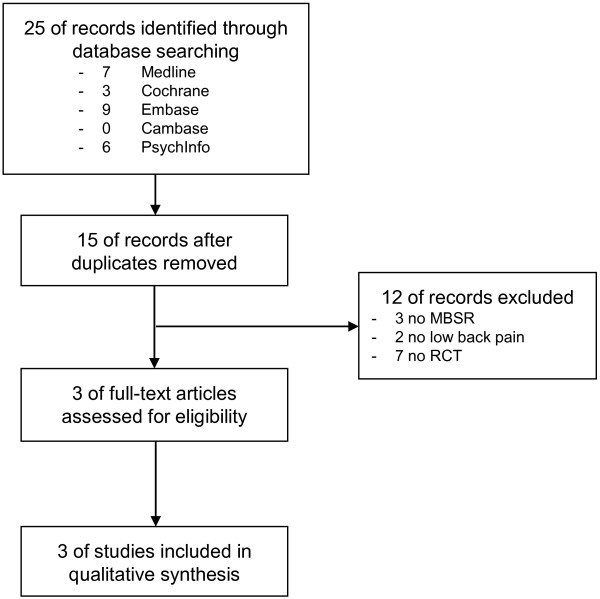
BACKGROUND: Mindfulness-based stress reduction (MBSR) is frequently used for pain conditions. While systematic reviews on MBSR for chronic pain have been conducted, there are no reviews for specific pain conditions. Therefore a systematic review of the effectiveness of MBSR in low back pain was performed. METHODS: MEDLINE, the Cochrane Library, EMBASE, CAMBASE, and PsycInfo were screened through November 2011. The search strategy combined keywords for MBSR with keywords for low back pain. Randomized controlled trials (RCTs) comparing MBSR to control conditions in patients with low back pain were included. Two authors independently assessed risk of bias using the Cochrane risk of bias tool. Clinical importance of group differences was assessed for the main outcome measures pain intensity and back-specific disability. RESULTS: Three RCTs with a total of 117 chronic low back pain patients were included. One RCT on failed back surgery syndrome reported significant and clinically important short-term improvements in pain intensity and disability for MBSR compared to no treatment. Two RCTs on older adults (age ≥ 65 years) with chronic specific or non-specific low back pain reported no short-term or long-term improvements in pain or disability for MBSR compared to no treatment or health education. Two RCTs reported larger short-term improvements of pain acceptance for MBSR compared to no treatment. CONCLUSION: This review found inconclusive evidence of effectiveness of MBSR in improving pain intensity or disability in chronic low back pain patients. However, there is limited evidence that MBSR can improve pain acceptance. Further RCTs with larger sample sizes, adequate control interventions, and longer follow-ups are needed before firm conclusions can be drawn.
Overview
The claims and statistics of this paper haven’t been checked yet.
Free: it reads the open-access text and checks the first 5 claims that cite a source we can check. Create a free account to check every claim.
Integrity signals
Registry
Cites
Statistics
Figures
Verification
Claims the paper makes
The claims and statistics of this paper haven’t been checked yet.
Free: it reads the open-access text and checks the first 5 claims that cite a source we can check. Create a free account to check every claim.
Claims other papers make about this one
Each is checked against this paper’s own text: does it say what the citing paper says it does?
The source backs part of the claim, not all of it — or backs it for a different population, condition or comparison.
In the citing paper
“In addition, studies on Mindfulness-Based Stress Reduction (MBSR) program report decreasing pain intensity and disability (Cramer et al., 2012).”
From The Development of Mindful-Based Dance Movement Therapy Intervention for Chronic Pain: A Pilot Study With Chronic Headache Patients (2021) · cites this paper as Cramer et al., 2012
Experimental — accuracy not yet measuredThe cited source says what the claim attributes to it.
In the citing paper
“Information on stress management was adapted from principles of Mindfulness Based Stress Reduction (MBSR) [16], a promising mind-body intervention [28–31].”
From Engaging women with an embodied conversational agent to deliver mindfulness and lifestyle recommendations: A feasibility randomized control trial (2017) · cites this paper as [30]
In the citing paper
“published work does show that MBIs generally improve depression, pain acceptance, coping, and the ability to better control pain in people with chronic pain conditions [28–33].”
From Mindfulness and physical disease: a concise review (2019) · cites this paper as [31]
In the citing paper
“For clinical population, highlights the decrease in pain intensity, stress, and psychological complaints among patients suffering from diverse chronic pain/inflammatory diseases (Cramer et al., 2012; Lauche et al., 2013) and cancer (Ledesma and Kumano, 2009).”
From Mindfulness and Emotion Regulation: Insights from Neurobiological, Psychological, and Clinical Studies (2017) · cites this paper as Cramer et al., 2012
Self-check
Percentages, sums and reported differences re-computed from the paper’s own numbers.
The self-check needs the paper’s full text.
Citations
Cites
Preferred Reporting Items for Systematic Reviews and Meta-Analyses: the PRISMA statement
Moher, D., Liberati, A., Tetzlaff, J., Altman, D. G., & for the PRISMA Group (2009) · BMJ · doi:10.1136/bmj.b2535 · Cited by 83,823
Preferred Reporting Items for Systematic Reviews and Meta-Analyses: The PRISMA Statement
Moher, D., Liberati, A., Tetzlaff, J., Altman, D. G., & The PRISMA Group (2009) · PLoS Medicine · doi:10.1371/journal.pmed.1000097 · Cited by 64,042
Preferred reporting items for systematic reviews and meta-analyses: the PRISMA Statement.
(2009) · PubMed Central · Cited by 44,859
Preferred reporting items for systematic reviews and meta-analyses: The PRISMA statement
Moher, D., Liberati, A., Tetzlaff, J., Altman, D. G., & the PRISMA Group* (2009) · Annals of Internal Medicine · doi:10.7326/0003-4819-151-4-200908180-00135 · Cited by 37,554
(2008) · Medical Entomology and Zoology · Cited by 7,477
Cochrane Handbook for Systematic Reviews of Interventions Version 5.0.1. The Cochrane Collaboration
Higgins, J. P. T., Green, S. R., & Higgins, J. P. T. (2008) · Cited by 7,259
Mindfulness: A proposed operational definition.
Bishop, S. R., Lau, M., Shapiro, S., Carlson, L., Anderson, N. D., Carmody, J., Segal, Z. V., Abbey, S., Speca, M., Velting, D., et al. (2004) · Clinical Psychology: Science and Practice · doi:10.1093/clipsy.bph077 · Cited by 7,234 · cited 2×
“While mindfulness has been described as the core construct of Buddhist meditation [5], it also comprises a specific state of consciousness that has been characterized as non-elaborative, non-judgmental moment-to moment awareness, a way to accept and trust in one’s own experience [6].”
BackgroundEisenberg, D. M., Davis, R. B., Ettner, S. L., Appel, S., Wilkey, S., Van Rompay, M., & Kessler, R. C. (1998) · JAMA · doi:10.1001/jama.280.18.1569 · Cited by 6,658 · cited 1×
“Low back pain is the most common condition for which complementary therapies are used [3].”
BackgroundMindfulness training as a clinical intervention: a conceptual and empirical review
Baer, R. A. (2003) · Clinical Psychology: Science and Practice · doi:10.1093/clipsy.bpg015 · Cited by 4,577 · cited 1×
“Pain has been a key topic of research on MBSR from the beginning [9].”
BackgroundMindfulness training as a clinical intervention: A conceptual and empirical review.
Baer, R. A. (2003) · Clinical Psychology: Science and Practice · doi:10.1093/clipsy/bpg015 · Cited by 4,576
Cited by
Mindfulness Meditation for Chronic Pain: Systematic Review and Meta-analysis
Hilton, L., Hempel, S., Ewing, B. A., Apaydin, E., Xenakis, L., Newberry, S., Colaiaco, B., Maher, A. R., Shanman, R. M., Sorbero, M. E., et al. (2017) · Annals of Behavioral Medicine · doi:10.1007/s12160-016-9844-2 · Cited by 977
“Of those that report pain outcomes, several have focused on specific types of pain such as low back pain [13], fibromyalgia [15], or somatization disorder [16].”
BackgroundCherkin, D. C., Sherman, K. J., Balderson, B. H., Cook, A. J., Anderson, M. L., Hawkes, R. J., Hansen, K. E., & Turner, J. A. (2016) · JAMA · doi:10.1001/jama.2016.2323 · Cited by 729
Hannibal, K. E., & Bishop, M. D. (2014) · Physical Therapy · doi:10.2522/ptj.20130597 · Cited by 729
Guendelman, S., Medeiros, S., & Rampes, H. (2017) · Frontiers in Psychology · doi:10.3389/fpsyg.2017.00220 · Cited by 577
“For clinical population, highlights the decrease in pain intensity, stress, and psychological complaints among patients suffering from diverse chronic pain/inflammatory diseases (Cramer et al., 2012; Lauche et al., 2013) and cancer (Ledesma and Kumano, 2009).”
BackgroundGotink, R. A., Chu, P., Busschbach, J. J. V., Benson, H., Fricchione, G. L., & Hunink, M. G. M. (2015) · PLOS ONE · doi:10.1371/journal.pone.0124344 · Cited by 539
“Quality of life favoured MBSR compared to the health education program but did not reach statistical significance when compared to wait list control [23].”
ResultRetractedTurner, J. A., Anderson, M. L., Balderson, B. H., Cook, A. J., Sherman, K. J., & Cherkin, D. C. (2016) · Pain · doi:10.1097/j.pain.0000000000000635 · Cited by 281
“Increased mindfulness is considered a central mechanism of change in MBIs,(14,26,30) which also increase pain acceptance.(16,21,27,38,59) However, little is known about the associations among pain catastrophizing, self-efficacy, acceptance, and mindfulness before psychosocial treatment or about differences in effects…”
BackgroundLauche, R., Cramer, H., Dobos, G., Langhorst, J., & Schmidt, S. (2013) · Journal of Psychosomatic Research · doi:10.1016/j.jpsychores.2013.10.010 · Cited by 268
“Systematic reviews have already shown that MBSRmight be effective for chronic pain conditions [10–12] and for mental problems such as stress, depression and anxiety [13,14] however no review has been undertaken to determine the effects of MBSR for the treatment of FMS in particular.”
BackgroundFailed back surgery syndrome: current perspectives
Baber, Z., & Erdek, M. (2016) · Journal of Pain Research · doi:10.2147/jpr.s92776 · Cited by 232
“Other conservative measures that may help postoperative back pain involve psychotherapy measures including stress reduction and cognitive behavioral therapy.(46) Finally, noninvasive procedures including acupuncture and scrambler therapy can be used to minimize the pain associated with FBSS.”
Does mindfulness improve outcomes in patients with chronic pain? Systematic review and meta-analysis
Bawa, F. L. M., Mercer, S. W., Atherton, R. J., Clague, F., Keen, A., Scott, N. W., & Bond, C. M. (2015) · British Journal of General Practice · doi:10.3399/bjgp15x685297 · Cited by 197
Maynard, B. R., Solis, M. R., Miller, V. L., & Brendel, K. E. (2017) · Campbell Systematic Reviews · doi:10.4073/csr.2017.5 · Cited by 157
Gardiner, P. M., McCue, K. D., Negash, L. M., Cheng, T., White, L. F., Yinusa-Nyahkoon, L., Jack, B. W., & Bickmore, T. W. (2017) · Patient Education and Counseling · doi:10.1016/j.pec.2017.04.015 · Cited by 139
Evaluation and Treatment of Low Back Pain
Hooten, W. M., & Cohen, S. P. (2015) · Mayo Clinic Proceedings · doi:10.1016/j.mayocp.2015.10.009 · Cited by 180
“Recent evidence suggests that this form of treatment may lead to improvements in pain acceptance, but evidence supporting its effectiveness in improving pain intensity and physical functioning remains inconclusive.(175)”
ResultLi, S. Y. H., & Bressington, D. (2019) · International Journal of Mental Health Nursing · doi:10.1111/inm.12568 · Cited by 142
“The application of mindfulness principles and practices in health care started around 1979 when KabatZinn reported a psychosocial intervention, the mindfulness-based stress reduction (MBSR) programme, which was designed specifically to help with long-term pain and stress-related disorders (Chiesa & Serretti 2011; Cram…”
Simon, J. I., McAuliffe, M., Shamim, F., Vuong, N., & Tahaei, A. (2014) · Physical Medicine and Rehabilitation Clinics of North America · doi:10.1016/j.pmr.2014.01.006 · Cited by 144
“There are inconclusive data that meditation is helpful for improving outcomes with chronic lower back pain.(80) Mind-body strategies have shown benefit compared with patient education.”
BackgroundZgierska, A. E., Burzinski, C. A., Cox, J., Kloke, J., Stegner, A., Cook, D. B., Singles, J., Mirgain, S., Coe, C. L., & Bačkonja, M. (2016) · Pain Medicine · doi:10.1093/pm/pnw006 · Cited by 134
Zhang, J.-X., Liu, X.-H., Xie, X.-H., Zhao, D., Shan, M.-S., Zhang, X.-L., Kong, X.-M., & Cui, H. (2015) · EXPLORE · doi:10.1016/j.explore.2015.02.005 · Cited by 119
“MBSR is the most commonly used mindfulness-based intervention.(29) Because of its simplicity and effectiveness, it has been widely used to treat insomnia or as an adjunct therapy, and it has been reported to significantly and efficiently improve sleep quality in several types of patients, such as cancer patients,(30,3…”
MethodPsychological interventions in the treatment of chronic itch
Schut, C., Mollanazar, N., Kupfer, J., Gieler, U., & Yosipovitch, G. (2016) · Acta Dermato-Venereologica · doi:10.2340/00015555-2177 · Cited by 119
Amirdelfan, K., Webster, L. R., Poree, L. R., Sukul, V., & McRoberts, P. (2017) · Spine · doi:10.1097/brs.0000000000002217 · Cited by 123
Efficacy of mindfulness meditation for smoking cessation: a systematic review and meta-analysis
Maglione, M. A., Maher, A. R., Ewing, B., Colaiaco, B., Newberry, S., Kandrack, R., Shanman, R. M., Sorbero, M. E., & Hempel, S. (2017) · Addictive Behaviors · doi:10.1016/j.addbeh.2017.01.022 · Cited by 101
Mindfulness-and acceptance-based interventions for psychosis: A systematic review and meta-analysis
Cramer, H., Lauche, R., Haller, H., Langhorst, J., & Dobos, G. (2016) · Global Advances in Health and Medicine · doi:10.7453/gahmj.2015.083 · Cited by 96
Self-citationDoes mindfulness meditation improve chronic pain? A systematic review
Ball, E. F., Nur Shafina Muhammad Sharizan, E., Franklin, G., & Rogozińska, E. (2017) · Current Opinion in Obstetrics & Gynecology · doi:10.1097/gco.0000000000000417 · Cited by 91
Day, M. A., Ward, L. C., Ehde, D. M., Thorn, B. E., Burns, J., Barnier, A., Mattingley, J. B., & Jensen, M. P. (2019) · Pain Medicine · doi:10.1093/pm/pny273 · Cited by 91
O’Keeffe, M., Purtill, H., Kennedy, N., Conneely, M., Hurley, J. A., O’Sullivan, P., Dankaerts, W., & O’Sullivan, K. (2016) · Journal of Pain · doi:10.1016/j.jpain.2016.01.473 · Cited by 112
“In addition, positive effects are once again most evident when compared with minimal interventions, placebo, or waiting list control groups.(21,30,47,86,106,127) Combined interventions aim to target physical and behavioral/psychological factors contributing to a”
BackgroundMindfulness and physical disease: a concise review
Greeson, J. M., & Chin, G. R. (2019) · Current Opinion in Psychology · doi:10.1016/j.copsyc.2018.12.014 · Cited by 85
Herman, P. M., Anderson, M. L., Sherman, K. J., Balderson, B. H., Turner, J. A., & Cherkin, D. C. (2017) · Spine · doi:10.1097/brs.0000000000002344 · Cited by 86
Mindfulness meditation for workplace wellness: An evidence map
Hilton, L. G., Marshall, N. J., Motala, A., Taylor, S. L., Miake-Lye, I. M., Baxi, S., Shanman, R. M., Solloway, M. R., Beroesand, J. M., & Hempel, S. (2019) · Work · doi:10.3233/wor-192922 · Cited by 77
Michaelsen, M. M., Graser, J., Onescheit, M., Tuma, M. P., Werdecker, L., Pieper, D., & Esch, T. (2023) · Mindfulness · doi:10.1007/s12671-023-02130-7 · Cited by 70
“…2012; Goyal et al., 2014; Ospina et al., 2007; Querstret et al., 2020), for mental disorders (Sedlmeier et al., 2012; Van-campfort et al., 2021; Virgili, 2015) and for specific medical indications, e.g., chronic pain or breast cancer (Crain et al., 2017; Cramer et al., 2012a, b; Khoo et al., 2019).”
Psychological Treatment Strategy for Chronic Low Back Pain
Ikemoto, T., Miki, K., Matsubara, T., & Wakao, N. (2019) · Spine Surgery and Related Research · doi:10.22603/ssrr.2018-0050 · Cited by 67
Barbari, V., Storari, L., Ciuro, A., & Testa, M. (2019) · Patient Education and Counseling · doi:10.1016/j.pec.2019.11.031 · Cited by 85
Omidi, A., & Zargar, F. (2014) · Nursing and Midwifery Studies · doi:10.17795/nmsjournal21136 · Cited by 61
Burns, J. W., Jensen, M. P., Thorn, B., Lillis, T. A., Carmody, J., Newman, A. K., & Keefe, F. (2022) · Pain · doi:10.1097/j.pain.0000000000002357 · Cited by 58
Mochizuki, H., Schut, C., Nattkemper, L. A., & Yosipovitch, G. (2016) · Allergology International · doi:10.1016/j.alit.2016.08.013 · Cited by 69
Blödt, S., Pach, D., Roll, S., & Witt, C. M. (2014) · Trials · doi:10.1186/1745-6215-15-490 · Cited by 57
“There has been encouraging evidence from a systematic review that showed that guided imagery can reduce musculoskeletal pain [36] and limited evidence that ‘mindfulness-based’ stress reduction improves pain acceptance [37].”
BackgroundVictorson, D., Kentor, M., Maletich, C., Lawton, R. C., Kaufman, V. H., Borrero, M., Languido, L., Lewett, K., Pancoe, H., & Berkowitz, C. (2015) · American Journal of Lifestyle Medicine · doi:10.1177/1559827614537789 · Cited by 68
Zgierska, A. E., Burzinski, C. A., Cox, J., Kloke, J., Singles, J., Mirgain, S., Stegner, A., Cook, D. B., & Bačkonja, M. (2016) · The Journal of Alternative and Complementary Medicine · doi:10.1089/acm.2015.0314 · Cited by 53
Solati, K., Mousavi, M., Kheiri, S., & Hasanpour-Dehkordi, A. (2017) · Oman Medical Journal · doi:10.5001/omj.2017.73 · Cited by 48
Jay, K., Brandt, M., Jakobsen, M. D., Sundstrup, E., Berthelsen, K. G., schraefel, M., Sjøgaard, G., & Andersen, L. L. (2016) · Medicine · doi:10.1097/md.0000000000003945 · Cited by 45
Taylor, S. J., Carnes, D., Homer, K., Pincus, T., Kahan, B. C., Hounsome, N., Eldridge, S., Spencer, A., Diaz-Ordaz, K., Rahman, A., et al. (2016) · Programme Grants for Applied Research · doi:10.3310/pgfar04140 · Cited by 44
“Characteristic Sylheti speaking (N= 26), n (%) English speaking (N= 48), n (%) Employment Employed 1 (4) 13 (27) Family/home keeper 8 (31) 5 (10) Retired 1 (4) 8 (17) Unable to work because of ill health 4 (15) 17 (35) Unemployed 3 (12) 5 (10) Missing 9 (35) 0 (0) Education None 3 (12) 1 (2) Until < 12 years 4 (15) 0…”
Michalsen, A., Kunz, N., Jeitler, M., Brunnhuber, S., Meier, L., Lüdtke, R., Büssing, A., & Keßler, C. S. (2016) · Complementary Therapies in Medicine · doi:10.1016/j.ctim.2016.03.010 · Cited by 54
Ramond‐Roquin, A., Bouton, C., Gobin-Tempereau, A.-S., Airagnes, G., Richard, I., Roquelaure, Y., & Huez, J.-F. (2014) · Family Practice · doi:10.1093/fampra/cmu008 · Cited by 46
Cramer, H., Lauche, R., Daubenmier, J. J., Mehling, W. E., Büssing, A., Saha, F. J., Dobos, G., & Shields, S. A. (2018) · PLoS ONE · doi:10.1371/journal.pone.0193000 · Cited by 45
Linden, M., Scherbe, S., & Cicholas, B. (2014) · Journal of Back and Musculoskeletal Rehabilitation · doi:10.3233/bmr-140518 · Cited by 40
“its to physicians, disability and can improve the long term course [7–20].”
Jeitler, M., Brunnhuber, S., Meier, L., Lüdtke, R., Büssing, A., Keßler, C. S., & Michalsen, A. (2014) · Journal of Pain · doi:10.1016/j.jpain.2014.10.009 · Cited by 41
Mindfulness and Physical Activity
Kennedy, A. B., & Resnick, P. B. (2015) · American Journal of Lifestyle Medicine · doi:10.1177/1559827614564546 · Cited by 52
Cherkin, D. C., Sherman, K. J., Balderson, B. H., Turner, J. A., Cook, A. J., Stoelb, B., Herman, P. M., Deyo, R. A., & Hawkes, R. J. (2014) · Trials · doi:10.1186/1745-6215-15-211 · Cited by 39
“Only a few small pilot trials have evaluated the effectiveness of MBSR for back pain [25,26] and all reported improvements in pain intensity [27] or patients’ acceptance of pain [28,29].”
BackgroundA Mixed-Methods Pilot Study of Mindfulness-Based Stress Reduction for HIV-Associated Chronic Pain
George, M. C., Wongmek, A., Kaku, M., Nmashie, A., & Robinson-Papp, J. (2017) · Behavioral Medicine · doi:10.1080/08964289.2015.1107525 · Cited by 38
Endogenous Modulation of Pain: The Role of Exercise, Stress, and Cognitions in Humans
Vægter, H. B., Fehrmann, E., Gajsar, H., & Kreddig, N. (2019) · Clinical Journal of Pain · doi:10.1097/ajp.0000000000000788 · Cited by 45
Mechanisms, mechanisms, mechanisms: it really does all boil down to mechanisms
Burns, J. W. (2016) · Pain · doi:10.1097/j.pain.0000000000000696 · Cited by 37
“Commentary Mechanisms, mechanisms, mechanisms: it really does all boil down to mechanisms John W. Burns Results from randomized controlled trials (RCTs) suggest thatcognitive behavioral therapy (CBT), mindfulness-based stress reduction (MBSR), and acceptance and commitment therapy (ACT) produce at least modest gains i…”
BackgroundGordon, W. V., Shonin, E., & Griffiths, M. D. (2015) · Mindfulness · doi:10.1007/s12671-015-0458-8 · Cited by 45
“…exists for the use ofMBIs in treating each of the other key symptoms of FMS including anxiety (Vøllestad 2015), chronic pain (Chiesa and Serretti 2011; Cramer et al. 2012), sleep disturbance (Britton et al. 2012), fatigue (Rimes and Wingrove 2013) and cognitive dysfunction (Stange et al. 2011).”
BackgroundYang, Y., Liu, Y.-H., Zhang, H.-F., & Liu, J.-Y. (2015) · International Journal of Nursing Sciences · doi:10.1016/j.ijnss.2015.07.003 · Cited by 36
Mindfulness-based Interventions for Chronic Low Back Pain: A Systematic Review and Meta-analysis
Paschali, M., Lazaridou, A., Sadora, J., Papianou, L., Garland, E. L., Zgierska, A. E., & Edwards, R. R. (2023) · Clinical Journal of Pain · doi:10.1097/ajp.0000000000001173 · Cited by 52
“23 Previous reviews have mainly focused on the effectiveness of MBIs for chronic pain in general, 38 or the effectiveness of only one type of MBI (eg, MBSR) for CLBP, 39 without examining the ef fi cacy of all types of MBIs as a form of speci fi c CLBP treatment.”
BackgroundInfluentialBeng, T. S., Chin, L. E., Ng, C. G., Yee, A. H. A., Wu, C., Jane, L. E., & Meng, C. B. C. (2013) · American Journal of Hospice and Palliative Medicine® · doi:10.1177/1049909113508640 · Cited by 41
“Mindfulness-based interventions, such as mindfulness-based stress reduction (MBSR) and mindfulness-based cognitive therapy (MBCT), have been shown to improve pain acceptance, insomnia, stress, anxiety, depression, caregiver stress, and so on.(44-53) Several mechanisms have been proposed to explain the effectiveness of…”
BackgroundZargar, F., & Omidi, A. (2015) · Journal of Research in Medical Sciences · doi:10.4103/1735-1995.172816 · Cited by 31
“[10] Studies found that MBSR program can significantly alleviate medical illness related to chronic pains such as fibromyalgia, rheumatoid arthritis, chronic musculoskeletal pain, chronic low back pain, and multiple sclerosis.[7,11-13] MBSR has significant changes in pain intensity, anxiety, depression, somatic compla…”
Citation patterns and trends of systematic reviews about mindfulness
Chiesa, A., Fazia, T., Bernardinelli, L., & Morandi, G. (2017) · Complementary Therapies in Clinical Practice · doi:10.1016/j.ctcp.2017.04.006 · Cited by 38
Esch, T., Winkler, J., Auwärter, V., Gnann, H., Huber, R., & Schmidt, S. (2017) · Frontiers in Human Neuroscience · doi:10.3389/fnhum.2016.00674 · Cited by 29
“, in chronic low back pain patients, is still inconclusive, with limited evidence that MBSR can improve pain acceptance (Cramer et al., 2012).”
BackgroundNaïditch, N., Billot, M., Goudman, L., Cornet, P., Roulaud, M., Ounajim, A., Page, P., Lorgeoux, B., Baron, S., Nivole, K., et al. (2021) · Journal of Clinical Medicine · doi:10.3390/jcm10215055 · Cited by 31
“This construction might result from not only: (1) the clinical influence of their physical status on their abilities of introspection (including side effects of pain medications), (2) their fear of movement, sending them back to their “(un)usefulness” feeling/ psychologically altered self-representation, (3) low SGH p…”
BackgroundFacing the experience of pain: A neuropsychological perspective
Fabbro, F., & Crescentini, C. (2013) · Physics of Life Reviews · doi:10.1016/j.plrev.2013.12.010 · Cited by 32
“Several clinical studies have investigated the effects of mindfulness meditation on the reduction of chronic pain [130–132].”
Lower Back Pain as an Occupational Hazard Among Ugandan Health Workers
Aleku, M., Nelson, K., Abio, A., Wilson, M. L., & Lule, H. (2021) · Frontiers in Public Health · doi:10.3389/fpubh.2021.761765 · Cited by 47
“Thus, the physical work challenges such as lifting patients manually in low income countries could potentially aggravate the existing psychosocial stress already posed by COVID-19 infections amongst health workers (19), yet mindfulness-based stress reduction (20) is an under-developed field of LBP control and less stu…”
BackgroundSoundararajan, K., Venkatesan, P., & Kishen, T. J. (2022) · Complementary Therapies in Clinical Practice · doi:10.1016/j.ctcp.2022.101623 · Cited by 35
Shirado, O., Arai, Y., Iguchi, T., Imagama, S., Kawakami, M., Nikaido, T., Ogata, T., Orita, S., Sakai, D., Sato, K., et al. (2021) · Journal of Orthopaedic Science · doi:10.1016/j.jos.2021.06.024 · Cited by 34
Tamagawa, R., Speca, M., Stephen, J., Pickering, B., Lawlor-Savage, L., & Carlson, L. E. (2015) · Mindfulness · doi:10.1007/s12671-014-0381-4 · Cited by 24
Majore-Dusele, I., Karkou, V., & Millere, I. (2021) · Frontiers in Psychology · doi:10.3389/fpsyg.2021.587923 · Cited by 22
Effects of Mindfulness-based Interventions on Dementia Patients: A Meta-analysis
Wang, F. L., Tang, Q. Y., Zhang, L. L., Yang, J., Li, Y., Peng, H., & Wang, S. H. (2020) · Western Journal of Nursing Research · doi:10.1177/0193945920916750 · Cited by 26
Fibromyalgia Impact and Mindfulness Characteristics in 4986 People with Fibromyalgia
Jones, K. D., Mist, S. D., Casselberry, M. A., Ali, A., & Christopher, M. S. (2015) · EXPLORE · doi:10.1016/j.explore.2015.04.006 · Cited by 22
Gardiner, P. M., Sadikova, E., Filippelli, A. C., Mitchell, S. E., White, L. F., Saper, R. B., Kaptchuk, T. J., Jack, B. W., & Fredman, L. (2015) · Complementary Therapies in Medicine · doi:10.1016/j.ctim.2015.03.006 · Cited by 28
The Role of Cognitive Content and Cognitive Processes in Chronic Pain: An Important Distinction?
Jensen, M. P., Thorn, B. E., Carmody, J., Keefe, F. J., & Burns, J. W. (2018) · The Clinical Journal of Pain · doi:10.1097/ajp.0000000000000559 · Cited by 22
Schmidt, S., Gmeiner, S., Schultz, C., Löwer, M., Kuhn, K., Naranjo, J. R., Brenneisen, C., & Hinterberger, T. (2015) · Complementary Medicine Research · doi:10.1159/000440687 · Cited by 30
Depression Predicts Chronic Pain Interference in Racially Diverse, Income-Disadvantaged Patients
Nephew, B. C., Rodriguez, A. C. I., Melican, V., Polcari, J. J., Nippert, K. E., Rashkovskii, M., Linnell, L.-B., Hu, R., Ruiz, C., King, J. A., et al. (2021) · Pain Medicine · doi:10.1093/pm/pnab342 · Cited by 21
Clifford, J. L., Fowler, M., Hansen, J. J., Cheppudira, B. P., Nyland, J. E., Salas, M. M., McGhee, L. L., Petz, L. N., & Averitt, D. L. (2014) · The Journal of Trauma: Injury, Infection, and Critical Care · doi:10.1097/ta.0000000000000403 · Cited by 23
“A recent systemic review and meta-analysis reported evidence of short- and long-term effectiveness of yoga for patients with chronic lower back pain.(95) In addition, patients who were treated with yoga in addition to the normal physiotherapy exercises had significantly lower-state anxiety and trait anxiety scores and…”
BackgroundManagement Options for Patients with Chronic Back Pain without an Etiology
Salzberg, L., & Manusov, E. G. (2013) · Health Services Insights · doi:10.4137/hsi.s10469 · Cited by 26
Day, M. A., Matthews, N. L., Mattingley, J. B., Ehde, D. M., Turner, A. P., Williams, R. M., & Jensen, M. P. (2021) · Pain Medicine · doi:10.1093/pm/pnab049 · Cited by 21
Schmidt, H., & Pilat, C. (2023) · Complementary Therapies in Medicine · doi:10.1016/j.ctim.2023.102924 · Cited by 27
Mindfulness and Chronic Musculoskeletal Pain: An Umbrella Review
Cardle, P., Kumar, S., Leach, M., McEvoy, M. P., & Veziari, Y. (2023) · Journal of Multidisciplinary Healthcare · doi:10.2147/jmdh.s392375 · Cited by 26
“Sleep quality was measured across six systematic reviews, with three demonstrating negative outcomes(31,37,42) and three reporting positive outcomes.(18,30,33) Physical functioning was measured by eight systematic reviews.”
MethodZgierska, A. E., Burzinski, C. A., Garland, E. L., Lennon, R. P., Jamison, R., Nakamura, Y., Barrett, B., Sehgal, N., Mirgain, S. A., Singles, J. M., et al. (2021) · Contemporary Clinical Trials · doi:10.1016/j.cct.2021.106548 · Cited by 18
Pérez-Aranda, A., Barceló-Soler, A., Andrés-Rodríguez, L., Peñarrubia-María, M. T., Tuccillo, R., Borraz-Estruch, G., García-Campayo, J., Feliu-Soler, A., & Luciano, J. V. (2017) · Mindfulness & Compassion · doi:10.1016/j.mincom.2017.10.002 · Cited by 17
“Additionally, and in response to patients’ requests, they provide information on anxiety and its cause.”
BackgroundArdito, R. B., Pirro, P. S., Re, T. S., Bonapace, I., Menardo, V., Bruno, E., & Gianotti, L. (2017) · The Journal of Alternative and Complementary Medicine · doi:10.1089/acm.2016.0423 · Cited by 17
“51 Further research, as Cramer et al. 21 noted, should include dismantling studies that separately evaluate the effects of different components of MBSR such as mindful meditation and yoga.”
Xia, T., Lopes, S. S., Chen, L., Roth, R., Zinzow, H. M., Jones, K. O., Zhang, L., Shi, L., & Jindal, M. (2022) · Complementary Therapies in Medicine · doi:10.1016/j.ctim.2022.102810 · Cited by 22
Ng, C. G., Beng, T. S., Low, S.-Y., & Kanagasundram, S. (2021) · Indian Journal of Palliative Care · doi:10.4103/ijpc.ijpc_122_20 · Cited by 18
Cramer, H., Lauche, R., Langhorst, J., Dobos, G., & Paul, A. E. (2013) · Complementary Therapies in Medicine · doi:10.1016/j.ctim.2013.08.001 · Cited by 31
Ho, E. K., Ferreira, M. L., Chen, L., Simić, M., Ashton-James, C. E., Comachio, J., Hayden, J. A., & Ferreira, P. H. (2020) · BMJ Open · doi:10.1136/bmjopen-2019-034996 · Cited by 20
Brief mindfulness meditation: Can it make a real difference?
Somaraju, L. H., Temple, E. C., Bizo, L. A., & Cocks, B. (2021) · Current Psychology · doi:10.1007/s12144-021-01897-z · Cited by 17
Priebe, J. A., Utpadel-Fischler, D., & Toelle, T. R. (2020) · Journal of Pain Research · doi:10.2147/jpr.s232792 · Cited by 19
Meditation for adults with non-specific low back pain: a systematic review and meta-analysis
Soares, L. O., Ferreira, G. E., Costa, L. O. P., Nogueira, L. A. C., Meziat‐Filho, N., & dos Reis, F. J. J. (2021) · Scandinavian Journal of Pain · doi:10.1515/sjpain-2021-0096 · Cited by 19
Maynard, B. R., Solis, M. R., & Miller, V. L. (2015) · Campbell Systematic Reviews · doi:10.1002/cl2.143 · Cited by 27
Arpaia, J., & Andersen, J. P. (2019) · Frontiers in Psychiatry · doi:10.3389/fpsyt.2019.00379 · Cited by 20
“The benefits of these methods are limited and difficult to correlate with proposed mechanisms (18, 19).”
BackgroundNew Concepts of Chronic Pain and the Potential Role of Complementary Therapies.
Wojcikowski, K., Vigar, V., & Oliver, C. J. (2020) · PubMed · Cited by 20
Beng, T. S., Chee, C. H., Ngai, C. F., Hii, S. L., Tan, Y. W., Ng, C. G., Capelle, D. P., Zainuddin, S. I., Loh, E. C., Lam, C. L., et al. (2022) · BMJ Supportive & Palliative Care · doi:10.1136/bmjspcare-2021-003349 · Cited by 18
Jones, K. O., Lopes, S. S., Kelly, C., WELSH, R. S., Chen, L., Wilson, M., Jindal, M., Zinzow, H. M., Zhang, L., & Shi, L. (2020) · Complementary Therapies in Medicine · doi:10.1016/j.ctim.2020.102640 · Cited by 16
Kinser, P. A., Robins, J. L. W., & Masho, S. W. (2016) · Evidence-based Complementary and Alternative Medicine · doi:10.1155/2016/2156969 · Cited by 15
Mindfulness-Based Workplace Interventions for Wellness Promotion
King, A. P. J. (2019) · Integrating psychiatry and primary care · doi:10.1007/978-3-030-04266-0_13 · Cited by 20
Poojari, S., Dhiman, D., Ghai, B., Mathur, D., Metri, K., Kataria, K., & Anand, A. (2023) · Pain Practice · doi:10.1111/papr.13296 · Cited by 13
“42 43– 45 Tekur et al. 15 demonstrated the usefulness of IAYT in improving QOL within the CLBP nursing populations.”
BackgroundConsiderations for Complementary and Alternative Interventions for Pain
Schulenburg, J. (2015) · AORN Journal · doi:10.1016/j.aorn.2015.01.013 · Cited by 14
The Effects of Mindfulness-Based Therapy: A Meta-Analytic Study
이혜진, & 박형인 (2015) · The Korean Journal of Clinical Psychology · doi:10.15842/kjcp.2015.34.4.007 · Cited by 11
The possible role of meditation in myofascial pain syndrome: A new hypothesis
Panta, P. (2017) · Indian Journal of Palliative Care · doi:10.4103/0973-1075.204239 · Cited by 17
“[61] The common benefits with mindfulness meditation include pain reduction, acceptance of pain, better sleep, and enhanced well-being [Figure 3].[62,63] Based on available data, MPS seems closely related to chronic anxiety, depression, and other psychological states.”
BackgroundZgierska, A. E., Ircink, J., Burzinski, C. A., & Mundt, M. P. (2017) · Journal of Opioid Management · doi:10.5055/jom.2017.0384 · Cited by 13
“0) $1,044 (0–5,220) Total Direct (Healthcare Utilization, Medications) and Indirect (Productivity Loss) Costs Total Direct Costs Mean (SD) $10,635 (9,897) Median (25–75%) $7,426 (3,350–13,421) Total Indirect Costs Mean (SD) $4,862 (7,298) Median (25–75%) $1,740 (0–6,960) Total Direct+Indirect Costs Mean (SD) $15,497 (…”
BackgroundMackey, S., Gilam, G., Darnall, B. D., Goldin, P. R., Kong, J., Law, C. S. W., Heirich, M. S., Karayannis, N. V., Kao, M. J., Tian, L., et al. (2022) · JMIR Research Protocols · doi:10.2196/37823 · Cited by 15
“MBSR RCTs have demonstrated short- and long-term clinical benefits by improving physical function and health-related quality of life, and by reducing pain intensity, pain unpleasantness, and disability [30,53,54,66-72].”
BackgroundGuillén, J. M. B. (2015) · Revista de la Asociación Española de Neuropsiquiatría · doi:10.4321/s0211-57352015000200005 · Cited by 41
Collen, M. R. (2015) · Journal of Pain & Palliative Care Pharmacotherapy · doi:10.3109/15360288.2015.1063563 · Cited by 13
Cancer-Induced Bone Pain Management Through Buddhist Beliefs
Cheng, F. K. (2017) · Journal of Religion and Health · doi:10.1007/s10943-017-0401-5 · Cited by 10
Ball, E., Newton, S., Kahan, B. C., Forbes, G., Wright, N., Calvete, C. C., Gibson, H. A. L., Rogozińska, E., Rivas, C. A., Taylor, S. J., et al. (2018) · JMIR Research Protocols · doi:10.2196/resprot.7720 · Cited by 9
“Previous systematic reviews of these conditions had a number of limitations, such as not reporting effect sizes [17-19].”
Background
Metadata
- Authors
- Cramer, H., Haller, H., Lauche, R., & Dobos, G.
- Affiliations
- Kliniken Essen-Mitte (DE)
- University of Duisburg-Essen (DE)
- Corresponding author
- Cramer, Holger
- Venue
- BMC Complementary and Alternative Medicine
- Published
- 2012-09-25
- Volume
- 12
- Issue
- 1
- Pages
- 162-162
- ISSN
- 1472-6882 (ISSN-L)
- PMC
- PMC3520871
- OpenAlex
- W2094934517
- Cited by
- 193
- References
- 36
- Citations by year
- 2026: 8 · 2025: 7 · 2024: 14 · 2023: 12 · 2022: 11 · 2021: 18 · 2020: 9 · 2019: 12 · 2018: 13 · 2017: 24 · 2016: 20 · 2015: 25 · 2014: 12 · 2013: 7
- FWCI
- 1.97
- Type
- journal article
- Language
- en
- Open access
- gold
- doi.org
- Licence
- cc-by
- creativecommons.org/licenses/by/2.0 (tdm)
- Locations
- BMC Complementary and Alternative Medicine (publishedVersion, cc-by)
- Europe PMC (PubMed Central) (publishedVersion, cc-by)
- PubMed Central (publishedVersion, cc-by)
- PubMed (publishedVersion)
- Universitätsbibliographie, Universität Duisburg-Essen (submittedVersion)
- DOAJ (DOAJ: Directory of Open Access Journals) (submittedVersion, cc-by-sa)
- DuEPublico (University of Duisburg-Essen) (submittedVersion, cc-by)
- UTS ePRESS (University of Technology Sydney) (submittedVersion)
- Topics
- Social Sciences › Psychology › Clinical Psychology › Mindfulness and Compassion Interventions
- Health Sciences › Health Professions › Physical Therapy, Sports Therapy and Rehabilitation › Musculoskeletal pain and rehabilitation
- Health Sciences › Medicine › Anesthesiology and Pain Medicine › Pain Management and Treatment
- Keywords
- mindfulness-based stress reduction, low back pain, chronic low back pain, pain intensity, disability, pain acceptance, failed back surgery syndrome, older adults, mindfulness-based interventions
- MeSH terms
- Chronic Disease, Disability Evaluation, Humans, Severity of Illness Index, Stress, Psychological, Low Back Pain, Meditation
About these checks
Registry, retraction, Cites and statistics results are computed, not judged, with one exception: a printed reference that no index lists is read once by a model before it counts as a citation error. Claims are extracted by a model and kept only when their quote appears verbatim in the text; each cited source is then checked, with a model’s help, for whether it says what the claim relies on. Those verdicts can be wrong — read the claim’s quote and the cited source before relying on one.
Statistics and arithmetic are recomputed, not judged.
Confidence bands are shown only for fields calibrated on our annotated test set. None is calibrated yet, so no band is shown.
What counts as a claim ›How we measure confidence ›How we check this ›
Are you an author, or do you see a problem with this page? Request a review
Data sources
Bibliographic data: Semantic Scholar, OpenAlex, Crossref.
Contains information from the Semantic Scholar Academic Graph Datasets, made available under the ODC Attribution License (ODC-BY 1.0).
Semantic Scholar’s data is described in: Kinney, R., et al. (2023). The Semantic Scholar Open Data Platform. arXiv:2301.10140.
