

The DOI matches its Crossref record; 44 of the 46 references it cites were found in a registry or an index.
Computer-assisted resilience training to prepare healthcare workers for pandemic influenza: a randomized trial of the optimal dose of training
Open accessAbstract
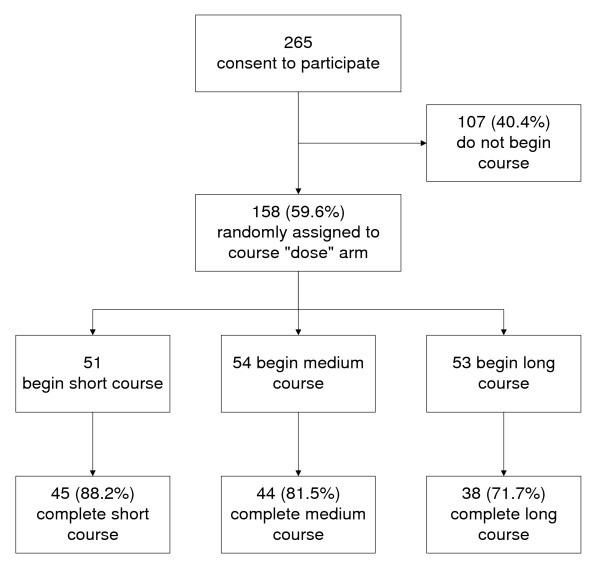
BACKGROUND: Working in a hospital during an extraordinary infectious disease outbreak can cause significant stress and contribute to healthcare workers choosing to reduce patient contact. Psychological training of healthcare workers prior to an influenza pandemic may reduce stress-related absenteeism, however, established training methods that change behavior and attitudes are too resource-intensive for widespread use. This study tests the feasibility and effectiveness of a less expensive alternative - an interactive, computer-assisted training course designed to build resilience to the stresses of working during a pandemic. METHODS: A "dose-finding" study compared pre-post changes in three different durations of training. We measured variables that are likely to mediate stress-responses in a pandemic before and after training: confidence in support and training, pandemic-related self-efficacy, coping style and interpersonal problems. RESULTS: 158 hospital workers took the course and were randomly assigned to the short (7 sessions, median cumulative duration 111 minutes), medium (12 sessions, 158 minutes) or long (17 sessions, 223 minutes) version. Using an intention-to-treat analysis, the course was associated with significant improvements in confidence in support and training, pandemic self-efficacy and interpersonal problems. Participants who under-utilized coping via problem-solving or seeking support or over-utilized escape-avoidance experienced improved coping. Comparison of doses showed improved interpersonal problems in the medium and long course but not in the short course. There was a trend towards higher drop-out rates with longer duration of training. CONCLUSIONS: Computer-assisted resilience training in healthcare workers appears to be of significant benefit and merits further study under pandemic conditions. Comparing three "doses" of the course suggested that the medium course was optimal.
Overview
The claims and statistics of this paper haven’t been checked yet.
Run the check — free, no account needed. It reads the open-access text and checks the sources it cites.
Integrity signals
Registry
Cites
Statistics
Figures
Verification
Claims the paper makes
The claims and statistics of this paper haven’t been checked yet.
Run the check — free, no account needed. It reads the open-access text and checks the sources it cites.
Claims other papers make about this one
Each is checked against this paper’s own text: does it say what the citing paper says it does?
The cited source doesn’t support the claim as written.
In the citing paper
“Four studies (Aiello et al., 2011; Maunder et al., 2010; Chen et al., 2006; Wu and Wei, 2020) described four different interventions to reduce the mental health impact of viral epidemic outbreaks in HCWs (Online Appendix 6). None of them used an experimental design.”
From Impact of viral epidemic outbreaks on mental health of healthcare workers: a rapid systematic review and meta-analysis (2020) · cites this paper as Maunder et al., 2010
Checked by a reasoning model — may be wrong.
Experimental — accuracy not yet measuredIn the citing paper
“The intervention improved confidence in support and training, pandemic self-efficacy and interpersonal problems (p<0.05).”
From Impact of viral epidemic outbreaks on mental health of healthcare workers: a rapid systematic review and meta-analysis (2020) · cites this paper as Maunder et al., 2010
In the citing paper
“Although very limited, evidence from intervention studies indicates that educational interventions have the potential to increase knowledge and resilience (Aiello et al., 2011; Maunder et al., 2010), even when implemented during an outbreak (Chen et al., 2006).”
From Impact of viral epidemic outbreaks on mental health of healthcare workers: a rapid systematic review and meta-analysis (2020) · cites this paper as Maunder et al., 2010
Self-check
Percentages, sums and reported differences re-computed from the paper’s own numbers.
The self-check needs the paper’s full text.
Citations
Cites
Self-efficacy: Toward a unifying theory of behavioral change
Bandura, A. (1977) · Psychological Review · doi:10.1037/0033-295x.84.2.191 · Cited by 43,925 · cited 1×
“…a pandemic situation, we also proposed, based on the theory of social learning [21], that enhancing self-efficacy (expectations about personal ability to respond adaptively to pandemic-related stresses) should be a goal of training because it is expected to be a proximal predictor of behavior [22].”
BackgroundSelf-efficacy: Toward a unifying theory of behavioral change
Bandura, A. (1978) · Advances in Behaviour Research and Therapy · doi:10.1016/0146-6402(78)90002-4 · Cited by 10,586
The Construct of Resilience: A Critical Evaluation and Guidelines for Future Work
Luthar, S. S., Cicchetti, D., & Becker, B. (2000) · Child Development · doi:10.1111/1467-8624.00164 · Cited by 9,381 · cited 1×
“The resilience literature is large and varied [16], ranging from studies of individual differences between children that promote healthy outcomes after early life adversity [15] to the factors that protect individuals exposed to extreme traumatic stressors [17,18] or protect adults from mental…”
BackgroundHealth Promotion by Social Cognitive Means
Bandura, A. (2004) · Health Education & Behavior · doi:10.1177/1090198104263660 · Cited by 7,238 · cited 1×
“…training is to change the behavior of healthcare workers in a pandemic situation, we also proposed, based on the theory of social learning [21], that enhancing self-efficacy (expectations about personal ability to respond adaptively to pandemic-related stresses) should be a goal of…”
BackgroundAn Analysis of Coping in a Middle-Aged Community Sample
Folkman, S., & Lazarus, R. S. (1980) · Journal of Health and Social Behavior · doi:10.2307/2136617 · Cited by 6,361 · cited 1×
“Coping via problem-solving, seeking support from others and escape-avoidance were measured with sub-scales of the Ways of Coping Inventory [42,43] a widely used instrument which yields eight subscales of coping strategies, which are supported in clinical and non-clinical samples [44].”
MethodResilience in the Face of Adversity
Rutter, M. L. (1985) · The British Journal of Psychiatry · doi:10.1192/bjp.147.6.598 · Cited by 3,689
Inventory of interpersonal problems: Psychometric properties and clinical applications.
Horowitz, L. M., Rosenberg, S. E., Baer, B. A., Ureño, G., & Villaseñor, V. S. (1988) · Journal of Consulting and Clinical Psychology · doi:10.1037/0022-006x.56.6.885 · Cited by 2,026 · cited 1×
“The IIP has adequate test-retest reliability, convergence to an established measure of interpersonal styles, and responsiveness to changes in psychotherapy [40,41].”
BackgroundCharney, D. S. (2004) · American Journal of Psychiatry · doi:10.1176/appi.ajp.161.2.195 · Cited by 1,605
Internet-Based Learning in the Health Professions
Cook, D., Levinson, A. J., Garside, S., Dupras, D. M., Erwin, P. J., & Montori, V. M. (2008) · JAMA · doi:10.1001/jama.300.10.1181 · Cited by 1,603
Jackson, D., Firtko, A., & Edenborough, M. (2007) · Journal of Advanced Nursing · doi:10.1111/j.1365-2648.2007.04412.x · Cited by 1,175 · cited 1×
“Nurses ’ resilience to workplace stresses may be bol-stered by processes that enhance the quality of professional relationships and that foster the development of emotional insight, life balance, spirituality, and reflective thinking [20].”
Background
Research works printed but not linked: 7
- United Kingdom Department of Health: UK Health Departments' Influenza Pandemic Contingency Plan. 2005, accessed Oct 6, 2006, [ http://www.hpa.org.uk/infections/topics_az/influenza/pandemic/fluplan.htm ]
- Ontario Ministry of Health and Long-term Care: Ontario Health Plan for an Influenza Pandemic. 2006, accessed Oct 6, 2006, [ http://www.health.gov.on.ca/english/providers/program/emu/pan_flu/pan_flu_plan.html ]
- Toronto Academic Health Sciences Network: Pandemic Influenza Planning Guidelines. 2006, accessed Mar 11, 2010, [ http://www.baycrest.org/Family_Information/Pandemic_Information/TAHSNGuidelines.pdf ]
- Belcher J, Vonderhaar K: Web-delivered research-based nursing staff education for seeking Magnet Status. Journal of Nursing Administration. 2005, 35: 332-338. 10.1097/00005110-200509000-00004. · DOI
- Leszcz M: Group psychological perspectives on staff coping with SARS. 2004, New York: American Psychiatric Association Annual Meeting
- Horowitz LM, Alden LE, Wiggins JS, Pincus AL: Inventory of Interpersonal Problems Manual. 2000, The Psychological Corporation
- Folkman S, Lazarus RS: Ways of Coping Questionnaire Manual. 1988, Palo Alto, CA: Mind Garden
Cited by
Sorted by citations
Søvold, L. E., Naslund, J. A., Kousoulis, A. A., Saxena, S., Qoronfleh, M. W., Grobler, C., & Münter, L. (2021) · Frontiers in Public Health · doi:10.3389/fpubh.2021.679397 · Cited by 973
“(87) found that computer-assisted resilience training in healthcare workers appeared to be of significant benefit under pandemic conditions.”
BackgroundPreti, E., Mattei, V. E. D., Perego, G., Ferrari, F., Mazzetti, M., Taranto, P., Pierro, R. D., Madeddu, F., & Calati, R. (2020) · Current Psychiatry Reports · doi:10.1007/s11920-020-01166-z · Cited by 788
Pollock, A., Campbell, P., Cheyne, J., Cowie, J., Davis, B., McCallum, J., McGill, K., Elders, A., Hagen, S., McClurg, D., et al. (2020) · Cochrane Database of Systematic Reviews · doi:10.1002/14651858.cd013779 · Cited by 631
Serrano-Ripoll, M. J., Meneses-Echavez, J. F., Ricci-Cabello, I., Fraile-Navarro, D., Fiol-deRoque, M. A., Pastor-Moreno, G., Castro, A., Ruiz-Pérez, I., Zamanillo Campos, R., & Gonçalves-Bradley, D. C. (2020) · Journal of Affective Disorders · doi:10.1016/j.jad.2020.08.034 · Cited by 592
“Maunder and colleagues conducted an uncontrolled before-after study to explore the impact of a computer-assisted resilience training to prepare HCWs for a potential pandemic influenza (Maunder et al., 2010).”
Brooks, S. K., Dunn, R., Amlôt, R., Rubin, G. J., & Greenberg, N. L. (2017) · Journal of Occupational and Environmental Medicine · doi:10.1097/jom.0000000000001235 · Cited by 547
“Previous research with healthcare workers preparing for an influenza epidemic has suggested that predisaster training and education programmes are helpful in terms of increasing confidence.(36,37) Occupational role often had an effect on psychological outcomes, with those directly involved in patient care and in parti…”
BackgroundHeath, C., Sommerfield, A., & von Ungern-Sternberg, B. S. (2020) · Anaesthesia · doi:10.1111/anae.15180 · Cited by 577
“Consistent patterns of psychological qualities associated with successful adaptation include emotional intelligence, altruism and an active coping style in confronting a stressor [24, 25].”
BackgroundMethodInfluentialManchia, M., Gathier, A. W., Eser, H. Y., Schmidt, M. V., de Quervain, D. J. ‐., van Amelsvoort, T., Bisson, J. I., Cryan, J. F., Howes, O. D., Pinto, L., et al. (2021) · European Neuropsychopharmacology · doi:10.1016/j.euroneuro.2021.10.864 · Cited by 532
Psychological interventions to foster resilience in healthcare professionals
Kunzler, A. M., Helmreich, I., Chmitorz, A., König, J., Binder, H., Wessa, M., & Lieb, K. (2020) · Cochrane Database of Systematic Reviews · doi:10.1002/14651858.cd012527.pub2 · Cited by 390
Managing ICU surge during the COVID-19 crisis: Rapid guidelines.
Aziz, S., Arabi, Y. M., Alhazzani, W., Evans, L., Citerio, G., Fischkoff, K., Salluh, J., Meyfroidt, G., Alshamsi, F., Oczkowski, S., et al. (2020) · Intensive Care Medicine · doi:10.1007/s00134-020-06092-5 · Cited by 380
Stuijfzand, S., Deforges, C., Sandoz, V., Sajin, C.-T. C.-T., Jaques, C., Elmers, J., & Horsch, A. (2020) · BMC Public Health · doi:10.1186/s12889-020-09322-z · Cited by 344
Psychological Resilience of Healthcare Professionals During COVID-19 Pandemic
Bozdağ, F., & Ergün, N. (2020) · Psychological Reports · doi:10.1177/0033294120965477 · Cited by 329
Stress and coping during COVID-19 pandemic: Result of an online survey
Kar, N., Kar, B., & Kar, S. (2020) · Psychiatry Research · doi:10.1016/j.psychres.2020.113598 · Cited by 320
“Computer-assisted resilience training in HCW appears to be of significant benefit and merits further study under pandemic conditions (Maunder et al., 2010).”
Raven, J., Wurie, H. R., & Witter, S. (2018) · BMC Health Services Research · doi:10.1186/s12913-018-3072-3 · Cited by 226
Cleary, M. L., Kornhaber, R. A., Thapa, D. K., West, S., & Visentin, D. C. (2018) · Nurse Education Today · doi:10.1016/j.nedt.2018.10.002 · Cited by 183
'Resilience training for hospital workers in anticipation of an influenza pandemic'
Aiello, A., Khayeri, M. Y.-E., Raja, S., Peladeau, N., Romano, D., Leszcz, M., Maunder, R. G., Rose, M., Adam, M. A., Pain, C., et al. (2011) · Journal of Continuing Education in the Health Professions · doi:10.1002/chp.20096 · Cited by 159
Self-citationSoklaridis, S., Lin, E., Lalani, Y., Rodak, T., & Sockalingam, S. (2020) · General Hospital Psychiatry · doi:10.1016/j.genhosppsych.2020.08.007 · Cited by 153
López, J. Á. M., Lázaro-Pérez, C., Galán, J. G., & Martínez, M. D. M. F. (2020) · Journal of Clinical Medicine · doi:10.3390/jcm9093029 · Cited by 157
Predictors of poor mental health among nurses during COVID‐19 pandemic
Kim, S. C., Quiban, C., Sloan, C., & Montejano, A. S. (2020) · Nursing Open · doi:10.1002/nop2.697 · Cited by 138
“For the implementation of a cost-effective training for pandemic preparedness, computer-assisted resilience training programmes of various lengths were tested in a randomized controlled trial (Maunder et al., 2010).”
MethodResilience as a strategy for struggling against challenges related to the nursing profession
Yılmaz, E. B. (2017) · Chinese Nursing Research · doi:10.1016/j.cnre.2017.03.004 · Cited by 114
Zaçe, D., Hoxhaj, I., Orfino, A., Viteritti, A. M., Janiri, L., & Di Pietro, M. L. (2021) · Journal of Psychiatric Research · doi:10.1016/j.jpsychires.2021.02.019 · Cited by 105
Htay, M. N. N., Marzo, R. R., Bahari, R., AlRifai, A., Kamberi, F., El-Abasiri, R. A., Nyamache, J. M., Hlaing, H. A., Hassanein, M., Moe, S., et al. (2021) · Clinical Epidemiology and Global Health · doi:10.1016/j.cegh.2021.100759 · Cited by 103
Scott, K. M., Baur, L. A., & Barrett, J. (2017) · Journal of Continuing Education in the Health Professions · doi:10.1097/ceh.0000000000000146 · Cited by 90
“It cannot be assumed that a change in knowledge or attitudes, or the use of online discussions or interactive activities, leads to the development of procedural skills, behavior change or transfer to health practice results.(51) Thus, a skills component may need to be integrated, either in a face-to-face workshop (for…”
BackgroundMethodEffectiveness of a One Day Self-Compassion Training for Pediatric Nurses’ Resilience
Long, P., & Christie, L. M. (2021) · Journal of Pediatric Nursing · doi:10.1016/j.pedn.2021.03.020 · Cited by 91
“Resilience is the ability to “bounce back” after encountering stressors, to respond to stress in a healthy way and adapt in the face of adversity, setbacks, or trauma (Cleary et al., 2018; Maunder et al., 2010; Yu et al., 2019).”
BackgroundVyas, K. J., Delaney, E. M., Webb-Murphy, J. A., & Johnston, S. L. (2016) · Military Medicine · doi:10.7205/milmed-d-15-00473 · Cited by 80
Maunder, R., Heeney, N. D., Kiss, A., Hunter, J., Jeffs, L. P., Ginty, L., Johnstone, J., Loftus, C., & Wiesenfeld, L. A. (2021) · General Hospital Psychiatry · doi:10.1016/j.genhosppsych.2021.04.012 · Cited by 86
Self-citationBurnout in Hospital-Based Healthcare Workers during COVID-19
Maunder, R., Heeney, N. D., Strudwick, G., Shin, H. D., O’Neill, B. G., Young, N., Jeffs, L. P., Barrett, K. A., Bodmer, N. S., Born, K. B., et al. (2021) · doi:10.47326/ocsat.2021.02.46.1.0 · Cited by 87
Self-citationMaunder, R., Heeney, N. D., Greenberg, R. A., Jeffs, L. P., Wiesenfeld, L. A., Johnstone, J., & Hunter, J. (2023) · BMC Nursing · doi:10.1186/s12912-023-01407-5 · Cited by 79
“Pandemic self-efficacy was measured with an instrument first developed for the 2009 H1N1 pandemic [46].”
MethodSelf-citationLázaro-Pérez, C., López, J. Á. M., Galán, J. G., & Menéses, E. L. (2020) · International Journal of Environmental Research and Public Health · doi:10.3390/ijerph17165938 · Cited by 84
Hooper, J. J., Saulsman, L. M., Hall, T., & Waters, F. (2021) · BMJ Open · doi:10.1136/bmjopen-2020-044134 · Cited by 78
Anger, W. K., Dimoff, J. K., & Alley, L. (2024) · American Journal of Public Health · doi:10.2105/ajph.2023.307556 · Cited by 67
Training and education of healthcare workers during viral epidemics: a systematic review
Nayahangan, L. J., Konge, L., Russell, L., & Andersen, S. A. W. (2021) · BMJ Open · doi:10.1136/bmjopen-2020-044111 · Cited by 68
Umbetkulova, S., Kanderzhanova, A., Foster, F., Stolyarova, V., & Cobb-Zygadlo, D. (2023) · Evaluation & the Health Professions · doi:10.1177/01632787231165076 · Cited by 71
“For instance, signi fi cant improvements in con fi dence in support and training, in pandemic self-ef fi cacy, and in interpersonal problems among HCWs were observed by implementing computer-assisted resilience training (Maunder et al., 2010).”
MethodCovid-19—Beyond virology: Potentials for maintaining mental health during lockdown
Munk, A. J. L., Schmidt, N. M., Alexander, N., Henkel, K., & Hennig, J. (2020) · PLoS ONE · doi:10.1371/journal.pone.0236688 · Cited by 68
“Interventions could also be adapted to groups being particularly affected by the pandemic such as healthcare workers [50], or chronically ill, as it was done e.”
BackgroundBrooks, S. K., Dunn, R., Amlôt, R., Greenberg, N. L., & Rubin, G. J. (2018) · Journal of Mental Health · doi:10.1080/09638237.2018.1437610 · Cited by 67
Philip, J., & Cherian, V. (2020) · Indian Journal of Psychological Medicine · doi:10.1177/0253717620934095 · Cited by 59
Resilience Training for Nurses
Zhai, X., Ren, L.-N., Liu, Y., Liu, C.-J., Su, X.-G., & Feng, B.-E. (2021) · Journal of Hospice and Palliative Nursing · doi:10.1097/njh.0000000000000791 · Cited by 53
López, J. Á. M., Lázaro-Pérez, C., & Galán, J. G. (2021) · Sustainability · doi:10.3390/su13052782 · Cited by 49
Deng, D., & Naslund, J. A. (2021) · doi:10.54111/0001/z1 · Cited by 49
DeTore, N. R., Sylvia, L., Park, E. R., Burke, A., Levison, J. H., Shannon, A., Choi, K. W., Jain, F. A., Coman, D. C., Herman, J., et al. (2022) · Journal of Psychiatric Research · doi:10.1016/j.jpsychires.2021.11.011 · Cited by 45
Silva, M. T., Galvão, T. F., Chapman, E., da Silva, E. N., & Barreto, J. O. M. (2021) · Implementation Science · doi:10.1186/s13012-021-01164-6 · Cited by 49
“Five had an ineligible population [46–50], four had an ineligible intervention [51–54], three had an ineligible study design [55–57], two had ineligible outcomes [58, 59], one occurred in offices and thus had an ineligible setting [60].”
BackgroundPredictive factors of anxiety and depression among nurses fighting coronavirus disease 2019 in China
Pang, Y., Fang, H., Li, L., Chen, M., Chen, Y., & Chen, M. (2021) · International Journal of Mental Health Nursing · doi:10.1111/inm.12817 · Cited by 43
“Resilience training should be a regular part of nurses’ training and continuing education programmes and should also be available in online formats (Maunder et al. 2010).”
BackgroundRobins–Browne, K., Lewis, M., Burchill, L. J., Gilbert, C. A., Johnson, C., O'Donnell, M. L., Kotevski, A., Poonian, J., & Palmer, V. J. (2022) · BMJ Open · doi:10.1136/bmjopen-2022-061317 · Cited by 44
Kunzler, A. M., Stoffers-Winterling, J., Stoll, M., Mancini, A. L., Lehmann, S., Blessin, M., Gilan, D., Helmreich, I., Hufert, F., & Lieb, K. (2021) · PLOS ONE · doi:10.1371/journal.pone.0244748 · Cited by 41
“We identified three trials including parallel controls (one randomized study [31], one RCT [22], and one cluster-RCT [32]), 11 single-group studies [21, 33–41, 47, 48] including one interview study [47], four case reports/studies [23, 26, 42, 43], and one two-group study (delayed treatment model) [44, 45].”
BackgroundMethodInfluentialKelly, F., Uys, M., Bezuidenhout, D., Mullane, S. L., & Bristol, C. (2021) · Frontiers in Psychology · doi:10.3389/fpsyg.2021.748133 · Cited by 38
Peccoralo, L. A., Pietrzak, R., Feingold, J. H., Syed, S., Chan, C. C., Murrough, J., Kaplan, C. A., Verity, J., Feder, A., Charney, D., et al. (2022) · International Archives of Occupational and Environmental Health · doi:10.1007/s00420-022-01832-0 · Cited by 34
“Computer-based resilience training delivered prior to crisis situations (Maunder et al. 2010), psychoeducational and peer support-based programs, and mental health apps may help HCWs enhance resilience to occupational and other sources of stress (DePierro et al.”
BackgroundKetelaars, E., Gaudin, C., Flandin, S., & Poizat, G. (2023) · Safety Science · doi:10.1016/j.ssci.2023.106311 · Cited by 33
Mulfinger, N., Lampl, J., Dinkel, A., Weidner, K., Beutel, M. E., Jarczok, M. N., Hildenbrand, G., Kruse, J., Seifried-Dübon, T., Junne, F., et al. (2020) · Zeitschrift für psychosomatische Medizin und Psychotherapie · doi:10.13109/zptm.2020.66.3.220 · Cited by 32
Dong, Y., Yeo, M. C., Tham, X. C., Danuaji, R., Nguyen, T. H., Sharma, A., Komalkumar, R. N., Meenakshi, P. V., Tai, M. S., Ahmad, A., et al. (2021) · JMIR Nursing · doi:10.2196/32647 · Cited by 31
“Similarly, digital interventions, such as computerized resilience training over a medium-long course duration (12-17 sessions), may be useful to build up health care workers’ resilience [46].”
BackgroundAngus, K., Cairns, G., Purves, R., Bryce, S., MacDonald, L., & Gordon, R. (2013) · Stirling Online Research Repository (University of Stirling) · Cited by 32
A management perspective on resilience in healthcare: a framework and avenues for future research
Agostini, L., Onofrio, R., Piccolo, C., & Stefanini, A. (2023) · BMC Health Services Research · doi:10.1186/s12913-023-09701-3 · Cited by 31
“In the country context, we observe a strong prevalence of developed countries in this cluster, such as Australia [65], the UK [62, 66], the US [60], and Canada [63].”
BackgroundInfluentialAmsalem, D., Lazarov, A., Markowitz, J. C., Smith, T. E., Dixon, L. B., & Neria, Y. (2021) · The British Journal of Psychiatry · doi:10.1192/bjp.2021.54 · Cited by 31
“Other interventional studies among health-care workers during viral epidemics have focused on increasing resilience using educational programmes, 28,29 reducing stress using exercise 30 or preventing clinical symptoms via multifaceted in-service training.”
Golechha, M., Bohra, T., Patel, M., & Khetrapal, S. (2021) · World Medical & Health Policy · doi:10.1002/wmh3.483 · Cited by 30
“…through the Integrated Government Online Training (iGOT) portal launched by the government during the pandemic (Ministry of Education, 2020), thus ensuring standardized training for all health‐care workers at costs that would not place further strain on the health system (Maunder et al., 2010).”
BackgroundPreparing the Intensive Care Unit for Disaster
Wax, R. S. (2019) · Critical Care Clinics · doi:10.1016/j.ccc.2019.06.008 · Cited by 29
“An emerging concept in disaster planning incorporates the concept of mental health/stress inoculation for hospital staff, which may include advance and just-intime deployment to increase performance during the disaster and prevent long-term psychological effects.(10,11)”
BackgroundAsnakew, S., Legas, G., Liyeh, T. M., Belete, A., Haile, K., Yitbarek, G. Y., Bayih, W. A., Feleke, D. G., Birhane, B. M., Amha, H., et al. (2021) · PLoS ONE · doi:10.1371/journal.pone.0255340 · Cited by 29
Raven, J., Baral, S., Wurie, H. R., Witter, S., Samai, M. H., Paudel, P., Subedi, H. N., Martineau, T., Elsey, H., & Theobald, S. (2018) · Health Research Policy and Systems · doi:10.1186/s12961-018-0285-1 · Cited by 27
Tse, D. M.-S., Li, Z., Lu, Y., Li, Y., Liu, Y., & Wong, W. C. W. (2020) · BMC Family Practice · doi:10.1186/s12875-020-01343-2 · Cited by 22
“GPs’ confidence in their capability to complete assigned duties, in addition to managing cases in an epidemic, are perhaps the results of their preparedness after pre-crisis education and training programmes [22, 23].”
BackgroundShangguan, F., Zhou, C., Qian, W., Zhang, C., Liu, Z., & Zhang, X. (2021) · Frontiers in Psychology · doi:10.3389/fpsyg.2021.633433 · Cited by 21
Amsalem, D., Wall, M., Lazarov, A., Markowitz, J. C., Fisch, C. T., LeBeau, M., Hinds, M., Liu, J., Fisher, P. W., Smith, T. E., et al. (2023) · Psychiatric Services · doi:10.1176/appi.ps.20220083 · Cited by 18
A Call to Protect the Health Care Workers Fighting COVID-19 in the United States
Charney, A. W., Katz, C. L., Southwick, S. M., & Charney, D. S. (2020) · American Journal of Psychiatry · doi:10.1176/appi.ajp.2020.20040535 · Cited by 17
A systematic concept analysis of healthcare team resilience in times of pandemic disasters
Ambrose, J. W., Layne, D. M., Nemeth, L. S., & Nichols, M. G. (2022) · Nursing Forum · doi:10.1111/nuf.12723 · Cited by 16
Mo, P. K. H., She, R., Yu, Y., Li, L., Yang, Q., Lin, J., Ye, X., Wu, S., Yang, Z., Guan, S., et al. (2022) · Journal of Advanced Nursing · doi:10.1111/jan.15143 · Cited by 14
Barello, S., Palamenghi, L., & Graffigna, G. (2020) · Patient Education and Counseling · doi:10.1016/j.pec.2020.06.027 · Cited by 15
“Healthcare institutions have ethical duties to reflect on the work-related stressors when the Covid-19 emergency will be over [10,11].”
Bates, A., Ottaway, J., Moyses, H., Perrrow, M., Rushbrook, S., & Cusack, R. (2020) · Journal of the Intensive Care Society · doi:10.1177/1751143720965109 · Cited by 13
Ghogare, A. S., Aloney, S., Spoorthy, M. S., Patil, P. S., Ambad, R. S., & Bele, A. (2021) · International Journal of Academic Medicine · doi:10.4103/ijam.ijam_105_20 · Cited by 15
Amsalem, D., Wall, M. M., Lazarov, A., Markowitz, J. C., Fisch, C. T., LeBeau, M., Hinds, M. T., Liu, J., Fisher, P. W., Smith, T. E., et al. (2022) · BJPsych Open · doi:10.1192/bjo.2022.575 · Cited by 15
“These findings corroborate those of other intervention studies 31 among healthcare workers, mainly using non-contact-based educational programmes, which also showed no lasting effects.”
Maunder, R., Rosen, B., Heeney, N. D., Jeffs, L. P., Merkley, J., Wilkinson, K., Hunter, J., Johnstone, J., Greenberg, R. A., & Wiesenfeld, L. A. (2023) · BMC Health Services Research · doi:10.1186/s12913-023-09731-x · Cited by 13
Self-citationValiee, S., Jelyani, Z. Z., Kia, M., Jajarmizadeh, A., Delavari, S., Shalyari, N., & Marzaleh, M. A. (2023) · Human Resources for Health · doi:10.1186/s12960-023-00844-2 · Cited by 18
“designing a resilience model to anticipate, plan and deter responder risk [21, 61], creating organizational justice besides promoting a flexible organizational culture based on a teamwork atmosphere [21, 37, 38, 43, 61], offering rewards and financial support [48, 67], and extending support to HCWs during times of con…”
BackgroundResilience enhancement interventions for disaster rescue workers: a systematic review
Mao, X., Suo, Y., Wei, X., & Luo, Y. (2025) · Scandinavian Journal of Trauma Resuscitation and Emergency Medicine · doi:10.1186/s13049-025-01397-0 · Cited by 11
“Other psychological skills or knowledge such as communication and relationships [7, 9, 37], energy management [23, 37, 50], relaxation skills [32, 49], psychological first aid [9, 32], and survival skills [5], were adopted in the studies.”
InfluentialRosen, B., Preisman, M., Read, H., Chaukos, D. C., Greenberg, R. A., Jeffs, L. P., Maunder, R., & Wiesenfeld, L. A. (2022) · BMC Health Services Research · doi:10.1186/s12913-022-08131-x · Cited by 11
Self-citationBranjerdporn, G., Bowman, C., Kenworthy, S., & Stapelberg, N. J. C. (2022) · Frontiers in Psychiatry · doi:10.3389/fpsyt.2022.812365 · Cited by 10
Maunder, R., Kiss, A., Heeney, N. D., Wallwork, E., Hunter, J., Johnstone, J., Wiesenfeld, L. A., Jeffs, L. P., McGeer, A., Lee, K., et al. (2023) · General Hospital Psychiatry · doi:10.1016/j.genhosppsych.2023.06.005 · Cited by 10
“The PSAF intervention is based on previous work [22], and so the consistency of findings adds confidence in the current result.”
InfluentialSelf-citationSixsmith, J., Doyle, P. A., & Barry, M. M. (2014) · ARAN (University of Galway Research Repository) (Ollscoil na Gaillimhe – University of Galway) · doi:10.2900/16366 · Cited by 15
Armaou, M., Araviaki, E., Dutta, S., Konstantinidis, S. T., & Blake, H. (2022) · European Journal of Investigation in Health Psychology and Education · doi:10.3390/ejihpe12100102 · Cited by 14
“However, they were assessed as secondary intervention outcomes [77,87].”
BackgroundMethodInfluentialSkilbeck, L., Spanton, C., & Roylance, I. (2020) · Cognitive Behaviour Therapy · doi:10.1017/s1754470x20000379 · Cited by 7
“Similarly Maunder et al. (2010) described the benefits of computer-assisted resilience training for healthcare worker preparedness for flu pandemics.”
BackgroundWatanabe, K., Tran, T. T. T., Sripo, N., Sakuraya, A., Imamura, K., Boonyamalik, P., Sasaki, N., Tienthong, T., Asaoka, H., Iida, M., et al. (2024) · Journal of Medical Internet Research · doi:10.2196/50071 · Cited by 8
“A few studies have reported positive responses to group-based resilience training [6] and an improvement in self-efficacy and interpersonal problems after conducting a web-based resilience training program among health care workers during the influenza pandemic [7].”
Capili, J. T., Luis, L. M. G., Asuncion, J. E. L., Luyun, J. L., Canapi, J. B., & Rimban, E. L. (2022) · Jàmbá Journal of Disaster Risk Studies · doi:10.4102/jamba.v14i1.1284 · Cited by 8
Supporting the pursuit of professionalism during a crisis
Cooper, W. O., Lorenzi, N. M., Davidson, H. A., Baldwin, C. A., Feinberg, D. M., Hopkins, J. R., Spell, N. O., Uthe, C. J., & Hickson, G. B. (2021) · BMJ Leader · doi:10.1136/leader-2021-000458 · Cited by 8
How Shift Schedules Shape Nurses’ Sleep and Compassion: A Comparative Study
Al‐Hammouri, M. M., Rababah, J. A., & AL‐Jdeetawey, N. A. (2025) · International Nursing Review · doi:10.1111/inr.70085 · Cited by 7
Gao, Q., Xu, H., Zhang, C., Huang, D., Zhang, T., & Liu, T. (2022) · PLoS ONE · doi:10.1371/journal.pone.0279071 · Cited by 8
“Some coping-focused efforts like coping skills training courses and online virtual stress adaptation training may also be helpful as our results have verified the positive effect of coping style on resilience [58, 59].”
ResultBank, W. (2021) · The World Bank Open Knowledge Repository (World Bank) · doi:10.1596/35842 · Cited by 7
Theron, E., Erasmus, H. C., Wylie, C., Khan, W., Geduld, H. I., & Stassen, W. (2022) · African Journal of Emergency Medicine · doi:10.1016/j.afjem.2022.08.004 · Cited by 6
“(47) This interactive computer-assisted course, which includes knowledgebased modules, relaxation skills, self-assessment modules, and feedback was found to improve pandemic self-efficacy, confidence in support and training, and interpersonal problems.”
Perceived Stress among Health Care Workers of an Emerging Infectious Covid-19 Outbreak in Indonesia
Novelia, S., Usman, A. M., & Pamungkas, R. A. (2021) · Asian Community Health Nursing Research · doi:10.29253/achnr.2021.3962 · Cited by 6
Walking the Talk: Reimagining Primary Health Care after COVID-19
Bank, W. (2022) · World Bank, Washington, DC eBooks · doi:10.1596/978-1-4648-1768-7 · Cited by 5
Siebenhofer, A., Scott, A. M., Avian, A., Terebessy, A., Mergenthal, K., Schaffler‐Schaden, D., Bachler, H., Huter, S., Zelko, E., Murray, A., et al. (2022) · Frontiers in Public Health · doi:10.3389/fpubh.2022.1072515 · Cited by 5
“On the other hand, such aspects as social support and quality of sleep, and precrisis education and training programmes, can also increase self-confidence (44, 45).”
BackgroundThe COVID-19 Healthcare Personnel Study (CHPS): Overview, Methods, and Preliminary Findings
DiMaggio, C., Abramson, D., Susser, E., Hoven, C. W., Chen, Q., Andrews, H. F., Herman, D., Kreniske, J., Ryan, M., Susser, I., et al. (2021) · Journal of Neurosurgical Anesthesiology · doi:10.1097/ana.0000000000000813 · Cited by 5
Building Resilience Among Frontline Health Care Workers
Bartuska, A. D., & Marques, L. M. (2021) · The Journal of Clinical Psychiatry · doi:10.4088/jcp.21com136869 · Cited by 4
Foo, C. Y. S., Verdeli, H., & Tay, A. K. (2023) · Elsevier eBooks · doi:10.1016/b978-0-323-85726-0.00008-9 · Cited by 4
Hurst, K. P., Ramsden, R., Roach, C., & Colbran, R. (2023) · Australian Journal of Rural Health · doi:10.1111/ajr.13062 · Cited by 4
Khoddam, H., Modanloo, M., Mohammadi, R., & Talebi, R. (2023) · Nursing Open · doi:10.1002/nop2.2035 · Cited by 3
“…causes extreme stress in healthcare providers due to the fear of being infected by the disease, family-related health concerns, job stress, interpersonal isolation, and quarantine (Maunder et al., 2004, 2010; Wong et al., 2005) and affects their ability in doing their duty (Aiello et al., 2011).”
BackgroundPerceived Stress among Health Care Workers of an Emerging Infectious Covid-19 Outbreak in Indonesia
Novelia, S., Usman, A. M., & Pamungkas, R. A. (2021) · Asian Community Health Nursing Research · doi:10.29253/achnr.2021.3.9 · Cited by 4
Sim, K., & Chew, Q. H. (2021) · The Journal of Clinical Psychiatry · doi:10.4088/jcp.21lr14035a · Cited by 4
Kawakami, N., Nguyen, H. T. M., Kaewboonchoo, O., Imamura, K., Tran, T. T. T., Boonyamalik, P., Sasaki, N., Sripo, N., Tienthong, T., Asaoka, H., et al. (2023) · Preprints.org · doi:10.20944/preprints202303.0450.v1 · Cited by 4
Velosa-Forero, J. (2022) · Investigaciones en Seguridad Social y Salud · doi:10.56085/20277970.453 · Cited by 3
Vulnerability and the Covid-19 pandemic: educating to a new notion of health
Girotto, S. (2023) · International Journal of Ethics Education · doi:10.1007/s40889-023-00175-9 · Cited by 3
“Many studies have stressed vulnerabilities experienced by healthcare workers, while less attention has been paid to patients (Maunder et al. 2010; Marinaci et al. 2021; Tsonis et al. 2021; Smeltzer et al. 2022 ).”
Estrategias etnográficas para un encuadre innovador del COVID-19
Teves, L., Remoriní, C., & Morgante, M. G. (2020) · Innovación y Desarrollo Tecnológico y Social · doi:10.24215/26838559e026 · Cited by 3
Mohammed, R. S., Salem, M. R., Mahmoud, A. T., Sabbahy, L. E., & El-Jaafary, S. I. (2021) · Open Access Macedonian Journal of Medical Sciences · doi:10.3889/oamjms.2021.5934 · Cited by 4
“These were also included as stress reducing factors in the previous studies [12], [18].”
BackgroundResultInfluentialBuilding Resilience and Well-Being in Health Care Workers in the COVID-19 Era
Peccoralo, L. A., DePierro, J. M., Feingold, J. H., Feder, A., Charney, D. S., Southwick, S. M., Ripp, J., & Pietrzak, R. H. (2021) · The Journal of Clinical Psychiatry · doi:10.4088/jcp.21lr14035b · Cited by 3
Ménard, A. D., Soucie, K. M., Ralph, J., Pratt, S., & Freeman‐Gibb, L. (2025) · Clinical Simulation in Nursing · doi:10.1016/j.ecns.2025.101802 · Cited by 2
Maunder, R., Heeney, N. D., & Hunter, J. (2022) · Health Psychology and Behavioral Medicine · doi:10.1080/21642850.2022.2123806 · Cited by 2
“Pandemic self-efficacy was measured with an instrument first developed for the 2009 H1N1 pandemic (Maunder et al., 2010).”
MethodSelf-citationIshak, H., Silim, U. A., & Suhaimi, A. F. (2023) · Malaysian Journal of Medicine and Health Sciences · doi:10.47836/mjmhs.19.1.28 · Cited by 2
Metadata
- Authors
- Maunder, R. G., Lancee, W. J., Mae, R., Vincent, L., Peladeau, N., Beduz, M. A., Hunter, J. J., & Leszcz, M.
- Affiliations
- Mount Sinai Hospital (CA)
- Corresponding author
- Maunder, Robert G
- Venue
- BMC Health Services Research
- Published
- 2010-03-22
- Volume
- 10
- Issue
- 1
- Pages
- 72-72
- ISSN
- 1472-6963 (ISSN-L)
- PMC
- PMC2851711
- OpenAlex
- W2008615047
- Cited by
- 129
- References
- 46
- Citations by year
- 2026: 2 · 2025: 3 · 2024: 3 · 2023: 17 · 2022: 28 · 2021: 39 · 2020: 24 · 2019: 1 · 2018: 4 · 2017: 3 · 2016: 1 · 2014: 1 · 2013: 1
- FWCI
- 1.05
- Type
- journal article
- Language
- en
- Open access
- gold
- doi.org
- Licence
- Locations
- BMC Health Services Research (publishedVersion, cc-by)
- PubMed Central (publishedVersion, cc-by)
- PubMed (publishedVersion)
- TSpace (University of Toronto) (submittedVersion)
- DOAJ (DOAJ: Directory of Open Access Journals) (submittedVersion)
- Funders
- Canadian Institutes of Health Research (83139_1, 83139)
- Topics
- Social Sciences › Psychology › Clinical Psychology › COVID-19 and Mental Health
- Health Sciences › Health Professions › Emergency Medical Services › Disaster Response and Management
- Social Sciences › Psychology › Clinical Psychology › Resilience and Mental Health
- Keywords
- computer-based training, resilience training, healthcare workers, pandemic influenza, occupational stress, self-efficacy, coping styles, interpersonal problems, training dose, hospital staff, absenteeism
- MeSH terms
- Absenteeism, Adaptation, Psychological, Canada, Computer-Assisted Instruction, Curriculum, Disaster Planning, Humans, Influenza, Human, Personnel, Hospital, Stress, Psychological, Time Factors, Intention to Treat Analysis, Pandemics
About these checks
Registry, retraction, Cites and statistics results are computed, not judged, with one exception: a printed reference that no index lists is read once by a model before it counts as a citation error. Claims are extracted by a model and kept only when their quote appears verbatim in the text; each cited source is then checked, with a model’s help, for whether it says what the claim relies on. Those verdicts can be wrong — read the claim’s quote and the cited source before relying on one.
Statistics and arithmetic are recomputed, not judged.
Confidence bands are shown only for fields calibrated on our annotated test set. None is calibrated yet, so no band is shown.
What counts as a claim ›How we measure confidence ›How we check this ›
Are you an author, or do you see a problem with this page? Request a review
