

The DOI matches its Crossref record; 44 of the 46 references it cites were found in a registry or an index.
Computer-assisted resilience training to prepare healthcare workers for pandemic influenza: a randomized trial of the optimal dose of training
Open accessAbstract
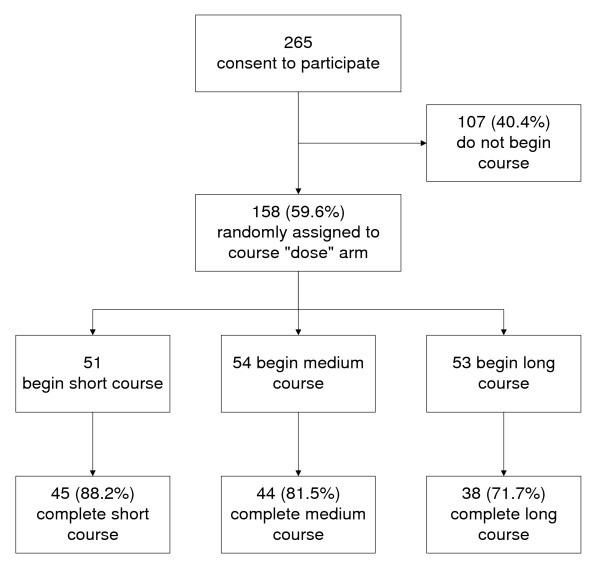
BACKGROUND: Working in a hospital during an extraordinary infectious disease outbreak can cause significant stress and contribute to healthcare workers choosing to reduce patient contact. Psychological training of healthcare workers prior to an influenza pandemic may reduce stress-related absenteeism, however, established training methods that change behavior and attitudes are too resource-intensive for widespread use. This study tests the feasibility and effectiveness of a less expensive alternative - an interactive, computer-assisted training course designed to build resilience to the stresses of working during a pandemic. METHODS: A "dose-finding" study compared pre-post changes in three different durations of training. We measured variables that are likely to mediate stress-responses in a pandemic before and after training: confidence in support and training, pandemic-related self-efficacy, coping style and interpersonal problems. RESULTS: 158 hospital workers took the course and were randomly assigned to the short (7 sessions, median cumulative duration 111 minutes), medium (12 sessions, 158 minutes) or long (17 sessions, 223 minutes) version. Using an intention-to-treat analysis, the course was associated with significant improvements in confidence in support and training, pandemic self-efficacy and interpersonal problems. Participants who under-utilized coping via problem-solving or seeking support or over-utilized escape-avoidance experienced improved coping. Comparison of doses showed improved interpersonal problems in the medium and long course but not in the short course. There was a trend towards higher drop-out rates with longer duration of training. CONCLUSIONS: Computer-assisted resilience training in healthcare workers appears to be of significant benefit and merits further study under pandemic conditions. Comparing three "doses" of the course suggested that the medium course was optimal.
Overview
The claims and statistics of this paper haven’t been checked yet.
Run the check — free, no account needed. It reads the open-access text and checks the sources it cites.
Integrity signals
Registry
Cites
Statistics
Figures
Verification
Claims the paper makes
The claims and statistics of this paper haven’t been checked yet.
Run the check — free, no account needed. It reads the open-access text and checks the sources it cites.
Claims other papers make about this one
Each is checked against this paper’s own text: does it say what the citing paper says it does?
The cited source doesn’t support the claim as written.
In the citing paper
“Four studies (Aiello et al., 2011; Maunder et al., 2010; Chen et al., 2006; Wu and Wei, 2020) described four different interventions to reduce the mental health impact of viral epidemic outbreaks in HCWs (Online Appendix 6). None of them used an experimental design.”
From Impact of viral epidemic outbreaks on mental health of healthcare workers: a rapid systematic review and meta-analysis (2020) · cites this paper as Maunder et al., 2010
Checked by a reasoning model — may be wrong.
Experimental — accuracy not yet measuredIn the citing paper
“The intervention improved confidence in support and training, pandemic self-efficacy and interpersonal problems (p<0.05).”
From Impact of viral epidemic outbreaks on mental health of healthcare workers: a rapid systematic review and meta-analysis (2020) · cites this paper as Maunder et al., 2010
In the citing paper
“Although very limited, evidence from intervention studies indicates that educational interventions have the potential to increase knowledge and resilience (Aiello et al., 2011; Maunder et al., 2010), even when implemented during an outbreak (Chen et al., 2006).”
From Impact of viral epidemic outbreaks on mental health of healthcare workers: a rapid systematic review and meta-analysis (2020) · cites this paper as Maunder et al., 2010
Self-check
Percentages, sums and reported differences re-computed from the paper’s own numbers.
The self-check needs the paper’s full text.
Citations
Cites
Self-efficacy: Toward a unifying theory of behavioral change
Bandura, A. (1977) · Psychological Review · doi:10.1037/0033-295x.84.2.191 · Cited by 43,925 · cited 1×
“…a pandemic situation, we also proposed, based on the theory of social learning [21], that enhancing self-efficacy (expectations about personal ability to respond adaptively to pandemic-related stresses) should be a goal of training because it is expected to be a proximal predictor of behavior [22].”
BackgroundSelf-efficacy: Toward a unifying theory of behavioral change
Bandura, A. (1978) · Advances in Behaviour Research and Therapy · doi:10.1016/0146-6402(78)90002-4 · Cited by 10,586
The Construct of Resilience: A Critical Evaluation and Guidelines for Future Work
Luthar, S. S., Cicchetti, D., & Becker, B. (2000) · Child Development · doi:10.1111/1467-8624.00164 · Cited by 9,381 · cited 1×
“The resilience literature is large and varied [16], ranging from studies of individual differences between children that promote healthy outcomes after early life adversity [15] to the factors that protect individuals exposed to extreme traumatic stressors [17,18] or protect adults from mental…”
BackgroundHealth Promotion by Social Cognitive Means
Bandura, A. (2004) · Health Education & Behavior · doi:10.1177/1090198104263660 · Cited by 7,238 · cited 1×
“…training is to change the behavior of healthcare workers in a pandemic situation, we also proposed, based on the theory of social learning [21], that enhancing self-efficacy (expectations about personal ability to respond adaptively to pandemic-related stresses) should be a goal of…”
BackgroundAn Analysis of Coping in a Middle-Aged Community Sample
Folkman, S., & Lazarus, R. S. (1980) · Journal of Health and Social Behavior · doi:10.2307/2136617 · Cited by 6,361 · cited 1×
“Coping via problem-solving, seeking support from others and escape-avoidance were measured with sub-scales of the Ways of Coping Inventory [42,43] a widely used instrument which yields eight subscales of coping strategies, which are supported in clinical and non-clinical samples [44].”
MethodResilience in the Face of Adversity
Rutter, M. L. (1985) · The British Journal of Psychiatry · doi:10.1192/bjp.147.6.598 · Cited by 3,689
Inventory of interpersonal problems: Psychometric properties and clinical applications.
Horowitz, L. M., Rosenberg, S. E., Baer, B. A., Ureño, G., & Villaseñor, V. S. (1988) · Journal of Consulting and Clinical Psychology · doi:10.1037/0022-006x.56.6.885 · Cited by 2,026 · cited 1×
“The IIP has adequate test-retest reliability, convergence to an established measure of interpersonal styles, and responsiveness to changes in psychotherapy [40,41].”
BackgroundCharney, D. S. (2004) · American Journal of Psychiatry · doi:10.1176/appi.ajp.161.2.195 · Cited by 1,605
Internet-Based Learning in the Health Professions
Cook, D., Levinson, A. J., Garside, S., Dupras, D. M., Erwin, P. J., & Montori, V. M. (2008) · JAMA · doi:10.1001/jama.300.10.1181 · Cited by 1,603
Jackson, D., Firtko, A., & Edenborough, M. (2007) · Journal of Advanced Nursing · doi:10.1111/j.1365-2648.2007.04412.x · Cited by 1,175 · cited 1×
“Nurses ’ resilience to workplace stresses may be bol-stered by processes that enhance the quality of professional relationships and that foster the development of emotional insight, life balance, spirituality, and reflective thinking [20].”
BackgroundThe Psychobiology of Depression and Resilience to Stress: Implications for Prevention and Treatment
Southwick, S. M., Vythilingam, M., & Charney, D. S. (2005) · Annual Review of Clinical Psychology · doi:10.1146/annurev.clinpsy.1.102803.143948 · Cited by 1,160 · cited 1×
“…literature is large and varied [16], ranging from studies of individual differences between children that promote healthy outcomes after early life adversity [15] to the factors that protect individuals exposed to extreme traumatic stressors [17,18] or protect adults from mental illness [19].”
Maunder, R., Lancee, W., Balderson, K., Bennett, J., Borgundvaag, B., Evans, S., Fernandes, C., Goldbloom, D., Gupta, M., Hunter, J., et al. (2006) · Emerging Infectious Diseases · doi:10.3201/eid1212.060584 · Cited by 1,109 · cited 4×
“Confidence in training and support was measured with a questionnaire derived to measure responses of health-care workers to SARS [39] that was found to predict long-term effects of SARS [13], modified to apply to influenza.”
BackgroundMethodInfluentialSelf-citationSurvey of Stress Reactions Among Health Care Workers Involved With the SARS Outbreak
Bai, Y., Lin, C.-C., Lin, C.-Y., Chen, J.-Y., Chue, C.-M., & Chou, P. (2004) · Psychiatric Services · doi:10.1176/appi.ps.55.9.1055 · Cited by 1,092 · cited 1×
“…of severe acute respiratory syndrome (SARS) suggested that an emerging infectious disease causes stress in healthcare settings because of fear of contagion [5-7], concern for family health [6,8,9], job stress [6,7], inter-personal isolation [6,7], quarantine [10] and perceived stigma [7,10,11].”
BackgroundPsychosocial effects of SARS on hospital staff: survey of a large tertiary care institution
Nickell, L. A. (2004) · Canadian Medical Association Journal · doi:10.1503/cmaj.1031077 · Cited by 711 · cited 1×
“…of severe acute respiratory syndrome (SARS) suggested that an emerging infectious disease causes stress in healthcare settings because of fear of contagion [5-7], concern for family health [6,8,9], job stress [6,7], inter-personal isolation [6,7], quarantine [10] and perceived stigma [7,10,11].”
BackgroundPosttraumatic stress disorder: a state-of-the-science review
Nemeroff, C. B., Bremner, J. D., Foa, E. B., Mayberg, H. S., North, C. S., & Stein, M. B. (2006) · Journal of Psychiatric Research · doi:10.1016/j.jpsychires.2005.07.005 · Cited by 675
Wong, T. W., Yau, J. K. Y., Chan, C. L. W., Kwong, R. S. Y., Ho, S. M. Y., Lau, C. C., Lau, F. L., & Lit, C. H. (2005) · European Journal of Emergency Medicine · doi:10.1097/00063110-200502000-00005 · Cited by 486 · cited 1×
“…of severe acute respiratory syndrome (SARS) suggested that an emerging infectious disease causes stress in healthcare settings because of fear of contagion [5-7], concern for family health [6,8,9], job stress [6,7], inter-personal isolation [6,7], quarantine [10] and perceived stigma [7,10,11].”
BackgroundContinuing Medical Education and the Physician as a Learner
Mazmanian, P. E., & Davis, D. A. (2002) · JAMA · doi:10.1001/jama.288.9.1057 · Cited by 476
Interpersonal problems, attachment styles, and outcome in brief dynamic psychotherapy.
Horowitz, L. M., Rosenberg, S. E., & Bartholomew, K. (1993) · Journal of Consulting and Clinical Psychology · doi:10.1037//0022-006x.61.4.549 · Cited by 448 · cited 1×
“Improvements in interpersonal problems were similar to those achieved with brief dynamic psychotherapy, in which improvements in socially avoidant, nonassertive and overly accommodating problems are more readily achieved than improvements in the cold, self-centered and controlling dimensions [46].”
ResulteLearning: A review of Internet-based continuing medical education
Wutoh, R. D., Boren, S. A., & Balas, E. A. (2004) · Journal of Continuing Education in the Health Professions · doi:10.1002/chp.1340240105 · Cited by 410 · cited 1×
“Compared to other learning modalities the effects on these outcomes have been small, non-significant and inconsistent [28,30-32].”
Maunder, R. (2004) · Philosophical Transactions of the Royal Society B Biological Sciences · doi:10.1098/rstb.2004.1483 · Cited by 405 · cited 2×
“…of severe acute respiratory syndrome (SARS) suggested that an emerging infectious disease causes stress in healthcare settings because of fear of contagion [5-7], concern for family health [6,8,9], job stress [6,7], inter-personal isolation [6,7], quarantine [10] and perceived stigma [7,10,11].”
BackgroundSelf-citationComparison of the Instructional Efficacy of Internet-Based CME With Live Interactive CME Workshops
Fordis, M., King, J. E., Ballantyne, C. M., Jones, P. H., Schneider, K. H., Spann, S. J., Greenberg, S. B., & Greisinger, A. J. (2005) · JAMA · doi:10.1001/jama.294.9.1043 · Cited by 387
Stress and psychiatric disorder in healthcare professionals and hospital staff
Weinberg, A., & Creed, F. H. (2000) · The Lancet · doi:10.1016/s0140-6736(99)07366-3 · Cited by 381 · cited 1×
“These pandemic related stressors could be expected to amplify the stress and strain which is commonly experienced by health care workers in the contemporary health care environment [24].”
BackgroundMaunder, R. G., Lancee, W. J., Rourke, S., Hunter, J. J., Goldbloom, D., Balderson, K., Petryshen, P., Steinberg, R., Wasylenki, D., Koh, D., et al. (2004) · Psychosomatic Medicine · doi:10.1097/01.psy.0000145673.84698.18 · Cited by 368 · cited 1×
“…of severe acute respiratory syndrome (SARS) suggested that an emerging infectious disease causes stress in healthcare settings because of fear of contagion [5-7], concern for family health [6,8,9], job stress [6,7], inter-personal isolation [6,7], quarantine [10] and perceived stigma [7,10,11].”
BackgroundSelf-citationPrinciples and practice of stress management
Lehrer, P. M., Woolfolk, R. L., Sime, W. E., & Barlow, D. H. (1984) · Cited by 345
Interpersonal problems, attachment styles, and outcome in brief dynamic psychotherapy.
Horowitz, L. M., Rosenberg, S. E., & Bartholomew, K. (1993) · Journal of Consulting and Clinical Psychology · doi:10.1037/0022-006x.61.4.549 · Cited by 302
Maunder, R. G., Leszcz, M., Savage, D., Adam, M. A., Peladeau, N., Romano, D., Rose, M., & Schulman, R. B. (2008) · Canadian Journal of Public Health · doi:10.1007/bf03403782 · Cited by 282 · cited 1×
“Moving beyond plans to support affected healthcare workers after exposure to a pandemic, evidence suggests that psychosocial support and training should be provided to healthcare workers prior to a pandemic to build resilience [12], thereby reducing the impact of stress after exposure.”
BackgroundSelf-citationResilience in the Face of Adversity.
Patterson, J. L. (2001) · The School Administrator · Cited by 256
Fear of Severe Acute Respiratory Syndrome (SARS) Among Health Care Workers.
Ho, S. M. Y., Kwong, R. S. Y., Mak, C. W. Y., & Wong, J. S. (2005) · Journal of Consulting and Clinical Psychology · doi:10.1037/0022-006x.73.2.344 · Cited by 214 · cited 1×
“…of severe acute respiratory syndrome (SARS) suggested that an emerging infectious disease causes stress in healthcare settings because of fear of contagion [5-7], concern for family health [6,8,9], job stress [6,7], inter-personal isolation [6,7], quarantine [10] and perceived stigma [7,10,11].”
BackgroundVerma, S. K., Mythily, S., Chan, Y., Deslypere, J., Teo, E., & Chong, S. A. (2004) · Annals of the Academy of Medicine Singapore · doi:10.47102/annals-acadmedsg.verma · Cited by 182 · cited 1×
“…of severe acute respiratory syndrome (SARS) suggested that an emerging infectious disease causes stress in healthcare settings because of fear of contagion [5-7], concern for family health [6,8,9], job stress [6,7], inter-personal isolation [6,7], quarantine [10] and perceived stigma [7,10,11].”
BackgroundCook, D. A., Thompson, W. G., Thomas, K. G., Thomas, M. R., & Pankratz, V. S. (2006) · Academic Medicine · doi:10.1097/00001888-200603000-00005 · Cited by 105 · cited 1×
“Based on research in continuing professional education, we expected that the format of the course should address both objective and perceived learning needs, and include both cognitive interactivity and practicing of skills [25,33].”
BackgroundA review of evaluative studies of computer-based learning in nursing education
Lewis, M. J., Davies, R., Jenkins, D., & Tait, M. I. (2001) · Nurse Education Today · doi:10.1054/nedt.2000.0494 · Cited by 89 · cited 1×
“Compared to other learning modalities the effects on these outcomes have been small, non-significant and inconsistent [28,30-32].”
Rexrode, K. R., Petersen, S., & O’Toole, S. K. (2007) · Educational and Psychological Measurement · doi:10.1177/0013164407310128 · Cited by 80
Everly, G. S., & Flynn, B. W. (2006) · PubMed · Cited by 78
Lundqvist, L., & Ahlström, G. (2006) · Journal of Psychosomatic Research · doi:10.1016/j.jpsychores.2005.08.019 · Cited by 67 · cited 1×
“Coping via problem-solving, seeking support from others and escape-avoidance were measured with sub-scales of the Ways of Coping Inventory [42,43] a widely used instrument which yields eight subscales of coping strategies, which are supported in clinical and non-clinical samples [44].”
MethodA pilot study of Interpersonal Psychotherapy by telephone with cancer patients and their partners
Donnelly, J. M., Kornblith, A. B., Fleishman, S., Zuckerman, E., Raptis, G., Hudis, C. A., Hamilton, N., Payne, D., Massie, M. J., Norton, L., et al. (2000) · Psycho-Oncology · doi:10.1002/(sici)1099-1611(200001/02)9:1 · Cited by 65
How would Australian hospital staff react to an avian influenza admission, or an influenza pandemic?
Martinese, F., Keijzers, G., Grant, S., & Lind, J. (2009) · Emergency Medicine Australasia · doi:10.1111/j.1742-6723.2008.01143.x · Cited by 57 · cited 1×
“The importance of discretionary absenteeism was highlighted by a report that up to 53% of healthcare workers would refuse to attend work if multiple patients infected with pandemic influenza were admitted to their hospital [14].”
BackgroundSARS: a case study in emerging infections.
Mclean, A., May, R. M., Pattison, J. A., & Weiss, R. (2005) · Cited by 54
Rouse, D. P. (2000) · PubMed · Cited by 42
The relationship between interpersonal problems and occupational stress in physicians
Falkum, E., & Vaglum, P. (2005) · General Hospital Psychiatry · doi:10.1016/j.genhosppsych.2005.03.006 · Cited by 32 · cited 1×
“…are directly or indirectly of an interpersonal nature (e.g. concern for family health, interpersonal job stresses, interpersonal isolation and perceived stigma) and because interpersonal problems are associated with job stress in healthcare workers [23], reducing interpersonal problems was a goal.”
BackgroundDAVIS, D. A. (2000) · PubMed · Cited by 31
A review of evaluative studies of computer-based learning in nursing education
Lewis, M. J., Davies, R., Jenkins, D., & Tait, M. I. (2005) · Nurse Education Today · doi:10.1016/j.nedt.2005.09.006 · Cited by 31 · cited 1×
“Compared to other learning modalities the effects on these outcomes have been small, non-significant and inconsistent [28, [30] [31] [32] .”
ResultWeb-delivered Research-based Nursing Staff Education for Seeking Magnet Status
Belcher, J. V. R., & Vonderhaar, K. J. (2005) · JONA The Journal of Nursing Administration · doi:10.1097/00005110-200509000-00004 · Cited by 22 · cited 1×
“On the other hand, computer-assisted and Internet-based learning technologies have been promoted as effective strategies to facilitate learning, which may overcome barriers related to timing and cost [26].”
BackgroundMaunder, R., Lancee, W. J., Rourke, S. B., Hunter, J., Goldbloom, D. S., Balderson, K., Petryshen, P., Leszcz, M., Steinberg, R. J., WASYLENKI, D. A., et al. (2005) · Oxford University Press eBooks · doi:10.1093/acprof:oso/9780198568193.003.0013 · Cited by 16
Self-citation
Research works printed but not linked: 7
- United Kingdom Department of Health: UK Health Departments' Influenza Pandemic Contingency Plan. 2005, accessed Oct 6, 2006, [ http://www.hpa.org.uk/infections/topics_az/influenza/pandemic/fluplan.htm ]
- Ontario Ministry of Health and Long-term Care: Ontario Health Plan for an Influenza Pandemic. 2006, accessed Oct 6, 2006, [ http://www.health.gov.on.ca/english/providers/program/emu/pan_flu/pan_flu_plan.html ]
- Toronto Academic Health Sciences Network: Pandemic Influenza Planning Guidelines. 2006, accessed Mar 11, 2010, [ http://www.baycrest.org/Family_Information/Pandemic_Information/TAHSNGuidelines.pdf ]
- Belcher J, Vonderhaar K: Web-delivered research-based nursing staff education for seeking Magnet Status. Journal of Nursing Administration. 2005, 35: 332-338. 10.1097/00005110-200509000-00004. · DOI
- Leszcz M: Group psychological perspectives on staff coping with SARS. 2004, New York: American Psychiatric Association Annual Meeting
- Horowitz LM, Alden LE, Wiggins JS, Pincus AL: Inventory of Interpersonal Problems Manual. 2000, The Psychological Corporation
- Folkman S, Lazarus RS: Ways of Coping Questionnaire Manual. 1988, Palo Alto, CA: Mind Garden
Cited by
Sorted by citations
Søvold, L. E., Naslund, J. A., Kousoulis, A. A., Saxena, S., Qoronfleh, M. W., Grobler, C., & Münter, L. (2021) · Frontiers in Public Health · doi:10.3389/fpubh.2021.679397 · Cited by 973
“(87) found that computer-assisted resilience training in healthcare workers appeared to be of significant benefit under pandemic conditions.”
BackgroundPreti, E., Mattei, V. E. D., Perego, G., Ferrari, F., Mazzetti, M., Taranto, P., Pierro, R. D., Madeddu, F., & Calati, R. (2020) · Current Psychiatry Reports · doi:10.1007/s11920-020-01166-z · Cited by 788
Pollock, A., Campbell, P., Cheyne, J., Cowie, J., Davis, B., McCallum, J., McGill, K., Elders, A., Hagen, S., McClurg, D., et al. (2020) · Cochrane Database of Systematic Reviews · doi:10.1002/14651858.cd013779 · Cited by 631
Serrano-Ripoll, M. J., Meneses-Echavez, J. F., Ricci-Cabello, I., Fraile-Navarro, D., Fiol-deRoque, M. A., Pastor-Moreno, G., Castro, A., Ruiz-Pérez, I., Zamanillo Campos, R., & Gonçalves-Bradley, D. C. (2020) · Journal of Affective Disorders · doi:10.1016/j.jad.2020.08.034 · Cited by 592
“Maunder and colleagues conducted an uncontrolled before-after study to explore the impact of a computer-assisted resilience training to prepare HCWs for a potential pandemic influenza (Maunder et al., 2010).”
Brooks, S. K., Dunn, R., Amlôt, R., Rubin, G. J., & Greenberg, N. L. (2017) · Journal of Occupational and Environmental Medicine · doi:10.1097/jom.0000000000001235 · Cited by 547
“Previous research with healthcare workers preparing for an influenza epidemic has suggested that predisaster training and education programmes are helpful in terms of increasing confidence.(36,37) Occupational role often had an effect on psychological outcomes, with those directly involved in patient care and in parti…”
Background
Metadata
- Authors
- Maunder, R. G., Lancee, W. J., Mae, R., Vincent, L., Peladeau, N., Beduz, M. A., Hunter, J. J., & Leszcz, M.
- Affiliations
- Mount Sinai Hospital (CA)
- Corresponding author
- Maunder, Robert G
- Venue
- BMC Health Services Research
- Published
- 2010-03-22
- Volume
- 10
- Issue
- 1
- Pages
- 72-72
- ISSN
- 1472-6963 (ISSN-L)
- PMC
- PMC2851711
- OpenAlex
- W2008615047
- Cited by
- 129
- References
- 46
- Citations by year
- 2026: 2 · 2025: 3 · 2024: 3 · 2023: 17 · 2022: 28 · 2021: 39 · 2020: 24 · 2019: 1 · 2018: 4 · 2017: 3 · 2016: 1 · 2014: 1 · 2013: 1
- FWCI
- 1.05
- Type
- journal article
- Language
- en
- Open access
- gold
- doi.org
- Licence
- Locations
- BMC Health Services Research (publishedVersion, cc-by)
- PubMed Central (publishedVersion, cc-by)
- PubMed (publishedVersion)
- TSpace (University of Toronto) (submittedVersion)
- DOAJ (DOAJ: Directory of Open Access Journals) (submittedVersion)
- Funders
- Canadian Institutes of Health Research (83139_1, 83139)
- Topics
- Social Sciences › Psychology › Clinical Psychology › COVID-19 and Mental Health
- Health Sciences › Health Professions › Emergency Medical Services › Disaster Response and Management
- Social Sciences › Psychology › Clinical Psychology › Resilience and Mental Health
- Keywords
- computer-based training, resilience training, healthcare workers, pandemic influenza, occupational stress, self-efficacy, coping styles, interpersonal problems, training dose, hospital staff, absenteeism
- MeSH terms
- Absenteeism, Adaptation, Psychological, Canada, Computer-Assisted Instruction, Curriculum, Disaster Planning, Humans, Influenza, Human, Personnel, Hospital, Stress, Psychological, Time Factors, Intention to Treat Analysis, Pandemics
About these checks
Registry, retraction, Cites and statistics results are computed, not judged, with one exception: a printed reference that no index lists is read once by a model before it counts as a citation error. Claims are extracted by a model and kept only when their quote appears verbatim in the text; each cited source is then checked, with a model’s help, for whether it says what the claim relies on. Those verdicts can be wrong — read the claim’s quote and the cited source before relying on one.
Statistics and arithmetic are recomputed, not judged.
Confidence bands are shown only for fields calibrated on our annotated test set. None is calibrated yet, so no band is shown.
What counts as a claim ›How we measure confidence ›How we check this ›
Are you an author, or do you see a problem with this page? Request a review
