

ΔNp63 transcriptionally regulates ATM to control p53 Serine-15 phosphorylation
Open accessThe DOI matches its Crossref record; 49 of the 49 references it cites were found in a registry or an index.
Abstract
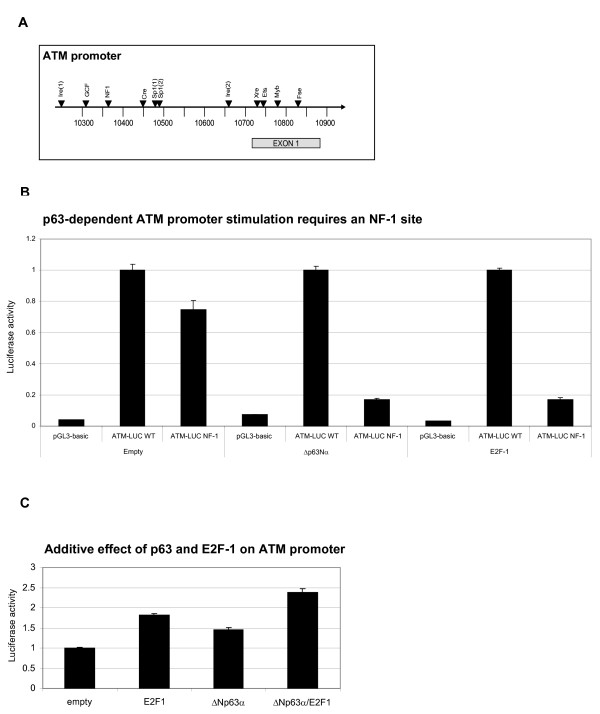
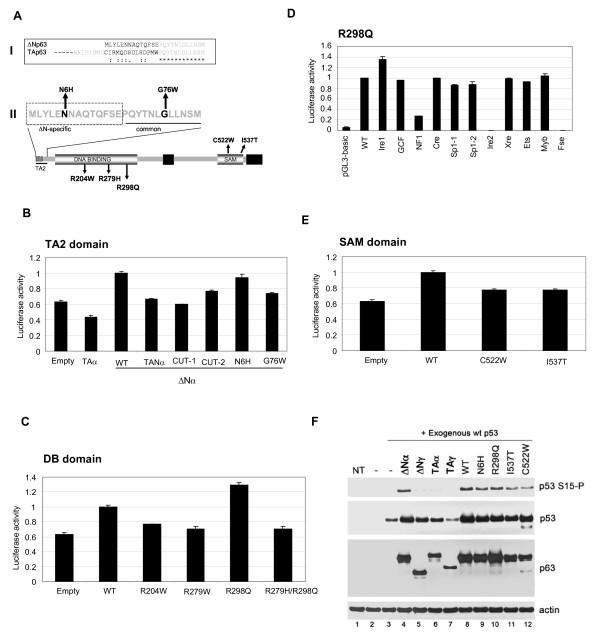
Background: ΔNp63α is an epithelial progenitor cell marker that maintains epidermal stem cell self-renewal capacity. Previous studies revealed that UV-damage induced p53 phosphorylation is confined to ΔNp63α-positive cells in the basal layer of human epithelium. Results: We now report that phosphorylation of the p53 tumour suppressor is positively regulated by ΔNp63α in immortalised human keratinocytes. ΔNp63α depletion by RNAi reduces steady-state ATM mRNA and protein levels, and attenuates p53 Serine-15 phosphorylation. Conversely, ectopic expression of ΔNp63α in p63-null tumour cells stimulates ATM transcription and p53 Serine-15 phosphorylation. We show that ATM is a direct ΔNp63α transcriptional target and that the ΔNp63α response element localizes to the ATM promoter CCAAT sequence. Structure-function analysis revealed that the ΔNp63-specific TA2 transactivation domain mediates ATM transcription in coordination with the DNA binding and SAM domains. Conclusions: Germline p63 point mutations are associated with a range of ectodermal developmental disorders, and targeted p63 deletion in the skin causes premature ageing. The ΔNp63α-ATM-p53 damage-response pathway may therefore function in epithelial development, carcinogenesis and the ageing processes.
Overview
The claims and statistics of this paper haven’t been checked yet.
Free: it reads the open-access text and checks the first 5 claims that cite a source we can check. Create a free account to check every claim.
Integrity signals
Registry
Cites
Statistics
Figures
Verification
Claims the paper makes
The claims and statistics of this paper haven’t been checked yet.
Free: it reads the open-access text and checks the first 5 claims that cite a source we can check. Create a free account to check every claim.
Claims other papers make about this one
Each is checked against this paper’s own text: does it say what the citing paper says it does?
In the citing paper
“Checkpoint proteins such as p53 and ATM are activated upon UVR exposure and they elicit cell cycle arrest signaling to allow proper DNA repair [60].”
From Ultraviolet Radiation‐Induced Skin Aging: The Role of DNA Damage and Oxidative Stress in Epidermal Stem Cell Damage Mediated Skin Aging (2016) · cites this paper as [60]
Self-check
Percentages, sums and reported differences re-computed from the paper’s own numbers.
The self-check needs the paper’s full text.
Citations
Cites
p63 is essential for regenerative proliferation in limb, craniofacial and epithelial development
Yang, A., Schweitzer, R., Sun, D., Kaghad, M., Walker, N., Bronson, R. T., Tabin, C., Sharpe, A., Caput, D., Crum, C., et al. (1999) · Nature · doi:10.1038/19539 · Cited by 2,225
Yang, A., Kaghad, M., Wang, Y., Gillett, E., Fleming, M. D., Dötsch, V., Andrews, N. C., Caput, D., & McKeon, F. (1998) · Molecular Cell · doi:10.1016/s1097-2765(00)80275-0 · Cited by 2,085 · cited 4×
“The p63 gene expresses at least 6 common transcripts by utilising two distinct promoters (TA and ΔN) and alternative splicing within the 3' end of mRNA that generates α,β and γ isoforms [ 2 ].”
BackgroundInfluentialActivation of the DNA damage checkpoint and genomic instability in human precancerous lesions
Gorgoulis, V. G., Vassiliou, L.-V. F., Karakaidos, P., Zacharatos, P., Kotsinas, A., Liloglou, T., Venere, M., DiTullio, R. A., Kastrinakis, N. G., Levy, B., et al. (2005) · Nature · doi:10.1038/nature03485 · Cited by 2,009 · cited 1×
“Further, activation of the ATM-CHK2 pathway during early tumorigenesis has been reported to provide a selective pressure for p53 mutation [ 46 ].”
Backgroundp63 identifies keratinocyte stem cells
Pellegrini, G., Dellambra, E., Golisano, O., Martinelli, E., Fantozzi, I., Bondanza, S., Ponzin, D., McKeon, F., & De Luca, M. (2001) · Proceedings of the National Academy of Sciences · doi:10.1073/pnas.061032098 · Cited by 1,363 · cited 1×
“Initial studies identified p63 as a robust biomarker for epithelial progenitor, or stem, cells [5].”
BackgroundHickson, I., Zhao, Y., Richardson, C. J., Green, S. J., Martin, N. M. B., Orr, A. I., Reaper, P. M., Jackson, S. P., Curtin, N. J., & Smith, G. C. M. (2004) · Cancer Research · doi:10.1158/0008-5472.can-04-2727 · Cited by 1,220 · cited 5×
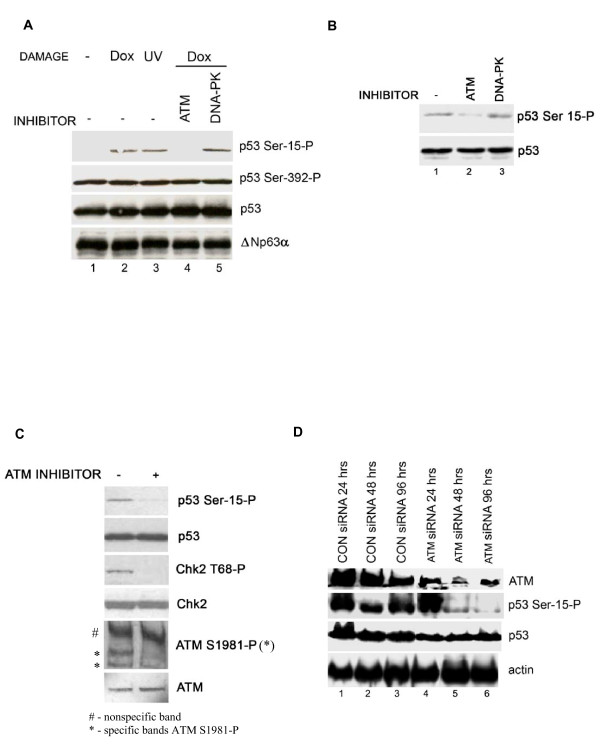
“Cells were treated with DMSO carrier, 10 μM KU-55933 (ATM inhibitor) or 1 μM NU7441 (DNA-PK inhibitor) for 24 hrs, and lysates were immunoblotted for phosphoSerine-15 p53 and total p53 protein.”
BackgroundInfluentialSelf-citationp14ARF links the tumour suppressors RB and p53
Bates, S., Phillips, A. C., Clark, P. A., Stott, F., Peters, G., Ludwig, R. L., & Vousden, K. H. (1998) · Nature · doi:10.1038/25867 · Cited by 918
A multiplicity of CCAAT box-binding proteins
Dorn, A., Bollekens, J., Staub, A., Benoist, C., & Mathis, D. (1987) · Cell · doi:10.1016/0092-8674(87)90513-7 · Cited by 709 · cited 7×
“However, we found that coexpression of the NF-YA isoform inhibits ΔNp63α stimulation of the ATM reporter (data not shown), presumably by displacing the unidentified ΔNp63α coactivator from the ATM promoter CCAAT element.”
InfluentialFrequent clones of p53-mutated keratinocytes in normal human skin
Jonason, A. S., Kunala, S., Price, G. J., Restifo, R. J., Spinelli, H. M., Persing, J. A., Leffell, D. J., Tarone, R. E., & Brash, D. E. (1996) · Proceedings of the National Academy of Sciences · doi:10.1073/pnas.93.24.14025 · Cited by 685 · cited 1×
“Discussion p53 is the primary mediator responsible for removing DNA damaged epidermal cells [26], and p53 phosphorylation at the CK2-site is required to suppress UV-induced skin cancer development in mice [13].”
BackgroundThe DNA Binding Domain of the Rat Liver Nuclear Protein C/EBP Is Bipartite
Landschulz, W. H., Johnson, P. F., & McKnight, S. L. (1989) · Science · doi:10.1126/science.2494700 · Cited by 636 · cited 3×
“CCAAT-binding proteins include NF-1/CTF [33], NF-Y [34] and C/EBP [35].”
p63 is the molecular switch for initiation of an epithelial stratification program
Koster, M. I., Kim, S., Mills, A. A., DeMayo, F. J., & Roop, D. R. (2004) · Genes & Development · doi:10.1101/gad.1165104 · Cited by 622
Roles of the NFI/CTF gene family in transcription and development
Gronostajski, R. M. (2000) · Gene · doi:10.1016/s0378-1119(00)00140-2 · Cited by 553 · cited 1×
“CCAAT-binding proteins include NF-1/CTF [33], NF-Y [34] and C/EBP [35].”
p53 Mutations in human immortalized epithelial cell lines
Lehman, T. A., Modali, R., Boukamp, P., Stanek, J., Bennett, W. P., Welsh, J. A., Metcalf, R. A., Stampfer, M. R., Fusenig, N., Rogan, E. M., et al. (1993) · Carcinogenesis · doi:10.1093/carcin/14.5.833 · Cited by 447 · cited 1×
“We have now used ΔNp63α-positive/mutant p53 HaCat immortalised keratinocytes [14] as a model system to investigate a potential functional relationship between ΔNp63α and p53 phosphorylation.”
MethodDi Agostino, S., Strano, S., Emiliozzi, V., Zerbini, V., Mottolese, M., Sacchi, A., Blandino, G., & Piaggio, G. (2006) · Cancer Cell · doi:10.1016/j.ccr.2006.08.013 · Cited by 418 · cited 1×
“NF-Y can mediate ΔNp63α-dependent transcription in human keratinocytes [10,36], p53-dependent repression of cell cycle genes [37], and transcriptional activation by p53 gain-of-function mutants [38].”
BackgroundHay-Wells syndrome is caused by heterozygous missense mutations in the SAM domain of p63
McGrath, J. A. (2001) · Human Molecular Genetics · doi:10.1093/hmg/10.3.221 · Cited by 390 · cited 3×
“We found that AEC point mutations within the SAM domain [25] inhibited ΔNp63α-stimulated ATM transcription and ATM-dependent p53 phosphorylation, indicating that this domain may be essential for cofactor recruitment by the ΔNp63α.”
BackgroundStiff, T., Walker, S. A., Cerosaletti, K., Goodarzi, A. A., Petermann, E., Concannon, P., O'Driscoll, M., & Jeggo, P. A. (2006) · The EMBO Journal · doi:10.1038/sj.emboj.7601446 · Cited by 360 · cited 1×
“Post-translational activation of the ATM kinase by ionizing radiation, oxidative stress, chemotherapeutic drugs [15] and UV radiation is well-established [29].”
BackgroundWestfall, M. D., Mays, D. J., Sniezek, J. C., & Pietenpol, J. A. (2003) · Molecular and Cellular Biology · doi:10.1128/mcb.23.7.2264-2276.2003 · Cited by 330 · cited 3×
“Finally, the p63 SAM domain forms a binding site for NF-Y [36], and SAM domain disease-associated mutants have decreased transcriptional repressor and activator function [7,42].”
BackgroundSAM as a protein interaction domain involved in developmental regulation
Schultz, J., Bork, P., Ponting, C. P., & Hofmann, K. (1997) · Protein Science · doi:10.1002/pro.5560060128 · Cited by 300 · cited 1×
“However, p63 alpha isoforms encode a C-terminal extension containing a SAM protein interaction domain, a conserved functional element found in a range of developmental proteins [4].”
Backgroundp63 deficiency activates a program of cellular senescence and leads to accelerated aging
Keyes, W. M., Wu, Y., Vogel, H., Guo, X., Lowe, S. W., & Mills, A. A. (2005) · Genes & Development · doi:10.1101/gad.342305 · Cited by 298
Dohn, M., Zhang, S., & Chen, X. (2001) · Oncogene · doi:10.1038/sj.onc.1204427 · Cited by 294
Differential expression of p63 isoforms in normal tissues and neoplastic cells
Nylander, K., Vojtesek, B., Nenutil, R., Lindgren, B., Roos, G., Zhanxiang, W., Sjöström, B., Dahlqvist, Å., & Coates, P. J. (2002) · The Journal of Pathology · doi:10.1002/path.1231 · Cited by 276 · cited 1×
“However, the development of TA- and ΔN-isotype specific reagents revealed that ΔNp63 expression is confined to the basal layer of stratified squamous epithelium, whereas TAp63 variants predominate in suprabasal layers [6].”
BackgroundSelf-citationKurz, E. U., Douglas, P., & Lees-Miller, S. P. (2004) · Journal of Biological Chemistry · doi:10.1074/jbc.m406879200 · Cited by 250 · cited 2×
“In contrast, p53 Serine-15 phosphorylation is low, but is induced following UV-irradiation or treatment with the ATM pathway activator, doxorubicin [ 15 ] (Figure 1A, lanes 2 and 3 vs. lane 1). Doxorubicin-induced Serine-15 phosphorylation is attenuated by the small molecule ATM inhibitor, KU-55933 [16] (Figure 1A, la…”
BackgroundBarbieri, C. E., Tang, L. J., Brown, K. A., & Pietenpol, J. A. (2006) · Cancer Research · doi:10.1158/0008-5472.can-06-2020 · Cited by 233 · cited 1×
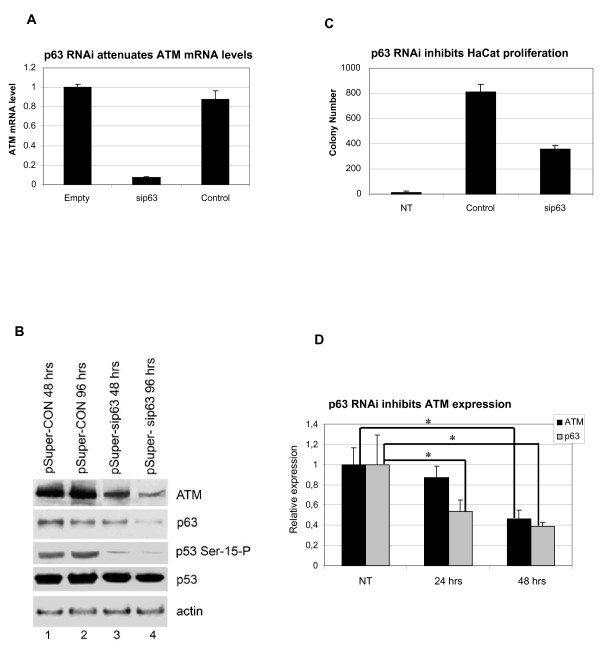
“A recent genome-wide screen reporting that ATM expression is reduced by 30-60% in p63 siRNAtreated epithelial cell lines supports our finding [28].”
ResultGhioni, P., Bolognese, F., Duijf, P. H. G., van Bokhoven, H., Mantovani, R., & Guerrini, L. (2002) · Molecular and Cellular Biology · doi:10.1128/mcb.22.24.8659-8668.2002 · Cited by 223 · cited 1×
“TAp63 isotypes can transcriptionally activate a subset of p53 target genes involved in cell cycle checkpoint control and apoptosis [8,9].”
BackgroundHAY, R. J., & WELLS, R. S. (1976) · British Journal of Dermatology · doi:10.1111/j.1365-2133.1976.tb04384.x · Cited by 205 · cited 2×
“Finally, the p63 SAM domain forms a binding site for NF-Y [36], and SAM domain disease-associated mutants have decreased transcriptional repressor and activator function [7,42].”
BackgroundMiehlke, S., Kirsch, C., Agha‐Amiri, K., Günther, T., Lehn, N., Malfertheiner, P., Stolte, M., Ehninger, G., & Bayerdörffer, E. (2000) · International Journal of Cancer · doi:10.1002/1097-0215(20000801)87:3<438::aid-ijc20>3.0.co;2-1 · Cited by 200
p53 Negatively Regulates cdc2 Transcription via the CCAAT-binding NF-Y Transcription Factor
Yun, J., Chae, H.-D., Choy, H. E., Chung, J., Yoo, H.-S., Han, M.-H., & Shin, D. Y. (1999) · Journal of Biological Chemistry · doi:10.1074/jbc.274.42.29677 · Cited by 159
Ser18 and 23 phosphorylation is required for p53‐dependent apoptosis and tumor suppression
Chao, C., Herr, D., Chun, J., & Xu, Y. (2006) · The EMBO Journal · doi:10.1038/sj.emboj.7601167 · Cited by 158 · cited 1×
“Interestingly, p53S18A/S23A (ATM-/ CHK2-sites) double mutant mice develop a spectrum of spontaneous tumours distinct from p53S23A and p53null mice, and show accelerated skin ageing phenotypes when crossed into a repair-deficient background [45].”
BackgroundPhosphorylation of Serine 18 Regulates Distinct p53 Functions in Mice
Sluss, H. K., Armata, H., Gallant, J., & Jones, S. N. (2004) · Molecular and Cellular Biology · doi:10.1128/mcb.24.3.976-984.2004 · Cited by 152
E2F1 Uses the ATM Signaling Pathway to Induce p53 and Chk2 Phosphorylation and Apoptosis
Powers, J. T., Hong, S., Mayhew, C. N., Rogers, P. M., Knudsen, E. S., & Johnson, D. G. (2004) · Molecular Cancer Research · doi:10.1158/1541-7786.203.2.4 · Cited by 152 · cited 1×
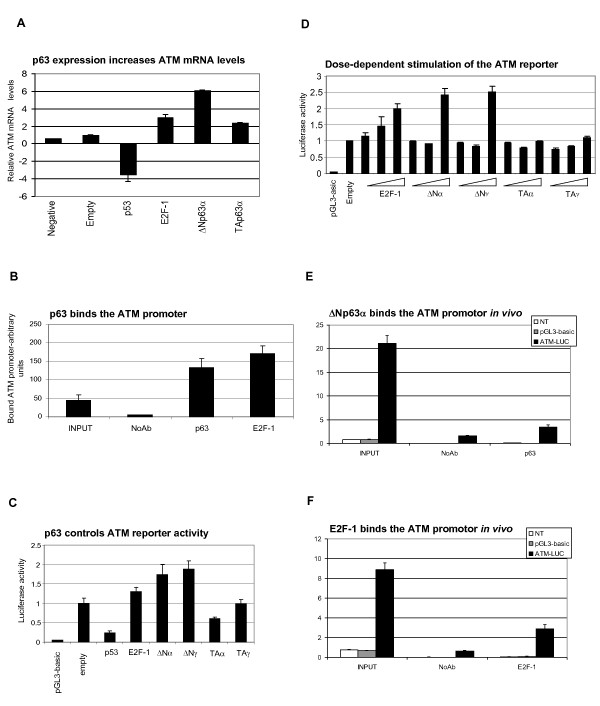
“E2F-1 stimulation of ATM transcription [21] has been implicated in oncogenemediated p53 activation [31].”
BackgroundATM is a target for positive regulation by E2F-1
Berkovich, E., & Ginsberg, D. (2003) · Oncogene · doi:10.1038/sj.onc.1206144 · Cited by 149 · cited 2×
“E2F-1 stimulation of ATM transcription [21] has been implicated in oncogenemediated p53 activation [31].”
BackgroundNylander, K., Coates, P. J., & Hall, P. A. (2000) · International Journal of Cancer · doi:10.1002/1097-0215(20000801)87:3<368::aid-ijc9>3.0.co;2-j · Cited by 144
The transcriptional activities of p53 and its homologue p51/p63: similarities and differences.
Shimada, A., Kato, S., Enjo, K., Osada, M., Ikawa, Y., Kohno, K., Obinata, M., Kanamaru, R., Ikawa, S., & Ishioka, C. (1999) · PubMed · Cited by 136
Protein phosphatase 1 interacts with p53BP2, a protein which binds to the tumour suppressor p53
(1995) · FEBS Letters · doi:10.1016/0014-5793(95)01347-4 · Cited by 129 · cited 1×
“However, in addition to providing a surface for the sequence-specific binding of DNA, the p53 DB domain modulates p53 function by providing a contact interface for regulatory proteins such as ASPP1, Mdm2, and DAPK superfamily kinases [40,41], and the high degree of conservation of the p63 DB domain suggests that a sim…”
BackgroundNew p63 targets in keratinocytes identified by a genome‐wide approach
Viganò, M., Lamartine, J., Testoni, B., Merico, D., Alotto, D., Castagnoli, C., Robert, A., Candi, E., Melino, G., Gidrol, X., et al. (2006) · The EMBO Journal · doi:10.1038/sj.emboj.7601375 · Cited by 125 · cited 2×
“NF-Y can mediate ΔNp63α-dependent transcription in human keratinocytes [10,36], p53-dependent repression of cell cycle genes [37], and transcriptional activation by p53 gain-of-function mutants [38].”
BackgroundDuijf, P. H. G. (2002) · Human Molecular Genetics · doi:10.1093/hmg/11.7.799 · Cited by 121 · cited 2×
“Interestingly, the ADULT syndrome R298Q DNA-binding domain mutant, previously reported to enhance ΔNp63γ TA2-dependent transcription through an intramolecular mechanism [3], stimulated the ATM promoter 1.”
BackgroundIncreased Sensitivity to UV Radiation in Mice with a p53 Point Mutation at Ser389
Bruins, W., Zwart, E., Attardi, L. D., Iwakuma, T., Hoogervorst, E. M., Beems, R. B., Miranda, B., van Oostrom, C. T. M., van den Berg, J., van den Aardweg, G. J., et al. (2004) · Molecular and Cellular Biology · doi:10.1128/mcb.24.20.8884-8894.2004 · Cited by 121
Harmes, D. C., Bresnick, E., Lubin, E. A., Watson, J. K., Heim, K. E., Curtin, J. C., Suskind, A. M., Lamb, J., & DiRenzo, J. (2003) · Oncogene · doi:10.1038/sj.onc.1207129 · Cited by 100 · cited 3×
“Firstly, transfection of HaCat cells with the pSUPER-p63si expression plasmid [17] reduced ΔNp63α mRNA (Figure 2A) and protein expression levels Figure 1 The ATM pathway is active in HaCaT cells.”
BackgroundMethodSelf-citationInhibition of p53‐dependent transcription by BOX‐I phospho‐peptide mimetics that bind to p300
Dornan, D., & Hupp, T. R. (2001) · EMBO reports · doi:10.1093/embo-reports/kve025 · Cited by 94 · cited 1×
“Future studies will aim to determine which cofactors are recruited to this region, and whether their access is controlled by TA2 domain post-translational modification, similar to the p53 model [39].”
MethodSelf-citationMechanisms of transcriptional repression of cell-cycle G2/M promoters by p63
Testoni, B., & Mantovani, R. (2006) · Nucleic Acids Research · doi:10.1093/nar/gkj477 · Cited by 67 · cited 2×
“NF-Y can mediate ΔNp63α-dependent transcription in human keratinocytes [10, 36 ], p53-dependent repression of cell cycle genes [37], and transcriptional activation by p53 gain-of-function mutants [38].”
BackgroundDietz, S., Rother, K., Bamberger, C., Schmale, H., Mössner, J., & Engeland, K. (2002) · FEBS Letters · doi:10.1016/s0014-5793(02)03093-4 · Cited by 64 · cited 1×
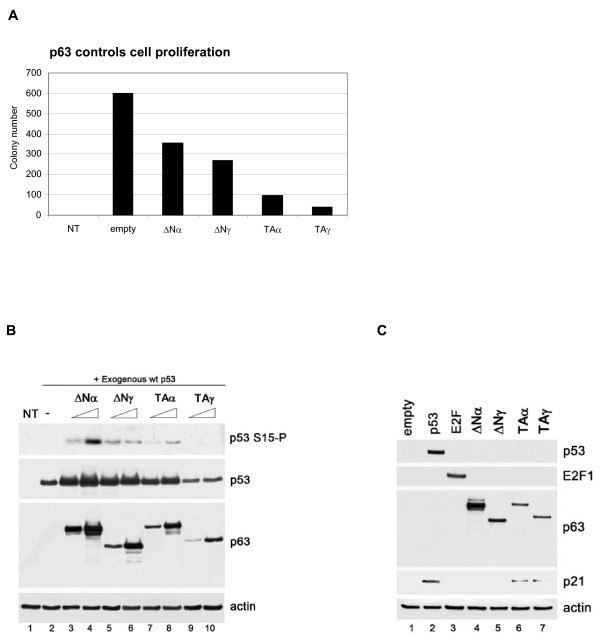
“In line with previous reports, overexpression of p63 variants TAp63α, TAp63γ, ΔNp63α and ΔNp63γ was growth inhibitory (Figure 3A) [19].”
ResultHuang, Y., Sen, T., Nagpal, J. K., Upadhyay, S. K., Trink, B., Ratovitski, E. A., & Sidransky, D. (2008) · Cell Cycle · doi:10.4161/cc.7.18.6627 · Cited by 59 · cited 1×
“the ΔNp63 promoter is subject to both p53-mediated activation and repression by ΔNp63α [17], and that ATM-dependent phosphorylation mediates ΔNp63α degradation [47] suggests that activity of the damageresponse ΔNp63α-ATM-p53 pathway is finely modulated by complex feedback mechanisms.”
BackgroundCraig, A. L., Chrystal, J. A., Fraser, J. A., Sphyris, N., Lin, Y., Harrison, B. J., Scott, M. T., Dornreiter, I., & Hupp, T. R. (2007) · Molecular and Cellular Biology · doi:10.1128/mcb.01595-06 · Cited by 54 · cited 2×
“Immunoblotting was done essentially as described previously [ 40 ].”
BackgroundMethodSelf-citationGueven, N., Keating, K. E., Chen, P., Fukao, T., Khanna, K. K., Watters, D., Rodemann, P. H., & Lavin, M. F. (2001) · Journal of Biological Chemistry · doi:10.1074/jbc.m006190200 · Cited by 51 · cited 1×
“In contrast, epidermal growth factor sensitizes cells to ionizing radiation through Sp1-mediated repression of ATM transcription [32].”
BackgroundSelf-citationKirschner, R. D., Sänger, K., Müller, G. A., & Engeland, K. (2008) · Nucleic Acids Research · doi:10.1093/nar/gkn132 · Cited by 34 · cited 1×
“ΔNp63α-dependent transcriptional repression of S100A2, p21WAF1 and 14-3-3 correlates with ΔNp63α downregulation during keratinocyte differentiation [7,11].”
BackgroundGueven, N., Keating, K. N., Fukao, T., Loeffler, H., Kondo, N., Rodemann, H. P., & Lavin, M. F. (2003) · Genes Chromosomes and Cancer · doi:10.1002/gcc.10261 · Cited by 31 · cited 4×
“Reporter Assays Wild-type and mutant human ATMpLUC reporter plasmids [23] and the Arf exon1 βpLUC reporter plasmid [48] were previously described.”
BackgroundMethodInfluentialSelf-citationFinlan, L. E., & Hupp, T. R. (2006) · European Journal of Cancer · doi:10.1016/j.ejca.2006.01.047 · Cited by 29 · cited 1×
“reported the striking confinement of UV-induced p53 phosphorylation at the key damage-response CK2 and ATM sites to ΔNp63α-positive basal skin cells, despite substantial p53 stabilization throughout the epidermis [27].”
BackgroundSelf-citationFinlan, L. E., Nenutil, R., Ibbotson, S. H., Vojtesek, B., & Hupp, T. R. (2006) · Cell Cycle · doi:10.4161/cc.5.21.3393 · Cited by 29 · cited 1×
“Our previous studies revealed that UV damage-induced p53 phosphorylation is restricted to the ΔNp63α-positive basal epidermal layer of UV-damaged human skin [12], which provided an opportunity to identify novel physiological regulators of the p53 damage response.”
BackgroundSelf-citationRegulation of the Atm promoter in vivo
Gueven, N., Fukao, T., Luff, J., Paterson, C. A., Kay, G. F., Kondo, N., & Lavin, M. F. (2005) · Genes Chromosomes and Cancer · doi:10.1002/gcc.20267 · Cited by 26 · cited 1×
“However, ATM transcriptional regulation has been shown to occur both in vitro and in vivo [30].”
BackgroundSelf-citationCicero, D. O., Falconi, M., Candi, E., Mele, S., Cadot, B., Venere, A. D., Rufini, S., Melino, G., & Desideri, A. (2006) · Cell Biochemistry and Biophysics · doi:10.1385/cbb:44:3:475 · Cited by 25 · cited 1×
“The NMR structure of the p63 SAM domain revealed a 5 alpha helix bundle with a hydrophobic core [24], which is disrupted by ankyloblepharon-ectodermal dysplasia-clefting (AEC)specific point mutations [25].”
Background
Cited by
Panich, U., Sittithumcharee, G., Rathviboon, N., & Jirawatnotai, S. (2016) · Stem Cells International · doi:10.1155/2016/7370642 · Cited by 374
“Checkpoint proteins such as p53 and ATM are activated upon UVR exposure and they elicit cell cycle arrest signaling to allow proper DNA repair [60].”
Structural and Functional Changes and Possible Molecular Mechanisms in Aged Skin
Lee, H., Hong, Y., & Kim, M. (2021) · International Journal of Molecular Sciences · doi:10.3390/ijms222212489 · Cited by 243
Huang, Y., Guerrero-Preston, R., & Ratovitski, E. A. (2012) · Cell Cycle · doi:10.4161/cc.11.6.19670 · Cited by 108
The role of P63 in cancer, stem cells and cancer stem cells
Nekulová, M., Holčáková, J., Coates, P. J., & Vojtěšek, B. (2011) · Cellular & Molecular Biology Letters · doi:10.2478/s11658-011-0009-9 · Cited by 88
“In addition, p63 interacts with ATM, a key kinase involved in the recognition of DNA double-strand breaks [172].”
BackgroundRole of autophagy in head and neck cancer and therapeutic resistance
Sannigrahi, M. K., Singh, V., Sharma, R., Panda, N., & Khullar, M. (2014) · Oral Diseases · doi:10.1111/odi.12254 · Cited by 79
Metadata
- Authors
- Craig, A. L., Holcakova, J., Finlan, L. E., Nekulova, M., Hrstka, R., Gueven, N., DiRenzo, J., Smith, G., Hupp, T. R., & Vojtesek, B.
- Affiliations
- Western General Hospital (GB)
- Masaryk Memorial Cancer Institute (CZ)
- QIMR Berghofer Medical Research Institute (AU)
- Dartmouth College (US)
- Venue
- Molecular Cancer
- Published
- 2010-07-21
- Volume
- 9
- Issue
- 1
- Pages
- 195-195
- ISSN
- 1476-4598 (ISSN-L)
- PMC
- PMC3098010
- OpenAlex
- W2149495955
- Cited by
- 37
- References
- 48
- Citations by year
- 2026: 1 · 2023: 2 · 2022: 1 · 2021: 2 · 2020: 2 · 2019: 1 · 2018: 2 · 2017: 1 · 2016: 3 · 2015: 4 · 2014: 3 · 2013: 2 · 2012: 5
- FWCI
- 2.37
- Type
- journal article
- Language
- en
- Open access
- gold
- doi.org
- Licence
- cc-by
- Locations
- Molecular Cancer (publishedVersion, cc-by)
- PubMed Central (publishedVersion, cc-by)
- PubMed (publishedVersion)
- ERA (submittedVersion, cc-by)
- eCite Digital Repository (University of Tasmania) (submittedVersion, cc-by)
- DOAJ (DOAJ: Directory of Open Access Journals) (submittedVersion)
- Figshare (submittedVersion)
- Edinburgh Research Explorer (University of Edinburgh) (submittedVersion, cc-by)
- Funders
- Cancer Research UK (C483 / A6354)
- Grantová Agentura České Republiky (GPP301/10/P431)
- Topics
- Health Sciences › Medicine › Oncology › Cancer-related Molecular Pathways
- Life Sciences › Biochemistry, Genetics and Molecular Biology › Molecular Biology › DNA Repair Mechanisms
- Life Sciences › Biochemistry, Genetics and Molecular Biology › Molecular Biology › Genomics and Chromatin Dynamics
- Keywords
- ΔNp63α, ATM, p53 Ser15 phosphorylation, transcriptional regulation, keratinocytes, premature aging, carcinogenesis
- MeSH terms
- Cell Line, Transformed, DNA-Binding Proteins, Humans, Phosphorylation, Promoter Regions, Genetic, Serine, Transcription Factors, Transcription, Genetic, Trans-Activators, Protein Serine-Threonine Kinases, Cell Cycle Proteins, Tumor Suppressor Proteins, Ataxia Telangiectasia Mutated Proteins
About these checks
Registry, retraction, Cites and statistics results are computed, not judged, with one exception: a printed reference that no index lists is read once by a model before it counts as a citation error. Claims are extracted by a model and kept only when their quote appears verbatim in the text; each cited source is then checked, with a model’s help, for whether it says what the claim relies on. Those verdicts can be wrong — read the claim’s quote and the cited source before relying on one.
Statistics and arithmetic are recomputed, not judged.
Confidence bands are shown only for fields calibrated on our annotated test set. None is calibrated yet, so no band is shown.
What counts as a claim ›How we measure confidence ›How we check this ›
Are you an author, or do you see a problem with this page? Request a review
Data sources
Bibliographic data: Semantic Scholar, OpenAlex, Crossref.
Contains information from the Semantic Scholar Academic Graph Datasets, made available under the ODC Attribution License (ODC-BY 1.0).
Semantic Scholar’s data is described in: Kinney, R., et al. (2023). The Semantic Scholar Open Data Platform. arXiv:2301.10140.
