

Antiobesity and lipid-lowering effects of Bifidobacterium spp. in high fat diet-induced obese rats
Open accessThe DOI matches its Crossref record; 45 of the 45 references it cites were found in a registry or an index.
Abstract
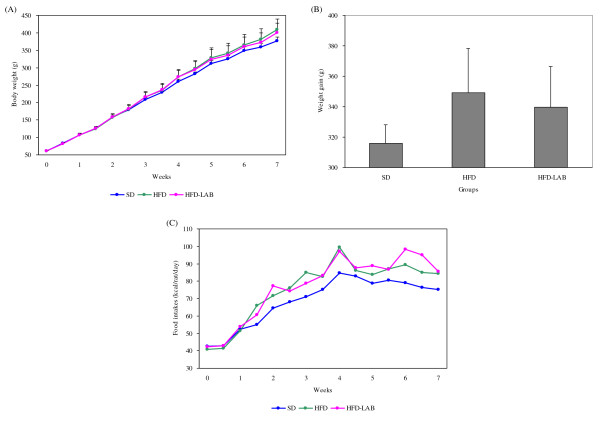
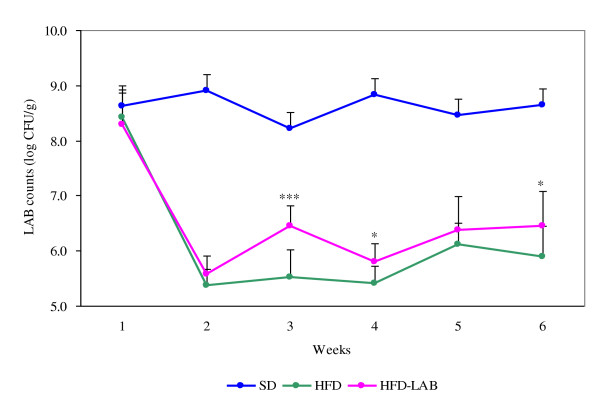
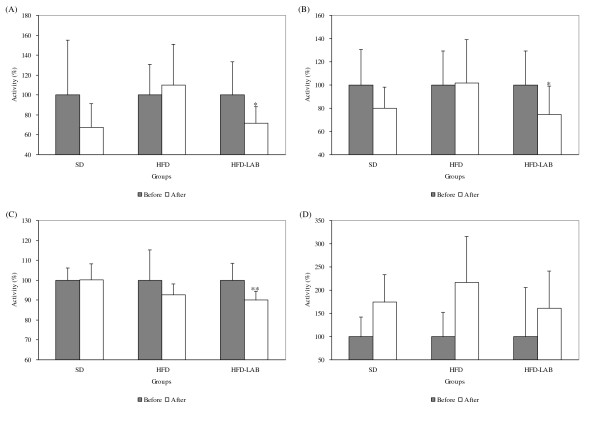
BACKGROUND: Recent studies have reported the preventive effects of probiotics on obesity. Among commensal bacteria, bifidobacteria is one of the most numerous probiotics in the mammalian gut and are a type of lactic acid bacteria. The aim of this study was to assess the antiobesity and lipid-lowering effects of Bifidobacterium spp. isolated from healthy Korean on high fat diet-induced obese rats. METHODS: Thirty-six male Sprague-Dawley rats were divided into three groups as follows: (1) SD group, fed standard diet; (2) HFD group, fed high fat diet; and (3) HFD-LAB group, fed high fat diet supplemented with LAB supplement (B. pseudocatenulatum SPM 1204, B. longum SPM 1205, and B. longum SPM 1207; 108 ~ 109 CFU). After 7 weeks, the body, organ, and fat weights, food intake, blood serum levels, fecal LAB counts, and harmful enzyme activities were measured. RESULTS: Administration of LAB reduced body and fat weights, blood serum levels (TC, HDL-C, LDL-C, triglyceride, glucose, leptin, AST, ALT, and lipase levels), and harmful enzyme activities (β-glucosidase, β-glucuronidase, and tryptophanase), and significantly increased fecal LAB counts. CONCLUSION: These data suggest that Bifidobacterium spp. used in this study may have beneficial antiobesity effects.
Overview
The claims and statistics of this paper haven’t been checked yet.
Free: it reads the open-access text and checks the first 5 claims that cite a source we can check. Create a free account to check every claim.
Integrity signals
Registry
Cites
Statistics
Figures
Verification
Claims the paper makes
The claims and statistics of this paper haven’t been checked yet.
Free: it reads the open-access text and checks the first 5 claims that cite a source we can check. Create a free account to check every claim.
Claims other papers make about this one
Each is checked against this paper’s own text: does it say what the citing paper says it does?
In the citing paper
“Moreover, certain Lactobacillus and Bifidobacteria species have been associated with increased muscle strength, weight loss, and reduced obesogenic environments in humans and rodents [173,174,175,176].”
From Impact of Protein Intake in Older Adults with Sarcopenia and Obesity: A Gut Microbiota Perspective (2020) · cites this paper as [173]
In the citing paper
“Similarly, in obese rats fed a high-fat diet, Bifidobacterium spp. decreased levels of circulating triglycerides and LDL and increased levels of HDL [35].”
From Dietary lipids, gut microbiota and lipid metabolism (2019) · cites this paper as [35]
Self-check
Percentages, sums and reported differences re-computed from the paper’s own numbers.
The self-check needs the paper’s full text.
Citations
Cites
Serum Immunoreactive-Leptin Concentrations in Normal-Weight and Obese Humans
Considine, R. V., Sinha, M. K., Heiman, M. L., Kriauciunas, A., Stephens, T. W., Nyce, M. R., Ohannesian, J. P., Marco, C. C., McKee, L. J., Bauer, T. L., et al. (1996) · New England Journal of Medicine · doi:10.1056/nejm199602013340503 · Cited by 6,326 · cited 2×
“Thus, leptin levels are closely related to the percentage of body fat; markedly higher serum leptin levels have been found in obese individuals compared with non-obese individuals [31,32].”
BackgroundResultAFRC, R. F. (1989) · Journal of Applied Bacteriology · doi:10.1111/j.1365-2672.1989.tb05105.x · Cited by 4,149
Cani, P. D., Neyrinck, A. M., Fava, F., Knauf, C., Burcelin, R. G., Tuohy, K. M., Gibson, G. R., & Delzenne, N. M. (2007) · Diabetologia · doi:10.1007/s00125-007-0791-0 · Cited by 1,774 · cited 1×
“with improved glucose-tolerance, glucose-induced insulin-secretion, and normalized inflammatory tone (decreased endotoxemia, plasma and adipose tissue proinflammatory cytokine) [ 7 ].”
BackgroundFrederich, R. C., Hamann, A., Anderson, S., Löllmann, B., Lowell, B. B., & Flier, J. S. (1995) · Nature Medicine · doi:10.1038/nm1295-1311 · Cited by 1,660 · cited 1×
“Leptin has been identified as an antiobesity hormone that regulates body weight by controlling food intake and energy expenditure via the hypothalamic-pituitarygonadal axis [28-30].”
BackgroundProbiotics in man and animals.
Fuller, R. (1989) · PubMed · Cited by 1,292
Signals That Regulate Food Intake and Energy Homeostasis
Woods, S. C., Seeley, R. J., Porte, D., & Schwartz, M. W. (1998) · Science · doi:10.1126/science.280.5368.1378 · Cited by 1,169
Early differences in fecal microbiota composition in children may predict overweight
Kalliomäki, M., Carmen Collado, M., Salminen, S., & Isolauri, E. (2008) · The American Journal of Clinical Nutrition · doi:10.1093/ajcn/87.3.534 · Cited by 1,062 · cited 1×
“[39] also observed that fecal Bifidobacterium spp.”
Leptin Signaling, Adiposity, and Energy Balance
JÉQUIER, E. (2002) · Annals of the New York Academy of Sciences · doi:10.1111/j.1749-6632.2002.tb04293.x · Cited by 789 · cited 1×
“Leptin has been identified as an antiobesity hormone that regulates body weight by controlling food intake and energy expenditure via the hypothalamic-pituitarygonadal axis [28-30].”
BackgroundIncreased obese mRNA expression in omental fat cells from massively obese humans
Hamilton, B. S., Paglia, D., Kwan, A. Y. M., & Deitel, M. (1995) · Nature Medicine · doi:10.1038/nm0995-953 · Cited by 526 · cited 1×
“Thus, leptin levels are closely related to the percentage of body fat; markedly higher serum leptin levels have been found in obese individuals compared with non-obese individuals [31,32].”
BackgroundThe Function of Leptin in Nutrition, Weight, and Physiology
Friedman, J. M. (2002) · Nutrition Reviews · doi:10.1301/002966402320634878 · Cited by 508 · cited 1×
“Leptin has been identified as an antiobesity hormone that regulates body weight by controlling food intake and energy expenditure via the hypothalamic-pituitarygonadal axis [28-30].”
Background
Research works printed but not linked: 1
- Scardovi V Krieg NR, Holt JG Genus Bifidobacterium Bergey's Manual of Systemic Bacteriology 1986 2 Williams & Willikins, MD 1418 143421718174
Cited by
Items 101–200 of 359
Maes, M. H. J., Vasupanrajit, A., Jirakran, K., Klomkliew, P., Chanchaem, P., Tunvirachaisakul, C., Plaimas, K., Suratanee, A., & Payungporn, S. (2023) · Acta Neuropsychiatrica · doi:10.1017/neu.2023.21 · Cited by 63
Bouhafs, L., Moudilou, E., Exbrayat, J., Lahouel, M., & Idoui, T. (2015) · Renal Failure · doi:10.3109/0886022x.2015.1073543 · Cited by 62
Yan, S., Tian, Z., Li, M., Li, B., & Cui, W. (2019) · Food & Function · doi:10.1039/c8fo02163e · Cited by 63
Chen, D., Yang, Z., Chen, X., Huang, Y., Yin, B., Guo, F., Zhao, H., Huang, J., Wu, Y., & Gu, R. (2015) · Journal of Microbiology and Biotechnology · doi:10.4014/jmb.1409.09085 · Cited by 52
Safety Assessment of Bacteroides Uniformis CECT 7771, a Symbiont of the Gut Microbiota in Infants
del Pulgar, E. M. G., Benítez‐Páez, A., & Sanz, Y. (2020) · Nutrients · doi:10.3390/nu12020551 · Cited by 56
“The oral administration of classical probiotics of the genera Bifidobacterium and Lactobacillus (~109 CFU) also decreased amylase activity in male rats [43,44].”
BackgroundSheng, S., Su, Y., Chen, J., Zhang, Y., Wang, Y., Qin, Q., Li, W., Li, T., Huang, M., Ding, S., et al. (2022) · Frontiers in Cellular and Infection Microbiology · doi:10.3389/fcimb.2022.946757 · Cited by 55
“(Ma et al., 2008; Yin et al., 2010; An et al., 2011), and some of them have been used as prebiotics in several diseases due to their immune-modulatory action.”
BackgroundThe role of microbiota in neonatal hyperbilirubinemia.
Chen, K., & Yuan, T. (2020) · PubMed Central · Cited by 54
Kelishadi, R., Farajian, S., & Mirlohi, M. (2013) · Hepatitis Monthly · doi:10.5812/hepatmon.7233 · Cited by 55
Influence of the microbiota and probiotics in obesity
Fontané, L., Benaiges, D., Goday, A., Llauradó, G., & Pedro‐Botet, J. (2018) · Clínica e Investigación en Arteriosclerosis (English Edition) · doi:10.1016/j.artere.2018.10.002 · Cited by 54
The bacteriocin bactofencin A subtly modulates gut microbial populations
Guinane, C. M., Lawton, E. M., O’Connor, P. M., O’Sullivan, Ó., Hill, C., Ross, R. P., & Cotter, P. D. (2016) · Anaerobe · doi:10.1016/j.anaerobe.2016.05.001 · Cited by 52
Nabavi, S., Rafraf, M., Somi, M.-H., Homayouni-Rad, A., & Asghari-Jafarabadi, M. (2015) · Journal of Functional Foods · doi:10.1016/j.jff.2015.08.031 · Cited by 45
Mishra, A. K., & Ghosh, A. R. (2020) · Life Sciences · doi:10.1016/j.lfs.2020.118292 · Cited by 50
Kudo, M., Yoshitomi, H., Momoo, M., Suguro, S., Yamagishi, Y., & Gao, M. (2017) · Biological and Pharmaceutical Bulletin · doi:10.1248/bpb.b16-01002 · Cited by 48
Probiotics: Supplements, Food, Pharmaceutical Industry
Putta, S., Yarla, N. S., Lakkappa, D. B., Imandi, S. B., Malla, R. R., Amajala, K. C., Chari, B. P. V., Saka, S., Vechalapu, R. R., Kamal, M. A., et al. (2018) · Elsevier eBooks · doi:10.1016/b978-0-12-814625-5.00002-9 · Cited by 48
Karimi, G., Jamaluddin, R., Mohtarrudin, N., Ahmad, Z., Khaza’ai, H., & Parvaneh, M. (2017) · Nutrition Metabolism and Cardiovascular Diseases · doi:10.1016/j.numecd.2017.06.020 · Cited by 48
Kobyliak, N. M., Falalyeyeva, T. M., Beregova, T. V., & Spivak, M. Y. (2015) · Endokrynologia Polska · doi:10.5603/ep.a2017.0055 · Cited by 46
Moon, Y.-J., Baik, S.-H., & Cha, Y.-S. (2014) · Nutrients · doi:10.3390/nu6031016 · Cited by 40
“[25,26] have been reported by several investigators.”
BackgroundEarly gut colonization and subsequent obesity risk
Kaplan, J. L., & Walker, W. A. (2012) · Current Opinion in Clinical Nutrition & Metabolic Care · doi:10.1097/mco.0b013e32835133cb · Cited by 44
“have shown antiobesity and lipid lowering effects in high-fat diet-induced obesity [69,70].”
BackgroundChen, J., Wang, Y., Zhu, T., Yang, S., Cao, J., Li, X., Wang, L., & Sun, C. (2020) · Antioxidants · doi:10.3390/antiox9090831 · Cited by 42
“[37] indicated that some species of Bifidobacterium are related to fat loss, which could be utilized as a potential method for weight loss in obese individuals.”
MethodChleilat, F., Schick, A., Deleemans, J. M., Ma, K., Alukic, E., Wong, J., Tuplin, E. W. N., Nettleton, J. E., & Reimer, R. A. (2021) · The FASEB Journal · doi:10.1096/fj.202100198rr · Cited by 43
Hsu, C., Hou, Y.-H., Wang, C.-S., Lin, S.-W., Jhou, B.-Y., Chen, C., & Chen, Y. (2019) · Journal of the American College of Nutrition · doi:10.1080/07315724.2019.1571454 · Cited by 42
“Recent studies have also demonstrated the preventive effects of some bacterial strains on obesity (4, 18).”
BackgroundRather, S. A., Pothuraju, R., Sharma, R. K., De, S., Mir, N. A., & Jangra, S. (2014) · International Journal of Dairy Technology · doi:10.1111/1471-0307.12154 · Cited by 41
Noormohammadi, M., Ghorbani, Z., Löber, U., Mahdavi-Roshan, M., Bartolomaeus, T. U. P., Kazemi, A., Shoaibinobarian, N., & Forslund, S. K. (2023) · Pharmacological Research · doi:10.1016/j.phrs.2022.106614 · Cited by 40
“For example, according to animal studies, probiotic supplementation in form of Bifidobacterium spp. and Lactobacillus plantarum reduced leptin levels [52,53].”
BackgroundLei, K., Li, Y., Wang, Y., Wen, J., Hong-zhao, W., Yu, D., & Li, W. (2015) · Journal of Zhejiang University SCIENCE B · doi:10.1631/jzus.b1400342 · Cited by 41
García‐Carrizo, F., Cannon, B., Nedergaard, J., Picó, C., Dols, A., Rodríguez, A. M., & Palou, A. (2019) · International Journal of Obesity · doi:10.1038/s41366-019-0445-6 · Cited by 40
de Cosío-Barrón, A. C. G., Hernández-Arriaga, A. M., & Campos-Vega, R. (2020) · Innovative Food Science & Emerging Technologies · doi:10.1016/j.ifset.2019.102286 · Cited by 40
John, O. D., Mouatt, P., Majzoub, M. E., Thomas, T., Panchal, S. K., & Brown, L. (2019) · International Journal of Molecular Sciences · doi:10.3390/ijms21010272 · Cited by 40
“However, Bifidobacterium was found to have protective effects against obesity in high-fat diet-fed rats [48].”
BackgroundYıldırım, A., Tamer, S. A., Sahin, D., Bağrıaçık, F., Kahraman, M. M., Onur, N. D., Çayırlı, Y. B., Çilingir‐Kaya, Ö. T., Aksu, B., Akdenız, E., et al. (2019) · British Journal Of Nutrition · doi:10.1017/s0007114519001466 · Cited by 40
“The perturbations in gut microbiota and antibiotics-induced dysbiosis are well known to be involved in the development of obesity (85,86) , and thereby research has been accumulated on the useofprobioticstoprevent obesity (87 – 89) .”
Sharma, V. K., Prateeksha, Gupta, S. C., Singh, B. N., Rao, C. V., & Barik, S. K. (2022) · Materials Today Bio · doi:10.1016/j.mtbio.2022.100204 · Cited by 39
Lipase inhibitory activity of skim milk fermented with different strains of lactic acid bacteria
Gil-Rodríguez, A. M., & Beresford, T. P. (2019) · Journal of Functional Foods · doi:10.1016/j.jff.2019.06.015 · Cited by 39
The development of probiotics therapy to obesity: a therapy that has gained considerable momentum
Kang, Y., & Cai, Y. (2018) · Hormones · doi:10.1007/s42000-018-0003-y · Cited by 38
Groot, H. E., van de Vegte, Y. J., Verweij, N., Lipšic, E., Karper, J. C., & van der Harst, P. (2020) · Scientific Reports · doi:10.1038/s41598-020-70724-5 · Cited by 38
Rahman, M. S., Kang, I., Lee, Y., Habib, M. A., Choi, B. J., Kang, J. S., Park, D., & Kim, Y. (2021) · Journal of Agricultural and Food Chemistry · doi:10.1021/acs.jafc.1c01440 · Cited by 38
Peng, Y., Yan, Y., Wan, P., Chen, C., Chen, D., Zeng, X., & Cao, Y. (2021) · LWT · doi:10.1016/j.lwt.2021.111829 · Cited by 38
Li, X., Suo, J., Huang, X., Dai, H.-F., Bian, H., Zhu, M., Lin, W., & Han, N. (2021) · Frontiers in Nutrition · doi:10.3389/fnut.2021.761727 · Cited by 38
“Bifidobacterium has been found to reduce body fat weight and blood serum levels (TC, HDL-C, LDL-C, AST, and ALT) in rats (18), while Lactobacillus plantarum CQPC01 slowed the HFD-induced increase in body weight, decreased the organ indices, alleviated hepatic lipid accumulation, and inhibited the increased adipose cel…”
BackgroundRahman, M. S., Lee, Y., Park, D., & Kim, Y. (2022) · Journal of Microbiology and Biotechnology · doi:10.4014/jmb.2210.10046 · Cited by 38
“High-fat content increases the TG, AST/GOT, ALT/GPT, CHO, and LDL levels, all of which are indicators of fatty liver disease [41].”
BackgroundRoselli, M., Finamore, A., Brasili, E., Rami, R., Nobili, F., Orsi, C., Zambrini, A. V., & Mengheri, E. (2018) · Journal of Functional Foods · doi:10.1016/j.jff.2018.03.039 · Cited by 39
Ranji, P., Agah, S., Heydari, Z., Rahmati‐Yamchi, M., & Alizadeh, A. M. (2019) · PubMed Central · doi:10.22038/ijbms.2019.32624.7806 · Cited by 38
“In contrast, the administration of Bifidobacterium spp decreased the TC, HDL-C, LDL-C, TG, leptin, and ALT in the highfat diet-induced obese rats (31).”
ResultGut macrobiotic and its metabolic pathways modulate cardiovascular disease
Zhu, J., Lyu, J., Zhao, R., Liu, G., & Wang, S. (2023) · Frontiers in Microbiology · doi:10.3389/fmicb.2023.1272479 · Cited by 39
Zhang, C., Abdo, A. A. A., Kaddour, B., Wu, Q., Xin, L., Li, X., Fan, G., & Teng, C. (2019) · Journal of Functional Foods · doi:10.1016/j.jff.2019.103622 · Cited by 38
Li, Y., Shi, G., Han, Y., Shang, H., Li, H., Liang, W. P., Zhao, W., Bai, L., & Qin, C. (2021) · Stem Cell Research & Therapy · doi:10.1186/s13287-021-02490-8 · Cited by 37
Kondo, S., Kamei, A., Xiao, J. Z., Iwatsuki, K., & Abe, K. (2013) · Beneficial Microbes · doi:10.3920/bm2012.0019 · Cited by 34
“Previous studies have demonstrated the anti-obesity and anti-metabolic syndrome effects of bacterial strains such as Lactobacillus spp. and Bifidobacterium spp. in animal models (An et al., 2011; Kadooka et al., 2010; Lee et al., 2007; Takemura et al., 2010).”
BackgroundMontelius, C., Osman, N., Weström, B. R., Ahrné, S., Molin, G., Albertsson, P., & Erlanson‐Albertsson, C. (2013) · Journal of Nutritional Science · doi:10.1017/jns.2012.29 · Cited by 37
Machado, A. S., Oliveira, J. R., Lelis, D. D. F., de Paula, A. M. B., Guimarães, A. L. S., Andrade, J. M. O., Brandi, I. V., & Santos, S. H. S. (2020) · Biological Research For Nursing · doi:10.1177/1099800420942942 · Cited by 36
“…spp. consists of anti-obesity microorganisms and comprises a group of gram-positive bacteria, representing the most common genus in the human gastrointestinal tract, exerting a key role in the promotion of beneficial health effects (An et al., 2011; In Kim et al., 2019; Le et al., 2014).”
BackgroundResultInfluentialLin, Y., Chen, Y., Hsieh, H.-H., & Chen, M. (2016) · Journal of Functional Foods · doi:10.1016/j.jff.2016.03.015 · Cited by 36
Carreras, N. L., Martorell, P., Chenoll, E., Genovés, S., Ramón, D., & Aleixandre, A. (2018) · Beneficial Microbes · doi:10.3920/bm2017.0141 · Cited by 36
Wang, Y., Cao, X., Ma, J., Liu, S., Jin, X., & Liu, B. (2024) · Journal of Agricultural and Food Chemistry · doi:10.1021/acs.jafc.4c07756 · Cited by 35
Moya-Pérez, Á., Romo‐Vaquero, M., Tomás-Barberán, F. A., Sanz, Y., & García‐Conesa, M. (2013) · Nutrition Metabolism and Cardiovascular Diseases · doi:10.1016/j.numecd.2013.04.011 · Cited by 35
“(including Bifidobacterium pseudocatenulatum) exerted anti-obesity and lipid lowering effects in HF-fed rats [9] and very recently, B.”
BackgroundSeliem, E. M., Azab, M. E., Ismail, R., Nafeaa, A., Alotaibi, B. S., & Negm, W. A. (2022) · Life · doi:10.3390/life12050693 · Cited by 35
“Following a period of acclimatization, the rats were either fed a control diet (CD; n = 8, AIN-76A diet #100000) or HFD (n = 16, rodent diet with 40% beef tallow modified AIN-76A diet #101556) for eight weeks to induce obesity [27].”
MethodCurrent Developments in Probiotics
Machado, C. R. S. M. R. (2015) · Journal of Microbial & Biochemical Technology · doi:10.4172/1948-5948.1000175 · Cited by 35
Pereira, J. D. A. R., Barcelos, M. D. F. P., Boas, E. V. D. B. V., Píccoli, R. H., Guilarducci, J. D. S., Pereira, R. C., Pauli, J. R., Ferreira, E. B., de Angelis‐Pereira, M. C., & Cintra, D. E. (2022) · Journal of the Science of Food and Agriculture · doi:10.1002/jsfa.12095 · Cited by 34
Zhao, H. J., Luo, Y., Zhang, Y., Chen, X., Wang, H., Guo, D., & Wu, Z. (2019) · Marine Life Science & Technology · doi:10.1007/s42995-019-00005-2 · Cited by 34
Asgharian, A., Mohammadi, V., Gholi, Z., Esmaillzade, A., Feizi, A., & Askari, G. (2017) · Iranian Red Crescent Medical Journal · doi:10.5812/ircmj.42902 · Cited by 30
“The bacteria may facilitate elimination of cholesterol in feces and may inhibit its reabsorption into the body; in addition, these bacteria may interfere with the recycling of bile salt (a metabolic product of cholesterol) (22, 24).”
BackgroundResultMicrobial Therapeutics Designed for Infant Health
Watkins, C., Stanton, C., Ryan, C. A., & Ross, R. P. (2017) · Frontiers in Nutrition · doi:10.3389/fnut.2017.00048 · Cited by 33
“Thus, with the aim of reducing HFD-induced weight gain in humans, animal studies are examining the antiobesity effects of different probiotics (67, 68).”
Luzardo-Ocampo, I., Campos-Vega, R., de Mejía, E. G., & Loarca-Piña, G. F. (2020) · Food Research International · doi:10.1016/j.foodres.2020.109097 · Cited by 33
Intervention with kimchi microbial community ameliorates obesity by regulating gut microbiota
Park, S., Kwon, S. J., Cho, K., Seo, S.-H., Kim, E., Unno, T., Bok, S., Park, D.-H., & Son, H.-S. (2020) · The Journal of Microbiology · doi:10.1007/s12275-020-0266-2 · Cited by 33
Self-citationInsights into the Anti-Adipogenic and Anti-Inflammatory Potentialities of Probiotics against Obesity
Kober, A. K. M. H., Saha, S., Ayyash, M. M., Namai, F., Nishiyama, K., Yoda, K., Villena, J., & Kitazawa, H. (2024) · Nutrients · doi:10.3390/nu16091373 · Cited by 34
“…(TC), high-density lipoprotein cholesterol ( HDL-C ) low-density lipoprotein cholesterol (LDL-C), alanine aminotransferase ( ALT ) , TG, glucose, and lipase levels), and harmful enzyme activities ( β -glucosidase, β -glucuronidase, and tryptophase) and efficiently augmented fecal LAB numbers [48].”
BackgroundThomaz, F. S., Altemani, F. H., Panchal, S. K., Worrall, S., & Nitert, M. D. (2020) · Journal of Human Hypertension · doi:10.1038/s41371-020-0359-8 · Cited by 32
Lim, S.-M., Kim, E., Shin, J.-H., Seok, P. R., Jung, S., Yoo, S., & Kim, Y. (2018) · Molecules · doi:10.3390/molecules23030705 · Cited by 33
“For example, Bifidobacterium supplement was shown to lower body and fat weights and to improve the level of blood cholesterol in high fat diet-induced obese Sprague-Dawley rats [71].”
BackgroundMolokhia leaf extract prevents gut inflammation and obesity
Lee, H., Oh, M., Do, M. H., Kim, Y., & Park, H. (2020) · Journal of Ethnopharmacology · doi:10.1016/j.jep.2020.112866 · Cited by 31
Association of Neonatal Jaundice with Gut Dysbiosis Characterized by Decreased Bifidobacteriales
Akagawa, S., Akagawa, Y., Yamanouchi, S., Teramoto, Y., Yasuda, M., Fujishiro, S., Kino, J., Hirabayashi, M., Mine, K., Kimata, T., et al. (2021) · Metabolites · doi:10.3390/metabo11120887 · Cited by 31
“Unconjugated bilirubin, primarily derived from heme, is separated from albumin and enters the hepatocytes; it is then conjugated to glucuronide by UGT1A1 and excreted into the intestine, where it is deconjugated by beta-glucuronidase derived from certain anaerobic bacteria, such as Escherichia coli, Peptostreptococcus…”
BackgroundBan, O., Lee, M., Bang, W. Y., Nam, E. H., Jeon, H. J., Shin, M., Yang, J., & Jung, Y. H. (2022) · Molecular Nutrition & Food Research · doi:10.1002/mnfr.202200385 · Cited by 32
Syoc, E. P. V., Damani, J. J., DiMattia, Z. S., Ganda, E., & Rogers, C. J. (2023) · Advances in Nutrition · doi:10.1016/j.advnut.2023.10.009 · Cited by 31
“Rodent models of DIO using Sprague – Dawley rats, Wistar rats, or other rodent species also reported that BF supplementation for 4 – 8 wk decreased FBG concentrations or OGTT/IPGTT ( n ¼ 5) [46,58 – 61].”
BackgroundMethodRole of probiotics in modulating glucose homeostasis: evidence from animal and human studies
Firouzi, S., Yusof, B. N. M., Ismail, A., Majid, H. A., & Azmi, K. N. (2013) · International Journal of Food Sciences and Nutrition · doi:10.3109/09637486.2013.775227 · Cited by 31
“The quality of animal studies were almost the same with none of them being blinded to researchers and only six of them mentioned about random allocation (Al-Salami et al., 2008; An et al., 2011; Andersson et al., 2010; Calcinaro et al., 2005; El Khamisy, 2010; Naito et al., 2011).”
BackgroundResultZhang, Q., Xiao, X., Zheng, J., Li, M., Yu, M., Ping, F., Wang, T., & Wang, X. (2019) · Frontiers in Endocrinology · doi:10.3389/fendo.2019.00675 · Cited by 31
“Bifidobacterium modulates glucose metabolism, improves insulin resistance, and gut barrier function, and stimulates the host immune system (56, 57).”
BackgroundMyles, E. M., O’Leary, M. E., Smith, R., MacPherson, C. W., Oprea, A., Melanson, E. H., Tompkins, T. A., & Perrot, T. S. (2020) · Microorganisms · doi:10.3390/microorganisms8101527 · Cited by 29
Asemi, Z., Bahmani, S., Shakeri, H., Jamal, A., & Faraji, A.-M. (2014) · International Journal of Diabetes in Developing Countries · doi:10.1007/s13410-013-0187-2 · Cited by 29
“On the basis of sample size formula suggested for randomized clinical trials [21], we considered the type I error of 5 % (α=0.”
BackgroundMethodResultInfluentialZarrati, M., Salehi, E., Mofid, V., Hosseinzadeh‐Attar, M. J., Nourijelyani, K., Bidad, K., & Shidfar, F. (2013) · PubMed · Cited by 30
Personalized nutrition, microbiota, and metabolism: A triad for eudaimonia
Sarfraz, M. H., Shahid, A., Asghar, S., Aslam, B., Ashfaq, U. A., Raza, H., Prieto, M. A., Simal‐Gándara, J., Barba, F. J., Rajoka, M. S. R., et al. (2022) · Frontiers in Molecular Biosciences · doi:10.3389/fmolb.2022.1038830 · Cited by 27
“Such studies have reported the role of Bifidobacterium species in decreasing the adipose tissue and limiting body weight gain in high-fat diet-induced obese rodents (An et al., 2011; Chen et al., 2012).”
BackgroundGut mucosal and adipose tissues as health targets of the immunomodulatory mechanisms of probiotics
Ashaolu, T. J., & Fernández‐Tomé, S. (2021) · Trends in Food Science & Technology · doi:10.1016/j.tifs.2021.04.040 · Cited by 27
Tsai, M., Lin, W., Chen, Y., Lin, H.-Y., Ho, H.-H., Kuo, Y., Lin, J., Huang, Y.-Y., Wang, H., Chiu, H., et al. (2022) · Medicine · doi:10.1097/md.0000000000031030 · Cited by 27
“[29] In a rat jaundice model, a Bifidobacterium strain metabolized bilirubin directly, which correlated with the activity of oral β-glucuronidase.[30] Probiotics may accelerate bilirubin metabolism through the suppression of bile acid reabsorption into enterohepatic circulation.”
BackgroundRodríguez, J. M., Sobrino, O. J., Marcos, A., Collado, M. C., Pérez‐Martínez, G., Martínez‐Cuesta, M. C., Peláez, C., & Requena, T. (2013) · Nutrición Hospitalaria · doi:10.13039/100012818 · Cited by 26
Interactions between gut microbiota, food and the obese host
Requena, T., Cotter, P. D., Shahar, D. R., Kleiveland, C. R., Martínez‐Cuesta, M. C., Peláez, C., & Lea, T. (2013) · Trends in Food Science & Technology · doi:10.1016/j.tifs.2013.08.007 · Cited by 26
The art of targeting gut microbiota for tackling human obesity
Aguirre, M., & Venema, K. (2015) · Genes & Nutrition · doi:10.1007/s12263-015-0472-4 · Cited by 26
“Such studies used specifically B. adolescentis or B. longum or a combination including mainly B. longum SPM1207-SPM1205 and B. pseudocatenulatum SPM1204 (An et al. 2011; Chen et al. 2011, 2012; Druart et al. 2014).”
BackgroundMethodAlmeida, P. P., Valdetaro, L., Thomasi, B. B. D. M., Stockler‐Pinto, M. B., & Gomes, A. L. T. (2021) · Obesity Reviews · doi:10.1111/obr.13404 · Cited by 25
Guo, L., Wang, Y., Wang, J.-H., Zhao, H., Yu, Y., Wang, G.-D., Dai, K., Yan, Y., Yang, Y., & Lv, J. (2022) · World Journal of Gastroenterology · doi:10.3748/wjg.v28.i27.3455 · Cited by 25
Nobili, V., Mosca, A., Alterio, T., Cardile, S., & Putignani, L. (2018) · Advances in experimental medicine and biology · doi:10.1007/5584_2018_318 · Cited by 24
Yeh, W.-J., Ko, J., Huang, W., Cheng, W.-Y., & Yang, H. (2019) · British Journal Of Nutrition · doi:10.1017/s0007114519003027 · Cited by 24
Wasabi supplementation alters the composition of the gut microbiota of diet-induced obese rats
Thomaz, F. S., Tomsett, K. I., Panchal, S. K., Worrall, S., & Nitert, M. D. (2020) · Journal of Functional Foods · doi:10.1016/j.jff.2020.103868 · Cited by 24
He, H., Sun, Y., Zhang, S., Zhang, H., Su, W., Guo, Z., Zhang, Y. L., Wen, J.-J., Li, X., Hu, J., et al. (2022) · eFood · doi:10.1002/efd2.1 · Cited by 23
Rosiglitazone Improves Survival and Hastens Recovery from Pancreatic Inflammation in Obese Mice
Pini, M., Rhodes, D., Castellanos, K. J., Cabay, R. J., Grady, E. F., & Fantuzzi, G. (2012) · PLoS ONE · doi:10.1371/journal.pone.0040944 · Cited by 23
“There was a non-significant trend towards higher weight of the pancreas and elevated plasma amylase levels in HFD groups, irrespective of RGZ administration (Table 1) [24].”
BackgroundPark, S.-Y., Kim, S., & Lim, S.-D. (2018) · PubMed Central · doi:10.5851/kosfa.2018.38.1.99 · Cited by 23
“According to the report of An et al. (2011), Sprague-Dawley (SD) rats were fed on three different diets (i.e., an SD group fed a standard diet and PBS; an HFD group fed an HFD and PBS; and an HFD+LAB group fed an HFD and LAB [B. pseudocatenulatum SPM 1204, B. longum SPM 1205 and B. longum SPM 1207;…”
MethodSelf-citationZhou, S., Liu, L., Ye, B., Xu, Y., You, Y., Zhu, S., Ju, J., Yang, J., Li, W., Xia, M., et al. (2024) · EBioMedicine · doi:10.1016/j.ebiom.2024.105150 · Cited by 22
Shi, P., Zhou, Y., & Zhang, A. R. (2021) · Biometrika · doi:10.1093/biomet/asab020 · Cited by 22
Kwon, J., Lee, H. G., Seo, K., & Kim, H. (2018) · Molecular Nutrition & Food Research · doi:10.1002/mnfr.201801040 · Cited by 22
Gut microbiota in non-alcoholic fatty liver disease: Pathophysiology, diagnosis, and therapeutics
Pandey, H., Goel, P., Srinivasan, V. M., Tang, D. W. T., Wong, S. H., & Lal, D. (2025) · World Journal of Hepatology · doi:10.4254/wjh.v17.i6.106849 · Cited by 23
Probiotics and obesity associated disease: an extended view beyond traditional strains
Falalyeyeva, T. M., MAMULA, Y., Scarpellini, E., Leshchenko, I. V., HUMENIUK, A., Pankiv, І. V., & Kobyliak, N. M. (2022) · Minerva Gastroenterology · doi:10.23736/s2724-5985.21.02909-0 · Cited by 21
Lyophilized Probiotic Lactic Acid Bacteria Viability in Potato Chips and Its Impact on Oil Oxidation
Mostafa, H. S. (2020) · Foods · doi:10.3390/foods9050586 · Cited by 21
“An excellent example demonstrating the potential of probiotics for fats reduction is represented by An and coworkers [26] who investigated the antiobesity and lipid-lowering effects of Bifidobacterium longum SPM 1205 and 1207 strains on high-fat-diet-induced obese rats.”
BackgroundThe Effect of Probiotics on Lipid Metabolism
Zhang, Y., & Zhang, H. (2013) · InTech eBooks · doi:10.5772/51938 · Cited by 21
“longum SPM 1207) in obese rats [58].”
Okazaki, Y., Utama, Z., Suidasari, S., Zhang, P., Yanaka, N., Tomotake, H., Sakaguchi, E., & Katô, N. (2012) · Journal of Nutritional Science and Vitaminology · doi:10.3177/jnsv.58.366 · Cited by 21
Kim, B. J., Hong, J., Jeong, Y. S., & Jung, H. K. (2014) · Journal of the Korean Society for Applied Biological Chemistry · doi:10.1007/s13765-014-4106-0 · Cited by 22
“The reaction mixture was centrifuged at 3,000 rpm for 10 min, and the enzymatic activity was measured by absorbance at 405 nm (An et al., 2011).”
MethodLu, C., Sun, T., Li, Y., Zhang, D., Zhou, J., & Su, X. (2017) · Applied Microbiology and Biotechnology · doi:10.1007/s00253-017-8601-1 · Cited by 20
“However, after HFD treatment, the abundance of Bifidobacterium, which has anti-obesity and lipidlowering effects in diet-induced obese mice, unexpectedly increased (An et al. 2011).”
BackgroundZhao, F., Song, S., Ma, Y., Xu, X., Zhou, G., & Li, C. (2019) · Frontiers in Microbiology · doi:10.3389/fmicb.2019.02411 · Cited by 20
“pseudolongum may protect against diet-induced obesity (An et al., 2011; Moya-Pérez et al., 2015; Wang et al., 2015; Li et al., 2016).”
BackgroundChen, H., Cao, T., Zhang, B., & Cai, H. (2023) · Frontiers in Pharmacology · doi:10.3389/fphar.2023.1097284 · Cited by 18
Porro, M., Kundrotaite, E., Mellor, D. D., & Munialo, C. D. (2022) · Nutrition Reviews · doi:10.1093/nutrit/nuac072 · Cited by 18
Perinatal microbial exposure may influence aortic intima-media thickness in early infancy
McCloskey, K., Vuillermin, P., Carlin, J. B., Cheung, M. M. H., Skilton, M. R., Tang, M. L. K., Allen, K. J., Gilbert, G. L., Ranganathan, S., Collier, F., et al. (2016) · International Journal of Epidemiology · doi:10.1093/ije/dyw042 · Cited by 18
Fermented Milk in Protection Against Inflammatory Mechanisms in Obesity
Pothuraju, R., Yenuganti, V. R., Hussain, S. A., & Sharma, M. (2017) · Elsevier eBooks · doi:10.1016/b978-0-12-805417-8.00029-9 · Cited by 18
Bouferraa, Y., Chedid, A., Amhaz, G., Lakkiss, A. E., Mukherji, D., Temraz, S. N., & Shamseddine, A. I. (2021) · International Journal of Molecular Sciences · doi:10.3390/ijms22158036 · Cited by 18
“and the potential consequences of lipids on immune cells [66,67].”
BackgroundMukherjee, R., & Yun, J. W. (2016) · Life Sciences · doi:10.1016/j.lfs.2016.02.018 · Cited by 18
Liu, C., Kang, D., Xiao, J., Huang, Y., Peng, X., Wang, W., Xie, P., Yang, Y., Zhao, J., & Wu, R. (2021) · Trials · doi:10.1186/s13063-021-05123-w · Cited by 17
Metadata
- Authors
- An, H. M., Park, S. Y., Lee, D. K., Kim, J. R., Cha, M. K., Lee, S. W., Lim, H. T., Kim, K. J., & Ha, N. J.
- Affiliations
- Sahmyook University (KR)
- Corresponding author
- Ha, Nam Joo
- Venue
- Lipids in Health and Disease
- Published
- 2011-07-12
- Volume
- 10
- Issue
- 1
- Pages
- 116-116
- ISSN
- 1476-511X (ISSN-L)
- PMC
- PMC3146849
- OpenAlex
- W2170559209
- Cited by
- 320
- References
- 45
- Citations by year
- 2026: 13 · 2025: 16 · 2024: 15 · 2023: 15 · 2022: 30 · 2021: 29 · 2020: 26 · 2019: 27 · 2018: 32 · 2017: 26 · 2016: 16 · 2015: 21 · 2014: 20 · 2013: 25 · 2012: 9
- FWCI
- 25.24
- Type
- journal article
- Language
- en
- Open access
- gold
- doi.org
- Licence
- cc-by
- Locations
- Lipids in Health and Disease (publishedVersion, cc-by)
- Europe PMC (PubMed Central) (publishedVersion, cc-by)
- PubMed Central (publishedVersion, cc-by)
- PubMed (publishedVersion)
- DOAJ (DOAJ: Directory of Open Access Journals) (submittedVersion, cc-by-sa)
- Funders
- Sahmyook University
- Topics
- Life Sciences › Agricultural and Biological Sciences › Food Science › Probiotics and Fermented Foods
- Life Sciences › Biochemistry, Genetics and Molecular Biology › Molecular Biology › Gut microbiota and health
- Health Sciences › Nursing › Nutrition and Dietetics › Microbial Metabolites in Food Biotechnology
- Keywords
- Bifidobacterium, probiotics, anti-obesity, hypolipidemic effect, high-fat diet-induced obesity, lactic acid bacteria, Bifidobacterium pseudocatenulatum, Bifidobacterium longum, serum lipids, gut commensal bacteria, leptin, liver enzymes
- MeSH terms
- Alanine Transaminase, alpha-Amylases, Animals, Hypolipidemic Agents, Aspartate Aminotransferases, beta-Glucosidase, Bifidobacterium, Blood Glucose, Dietary Fats, Feces, Glucuronidase, Lipase, Lipids, Male, Obesity, Tryptophanase, Urease, Weight Gain, Rats, Sprague-Dawley, Anti-Obesity Agents, Probiotics, Leptin, Rats
About these checks
Registry, retraction, Cites and statistics results are computed, not judged, with one exception: a printed reference that no index lists is read once by a model before it counts as a citation error. Claims are extracted by a model and kept only when their quote appears verbatim in the text; each cited source is then checked, with a model’s help, for whether it says what the claim relies on. Those verdicts can be wrong — read the claim’s quote and the cited source before relying on one.
Statistics and arithmetic are recomputed, not judged.
Confidence bands are shown only for fields calibrated on our annotated test set. None is calibrated yet, so no band is shown.
What counts as a claim ›How we measure confidence ›How we check this ›
Are you an author, or do you see a problem with this page? Request a review
Data sources
Bibliographic data: Semantic Scholar, OpenAlex, Crossref.
Contains information from the Semantic Scholar Academic Graph Datasets, made available under the ODC Attribution License (ODC-BY 1.0).
Semantic Scholar’s data is described in: Kinney, R., et al. (2023). The Semantic Scholar Open Data Platform. arXiv:2301.10140.
