

Antiobesity and lipid-lowering effects of Bifidobacterium spp. in high fat diet-induced obese rats
Open accessThe DOI matches its Crossref record; 45 of the 45 references it cites were found in a registry or an index.
Abstract
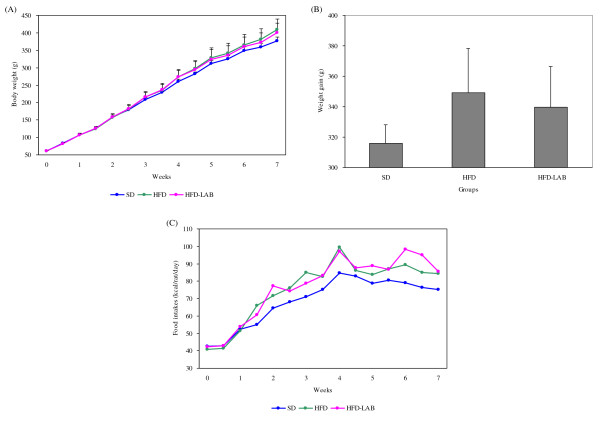
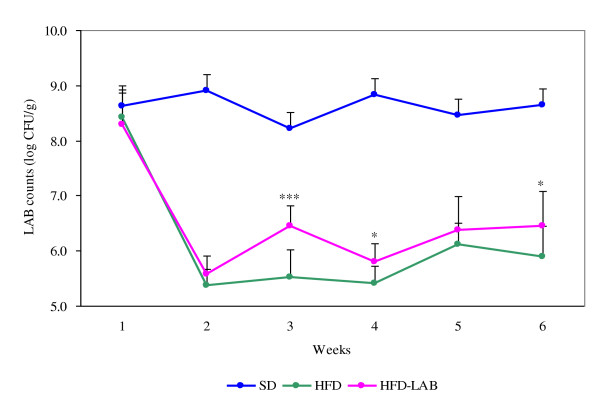
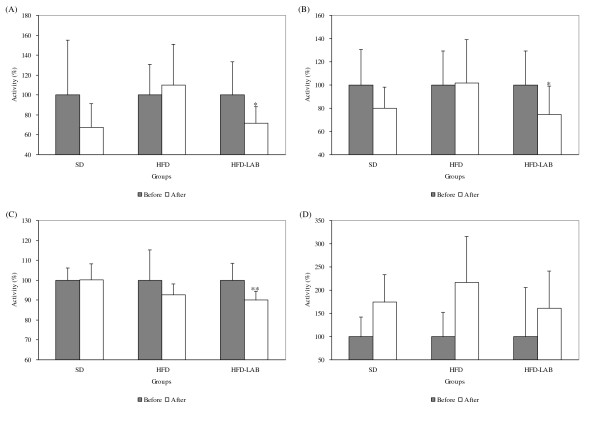
BACKGROUND: Recent studies have reported the preventive effects of probiotics on obesity. Among commensal bacteria, bifidobacteria is one of the most numerous probiotics in the mammalian gut and are a type of lactic acid bacteria. The aim of this study was to assess the antiobesity and lipid-lowering effects of Bifidobacterium spp. isolated from healthy Korean on high fat diet-induced obese rats. METHODS: Thirty-six male Sprague-Dawley rats were divided into three groups as follows: (1) SD group, fed standard diet; (2) HFD group, fed high fat diet; and (3) HFD-LAB group, fed high fat diet supplemented with LAB supplement (B. pseudocatenulatum SPM 1204, B. longum SPM 1205, and B. longum SPM 1207; 108 ~ 109 CFU). After 7 weeks, the body, organ, and fat weights, food intake, blood serum levels, fecal LAB counts, and harmful enzyme activities were measured. RESULTS: Administration of LAB reduced body and fat weights, blood serum levels (TC, HDL-C, LDL-C, triglyceride, glucose, leptin, AST, ALT, and lipase levels), and harmful enzyme activities (β-glucosidase, β-glucuronidase, and tryptophanase), and significantly increased fecal LAB counts. CONCLUSION: These data suggest that Bifidobacterium spp. used in this study may have beneficial antiobesity effects.
Overview
The claims and statistics of this paper haven’t been checked yet.
Free: it reads the open-access text and checks the first 5 claims that cite a source we can check. Create a free account to check every claim.
Integrity signals
Registry
Cites
Statistics
Figures
Verification
Claims the paper makes
The claims and statistics of this paper haven’t been checked yet.
Free: it reads the open-access text and checks the first 5 claims that cite a source we can check. Create a free account to check every claim.
Claims other papers make about this one
Each is checked against this paper’s own text: does it say what the citing paper says it does?
In the citing paper
“Moreover, certain Lactobacillus and Bifidobacteria species have been associated with increased muscle strength, weight loss, and reduced obesogenic environments in humans and rodents [173,174,175,176].”
From Impact of Protein Intake in Older Adults with Sarcopenia and Obesity: A Gut Microbiota Perspective (2020) · cites this paper as [173]
In the citing paper
“Similarly, in obese rats fed a high-fat diet, Bifidobacterium spp. decreased levels of circulating triglycerides and LDL and increased levels of HDL [35].”
From Dietary lipids, gut microbiota and lipid metabolism (2019) · cites this paper as [35]
Self-check
Percentages, sums and reported differences re-computed from the paper’s own numbers.
The self-check needs the paper’s full text.
Citations
Cites
Serum Immunoreactive-Leptin Concentrations in Normal-Weight and Obese Humans
Considine, R. V., Sinha, M. K., Heiman, M. L., Kriauciunas, A., Stephens, T. W., Nyce, M. R., Ohannesian, J. P., Marco, C. C., McKee, L. J., Bauer, T. L., et al. (1996) · New England Journal of Medicine · doi:10.1056/nejm199602013340503 · Cited by 6,326 · cited 2×
“Thus, leptin levels are closely related to the percentage of body fat; markedly higher serum leptin levels have been found in obese individuals compared with non-obese individuals [31,32].”
BackgroundResultAFRC, R. F. (1989) · Journal of Applied Bacteriology · doi:10.1111/j.1365-2672.1989.tb05105.x · Cited by 4,149
Cani, P. D., Neyrinck, A. M., Fava, F., Knauf, C., Burcelin, R. G., Tuohy, K. M., Gibson, G. R., & Delzenne, N. M. (2007) · Diabetologia · doi:10.1007/s00125-007-0791-0 · Cited by 1,774 · cited 1×
“with improved glucose-tolerance, glucose-induced insulin-secretion, and normalized inflammatory tone (decreased endotoxemia, plasma and adipose tissue proinflammatory cytokine) [ 7 ].”
BackgroundFrederich, R. C., Hamann, A., Anderson, S., Löllmann, B., Lowell, B. B., & Flier, J. S. (1995) · Nature Medicine · doi:10.1038/nm1295-1311 · Cited by 1,660 · cited 1×
“Leptin has been identified as an antiobesity hormone that regulates body weight by controlling food intake and energy expenditure via the hypothalamic-pituitarygonadal axis [28-30].”
BackgroundProbiotics in man and animals.
Fuller, R. (1989) · PubMed · Cited by 1,292
Signals That Regulate Food Intake and Energy Homeostasis
Woods, S. C., Seeley, R. J., Porte, D., & Schwartz, M. W. (1998) · Science · doi:10.1126/science.280.5368.1378 · Cited by 1,169
Early differences in fecal microbiota composition in children may predict overweight
Kalliomäki, M., Carmen Collado, M., Salminen, S., & Isolauri, E. (2008) · The American Journal of Clinical Nutrition · doi:10.1093/ajcn/87.3.534 · Cited by 1,062 · cited 1×
“[39] also observed that fecal Bifidobacterium spp.”
Leptin Signaling, Adiposity, and Energy Balance
JÉQUIER, E. (2002) · Annals of the New York Academy of Sciences · doi:10.1111/j.1749-6632.2002.tb04293.x · Cited by 789 · cited 1×
“Leptin has been identified as an antiobesity hormone that regulates body weight by controlling food intake and energy expenditure via the hypothalamic-pituitarygonadal axis [28-30].”
BackgroundIncreased obese mRNA expression in omental fat cells from massively obese humans
Hamilton, B. S., Paglia, D., Kwan, A. Y. M., & Deitel, M. (1995) · Nature Medicine · doi:10.1038/nm0995-953 · Cited by 526 · cited 1×
“Thus, leptin levels are closely related to the percentage of body fat; markedly higher serum leptin levels have been found in obese individuals compared with non-obese individuals [31,32].”
BackgroundThe Function of Leptin in Nutrition, Weight, and Physiology
Friedman, J. M. (2002) · Nutrition Reviews · doi:10.1301/002966402320634878 · Cited by 508 · cited 1×
“Leptin has been identified as an antiobesity hormone that regulates body weight by controlling food intake and energy expenditure via the hypothalamic-pituitarygonadal axis [28-30].”
Background
Research works printed but not linked: 1
- Scardovi V Krieg NR, Holt JG Genus Bifidobacterium Bergey's Manual of Systemic Bacteriology 1986 2 Williams & Willikins, MD 1418 143421718174
Cited by
Items 201–300 of 359
Roles of Probiotics in Reduction of Neonatal Jaundice in Term Newborns
Santosa, I., Shoji, H., ITOH, S., & Shimizu, T. (2022) · Juntendō Igaku/Juntendo igaku · doi:10.14789/jmj.jmj21-0044-oa · Cited by 17
Dietary Proteins, Brown Fat, and Adiposity
Madsen, L., Myrmel, L. S., Fjære, E., Øyen, J., & Kristiansen, K. (2018) · Frontiers in Physiology · doi:10.3389/fphys.2018.01792 · Cited by 16
“High levels of both A. muciniphilia (Everard et al., 2013; Shin et al., 2014) and some strains of Bifidobacteria (An et al., 2011; Wang et al., 2015; Li et al., 2016) have been reported to protect against diet-induced obesity.”
BackgroundPanattoni, A., Calvigioni, M., Benvenuti, L., D’Antongiovanni, V., Pellegrini, C., Salvo, C. D., Mazzantini, D., Celandroni, F., Fornai, M., Antonioli, L., et al. (2022) · Frontiers in Microbiology · doi:10.3389/fmicb.2022.1054097 · Cited by 15
“Additionally, bifidobacteria have been proven to ameliorate obesity-related conditions, for example by reducing cholesterol and glucose levels (Yin et al., 2010; An et al., 2011).”
BackgroundPark, S., Cho, S.-A., Lee, M.-K., & Lim, S.-D. (2015) · Korean Journal for Food Science of Animal Resources · doi:10.5851/kosfa.2015.35.2.171 · Cited by 16
“Obesity, a condition in which an abnormally large amount of fat is stored in the body’s adipose tissue, resulting in an increase in body weight, is one of a number of critical pandemics and health problems that it is rapidly becoming a worldwide epidemic (An et al., 2011).”
BackgroundInfluentialSelf-citationKim, S., Joung, J. Y., Kang, D., Oh, N. S., & Yoon, Y. (2021) · International Dairy Journal · doi:10.1016/j.idairyj.2021.104997 · Cited by 15
Hijová, E., Kuzma, J., Strojný, L., Bomba, A., Bertková, I., Chmelařová, A., Hertelyová, Z., Benetinová, V., Štofilová, J., & Ambro, Ľ. (2016) · Acta Biochimica Polonica · doi:10.18388/abp.2016_1308 · Cited by 15
Ma, X., Jiang, J., Qian, H., Li, Y., Fan, M., & Wang, L. (2025) · Comprehensive Reviews in Food Science and Food Safety · doi:10.1111/1541-4337.70274 · Cited by 15
Wang, T., Huang, S., Wu, C., Wang, N., Zhang, R., Wang, M., & Mao, D. (2021) · Evidence-based Complementary and Alternative Medicine · doi:10.1155/2021/6682581 · Cited by 14
“found that Lactobacillus and Bifidobacterium reduce cholesterol, triglycerides, and LDL levels in the blood circulation, in addition to increasing HDL levels [61].”
BackgroundFermented Vegetables and Legumes vs. Lifestyle Diseases: Microbiota and More
Knez, E., Kadac-Czapska, K., & Grembecka, M. (2023) · Life · doi:10.3390/life13041044 · Cited by 14
“Moreover, it shows a lipid- and cholesterol-lowering effect in highfat diet-induced obese rats [60].”
BackgroundKhoshneviszadeh, M., Zargarnezhad, S., Ghasemi, Y., & Gholami, A. (2018) · Nanoscience & Nanotechnology-Asia · doi:10.2174/2210681208666181015120346 · Cited by 14
Aazmi, M. S., Teh, L. K., Ramasamy, K., Rahman, T. H. A., & Salleh, M. Z. (2015) · International Journal of Food Science & Technology · doi:10.1111/ijfs.12810 · Cited by 14
Quigley, E. M. M. (2017) · Elsevier eBooks · doi:10.1016/b978-0-12-804024-9.00016-1 · Cited by 14
Nataraj, B. H., Jeevan, K., Dang, A. K., Nagpal, R., Ali, S. A., & Behare, P. V. (2024) · Microbial Pathogenesis · doi:10.1016/j.micpath.2024.106589 · Cited by 13
Tsai, M., Shen, S., Chen, Y., Chiu, H., Lin, H.-Y., Cheng, H.-W., Kuo, Y., Lin, J., Wang, H., Huang, Y.-Y., et al. (2025) · Nutrition Journal · doi:10.1186/s12937-025-01126-4 · Cited by 13
“Bifidobacteria have been shown to increase frequency of defecation, reduce enterohepatic circulation, regulate of intestinal pH, and inhibit of β-glucuronidase activity, thereby promoting the excretion of bilirubin [11–13].”
Ren, T., You, Y., Luo, Y., Wang, Y., & Liu, X. (2018) · Journal of Food Science · doi:10.1111/1750-3841.14285 · Cited by 13
Fermented food/beverage and health: current perspectives
Durazzo, A., Carocho, M., Heleno, S. A., Pedrosa, M. C., Ueda, J. M., Barros, L., Souto, E. B., Santini, A., & Lucarini, M. (2022) · RENDICONTI LINCEI · doi:10.1007/s12210-022-01093-6 · Cited by 14
“, its potential to strengthen the immune system, benefit skin condition, relieve gastric symptoms, and antiobesity properties have been evaluated (Kano et al. 2013; Rizzardini et al. 2012; Gomi et al. 2015; An et al. 2011).”
BackgroundNderitu, K. W., Mecha, E. O., & Nyachieo, A. (2023) · Scientific African · doi:10.1016/j.sciaf.2023.e01713 · Cited by 13
Wang, M., Ma, W., Wang, C., & Li, D. (2024) · Frontiers in Microbiology · doi:10.3389/fmicb.2024.1381756 · Cited by 13
Alamdary, S. Z., Afifirad, R., Asgharzadeh, S., Asadollahi, P., Ari, M. M., Dashtibin, S., Sabaghan, M., Shokouhamiri, M. R., Ghanavati, R., & Darbandi, A. (2022) · International Journal of Clinical Practice · doi:10.1155/2022/5963679 · Cited by 13
“…of the genera Bifidobacterium and Lactobacillus , are relatively well-tolerated by the host and have been suggested to moderately improve glycemic control, retard the onset of hyperglycemia, hyper-insulinemia, dyslipidemia, and oxidative stress, and improve the overall intestinal health [14, 15].”
Williamson, C. B., Burns, C. M., Gossard, C. M., Pizano, J. M., Dolan, K. E., Finley, H. J., Gasta, M. G., Parker, E., & Lipski, E. A. (2017) · PubMed Central · Cited by 13
Fermented Camel Milk Reduces Inflammation in Rats Fed a High-Fat Diet -
Badkook, M. (2013) · International Journal of Health Sciences and Research · Cited by 13
Duodenal Mucosa: A New Target for the Treatment of Type 2 Diabetes
Nie, L., Yan, Q., Zhang, S., Cao, Y., & Zhou, X. (2022) · Endocrine Practice · doi:10.1016/j.eprac.2022.10.177 · Cited by 12
Xu, T., Wang, X., Chen, Y., Li, H., Zhao, L., Ding, X., & Zhang, C. (2023) · mBio · doi:10.1128/mbio.03487-22 · Cited by 12
Bidura, I. G. N. G., Siti, N. W., Candrawati, D. P. M. A., Puspani, E., & Partama, I. B. G. (2019) · Pakistan Journal of Nutrition · doi:10.3923/pjn.2019.1075.1083 · Cited by 12
Natural Probiotics and Nanomaterials: A New Functional Food
Duarte, I. F. B., Mergulhão, N. L. O. N., Silva, V. D. C., de Bulhões, L. C. G., Júnior, I. D. B., & Silva, A. C. A. (2021) · IntechOpen eBooks · doi:10.5772/intechopen.98984 · Cited by 11
Arreaza‐Gil, V., Escobar‐Martínez, I., Muguerza, B., Aragonès, G., Suárez, M., Torres‐Fuentes, C., & Arola‐Arnal, A. (2022) · Food & Function · doi:10.1039/d2fo01206e · Cited by 11
Modulation of Fat Deposition–Gut Interactions in Obese Mice by Administrating with Nobiletin
Zhao, C., Guo, J., Du, C., & Xu, Y. (2023) · Genes · doi:10.3390/genes14051062 · Cited by 11
“diminished levels of circulating plasma triglycerides and LDL and increased levels of HDL in HFD-diet mice [41].”
BackgroundAssociation between Gut Microbiota and Metabolic Health and Obesity Status in Cats
Yeon, K.-D., Kim, S.-M., & Kim, J.-H. (2024) · Animals · doi:10.3390/ani14172524 · Cited by 10
“In human and rodent studies, Bifidobacterium is a beneficial bacterium for the prevention of obesity and metabolic diseases, as it reduces blood sugar levels, induces insulin secretion, and improves endotoxemia [25,26].”
BackgroundSelf-citationNabizadehAsl, L., Şendur, S. N., Özer, B., Lay, İ., Erbas, T. A., & Büyüktuncer, Z. (2021) · Appetite · doi:10.1016/j.appet.2021.105855 · Cited by 10
Deciphering the role of dietary modifications and gut dysbiosis in Non-Alcoholic Fatty Liver Disease
Vachher, M., Kaur, K., Marothia, M., Burman, A., Deepanjana, & Bansal, S. (2025) · Human Nutrition & Metabolism · doi:10.1016/j.hnm.2025.200305 · Cited by 9
Lee, J., Cho, A., & Kwon, Y. (2021) · Clinical Nutrition · doi:10.1016/j.clnu.2021.12.015 · Cited by 9
Komorniak, N., Kley, A. M., Nalian, A. G., Wardziukiewicz, W., Skonieczna‐Żydecka, K., Styburski, D., Palma, J., Kowalewski, B., Kaseja, K., & Stachowska, E. (2020) · Nutrients · doi:10.3390/nu12092621 · Cited by 8
Wang, X., Lu, C., Li, X., Ye, P., Ma, J., & Chen, X. (2024) · Diabetes Obesity and Metabolism · doi:10.1111/dom.15692 · Cited by 8
“36,37 Bifidobacteria are effective in the treatment of colorectal cancer, diarrhoea, inflammatory bowel disease and metabolic conditions, among others.”
Bacteria and Obesity: The Proportion Makes the Difference
Kotzampassi, K. E. (2013) · Surgery Current Research · doi:10.4172/2161-1076.1000152 · Cited by 8
“[71,72], Lactobacillus paracasei [73] and Lactobacillus gasseri BNR17 [74].”
Anti-obesity Effects of SCOBY Jackfruit Beverages and Their Influence on Gut Microbiota
Koh, S. P., Sew, Y. S., Sabidi, S., Maarof, S., Sharifudin, S. A., & Abdullah, R. (2022) · Exploratory Research and Hypothesis in Medicine · doi:10.14218/erhm.2021.00072 · Cited by 8
Park, B.-S., & Park, S.-O. (2014) · Journal of Life Science · doi:10.5352/jls.2014.24.7.784 · Cited by 8
“항균펩타이드 는 유해세균의 막전위 파괴 및 자기면역성에 의해서 Bifidobacteria 와 Lactobacillus 균수를 증가시키는 것으로 알려졌다[8, 15].”
InfluentialSelf-citationMaes, M., Vasupanrajit, A., Jirakran, K., Klomkliew, P., Chanchaem, P., Tunvirachaisakul, C., Plaimas, K., Suratanee, A., & Payungporn, S. (2023) · medRxiv · doi:10.1101/2023.01.14.23284564 · Cited by 8
Wei, J., Wang, H., Feng, T., Liu, X., Liu, Z., Li, Z., Wang, W., & Zhang, J. (2025) · Foods · doi:10.3390/foods14193452 · Cited by 7
Obesity theranostics using nanoemulsions of probiotics and local herbs
Alam, S., Liaqat, I., al‐Arifa, N., Zia, T., Munawar, M., & Muzamil, A. (2023) · Saudi Journal of Biological Sciences · doi:10.1016/j.sjbs.2023.103790 · Cited by 7
Morin-Bernier, J., de Toro‐Martín, J., Barbe, V., San-Cristóbal, R., Lemieux, S., Rudkowska, I., Couture, P., Barbier, O., & Vohl, M. (2024) · Frontiers in Nutrition · doi:10.3389/fnut.2024.1327863 · Cited by 7
Li, L., Zhang, C., Liu, B., Tian, F., Yu, L., Chen, W., & Zhai, Q. (2024) · Food Bioscience · doi:10.1016/j.fbio.2024.104638 · Cited by 7
Lee, C. H., Han, Y., Ryu, J. Y., Jung, M., Park, C. R., Jang, M. R., Kwak, Y. G., Cha, H., & Lee, J. H. (2025) · Probiotics and Antimicrobial Proteins · doi:10.1007/s12602-025-10766-1 · Cited by 7
“These microbial taxa have been reported to be negatively associated with obesity and metabolic dysfunction or positively associated with healthy individuals, suggesting that HN001 may exert its anti-obesity effects in part through favorable modulation of the gut microbiota [43–47].”
Ran, X., Wang, Y., Li, S.-G., & Dai, C. (2024) · Lipids in Health and Disease · doi:10.1186/s12944-024-02391-8 · Cited by 7
Rafraf, M., Nabavi, S. M., Somi, M. H., Rad, A. H., & Jafarabadi, M. A. (2014) · مجله علمی دانشگاه علوم پزشکی بابل · doi:10.18869/acadpub.jbums.16.9.55 · Cited by 7
Hijová, E., Kuzma, J., Strojný, L., Bomba, A., Bertková, I., Chmelařová, A., Hertelyová, Z., Kuliková, L., Štofilová, J., & Ambro, Ľ. (2016) · Acta veterinaria · doi:10.1515/acve-2016-0026 · Cited by 7
Probiotics: Origin, Products, and Regulations in India
Narula, A. (2021) · Microorganisms for Sustainability · doi:10.1007/978-981-16-1947-2_4 · Cited by 6
Effect of 1-Kestose on Lipid Metabolism in a High-Fat-Diet Rat Model
Kuramitsu, K., Kubo, M., Cindy, F., Shibata, T., Kadota, Y., & Kitaura, Y. (2025) · Nutrients · doi:10.3390/nu17081362 · Cited by 6
“High-fat diet intake induces weight gain and an increase in blood lipid levels in rats [35,36].”
Eleazu, C. O., Suleiman, J. B., Othman, Z. A., Zakaria, Z., Nna, V. U., & Mohamed, M. (2021) · Journal of Food Biochemistry · doi:10.1111/jfbc.13626 · Cited by 6
The Cholesterol-Lowering Effects of Probiotic Bacteria on Lipid Metabolism
Aydaş, S. B., & Aslım, B. (2015) · Elsevier eBooks · doi:10.1016/b978-0-12-802189-7.00054-x · Cited by 6
Betoret, N., Hinestroza-Córdoba, L. I., Seguí, L., & Barrera, C. (2020) · IntechOpen eBooks · doi:10.5772/intechopen.85482 · Cited by 6
“Bifidobacterium pseudocatenulatum SPM 1204, Bifidobacterium longum SPM 1205, and Bifidobacterium longum SPM 1207 36 rats fed for 5 weeks on a normal diet or a high-fat diet supplemented or not with 108–109 CFU(1:1:1)/day Reduced body weight and fat gain, as well as total cholesterol, HDL-cholesterol, and LDL-cholester…”
Falalyeyeva, T. M., Kobyliak, N. M., Korotkyi, O., Meleshko, T., Sulaieva, O., Hryshchenko, I., Domylivska, L., & Boyko, N. (2023) · Advances in predictive, preventive and personalised medicine · doi:10.1007/978-3-031-19564-8_5 · Cited by 5
Huang, C., Yu, H.-S., Yu, S., Tu, H., Yeh, Y., & Yu, H. (2024) · Frontiers in Cellular and Infection Microbiology · doi:10.3389/fcimb.2023.1320713 · Cited by 5
Recent Developments in the Prevention of Obesity by Using Microorganisms
Ganjayi, M. S., Meriga, B., Dasari, S., Balaji, H., & Sankaran, K. R. (2018) · Elsevier eBooks · doi:10.1016/b978-0-12-816328-3.00005-2 · Cited by 5
Shin, Y. J., Bae, J.-M., Cho, H.-R., Mahoro, P., Kim, H. H., Kim, S. H., Kim, T. H., & Bae, M. (2023) · Journal of Medicinal Food · doi:10.1089/jmf.2022.k.0144 · Cited by 5
“Similar to a previous study on HFD-induced obese rats treated with bacterial strains, 34,35 no significant increase was observed in the liver weight.”
Probiotic effect of fermented milk from Pediococcus acidilactici BK01 in fecal wistar rat microflora
Melia, S., Juliyarsi, I., Kurnia, Y. F., Fitria, N. A., Pratama, Y. E., & Ramadhanti, N. (2021) · IOP Conference Series Earth and Environmental Science · doi:10.1088/1755-1315/888/1/012050 · Cited by 5
“18 Log CFU/mL These results are by research [20], named after the rats were treated with diet and B.”
BackgroundThe Effects of Probiotics on Body Weight and Biomarkers of Animal
Karimi, G., Jamaluddin, R., & Parvaneh, K. (2013) · Pakistan Journal of Nutrition · doi:10.3923/pjn.2013.793.799 · Cited by 5
“Since animal studies were not being blinded to the researchers, they had the same quality and only three of them mentioned about random allocation (An et al., 2011; Andersson et al., 2010; Naito et al., 2011).”
BackgroundWang, H., Guan, L., Guan, H., Zhong, J., & Zhong, J. (2025) · Food Science & Nutrition · doi:10.1002/fsn3.70699 · Cited by 4
“In STZ diabetic rat models, serum amylase activity was found to be decreased while serum lipase was reportedly increased (Patel et al. 2004; An et al. 2011; Ebrahimi et al. 2016).”
Natania, S. A. (2026) · The Journal of Steroid Biochemistry and Molecular Biology · doi:10.1016/j.jsbmb.2026.106998 · Cited by 4
Choi, S. H., Lee, M.-Y., Jhon, D.-Y., Choi, Y.-I., & Lee, J. (2013) · Korean Journal for Food Science of Animal Resources · doi:10.5851/kosfa.2013.33.6.701 · Cited by 4
“In relation to this, Lee et al, (2007) has also observed that Lactobacillus plantarum PL62 reduced weights of epididymal, inguinal, mesenteric, and perirenal white adipose tissues and significantly reduced body weights in diet-induced obese mice.”
InfluentialPlant-based dietary index in relation to gut microbiota in Arab women
Aljuraiban, G. S., Aljazairy, E. A., Alsahli, A. S., Sabico, S., & Al-Musharaf, S. (2023) · Medicine · doi:10.1097/md.0000000000035262 · Cited by 5
Sulaiman, I., & Farouk, R. M. (2014) · Interdisciplinary Journal of Microinflammation · doi:10.4172/ijm.1000118 · Cited by 4
Pectin as an Alternative Feed Additive and Effects on Microbiota
Park, S. H., Min, B., Kim, S. A., Ricke, S. C., Crandall, P. G., Lee, S. I., & Lee, S.-O. (2019) · Elsevier eBooks · doi:10.1016/b978-0-12-812060-6.00015-5 · Cited by 4
Self-citationbatu, Z., Balci, U. G., & Akal-Yıldız, E. (2021) · Progress in nutrition · doi:10.23751/pn.v23i2.10876 · Cited by 4
Herbal and Microbial Products for the Management of Obesity
Abdel-Sattar, E. A., Zalabani, S. M. E., & Salama, M. M. (2014) · BENTHAM SCIENCE PUBLISHERS eBooks · doi:10.2174/9781608059140114020005 · Cited by 4
“They significantly decrease activities of ß-glucosidase, β-glucuronidase, and tryptophanase [257].”
BackgroundEffect of probiotics on olanzapine-induced metabolic syndrome in Wistar albino rats
Syed, M., & Nayak, V. (2023) · Biomedicine · doi:10.51248/.v42i6.1524 · Cited by 4
Sun, Z. (2014) · OPen Access Repositorium der Universität Ulm (OPARU) (Ulm University) · doi:10.18725/oparu-3304 · Cited by 4
Importance of human microbiome: an update
Wardi, M., Amin, A. B., Belghiti, I. E., Lemkhente, Z., & Belmouden, A. (2026) · Frontiers in Microbiomes · doi:10.3389/frmbi.2026.1787662 · Cited by 3
“Another probiotic, belonging to the Bi fi dobacterium spp., demonstrated bene fi cial anti-obesity effects and reduced metabolic endotoxin concentrations and intestinal in fl ammation (An et al., 2011).”
Maimunah, U., Soelistijo, S. A., Hadisuwarno, W., & Miftahussurur, M. (2023) · The Indonesian Journal of Gastroenterology Hepatology and Digestive Endoscopy · doi:10.24871/2422023154-162 · Cited by 3
“31 Pre-clinical and clinical research on probiotics needs to be done to determine their potential effectiveness in NAFLD treatment.”
BackgroundExtracts of Housefly Maggot Reduces Blood Cholesterol in Hypercholesterolemic Rats
Park, B.-S., & Park, S.-O. (2014) · Journal of the Korean Applied Science and Technology · doi:10.12925/jkocs.2014.31.1.101 · Cited by 3
Self-citationDutta, P. K., Mohapatra, L., Mishra, D. K., Singh, A., Tripathi, A. S., & Parida, S. K. (2024) · Advances in medical diagnosis, treatment, and care (AMDTC) book series · doi:10.4018/979-8-3693-5528-2.ch014 · Cited by 3
Gut Microbiota Alterations in People With Obesity and Effect of Probiotics Treatment
Leo, E. E. M., Ortega, A. M. M., & Campos, M. R. S. (2018) · Elsevier eBooks · doi:10.1016/b978-0-12-811440-7.00005-3 · Cited by 3
Reduced-Fat Response of Lactobacillus casei subsp. casei SY13 on a Time and Dose-Dependent Model
Jia, Z., Pang, X., & Lv, J. (2018) · Frontiers in Microbiology · doi:10.3389/fmicb.2018.03200 · Cited by 3
Bhatti, F. Y., Khan, F. A., Rehan, A. M., Irum, Z., & Chiragh, S. (2021) · Journal of Islamabad Medical & Dental College · doi:10.35787/jimdc.v10i4.666 · Cited by 3
Animal Models Used for Studying the Benefits of Probiotics in Metabolic Disorders
Garg, A., Kumar, A., Pottoo, F. H., & Chawla, P. A. (2022) · Springer eBooks · doi:10.1007/978-981-16-8444-9_13 · Cited by 3
Probiotic Prophylaxis of Neonatal Jaundice
Itova, T. D., & Georgieva, V. A. (2022) · Journal of Biomedical and Clinical Research · doi:10.2478/jbcr-2022-0022 · Cited by 3
Al-Assaff, A. A., & Takruri, H. R. (2019) · Journal of Agricultural Science · doi:10.5539/jas.v11n10p71 · Cited by 3
“This result was consistent with what was observed by An et al. (2011) and Moraes et al. (2012).”
BackgroundResultInfluentialFeatures of the Composition of Bifidoflora in the Intestinal Microbiome of Obese Adolescents
Немченко, У. М., Belkova, N. L., Валерьевна, П. А., Romanitsa, A. I., Novikova, E. A., Станиславовна, К. Е., Владимировна, Г. Е., Александровна, К. Е., Butakova, K. O., & Rychkova, L. V. (2021) · Molecular Genetics Microbiology and Virology · doi:10.3103/s0891416821030046 · Cited by 3
Gut Microbiome: A Potential Controller of Androgen- Modulated Disease
Yu, Q. G. C. (2021) · Online Journal of Complementary & Alternative Medicine · doi:10.33552/ojcam.2021.06.000628 · Cited by 3
Bidura, I. G. N. G. (2019) · Majalah Ilmiah Peternakan · doi:10.24843/mip.2019.v22.i03.p08 · Cited by 2
Díaz-Benítez, C. E., Ayala-García, J. C., Porcayo-Ascencio, B. G., Lagunas-Martínez, A., Bahena-Román, M., Bermúdez-Morales, V. H., y Abreu, A. T. A., Barraza-Muñoz, U., Cruz, M., & Burguete-García, A. I. (2026) · Archives of Medical Research · doi:10.1016/j.arcmed.2026.103410 · Cited by 2
Basak, S., Varma, S., Nag, S., & Duttaroy, A. K. (2026) · Frontiers in Endocrinology · doi:10.3389/fendo.2026.1799472 · Cited by 2
PROBIOTICS’ EFFECT ON NUTRITIONAL STATUS, APPETITE HORMONES, AND INFLAMMATION IN PRE-OBESE WOMEN
Ülker, İ., Yıldıran, H., & Aktürk, M. (2024) · Sağlık Bilimlerinde İleri Araştırmalar Dergisi / Journal of Advanced Research in Health Sciences · doi:10.26650/jarhs2024-1347787 · Cited by 2
Actinobacteria: Bifidobacterium
Zhou, Y., Wang, H., & Nie, Q. (2025) · Elsevier eBooks · doi:10.1016/b978-0-443-21630-5.00014-9 · Cited by 2
Rovik, A., & Kusharyati, D. F. (2025) · BIO Web of Conferences · doi:10.1051/bioconf/202519001031 · Cited by 2
In Vitro Analysis of Short Chain Fatty Acids and Human Fecal Microbiota Stimulated by Pectin Sources
Min, B. (2013) · Journal of the Arkansas Academy of Science · Cited by 2
Zhang, Z., Hou, Q., Wang, Y., Xiang, F., & Guo, Z. (2022) · Microbiology Spectrum · doi:10.1128/spectrum.01442-21 · Cited by 2
Parhamfar, M., Khaleghi, M., Rad, S. F., & Godarzi, M. (2018) · journal of ilam university of medical sciences · doi:10.29252/sjimu.26.1.23 · Cited by 2
Probiotic effects on adult anxiety and systemic inflammation after exposure to Western diet
Myles, E. M. (2019) · DalSpace (Dalhousie University) · Cited by 2
Features of the composition of bifidoflora in the intestinal microbiome of obese adolescents
Немченко, У. М., Belkova, N. L., Валерьевна, П. А., Romanitsa, A. I., Novikova, E. A., Станиславовна, К. Е., Владимировна, Г. Е., Александровна, К. Е., Butakova, K. O., & Rychkova, L. V. (2021) · Molecular Genetics Microbiology and Virology (Russian) · doi:10.17116/molgen20213903131 · Cited by 2
Świeca, M., Reguła, J., Molska, M., Jarocki, P., Murat, J., Pytka, M., & Wessely‐Szponder, J. (2024) · Plant Foods for Human Nutrition · doi:10.1007/s11130-024-01157-y · Cited by 2
“WBC – white blood cells. in high-fat diet-induced obese rats [32] or in treatments with a combination of raspberry pomace with inulin (phenolics and dietary fibre) [ 33, 34 ].”
Intestinal microbiota development in childhood : Implications for health and disease
Korpela, K. (2016) · Helda - University of Helsinki Institutional Repository · Cited by 2
Caracterização da microbiota fecal de cães obesos e após emagrecimento
Macedo, H. T. (2020) · Digital Library of Theses and Dissertations (Universidade de São Paulo) · doi:10.11606/d.10.2020.tde-18052020-102343 · Cited by 2
Coffee Melanoidins and Gut Health
Troise, A. D., Salman, M. K., & Vitaglione, P. (2025) · Royal Society of Chemistry eBooks · doi:10.1039/9781839166853-00133 · Cited by 1
Myles, E. M., O’Leary, M. E., Romkey, I. D., Hamm, S. I., Dauphinee, L., Piano, A., Bronner, S., & Perrot, T. S. (2025) · Physiology & Behavior · doi:10.1016/j.physbeh.2025.115030 · Cited by 1
“…in anxiety-related behaviors and metabolic parameters with the administration of Lactobacillus - and Bifidobacterium-containing probiotics [31 – 34, 45 – 48 ] or We hypothesized that Cerebiome ® would improve metabolic and anxiety-related outcomes [45 – 49], and that WD D12079B would…”
Zhang, J., Wang, S., Luo, D., Tian, X., Song, C., Yan, F., Zhang, T., & Zhao, X. (2025) · Applied Biological Chemistry · doi:10.1186/s13765-025-01049-y · Cited by 1
“Probiotics such as Lactobacillus and Bifidobacterium have demonstrated beneficial effects in enhancing lipid metabolism, maintaining gut health, and supporting weight management and fat reduction [16, 27].”
Itova, T. D. (2025) · Journal of Neonatal-Perinatal Medicine · doi:10.1177/19345798251398834 · Cited by 1
Khodarahmi, M., Mehrabani, S., Pilehrood, K. S., Ansari, S., Abdi, M., Yahay, M., Shirani, F., & Saraf‐Bank, S. (2026) · Advances in Integrative Medicine · doi:10.1016/j.aimed.2026.100682 · Cited by 1
Chen, X., Chen, C., Zhang, P., OuYang, X., Ma, H., Chen, W., Li, T., Han, J., Wang, Y., Wang, H., et al. (2026) · npj Biofilms and Microbiomes · doi:10.1038/s41522-026-01057-w · Cited by 1
Epigenetics, Diet or Exercise?
Graham, M. R. (2015) · Journal of Sports Medicine & Doping Studies · doi:10.4172/2161-0673.1000e147 · Cited by 1
Obesity and inflammation: probiotics or pharmaceuticals intervention?
Graham, M. R., Davies, B., Pates, J. A., Evans, P. J., & Baker, J. S. (2015) · International Journal of Recent Scientific Research · Cited by 1
Metadata
- Authors
- An, H. M., Park, S. Y., Lee, D. K., Kim, J. R., Cha, M. K., Lee, S. W., Lim, H. T., Kim, K. J., & Ha, N. J.
- Affiliations
- Sahmyook University (KR)
- Corresponding author
- Ha, Nam Joo
- Venue
- Lipids in Health and Disease
- Published
- 2011-07-12
- Volume
- 10
- Issue
- 1
- Pages
- 116-116
- ISSN
- 1476-511X (ISSN-L)
- PMC
- PMC3146849
- OpenAlex
- W2170559209
- Cited by
- 320
- References
- 45
- Citations by year
- 2026: 13 · 2025: 16 · 2024: 15 · 2023: 15 · 2022: 30 · 2021: 29 · 2020: 26 · 2019: 27 · 2018: 32 · 2017: 26 · 2016: 16 · 2015: 21 · 2014: 20 · 2013: 25 · 2012: 9
- FWCI
- 25.24
- Type
- journal article
- Language
- en
- Open access
- gold
- doi.org
- Licence
- cc-by
- Locations
- Lipids in Health and Disease (publishedVersion, cc-by)
- Europe PMC (PubMed Central) (publishedVersion, cc-by)
- PubMed Central (publishedVersion, cc-by)
- PubMed (publishedVersion)
- DOAJ (DOAJ: Directory of Open Access Journals) (submittedVersion, cc-by-sa)
- Funders
- Sahmyook University
- Topics
- Life Sciences › Agricultural and Biological Sciences › Food Science › Probiotics and Fermented Foods
- Life Sciences › Biochemistry, Genetics and Molecular Biology › Molecular Biology › Gut microbiota and health
- Health Sciences › Nursing › Nutrition and Dietetics › Microbial Metabolites in Food Biotechnology
- Keywords
- Bifidobacterium, probiotics, anti-obesity, hypolipidemic effect, high-fat diet-induced obesity, lactic acid bacteria, Bifidobacterium pseudocatenulatum, Bifidobacterium longum, serum lipids, gut commensal bacteria, leptin, liver enzymes
- MeSH terms
- Alanine Transaminase, alpha-Amylases, Animals, Hypolipidemic Agents, Aspartate Aminotransferases, beta-Glucosidase, Bifidobacterium, Blood Glucose, Dietary Fats, Feces, Glucuronidase, Lipase, Lipids, Male, Obesity, Tryptophanase, Urease, Weight Gain, Rats, Sprague-Dawley, Anti-Obesity Agents, Probiotics, Leptin, Rats
About these checks
Registry, retraction, Cites and statistics results are computed, not judged, with one exception: a printed reference that no index lists is read once by a model before it counts as a citation error. Claims are extracted by a model and kept only when their quote appears verbatim in the text; each cited source is then checked, with a model’s help, for whether it says what the claim relies on. Those verdicts can be wrong — read the claim’s quote and the cited source before relying on one.
Statistics and arithmetic are recomputed, not judged.
Confidence bands are shown only for fields calibrated on our annotated test set. None is calibrated yet, so no band is shown.
What counts as a claim ›How we measure confidence ›How we check this ›
Are you an author, or do you see a problem with this page? Request a review
Data sources
Bibliographic data: Semantic Scholar, OpenAlex, Crossref.
Contains information from the Semantic Scholar Academic Graph Datasets, made available under the ODC Attribution License (ODC-BY 1.0).
Semantic Scholar’s data is described in: Kinney, R., et al. (2023). The Semantic Scholar Open Data Platform. arXiv:2301.10140.
