

A comparison of direct versus self-report measures for assessing physical activity in adults: a systematic review.
Open accessThe DOI matches its Crossref record; 190 of the 191 references it cites were found in a registry or an index.
Abstract
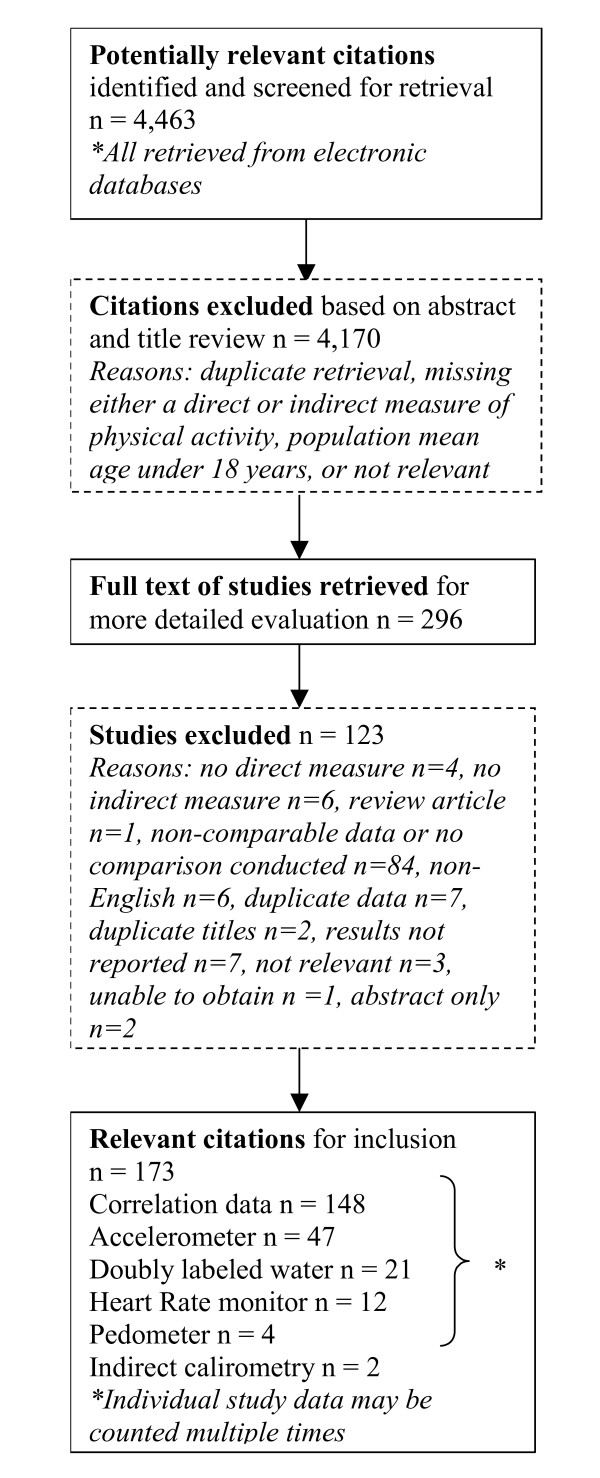
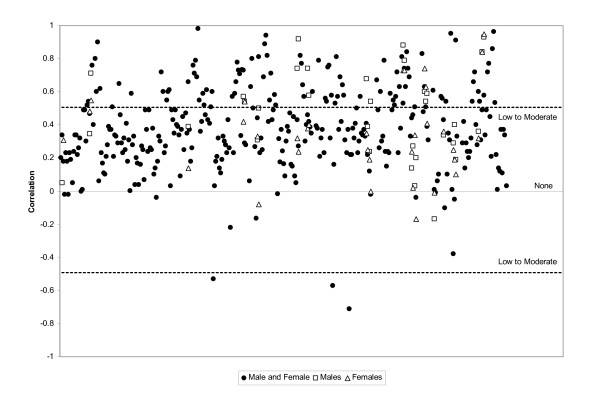
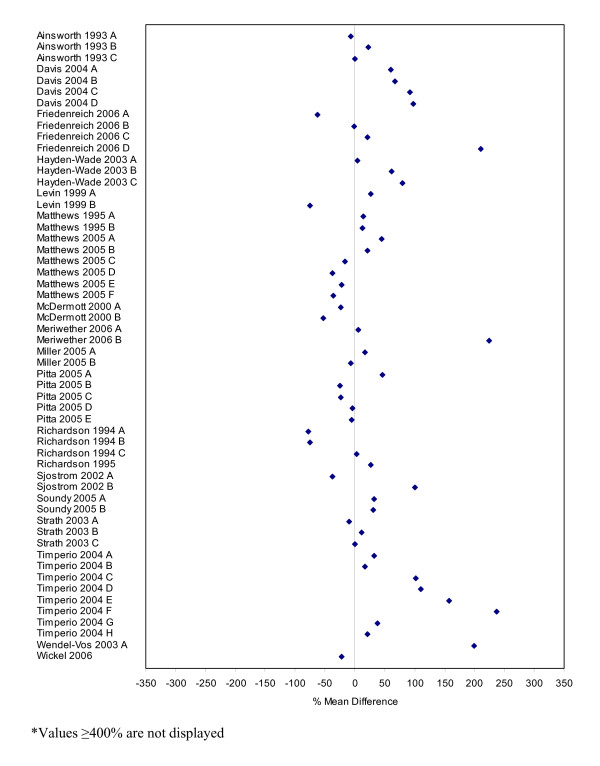
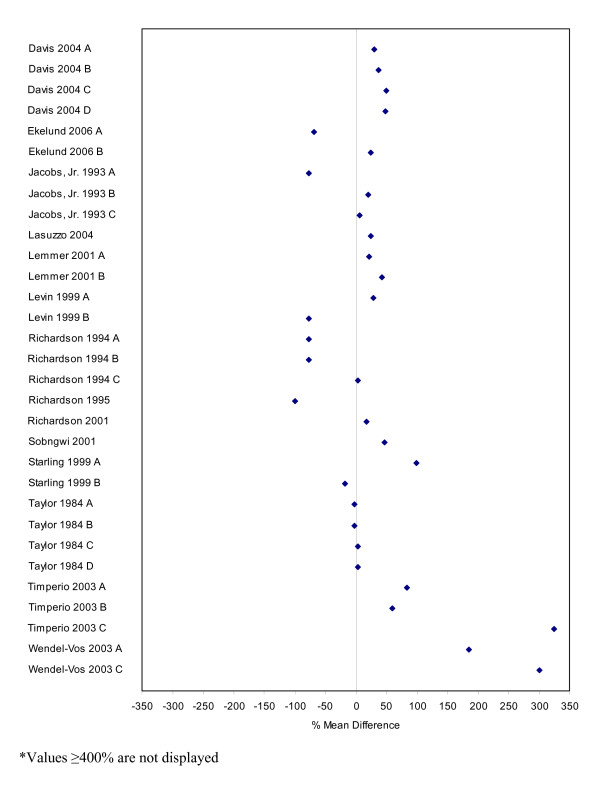
BACKGROUND: Accurate assessment is required to assess current and changing physical activity levels, and to evaluate the effectiveness of interventions designed to increase activity levels. This study systematically reviewed the literature to determine the extent of agreement between subjectively (self-report e.g. questionnaire, diary) and objectively (directly measured; e.g. accelerometry, doubly labeled water) assessed physical activity in adults. METHODS: Eight electronic databases were searched to identify observational and experimental studies of adult populations. Searching identified 4,463 potential articles. Initial screening found that 293 examined the relationship between self-reported and directly measured physical activity and met the eligibility criteria. Data abstraction was completed for 187 articles, which described comparable data and/or comparisons, while 76 articles lacked comparable data or comparisons, and a further 30 did not meet the review's eligibility requirements. A risk of bias assessment was conducted for all articles from which data was abstracted. RESULTS: Correlations between self-report and direct measures were generally low-to-moderate and ranged from -0.71 to 0.96. No clear pattern emerged for the mean differences between self-report and direct measures of physical activity. Trends differed by measure of physical activity employed, level of physical activity measured, and the gender of participants. Results of the risk of bias assessment indicated that 38% of the studies had lower quality scores. CONCLUSION: The findings suggest that the measurement method may have a significant impact on the observed levels of physical activity. Self-report measures of physical activity were both higher and lower than directly measured levels of physical activity, which poses a problem for both reliance on self-report measures and for attempts to correct for self-report - direct measure differences. This review reveals the need for valid, accurate and reliable measures of physical activity in evaluating current and changing physical activity levels, physical activity interventions, and the relationships between physical activity and health outcomes.
Overview
The claims and statistics of this paper haven’t been checked yet.
Free: it reads the open-access text and checks the first 5 claims that cite a source we can check. Create a free account to check every claim.
Integrity signals
Registry
Cites
Statistics
Figures
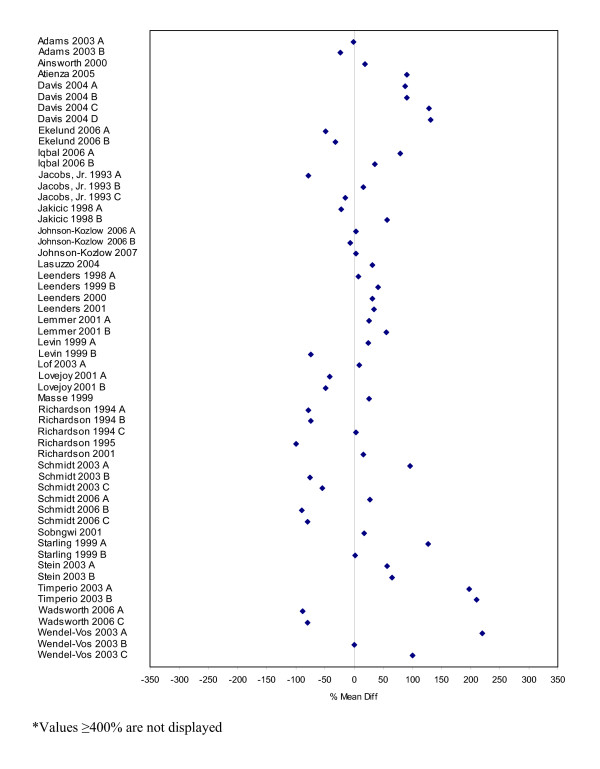
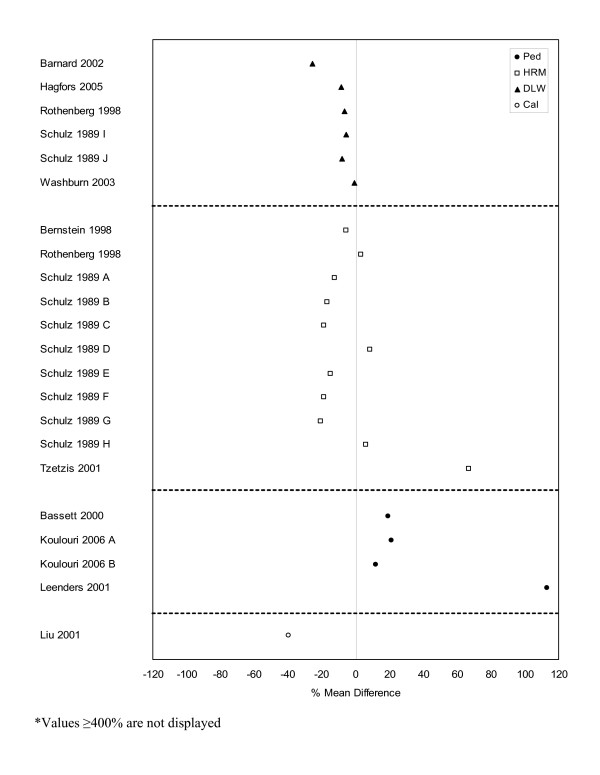
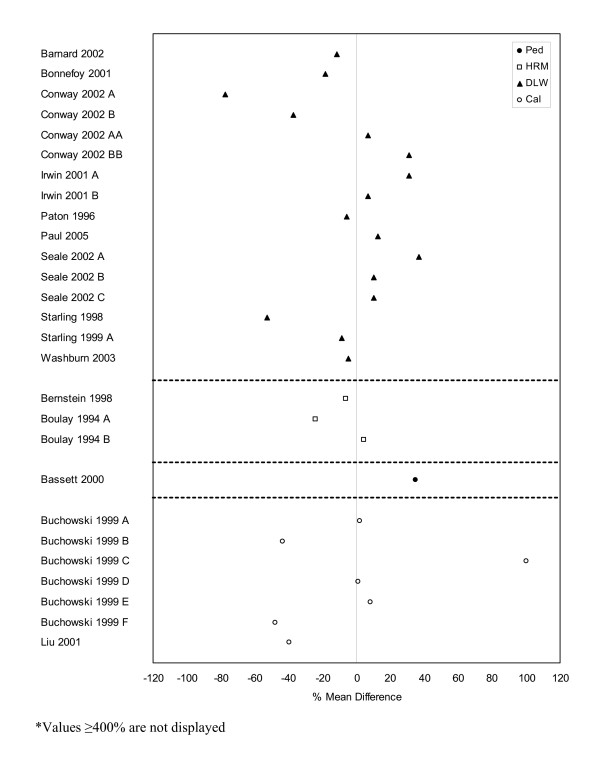
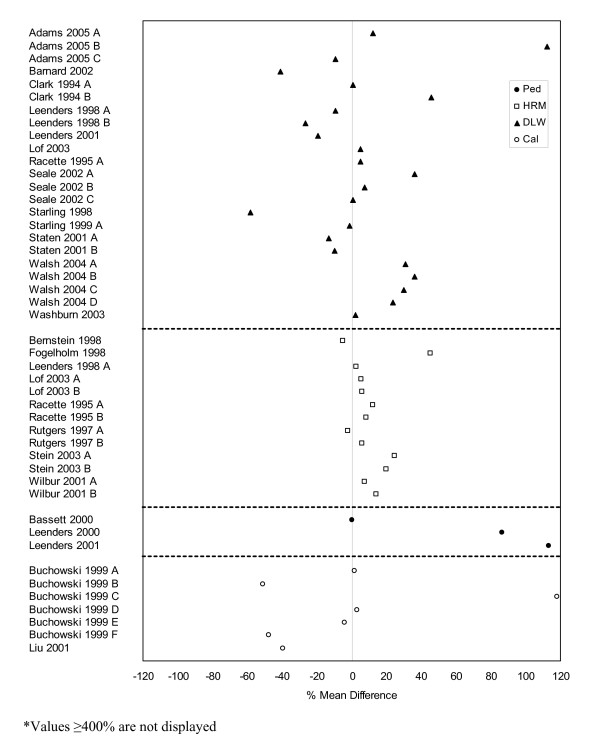
Verification
Claims the paper makes
The claims and statistics of this paper haven’t been checked yet.
Free: it reads the open-access text and checks the first 5 claims that cite a source we can check. Create a free account to check every claim.
Claims other papers make about this one
Each is checked against this paper’s own text: does it say what the citing paper says it does?
The cited source says what the claim attributes to it.
In the citing paper
“However, studies27 linking physical activity levels with outcomes have relied on self-reported data and/or questionnaires; therefore, the inferences drawn from these studies are compromised by the limitations of recollection bias.”
From Association of Cardiorespiratory Fitness with Long-term Mortality Among Adults Undergoing Exercise Treadmill Testing (2018) · cites this paper as [27]
The cited source says what the claim attributes to it.
In the citing paper
“Many of the studies rely on retrospective self-report measures of exercise, which may be prone to bias, inaccuracies, and misunderstanding of questions [e.g., (50–52)].”
From Exercise Intervention in PTSD: A Narrative Review and Rationale for Implementation (2019) · cites this paper as [50]
The cited source says what the claim attributes to it.
In the citing paper
“Overestimation of the PA level is possible.20,21”
The check wasn’t confident either way, so it gives no verdict — never disputed.
In the citing paper
“bariatric surgery was associated with fewer CVD deaths (HR, 0.47; 95% CI, 0.29–0.76) and fewer strokes (HR, 0.67; 95% CI, 0.54–0.83) than in the control group.58”
From Heart Disease and Stroke Statistics—2013 Update: A Report From the American Heart Association (2013) · cites this paper as [58]
Experimental — accuracy not yet measuredThe check wasn’t confident either way, so it gives no verdict — never disputed.
In the citing paper
“The lack of specificity of hypoglycemia with vascular outcomes suggests that it might be a marker for susceptibility.”
From Heart Disease and Stroke Statistics—2013 Update: A Report From the American Heart Association (2013) · cites this paper as [58]
Experimental — accuracy not yet measured
2 more claims about this paper
Create a free account to see every claim other papers make about this one.
Self-check
Percentages, sums and reported differences re-computed from the paper’s own numbers.
The self-check needs the paper’s full text.
Citations
Cites
STATISTICAL METHODS FOR ASSESSING AGREEMENT BETWEEN TWO METHODS OF CLINICAL MEASUREMENT
Martin Bland, J., & Altman, D. (1986) · The Lancet · doi:10.1016/s0140-6736(86)90837-8 · Cited by 47,965
International physical activity questionnaire: 12-country reliability and validity
CRAIG, C. L., MARSHALL, A. L., SJ??STR??M, M., BAUMAN, A. E., BOOTH, M. L., AINSWORTH, B. E., PRATT, M., EKELUND, U., YNGVE, A., SALLIS, J. F., et al. (2003) · Medicine & Science in Sports & Exercise · doi:10.1249/01.mss.0000078924.61453.fb · Cited by 21,619 · cited 11×
“PAD ≥ Clark 1994 A 37.3 (3.6) 14 0 14 Large eaters DLW P Clark 1994 B 39.7 (2.0) Small eaters DLW Conway 2002 A 42 (2.3) 24 24 0 Feeding study DLW Min Conway 2002 B DLW Tec Conway 2002 AA 41.2 (2.0) 24 24 0 Feeding study DLW P Conway 2002 BB DLW Sta Davis 2004 A 19–69 62 24 38 Obese Accel Y Davis 2004 B Accel Davis 20…”
Influential‘Small Changes' to Diet and Physical Activity Behaviors for Weight Management
Hills, A. P., Byrne, N. M., Lindstrom, R., & Hill, J. O. (2013) · Obesity Facts · doi:10.1159/000345030 · Cited by 9,493
(1985) · Europe PMC (PubMed Central) · Cited by 9,143
Compendium of physical activities: an update of activity codes and MET intensities
AINSWORTH, B. E., HASKELL, W. L., WHITT, M. C., IRWIN, M. L., SWARTZ, A. M., STRATH, S. J., O???BRIEN, W. L., BASSETT, D. R., SCHMITZ, K. H., EMPLAINCOURT, P. O., et al. (2000) · Medicine & Science in Sports & Exercise · doi:10.1097/00005768-200009001-00009 · Cited by 8,497 · cited 2×
“Future studies may wish to refer to the updated Compendium of Physical Activities [192] which provides a coding scheme to classify physical activity by rate of energy expenditure.”
Downs, S. H., & Black, N. (1998) · Journal of Epidemiology and Community Health · doi:10.1136/jech.52.6.377 · Cited by 8,252
Physical Activity in the United States Measured by Accelerometer
TROIANO, R. P., BERRIGAN, D., DODD, K. W., MÂSSE, L. C., TILERT, T., & MCDOWELL, M. (2008) · Medicine & Science in Sports & Exercise · doi:10.1249/mss.0b013e31815a51b3 · Cited by 7,638 · cited 1×
“sample [195].”
Statistical methods for assessing agreement between two methods of clinical measurement
Bland, J. M., & Altman, D. G. (2010) · International Journal of Nursing Studies · doi:10.1016/j.ijnurstu.2009.10.001 · Cited by 5,220 · cited 1×
“Many of the studies tested the relationship between selfreport and direct measures by using a correlation coefficient, but this is limited as correlation is only able to measure the strength of the relationship between two variables and cannot assess the level of agreement between them, as well as ignoring any bias in…”
The physical activity scale for the elderly (PASE): Development and evaluation
Washburn, R. A., Smith, K. W., Jette, A. M., & Janney, C. A. (1993) · Journal of Clinical Epidemiology · doi:10.1016/0895-4356(93)90053-4 · Cited by 3,177
Evaluating non-randomised intervention studies
Deeks, J., Dinnes, J., D'Amico, R., Sowden, A., Sakarovitch, C., Song, F., Petticrew, M., & Altman, D. (2003) · Health Technology Assessment · doi:10.3310/hta7270 · Cited by 2,907 · cited 1×
“The Downs and Black instrument was recommended for assessing risk of bias in observational studies in a recent systematic review [8] and other assessments [9] and was employed in this review to assess study quality including reporting, external validity, and internal validity (bias).”
Research works printed but not linked: 18
- [11]Adams SA Methodological and substantive issues: The relationship between physical activity and breast cancer PhD Thesis 2003 University of South Carolina
- [16]Armstrong CA The stages of change in exercise adoption and adherence: Evaluation of measures with self-report and objective data PhD Thesis 1998 University of California, San Diego and San Diego State University
- [24]Brach JS The relation of physical activity to functional status over a seventeen-year time period in community-dwelling older women PhD Thesis 2000 University of Pittsburgh
- [30]Chen AH-W The effectiveness of a home-based intervention to promote walking in ethnic minority women PhD Thesis 1995 University of California, San Diego and San Diego State University
- [38]del Aguila MA Assessment of physical activity in patients with diabetes PhD Thesis 1998 University of Washington
- [49]Fu LL Health status, functional state and physical activity level in community dwelling elderly women PhD Thesis 1995 University of Pittsburgh
- [61]Jansen L The effect of exercise on explanatory style in HIV-infected men PhD Thesis 2002 United States International University
- Krishnamoorthy JS The transmission of physical activity and related cognitions among African-American adolescent females and their primary female caregiver Dissertation Abstracts International: Section B: The Sciences and Engineering 2002 63
- [69]Kriska AM Assessment of current and historical physical activity in the Pima Indians PhD Thesis 1988 University of Pittsburgh
- [71]Lambert P Physical activity and the oldest-old: A comparison of self-report and accelerometer readings PhD Thesis 2006 University of Manitoba (Canada)
- [73]Lasuzzo J Ability of the California State University, Fullerton Physical Activity Questionnaire to assess physical activity in older individuals PhD Thesis 2004 The University of Alabama
- Mckeen NA The meaning of motor activity: Emotion, temperament, mood, and laterality Dissertation Abstracts International: Section B: The Sciences and Engineering 2001 61
- [158]Adams SA Matthews CE Ebbeling CB Moore CG Cunningham JE Fulton J Hebert JR The effect of social desirability and social approval on self-reports of physical activity Am J Epidemiol 2005 161 389 398 15692083 10.1093/aje/kwi054 PMC2958515 · DOI · Paper page
- [171]Miller CL A symptom management intervention in diabetic coronary artery bypass graft patients PhD Thesis 2005 University of Nebraska Medical Center
- [181]Wadsworth D Evaluation of a social cognitive theory based e-mail intervention to increase physical activity of college females Dissertation Abstracts International: Section B: The Sciences and Engineering 2006 66 4766
- Richardson MT Evaluation of the Minnesota Leisure Time Physical Activity Questionnaire PhD Thesis 1991 University of Minnesota 8138837
- [188]Warms CA Acceptability and feasibility of a lifestyle physical activity program for people with spinal cord injury (SCI): A pilot study PhD Thesis 2002 University of Washington
- [190]Adams SA Matthews CE Ebbeling CB Moore CG Cunningham JE Fulton J Hebert JR The effect of social desirability and social approval on self-reports of physical activity. [erratum appears in Am J Epidemiol. 2005 May 1;161(9):899] AM J EPIDEMIOL 2005 161 389 398 15692083 10.1093/aje/kwi054 PMC2958515 · DOI · Paper page
Cited by
Items 601–700 of 1,010
Dogs as Pets and Pests: Global Patterns of Canine Abundance, Activity, and Health
Bryce, C. M. (2021) · Integrative and Comparative Biology · doi:10.1093/icb/icab046 · Cited by 49
Efrat, M. (2011) · Health Education & Behavior · doi:10.1177/1090198110375025 · Cited by 40
Mundwiler, J., Schüpbach, U., Dieterle, T., Leuppi, J. D., Schmidt‐Trucksäss, A., Wolfer, D. P., Miedinger, D., & Zogg, S. (2017) · PLoS ONE · doi:10.1371/journal.pone.0168683 · Cited by 49
Gibson, R., Eriksen, R., Lamb, K., McMeel, Y., Vergnaud, A.-C., Spear, J., Aresu, M., Chan, Q., Elliott, P., & Frost, G. (2017) · BMJ Open · doi:10.1136/bmjopen-2016-012927 · Cited by 38
D’Silva, A., Gardiner, P. A., Boyle, T., Bebb, D. G., Johnson, S. T., & Vallance, J. K. (2018) · Lung Cancer · doi:10.1016/j.lungcan.2018.03.010 · Cited by 49
Risk Estimates for Diabetes and Hypertension with Different Physical Activity Methods
STERNFELD, B., GABRIEL, K. P., JIANG, S.-F., WHITAKER, K. M., JACOBS, D. R., QUESENBERRY, C. P., CARNETHON, M., & SIDNEY, S. (2019) · Medicine & Science in Sports & Exercise · doi:10.1249/mss.0000000000002083 · Cited by 44
Holden, C. L., Rollins, P., & Gonzalez, M. (2020) · Journal of Health Psychology · doi:10.1177/1359105320912448 · Cited by 54
Self-report Pregnancy Physical Activity Questionnaire overestimates physical activity
Brett, K., Wilson, S., Ferraro, Z. M., & Adamo, K. B. (2015) · Canadian Journal of Public Health · doi:10.17269/cjph.106.4938 · Cited by 49
Self-citationPhysical activity and energy expenditure during depressive episodes of major depression
Wielopolski, J., Reich, K., Clepce, M., Fischer, M., Sperling, W., Kornhuber, J., & Thuerauf, N. (2014) · Journal of Affective Disorders · doi:10.1016/j.jad.2014.11.060 · Cited by 49
Larson, J. L., Covey, M. K., Kapella, M. C., Alex, C. G., & McAuley, E. (2014) · International Journal of COPD · doi:10.2147/copd.s66846 · Cited by 49
“It is well established that self-reported and objectively measured PA can be very different.(45,46) People overestimate their PA, and self-reported PA tends to be higher than objectively measured PA.”
Kujala, U. M., Jokelainen, J. J., Oksa, H. H., Saaristo, T., Rautio, N., Moilanen, L., Korpi-Hyövälti, E., Saltevo, J. T., Vanhala, M. J., NISKANEN, L. K., et al. (2011) · BMJ Open · doi:10.1136/bmjopen-2011-000292 · Cited by 49
“Physical activity changes have been quantified using a variety of subjective and objective methods(20) but it is not possible to draw any definite conclusions concerning the validity of self-report measurements compared with various direct methods.(21) Unfortunately, good studies on the validity of documenting changes…”
Fukuoka, Y., Haskell, W. L., & Vittinghoff, E. (2016) · BMC Public Health · doi:10.1186/s12889-016-3348-7 · Cited by 49
Kandola, A., Owen, N., Dunstan, D. W., & Hallgren, M. (2022) · Psychological Medicine · doi:10.1017/s0033291721000258 · Cited by 48
The dilemma of physical activity questionnaires: Fitter people are less prone to over reporting
Meh, K., Sember, V., Sorić, M., Vähä‐Ypyä, H., Rocha, P. M., & Jurak, G. (2023) · PLoS ONE · doi:10.1371/journal.pone.0285357 · Cited by 49
Blasco‐Peris, C., Climent, V. E., Větrovský, T., García-Álvarez, M. I., Manresa‐Rocamora, A., Beltrán‐Carrillo, V. J., & Sarabia, J. M. (2023) · ESC Heart Failure · doi:10.1002/ehf2.14514 · Cited by 48
Association of physical activity with future mental health in older, mid-life and younger women
Griffiths, A., Kouvonen, A. M., Pentti, J., Oksanen, T., Virtanen, M., Salo, P., Väänänen, A., Kivimäki, M., & Vahtera, J. (2014) · European Journal of Public Health · doi:10.1093/eurpub/ckt199 · Cited by 49
Kinnunen, T. I., Tennant, P. W. G., McParlin, C., Poston, L., Robson, S. C., & Bell, R. (2011) · BMC Public Health · doi:10.1186/1471-2458-11-501 · Cited by 51
Brief Counseling and Exercise Referral Scheme: A Pragmatic Trial in Mexico
Gallegos-Carrillo, K., García‐Peña, C., Salmerón, J., Salgado-de-Snyder, N., & Lobelo, F. (2016) · American Journal of Preventive Medicine · doi:10.1016/j.amepre.2016.10.021 · Cited by 48
Park, W., Park, H., Lim, K., & Park, J. (2017) · Physical Activity and Nutrition · doi:10.20463/jenb.2017.0041 · Cited by 48
Folta, S. C., Paul, L. C., Nelson, M. E., Strogatz, D. S., Graham, M. L., Eldridge, G. D., Higgins, M., Wing, D., & Seguin‐Fowler, R. A. (2019) · International Journal of Behavioral Nutrition and Physical Activity · doi:10.1186/s12966-019-0852-z · Cited by 49
“We used self-report as a secondary measure of physical activity to help account for the limitations of accelerometry, such as an inability to capture some types of activities (those involving use of the upper extremities, stationary activities, and swimming), and an inability to distinguish the purpose of the physical…”
Sharp, P., Spence, J. C., Bottorff, J. L., Oliffe, J. L., Hunt, K., Vis‐Dunbar, M., & Caperchione, C. M. (2020) · British Journal of Sports Medicine · doi:10.1136/bjsports-2019-100912 · Cited by 48
The Interplay Between Quality of Life and Resilience Factors in Later Life: A Network Analysis
Brinkhof, L. P., Huth, K. B. S., Murre, J. M. J., de Wit, S., Krugers, H. J., & Ridderinkhof, K. R. (2021) · Frontiers in Psychology · doi:10.3389/fpsyg.2021.752564 · Cited by 48
“This has been shown to be a general pitfall of self-report measures of physical activity (Prince et al., 2008), which emphasizes that cautious interpretation is warranted.”
Gates, L., Perry, T. A., Golightly, Y. M., Nelson, A. E., Callahan, L. F., Felson, D. T., Nevitt, M. C., Jones, G., Cooper, C. C., Batt, M. E., et al. (2021) · Arthritis & Rheumatology · doi:10.1002/art.42001 · Cited by 48
Nutritional Status of Flemish Vegetarians Compared with Non-Vegetarians: A Matched Samples Study
Deriemaeker, P., Alewaeters, K., Hebbelinck, M., Lefevre, J., Philippaerts, R. M., & Clarys, P. (2010) · Nutrients · doi:10.3390/nu2070770 · Cited by 48
Márquez, D. X., Bustamante, E. E., Aguiñaga, S., & Hernández, R. (2014) · Health Education & Behavior · doi:10.1177/1090198114543006 · Cited by 48
Dougherty, R. J., Boots, E. A., Lindheimer, J. B., Stegner, A. J., Van Riper, S., Edwards, D. F., Gallagher, C. L., Carlsson, C. M., Rowley, H. A., Bendlin, B. B., et al. (2020) · Brain Imaging and Behavior · doi:10.1007/s11682-019-00068-w · Cited by 42
Kangasniemi, A., Lappalainen, R., Kankaanpää, A., & Tammelin, T. (2014) · Mental Health and Physical Activity · doi:10.1016/j.mhpa.2014.06.005 · Cited by 47
Xu, P., Huang, Y., Hou, Q., Cheng, J., Ren, Z., Ye, R., Yao, Z., Chen, J., Lin, Z., Gao, Y., et al. (2022) · Journal of Affective Disorders · doi:10.1016/j.jad.2022.04.037 · Cited by 47
Precht, L.-M., Mertens, F., Brickau, D., Kramm, R. J., Margraf, J., Stirnberg, J., & Brailovskaia, J. (2023) · Journal of Public Health · doi:10.1007/s10389-023-01832-5 · Cited by 47
“As previous research has shown that objective measures are more precise than subjective measures (Boase and Ling 2013; Prince et al. 2008), future studies should focus primarily on participants’ phone logs (Elhai et al.”
Diet composition and obesity among Canadian adults.
Langlois, K. A., Garriguet, D., & Findlay, L. (2009) · PubMed · Cited by 47
Oyeyemi, A. L., Moss, S. J., Monyeki, M. A., & Kruger, H. S. (2016) · BMC Public Health · doi:10.1186/s12889-016-3693-6 · Cited by 47
Sargent, C., Gebruers, C., & O’Mahony, J. (2017) · Military Medical Research · doi:10.1186/s40779-016-0112-3 · Cited by 47
“It can also be used in general populations to assess health behaviors and their association to current health status, which provides justification for an intervention [190].”
Koolhaas, C. M., van Rooij, F. J. A., Cepeda, M., Tiemeier, H. W., Franco, O. H., & Schoufour, J. D. (2017) · Clinical Epidemiology · doi:10.2147/clep.s147613 · Cited by 47
Jakobsen, M. D., Sundstrup, E., Brandt, M., Persson, R., & Andersen, L. L. (2018) · Applied Ergonomics · doi:10.1016/j.apergo.2018.02.019 · Cited by 47
Puhakka, S., Pyky, R., Lankila, T., Kangas, M., Rusanen, J., Ikäheimo, T. M., Koivumaa-Honkanen, H. T., & Korpelainen, R. (2018) · International Journal of Environmental Research and Public Health · doi:10.3390/ijerph15102322 · Cited by 47
Biddle, G. J. H., Edwardson, C. L., Rowlands, A. V., Davies, M. J., Bodicoat, D. H., Hardeman, W., Eborall, H., Sutton, S. R., Griffin, S. J., Khunti, K., et al. (2019) · BMC Public Health · doi:10.1186/s12889-018-6341-5 · Cited by 47
Hoffmann, J., Günther, J., Geyer, K., Stecher, L., Rauh, K., Kunath, J., Meyer, D. M., Sitzberger, C., Spies, M., Rosenfeld, E., et al. (2019) · BMC Pregnancy and Childbirth · doi:10.1186/s12884-019-2553-7 · Cited by 48
Kwon, S., Hou, N., & Wang, M. (2011) · Journal of Cancer Survivorship · doi:10.1007/s11764-011-0204-8 · Cited by 47
“It is known that obese people are more likely to overestimate their PA level than normal-weight people [30].”
Oscarsson, M., Carlbring, P., Andersson, G., & Rozental, A. (2020) · PLoS ONE · doi:10.1371/journal.pone.0234097 · Cited by 49
Goubran, M., Farajzadeh, A., Lahart, I. M., Bilodeau, M., & Boisgontier, M. P. (2025) · Physical Therapy · doi:10.1093/ptj/pzaf050 · Cited by 48
“Self-report and device-based measures of physical activity have shown low to moderate correlations, 200 suggesting that they provide related, but distinct information.”
Dohrn, I., Hagströmer, M., Hellénius, M.-L., & Ståhle, A. (2016) · Journal of Geriatric Physical Therapy · doi:10.1519/jpt.0000000000000077 · Cited by 46
Watts, A. S., Walters, R. W., Hoffman, L., & Templin, J. L. (2016) · PLoS ONE · doi:10.1371/journal.pone.0153898 · Cited by 47
Charlesworth, S. A., Foulds, H. J. A., Burr, J. F., & Bredin, S. S. D. (2011) · Applied Physiology, Nutrition, and Metabolism · doi:10.1139/h11-061 · Cited by 46
Physical examination of dizziness in athletes after a concussion: A descriptive study
Reneker, J. C., Cheruvu, V. K., Yang, J. G., James, M. A., & Cook, C. E. (2017) · Musculoskeletal Science and Practice · doi:10.1016/j.msksp.2017.11.012 · Cited by 46
Bites‘n’Bits: Inferring Eating Behavior from Contextual Mobile Data
Biel, J.-I., Martin, N., Labbe, D., & Gática-Pérez, D. (2018) · Proceedings of the ACM on Interactive Mobile Wearable and Ubiquitous Technologies · doi:10.1145/3161161 · Cited by 46
Perceived control and cognition in adulthood: The mediating role of physical activity.
Robinson, S. A., & Lachman, M. E. (2018) · Psychology and Aging · doi:10.1037/pag0000273 · Cited by 50
Digital phenotyping: hype or hope?
Ebner‐Priemer, U., & Santangelo, P. (2019) · The Lancet Psychiatry · doi:10.1016/s2215-0366(19)30380-3 · Cited by 47
Walkling, B., & Haworth, B. T. (2020) · International Journal of Disaster Risk Reduction · doi:10.1016/j.ijdrr.2020.101793 · Cited by 46
Johansson, L., Hagman, E., & Danielsson, P. (2020) · BMC Pediatrics · doi:10.1186/s12887-020-02338-9 · Cited by 46
Ruf, K., Fehn, S., Bachmann, M., Mœller, A., Roth, K., Kriemler, S., & Hebestreit, H. U. (2012) · BMC Medical Research Methodology · doi:10.1186/1471-2288-12-43 · Cited by 46
Kanning, M. K., Ebner‐Priemer, U., & Brand, R. (2012) · Journal of Sport and Exercise Psychology · doi:10.1123/jsep.34.2.260 · Cited by 46
Physical inactivity amplifies the negative association between sleep quality and depressive symptoms
Cheval, B., Maltagliati, S., Sieber, S., Cullati, S., Sander, D., & Boisgontier, M. P. (2022) · Preventive Medicine · doi:10.1016/j.ypmed.2022.107233 · Cited by 47
Sánchez-Lastra, M. A., Ding, D., Cruz, B. D. P., Dalene, K. E., Pérez, C. A., Ekelund, U., & Tarp, J. (2023) · British Journal of Sports Medicine · doi:10.1136/bjsports-2023-107252 · Cited by 47
“8 It provides valid information on light-intensity physical activity (LPA) which may be beneficial for cardiometabolic health and longevity.”
Ward, N., White, D., Rowe, H., Stiller, K. R., & Sullivan, T. (2013) · Respiratory Medicine · doi:10.1016/j.rmed.2013.03.002 · Cited by 45
Tully, M. A., Panter, J., & Ogilvie, D. (2014) · PLoS ONE · doi:10.1371/journal.pone.0099636 · Cited by 40
“Such inaccuracies may result in differences between self-reported and accelerometer-measured PA and explain the weak-to-moderate correlations observed between these [3].”
Pindus, D. M., Davis, R. D. M., Hillman, C. H., Bandelow, S., Hogervorst, E., Biddle, S. J. H., & Sherar, L. B. (2015) · Psychological Research · doi:10.1007/s00426-014-0612-2 · Cited by 31
“Inaccuracies in recall, and self-report bias render these measures inaccurate methods for the quantification of intensity or volume of physical activity (Prince et al., 2008), thus limiting the interpretability of the reported relations between daily MVPA and cognitive control.”
Ambulatory monitoring and sedentary behaviour: a population-health perspective
Owen, N. G. (2012) · Physiological Measurement · doi:10.1088/0967-3334/33/11/1801 · Cited by 45
“Issues relating to the modest concordance of self-report measures with devicederived indices have been addressed in two recent papers (Prince et al 2008, Adamo et al 2009).”
Physical activity intervention using Fitbits in an introductory college health course
Rote, A. E. (2016) · Health Education Journal · doi:10.1177/0017896916674505 · Cited by 46
de Carvalho, F. A., Morelhao, P. K., Franco, M. R., Maher, C. G., Smeets, R., Oliveira, C. B., Júnior, I. F. F., & Pinto, R. Z. (2016) · Musculoskeletal Science and Practice · doi:10.1016/j.msksp.2016.12.014 · Cited by 45
Lost in Translation: What Does the Physical Activity and Health Evidence Actually Tell Us?
Warburton, D. E. R., & Bredin, S. S. D. (2018) · Elsevier eBooks · doi:10.1016/b978-0-12-811279-3.00013-6 · Cited by 46
Mediating Mechanisms in a Physical Activity Intervention: A Test of Habit Formation
Kaushal, N., Rhodes, R. E., Meldrum, J. T., & Spence, J. C. (2018) · Journal of Sport and Exercise Psychology · doi:10.1123/jsep.2017-0307 · Cited by 45
Associations of physical activity and sedentary time with body composition in Brazilian young adults
da Silva, B. G. C., Crochemore‐Silva, I., Ekelund, U., Brage, S., Ong, K. K., Rolfe, E. D. L., Lima, N. P., da Silva, S. G., de França, G. V. A., & Horta, B. L. (2019) · Scientific Reports · doi:10.1038/s41598-019-41935-2 · Cited by 46
Graham, S. A., Jeste, D. V., Lee, E., Wu, T., Tu, X. M., Kim, H., & Depp, C. A. (2019) · JMIR mhealth and uhealth · doi:10.2196/13757 · Cited by 45
“Self-reported and capacity-based measures of physical capacity are reported to contribute information about physical function in different ways [58].”
Silva, A. G., Simões, P., Queirós, A., Rodrigues, M. J. F., & Rocha, N. P. (2020) · Journal of Medical Systems · doi:10.1007/s10916-019-1506-z · Cited by 46
Madigan, C. D., Fong, M., Howick, J., Kettle, V. E., Rouse, P. C., Hamilton, L., Roberts, N. W., Gomersall, S. R., & Daley, A. (2021) · Obesity Reviews · doi:10.1111/obr.13304 · Cited by 45
Treat-to-target in axial spondyloarthritis — what about physical function and activity?
Braun, J., Baraliakos, X., & Kiltz, U. (2021) · Nature Reviews Rheumatology · doi:10.1038/s41584-021-00656-5 · Cited by 46
Rudolf, K., Soffner, M., Bickmann, P., Froböse, I., Tholl, C., Wechsler, K., & Grieben, C. (2022) · Frontiers in Sports and Active Living · doi:10.3389/fspor.2022.665604 · Cited by 46
Age and Physical Activity Levels in Companion Dogs: Results From the Dog Aging Project
Lee, H., Collins, D., Creevy, K. E., Promislow, D., Akey, J. M., Benton, B., Borenstein, E., Castelhano, M. G., Coleman, A. E., Creevy, K. E., et al. (2022) · The Journals of Gerontology Series A · doi:10.1093/gerona/glac099 · Cited by 46
Ernsting, A., Schwarzer, R., Lippke, S., & Schneider, M. (2012) · Journal of Health Psychology · doi:10.1177/1359105312455076 · Cited by 44
Igelström, H., Emtner, M., Lindberg, E., & Åsenlöf, P. (2012) · Physical Therapy · doi:10.2522/ptj.20120123 · Cited by 46
Fernández, B. R., Montenegro‐Montenegro, E., Knoll, N., & Schwarzer, R. (2014) · Journal of Physical Activity and Health · doi:10.1123/jpah.2013-0175 · Cited by 44
Social capital and physical activity among Croatian high school students
Novak, D., Doubova, S. V., & Kawachi, I. I. (2016) · Public Health · doi:10.1016/j.puhe.2016.02.002 · Cited by 46
Waddell, K. J., & Lang, C. E. (2018) · Archives of Physical Medicine and Rehabilitation · doi:10.1016/j.apmr.2017.12.025 · Cited by 47
Aadland, K. N., Ommundsen, Y., Anderssen, S. A., Brønnick, K. S., Moe, V. F., Resaland, G. K., Skrede, T., Stavnsbo, M., & Aadland, E. (2019) · Scandinavian Journal of Educational Research · doi:10.1080/00313831.2017.1336477 · Cited by 44
Murugesan, G., Ahmed, T. I., Shabaz, M., Bhola, J., Omarov, B. S., Swaminathan, R., Sammy, F., & Sumi, S. A. (2022) · Computational Intelligence and Neuroscience · doi:10.1155/2022/8555489 · Cited by 44
RetractedDickie, K., Micklesfield, L. K., Chantler, S., Lambert, E. V., & Goedecke, J. H. (2014) · BMC Public Health · doi:10.1186/1471-2458-14-498 · Cited by 45
“These include self-report methods such as questionnaires, activity logs and diaries [4].”
Jepsen, R., Aadland, E., Robertson, L. J., Kolotkin, R. L., Andersen, J. R., & Natvig, G. K. (2015) · Journal of Obesity · doi:10.1155/2015/314194 · Cited by 45
Owners and Pets Exercising Together: Canine Response to Veterinarian-Prescribed Physical Activity
Byers, C. G., Wilson, C. C., Stephens, M. B., Goodie, J. L., Netting, F. E., & Olsen, C. H. (2014) · Anthrozoös · doi:10.2752/175303714x14036956449224 · Cited by 44
Predicting adult obesity from measures in earlier life
Potter, C., & Ulijaszek, S. J. (2013) · Journal of Epidemiology & Community Health · doi:10.1136/jech-2012-201978 · Cited by 44
Heinrich, K. M., Maddock, J. E., & Bauman, A. E. (2011) · Journal of Physical Activity and Health · doi:10.1123/jpah.8.3.404 · Cited by 45
Pila, E., Barlow, M. A., Wrosch, C., & Sabiston, C. M. (2016) · Psychology of sport and exercise · doi:10.1016/j.psychsport.2016.08.001 · Cited by 44
Aboagye, E., Hagberg, J., Axén, I., Kwak, L., Lohela-Karlsson, M., Skillgate, E., Dahlgren, G., & Jensen, I. B. (2017) · PLoS ONE · doi:10.1371/journal.pone.0187709 · Cited by 45
Mercer, D. A., Ditto, B., Lavoie, K., Campbell, T. S., Arsenault, A., & Bacon, S. (2018) · Journal of Cardiopulmonary Rehabilitation and Prevention · doi:10.1097/hcr.0000000000000350 · Cited by 44
Jakobsson, M., Brisby, H., Gutke, A., Hägg, O., Lotzke, H., Smeets, R., & Lundberg, M. (2018) · World Neurosurgery · doi:10.1016/j.wneu.2018.08.229 · Cited by 46
Domingos, C., Santos, N. C., & Pêgo, J. M. (2021) · Sensors · doi:10.3390/s21072258 · Cited by 44
Stoutenberg, M., Warne, J., Vidot, D. C., Jimenez, E., & Read, J. P. (2014) · Journal of Substance Abuse Treatment · doi:10.1016/j.jsat.2014.08.008 · Cited by 44
Prática de atividade física e composição corporal em mulheres na menopausa
Buonani, C., Rosa, C. S. D. C., Diniz, T. A., Christófaro, D. G. D., Monteiro, H. L., Rossi, F. E., & Júnior, I. F. F. (2013) · Revista Brasileira Ginecologia e Obstetrícia · doi:10.1590/s0100-72032013000400004 · Cited by 46
Early-Life Socioeconomic Circumstances and Physical Activity in Older Age: Women Pay the Price
Chalabaëv, A., Sieber, S., Sander, D., Cullati, S., Maltagliati, S., Sarrazin, P. G., Boisgontier, M. P., & Cheval, B. (2022) · Psychological Science · doi:10.1177/09567976211036061 · Cited by 43
“First, we used self-reported measures of physical activity, which may generate a misclassification bias (Prince et al., 2008), be subject to lack of granularity, and include examples that may prime individuals’ response toward activities related to household chores and recreational activities.”
Yang, Y., Chen, L., & Filippidis, F. T. (2025) · BMC Medicine · doi:10.1186/s12916-025-03960-z · Cited by 218
“Additionally, existing studies predominantly rely on self-reported measures of PA, which introduce methodological limitations such as recall and social desirability biases, often leading to overestimation of PA levels [10, 11].”
Jones, M. D., Hansford, H. J., Bastianon, A., Gibbs, M. T., Gilanyi, Y. L., Foster, N. E., Dean, S. G., Ogilvie, R., Hayden, J. A., & Wood, L. (2025) · Journal of physiotherapy · doi:10.1016/j.jphys.2025.03.004 · Cited by 43
Purcell, S. A., Elliott, S. A., Walter, P. J., Preston, T., Cai, H., Skipworth, R. J. E., Sawyer, M. B., & Prado, C. M. M. (2019) · American Journal of Clinical Nutrition · doi:10.1093/ajcn/nqz112 · Cited by 43
“This is likely because physical activity is often over- or under-reported (63, 64) and is therefore a poor reflection of actual physical activity engagement.”
Matsunaga‐Myoji, Y., Fujita, K., Makimoto, K., Tabuchi, Y., & Mawatari, M. (2019) · The Journal of Arthroplasty · doi:10.1016/j.arth.2019.08.009 · Cited by 43
Stanton, T. R., Karran, E. L., Butler, D. S., Hull, M. J., Schwetlik, S. N., BRAITHWAITE, F., Jones, H. G., Moseley, G. L., Hill, C. L., Tomkins‐Lane, C., et al. (2020) · PAIN Reports · doi:10.1097/pr9.0000000000000830 · Cited by 43
Suikkanen, S. A., Soukkio, P. K., Aartolahti, E. M., Kääriä, S. M., Kautiainen, H., Hupli, M. T., Pitkälä, K. H., Sipilä, S., & Kukkonen-Harjula, K. T. (2021) · Archives of Physical Medicine and Rehabilitation · doi:10.1016/j.apmr.2021.06.017 · Cited by 44
Salman, D., Beaney, T. E., Robb, C. E., de Jager, C. A., Giannakopoulou, P., Udeh‐Momoh, C. T., Ahmadi‐Abhari, S., Majeed, A., Middleton, L. T., & McGregor, A. H. (2021) · BMJ Open · doi:10.1136/bmjopen-2021-050680 · Cited by 44
OLIVE, L. S., Telford, R. M., Byrne, D. G., Abhayaratna, W. P., & Telford, R. D. (2016) · Journal of Behavioral Medicine · doi:10.1007/s10865-016-9723-0 · Cited by 43
High or increasing levels of physical activity protect women from future insomnia
Spörndly-Nees, S., Åsenlöf, P., & Lindberg, E. (2016) · Sleep Medicine · doi:10.1016/j.sleep.2016.03.017 · Cited by 45
Krüger, T., Behrens, J. R., Grobelny, A., Otte, K., Mansow‐Model, S., Kayser, B., Bellmann–Strobl, J., Brandt, A. U., Paul, F., & Schmitz‐Hübsch, T. (2017) · BMC Neurology · doi:10.1186/s12883-016-0783-0 · Cited by 44
Evidence for the Efficacy of the Youth-Physical Activity towards Health (Y-PATH) Intervention
O’Brien, W., Issartel, J., & Belton, S. (2013) · Advances in Physical Education · doi:10.4236/ape.2013.34024 · Cited by 45
Dougherty, R. J., Ellingson, L. D., Schultz, S. A., Boots, E. A., Meyer, J. D., Lindheimer, J. B., Riper, S. M. V., Stegner, A. J., Edwards, D. F., Oh, J. M., et al. (2016) · Alzheimer s & Dementia Diagnosis Assessment & Disease Monitoring · doi:10.1016/j.dadm.2016.03.005 · Cited by 42
“Given the inherent limitations of self-reported PA, this study provides stronger evidence that meeting PAR can protect brain volume [19].”
Metadata
- Authors
- Prince, S. A., Adamo, K. B., Hamel, M., Hardt, J., Connor Gorber, S., & Tremblay, M.
- Affiliations
- University of Ottawa (CA)
- Queen's University (CA)
- Statistics Canada (CA)
- Venue
- International Journal of Behavioral Nutrition and Physical Activity
- Published
- 2008
- Volume
- 5
- Issue
- 1
- Pages
- 56
- ISSN
- 1479-5868 (ISSN-L)
- PMC
- PMC2588639
- OpenAlex
- W2118409616
- Cited by
- 3,162
- References
- 191
- Citations by year
- 2026: 239 · 2025: 249 · 2024: 237 · 2023: 207 · 2022: 168 · 2021: 279 · 2020: 249 · 2019: 241 · 2018: 242 · 2017: 217 · 2016: 184 · 2015: 162 · 2014: 165 · 2013: 115 · 2012: 95
- FWCI
- 3.93
- Type
- journal article
- Language
- en
- Open access
- gold
- doi.org
- Licence
- cc-by
- Locations
- International Journal of Behavioral Nutrition and Physical Activity (publishedVersion, cc-by)
- PubMed Central (publishedVersion, cc-by)
- PubMed (publishedVersion)
- DOAJ (DOAJ: Directory of Open Access Journals) (submittedVersion, cc-by-sa)
- Topics
- Health Sciences › Medicine › Public Health, Environmental and Occupational Health › Physical Activity and Health
- Physical Sciences › Computer Science › Computer Vision and Pattern Recognition › Context-Aware Activity Recognition Systems
- Health Sciences › Medicine › Physiology (medical) › Cardiovascular and exercise physiology
- Keywords
- physical activity measurement, self-report measures, accelerometry, doubly labeled water, measurement validity, physical activity interventions, adults, risk of bias
About these checks
Registry, retraction, Cites and statistics results are computed, not judged, with one exception: a printed reference that no index lists is read once by a model before it counts as a citation error. Claims are extracted by a model and kept only when their quote appears verbatim in the text; each cited source is then checked, with a model’s help, for whether it says what the claim relies on. Those verdicts can be wrong — read the claim’s quote and the cited source before relying on one.
Statistics and arithmetic are recomputed, not judged.
Confidence bands are shown only for fields calibrated on our annotated test set. None is calibrated yet, so no band is shown.
What counts as a claim ›How we measure confidence ›How we check this ›
Are you an author, or do you see a problem with this page? Request a review
Data sources
Bibliographic data: Semantic Scholar, OpenAlex, Crossref.
Contains information from the Semantic Scholar Academic Graph Datasets, made available under the ODC Attribution License (ODC-BY 1.0).
Semantic Scholar’s data is described in: Kinney, R., et al. (2023). The Semantic Scholar Open Data Platform. arXiv:2301.10140.
