

A comparison of direct versus self-report measures for assessing physical activity in adults: a systematic review.
Open accessThe DOI matches its Crossref record; 190 of the 191 references it cites were found in a registry or an index.
Abstract
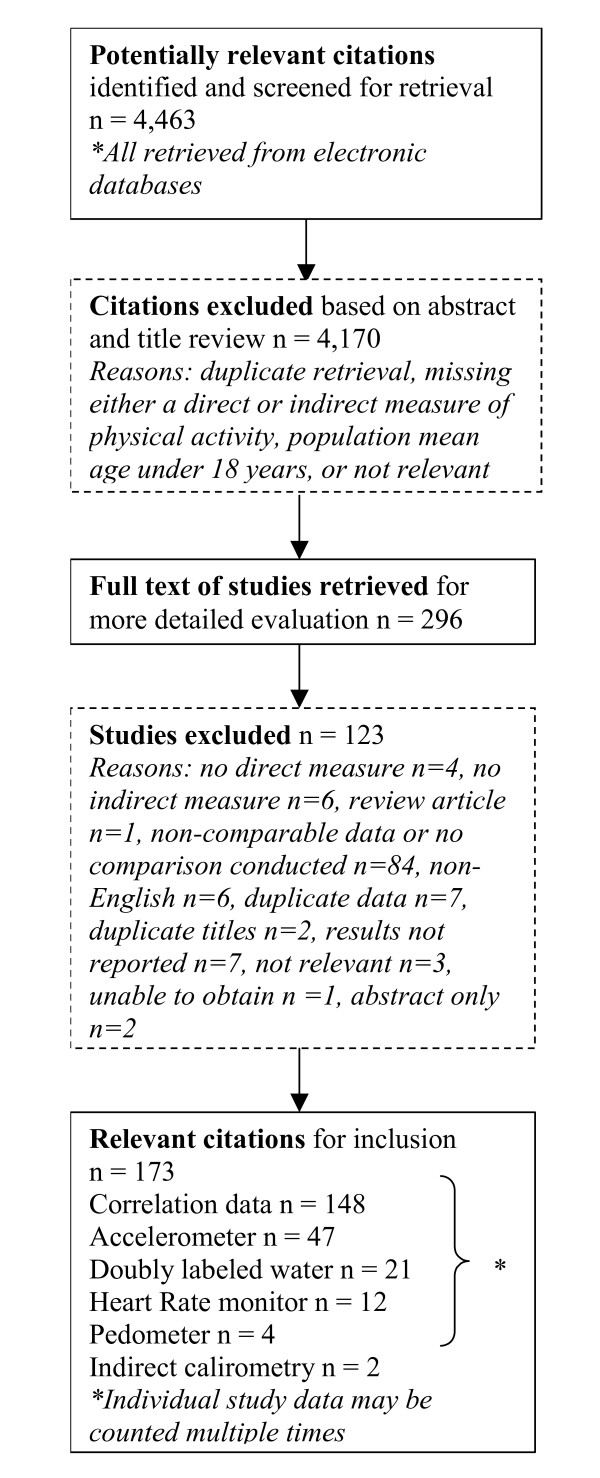
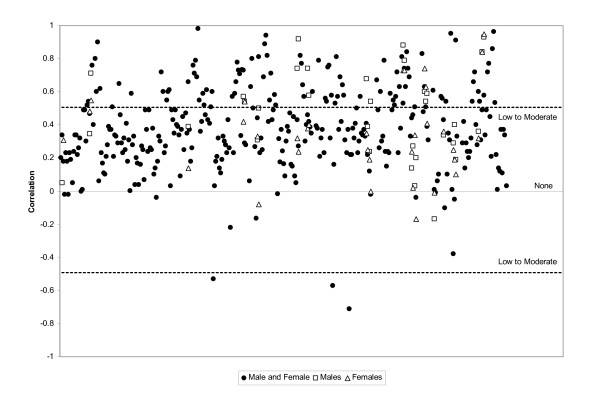
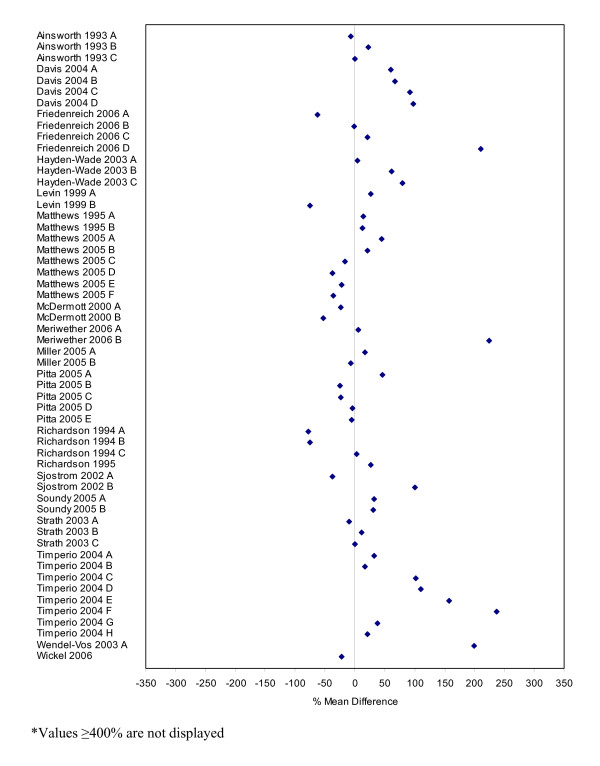
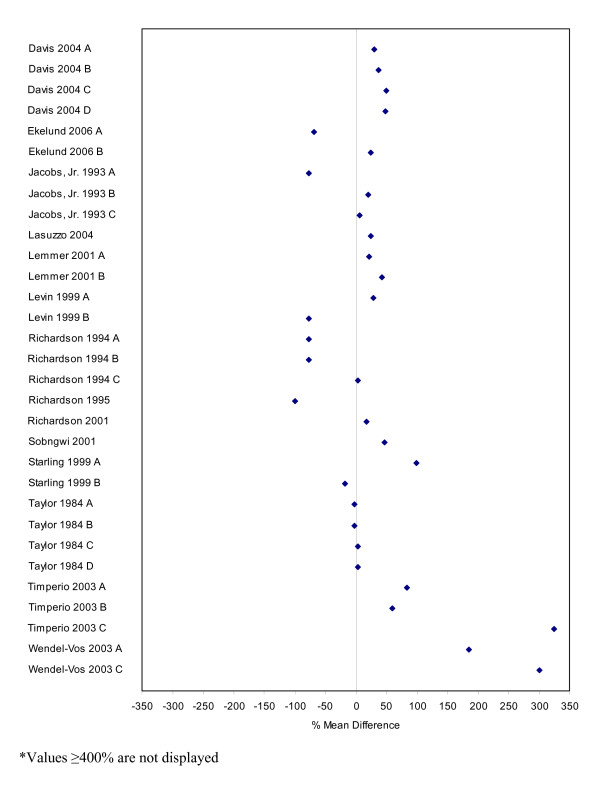
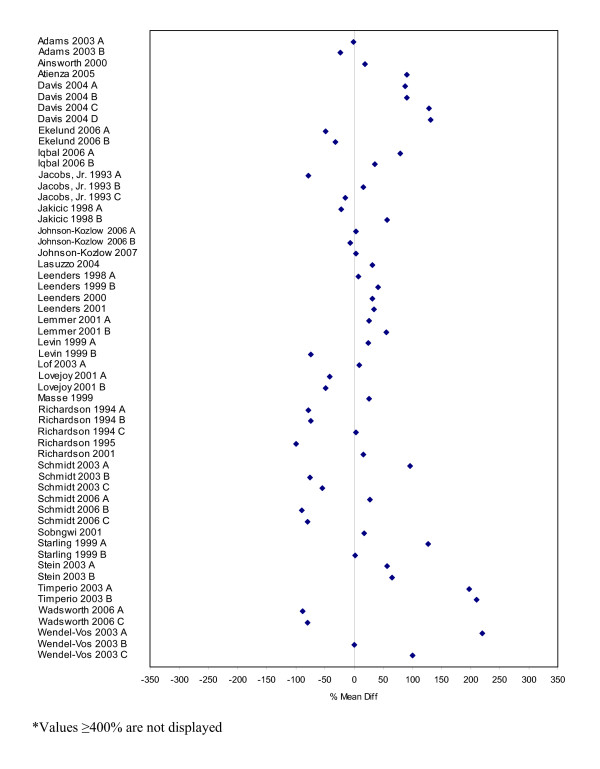
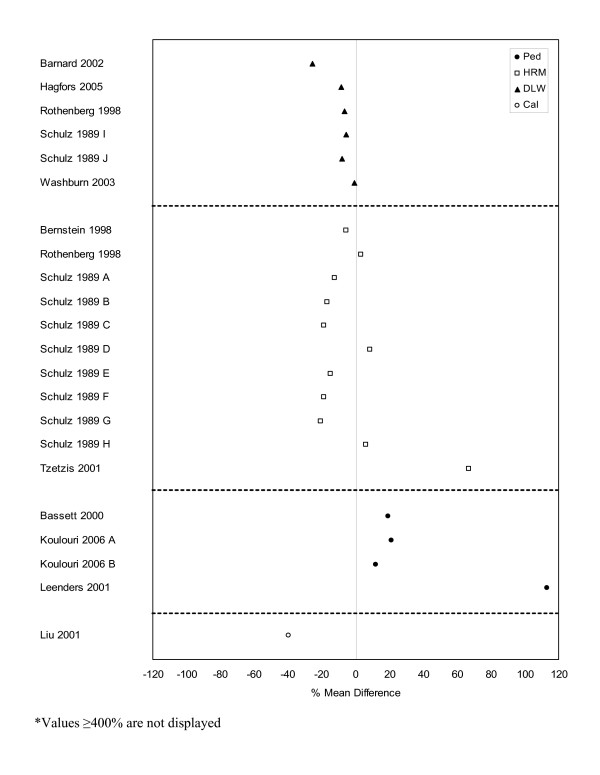
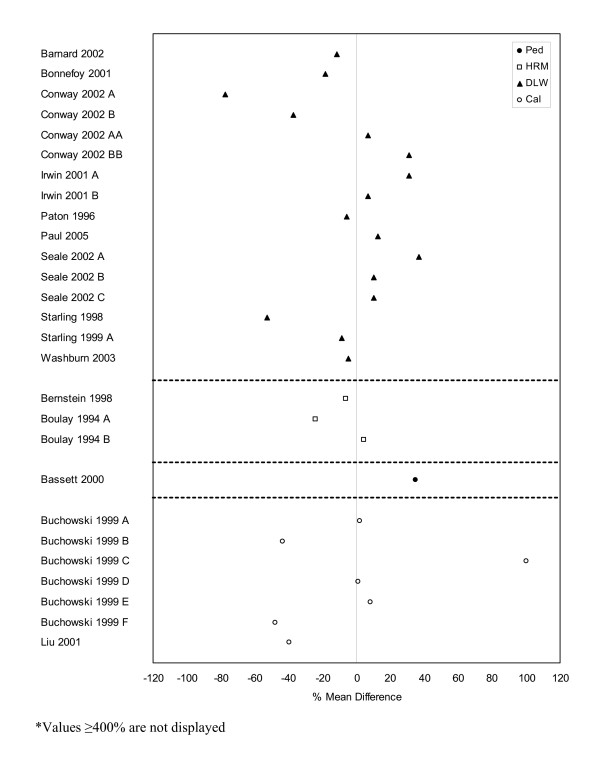
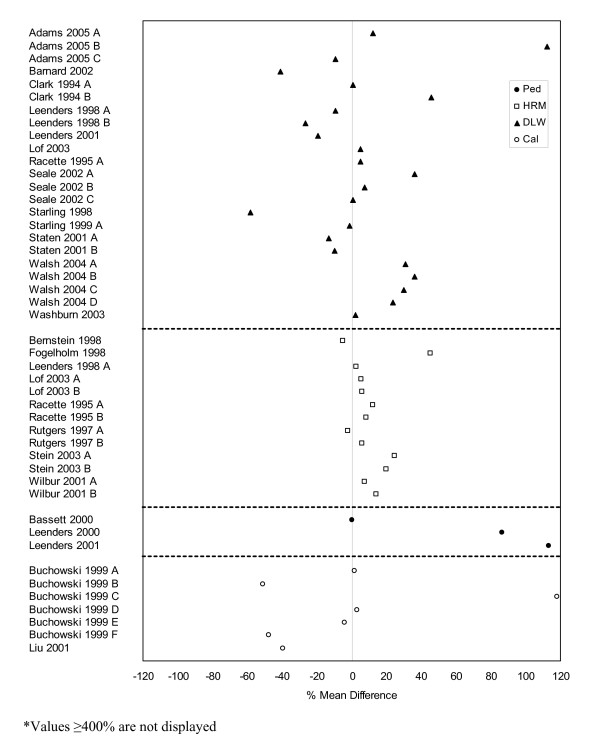
BACKGROUND: Accurate assessment is required to assess current and changing physical activity levels, and to evaluate the effectiveness of interventions designed to increase activity levels. This study systematically reviewed the literature to determine the extent of agreement between subjectively (self-report e.g. questionnaire, diary) and objectively (directly measured; e.g. accelerometry, doubly labeled water) assessed physical activity in adults. METHODS: Eight electronic databases were searched to identify observational and experimental studies of adult populations. Searching identified 4,463 potential articles. Initial screening found that 293 examined the relationship between self-reported and directly measured physical activity and met the eligibility criteria. Data abstraction was completed for 187 articles, which described comparable data and/or comparisons, while 76 articles lacked comparable data or comparisons, and a further 30 did not meet the review's eligibility requirements. A risk of bias assessment was conducted for all articles from which data was abstracted. RESULTS: Correlations between self-report and direct measures were generally low-to-moderate and ranged from -0.71 to 0.96. No clear pattern emerged for the mean differences between self-report and direct measures of physical activity. Trends differed by measure of physical activity employed, level of physical activity measured, and the gender of participants. Results of the risk of bias assessment indicated that 38% of the studies had lower quality scores. CONCLUSION: The findings suggest that the measurement method may have a significant impact on the observed levels of physical activity. Self-report measures of physical activity were both higher and lower than directly measured levels of physical activity, which poses a problem for both reliance on self-report measures and for attempts to correct for self-report - direct measure differences. This review reveals the need for valid, accurate and reliable measures of physical activity in evaluating current and changing physical activity levels, physical activity interventions, and the relationships between physical activity and health outcomes.
Overview
The claims and statistics of this paper haven’t been checked yet.
Free: it reads the open-access text and checks the first 5 claims that cite a source we can check. Create a free account to check every claim.
Integrity signals
Registry
Cites
Statistics
Figures
Verification
Claims the paper makes
The claims and statistics of this paper haven’t been checked yet.
Free: it reads the open-access text and checks the first 5 claims that cite a source we can check. Create a free account to check every claim.
Claims other papers make about this one
Each is checked against this paper’s own text: does it say what the citing paper says it does?
The cited source says what the claim attributes to it.
In the citing paper
“However, studies27 linking physical activity levels with outcomes have relied on self-reported data and/or questionnaires; therefore, the inferences drawn from these studies are compromised by the limitations of recollection bias.”
From Association of Cardiorespiratory Fitness with Long-term Mortality Among Adults Undergoing Exercise Treadmill Testing (2018) · cites this paper as [27]
The cited source says what the claim attributes to it.
In the citing paper
“Many of the studies rely on retrospective self-report measures of exercise, which may be prone to bias, inaccuracies, and misunderstanding of questions [e.g., (50–52)].”
From Exercise Intervention in PTSD: A Narrative Review and Rationale for Implementation (2019) · cites this paper as [50]
The cited source says what the claim attributes to it.
In the citing paper
“Overestimation of the PA level is possible.20,21”
The check wasn’t confident either way, so it gives no verdict — never disputed.
In the citing paper
“bariatric surgery was associated with fewer CVD deaths (HR, 0.47; 95% CI, 0.29–0.76) and fewer strokes (HR, 0.67; 95% CI, 0.54–0.83) than in the control group.58”
From Heart Disease and Stroke Statistics—2013 Update: A Report From the American Heart Association (2013) · cites this paper as [58]
Experimental — accuracy not yet measuredThe check wasn’t confident either way, so it gives no verdict — never disputed.
In the citing paper
“The lack of specificity of hypoglycemia with vascular outcomes suggests that it might be a marker for susceptibility.”
From Heart Disease and Stroke Statistics—2013 Update: A Report From the American Heart Association (2013) · cites this paper as [58]
Experimental — accuracy not yet measured
2 more claims about this paper
Create a free account to see every claim other papers make about this one.
Self-check
Percentages, sums and reported differences re-computed from the paper’s own numbers.
The self-check needs the paper’s full text.
Citations
Cites
STATISTICAL METHODS FOR ASSESSING AGREEMENT BETWEEN TWO METHODS OF CLINICAL MEASUREMENT
Martin Bland, J., & Altman, D. (1986) · The Lancet · doi:10.1016/s0140-6736(86)90837-8 · Cited by 47,965
International physical activity questionnaire: 12-country reliability and validity
CRAIG, C. L., MARSHALL, A. L., SJ??STR??M, M., BAUMAN, A. E., BOOTH, M. L., AINSWORTH, B. E., PRATT, M., EKELUND, U., YNGVE, A., SALLIS, J. F., et al. (2003) · Medicine & Science in Sports & Exercise · doi:10.1249/01.mss.0000078924.61453.fb · Cited by 21,619 · cited 11×
“PAD ≥ Clark 1994 A 37.3 (3.6) 14 0 14 Large eaters DLW P Clark 1994 B 39.7 (2.0) Small eaters DLW Conway 2002 A 42 (2.3) 24 24 0 Feeding study DLW Min Conway 2002 B DLW Tec Conway 2002 AA 41.2 (2.0) 24 24 0 Feeding study DLW P Conway 2002 BB DLW Sta Davis 2004 A 19–69 62 24 38 Obese Accel Y Davis 2004 B Accel Davis 20…”
Influential‘Small Changes' to Diet and Physical Activity Behaviors for Weight Management
Hills, A. P., Byrne, N. M., Lindstrom, R., & Hill, J. O. (2013) · Obesity Facts · doi:10.1159/000345030 · Cited by 9,493
(1985) · Europe PMC (PubMed Central) · Cited by 9,143
Compendium of physical activities: an update of activity codes and MET intensities
AINSWORTH, B. E., HASKELL, W. L., WHITT, M. C., IRWIN, M. L., SWARTZ, A. M., STRATH, S. J., O???BRIEN, W. L., BASSETT, D. R., SCHMITZ, K. H., EMPLAINCOURT, P. O., et al. (2000) · Medicine & Science in Sports & Exercise · doi:10.1097/00005768-200009001-00009 · Cited by 8,497 · cited 2×
“Future studies may wish to refer to the updated Compendium of Physical Activities [192] which provides a coding scheme to classify physical activity by rate of energy expenditure.”
Downs, S. H., & Black, N. (1998) · Journal of Epidemiology and Community Health · doi:10.1136/jech.52.6.377 · Cited by 8,252
Physical Activity in the United States Measured by Accelerometer
TROIANO, R. P., BERRIGAN, D., DODD, K. W., MÂSSE, L. C., TILERT, T., & MCDOWELL, M. (2008) · Medicine & Science in Sports & Exercise · doi:10.1249/mss.0b013e31815a51b3 · Cited by 7,638 · cited 1×
“sample [195].”
Statistical methods for assessing agreement between two methods of clinical measurement
Bland, J. M., & Altman, D. G. (2010) · International Journal of Nursing Studies · doi:10.1016/j.ijnurstu.2009.10.001 · Cited by 5,220 · cited 1×
“Many of the studies tested the relationship between selfreport and direct measures by using a correlation coefficient, but this is limited as correlation is only able to measure the strength of the relationship between two variables and cannot assess the level of agreement between them, as well as ignoring any bias in…”
The physical activity scale for the elderly (PASE): Development and evaluation
Washburn, R. A., Smith, K. W., Jette, A. M., & Janney, C. A. (1993) · Journal of Clinical Epidemiology · doi:10.1016/0895-4356(93)90053-4 · Cited by 3,177
Evaluating non-randomised intervention studies
Deeks, J., Dinnes, J., D'Amico, R., Sowden, A., Sakarovitch, C., Song, F., Petticrew, M., & Altman, D. (2003) · Health Technology Assessment · doi:10.3310/hta7270 · Cited by 2,907 · cited 1×
“The Downs and Black instrument was recommended for assessing risk of bias in observational studies in a recent systematic review [8] and other assessments [9] and was employed in this review to assess study quality including reporting, external validity, and internal validity (bias).”
Research works printed but not linked: 18
- [11]Adams SA Methodological and substantive issues: The relationship between physical activity and breast cancer PhD Thesis 2003 University of South Carolina
- [16]Armstrong CA The stages of change in exercise adoption and adherence: Evaluation of measures with self-report and objective data PhD Thesis 1998 University of California, San Diego and San Diego State University
- [24]Brach JS The relation of physical activity to functional status over a seventeen-year time period in community-dwelling older women PhD Thesis 2000 University of Pittsburgh
- [30]Chen AH-W The effectiveness of a home-based intervention to promote walking in ethnic minority women PhD Thesis 1995 University of California, San Diego and San Diego State University
- [38]del Aguila MA Assessment of physical activity in patients with diabetes PhD Thesis 1998 University of Washington
- [49]Fu LL Health status, functional state and physical activity level in community dwelling elderly women PhD Thesis 1995 University of Pittsburgh
- [61]Jansen L The effect of exercise on explanatory style in HIV-infected men PhD Thesis 2002 United States International University
- Krishnamoorthy JS The transmission of physical activity and related cognitions among African-American adolescent females and their primary female caregiver Dissertation Abstracts International: Section B: The Sciences and Engineering 2002 63
- [69]Kriska AM Assessment of current and historical physical activity in the Pima Indians PhD Thesis 1988 University of Pittsburgh
- [71]Lambert P Physical activity and the oldest-old: A comparison of self-report and accelerometer readings PhD Thesis 2006 University of Manitoba (Canada)
- [73]Lasuzzo J Ability of the California State University, Fullerton Physical Activity Questionnaire to assess physical activity in older individuals PhD Thesis 2004 The University of Alabama
- Mckeen NA The meaning of motor activity: Emotion, temperament, mood, and laterality Dissertation Abstracts International: Section B: The Sciences and Engineering 2001 61
- [158]Adams SA Matthews CE Ebbeling CB Moore CG Cunningham JE Fulton J Hebert JR The effect of social desirability and social approval on self-reports of physical activity Am J Epidemiol 2005 161 389 398 15692083 10.1093/aje/kwi054 PMC2958515 · DOI · Paper page
- [171]Miller CL A symptom management intervention in diabetic coronary artery bypass graft patients PhD Thesis 2005 University of Nebraska Medical Center
- [181]Wadsworth D Evaluation of a social cognitive theory based e-mail intervention to increase physical activity of college females Dissertation Abstracts International: Section B: The Sciences and Engineering 2006 66 4766
- Richardson MT Evaluation of the Minnesota Leisure Time Physical Activity Questionnaire PhD Thesis 1991 University of Minnesota 8138837
- [188]Warms CA Acceptability and feasibility of a lifestyle physical activity program for people with spinal cord injury (SCI): A pilot study PhD Thesis 2002 University of Washington
- [190]Adams SA Matthews CE Ebbeling CB Moore CG Cunningham JE Fulton J Hebert JR The effect of social desirability and social approval on self-reports of physical activity. [erratum appears in Am J Epidemiol. 2005 May 1;161(9):899] AM J EPIDEMIOL 2005 161 389 398 15692083 10.1093/aje/kwi054 PMC2958515 · DOI · Paper page
Cited by
Items 101–200 of 1,010
Cillekens, B., Lang, M., van Mechelen, W., Verhagen, E., Huysmans, M. A., Holtermann, A., van der Beek, A. J., & Coenen, P. (2020) · British Journal of Sports Medicine · doi:10.1136/bjsports-2020-102587 · Cited by 182
Sleep and physical activity in university students: A systematic review and meta-analysis
Memon, A. R., Gupta, C. C., Crowther, M. E., Ferguson, S. A., Tuckwell, G. A., & Vincent, G. E. (2021) · Sleep Medicine Reviews · doi:10.1016/j.smrv.2021.101482 · Cited by 180
Active Commuting and Multiple Health Outcomes: A Systematic Review and Meta-Analysis
Dinu, M., Pagliai, G., Macchi, C., & Sofi, F. (2019) · Sports Medicine · doi:10.1007/s40279-018-1023-0 · Cited by 180
Tripathy, J. P., Thakur, J. S., Jeet, G., Chawla, S., Jain, S., & Prasad, R. (2016) · BMC Public Health · doi:10.1186/s12889-016-3489-8 · Cited by 184
Reichert, M., Giurgiu, M., Koch, E. D., Wieland, L. M., Lautenbach, S., Neubauer, A. B., von Haaren-Mack, B., Schilling, R., Timm, I., Notthoff, N., et al. (2020) · Psychology of Sport and Exercise · doi:10.1016/j.psychsport.2020.101742 · Cited by 177
“Potentially due to these effects, meta-analyses in adults (Prince et al., 2008) and children (Adamo et al.”
Hegedus, E. J., McDonough, S., Bleakley, C., Cook, C. E., & Baxter, G. D. (2015) · British Journal of Sports Medicine · doi:10.1136/bjsports-2014-094094 · Cited by 177
Rudolf, K., Bickmann, P., Froböse, I., Tholl, C., Wechsler, K., & Grieben, C. (2020) · International Journal of Environmental Research and Public Health · doi:10.3390/ijerph17061870 · Cited by 176
“Hence, the results might be affected by social desirability [68] as well as by over- or under-estimation of certain behaviors like physical activity [69,70].”
Managing Sedentary Behavior to Reduce the Risk of Diabetes and Cardiovascular Disease
Dempsey, P. C., Owen, N., Biddle, S. J. H., & Dunstan, D. W. (2014) · Current Diabetes Reports · doi:10.1007/s11892-014-0522-0 · Cited by 176
The effect of self-compassion on the self-regulation of health behaviors: A systematic review
Biber, D. D., & Ellis, R. (2019) · Journal of Health Psychology · doi:10.1177/1359105317713361 · Cited by 175
Can a single question provide an accurate measure of physical activity?
Milton, K., Clemes, S., & Bull, F. (2013) · British Journal of Sports Medicine · doi:10.1136/bjsports-2011-090899 · Cited by 175
Physical Activity Levels in U.S. Latino/Hispanic Adults
Arredondo, E. M., Sotres-Alvarez, D., Stoutenberg, M., Davis, S. M., Crespo, N. C., Carnethon, M. R., Castañeda, S. F., Isasi, C. R., Espinoza, R. A., Daviglus, M. L., et al. (2016) · American Journal of Preventive Medicine · doi:10.1016/j.amepre.2015.08.029 · Cited by 173
Alharbi, M., Bauman, A., Neubeck, L., & Gallagher, R. (2016) · European Journal of Preventive Cardiology · doi:10.1177/2047487316634883 · Cited by 142
Kandola, A., Ashdown-Franks, G., Stubbs, B., Osborn, D. P. J., & Hayes, J. F. (2019) · Journal of Affective Disorders · doi:10.1016/j.jad.2019.07.088 · Cited by 172
Evenson, K. R., Wen, F., & Herring, A. H. (2016) · American Journal of Epidemiology · doi:10.1093/aje/kww070 · Cited by 154
“In the present study, we did not statistically compare the self-reported questionnaire findings with the accelerometry findings (22).”
Barker, J., Smith Byrne, K., Doherty, A., Foster, C., Rahimi, K., Ramakrishnan, R., Woodward, M., & Dwyer, T. (2019) · International Journal of Epidemiology · doi:10.1093/ije/dyy294 · Cited by 129
Health care costs of physical inactivity in Canadian adults
Janssen, I. (2012) · Applied Physiology, Nutrition, and Metabolism · doi:10.1139/h2012-061 · Cited by 170
A daily analysis of physical activity and satisfaction with life in emerging adults.
Maher, J. P., Doerksen, S. E., Elavsky, S., Hyde, A. L., Pincus, A. L., Ram, N., & Conroy, D. E. (2013) · Health Psychology · doi:10.1037/a0030129 · Cited by 170
Wallén, M. B., Franzén, E., Nero, H., & Hagströmer, M. (2015) · Physical Therapy · doi:10.2522/ptj.20140374 · Cited by 170
Daily physical activity and life satisfaction across adulthood.
Maher, J. P., Pincus, A. L., Ram, N., & Conroy, D. E. (2015) · Developmental Psychology · doi:10.1037/dev0000037 · Cited by 169
“People tend to overestimate their physical activity on self-report measures compared with direct measures such as accelerometers (Adamo, Prince, Tricco, Connor-Gorber, & Tremblay, 2009; Prince et al., 2008).”
Silfee, V. J., Haughton, C. F., Jake-Schoffman, D. E., Lopez-Cepero, A., May, C. N., Sreedhara, M., Rosal, M. C., & Lemon, S. C. (2018) · Preventive Medicine Reports · doi:10.1016/j.pmedr.2018.05.003 · Cited by 141
“Physical activity is a multifaceted and complex behavior, and research has shown that these objective measures are more precise compared to subjective measures, (Welk, 2002; Freedson and Miller, 2000) better capture the intricacies of physical activity dimensions, (Kelly et al., 2016; Prince et al., 2008) and provide…”
Validity of the Global Physical Activity Questionnaire (GPAQ) in Adult Latinas
Hoos, T., Espinoza, N., Marshall, S., & Arredondo, E. M. (2012) · Journal of Physical Activity and Health · doi:10.1123/jpah.9.5.698 · Cited by 167
Kaushal, N., & Rhodes, R. E. (2014) · Preventive Medicine · doi:10.1016/j.ypmed.2014.07.026 · Cited by 167
The impact of physical activity and sedentary behaviors on frailty levels
Kehler, D. S., & Theou, O. (2019) · Mechanisms of Ageing and Development · doi:10.1016/j.mad.2019.03.004 · Cited by 166
Degroote, L., DeSmet, A., Bourdeaudhuij, I. D., Dyck, D. V., & Crombez, G. (2020) · International Journal of Behavioral Nutrition and Physical Activity · doi:10.1186/s12966-020-00932-9 · Cited by 169
Goodyear, V. A., Wood, G., Skinner, B., & Thompson, J. L. (2021) · International Journal of Behavioral Nutrition and Physical Activity · doi:10.1186/s12966-021-01138-3 · Cited by 164
Stringhini, S., Tabak, A. G., Akbaraly, T. N., Sabia, S., Shipley, M. J., Marmot, M. G., Brunner, E. J., Batty, G. D., Bovet, P., & Kivimaki, M. (2012) · BMJ · doi:10.1136/bmj.e5452 · Cited by 163
Physical Activity and Cancer Survivorship
Garcia, D. O., & Thomson, C. A. (2014) · Nutrition in Clinical Practice · doi:10.1177/0884533614551969 · Cited by 137
Arnold, J. B., Walters, J. L., & Ferrar, K. (2016) · Journal of Orthopaedic and Sports Physical Therapy · doi:10.2519/jospt.2016.6449 · Cited by 161
Micklesfield, L. K., Lambert, E. V., Hume, D. J., Chantler, S., Pienaar, P. R., Dickie, K., Puoane, T., & Goedecke, J. H. (2013) · Cardiovascular Journal Of Africa · doi:10.5830/cvja-2013-069 · Cited by 160
“Traditional methods for collecting physical activity by selfreport may over- or under-estimate actual levels.(71) Moreover, ‘light activity’ is overlooked entirely.”
Physical Activity in Rheumatoid Arthritis: A Systematic Review
Tierney, M., Fraser, A. D., & Kennedy, N. (2012) · Journal of Physical Activity and Health · doi:10.1123/jpah.9.7.1036 · Cited by 163
Johansson, J., Nordström, A., & Nordström, P. (2016) · Journal of the American Medical Directors Association · doi:10.1016/j.jamda.2016.02.009 · Cited by 160
An Accelerometry-Based Methodology for Assessment of Real-World Bilateral Upper Extremity Activity
Bailey, R. R., Klaesner, J. W., & Lang, C. E. (2014) · PLoS ONE · doi:10.1371/journal.pone.0103135 · Cited by 148
“Self-report measures of physical activity may be used to overcome this barrier, but self-reported activity is known to vary greatly with direct measures of activity [4] for many reasons, including desire for social approval [5] and cognitive impairment [6].”
Maher, J. P., Hevel, D. J., Reifsteck, E. J., & Drollette, E. S. (2020) · Psychology of sport and exercise · doi:10.1016/j.psychsport.2020.101826 · Cited by 157
“, 2003), this may lead to overestimation of PA, which is a well-established limitation of self-report measures (Prince et al., 2008), and potential attenuation of associations between PA and affect.”
Physical Activity Text Messaging Interventions in Adults: A Systematic Review
Buchholz, S. W., Wilbur, J., Ingram, D., & Fogg, L. (2013) · Worldviews on Evidence-Based Nursing · doi:10.1111/wvn.12002 · Cited by 139
Wearable activity monitors in oncology trials: Current use of an emerging technology
Gresham, G., Schrack, J., Gresham, L. M., Shinde, A. M., Hendifar, A. E., Tuli, R., Rimel, B. J., Figlin, R., Meinert, C. L., & Piantadosi, S. (2018) · Contemporary Clinical Trials · doi:10.1016/j.cct.2017.11.002 · Cited by 144
The Role of Self-Efficacy and Friend Support on Adolescent Vigorous Physical Activity
Hamilton, K., Warner, L. M., & Schwarzer, R. (2016) · Health Education & Behavior · doi:10.1177/1090198116648266 · Cited by 160
Phillips, S. M., Summerbell, C., Hobbs, M., Hesketh, K. R., Saxena, S. K., Muir, C., & Hillier-Brown, F. C. (2021) · International Journal of Behavioral Nutrition and Physical Activity · doi:10.1186/s12966-021-01132-9 · Cited by 157
Exercise Intervention in PTSD: A Narrative Review and Rationale for Implementation
Hegberg, N. J., Hayes, J. P., & Hayes, S. M. (2019) · Frontiers in Psychiatry · doi:10.3389/fpsyt.2019.00133 · Cited by 154
Effects of intermittent fasting on health markers in those with type 2 diabetes: A pilot study
Arnason, T. G., Bowen, M. W., & Mansell, K. D. (2017) · World Journal of Diabetes · doi:10.4239/wjd.v8.i4.154 · Cited by 126
Meade, L. B., Bearne, L. M., Sweeney, L. H., Alageel, S. H., & Godfrey, E. L. (2019) · British Journal of Health Psychology · doi:10.1111/bjhp.12324 · Cited by 152
Shephard, R. J., & Aoyagi, Y. (2011) · European Journal of Applied Physiology · doi:10.1007/s00421-011-2268-6 · Cited by 158
Reid, R. E. R., Insogna, J. A., Carver, T. E., Comptour, A. M., Bewski, N. A., Sciortino, C. D., & Andersen, R. E. (2016) · Journal of science and medicine in sport · doi:10.1016/j.jsams.2016.10.015 · Cited by 155
Self-Reported Losses Versus Actual Losses in Online Gambling: An Empirical Study
Auer, M., & Griffiths, M. D. (2016) · Journal of Gambling Studies · doi:10.1007/s10899-016-9648-0 · Cited by 149
“Findings from areas outside of the gambling studies field (i.e., physical activity, obesity, sexual behavior) have shown that there is a mismatch between objective and subjective data when they are collected from the same person (Prince et al. 2008).”
Koniak‐Griffin, D., Brecht, M., Takayanagi, S., Villegas, J., Melendrez, M., & Balcázar, H. (2014) · International Journal of Nursing Studies · doi:10.1016/j.ijnurstu.2014.09.005 · Cited by 148
Text Message Interventions for Physical Activity: A Systematic Review and Meta-Analysis
Smith, D. M., Duque, L., Huffman, J. C., Healy, B. C., & Celano, C. M. (2020) · American Journal of Preventive Medicine · doi:10.1016/j.amepre.2019.08.014 · Cited by 129
Estimating pedestrian volume using Street View images: A large-scale validation test
Chen, L., Lü, Y., Sheng, Q., Ye, Y., Wang, R., & Liu, Y. (2020) · Computers Environment and Urban Systems · doi:10.1016/j.compenvurbsys.2020.101481 · Cited by 147
Gellert, P. R., Ziegelmann, J. P., Lippke, S., & Schwarzer, R. (2011) · Annals of Behavioral Medicine · doi:10.1007/s12160-011-9312-y · Cited by 146
Identifying Bias in Self-Reported Pro-Environmental Behavior
Koller, K., Pankowska, P., & Brick, C. (2022) · Current Research in Ecological and Social Psychology · doi:10.1016/j.cresp.2022.100087 · Cited by 149
Ku, P., Fox, K. R., & Chen, L. (2015) · Social Indicators Research · doi:10.1007/s11205-015-1005-7 · Cited by 149
“Furthermore, LTPA and LTSB were assessed through self-report and this has its wellknown weaknesses of poor and biased recall (Prince et al. 2008).”
Measuring algorithmically infused societies
Wagner, C., Strohmaier, M., Olteanu, A., Kıcıman, E., Contractor, N., & Eliassi-Rad, T. (2021) · Nature · doi:10.1038/s41586-021-03666-1 · Cited by 144
Rough and tumble play quality: theoretical foundations for a new measure of father–child interaction
Fletcher, R. J., StGeorge, J. M., & Freeman, E. E. (2012) · Early Child Development and Care · doi:10.1080/03004430.2012.723439 · Cited by 146
“Self-report measures can vary in unpredictable ways (Prince et al., 2008), and while direct observation is costly and may itself attract problems of participant reactivity, it has been shown to deliver valid results with respect to parenting behaviours (Arney, 2004).”
Lippke, S., Schwarzer, R., Ziegelmann, J. P., Scholz, U., & Schüz, B. (2010) · Health Education & Behavior · doi:10.1177/1090198109359386 · Cited by 128
van der Werf, P., Seabrook, J. A., & Gilliland, J. (2019) · Waste Management · doi:10.1016/j.wasman.2019.09.032 · Cited by 144
Nigg, C. R., Fuchs, R., Gerber, M., Jekauc, D., Koch, T., Krell‐Roesch, J., Lippke, S., Nigg, C., Novak, B., Ju, Q., et al. (2020) · Psychology of sport and exercise · doi:10.1016/j.psychsport.2020.101715 · Cited by 146
Poston, L., Briley, A. L., Barr, S., Bell, R., Croker, H., Coxon, K., Essex, H. N., Hunt, C., Hayes, L., Howard, L. M., et al. (2013) · BMC Pregnancy and Childbirth · doi:10.1186/1471-2393-13-148 · Cited by 140
“The failure of accelerometry to mirror the increase in self-reported walking in the intervention group could reflect insufficient intensity of this activity, but also reporting bias [51] which is common in the reporting of low intensity activities, such as those frequently undertaken by pregnant women [52].”
Sattler, M. C., Jaunig, J., Tösch, C., Watson, E. D., Mokkink, L. B., Dietz, P., & van Poppel, M. N. M. (2020) · Sports Medicine · doi:10.1007/s40279-020-01268-x · Cited by 142
Golubić, R., May, A. M., Borch, K. B., Overvad, K., Charles, M.-A. A., Díaz, M. J. T., Amiano, P., Palli, D., Valanou, E., Vigl, M., et al. (2014) · PLoS ONE · doi:10.1371/journal.pone.0092829 · Cited by 140
The effects of indoor plants and artificial windows in an underground environment
Kim, J., Cha, S. H., Koo, C., & Tang, S. K. (2018) · Building and Environment · doi:10.1016/j.buildenv.2018.04.029 · Cited by 139
Barker, J., Smith Byrne, K., Doherty, A., Foster, C., Rahimi, K., Ramakrishnan, R., Woodward, M., & Dwyer, T. (2019) · International Journal of Epidemiology · doi:10.1093/ije/dyz148 · Cited by 126
Lahham, A., McDonald, C. F., & Holland, A. E. (2016) · International Journal of Chronic Obstructive Pulmonary Disease · doi:10.2147/copd.s121263 · Cited by 114
Assessing Physical Activity and its Relationship to Cardiovascular Risk Factors: NHANES 2003-2006
Luke, A., Dugas, L. R., Durazo-Arvizu, R. A., Cao, G., & Cooper, R. S. (2011) · BMC Public Health · doi:10.1186/1471-2458-11-387 · Cited by 135
“A second comprehensive review summarized the concordance between accelerometry and questionnaires in 47 validation studies [37].”
Ko, V., Naylor, J., Harris, I. A., Crosbie, J., & Yeo, A. E. (2013) · BMC Musculoskeletal Disorders · doi:10.1186/1471-2474-14-145 · Cited by 135
“Alternatively, patient-reported physical activity may not reliably measure actual physical activity [36].”
Mason, P., Kearns, A., & Livingston, M. (2013) · Social Science & Medicine · doi:10.1016/j.socscimed.2013.04.011 · Cited by 135
Implementation and implications for polygenic risk scores in healthcare
Slunecka, J. L., van der Zee, M. D., Beck, J. J., Johnson, B. N., Finnicum, C. T., Pool, R., Hottenga, J., de Geus, E. J. C., & Ehli, E. A. (2021) · Human Genomics · doi:10.1186/s40246-021-00339-y · Cited by 139
Kanning, M. K., Ebner-Priemer, U. W., & Schlicht, W. M. (2013) · Frontiers in Psychology · doi:10.3389/fpsyg.2013.00187 · Cited by 120
Maher, J. P., Rebar, A. L., & Dunton, G. F. (2018) · Frontiers in Psychology · doi:10.3389/fpsyg.2018.01485 · Cited by 118
Prins, R., Pierik, F. H., Etman, A., Sterkenburg, R. P., Kamphuis, C. B. M., & van Lenthe, F. J. (2014) · Health & Place · doi:10.1016/j.healthplace.2014.01.012 · Cited by 131
Finne, E., Bucksch, J., Lampert, T., & Kolip, P. (2011) · International Journal of Behavioral Nutrition and Physical Activity · doi:10.1186/1479-5868-8-119 · Cited by 136
Sikes, E. M., Richardson, E. V., Cederberg, K. L. J., Sasaki, J. E., Sandroff, B. M., & Motl, R. W. (2018) · Disability and Rehabilitation · doi:10.1080/09638288.2018.1424956 · Cited by 132
Professional Esports Players: Motivation and Physical Activity Levels
Giakoni-Ramírez, F., Merellano-Navarro, E., & Bastías, D. M. D. (2022) · International Journal of Environmental Research and Public Health · doi:10.3390/ijerph19042256 · Cited by 136
“In addition, people tend to significantly overestimate their activity levels [65].”
Soundy, A., Roskell, C., Stubbs, B., & Vancampfort, D. (2014) · Archives of Psychiatric Nursing · doi:10.1016/j.apnu.2013.12.002 · Cited by 131
Strain, T., Fitzsimons, C., Kelly, P., & Mutrie, N. (2016) · BMC Public Health · doi:10.1186/s12889-016-3774-6 · Cited by 131
Schaller, A., Rudolf, K., Dejonghe, L. A. L., Grieben, C., & Froboese, I. (2016) · BioMed Research International · doi:10.1155/2016/1497213 · Cited by 131
Physical Activity Habit: Complexities and Controversies
Rhodes, R. E., & Rebar, A. L. (2018) · Springer eBooks · doi:10.1007/978-3-319-97529-0_6 · Cited by 133
Briguglio, M., Vitale, J. A., Galentino, R., Banfi, G., Dina, C. Z., Bona, A. R., Panzica, G., Porta, M., Dell’Osso, B. M., & Glick, I. D. (2020) · Neuropsychiatric Disease and Treatment · doi:10.2147/ndt.s229206 · Cited by 133
Prospective Association of Daily Steps With Cardiovascular Disease: A Harmonized Meta-Analysis
Paluch, A. E., Bajpai, S., Ballin, M., Bassett, D. R., Buford, T. W., Carnethon, M. R., Chernofsky, A., Dooley, E. E., Ekelund, U., Evenson, K. R., et al. (2022) · Circulation · doi:10.1161/circulationaha.122.061288 · Cited by 131
“30 In a prior meta-analysis, including only four studies demonstrated a non-linear association with CVD; however, that meta-analysis reported a high degree of heterogeneity (I 2 =80%).”
Manning, V., Hurley, M., Scott, D. L., Coker, B., Choy, E., & Bearne, L. (2013) · Arthritis Care & Research · doi:10.1002/acr.22102 · Cited by 130
Furlong, C., & Vignoles, V. L. (2020) · Identity · doi:10.1080/15283488.2020.1856664 · Cited by 128
Swartz, M. C., Lewis, Z. H., Lyons, E. J., Jennings, K., Middleton, A., Deer, R. R., Arnold, D., Dresser, K., Ottenbacher, K. J., & Goodwin, J. S. (2017) · Archives of Physical Medicine and Rehabilitation · doi:10.1016/j.apmr.2017.03.017 · Cited by 127
Does selection bias explain the obesity paradox among individuals with cardiovascular disease?
Banack, H. R., & Kaufman, J. S. (2015) · Annals of Epidemiology · doi:10.1016/j.annepidem.2015.02.008 · Cited by 129
“CRF differs from physical activity, which is defined more broadly as any bodily movement that results in energy expenditure(28).”
Kramer, S. F., Hung, S., & Brodtmann, A. G. (2019) · Current Neurology and Neuroscience Reports · doi:10.1007/s11910-019-0949-4 · Cited by 129
Marasso, D., Lupo, C., Collura, S., Rainoldi, A., & Brustio, P. R. (2021) · International Journal of Environmental Research and Public Health · doi:10.3390/ijerph18073413 · Cited by 129
Aittasalo, M., Vähä-Ypyä, H., Vasankari, T., Husu, P., Jussila, A.-M., & Sievänen, H. (2015) · BMC Sports Science, Medicine and Rehabilitation · doi:10.1186/s13102-015-0010-0 · Cited by 126
Reliability and validity of the French version of the global physical activity questionnaire
Rivière, F., Widad, F. Z., Speyer, É., Erpelding, M., Escalon, H., & Vuillemin, A. (2016) · Journal of sport and health science/Journal of Sport and Health Science · doi:10.1016/j.jshs.2016.08.004 · Cited by 126
Lowe, A. C., Littlewood, C., McLean, S. M., & Kilner, K. (2017) · BMJ Open Sport & Exercise Medicine · doi:10.1136/bmjsem-2017-000290 · Cited by 127
Udall, A. M., de Groot, J. I. M., de Jong, S. B., & Shankar, A. (2021) · Frontiers in Psychology · doi:10.3389/fpsyg.2021.582421 · Cited by 131
“Hence, to better understand the function of group identities and behaviours, we suggest that future research needs to test identities in these ways alongside factors that may be contributing to the increased identity and behaviour associations (Balakrishnan, 1999; Prince et al., 2008; Henrich et al., 2010; Wood et al.…”
Janssen, I., & Ross, R. (2012) · International Journal of Epidemiology · doi:10.1093/ije/dys038 · Cited by 124
A systematic review of interventions to foster physician resilience
Fox, S., Lydon, S., Byrne, D., Madden, C., Connolly, F., & O’Connor, P. (2018) · Postgraduate Medical Journal · doi:10.1136/postgradmedj-2017-135212 · Cited by 105
Finne, E., Glausch, M., Exner, A.-K., Sauzet, O., Stölzel, F., & Seidel, N. (2018) · Cancer Management and Research · doi:10.2147/cmar.s170064 · Cited by 124
A Method for Quantifying Upper Limb Performance in Daily Life Using Accelerometers
Lang, C. E., Waddell, K. J., Klaesner, J. W., & Bland, M. D. (2017) · Journal of Visualized Experiments · doi:10.3791/55673 · Cited by 124
“Accelerometry can be used in conjunction with, or in place of, self-reported measures of daily performance,(31,32,33) which may be more susceptible to cognitive deficits or unconscious bias.(34,35,36,37) Early adoption of this methodology has yielded data contrary to expectations,(5) which could force the field to ret…”
Scholes, S., & Bann, D. (2018) · BMC Public Health · doi:10.1186/s12889-018-5857-z · Cited by 127
Livingston, P. M., Craike, M. J., Salmon, J., Courneya, K. S., Gaskin, C. J., Fraser, S. F., Mohebbi, M., Broadbent, S., Botti, M., Kent, B., et al. (2015) · Cancer · doi:10.1002/cncr.29385 · Cited by 105
Puyana, M. G., Fernández‐Batanero, J. M., Fennell, C., & Sañudo, B. (2020) · International Journal of Environmental Research and Public Health · doi:10.3390/ijerph17103499 · Cited by 122
“Additional inconsistencies include that in the aforementioned studies, subjective measures of physical activity and sedentary behavior were utilized [13,22,29], which may have low accuracy and are likely to have subject bias [30].”
Is weight stigma associated with physical activity? A systematic review
Pearl, R. L., Wadden, T. A., & Jakicic, J. M. (2021) · Obesity · doi:10.1002/oby.23274 · Cited by 124
Turk-Adawi, K. I., & Grace, S. L. (2014) · Heart Lung and Circulation · doi:10.1016/j.hlc.2014.11.013 · Cited by 124
Oliveira, J. S., Sherrington, C., Amorim, A. B., Dario, A. B., & Tiedemann, A. (2017) · British Journal of Sports Medicine · doi:10.1136/bjsports-2016-096943 · Cited by 100
Technology for monitoring everyday prosthesis use: a systematic review
Chadwell, A., Diment, L. E., Micó-Amigo, M. E., Ramírez, D. Z. M., Dickinson, A., Granat, M. H., Kenney, L. P. J., Kheng, S., Sobuh, M. M. D., Ssekitoleko, R., et al. (2020) · Journal of NeuroEngineering and Rehabilitation · doi:10.1186/s12984-020-00711-4 · Cited by 122
Contextualized Measurement Scale Adaptation: A 4-Step Tutorial for Health Psychology Research
Ambuehl, B., & Inauen, J. (2022) · International Journal of Environmental Research and Public Health · doi:10.3390/ijerph191912775 · Cited by 125
“We integrate and build on established protocols for conducting qualitative prestudies for measurement validation (PROMIS, [24,35,36]; used in [37]), conceptual [26] and in-detail psychometric validation to ensure measurement equivalence [3].”
InfluentialThe contribution of walking to work to adult physical activity levels: a cross sectional study
Audrey, S., Procter, S., & Cooper, A. R. (2014) · International Journal of Behavioral Nutrition and Physical Activity · doi:10.1186/1479-5868-11-37 · Cited by 121
Hegde, N., Bries, M., Swibas, T., Melanson, E., & Sazonov, E. E. (2017) · IEEE Journal of Biomedical and Health Informatics · doi:10.1109/jbhi.2017.2734803 · Cited by 121
Metadata
- Authors
- Prince, S. A., Adamo, K. B., Hamel, M., Hardt, J., Connor Gorber, S., & Tremblay, M.
- Affiliations
- University of Ottawa (CA)
- Queen's University (CA)
- Statistics Canada (CA)
- Venue
- International Journal of Behavioral Nutrition and Physical Activity
- Published
- 2008
- Volume
- 5
- Issue
- 1
- Pages
- 56
- ISSN
- 1479-5868 (ISSN-L)
- PMC
- PMC2588639
- OpenAlex
- W2118409616
- Cited by
- 3,162
- References
- 191
- Citations by year
- 2026: 239 · 2025: 249 · 2024: 237 · 2023: 207 · 2022: 168 · 2021: 279 · 2020: 249 · 2019: 241 · 2018: 242 · 2017: 217 · 2016: 184 · 2015: 162 · 2014: 165 · 2013: 115 · 2012: 95
- FWCI
- 3.93
- Type
- journal article
- Language
- en
- Open access
- gold
- doi.org
- Licence
- cc-by
- Locations
- International Journal of Behavioral Nutrition and Physical Activity (publishedVersion, cc-by)
- PubMed Central (publishedVersion, cc-by)
- PubMed (publishedVersion)
- DOAJ (DOAJ: Directory of Open Access Journals) (submittedVersion, cc-by-sa)
- Topics
- Health Sciences › Medicine › Public Health, Environmental and Occupational Health › Physical Activity and Health
- Physical Sciences › Computer Science › Computer Vision and Pattern Recognition › Context-Aware Activity Recognition Systems
- Health Sciences › Medicine › Physiology (medical) › Cardiovascular and exercise physiology
- Keywords
- physical activity measurement, self-report measures, accelerometry, doubly labeled water, measurement validity, physical activity interventions, adults, risk of bias
About these checks
Registry, retraction, Cites and statistics results are computed, not judged, with one exception: a printed reference that no index lists is read once by a model before it counts as a citation error. Claims are extracted by a model and kept only when their quote appears verbatim in the text; each cited source is then checked, with a model’s help, for whether it says what the claim relies on. Those verdicts can be wrong — read the claim’s quote and the cited source before relying on one.
Statistics and arithmetic are recomputed, not judged.
Confidence bands are shown only for fields calibrated on our annotated test set. None is calibrated yet, so no band is shown.
What counts as a claim ›How we measure confidence ›How we check this ›
Are you an author, or do you see a problem with this page? Request a review
Data sources
Bibliographic data: Semantic Scholar, OpenAlex, Crossref.
Contains information from the Semantic Scholar Academic Graph Datasets, made available under the ODC Attribution License (ODC-BY 1.0).
Semantic Scholar’s data is described in: Kinney, R., et al. (2023). The Semantic Scholar Open Data Platform. arXiv:2301.10140.
