

A comparison of direct versus self-report measures for assessing physical activity in adults: a systematic review.
Open accessThe DOI matches its Crossref record; 190 of the 191 references it cites were found in a registry or an index.
Abstract
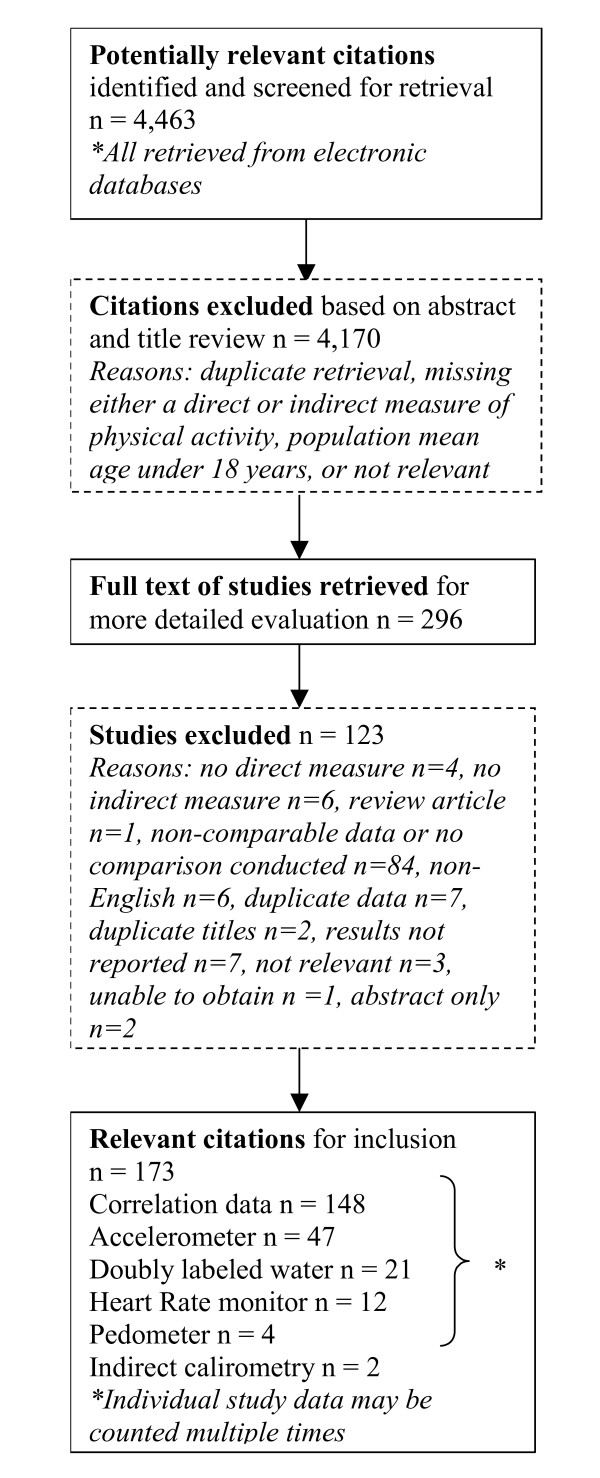
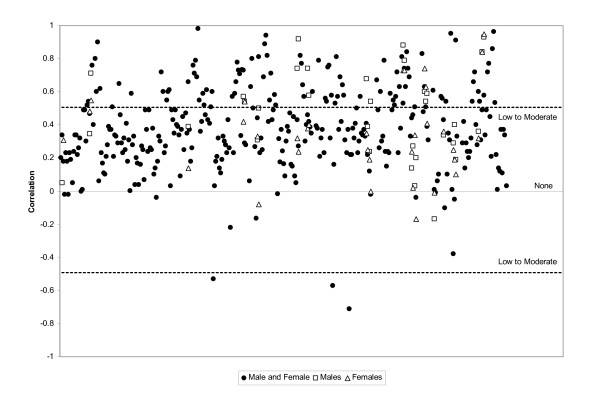
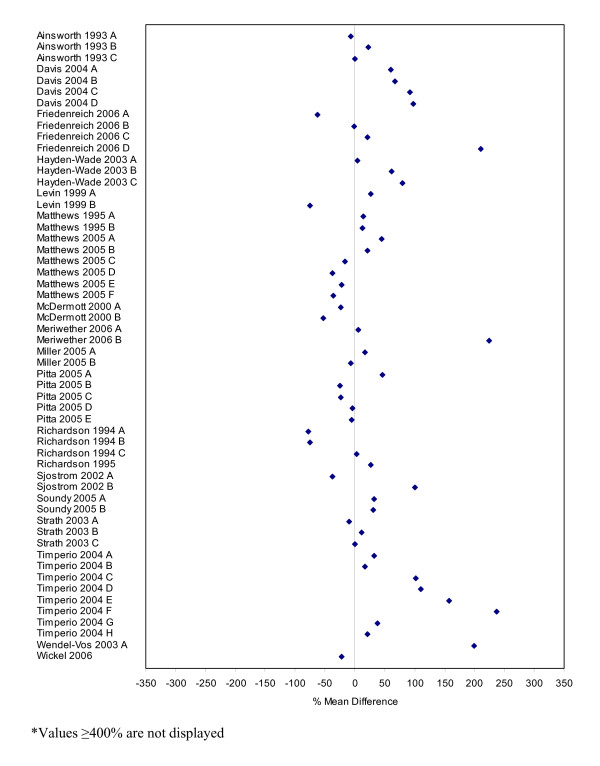
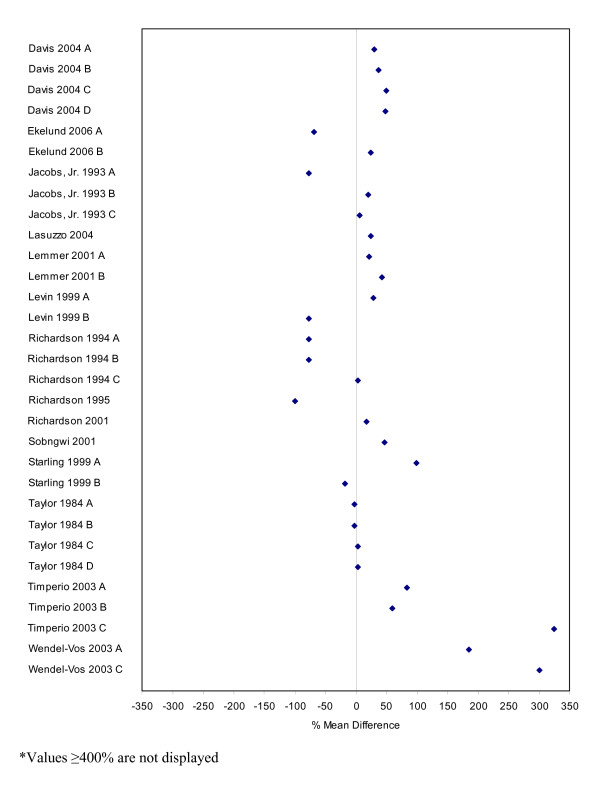
BACKGROUND: Accurate assessment is required to assess current and changing physical activity levels, and to evaluate the effectiveness of interventions designed to increase activity levels. This study systematically reviewed the literature to determine the extent of agreement between subjectively (self-report e.g. questionnaire, diary) and objectively (directly measured; e.g. accelerometry, doubly labeled water) assessed physical activity in adults. METHODS: Eight electronic databases were searched to identify observational and experimental studies of adult populations. Searching identified 4,463 potential articles. Initial screening found that 293 examined the relationship between self-reported and directly measured physical activity and met the eligibility criteria. Data abstraction was completed for 187 articles, which described comparable data and/or comparisons, while 76 articles lacked comparable data or comparisons, and a further 30 did not meet the review's eligibility requirements. A risk of bias assessment was conducted for all articles from which data was abstracted. RESULTS: Correlations between self-report and direct measures were generally low-to-moderate and ranged from -0.71 to 0.96. No clear pattern emerged for the mean differences between self-report and direct measures of physical activity. Trends differed by measure of physical activity employed, level of physical activity measured, and the gender of participants. Results of the risk of bias assessment indicated that 38% of the studies had lower quality scores. CONCLUSION: The findings suggest that the measurement method may have a significant impact on the observed levels of physical activity. Self-report measures of physical activity were both higher and lower than directly measured levels of physical activity, which poses a problem for both reliance on self-report measures and for attempts to correct for self-report - direct measure differences. This review reveals the need for valid, accurate and reliable measures of physical activity in evaluating current and changing physical activity levels, physical activity interventions, and the relationships between physical activity and health outcomes.
Overview
The claims and statistics of this paper haven’t been checked yet.
Free: it reads the open-access text and checks the first 5 claims that cite a source we can check. Create a free account to check every claim.
Integrity signals
Registry
Cites
Statistics
Figures
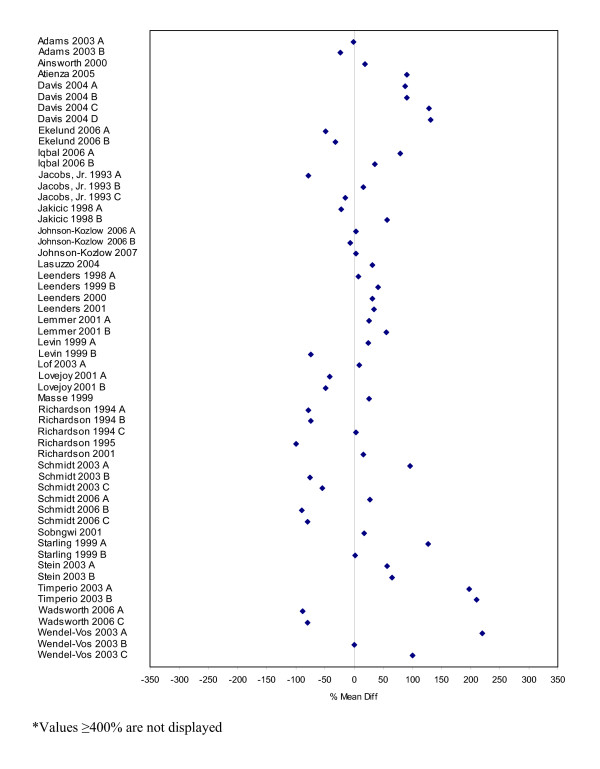
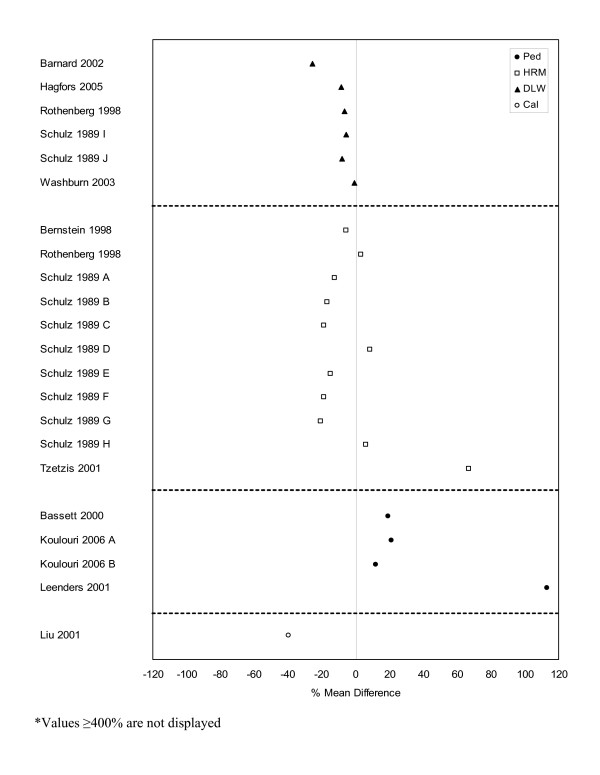
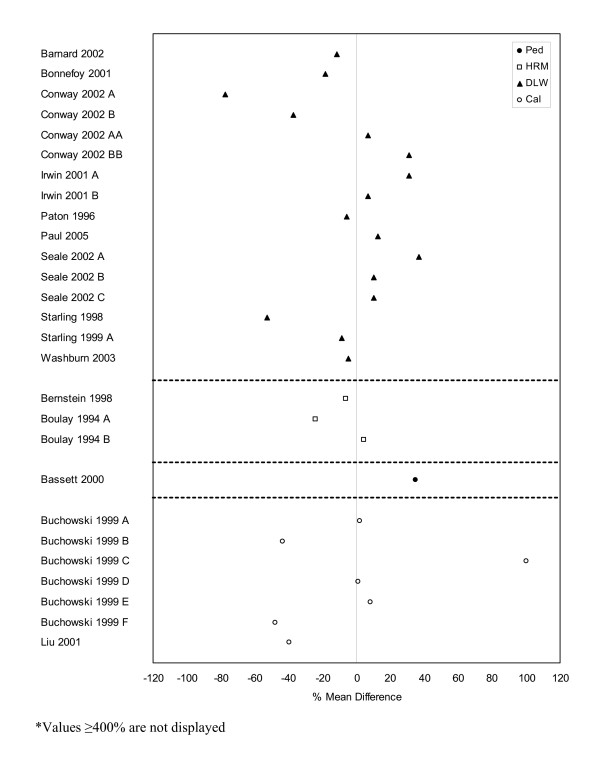
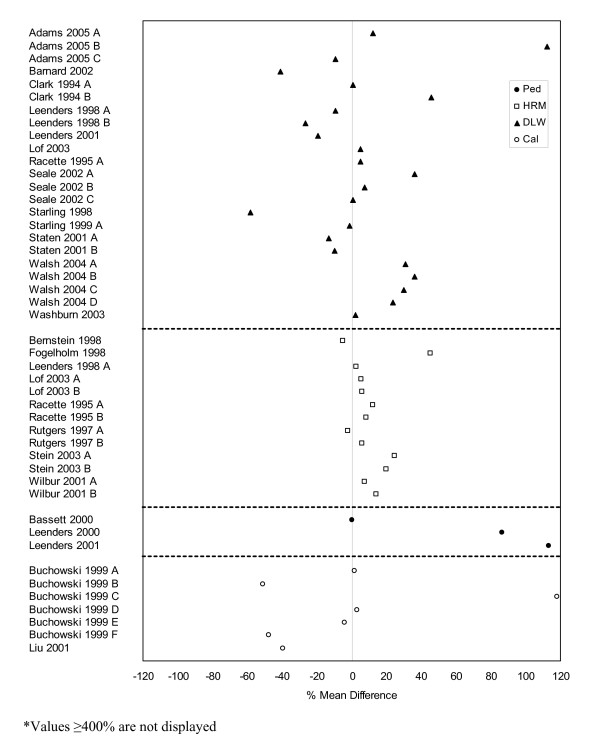
Verification
Claims the paper makes
The claims and statistics of this paper haven’t been checked yet.
Free: it reads the open-access text and checks the first 5 claims that cite a source we can check. Create a free account to check every claim.
Claims other papers make about this one
Each is checked against this paper’s own text: does it say what the citing paper says it does?
The cited source says what the claim attributes to it.
In the citing paper
“However, studies27 linking physical activity levels with outcomes have relied on self-reported data and/or questionnaires; therefore, the inferences drawn from these studies are compromised by the limitations of recollection bias.”
From Association of Cardiorespiratory Fitness with Long-term Mortality Among Adults Undergoing Exercise Treadmill Testing (2018) · cites this paper as [27]
The cited source says what the claim attributes to it.
In the citing paper
“Many of the studies rely on retrospective self-report measures of exercise, which may be prone to bias, inaccuracies, and misunderstanding of questions [e.g., (50–52)].”
From Exercise Intervention in PTSD: A Narrative Review and Rationale for Implementation (2019) · cites this paper as [50]
The cited source says what the claim attributes to it.
In the citing paper
“Overestimation of the PA level is possible.20,21”
The check wasn’t confident either way, so it gives no verdict — never disputed.
In the citing paper
“bariatric surgery was associated with fewer CVD deaths (HR, 0.47; 95% CI, 0.29–0.76) and fewer strokes (HR, 0.67; 95% CI, 0.54–0.83) than in the control group.58”
From Heart Disease and Stroke Statistics—2013 Update: A Report From the American Heart Association (2013) · cites this paper as [58]
Experimental — accuracy not yet measuredThe check wasn’t confident either way, so it gives no verdict — never disputed.
In the citing paper
“The lack of specificity of hypoglycemia with vascular outcomes suggests that it might be a marker for susceptibility.”
From Heart Disease and Stroke Statistics—2013 Update: A Report From the American Heart Association (2013) · cites this paper as [58]
Experimental — accuracy not yet measured
2 more claims about this paper
Create a free account to see every claim other papers make about this one.
Self-check
Percentages, sums and reported differences re-computed from the paper’s own numbers.
The self-check needs the paper’s full text.
Citations
Cites
STATISTICAL METHODS FOR ASSESSING AGREEMENT BETWEEN TWO METHODS OF CLINICAL MEASUREMENT
Martin Bland, J., & Altman, D. (1986) · The Lancet · doi:10.1016/s0140-6736(86)90837-8 · Cited by 47,965
International physical activity questionnaire: 12-country reliability and validity
CRAIG, C. L., MARSHALL, A. L., SJ??STR??M, M., BAUMAN, A. E., BOOTH, M. L., AINSWORTH, B. E., PRATT, M., EKELUND, U., YNGVE, A., SALLIS, J. F., et al. (2003) · Medicine & Science in Sports & Exercise · doi:10.1249/01.mss.0000078924.61453.fb · Cited by 21,619 · cited 11×
“PAD ≥ Clark 1994 A 37.3 (3.6) 14 0 14 Large eaters DLW P Clark 1994 B 39.7 (2.0) Small eaters DLW Conway 2002 A 42 (2.3) 24 24 0 Feeding study DLW Min Conway 2002 B DLW Tec Conway 2002 AA 41.2 (2.0) 24 24 0 Feeding study DLW P Conway 2002 BB DLW Sta Davis 2004 A 19–69 62 24 38 Obese Accel Y Davis 2004 B Accel Davis 20…”
Influential‘Small Changes' to Diet and Physical Activity Behaviors for Weight Management
Hills, A. P., Byrne, N. M., Lindstrom, R., & Hill, J. O. (2013) · Obesity Facts · doi:10.1159/000345030 · Cited by 9,493
(1985) · Europe PMC (PubMed Central) · Cited by 9,143
Compendium of physical activities: an update of activity codes and MET intensities
AINSWORTH, B. E., HASKELL, W. L., WHITT, M. C., IRWIN, M. L., SWARTZ, A. M., STRATH, S. J., O???BRIEN, W. L., BASSETT, D. R., SCHMITZ, K. H., EMPLAINCOURT, P. O., et al. (2000) · Medicine & Science in Sports & Exercise · doi:10.1097/00005768-200009001-00009 · Cited by 8,497 · cited 2×
“Future studies may wish to refer to the updated Compendium of Physical Activities [192] which provides a coding scheme to classify physical activity by rate of energy expenditure.”
Downs, S. H., & Black, N. (1998) · Journal of Epidemiology and Community Health · doi:10.1136/jech.52.6.377 · Cited by 8,252
Physical Activity in the United States Measured by Accelerometer
TROIANO, R. P., BERRIGAN, D., DODD, K. W., MÂSSE, L. C., TILERT, T., & MCDOWELL, M. (2008) · Medicine & Science in Sports & Exercise · doi:10.1249/mss.0b013e31815a51b3 · Cited by 7,638 · cited 1×
“sample [195].”
Statistical methods for assessing agreement between two methods of clinical measurement
Bland, J. M., & Altman, D. G. (2010) · International Journal of Nursing Studies · doi:10.1016/j.ijnurstu.2009.10.001 · Cited by 5,220 · cited 1×
“Many of the studies tested the relationship between selfreport and direct measures by using a correlation coefficient, but this is limited as correlation is only able to measure the strength of the relationship between two variables and cannot assess the level of agreement between them, as well as ignoring any bias in…”
The physical activity scale for the elderly (PASE): Development and evaluation
Washburn, R. A., Smith, K. W., Jette, A. M., & Janney, C. A. (1993) · Journal of Clinical Epidemiology · doi:10.1016/0895-4356(93)90053-4 · Cited by 3,177
Evaluating non-randomised intervention studies
Deeks, J., Dinnes, J., D'Amico, R., Sowden, A., Sakarovitch, C., Song, F., Petticrew, M., & Altman, D. (2003) · Health Technology Assessment · doi:10.3310/hta7270 · Cited by 2,907 · cited 1×
“The Downs and Black instrument was recommended for assessing risk of bias in observational studies in a recent systematic review [8] and other assessments [9] and was employed in this review to assess study quality including reporting, external validity, and internal validity (bias).”
Research works printed but not linked: 18
- [11]Adams SA Methodological and substantive issues: The relationship between physical activity and breast cancer PhD Thesis 2003 University of South Carolina
- [16]Armstrong CA The stages of change in exercise adoption and adherence: Evaluation of measures with self-report and objective data PhD Thesis 1998 University of California, San Diego and San Diego State University
- [24]Brach JS The relation of physical activity to functional status over a seventeen-year time period in community-dwelling older women PhD Thesis 2000 University of Pittsburgh
- [30]Chen AH-W The effectiveness of a home-based intervention to promote walking in ethnic minority women PhD Thesis 1995 University of California, San Diego and San Diego State University
- [38]del Aguila MA Assessment of physical activity in patients with diabetes PhD Thesis 1998 University of Washington
- [49]Fu LL Health status, functional state and physical activity level in community dwelling elderly women PhD Thesis 1995 University of Pittsburgh
- [61]Jansen L The effect of exercise on explanatory style in HIV-infected men PhD Thesis 2002 United States International University
- Krishnamoorthy JS The transmission of physical activity and related cognitions among African-American adolescent females and their primary female caregiver Dissertation Abstracts International: Section B: The Sciences and Engineering 2002 63
- [69]Kriska AM Assessment of current and historical physical activity in the Pima Indians PhD Thesis 1988 University of Pittsburgh
- [71]Lambert P Physical activity and the oldest-old: A comparison of self-report and accelerometer readings PhD Thesis 2006 University of Manitoba (Canada)
- [73]Lasuzzo J Ability of the California State University, Fullerton Physical Activity Questionnaire to assess physical activity in older individuals PhD Thesis 2004 The University of Alabama
- Mckeen NA The meaning of motor activity: Emotion, temperament, mood, and laterality Dissertation Abstracts International: Section B: The Sciences and Engineering 2001 61
- [158]Adams SA Matthews CE Ebbeling CB Moore CG Cunningham JE Fulton J Hebert JR The effect of social desirability and social approval on self-reports of physical activity Am J Epidemiol 2005 161 389 398 15692083 10.1093/aje/kwi054 PMC2958515 · DOI · Paper page
- [171]Miller CL A symptom management intervention in diabetic coronary artery bypass graft patients PhD Thesis 2005 University of Nebraska Medical Center
- [181]Wadsworth D Evaluation of a social cognitive theory based e-mail intervention to increase physical activity of college females Dissertation Abstracts International: Section B: The Sciences and Engineering 2006 66 4766
- Richardson MT Evaluation of the Minnesota Leisure Time Physical Activity Questionnaire PhD Thesis 1991 University of Minnesota 8138837
- [188]Warms CA Acceptability and feasibility of a lifestyle physical activity program for people with spinal cord injury (SCI): A pilot study PhD Thesis 2002 University of Washington
- [190]Adams SA Matthews CE Ebbeling CB Moore CG Cunningham JE Fulton J Hebert JR The effect of social desirability and social approval on self-reports of physical activity. [erratum appears in Am J Epidemiol. 2005 May 1;161(9):899] AM J EPIDEMIOL 2005 161 389 398 15692083 10.1093/aje/kwi054 PMC2958515 · DOI · Paper page
Cited by
Heart Disease and Stroke Statistics—2017 Update: A Report From the American Heart Association
Benjamin, E. J., Blaha, M. J., Chiuve, S. E., Cushman, M., Das, S. R., Deo, R., de Ferranti, S. D., Floyd, J., Fornage, M., Gillespie, C., et al. (2017) · Circulation · doi:10.1161/cir.0000000000000485 · Cited by 12,591
Heart Disease and Stroke Statistics—2019 Update: A Report From the American Heart Association
Benjamin, E. J., Muntner, P., Alonso, A., Bittencourt, M. S., Callaway, C. W., Carson, A. P., Chamberlain, A. M., Chang, A. R., Cheng, S., Das, S. R., et al. (2019) · Circulation · doi:10.1161/cir.0000000000000659 · Cited by 9,036
Heart Disease and Stroke Statistics—2012 Update: A Report From the American Heart Association
Writing Group Members, Roger, V. L., Go, A. S., Lloyd-Jones, D. M., Benjamin, E. J., Berry, J. D., Borden, W. B., Bravata, D. M., Dai, S., Ford, E. S., et al. (2012) · Circulation · doi:10.1161/cir.0b013e31823ac046 · Cited by 7,333
Heart disease and stroke statistics-2018 update: a report from the american heart association
Benjamin, E. J., Virani, S. S., Callaway, C. W., Chamberlain, A. M., Chang, A. R., Cheng, S., Chiuve, S. E., Cushman, M., Delling, F. N., Deo, R., et al. (2018) · Circulation · doi:10.1161/cir.0000000000000558 · Cited by 7,146
Heart Disease and Stroke Statistics—2016 Update: A Report From the American Heart Association
Mozaffarian, D., Benjamin, E. J., Go, A. S., Arnett, D. K., Blaha, M. J., Cushman, M., Das, S. R., de Ferranti, S., Després, J.-P., Fullerton, H. J., et al. (2016) · Circulation · doi:10.1161/cir.0000000000000350 · Cited by 6,596
Heart Disease and Stroke Statistics—2011 Update: A Report From the American Heart Association
Roger, V. L., Go, A. S., Lloyd-Jones, D. M., Adams, R. J., Berry, J. D., Brown, T. M., Carnethon, M. R., Dai, S., de Simone, G., Ford, E. S., et al. (2011) · Circulation · doi:10.1161/cir.0b013e3182009701 · Cited by 6,149
Heart Disease and Stroke Statistics—2015 Update: A Report From the American Heart Association
Mozaffarian, D., Benjamin, E. J., Go, A. S., Arnett, D. K., Blaha, M. J., Cushman, M., de Ferranti, S., Després, J.-P., Fullerton, H. J., Howard, V. J., et al. (2015) · Circulation · doi:10.1161/cir.0000000000000152 · Cited by 5,797
Heart Disease and Stroke Statistics—2013 Update: A Report From the American Heart Association
Go, A. S., Mozaffarian, D., Roger, V. L., Benjamin, E. J., Berry, J. D., Borden, W. B., Bravata, D. M., Dai, S., Ford, E. S., Fox, C. S., et al. (2013) · Circulation · doi:10.1161/cir.0b013e31828124ad · Cited by 5,292
Heart Disease and Stroke Statistics—2014 Update: A Report From the American Heart Association
Go, A. S., Mozaffarian, D., Roger, V. L., Benjamin, E. J., Berry, J. D., Blaha, M. J., Dai, S., Ford, E. S., Fox, C. S., Franco, S., et al. (2014) · Circulation · doi:10.1161/01.cir.0000441139.02102.80 · Cited by 5,215
Health benefits of physical activity: a systematic review of current systematic reviews
Warburton, D. E. R., & Bredin, S. S. D. (2017) · Current Opinion in Cardiology · doi:10.1097/hco.0000000000000437 · Cited by 2,410
Ekelund, U., Tarp, J., Steene-Johannessen, J., Hansen, B. H., Jefferis, B., Fagerland, M. W., Whincup, P., Diaz, K. M., Hooker, S. P., Chernofsky, A., et al. (2019) · BMJ · doi:10.1136/bmj.l4570 · Cited by 1,769
Colley, R. C., Garriguet, D., Janssen, I., Craig, C. L., Clarke, J., & Tremblay, M. S. (2011) · PubMed · Cited by 1,265
Self-citationColley, R. C., Garriguet, D., Janssen, I., Craig, C. L., Clarke, J., & Tremblay, M. S. (2011) · Health reports · Cited by 1,102
Self-citationLarge-scale physical activity data reveal worldwide activity inequality
Althoff, T., Sosič, R., Hicks, J. L., King, A. C., Delp, S. L., & Leskovec, J. (2017) · Nature · doi:10.1038/nature23018 · Cited by 1,000
Physical activity in older people: a systematic review
Sun, F., Norman, I. J., & While, A. E. (2013) · BMC Public Health · doi:10.1186/1471-2458-13-449 · Cited by 999
“’s [43] findings being consistent with the majority of other similar studies [67].”
A systematic review of the evidence for Canada's Physical Activity Guidelines for Adults
Warburton, D. E., Charlesworth, S., Ivey, A., Nettlefold, L., & Bredin, S. S. (2010) · International Journal of Behavioral Nutrition and Physical Activity · doi:10.1186/1479-5868-7-39 · Cited by 902
“[28] we chose to include the most relevant components of the scoring tool.”
Shephard, R. J. (2011) · Yearbook of Sports Medicine · doi:10.1016/j.yspm.2011.03.006 · Cited by 877
Physical activity: Health impact, prevalence, correlates and interventions
Rhodes, R. E., Janssen, I., Bredin, S. S. D., Warburton, D. E. R., & Bauman, A. (2017) · Psychology & Health · doi:10.1080/08870446.2017.1325486 · Cited by 778
“As mentioned previously, self-reported measures are subject to recall and social desirability biases that likely lead to an overestimation of PA (Adamo et al., 2009; Prince et al., 2008).”
Trull, T. J., & Ebner-Priemer, U. (2013) · Annual Review of Clinical Psychology · doi:10.1146/annurev-clinpsy-050212-185510 · Cited by 761
Choi, K. W., Chen, C.-Y., Stein, M. B., Klimentidis, Y. C., Wang, M.-J., Koenen, K. C., Smoller, J. W., & Major Depressive Disorder Working Group of the Psychiatric Genomics Consortium (2019) · JAMA Psychiatry · doi:10.1001/jamapsychiatry.2018.4175 · Cited by 744
Comparison of Self-reported versus Accelerometer-Measured Physical Activity
Dyrstad, S. M., Hansen, B. H., Holme, I. M., & Anderssen, S. A. (2014) · Medicine & Science in Sports & Exercise · doi:10.1249/mss.0b013e3182a0595f · Cited by 744
Wahid, A., Manek, N., Nichols, M., Kelly, P., Foster, C., Webster, P., Kaur, A., Friedemann Smith, C., Wilkins, E., Rayner, M., et al. (2016) · Journal of the American Heart Association · doi:10.1161/jaha.115.002495 · Cited by 715
“The use of self-reported PA questionnaires in all of the included studies is problematic, given that self-reported PA has been shown to have a low-to-moderate correlation with objective measures.(31) Furthermore, whereas all of the studies used healthy participants, only half included a “burn-out” period to reduce the…”
Physical activity and risks of breast and colorectal cancer: a Mendelian randomisation analysis
Papadimitriou, N., Dimou, N., Tsilidis, K. K., Banbury, B., Martin, R. M., Lewis, S. J., Kazmi, N., Robinson, T. M., Albanes, D., Aleksandrova, K., et al. (2020) · Nature Communications · doi:10.1038/s41467-020-14389-8 · Cited by 652
“1 and Supplementary Fig.”
InfluentialPredictors of COVID-19 voluntary compliance behaviors: An international investigation
Clark, C., Davila, A., Regis, M., & Kraus, S. (2020) · Global Transitions · doi:10.1016/j.glt.2020.06.003 · Cited by 649
Cleland, C. L., Hunter, R. F., Kee, F., Cupples, M. E., Sallis, J. F., & Tully, M. A. (2014) · BMC Public Health · doi:10.1186/1471-2458-14-1255 · Cited by 609
Raghuveer, G., Hartz, J., Lubans, D. R., Takken, T., Wiltz, J. L., Mietus-Snyder, M., Perak, A. M., Baker-Smith, C., Pietris, N., Edwards, N. M., et al. (2020) · Circulation · doi:10.1161/cir.0000000000000866 · Cited by 601
Daily steps and all-cause mortality: a meta-analysis of 15 international cohorts
Paluch, A. E., Bajpai, S., Bassett, D. R., Carnethon, M. R., Ekelund, U., Evenson, K. R., Galuska, D. A., Jefferis, B. J., Kraus, W. E., Lee, I.-M., et al. (2022) · The Lancet Public Health · doi:10.1016/s2468-2667(21)00302-9 · Cited by 582
Amireault, S., & Godin, G. (2015) · Perceptual and Motor Skills · doi:10.2466/03.27.pms.120v19x7 · Cited by 562
Reflections on Physical Activity and Health: What Should We Recommend?
Warburton, D. E. R., & Bredin, S. S. D. (2016) · Canadian Journal of Cardiology · doi:10.1016/j.cjca.2016.01.024 · Cited by 544
Prince, S. A., Cardilli, L., Reed, J. L., Saunders, T. J., Kite, C., Douillette, K., Fournier, K., & Buckley, J. P. (2020) · International Journal of Behavioral Nutrition and Physical Activity · doi:10.1186/s12966-020-00938-3 · Cited by 520
Self-citationWoodcock, J., Franco, O. H., Orsini, N., & Roberts, I. (2011) · International Journal of Epidemiology · doi:10.1093/ije/dyq104 · Cited by 512
Van Cauwenberg, J., De Bourdeaudhuij, I., De Meester, F., Van Dyck, D., Salmon, J., Clarys, P., & Deforche, B. (2011) · Health & Place · doi:10.1016/j.healthplace.2010.11.010 · Cited by 503
The contribution of health behaviors to socioeconomic inequalities in health: A systematic review
Petrovic, D., de Mestral, C., Bochud, M., Bartley, M., Kivimäki, M., Vineis, P., Mackenbach, J., & Stringhini, S. (2018) · Preventive Medicine · doi:10.1016/j.ypmed.2018.05.003 · Cited by 503
Mandsager, K., Harb, S., Cremer, P., Phelan, D., Nissen, S. E., & Jaber, W. (2018) · JAMA Network Open · doi:10.1001/jamanetworkopen.2018.3605 · Cited by 501
De Toro-Martín, J., Arsenault, B., Després, J.-P., & Vohl, M.-C. (2017) · Nutrients · doi:10.3390/nu9080913 · Cited by 492
“, intrusiveness, elevated cost or specialized training for an efficient use [90], limitations that researchers should try to overcome in order to develop precision nutrition approaches that integrate the important notions of energy expenditure and energy balance.”
Colley, R. C., Gorber, S. C., & Tremblay, M. S. (2010) · PubMed · Cited by 482
Self-citationAdamo, K. B., Prince, S. A., Tricco, A. C., Connor-Gorber, S., & Tremblay, M. (2009) · International Journal of Pediatric Obesity · doi:10.1080/17477160802315010 · Cited by 463
“, submitted [12]).”
Self-citationSullivan, A. N., & Lachman, M. E. (2017) · Frontiers in Public Health · doi:10.3389/fpubh.2016.00289 · Cited by 458
Accelerometry and physical activity questionnaires - a systematic review
Skender, S., Ose, J., Chang-Claude, J., Paskow, M., Brühmann, B., Siegel, E. M., Steindorf, K., & Ulrich, C. M. (2016) · BMC Public Health · doi:10.1186/s12889-016-3172-0 · Cited by 449
The Current State of Physical Activity Assessment Tools
Ainsworth, B., Cahalin, L., Buman, M., & Ross, R. (2015) · Progress in Cardiovascular Diseases · doi:10.1016/j.pcad.2014.10.005 · Cited by 438
Smith, A. D., Crippa, A., Woodcock, J., & Brage, S. (2016) · Diabetologia · doi:10.1007/s00125-016-4079-0 · Cited by 430
Zubala, A., MacGillivray, S., Frost, H., Kroll, T., Skelton, D. A., Gavine, A., Gray, N. M., Toma, M., & Morris, J. (2017) · PLOS ONE · doi:10.1371/journal.pone.0180902 · Cited by 411
Cleland, C., Ferguson, S., Ellis, G., & Hunter, R. F. (2018) · BMC Medical Research Methodology · doi:10.1186/s12874-018-0642-3 · Cited by 407
“, (2008) within their review of self-report validation studies [40].”
Dowd, K. P., Szeklicki, R., Minetto, M. A., Murphy, M. H., Polito, A., Ghigo, E., van der Ploeg, H., Ekelund, U., Maciaszek, J., Stemplewski, R., et al. (2018) · International Journal of Behavioral Nutrition and Physical Activity · doi:10.1186/s12966-017-0636-2 · Cited by 385
“Doubly Labelled Water (DLW) [12], smart phone technology [13], motion sensors and heart rate monitors (HRM) [14], pedometers [15] or a comparison of two or more methods [16]).”
Lang, C. E., Bland, M. D., Bailey, R. R., Schaefer, S. Y., & Birkenmeier, R. L. (2013) · Journal of Hand Therapy · doi:10.1016/j.jht.2012.06.005 · Cited by 385
Ekelund, U., Tarp, J., Fagerland, M. W., Johannessen, J. S., Hansen, B. H., Jefferis, B. J., Whincup, P. H., Diaz, K. M., Hooker, S., Howard, V. J., et al. (2020) · British Journal of Sports Medicine · doi:10.1136/bjsports-2020-103270 · Cited by 355
Physical activity, multimorbidity, and life expectancy: a UK Biobank longitudinal study
Chudasama, Y. V., Khunti, K. K., Zaccardi, F., Rowlands, A. V., Yates, T., Gillies, C. L., Davies, M. J., & Dhalwani, N. N. (2019) · BMC Medicine · doi:10.1186/s12916-019-1339-0 · Cited by 353
Kandola, A., Lewis, G., Osborn, D. P. J., Stubbs, B., & Hayes, J. F. (2020) · The Lancet Psychiatry · doi:10.1016/s2215-0366(20)30034-1 · Cited by 334
Amireault, S., Godin, G., Lacombe, J., & Sabiston, C. M. (2015) · BMC Medical Research Methodology · doi:10.1186/s12874-015-0045-7 · Cited by 330
“tematic reviews [37, 71–73] and previous studies reporting on the association between LSI and accelerometer data [5, 23] conducted outside the oncology context.”
Accelerometer-based measures in physical activity surveillance: current practices and issues
Pedišić, Ž., & Bauman, A. (2015) · British Journal of Sports Medicine · doi:10.1136/bjsports-2013-093407 · Cited by 330
Sedentary Behaviour as an Emerging Risk Factor for Cardiometabolic Diseases in Children and Youth
Saunders, T. J., Chaput, J.-P., & Tremblay, M. S. (2014) · Canadian Journal of Diabetes · doi:10.1016/j.jcjd.2013.08.266 · Cited by 328
Self-citationWunsch, K., Kienberger, K., & Niessner, C. (2022) · International Journal of Environmental Research and Public Health · doi:10.3390/ijerph19042250 · Cited by 320
The Mechanisms Linking Health Literacy to Behavior and Health Status
Osborn, C. (2011) · American Journal of Health Behavior · doi:10.5993/ajhb.35.1.11 · Cited by 312
Bidirectional relationship of stress and affect with physical activity and healthy eating
Schultchen, D., Reichenberger, J., Mittl, T., Weh, T. R. M., Smyth, J. M., Blechert, J., & Pollatos, O. (2019) · British Journal of Health Psychology · doi:10.1111/bjhp.12355 · Cited by 306
“However, subjective and objective assessment of physical activity might not always be in accordance with various between-person influences (Kapteyn et al., 2018; Prince et al., 2008).”
Sabia, S., van Hees, V. T., Shipley, M. J., Trenell, M. I., Hagger-Johnson, G., Elbaz, A., Kivimaki, M., & Singh-Manoux, A. (2014) · American Journal of Epidemiology · doi:10.1093/aje/kwt330 · Cited by 304
“Previous studies used nonwaterproof waistmounted devices that are removed before sleep or before water-based activities such as swimming (4).”
Influentialvan Hees, V. T., Renström, F., Wright, A., Gradmark, A., Catt, M., Chen, K. Y., Löf, M., Bluck, L., Pomeroy, J., Wareham, N. J., et al. (2011) · PLoS ONE · doi:10.1371/journal.pone.0022922 · Cited by 289
Accelerometer-Determined Physical Activity in Adults and Older People
HANSEN, B. H., KOLLE, E., DYRSTAD, S. M., HOLME, I., & ANDERSSEN, S. A. (2012) · Medicine & Science in Sports & Exercise · doi:10.1249/mss.0b013e31822cb354 · Cited by 286
Roberts, A. L., Fisher, A., Smith, L., Heinrich, M., & Potts, H. W. W. (2017) · Journal of Cancer Survivorship · doi:10.1007/s11764-017-0632-1 · Cited by 274
Hagstromer, M., Troiano, R. P., Sjostrom, M., & Berrigan, D. (2010) · American Journal of Epidemiology · doi:10.1093/aje/kwq069 · Cited by 271
Sember, V., Meh, K., Sorić, M., Starc, G., Rocha, P., & Jurak, G. (2020) · International Journal of Environmental Research and Public Health · doi:10.3390/ijerph17197161 · Cited by 266
Hobbs, N., Godfrey, A., Lara, J., Errington, L., Meyer, T. D., Rochester, L., White, M., Mathers, J. C., & Sniehotta, F. F. (2013) · BMC Medicine · doi:10.1186/1741-7015-11-75 · Cited by 266
“The accuracy of self-reported assessments of PA compared with objective assessments is uncertain; self-reported PA has been shown to overestimate and underestimate actual PA level [69].”
Fatigue and Fatigability in Older Adults
Eldadah, B. A. (2010) · PM&R · doi:10.1016/j.pmrj.2010.03.022 · Cited by 262
Quantifying Real-World Upper-Limb Activity in Nondisabled Adults and Adults With Chronic Stroke
Bailey, R. R., Klaesner, J. W., & Lang, C. E. (2015) · Neurorehabilitation and Neural Repair · doi:10.1177/1545968315583720 · Cited by 261
“moderate correlations are observed between self-reported and direct measurement (eg, heart rate monitoring, doublelabeled water, accelerometry) of physical activity.(14) As an alternative to self-report questionnaires, wristworn accelerometry has emerged as a tool to assess motor performance that occurs throughout the…”
de Vries, L. P., Baselmans, B. M. L., & Bartels, M. (2021) · Journal of Happiness Studies · doi:10.1007/s10902-020-00324-7 · Cited by 255
Sallis, J. F., Adlakha, D., Oyeyemi, A., & Salvo, D. (2020) · Journal of Sport and Health Science · doi:10.1016/j.jshs.2020.05.005 · Cited by 254
Convergent validity of the International Physical Activity Questionnaire (IPAQ): meta-analysis
Kim, Y., Park, I., & Kang, M. (2013) · Public Health Nutrition · doi:10.1017/s1368980012002996 · Cited by 252
“Two reviewers independently assessed the methodological quality of studies using the modified version of the Downs and Black checklist((9)), which was used in recent systematic reviews((10,11)).”
Hurtig-Wennlöf, A., Hagströmer, M., & Olsson, L. A. (2010) · Public Health Nutrition · doi:10.1017/s1368980010000157 · Cited by 249
“The short-format IPAQ((10)) and the long-format IPAQ((11)) have been validated in Swedish adults, but the modification and use of self-administered IPAQ in the elderly has not been validated before((12)).”
Hawley-Hague, H., Horne, M., Skelton, D. A., & Todd, C. (2016) · BMJ Open · doi:10.1136/bmjopen-2016-011560 · Cited by 241
“Minutes of exercise as a measure, for example, may be unreliable as this measure is often self-reported and there are a number of problems with self-report data.(55) There is potential to use technology to calculate number of minutes of exercise, types and intensity of exercise.”
McConnell, M. V., Shcherbina, A., Pavlovic, A., Homburger, J. R., Goldfeder, R. L., Waggot, D., Cho, M. K., Rosenberger, M. E., Haskell, W. L., Myers, J., et al. (2017) · JAMA Cardiology · doi:10.1001/jamacardio.2016.4395 · Cited by 239
Dwyer, T., Pezic, A., Sun, C., Cochrane, J., Venn, A., Srikanth, V., Jones, G., Shook, R., Sui, X., Ortaglia, A., et al. (2015) · PLOS ONE · doi:10.1371/journal.pone.0141274 · Cited by 239
Measurement of physical activity in clinical practice using accelerometers
Arvidsson, D., Fridolfsson, J., & Börjesson, M. (2019) · Journal of Internal Medicine · doi:10.1111/joim.12908 · Cited by 239
Shiri, R., & Falah-Hassani, K. (2017) · British Journal of Sports Medicine · doi:10.1136/bjsports-2016-097352 · Cited by 238
“79 80 Individuals with LBP may also underestimate or overestimate their level of physical activity.”
Archer, E., Pavela, G., & Lavie, C. J. (2015) · Mayo Clinic Proceedings · doi:10.1016/j.mayocp.2015.04.009 · Cited by 235
Steffener, J., Habeck, C., O'Shea, D., Razlighi, Q., Bherer, L., & Stern, Y. (2016) · Neurobiology of Aging · doi:10.1016/j.neurobiolaging.2016.01.014 · Cited by 235
“Despite the validity of stair climbing as a physical activity, we measured it as a self-report which is inherently problematic (Prince et al., 2008).”
Are Self-report Measures Able to Define Individuals as Physically Active or Inactive?
STEENE-JOHANNESSEN, J., ANDERSSEN, S. A., VAN DER PLOEG, H. P., HENDRIKSEN, I. J. M., DONNELLY, A. E., BRAGE, S., & EKELUND, U. (2016) · Medicine & Science in Sports & Exercise · doi:10.1249/mss.0000000000000760 · Cited by 234
“3 (28) and, although significant, should be interpreted as low to moderate.”
Eraifej, J., Clark, W., France, B., Desando, S., & Moore, D. (2017) · Systematic Reviews · doi:10.1186/s13643-017-0435-5 · Cited by 221
Validación en población catalana del cuestionario internacional de actividad física
Román‐Viñas, B., Barba, L. R., Ngo, J., & Serra‐Majem, L. (2012) · Gaceta Sanitaria · doi:10.1016/j.gaceta.2012.05.013 · Cited by 222
Bollen, J. C., Dean, S. G., Siegert, R. J., Howe, T. E., & Goodwin, V. A. (2014) · BMJ Open · doi:10.1136/bmjopen-2014-005044 · Cited by 217
Kalajas-Tilga, H., Koka, A., Hein, V., Tilga, H., & Raudsepp, L. (2020) · Journal of Sport and Health Science · doi:10.1016/j.jshs.2019.06.001 · Cited by 213
Stockwell, S., Schofield, P., Fisher, A., Firth, J., Jackson, S. E., Stubbs, B., & Smith, L. (2019) · Experimental Gerontology · doi:10.1016/j.exger.2019.02.020 · Cited by 212
Kowalski, K., Rhodes, R., Naylor, P.-J., Tuokko, H., & MacDonald, S. (2012) · International Journal of Behavioral Nutrition and Physical Activity · doi:10.1186/1479-5868-9-148 · Cited by 212
Prince, S. A., Elliott, C. G., Scott, K., Visintini, S., & Reed, J. L. (2019) · International Journal of Behavioral Nutrition and Physical Activity · doi:10.1186/s12966-019-0790-9 · Cited by 212
Self-citationIliffe, S., Kendrick, D., Morris, R., Masud, T., Gage, H., Skelton, D., Dinan, S., Bowling, A., Griffin, M., Haworth, D., et al. (2014) · Health Technology Assessment · doi:10.3310/hta18490 · Cited by 207
Amireault, S., Godin, G., Lacombe, J., & Sabiston, C. M. (2015) · Journal of Cancer Survivorship · doi:10.1007/s11764-015-0430-6 · Cited by 204
Rossi, A., Dikareva, A., Bacon, S. L., & Daskalopoulou, S. S. (2012) · Journal of Hypertension · doi:10.1097/hjh.0b013e3283544669 · Cited by 203
“This same method has been used previously [19,20].”
Stringhini, S., Batty, G. D., Bovet, P., Shipley, M. J., Marmot, M. G., Kumari, M., Tabak, A. G., & Kivimäki, M. (2013) · PLoS Medicine · doi:10.1371/journal.pmed.1001479 · Cited by 202
“based measures are not entirely valid [78,79].”
Lang, C., Kalak, N., Brand, S., Holsboer-Trachsler, E., Pühse, U., & Gerber, M. (2016) · Sleep Medicine Reviews · doi:10.1016/j.smrv.2015.07.004 · Cited by 201
Moderate and vigorous physical activity intensity cut-points for the Actical accelerometer
Colley, R. C., & Tremblay, M. S. (2011) · Journal of Sports Sciences · doi:10.1080/02640414.2011.557744 · Cited by 200
“Population-level surveillance of physical activity in Canada has historically relied on self-report surveys and questionnaires (Katzmarzyk & Tremblay, 2007), although the use of these methodologies may be affected by recall limitations and social desirability biases (Adamo, Prince, Tricco, Connor-Gorber, & Tremblay 20…”
Self-citationGoodyear, V. A., Skinner, B. D., McKeever, J., & Griffiths, M. (2021) · Physical Education and Sport Pedagogy · doi:10.1080/17408989.2021.1953459 · Cited by 200
“Most papers used self-reported questionnaires to measure physical activity behaviours, and these have recognised limitations, including unreliable estimates, recall bias and misinterpretation of questions (Prince et al. 2008; Kirkpatrick et al. 2019).”
Experience-Sampling Research Methods and Their Potential for Education Research
Zirkel, S., Garcia, J. A., & Murphy, M. C. (2015) · Educational Researcher · doi:10.3102/0013189x14566879 · Cited by 192
Predictors of physical activity and barriers to exercise in nursing and medical students
Blake, H., Stanulewicz, N., & Mcgill, F. (2017) · Journal of Advanced Nursing · doi:10.1111/jan.13181 · Cited by 191
The Association Between Training Load and Performance in Team Sports: A Systematic Review
Fox, J. L., Stanton, R., Sargent, C., Wintour, S.-A., & Scanlan, A. T. (2018) · Sports Medicine · doi:10.1007/s40279-018-0982-5 · Cited by 198
Kelly, P., Fitzsimons, C., & Baker, G. (2016) · International Journal of Behavioral Nutrition and Physical Activity · doi:10.1186/s12966-016-0351-4 · Cited by 190
“Generally, neither shows great statistical agreement [13, 14] but objective measures usually fare better and that leads to the assumption that “objective measurement is good, subjective measurement is bad” (often with the disclaimer that subjective measures are at least cheaper and more scalable and that is why they a…”
Román-Mata, S. S., Puertas-Molero, P., Ubago-Jiménez, J. L., & González-Valero, G. (2020) · International Journal of Environmental Research and Public Health · doi:10.3390/ijerph17124474 · Cited by 189
Gender Differences in Hypertension: Myths and Reality
Doumas, M., Papademetriou, V., Faselis, C., & Kokkinos, P. (2013) · Current Hypertension Reports · doi:10.1007/s11906-013-0359-y · Cited by 187
A hitchhiker’s guide to assessing young people’s motor competence: Deciding what method to use
Bardid, F., Vannozzi, G., Logan, S. W., Hardy, L. L., & Barnett, L. M. (2018) · Journal of science and medicine in sport · doi:10.1016/j.jsams.2018.08.007 · Cited by 188
Influence of Exercise on the Human Gut Microbiota of Healthy Adults: A Systematic Review
Ortiz-Alvarez, L., Xu, H., & Martinez-Tellez, B. (2020) · Clinical and Translational Gastroenterology · doi:10.14309/ctg.0000000000000126 · Cited by 139
Lohne‐Seiler, H., Hansen, B. H., Kolle, E., & Anderssen, S. A. (2014) · BMC Public Health · doi:10.1186/1471-2458-14-284 · Cited by 187
Best practices for analyzing large-scale health data from wearables and smartphone apps
Hicks, J. L., Althoff, T., Sosic, R., Kuhar, P., Bostjancic, B., King, A. C., Leskovec, J., & Delp, S. L. (2019) · npj Digital Medicine · doi:10.1038/s41746-019-0121-1 · Cited by 183
Rhodes, R. E., & Dickau, L. (2013) · British Journal of Sports Medicine · doi:10.1136/bjsports-2011-090411 · Cited by 182
Metadata
- Authors
- Prince, S. A., Adamo, K. B., Hamel, M., Hardt, J., Connor Gorber, S., & Tremblay, M.
- Affiliations
- University of Ottawa (CA)
- Queen's University (CA)
- Statistics Canada (CA)
- Venue
- International Journal of Behavioral Nutrition and Physical Activity
- Published
- 2008
- Volume
- 5
- Issue
- 1
- Pages
- 56
- ISSN
- 1479-5868 (ISSN-L)
- PMC
- PMC2588639
- OpenAlex
- W2118409616
- Cited by
- 3,162
- References
- 191
- Citations by year
- 2026: 239 · 2025: 249 · 2024: 237 · 2023: 207 · 2022: 168 · 2021: 279 · 2020: 249 · 2019: 241 · 2018: 242 · 2017: 217 · 2016: 184 · 2015: 162 · 2014: 165 · 2013: 115 · 2012: 95
- FWCI
- 3.93
- Type
- journal article
- Language
- en
- Open access
- gold
- doi.org
- Licence
- cc-by
- Locations
- International Journal of Behavioral Nutrition and Physical Activity (publishedVersion, cc-by)
- PubMed Central (publishedVersion, cc-by)
- PubMed (publishedVersion)
- DOAJ (DOAJ: Directory of Open Access Journals) (submittedVersion, cc-by-sa)
- Topics
- Health Sciences › Medicine › Public Health, Environmental and Occupational Health › Physical Activity and Health
- Physical Sciences › Computer Science › Computer Vision and Pattern Recognition › Context-Aware Activity Recognition Systems
- Health Sciences › Medicine › Physiology (medical) › Cardiovascular and exercise physiology
- Keywords
- physical activity measurement, self-report measures, accelerometry, doubly labeled water, measurement validity, physical activity interventions, adults, risk of bias
About these checks
Registry, retraction, Cites and statistics results are computed, not judged, with one exception: a printed reference that no index lists is read once by a model before it counts as a citation error. Claims are extracted by a model and kept only when their quote appears verbatim in the text; each cited source is then checked, with a model’s help, for whether it says what the claim relies on. Those verdicts can be wrong — read the claim’s quote and the cited source before relying on one.
Statistics and arithmetic are recomputed, not judged.
Confidence bands are shown only for fields calibrated on our annotated test set. None is calibrated yet, so no band is shown.
What counts as a claim ›How we measure confidence ›How we check this ›
Are you an author, or do you see a problem with this page? Request a review
Data sources
Bibliographic data: Semantic Scholar, OpenAlex, Crossref.
Contains information from the Semantic Scholar Academic Graph Datasets, made available under the ODC Attribution License (ODC-BY 1.0).
Semantic Scholar’s data is described in: Kinney, R., et al. (2023). The Semantic Scholar Open Data Platform. arXiv:2301.10140.
