

Self-determination theory: its application to health behavior and complementarity with motivational interviewing
Open accessThe DOI matches its Crossref record; 74 of the 75 references it cites were found in a registry or an index.
Abstract
Mounting evidence implicates health behaviors (e.g., nutrition, physical activity, tobacco abstinence) in various health outcomes. As the science of behavior change has emerged, increasing emphasis has been placed on the use of theory in developing and testing interventions. Self-determination theory (SDT)-a theoretical perspective-and motivational interviewing (MI)-a set of clinical techniques-have both been used in health behavior intervention contexts. Although developed for somewhat different purposes and in relatively different domains, there is a good deal of conceptual overlap between SDT and MI. Accordingly, SDT may offer the theoretical backing that historically has been missing from MI, and MI may offer SDT some specific direction with respect to particular clinical techniques that have not been fully borne out within the confines of health related applications of SDT. Research is needed to empirically test the overlap and distinctions between SDT and MI and to determine the extent to which these two perspectives can be combined or co-exist as somewhat distinct approaches.
Overview
The claims and statistics of this paper haven’t been checked yet.
Free: it reads the open-access text and checks the first 5 claims that cite a source we can check. Create a free account to check every claim.
Integrity signals
Registry
Cites
Statistics
Figures
Verification
Claims the paper makes
The claims and statistics of this paper haven’t been checked yet.
Free: it reads the open-access text and checks the first 5 claims that cite a source we can check. Create a free account to check every claim.
Claims other papers make about this one
Each is checked against this paper’s own text: does it say what the citing paper says it does?
The source backs part of the claim, not all of it — or backs it for a different population, condition or comparison.
In the citing paper
“A large number of studies have demonstrated advantages of intrinsic over extrinsic motivation with regard to health behaviours (Fortier et al., 2012, Ng et al., 2012, Patrick and Williams, 2012, Teixeira et al., 2012b).”
From Gamification for health and wellbeing: A systematic review of the literature (2016) · cites this paper as Patrick and Williams, 2012
Experimental — accuracy not yet measured
Self-check
Percentages, sums and reported differences re-computed from the paper’s own numbers.
The self-check needs the paper’s full text.
Citations
Cites
Ryan, R. M., & Deci, E. L. (2000) · American Psychologist · doi:10.1037//0003-066x.55.1.68 · Cited by 54,599
The "what" and "why" of goal pursuits: Human needs and the self-determination of behavior
Deci, E. L., & Ryan, R. M. (2000) · Psychological Inquiry · doi:10.1207/s15327965pli1104_01 · Cited by 34,210 · cited 1×
“Self-determination theory (SDT [14,15]) is a general theory of human motivation that emphasizes the extent to which behaviors are relatively autonomous (i.”
BackgroundIntrinsic Motivation and Self-Determination in Human Behavior
Miller, K. A., Deci, E. L., & Ryan, R. M. (1988) · Contemporary Sociology · doi:10.2307/2070638 · Cited by 15,312
Principles of Biomedical Ethics
(2012) · Thieves of Virtue · doi:10.7551/mitpress/9079.003.0009 · Cited by 13,453
Deci, E. L., Koestner, R., & Ryan, R. M. (1999) · Psychological Bulletin · doi:10.1037/0033-2909.125.6.627 · Cited by 7,176
(1991) · Medical Entomology and Zoology · Cited by 4,438
Effects of externally mediated rewards on intrinsic motivation.
Deci, E. L. (1971) · Journal of Personality and Social Psychology · doi:10.1037/h0030644 · Cited by 4,170 · cited 1×
“, [38-40]], and the first applications of SDT were geared toward understanding these processes in education [e.”
BackgroundOn Becoming a Person: A Therapist's View of Psychotherapy
Rogers, C. R. (1961) · DigitalGeorgetown (Georgetown University Library) · Cited by 3,997
Moral Identity and Developmental Theory
Lapsley, D. (2015) · Human Development · doi:10.1159/000435926 · Cited by 3,819
Finding flow: the psychology of engagement with everyday life
(1997) · Choice Reviews Online · doi:10.5860/choice.35-1828 · Cited by 3,522
Skinner, E. A., & Belmont, M. J. (1993) · Journal of Educational Psychology · doi:10.1037/0022-0663.85.4.571 · Cited by 3,428 · cited 1×
“, [41-43]].”
Perceived locus of causality and internalization: Examining reasons for acting in two domains.
Ryan, R. M., & Connell, J. P. (1989) · Journal of Personality and Social Psychology · doi:10.1037/0022-3514.57.5.749 · Cited by 3,311 · cited 2×
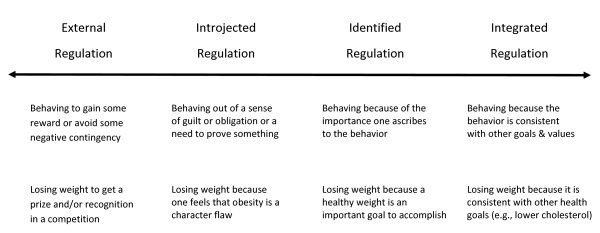
“Ryan and Connell [18] proposed a motivational continuum within SDT to better characterize the extent to which extrinsic motivations are relatively more or less internalized.”
BackgroundFurther Examining the American Dream: Differential Correlates of Intrinsic and Extrinsic Goals
Kasser, T., & Ryan, R. M. (1996) · Personality and Social Psychology Bulletin · doi:10.1177/0146167296223006 · Cited by 2,745 · cited 2×
“SDT has also addressed the role of values and aspirations in goal pursuits [29,30].”
BackgroundTreating Tobacco Use and Dependence
(2008) · Pediatrics · doi:10.1542/peds.2008-1627 · Cited by 2,697
Lepper, M. R., Greene, D., & Nisbett, R. E. (1973) · Journal of Personality and Social Psychology · doi:10.1037/h0035519 · Cited by 2,559 · cited 1×
“, [62,63]] have defined intrinsic motivation as engaging in an activity for its own sake, because it is inherently enjoyable, satisfying or challenging.”
BackgroundA dark side of the American dream: Correlates of financial success as a central life aspiration
Kasser, T., & Ryan, R. M. (1993) · Journal of Personality and Social Psychology · doi:10.1037/0022-3514.65.2.410 · Cited by 2,298 · cited 2×
“SDT has also addressed the role of values and aspirations in goal pursuits [29,30].”
BackgroundPsychological Needs and the Facilitation of Integrative Processes
Ryan, R. M. (1995) · Journal of Personality · doi:10.1111/j.1467-6494.1995.tb00501.x · Cited by 2,245 · cited 1×
“, [16,17]].”
Kushi, L. H., Byers, T., Doyle, C., Bandera, E. V., McCullough, M., Gansler, T., Andrews, K. S., Thun, M. J., & The American Cancer Society 2006 Nutrition and Physical Activity Guidelines Advisory Committee (2006) · CA A Cancer Journal for Clinicians · doi:10.3322/canjclin.56.5.254 · Cited by 1,901
Medical Professionalism in the New Millennium: A Physician Charter
Project of the ABIM Foundation, A. F. (2002) · Annals of Internal Medicine · doi:10.7326/0003-4819-136-3-200202050-00012 · Cited by 1,624
Motivational predictors of weight loss and weight-loss maintenance.
Williams, G. C., Grow, V. M., Freedman, Z. R., Ryan, R. M., & Deci, E. L. (1996) · Journal of Personality and Social Psychology · doi:10.1037/0022-3514.70.1.115 · Cited by 1,609 · cited 4×
“Typically perceived need support from health care practitioners has been measured with the Health Care Climate Questionnaire, (HCCQ [21-23]).”
BackgroundMethodInfluentialSelf-citationToward a theory of motivational interviewing
Miller, W. R., & Rose, G. S. (2009) · American Psychologist · doi:10.1037/a0016830 · Cited by 1,603 · cited 7×
“Miller and Rose [13] and others have placed strong emphasis on practitioners actively promoting and eliciting change talk.”
BackgroundInfluentialMotivational interviewing with problem drinkers
Miller, W. R. (1983) · Behavioural Psychotherapy · doi:10.1017/s0141347300006583 · Cited by 1,390 · cited 1×
“Miller [54] has described MI as being based on concepts such as causal attributions, cognitive dissonance, and self-efficacy-all of which are grounded in social psychological theories and various social cognitive approaches.”
BackgroundThe empirical exploration of intrinsic motivational processes
Deci, E. L., & Ryan, R. M. (1980) · Advances in Experimental Social Psychology · doi:10.1016/s0065-2601(08)60130-6 · Cited by 1,352
Supporting Autonomy to Motivate Patients With Diabetes for Glucose Control
Williams, G. C., Freedman, Z. R., & Deci, E. L. (1998) · Diabetes Care · doi:10.2337/diacare.21.10.1644 · Cited by 1,134
Self-citationWe can do better―improving the health of the American people
Schroeder, S. A. (2007) · New England Journal of Medicine · doi:10.1056/nejmsa073350 · Cited by 1,065 · cited 1×
“Self-Determination Theory: Its Application to Health Behavior and Complementarity with Motivational Interviewing An impressive body of research has provided convincing evidence for the pivotal role of behavior in well-being, and morbidity and mortality, as well as health care costs [1].”
BackgroundMedical professionalism in the new millennium: a physician charter
(2002) · Obstetrics & Gynecology · doi:10.1016/s0029-7844(02)02082-3 · Cited by 1,021
Motivational interviewing in health care: helping patients change behavior
(2008) · Choice Reviews Online · doi:10.5860/choice.45-6211 · Cited by 907
Intrinsic motivation, extrinsic reinforcement, and inequity.
Deci, E. L. (1972) · Journal of Personality and Social Psychology · doi:10.1037/h0032355 · Cited by 888 · cited 1×
“, [38-40]], and the first applications of SDT were geared toward understanding these processes in education [e.”
BackgroundThe Psychology of Self-Determination.
Crittenden, K. S., & Deci, E. L. (1982) · Contemporary Sociology · doi:10.2307/2067164 · Cited by 838
The Structure of Goal Contents Across 15 Cultures.
Grouzet, F. M. E., Kasser, T., Ahuvia, A., Dols, J. M. F., Kim, Y., Lau, S., Ryan, R. M., Saunders, S., Schmuck, P., & Sheldon, K. M. (2005) · Journal of Personality and Social Psychology · doi:10.1037/0022-3514.89.5.800 · Cited by 714
Motivational Interviewing and Self–Determination Theory
Markland, D., Ryan, R. M., Tobin, V. J., & Rollnick, S. (2005) · Journal of Social and Clinical Psychology · doi:10.1521/jscp.2005.24.6.811 · Cited by 690 · cited 3×
“, [5,6]], including the MI-SDT Satellite Meeting held in Sintra, following the 2009 Annual Meeting of the International Society for Behavioral Nutrition and Physical Activity.”
BackgroundPerceived self-efficacy in the exercise of personal agency
Bandura, A. (1990) · Journal of Applied Sport Psychology · doi:10.1080/10413209008406426 · Cited by 684
Ryan, R. M., Plant, R. W., & O'Malley, S. (1995) · Addictive Behaviors · doi:10.1016/0306-4603(94)00072-7 · Cited by 651 · cited 1×
“Just as MI arose as a behavior therapy for problem drinking, one of SDT’s first forays into health behavior application involved a study of individuals mandated to an 8-week alcohol treatment program [44].”
BackgroundAutonomous regulation and long-term medication adherence in adult outpatients.
Williams, G. C., Rodin, G. C., Ryan, R. M., Grolnick, W. S., & Deci, E. L. (1998) · Health Psychology · doi:10.1037//0278-6133.17.3.269 · Cited by 641
Self-citation(2008) · Research Bank (Australian Catholic University) · Cited by 632
Self-citationWilliams, G. C., McGregor, H. A., Sharp, D., Levesque, C., Kouides, R. W., Ryan, R. M., & Deci, E. L. (2006) · Health Psychology · doi:10.1037/0278-6133.25.1.91 · Cited by 582 · cited 1×
“process that occurs naturally in the course of behavior change, this study demonstrated that the process can be accelerated through a need-supportive, SDT-based intervention [12].”
BackgroundSelf-citationWeinstein, N., Przybylski, A. K., & Ryan, R. M. (2009) · Personality and Social Psychology Bulletin · doi:10.1177/0146167209341649 · Cited by 529 · cited 1×
“, the extent to which individuals begin to shift focus from placing stronger emphasis on extrinsic aspirations to intrinsic aspirations [33]) and the role of aspirations in the context of health behavior change interventions.”
BackgroundChiuve, S. E., McCullough, M. L., Sacks, F. M., & Rimm, E. B. (2006) · Circulation · doi:10.1161/circulationaha.106.621417 · Cited by 477
Motivational interviewing: Research, practice, and puzzles
Miller, W. R. (1996) · Addictive Behaviors · doi:10.1016/0306-4603(96)00044-5 · Cited by 465 · cited 1×
“This lack of an organizing theoretical framework precludes explanations for how and why MI can be effective [56-58], although recent efforts have been made toward the development of an emergent theory of MI [13].”
BackgroundExtrinsic Life Goals and Health‐Risk Behaviors in Adolescents1
Williams, G. C., Hedberg, V. A., Cox, E. M., & Deci, E. L. (2000) · Journal of Applied Social Psychology · doi:10.1111/j.1559-1816.2000.tb02466.x · Cited by 423 · cited 1×
“In contrast, placing stronger emphasis on intrinsic aspirations has been associated with a variety of positive outcomes including greater autonomy and vitality [29-32].”
BackgroundSelf-citationVansteenkiste, M., & Sheldon, K. M. (2006) · British Journal of Clinical Psychology · doi:10.1348/014466505x34192 · Cited by 410 · cited 4×
“, [5,6]], including the MI-SDT Satellite Meeting held in Sintra, following the 2009 Annual Meeting of the International Society for Behavioral Nutrition and Physical Activity.”
BackgroundInfluentialMediators of Weight Loss and Weight Loss Maintenance in Middle‐aged Women
Teixeira, P. J., Silva, M. N., Coutinho, S. R., Palmeira, A. L., Mata, J., Vieira, P. N., Carraça, E. V., Santos, T. C., & Sardinha, L. B. (2010) · Obesity · doi:10.1038/oby.2009.281 · Cited by 404 · cited 1×
“In a one- year, SDT-based intensive behavioral intervention for weight loss among overweight and obese women, weight loss was greater for women in the intervention compared to the control at the end of the intervention and at 1 year post-intervention [11,51].”
BackgroundMata, J., Silva, M. N., Vieira, P. N., Carraça, E. V., Andrade, A. M., Coutinho, S. R., Sardinha, L. B., & Teixeira, P. J. (2009) · Health Psychology · doi:10.1037/a0016764 · Cited by 390 · cited 1×
“Further evidence from this study has suggested a “motivational spill-over” whereby autonomous self-regulation for exercise predicted later autonomous self-regulation for healthy eating over one year [53].”
BackgroundPromoting Informed Choice: Transforming Health Care To Dispense Knowledge for Decision Making
Woolf, S. H., Chan, E. C. Y., Harris, R., Sheridan, S. L., Braddock, C. H., Kaplan, R. M., Krist, A., O'Connor, A. M., & Tunis, S. (2005) · Annals of Internal Medicine · doi:10.7326/0003-4819-143-4-200508160-00010 · Cited by 355 · cited 1×
“The concept of need support is one factor that makes SDT particularly amenable to health contexts as it is consistent with biomedical ethics [24], law and medicine [25], medical professionalism [26], and informed decision making [27,28].”
BackgroundFocused versus broad-spectrum behavior therapy for problem drinkers.
Miller, W. R., Taylor, C. A., & West, J. C. (1980) · Journal of Consulting and Clinical Psychology · doi:10.1037/0022-006x.48.5.590 · Cited by 329 · cited 1×
“, problem drinking [35]), SDT was developed in the context of basic social science (i.”
BackgroundMotivational Interviewing: moving from why to how with autonomy support
Resnicow, K., & McMaster, F. (2012) · International Journal of Behavioral Nutrition and Physical Activity · doi:10.1186/1479-5868-9-19 · Cited by 320 · cited 1×
“Although these efforts were spear-headed by two different groups and, to some extent, for two different purposes, today the parallels between SDT as a theory and MI as a style of clinical practice-as they apply to health behavior-are becoming increasingly clear [5-8].”
BackgroundControlling teaching strategies: Undermining children's self-determination and performance.
Flink, C., Boggiano, A. K., & Barrett, M. (1990) · Journal of Personality and Social Psychology · doi:10.1037//0022-3514.59.5.916 · Cited by 313 · cited 1×
“, [41-43]].”
Focused versus broad-spectrum behavior therapy for problem drinkers.
Miller, W. R., Taylor, C. A., & West, J. C. (1980) · Journal of Consulting and Clinical Psychology · doi:10.1037//0022-006x.48.5.590 · Cited by 293
Fortier, M. S., Sweet, S. N., O’Sullivan, T. L., & Williams, G. C. (2007) · Psychology of Sport and Exercise · doi:10.1016/j.psychsport.2006.10.006 · Cited by 271 · cited 1×
“Both autonomous self-regulation and perceived competence for physical activity predicted greater increases in physical activity behavior [9].”
BackgroundSelf-citationResults of the Healthy Body Healthy Spirit Trial.
Resnicow, K., Jackson, A., Blissett, D., Wang, T., McCarty, F., Rahotep, S., & Periasamy, S. (2005) · Health Psychology · doi:10.1037/0278-6133.24.4.339 · Cited by 230
Deci, E. L., Koestner, R., & Ryan, R. M. (1999) · Psychological Bulletin · doi:10.1037//0033-2909.125.6.692 · Cited by 211
Silva, M. N., Markland, D., Minderico, C. S., Vieira, P. N., Castro, M. M., Coutinho, S. R., Santos, T. C., Matos, M. G., Sardinha, L. B., & Teixeira, P. J. (2008) · BMC Public Health · doi:10.1186/1471-2458-8-234 · Cited by 207 · cited 1×
“In a one- year, SDT-based intensive behavioral intervention for weight loss among overweight and obese women, weight loss was greater for women in the intervention compared to the control at the end of the intervention and at 1 year post-intervention [11,51].”
Williams, G. C., Niemiec, C. P., Patrick, H., Ryan, R. M., & Deci, E. L. (2009) · Annals of Behavioral Medicine · doi:10.1007/s12160-009-9090-y · Cited by 201
Self-citationVansteenkiste, M., Williams, G. C., & Resnicow, K. (2012) · International Journal of Behavioral Nutrition and Physical Activity · doi:10.1186/1479-5868-9-23 · Cited by 174
Self-citationReducing the Health Risks of Diabetes
Williams, G. C., Patrick, H., Niemiec, C. P., Williams, L. K., Divine, G., Lafata, J. E., Heisler, M., Tunceli, K., & Pladevall, M. (2009) · The Diabetes Educator · doi:10.1177/0145721709333856 · Cited by 174 · cited 1×
“This model was replicated in a study of medication use in a large closed health care system among more than 2,000 patients with diabetes, and the motivation variables prospectively predicted medication use, glycemic control and healthier cholesterol [46].”
MethodSelf-citationSilva, M. N., Markland, D. A., Vieira, P. N., Coutinho, S. R., Carraça, E. V., Palmeira, A. L., Minderico, C. S., de Matos, M. G., Sardinha, L. B., & Teixeira, P. J. (2010) · Psychology of sport and exercise · doi:10.1016/j.psychsport.2010.06.011 · Cited by 172 · cited 1×
“The effect of the intervention on autonomous selfregulation was notable because it was large, it was sustained over one year, and it mediated the effect of the intervention on physical activity at 1 and 2 years [52].”
BackgroundA self-determination multiple risk intervention trial to improve smokers’ health
Williams, G. C., McGregor, H. A., Sharp, D. L., Kouides, R. W., Levesque, C. S., Ryan, R. M., & Deci, E. L. (2006) · Journal of General Internal Medicine · doi:10.1111/j.1525-1497.2006.00621.x · Cited by 161 · cited 1×
“The community care condition consisted of provision of current pamphlets on stopping smoking and encouragement to discuss smoking with one’s physician and was consistent with what was typically prescribed for tobacco cessation in the community at the time [49].”
MethodSelf-citationReview of Handbook of experiential psychotherapy.
Jackson, K., & Horvath, A. O. (1999) · Canadian Psychology / Psychologie canadienne · doi:10.1037/h0092504 · Cited by 136
Activating Patients for Smoking Cessation Through Physician Autonomy Support
Williams, G. C., & Deci, E. L. (2001) · Medical Care · doi:10.1097/00005650-200108000-00007 · Cited by 131 · cited 3×
“In one study, 316 patients who smoked were recruited to have a discussion with their physician about their smoking behavior [21].”
BackgroundMethodSelf-citationValås, H., & Søvik, N. (1994) · Learning and Instruction · doi:10.1016/0959-4752(93)90020-z · Cited by 128
Motivational Predictors of Change in Oral Health: An Experimental Test of Self-Determination Theory
Halvari, A. E. M., & Halvari, H. (2006) · Motivation and Emotion · doi:10.1007/s11031-006-9035-8 · Cited by 124 · cited 1×
“SDT-based interventions have also been developed for dental behaviors and oral health [10].”
BackgroundAdherence to HIV Medications: Utility of the Theory of Self-Determination
Kennedy, S. M., Goggin, K., & Nollen, N. L. (2004) · Cognitive Therapy and Research · doi:10.1023/b:cotr.0000045568.95219.e2 · Cited by 117 · cited 1×
“Perceived competence was a stronger and more proximal predictor of medication adherence [45].”
BackgroundPerceived self-efficacy in the exercise of personal agency
Bandura, A. (1990) · Revista Española de Pedagogía · doi:10.22550/2174-0909.1953 · Cited by 110
Draycott, S., & Dabbs, A. (1998) · British Journal of Clinical Psychology · doi:10.1111/j.2044-8260.1998.tb01390.x · Cited by 104 · cited 1×
“However, MI has been criticized for being largely atheoretical [55].”
BackgroundRubak, S., Sandbæk, A., Lauritzen, T., Borch-Johnsen, K., & Christensen, B. (2009) · Scandinavian Journal of Primary Health Care · doi:10.1080/02813430903072876 · Cited by 104
Psychosocial mediation of fruit and vegetable consumption in the body and soul effectiveness trial.
Fuemmeler, B. F., Mâsse, L. C., Yaroch, A. L., Resnicow, K., Campbell, M. K., Carr, C., Wang, T., & Williams, A. (2006) · Health Psychology · doi:10.1037/0278-6133.25.4.474 · Cited by 101
A Group Motivational Treatment for Chemical Dependency
Foote, J. P., DeLuca, A., Magura, S., Warner, A., Grand, A., Rosenblum, A., & Stahl, S. (1999) · Journal of Substance Abuse Treatment · doi:10.1016/s0740-5472(99)00003-3 · Cited by 96 · cited 1×
“, [5,6,67,68]] that there is now a critical mass of researchers engaged in dialogue about the similarities and distinctions between SDT and MI.”
BackgroundThe Power of Prevention and What It Requires
Woolf, S. H. (2008) · JAMA · doi:10.1001/jama.299.20.2437 · Cited by 91 · cited 1×
“Indeed, some estimates indicate that nearly 3/4 of all health care costs are attributable to chronic diseases resulting from health behaviors such as tobacco use and exposure, poor diet, and physical inactivity [2].”
BackgroundPartnerships in healthcare : transforming relational process
Suchman, A. L., Walker, P. H., & Botelho, R. J. (1998) · Medical Entomology and Zoology · Cited by 79
Development of a self‐report measure of unconditional positive self‐regard
Patterson, T. G., & Joseph, S. (2006) · Psychology and Psychotherapy Theory Research and Practice · doi:10.1348/147608305x89414 · Cited by 72 · cited 1×
“, unconditional positive regard, and patient centeredness [59,60]) and thus many of the underlying assumptions of both approaches are similar.”
ResultNiemiec, C. P., Ryan, R. M., Deci, E. L., & Williams, G. C. (2009) · Patient Education and Counseling · doi:10.1016/j.pec.2008.08.015 · Cited by 60
Self-citationMotivational Interviewing: III. On the Ethics of Motivational Intervention
Miller, W. R. (1994) · Behavioural and Cognitive Psychotherapy · doi:10.1017/s1352465800011905 · Cited by 51 · cited 1×
“This lack of an organizing theoretical framework precludes explanations for how and why MI can be effective [56-58], although recent efforts have been made toward the development of an emergent theory of MI [13].”
BackgroundMihaly Csikszentmihalyi, Finding Flow. The Psychology of Engagement with Everyday Life
Vittersø, J. (2000) · Journal of Happiness Studies · doi:10.1023/a:1010032312178 · Cited by 32
Koh-Knox, C. P. (2009) · American Journal of Pharmaceutical Education · Cited by 23
Informed Decision Making in Outpatient Practice: Time to Get Back to Basics
Braddock III, C. H., Edwards, K. A., Hasenberg, N. M., Laidley, T. L., & Levinson, W. (1999) · JAMA · doi:10.1001/jama.282.24.2313 · Cited by 19 · cited 1×
“The concept of need support is one factor that makes SDT particularly amenable to health contexts as it is consistent with biomedical ethics [24], law and medicine [25], medical professionalism [26], and informed decision making [27,28].”
Background
Research works printed but not linked: 4
- Vansteenkiste M & Williams GC Self-determination theory and motivational interviewing as examples of development from a meta-theory (top-down) vs. from clinical experience up (bottom-up): Implications for theory development, research and clinical practice and interventions International Journal of Behavioral Nutrition and Physical Activity 2011 this issue PMC3315422 22385828
- Deci EL Koestner R Ryan RM The undermining effect is a reality after all: Extrinsic rewards, task interest, and self-determination Psychological Bulletin 1999 125 692 700 10589297
- Miller WR Rollnick S Motivational Interviewing 2002 2 New York: The Guilford Press
- Ginsburg JI Mann RE Rotgers F Weekes JR Miller WR, Rollnick S Motivational interviewing with criminal justice populations Motivational Interviewing 2002 New York: The Guilford Press 333 346
Cited by
Gamification for health and wellbeing: A systematic review of the literature
Johnson, D., Deterding, S., Kuhn, K.-A., Staneva, A., Stoyanov, S., & Hides, L. (2016) · Internet Interventions · doi:10.1016/j.invent.2016.10.002 · Cited by 1,237
Samdal, G. B., Eide, G. E., Barth, T., Williams, G., & Meland, E. (2017) · International Journal of Behavioral Nutrition and Physical Activity · doi:10.1186/s12966-017-0494-y · Cited by 788
“SDT based interventions often use MI techniques in counselling and SDT can help explain why MI works [20, 21].”
MethodSelf-citationGillison, F. B., Rouse, P., Standage, M., Sebire, S. J., & Ryan, R. M. (2019) · Health Psychology Review · doi:10.1080/17437199.2018.1534071 · Cited by 543
“The recent interest in using motivational interviewing as a means to provide need support (Markland et al., 2005; Patrick & Williams, 2012; Vansteenkiste & Sheldon, 2006) illustrates that there is demand for a defined, testable and trainable approach with which to deliver interventions that promote…”
BackgroundTeixeira, P. J., Marques, M. M., Silva, M. N., Brunet, J., Duda, J. L., Haerens, L., La Guardia, J., Lindwall, M., Lonsdale, C., Markland, D., et al. (2020) · Motivation Science · doi:10.1037/mot0000172 · Cited by 528
Self-citationMotivation, self-determination, and long-term weight control
Teixeira, P. J., Silva, M. N., Mata, J., Palmeira, A. L., & Markland, D. (2012) · International Journal of Behavioral Nutrition and Physical Activity · doi:10.1186/1479-5868-9-22 · Cited by 422
Metadata
- Authors
- Patrick, H., & Williams, G. C.
- Affiliations
- National Institutes of Health (US)
- University of Rochester Medicine (US)
- Corresponding author
- Patrick, Heather
- Venue
- International Journal of Behavioral Nutrition and Physical Activity
- Published
- 2012
- Volume
- 9
- Issue
- 1
- Pages
- 18
- ISSN
- 1479-5868 (ISSN-L)
- PMC
- PMC3323356
- OpenAlex
- W2112247480
- Cited by
- 481
- References
- 75
- Citations by year
- 2026: 35 · 2025: 38 · 2024: 46 · 2023: 34 · 2022: 36 · 2021: 46 · 2020: 40 · 2019: 39 · 2018: 31 · 2017: 32 · 2016: 32 · 2015: 28 · 2014: 22 · 2013: 12 · 2012: 8
- FWCI
- 3.20
- Type
- journal article
- Language
- en
- Open access
- gold
- doi.org
- Licence
- cc-by
- Locations
- International Journal of Behavioral Nutrition and Physical Activity (publishedVersion, cc-by)
- PubMed Central (publishedVersion, cc-by)
- PubMed (publishedVersion)
- DOAJ (DOAJ: Directory of Open Access Journals) (submittedVersion, cc-by-sa)
- Topics
- Social Sciences › Psychology › Social Psychology › Motivation and Self-Concept in Sports
- Social Sciences › Psychology › Applied Psychology › Behavioral Health and Interventions
- Health Sciences › Medicine › Epidemiology › Substance Abuse Treatment and Outcomes
- Keywords
- self-determination theory, motivational interviewing, health behavior change, health behavior interventions, theoretical integration, motivation, nutrition, physical activity, smoking abstinence
- MeSH terms
- Behavior Therapy, Diet, Health Promotion, Humans, Interviews as Topic, Models, Psychological, Motivation, Health Behavior, Exercise, Smoking Cessation, Personal Autonomy
About these checks
Registry, retraction, Cites and statistics results are computed, not judged, with one exception: a printed reference that no index lists is read once by a model before it counts as a citation error. Claims are extracted by a model and kept only when their quote appears verbatim in the text; each cited source is then checked, with a model’s help, for whether it says what the claim relies on. Those verdicts can be wrong — read the claim’s quote and the cited source before relying on one.
Statistics and arithmetic are recomputed, not judged.
Confidence bands are shown only for fields calibrated on our annotated test set. None is calibrated yet, so no band is shown.
What counts as a claim ›How we measure confidence ›How we check this ›
Are you an author, or do you see a problem with this page? Request a review
Data sources
Bibliographic data: Semantic Scholar, OpenAlex, Crossref.
Contains information from the Semantic Scholar Academic Graph Datasets, made available under the ODC Attribution License (ODC-BY 1.0).
Semantic Scholar’s data is described in: Kinney, R., et al. (2023). The Semantic Scholar Open Data Platform. arXiv:2301.10140.
