

Creatine supplementation enhances muscle force recovery after eccentrically-induced muscle damage in healthy individuals
Open accessThe DOI matches its Crossref record; 39 of the 39 references it cites were found in a registry or an index.
Abstract
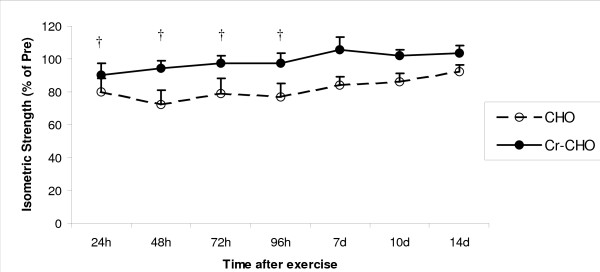
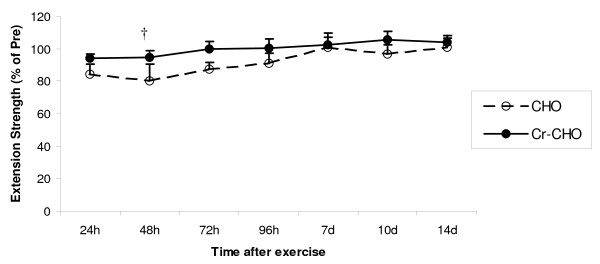
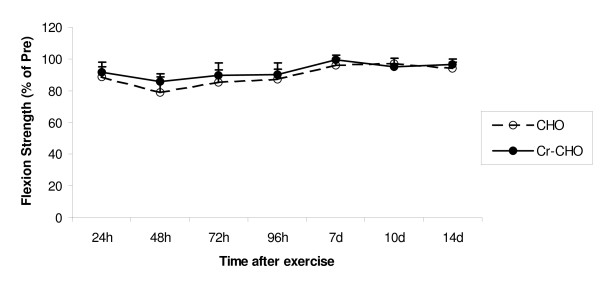
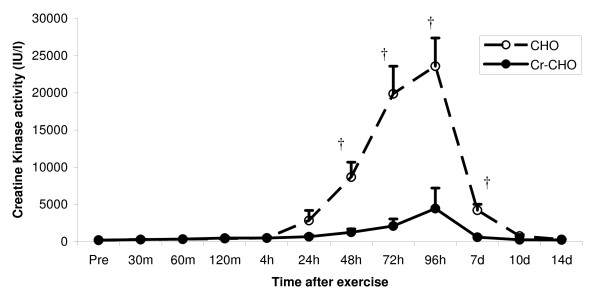
BACKGROUND: Eccentric exercise-induced damage leads to reductions in muscle force, increased soreness, and impaired muscle function. Creatine monohydrate's (Cr) ergogenic potential is well established; however few studies have directly examined the effects of Cr supplementation on recovery after damage. We examined the effects of Cr supplementation on muscle proteins and force recovery after eccentrically-induced muscle damage in healthy individuals. METHODS: Fourteen untrained male participants (22.1 +/- 2.3 yrs, 173 +/- 7.7 cm, 76.2 +/- 9.3 kg) were randomly separated into 2 supplement groups: i) Cr and carbohydrate (Cr-CHO; n = 7); or ii) carbohydrate (CHO; n = 7). Participants consumed their supplement for a period of 5 days prior to, and 14 days following a resistance exercise session. Participants performed 4 sets of 10 eccentric-only repetitions at 120% of their maximum concentric 1-RM on the leg press, leg extension and leg flexion exercise machine. Plasma creatine kinase (CK) and lactate dehydrogenase (LDH) activity were assessed as relevant blood markers of muscle damage. Muscle strength was examined by voluntary isokinetic knee extension using a Cybex dynamometer. Data were analyzed using repeated measures ANOVA with an alpha of 0.05. RESULTS: The Cr-supplemented group had significantly greater isokinetic (10% higher) and isometric (21% higher) knee extension strength during recovery from exercise-induced muscle damage. Furthermore, plasma CK activity was significantly lower (by an average of 84%) after 48 hrs (P < 0.01), 72 hrs (P < 0.001), 96 hrs (P < 0.0001), and 7 days (P < 0.001) recovery in the Cr-supplemented group. CONCLUSION: The major finding of this investigation was a significant improvement in the rate of recovery of knee extensor muscle function after Cr supplementation following injury.
Overview
The claims and statistics of this paper haven’t been checked yet.
Free: it reads the open-access text and checks the first 5 claims that cite a source we can check. Create a free account to check every claim.
Integrity signals
Registry
Cites
Statistics
Figures
Verification
Claims the paper makes
The claims and statistics of this paper haven’t been checked yet.
Free: it reads the open-access text and checks the first 5 claims that cite a source we can check. Create a free account to check every claim.
Claims other papers make about this one
Each is checked against this paper’s own text: does it say what the citing paper says it does?
The cited source says what the claim attributes to it.
In the citing paper
“It may also explain reports that creatine supplementation attenuates inflammatory and/or muscle damage in response to intense exercise [274,295,296,297].”
From Creatine in health and disease (2021) · cites this paper as [274]
The cited source says what the claim attributes to it.
In the citing paper
“Cooke and colleagues [126] reported that creatine supplementation during recovery from exercise-induced muscle damage promoted less muscle enzyme efflux and better maintenance of isokinetic muscle performance.”
From Common questions and misconceptions about creatine supplementation: what does the scientific evidence really show? (2021) · cites this paper as [126]
In the citing paper
“Cooke et al. [100] reported greater isokinetic (10% higher) and isometric (21% higher) knee extension strength in a group that supplemented with creatine (0.3 g/kg body weight × 5 days) following a bout of eccentric-only repetitions using 120% of the subjects’ 1RM on leg press, leg extension, and leg flexion exercise machines.”
From Creatine for exercise and sports performance, with recovery considerations for healthy populations (2021) · cites this paper as [100]
In the citing paper
“The authors noted attenuated creatine kinase levels (a common marker of muscle damage) at 48, 72, and 96 h, and 7 days, following a bout of eccentric exercise in the creatine supplementation group.”
From Creatine for exercise and sports performance, with recovery considerations for healthy populations (2021) · cites this paper as [100]
In the citing paper
“creatine supplementation may reduce circulating levels of muscle damage markers and help to more quickly restore the ability of the damaged muscle to produce force”
From Creatine for exercise and sports performance, with recovery considerations for healthy populations (2021) · cites this paper as [100]
1 more claim about this paper
Create a free account to see every claim other papers make about this one.
Self-check
Percentages, sums and reported differences re-computed from the paper’s own numbers.
The self-check needs the paper’s full text.
Citations
Cites
Essentials of Strength Training and Conditioning
Baechle, T. R., & Earle, R. (1994) · Cited by 1,535
Essentials of Strength Training and Conditioning
Phillips, N. (1997) · Physiotherapy · doi:10.1016/s0031-9406(05)66120-2 · Cited by 1,077
Skeletal muscle enzymes and fiber composition in male and female track athletes
Costill, D. L., Daniels, J., Evans, W., Fink, W., Krahenbuhl, G., & Saltin, B. (1976) · Journal of Applied Physiology · doi:10.1152/jappl.1976.40.2.149 · Cited by 699 · cited 1×
“Ltd, China) according to the method of [19].”
MethodNeuromuscular Function After Exercise-Induced Muscle Damage: Theoretical and Applied Implications
Byrne, C., Twist, C., & Eston, R. (2004) · Sports Medicine · doi:10.2165/00007256-200434010-00005 · Cited by 514 · cited 1×
“knee extensor/flexors muscles groups) and/or the protocol utilized to induce muscle damage [7,17,20].”
MethodEccentric exercise‐induced injuries to contractile and cytoskeletal muscle fibre components
Fridén, J., & Lieber, R. L. (2001) · Acta Physiologica Scandinavica · doi:10.1046/j.1365-201x.2001.00834.x · Cited by 419 · cited 1×
“The extent of, and recovery from, damage was evaluated by the following established, indirect markers of exercise-induced muscle damage; knee extension/flexion force development (MVC), and plasma CK and LDH activity [9,10].”
MethodOlsen, S., Aagaard, P., Kadi, F., Tufekovic, G., Verney, J., Olesen, J. L., Suetta, C., & Kjær, M. (2006) · The Journal of Physiology · doi:10.1113/jphysiol.2006.107359 · Cited by 319 · cited 2×
“(2006) supported such a suggestion by recently demonstrating for the first time in human skeletal muscle fibres that Cr supplementation amplifies the training-induced increase in satellite cell number and myonuclei concentration [23], and thus potentially, muscle regeneration.”
BackgroundCreatine Supplementation and Exercise Performance: Recent Findings
Bemben, M. G., & Lamont, H. S. (2005) · Sports Medicine · doi:10.2165/00007256-200535020-00002 · Cited by 270
Effects of creatine supplementation on performance and training adaptations
Kreider, R. B. (2003) · Molecular and Cellular Biochemistry · doi:10.1023/a:1022465203458 · Cited by 264 · cited 1×
“This procedure has been reported to consistently increase muscle Cr concentrations [11].”
BackgroundMaximum Strength-Power-Performance Relationships in Collegiate Throwers
STONE, M. H., SANBORN, K., OʼBRYANT, H. S., HARTMAN, M., STONE, M. E., PROULX, C., WARD, B., & HRUBY, J. (2003) · Journal of Strength and Conditioning Research · doi:10.1519/00124278-200311000-00019 · Cited by 254
Parise, G., Mihic, S., MacLennan, D., Yarasheski, K. E., & Tarnopolsky, M. A. (2001) · Journal of Applied Physiology · doi:10.1152/jappl.2001.91.3.1041 · Cited by 236 · cited 1×
“Although Cr supplementation was continued following the exercise bout in the second study by Rawson and colleagues [6], it is possible that the resistance exercise session, which was designed to be hypoxic in nature, as opposed to high force, eccentric exercise, may not have elicited enough muscle damage to unmask the…”
Background
Cited by
Kreider, R. B., Kalman, D. S., Antonio, J., Ziegenfuss, T. N., Wildman, R., Collins, R., Candow, D. G., Kleiner, S. M., Almada, A. L., & Lopez, H. L. (2017) · Journal of the International Society of Sports Nutrition · doi:10.1186/s12970-017-0173-z · Cited by 1,057
“For example, Cooke and associates [105] evaluated the effects of creatine supplementation on muscle force recovery and muscle damage following intense exercise.”
BackgroundLengthening our perspective: Morphological, cellular, and molecular responses to eccentric exercise
Hyldahl, R. D., & Hubal, M. J. (2014) · Muscle & Nerve · doi:10.1002/mus.24077 · Cited by 346
Antonio, J., Candow, D. G., Forbes, S. C., Gualano, B., Jagim, A. R., Kreider, R. B., Rawson, E. S., Smith-Ryan, A. E., VanDusseldorp, T. A., Willoughby, D. S., et al. (2021) · Journal of the International Society of Sports Nutrition · doi:10.1186/s12970-021-00412-w · Cited by 345
“For example, Cooke and colleagues [126] Antonio et al.”
Creatine supplementation with specific view to exercise/sports performance: An update
Cooper, R., Naclerio, F., Allgrove, J., & Jimenez, A. (2012) · Journal of the International Society of Sports Nutrition · doi:10.1186/1550-2783-9-33 · Cited by 306
Creatine in health and disease
Kreider, R. B., & Stout, J. R. (2021) · Nutrients · doi:10.3390/nu13020447 · Cited by 227
“Cooke and assistants [274] reported that creatine supplementation prior to (0.”
BackgroundAthletes’ nutritional demands: a narrative review of nutritional requirements
Amawi, A., AlKasasbeh, W., Jaradat, M., Almasri, A., Alobaidi, S., Hammad, A. A., Bishtawi, T., Fataftah, B., Turk, N., Saoud, H. A., et al. (2024) · Frontiers in Nutrition · doi:10.3389/fnut.2023.1331854 · Cited by 154
Exercise-induced muscle damage: mechanism, assessment and nutritional factors to accelerate recovery
Markus, I., Constantini, K., Hoffman, J. R., Bartolomei, S., & Gepner, Y. (2021) · European Journal of Applied Physiology · doi:10.1007/s00421-020-04566-4 · Cited by 180
Creatine for exercise and sports performance, with recovery considerations for healthy populations
Wax, B., Kerksick, C. M., Jagim, A. R., Mayo, J. J., Lyons, B. C., & Kreider, R. B. (2021) · Nutrients · doi:10.3390/nu13061915 · Cited by 182
“Cooke and colleagues [100] have reported that creatine supplementation may reduce circulating levels of muscle damage markers and help to more quickly restore the ability of the damaged muscle to produce force, whereas other studies have also highlighted a distinct myoprotective role for creatine [101].”
BackgroundHarty, P. S., Cottet, M. L., Malloy, J. K., & Kerksick, C. M. (2019) · Sports Medicine - Open · doi:10.1186/s40798-018-0176-6 · Cited by 160
Heaton, L. E., Davis, J. K., Rawson, E. S., Nuccio, R. P., Witard, O. C., Stein, K. W., Baar, K., Carter, J. M., & Baker, L. B. (2017) · Sports Medicine · doi:10.1007/s40279-017-0759-2 · Cited by 158
“[166] found reduced post-exercise CK and lactate dehydrogenase, and increased strength recovery in creatine-supplemented subjects following eccentric-biased”
BackgroundFatouros, I., & Jamurtas, A. (2016) · Journal of Inflammation Research · doi:10.2147/jir.s114635 · Cited by 135
“, anti-inflammatory agents, antioxidants, and creatine supplementation).(7,84,85) Since athletes have a heavy”
Perspectives on Exertional Rhabdomyolysis
Rawson, E. S., Clarkson, P. M., & Tarnopolsky, M. A. (2017) · Sports Medicine · doi:10.1007/s40279-017-0689-z · Cited by 133
“The effects of creatine supplementation on exercise-induced muscle damage following high-force eccentric exercise have been reported by four groups [46, 112, 137, 138].”
BackgroundGnanasekhar, J. D., & Al-Duwairi, Y. (1998) · PubMed · Cited by 129
Bongiovanni, T., Genovesi, F., Nemmer, M., Carling, C., Alberti, G., & Howatson, G. (2020) · European Journal of Applied Physiology · doi:10.1007/s00421-020-04432-3 · Cited by 113
Cooke, M. B., Rybalka, E., Stathis, C. G., Cribb, P. J., & Hayes, A. (2010) · Journal of the International Society of Sports Nutrition · doi:10.1186/1550-2783-7-30 · Cited by 101
“Participants fulfilled the inclusion criteria as described in our previous study [15].”
MethodResultInfluentialSelf-citationBassit, R. A., Pinheiro, C. H. D. J., Vitzel, K. F., Sproesser, A. J., Silveira, L. R., & Curi, R. (2009) · European Journal of Applied Physiology · doi:10.1007/s00421-009-1305-1 · Cited by 99
“Non-trained participants supplemented with creatine for a period of 5 days prior to and 14 days following one bout of eccentric exercise have also shown a significant improvement in the rate of recovery of isokinetic force of knee extensors (Cooke et al. 2009).”
BackgroundAntonio, J., & Ciccone, V. (2013) · Journal of the International Society of Sports Nutrition · doi:10.1186/1550-2783-10-36 · Cited by 83
“Introduction Chronic supplementation with creatine has been shown to increase lean body mass and enhance exercise performance [1-10].”
BackgroundInternational society of sports nutrition position stand: tactical athlete nutrition
Gonzalez, D. E., McAllister, M. J., Waldman, H. S., Ferrando, A. A., Joyce, J., Barringer, N., Dawes, J. J., Kieffer, A. J., Harvey, T. M., Kerksick, C. M., et al. (2022) · Journal of the International Society of Sports Nutrition · doi:10.1080/15502783.2022.2086017 · Cited by 89
“[118] reported that creatine supplementation might help to improve recovery and mitigate damage to muscle tissue after challenging stressful bouts of exercise.”
“Nutraceuticals” in relation to human skeletal muscle and exercise
Deane, C. S., Wilkinson, D. J., Phillips, B. E., Smith, K., Etheridge, T., & Atherton, P. J. (2017) · American Journal of Physiology-Endocrinology and Metabolism · doi:10.1152/ajpendo.00230.2016 · Cited by 73
“During high energy demands, the phosphate of phosphocreatine plus free ADP is used for ATP synthesis (126).”
BackgroundInfluentialNutritional Compounds to Improve Post-Exercise Recovery
O’Connor, E. B., Mündel, T., & Barnes, M. J. (2022) · Nutrients · doi:10.3390/nu14235069 · Cited by 85
“Subsequently, Cooke [139] found that the ingestion of Cr (0.”
BackgroundInfluentialCreatine Supplementation: An Update
Hall, M., Manetta, E., & Tupper, K. (2021) · Current Sports Medicine Reports · doi:10.1249/jsr.0000000000000863 · Cited by 80
Kirby, T. J., Triplett, N. T., Haines, T. L., Skinner, J. W., Fairbrother, K. R., & McBride, J. M. (2011) · Amino Acids · doi:10.1007/s00726-011-0928-9 · Cited by 80
“The resistance exercise protocol was modified from damage protocols previously utilized by Miyama and Nosaka (2004) and Cooke et al. (2009).”
Matsumura, M. D., Zavorsky, G. S., & Smoliga, J. M. (2015) · Phytotherapy Research · doi:10.1002/ptr.5328 · Cited by 53
“Thus, these antiinflammatory actions that may help reduce inflammation, such as the exercise-induced muscle damage, are recognized as a product of participating in unfamiliar or strenuous physical activity (Cooke et al., 2009).”
BackgroundThe Application of Creatine Supplementation in Medical Rehabilitation
Harmon, K. K., Stout, J. R., Fukuda, D. H., Pabian, P. S., Rawson, E. S., & Stock, M. S. (2021) · Nutrients · doi:10.3390/nu13061825 · Cited by 46
Ormsbee, M. J., Mandler, W. K., Thomas, D. D., Ward, E. G., Kinsey, A. W., Simonavice, E., Panton, L. B., & Kim, J.-S. (2012) · Journal of the International Society of Sports Nutrition · doi:10.1186/1550-2783-9-49 · Cited by 54
KONES, R. J. (2010) · Nutrition in Clinical Practice · doi:10.1177/0884533610373932 · Cited by 61
Massage Therapy Restores Peripheral Vascular Function After Exertion
Franklin, N. C., Ali, M. M., Robinson, A. T., Norkeviciute, E., & Phillips, S. A. (2014) · Archives of Physical Medicine and Rehabilitation · doi:10.1016/j.apmr.2014.02.007 · Cited by 54
“Procedures for the eccentric exercise bout have been previously described.(22,23) Initially, subjects performed 1 to 2 sets of 8 to 12 repetitions using a weight of their choice in order to become familiarized with the leg press machine.”
MethodThe Top 5 Can’t-Miss Sport Supplements
António, J., Pereira, F., Curtis, J., Rojas, J., & Evans, C. (2024) · Nutrients · doi:10.3390/nu16193247 · Cited by 53
“Creatine supplementation has been reported to possibly reduce muscle damage and/or amplify recovery from intense bouts of exercise [60].”
BackgroundErgogenic Aids and Supplements
Porrini, M., & Bo’, C. D. (2016) · Frontiers of hormone research · doi:10.1159/000445176 · Cited by 52
Fernández-Landa, J., Calleja-González, J., León-Guereño, P., Caballero-García, A., Córdova, A., & Mielgo-Ayuso, J. (2019) · Nutrients · doi:10.3390/nu11102528 · Cited by 40
“CrM is one of the most popular performance supplements used by athletes that may promote aerobic [3,4] and anaerobic performance [5], strength [6–9], body composition [6,8,10], reduced markers of exercise induced muscle damage, and anabolic-catabolic hormones [11,12].”
BackgroundD’Antona, G., Nabavi, S. M., Micheletti, P., Di Lorenzo, A., Aquilani, R., Nisoli, E., Rondanelli, M., & Daglia, M. (2014) · BioMed Research International · doi:10.1155/2014/613890 · Cited by 41
“While some studies on animal models and humans show that creatine supplementation does not decrease muscle damage or enhance recovery after high intensity eccentric contractions [31, 32], others have shown contradicting results as a greater isokinetic and isometric strength and a quicker amelioration of plasma creatin…”
Nutritional Considerations for the Vegan Athlete
West, S., Monteyne, A. J., van der Heijden, I., Stephens, F. B., & Wall, B. T. (2023) · Advances in Nutrition · doi:10.1016/j.advnut.2023.04.012 · Cited by 42
The Evolving Applications of Creatine Supplementation: Could Creatine Improve Vascular Health?
Clarke, H., Kim, D.-H., Meza, C. A., Ormsbee, M. J., & Hickner, R. C. (2020) · Nutrients · doi:10.3390/nu12092834 · Cited by 41
“Considering the extensive body of literature on the efficacy of creatine supplementation, there is evidence that creatine supplementation can enhance many exercise-related variables such as exercise capacity [35–38], recovery [5,39,40], resistance to fatigue [41–43], and lean body mass [5,44], in both young and older…”
BackgroundKaviani, M., Abassi, A., & Chilibeck, P. D. (2019) · The Journal of Sports Medicine and Physical Fitness · doi:10.23736/s0022-4707.18.08406-2 · Cited by 43
Role of creatine supplementation in exercise-induced muscle damage: A mini review
Kim, J., Lee, J., Kim, S., Yoon, D., Kim, J., & Sung, D. J. (2015) · Journal of Exercise Rehabilitation · doi:10.12965/jer.150237 · Cited by 35
“Creatine assists in maintaining the sarcoplasmic reticulum calcium pump function by phosphorylating ADP to ATP, which decreases cytosolic calcium levels (Cooke et al., 2009; Korge et al., 1993).”
BackgroundJiaming, Y., & Rahimi, M. H. (2021) · Journal of Food Biochemistry · doi:10.1111/jfbc.13916 · Cited by 39
Northeast, B., & Clifford, T. (2021) · International Journal of Sport Nutrition and Exercise Metabolism · doi:10.1123/ijsnem.2020-0282 · Cited by 36
Effect of Aerobic Recovery Intensity on Delayed-Onset Muscle Soreness and Strength
Tufano, J. J., Brown, L. E., Coburn, J. W., Tsang, K. K. W., Cazas, V. L., & LaPorta, J. W. (2012) · The Journal of Strength and Conditioning Research · doi:10.1519/jsc.0b013e3182651c06 · Cited by 39
“Some examples are nutritional interventions (6,8,31,37), therapeutic modalities such as ice (13), heat (3,5,13,17,30), and massage (15,19,38), electrical stimulation (5), anti-inflammatory drugs (10,11,13), and stretching (13).”
BackgroundDoma, K., Ramachandran, A. K., Boullosa, D. A., & Connor, J. D. (2022) · Sports Medicine · doi:10.1007/s40279-022-01640-z · Cited by 36
“[36] 1 2 1 0 0 0 1 1 1 0 1 1 1 1 1 12/16 Good Veggiv [27] 1 1 1 0 1 1 1 0 0 0 1 1 1 1 1 11/16 Good Wang et al.”
McKinnon, N. B., Graham, M., & Tiidus, P. M. (2012) · Europe PMC (PubMed Central) · Cited by 37
Komine, S., Miura, I., Miyashita, N., Oh, S., Tokinoya, K., Shoda, J., & Ohmori, H. (2021) · Physiological Reports · doi:10.14814/phy2.15130 · Cited by 32
“Furthermore, DOMS is associated with muscle damage, and when muscle damage occurs, CK, LDH, ALD, and AST, which are enzymes present in muscle cells, are released into the blood (Bassit et al., 2010; Clarkson et al., 1992; Cooke et al., 2009; Nosaka et al., 2002a, 2002b, 2005).”
BackgroundEffect of N‐acetylcysteine on markers of skeletal muscle injury after fatiguing contractile activity
Pinheiro, C. H., Vitzel, K. F., & Curi, R. (2012) · Scandinavian Journal of Medicine and Science in Sports · doi:10.1111/j.1600-0838.2010.01143.x · Cited by 37
“Several strategies using nutritional supplements such as creatine monohydrate (Cooke et al., 2009), milk-based protein-CHO (Cockburn et al., 2008), coenzyme Q10 (Kon et al., 2007, 2008), flavonoids, L-carnitine, astaxanthin, b-hydroxy-b-methylbutyrate, essential fatty acids, branched-chain amino…”
MethodOral Creatine Supplementation Augments the Repeated Bout Effect
Veggi, K. F. T., Machado, M., Koch, A. J., Santana, S. C., Oliveira, S. S., & Stec, M. J. (2013) · International Journal of Sport Nutrition and Exercise Metabolism · doi:10.1123/ijsnem.23.4.378 · Cited by 27
“…conflicting evidence on whether creatine supplementation enhances recovery from acute muscle damage (Bassit et al., 2008; Bassit et al., 2010; Cooke et al., 2009; Machado et al., 2009; Rahimi, 2011; Rawson et al., 2007; Rawson et al., 2001; Rosene et al., 2009; Santos et al., 2004; Warren et…”
BackgroundInfluentialFernández-Landa, J., Fernández‐Lázaro, D., Calleja-González, J., Caballero-García, A., Córdova, A., León-Guereño, P., & Mielgo‐Ayuso, J. (2020) · Biomolecules · doi:10.3390/biom10010140 · Cited by 29
“Group T1 T2 P (T × G) η2p AST (UI/L) PLG 17.83 ± 2.79 22.00 ± 1.55* 0.648 0.077 CrMG 22.33 ± 9.65 23.50 ± 8.89 HMBG 18.00 ± 3.29 19.00 ± 6.96 CrM-HMBG 21.33 ± 4.68 24.67 ± 7.30 CK (UI/L) PLG 190.50 ± 94.79 216.83 ± 97.35 0.641 0.079 CrMG 277.00 ± 171.40 256.33 ± 130.38 HMBG 147.50 ± 63.91 243.33 ± 286.42 CrM-HMBG 201.…”
BackgroundInfluentialHo, C.-S., Lee, M., Chang, C.-Y., Chen, W.-C., & Huang, W.-C. (2020) · The Chinese Journal of Physiology · doi:10.4103/cjp.cjp_33_19 · Cited by 17
“indicated that a nutritional strategy (creatine supplementation) may enhance muscle force recovery after eccentrically-induced muscle damage.[26] In the current study, we found that a negative ion patch applied immediately after the overload eccentric contraction could significantly maintain muscular fitness by amelio…”
Background(2018) · Europe PMC (PubMed Central) · Cited by 16
Ormsbee, M. J., Ward, E. G., Bach, C. W., Arciero, P. J., McKune, A. J., & Panton, L. B. (2015) · Journal of the International Society of Sports Nutrition · doi:10.1186/s12970-014-0063-6 · Cited by 16
Yamaguchi, S., Inami, T., Ishida, H., Morito, A., Yamada, S., Nagata, N., & Murayama, M. (2024) · Nutrients · doi:10.3390/nu16060896 · Cited by 15
Yamaguchi, S., Inami, T., Nishioka, T., Morito, A., Ishiyama, K., & Murayama, M. (2025) · Nutrients · doi:10.3390/nu17111772 · Cited by 18
“Previous studies have widely reported the effects of CrM on muscle strength enhancement and athletic performance [23,24], and our previous research [6] demonstrated that CrM supplementation promotes the recovery of maximum muscle strength and ROM following EIMD.”
Creatine in Skeletal Muscle Physiology
Negro, M., Avanzato, I., & D’Antona, G. (2018) · Elsevier eBooks · doi:10.1016/b978-0-12-812491-8.00008-4 · Cited by 15
Elstad, K., Malone, C., Luedke, J. A., Jaime, S. J., Dobbs, W. C., Almonroeder, T. G., Kerksick, C. M., Markert, A., & Jagim, A. R. (2023) · Nutrients · doi:10.3390/nu15245134 · Cited by 14
“In addition, creatine supplementation has been shown to enhance recovery time in between bouts of activity [25] and has also been proposed to aid in thermoregulation during physical activity in hot and humid environmental conditions [26], which may confer additional benefits to firefighters during fire…”
BackgroundKONES, R. J. (2010) · Clinical Pharmacology Advances and Applications · doi:10.2147/cpaa.s12082 · Cited by 13
“Well known because it is used as an ergogenic aid by athletes and bodybuilders to increase strength and muscle mass, creatine is not only a storage depot of energy, 34 but may also facilitate recovery after exercise 35,36 and promote muscle repair.”
Potential role of creatine as an anticonvulsant agent: evidence from preclinical studies
Alraddadi, E. A., Khojah, A. M., Alamri, F. F., Kecheck, H. K., Altaf, W. F., & Khouqeer, Y. (2023) · Frontiers in Neuroscience · doi:10.3389/fnins.2023.1201971 · Cited by 11
“The performance benefits that result from creatine supplementation include higher cellular energy for short, highintensity exercise, improved energy transfer in muscle cells, greater buffering capacity resulting in less fatigue and shorter recovery time (Nelson et al., 2001; Cooke et al., 2009).”
BackgroundTaylor, B. A., Panza, G. A., Ballard, K. D., White, C. M., & Thompson, P. D. (2018) · Journal of clinical lipidology · doi:10.1016/j.jacl.2018.05.018 · Cited by 11
Could nanotechnology improve exercise performance? Evidence from animal studies
Lima, M. R. N., Moreira, B. J., Bertuzzi, R., & Lima‐Silva, A. E. (2024) · Brazilian Journal of Medical and Biological Research · doi:10.1590/1414-431x2024e13360 · Cited by 10
Clifford, T. (2019) · Journal of Aging and Physical Activity · doi:10.1123/japa.2018-0351 · Cited by 11
Creatine supplementation does not alter neuromuscular recovery after eccentric exercise
Boychuk, K. E., Lanovaz, J. L., Krentz, J. R., Lishchynsky, J. T., Candow, D. G., & Farthing, J. P. (2016) · Muscle & Nerve · doi:10.1002/mus.25091 · Cited by 9
“To our knowledge, the study by Cooke et al.(21) was the only”
BackgroundResultInfluentialKostadinova, I., Kondeva-Burdina, M., Marinov, L., Vezenkov, L., & Simeonova, R. (2023) · Life · doi:10.3390/life13010139 · Cited by 9
“Creatine participates in maintaining the sarcoplasmic reticulum calcium pump function by phosphorylating adenosine diphosphate to adenosine triphosphate, which leads to a decrease in cytosolic calcium levels [40,41].”
BackgroundCreatine supplementation and muscles: From metabolism to medical practice
Vulturar, R., Jurjiu, B., Damian, M., Bojan, A. S., Pintilie, S. R., Jurcă, M. C., Chiş, A., & Grad, S. (2021) · Romanian Journal of Medical Practice · doi:10.37897/rjmp.2021.3.4 · Cited by 10
Jameson, T. S. O., Islam, H., Wall, B. T., Little, J. P., & Stephens, F. B. (2022) · Experimental Physiology · doi:10.1113/ep090546 · Cited by 9
“…base demonstrating that acute nutritional supplementation strategies can enhance the recovery of muscle force with 72 h of intense exercise (e.g., Cooke et al., 2009, 2010; Draganidis et al., 2017; Howatson et al., 2010; Michailidis et al., 2013), although granted this may not be beneficial for…”
BackgroundAtashak, S., & Jafari, A. (2011) · Science & Sports · doi:10.1016/j.scispo.2011.06.001 · Cited by 13
Song, Y., & Ryu, S.-P. (2010) · Journal of Life Science · doi:10.5352/jls.2010.20.9.1345 · Cited by 8
Rowland, A., Edwards, S., Prieto-Bellver, G., Menz, B. D., Rowland, A., Cornelisse, E., Karapetis, C. S., Wallen, M. P., & Hopkins, A. M. (2026) · Journal of the International Society of Sports Nutrition · doi:10.1080/15502783.2026.2630487 · Cited by 7
“In addition to these direct ergogenic effects, creatine has also been shown to support recovery by attenuating markers of muscle damage, inflammation and oxidative stress, potentially facilitating improved recovery kinetics between training sessions [48,49].”
The emerging and evolving evidence supporting creatine as an ergogenic aid: history and applications
Kerksick, C. M., Gonzalez, D. E., Stout, J. R., Forbes, S., Candow, D. G., Ziegenfuss, T. N., Marshall, R. P., Schwesig, R., & Kreider, R. B. (2026) · Journal of the International Society of Sports Nutrition · doi:10.1080/15502783.2026.2646627 · Cited by 9
“For example, Cooke et al. [49] reported faster strength recovery (1–4 days) and attenuated increases in damage markers (2–7 days after eccentric exercise) when CrM was co-ingested with CHO before and after eccentric exercise.”
Gonzalez, D. E., Forbes, S. C., Zapp, A., Jagim, A. R., Luedke, J. A., Dickerson, B. L., Root, A., Gil, A. C., Johnson, S. E., Coles, M. E., et al. (2024) · Nutrients · doi:10.3390/nu16193285 · Cited by 9
“Additionally, CrM has been shown to attenuate the increase in muscle damage biomarkers (e.g., creatine kinase [CK] and lactate dehydrogenase [LDH]) after stressful exercise [71–74].”
BackgroundSilvestre, J. G., Speretta, G. F. F., Fabrizzi, F., Moraes, G., & Duarte, A. C. G. D. O. (2017) · Motriz Revista de Educação Física · doi:10.1590/s1980-6574201700si0010 · Cited by 10
Cooke, M. B., Rybalka, E., Stathis, C. G., & Hayes, A. (2018) · Nutrients · doi:10.3390/nu10050553 · Cited by 6
“[10] reported higher isometric and isokinetic leg extension strength and lower plasma CK levels when CR was supplemented before (~20 g/day) and during the days after (~7 g/day) an intense resistance exercise session.”
Self-citationSanti, M. C., Galán, B. S. M., Terrazas, S. I. B. M., de Carvalho, F. G., Vieira, T. S., Silveira, G. C., Deminice, R., & de Freitas, E. C. (2020) · Cultura Ciencia y Deporte · doi:10.12800/ccd.v15i45.1515 · Cited by 8
“Nevertheless, according to other research there is a high degree of individual biological variability in serum CK activity (Cooke et al., 2009), making it difficult to CCD 45 I AÑO 16 I VOLUMEN 15 I MURCIA 2020 I PÁG.”
BackgroundResultD’Antona, G. (2013) · InTech eBooks · doi:10.5772/56590 · Cited by 6
“Considering that high-force eccentric exercise alters myofibre membrane structure and function [9, 141] leading to reductions in force, increased soreness, and impaired muscle function and that membrane stabilization due to decreased membrane fluidity is followed to increased intracellular concentration of phosphocrea…”
BackgroundLotfali, B., Mohamad-Panahi, P., Aminiaghdam, S., & Hatami, K. (2013) · DOAJ (DOAJ: Directory of Open Access Journals) · doi:10.6084/m9.figshare.715675 · Cited by 6
Creatine Supplements: What the Research Says about How It Can Help Healthy Athletes
Dahal, M., Dahal, K. R., Pokhrel, N. R., & Kutal, D. H. (2024) · Global Journal of Health Science · doi:10.5539/gjhs.v16n2p48 · Cited by 5
“Creatine has also been shown to improve muscle function by preventing higher muscle power loss after exercise (Cooke et al., 2009; de Salles Painelli et al., 2014; Izquierdo et al., 2002; Jiaming & Rahimi, 2021).”
BackgroundStrength gain through eccentric isotonic training without changes in clinical signs or blood markers
Alves, T., Guarnier, F. A., Campoy, F. A. S., Góis, M. D. O., de Albuquerque, M. C., Seraphim, P. M., Netto, J., Vanderlei, L. C. M., Padovani, C. R., Cecchini, R., et al. (2013) · BMC Musculoskeletal Disorders · doi:10.1186/1471-2474-14-328 · Cited by 4
“These observations are found in studies carried out to investigate functional/clinical responses and blood markers after exercise sessions predominantly involving eccentric contractions performed with loads ranging from 80 to 150% of one-repetition maximum (1RM) and considerable variation with regard to the work volum…”
BackgroundMalta, E. D. S., Ferraresi, C., Monte, M. G., de Poli, R. A. B., Bjordal, J. M., Lopes‐Martins, R. Á. B., Marcos, R. L., Zagatto, A. M., & Carvalho, R. L. D. P. (2020) · Photobiomodulation Photomedicine and Laser Surgery · doi:10.1089/photob.2019.4793 · Cited by 4
“14,15 In addition, levels of proinflammatory cytokines (e.g., TNF-a ) were lowered when compared with groups that did not use Cr. 15,16 In this perspective, the effect of PBMT during an intensive long-term training program has not been investigated during muscle recovery.”
Santos, G. D. O., Cruvinel, P. B. N. F., Pereira, M. B. L., da Silva, D. N., dos Santos, L. L., de Souza, R. B., & da Silva, S. L. (2021) · Research Society and Development · doi:10.33448/rsd-v10i9.18263 · Cited by 6
Banton, S., Braun, U., Squires, E. J., & Shoveller, A. K. K. (2022) · Frontiers in Veterinary Science · doi:10.3389/fvets.2022.1063169 · Cited by 4
“This avenue of research remains largely unexplored in dogs, but supplementing creatine to human athletes has been well-studied and suggests that creatine supplementation can improve both physical performance (23, 24) and recovery after short-term, high intensity exercise (25, 26).”
BackgroundFarhat, A. G., & El-Hachem, C. (2015) · Journal of Sport and Human Performance · doi:10.12922/jshp.v3i4.66 · Cited by 7
Komine, S., Miura, I., Hu, T., Ogata, A., Tamai, S., Tokinoya, K., Sugasawa, T., Oh, S., Wada, S., Takekoshi, K., et al. (2025) · American Journal of Physical Medicine & Rehabilitation · doi:10.1097/phm.0000000000002698 · Cited by 3
de Souza, R. A., Miranda, H. L., Xavier, M., de Salles, B. F., Junior, R. F. S., Osório, R. A. L., & Ribeiro, W. (2010) · Revista Brasileira de Educação Física e Esporte · doi:10.1590/s1807-55092010000300005 · Cited by 8
Creatine supplementation: bioavailability and effects on physical and cognitive performance
Gajda-Bathelt, M., Kwaterska, K., Adasiewicz, J., Kutyłowska, A., Kutyłowski, K., Kuna, P. J., Chojniak, A. K., Benecka, A., Janawa, K., & Tomaszek, M. (2025) · Quality in Sport · doi:10.12775/qs.2025.43.62359 · Cited by 2
Revisão abrangente sobre os principais suplementos ergogenicos utilizados
Filho, J. C. L. (2024) · Brazilian Journal of Health Review · doi:10.34119/bjhrv7n1-525 · Cited by 6
Advances and Trends in Animal-Based Food Bioactives
Ahmad, M. F., Alsayegh, A. A., Ahmed, A., Ashraf, S. A., Haque, A., Otayf, A. Y., Khairat, M. A., Bajahzer, M., Elbendary, E. Y., Kambal, N., et al. (2025) · Springer eBooks · doi:10.1007/978-981-97-9723-3_5 · Cited by 2
Thar, P. P., Likitwattanasade, T., & Srikuea, R. (2025) · Sports Medicine and Health Science · doi:10.1016/j.smhs.2025.02.005 · Cited by 2
Barbosa, D. A., Campoy, F. A. S., Alves, T., de Albuquerque, M. C., Góis, M. D. O., de Ávila, R. P., Júnior, J. N., & Pastre, C. M. (2015) · Revista Brasileira de Ciências do Esporte · doi:10.1016/j.rbce.2015.01.001 · Cited by 4
“…até o limite individual não se traduzem em riscos estruturais importantes, diferentemente do que se observa em estudos com cargas superiores a 100% (Cooke et al., 2009; Friedmann-Bette et al., 2010; Parr et al., 2009), já que não são reduzidos os potenciais de geração de força sem que as…”
BackgroundEffects of kinesiology taping timing on recovery in the lower limbs
Tang, C.-Y., Huang, Y., Hsu, F.-S., Yu, C.-H., Lai, C., & Fu, S. (2025) · Frontiers in Physiology · doi:10.3389/fphys.2025.1588339 · Cited by 1
Korchowiec, M., Bialic, Ł., Mądrzak, L., Krzyżanowska, K., Chrzanowski, W., Kwiecińska, J., Hryniuk, W., Sitkiewicz, J., Toczyłowska, A., & Muras, M. (2025) · International Journal of Innovative Technologies in Social Science · doi:10.31435/ijitss.3(47).2025.3442 · Cited by 1
The effect of creatine supplementation on muscle protein synthesis in athletes: A review
Izadi, M. A., & Daryanoosh, F. (2025) · Nutrition Clinique et Métabolisme · doi:10.1016/j.nupar.2025.09.001 · Cited by 1
Salem, A., Ammar, A., Kerkeni, M., Boujelbane, M. A., Uyar, A. M., Köbel, L. M., Selvaraj, S. A., Zare, R., Heinrich, K. M., Jahrami, H., et al. (2025) · Journal of the International Society of Sports Nutrition · doi:10.1080/15502783.2026.2617283 · Cited by 1
“By preserving ATP availability, CrM mitigates the cumulative fatigue associated with high-intensity efforts, a mechanism corroborated by Cooke, Rybalka [80], who linked CrM to sustained CMJ performance at 24 h ( d = 1.10) and 48 h ( d = 1.26) post-exercise.”
InfluentialMănescu, D. C., Cerullo, G., Petri, C., Petcu, C., Bidiugan, R., Voinea, A., Bidiugan, S., IACOBINI, A. R., Dragomir, A., Gavrila, A. A., et al. (2026) · Nutrients · doi:10.3390/nu18152523 · Cited by 2
“[CDE] Recovery-specific effects are heterogeneous and should not be inferred from performance evidence alone [104,106].”
Terenzi, G. (2013) · LA Referencia (Red Federada de Repositorios Institucionales de Publicaciones Científicas) · Cited by 5
Jafari, A., Etemadian, F., & Bashiri, J. (2012) · Research Information System of Ardabil University of Medical Sciences (Ardabil University of Medical Sciences) · Cited by 2
Amirsasan, R., Ali, Z. K., Akbar, M., & Heidari, B. (2012) · International Journal of Wrestling Science · doi:10.1080/21615667.2012.10878956 · Cited by 1
“A six-day Cr monohydrate supplementation program has no significant effect on on selected indices of cellular damage (serum total CK and LDH index) in male wrestlers.”
ResultInfluential신장성 운동 후 아이스 테라피가 근육 손상 지표의 변화에 미치는 영향
김윤태, Lee, J., & 김주영 (2012) · Korean Journal of Sport Science · doi:10.24985/kjss.2012.23.1.22 · Cited by 1
Parisi, A., & Giombini, A. (2011) · Springer eBooks · doi:10.1007/978-88-470-1702-3_9 · Cited by 1
Qoliha, F. M., Irandoust, K., Taheri, M., & Nabilpour, M. (2022) · Complementary Medicine Journal · doi:10.32598/cmja.12.3.1161.1 · Cited by 1
Impact of Creatine Supplementation on Strength Training
Janik, I., Kuśmierska, M., & Kuśmierski, J. (2024) · Quality in Sport · doi:10.12775/qs.2024.15.51885 · Cited by 1
Creatine and Electrolyte Supplementation Improves Repetitive Sprint Cycling Performance
Crisafulli, D. L. (2017) · Western CEDAR (Western Washington University) · doi:10.25710/erhj-vm47 · Cited by 1
Png, W., Martinson, W., Maffulli, N., & Spiezia, F. (2011) · Wiley eBooks · doi:10.1002/9781444344905.ch24
Gomes, P. P. G., Conrado, J. F., Afonso, M. R. A. W., Bacurau, R. F. P., de Almeida, S. S., Araújo, R. D. C., & Foschini, D. (2012) · LA Referencia (Red Federada de Repositorios Institucionales de Publicaciones Científicas)
Efeitos agudos das lutas e da sessão de treino de judô em indicadores de fadiga e dano muscular
Detanico, D. (2014) · Americanae (AECID Library)
Metadata
- Authors
- Cooke, M. B., Rybalka, E., Williams, A. D., Cribb, P. J., & Hayes, A.
- Affiliations
- Baylor University (US)
- Victoria University (AU)
- University of Tasmania (AU)
- Corresponding author
- Hayes, Alan
- Venue
- Journal of the International Society of Sports Nutrition
- Publisher
- Informa UK Limited
- Published
- 2009-01-06
- Volume
- 6
- Issue
- 1
- Pages
- 13-13
- ISSN
- 1550-2783 (ISSN-L)
- PMC
- PMC2697134
- OpenAlex
- W2100882387
- Cited by
- 126
- References
- 38
- Citations by year
- 2026: 7 · 2025: 11 · 2024: 10 · 2023: 7 · 2022: 8 · 2021: 14 · 2020: 11 · 2019: 5 · 2018: 6 · 2017: 7 · 2016: 3 · 2015: 5 · 2014: 4 · 2013: 7 · 2012: 9
- FWCI
- 2.97
- Type
- journal article
- Language
- en
- Open access
- gold
- doi.org
- Licence
- Locations
- Journal of the International Society of Sports Nutrition (publishedVersion, cc-by)
- PubMed Central (publishedVersion, cc-by)
- PubMed (publishedVersion)
- Minerva Access (University of Melbourne) (submittedVersion, cc-by)
- eCite Digital Repository (University of Tasmania) (submittedVersion)
- Victoria University Research Repository (Victoria University) (submittedVersion)
- DOAJ (DOAJ: Directory of Open Access Journals) (submittedVersion, cc-by-sa)
- Figshare (submittedVersion, cc-by)
- Funders
- Victoria University
- Topics
- Health Sciences › Nursing › Nutrition and Dietetics › Muscle metabolism and nutrition
- Health Sciences › Medicine › Physiology (medical) › Exercise and Physiological Responses
- Life Sciences › Biochemistry, Genetics and Molecular Biology › Molecular Biology › Muscle Physiology and Disorders
- Keywords
- creatine monohydrate, creatine supplementation, eccentric exercise, exercise-induced muscle damage, muscle force recovery, creatine kinase, lactate dehydrogenase, quadriceps strength, muscle strength, resistance training, muscle soreness
About these checks
Registry, retraction, Cites and statistics results are computed, not judged, with one exception: a printed reference that no index lists is read once by a model before it counts as a citation error. Claims are extracted by a model and kept only when their quote appears verbatim in the text; each cited source is then checked, with a model’s help, for whether it says what the claim relies on. Those verdicts can be wrong — read the claim’s quote and the cited source before relying on one.
Statistics and arithmetic are recomputed, not judged.
Confidence bands are shown only for fields calibrated on our annotated test set. None is calibrated yet, so no band is shown.
What counts as a claim ›How we measure confidence ›How we check this ›
Are you an author, or do you see a problem with this page? Request a review
Data sources
Bibliographic data: Semantic Scholar, OpenAlex, Crossref.
Contains information from the Semantic Scholar Academic Graph Datasets, made available under the ODC Attribution License (ODC-BY 1.0).
Semantic Scholar’s data is described in: Kinney, R., et al. (2023). The Semantic Scholar Open Data Platform. arXiv:2301.10140.
