

Adenosine 5′-triphosphate (ATP) supplements are not orally bioavailable: a randomized, placebo-controlled cross-over trial in healthy humans
Open accessThe DOI matches its Crossref record; 50 of the 50 references it cites were found in a registry or an index.
Abstract
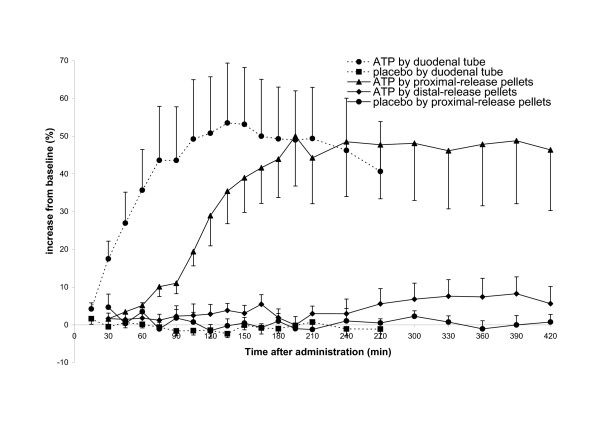
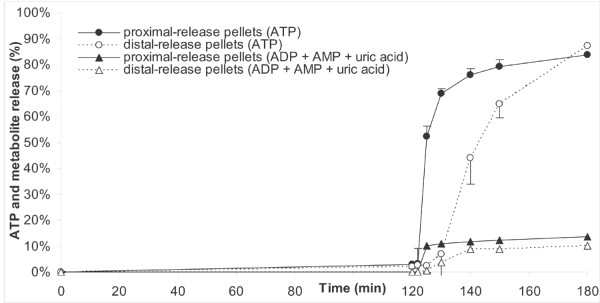
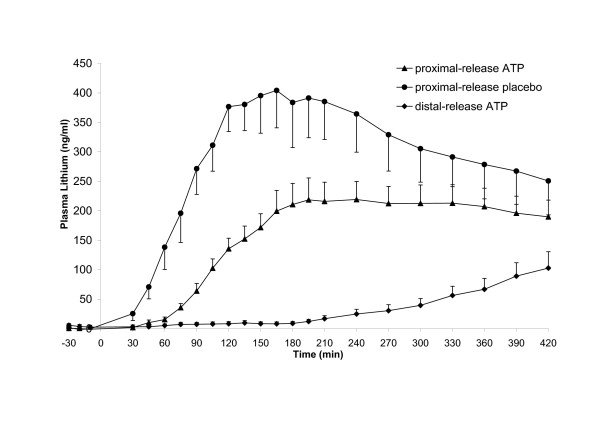
BACKGROUND: Nutritional supplements designed to increase adenosine 5'-triphosphate (ATP) concentrations are commonly used by athletes as ergogenic aids. ATP is the primary source of energy for the cells, and supplementation may enhance the ability to maintain high ATP turnover during high-intensity exercise. Oral ATP supplements have beneficial effects in some but not all studies examining physical performance. One of the remaining questions is whether orally administered ATP is bioavailable. We investigated whether acute supplementation with oral ATP administered as enteric-coated pellets led to increased concentrations of ATP or its metabolites in the circulation. METHODS: Eight healthy volunteers participated in a cross-over study. Participants were given in random order single doses of 5000 mg ATP or placebo. To prevent degradation of ATP in the acidic environment of the stomach, the supplement was administered via two types of pH-sensitive, enteric-coated pellets (targeted at release in the proximal or distal small intestine), or via a naso-duodenal tube. Blood ATP and metabolite concentrations were monitored by HPLC for 4.5 h (naso-duodenal tube) or 7 h (pellets) post-administration. Areas under the concentration vs. time curve were calculated and compared by paired-samples t-tests. RESULTS: ATP concentrations in blood did not increase after ATP supplementation via enteric-coated pellets or naso-duodenal tube. In contrast, concentrations of the final catabolic product of ATP, uric acid, were significantly increased compared to placebo by ~50% after administration via proximal-release pellets (P = 0.003) and naso-duodenal tube (P = 0.001), but not after administration via distal-release pellets. CONCLUSIONS: A single dose of orally administered ATP is not bioavailable, and this may explain why several studies did not find ergogenic effects of oral ATP supplementation. On the other hand, increases in uric acid after release of ATP in the proximal part of the small intestine suggest that ATP or one of its metabolites is absorbed and metabolized. Uric acid itself may have ergogenic effects, but this needs further study. Also, more studies are needed to determine whether chronic administration of ATP will enhance its oral bioavailability.
Overview
The claims and statistics of this paper haven’t been checked yet.
Free: it reads the open-access text and checks the first 5 claims that cite a source we can check. Create a free account to check every claim.
Integrity signals
Registry
Cites
Statistics
Figures
Verification
Claims the paper makes
The claims and statistics of this paper haven’t been checked yet.
Free: it reads the open-access text and checks the first 5 claims that cite a source we can check. Create a free account to check every claim.
Claims other papers make about this one
Each is checked against this paper’s own text: does it say what the citing paper says it does?
The cited source says what the claim attributes to it.
In the citing paper
“several studies have shown that oral ATP is not systematically bioavailable [241].”
From ISSN exercise & sports nutrition review update: research & recommendations (2018) · cites this paper as [241]
Self-check
Percentages, sums and reported differences re-computed from the paper’s own numbers.
The self-check needs the paper’s full text.
Citations
Cites
Yatham, L., & Malhi, G. (2011) · Oxford University Press eBooks · doi:10.1093/med/9780199562305.001.0001 · Cited by 3,506
Ames, B. N., Cathcart, R., Schwiers, E., & Hochstein, P. (1981) · Proceedings of the National Academy of Sciences · doi:10.1073/pnas.78.11.6858 · Cited by 2,909
Elevated Uric Acid Increases Blood Pressure in the Rat by a Novel Crystal-Independent Mechanism
Mazzali, M., Hughes, J., Kim, Y.-G., Jefferson, J. A., Kang, D.-H., Gordon, K. L., Lan, H. Y., Kivlighn, S., & Johnson, R. J. (2001) · Hypertension · doi:10.1161/hy1101.092839 · Cited by 1,300
Purine-Rich Foods, Dairy and Protein Intake, and the Risk of Gout in Men
Choi, H. K., Atkinson, K., Karlson, E. W., Willett, W., & Curhan, G. (2004) · New England Journal of Medicine · doi:10.1056/nejmoa035700 · Cited by 1,178
Yegutkin, G. G. (2008) · Biochimica et Biophysica Acta (BBA) - Molecular Cell Research · doi:10.1016/j.bbamcr.2008.01.024 · Cited by 1,154
Bours, M. J. L., Swennen, E. L. R., Di Virgilio, F., Cronstein, B. N., & Dagnelie, P. C. (2006) · Pharmacology & Therapeutics · doi:10.1016/j.pharmthera.2005.04.013 · Cited by 1,030
Self-citationTransit of pharmaceutical dosage forms through the small intestine.
Davis, S. S., Hardy, J. G., & Fara, J. W. (1986) · Gut · doi:10.1136/gut.27.8.886 · Cited by 853
Uric Acid Is a Risk Factor for Myocardial Infarction and Stroke: The Rotterdam Study
Bos, M. J., Koudstaal, P. J., Hofman, A., Witteman, J. C. M., & Breteler, M. M. B. (2006) · Stroke · doi:10.1161/01.str.0000221716.55088.d4 · Cited by 615
Pathophysiology and Therapeutic Potential of Purinergic Signaling
Burnstock, G. (2006) · Pharmacological Reviews · doi:10.1124/pr.58.1.5 · Cited by 611
Uric Acid, Hominoid Evolution, and the Pathogenesis of Salt-Sensitivity
Watanabe, S., Kang, D.-H., Feng, L., Nakagawa, T., Kanellis, J., Lan, H., Mazzali, M., & Johnson, R. J. (2002) · Hypertension · doi:10.1161/01.hyp.0000028589.66335.aa · Cited by 563
Cited by
ISSN exercise & sports nutrition review update: research & recommendations
Kerksick, C. M., Wilborn, C. D., Roberts, M. D., Smith-Ryan, A., Kleiner, S. M., Jäger, R., Collins, R., Cooke, M., Davis, J. N., Galvan, E., et al. (2018) · Journal of the International Society of Sports Nutrition · doi:10.1186/s12970-018-0242-y · Cited by 945
Antioxidants in Sport Nutrition
Lamprecht, M. (2014) · CRC Press eBooks · doi:10.1201/b17442 · Cited by 131
Loss of Metabolic Plasticity Underlies Metformin Toxicity in Aged Caenorhabditis Elegans
Espada, L., Dakhovnik, A., Chaudhari, P., Martirosyan, A., Miek, L., Poliezhaieva, T., Schaub, Y., Nair, A., Döring, N., Rahnis, N., et al. (2020) · Nature Metabolism · doi:10.1038/s42255-020-00307-1 · Cited by 100
Supplements with purported effects on muscle mass and strength
Valenzuela, P. L., Morales, J. S., Emanuele, E., Pareja-Galeano, H., & Lucia, A. (2019) · European Journal of Nutrition · doi:10.1007/s00394-018-1882-z · Cited by 92
Cutler, R. G., Camandola, S., Malott, K., Edelhauser, M., & Mattson, M. P. (2015) · Current Topics in Medicinal Chemistry · doi:10.2174/1568026615666150610143234 · Cited by 42
The ATP-dependent Pathways and Human Diseases
Suwara, J., Radzikowska‐Cieciura, E., Chworoś, A., & Pawłowska, R. (2022) · Current Medicinal Chemistry · doi:10.2174/0929867329666220322104552 · Cited by 37
Jäger, R., Roberts, M. D., Lowery, R. P., Joy, J. M., Cruthirds, C. L., Lockwood, C. M., Rathmacher, J. A., Purpura, M., & Wilson, J. M. (2014) · Journal of the International Society of Sports Nutrition · doi:10.1186/1550-2783-11-28 · Cited by 34
“Studies on the oral availability of ATP showed that it is unlikely that oral ATP administration will directly increase intramuscular ATP stores as a single dose of orally administered ATP in humans did not increase ATP concentrations in blood [15].”
Oral bioavailability of ATP after prolonged administration
Coolen, E. J. C. M., Arts, I. C. W., Bekers, O., Vervaet, C., Bast, A., & Dagnelie, P. C. (2010) · British Journal Of Nutrition · doi:10.1017/s0007114510003570 · Cited by 33
Self-citationPurpura, M., Rathmacher, J. A., Sharp, M. H., Lowery, R. P., Shields, K. A., Partl, J. M., Wilson, J. M., & Jäger, R. (2017) · Journal of the American College of Nutrition · doi:10.1080/07315724.2016.1246989 · Cited by 29
“Previous studies showed a lack of intact bioavailability for orally administrated ATP at rest [16,17].”
BackgroundRathmacher, J. A., Fuller, J. C., Baier, S. M., Abumrad, N. N., Angus, H. F., & Sharp, R. L. (2012) · Journal of the International Society of Sports Nutrition · doi:10.1186/1550-2783-9-48 · Cited by 27
Fu, T., Liu, H., Shi, C., Zhao, H., Liu, F., & Xia, Y. (2024) · Journal of Health Population and Nutrition · doi:10.1186/s41043-024-00638-9 · Cited by 24
Freitas, M. C., Cholewa, J. M., Gerosa-Neto, J., Gonçalves, D. C., Caperuto, E. C., Lira, F. S., & Rossi, F. E. (2019) · Journal of Strength and Conditioning Research · doi:10.1519/jsc.0000000000002198 · Cited by 20
The Search for New Agonists to P2X7R for Clinical Use: Tuberculosis as a Possible Target
Soares‐Bezerra, R. J., Pinho, R. T., Bisaggio, R. D. C., Benévolo-de-Andrade, T. C., & Alves, L. A. (2015) · Cellular Physiology and Biochemistry · doi:10.1159/000430364 · Cited by 16
Health and ergogenic potential of oral adenosine-5′-triphosphate (ATP) supplementation
Jäger, R., Purpura, M., Rathmacher, J. A., Fuller, J. C., Pitchford, L. M., Rossi, F. E., & Kerksick, C. M. (2021) · Journal of Functional Foods · doi:10.1016/j.jff.2021.104357 · Cited by 16
Joy, J. M., Vogel, R. M., Moon, J. R., Falcone, P. H., Mosman, M. M., Pietrzkowski, Z. J., Reyes, T., & Kim, M. P. (2016) · BMC Complementary and Alternative Medicine · doi:10.1186/s12906-016-1222-x · Cited by 13
Pharmacological Aspects and Health Impact of Sports and Energy Drinks
Oprea, E., Ruta, L. L., & FARCASANU, I. C. (2019) · Elsevier eBooks · doi:10.1016/b978-0-12-815851-7.00003-6 · Cited by 12
de Freitas, M. C., Ricci‐Vitor, A. L., Freire, R. V., Caperuto, É. C., Vanderlei, L. C. M., Lira, F. S., & Rossi, F. E. (2018) · Journal of Exercise Rehabilitation · doi:10.12965/jer.1836256.128 · Cited by 12
Joy, J. M., Vogel, R. M., Moon, J. R., Falcone, P. H., Mosman, M. M., & Kim, M. P. (2016) · Journal of the International Society of Sports Nutrition · doi:10.1186/s12970-016-0136-9 · Cited by 11
Cruz, A. M., & Beall, C. (2020) · Frontiers in Physiology · doi:10.3389/fphys.2020.567378 · Cited by 10
Joy, J. M., Falcone, P. H., Vogel, R. M., Mosman, M. M., Kim, M. P., & Moon, J. R. (2015) · Applied Physiology, Nutrition, and Metabolism · doi:10.1139/apnm-2015-0241 · Cited by 10
Bast, A., & Haenen, G. R. M. M. (2014) · CRC Press eBooks · doi:10.1201/b17442-2 · Cited by 10
Self-citationATP1A3-related phenotypes in Chinese children: AHC, CAPOS, and RECA
Huang, D., Song, X., Ma, J., Li, X., Guo, Y., Li, M., Luo, H., Fang, Z., Yang, C., Xie, L., et al. (2022) · European Journal of Pediatrics · doi:10.1007/s00431-022-04744-w · Cited by 10
Dose Response of Acute ATP Supplementation on Strength Training Performance
de Moura, H. P. D. S. N., Jäger, R., Purpura, M., Rathmacher, J. A., Fuller, J. C., & Rossi, F. E. (2021) · Frontiers in Sports and Active Living · doi:10.3389/fspor.2021.780459 · Cited by 7
Anada, T., Kawahara, M., Shimada, T., Kuroda, R., Okamura, H., Setoyama, D., Nagatsugi, F., Kunisaki, Y., Kage‐Nakadai, E., Kobayashi, S., et al. (2025) · Journal of the American Chemical Society · doi:10.1021/jacs.5c06772 · Cited by 7
Özbay, A. D., Somuncu, A. M., Cicek, I., Yavuzer, B., Bulut, S., Huseynova, G., Tastan, T. B., Gülaboğlu, M., & Süleyman, H. (2025) · Experimental Eye Research · doi:10.1016/j.exer.2025.110387 · Cited by 7
The effect of elevatp™ on whole blood atp levels: a single dose, crossover clinical study
Reyes-Izquierdo, T., Shu, C., Argumedo, R., Nemzer, B. V., & Pietrzkowski, Z. J. (2014) · Cited by 6
Preclinical evidence of adenosine for early intervention in Bungarus multicinctus envenomation
Huang, J., Qin, Y., Chen, H., & Liu, F. (2025) · Journal of Advanced Research · doi:10.1016/j.jare.2025.06.012 · Cited by 5
Panossian, A. (2026) · Pharmaceuticals · doi:10.3390/ph19030519 · Cited by 5
Sünter, A., Kuznetsov, A. I., Raudsepp, P., Püssa, T., Toom, L., Коноплев, Г., Stepanova, O. S., Stepanova, O. V., Lyalin, D., Frorip, A., et al. (2023) · AppliedChem · doi:10.3390/appliedchem3020021 · Cited by 4
Subchronic (90-Day) repeated dose toxicity study of disodium adenosine-5′-triphosphate in rats
Jäger, R., Purpura, M., & Fuller, J. C. (2020) · Regulatory Toxicology and Pharmacology · doi:10.1016/j.yrtph.2020.104760 · Cited by 3
Fambrini, D. L., Neto, E. L. D. C., & dos Santos, C. F. (2024) · Journal of the American Nutrition Association · doi:10.1080/27697061.2023.2301400 · Cited by 2
Safety Assessment of Adenosine as Used in Cosmetics
Cherian, P. A., Bergfeld, W. F., Belsito, D. V., Hill, R. A., Klaassen, C. D., Liebler, D. C., Marks, J. G., Shank, R. C., Slaga, T. J., Snyder, P. W., et al. (2023) · International Journal of Toxicology · doi:10.1177/10915818231221790 · Cited by 2
Pathological Athlete’s Heart: The Development of the Concept in Russia over the Years
Gavrilova, E. A. (2023) · Human Physiology · doi:10.1134/s0362119723700597 · Cited by 1
Bannale, S., Kashinakunti, S. V., Rangappa, M., Pundarikaksha, P., Maniyar, Y. A., & Sajjanavar, M. (2016) · International Journal of Basic & Clinical Pharmacology · doi:10.18203/2319-2003.ijbcp20164134
Wong, F. (2025) · Liverpool John Moores University · doi:10.24377/ljmu.t.00026671
Suplementação de ATP: uma revisão de literatura
Araújo, F. A. S. (2014) · LA Referencia (Red Federada de Repositorios Institucionales de Publicaciones Científicas)
Joy, J. M., Falcone, P. H., Vogel, R. M., Mosman, M. M., Kim, M. P., & Moon, J. R. (2015) · Applied Physiology, Nutrition, and Metabolism · doi:10.1139/apnm-2015-0656
Metadata
- Authors
- Arts, I. C., Coolen, E. J., Bours, M. J., Huyghebaert, N., Stuart, M. A. C., Bast, A., & Dagnelie, P. C.
- Affiliations
- Maastricht University (NL)
- Ghent University (BE)
- Wageningen University & Research (NL)
- Corresponding author
- Arts, Ilja CW
- Venue
- Journal of the International Society of Sports Nutrition
- Publisher
- Informa UK Limited
- Published
- 2012-02-06
- Volume
- 9
- Issue
- 1
- Pages
- 16-16
- ISSN
- 1550-2783 (ISSN-L)
- PMC
- PMC3441280
- OpenAlex
- W2159873940
- Cited by
- 33
- References
- 48
- Citations by year
- 2025: 3 · 2024: 2 · 2023: 3 · 2022: 1 · 2021: 2 · 2020: 3 · 2019: 3 · 2018: 2 · 2017: 2 · 2016: 3 · 2015: 3 · 2014: 4 · 2012: 1
- FWCI
- 1.21
- Type
- journal article
- Language
- en
- Open access
- gold
- doi.org
- Licence
- Locations
- Journal of the International Society of Sports Nutrition (publishedVersion, cc-by)
- PubMed Central (publishedVersion, cc-by)
- PubMed (publishedVersion)
- Socio-Environmental Systems Modeling (acceptedVersion)
- Research Publications (Maastricht University) (submittedVersion, cc-by)
- DOAJ (DOAJ: Directory of Open Access Journals) (submittedVersion, cc-by-sa)
- Research Publications (Maastricht University) (submittedVersion, other-oa)
- Data Archiving and Networked Services (DANS) (submittedVersion, other-oa)
- Topics
- Health Sciences › Nursing › Nutrition and Dietetics › Muscle metabolism and nutrition
- Health Sciences › Medicine › Physiology (medical) › Exercise and Physiological Responses
- Health Sciences › Medicine › Orthopedics and Sports Medicine › Sports Performance and Training
- Keywords
- adenosine 5'-triphosphate, oral bioavailability, ergogenic aids, enteric-coated pellets, uric acid
About these checks
Registry, retraction, Cites and statistics results are computed, not judged, with one exception: a printed reference that no index lists is read once by a model before it counts as a citation error. Claims are extracted by a model and kept only when their quote appears verbatim in the text; each cited source is then checked, with a model’s help, for whether it says what the claim relies on. Those verdicts can be wrong — read the claim’s quote and the cited source before relying on one.
Statistics and arithmetic are recomputed, not judged.
Confidence bands are shown only for fields calibrated on our annotated test set. None is calibrated yet, so no band is shown.
What counts as a claim ›How we measure confidence ›How we check this ›
Are you an author, or do you see a problem with this page? Request a review
Data sources
Bibliographic data: Semantic Scholar, OpenAlex, Crossref.
Contains information from the Semantic Scholar Academic Graph Datasets, made available under the ODC Attribution License (ODC-BY 1.0).
Semantic Scholar’s data is described in: Kinney, R., et al. (2023). The Semantic Scholar Open Data Platform. arXiv:2301.10140.
