

Polycystic ovary syndrome: a complex condition with psychological, reproductive and metabolic manifestations that impacts on health across the lifespan
Open accessThe DOI matches its Crossref record; 86 of the 89 references it cites were found in a registry or an index, and 1 are not checked yet.
Abstract
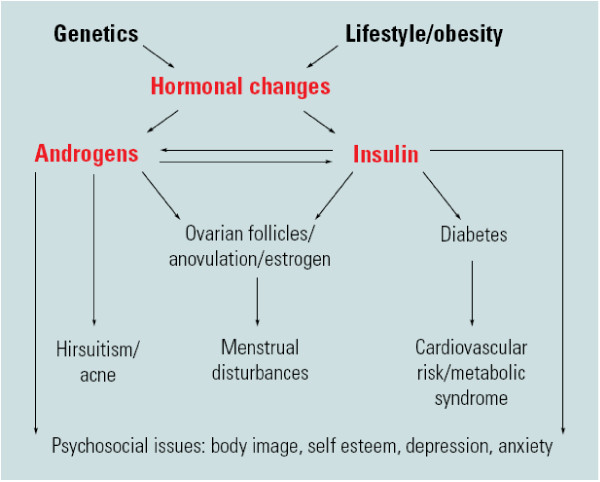
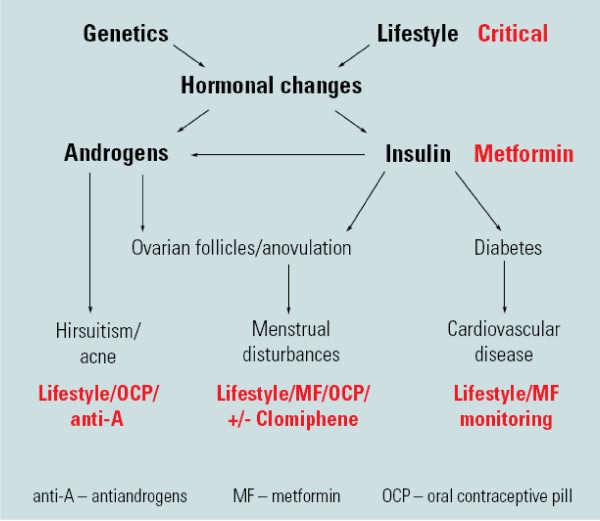
Polycystic ovary syndrome (PCOS) is of clinical and public health importance as it is very common, affecting up to one in five women of reproductive age. It has significant and diverse clinical implications including reproductive (infertility, hyperandrogenism, hirsutism), metabolic (insulin resistance, impaired glucose tolerance, type 2 diabetes mellitus, adverse cardiovascular risk profiles) and psychological features (increased anxiety, depression and worsened quality of life). Polycystic ovary syndrome is a heterogeneous condition and, as such, clinical and research agendas are broad and involve many disciplines. The phenotype varies widely depending on life stage, genotype, ethnicity and environmental factors including lifestyle and bodyweight. Importantly, PCOS has unique interactions with the ever increasing obesity prevalence worldwide as obesity-induced insulin resistance significantly exacerbates all the features of PCOS. Furthermore, it has clinical implications across the lifespan and is relevant to related family members with an increased risk for metabolic conditions reported in first-degree relatives. Therapy should focus on both the short and long-term reproductive, metabolic and psychological features. Given the aetiological role of insulin resistance and the impact of obesity on both hyperinsulinaemia and hyperandrogenism, multidisciplinary lifestyle improvement aimed at normalising insulin resistance, improving androgen status and aiding weight management is recognised as a crucial initial treatment strategy. Modest weight loss of 5% to 10% of initial body weight has been demonstrated to improve many of the features of PCOS. Management should focus on support, education, addressing psychological factors and strongly emphasising healthy lifestyle with targeted medical therapy as required. Monitoring and management of long-term metabolic complications is also an important part of routine clinical care. Comprehensive evidence-based guidelines are needed to aid early diagnosis, appropriate investigation, regular screening and treatment of this common condition. Whilst reproductive features of PCOS are well recognised and are covered here, this review focuses primarily on the less appreciated cardiometabolic and psychological features of PCOS.
Overview
The claims and statistics of this paper haven’t been checked yet.
Free: it reads the open-access text and checks the first 5 claims that cite a source we can check. Create a free account to check every claim.
Integrity signals
Registry
Cites
Statistics
Figures
Verification
Claims the paper makes
The claims and statistics of this paper haven’t been checked yet.
Free: it reads the open-access text and checks the first 5 claims that cite a source we can check. Create a free account to check every claim.
Claims other papers make about this one
Each is checked against this paper’s own text: does it say what the citing paper says it does?
The source backs part of the claim, not all of it — or backs it for a different population, condition or comparison.
In the citing paper
“PCOS prevalence is between 10% and 13% as confirmed in the guideline process. 1,2”
From Recommendations from the 2023 international evidence-based guideline for the assessment and management of polycystic ovary syndrome (2023) · cites this paper as [1]
Experimental — accuracy not yet measuredThe source backs part of the claim, not all of it — or backs it for a different population, condition or comparison.
In the citing paper
“PCOS prevalence is between 10% to 13% as confirmed in the guideline process (1, 2).”
From Recommendations From the 2023 International Evidence-based Guideline for the Assessment and Management of Polycystic Ovary Syndrome (2023) · cites this paper as [1]
Experimental — accuracy not yet measuredThe cited source says what the claim attributes to it.
In the citing paper
“Polycystic ovary syndrome (PCOS) is the most common endocrinopathy affecting reproductive-aged women, with impacts across the lifespan from adolescence to post menopause.”
From Recommendations From the 2023 International Evidence-based Guideline for the Assessment and Management of Polycystic Ovary Syndrome (2023) · cites this paper as [1]
The cited source says what the claim attributes to it.
In the citing paper
“PCOS aetiology is complex”
From Recommendations From the 2023 International Evidence-based Guideline for the Assessment and Management of Polycystic Ovary Syndrome (2023) · cites this paper as [1]
The cited source says what the claim attributes to it.
In the citing paper
“clinical presentation is heterogeneous with reproductive, metabolic, and psychological features (1, 2).”
From Recommendations From the 2023 International Evidence-based Guideline for the Assessment and Management of Polycystic Ovary Syndrome (2023) · cites this paper as [1]
11 more claims about this paper
Create a free account to see every claim other papers make about this one.
Self-check
Percentages, sums and reported differences re-computed from the paper’s own numbers.
The self-check needs the paper’s full text.
Citations
Cites
1 retracted
Shaw, L. J., Bairey Merz, C. N., Azziz, R., Stanczyk, F. Z., Sopko, G., Braunstein, G. D., Kelsey, S. F., Kip, K. E., Cooper-DeHoff, R. M., Johnson, B. D., et al. (2008) · The Journal of Clinical Endocrinology & Metabolism · doi:10.1210/jc.2007-0425 · Cited by 427 · cited 4×
“Some studies support an increased risk of CVD in PCOS [18], but these findings are not universal [61] and further research is needed.”
InfluentialRetractedReduction in the incidence of type 2 diabetes with lifestyle intervention or metformin
(2002) · New England Journal of Medicine · doi:10.1056/nejmoa012512 · Cited by 19,011 · cited 4×
“• Metformin* reduces the risk of diabetes by approximately 50% in high-risk groups [49].”
Influential(2004) · Fertility and Sterility · doi:10.1016/j.fertnstert.2003.10.004 · Cited by 9,050
The Prevalence and Features of the Polycystic Ovary Syndrome in an Unselected Population
Azziz, R., Woods, K. S., Reyna, R., Key, T. J., Knochenhauer, E. S., & Yildiz, B. O. (2004) · The Journal of Clinical Endocrinology & Metabolism · doi:10.1210/jc.2003-032046 · Cited by 2,712 · cited 2×
“Proc Natl Acad Sci USA 2006, 103:7030-7035.”
Insulin Resistance and the Polycystic Ovary Syndrome: Mechanism and Implications for Pathogenesis*
Dunaif, A. (1997) · Endocrine Reviews · doi:10.1210/edrv.18.6.0318 · Cited by 2,458 · cited 2×
“Interestingly, there is a paradoxical expression of insulin resistance in PCOS whereby insulin-stimulated androgen production persists while its role in glucose metabolism is impaired [42].”
Men at risk: occupation and male infertility
Claman, P. (2004) · Fertility and Sterility · doi:10.1016/s0015-0282(03)01188-9 · Cited by 2,387
Azziz, R., Carmina, E., Dewailly, D., Diamanti-Kandarakis, E., Escobar-Morreale, H. F., Futterweit, W., Janssen, O. E., Legro, R. S., Norman, R. J., Taylor, A. E., et al. (2006) · The Journal of Clinical Endocrinology & Metabolism · doi:10.1210/jc.2006-0178 · Cited by 2,143 · cited 8×
“National Institutes of Health criteria consensus statement [83] European Society for Human Reproduction and Embryology/American Society for Reproductive Medicine consensus statement [20] Androgen Excess Society position statement [ 21 ]”
InfluentialAzziz, R., Carmina, E., Dewailly, D., Diamanti-Kandarakis, E., Escobar-Morreale, H. F., Futterweit, W., Janssen, O. E., Legro, R. S., Norman, R. J., Taylor, A. E., et al. (2009) · Fertility and Sterility · doi:10.1016/j.fertnstert.2008.06.035 · Cited by 2,132 · cited 1×
“Among those with amenorrhoea, only 40% will be diagnosed with PCOS as hypothalamic dysfunction is a more common cause [ 31 ].”
Profound Peripheral Insulin Resistance, Independent of Obesity, in Polycystic Ovary Syndrome
Dunaif, A., Segal, K. R., Futterweit, W., & Dobrjansky, A. (1989) · Diabetes · doi:10.2337/diab.38.9.1165 · Cited by 1,967 · cited 2×
“Lean women with PCOS often but not always [13] have abnormalities of insulin secretion and action compared to weight-matched control subjects [41].”
March, W. A., Moore, V. M., Willson, K. J., Phillips, D. I. W., Norman, R. J., & Davies, M. J. (2010) · Human Reproduction · doi:10.1093/humrep/dep399 · Cited by 1,799 · cited 4×
“8%) in the first community-based prevalence study based on current Rotterdam diagnostic criteria [5].”
Influential
Research works printed but not linked: 4
- Barr ELM Magliano DJ Zimmet PZ Polkinghorne KR Atkins RC Dunstan DW Murray SG Shaw JE AusDiab 2005: The Australian Diabetes, Obesity and Lifestyle Study 2006 Melbourne, Australia: International Diabetes Institute
- Dunstan D Zimmet P Welborne T Sicree RTA Atkins R Cameron A Shaw J Chadaban S Diabetes and associated disorders in Australia 2000 - the accelerating epidemic Australian Diabetes, Obesity and Lifestyle Report 2001 Melbourne, Australia: The International Diabetes Institute
- NHaMRC Clinical Practice Guidelines for the Management of Overweight and Obesity in Adults 2003 Canberra, Australia: Australian Government Publishing Service
- Zawadzki J Dunaif A Dunaif A, Givens J, Haseltine F, Marrian G Diagnostic criteria for polycystic ovary syndrome: towards a rational approach Polycystic Ovary Syndrome Current Issues in Endocrinology and Metabolism 1992 Boston, MA: Blackwell Scientific 377 384
Cited by
Items 901–1,000 of 1,003
Peter, M. U., Areloegbe, S. E. J., Akintayo, C. O., Oniyide, A. A., Aturamu, A., & Olaniyi, K. S. (2022) · Canadian Journal of Physiology and Pharmacology · doi:10.1139/cjpp-2022-0176 · Cited by 6
A Study of Hormonal and Anthropometric Parameters in Polycystic Ovarian Syndrome
Kambale, T., Sawaimul, K. D., & Prakash, S. (2023) · Annals of African Medicine · doi:10.4103/aam.aam_15_22 · Cited by 6
Yang, Z. F., Liu, F.-T., Bai, J., Ye, Z., Yin, J., Peng, T., Shan, H., Yu, Y., Zhou, P., & Li, R. (2023) · Biology of Reproduction · doi:10.1093/biolre/ioad017 · Cited by 6
“PCOS is the most common cause of anovulatory infertility, and 90–95% of women seeking fertility treatment for anovulation are diagnosed with PCOS [13].”
Zhou, J., Liu, F., Tian, L., Yang, M., Tan, J., Liu, X., Li, P., Chen, J., Chen, G., Xu, L., et al. (2023) · Gynecological Endocrinology · doi:10.1080/09513590.2023.2206912 · Cited by 6
“PCOS leads to diverse clinical implications including reproductive, metabolic, and psychological features [4].”
Measuring the Awareness of Polycystic Ovarian Syndrome (PCOS) among Women in Punjab, Pakistan
Rafique, A., Salma, U. E., & Saleem, H. G. M. (2023) · Scientific Inquiry and Review · doi:10.32350/sir.71.01 · Cited by 6
“Symptoms commonly associated with PCOS are irregular or missed periods due to anovulation, ovaries consisting of multiple cysts, non-appearance of ovulation, high level of androgens [5], oligomenorrhea, amenorrhea, prolonged erratic menstrual bleeding [6], infertility [7], hirsutism [8], acne [9], mood swings includin…”
Long, X., Liu, H., Xiong, W., Li, W., He, H., Fu, T., Li, X., Chen, C., Zhang, L., & Liu, Y. (2023) · Gynecological Endocrinology · doi:10.1080/09513590.2023.2223648 · Cited by 7
Khan, G., Althubaiti, A., Alshrif, A., Alsayed, Z., & Al-Jifree, H. (2023) · Women s Health · doi:10.1177/17455057231210094 · Cited by 7
“21,22 But even then, in spite of these exogenous hormonal influences, reported changes were less severe (i.e. only dysmenorrhea or only volume) than those reported by skeptics.”
Manthey, C., Cepon‐Robins, T. J., & Warrener, A. G. (2024) · American Journal of Human Biology · doi:10.1002/ajhb.24070 · Cited by 6
“The hormone loop is exacerbated as androgen production is increased et al., 2010; Zeng et al., 2020), leading to worsening secondary symptoms and prolonged — if not permanent periods of — infertility.”
Is polycystic ovary syndrome a risk factor for depression and anxiety?: a cross-sectional study
Günkaya, O. S., Tekin, A. B., Bestel, A., Arslan, O., Şahin, F., Taymur, B. D., & Tuğ, N. (2024) · Revista da Associação Médica Brasileira · doi:10.1590/1806-9282.20230918 · Cited by 7
“Additionally, although a significant link between PCOS and sexual dysfunction has not been proven, some studies have reported that most women with PCOS experience more stress than healthy women due to infertility concerns and dissatisfaction with their body image 7,8 .”
Kataoka, J., Stener‐Victorin, E., Schmidt, J., & Larsson, I. (2024) · Acta Obstetricia Et Gynecologica Scandinavica · doi:10.1111/aogs.14867 · Cited by 6
Marzouk, T., Nabil, H., & Senna, M. K. (2015) · Korean journal of women health nursing/Yeoseong geon'gang ganho hag'hoeji/Yeoseong geon-gang ganho hakoeji · doi:10.4069/kjwhn.2015.21.3.161 · Cited by 10
“Its hallmarks are biochemical and/or clinical hyperandrogenism in addition to chronic anovulation with subsequent menstrual disturbances such as oligo/amenorrhea[3].”
Jidong, W., Ma, X., Fang, D., Hu, X., Shuang, L., Hongjuan, P., & Zhenwei, Y. (2013) · Gynecological Endocrinology · doi:10.3109/09513590.2013.801442 · Cited by 6
Validity and Reliability of a Korean version of Polycystic Ovary Syndrome Questionnaire
Oh, J., & Kim, J. H. (2014) · Korean journal of women health nursing/Yeoseong geon'gang ganho hag'hoeji/Yeoseong geon-gang ganho hakoeji · doi:10.4069/kjwhn.2014.20.4.255 · Cited by 7
“다낭성 난소 증후군은 생애 전반에 걸쳐 고혈압 고지혈증 , , 관상동맥 질환과 같은 심혈관 질환과 형 당뇨 2 (Diabetes mel비만과 대사증후군 발생의 위험 인자로 작용할 litus type 2), 뿐만 아니라 무배란이 지속됨에 따라 자궁 내막의 두께가 두 , 꺼워져 자궁내막 증식증이나 자궁 내막암의 위험인자로 보고 되고 있다 또한 다낭성 난소 증후군은 배란 장애로 인 [2,4-6].”
Ouladsahebmadarek, E., & Khaki, A. (2014) · International Journal of Women s Health and Reproduction Sciences · doi:10.15296/ijwhr.2014.27 · Cited by 6
“Oxidative stress (OS) may play a role in the pathophysiology of PCOS (1,2,3) Normal hormonal levels in PCOS women converts to abnormal levels; the GnRH level changes indicate in most women with PCOS, LH levels are elevated and the LH/FSH ratio is high that can be considered as a diagnostic tool for this disorder (4).”
Guraya, S. S., Alhussaini, K., Shaqrun, F. M., Alhazmi, B. H., & Alkabli, R. S. (2017) · Journal of Taibah University Medical Sciences · doi:10.1016/j.jtumed.2017.02.005 · Cited by 9
“PCOS is a complex syndrome with serious reproductive and metabolic implications commonly manifested as a clinical presentation consisting of menstrual irregularity, hirsutism, acne, infertility, and alopecia.(16) According to the recommendations of the revised Rotterdam consensus group, two of the following three crit…”
Polycystic ovary syndrome: prognosis and risk of comorbidity
Hardy, T., Sousa, S. D., & Norman, R. J. (2013) · doi:10.2217/ebo.12.214 · Cited by 6
Manzoor, I., Bacha, R., & Gilani, S. A. (2019) · Gynecological Endocrinology · doi:10.1080/09513590.2019.1612357 · Cited by 6
“In addition, women with PCOS also have an increase in insulin resistance (IR), dyslipidemia, abdominal obesity, type 2 diabetes and inflammation, which are risk factors for cardiovascular disease (CVD) [2].”
InfluentialHafizi, L., Amirian, M., Davoudi, Y., Jaafari, M., & Ghasemi, G. (2020) · PubMed Central · doi:10.22074/ijfs.2020.5628 · Cited by 6
“Infertility involves 40% of the cases affected by PCOS (5).”
Study of hundred cases of infertility in polycystic ovarian syndrome and its management outcome
Deliwala, K., Patel, Z. J., Shah, P., & Dholakiya, D. (2020) · International Journal of Reproduction Contraception Obstetrics and Gynecology · doi:10.18203/2320-1770.ijrcog20203326 · Cited by 6
“Its prevalence is reported from 6-18%.(3,4) Patients with PCOS present with menstrual irregularity, hirsutism, acne, infertility etc.”
Polycystic Ovary Syndrome and its Relationship with Infertility and its Management
Jahan, Z., & Wing, K. E. (2020) · Journal of Bangladesh College of Physicians and Surgeons · doi:10.3329/jbcps.v39i1.50458 · Cited by 9
Hegazy, M., El‐Mahdy, H. A., Elsayed, T. S., Elkhawaga, S. Y., Elkady, M. A., Yehia, A. M., El-Husseiny, A. A., Shaban, H. M., Gomaa, M. H., & Mokhtar, M. M. (2023) · Pathology - Research and Practice · doi:10.1016/j.prp.2023.154872 · Cited by 8
Kil, K. H., Kim, M. R., Kim, J. H., & Cho, H. H. (2018) · Molecular & Cellular Toxicology · doi:10.1007/s13273-019-0003-2 · Cited by 6
Dompreh, H. O., Lynch, M., & Longworth, M. (2022) · medRxiv · doi:10.1101/2022.04.11.22273701 · Cited by 6
Rangi, S. K., Rehmer, J. M., & Ferrando, C. A. (2023) · Journal of Pediatric and Adolescent Gynecology · doi:10.1016/j.jpag.2023.09.003 · Cited by 5
PLK2 as a key regulator of glycolysis and immune dysregulation in polycystic ovary syndrome
Ma, H., Qi, D., Xu, Y., Shang, T., Si, Y., Chen, W., Zhao, H., & Ren, Q. (2025) · Frontiers in Immunology · doi:10.3389/fimmu.2025.1610713 · Cited by 5
“Its core diagnostic criteria include ovulatory dysfunction, hyperandrogenism (clinical or biochemical), and polycystic ovarian morphology (1, 2).”
Acupuncture for polycystic ovary syndrome
Zhang, G. S., Lim, E. C. N., Cheng, N. C. L., & Lim, C. E. D. (2025) · Cochrane Database of Systematic Reviews · doi:10.1002/14651858.cd007689.pub5 · Cited by 7
Roy, D., Ghosh, M., Roy, D., Sharma, N., Bhatia, R., & Rangra, N. K. (2025) · Phytotherapy Research · doi:10.1002/ptr.70128 · Cited by 6
Abdelhameed, A. M., Eissa, M., Thompson, K., Edwards, K. S., Hoang, N., Rezq, S., Cornelius, D. C., Romero, D. G., & Cardozo, L. L. Y. (2025) · Endocrinology · doi:10.1210/endocr/bqaf173 · Cited by 5
Interconnection between polycystic ovary syndrome, immune disorders, and reproductive outcomes
Romero, T. B., Sobral, D. D. S., Aguiar, L. A. A., PONTE, H. A.-A., FILHO, R. E. R., MONTENEGRO, A. L. R., Maia, M. G. R., Marques, T. G., Martins, L. D. O., & Cavalcante, M. B. (2026) · Reproduction and Fertility · doi:10.1530/raf-25-0186 · Cited by 5
Renal Sympathetic Denervation for Treatment of Hypertension
Pimenta, E., & Oparil, S. (2012) · Current Treatment Options in Cardiovascular Medicine · doi:10.1007/s11936-012-0166-9 · Cited by 6
Rosin, B. E., Machado, F. R. A., da Rosa, S. M., Paszcuk, A. M., Karsten, L. F., & Pinto, L. H. (2021) · Saúde Coletiva (Barueri) · doi:10.36489/saudecoletiva.2021v11i60p4676-4685 · Cited by 6
Trummer, O., Hoeller, J., Reintar, S., Tandl, V., Foessl, I., Borzan, V., Theiler‐Schwetz, V., Trummer, C., Lerchbaum, E., & Obermayer-Pietsch, B. M. (2024) · International Journal of Molecular Sciences · doi:10.3390/ijms25063205 · Cited by 6
Couty, N., Estienne, A., Lay, S. L., Ramé, C., Chevaleyre, C., Allard-Vannier, É., Péchoux, C., Guérif, F., Vasseur, C., Aboulouard, S., et al. (2024) · The FASEB Journal · doi:10.1096/fj.202400521rr · Cited by 6
“…was established according to the Rotterdam criteria (oligomenorrhea and/or ano-vulation, clinical and/or biochemical signs of hyperan-drogenism, and polycystic ovaries on ultrasonography scan, as well as the exclusion of other etiologies that mimic the PCOS phenotype) 23,24 by qualified personnel.”
Visfatin and VEGF levels are not increased in adolescent girls with polycystic ovary syndrome
Skrzyńska, K., Zachurzok, A., Pietrusik, A., Jakubowska-Kowal, K. M., & Gawlik, A. (2024) · Frontiers in Endocrinology · doi:10.3389/fendo.2024.1488249 · Cited by 5
Parahuleva, N., Mihaylova, A., Harizanova, S. N., Merdzhanova-Gargova, Y., Koleva, M., Madzharov, V. G., Strikova, G., & Uchikova, E. H. (2025) · Healthcare · doi:10.3390/healthcare13080884 · Cited by 6
“By decreasing insulin resistance, metformin may help normalize AMH levels by reducing the number of small antral follicles that are typically associated with elevated AMH [22].”
Comprehensive Overview of PCOS: Exploring Etiology, Diagnosis, and Treatment Approaches
Singh, S. K., Gori, P., Patel, P., & Paul, A. (2025) · Current Pharmacology Reports · doi:10.1007/s40495-025-00419-w · Cited by 5
“Is It Her Hormones?”: Psychiatric Diagnoses and Polycystic Ovarian Syndrome
Genovese, A., Smith, T., Kramer, H., & Augustyn, M. C. (2015) · Journal of Developmental & Behavioral Pediatrics · doi:10.1097/dbp.0000000000000243 · Cited by 5
Boshku, A. A., Panova, D. I., & Ivanovska, B. (2017) · Vojnosanitetski pregled · doi:10.2298/vsp170504158b · Cited by 5
“Antioxid Redox Signal 2011; 15(7): 1927–43.”
Elshamy, E., & Khalafallah, M. (2018) · Obstetrics & Gynecology International Journal · doi:10.15406/ogij.2018.09.00344 · Cited by 5
Hajivandi, L., Noroozi, M., Mostafavi, F., & Ekramzadeh, M. (2018) · Reproductive Health · doi:10.1186/s12978-018-0652-y · Cited by 7
“Background Polycystic ovarian syndrome (PCOS) was first explained 70 years ago [1, 2].”
BackgroundСИНДРОМ ПОЛІКІСТОЗНИХ ЯЄЧНИКІВ ЯК ЧИННИК ЕНДОКРИННОГО БЕЗПЛІДДЯ
Khmil, M. S., Досвальд, А. С. Х., & Khmil, S. V. (2020) · Bulletin Of Medical And Biological Research · doi:10.11603/bmbr.2706-6290.2019.2.10607 · Cited by 5
Verification of a ZBTB16 variant in polycystic ovary syndrome patients
Yang, J., Zhao, R., Li, L., Li, G., Yang, P., Ma, J., Zhao, S., & Zhao, H. (2020) · Reproductive BioMedicine Online · doi:10.1016/j.rbmo.2020.05.005 · Cited by 5
Kim, G.-M., Lee, J. A., Park, S. W., Lee, J. G., & Jeon, G. (2021) · Clinical and Experimental Obstetrics & Gynecology · doi:10.31083/j.ceog4805184 · Cited by 5
Vitamin D metabolism in polycystic ovary syndrome (PCOS)
Bari, F. D., & Benvenga, S. (2021) · Elsevier eBooks · doi:10.1016/b978-0-12-823045-9.00004-3 · Cited by 5
Abdalla, M. A., Shah, N. Z., Deshmukh, H., Sahebkar, A., Östlundh, L., Al‐Rifai, R. H., Atkin, S. L., & Sathyapalan, T. (2022) · Clinical Endocrinology · doi:10.1111/cen.14663 · Cited by 5
“Polycystic ovary syndrome (PCOS) is a heterogeneous and complex endocrine disorder affecting women of reproductive age, with a prevalence ranging from 8% to 13%.(1,2) PCOS is characterized by both clinical and biochemical evidence of excess androgen levels (manifested as acne and hirsutism), menstrual irregularities,…”
An Ayurvedic Approach to Manage PCOD - A Case Study
Jain, A., Khathuria, D., Joshi, K., & Dixit, M. (2022) · International Journal of Ayurveda and Pharma Research · doi:10.47070/ijapr.v10i3.2256 · Cited by 5
Yuan, X., Yang, J., Sun, D., Luo, K., Jiang, X., Wang, L., Xiang, S., Jiang, Y., Ge, K., Zhou, Z., et al. (2023) · Frontiers in Pharmacology · doi:10.3389/fphar.2023.1077014 · Cited by 7
“Additionally, improvement of metabolic dysfunction is beneficial for reproductive function and pregnancy outcomes (Teede et al., 2010).”
Zou, X., Chen, Y., Ouyang, Y., Hu, S., He, Y., Wu, Y. Q., & Wang, W. (2023) · Exposure and Health · doi:10.1007/s12403-023-00566-9 · Cited by 5
“In contrast to most studies (Teede et al. 2010; Lim et al. 2012), there was no significant association between BMI and PCOS in our current study.”
Understanding Polycystic Ovary Syndrome (PCOS): Symptoms, Diagnosis, Treatment and Future Directions
Chakravorty, T. A. (2023) · The Physician · doi:10.38192/1.8.2.3 · Cited by 10
Fertility Perspectives and Concerns in Adolescents With PCOS Compared to Controls
Salhah, H., Bonny, A. E., Benedict, J., & Nahata, L. (2024) · Journal of Adolescent Health · doi:10.1016/j.jadohealth.2024.06.021 · Cited by 6
“A systematic review by Teede et al. highlighted that lifestyle modi fi cation, including counseling on weight management was effective in ameliorating reproductive outcomes by regulating menstrual cycles and promoting ovulation [25].”
From root to Recovery: The role of herbs in polycystic ovary syndrome management
Zafar, N.-U.-A., Qureshi, R., Siddiqa, A., Naqvi, S. A. M., Waheed, F., Mashwani, Z., Ali, A., Ramírez, K. A. H., Medina‐Pérez, G., Peláez-Acero, A., et al. (2025) · Steroids · doi:10.1016/j.steroids.2025.109606 · Cited by 6
Akbarzadeh, M., Morshed-Behbahani, B., Naderi, T., Dabbaghmaneh, M. H., & Zare, N. (2015) · International Journal of Africa Nursing Sciences · doi:10.1016/j.ijans.2015.09.001 · Cited by 5
PREVALENCE AND RISK FACTOR OF POLYCYSTIC OVARIAN SYNDROME
Gupta, J. K., Qureshi, S. S., Shah, K., & Upmanyu, N. (2016) · Asian Journal of Pharmaceutical and Clinical Research · Cited by 12
Roessler, K. K. (2016) · Elsevier eBooks · doi:10.1016/b978-0-12-803634-1.00021-2 · Cited by 5
ROLE OF STEROID HORMONES IN POLYCYSTIC OVARIAN SYNDROME (PCOS) IN SOUTH INDIAN WOMEN
Koppalli, S., Bv, R., Vijayaraghavan, R., & Paluru, R. (2017) · International Journal of Research in Ayurveda and Pharmacy · doi:10.7897/2277-4343.082118 · Cited by 5
Short Review on Polycystic Ovarian Syndrome
Farooq, R. (2017) · Journal of Medicine · doi:10.3329/jom.v19i1.34843 · Cited by 7
Avery, J., Moran, L., Moore, V., Fernandez, R. C., Whitrow, M. J., Stocks, N. P., Gill, T. K., Musker, M., Davies, M. J., & Rumbold, A. R. (2019) · Fertility & Reproduction · doi:10.1142/s2661318219500154 · Cited by 5
“PCOS is estimated to affect 6 to 18% of women, depending on the diagnostic criteria used (Teede et al., 2010; March et al., 2010).”
Self-citationPolycystic ovary syndrome: An updated review
Priya, M., Nanthini, A., & BINI, K. P. (2019) · International Journal of Health & Allied Sciences · doi:10.4103/ijhas.ijhas_9_19 · Cited by 9
“[5] The prevalence of PCOS is traditionally estimated at 4%–8% from studies performed in Greece, Spain, and the USA.”
InfluentialLei, W., Gao, Y., Hu, S., Liu, D., & Qiu, C. (2020) · Medicine · doi:10.1097/md.0000000000020696 · Cited by 5
Atypical Presentation of Myocardial Infarction in a Young Patient With Polycystic Ovarian Syndrome
Mandal, S., Pradhan, R. R., & Kowalczewski, B. M. (2020) · Cureus · doi:10.7759/cureus.9494 · Cited by 6
Patel, S. V., Maru, H., Chavda, V. K., Shah, J., & Patel, S. S. (2021) · Asian Pacific Journal of Reproduction · doi:10.4103/2305-0500.306434 · Cited by 7
Goyal, A., Doomra, R., Atkaan, N., Singh, S., & Bhatia, S. (2021) · Journal of Evolution of Medical and Dental Sciences · doi:10.14260/jemds/2021/110 · Cited by 6
A Comprehensive PCOS Research and Guideline Translation Program to Improve Practice
Ramasamy, V. A., Garad, R. M., & Boyle, J. A. (2021) · Seminars in Reproductive Medicine · doi:10.1055/s-0041-1733916 · Cited by 5
Nahidi, F., Tehrani, F. R., Ghodsi, D., Jafari, M., Majd, H. A., & Abdolahian, S. (2021) · Journal of Education and Health Promotion · doi:10.4103/jehp.jehp_15_21 · Cited by 7
“[1] Some clinical symptoms o f t h i s m u l t i f a c t o r i a l s y n d r o m e , inc luding hyperandrogenism and chronic anovulation initially appears in puberty[2].”
Kelulut Honey Regulates Sex Steroid Receptors in a Polycystic Ovary Syndrome Rat Model
Kamal, D. A. M., Ibrahim, S. F., Ugusman, A., & Mokhtar, M. H. (2022) · International Journal of Molecular Sciences · doi:10.3390/ijms232314757 · Cited by 6
“Polycystic ovary syndrome (PCOS) is a combination of endocrine, reproductive, and metabolic disorders characterised by aberrant folliculogenesis, anovulation, irregular menstrual cycles, insulin resistance, and hyperandrogenism [1,2].”
Role of Metformin in Polycystic Ovary Syndrome
Nowak, K., Nowak, K., Olejarz, Z., Drygała, Z., Wyrwał, J., Zielińska, Z., Słowik, M., Nieć, M., Gierlach, K., & Krasuska, M. (2024) · Journal of Education Health and Sport · doi:10.12775/jehs.2024.52.009 · Cited by 6
“PCOS, categorized as an endocrine disorder, affects women between the ages of 18 and 44 [25], impacting 5–15% of females worldwide [26].”
Zhang, Q., Ke, W., Ye, J., Zhang, P., Yang, Q., Pan, F., Wang, K., & Zha, B. (2024) · Endocrine · doi:10.1007/s12020-024-03756-w · Cited by 5
“Coincidentally, a major concern on thyroid dysfunction is the relationship with PCOS, since both disorder are the major cause of infertility, an increasingly common medical problem associated with strong physical, emotional and socio-economic consequences [13, 14].”
Polycyctic ovary syndrome: modern view and it’s role in infertility (a review)
Kalugina, A. S., & Bobrov, K. Y. (2015) · Russian Journal of Human Reproduction · doi:10.17116/repro201521231-35 · Cited by 5
Comim, F. V., Wippel, C. D. S., Copês, R. M., Langer, F. W., Carvalho, J., Moresco, R. N., & Premaor, M. O. (2017) · Dermato-Endocrinology · doi:10.1080/19381980.2017.1356517 · Cited by 5
Dietary Patterns and Metabolic and Hormonal Parameters in Women with Suspected PCOS
Kowalczyk, K., Kadłubek, S., Krużel, A., Sikora, D., Daniluk, J., & Madej, P. (2025) · Journal of Clinical Medicine · doi:10.3390/jcm14082708 · Cited by 4
Sümer, F., Gürlek, B., Yıldız, E., Uzun, F., & Çolak, S. (2025) · Scientific Reports · doi:10.1038/s41598-025-94890-6 · Cited by 4
“Although the role of androgens in tear function has received increasing scientific attention, some aspects remain controversial due to difficulties in distinguishing the effect of hormonal variations 8 .”
Mohammed, S., Sundaram, V., Cockburn, B. N., Motilal, S., Ottey, S., & Azziz, R. (2025) · Women s Health Reports · doi:10.1089/whr.2025.0008 · Cited by 6
Cannarella, R., Calogero, A. E., Barbagallo, F., Petralia, C. M. B., Aversa, A., Condorelli, R. A., & Vignera, S. L. (2025) · Human Nutrition & Metabolism · doi:10.1016/j.hnm.2025.200331 · Cited by 5
Mishra, N., Mishra, P., Kapoor, V., Kishun, J., Kumar, A., & Singh, U. (2025) · The Indian Journal of Medical Research · doi:10.25259/ijmr_1455_2024 · Cited by 8
EndoCompass project: environmental endocrinology
Andersson, A., Cianfarani, S., Köhrle, J., Main, K. M., Parent, A., Peeters, R. P., Reincke, M., Saravinovska, K., & Street, M. E. (2025) · European Journal of Endocrinology · doi:10.1093/ejendo/lvaf071 · Cited by 4
Zhu, Y., Li, J., Qin, W., Wang, L., Qi, Q., Li, S., Cheng, Y., Shen, Y., Yang, W., Zhu, Z., et al. (2025) · BMC Women s Health · doi:10.1186/s12905-025-04030-5 · Cited by 5
“Additionally, incomplete pregnancies may also serve as markers of underlying health conditions such as metabolic syndrome, insulin resistance, or polycystic ovary syndrome, which elevate cardiometabolic risk [36, 37].”
Mohanty, A., Bashir, B., Kolekar, K. A., Acharya, A., Gulati, M., Chaitanya, M., Gupta, M., Patle, D., Gupta, G., & Singh, S. K. (2025) · Inflammopharmacology · doi:10.1007/s10787-025-02015-2 · Cited by 4
“These treatments provide patients with significant side effects that include changes in mood along with stomach problems and an enhanced potential for blood clot development and hormonal disturbances (Teede et al. 2010).”
InfluentialCyproterone acetate for hirsutism
Matjila, M. J., Roux, P. A. L., & van der Spuy, Z. M. (2025) · Cochrane Database of Systematic Reviews · doi:10.1002/14651858.cd001125.pub2 · Cited by 5
Lu, F., Yu, H., Shi, B., Feng, J., Liu, Y., Guan, M., Yu, J., Gao, Z., Gao, J., Ma, H., et al. (2025) · Frontiers in Endocrinology · doi:10.3389/fendo.2025.1716287 · Cited by 4
“Our study further revealed a signi fi cant independent positive correlation between Mets-IR and FAI, con fi rming the intrinsic link between metabolic disorders and hyperandrogenemia in PCOS (34).”
InfluentialHu, R., Jin, L., Li, Q., Fan, P., Fan, W., & Xu, J. (2026) · Journal of Ovarian Research · doi:10.1186/s13048-026-02040-x · Cited by 4
“For instance, based on the Rotterdam criteria, the global prevalence is estimated to be between 10 and 13% [35–37], whereas the National Institutes of Health (NIH) criteria estimate a prevalence of approximately 5.5% [38].”
InfluentialSandhu, H. (2015) · clinics in Mother and Child Health · doi:10.4172/2090-7214.1000e107 · Cited by 6
“Anovulatory infertility affects about 40% of women with PCOS and approximately 90-95% of anovulatory women seeking help from infertility clinics have PCOS [2].”
Principles of management of women with hirsutism – a dermatologist’s perspective
Mikiel, D., Olszewska, B., Polańska, A., Adamski, Z., Żaba, R. W., & Dańczak‐Pazdrowska, A. (2020) · Dermatology Review · doi:10.5114/dr.2020.101670 · Cited by 7
Effect of physiotherapy on infertility treatment in polycystic ovary syndrome patients
Szafarowska, M., Rosiński, M., Segiet, A., Jędrzejczyk, S., Jerzak, M., & Jerzak, M. M. (2024) · Menopause Review/Przegląd Menopauzalny · doi:10.5114/pm.2024.136439 · Cited by 5
“It was observed that increased SNS activity may contribute to a higher prevalence of anxiety and depression in PCOS women, which is commonly observed in this group [29].”
Multiomics in polycystic ovarian syndrome
Jabeen, F., Ahmad, R., Rasool, S., Ali, A., & Ganie, S. A. (2024) · Elsevier eBooks · doi:10.1016/b978-0-443-23971-7.00010-9 · Cited by 4
Sacca, L., Okwaraji, G., Densley, S., Marciniak, A., Knecht, M. K., Wilson, C., Pilitsis, J. G., & Hopkins, D. K. (2024) · SAGE Open Medicine · doi:10.1177/20503121241262158 · Cited by 5
Chaudhary, V., Haloi, P., Munjal, K., & Chitme, H. R. (2025) · Egyptian Journal of Basic and Applied Sciences · doi:10.1080/2314808x.2025.2554517 · Cited by 5
Serological Diagnosis of Helicobacter pylori Infection in Patients With a Polycystic Ovary Syndrome
Kiani, A. H., Asadbeik, E., Bibalan, M. H., Sedighi, M., Eshaghi, M., Gholami, M., & Pournajaf, A. (2015) · Archives of Clinical Infectious Diseases · doi:10.5812/archcid.10(2)2015.27432 · Cited by 4
“Polycystic ovary syndrome is a condition, previously known as Stein-Leventhal syndrome, that is characterized by multiple ovarian cysts together with oligomenorrhoea (scanty periods) or amenorrhea (absence of periods), reduced fertility, hirsutism (excessive hairiness), and obesity (5-7).”
Hameed, D. J., & Ahmed, M. A.-A. (2017) · Tikrit Journal for Dental Sciences · doi:10.25130/tjds.5.1.8 · Cited by 4
Women’s Fecundability and Factors Affecting It
Baird, D. D. (2012) · Elsevier eBooks · doi:10.1016/b978-0-12-384978-6.00014-5 · Cited by 6
Comparison of dietary pattern and BMI in South Indian women with PCOS and controls
Gopalan, U., Ghose, S., & Karnaboopathy, R. (2021) · Indian Journal of Obstetrics and Gynecology Research · doi:10.18231/j.ijogr.2021.011 · Cited by 4
Zafar, T., Asif, F., Naurin, R., Majeed, T., & Mahmood, Z. (2021) · Pakistan Journal of Medical and Health Sciences · doi:10.53350/pjmhs2115102685 · Cited by 4
“According to a community-based prevalence survey using the Rotterdam criterion, approximately 18% of women have PCOS, with 70% of them previously undiagnosed 4,5 .”
Kadoura, S., Alhalabi, M., & Nattouf, A. H. (2022) · Annals of Medicine and Surgery · doi:10.1016/j.amsu.2022.104096 · Cited by 4
Jahan, S., Deeba, F., Ishrat, S., Banu, J., Rani, C., Akter, S., Nazneen, S., & Jahan, N. (2022) · International Journal of Reproduction Contraception Obstetrics and Gynecology · doi:10.18203/2320-1770.ijrcog20222786 · Cited by 4
Alkan, I., & Kaplan, S. (2023) · Histochemistry and Cell Biology · doi:10.1007/s00418-023-02188-3 · Cited by 4
“Hypothalamic dysfunction is present in patients with amenorrhea, which is observed in 40% of cases (Teede et al. 2010).”
Marbaniang, R. S., Singh, Y. A., Kshetrimayum, V., Naorem, S., Rosyka, L., & Ashem, F. (2023) · International Journal of Reproduction Contraception Obstetrics and Gynecology · doi:10.18203/2320-1770.ijrcog20233634 · Cited by 8
Nelson, K., Shirin, S., Kalidasan, D., & Prior, J. C. (2023) · PLoS ONE · doi:10.1371/journal.pone.0296377 · Cited by 4
Insight into vitamin D3 action within the ovary—Basic and clinical aspects
Grzesiak, M., Herian, M., Kamińska, K., & Ajersch, P. (2024) · Advances in protein chemistry and structural biology · doi:10.1016/bs.apcsb.2024.04.003 · Cited by 4
Andavar, M., Kamaraj, R., Vijayakumar, T. M., & Murugesan, A. (2024) · European Journal of Obstetrics & Gynecology and Reproductive Biology · doi:10.1016/j.ejogrb.2024.07.001 · Cited by 4
Metabolic and hormonal profiling in polycystic ovarian syndrome: insights into INSR gene variations
Rasheed, R. A., Rasheed, P. H., & Ali, A. M. (2024) · Molecular Biology Reports · doi:10.1007/s11033-024-09924-5 · Cited by 4
“However, it’s important to note that PCOS is a syndrome with varying presentations among individuals, and its diagnosis typically involves considering a combination of clinical, hormonal, and sometimes imaging criteria [2, 17].”
Jin, Y., Hu, H., Zhang, J.-C., Xin, X., Zhu, Y., Zhang, H., Fan, R., Yang, Y., & Li, D. (2024) · Gynecological Endocrinology · doi:10.1080/09513590.2024.2405098 · Cited by 4
“%) of initial body weight can improve the symptoms associated with PCOS [61].”
Metadata
- Authors
- Teede, H., Deeks, A., & Moran, L.
- Affiliations
- Jean Hailes (AU)
- Corresponding author
- Moran, L
- Venue
- BMC Medicine
- Published
- 2010-06-30
- Volume
- 8
- Issue
- 1
- Pages
- 41-41
- ISSN
- 1741-7015 (ISSN-L)
- PMC
- PMC2909929
- OpenAlex
- W2058294720
- Cited by
- 1,565
- References
- 89
- Citations by year
- 2026: 83 · 2025: 139 · 2024: 156 · 2023: 145 · 2022: 155 · 2021: 171 · 2020: 122 · 2019: 102 · 2018: 87 · 2017: 78 · 2016: 57 · 2015: 53 · 2014: 75 · 2013: 63 · 2012: 42
- FWCI
- 6.42
- Type
- journal article
- Language
- en
- Open access
- gold
- doi.org
- Licence
- Locations
- BMC Medicine (publishedVersion, cc-by)
- PubMed Central (publishedVersion, cc-by)
- PubMed (publishedVersion)
- Adelaide Research & Scholarship (AR&S) (University of Adelaide) (submittedVersion, cc-by)
- DOAJ (DOAJ: Directory of Open Access Journals) (submittedVersion)
- Topics
- Health Sciences › Medicine › Reproductive Medicine › Ovarian function and disorders
- Health Sciences › Medicine › Endocrinology, Diabetes and Metabolism › Diabetes, Cardiovascular Risks, and Lipoproteins
- Health Sciences › Medicine › Reproductive Medicine › Endometriosis Research and Treatment
- Keywords
- polycystic ovary syndrome, insulin resistance, obesity, hyperandrogenism, hirsutism, infertility, cardiometabolic risk, type 2 diabetes, cardiovascular risk, anxiety, depression, quality of life, weight loss, lifestyle intervention, first-degree relatives, metabolic complications, psychological manifestations
- MeSH terms
- Anxiety, Cardiovascular Diseases, Depression, Diabetes Mellitus, Female, Hirsutism, Humans, Infertility, Ovary, Polycystic Ovary Syndrome, Quality of Life, Reproduction, Hyperandrogenism
About these checks
Registry, retraction, Cites and statistics results are computed, not judged, with one exception: a printed reference that no index lists is read once by a model before it counts as a citation error. Claims are extracted by a model and kept only when their quote appears verbatim in the text; each cited source is then checked, with a model’s help, for whether it says what the claim relies on. Those verdicts can be wrong — read the claim’s quote and the cited source before relying on one.
Statistics and arithmetic are recomputed, not judged.
Confidence bands are shown only for fields calibrated on our annotated test set. None is calibrated yet, so no band is shown.
What counts as a claim ›How we measure confidence ›How we check this ›
Are you an author, or do you see a problem with this page? Request a review
Data sources
Bibliographic data: Semantic Scholar, OpenAlex, Crossref.
Contains information from the Semantic Scholar Academic Graph Datasets, made available under the ODC Attribution License (ODC-BY 1.0).
Semantic Scholar’s data is described in: Kinney, R., et al. (2023). The Semantic Scholar Open Data Platform. arXiv:2301.10140.
