

Polycystic ovary syndrome: a complex condition with psychological, reproductive and metabolic manifestations that impacts on health across the lifespan
Open accessThe DOI matches its Crossref record; 86 of the 89 references it cites were found in a registry or an index, and 1 are not checked yet.
Abstract
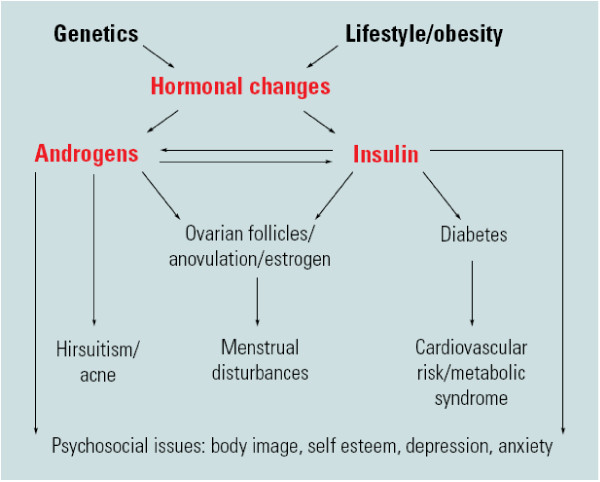
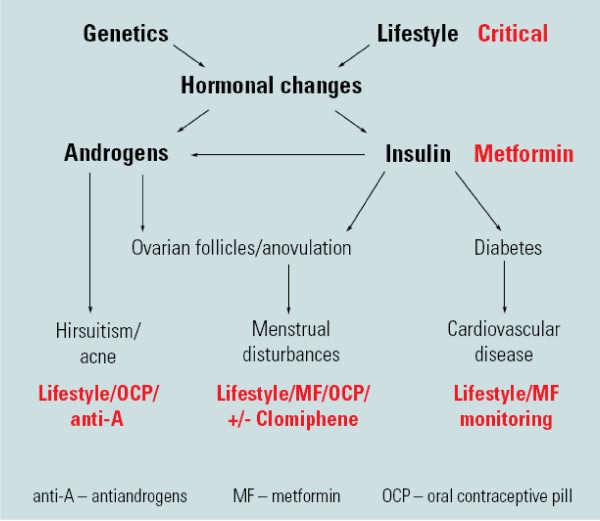
Polycystic ovary syndrome (PCOS) is of clinical and public health importance as it is very common, affecting up to one in five women of reproductive age. It has significant and diverse clinical implications including reproductive (infertility, hyperandrogenism, hirsutism), metabolic (insulin resistance, impaired glucose tolerance, type 2 diabetes mellitus, adverse cardiovascular risk profiles) and psychological features (increased anxiety, depression and worsened quality of life). Polycystic ovary syndrome is a heterogeneous condition and, as such, clinical and research agendas are broad and involve many disciplines. The phenotype varies widely depending on life stage, genotype, ethnicity and environmental factors including lifestyle and bodyweight. Importantly, PCOS has unique interactions with the ever increasing obesity prevalence worldwide as obesity-induced insulin resistance significantly exacerbates all the features of PCOS. Furthermore, it has clinical implications across the lifespan and is relevant to related family members with an increased risk for metabolic conditions reported in first-degree relatives. Therapy should focus on both the short and long-term reproductive, metabolic and psychological features. Given the aetiological role of insulin resistance and the impact of obesity on both hyperinsulinaemia and hyperandrogenism, multidisciplinary lifestyle improvement aimed at normalising insulin resistance, improving androgen status and aiding weight management is recognised as a crucial initial treatment strategy. Modest weight loss of 5% to 10% of initial body weight has been demonstrated to improve many of the features of PCOS. Management should focus on support, education, addressing psychological factors and strongly emphasising healthy lifestyle with targeted medical therapy as required. Monitoring and management of long-term metabolic complications is also an important part of routine clinical care. Comprehensive evidence-based guidelines are needed to aid early diagnosis, appropriate investigation, regular screening and treatment of this common condition. Whilst reproductive features of PCOS are well recognised and are covered here, this review focuses primarily on the less appreciated cardiometabolic and psychological features of PCOS.
Overview
The claims and statistics of this paper haven’t been checked yet.
Free: it reads the open-access text and checks the first 5 claims that cite a source we can check. Create a free account to check every claim.
Integrity signals
Registry
Cites
Statistics
Figures
Verification
Claims the paper makes
The claims and statistics of this paper haven’t been checked yet.
Free: it reads the open-access text and checks the first 5 claims that cite a source we can check. Create a free account to check every claim.
Claims other papers make about this one
Each is checked against this paper’s own text: does it say what the citing paper says it does?
The source backs part of the claim, not all of it — or backs it for a different population, condition or comparison.
In the citing paper
“PCOS prevalence is between 10% and 13% as confirmed in the guideline process. 1,2”
From Recommendations from the 2023 international evidence-based guideline for the assessment and management of polycystic ovary syndrome (2023) · cites this paper as [1]
Experimental — accuracy not yet measuredThe source backs part of the claim, not all of it — or backs it for a different population, condition or comparison.
In the citing paper
“PCOS prevalence is between 10% to 13% as confirmed in the guideline process (1, 2).”
From Recommendations From the 2023 International Evidence-based Guideline for the Assessment and Management of Polycystic Ovary Syndrome (2023) · cites this paper as [1]
Experimental — accuracy not yet measuredThe cited source says what the claim attributes to it.
In the citing paper
“Polycystic ovary syndrome (PCOS) is the most common endocrinopathy affecting reproductive-aged women, with impacts across the lifespan from adolescence to post menopause.”
From Recommendations From the 2023 International Evidence-based Guideline for the Assessment and Management of Polycystic Ovary Syndrome (2023) · cites this paper as [1]
The cited source says what the claim attributes to it.
In the citing paper
“PCOS aetiology is complex”
From Recommendations From the 2023 International Evidence-based Guideline for the Assessment and Management of Polycystic Ovary Syndrome (2023) · cites this paper as [1]
The cited source says what the claim attributes to it.
In the citing paper
“clinical presentation is heterogeneous with reproductive, metabolic, and psychological features (1, 2).”
From Recommendations From the 2023 International Evidence-based Guideline for the Assessment and Management of Polycystic Ovary Syndrome (2023) · cites this paper as [1]
11 more claims about this paper
Create a free account to see every claim other papers make about this one.
Self-check
Percentages, sums and reported differences re-computed from the paper’s own numbers.
The self-check needs the paper’s full text.
Citations
Cites
1 retracted
Shaw, L. J., Bairey Merz, C. N., Azziz, R., Stanczyk, F. Z., Sopko, G., Braunstein, G. D., Kelsey, S. F., Kip, K. E., Cooper-DeHoff, R. M., Johnson, B. D., et al. (2008) · The Journal of Clinical Endocrinology & Metabolism · doi:10.1210/jc.2007-0425 · Cited by 427 · cited 4×
“Some studies support an increased risk of CVD in PCOS [18], but these findings are not universal [61] and further research is needed.”
InfluentialRetractedReduction in the incidence of type 2 diabetes with lifestyle intervention or metformin
(2002) · New England Journal of Medicine · doi:10.1056/nejmoa012512 · Cited by 19,011 · cited 4×
“• Metformin* reduces the risk of diabetes by approximately 50% in high-risk groups [49].”
Influential(2004) · Fertility and Sterility · doi:10.1016/j.fertnstert.2003.10.004 · Cited by 9,050
The Prevalence and Features of the Polycystic Ovary Syndrome in an Unselected Population
Azziz, R., Woods, K. S., Reyna, R., Key, T. J., Knochenhauer, E. S., & Yildiz, B. O. (2004) · The Journal of Clinical Endocrinology & Metabolism · doi:10.1210/jc.2003-032046 · Cited by 2,712 · cited 2×
“Proc Natl Acad Sci USA 2006, 103:7030-7035.”
Insulin Resistance and the Polycystic Ovary Syndrome: Mechanism and Implications for Pathogenesis*
Dunaif, A. (1997) · Endocrine Reviews · doi:10.1210/edrv.18.6.0318 · Cited by 2,458 · cited 2×
“Interestingly, there is a paradoxical expression of insulin resistance in PCOS whereby insulin-stimulated androgen production persists while its role in glucose metabolism is impaired [42].”
Men at risk: occupation and male infertility
Claman, P. (2004) · Fertility and Sterility · doi:10.1016/s0015-0282(03)01188-9 · Cited by 2,387
Azziz, R., Carmina, E., Dewailly, D., Diamanti-Kandarakis, E., Escobar-Morreale, H. F., Futterweit, W., Janssen, O. E., Legro, R. S., Norman, R. J., Taylor, A. E., et al. (2006) · The Journal of Clinical Endocrinology & Metabolism · doi:10.1210/jc.2006-0178 · Cited by 2,143 · cited 8×
“National Institutes of Health criteria consensus statement [83] European Society for Human Reproduction and Embryology/American Society for Reproductive Medicine consensus statement [20] Androgen Excess Society position statement [ 21 ]”
InfluentialAzziz, R., Carmina, E., Dewailly, D., Diamanti-Kandarakis, E., Escobar-Morreale, H. F., Futterweit, W., Janssen, O. E., Legro, R. S., Norman, R. J., Taylor, A. E., et al. (2009) · Fertility and Sterility · doi:10.1016/j.fertnstert.2008.06.035 · Cited by 2,132 · cited 1×
“Among those with amenorrhoea, only 40% will be diagnosed with PCOS as hypothalamic dysfunction is a more common cause [ 31 ].”
Profound Peripheral Insulin Resistance, Independent of Obesity, in Polycystic Ovary Syndrome
Dunaif, A., Segal, K. R., Futterweit, W., & Dobrjansky, A. (1989) · Diabetes · doi:10.2337/diab.38.9.1165 · Cited by 1,967 · cited 2×
“Lean women with PCOS often but not always [13] have abnormalities of insulin secretion and action compared to weight-matched control subjects [41].”
March, W. A., Moore, V. M., Willson, K. J., Phillips, D. I. W., Norman, R. J., & Davies, M. J. (2010) · Human Reproduction · doi:10.1093/humrep/dep399 · Cited by 1,799 · cited 4×
“8%) in the first community-based prevalence study based on current Rotterdam diagnostic criteria [5].”
Influential
Research works printed but not linked: 4
- Barr ELM Magliano DJ Zimmet PZ Polkinghorne KR Atkins RC Dunstan DW Murray SG Shaw JE AusDiab 2005: The Australian Diabetes, Obesity and Lifestyle Study 2006 Melbourne, Australia: International Diabetes Institute
- Dunstan D Zimmet P Welborne T Sicree RTA Atkins R Cameron A Shaw J Chadaban S Diabetes and associated disorders in Australia 2000 - the accelerating epidemic Australian Diabetes, Obesity and Lifestyle Report 2001 Melbourne, Australia: The International Diabetes Institute
- NHaMRC Clinical Practice Guidelines for the Management of Overweight and Obesity in Adults 2003 Canberra, Australia: Australian Government Publishing Service
- Zawadzki J Dunaif A Dunaif A, Givens J, Haseltine F, Marrian G Diagnostic criteria for polycystic ovary syndrome: towards a rational approach Polycystic Ovary Syndrome Current Issues in Endocrinology and Metabolism 1992 Boston, MA: Blackwell Scientific 377 384
Cited by
Items 101–200 of 1,003
Zhang, J., Fan, P., Liu, H., Bai, H., Wang, Y., & Zhang, F. (2012) · Human Reproduction · doi:10.1093/humrep/des191 · Cited by 100
Follicular metabolic changes and effects on oocyte quality in polycystic ovary syndrome patients
Zhang, Y., Liu, L., Yin, T., Yang, J., & Xiong, C. (2017) · Oncotarget · doi:10.18632/oncotarget.19058 · Cited by 96
“This is due to the impaired lipase expression and altered lipolysis caused by insulin resistance [27].”
Kadoura, S., Alhalabi, M., & Nattouf, A. H. (2022) · Scientific Reports · doi:10.1038/s41598-022-08400-z · Cited by 105
Choudhury, A. A., & Rajeswari, V. D. (2022) · Life Sciences · doi:10.1016/j.lfs.2022.121069 · Cited by 103
PCOS Physiopathology and Vitamin D Deficiency: Biological Insights and Perspectives for Treatment
Morgante, G., Darino, I., Spanò, A., Luisi, S., Luddi, A., Piomboni, P., Governini, L., & De Leo, V. (2022) · Journal of Clinical Medicine · doi:10.3390/jcm11154509 · Cited by 95
“This suggests the role and the correlation of VD deficiency with PCOS symptoms such as T2DM, IR, and cardiovascular diseases.”
Tabassum, F., Jyoti, C., Sinha, H. H., Dhar, K., & Akhtar, M. S. (2021) · PLOS ONE · doi:10.1371/journal.pone.0247486 · Cited by 94
“Despite the various evidence about compromised HRQOL in women with PCOS, we further explored the other determinants that may help the clinician in care of the patient well-being [17,25,26].”
Fraison, E., Kostova, E., Moran, L. J., Bilal, S., Ee, C. C., Venetis, C., & Costello, M. F. (2020) · Cochrane Database of Systematic Reviews · doi:10.1002/14651858.cd005552.pub3 · Cited by 94
Self-citationEfficacy of Bariatric Surgery in the Treatment of Women With Obesity and Polycystic Ovary Syndrome
Hu, L., Ma, L., Xia, X., Ying, T., Zhou, M., Zou, S., Yu, H., & Yin, J. (2022) · The Journal of Clinical Endocrinology & Metabolism · doi:10.1210/clinem/dgac294 · Cited by 104
An update of polycystic ovary syndrome: causes and therapeutics options
Rababa’h, A. M., Matani, B. R., & Yehya, A. (2022) · Heliyon · doi:10.1016/j.heliyon.2022.e11010 · Cited by 108
Teede, H., Gibson-Helm, M., Norman, R. J., & Boyle, J. (2014) · The Journal of Clinical Endocrinology & Metabolism · doi:10.1210/jc.2013-2978 · Cited by 93
Self-citationWang, X.-X., Wei, J.-Z., Jiao, J., Jiang, S.-Y., Yu, D.-H., & Li, D. (2014) · Oncotarget · doi:10.18632/oncotarget.2224 · Cited by 90
Potential Health Benefits of Curcumin on Female Reproductive Disorders: A Review
Kamal, D. A. M., Salamt, N., Yusuf, A. N. M., Kashim, M. I. A. M., & Mokhtar, M. H. (2021) · Nutrients · doi:10.3390/nu13093126 · Cited by 106
Genome-wide screen of ovary-specific DNA methylation in polycystic ovary syndrome
Yu, Y.-Y., Sun, C.-X., Liu, Y., Li, Y., Wang, L., & Zhang, W. (2015) · Fertility and Sterility · doi:10.1016/j.fertnstert.2015.04.005 · Cited by 99
Genetic Variants Associated with Hyperandrogenemia in PCOS Pathophysiology
Dadachanji, R., Shaikh, N., & Mukherjee, S. (2018) · Genetics Research International · doi:10.1155/2018/7624932 · Cited by 90
van der Ham, K., Laven, J. S. E., Tay, C. T., Mousa, A., Teede, H. J., & Louwers, Y. V. (2024) · Fertility and Sterility · doi:10.1016/j.fertnstert.2024.05.163 · Cited by 103
“olycystic ovary syndrome (PCOS) is a prevalent endocrine disorder that affects women of reproductive age, with a reported occurrence rate of 12% (1 – 3). with PCOS may exhibit various features related to reproduction, endocrinology, metabolism, dermatology, and psychosocial well-being (1, 4 – 6).”
Self-citationKazemi, M., Kim, J. Y., Wan, C., Xiong, J. D., Michalak, J., Xavier, I. B., Ganga, K., Tay, C. T., Grieger, J. A., Parry, S. A., et al. (2022) · Human Reproduction Update · doi:10.1093/humupd/dmac023 · Cited by 89
Self-citationCoyle, C., & Campbell, R. E. (2019) · Molecular and Cellular Endocrinology · doi:10.1016/j.mce.2019.110561 · Cited by 89
The treatment of infertility in polycystic ovary syndrome: a brief update
Costello, M. F., Misso, M. L., Wong, J., Hart, R., Rombauts, L., Melder, A., Norman, R. J., & Teede, H. J. (2012) · Australian and New Zealand Journal of Obstetrics and Gynaecology · doi:10.1111/j.1479-828x.2012.01448.x · Cited by 86
Self-citationThe diagnosis and lived experience of polycystic ovary syndrome: A qualitative study
Tomlinson, J., Pinkney, J., Adams, L., Stenhouse, E., Bendall, A., Corrigan, O., & Letherby, G. (2017) · Journal of Advanced Nursing · doi:10.1111/jan.13300 · Cited by 88
“Few authors have acknowledged the potential importance of the psychological and social impact of PCOS (Teede et al., 2010).”
Kuang, H., Duan, Y., Li, D., Xu, Y., Ai, W., Li, W., Wang, Y., Liu, S., Li, M., Liu, X., et al. (2020) · PLoS ONE · doi:10.1371/journal.pone.0235404 · Cited by 99
The physiological basis of complementary and alternative medicines for polycystic ovary syndrome
Raja-Khan, N., Stener-Victorin, E., Wu, X., & Legro, R. S. (2011) · American Journal of Physiology-Endocrinology and Metabolism · doi:10.1152/ajpendo.00667.2010 · Cited by 86
Liu, L., Yin, T., Chen, Y., Li, Y., Yin, L., Ding, J., Yang, J., & Feng, H.-L. (2018) · The Journal of Steroid Biochemistry and Molecular Biology · doi:10.1016/j.jsbmb.2018.08.008 · Cited by 96
Baldani, D. P., Škrgatić, L., & Ougouag, R. (2015) · International Journal of Endocrinology · doi:10.1155/2015/786362 · Cited by 101
“When the PCOS women from European and US studies were stratified according to BMI and comparisons were limited to women in comparable BMI categories, the differences in the prevalence of IGT and DM2 between US and European PCOS women still persisted but decreased, highlighting the contribution of lifestyle to the disp…”
InfluentialBaranova, A., Tran, T. P., Afendy, A., Wang, L., Shamsaddini, A., Mehta, R., Chandhoke, V., Birerdinc, A., & Younossi, Z. M. (2013) · Journal of Translational Medicine · doi:10.1186/1479-5876-11-133 · Cited by 85
“This is especially true for women with visceral obesity [3,4].”
Joham, A. E., Boyle, J. A., Ranasinha, S., Zoungas, S., & Teede, H. J. (2014) · Human Reproduction · doi:10.1093/humrep/deu020 · Cited by 81
“Insulin resistance and hyperandrogenism are the main hormonal abnormalities in PCOS (Diamanti-Kandarakis and Papavassiliou, 2006; Teede et al., 2010) and contribute to the reproductive (hyperandrogenism, menstrual irregularity, oligo or anovulation, infertility), metabolic (dyslipidemia, type 2 diabetes, cardiovascula…”
Self-citationBongrani, A., Mellouk, N., Ramé, C., Cornuau, M., Guérif, F., Froment, P., & Dupont, J. (2019) · International Journal of Molecular Sciences · doi:10.3390/ijms20153778 · Cited by 89
“Polycystic ovary syndrome (PCOS) is a very common endocrinopathy affecting 6% to 13% of women of reproductive age and is one of the leading causes of female poor fertility [1].”
Polycystic Ovary Syndrome: A Common But Often Unrecognized Condition
Shannon, M., & Wang, Y. (2012) · Journal of Midwifery & Women s Health · doi:10.1111/j.1542-2011.2012.00161.x · Cited by 97
Patel, S. V. (2017) · The Journal of Steroid Biochemistry and Molecular Biology · doi:10.1016/j.jsbmb.2017.01.009 · Cited by 94
Metabolic hormones are integral regulators of female reproductive health and function
Athar, F., Karmani, M., & Templeman, N. M. (2024) · Bioscience Reports · doi:10.1042/bsr20231916 · Cited by 94
Ofotokun, I., Na, L. H., Landovitz, R. J., Ribaudo, H. J., McComsey, G. A., Godfrey, C. C., Aweeka, F. T., Cohn, S. E., Sagar, M., Kuritzkes, D. R., et al. (2015) · Clinical Infectious Diseases · doi:10.1093/cid/civ193 · Cited by 83
Steegers-Theunissen, R. P. M., Wiegel, R. E., Jansen, P. W., Laven, J. S. E., & Sinclair, K. D. (2020) · International Journal of Molecular Sciences · doi:10.3390/ijms21218211 · Cited by 82
Misso, M. L., Costello, M. F., Garrubba, M., Wong, J., Hart, R., Rombauts, L., Melder, A. M., Norman, R. J., & Teede, H. J. (2013) · Human Reproduction Update · doi:10.1093/humupd/dms036 · Cited by 81
“Polycystic ovary syndrome (PCOS) is a complex condition with psychological, metabolic and reproductive manifestations that impacts on health across the lifespan (Teede et al., 2010).”
Self-citationHeshmati, J., Farsi, F., Yosaee, S., Razavi, M., Rezaeinejad, M., Karimie, E., & Sepidarkish, M. (2018) · Probiotics and Antimicrobial Proteins · doi:10.1007/s12602-018-9493-9 · Cited by 86
“Furthermore PCOS women are also at higher risk of developing metabolic disorder such as glucose intolerance [5], β-cell dysfunction [6], inflammation [7], obesity, and dyslipidemia [8].”
Phylactou, M., Clarke, S. A., Patel, B., Baggaley, C., Jayasena, C. N., Kelsey, T., Comninos, A. N., Dhillo, W. S., & Abbara, A. (2021) · Clinical Endocrinology · doi:10.1111/cen.14402 · Cited by 93
Young women's psychological distress after a diagnosis of polycystic ovary syndrome or endometriosis
Rowlands, I. J., Teede, H., Lucke, J., Dobson, A. J., & Mishra, G. D. (2016) · Human Reproduction · doi:10.1093/humrep/dew174 · Cited by 70
Self-citationThe correlation between serum AMH and HOMA-IR among PCOS phenotypes
Wiweko, B., Indra, I., Susanto, C. A., Natadisastra, M., & Hestiantoro, A. (2018) · BMC Research Notes · doi:10.1186/s13104-018-3207-y · Cited by 90
“In a previous cohort study, abnormalities in glucose metabolism were present for 65% of the cardiovascular disease-related deaths [5].”
What has sex got to do with it? The role of hormones in the transgender brain
Nguyen, H. B., Loughead, J., Lipner, E., Hantsoo, L. V., Kornfield, S. L., & Epperson, C. N. (2018) · Neuropsychopharmacology · doi:10.1038/s41386-018-0140-7 · Cited by 85
The estrogen–macrophage interplay in the homeostasis of the female reproductive tract
Pepe, G., Locati, M., Torre, S. D., Mornata, F., Cignarella, A., Maggi, A. C., & Vegeto, E. (2018) · Human Reproduction Update · doi:10.1093/humupd/dmy026 · Cited by 89
“…16 were reported to be fertile but also to develop liver, metabolic and adipose abnormalities reminiscent of 17 dysmetabolic traits observed in women with polycystic ovarian syndrome (PCOS), who also develop 18 subfertility and menstrual irregularities (Ribas et al., 2011a; Teede et al., 2010).”
Yasmin, A., Roychoudhury, S., Choudhury, A. P., Ahmed, A. B. F., Dutta, S., Mottola, F., Verma, V., Kalita, J. C., Kumar, D., Sengupta, P., et al. (2022) · Life · doi:10.3390/life12121974 · Cited by 94
Linking Stress and Infertility: A Novel Role for Ghrelin
Sominsky, L., Hodgson, D. M., McLaughlin, E. A., Smith, R., Wall, H. M., & Spencer, S. J. (2017) · Endocrine Reviews · doi:10.1210/er.2016-1133 · Cited by 82
Acupuncture for polycystic ovarian syndrome
Lim, C. E. D., Ng, R. W., Xu, K., Cheng, N. C. L., Xue, C. C., Liu, J., & Chen, N. (2016) · Cochrane Database of Systematic Reviews · doi:10.1002/14651858.cd007689.pub3 · Cited by 82
dos Santos, Í. K., Ashe, M. C., Cobucci, R. N., Soares, G. M., Maranhão, T. M. D. O., & Dantas, P. M. S. (2020) · Medicine · doi:10.1097/md.0000000000019644 · Cited by 91
Clinical Presentation and Diagnosis of Polycystic Ovarian Syndrome
LENTSCHER, J. A., & DeCherney, A. H. (2020) · Clinical Obstetrics & Gynecology · doi:10.1097/grf.0000000000000563 · Cited by 96
“This meeting led to the conclusion of PCOS needing (1) hyperandrogenism (hirsutism and/or hyperandrogenemia), (2) ovarian dysfunction (oligo-anovulation or polycystic ovary), and (3) exclusion of other androgen excess or related disorders.”
Assessing and treating insulin resistance in women with polycystic ovarian syndrome
Traub, M. L. (2011) · World Journal of Diabetes · doi:10.4239/wjd.v2.i3.33 · Cited by 77
Jiskoot, G., Dietz de Loos, A., Beerthuizen, A., Timman, R., Busschbach, J., & Laven, J. (2020) · PLOS ONE · doi:10.1371/journal.pone.0233876 · Cited by 76
“A 5% to 10% weight loss improves many PCOS features, including psychological factors [13, 14].”
Anti-Inflammatory Diets in Fertility: An Evidence Review
Alesi, S., Villani, A. M., Mantzioris, E., Takele, W. W., Cowan, S., Moran, L., & Mousa, A. (2022) · Nutrients · doi:10.3390/nu14193914 · Cited by 80
Self-citationMood disorders and quality of life in polycystic ovary syndrome
Podfigurna-Stopa, A., Luisi, S., Regini, C., Katulski, K., Centini, G., Meczekalski, B., & Petraglia, F. (2015) · Gynecological Endocrinology · doi:10.3109/09513590.2015.1009437 · Cited by 72
“Additionaly, PCOS has clinical implications across the lifespan and is relevant to related family members with an increased risk for metabolic conditions reported in first-degree relatives [14].”
A cross sectional study of polycystic ovarian syndrome among young women in Bhopal, Central India
Gupta, M., Singh, D., Toppo, M., Priya, A., Sethia, S., & Gupta, P. (2017) · International Journal of Community Medicine and Public Health · doi:10.18203/2394-6040.ijcmph20175603 · Cited by 101
Effects of vitamin D supplementation in women with polycystic ovary syndrome: a review
Menichini, D., & Facchinetti, F. (2020) · Gynecological Endocrinology · doi:10.1080/09513590.2019.1625881 · Cited by 73
“PCOS is a very heterogeneous androgen excess disorder with different degrees of reproductive and metabolic dysfunctions including infertility, insulin resistance (IR), hyperinsulinemia, and dyslipidemia [2].”
Metformin in dermatology: an overview
Badr, D. T., Kurban, M., & Abbas, O. M. (2013) · Journal of the European Academy of Dermatology and Venereology · doi:10.1111/jdv.12116 · Cited by 77
Polycystic Ovarian Syndrome: Long-Term Health Consequences
Zore, T., Joshi, N., Lizneva, D., & Azziz, R. (2017) · Seminars in Reproductive Medicine · doi:10.1055/s-0037-1603096 · Cited by 72
Shen, C.-C., Yang, A. C., Hung, J.-H., Hu, L.-Y., & Tsai, S.-J. (2015) · The Oncologist · doi:10.1634/theoncologist.2014-0311 · Cited by 68
The Experience of Women Affected by Polycystic Ovary Syndrome: A Qualitative Study From Iran
Nasiri Amiri, F., Ramezani Tehrani, F., Simbar, M., Montazeri, A., & Mohammadpour Thamtan, R. A. (2014) · International Journal of Endocrinology and Metabolism · doi:10.5812/ijem.13612 · Cited by 58
“in a review study indicated that PCOS was a frustrating experience for women with negative effects on their psychological and mental health and greatly reduced their QoL (24).”
Wei, L., Huang, R., Li, L., Fang, C., Li, Y., & Liang, X. (2014) · Journal of Assisted Reproduction and Genetics · doi:10.1007/s10815-014-0319-8 · Cited by 76
Cardiometabolic risks in PCOS: a review of the current state of knowledge
Kakoly, N. S., Moran, L., Teede, H. J., & Joham, A. E. (2018) · Expert Review of Endocrinology & Metabolism · doi:10.1080/17446651.2019.1556094 · Cited by 79
“Insulin resistance and hyperandrogenism are the key factors contributing to the underlying hormone imbalance seen in women with PCOS [1,3].”
Self-citationNg, N. Y. H., Jiang, G., Cheung, L. P., Zhang, Y., Tam, C. H. T., Luk, A. O. Y., Quan, J., Lau, E. S. H., Yau, T., Chan, M. H. M., et al. (2019) · PLoS Medicine · doi:10.1371/journal.pmed.1002953 · Cited by 77
“The significantly elevated bioavailable androgen levels are thought to contribute to the metabolic abnormalities in women with PCOS [38].”
Providing lifestyle advice to women with PCOS: an overview of practical issues affecting success
Ee, C., Pirotta, S., Mousa, A., Moran, L., & Lim, S. (2021) · BMC Endocrine Disorders · doi:10.1186/s12902-021-00890-8 · Cited by 70
“Polycystic Ovary Syndrome (PCOS) is a multisystem disorder with reproductive, metabolic, and psychological manifestations [1] affecting up to 13 % of women of reproductive age [2].”
Self-citationRegidor, P., Mueller, A., Sailer, M., Santos, F. G., Rizo, J. M., & Egea, F. M. (2020) · International Journal of Molecular Sciences · doi:10.3390/ijms22010384 · Cited by 77
The prevalence of polycystic ovarian syndrome in Chinese women: a meta-analysis
Wu, Q., Gao, J., Bai, D., Yang, Z., & Liao, Q. (2021) · Annals of Palliative Medicine · doi:10.21037/apm-20-1893 · Cited by 67
“The main manifestations are menstrual disorders and reproductive dysfunction (2-4), one of the leading causes of females in anovulatory infertility (5,6).”
Li, Y., Tan, Y., Xia, G., & Shuai, J. (2023) · Critical Reviews in Food Science and Nutrition · doi:10.1080/10408398.2021.1951155 · Cited by 63
“Polycystic ovary syndrome (PCOS) is one of the most common gynecologic endocrine disorders, generally considered as a major cause of infertility (Fauser et al. 2012; Teede, Deeks, and Moran 2010).”
Patten, R. K., McIlvenna, L. C., Levinger, I., GARNHAM, A. P., Shorakae, S., Parker, A. G., McAinch, A. J., Rodgers, R. J., Hiam, D., Moreno‐Asso, A., et al. (2022) · Human Reproduction · doi:10.1093/humrep/deac047 · Cited by 77
Harmful effects of functional hypercortisolism: a working hypothesis
Tirabassi, G., Boscaro, M., & Arnaldi, G. (2013) · Endocrine · doi:10.1007/s12020-013-0112-y · Cited by 77
“, hypertension, insulin resistance [IR], DM, coronary heart disease, mortality [13–15]) which are also present in CS [2].”
Bahri Khomami, M., Boyle, J. A., Tay, C. T., Vanky, E., Teede, H. J., Joham, A. E., & Moran, L. J. (2018) · Clinical Endocrinology · doi:10.1111/cen.13579 · Cited by 65
Self-citationFecundity among women with polycystic ovary syndrome (PCOS)—a population-based study
Persson, S., Elenis, E., Turkmen, S., Kramer, M. S., Yong, E.-L., & Sundström-Poromaa, I. (2019) · Human Reproduction · doi:10.1093/humrep/dez159 · Cited by 62
Polycystic Ovary Syndrome: the Epigenetics Behind the Disease
Eiras, M. C., Pinheiro, D. P., Romcy, K. A. M., Ferriani, R. A., dos Reis, R. M., & Furtado, C. L. M. (2021) · Reproductive Sciences · doi:10.1007/s43032-021-00516-3 · Cited by 78
“Insulin resistance (IR) [8] and metabolic alterations, such as obesity, dyslipidemia, arterial hypertension, abnormal glucose metabolism, and chronic inflammation are common disorders associated with the pathophysiology of PCOS, which increases the risk of developing type 2 diabetes mellitus (T2DM) and cardiovascular…”
Lai, Y.-C., Ye, Z., Mu, L., Zhang, Y., Long, X., Zhang, C., Li, R., Zhao, Y., & Qiao, J. (2022) · The Journal of Clinical Endocrinology & Metabolism · doi:10.1210/clinem/dgac281 · Cited by 83
Updates on the myo-inositol plus D-chiro-inositol combined therapy in polycystic ovary syndrome
Unfer, V., & Porcaro, G. (2014) · Expert Review of Clinical Pharmacology · doi:10.1586/17512433.2014.925795 · Cited by 67
Ismayilova, M., & Yaya, S. (2022) · BMC Women's Health · doi:10.1186/s12905-022-01630-3 · Cited by 68
“Several international evidence-based guidelines and reviews [2, 20, 22, 33, 53] have been established for the diagnosis and management of PCOS which can be consulted by clinicians in practice.”
Pundir, J., Charles, D., Sabatini, L., Hiam, D., Jitpiriyaroj, S., Teede, H., Coomarasamy, A., Moran, L., & Thangaratinam, S. (2019) · Human Reproduction Update · doi:10.1093/humupd/dmy045 · Cited by 63
“, 2013), and has an adverse impact on the psychological wellbeing of women (Teede et al., 2010; Cooney et al., 2017).”
Self-citationEl‐Shal, A. S., Shalaby, S. M., Aly, N. M., Rashad, N. M., & Abdelaziz, A. M. (2013) · Molecular Biology Reports · doi:10.1007/s11033-013-2716-y · Cited by 71
“PCOS has significant psychological features also including increased anxiety, depression and worsened quality of life [2].”
Ndeingang, E. C., Deeh, P. B. D., Watcho, P., & Kamanyi, A. (2019) · Evidence-based Complementary and Alternative Medicine · doi:10.1155/2019/2965821 · Cited by 81
What should it take to describe a substance or product as 'sperm-safe'
Mortimer, D., Barratt, C. L. R., Bjorndahl, L., de Jager, C., Jequier, A. M., & Muller, C. H. (2013) · Human Reproduction Update · doi:10.1093/humupd/dmt008 · Cited by 64
“…et al., 2010; Newbold, 2011; Dunbar et al., 2012), precocious puberty (Mouritsen et al., 2010; Deng et al., 2012), polycystic ovary syndrome (Teede et al., 2010), neurobehavioural disorders, impaired immune function and a wide variety of cancers (Skakkebaek et al., 2001; Keinan-Boker et…”
Zhou, L., Qu, H., Yang, L., & Shou, L. (2023) · BMC Endocrine Disorders · doi:10.1186/s12902-023-01500-5 · Cited by 66
“The prevalence of infertility and menstrual disorders among PCOS women ranges from approximately 40% to 75%, and almost 40% PCOS patients fail to conceive spontaneously and turn to seek help from ART [1, 2, 44].”
Follicular Fluid: A Powerful Tool for the Understanding and Diagnosis of Polycystic Ovary Syndrome
Brinca, A. T., Ramalhinho, A. C., Sousa, Â., Oliani, A. H., Breitenfeld, L., Passarinha, L. A., & Gallardo, E. (2022) · Biomedicines · doi:10.3390/biomedicines10061254 · Cited by 75
“Women whose pathology was detected at an early age due to abnormal ovulation or menstruation, and were correctly monitored, did not show as many complications a d presented higher fertilization rates [31,84,240].”
Fetal programming of polycystic ovary syndrome
Gur, E. B. (2015) · World Journal of Diabetes · doi:10.4239/wjd.v6.i7.936 · Cited by 62
Arentz, S., Smith, C. A., Abbott, J. A., & Bensoussan, A. (2014) · BMC Complementary and Alternative Medicine · doi:10.1186/1472-6882-14-472 · Cited by 65
“PCOS is a life-long condition associated with significant endocrine, reproductive and psychological morbidity and serious long term health risks [2-4].”
Evaluation of the Interaction of Sex Hormones and Cardiovascular Function and Health
Willemars, M. M. A., Nabben, M., Verdonschot, J. A. J., & Hoes, M. F. (2022) · Current Heart Failure Reports · doi:10.1007/s11897-022-00555-0 · Cited by 71
Brown adipose tissue thermogenesis in polycystic ovary syndrome
Shorakae, S., Jona, E., de Courten, B., Lambert, G. W., Lambert, E. A., Phillips, S. E., Clarke, I. J., Teede, H. J., & Henry, B. A. (2019) · Clinical Endocrinology · doi:10.1111/cen.13913 · Cited by 62
Self-citationTorres, P. J., Skarra, D. V., Ho, B., Sau, L., Anvar, A. R., Kelley, S. T., & Thackray, V. G. (2019) · BMC Microbiology · doi:10.1186/s12866-019-1425-7 · Cited by 70
“Studies have shown that women with PCOS often suffer from profound, long-term health issues [7].”
Zhang, B., Shen, S., Gu, T., Hong, T., Liu, J., Sun, J., Wang, H., Bi, Y., & Zhu, D. (2019) · The Journal of Steroid Biochemistry and Molecular Biology · doi:10.1016/j.jsbmb.2019.03.005 · Cited by 61
Polycystic ovary syndrome and reproductive health of women: a curious association
Zehravi, M., Maqbool, M., & Ara, I. (2021) · International Journal of Adolescent Medicine and Health · doi:10.1515/ijamh-2021-0031 · Cited by 89
Approach to Investigation of Hyperandrogenism in a Postmenopausal Woman
Hirschberg, A. L. (2022) · The Journal of Clinical Endocrinology & Metabolism · doi:10.1210/clinem/dgac673 · Cited by 77
Cassar, S., Teede, H. J., Harrison, C. L., Joham, A. E., Moran, L. J., & Stepto, N. K. (2015) · Clinical Endocrinology · doi:10.1111/cen.12619 · Cited by 60
Self-citationA brief update on the evidence supporting the treatment of infertility in polycystic ovary syndrome
Costello, M., Misso, M. L., Balen, A. H., Boyle, J. A., Devoto, L., Garad, R. M., Hart, R. J., Johnson, L., Jordan, C., Legro, R. S., et al. (2019) · Australian and New Zealand Journal of Obstetrics and Gynaecology · doi:10.1111/ajo.13051 · Cited by 63
Self-citationElevation of markers of endotoxemia in women with polycystic ovary syndrome
Banaszewska, B., Siakowska, M., Chudzicka-Strugała, I., Chang, R. J., Pawelczyk, L. A., Zwoździak, B., Spaczyński, R., & Dulęba, A. J. (2020) · Human Reproduction · doi:10.1093/humrep/deaa194 · Cited by 66
Çoban, Ö. G., Tulacı, Ö. D., Adanır, A. S., & Önder, A. (2019) · Journal of Pediatric and Adolescent Gynecology · doi:10.1016/j.jpag.2019.07.008 · Cited by 69
Al Wattar, B. H., Teede, H., Garad, R., Franks, S., Balen, A., Bhide, P., Piltonen, T., Romualdi, D., Laven, J., Thondan, M., et al. (2020) · Human Reproduction · doi:10.1093/humrep/dez272 · Cited by 60
“outcomes such as diabetes, metabolic syndrome, depression and subfertility (Azziz et al., 2016; Teede et al., 2010).”
Self-citationBeneficial Effects of Green Tea Catechins on Female Reproductive Disorders: A Review
Kamal, D. A. M., Salamt, N., Zaid, S. S. M., & Mokhtar, M. H. (2021) · Molecules · doi:10.3390/molecules26092675 · Cited by 68
Sabag, A., Patten, R. K., Moreno‐Asso, A., Colombo, G. E., Bouzo, X. D., Moran, L., Harrison, C. L., Kazemi, M., Mousa, A., Tay, C. T., et al. (2024) · Journal of science and medicine in sport · doi:10.1016/j.jsams.2024.05.015 · Cited by 68
Self-citationDemis, A., Joham, A. E., Teede, H. J., Mousa, A., Earnest, A., Hawley, J. M., Smith, L., Azziz, R., Arlt, W., & Tay, C. T. (2024) · Human Reproduction Update · doi:10.1093/humupd/dmae028 · Cited by 65
“Lastly, there is a lack of consensus in reference ranges based on population characteristics such as ethnicity and age (Teede et al. , 2010).”
Self-citationPramodh, S. (2020) · International Journal of Women's Health · doi:10.2147/ijwh.s272867 · Cited by 54
“Introduction Polycystic ovary syndrome (PCOS) is a common endocrinological condition afflicting 4–10% women worldwide and may extend to 15–21% based on Rotterdam diagnostic criteria.(1,2) It is emerging as a major public health concern with a huge Correspondence: Sreepoorna Pramodh Zayed University, C-L1-41, Dubai Cam…”
BackgroundInfluentialManaging Polycystic Ovary Syndrome: What Our Patients Are Telling Us
Crete, J., & Adamshick, P. (2011) · Journal of Holistic Nursing · doi:10.1177/0898010111398660 · Cited by 61
Shang, Y., Zhou, H., He, R., & Lu, W. (2021) · Frontiers in Endocrinology · doi:10.3389/fendo.2021.735954 · Cited by 61
“The prevalence ranges from 6% to 21% depending on the population studied and diagnostic criteria used (4, 5).”
Higher risk of type 2 diabetes in women with hyperandrogenic polycystic ovary syndrome
Persson, S., Elenis, E., Türkmen, Ş., Kramer, M. S., Yong, E., & Poromaa, I. S. (2021) · Fertility and Sterility · doi:10.1016/j.fertnstert.2021.04.018 · Cited by 66
Wei, L., Liang, X., Fang, C., & Zhang, M. (2011) · Fertility and Sterility · doi:10.1016/j.fertnstert.2011.05.036 · Cited by 65
Hallajzadeh, J., Khoramdad, M., Karamzad, N., Almasi‐Hashiani, A., Janati, A., Ayubi, E., Pakzad, R., Sullman, M. J. M., & Safiri, S. (2018) · Journal of Cardiovascular and Thoracic Research · doi:10.15171/jcvtr.2018.10 · Cited by 76
Complex diseases and co-morbidities: polycystic ovary syndrome and type 2 diabetes mellitus
Rodgers, R. J., Avery, J. C., Moore, V. M., Davies, M. J., Azziz, R., Stener-Victorin, E., Moran, L. J., Robertson, S. A., Stepto, N. K., Norman, R. J., et al. (2019) · Endocrine Connections · doi:10.1530/ec-18-0502 · Cited by 60
Self-citationJin, Y., Zhang, Q., Pan, J., Wang, F., & Qu, F. (2019) · Journal of International Medical Research · doi:10.1177/0300060519876467 · Cited by 62
“Polycystic ovary syndrome (PCOS), which affects 5% to 12% of reproductive-aged women,(1,2) is the leading cause of subfecundity and anovulatory infertility, with characteristics of hyperandrogenism, irregular menstruation, and ovulatory dysfunction.(3,4) Women with PCOS who have not responded to first- or second-line…”
Weight management interventions in women with and without PCOS: a systematic review
Kataoka, J., Tassone, E., Misso, M., Joham, A., Stener-Victorin, E., Teede, H., & Moran, L. (2017) · Nutrients · doi:10.3390/nu9090996 · Cited by 58
Self-citationObesity and Polycystic Ovary Syndrome
Kim, J. (2024) · Journal of Obesity & Metabolic Syndrome · doi:10.7570/jomes24035 · Cited by 72
Metadata
- Authors
- Teede, H., Deeks, A., & Moran, L.
- Affiliations
- Jean Hailes (AU)
- Corresponding author
- Moran, L
- Venue
- BMC Medicine
- Published
- 2010-06-30
- Volume
- 8
- Issue
- 1
- Pages
- 41-41
- ISSN
- 1741-7015 (ISSN-L)
- PMC
- PMC2909929
- OpenAlex
- W2058294720
- Cited by
- 1,565
- References
- 89
- Citations by year
- 2026: 83 · 2025: 139 · 2024: 156 · 2023: 145 · 2022: 155 · 2021: 171 · 2020: 122 · 2019: 102 · 2018: 87 · 2017: 78 · 2016: 57 · 2015: 53 · 2014: 75 · 2013: 63 · 2012: 42
- FWCI
- 6.42
- Type
- journal article
- Language
- en
- Open access
- gold
- doi.org
- Licence
- Locations
- BMC Medicine (publishedVersion, cc-by)
- PubMed Central (publishedVersion, cc-by)
- PubMed (publishedVersion)
- Adelaide Research & Scholarship (AR&S) (University of Adelaide) (submittedVersion, cc-by)
- DOAJ (DOAJ: Directory of Open Access Journals) (submittedVersion)
- Topics
- Health Sciences › Medicine › Reproductive Medicine › Ovarian function and disorders
- Health Sciences › Medicine › Endocrinology, Diabetes and Metabolism › Diabetes, Cardiovascular Risks, and Lipoproteins
- Health Sciences › Medicine › Reproductive Medicine › Endometriosis Research and Treatment
- Keywords
- polycystic ovary syndrome, insulin resistance, obesity, hyperandrogenism, hirsutism, infertility, cardiometabolic risk, type 2 diabetes, cardiovascular risk, anxiety, depression, quality of life, weight loss, lifestyle intervention, first-degree relatives, metabolic complications, psychological manifestations
- MeSH terms
- Anxiety, Cardiovascular Diseases, Depression, Diabetes Mellitus, Female, Hirsutism, Humans, Infertility, Ovary, Polycystic Ovary Syndrome, Quality of Life, Reproduction, Hyperandrogenism
About these checks
Registry, retraction, Cites and statistics results are computed, not judged, with one exception: a printed reference that no index lists is read once by a model before it counts as a citation error. Claims are extracted by a model and kept only when their quote appears verbatim in the text; each cited source is then checked, with a model’s help, for whether it says what the claim relies on. Those verdicts can be wrong — read the claim’s quote and the cited source before relying on one.
Statistics and arithmetic are recomputed, not judged.
Confidence bands are shown only for fields calibrated on our annotated test set. None is calibrated yet, so no band is shown.
What counts as a claim ›How we measure confidence ›How we check this ›
Are you an author, or do you see a problem with this page? Request a review
Data sources
Bibliographic data: Semantic Scholar, OpenAlex, Crossref.
Contains information from the Semantic Scholar Academic Graph Datasets, made available under the ODC Attribution License (ODC-BY 1.0).
Semantic Scholar’s data is described in: Kinney, R., et al. (2023). The Semantic Scholar Open Data Platform. arXiv:2301.10140.
