

Polycystic ovary syndrome: a complex condition with psychological, reproductive and metabolic manifestations that impacts on health across the lifespan
Open accessThe DOI matches its Crossref record; 86 of the 89 references it cites were found in a registry or an index, and 1 are not checked yet.
Abstract
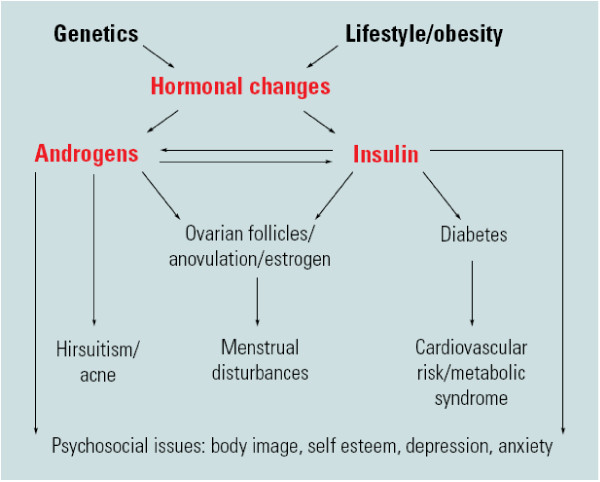
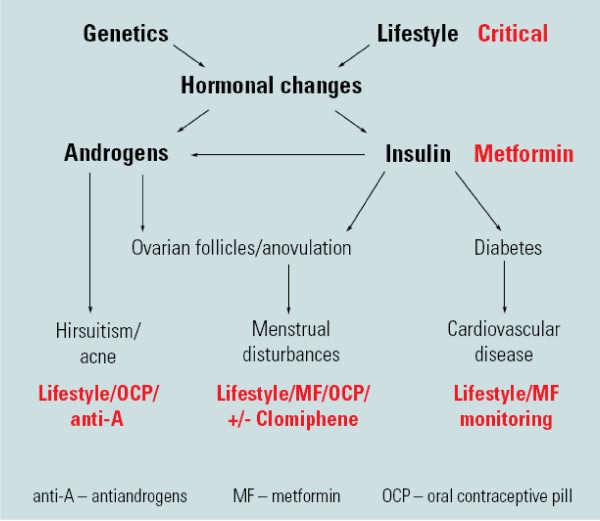
Polycystic ovary syndrome (PCOS) is of clinical and public health importance as it is very common, affecting up to one in five women of reproductive age. It has significant and diverse clinical implications including reproductive (infertility, hyperandrogenism, hirsutism), metabolic (insulin resistance, impaired glucose tolerance, type 2 diabetes mellitus, adverse cardiovascular risk profiles) and psychological features (increased anxiety, depression and worsened quality of life). Polycystic ovary syndrome is a heterogeneous condition and, as such, clinical and research agendas are broad and involve many disciplines. The phenotype varies widely depending on life stage, genotype, ethnicity and environmental factors including lifestyle and bodyweight. Importantly, PCOS has unique interactions with the ever increasing obesity prevalence worldwide as obesity-induced insulin resistance significantly exacerbates all the features of PCOS. Furthermore, it has clinical implications across the lifespan and is relevant to related family members with an increased risk for metabolic conditions reported in first-degree relatives. Therapy should focus on both the short and long-term reproductive, metabolic and psychological features. Given the aetiological role of insulin resistance and the impact of obesity on both hyperinsulinaemia and hyperandrogenism, multidisciplinary lifestyle improvement aimed at normalising insulin resistance, improving androgen status and aiding weight management is recognised as a crucial initial treatment strategy. Modest weight loss of 5% to 10% of initial body weight has been demonstrated to improve many of the features of PCOS. Management should focus on support, education, addressing psychological factors and strongly emphasising healthy lifestyle with targeted medical therapy as required. Monitoring and management of long-term metabolic complications is also an important part of routine clinical care. Comprehensive evidence-based guidelines are needed to aid early diagnosis, appropriate investigation, regular screening and treatment of this common condition. Whilst reproductive features of PCOS are well recognised and are covered here, this review focuses primarily on the less appreciated cardiometabolic and psychological features of PCOS.
Overview
The claims and statistics of this paper haven’t been checked yet.
Free: it reads the open-access text and checks the first 5 claims that cite a source we can check. Create a free account to check every claim.
Integrity signals
Registry
Cites
Statistics
Figures
Verification
Claims the paper makes
The claims and statistics of this paper haven’t been checked yet.
Free: it reads the open-access text and checks the first 5 claims that cite a source we can check. Create a free account to check every claim.
Claims other papers make about this one
Each is checked against this paper’s own text: does it say what the citing paper says it does?
The source backs part of the claim, not all of it — or backs it for a different population, condition or comparison.
In the citing paper
“PCOS prevalence is between 10% and 13% as confirmed in the guideline process. 1,2”
From Recommendations from the 2023 international evidence-based guideline for the assessment and management of polycystic ovary syndrome (2023) · cites this paper as [1]
Experimental — accuracy not yet measuredThe source backs part of the claim, not all of it — or backs it for a different population, condition or comparison.
In the citing paper
“PCOS prevalence is between 10% to 13% as confirmed in the guideline process (1, 2).”
From Recommendations From the 2023 International Evidence-based Guideline for the Assessment and Management of Polycystic Ovary Syndrome (2023) · cites this paper as [1]
Experimental — accuracy not yet measuredThe cited source says what the claim attributes to it.
In the citing paper
“Polycystic ovary syndrome (PCOS) is the most common endocrinopathy affecting reproductive-aged women, with impacts across the lifespan from adolescence to post menopause.”
From Recommendations From the 2023 International Evidence-based Guideline for the Assessment and Management of Polycystic Ovary Syndrome (2023) · cites this paper as [1]
The cited source says what the claim attributes to it.
In the citing paper
“PCOS aetiology is complex”
From Recommendations From the 2023 International Evidence-based Guideline for the Assessment and Management of Polycystic Ovary Syndrome (2023) · cites this paper as [1]
The cited source says what the claim attributes to it.
In the citing paper
“clinical presentation is heterogeneous with reproductive, metabolic, and psychological features (1, 2).”
From Recommendations From the 2023 International Evidence-based Guideline for the Assessment and Management of Polycystic Ovary Syndrome (2023) · cites this paper as [1]
11 more claims about this paper
Create a free account to see every claim other papers make about this one.
Self-check
Percentages, sums and reported differences re-computed from the paper’s own numbers.
The self-check needs the paper’s full text.
Citations
Cites
1 retracted
Shaw, L. J., Bairey Merz, C. N., Azziz, R., Stanczyk, F. Z., Sopko, G., Braunstein, G. D., Kelsey, S. F., Kip, K. E., Cooper-DeHoff, R. M., Johnson, B. D., et al. (2008) · The Journal of Clinical Endocrinology & Metabolism · doi:10.1210/jc.2007-0425 · Cited by 427 · cited 4×
“Some studies support an increased risk of CVD in PCOS [18], but these findings are not universal [61] and further research is needed.”
InfluentialRetractedReduction in the incidence of type 2 diabetes with lifestyle intervention or metformin
(2002) · New England Journal of Medicine · doi:10.1056/nejmoa012512 · Cited by 19,011 · cited 4×
“• Metformin* reduces the risk of diabetes by approximately 50% in high-risk groups [49].”
Influential(2004) · Fertility and Sterility · doi:10.1016/j.fertnstert.2003.10.004 · Cited by 9,050
The Prevalence and Features of the Polycystic Ovary Syndrome in an Unselected Population
Azziz, R., Woods, K. S., Reyna, R., Key, T. J., Knochenhauer, E. S., & Yildiz, B. O. (2004) · The Journal of Clinical Endocrinology & Metabolism · doi:10.1210/jc.2003-032046 · Cited by 2,712 · cited 2×
“Proc Natl Acad Sci USA 2006, 103:7030-7035.”
Insulin Resistance and the Polycystic Ovary Syndrome: Mechanism and Implications for Pathogenesis*
Dunaif, A. (1997) · Endocrine Reviews · doi:10.1210/edrv.18.6.0318 · Cited by 2,458 · cited 2×
“Interestingly, there is a paradoxical expression of insulin resistance in PCOS whereby insulin-stimulated androgen production persists while its role in glucose metabolism is impaired [42].”
Men at risk: occupation and male infertility
Claman, P. (2004) · Fertility and Sterility · doi:10.1016/s0015-0282(03)01188-9 · Cited by 2,387
Azziz, R., Carmina, E., Dewailly, D., Diamanti-Kandarakis, E., Escobar-Morreale, H. F., Futterweit, W., Janssen, O. E., Legro, R. S., Norman, R. J., Taylor, A. E., et al. (2006) · The Journal of Clinical Endocrinology & Metabolism · doi:10.1210/jc.2006-0178 · Cited by 2,143 · cited 8×
“National Institutes of Health criteria consensus statement [83] European Society for Human Reproduction and Embryology/American Society for Reproductive Medicine consensus statement [20] Androgen Excess Society position statement [ 21 ]”
InfluentialAzziz, R., Carmina, E., Dewailly, D., Diamanti-Kandarakis, E., Escobar-Morreale, H. F., Futterweit, W., Janssen, O. E., Legro, R. S., Norman, R. J., Taylor, A. E., et al. (2009) · Fertility and Sterility · doi:10.1016/j.fertnstert.2008.06.035 · Cited by 2,132 · cited 1×
“Among those with amenorrhoea, only 40% will be diagnosed with PCOS as hypothalamic dysfunction is a more common cause [ 31 ].”
Profound Peripheral Insulin Resistance, Independent of Obesity, in Polycystic Ovary Syndrome
Dunaif, A., Segal, K. R., Futterweit, W., & Dobrjansky, A. (1989) · Diabetes · doi:10.2337/diab.38.9.1165 · Cited by 1,967 · cited 2×
“Lean women with PCOS often but not always [13] have abnormalities of insulin secretion and action compared to weight-matched control subjects [41].”
March, W. A., Moore, V. M., Willson, K. J., Phillips, D. I. W., Norman, R. J., & Davies, M. J. (2010) · Human Reproduction · doi:10.1093/humrep/dep399 · Cited by 1,799 · cited 4×
“8%) in the first community-based prevalence study based on current Rotterdam diagnostic criteria [5].”
Influential
Research works printed but not linked: 4
- Barr ELM Magliano DJ Zimmet PZ Polkinghorne KR Atkins RC Dunstan DW Murray SG Shaw JE AusDiab 2005: The Australian Diabetes, Obesity and Lifestyle Study 2006 Melbourne, Australia: International Diabetes Institute
- Dunstan D Zimmet P Welborne T Sicree RTA Atkins R Cameron A Shaw J Chadaban S Diabetes and associated disorders in Australia 2000 - the accelerating epidemic Australian Diabetes, Obesity and Lifestyle Report 2001 Melbourne, Australia: The International Diabetes Institute
- NHaMRC Clinical Practice Guidelines for the Management of Overweight and Obesity in Adults 2003 Canberra, Australia: Australian Government Publishing Service
- Zawadzki J Dunaif A Dunaif A, Givens J, Haseltine F, Marrian G Diagnostic criteria for polycystic ovary syndrome: towards a rational approach Polycystic Ovary Syndrome Current Issues in Endocrinology and Metabolism 1992 Boston, MA: Blackwell Scientific 377 384
Cited by
Items 501–600 of 1,003
Tabassum, R., Imtiaz, F., Sharafat, S., Shukar-ud-din, S., & Nusrat, U. (2013) · Pakistan Journal of Medical Sciences · doi:10.12669/pjms.292.3180 · Cited by 30
Yang, H., Lee, H., Huang, W., Chen, M.-J., Chen, S. C., & Hsu, Y. (2017) · Journal of Bone and Mineral Metabolism · doi:10.1007/s00774-017-0894-8 · Cited by 23
“1 3 hormonal alterations on bone fracture among PCOS patients [7].”
Li, D., Liu, H.-X., Fang, Y., Huo, J., Wu, Q., Wang, T.-R., Zhou, Y., Wang, X., & Ma, X.-X. (2018) · Reproductive BioMedicine Online · doi:10.1016/j.rbmo.2018.05.008 · Cited by 29
Yuan, J., Wen, X., & Jia, M. (2021) · Annals of Palliative Medicine · doi:10.21037/apm-21-2018 · Cited by 22
“Ann Palliat Med 2021;10(8):8991-9001 | https://dx.”
Updated experimental cellular models to study polycystic ovarian syndrome
Sudhakaran, G., Babu, S. R., Mahendra, H., & Arockiaraj, J. (2023) · Life Sciences · doi:10.1016/j.lfs.2023.121672 · Cited by 22
Sarkisian, K. I., Ho, L., Yang, J. E., Mandelbaum, R. S., & Stanczyk, F. Z. (2023) · F&S Reports · doi:10.1016/j.xfre.2023.08.009 · Cited by 24
Moreira, S. D. N. T., de Sá, J. C. F., Costa, E. C., & Azevedo, G. D. (2013) · Revista Brasileira Ginecologia e Obstetrícia · doi:10.1590/s0100-72032013001100005 · Cited by 46
The Impact of Estradiol and 1,25(OH)2D3 on Metabolic Syndrome in Middle-Aged Taiwanese Males
Cheng, K., Huang, S., Huang, C., Lee, Y., Chu, C., Chang, C., Lai, W., & Liu, C. (2013) · PLoS ONE · doi:10.1371/journal.pone.0060295 · Cited by 27
“low estradiol-to-testosterone ratio seen in polycystic ovary syndrome with MetS, which is also associated with oligoanovulatory cycles, atherogenic lipidic pattern, and insulin resistance [17,18,19,45].”
Crawford, S. B., Smith, R. A., Kuwabara, S. A., & Grigorescu, V. I. (2017) · Journal of Women s Health · doi:10.1089/jwh.2016.6052 · Cited by 24
Amiri, F. N., Tehrani, F. R., Simbar, M., Montazeri, A., & Mohammadpour, R. A. (2018) · Intern J Endocrinol Metab · doi:10.5812/ijem.12400 · Cited by 24
“In rare cases, increased muscle mass, deepening the voice or clitoromegaly may occur, especially if the disease has a rapid onset, which requires the assessment of adrenal or ovarian androgen-secreting tumors (38).”
Maleki, V., Izadi, A., Farsad-Naeimi, A., & Alizadeh, M. (2018) · Nutrition Research · doi:10.1016/j.nutres.2018.04.003 · Cited by 23
Olaniyan, O. T., Okoli, B. J., Adetunji, C. O., Priscilla, B., Adebayo, F., Dare, A., Okotie, G. E., Ibitoye, B. O., Eweoya, O. O., & Mali, P. C. (2020) · Journal of Basic and Clinical Physiology and Pharmacology · doi:10.1515/jbcpp-2019-0076 · Cited by 24
“Women affected by PCOS are characterized by increased androgen levels, chronic inflammatory conditions and oxidative stress (OS) [4].”
Transgenerational Inheritance of Reproductive and Metabolic Phenotypes in PCOS Rats
Zhang, H., Yi, M., Li, D., Li, R., Zhao, Y., & Qiao, J. (2020) · Frontiers in Endocrinology · doi:10.3389/fendo.2020.00144 · Cited by 23
“by inter-crossing between F1 rats for 4 groups: (1) C♂-C♀; (2) D♂-C♀; (3) C♂-D♀”
Polycystic Ovary Syndrome and Pelvic Floor Dysfunction: A Narrative Review
Naz, M. S. G., Tehrani, F. R., Behroozi-Lak, T., Mohammadzadeh, F., Badr, F. K., & Ozgoli, G. (2020) · Research and Reports in Urology · doi:10.2147/rru.s249611 · Cited by 24
“dyslipidemia, endometrial cancer, ovarian cancer, and breast cancer.(21,22) The results of some studies on women with PCOS”
Hamid, F. A., Abu, M. A., Karim, A., Ahmad, M. F., Aziz, N. H. A., Kamal, D. A. M., & Mokhtar, M. H. (2022) · Biomedicines · doi:10.3390/biomedicines10071705 · Cited by 26
“6% of PCOS women, whereas hyperandrogenaemia was found in at least 60% of women with PCOS [3,7].”
Is sleep-disordered breathing associated with miscarriages? An emerging hypothesis
Lee, E. K., Gutcher, S., & Douglass, A. B. (2014) · Medical Hypotheses · doi:10.1016/j.mehy.2014.01.031 · Cited by 22
“It is already known that several other conditions adversely affect fertility, including obesity [19,20] and polycystic ovarian syndrome [21,22] (PCOS).”
Correa, J. B., Sperry, S. L., & Darkes, J. (2015) · Archives of Women s Mental Health · doi:10.1007/s00737-015-0506-3 · Cited by 22
“Lifestyle changes such as modifying diet and exercise and learning coping strategies for distress can improve mental health among women with PCOS (Himelein and Thatcher 2006; Norman et al. 2002; Teede et al. 2010).”
Batista, J. G., Soares, J. M., Maganhin, C. C., Simões, R. S., Tomaz, G., & Baracat, E. C. (2012) · Clinics · doi:10.6061/clinics/2012(03)14 · Cited by 22
Enhancing polycystic ovarian syndrome awareness using private social network
Alotaibi, M., & Shaman, A. A. (2020) · mHealth · doi:10.21037/mhealth.2019.12.02 · Cited by 21
“PCOS can lead to various complications among women, including reproductive (infertility, miscarriage and pregnancy complications), metabolic (obesity, insulin resistance, pre diabetes, type 2 diabetes T2DM), and Psychological (anxiety, depression) health aspects (22).”
The diagnostic experience of polycystic ovary syndrome: A scoping review of patient perspectives
Presswala, B., & De Souza, L. R. (2023) · Patient Education and Counseling · doi:10.1016/j.pec.2023.107771 · Cited by 21
Role of nuclear factor erythroid 2-related factor 2 (Nrf2) in female and male fertility
Valipour, J., Taghizadeh, F., Esfahani, R., Ramesh, M., & Rastegar, T. (2024) · Heliyon · doi:10.1016/j.heliyon.2024.e29752 · Cited by 24
“PCOS is considered as the most widespread endocrine and metabolic disorder in women of childbearing age, affecting about 6 – 15 % of them [62 – 64].”
Salem, A. B., Ajina, M., Suissi, M., Daher, H. S., Almawi, W. Y., & Mahjoub, T. (2013) · Gene · doi:10.1016/j.gene.2013.09.104 · Cited by 21
“, 2008), pancreatic β-cell dysfunction, and increased risk for metabolic syndrome and type 2 diabetes mellitus (T2DM) (Teede et al., 2010).”
Effects of metformin treatment on pregnancy outcomes in patients with polycystic ovary syndrome
Raperport, C., Chronopoulou, E., & Homburg, R. (2021) · Expert Review of Endocrinology & Metabolism · doi:10.1080/17446651.2021.1889366 · Cited by 26
“diabetes [1,2] One of the metabolic characteristics of PCOS is an increase in insulin resistance.”
Abdalla, M. A., Shah, N. Z., Deshmukh, H., Sahebkar, A., Östlundh, L., Al‐Rifai, R. H., Atkin, S. L., & Sathyapalan, T. (2021) · Clinical Endocrinology · doi:10.1111/cen.14623 · Cited by 24
“Polycystic ovary syndrome (PCOS) is a complex disease that affects women of reproductive age with a prevalence of up to 13%.(1,2) It has been estimated that 50%–70% of women with PCOS exhibit metabolic abnormalities, including insulin resistance (IR), abnormal glucose tolerance and an increased risk of type 2 diabetes…”
Brown Adipose Transplantation Improves Polycystic Ovary Syndrome-Involved Metabolome Remodeling
Yao, L., Wang, Q., Zhang, R., Wang, X., Liu, Y., Di, F., Song, L., & Xu, S. (2021) · Frontiers in Endocrinology · doi:10.3389/fendo.2021.747944 · Cited by 23
“It is manifested as oligo-anovulation, hyperandrogenemia, and metabolic complications (3), accompanied with higher risks of type 2 diabetes mellitus and cardiovascular diseases (4).”
Chhour, I., Blackshaw, L., Moran, L., Boyle, J. A., Robinson, T., & Lim, S. S. (2021) · Patient Education and Counseling · doi:10.1016/j.pec.2021.12.013 · Cited by 22
Self-citationAnand, S., Kumar, A., Prasad, A., & Trivedi, K. (2022) · Journal of obstetrics and gynaecology research · doi:10.1111/jog.15233 · Cited by 24
Wang, W., Jiang, Q., Niu, Y., Ding, Q., Yang, X., Zheng, Y., Hao, J. C., & Wei, D. (2022) · Frontiers in Molecular Biosciences · doi:10.3389/fmolb.2022.956406 · Cited by 23
“, 2021), with common comorbidities of abnormal glucose and lipid metabolism, obesity, insulin resistance, hepatic steatosis, and a higher risk of type 2 diabetes and cardiovascular disease (Teede et al., 2010; Escobar-Morreale, 2018; Patel, 2018).”
Patil, A. D., Vaidya, R. A., Begum, S., Chauhan, S. L., Mukherjee, S., Kokate, P. P., & Joshi, B. N. (2022) · International Journal of Microbiology Research · doi:10.4103/ijmr.ijmr_2497_19 · Cited by 25
Updates in diagnosing polycystic ovary syndrome-related infertility
Haddad-Filho, H., Tosatti, J. A. G., Magalhães, F. M. V., Gomes, K. B., & dos Reis, F. M. (2023) · Expert Review of Molecular Diagnostics · doi:10.1080/14737159.2023.2177536 · Cited by 29
“depending on the population studied and the definitions used [6,7].”
Zhang, Z., Shi, C., & Wang, Z. (2023) · Frontiers in Physiology · doi:10.3389/fphys.2023.1279469 · Cited by 22
An evidence-based guideline for polycystic ovary syndrome.
Garad, R. M., Teede, H. J., & Moran, L. (2011) · PubMed · Cited by 32
Self-citationDeterminants of emotional problems and mood disorders in women with polycystic ovary syndrome
Głowińska, A., Zielona–Jenek, M., Pawelczyk, A., & Banaszewska, B. (2016) · Ginekologia Polska · doi:10.5603/gp.2016.0016 · Cited by 24
Wang, Q., Deng, H., Cheng, K., Huang, Z., Yin, X., Zhou, Y., Yang, Y., Shen, W.-D., Zhao, L., & Shen, X. (2019) · Trials · doi:10.1186/s13063-019-3667-y · Cited by 23
“Of people with PCOS, 50–80% may have IR at some level [37].”
Kiel, I. A., Lionett, S., Parr, E. B., Jones, H., Røset, M. A., Salvesen, Ø. O., Vanky, E., & Moholdt, T. T. (2020) · BMJ Open · doi:10.1136/bmjopen-2019-034733 · Cited by 24
DeChick, A., Hetz, R., Lee, J., & Speelman, D. L. (2020) · International Journal of Molecular Sciences · doi:10.3390/ijms21217918 · Cited by 23
Xing, C., Lv, B., Zhao, H., Wang, D., Li, X., & He, B. (2021) · The Journal of Steroid Biochemistry and Molecular Biology · doi:10.1016/j.jsbmb.2021.105992 · Cited by 22
Chodick, G., & Zucker, I. (2011) · Women s Health · doi:10.2217/whe.11.4 · Cited by 24
“One suggested mechanism included the hormonal imbalance between estrogen and progesterone [18].”
Altinok, M. L., Glintborg, D., dePont Christensen, R., Hallas, J., & Andersen, M. (2014) · Clinical Endocrinology · doi:10.1111/cen.12365 · Cited by 20
Polycystic ovary syndrome: Improving policies, awareness, and clinical care
Garad, R. M., & Teede, H. J. (2020) · Current Opinion in Endocrine and Metabolic Research · doi:10.1016/j.coemr.2020.04.007 · Cited by 20
Self-citationBody weight reduction and metformin: Roles in polycystic ovary syndrome
AL-Nozha, O., Habib, F., Mojaddidi, M., & El-Bab, M. F. (2013) · Pathophysiology · doi:10.1016/j.pathophys.2013.03.002 · Cited by 20
“[3] H.”
(2013) · PubMed · Cited by 20
Güneşli, I., Aksun, S., Fathelbab, J., & Yıldız, B. O. (2024) · Endocrine · doi:10.1007/s12020-024-04121-7 · Cited by 21
“This education is essential for patients to gain a comprehensive understanding of their diagnosis, alleviate anxiety, and take proactive measures to effectively manage and mitigate the impact of PCOS throughout their lives [4].”
Scannell, N., Villani, A. M., Moran, L., Mantzioris, E., & Cowan, S. (2025) · Nutrients · doi:10.3390/nu17071105 · Cited by 22
Self-citationEmerging roles of APLN and APELA in the physiology and pathology of the female reproductive system
Wang, Y., Liu, X., Song, Z., Shen, X., Lu, S., Yan, L., & Kuang, H. (2020) · PeerJ · doi:10.7717/peerj.10245 · Cited by 25
Kite, C., Parkes, E., Taylor, S. R., Davies, R. W., Lagojda, L., Brown, J. E. P., Broom, D. R., Kyrou, I., & Randeva, H. S. (2022) · Medical Sciences · doi:10.3390/medsci10040053 · Cited by 22
García-Gómez, E., Gómez-Viais, Y. I., Cruz-Aranda, M. M., Martínez‐Razo, L. D., Reyes-Mayoral, C., Ibarra-González, L., Montoya-Estrada, A., Osorio‐Caballero, M., Perichart‐Perera, O., Camacho‐Arroyo, I., et al. (2023) · International Journal of Molecular Sciences · doi:10.3390/ijms24076857 · Cited by 24
“insulin resistance (IR), hyperinsulinemia, dyslipidemia, arterial hypertension, and chronic inflammation [3].”
Sumathi, M., Chitra, P., Sheela, S., & Ishwarya, C. (2023) · The Imaging Science Journal · doi:10.1080/13682199.2023.2229016 · Cited by 21
“The majority of endocrinology conditions a ff ecting women include polycystic ovary syndrome (PCOS), which a ff ects 8% to 13% of women of reproductive age [5,6].”
Joardar, S., Duarah, P., & Purkait, M. K. (2023) · Sustainable Chemistry and Pharmacy · doi:10.1016/j.scp.2023.101331 · Cited by 21
Serum sirtuin 1 levels in patients with polycystic ovary syndrome
Çağlayan, E. K., Üstün, Y. E., Göçmen, A. Y., Polat, M. F., & Aktulay, A. (2014) · Journal of Obstetrics and Gynaecology · doi:10.3109/01443615.2014.990428 · Cited by 20
“Insulin receptor phosphorylation, pancreatic B-cell dysfunction and abnormal B-cell response to glucose changes are thought to be responsible for insulin resistance in PCOS patients (Sirmans and Pate 2013; (Galluzzo et al. 2008) Teede et al. 2010; Angioni et al. 2008).”
Zare, M., Shahnazi, V., Fayezi, S., Darabi, M., Sadaghiani, M. M., Darabi, M., Khani, S., & Nouri, M. (2015) · PubMed Central · doi:10.22074/ijfs.2015.4240 · Cited by 26
“Polycystic ovarian syndrome (PCOS) is the most commonly occurring cause of female infertility (1).”
A Study to Measure the Health Awareness of Polycystic Ovarian Syndrome in Saudi Arabia
AlSinan, A., & Shaman, A. A. (2017) · Global Journal of Health Science · doi:10.5539/gjhs.v9n8p130 · Cited by 20
“A weight loss of 5% to 10% can have significant clinical impacts on psychological, reproductive and metabolic features of the disease (H. Teede et al., 2010).”
Masaeli, A., Nayeri, H., & Mirzaee, M. (2019) · Hormone and Metabolic Research · doi:10.1055/a-0896-1130 · Cited by 24
“Polycystic ovary syndrome (PCOS) is the most common endocrine abnormality that affects 5–10 % of women in reproductive-age, leading to menstrual dysfunction, hirsutism, acne, obesity, infertility, and metabolic syndrome [1, 2].”
The value of anti-Mullerian hormone in the management of polycystic ovary syndrome in adolescents
Asanidze, E., Kristesashvili, J., Pkhaladze, L., & Khomasuridze, A. (2019) · Gynecological Endocrinology · doi:10.1080/09513590.2019.1616689 · Cited by 21
“sideration of its contraindications [12,13].”
Rasheedy, R., Sammour, H. M., Elkholy, A. G., & Salim, Y. (2020) · Endocrine · doi:10.1007/s12020-020-02315-3 · Cited by 23
Atoum, M. F. M., Alajlouni, M. M., & Alzoughool, F. (2022) · Public Health Genomics · doi:10.1159/000521971 · Cited by 20
Interplay between PCOS and microbiome: The road less travelled
Batra, M., Bhatnager, R., Kumar, A., Suneja, P., & Dang, A. S. (2022) · American Journal of Reproductive Immunology · doi:10.1111/aji.13580 · Cited by 23
Kamal, D. A. M., Ibrahim, S. F., Ugusman, A., & Mokhtar, M. H. (2022) · Antioxidants · doi:10.3390/antiox11101879 · Cited by 20
“Polycystic ovary syndrome (PCOS) is a complex disorder that affects the reproductive, endocrine, metabolic, and psychological systems [16].”
Infertility and weight reduction: influence and outcome.
Khaskheli, M., Baloch, S., & Baloch, D. A. S. (2013) · PubMed · Cited by 20
Patlolla, S., Vaikkakara, S., Sachan, A., Venkatanarasu, A., Bachimanchi, B., Bitla, A. R. R., Settipalli, S., Pathiputturu, S., Sugali, R. N., & Chiri, S. (2017) · Gynecological Endocrinology · doi:10.1080/09513590.2017.1393062 · Cited by 20
“It is the most common reproductive endocrine disorder in females [2] occurring in 5%–20% of women in the reproductive age group [3,4].”
Elucidating the role of pigment epithelium-derived factor (PEDF) in metabolic PCOS models
Silber, M., Miller, I., Bar‐Joseph, H., Ben‐Ami, I., & Shalgi, R. (2019) · Journal of Endocrinology · doi:10.1530/joe-19-0297 · Cited by 20
Dynamic Changes of DNA Methylation and Transcriptome Expression in Porcine Ovaries during Aging
Xi, X., Zou, Q., Wei, Y., Chen, Y., Wang, X., Lv, D., Li, P., Wen, A., Zhu, L., Tang, G., et al. (2019) · BioMed Research International · doi:10.1155/2019/8732023 · Cited by 20
“In conclusion, the heredity record of normal reproduction and numerous pathologies like premature ovarian insufficiency (POI) and polycystic ovary syndrome (PCOS) have been emphasized [6, 7].”
A meta-analysis of the relationship between polycystic ovary syndrome and sleep disturbances risk
Wang, C., Huang, T., Song, W., Zhu, J., Liu, Y., Chen, X., Sun, X., Wu, Q., Chen, H., Liao, H., et al. (2022) · Frontiers in Physiology · doi:10.3389/fphys.2022.957112 · Cited by 19
“A community-based prevalence study using the Rotterdam criteria found that approximately 18% of women had PCOS, 70% of whom had not been diagnosed previously (Teede et al., 2010).”
Wang, Z., Groen, H., Cantineau, A. E. P., van Elten, T. M., Karsten, M. D. A., van Oers, A. M., Mol, B. W. J., Roseboom, T. J., & Hoek, A. (2021) · Nutrients · doi:10.3390/nu13103425 · Cited by 19
“Polycystic ovary syndrome (PCOS) is a complex endocrine and metabolic condition in women of reproductive age, characterized by chronic anovulation, hyperandrogenemia, and polycystic ovaries, which may result in hirsutism, irregular menstrual cycles, and infertility [1].”
Yadav, P., Quadri, K., Kadian, R., Waziri, A., Agrawal, P., & Alam, M. S. (2024) · iLiver · doi:10.1016/j.iliver.2024.100131 · Cited by 19
Tay, C. T., Pirotta, S., Teede, H. J., Moran, L., Robinson, T., Skouteris, H., Joham, A. E., & Lim, S. S. (2021) · Seminars in Reproductive Medicine · doi:10.1055/s-0041-1727191 · Cited by 21
Self-citationRichards, C. T., Meah, V. L., James, P. E., Rees, A., & Lord, R. N. (2021) · Frontiers in Physiology · doi:10.3389/fphys.2021.715881 · Cited by 23
Simental‐Mendía, L. E., Shah, N. Z., Sathyapalan, T., Majeed, M. A., Orekhov, A. N., Jamialahmadi, T., & Sahebkar, A. (2021) · Reproductive Sciences · doi:10.1007/s43032-021-00761-6 · Cited by 19
The role of sleep in PCOS: what we know and what to consider in the future
Teo, P., Henry, B. A., Moran, L., Cowan, S., & Bennett, C. (2022) · Expert Review of Endocrinology & Metabolism · doi:10.1080/17446651.2022.2082941 · Cited by 21
“Women with PCOS experience a variety of reproductive (hyperandrogenaemia, oligo or anovulation, infertility), metabolic (T2DM, gestational diabetes, impaired glucose tolerance, cardiometabolic risk factors) and psychological (depression, anxiety, emotional distress, poor self-esteem, psychosexual dysfunction, disorder…”
Self-citationLi, J., Zheng, R., Lin, Z., Hu, F., Lin, Y. Q., Zeng, G., Fang, J., Shen, Y., Tan, H., Han, M., et al. (2022) · Evidence-based Complementary and Alternative Medicine · doi:10.1155/2022/3245663 · Cited by 21
“In addition, the healthcare system bears a huge burden for treating the direct and indirect diseases related to IR [6].”
Rahmatnezhad, L., Moghaddam‐Banaem, L., Behroozi-Lak, T., Shiva, A., & Rasuli, J. (2023) · Scientific Reports · doi:10.1038/s41598-023-31406-0 · Cited by 19
Thaller, M., Homer, V., Sassani, M., Mollan, S. P., & Sinclair, A. J. (2023) · Eye · doi:10.1038/s41433-023-02569-x · Cited by 19
Benham, J. L., Corbett, K. S., Yamamoto, J. M., McClurg, C. E., Piltonen, T., Yıldız, B. O., Li, R., Mousa, A., Tay, C. T., Spritzer, P. M., et al. (2024) · Obesity Reviews · doi:10.1111/obr.13737 · Cited by 20
Self-citationGuo, X., Yao, Y., Wang, T., Wu, J., & Jiang, R. (2024) · Hypertension in Pregnancy · doi:10.1080/10641955.2024.2379389 · Cited by 19
“Its prevalence is estimated to range from 6% to 17%, depending on the diagnostic criteria and population under scrutiny (2–7).”
Ouladsahebmadarek, E., Khaki, A., Khanahmadi, S., Ashtiani, H. A., Paknejad, P., & Ayubi, M. R. (2014) · PubMed Central · Cited by 23
To Study The Status of LH: FSH Ratio in Obese And Non-Obese Patients of Polycystic Ovarian Syndrome
Lal, L., Bharti, A., & Perween, A. (2017) · IOSR Journal of Dental and Medical Sciences · doi:10.9790/0853-1601012023 · Cited by 24
Navid, B., Mohammadi, M., Sasannejad, R., Dehkordi, M. A., Maroufizadeh, S., Hafezi, M., & Samani, R. O. (2018) · Middle East Fertility Society Journal · doi:10.1016/j.mefs.2018.01.014 · Cited by 23
Insulin resistance influences central opioid activity in polycystic ovary syndrome
Berent‐Spillson, A., Love, T., Pop‐Busui, R., Sowers, M. R., Persad, C. C., Pennington, K. P., Eyvazzadeh, A. D., Padmanabhan, V., Zubieta, J., & Smith, Y. R. (2011) · Fertility and Sterility · doi:10.1016/j.fertnstert.2011.03.031 · Cited by 20
Rooney, S., & Pendry, B. A. (2014) · Journal of Herbal Medicine · doi:10.1016/j.hermed.2014.05.001 · Cited by 21
“Sufferers have increased risk of developing; metabolic syndrome (Grundy et al. 2005); impaired glucose tolerance; gestational diabetes and noninsulin dependent diabetes mellitus (NIDDM) (Dunaif 1997, Boomsma et al. 2006, Teede et al. 2010, Erhmann et al. 1999).”
InfluentialRezvanfar, M. A., Saadat, S., Saadi, H. A. S., Mansoori, P., Saeedi, S., Gooshe, M., Baeeri, M., & Abdollahi, M. R. (2014) · Theriogenology · doi:10.1016/j.theriogenology.2014.11.034 · Cited by 20
“Therefore, none of the current therapies can fully improve all the clinical features of the PCOS and studies are still being conducted to find better drugs [14].”
A Review on Glycosylated Hemoglobin in Polycystic Ovary Syndrome
Rezaee, M., Asadi, N., Pouralborz, Y., Ghodrat, M., & Habibi, S. (2016) · Journal of Pediatric and Adolescent Gynecology · doi:10.1016/j.jpag.2016.07.001 · Cited by 22
Padder, K. A., Jahan, N., Yousuf, M., Shah, I. A., Bhat, G. A., Khurshid, R., Zargar, M. H., & Ganie, M. A. (2025) · Journal of Ovarian Research · doi:10.1186/s13048-025-01734-y · Cited by 18
“Genetic evidence of PCOS also comes from the presence of its components, such as androgenic T-2 diabetes mellitus, in the first-degree family of PCOS patients [32].”
Hoteit, B. H., Kotaich, J., Ftouni, H., Hazime, F., Safawi, A., Masri, R., & Marwani, M. (2025) · Therapeutic Advances in Endocrinology and Metabolism · doi:10.1177/20420188251383064 · Cited by 22
“3,6 Additionally, acne, alopecia, and hirsutism are common manifestations of hyperandrogenemia (excess androgens), which is the key biochemical feature of PCOS.”
Ismail, A. B., Naji, M. ’. S., Nebih, İ., Tuncel, G., Özbakır, B., Temel, Ş. G., Tulay, P., Mocan, G., & Ergören, M. Ç. (2022) · Zygote · doi:10.1017/s0967199422000028 · Cited by 18
Matorras, R., Pijoán, J. I., Laínz, L., Díaz-Núñez, M., Sainz, H., Pérez-Fernández, S., & Moreira, D. (2022) · Archives of Gynecology and Obstetrics · doi:10.1007/s00404-022-06757-0 · Cited by 19
“Introduction Polycystic ovary syndrome (PCOS) is the most common endocrinopathy in women of reproductive age, with a prevalence of between 8 and 13% depending on the population studied and definitions used [1, 2, 3].”
Infertility Prevention and Health Promotion: The Role of Nurses in Public Health Initiatives
Shirazi, M. S. R., Salarkarimi, F., Moghadasi, F., Mahmoudikohani, F., Tajik, F., & Nejad, Z. B. (2024) · Galen Medical Journal · doi:10.31661/gmj.v13i.3534 · Cited by 23
“[24]”
Wei, L., Li, L., Fang, C., Huang, R., & Liang, X. (2013) · Journal of Assisted Reproduction and Genetics · doi:10.1007/s10815-013-0041-y · Cited by 21
Anwar, A., Torky, H. A., Dief, O., Elwahed, A., & Senna, H. F. A. A. (2016) · Acta Medica International · doi:10.5530/ami.2016.2.19 · Cited by 18
Postnatal depression in a community‐based study of women with polycystic ovary syndrome
March, W. A., Whitrow, M. J., Davies, M. J., Fernandez, R. C., & Moore, V. (2018) · Acta Obstetricia Et Gynecologica Scandinavica · doi:10.1111/aogs.13332 · Cited by 18
“Impaired fertility means that women with PCOS are frequently clients of fertility clinics (5,10,11), a source of stress during treatment (12,13).”
Rs1799817 in INSR associates with susceptibility to polycystic ovary syndrome
Daghestani, M. H. (2019) · Journal of Medical Biochemistry · doi:10.2478/jomb-2019-0023 · Cited by 25
Davis, S., Hendryx, J., Menezes, C., Bouwer, S., Menezes, H., Patel, V., Bostick-Smith, C. A., & Speelman, D. L. (2020) · Journal of Osteopathic Medicine · doi:10.7556/jaoa.2020.051 · Cited by 19
McIlvenna, L. C., Patten, R. K., McAinch, A. J., Rodgers, R. J., Stepto, N. K., & Moreno‐Asso, A. (2021) · Frontiers in Endocrinology · doi:10.3389/fendo.2021.732338 · Cited by 21
“Polycystic ovary syndrome (PCOS) is a common endocrine condition that affects 8-13% of women of reproductive age, with health implications throughout the lifespan (1, 2).”
How to recognize PCOS: results of a web-based survey at IVF-worldwide.com
Ning, N., Balen, A., Brezina, P. R., Leong, M., Shoham, Z., Wallach, E. E., & Zhao, Y. (2013) · Reproductive BioMedicine Online · doi:10.1016/j.rbmo.2013.01.009 · Cited by 18
“A strong correlation exists between PCOS and metabolic syndrome (Baranova et al., 2011; Moran et al., 2010; Rahmanpour et al., 2012; Teede et al., 2010).”
Effect of Ramadan Fasting on Stress Neurohormones in Women with Polycystic Ovary Syndrome.
Zangeneh, F. Z., Yazdi, R. S., Naghizadeh, M. M., & Abedinia, N. (2015) · PubMed Central · Cited by 23
Physical Properties of Blood Are Altered in Young and Lean Women with Polycystic Ovary Syndrome
Simmonds, M. J., Milne, N., Ong, K. J., Brotherton, E. J., McNamee, A. P., Horobin, J. T., & Sabapathy, S. (2016) · PLoS ONE · doi:10.1371/journal.pone.0167290 · Cited by 20
“Classic features of PCOS include disordered reproductive, metabolic, and psychological health [2], although the presentation of these factors vary with age.”
Borderline personality disorder and polycystic ovary syndrome: A review of the literature
Tan, R., Grigg, J., & Kulkarni, J. (2017) · Australian & New Zealand Journal of Psychiatry · doi:10.1177/0004867417730650 · Cited by 20
“Unsurprisingly, it is estimated that PCOS and its associated health risk factors account for millions of healthcare costs per year (Teede et al., 2010).”
Shahnazi, V., Zaree, M., Nouri, M., Sadaghiani, M. M., Fayezi, S., Darabi, M., Khani, S., & Darabi, M. (2015) · PubMed Central · Cited by 18
Wu, L., Liu, Y., Huang, X., Lin, K., Liu, Y., Li, Z., Wei, T., Song, L., Hua, Y., & Wang, X. (2023) · Clinical Endocrinology · doi:10.1111/cen.14895 · Cited by 17
Baldani, D. P., Skrgatic, L., Ougouag, R., & Kasum, M. (2018) · Gynecological Endocrinology · doi:10.1080/09513590.2017.1381681 · Cited by 17
“Changes in lifestyle is the first line of treatment for most overweight and obese women with PCOS [6].”
Bozkurt, M., Bozkurt, D. K., Kurban, D., Takmaz, T., Şevket, O., & Özcan, P. (2020) · Journal of Obstetrics and Gynaecology · doi:10.1080/01443615.2020.1803244 · Cited by 19
“In concordance with our results, women with PCOS have significantly higher serum LH, DHEAS, testosterone, and LH/FSH ratio and lower SHGB when compared to women with multifollicular ovaries (Teede et al. 2010).”
Metadata
- Authors
- Teede, H., Deeks, A., & Moran, L.
- Affiliations
- Jean Hailes (AU)
- Corresponding author
- Moran, L
- Venue
- BMC Medicine
- Published
- 2010-06-30
- Volume
- 8
- Issue
- 1
- Pages
- 41-41
- ISSN
- 1741-7015 (ISSN-L)
- PMC
- PMC2909929
- OpenAlex
- W2058294720
- Cited by
- 1,565
- References
- 89
- Citations by year
- 2026: 83 · 2025: 139 · 2024: 156 · 2023: 145 · 2022: 155 · 2021: 171 · 2020: 122 · 2019: 102 · 2018: 87 · 2017: 78 · 2016: 57 · 2015: 53 · 2014: 75 · 2013: 63 · 2012: 42
- FWCI
- 6.42
- Type
- journal article
- Language
- en
- Open access
- gold
- doi.org
- Licence
- Locations
- BMC Medicine (publishedVersion, cc-by)
- PubMed Central (publishedVersion, cc-by)
- PubMed (publishedVersion)
- Adelaide Research & Scholarship (AR&S) (University of Adelaide) (submittedVersion, cc-by)
- DOAJ (DOAJ: Directory of Open Access Journals) (submittedVersion)
- Topics
- Health Sciences › Medicine › Reproductive Medicine › Ovarian function and disorders
- Health Sciences › Medicine › Endocrinology, Diabetes and Metabolism › Diabetes, Cardiovascular Risks, and Lipoproteins
- Health Sciences › Medicine › Reproductive Medicine › Endometriosis Research and Treatment
- Keywords
- polycystic ovary syndrome, insulin resistance, obesity, hyperandrogenism, hirsutism, infertility, cardiometabolic risk, type 2 diabetes, cardiovascular risk, anxiety, depression, quality of life, weight loss, lifestyle intervention, first-degree relatives, metabolic complications, psychological manifestations
- MeSH terms
- Anxiety, Cardiovascular Diseases, Depression, Diabetes Mellitus, Female, Hirsutism, Humans, Infertility, Ovary, Polycystic Ovary Syndrome, Quality of Life, Reproduction, Hyperandrogenism
About these checks
Registry, retraction, Cites and statistics results are computed, not judged, with one exception: a printed reference that no index lists is read once by a model before it counts as a citation error. Claims are extracted by a model and kept only when their quote appears verbatim in the text; each cited source is then checked, with a model’s help, for whether it says what the claim relies on. Those verdicts can be wrong — read the claim’s quote and the cited source before relying on one.
Statistics and arithmetic are recomputed, not judged.
Confidence bands are shown only for fields calibrated on our annotated test set. None is calibrated yet, so no band is shown.
What counts as a claim ›How we measure confidence ›How we check this ›
Are you an author, or do you see a problem with this page? Request a review
Data sources
Bibliographic data: Semantic Scholar, OpenAlex, Crossref.
Contains information from the Semantic Scholar Academic Graph Datasets, made available under the ODC Attribution License (ODC-BY 1.0).
Semantic Scholar’s data is described in: Kinney, R., et al. (2023). The Semantic Scholar Open Data Platform. arXiv:2301.10140.
