

EEG complexity as a biomarker for autism spectrum disorder risk
Open accessThe DOI matches its Crossref record; 59 of the 60 references it cites were found in a registry or an index.
Abstract
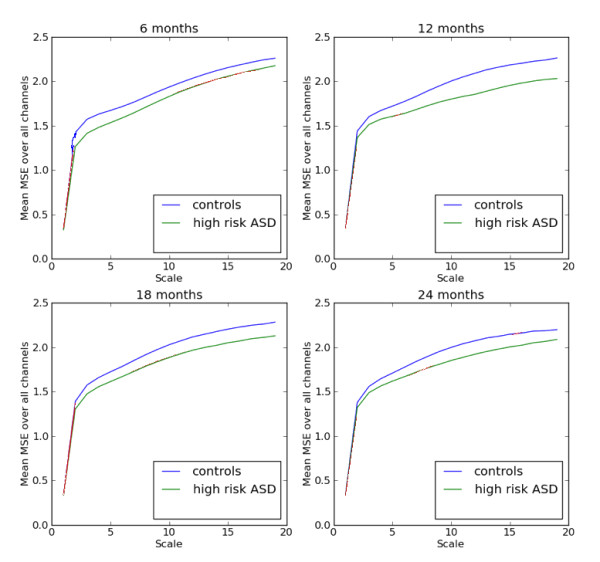
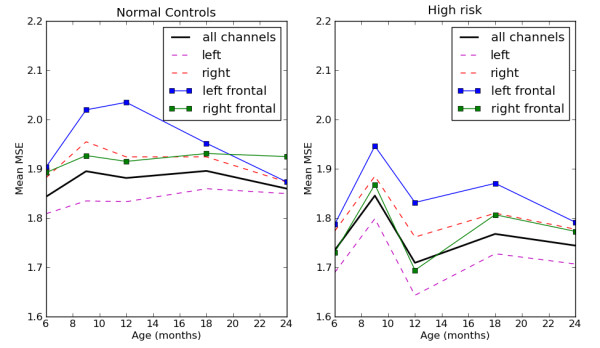
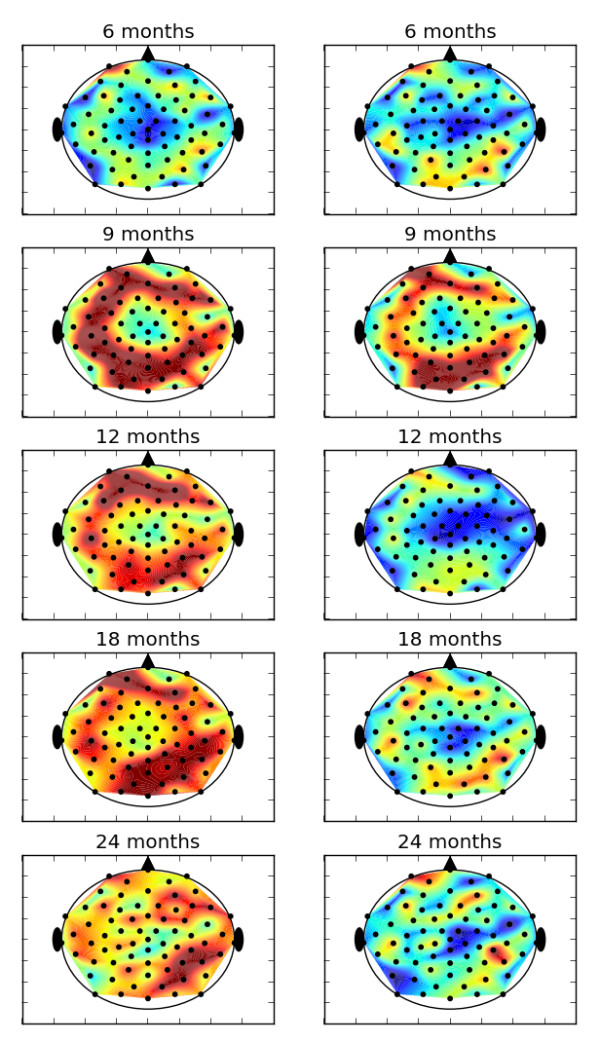
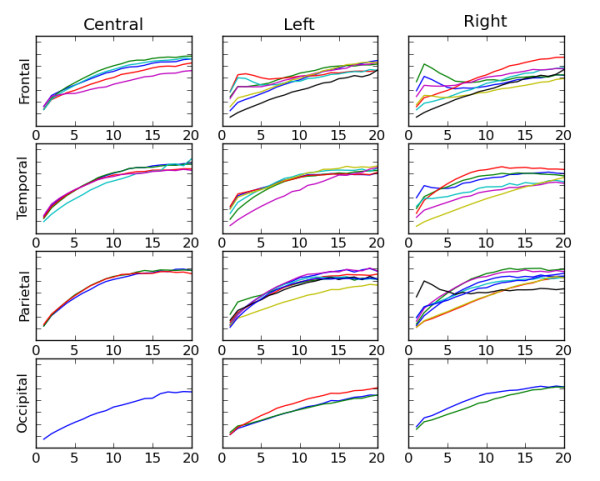
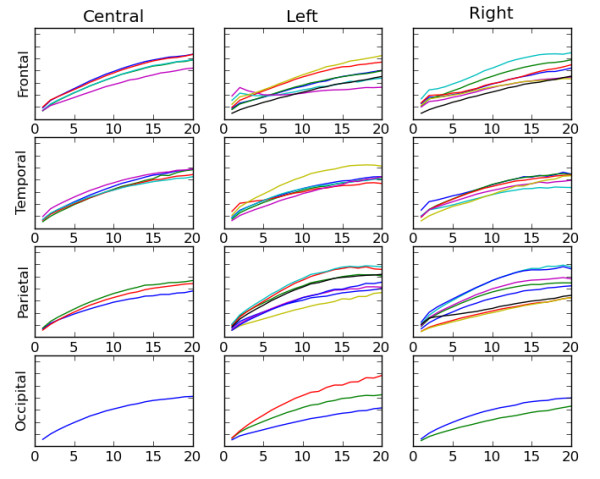
BACKGROUND: Complex neurodevelopmental disorders may be characterized by subtle brain function signatures early in life before behavioral symptoms are apparent. Such endophenotypes may be measurable biomarkers for later cognitive impairments. The nonlinear complexity of electroencephalography (EEG) signals is believed to contain information about the architecture of the neural networks in the brain on many scales. Early detection of abnormalities in EEG signals may be an early biomarker for developmental cognitive disorders. The goal of this paper is to demonstrate that the modified multiscale entropy (mMSE) computed on the basis of resting state EEG data can be used as a biomarker of normal brain development and distinguish typically developing children from a group of infants at high risk for autism spectrum disorder (ASD), defined on the basis of an older sibling with ASD. METHODS: Using mMSE as a feature vector, a multiclass support vector machine algorithm was used to classify typically developing and high-risk groups. Classification was computed separately within each age group from 6 to 24 months. RESULTS: Multiscale entropy appears to go through a different developmental trajectory in infants at high risk for autism (HRA) than it does in typically developing controls. Differences appear to be greatest at ages 9 to 12 months. Using several machine learning algorithms with mMSE as a feature vector, infants were classified with over 80% accuracy into control and HRA groups at age 9 months. Classification accuracy for boys was close to 100% at age 9 months and remains high (70% to 90%) at ages 12 and 18 months. For girls, classification accuracy was highest at age 6 months, but declines thereafter. CONCLUSIONS: This proof-of-principle study suggests that mMSE computed from resting state EEG signals may be a useful biomarker for early detection of risk for ASD and abnormalities in cognitive development in infants. To our knowledge, this is the first demonstration of an information theoretic analysis of EEG data for biomarkers in infants at risk for a complex neurodevelopmental disorder.
Overview
The claims and statistics of this paper haven’t been checked yet.
Free: it reads the open-access text and checks the first 5 claims that cite a source we can check. Create a free account to check every claim.
Integrity signals
Registry
Cites
Statistics
Figures
Verification
Claims the paper makes
The claims and statistics of this paper haven’t been checked yet.
Free: it reads the open-access text and checks the first 5 claims that cite a source we can check. Create a free account to check every claim.
Claims other papers make about this one
Each is checked against this paper’s own text: does it say what the citing paper says it does?
The source backs part of the claim, not all of it — or backs it for a different population, condition or comparison.
In the citing paper
“There is now accumulating evidence from electroencephalographic (EEG) studies suggesting that infants at high risk for ASD, regardless of whether they ultimately meet diagnostic criteria for ASD, have different developmental trajectories within the first year of life compared to low-risk infants [10–20].”
From EEG power at 3 months in infants at high familial risk for autism (2017) · cites this paper as [10]
Experimental — accuracy not yet measured
Self-check
Percentages, sums and reported differences re-computed from the paper’s own numbers.
The self-check needs the paper’s full text.
Citations
Cites
Lecture Notes in Computer Science 1205
(1999) · Industrial Robot: An International Journal · doi:10.1108/ir.1999.04926fae.001 · Cited by 38,662
Buzsáki, G. (2006) · doi:10.1093/acprof:oso/9780195301069.001.0001 · Cited by 4,873
The brainweb: phase synchronization and large-scale integration
Varela, F., Lachaux, J.-P., Rodriguez, E., & Martinerie, J. (2001) · Nature Reviews Neuroscience · doi:10.1038/35067550 · Cited by 4,761 · cited 2×
“The analysis of signal complexity on multiple scales may reveal information about neural connectivity that is diagnostically useful [1,19,22].”
BackgroundSynchronization: A Universal Concept in Nonlinear Sciences
Pikovsky, A., Rosenblum, M., & Kurths, J. (2001) · Cambridge University Press eBooks · doi:10.1017/cbo9780511755743 · Cited by 4,652
Bassett, D. S., & Bullmore, E. (2006) · The Neuroscientist · doi:10.1177/1073858406293182 · Cited by 2,600 · cited 1×
“This remarkable connectivity is achieved by a kind of hierarchical organization that is not fully understood in the brain, but is ubiquitous in nature and is called a scale-free network [2-4] that changes with development.”
BackgroundNunez, P. L., & Srinivasan, R. (2006) · doi:10.1093/acprof:oso/9780195050387.001.0001 · Cited by 2,531
Multiscale entropy analysis of biological signals
Costa, M., Goldberger, A. L., & Peng, C.-K. (2005) · Physical Review E · doi:10.1103/physreve.71.021906 · Cited by 2,482 · cited 3×
“One interpretation of biological complexity is that it reflects a system’s ability to adapt quickly and function in a changing environment [23].”
BackgroundInfluentialElectric Fields of the Brain: The Neurophysics of EEG
Nunez, P. L., & Harth, E. (1982) · Physics Today · doi:10.1063/1.2915137 · Cited by 2,232
Hierarchical organization in complex networks
Ravasz, E., & Barabási, A.-L. (2003) · Physical Review E · doi:10.1103/physreve.67.026112 · Cited by 2,160
Scale-Free Networks: A Decade and Beyond
Barabási, A.-L. (2009) · Science · doi:10.1126/science.1173299 · Cited by 2,109 · cited 2×
“This remarkable connectivity is achieved by a kind of hierarchical organization that is not fully understood in the brain, but is ubiquitous in nature and is called a scale-free network [2-4] that changes with development.”
Background
Cited by
Items 201–300 of 516
Liu, M., Liu, X., Hildebrandt, A., & Zhou, C. (2020) · Cerebral Cortex Communications · doi:10.1093/texcom/tgaa015 · Cited by 28
“2019), autism (Bosl et al. 2011; Okazaki et al. 2015; Takahashi et al. 2016; Liu et al. 2017; Bosl et al. 2018; Easson and McIntosh 2019; Kang et al. 2019) and Alzheimer’s disease (Mizuno et al.”
BackgroundElectroencephalography complexity in infantile spasms and its association with treatment response
Chu, Y.-J., Chang, C.-F., Weng, W., Fan, P., Shieh, J.-S., & Lee, W. (2020) · Clinical Neurophysiology · doi:10.1016/j.clinph.2020.12.006 · Cited by 28
Conditional entropy approach to analyze cognitive dynamics in autism spectrum disorder
Wadhera, T., & Kakkar, D. (2020) · Neurological Research · doi:10.1080/01616412.2020.1788844 · Cited by 25
Godfrey, M., & Singh, K. D. (2020) · NeuroImage · doi:10.1016/j.neuroimage.2020.117551 · Cited by 25
Global research on artificial intelligence-enhanced human electroencephalogram analysis
Chen, X., Tao, X., Wang, F. L., & Xie, H. (2021) · Neural Computing and Applications · doi:10.1007/s00521-020-05588-x · Cited by 29
Brain Complexity and Psychiatric Disorders
Hernández, R. M., Ponce-Meza, J. C., Saavedra-López, M. A., Campos-Ugaz, W. A., Chanduví, R. K. M., & Monteza, W. C. (2023) · Iranian Journal of Psychiatry · doi:10.18502/ijps.v18i4.13637 · Cited by 29
“Over the past two decades, several studies have utilized complexity measures, especially multiscale entropy, to better understand the neuropathological mechanisms underlying autism, mostly using EEG signals (38-42).”
BackgroundTime-Varying Time–Frequency Complexity Measures for Epileptic EEG Data Analysis
Colominas, M. A., Jomaa, M. E. S. H., Jrad, N., Humeau‐Heurtier, A., & Bogaert, P. V. (2017) · IEEE Transactions on Biomedical Engineering · doi:10.1109/tbme.2017.2761982 · Cited by 25
“Knowing that signals from healthy subjects present larger complexity [5], [36], [37], we wonder if this will be confirmed on resting state signals of patients with BECTS and related conditions before and after medication.”
BackgroundEill, A., Jahedi, A., Gao, Y., Kohli, J. S., Fong, C., Solders, S. K., Carper, R. A., Valafar, F., Bailey, B., & Müller, R. (2019) · Brain Connectivity · doi:10.1089/brain.2019.0689 · Cited by 27
“Aside from a few electrophysiological studies (Bosl et al., 2011; Jamal et al., 2014; Stahl et al., 2012), most ML studies for diagnostic prediction (ASD vs. TD) have used magnetic resonance imaging (MRI).”
BackgroundMumenin, N., Yousuf, M. A., Nashiry, M. A., Azad, A., Alyami, S. A., Lió, P., & Moni, M. A. (2024) · IET Computer Vision · doi:10.1049/cvi2.12271 · Cited by 25
Wang, W., & Fu, P. (2023) · Microorganisms · doi:10.3390/microorganisms11020291 · Cited by 24
“[8] used ML algorithms to predict the possibility of an infant with autism based on standard electroencephalography (EEG), which records the electrical activity of the brain.”
MethodBrodski‐Guerniero, A., Naumer, M. J., Moliadze, V., Chan, J., Althen, H., Ferreira‐Santos, F., Lizier, J. T., Schlitt, S., Kitzerow, J., Schütz, M., et al. (2018) · Human Brain Mapping · doi:10.1002/hbm.24072 · Cited by 23
Papaioannou, A. G., Kalantzi, E., Papageorgiou, C. C., Korombili, K., Βokou, A., Pehlivanidis, A., Papageorgiou, C., & Papaioannou, G. P. (2021) · Heliyon · doi:10.1016/j.heliyon.2021.e07984 · Cited by 24
EEG signal classification of tinnitus based on SVM and sample entropy
Jianbiao, M., Wang, X., Li, Z., Juan, L., Zhongwei, Z., & Fu, H. (2022) · Computer Methods in Biomechanics & Biomedical Engineering · doi:10.1080/10255842.2022.2075698 · Cited by 28
“…used to detect several disorders such as mild cognitive impairment (Zhu et al. 2017), schizophrenia (Sabeti et al. 2009; Thilakvathi et al. 2017), autism spectrum disorders (Bosl et al. 2011), Alzheimer’s disease (Simons et al. 2018; Tylov a et al. 2018) and epilepsy (Acharya et al. 2012).”
BackgroundPosada-Quintero, H. F., Manjur, S. M., Hossain, M.-B., Marmolejo‐Ramos, F., Lee, I., Skuse, D., Thompson, D., & Constable, P. A. (2023) · Research in Autism · doi:10.1016/j.rasd.2023.102258 · Cited by 26
Infant EEG activity as a biomarker for autism: a promising approach or a false promise?
Griffin, R., & Westbury, C. F. (2011) · BMC Medicine · doi:10.1186/1741-7015-9-61 · Cited by 26
“This is precisely the approach taken by Bosl and colleagues [1] in their recent publication in this journal, entitled “EEG complexity as a biomarker for autism spectrum disorder risk.”
BackgroundChen, A., Wijnen, F. N. K., Koster, C., & Schnack, H. G. (2017) · Frontiers in Psychology · doi:10.3389/fpsyg.2017.00156 · Cited by 23
“, 2014) and separation of control infants and infants at-risk of autism (Bosl et al., 2011).”
BackgroundTenev, A., Markovska-Simoska, S., Müller, A. F., & Mishkovski, I. (2025) · Frontiers in Psychiatry · doi:10.3389/fpsyt.2025.1505297 · Cited by 26
Identification of ASD Children based on Video Data
Li, J., Zhong, Y., & Ouyang, G. (2018) · Proceedings - International Conference on Pattern Recognition/Proceedings/International Conference on Pattern Recognition · doi:10.1109/icpr.2018.8545113 · Cited by 25
“By analyzing the brain electrical activity, it may enable differences in brain connectivity to be detected [9].”
BackgroundKaur, Y., Ouyang, G., Junge, M., Sommer, W., Liu, M., Zhou, C., & Hildebrandt, A. (2019) · Journal of Neuroscience Methods · doi:10.1016/j.jneumeth.2019.108343 · Cited by 24
Yusuf, A., & Elsabbagh, M. (2015) · BMC Medical Ethics · doi:10.1186/s12910-015-0082-0 · Cited by 23
“spectrum disorder (ASD) is currently underway [1–3].”
Amatya, D. N., Linker, S. B., Mendes, A. P. D., Santos, R., Erikson, G. A., Shokhirev, M. N., Zhou, Y., Sharpee, T. O., Gage, F. H., Marchetto, M. C., et al. (2019) · Stem Cell Reports · doi:10.1016/j.stemcr.2019.08.001 · Cited by 20
“Similar techniques have been applied to electroencephalogram (EEG) andmagnetoencephalogram recordings in autism, schizophrenia, bipolar disorder, and depression (Akdemir Akar et al., 2015; Bosl et al., 2011; Fernández et al., 2018; Jeong et al., 1998).”
BackgroundMethodAltered complexity in resting-state fNIRS signal in autism: a multiscale entropy approach
Zhang, T., Huang, W., Wu, X., Sun, W., Lin, F., Sun, H., & Li, J. (2021) · Physiological Measurement · doi:10.1088/1361-6579/ac184d · Cited by 20
Linear and Non-linear Analyses of EEG in a Group of ASD Children During Resting State Condition
Angulo-Ruíz, B. Y., Ruiz‐Martínez, F. J., Rodríguez‐Martínez, E. I., Ionescu, A., Saldaña, D., & Gómez, C. M. (2023) · Brain Topography · doi:10.1007/s10548-023-00976-7 · Cited by 22
“Other studies have shown a relationship between EEG complexity (Bosl et al. 2011), spectral power (Carter et al.”
BackgroundComparing different EEG connectivity methods in young males with ASD
Sarmukadam, K., Bitsika, V., Sharpley, C. F., McMillan, M., & Agnew, L. L. (2020) · Behavioural Brain Research · doi:10.1016/j.bbr.2020.112482 · Cited by 21
Epigenetic tuning of brain signal entropy in emergent human social behavior
Puglia, M. H., Krol, K. M., Missana, M., Williams, C. L., Lillard, T. S., Morris, J. P., Connelly, J. J., & Großmann, T. (2020) · BMC Medicine · doi:10.1186/s12916-020-01683-x · Cited by 21
“Both SD [11, 54–56] and MSE [7, 8, 14, 15, 17, 57] have been positively associated with developmental and behavioral outcomes.”
BackgroundCardon, E., Vermeersch, H., Joossen, I., Jacquemin, L., Mertens, G., Vanderveken, O. M., Lammers, M. J. W., de Heyning, P. V., Rompaey, V. V., & Gilles, A. (2022) · Hearing Research · doi:10.1016/j.heares.2022.108489 · Cited by 20
Electroencephalogram (EEG) for Delineating Objective Measure of Autism Spectrum Disorder
Jayarathna, S., Jayawardana, Y., Jaime, M., & Thapaliya, S. (2019) · Advances in bioinformatics and biomedical engineering book series · doi:10.4018/978-1-5225-7467-5.ch002 · Cited by 21
Sachdeva, J., Mittal, R., Mehta, J., Jain, R., & Ranjan, A. (2024) · Psychiatry Research Neuroimaging · doi:10.1016/j.pscychresns.2024.111858 · Cited by 22
Grossi, E., Buscema, M., Torre, F. D., & Swatzyna, R. J. (2019) · Clinical EEG and Neuroscience · doi:10.1177/1550059419861007 · Cited by 19
Abnormal brain state distribution and network connectivity in a SYNGAP1 rat model
Buller‐Peralta, I., Maícas-Royo, J., Lu, Z., Till, S. M., Wood, E. R., Kind, P. C., Escudero, J., & Gonzalez‐Sulser, A. (2022) · Brain Communications · doi:10.1093/braincomms/fcac263 · Cited by 21
“Since short-or long-distance connections may be differentially affected in NDDs and may display varying levels of correlation, 25 imaginary coherence values were then averaged by electrodes that were grouped by short or long distances (Fig.”
InfluentialChang, A. C. (2012) · Pediatric Cardiology · doi:10.1007/s00246-012-0244-5 · Cited by 19
“[4] 432 Pediatr Cardiol (2012) 33:428–433”
Detrended fluctuation analysis of EEG recordings for epileptic seizure detection
Adda, A., & Benoudnine, H. (2016) · International Conference on Bio-engineering for Smart Technologies (BioSMART) · doi:10.1109/biosmart.2016.7835461 · Cited by 19
“Even though, there is no full consensus between researchers in neurology about the absolute statement: "brain is a fractal", they claim that electroencephalogram (EEG), which is the depiction of the electrical activity of the brain exhibits fractal-like behavior [1-4].”
BackgroundAuditory Processing Differences in Toddlers With Autism Spectrum Disorder
Jones, M. K., Kraus, N., Bonacina, S., Nicol, T., Otto-Meyer, S., & Roberts, M. Y. (2020) · Journal of Speech, Language, and Hearing Research · doi:10.1044/2020_jslhr-19-00061 · Cited by 18
“To overcome the limitations of behavioral testing, recent research has focused on the use of neurological measurements as a way to identify early biomarkers of ASD that may be present before behavioral symptoms (Bosl et al., 2011; Santos et al., 2017).”
MethodEntropy, complexity, and maturity in children's neural responses to naturalistic video lessons
Amalric, M., & Cantlon, J. F. (2023) · Cortex · doi:10.1016/j.cortex.2023.02.008 · Cited by 20
Grid-tuned ensemble models for 2D spectrogram-based autism classification
Ullah, M. Z., & Yu, D. (2024) · Biomedical Signal Processing and Control · doi:10.1016/j.bspc.2024.106151 · Cited by 23
Specific EEG resting state biomarkers in FXS and ASD
Proteau-Lemieux, M., Knoth, I. S., Davoudi, S., Martin, C.-O., Bélanger, A.-M., Fontaine, V., Côté, V., Agbogba, K., Vachon, K., Whitlock, K., et al. (2024) · Journal of Neurodevelopmental Disorders · doi:10.1186/s11689-024-09570-9 · Cited by 19
Artificial intelligence for brain disease diagnosis using electroencephalogram signals
Shang, S., Shi, Y., Zhang, Y., Liu, M., Zhang, H., Wang, P., & Zhuang, L. (2024) · Journal of Zhejiang University SCIENCE B · doi:10.1631/jzus.b2400103 · Cited by 21
“However, children at high risk do not necessarily Bosl et al., 2011 Jamal et al., 2014 Grossi et al., 2017 Bosl et al., 2018 Ibrahim et al., 2018 Thapaliya et al., 2018 Abdolzadegan et al., 2020 Bouallegue et al., 2020 Abou-Abbas et al., 2021 Magboo and Magboo, 2022 develop ASD; typically…”
Complexity of human postural control in subjects with unilateral peripheral vestibular hypofunction
Yeh, J., Lo, M., Chang, F.-L., & Hsu, L. (2014) · Gait & Posture · doi:10.1016/j.gaitpost.2014.06.016 · Cited by 19
Abou-Abbas, L., van Noordt, S. J. R., Desjardins, J. A., Cichonski, M., & Elsabbagh, M. (2021) · Brain Sciences · doi:10.3390/brainsci11040409 · Cited by 18
“Only a few studies have been conducted using machine learning analyses combined with behavioral measures [4,14,17,18].”
BackgroundA study of EEG and eye tracking in children with autism
Junxia, H., Jiannan, K., Gaoxiang, O., Tong, Z., Meng, D., Zhang, D., & Li, X. (2018) · Chinese Science Bulletin (Chinese Version) · doi:10.1360/n972017-01305 · Cited by 19
26th Annual Computational Neuroscience Meeting (CNS*2017): Part 2
Rubchinsky, L. L., Ahn, S., Klijn, W., Cumming, B., Yates, S., Karakasis, V., Peyser, A., Woodman, M., Diaz-Pier, S., Deraeve, J., et al. (2017) · BMC Neuroscience · doi:10.1186/s12868-017-0371-2 · Cited by 18
Puglia, M. H., Slobin, J. S., & Williams, C. L. (2022) · Developmental Cognitive Neuroscience · doi:10.1016/j.dcn.2022.101163 · Cited by 18
“While many studies demonstrate change in MSE across development (Bosl et al., 2011; De Wel et al., 2017; Hasegawa et al., 2018; Kang et al., 2019; Lippé et al., 2009; McIntosh et al., 2008; Miskovic et al., 2016; Polizzotto et al., 2016; Szostakiwskyj et al., 2017; Zhang et al., 2009) or with developmental disorder (B…”
A new approach for ocular artifact removal from EEG signal using EEMD and SCICA
Yadav, A., & Choudhry, M. S. (2020) · Cogent Engineering · doi:10.1080/23311916.2020.1835146 · Cited by 17
“According to Bos et al. (Bosl et al., 2011) modified Mean Sample Entropy (mMSE) gives more information about regularities of EEG time series in comparison to Single-Scale Entropy.”
ResultApplications of machine learning methods to assist the diagnosis of autism spectrum disorder
Elbattah, M., Carette, R., Cilia, F., Guérin, J.-L., & Dequen, G. (2023) · Elsevier eBooks · doi:10.1016/b978-0-12-824421-0.00013-8 · Cited by 22
Multi-scale sample entropy of electroencephalography during sevoflurane anesthesia
Wang, Y., Liang, Z., Voss, L. J., SLEIGH, J. W., & Li, X. (2014) · Journal of Clinical Monitoring and Computing · doi:10.1007/s10877-014-9550-1 · Cited by 18
EEG-Based Detection of Mild Cognitive Impairment Using DWT-Based Features and Optimization Methods
Aljalal, M., Aldosari, S. A., AlSharabi, K., & Alturki, F. A. (2024) · Diagnostics · doi:10.3390/diagnostics14151619 · Cited by 17
“For a given time series, a typical measure for assessing its complexity, regularity, and statistical quantification is It has been shown to be an e ff ective biomarker for a wide range of brain disorders, such as epilepsy [46], a tt ention de fi cit hyperactivity disorder [47], and autism [48].”
BackgroundGeng, X., Kang, X., & Wong, P. C. M. (2020) · Progress in molecular biology and translational science · doi:10.1016/bs.pmbts.2020.04.015 · Cited by 18
Analysis Methods of EEG Signals: A Review in EEG Application for Brain Disorder
Rahman, F. A., Othman, M. F., & Shaharuddin, N. A. (2015) · Jurnal Teknologi · doi:10.11113/jt.v72.3886 · Cited by 20
“demonstrated a classification between typically developing and high-risk group autism using multiclass support vector machine and modified multiscale entropy (mMSE) as a feature vector [27].”
MethodUsing Relevance Feedback to Distinguish the Changes in EEG During Different Absence Seizure Phases
Li, J., Liu, X., & Ouyang, G. (2014) · Clinical EEG and Neuroscience · doi:10.1177/1550059414548721 · Cited by 16
“The nonlinear complexity of EEG signals contains information about the architecture of the neural networks in the brain at many scales.(43) Through extracting features at multiple scales and adopting DBDA as a nonlinear classifier, the intrinsic structure of the complex and nonlinear patterns of EEG data can be modele…”
BackgroundElectroencephalographic studies in children with autism spectrum disorders
Strzelecka, J. (2014) · Research in Autism · doi:10.1016/j.rasd.2013.11.010 · Cited by 17
Guerrero‐Aranda, A., Ramírez-Ponce, E., Ramos-Quezada, O., Paredes, O., Guzmán-Quezada, E., Genel-Espinoza, A., Romo‐Vázquez, R., & Vélez-Pérez, H. A. (2023) · Frontiers in Human Neuroscience · doi:10.3389/fnhum.2023.1274834 · Cited by 17
Torghabeh, F. A., Modaresnia, Y., & Moattar, M. H. (2023) · Medical & Biological Engineering & Computing · doi:10.1007/s11517-023-02959-z · Cited by 15
“Bosl et al. [9] extracted features using minimum mean square error (mMSE) and classified them using KNN, Naive Bayes (NB), and support vector machine (SVM) to achieve a classification ACC of more than 90% on a sample of 79 infants.”
Multi-scale entropy assessment of magnetoencephalography signals in schizophrenia
Wolfson, E. J., Fekete, T., Loewenstein, Y., & Shriki, O. (2024) · Scientific Reports · doi:10.1038/s41598-024-64704-2 · Cited by 15
“Bosl et al. 40 suggested that MSE extracted from resting-state EEG data could be a useful early detection biomarker for ASD (autism spectrum disorder) risk and for identifying cognitive development abnormalities in infants.”
BackgroundResponsive Neurostimulation for People With Drug-Resistant Epilepsy and Autism Spectrum Disorder
Fields, M. C., Marsh, C., Eka, O., Johnson, E. A., Marcuse, L. V., Kwon, C.-S., Young, J. J., LaVega-Talbott, M., Kurukumbi, M., Allmen, G. V., et al. (2023) · Journal of Clinical Neurophysiology · doi:10.1097/wnp.0000000000000939 · Cited by 16
Shamhan, A. N. M., Qaraqe, M., & Al‐Thani, D. (2025) · IEEE Transactions on Cognitive and Developmental Systems · doi:10.1109/tcds.2025.3574145 · Cited by 17
“EEG has proven instrumental in identifying atypical brain development, serving as a valuable early biomarker to differentiate children with autism from their neurotypical peers [66], [67].”
Hadoush, H., & Hadoush, A. (2022) · The Cerebellum · doi:10.1007/s12311-022-01481-6 · Cited by 15
“In addition, Bosl et al. [31] examined the EEG complexity as a biomarker for autism spectrum disorder, and they presented the brain complexity as mean value averaged over all 64 EEG channels, and by averaging all left-side and all right-side channels separately, Okazaki et al. [32] examined the…”
BackgroundKishimoto, T., Nakamura, H., Kano, Y., Eguchi, Y., Kitazawa, M., Liang, K., Kudo, K., Sento, A., Takamiya, A., Horigome, T., et al. (2022) · Frontiers in Psychiatry · doi:10.3389/fpsyt.2022.954703 · Cited by 18
Melillo, R. J., Leisman, G., Machado, C., Machado-Ferrer, Y., Chinchilla-Acosta, M., Melillo, T., & Carmeli, E. (2023) · Brain Sciences · doi:10.3390/brainsci13081147 · Cited by 17
“Although the methods and experimental paradigms employed in these investigations differed, quantitative EEG (qEEG) has been used to evaluate autistic children, and it has revealed several consistently aberrant EEG characteristics in these individuals [11,12].”
MethodXu, L., Guo, Y., Li, J., Yu, J., & Xu, H. (2020) · Biomedical Signal Processing and Control · doi:10.1016/j.bspc.2020.101958 · Cited by 14
Shri, T. K. P., Sriraam, N., & Bhat, V. (2014) · International Conference on Circuits, Control, Communication and Computing (I4C) · doi:10.1109/cimca.2014.7057769 · Cited by 14
Self-Organization and Coherency in Biology and Medicine
Goushcha, A. O., Hushcha, T. O., Christophorov, L. N., & Goldsby, M. E. (2014) · Open Journal of Biophysics · doi:10.4236/ojbiphy.2014.44014 · Cited by 17
“, in mental disorders [250] [251], in epileptic seizures [252] [253], in Parkinson’s disease [246], in Alzheimer’s disease [251] [254], or in schizophrenia [251] [255].”
BackgroundLavanga, M., Ridder, J. D., Kotulska, K., Moavero, R., Curatolo, P., Weschke, B., Riney, K., Feucht, M., Kršek, P., Nabbout, R., et al. (2021) · Biomedical Signal Processing and Control · doi:10.1016/j.bspc.2021.102658 · Cited by 14
Kang, E., Clarkson, T., Keifer, C. M., Rosen, T. E., & Lerner, M. D. (2019) · Biological Psychology · doi:10.1016/j.biopsycho.2019.05.010 · Cited by 14
Cognitive theories of autism based on the interactions between brain functional networks
Alamdari, S. B., Sadeghi, M., Zarei, M., & Khosrowabadi, R. (2022) · Frontiers in Human Neuroscience · doi:10.3389/fnhum.2022.828985 · Cited by 14
“neurophysiological problems can cause ASD (Bosl et al., 2011; Ruggeri et al., 2014; West et al., 2014).”
Association between distress and knowledge among parents of autistic children
Yusuf, A., Peltekova, I. T., Savion‐Lemieux, T., Frei, J., Bruno, R., Joober, R., Howe, J., Scherer, S. W., & Elsabbagh, M. (2019) · PLoS ONE · doi:10.1371/journal.pone.0223119 · Cited by 15
Armstrong, C., Zavez, A. E., Mulcahey, P. J., Sogawa, Y., Gotoff, J. M., Hagopian, S., Minnick, J., & Marsh, E. D. (2022) · Epilepsy Research · doi:10.1016/j.eplepsyres.2022.106996 · Cited by 14
Jia, Q., Wang, X., Zhou, R., Ma, B., Fei, F., & Han, H. (2023) · Frontiers in Neuroinformatics · doi:10.3389/fninf.2023.1310400 · Cited by 14
Yi, G., Wang, J., Tsang, K. M., Chan, W. L., Wei, X., Deng, B., & Han, C. (2014) · International Journal of Bifurcation and Chaos · doi:10.1142/s0218127414500187 · Cited by 13
Wang, C., Costanzo, M. E., Rapp, P. E., Darmon, D. M., Bashirelahi, K., Nathan, D. E., Cellucci, C. J., Roy, M. J., & Keyser, D. O. (2017) · Frontiers in Psychiatry · doi:10.3389/fpsyt.2017.00071 · Cited by 13
“Prior research has investigated prodromes of several psychiatric disorders including psychosis (4–7), depression (8), autism (9, 10), dementia (11), alcoholism and substance abuse (1, 12), and post-traumatic stress disorder [PTSD (13–15)].”
BackgroundMacroscopic Cluster Organizations Change the Complexity of Neural Activity
Park, J., Ichinose, K., Kawai, Y., Suzuki, J., Asada, M., & Hiroki, M. O. R. I. (2019) · Entropy · doi:10.3390/e21020214 · Cited by 13
Mishra, A., Sharma, S., Kumar, S., Ranjan, P., & Ujlayan, A. (2020) · Neural Computing and Applications · doi:10.1007/s00521-020-05125-w · Cited by 14
Chu-ting, Z., Sun, Y.-L., Shi, W., Yang, G., & Yeh, C.-H. (2022) · Neurology and Therapy · doi:10.1007/s40120-022-00412-1 · Cited by 13
Auditory evoked potentials in patients with major depressive disorder measured by Emotiv system
Wang, D., Mo, F., Zhang, Y., Yang, C., Liu, J., Chen, Z., & Zhao, J. (2015) · Bio-Medical Materials and Engineering · doi:10.3233/bme-151385 · Cited by 17
Autism Screening Using an Intelligent Toy Car
Moradi, H., Amiri, S. E., Ghanavi, R., Araabi, B. N., & Pouretemad, H. R. (2017) · Lecture notes in computer science · doi:10.1007/978-3-319-67585-5_79 · Cited by 14
EEG for Diagnosis of Autism Spectrum Disorder
O’Neill, M. E., & Shear, T. C. (2018) · Pediatric Neurology Briefs · doi:10.15844/pedneurbriefs-32-13 · Cited by 14
“Prior research has shown that EEG features between high and low risk children are identifiably different and also change over time [4,5].”
BackgroundLiang, Z., Ye, W., Liu, Q., Zhang, L., Huang, G., & Zhou, Y. (2025) · IEEE Journal of Biomedical and Health Informatics · doi:10.1109/jbhi.2025.3558170 · Cited by 14
“Forexample,itplaysacru-cialroleinepilepsyresearch[9],Alzheimer’sDisease(AD) studies[10],depressiondiagnosisandmonitoring[11],autism spectrumdisorder(ASD)analysis[12],andschizophrenia research [13].”
Marin, A., Hutman, T., Ponting, C., McDonald, N. M., Carver, L. J., Baker, E. J., Daniel, M., Dickinson, A. H., Dapretto, M., Johnson, S. P., et al. (2020) · Developmental Psychobiology · doi:10.1002/dev.21971 · Cited by 12
Applying whole exome sequencing in a consanguineous population with autism spectrum disorder
Al‐Mamari, W., Idris, A. B., Al‐Thihli, K., Abdulrahim, R., Jalees, S., Al-Jabri, M., Gabr, A. A., Murshedi, F. A., Kindy, A. A., Al-Hadabi, I., et al. (2021) · International Journal of Developmental Disabilities · doi:10.1080/20473869.2021.1937000 · Cited by 12
ConVnet BiLSTM for ASD Classification on EEG Brain Signal
Ali, N. A., Radzi, S. A., Ja’afar, A. S., & Nor, N. K. (2022) · International Journal of Online and Biomedical Engineering (iJOE) · doi:10.3991/ijoe.v18i11.30415 · Cited by 12
Pistorius, T., Aldrich, C., Auret, L., & Pineda, J. A. (2013) · International IEEE/EMBS Conference on Neural Engineering · doi:10.1109/ner.2013.6695906 · Cited by 14
“Linear discriminant analysis (LDA), support vector machine (SVM), multilayer perceptron (MLP) neural network, and k-nearest neighbour (kNN) classifiers are popular classifiers successfully implemented in EEG-based studies that aim to distinguish groups with differing neurological phenomena (Lehmann et al., 2007; Sabet…”
BackgroundMethodInfluentialYusuf, A., Peltekova, I. T., Savion‐Lemieux, T., Frei, J., Bruno, R., Joober, R., Howe, J., Scherer, S. W., & Elsabbagh, M. (2020) · Research in Developmental Disabilities · doi:10.1016/j.ridd.2020.103605 · Cited by 13
Sample entropy of electroencephalogram for children with autism based on virtual driving game
Lei, M., Guang, M., Wen-Ming, Z., & Sarkar, N. (2016) · Acta Physica Sinica · doi:10.7498/aps.65.108701 · Cited by 12
Abdulhay, E., Alafeef, M., Hadoush, H., & Arunkumar, N. (2020) · Journal of Intelligent & Fuzzy Systems · doi:10.3233/jifs-189176 · Cited by 13
“Different feature selection methods have been used in current research: (1) Fourier transform and Short Fourier transform [9], (2) Spectrogram, wavelet transform andScalogram[10],(3)fractalanalysismethods[11], andtime-scalebasedfeatureextractors[12].”
Computer Vision Techniques for Autism Symptoms Detection and Recognition: A Survey.
Sadek, E. T., Seada, N. A., & Ghoniemy, S. (2020) · International journal of intelligent computing and information sciences/International Journal of Intelligent Computing and Information Sciences · doi:10.21608/ijicis.2020.46360.1034 · Cited by 15
“William Bosl et al. [47] claim that mental developmental disorders like autism show brain variations before behavioral symptoms show up.”
BackgroundMethodClassification of Coherence Indices Extracted from EEG Signals of Mild and Severe Autism
Wu, L. (2023) · International Journal of Advanced Computer Science and Applications · doi:10.14569/ijacsa.2023.0140903 · Cited by 13
“reported good EEG classification results for autism diagnosis using multiscale entropy and SVM [29].”
MethodAggarwal, G. (2022) · Wireless Personal Communications · doi:10.1007/s11277-022-09899-1 · Cited by 11
RetractedAn introductory guide for conducting psychological research with big data.
Vezzoli, M., & Zogmaister, C. (2023) · Psychological Methods · doi:10.1037/met0000513 · Cited by 12
Sarmukadam, K., Sharpley, C. F., Bitsika, V., McMillan, M., & Agnew, L. L. (2018) · Reviews in the Neurosciences · doi:10.1515/revneuro-2018-0070 · Cited by 12
Food for Thought: Machine Learning in Autism Spectrum Disorder Screening of Infants
Siddiqui, S., Gunaseelan, L., Shaikh, R., Khan, A., Mankad, D., & Hamid, M. A. (2021) · Cureus · doi:10.7759/cureus.18721 · Cited by 12
“In females, classification accuracy was highest at age six months, but declined afterwards [14].”
BackgroundInfluentialAn initiative to classify different neurological disorder in children using multichannel EEG signals
Begum, D. J., Ravikumar, K. M., & Vykuntaraju, K. N. (2016) · IEEE International Conference on Recent Trends in Electronics, Information & Communication Technology · doi:10.1109/rteict.2016.7808095 · Cited by 11
“One expects to find evidence of different development trajectories in EEG signals of different age group subjects as ASD is known to be development disorder [6] [8].”
BackgroundBajestani, G. S., Golpayegani, M. R., Sheikhani, A., & Ashrafzadeh, F. (2017) · Kybernetes · doi:10.1108/k-12-2015-0306 · Cited by 11
Brain Connectivity Network Analysis and Classifications from Diffusion Tensor Imaging
Saad, M., & Islam, S. M. R. (2019) · International Conference on Robotics, Electrical and Signal Processing Techniques (ICREST) · doi:10.1109/icrest.2019.8644080 · Cited by 11
“Bosl [14] classified high risked infants of autism and control group using SVM, kNN and naive Bayes classifiers which is based 0 0.”
MethodHemed, N. M., & Melosh, N. A. (2023) · Advanced Drug Delivery Reviews · doi:10.1016/j.addr.2023.114723 · Cited by 13
Clawson, A., South, M., Baldwin, S. A., & Larson, M. J. (2017) · Journal of Autism and Developmental Disorders · doi:10.1007/s10803-017-3066-8 · Cited by 11
The Social Neuroscience of Autism Spectrum Disorder
McPartland, J. C., Tillman, R. M., Yang, D. Y. ‐., Bernier, R., & Pelphrey, K. A. (2014) · Wiley eBooks · doi:10.1002/9781118911389.hautc20 · Cited by 14
McDonough, I. M., Letang, S. K., Erwin, H. B., & Kana, R. K. (2019) · Entropy · doi:10.3390/e21111072 · Cited by 11
“Using electroencephalography (EEG), neural complexity has been related to observation/imitation tasks in children with ASD [36], severity of ASD [37], and has been used to predict autism and risk for autism with relatively high accuracy [38].”
BackgroundHashemian, M., & Pourghassem, H. (2017) · Neurophysiology · doi:10.1007/s11062-017-9630-1 · Cited by 10
“(2011) [17] resting state Control from HRA Over 80 (at age 9 months)”
BackgroundMethodInfluentialLevitskiy, D., Confair, A., Wagner, K. E., DeVita, S., Shea, N., McKernan, E. P., Kopec, J., Russo, N. N., Middleton, F. A., & Hicks, S. D. (2021) · Research in Autism · doi:10.1016/j.rasd.2021.101788 · Cited by 12
Lavenne-Collot, N., Jallot, N., Maguet, J., Degrez, C., Botbol, M., & Grandgeorge, M. (2021) · Perceptual and Motor Skills · doi:10.1177/00315125211037983 · Cited by 11
“To date, researchers and clinicians look for various warning signs, such as characteristic brain functioning (e.g. Bosl et al., 2011), eye movements (e.g. Jones & Klin, 2013), gene expression profiles (e.g. Scherer & Dawson, 2011), and even head circumference at birth (e.g. Grandgeorge et al.,…”
BackgroundTrajectory of frequency stability in typical development
Frohlich, J., Irimia, A., & Jeste, S. (2014) · Brain Imaging and Behavior · doi:10.1007/s11682-014-9339-3 · Cited by 10
“…concept that, while variously defined (Coffey 1998; Janjarasjitt et al. 2008; Manor and Lipsitz 2012; Meyer-Lindenberg 1996; Sporns 2011; Tononi and Edelman 1998), has already shown potential as a biomarker of ASD (Bosl et al. 2011; Catarino et al. 2011; Eldridge et al. 2014; Ghanbari et al. 2013).”
Influential
Metadata
- Authors
- Bosl, W., Tierney, A., Tager-Flusberg, H., & Nelson, C.
- Affiliations
- Harvard University (US)
- Boston Children's Hospital (US)
- Boston University (US)
- Corresponding author
- Bosl, William
- Venue
- BMC Medicine
- Published
- 2011-02-22
- Volume
- 9
- Issue
- 1
- ISSN
- 1741-7015 (ISSN-L)
- PMC
- PMC3050760
- OpenAlex
- W2171693726
- Cited by
- 485
- References
- 60
- Citations by year
- 2026: 21 · 2025: 33 · 2024: 22 · 2023: 40 · 2022: 41 · 2021: 53 · 2020: 38 · 2019: 30 · 2018: 34 · 2017: 30 · 2016: 28 · 2015: 23 · 2014: 39 · 2013: 23 · 2012: 17
- FWCI
- 14.93
- Type
- journal article
- Language
- en
- Open access
- gold
- doi.org
- Licence
- Locations
- BMC Medicine (publishedVersion, cc-by)
- Digital Access to Scholarship at Harvard (DASH) (Harvard University) (submittedVersion, cc-by)
- USF Scholarship Repository (University of San Francisco) (submittedVersion)
- DOAJ (DOAJ: Directory of Open Access Journals) (submittedVersion)
- OpenBU (Boston University) (submittedVersion, cc-by)
- Funders
- Autism Speaks (AS1323)
- Simons Foundation
- National Institute on Deafness and Other Communication Disorders (R01 DC10290, R21 DC08647)
- Topics
- Life Sciences › Neuroscience › Cognitive Neuroscience › Autism Spectrum Disorder Research
- Life Sciences › Neuroscience › Cognitive Neuroscience › EEG and Brain-Computer Interfaces
- Life Sciences › Biochemistry, Genetics and Molecular Biology › Genetics › Genetics and Neurodevelopmental Disorders
- Keywords
- autism spectrum disorder, resting-state EEG, endophenotypes, typically developing infants, brain development, early detection, support vector machine classification, sex differences
About these checks
Registry, retraction, Cites and statistics results are computed, not judged, with one exception: a printed reference that no index lists is read once by a model before it counts as a citation error. Claims are extracted by a model and kept only when their quote appears verbatim in the text; each cited source is then checked, with a model’s help, for whether it says what the claim relies on. Those verdicts can be wrong — read the claim’s quote and the cited source before relying on one.
Statistics and arithmetic are recomputed, not judged.
Confidence bands are shown only for fields calibrated on our annotated test set. None is calibrated yet, so no band is shown.
What counts as a claim ›How we measure confidence ›How we check this ›
Are you an author, or do you see a problem with this page? Request a review
Data sources
Bibliographic data: Semantic Scholar, OpenAlex, Crossref.
Contains information from the Semantic Scholar Academic Graph Datasets, made available under the ODC Attribution License (ODC-BY 1.0).
Semantic Scholar’s data is described in: Kinney, R., et al. (2023). The Semantic Scholar Open Data Platform. arXiv:2301.10140.
