

EEG complexity as a biomarker for autism spectrum disorder risk
Open accessThe DOI matches its Crossref record; 59 of the 60 references it cites were found in a registry or an index.
Abstract
BACKGROUND: Complex neurodevelopmental disorders may be characterized by subtle brain function signatures early in life before behavioral symptoms are apparent. Such endophenotypes may be measurable biomarkers for later cognitive impairments. The nonlinear complexity of electroencephalography (EEG) signals is believed to contain information about the architecture of the neural networks in the brain on many scales. Early detection of abnormalities in EEG signals may be an early biomarker for developmental cognitive disorders. The goal of this paper is to demonstrate that the modified multiscale entropy (mMSE) computed on the basis of resting state EEG data can be used as a biomarker of normal brain development and distinguish typically developing children from a group of infants at high risk for autism spectrum disorder (ASD), defined on the basis of an older sibling with ASD. METHODS: Using mMSE as a feature vector, a multiclass support vector machine algorithm was used to classify typically developing and high-risk groups. Classification was computed separately within each age group from 6 to 24 months. RESULTS: Multiscale entropy appears to go through a different developmental trajectory in infants at high risk for autism (HRA) than it does in typically developing controls. Differences appear to be greatest at ages 9 to 12 months. Using several machine learning algorithms with mMSE as a feature vector, infants were classified with over 80% accuracy into control and HRA groups at age 9 months. Classification accuracy for boys was close to 100% at age 9 months and remains high (70% to 90%) at ages 12 and 18 months. For girls, classification accuracy was highest at age 6 months, but declines thereafter. CONCLUSIONS: This proof-of-principle study suggests that mMSE computed from resting state EEG signals may be a useful biomarker for early detection of risk for ASD and abnormalities in cognitive development in infants. To our knowledge, this is the first demonstration of an information theoretic analysis of EEG data for biomarkers in infants at risk for a complex neurodevelopmental disorder.
Overview
The claims and statistics of this paper haven’t been checked yet.
Free: it reads the open-access text and checks the first 5 claims that cite a source we can check. Create a free account to check every claim.
Integrity signals
Registry
Cites
Statistics
Figures
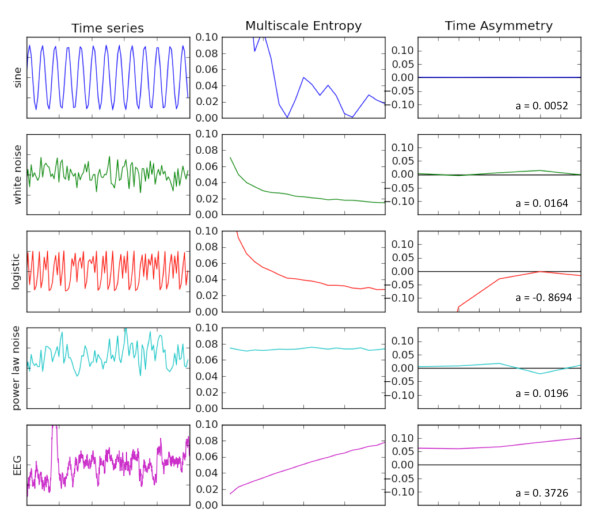
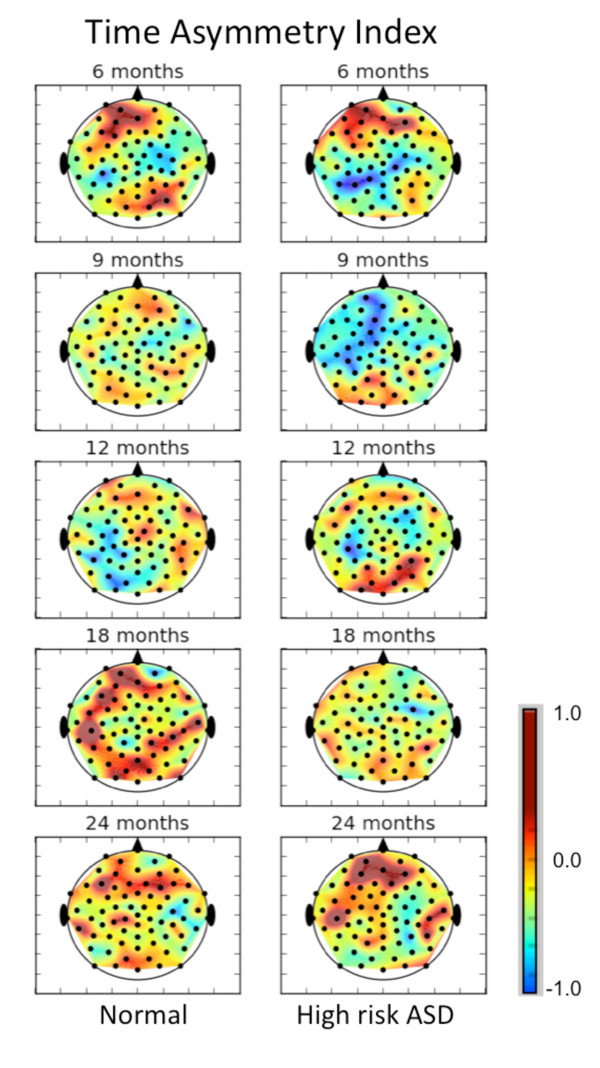
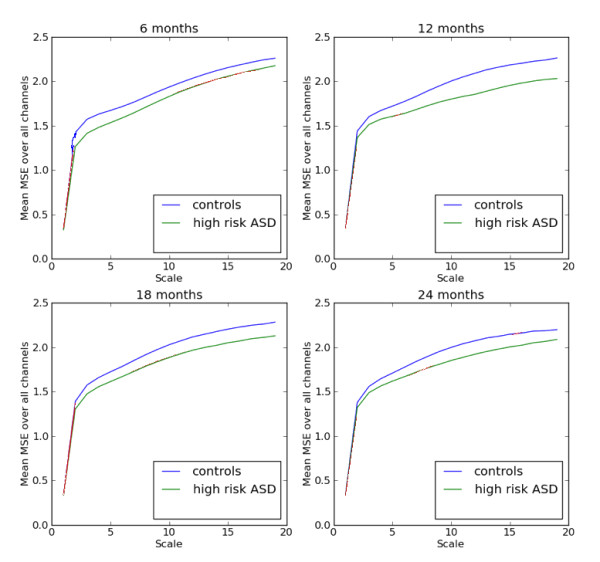
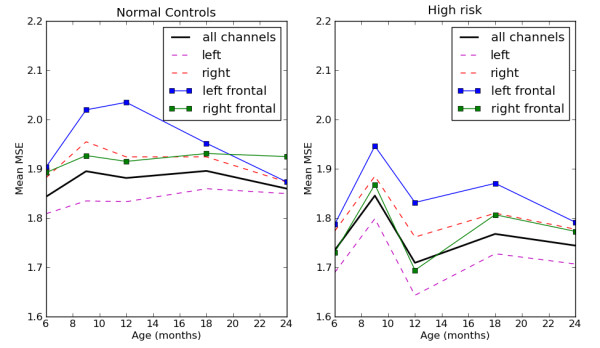
Verification
Claims the paper makes
The claims and statistics of this paper haven’t been checked yet.
Free: it reads the open-access text and checks the first 5 claims that cite a source we can check. Create a free account to check every claim.
Claims other papers make about this one
Each is checked against this paper’s own text: does it say what the citing paper says it does?
The source backs part of the claim, not all of it — or backs it for a different population, condition or comparison.
In the citing paper
“There is now accumulating evidence from electroencephalographic (EEG) studies suggesting that infants at high risk for ASD, regardless of whether they ultimately meet diagnostic criteria for ASD, have different developmental trajectories within the first year of life compared to low-risk infants [10–20].”
From EEG power at 3 months in infants at high familial risk for autism (2017) · cites this paper as [10]
Experimental — accuracy not yet measured
Self-check
Percentages, sums and reported differences re-computed from the paper’s own numbers.
The self-check needs the paper’s full text.
Citations
Cites
Lecture Notes in Computer Science 1205
(1999) · Industrial Robot: An International Journal · doi:10.1108/ir.1999.04926fae.001 · Cited by 38,662
Buzsáki, G. (2006) · doi:10.1093/acprof:oso/9780195301069.001.0001 · Cited by 4,873
The brainweb: phase synchronization and large-scale integration
Varela, F., Lachaux, J.-P., Rodriguez, E., & Martinerie, J. (2001) · Nature Reviews Neuroscience · doi:10.1038/35067550 · Cited by 4,761 · cited 2×
“The analysis of signal complexity on multiple scales may reveal information about neural connectivity that is diagnostically useful [1,19,22].”
BackgroundSynchronization: A Universal Concept in Nonlinear Sciences
Pikovsky, A., Rosenblum, M., & Kurths, J. (2001) · Cambridge University Press eBooks · doi:10.1017/cbo9780511755743 · Cited by 4,652
Bassett, D. S., & Bullmore, E. (2006) · The Neuroscientist · doi:10.1177/1073858406293182 · Cited by 2,600 · cited 1×
“This remarkable connectivity is achieved by a kind of hierarchical organization that is not fully understood in the brain, but is ubiquitous in nature and is called a scale-free network [2-4] that changes with development.”
BackgroundNunez, P. L., & Srinivasan, R. (2006) · doi:10.1093/acprof:oso/9780195050387.001.0001 · Cited by 2,531
Multiscale entropy analysis of biological signals
Costa, M., Goldberger, A. L., & Peng, C.-K. (2005) · Physical Review E · doi:10.1103/physreve.71.021906 · Cited by 2,482 · cited 3×
“One interpretation of biological complexity is that it reflects a system’s ability to adapt quickly and function in a changing environment [23].”
BackgroundInfluentialElectric Fields of the Brain: The Neurophysics of EEG
Nunez, P. L., & Harth, E. (1982) · Physics Today · doi:10.1063/1.2915137 · Cited by 2,232
Hierarchical organization in complex networks
Ravasz, E., & Barabási, A.-L. (2003) · Physical Review E · doi:10.1103/physreve.67.026112 · Cited by 2,160
Scale-Free Networks: A Decade and Beyond
Barabási, A.-L. (2009) · Science · doi:10.1126/science.1173299 · Cited by 2,109 · cited 2×
“This remarkable connectivity is achieved by a kind of hierarchical organization that is not fully understood in the brain, but is ubiquitous in nature and is called a scale-free network [2-4] that changes with development.”
Background
Cited by
Items 301–400 of 516
Measuring the effects of sleep on epileptogenicity with multifrequency entropy
Sathyanarayana, A., Atrache, R. E., Jackson, M. C., Alter, A. S., Mandl, K. D., Loddenkemper, T., & Bosl, W. J. (2021) · Clinical Neurophysiology · doi:10.1016/j.clinph.2021.06.001 · Cited by 9
Self-citationKang, J., Li, X., Casanova, M. F., Sokhadze, E. M., & Geng, X. (2022) · Medical & Biological Engineering & Computing · doi:10.1007/s11517-022-02693-y · Cited by 10
“Among potential biomarkers, those dealing with brain connectivity have provided both region/network and statespecific changes [11].”
BackgroundZamit, I., Musa, I. H., Jiang, L., Wei, Y., & Tang, J. (2022) · Current Psychology · doi:10.1007/s12144-022-03977-0 · Cited by 9
Development of the posterior basic rhythm in children with autism
Takagaki, K., Russell, J., Lippert, M., & Motamedi, G. K. (2014) · Clinical Neurophysiology · doi:10.1016/j.clinph.2014.04.022 · Cited by 10
“Various recent studies have focused on EEG correlates of autism, (Cantor et al., 1986; Murias et al., 2007; Coben et al., 2008; Isler et al., 2010; Lazarev et al., 2010; Bosl et al., 2011; Duffy and Als, 2012; Sheikhani et al., 2012).”
BackgroundMeasuring Brain Complexity During Neural Motor Resonance
Hager, B. M., Yang, A. C., & Gutsell, J. N. (2018) · Frontiers in Neuroscience · doi:10.3389/fnins.2018.00758 · Cited by 10
“Resting-state complexity has been previously used as a predictor for risk of developing ASD (Bosl et al., 2011), as well as predicting cognitive function in Alzheimer’s disease (Mizuno et al., 2010).”
MethodInfluentialResponse: Infant EEG activity as a biomarker for autism: A promising approach or a false promise?
Bosl, W. J., Tierney, A. L., Tager-Flusberg, H. B., & Nelson, C. A. (2011) · BMC Medicine · doi:10.1186/1741-7015-9-60 · Cited by 9
“com/1741-7015/9/61 The commentary by professors Griffin and Westbury [1] seems to be a response to the widespread media coverage following the recent publication of our article [2].”
BackgroundSelf-citationCan Feedback from the Jumbo-CD Market Improve Bank Surveillance?
Gilbert, R. A., Meyer, A. P., & Vaughan, M. D. (2003) · doi:10.20955/wp.2003.041 · Cited by 9
Davoodi, A., Holeňa, M., Brunovský, M., Kathpalia, A., Hlinka, J., Bareš, M., & Paluš, M. (2024) · Biomedical Signal Processing and Control · doi:10.1016/j.bspc.2024.107362 · Cited by 10
Davoudi, S., Schwartz, T., Labbe, A., Trainor, L. J., & Lippé, S. (2023) · Cerebral Cortex · doi:10.1093/cercor/bhad154 · Cited by 9
Scaffei, E., Mazziotti, R. M., Conti, E., Costanzo, V., Calderoni, S., Stoccoro, A., Carmassi, C., Tancredi, R., Baroncelli, L., & Battini, R. (2023) · Brain Sciences · doi:10.3390/brainsci13060951 · Cited by 10
Torres, E. B., Vero, J., Drain, N., Rai, R., & Bermperidis, T. (2025) · Frontiers in Psychiatry · doi:10.3389/fpsyt.2025.1559202 · Cited by 9
Mishra, R. (2023) · IEEE International Conference on Innovations in High Speed Communication and Signal Processing (IHCSP) · doi:10.1109/ihcsp56702.2023.10127150 · Cited by 8
Distinguishing tip-toe walking from normal walking using skeleton data gathered by 3D sensors
Ebrahimi, M., Feghi, M., Moradi, H., Mirian, M. S., & Pouretemad, H. (2015) · RSI International Conference on Robotics and Mechatronics (ICRoM) · doi:10.1109/icrom.2015.7367826 · Cited by 8
Brain complexity analysis of functional near infrared spectroscopy for working memory study
Angsuwatanakul, T., Iramina, K., & Kaewkamnerdpong, B. (2015) · Biomedical Engineering International Conference · doi:10.1109/bmeicon.2015.7399531 · Cited by 9
“[21] applied MSE for measuring EEG complexity as a biomarker for autism spectrum disorder (ASD) risk in toddlers and children (6-24 months).”
MethodPapaioannou, A., Kalantzi, E., Papageorgiou, C. C., Korombili, K., Βokou, A., Pehlivanidis, A., Papageorgiou, C., & Papaioannou, G. P. (2021) · Brain Sciences · doi:10.3390/brainsci11111531 · Cited by 8
“The multi-disciplinary team that carries out all assessments consists of psychiatrists who have extended experience in the diagnosis and treatment of neurodevelopmental disorders in adults and are trained in ADOS [90,91], ADI-R [91,92], and DIVA [63,64]; and clinical psychologists.”
BackgroundResultRecognition of autism spectrum disorder in children based on electroencephalogram network topology
Li, F., Zhang, S., Jiang, L., Duan, K., Feng, R., Zhang, Y., Zhang, G., Zhang, Y., Li, P., Yao, D., et al. (2023) · Cognitive Neurodynamics · doi:10.1007/s11571-023-09962-y · Cited by 8
“For example, previous studies have reported the modified multi-scale entropy in the left frontal lobe of infants with ASD (Bosl et al. 2011), as well as the sign of early brain overgrowth in the dispersion of cells (Casanova et al. 2002).”
Autism Spectrum Disorder Classification Using a Self-organising Fuzzy Classifier
Stirling, J., Chen, T., & Adamou, M. (2021) · Springer eBooks · doi:10.1007/978-3-030-66474-9_6 · Cited by 8
Campos, A., Loyola-Navarro, R., González, C., & Iverson, P. (2025) · Brain Sciences · doi:10.3390/brainsci15030219 · Cited by 7
EEG Complexity Analysis of Brain States, Tasks and ASD Risk
Wolfson, S., Kirk, I. J., Waldie, K. E., & King, C. C. (2024) · Advances in neurobiology · doi:10.1007/978-3-031-47606-8_37 · Cited by 7
Elandaloussi, Y., Dufrenne, O., Lefebvre, A., Houenou, J., Senova, S., & Laidi, C. (2025) · The Cerebellum · doi:10.1007/s12311-025-01801-6 · Cited by 7
“The increased EEG signal complexity has been previously proposed as a candidate biomarker for the early detection of ASD risk [47].”
Hooyman, A., Kayekjian, D., Xiao, R., Jiang, C. X., Vanderbilt, D. L., & Smith, B. A. (2018) · Gates Open Research · doi:10.12688/gatesopenres.12868.2 · Cited by 7
Zhao, J., Ding, M., Tong, Z., Han, J., Li, X., & Kang, J. (2019) · PubMed · doi:10.7507/1001-5515.201709047 · Cited by 8
Abdulhay, E., Alafeef, M., Hadoush, H., & Arunkumar, N. (2022) · Expert Systems · doi:10.1111/exsy.13000 · Cited by 7
Machine Learning Model to Predict Autism Spectrum Disorder Using Eye Gaze Tracking
Fakhar, U., Elkarami, B., & Alkhateeb, A. (2023) · IEEE International Conference on Bioinformatics and Biomedicine (BIBM) · doi:10.1109/bibm58861.2023.10386016 · Cited by 7
“…Rating Scale [5], Autism Diagnostic Observation Schedule (ADOS) [6], and Autism Diagnostic Interview (ADI-R) [7] furthermore, Computer-aided technologies such as magnetic resonance imaging, electroencephalography, and eye tracking are used to provide guidance during examination and assessment [8].”
MethodTost, A., Bachiller, A., Medina-Rivera, I., Romero, S., Serna, L. Y., Rojas-Martínez, M., García‐Cazorla, À., & Mañanas, M. Á. (2024) · Pediatric Research · doi:10.1038/s41390-024-03254-9 · Cited by 7
Intelligent Big Data Analytics in Health
Bayrak, E. A., & Kirci, P. (2019) · Advances in medical technologies and clinical practice book series · doi:10.4018/978-1-5225-8567-1.ch014 · Cited by 7
Lin, Y., Ling, B. W., Wang, W., Hu, L., Xu, N., & Zhou, X. (2022) · Biomedical Signal Processing and Control · doi:10.1016/j.bspc.2022.104256 · Cited by 7
LDER: a classification framework based on ERP enhancement in RSVP task
Cui, Y., Xie, S., Xie, X., Zheng, D., Tang, H., Duan, K., Chen, X., & Jiang, Y. (2023) · Journal of Neural Engineering · doi:10.1088/1741-2552/acd95d · Cited by 7
“EEG-BCI has been applicated in several fields, such as external device control [5, 6], disease detection [7], post-stroke rehabilitation [8], and emotion recognition [9].”
MethodEvent related potential analysis techniques for autism spectrum disorders: A review
Sheela, P., & Puthankattil, S. D. (2018) · International Journal of Developmental Neuroscience · doi:10.1016/j.ijdevneu.2018.05.002 · Cited by 8
“The modified multiscale entropy (mMSE) is the set of modified sample entropy values (mSE) computed at each of the coarsegrained scales ranging from 1 to 20 (Bosl et al., 2011).”
MethodResultAportación del electroencefalograma en el autismo
Baduell, M. P., Santasusana, A. V., Salvadó, B. S., & Clofent-Torrentó, M. (2013) · Revista de Neurología · doi:10.33588/rn.56s01.2012653 · Cited by 22
Quantitative EEG-based autism spectrum disorder detection using neural sequence models
Nour, M., Şentürk, Ü., Akgül, A., & Polat, K. (2026) · Computers & Electrical Engineering · doi:10.1016/j.compeleceng.2026.110962 · Cited by 7
Manjur, S. M., Hossain, M.-B., Constable, P. A., Thompson, D., Marmolejo‐Ramos, F., Lee, I., & Posada-Quintero, H. F. (2023) · IEEE-EMBS International Conference on Biomedical and Health Informatics (BHI ...) · doi:10.1109/bhi58575.2023.10313406 · Cited by 7
“To establish a reliable basis and objective diagnosis of ASD and ADHD previous studies have analyzed different biosignals such as electroencephalogram (EEG) [11], [12], heart rate variability (HRV) [13], and eye tracking [14].”
Николаевна, П. Е. (2025) · The European Physical Journal Special Topics · doi:10.1140/epjs/s11734-025-01509-y · Cited by 7
“EEG complexity is a good indicator of pathological processes and can be used as a biomarker of Autism Spectrum Disorder [32, 33] and various mental disorders [34, 35].”
EEG fractal dimensions predict high-level behavioral responses in minimally conscious patients
Liuzzi, P., Hakiki, B., Draghi, F., Romoli, A. M., Burali, R., Scarpino, M., Cecchi, F., Grippo, A., & Mannini, A. (2023) · Journal of Neural Engineering · doi:10.1088/1741-2552/aceaac · Cited by 7
“A number of earlier studies investigated the relation between fractal-derived brain measures and pathological conditions [27, 28, 30, 32, 60– 64].”
Fu, S., Wang, X., Chen, Z., Huang, Z., Feng, Y., Xie, Y., Li, X., Yang, C., & Xu, S. (2025) · BMC Psychiatry · doi:10.1186/s12888-025-06689-4 · Cited by 8
“They found decreased EEG signal variability in high-risk ASD infants [17].”
Characterizing autistic disorder based on Principle Component Analysis
Shams, W. K., & Wahab, A. (2011) · IEEE Symposium on Industrial Electronics & Applications (ISIEA) · doi:10.1109/isiea.2011.6108797 · Cited by 6
Dahan, A., Dubnov, Y. A., Popkov, A. Y., Gutman, I., & Gvirts, H. Z. (2020) · Journal of Autism and Developmental Disorders · doi:10.1007/s10803-020-04793-w · Cited by 7
Atypical neural processing during the execution of complex sensorimotor behavior in autism
Shafer, R. L., Lewis, M. H., Newell, K. M., & Bodfish, J. W. (2021) · Behavioural Brain Research · doi:10.1016/j.bbr.2021.113337 · Cited by 7
Electroencephalograms in Diagnosis of Autism
Ahmadlou, M., & Adeli, H. (2013) · Springer eBooks · doi:10.1007/978-1-4614-4788-7_204 · Cited by 9
Coming Closer to Describing the Variable Onset Patterns in Autism
Dawson, G. (2011) · Journal of the American Academy of Child & Adolescent Psychiatry · doi:10.1016/j.jaac.2011.04.011 · Cited by 9
Cazares, C., Hutton, A., Paez, G., Trauner, D. A., & Voytek, B. (2026) · Translational Psychiatry · doi:10.1038/s41398-026-03815-y · Cited by 6
“While task-free EEG measurements have shown promise as biomarkers of ASD severity, even from 3 months of age [24, 73 – 75], these studies did not separate periodic and aperiodic components of neural power spectra, obscuring the speci fi c neural processes affected.”
Kuriyakose, D., & Gowsalya, M. (2026) · Frontiers in Computational Neuroscience · doi:10.3389/fncom.2026.1763727 · Cited by 7
McCarty, D. E., Punjabi, N. M., Kim, P. Y., Frilot, C. F., II, & Marino, A. A. (2014) · Psychiatry Research Neuroimaging · doi:10.1016/j.pscychresns.2014.10.004 · Cited by 5
“Similar observations were reported for other mental disorders including schizophrenia (Paulus and Braff, 2003) and autism (Bosl et al., 2011).”
ResultImpact of environmental changes on the dynamics of temporal networks
Kim, H., Jo, H.-H., & Jeong, H. (2021) · PLoS ONE · doi:10.1371/journal.pone.0250612 · Cited by 5
“The similar increasing behaviors have been reported for neural time series [48–50].”
BackgroundAutism Diagnosis using Linear and Nonlinear Analysis of Resting-State EEG and Self-Organizing Map
Xu, J., & Yang, W. (2023) · International Journal of Advanced Computer Science and Applications · doi:10.14569/ijacsa.2023.01409123 · Cited by 5
“(2011) [49] 46 infants at high risk for autism and 33 healthy controls Modified multiscale entropy Support vector machine (SVM) Accuracy = 90%”
BackgroundCharlebois-Poirier, A.-R., Davoudi, S., Lalancette, È., Knoth, I. S., & Lippé, S. (2025) · Scientific Reports · doi:10.1038/s41598-025-85635-6 · Cited by 5
“Furthermore, evidence shows that healthy efficient brains show increased locally processed information and decreased distal activity 10,18,21,33 .”
Usman, M., Lin, W., Lin, Y.-Y., Hsieh, S.-T., Chen, Y.-T., Lo, Y., & Lin, C. (2025) · Journal of Applied Biomedicine · doi:10.1016/j.bbe.2025.04.001 · Cited by 5
Intervention Models in Children with Autism Spectrum Disorders
Ros-Cervera, G., Romero, M. G. M., Abad, L., & Mulas, F. (2011) · InTech eBooks · doi:10.5772/18512 · Cited by 9
Swatzyna, R. J. (2014) · Journal of Psychology & Clinical Psychiatry · doi:10.15406/jpcpy.2014.01.00046 · Cited by 5
Jin, Y., Choi, J., Lee, S.-H., Kim, J. W., & Hong, Y. (2019) · Journal of Clinical Medicine · doi:10.3390/jcm8101588 · Cited by 5
“[96] suggested modified multiscale entropy as a potential biomarker for early detection of risk for ASD, while Thatcher et al.”
BackgroundHow Does Autism Affect the Processing of Child Sexual Abuse Trauma?
Carbajal, J., & Praetorius, R. T. (2020) · Index of Texas Archaeology Open Access Grey Literature from the Lone Star State · Cited by 8
Abdulhay, E., Alafeef, M., Hadoush, H., & Arunkumar, N. (2021) · Expert Systems · doi:10.1111/exsy.12801 · Cited by 5
“, 2010), and some time-scale based feature extractors (Bosl et al., 2011)—are too sensitive to mother wavelet or apriori knowledge/assumptions.”
BackgroundZhao, J., Zhang, Z., Wan, L., Li, X., & Kang, J. (2021) · PubMed Central · doi:10.7507/1001-5515.202010082 · Cited by 7
Abdulhay, E., Alafeef, M., Hadoush, H., Venkataraman, V., & Arunkumar, N. (2022) · Mathematical Biosciences & Engineering · doi:10.3934/mbe.2022235 · Cited by 5
López‐Arango, G., Deguire, F., Agbogba, K., Audet-Duchesne, E., Boucher, M.-A., Knoth, I. S., El-Jalbout, R., Damphousse, A., Kadoury, S., & Lippé, S. (2023) · Developmental Neuroscience · doi:10.1159/000529722 · Cited by 5
A neural marker of eye contact highly impaired in autism spectrum disorder
Lio, G., Corazzol, M., Fadda, R., Doneddu, G., Demily, C., & Sirigu, A. (2021) · Cortex · doi:10.1016/j.cortex.2024.10.022 · Cited by 5
Autism Spectrum Disorder: Developmental Approaches from Infancy through Early Childhood
Tager-Flusberg, H. B. (2014) · Springer eBooks · doi:10.1007/978-1-4614-9608-3_33 · Cited by 5
Self-citationFractal analysis of the EEG and clinical applications
Cusenza, M. (2012) · OpenstarTs (Univeristy of Trieste https://www.units.it/) · Cited by 14
Miller, D. J. (2016) · ScholarWorks (Walden University) · Cited by 7
Proteau-Lemieux, M., Knoth, I. S., Davoudi, S., Buckser, R., Martin, C.-O., Bélanger, A.-M., Fontaine, V. K., Biag, H. M. B., Abbeduto, L., Jacquemont, S., et al. (2026) · Autism Research · doi:10.1002/aur.70194 · Cited by 4
The MED13L Foundation strategic research plan: a roadmap to the future
Heilmann, R., Pfalzer, A. C., Bichell, T. J., Terala, A., Campbell, A. N., Taatjes, D. J., Ghoumid, J., Grueter, C. E., Bain, J., Strich, R., et al. (2024) · Therapeutic Advances in Rare Disease · doi:10.1177/26330040241290252 · Cited by 5
Early detection of autism with the help of biomarkers: A narrative review
Puri, A. (2025) · NeuroMarkers. · doi:10.1016/j.neumar.2025.100109 · Cited by 7
Guerrero‐Aranda, A., Alvarado-Rodríguez, F. J., Enríquez-Zaragoza, A., Carmona-Huerta, J., & González‐Garrido, A. A. (2023) · Clinical EEG and Neuroscience · doi:10.1177/15500594231208245 · Cited by 4
“29,30 Some authors have previously shown a signi fi cant entropy decrease in methamphetamine abusers compared to healthy controls suggesting a decrease in cortical complexity in the fi rst ones.”
BackgroundRed dermographism in autism spectrum disorders: A clinical sign of cholinergic dysfunction?
Lemonnier, É., Grandgeorge, M., Jacobzone-Lévêque, C., Bessaguet, C., Peudenier, S., & Misery, L. (2013) · Research in Autism · doi:10.1016/j.rasd.2013.01.005 · Cited by 4
Automatic Artifact Reduction Based on MEMD- for Seizure Prediction
Tang, L., Zhao, M., Zhou, Y., & Wu, X. (2018) · IEEE Biomedical Circuits and Systems Conference (BioCAS) · doi:10.1109/biocas.2018.8584675 · Cited by 4
“The recent research [15] indicated that SE gives much more information about the regularity of EEG time series than other entropies such as Shannon’s entropy, wavelet entropy and Renyi’s entropy.”
BackgroundNeural networks - based solutions for predicting the affective state of children with autism
Popescu, A.-L., & Popescu, N. (2021) · International Conference on Control Systems and Computer Science · doi:10.1109/cscs52396.2021.00023 · Cited by 4
Fuzzy Model for Detection and Estimation of the Degree of Autism Spectrum Disorder
Shams, W. K., Wahab, A., & Qidwai, U. A. (2012) · Lecture notes in computer science · doi:10.1007/978-3-642-34478-7_46 · Cited by 4
“Electroencephalography signals have been used widely to diagnose autism spectrum disorder as well as to study and understand its symptoms [1-6].”
CYBERNETIC APPROACH IN IDENTIFICATION OF BRAIN PATTERN VARIATIONS IN AUTISM SPECTRUM DISORDER
Bajestani, G. S., Sheikhani, A., Golpayegani, M. R., Ashrafzadehi, F., & Hebrani, P. (2016) · Biomedical Engineering Applications Basis and Communications · doi:10.4015/s101623721650006x · Cited by 4
Estimation of biomarkers for autism and its co-morbidities using resting state EEG
Priya, K., & Kavitha, A. (2017) · IEEE International Conference on Cognitive Informatics & Cognitive Computing (ICCI*CC) · doi:10.1109/icci-cc.2017.8109784 · Cited by 4
“It was shown that the nonlinear complexity in the EEG signals was believed to contain appropriate information about the under lying architecture of the neural networks in the brain [14].”
BackgroundRamanand, P., Indic, P., Travers, C. P., & Ambalavanan, N. (2023) · Frontiers in Pediatrics · doi:10.3389/fped.2023.1016197 · Cited by 4
“applied to a variety of physiological and biomedical signals to assess numerous developmental as well as pathology related conditions in infants such as neurodevelopment (20), adverse outcome risk prediction (21, 22), sleep stage classification (23), heart rate variability (24–26), cardiorespiratory dynamics (27), and…”
BackgroundDelshi Howsalya Devi., R., Avinash, P., Renukadevi, S., Priyadharshini, S., Mohankumar, P., & Sangeeth, P. (2025) · International Conference on Inventive Systems and Control (ICISC) · doi:10.1109/icisc65841.2025.11188249 · Cited by 3
“AI technologies facilitate early intervention and individualized treatment by providing standardized assessments, real-time data, and predictive insights [2,9].”
InfluentialFialho, K. L. L., Miranda, J. G. V., Ramos, Y. E., & Lucena, R. (2025) · Clinical EEG and Neuroscience · doi:10.1177/15500594251394773 · Cited by 4
“This approach would extend prior EEG-diffusion work, 4 by directly linking microstructural connectivity to speci fi c motor control parameters.”
InfluentialKhan, A. A., & Dewald, H. D. (2026) · NeuroMarkers. · doi:10.1016/j.neumar.2026.100166 · Cited by 3
Recent Progress of Large-Scale Biomarker Consortia and Paths Forward in Autism Biomarker Development
Griffin, J. W., Cairney, B. E., Carson, W. E., Chetcuti, L., Dubois, A. E. E., Dumas, G., Jacquemont, S., Jeste, S., Momsen, J., Naples, A. J., et al. (2026) · Biological Psychiatry · doi:10.1016/j.biopsych.2026.08.005 · Cited by 3
Aljalal, M., Aldosari, S. A., Molinas, M., AlSharabi, K., & Alturki, F. A. (2023) · International Conference on Emerging Smart Technologies and Applications (eSmarTA) · doi:10.1109/esmarta59349.2023.10293374 · Cited by 3
“Several studies have demonstrated the usefulness of entropy in analyzing and identifying biomarkers for various mental disorders, such as ASD [40], attention deficit Authorized licensed use limited to the terms of the applicable license agreement with IEEE.”
BackgroundAkbar, S., Shah, S. M., Tahir, R., Khan, M. J., & Aamir, N. (2025) · VAWKUM Transactions on Computer Sciences · doi:10.21015/vtcs.v13i1.2095 · Cited by 3
Sleep Deprivation in Mice: Looking Beyond the Slow Wave Rebound
Magyar, T. Z., Szalárdy, O., & Bódizs, R. (2025) · Journal of Sleep Research · doi:10.1111/jsr.70232 · Cited by 3
“Together, these two approaches offer a data-driven, broadband-sensitive framework for assessing neural dynamics during sleep and their modulation by extended wakefulness.”
Das, M., Halder, A., & Mahadevappa, M. (2025) · Annual International Conference of the IEEE Engineering in Medicine and Biology Society (EMBC) · doi:10.1109/embc58623.2025.11253271 · Cited by 3
“Studies show increased alpha power in ASD subjects [11] and the effectiveness of quantitative EEG (qEEG) -based functional connectivity and power spectral density analysis [12].”
Kumar, N. S., Mohanalin, J., & Mahil, J. (2018) · Multimedia Tools and Applications · doi:10.1007/s11042-018-6290-0 · Cited by 3
“[5] anticipated the modified Multi-State Entropy (mMSE) calculated centered upon rest state of EEG information which can be engaged as a biomarker of standard brain development and recognize normally developing kids as of a assortment of babies at high hazard for ASD, characterized centered upon a older kin with ASD.”
BackgroundRetractedSNN Based Brain Connectivity Analysis for ASD Children
Menaka, R., Nalla, H. D., Varsha, V., & ThangaAarthy, M. (2019) · IEEE International Conference on Smart Instrumentation, Measurement and Applications (ICSIMA) · doi:10.1109/icsima47653.2019.9057348 · Cited by 3
“From the various literature reviews, we chose the filter’s window size as 20 and the BSA threshold as 0.955[10].”
MethodInfluentialXiao-Jing, Y., Yang, Y., Li, H., & Ning, Z. (2016) · Acta Physica Sinica · doi:10.7498/aps.65.218701 · Cited by 3
Overcoming traps and challenges in child and adolescent psychiatry
Pejovic-Milovancevic, M. M., Grujičić, R., Stupar, S., & Ninkovic, M. (2021) · Srpski arhiv za celokupno lekarstvo · doi:10.2298/sarh191216009p · Cited by 3
“[47] recently provided initial evidence for a role of neural connectivity in early development.”
BackgroundRechal, T. R., Kumar, P. R., & Khaleelulla, S. E. (2021) · International Conference on Computing, Communication, and Intelligent Systems (ICCCIS) · doi:10.1109/icccis51004.2021.9397220 · Cited by 3
“Bosl, Tierney, Nelson et al., [7] underlying neurobiological disorders that consistently differentiate autistic and non-autistic brains.”
BackgroundGhoreishi, N., Molkabad, S. Z., Baratzade, S., Goshvarpoor, A., & Bajestani, G. S. (2021) · The Neuroscience Journal of Shefaye Khatam · doi:10.52547/shefa.9.2.10 · Cited by 3
Martínez‐Cañada, P., & Panzeri, S. (2021) · Lecture notes in computer science · doi:10.1007/978-3-030-86993-9_11 · Cited by 3
MVME-RCMFDE framework for discerning hyper-responsivity in Autism Spectrum Disorders
Sheela, P., & Puthankattil, S. D. (2022) · Computers in Biology and Medicine · doi:10.1016/j.compbiomed.2022.105958 · Cited by 3
Noda, Y. (2022) · Journal of Personalized Medicine · doi:10.3390/jpm12101622 · Cited by 3
“Nowadays, the dynamic structure of neural networks, an indicator of neural activity, can be evaluated by time series analysis and network analysis on EEG data [32].”
BackgroundEEG complexity in children with autism spectrum disorders: A multiscale entropy analysis
Handayani, N., Asyrafi, H., & Khotimah, S. N. (2024) · AIP conference proceedings · doi:10.1063/5.0228307 · Cited by 3
Kristina, L., & Donald, C. J. S. (2013) · InTech eBooks · doi:10.5772/54770 · Cited by 4
“, a sibling with autism) have shown some promise using measures of EEG complexity and machine learning to separate high-risk infants from typically-developing infants [175, 176].”
BackgroundMulti-scale sample entropy as a feature for working memory study
Angsuwatanakul, T., Iramina, K., & Kaewkamnerdpong, B. (2014) · Biomedical Engineering International Conference · doi:10.1109/bmeicon.2014.7017446 · Cited by 5
Investigations on the Brain Connectivity Parameters for Co-Morbidities of Autism Using EEG
Vishnu Priya, K., & Kavitha, A. (2018) · International Journal of Software Science and Computational Intelligence · doi:10.4018/ijssci.2018040104 · Cited by 3
Computer Aided Diagnosis of ASD based on EEG using RELIEFF and Supervised Learning Algorithm
Et.al, R. R. T. (2021) · Türk bilgisayar ve matematik eğitimi dergisi · doi:10.17762/turcomat.v12i6.1362 · Cited by 3
“, [8] underlying neurobiological disorders that consistently differentiate autistic and non-autistic brains.”
BackgroundGuo, Y., Chen, Y., Yang, Q., Hou, F., Liu, X., & Ma, Y. (2021) · Entropy · doi:10.3390/e23091101 · Cited by 3
“Studies have proven that PSG indicators are greatly affected by age and gender, and the accuracy of evaluating the therapeutic effect of insomnia drugs was low [47,48].”
BackgroundPelc, K., Gajewska, A., Napiórkowski, N., Dan, J., Verhoeven, C., & Dan, B. (2025) · NeuroImage · doi:10.1016/j.neuroimage.2025.121115 · Cited by 2
“…such as autism spectrum disorder, dyslexia or other developmental impairments, could help identify early biomarkers for these conditions (Guttorm et al., 2001; Bosl et al., 2011; Virtala et al., 2022; Piazza et al., 2023), which might in turn lead to early detection and intervention strategies.”
Neural complexity in preterm infants is predicted by developmental variables
Semeia, L., Zaylaa, A., Metaxas, D., Nourhashemi, M., Mahmoudzadeh, M., Birkenfeld, A. L., Sippel, K., Mediano, P. A. M., Preissl, H. T., Wallois, F., et al. (2025) · PLOS complex systems. · doi:10.1371/journal.pcsy.0000056 · Cited by 2
“Most relevantly for our purposes, neural complexity has been used in developmental contexts as an indicator of brain maturation and developmental delays [12,13], as well as a predictor of autism spectrum disorder diagnosis [14] or familial autism risk [15].”
Penmetsa, H., Abbasi, R., Yellamilli, N., Winkelman, K., Chan, J., Hwang, J., & Cho, K. T. (2025) · Information · doi:10.3390/info16100880 · Cited by 2
Al-Qazzaz, N. K., Ali, S. H. M., & Ahmad, S. A. (2025) · Bioengineering · doi:10.3390/bioengineering12111225 · Cited by 2
“The related literature has examined the use of EEG features like power spectral densities, coherencies, and complexity measures to distinguish between ASD patients and healthy controls [27–30].”
Machine learning model for the detection of autism spectrum disorder using electroretinogram signals
Anwar, M. A., Islam, M. T., & Alam, T. (2026) · Scientific Reports · doi:10.1038/s41598-026-59539-y · Cited by 2
Early Detection Methods for Autism Spectrum Disorder: From Clinical Screening to Multimodal AI
Luo, W., Yin, Z., & Dai, J. (2026) · Diagnostics · doi:10.3390/diagnostics16152376 · Cited by 2
“From approximately 6 to 12 months, neurophysiological measures and visual attention paradigms, including EEG, fNIRS, and eye tracking, may capture emerging neural and social-attentional atypicalities [25,43,46].”
CONNECTION BETWEEN EPILEPSY AND AUTISM SPECTRUM DISORDER
Maslova, N. N., Анатольевна, С. В., Yur’eva, N. V., & Евгеньевич, М. Н. (2017) · Epilepsy and Paroxysmal Conditions · doi:10.17749/2077-8333.2017.9.3.054-063 · Cited by 3
Metadata
- Authors
- Bosl, W., Tierney, A., Tager-Flusberg, H., & Nelson, C.
- Affiliations
- Harvard University (US)
- Boston Children's Hospital (US)
- Boston University (US)
- Corresponding author
- Bosl, William
- Venue
- BMC Medicine
- Published
- 2011-02-22
- Volume
- 9
- Issue
- 1
- ISSN
- 1741-7015 (ISSN-L)
- PMC
- PMC3050760
- OpenAlex
- W2171693726
- Cited by
- 485
- References
- 60
- Citations by year
- 2026: 21 · 2025: 33 · 2024: 22 · 2023: 40 · 2022: 41 · 2021: 53 · 2020: 38 · 2019: 30 · 2018: 34 · 2017: 30 · 2016: 28 · 2015: 23 · 2014: 39 · 2013: 23 · 2012: 17
- FWCI
- 14.93
- Type
- journal article
- Language
- en
- Open access
- gold
- doi.org
- Licence
- Locations
- BMC Medicine (publishedVersion, cc-by)
- Digital Access to Scholarship at Harvard (DASH) (Harvard University) (submittedVersion, cc-by)
- USF Scholarship Repository (University of San Francisco) (submittedVersion)
- DOAJ (DOAJ: Directory of Open Access Journals) (submittedVersion)
- OpenBU (Boston University) (submittedVersion, cc-by)
- Funders
- Autism Speaks (AS1323)
- Simons Foundation
- National Institute on Deafness and Other Communication Disorders (R01 DC10290, R21 DC08647)
- Topics
- Life Sciences › Neuroscience › Cognitive Neuroscience › Autism Spectrum Disorder Research
- Life Sciences › Neuroscience › Cognitive Neuroscience › EEG and Brain-Computer Interfaces
- Life Sciences › Biochemistry, Genetics and Molecular Biology › Genetics › Genetics and Neurodevelopmental Disorders
- Keywords
- autism spectrum disorder, resting-state EEG, endophenotypes, typically developing infants, brain development, early detection, support vector machine classification, sex differences
About these checks
Registry, retraction, Cites and statistics results are computed, not judged, with one exception: a printed reference that no index lists is read once by a model before it counts as a citation error. Claims are extracted by a model and kept only when their quote appears verbatim in the text; each cited source is then checked, with a model’s help, for whether it says what the claim relies on. Those verdicts can be wrong — read the claim’s quote and the cited source before relying on one.
Statistics and arithmetic are recomputed, not judged.
Confidence bands are shown only for fields calibrated on our annotated test set. None is calibrated yet, so no band is shown.
What counts as a claim ›How we measure confidence ›How we check this ›
Are you an author, or do you see a problem with this page? Request a review
Data sources
Bibliographic data: Semantic Scholar, OpenAlex, Crossref.
Contains information from the Semantic Scholar Academic Graph Datasets, made available under the ODC Attribution License (ODC-BY 1.0).
Semantic Scholar’s data is described in: Kinney, R., et al. (2023). The Semantic Scholar Open Data Platform. arXiv:2301.10140.
