

EEG complexity as a biomarker for autism spectrum disorder risk
Open accessThe DOI matches its Crossref record; 59 of the 60 references it cites were found in a registry or an index.
Abstract
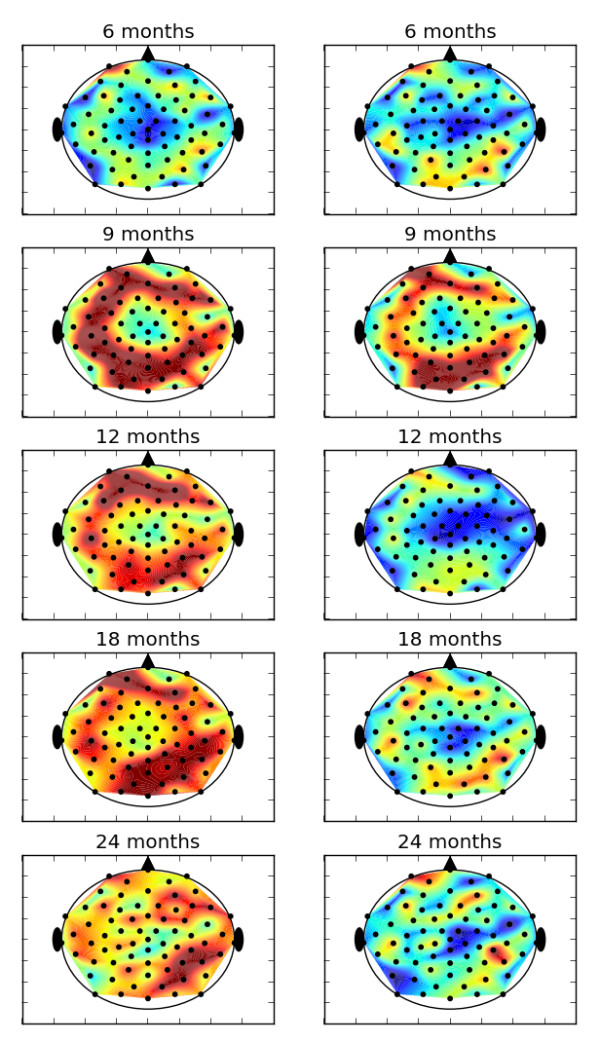
BACKGROUND: Complex neurodevelopmental disorders may be characterized by subtle brain function signatures early in life before behavioral symptoms are apparent. Such endophenotypes may be measurable biomarkers for later cognitive impairments. The nonlinear complexity of electroencephalography (EEG) signals is believed to contain information about the architecture of the neural networks in the brain on many scales. Early detection of abnormalities in EEG signals may be an early biomarker for developmental cognitive disorders. The goal of this paper is to demonstrate that the modified multiscale entropy (mMSE) computed on the basis of resting state EEG data can be used as a biomarker of normal brain development and distinguish typically developing children from a group of infants at high risk for autism spectrum disorder (ASD), defined on the basis of an older sibling with ASD. METHODS: Using mMSE as a feature vector, a multiclass support vector machine algorithm was used to classify typically developing and high-risk groups. Classification was computed separately within each age group from 6 to 24 months. RESULTS: Multiscale entropy appears to go through a different developmental trajectory in infants at high risk for autism (HRA) than it does in typically developing controls. Differences appear to be greatest at ages 9 to 12 months. Using several machine learning algorithms with mMSE as a feature vector, infants were classified with over 80% accuracy into control and HRA groups at age 9 months. Classification accuracy for boys was close to 100% at age 9 months and remains high (70% to 90%) at ages 12 and 18 months. For girls, classification accuracy was highest at age 6 months, but declines thereafter. CONCLUSIONS: This proof-of-principle study suggests that mMSE computed from resting state EEG signals may be a useful biomarker for early detection of risk for ASD and abnormalities in cognitive development in infants. To our knowledge, this is the first demonstration of an information theoretic analysis of EEG data for biomarkers in infants at risk for a complex neurodevelopmental disorder.
Overview
The claims and statistics of this paper haven’t been checked yet.
Free: it reads the open-access text and checks the first 5 claims that cite a source we can check. Create a free account to check every claim.
Integrity signals
Registry
Cites
Statistics
Figures
Verification
Claims the paper makes
The claims and statistics of this paper haven’t been checked yet.
Free: it reads the open-access text and checks the first 5 claims that cite a source we can check. Create a free account to check every claim.
Claims other papers make about this one
Each is checked against this paper’s own text: does it say what the citing paper says it does?
The source backs part of the claim, not all of it — or backs it for a different population, condition or comparison.
In the citing paper
“There is now accumulating evidence from electroencephalographic (EEG) studies suggesting that infants at high risk for ASD, regardless of whether they ultimately meet diagnostic criteria for ASD, have different developmental trajectories within the first year of life compared to low-risk infants [10–20].”
From EEG power at 3 months in infants at high familial risk for autism (2017) · cites this paper as [10]
Experimental — accuracy not yet measured
Self-check
Percentages, sums and reported differences re-computed from the paper’s own numbers.
The self-check needs the paper’s full text.
Citations
Cites
Lecture Notes in Computer Science 1205
(1999) · Industrial Robot: An International Journal · doi:10.1108/ir.1999.04926fae.001 · Cited by 38,662
Buzsáki, G. (2006) · doi:10.1093/acprof:oso/9780195301069.001.0001 · Cited by 4,873
The brainweb: phase synchronization and large-scale integration
Varela, F., Lachaux, J.-P., Rodriguez, E., & Martinerie, J. (2001) · Nature Reviews Neuroscience · doi:10.1038/35067550 · Cited by 4,761 · cited 2×
“The analysis of signal complexity on multiple scales may reveal information about neural connectivity that is diagnostically useful [1,19,22].”
BackgroundSynchronization: A Universal Concept in Nonlinear Sciences
Pikovsky, A., Rosenblum, M., & Kurths, J. (2001) · Cambridge University Press eBooks · doi:10.1017/cbo9780511755743 · Cited by 4,652
Bassett, D. S., & Bullmore, E. (2006) · The Neuroscientist · doi:10.1177/1073858406293182 · Cited by 2,600 · cited 1×
“This remarkable connectivity is achieved by a kind of hierarchical organization that is not fully understood in the brain, but is ubiquitous in nature and is called a scale-free network [2-4] that changes with development.”
BackgroundNunez, P. L., & Srinivasan, R. (2006) · doi:10.1093/acprof:oso/9780195050387.001.0001 · Cited by 2,531
Multiscale entropy analysis of biological signals
Costa, M., Goldberger, A. L., & Peng, C.-K. (2005) · Physical Review E · doi:10.1103/physreve.71.021906 · Cited by 2,482 · cited 3×
“One interpretation of biological complexity is that it reflects a system’s ability to adapt quickly and function in a changing environment [23].”
BackgroundInfluentialElectric Fields of the Brain: The Neurophysics of EEG
Nunez, P. L., & Harth, E. (1982) · Physics Today · doi:10.1063/1.2915137 · Cited by 2,232
Hierarchical organization in complex networks
Ravasz, E., & Barabási, A.-L. (2003) · Physical Review E · doi:10.1103/physreve.67.026112 · Cited by 2,160
Scale-Free Networks: A Decade and Beyond
Barabási, A.-L. (2009) · Science · doi:10.1126/science.1173299 · Cited by 2,109 · cited 2×
“This remarkable connectivity is achieved by a kind of hierarchical organization that is not fully understood in the brain, but is ubiquitous in nature and is called a scale-free network [2-4] that changes with development.”
Background
Cited by
Items 401–500 of 516
A New Approach to Sample Entropy of Multi-channel Signals: Application to EEG Signals
Jomaa, M. E. S. H., Bogaert, P. V., Jrad, N., Colominas, M. A., & Humeau‐Heurtier, A. (2018) · European Signal Processing Conference (EUSIPCO) · doi:10.23919/eusipco.2018.8553095 · Cited by 2
“increase in irregularity after treatment, as it is known that signals from healthy subjects present higher irregularity than those of pathological subjects [18] [19].”
BackgroundEllen R. Grass Lecture: The Future of Neurodiagnostics and Emergence of a New Science
Bosl, W. J. (2023) · The Neurodiagnostic Journal · doi:10.1080/21646821.2023.2183012 · Cited by 2
“Nonlinear features computed from EEG signals have potential for very early prediction of emerging autism spectrum disorder (Bosl et al. 2011; Bosl et al. 2018; Gurau et al. 2017), childhood anxiety (Minkowski et al. 2021; Schoenberg 2020; Trambaiolli and Biazoli 2020), attention deficit disorders…”
BackgroundSelf-citationRojas, J. A. (2023) · Advances in educational technologies and instructional design book series · doi:10.4018/978-1-6684-6868-5.ch003 · Cited by 2
Pravni položaj investicionih društava na tržištu kapitala
Sovilj, R. P. (2023) · doi:10.59954/rgxz7129 · Cited by 2
Si, Y., Zhang, H., & Shen, Z. (2025) · International Journal of Bifurcation and Chaos · doi:10.1142/s0218127425500609 · Cited by 2
Neurotechnology and Psychiatric Biomarkers
William, J. (2012) · InTech eBooks · doi:10.5772/19457 · Cited by 2
“More details about this study and the use of machine learning to discover diagnostically significant patterns in MSE data can be found in (Bosl et al., 2011).”
BackgroundInfluentialDuda, M., & Wall, D. P. (2015) · Personalized Medicine · doi:10.2217/pme.15.8 · Cited by 2
Ichinose, K., Park, J., Kawai, Y., Suzuki, J., Asada, M., & Hiroki, M. O. R. I. (2017) · IEEE International Conference on Development and Learning (ICDL) · doi:10.1109/devlrn.2017.8329813 · Cited by 2
“This result agrees with previous studies analyzing resting-state EEG signals in ASD [2], [3].”
BackgroundResultKeshmiri, S. (2020) · Brain Sciences · doi:10.3390/brainsci10080527 · Cited by 2
“depression [34], autism [35,36], and Alzheimer’s disease [37,38].”
BackgroundPark, J., Kawai, Y., & Asada, M. (2023) · Frontiers in Computational Neuroscience · doi:10.3389/fncom.2023.1169288 · Cited by 2
“Studies on the brains of individuals with neuropsychiatric disorders have reported low complexity of neural activity (Bosl et al., 2011; Ghanbari et al., 2015; Hadoush et al., 2019; Xu et al., 2020) and discussed its relationship with the E/I balance.”
BackgroundInfluentialHannigen, S. F. (2014) · D-Scholarship@Pitt (University of Pittsburgh) · Cited by 2
Computation of the electroencephalogram (EEG) from network models of point neuronsPreprint
Martínez‐Cañada, P., Ness, T. V., Einevoll, G. T., Fellin, T., & Panzeri, S. (2020) · bioRxiv (Cold Spring Harbor Laboratory) · doi:10.1101/2020.11.02.364802 · Cited by 2
Matlis, S., Boric, K., Chu, C. J., & Kramer, M. (2015) · BMC Neurology · doi:10.1186/s12883-015-0391-4 · Cited by 2
Applications of Machine Learning Methods to Assist the Diagnosis of Autism Spectrum DisorderPreprint
Elbattah, M., & Cilia, F. (2023) · OSF Preprints (OSF Preprints) · doi:10.31219/osf.io/uh2wv · Cited by 2
Dadjoo, M., Rezaei, S., Rohampour, K., Naseh, A., & Bajestani, G. S. (2024) · Caspian Journal of Neurological Sciences · doi:10.32598/cjns.10.36.24.3 · Cited by 1
Liu, J., Wang, H., Wang, J., Wu, H., Xu, Y., Zhang, T., & Zhou, G. (2025) · Computational Intelligence · doi:10.1111/coin.70131 · Cited by 1
Feasibility of Large-Scale Development-Focused EEG Research in a Hospital-Based Primary Care Setting
Conroy, K., Wilkinson, C. L., Francis, B., Said, A. J., Constantino, C., Chung, H., Tager-Flusberg, H. B., & Nelson, C. A. (2025) · Academic Pediatrics · doi:10.1016/j.acap.2025.103163 · Cited by 1
Self-citationHarnessing Trial-to-Trial Variability of EEG Spectral Characteristics to Understand Autism
Shama, D. M., Su, M., Beeler-Duden, S., Bernier, R., Bookheimer, S. Y., Dapretto, M., McPartland, J. C., Jeste, S., Horn, J. D. V., Pelphrey, K. A., et al. (2025) · Journal of Autism and Developmental Disorders · doi:10.1007/s10803-025-07125-y · Cited by 2
“Building on foundational findings in the field, studies using entropy and complexity metrics (Bosl et al., 2011, 2017)) and numerous investigations of intertrial coherence (ITC) have consistently shown that neural signal variability, rather than static EEG features, may better capture…”
Autism spectrum disorder disrupts brain network connectivity maturation during childhood development
Tiawongsuwan, L., Klomchitcharoen, S., Chumanee, W., Tangwattanasirikun, T., Saksittikorn, S., Chawaruechai, S., Jatupornpoonsub, T., & Wongsawat, Y. (2025) · Scientific Reports · doi:10.1038/s41598-025-30971-w · Cited by 2
Gu, X., Jia, J., Zhang, X., Wei, H., Han, Y., Rong, P., Cui, X., & Tian, H. (2026) · Journal of Child and Adolescent Psychiatric Nursing · doi:10.1111/jcap.70052 · Cited by 1
Stofa, M. M., Azmi, A. S., Saleh, A., Abdani, S. R., Zaman, M. H. M., & Zulkifley, M. A. (2026) · PeerJ Computer Science · doi:10.7717/peerj-cs.3762 · Cited by 1
Song, T., Jabbar, U., Antohi, V. M., Forțea, C., & Zlati, M. L. (2026) · BioData Mining · doi:10.1186/s13040-026-00570-0 · Cited by 1
Discovery and Development of Autism Biomarkers: The State of the Science
Halepoto, D. M., Bashir, S., & AL-Ayadhi, L. Y. (2012) · Cited by 1
Attitudes of Society Towards People With Neurodevelopmental Disorders: Problems and Solutions
Khanna, P. (2020) · Advances in medical diagnosis, treatment, and care (AMDTC) book series · doi:10.4018/978-1-7998-3069-6.ch001 · Cited by 1
Attitudes of Society Towards People With Neurodevelopmental Disorders: Problems and Solutions
Khanna, P. (2021) · IGI Global eBooks · doi:10.4018/978-1-6684-3542-7.ch101 · Cited by 1
Enhanced Laterality Index: A Novel Measure for Hemispheric Asymmetry
Li, Y., & Zhang, Z. (2022) · Journal of Healthcare Engineering · doi:10.1155/2022/8997108 · Cited by 1
“[33] revealed left prefrontal lateralization on the total spectrum amplitude power and right occipital lateralization in the δ band.”
BackgroundThe Analyzing miR-106b-5p and miR-93-5p as Promising Diagnostic Markers for Autism Spectrum Disorder
Safdar, A., Khurshid, S., Farwa, U., & Bakhtiar, S. M. (2021) · Current Trends in OMICS · doi:10.32350/cto.12.02 · Cited by 1
Ewen, J. B., & Beniczky, S. (2017) · Oxford University Press eBooks · doi:10.1093/med/9780190228484.003.0009 · Cited by 7
A brief review of saliva biomarkers as a diagnostic tool for autism spectrum disorder (asd)
Mota, F., Oliveira, M. V., Osterne, V. J. S., Clemente, J., Neto, A. B. M. L., Guedes, M., Nascimento, K. S., Cardoso, J., & Cavada, B. S. (2021) · International Journal of Development Research · doi:10.37118/ijdr.20472.11.2020 · Cited by 1
Computer Aided Diagnosis of Autism Spectrum Disorder Based on Thermal Imaging
Ganesh, K., Umapathy, S., & Krishnan, P. T. (2022) · Communications in computer and information science · doi:10.1007/978-3-031-11346-8_3 · Cited by 1
Naturalistic Neuroimaging: From Film to Learning Disorders
Dukkipati, A. (2023) · International journal of high school research · doi:10.36838/v5i1.2 · Cited by 1
Linear mixed-effect models for correlated response to process electroencephalogram recordings
Meinardi, V. B., López, J. M. D., Fajreldines, H. D., Boyallían, C., & Balzarini, M. (2023) · Cognitive Neurodynamics · doi:10.1007/s11571-023-09984-6 · Cited by 2
“…examined by using entropy methods for detection of several disorders such as mild cognitive impairment (Zhu et al. 2017), schizophrenia (Thilakvathi 2017; Sabeti et al. 2009), autism spectrum disorder (Bosl 2011), Alz-heimer disorder (Tylovia 2018; Simons 2018) and epilepsy (Acharya 2012).”
Brain Death Determination Aid System Using Automatic D-2TEMD
Zhang, R., Sui, L., Li, B., Gong, J., Shen, C., & Cao, J. (2023) · International Conference on Data-driven Optimization of Complex Systems (DOCS) · doi:10.1109/docs60977.2023.10294938 · Cited by 1
“Among the methods for EEG resolution of human body features, EEG energy [18] index and EEG complexity [16] [17] index are very effective in analyzing the components of EEG signals, and show excellent results in classifying EEG signals such as brain death determination and epilepsy detection.”
MethodZhang, M., Ren, J., Li, N., Li, Y., Yang, L., Wei, W., Qiu, J., Zhang, X., & Li, X. (2025) · AIMS neuroscience · doi:10.3934/neuroscience.2025002 · Cited by 1
“…of signal patterns, has demonstrated substantial promise in the realm of mental health inquiries, with applications ranging from advancing our understanding of schizophrenia [30] and detecting autism susceptibility in infants [31] to evaluating the developmental maturation of neonatal brains [32].”
Regulação sistêmica e prudencial no setor bancário brasileiro
Pinto, G. (2011) · Digital Library of Theses and Dissertations (Universidade de São Paulo) · doi:10.11606/t.2.2011.tde-03092012-145854 · Cited by 16
Dimitriadis, S. I. (2016) · Clinical Neurophysiology · doi:10.1016/j.clinph.2016.04.016 · Cited by 1
“…few studies appeared that attempted to improve event-related potential (ERP) recordings from both magnetoencephalography (MEG) and EEG focusing on studying populations at-risk for the development of LLD (Barttfeld et al., 2011, Bosl et al., 2011) and infants at risk for autism (Stahl et al., 2012).”
BackgroundClassification of ADHD Using Heterogeneity Classes and Attention Network Task Timing
Hanson, S. E. (2018) · VTechWorks (Virginia Tech) · Cited by 1
Xiao, W., Jones, M., Milne, E., & Dede, A. J. O. (2025) · bioRxiv (Cold Spring Harbor Laboratory) · doi:10.1101/2025.01.13.632659 · Cited by 1
Multiscale Entropy of Resting-State fMRI Signals Reveals Differences in Brain Complexity in AutismPreprint
Xiao, W., & Jones, M. (2025) · bioRxiv (Cold Spring Harbor Laboratory) · doi:10.1101/2025.05.22.655518 · Cited by 1
Peck, F. C., Walsh, C. R., Truong, H., Pochon, J.-B. F., Enriquez, K., Bearden, C. E., Loo, S. K., Bilder, R. M., Lenartowicz, A., & Rissman, J. (2026) · bioRxiv (Cold Spring Harbor Laboratory) · doi:10.64898/2026.03.25.714248 · Cited by 1
“These features of the signal, together with the inherently nonlinear and complex nature of brain dynamics (Bosl et al., 2011), present an opportunity to extract additional information that is not fully captured by power alone.”
Naoe, T., Shikauchi, Y., Itahashi, T., Tanaka, K., Okimura, T., Hashimoto, R., Ohta, H., Sato, Y., & Nakamura, M. (2026) · Research Square · doi:10.64898/2026.09.01.747412 · Cited by 1
Gross, E. (2012) · ThinkIR: The University of Louisville's Institutional Repository (University of Louisville) · doi:10.18297/etd/538
Autism Symptom Heterogeneity Exists in Family Members
Waterhouse, L. H. (2012) · Elsevier eBooks · doi:10.1016/b978-0-12-415961-7.00002-2
Electrophysiological Endophenotypes in Autism Spectrum Disorder: A Family Study
Clawson, A. (2015) · ScholarsArchive (Brigham Young University)
Yip, J., Davis, S., & Wendt, O. (2011) · InTech eBooks · doi:10.5772/22405
“A reduction of inhibitory GABA signals predicts an overall perturbation of neuronal signals that favors a more "excited output which is reflected in numerous parameters of brainwave signals in autism that can be observed from infancy (Ahmadlou et al., 2010; Bosl et al., 2011).”
BackgroundNoise as a useful signal within the nervous system in neurorehabilitation
Mikołajewska, E., & Mikołajewski, D. (2013) · Bio-Algorithms and Med-Systems · doi:10.1515/bams-2013-0151
Ferreira, M. L., & Catarino, P. (2012)
Beyond Psychopathology in Clinical Psychology: Developmental Pathways to the future
Afolabi, O. E. (2014)
BCI applications regarding the perception of emotions in healthy individuals and autism
Monteiro, R. (2016) · Portuguese National Funding Agency for Science, Research and Technology (RCAAP Project by FCT)
Gayle, L. C. (2016) · W&M Publish (College of William & Mary) · doi:10.21220/s2mw2c · Cited by 2
“Based on previous research regarding complexity in individuals with ASD (Bosl et al., 2011; Catarino et al., 2011; Eldridge et al., 2014), this research hypothesized that individuals with ASD would show attenuated and atypical resting-state complexity compared to controls when using MSE analysis.”
MethodResultBosl, W. J. (2016) · Innovations in cognitive neuroscience · doi:10.1007/978-1-4614-3846-5_14
Self-citationScarborough, J. A. (2017) · USF Scholarship Repository (University of San Francisco)
Brain Coordination Dynamics in Altered States of Consciousness in Children
Nenadovic, V. (2014) · TSpace (University of Toronto)
Quantitative electrophysiology as a biomarker of Autism Spectrum Disorder
McEvoy, K. (2014) · eScholarship (California Digital Library)
On the nature and measurement of neurocognitive adaptability in older adulthood
Mulligan, B. P. (2017) · UVic’s Research and Learning Repository (University of Victoria)
de Oliveira, J. D. S. (2018) · Digital Library of Theses and Dissertations (Universidade de São Paulo) · doi:10.11606/d.100.2018.tde-01022018-100042 · Cited by 1
Automated Classification of Hand-grip action on Objects using Machine LearningPreprint
Mishra, A., Sharma, S., Kumar, S., Ranjan, P., & Ujlayan, A. (2018) · arXiv (Cornell University) · doi:10.48550/arxiv.1804.04538
Entropy as a Method for Identifying Treatment Resistant Autism Spectrum Disorder
Wright, N. (2018) · USF Scholarship Repository (University of San Francisco)
Neurophysiological Oscillations as Biomarkers of Neurodevelopmental Disorders
Frohlich, J. (2018) · eScholarship (California Digital Library)
From Right to Left: Interhemispheric Interactions while Seeing Words and Hearing Sentences
Chu, R. (2018) · TSpace (University of Toronto)
Madureira, D. Q. M., Caminha, V. L. P. D. S., & Salvini, R. L. (2018) · arXiv (Cornell University) · doi:10.48550/arxiv.1811.07020
“Alternatively, studies involving cerebral rhythms deal with synchrony between brain areas, analyzing how altered neural rhythms affect the propagation of information throughout the brain (Bosl et al., 2011), (Lazarev et al., 2010, 2015).”
BackgroundThe Efficacy of Neurofeedback in the Treatment of Autism.
Akhavan, R. (2018) · ScholarWorks (Walden University) · Cited by 1
Automatic Detection and Assessment of Autism Spectrum Disorder: A Systematic Review
Manoharan, T. A., Menaka, R., & Karthik, R. (2021) · Advances in early childhood and K-12 education · doi:10.4018/978-1-7998-7630-4.ch020
Characterizing Resting-State Brain Dynamics in Individuals with and without Autism Spectrum Disorder
Easson, A. K. (2019) · TSpace (University of Toronto)
Prediction of outcome in children with autism spectrum disorders
Usta, M. B. (2021) · Elsevier eBooks · doi:10.1016/b978-0-12-822822-7.00001-6
Simões, M. A. (2019) · Portuguese National Funding Agency for Science, Research and Technology (RCAAP Project by FCT)
Detection of an Autism EEG Signature Through a New Processing Method Based on a Topological ApproachPreprint
Grossi, E., White, R. A., & Swatzyna, R. J. (2021) · Research Square · doi:10.21203/rs.3.rs-878499/v1
Vite, G., & Karina, T. (2020) · Open Access at Essex (University of Essex)
Intelligent Big Data Analytics in Health
Bayrak, E. A., & Kirci, P. (2021) · IGI Global eBooks · doi:10.4018/978-1-6684-3662-2.ch081 · Cited by 1
EEG As A Biomarker for Psychiatric and Neurodevelopmental Disorders
Sanei, S., & Chambers, J. A. (2021) · Wiley eBooks · doi:10.1002/9781119386957.ch16
Localization and diagnosis of abnormal channels in children with ASD based on WMSSE and ASI
Li, X., Yang, C., An, Z., Wang, X., Su, R., & Kang, J. (2022) · Journal of Neuroscience Methods · doi:10.1016/j.jneumeth.2022.109595
Sheela, P., & Puthankattil, S. D. (2022) · International Conference on Next Generation Intelligent Systems (ICNGIS) · doi:10.1109/icngis54955.2022.10079796
“with the aid of modified MSE (mMSE) as the quantifier [16].”
MethodSignal processing of electroencephalograms with 256 sensors in epileptic children
Jomaa, M. E. S. H. (2019) · theses.fr (ABES) · doi:10.70675/b2f98f6ez6d6dz41cfzacffz9b146bed07c8
The Correlational Studies between Autistic Traits and Inhibitory Control in College Students
彭, 丹. (2024) · Advances in Social Sciences · doi:10.12677/ass.2024.132138
Piazza, C., Falivene, A., Pandurangan, S., Rapella, S., Dondena, C., Riboldi, E. M., Cantiani, C., & Riva, V. (2024) · IEEE International Symposium on Medical Measurements and Applications (MeMeA) · doi:10.1109/memea60663.2024.10596882
“Bosl and colleges used SVM with baseline EEG complexity measures to classify LL-ASD and HL-ASD [27] and also to predict the clinical diagnostic outcome [28].”
MethodBalafas, S. E., Serio, C. D., Lolatto, R., Mandolfo, M., Bianchi, A. M., Wit, E. C., & Brombin, C. (2024) · Statistical Methods & Applications · doi:10.1007/s10260-024-00761-1
“The connectivity within brain networks has been linked to behavioral functioning ( Anzolin et al. 2017; Bosl et al. 2011).”
A Novel Complexity Algorithm for Quantification of Consciousness Levels
Shen, C., Mitsukura, Y., & Cao, J. (2024) · IEEE Access · doi:10.1109/access.2024.3445467
CONTINUOUS SCORING OF AUTISM SPECTRUM DISORDER PATIENTS BY ANALYZING THEIR EEG SIGNALS
Afrooz, E., Taghavi, M., Ghavasieh, A., Asayesh, V., & Boostani, R. (2024) · Biomedical Engineering Applications Basis and Communications · doi:10.4015/s1016237224500406
Fonseca, F. S., Muniz, M. V. S., de Oliveira, C. V. N., da Silva, T. C. V., & dos Santos, W. P. (2025) · Gestão org · doi:10.51359/1679-1827.2024.263456 · Cited by 1
Stefanidou, C. A. (2014) · University of Birmingham Institutional Research Archive (University of Birmingham) · Cited by 1
Brain Wave Based Autism Spectrum Disorder Detection -A Machine Learning Approach
S, P. R., & Pradeep, R. (2025) · International Conference on Control, Communication and Computing (ICCC) · doi:10.1109/iccc64910.2025.11077238
“…artificial intelligence in healthcare for diagnostic purposes Similar research has explored the application of machine learning to EEG data [11] reviewed various EEG biomarkers that have been investigated for ASD detection, highlighting the potential of EEG as a diagnostic tool [12]…”
Nagendhiran, K., & Mohanraj, E. (2025) · Journal of Control Engineering and Applied Informatics · doi:10.61416/ceai.v27i3.9570 · Cited by 1
Artificial Intelligence for Autism Detection Using EEG Signals and Lightweight Neural Networks
Shaikh, A., Koli, A., Awubaigol, P., Mali, S., Khanai, R., & Akkasaligar, P. T. (2025) · Lecture notes in networks and systems · doi:10.1007/978-3-032-07735-6_20
Preliminary Investigation of Adult EEG Responses to Emotionally Valenced Social Robot Behavior
Arsene, D., Donciu, C., Adochiei, I.-R., Roman, M. G., Corciovă, C., & Irimia, D.-C. (2025) · International Conference on Electromechanical and Energy Systems (SIELMEN) · doi:10.1109/sielmen67352.2025.11260852
Wang, S., Jiang, G., Hu, J., Han, J., Xie, P., & Li, X. (2025) · Expert Systems with Applications · doi:10.1016/j.eswa.2025.130671
Wang, Y., & Chen, Z. (2024) · Springer Link (Chiba Institute of Technology) · doi:10.1051/bioconf/202411103010/pdf
López‐Arango, G. (2021) · Papyrus : Institutional Repository (Université de Montréal) · doi:10.71781/30007
Enguix Chiral, V. (2022) · PolyPublie (École Polytechnique de Montréal)
Cortical dynamics and speech perception during early childhood
Campos Espinoza, A. (2023) · UCL Discovery (University College London)
Caractérisation du profil électroencéphalographique du potentiel intellectuel chez l’enfant
Charlebois-Poirier, A.-R. (2024) · doi:10.71781/18758
Vadhavekar, N., Walia, S., Misra, G., Palakodeti, S., Kankariya, S., & Pandya, M. (2025) · International Journal of Contemporary Pediatrics · doi:10.18203/2349-3291.ijcp20254195
Joshi, S., Gondkar, A., Hadkar, C., Jakkan, S., & Shilaskar, S. (2025) · International Conference on Image Information Processing (ICIIP) · doi:10.1109/iciip68302.2025.11346277
“Children with ASD demonstrated decreased local and global efficiency and integration in their networks, which illustrates how graph theory can capture differences amongst individuals on how their brains are organized [1].”
Neuroimmune Clearance and EEG Biomarkers: A Unified Model of ASD and Dyslexia
Eroğlu, G. (2026) · Neural Plasticity · doi:10.1155/np/6347511
“Across a range of neurological and neurodevelopmental conditions — including ASD, developmental dyslexia, and neurodegenerative diseases — alterations in EEG oscillatory activity, particularly within low-frequency bands, have been consistently reported [8].”
InfluentialCognitive brain-computer interfaces : From feature engineering to neurophenomenological validation
Mora-Sánchez, A. (2018) · theses.fr (ABES) · doi:10.70675/8def4000z91b6z4f6azbd29zd8c2b4ff0128
Metadata
- Authors
- Bosl, W., Tierney, A., Tager-Flusberg, H., & Nelson, C.
- Affiliations
- Harvard University (US)
- Boston Children's Hospital (US)
- Boston University (US)
- Corresponding author
- Bosl, William
- Venue
- BMC Medicine
- Published
- 2011-02-22
- Volume
- 9
- Issue
- 1
- ISSN
- 1741-7015 (ISSN-L)
- PMC
- PMC3050760
- OpenAlex
- W2171693726
- Cited by
- 485
- References
- 60
- Citations by year
- 2026: 21 · 2025: 33 · 2024: 22 · 2023: 40 · 2022: 41 · 2021: 53 · 2020: 38 · 2019: 30 · 2018: 34 · 2017: 30 · 2016: 28 · 2015: 23 · 2014: 39 · 2013: 23 · 2012: 17
- FWCI
- 14.93
- Type
- journal article
- Language
- en
- Open access
- gold
- doi.org
- Licence
- Locations
- BMC Medicine (publishedVersion, cc-by)
- Digital Access to Scholarship at Harvard (DASH) (Harvard University) (submittedVersion, cc-by)
- USF Scholarship Repository (University of San Francisco) (submittedVersion)
- DOAJ (DOAJ: Directory of Open Access Journals) (submittedVersion)
- OpenBU (Boston University) (submittedVersion, cc-by)
- Funders
- Autism Speaks (AS1323)
- Simons Foundation
- National Institute on Deafness and Other Communication Disorders (R01 DC10290, R21 DC08647)
- Topics
- Life Sciences › Neuroscience › Cognitive Neuroscience › Autism Spectrum Disorder Research
- Life Sciences › Neuroscience › Cognitive Neuroscience › EEG and Brain-Computer Interfaces
- Life Sciences › Biochemistry, Genetics and Molecular Biology › Genetics › Genetics and Neurodevelopmental Disorders
- Keywords
- autism spectrum disorder, resting-state EEG, endophenotypes, typically developing infants, brain development, early detection, support vector machine classification, sex differences
About these checks
Registry, retraction, Cites and statistics results are computed, not judged, with one exception: a printed reference that no index lists is read once by a model before it counts as a citation error. Claims are extracted by a model and kept only when their quote appears verbatim in the text; each cited source is then checked, with a model’s help, for whether it says what the claim relies on. Those verdicts can be wrong — read the claim’s quote and the cited source before relying on one.
Statistics and arithmetic are recomputed, not judged.
Confidence bands are shown only for fields calibrated on our annotated test set. None is calibrated yet, so no band is shown.
What counts as a claim ›How we measure confidence ›How we check this ›
Are you an author, or do you see a problem with this page? Request a review
Data sources
Bibliographic data: Semantic Scholar, OpenAlex, Crossref.
Contains information from the Semantic Scholar Academic Graph Datasets, made available under the ODC Attribution License (ODC-BY 1.0).
Semantic Scholar’s data is described in: Kinney, R., et al. (2023). The Semantic Scholar Open Data Platform. arXiv:2301.10140.
