

Dietary carbohydrate restriction in type 2 diabetes mellitus and metabolic syndrome: time for a critical appraisal
Open accessThe DOI matches its Crossref record; 66 of the 66 references it cites were found in a registry or an index.
Abstract
Current nutritional approaches to metabolic syndrome and type 2 diabetes generally rely on reductions in dietary fat. The success of such approaches has been limited and therapy more generally relies on pharmacology. The argument is made that a re-evaluation of the role of carbohydrate restriction, the historical and intuitive approach to the problem, may provide an alternative and possibly superior dietary strategy. The rationale is that carbohydrate restriction improves glycemic control and reduces insulin fluctuations which are primary targets. Experiments are summarized showing that carbohydrate-restricted diets are at least as effective for weight loss as low-fat diets and that substitution of fat for carbohydrate is generally beneficial for risk of cardiovascular disease. These beneficial effects of carbohydrate restriction do not require weight loss. Finally, the point is reiterated that carbohydrate restriction improves all of the features of metabolic syndrome.
Overview
The claims and statistics of this paper haven’t been checked yet.
Free: it reads the open-access text and checks the first 5 claims that cite a source we can check. Create a free account to check every claim.
Integrity signals
Registry
Cites
Statistics
Figures
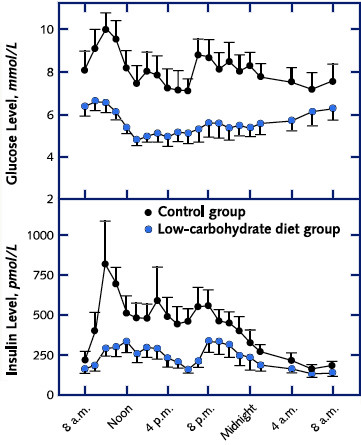
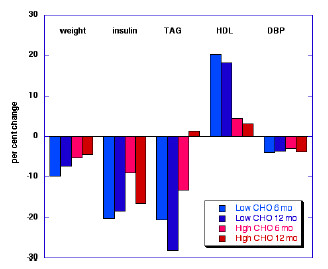
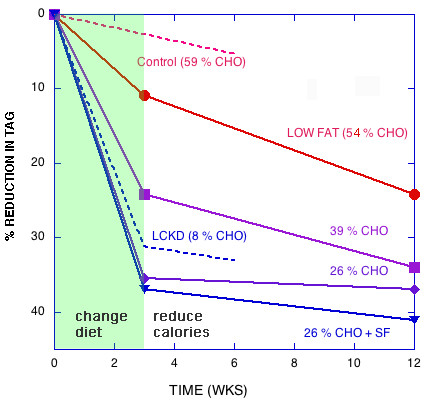
Verification
Claims the paper makes
The claims and statistics of this paper haven’t been checked yet.
Free: it reads the open-access text and checks the first 5 claims that cite a source we can check. Create a free account to check every claim.
Claims other papers make about this one
Each is checked against this paper’s own text: does it say what the citing paper says it does?
In the citing paper
“Considering low HDL and high triglyceride levels being independent risk factors for insulin resistance and cardiovascular disorders [58]”
Self-check
Percentages, sums and reported differences re-computed from the paper’s own numbers.
The self-check needs the paper’s full text.
Citations
Cites
Mensink, R. P., Zock, P. L., Kester, A. D., & Katan, M. B. (2003) · The American Journal of Clinical Nutrition · doi:10.1093/ajcn/77.5.1146 · Cited by 2,811 · cited 1×
“Replacement of saturated fat with carbohydrate, however, is almost always deleterious [46,47].”
BackgroundBantle (2008) · doi:10.2337/dc08-s061 · Cited by 1,795
A Randomized Trial of a Low-Carbohydrate Diet for Obesity
Foster, G. D., Wyatt, H. R., Hill, J. O., McGuckin, B. G., Brill, C., Mohammed, B. S., Szapary, P. O., Rader, D. J., Edman, J. S., & Klein, S. (2003) · New England Journal of Medicine · doi:10.1056/nejmoa022207 · Cited by 1,794 · cited 1×
“[26] and Samaha, et al.”
Dietary Fat Intake and the Risk of Coronary Heart Disease in Women
Hu, F. B., Stampfer, M. J., Manson, J. E., Rimm, E., Colditz, G. A., Rosner, B. A., Hennekens, C. H., & Willett, W. C. (1997) · New England Journal of Medicine · doi:10.1056/nejm199711203372102 · Cited by 1,782
CORONARY HEART DISEASE IN SEVEN COUNTRIES
(1971) · Medical Journal of Australia · doi:10.5694/j.1326-5377.1971.tb50629.x · Cited by 1,599
A Low-Carbohydrate as Compared with a Low-Fat Diet in Severe Obesity
Samaha, F. F., Iqbal, N., Seshadri, P., Chicano, K. L., Daily, D. A., McGrory, J., Williams, T., Williams, M., Gracely, E. J., & Stern, L. (2003) · New England Journal of Medicine · doi:10.1056/nejmoa022637 · Cited by 1,267 · cited 1×
“[27] are often cited as examples where low carbohydrate diets are more effective at 6 months but no better than low-fat diets at 1 year.”
BackgroundHoward, B. V., Van Horn, L., Hsia, J., Manson, J. E., Stefanick, M. L., Wassertheil-Smoller, S., Kuller, L. H., LaCroix, A. Z., Langer, R. D., Lasser, N. L., et al. (2006) · JAMA · doi:10.1001/jama.295.6.655 · Cited by 1,091
The role of skeletal muscle insulin resistance in the pathogenesis of the metabolic syndrome
Petersen, K. F., Dufour, S., Savage, D. B., Bilz, S., Solomon, G., Yonemitsu, S., Cline, G. W., Befroy, D., Zemany, L., Kahn, B. B., et al. (2007) · Proceedings of the National Academy of Sciences · doi:10.1073/pnas.0705408104 · Cited by 759
Coronary Heart Disease in Seven Countries.
(1971) · Annals of Internal Medicine · doi:10.7326/0003-4819-74-6-1026_8 · Cited by 758
McLaughlin, T., Reaven, G., Abbasi, F., Lamendola, C., Saad, M., Waters, D., Simon, J., & Krauss, R. M. (2005) · The American Journal of Cardiology · doi:10.1016/j.amjcard.2005.03.085 · Cited by 658 · cited 1×
“Indeed, the triglyceride:HDL ratio has been posited to be a surrogate measure of insulin resistance [ 38 ].”
Background
Research works printed but not linked: 7
- Bernstein R Dr Bernstein's Diabetes Solution: The Complete Guide to Achieving Normal Blood Sugars 2007 Little, Brown and Company
- Vernon MC Eberstein JA Atkins Diabetes Revolution The Groundbreaking Approach to Preventing and Controlling Type 2 Diabetes 2004 New York: William Morrow PMC535347 15535891
- Eades MR Eades MD Protein Power 1996 New York: Bantam Books
- Colpo A The Great Cholesterol Con 2006 Lulu Press
- Ravnskov U The Cholesterol Myths: Exposing the Fallacy that Cholesterol and Saturated Fat Cause Heart Disease 2000 Washington, DC: New Trends Publishing, Inc
- Taubes G Good Calories, Bad Calories 2007 New York: Alfred A. Knopf
- Agatston A The South Beach Diet 2003 New York: Random House
Cited by
Feinman, R. D., Pogozelski, W. K., Astrup, A., Bernstein, R. K., Fine, E. J., Westman, E. C., Accurso, A., Frassetto, L., Gower, B. A., McFarlane, S. I., et al. (2015) · Nutrition · doi:10.1016/j.nut.2014.06.011 · Cited by 912
“It is universally accepted that dietary carbohydrate is the main dietary determinant of blood glucose [7] and restriction shows the greatest reduction in postprandial and overall glucose concentrations as well as HbA 1c [3,6,8 – 14].”
Self-citationBueno, N. B., de Melo, I. S. V., de Oliveira, S. L., & da Rocha Ataide, T. (2013) · British Journal of Nutrition · doi:10.1017/s0007114513000548 · Cited by 778
Franz, M. J., Boucher, J. L., Rutten-Ramos, S., & VanWormer, J. J. (2015) · Journal of the Academy of Nutrition and Dietetics · doi:10.1016/j.jand.2015.02.031 · Cited by 672
“Low-carbohydrate and/or highprotein diets have been recommended for better weightloss outcomes in individuals with diabetes.(38,39) To better determine macronutrient composition of weight-loss intervention, a secondary question reviewed five trials comparing different macronutrient percentages and their outcomes.”
BackgroundEffect of diet on type 2 diabetes mellitus: a review
Khazrai, Y. M., Defeudis, G., & Pozzilli, P. (2014) · Diabetes/Metabolism Research and Reviews · doi:10.1002/dmrr.2515 · Cited by 626
“[55], for example, accepted the ADA’s definition that a lowcarbohydrate diet contains less than 130 g carbohydrate per day (i.”
BackgroundCarbohydrate Restriction has a More Favorable Impact on the Metabolic Syndrome than a Low Fat Diet
Volek, J. S., Phinney, S. D., Forsythe, C. E., Quann, E. E., Wood, R. J., Puglisi, M. J., Kraemer, W. J., Bibus, D. M., Fernandez, M. L., & Feinman, R. D. (2009) · Lipids · doi:10.1007/s11745-008-3274-2 · Cited by 397
“Also, in comparative studies in which weight loss is similar between different diets, the carbohydrate-restricted group shows better response on other markers [60, 61].”
BackgroundSelf-citationCan We Say What Diet Is Best for Health?
Katz, D. L., & Meller, S. (2014) · Annual Review of Public Health · doi:10.1146/annurev-publhealth-032013-182351 · Cited by 378
“Interest in carbohydrate-restricted diets is long-standing, particularly in the context of diabetes management, and especially during the era before the advent of insulin therapy (2, 44).”
BackgroundERGO: A pilot study of ketogenic diet in recurrent glioblastoma
RIEGER, J., BÄHR, O., MAURER, G. D., HATTINGEN, E., FRANZ, K., BRUCKER, D., WALENTA, S., KÄMMERER, U., COY, J. F., WELLER, M., et al. (2014) · International Journal of Oncology · doi:10.3892/ijo.2014.2382 · Cited by 287
“These observations may relate to the fact that insulin and IGF-1 not only modulate glucose metabolism of healthy tissues but also act as growth factors for tumor cells.”
BackgroundInfluentialSaslow, L. R., Mason, A. E., Kim, S., Goldman, V., Ploutz-Snyder, R., Bayandorian, H., Daubenmier, J., Hecht, F. M., & Moskowitz, J. T. (2017) · Journal of Medical Internet Research · doi:10.2196/jmir.5806 · Cited by 265
“Data suggest that very low-carbohydrate diets [3-11], and adequate sleep and physical exercise [12-16] can improve glycemic control and reduce body weight in individuals with type 2 diabetes.”
Davis, N. J., Tomuta, N., Schechter, C., Isasi, C. R., Segal-Isaacson, C. J., Stein, D., Zonszein, J., & Wylie-Rosett, J. (2009) · Diabetes Care · doi:10.2337/dc08-2108 · Cited by 256
Nutritional ketosis for weight management and reversal of metabolic syndrome
Gershuni, V. M., Yan, S. L., & Medici, V. (2018) · Current Nutrition Reports · doi:10.1007/s13668-018-0235-0 · Cited by 239
Overweight and diabetes prevention: Is a low-carbohydrate-high-fat diet recommendable?
Brouns, F. (2018) · European Journal of Nutrition · doi:10.1007/s00394-018-1636-y · Cited by 235
“Such changes indirectly entail reduced risks of cardiovascular diseases [13, 14, 39].”
BackgroundEffects of Ketogenic Diets on Cardiovascular Risk Factors: Evidence from Animal and Human Studies
Kosinski, C., & Jornayvaz, F. (2017) · Nutrients · doi:10.3390/nu9050517 · Cited by 210
Low-Carb and Ketogenic Diets in Type 1 and Type 2 Diabetes
Bolla, A. M., Caretto, A., Laurenzi, A., Scavini, M., & Piemonti, L. (2019) · Nutrients · doi:10.3390/nu11050962 · Cited by 226
“and a reduction of post-prandial glycaemia [18].”
Saslow, L. R., Kim, S., Daubenmier, J. J., Moskowitz, J. T., Phinney, S. D., Goldman, V., Murphy, E. J., Cox, R. M., Moran, P., & Hecht, F. M. (2014) · PLoS ONE · doi:10.1371/journal.pone.0091027 · Cited by 221
“These results are consistent with those of several prior studies [5], which have found substantial improvements in glycemic control with low carbohydrate diets in the setting of a metabolic ward [27], or in uncontrolled studies [28].”
BackgroundResultMeng, Y., Bai, H., Wang, S., Li, Z., Wang, Q., & Chen, L. (2017) · Diabetes Research and Clinical Practice · doi:10.1016/j.diabres.2017.07.006 · Cited by 221
“Furthermore, the significant increase of LDL-c concentration was usually considered a primary indicator of cardiovascular risk [4].”
BackgroundInfluentialKetogenic Diet in Neuromuscular and Neurodegenerative Diseases
Paoli, A., Bianco, A., Damiani, E., & Bosco, G. (2014) · BioMed Research International · doi:10.1155/2014/474296 · Cited by 220
Watanabe, M., Tozzi, R., Risi, R., Tuccinardi, D., Mariani, S., Basciani, S., Spera, G., Lubrano, C., & Gnessi, L. (2020) · Obesity Reviews · doi:10.1111/obr.13024 · Cited by 215
Is there a role for carbohydrate restriction in the treatment and prevention of cancer?
Klement, R. J., & Kämmerer, U. (2011) · Nutrition & Metabolism · doi:10.1186/1743-7075-8-75 · Cited by 206
“Maybe more importantly, even moderate CHO restriction has been shown to effectively target several important markers of atherosclerosis and type II diabetes, both of which are associated with chronic inflammation [151-157].”
BackgroundChoi, Y. J., Jeon, S.-M., & Shin, S. (2020) · Nutrients · doi:10.3390/nu12072005 · Cited by 193
“Considering low HDL and high triglyceride levels being independent risk factors for insulin resistance and cardiovascular disorders [58], our analysis suggested that a ketogenic diet has cardioprotective e ff ects in diabetic patients as the e ff ects of a ketogenic diet on triglyceride and HDL were…”
BackgroundMohorko, N., Černelič-Bizjak, M., Poklar-Vatovec, T., Grom, G., Kenig, S., Petelin, A., & Jenko-Pražnikar, Z. (2019) · Nutrition Research · doi:10.1016/j.nutres.2018.11.007 · Cited by 147
Impact of High-Carbohydrate Diet on Metabolic Parameters in Patients with Type 2 Diabetes
Jung, C., & Choi, K. M. (2017) · Nutrients · doi:10.3390/nu9040322 · Cited by 155
Yamada, Y., Uchida, J., Izumi, H., Tsukamoto, Y., Inoue, G., Watanabe, Y., Irie, J., & Yamada, S. (2014) · Internal Medicine · doi:10.2169/internalmedicine.53.0861 · Cited by 133
Rudofsky, U. H., Evans, B. D., Balaban, S. L., Mottironi, V. D., & GABRIELSEN, A. E. (1993) · PubMed · Cited by 147
Nielsen, J. V., & Joensson, E. A. (2008) · Nutrition & Metabolism · doi:10.1186/1743-7075-5-14 · Cited by 128
Self-citationCavaleri, F., & Bashar, E. (2018) · Journal of Nutrition and Metabolism · doi:10.1155/2018/7195760 · Cited by 126
“What the research indicates is becoming well accepted; carbohydrate restriction can contribute significantly to improvement in weight management [42, 43], enhanced serum glucose management in prediabetic and diabetic patients [44], and even reduced frequency of insulin requirement in cases of insulin dependent diabeti…”
BackgroundSpreadbury, I. (2012) · Diabetes, Metabolic Syndrome and Obesity: Targets and Therapy · doi:10.2147/dmso.s33473 · Cited by 111
“This is suggested to result in a larger reduction in the inflammatory nature of the GI microbiota, weight loss without conscious caloric restriction, and improved metabolic syndrome markers.(86,88,106) However, low-carbohydrate diets retain some carbohydrates (usually less than 20–50 g per day), often with no regard t…”
The Low-Carbohydrate Diet: Short-Term Metabolic Efficacy Versus Longer-Term Limitations
Barber, T. M., Hanson, P., Kabisch, S., Pfeiffer, A. F. H., & Weickert, M. O. (2021) · Nutrients · doi:10.3390/nu13041187 · Cited by 109
“Overall, fasting insulin sensitivity improves over the short-term in response to the LCD, but the effect of the LCD on fasting insulin sensitivity diminishes over the longer-term, in tandem with the diminished longer-term effects on body weight loss [32,33].”
BackgroundSato, J., Kanazawa, A., Makita, S., Hatae, C., Komiya, K., Shimizu, T., Ikeda, F., Tamura, Y., Ogihara, T., Mita, T., et al. (2016) · Clinical Nutrition · doi:10.1016/j.clnu.2016.07.003 · Cited by 117
“were used: Very-low-carbohydrate diet: 20e50 g/day or <10% of the 2000 kcal/day diet, Low-carbohydrate diet:<130 g/day or 26% total energy, Moderate-carbohydrate diet: 26e45%, Highcarbohydrate diet: >45% [8,19].”
A critical review of low‐carbohydrate diets in people with Type 2 diabetes
van Wyk, H. J., Davis, R. E., & Davies, J. S. (2016) · Diabetic Medicine · doi:10.1111/dme.12964 · Cited by 105
Nutrition and Acne: Therapeutic Potential of Ketogenic Diets
Paoli, A., Grimaldi, K. A., Toniolo, L., Canato, M., Bianco, A., & Fratter, A. (2012) · Skin Pharmacology and Physiology · doi:10.1159/000336404 · Cited by 108
Implementing a low-carbohydrate, ketogenic diet to manage type 2 diabetes mellitus
Westman, E. C., Tondt, J., Maguire, E., & Yancy, W. S. (2018) · Expert Review of Endocrinology & Metabolism · doi:10.1080/17446651.2018.1523713 · Cited by 95
“The ketogenic diet targets the root cause of T2DM, suggesting that it may play an important non-pharmacologic role in reversing the current epidemic of ‘diabesity’ [19,86,87].”
BackgroundSelf-citationLow‐Carbohydrate Diet Review: Shifting the Paradigm
Hite, A. H., Berkowitz, V. G., & Berkowitz, K. (2011) · Nutrition in Clinical Practice · doi:10.1177/0884533611405791 · Cited by 99
“Although not universally accepted, standardized definitions for discussing carbohydrate reduction have been proposed.(11) The following definitions are used to quantify fat allowances in various carbohydrate-reduced diets:”
BackgroundDiet Behavior Change Techniques in Type 2 Diabetes: A Systematic Review and Meta-analysis
Cradock, K. A., ÓLaighin, G., Finucane, F. M., McKay, R., Quinlan, L. R., Martin Ginis, K. A., & Gainforth, H. L. (2017) · Diabetes Care · doi:10.2337/dc17-0462 · Cited by 87
Low-carbohydrate versus balanced-carbohydrate diets for reducing weight and cardiovascular risk
Naude, C. E., Brand, A., Schoonees, A., Nguyen, K. A., Chaplin, M., & Volmink, J. (2022) · Cochrane Database of Systematic Reviews · doi:10.1002/14651858.cd013334.pub2 · Cited by 91
Pérez-Guisado, J., & Muñoz-Serrano, A. (2011) · Journal of Medicinal Food · doi:10.1089/jmf.2011.0075 · Cited by 83
“On the other hand, carbohydrate restriction has been proved to improve all of the features of MS in normal subjects, patients with MS, and patients with diabetes, and these beneficial effects do not require weight loss.(16,17) This is not strange if we consider that the ketogenic diets promote, in addition to weight l…”
Wilson, J. M., Lowery, R. P., Roberts, M. D., Sharp, M. H., Joy, J. M., Shields, K. A., Partl, J. M., Volek, J. S., & D'Agostino, D. P. (2020) · Journal of Strength and Conditioning Research · doi:10.1519/jsc.0000000000001935 · Cited by 89
“management of cancer (10), metabolic syndrome (29), type-2 diabetes (1), and Alzheimer's disease (26).”
BackgroundSelf-citationLow carbohydrate diet in type 1 diabetes, long-term improvement and adherence: A clinical audit
Nielsen, J. V., Gando, C., Joensson, E., & Paulsson, C. (2012) · Diabetology & Metabolic Syndrome · doi:10.1186/1758-5996-4-23 · Cited by 88
“Substitution of fat for carbohydrates is generally more beneficial for risk of cardiovascular disease in both normal- and overweight persons than the widely recommended low-fat diet [12].”
BackgroundSelf-citationJabekk, P. T., Moe, I. A., Meen, H. D., Tomten, S. E., & Høstmark, A. T. (2010) · Nutrition & Metabolism · doi:10.1186/1743-7075-7-17 · Cited by 85
“Carbohydrate restricted diets seem to improve glycemic control and other features of the metabolic syndrome, and are generally found to beneficially influence risk factors for cardiovascular diseases [5,6].”
BackgroundAhn, J., Jun, D. W., Lee, H. Y., & Moon, J. H. (2019) · Clinical Nutrition · doi:10.1016/j.clnu.2018.09.022 · Cited by 81
Insulin Sensitivity and Glucose Tolerance Are Altered by Maintenance on a Ketogenic Diet
Kinzig, K. P., Honors, M. A., & Hargrave, S. L. (2010) · Endocrinology · doi:10.1210/en.2010-0175 · Cited by 78
Li, S., Lin, G., Chen, J., Chen, Z., Xu, F., Zhu, F., Zhang, J., & Yuan, S. (2022) · BMC Endocrine Disorders · doi:10.1186/s12902-022-00947-2 · Cited by 90
Nunn, A. V., Bell, J. D., & Guy, G. W. (2009) · Nutrition & Metabolism · doi:10.1186/1743-7075-6-16 · Cited by 75
“Certainly, there is good evidence that high carbohydrate diets are more likely to result in the metabolic syndrome, which is supportable by basic biochemistry [234].”
Dietch, D., Kerr‐Gaffney, J., Hockey, M., Marx, W., Ruusunen, A. A., Young, A. H., Berk, M., & Mondelli, V. (2023) · BJPsych Open · doi:10.1192/bjo.2023.36 · Cited by 86
Unwin, D., Khalid, A. A., Unwin, J., Crocombe, D., Delon, C., Martyn, K., Golubic, R., & Ray, S. (2020) · BMJ Nutrition, Prevention & Health · doi:10.1136/bmjnph-2020-000072 · Cited by 73
“13 But in routine care, it may not be realistic for patients to count grams of carbohydrate on a regular basis.”
Association between a low‐carbohydrate diet and sleep status, depression, anxiety, and stress score
Daneshzad, E., Keshavarz, S. A., Qorbani, M., Larijani, B. A., & Azadbakht, L. (2020) · Journal of the Science of Food and Agriculture · doi:10.1002/jsfa.10322 · Cited by 76
Feinman, R. D., & Fine, E. J. (2013) · Nutrition & Metabolism · doi:10.1186/1743-7075-10-45 · Cited by 89
Self-citationMetabolic Control of Epilepsy: A Promising Therapeutic Target for Epilepsy
Fei, Y., Shi, R., Song, Z. Q., & Wu, J. (2020) · Frontiers in Neurology · doi:10.3389/fneur.2020.592514 · Cited by 71
Scott, S. N., Anderson, L., Morton, J. P., Wagenmakers, A. J. M., & Riddell, M. C. (2019) · Nutrients · doi:10.3390/nu11051022 · Cited by 75
“There are no universally agreed definitions for the term “low carbohydrate diet”; however, <130 g of carbohydrate per day or <26% of total energy has been proposed [27] and these levels will vary depending on factors such as age, sex and activity level (see Tables 1 and 2 for our working definitions).”
BackgroundFructose impairs fat oxidation: Implications for the mechanism of western diet-induced NAFLD
Inci, M. K., Park, S., Helsley, R. N., Attia, S. L., & Softic, S. (2022) · The Journal of Nutritional Biochemistry · doi:10.1016/j.jnutbio.2022.109224 · Cited by 69
Glycemic Responses to Sweetened Dried and Raw Cranberries in Humans with Type 2 Diabetes
Wilson, T. E., Luebke, J. L., Morcomb, E. F., Carrell, E. J., Leveranz, M. C., Kobs, L., Schmidt, T. P., Limburg, P. J., Vorsa, N., & Singh, A. P. (2010) · Journal of Food Science · doi:10.1111/j.1750-3841.2010.01800.x · Cited by 64
Improving Metabolic Health Through Precision Dietetics in Mice
Barrington, W. T., Wulfridge, P., Wells, A. E., Rojas, C. M., Howe, S. Y. F., Perry, A., Hua, K., Pellizzon, M. A., Hansen, K. D., Voy, B. H., et al. (2018) · Genetics · doi:10.1534/genetics.117.300536 · Cited by 67
“Effects of high-fat, low-carbohydrate diets on glucose response in people are controversial, with studies having conflicting results (Accurso et al. 2008; Delahanty et al. 2009).”
ResultStröhle, A., & Hahn, A. (2011) · Nutrition Research · doi:10.1016/j.nutres.2011.05.003 · Cited by 66
“able 5 efinitions for low-carbohydrate diets [59]”
BackgroundHealth Effects of Low-Carbohydrate Diets: Where Should New Research Go?
Wylie-Rosett, J., Aebersold, K., Conlon, B., Isasi, C. R., & Ostrovsky, N. W. (2013) · Current Diabetes Reports · doi:10.1007/s11892-012-0357-5 · Cited by 58
“Advocates for carbohydrate restriction suggest that improved glycemic control and reduced insulin fluctuation are primary targets and note carbohydrate-restricted diets are at least as effective for weight loss as low-fat diets [43].”
BackgroundMcArdle, P. D., Greenfield, S. M., Rilstone, S. K., Narendran, P., Haque, M. S., & Gill, P. S. (2019) · Diabetic Medicine · doi:10.1111/dme.13862 · Cited by 60
Castañeda-González, L. M., Bacardí‐Gascón, M., & Cruz, A. J. (2011) · Nutrición Hospitalaria · doi:10.3305/nh.2011.26.6.5387 · Cited by 71
von Bibra, H., Saha, S., Hapfelmeier, A., Müller, G., & Schwarz, P. E. H. (2017) · Hormone and Metabolic Research · doi:10.1055/s-0043-107782 · Cited by 63
“Accordingly, the TG/HDL-C ratio may allow the physician to identify insulin resistance simultaneously with dyslipidaemia [16, 17] and also monitor the efficacy of evidence-based new dietary therapy for the metabolic syndrome that is independent of weight loss [18, 19].”
BackgroundLee, Y. J., Song, S., & Song, Y. (2018) · Yonsei Medical Journal · doi:10.3349/ymj.2018.59.7.834 · Cited by 59
Favorable Glycemic Response of Type 2 Diabetics to Low‐Calorie Cranberry Juice
Wilson, T., Meyers, S. L., Singh, A. P., Limburg, P. J., & Vorsa, N. (2008) · Journal of Food Science · doi:10.1111/j.1750-3841.2008.00964.x · Cited by 57
Circadian clock controls rhythms in ketogenesis by interfering with PPARα transcriptional network
Mezhnina, V., Ebeigbe, O. P., Velingkaar, N., Poe, A., Sandlers, Y. I., & Kondratov, R. V. (2022) · Proceedings of the National Academy of Sciences · doi:10.1073/pnas.2205755119 · Cited by 56
The Costs of Local Food Procurement in Two Northern Indigenous Communities in Canada
Pal, S., Haman, F., & Robidoux, M. A. (2013) · Food and Foodways · doi:10.1080/07409710.2013.792193 · Cited by 48
“…based on monitored diet changes indicate greater success at controlling the metabolic syndrome through lowering intake of saturated and trans fats and maintaining fibre-rich carbohydrate intake, while lowering intake of other carbohydrates (Feldeisen & Tucker, 2007; Accurso et al. 2008).”
BackgroundAckermann, D., Jones, J. L., Barona, J., Calle, M. C., Kim, J. E., LaPia, B. J., Volek, J. S., McIntosh, M. S., Kalynych, C. J., Najm, W. I., et al. (2011) · Nutrition Research · doi:10.1016/j.nutres.2011.02.004 · Cited by 64
“This idea is further supported by the improvement of health status including weight loss [40], reduction in WC [41], plasma lipids and lipoproteins [42], and improvement of insulin sensitivity [43] among others observed in carbohydrate restricted diets.”
BackgroundSelf-citationAdherence to Low-Carbohydrate Diets in Patients with Diabetes: A Narrative Review
Kumar, N. K., Merrill, J. D., Carlson, S., German, J., & Yancy, W. S., Jr. (2022) · Diabetes Metabolic Syndrome and Obesity · doi:10.2147/dmso.s292742 · Cited by 51
“Low Carbohydrate Diets (LCDs) These diets typically limit carbohydrate intake to 26–45% of daily caloric intake but do not seek to promote ketosis.(7,38) These eating plans emphasize vegetables low in carbohydrate, fat from plant and animal foods, and protein from meat, poultry, fish, shellfish, eggs, cheese, plant-ba…”
BackgroundEffects of a low-carbohydrate diet on glycemic control in outpatients with severe type 2 diabetes
Haimoto, H., Sasakabe, T., Wakai, K., & Umegaki, H. (2009) · Nutrition & Metabolism · doi:10.1186/1743-7075-6-21 · Cited by 58
“Background Carbohydrate-restricted diets (CRDs) have been reported to be effective for glycemic control [1-7] in type 2 diabetes (T2DM).”
BackgroundRatliff, J. C., Mutungi, G., Puglisi, M. J., Volek, J. S., & Fernández, M. L. (2009) · Nutrition Research · doi:10.1016/j.nutres.2009.03.007 · Cited by 55
“The ability of a CRD to reduce plasma glucose in the SUB group back to an acceptable level illustrates the efficacy of carbohydrate restriction as a treatment for individuals with the metabolic syndrome [43].”
BackgroundSelf-citationKumar, P. P., Duhan, M., Sindhu, J., Kadyan, K., Saini, S., & Panihar, N. (2019) · Journal of Heterocyclic Chemistry · doi:10.1002/jhet.3882 · Cited by 50
Low-Carbohydrate and Very-Low-Carbohydrate Diets in Patients With Diabetes
Merrill, J. D., Soliman, D., Kumar, N., Lim, S., Shariff, A. I., & Yancy, W. S. (2020) · Diabetes Spectrum · doi:10.2337/ds19-0070 · Cited by 49
Unwin, D., & Unwin, J. (2014) · Practical Diabetes · doi:10.1002/pdi.1835 · Cited by 44
Cardiometabolic Syndrome and Increased Risk of Heart Failure
von Bibra, H., Paulus, W., & Sutton, M. S. J. (2016) · Current Heart Failure Reports · doi:10.1007/s11897-016-0298-4 · Cited by 49
Choi, H.-R., Kim, J., Hyo-Jung, L., & Park, Y. K. (2018) · Nutrients · doi:10.3390/nu10121895 · Cited by 50
“Although there is no standardized ketogenic diet therapy, it can be classified as a diet with a carbohydrate intake of less than 10% or a total daily carbohydrate intake of less than 30 g [23].”
BackgroundMethodParry‐Strong, A., Wright‐McNaughton, M., Weatherall, M., Hall, R. M., Coppell, K. J., Barthow, C., & Krebs, J. D. (2022) · Diabetes, Obesity and Metabolism · doi:10.1111/dom.14837 · Cited by 43
Effect of ketogenic diet versus regular diet on voice quality of patients with Parkinson’s disease
Koyuncu, H., Fidan, V., Toktaş, H. E., Binay, O., & Çelik, H. (2020) · Acta Neurologica Belgica · doi:10.1007/s13760-020-01486-0 · Cited by 47
Paleolithic Diet—Effect on the Health Status and Performance of Athletes?
Frączek, B., Pięta, A., Burda, A., Mazur-Kurach, P., & Tyrała, F. (2021) · Nutrients · doi:10.3390/nu13031019 · Cited by 48
“According to this wellknown division, it seems that the Paleo diet has a moderate amount of carbohydrates [38].”
BackgroundChen, J.-H., Ouyang, C., Ding, Q., Song, J., Cao, W., & Mao, L. (2015) · Nutrients · doi:10.3390/nu7064724 · Cited by 46
“Both low-carbohydrate CR diet [16,35] and low-fat, high-carbohydrate diet [36] have been proposed for the prevention of MetS.”
BackgroundImpact of Diabetes on Postinfarction Heart Failure and Left Ventricular Remodeling
von Bibra, H., & Sutton, M. S. J. (2011) · Current Heart Failure Reports · doi:10.1007/s11897-011-0070-8 · Cited by 50
Ketones: potential to achieve brain energy rescue and sustain cognitive health during ageing
Myette‐Côté, É., Soto-Mota, A., & Cunnane, S. C. (2021) · British Journal Of Nutrition · doi:10.1017/s0007114521003883 · Cited by 50
“Importantly, Neth et al.(122) and Fortier et al.(107) included cognitive performance as a secondary outcome in their trial.”
BackgroundInfluentialHypoglycemia: From the Laboratory to the Clinic
Amiel, S. A. (2009) · Diabetes Care · doi:10.2337/dc09-0113 · Cited by 44
Luo, W., Zhang, J., Xu, D., Zhou, Y., Qu, Z., Yang, Q., & Lv, Q. (2022) · Frontiers in Nutrition · doi:10.3389/fnut.2022.1092031 · Cited by 44
“Also, in considering that low HDL and high TG levels are independent risk factors for insulin resistance and cardiovascular disease (49), our analyses suggest a cardioprotective effect for ketogenic diets in patients with diabetes; ketogenic diets appear to significantly affect TG and HDL levels in these individuals.”
BackgroundKetogenic Diets and Cardio-Metabolic Diseases
Zhang, W., Guo, X., Chen, L., Chen, T., Yu, J., Wu, C., & Zheng, J. (2021) · Frontiers in Endocrinology · doi:10.3389/fendo.2021.753039 · Cited by 46
High-intensity exercise and carbohydrate-reduced energy-restricted diet in obese individuals
Sartor, F., de Morree, H. M., MATSCHKE, V., Marcora, S., Milousis, A., Thom, J. M., & Kubis, H. (2010) · European Journal of Applied Physiology · doi:10.1007/s00421-010-1571-y · Cited by 52
“The improvement in insulin sensitivity in the present study is in line with what has been found in obese, type 2 diabetic patients (Accurso et al. 2008) and non-diabetic obese individuals (Samaha et al. 2003; Black et al. 2005).”
ResultClinical Effect of Low Carbohydrate Diet (LCD): Case Report
Bando, H., Ebe, K., Muneta, T., Bando, M., & Yonei, Y. (2017) · Diabetes Case Reports · doi:10.4172/2572-5629.1000124 · Cited by 52
“There has been evidence of the effect of LCD in several studies [1-7].”
BackgroundHamdy, O., Tasabehji, M. W., Elseaidy, T., Tomah, S., Ashrafzadeh, S., & Mottalib, A. (2018) · Current Diabetes Reports · doi:10.1007/s11892-018-1103-4 · Cited by 39
Induced and controlled dietary ketosis as a regulator of obesity and metabolic syndrome pathologies
Gibas, M. K., & Gibas, K. J. (2017) · Diabetes & Metabolic Syndrome Clinical Research & Reviews · doi:10.1016/j.dsx.2017.03.022 · Cited by 46
“[10] did a similar comparison on the effects of a CHO restricted diet and dietary fat restriction.”
BackgroundDeveloping an expert system for diet recommendation
Kovásznai, G. (2011) · IEEE International Symposium on Applied Computational Intelligence and Informatics (SACI) · doi:10.1109/saci.2011.5873056 · Cited by 40
“However, the dietitian, who is using the system, is not satisfied by this result, since he/she knows that the patient actually suffers from diabetes, thus, he should consume less carbohydrate [17].”
BackgroundThe Role of Gut Microbiota in High-Fat-Diet-Induced Diabetes: Lessons from Animal Models and Humans
Qi, Y., & Wang, X. (2023) · Nutrients · doi:10.3390/nu15040922 · Cited by 38
von Bibra, H., Wulf, G., Sutton, M. S. J., Pfützner, A., Schuster, T., & Heilmeyer, P. (2013) · IJC Metabolic & Endocrine · doi:10.1016/j.ijcme.2013.12.001 · Cited by 40
“The metabolic differences between the two diets related to the specific post-prandial carbohydrate metabolism [14,34,35].”
BackgroundMethodResultInfluentialNon-enzymatic glycation mediated structure–function changes in proteins: case of serum albumin
Awasthi, S., & Saraswathi, N. T. (2016) · RSC Advances · doi:10.1039/c6ra08283a · Cited by 41
El Ghoch, M., Calugi, S., & Dalle Grave, R. (2016) · Nutrients · doi:10.3390/nu8070402 · Cited by 36
“However, for the purposes of this review we adopted the system proposed by Accurso and colleagues [48].”
MethodDietary and Lifestyle Strategies for Obesity
Barber, T. M., Kabisch, S., Pfeiffer, A. F. H., & Weickert, M. O. (2024) · Nutrients · doi:10.3390/nu16162714 · Cited by 42
“Furthermore, the weight-loss effects and metabolic benefits of the LCD, such as improved fasting insulin sensitivity, tend to diminish over the longer term [101,102].”
BackgroundKetogenic diet aggravates cardiac remodeling in adult spontaneously hypertensive rats
You, Y., Guo, Y., Jia, P., Zhuang, B., Cheng, Y., Deng, H., Wang, X., Zhang, C., Luo, S., & Huang, B. (2020) · Nutrition & Metabolism · doi:10.1186/s12986-020-00510-7 · Cited by 37
Pérez-Guisado, J., & Muñoz-Serrano, A. (2011) · Journal of Medicinal Food · doi:10.1089/jmf.2010.0137 · Cited by 40
“For that reason, some authors consider that the metabolic syndrome might be seen as a generalization of the carbohydrate intolerance that characterizes frank diabetes and should be defined as those physiologic markers that respond to reduction in dietary carbohydrate.(20,21) Nevertheless, we have to clear up that this…”
Gannon, M. C., Hoover, H., & Nuttall, F. Q. (2010) · Nutrition & Metabolism · doi:10.1186/1743-7075-7-64 · Cited by 34
“Although a recent review reported that the beneficial effects of carbohydrate restriction do not require weight loss [33], the references cited [34-36], other than our work, all had different experimental designs or different primary outcome measures than those reported here.”
Sato, J., Kanazawa, A., Hatae, C., Makita, S., Komiya, K., Shimizu, T., Ikeda, F., Tamura, Y., Ogihara, T., Mita, T., et al. (2017) · PLoS ONE · doi:10.1371/journal.pone.0188892 · Cited by 41
Insulin, carbohydrate restriction, metabolic syndrome and cancer
Fine, E. J., & Feinman, R. D. (2014) · Expert Review of Endocrinology & Metabolism · doi:10.1586/17446651.2014.960392 · Cited by 39
“least five peer-reviewed papers [3,4,6,15,16] and we think these should be used.”
BackgroundSelf-citationA stage-dependent link between metabolic syndrome components and incident prostate cancer
Hammarsten, J., Damber, J., Haghsheno, M., Mellström, D., & Peeker, R. (2018) · Nature Reviews Urology · doi:10.1038/nrurol.2018.8 · Cited by 37
Nonalcoholic fatty liver disease: the potential role of nutritional management
Leclercq, I. A., & Horsmans, Y. (2008) · Current Opinion in Clinical Nutrition & Metabolic Care · doi:10.1097/mco.0b013e328312c353 · Cited by 35
Neves, L. P. P., Marcondes, R. R., Maffazioli, G. D. N., Simões, R. S., Maciel, G. A. R., Soares, J. M., & Baracat, E. C. (2020) · Gynecological Endocrinology · doi:10.1080/09513590.2020.1822797 · Cited by 33
Barrea, L., Vetrani, C., Caprio, M., Ghoch, M. E., Frías-Toral, E., Mehta, R. J., Méndez, V., Moriconi, E., Paschou, S. Α., Pazderska, A., et al. (2021) · Critical Reviews in Food Science and Nutrition · doi:10.1080/10408398.2021.1980766 · Cited by 34
Climates on incidence of childhood type 1 diabetes mellitus in 72 countries
Chen, Y.-L., Huang, Y., Qiao, Y.-C., Ling, W., Pan, Y.-H., Geng, L.-J., Xiao, J.-L., Zhang, X., & Zhao, H.-L. (2017) · Scientific Reports · doi:10.1038/s41598-017-12954-8 · Cited by 35
Hunsberger, M. L., Mehlig, K., Börnhorst, C., Hebestreit, A., Moreno, L. A., Veidebaum, T., Kourides, Y. A., Siani, A., Molnár, D., Sioen, I., et al. (2015) · Nutrients · doi:10.3390/nu7125529 · Cited by 33
“Low carbohydrate intake is generally defined as <130 g/day or <26% of total energy intake (EI), while 26%–45% of EI from carbohydrates is considered to be moderate carbohydrate intake [9].”
BackgroundRandazzo, M. L., & Robidoux, M. A. (2018) · Journal of Hunger & Environmental Nutrition · doi:10.1080/19320248.2018.1464998 · Cited by 29
Metadata
- Authors
- Accurso, A., Bernstein, R. K., Dahlqvist, A., Draznin, B., Feinman, R. D., Fine, E. J., Gleed, A., Jacobs, D. B., Larson, G., Lustig, R. H., Manninen, A. H., McFarlane, S. I., Morrison, K., Nielsen, J. V., Ravnskov, U., Roth, K. S., Silvestre, R., Sowers, J. R., Sundberg, R., Volek, J. S., Westman, E. C., Wood, R. J., Wortman, J., & Vernon, M. C.
- Affiliations
- SUNY Downstate Health Sciences University (US)
- Albert Einstein College of Medicine (US)
- University of California, San Francisco (US)
- Creighton University (US)
- University of Missouri (US)
- Malmö Municipality (SE)
- University of Connecticut (US)
- Duke Medical Center (US)
- Springfield College (US)
- Health Canada (CA)
- Corresponding author
- Feinman, Richard D
- ORCID
- Venue
- Nutrition & Metabolism
- Published
- 2008-04-08
- Volume
- 5
- Issue
- 1
- Pages
- 9-9
- ISSN
- 1743-7075 (ISSN-L)
- PMC
- PMC2359752
- OpenAlex
- W2168209836
- Cited by
- 263
- References
- 66
- Citations by year
- 2026: 3 · 2025: 3 · 2024: 13 · 2023: 12 · 2022: 15 · 2021: 15 · 2020: 23 · 2019: 13 · 2018: 31 · 2017: 23 · 2016: 16 · 2015: 9 · 2014: 15 · 2013: 13 · 2012: 17
- FWCI
- 9.28
- Type
- journal article
- Language
- en
- Open access
- gold
- doi.org
- Licence
- cc-by
- Locations
- Nutrition & Metabolism (publishedVersion, cc-by)
- PubMed Central (publishedVersion, cc-by)
- PubMed (publishedVersion)
- cIRcle (University of British Columbia) (submittedVersion, cc-by)
- DOAJ (DOAJ: Directory of Open Access Journals) (submittedVersion)
- eScholarship (California Digital Library) (submittedVersion)
- eScholarship (California Digital Library) (submittedVersion, cc-by)
- Open Collections
- Topics
- Health Sciences › Medicine › Physiology (medical) › Diet and metabolism studies
- Health Sciences › Medicine › Physiology (medical) › Dietary Effects on Health
- Health Sciences › Medicine › Endocrinology, Diabetes and Metabolism › Diabetes Management and Research
- Keywords
- carbohydrate restriction, type 2 diabetes, metabolic syndrome, glycemic control, weight loss, low-fat diet, cardiovascular risk, dietary fat reduction
About these checks
Registry, retraction, Cites and statistics results are computed, not judged, with one exception: a printed reference that no index lists is read once by a model before it counts as a citation error. Claims are extracted by a model and kept only when their quote appears verbatim in the text; each cited source is then checked, with a model’s help, for whether it says what the claim relies on. Those verdicts can be wrong — read the claim’s quote and the cited source before relying on one.
Statistics and arithmetic are recomputed, not judged.
Confidence bands are shown only for fields calibrated on our annotated test set. None is calibrated yet, so no band is shown.
What counts as a claim ›How we measure confidence ›How we check this ›
Are you an author, or do you see a problem with this page? Request a review
Data sources
Bibliographic data: Semantic Scholar, OpenAlex, Crossref.
Contains information from the Semantic Scholar Academic Graph Datasets, made available under the ODC Attribution License (ODC-BY 1.0).
Semantic Scholar’s data is described in: Kinney, R., et al. (2023). The Semantic Scholar Open Data Platform. arXiv:2301.10140.
