

Chronic pain, perceived stress, and cellular aging: an exploratory study.
Open accessThe DOI matches its Crossref record; 25 of the 25 references it cites were found in a registry or an index.
Abstract
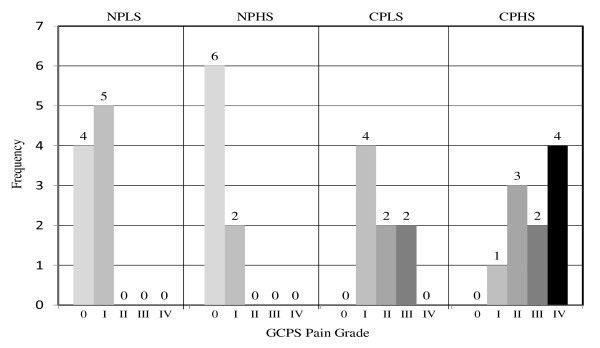
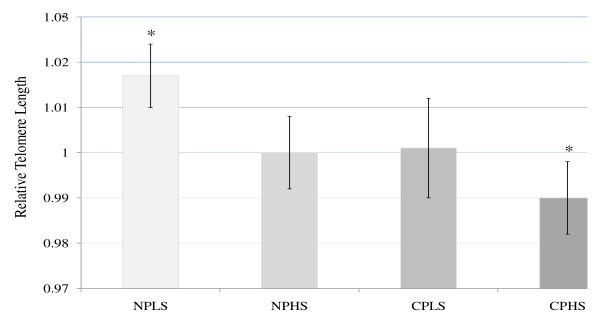
BACKGROUND: Chronic pain conditions are characterized by significant individual variability complicating the identification of pathophysiological markers. Leukocyte telomere length (TL), a measure of cellular aging, is associated with age-related disease onset, psychosocial stress, and health-related functional decline. Psychosocial stress has been associated with the onset of chronic pain and chronic pain is experienced as a physical and psychosocial stressor. However, the utility of TL as a biological marker reflecting the burden of chronic pain and psychosocial stress has not yet been explored. FINDINGS: The relationship between chronic pain, stress, and TL was analyzed in 36 ethnically diverse, older adults, half of whom reported no chronic pain and the other half had chronic knee osteoarthritis (OA) pain. Subjects completed a physical exam, radiographs, health history, and psychosocial questionnaires. Blood samples were collected and TL was measured by quantitative polymerase chain reaction (qPCR). Four groups were identified characterized by pain status and the Perceived Stress Scale scores: 1) no pain/low stress, 2) no pain/high stress, chronic pain/low stress, and 4) chronic pain/high stress. TL differed between the pain/stress groups (p = 0.01), controlling for relevant covariates. Specifically, the chronic pain/high stress group had significantly shorter TL compared to the no pain/low stress group. Age was negatively correlated with TL, particularly in the chronic pain/high stress group (p = 0.03). CONCLUSIONS: Although preliminary in nature and based on a modest sample size, these findings indicate that cellular aging may be more pronounced in older adults experiencing high levels of perceived stress and chronic pain.
Overview
The claims and statistics of this paper haven’t been checked yet.
Free: it reads the open-access text and checks the first 5 claims that cite a source we can check. Create a free account to check every claim.
Integrity signals
Registry
Cites
Statistics
Figures
Verification
Claims the paper makes
The claims and statistics of this paper haven’t been checked yet.
Free: it reads the open-access text and checks the first 5 claims that cite a source we can check. Create a free account to check every claim.
Claims other papers make about this one
Each is checked against this paper’s own text: does it say what the citing paper says it does?
The cited source says what the claim attributes to it.
In the citing paper
“However, some other studies have not found any correlations between the two [25,26].”
The cited source says what the claim attributes to it.
In the citing paper
“Similar findings have been described by Hassett et al [5] and Sibille et al [26].”
Self-check
Percentages, sums and reported differences re-computed from the paper’s own numbers.
The self-check needs the paper’s full text.
Citations
Cites
The CES-D Scale: A Self-Report Depression Scale for Research in the General Population
Radloff, L. S. (1977) · Applied Psychological Measurement · doi:10.1177/014662167700100306 · Cited by 53,267
Altman, R., Asch, E., Bloch, D., Bole, G., Borenstein, D., Brandt, K., Christy, W., Cooke, T. D., Greenwald, R., Hochberg, M., et al. (1986) · Arthritis & Rheumatism · doi:10.1002/art.1780290816 · Cited by 6,777
Telomere measurement by quantitative PCR
Cawthon, R. M. (2002) · Nucleic Acids Research · doi:10.1093/nar/30.10.e47 · Cited by 3,487
Grading the severity of chronic pain
Von Korff, M., Ormel, J., Keefe, F. J., & Dworkin, S. F. (1992) · Pain · doi:10.1016/0304-3959(92)90154-4 · Cited by 3,022
Accelerated telomere shortening in response to life stress
Epel, E. S., Blackburn, E. H., Lin, J., Dhabhar, F. S., Adler, N. E., Morrow, J. D., & Cawthon, R. M. (2004) · Proceedings of the National Academy of Sciences · doi:10.1073/pnas.0407162101 · Cited by 3,002
RELIEVING PAIN IN AMERICA: A BLUEPRINT FOR TRANSFORMING PREVENTION, CARE, EDUCATION, AND RESEARCH
Simon, L. S. (2012) · Journal of Pain & Palliative Care Pharmacotherapy · doi:10.3109/15360288.2012.678473 · Cited by 2,183
Telomere dysfunction induces metabolic and mitochondrial compromise
Sahin, E., Colla, S., Liesa, M., Moslehi, J., Müller, F. L., Guo, M., Cooper, M., Kotton, D., Fabian, A. J., Walkey, C., et al. (2011) · Nature · doi:10.1038/nature09787 · Cited by 1,319
COHEN, S., & JANICKI‐DEVERTS, D. (2012) · Journal of Applied Social Psychology · doi:10.1111/j.1559-1816.2012.00900.x · Cited by 1,187
Chan, S. R. W. L., & Blackburn, E. H. (2004) · Philosophical Transactions of the Royal Society of London. Series B: Biological Sciences · doi:10.1098/rstb.2003.1370 · Cited by 595 · cited 1×
“Telomeres are the protective structures at the end of chromosomes comprised of DNA repeat sequences which are reinforced by telomerase activity [7].”
Pain and Stress in a Systems Perspective: Reciprocal Neural, Endocrine, and Immune Interactions
Chapman, C. R., Tuckett, R. P., & Song, C. W. (2008) · The Journal of Pain · doi:10.1016/j.jpain.2007.09.006 · Cited by 541 · cited 1×
“often associated with a cascade of negative psychosocial factors [10].”
Psychological and metabolic stress: A recipe for accelerated cellular aging?
Epel, E. S. (2009) · Hormones · doi:10.14310/horm.2002.1217 · Cited by 423
Wolkowitz, O. M., Mellon, S. H., Epel, E. S., Lin, J., Dhabhar, F. S., Su, Y., Reus, V. I., Rosser, R., Burke, H. M., Kupferman, E., et al. (2011) · PLoS ONE · doi:10.1371/journal.pone.0017837 · Cited by 421 · cited 2×
“Although the sample size in the current study is rather small, it is within the range of prior published TL studies of preliminary findings [17,24,25] and in other studies analyzing the lowest and highest tertiles or quartiles of a sample [2,16,23].”
Damjanovic, A. K., Yang, Y., Glaser, R., Kiecolt-Glaser, J. K., Nguyen, H., Laskowski, B., Zou, Y., Beversdorf, D. Q., & Weng, N.-P. (2007) · The Journal of Immunology · doi:10.4049/jimmunol.179.6.4249 · Cited by 413
Tyrka, A. R., Price, L. H., Kao, H.-T., Porton, B., Marsella, S. A., & Carpenter, L. L. (2010) · Biological Psychiatry · doi:10.1016/j.biopsych.2009.08.014 · Cited by 342
The power of exercise: buffering the effect of chronic stress on telomere length
Puterman, E., Lin, J., Blackburn, E., O'Donovan, A., Adler, N., & Epel, E. (2010) · PLoS ONE · doi:10.1371/journal.pone.0010837 · Cited by 339
Stress, age, and immune function: toward a lifespan approach
Graham, J. E., Christian, L. M., & Kiecolt-Glaser, J. K. (2006) · Journal of Behavioral Medicine · doi:10.1007/s10865-006-9057-4 · Cited by 329 · cited 1×
“These findings suggest that age-related changes in TL may be more pronounced when combined with pain chronicity and high levels of stress and align with 1) patterns previously reported regarding shorter TL in an older group of adults with anxiety disorders compared to similar aged controls [21] and 2) literature indic…”
Kananen, L., Surakka, I., Pirkola, S., Suvisaari, J., Lönnqvist, J., Peltonen, L., Ripatti, S., & Hovatta, I. (2010) · PLoS ONE · doi:10.1371/journal.pone.0010826 · Cited by 270 · cited 1×
“These findings suggest that age-related changes in TL may be more pronounced when combined with pain chronicity and high levels of stress and align with 1) patterns previously reported regarding shorter TL in an older group of adults with anxiety disorders compared to similar aged controls [21] and 2) literature indic…”
Relationship between Physical Activity Level, Telomere Length, and Telomerase Activity
LUDLOW, A. T., ZIMMERMAN, J. B., WITKOWSKI, S., HEARN, J. W., HATFIELD, B. D., & ROTH, S. M. (2008) · Medicine & Science in Sports & Exercise · doi:10.1249/mss.0b013e31817c92aa · Cited by 226
The Individual Blood Cell Telomere Attrition Rate Is Telomere Length Dependent
Nordfjäll, K., Svenson, U., Norrback, K.-F., Adolfsson, R., Lenner, P., & Roos, G. (2009) · PLoS Genetics · doi:10.1371/journal.pgen.1000375 · Cited by 184
O’Donovan, A., Lin, J., Dhabhar, F. S., Wolkowitz, O., Tillie, J. M., Blackburn, E., & Epel, E. (2009) · Brain Behavior and Immunity · doi:10.1016/j.bbi.2008.11.006 · Cited by 161
Spyridopoulos, I., Hoffmann, J., Aicher, A., Brümmendorf, T. H., Doerr, H. W., Zeiher, A. M., & Dimmeler, S. (2009) · Circulation · doi:10.1161/circulationaha.109.854299 · Cited by 143
Leukocyte telomere length is associated with cognitive performance in healthy women
Valdes, A. M., Deary, I. J., Gardner, J., Kimura, M., Lu, X., Spector, T. D., Aviv, A., & Cherkas, L. F. (2010) · Neurobiology of Aging · doi:10.1016/j.neurobiolaging.2008.07.012 · Cited by 118
Telomeres in a Life-Span Perspective: A New “Psychobiomarker”?
Epel, E. S. (2009) · Current Directions in Psychological Science · doi:10.1111/j.1467-8721.2009.01596.x · Cited by 95
Factors impacting human telomere homeostasis and age-related disease
Gilley, D. P., Herbert, B., Huda, N., Tanaka, H., & Reed, T. (2007) · Mechanisms of Ageing and Development · doi:10.1016/j.mad.2007.10.010 · Cited by 80
Investigation of telomere lengths measurement by quantitative real-time PCR to predict age
Hewakapuge, S., van Oorschot, R. A. H., Lewandowski, P. A., & Baindur‐Hudson, S. (2008) · Legal Medicine · doi:10.1016/j.legalmed.2008.01.007 · Cited by 66
Cited by
Telomeres and early-life stress: an overview
Price, L. H., Kao, H.-T., Burgers, D. E., Carpenter, L. L., & Tyrka, A. R. (2013) · Biological Psychiatry · doi:10.1016/j.biopsych.2012.06.025 · Cited by 339
Physical activity and telomere length: Impact of aging and potential mechanisms of action
Arsenis, N. C., You, T., Ogawa, E. F., Tinsley, G. M., & Zuo, L. (2017) · Oncotarget · doi:10.18632/oncotarget.16726 · Cited by 288
Mathur, M. B., Epel, E., Kind, S., Desai, M., Parks, C. G., Sandler, D. P., & Khazeni, N. (2016) · Brain, Behavior, and Immunity · doi:10.1016/j.bbi.2016.02.002 · Cited by 252
“…2006, 2012; Tyrka et al., 2010; Hoen et al., 2011; Surtees et al., 2011; Bersani et al., 2016; Uchino et al., 2012, 2015; Hassett et al., 2012; Sibille et al., 2012; O’Donovan et al., 2009, 2012; Puterman et al., 2010; Humphreys et al., 2012; Georgin-Lavialle et al., 2014; Wikgren et al.,…”
Cumulative stress in research animals: Telomere attrition as a biomarker in a welfare context?
Bateson, M. (2016) · BioEssays · doi:10.1002/bies.201500127 · Cited by 140
Telomere dynamics may link stress exposure and ageing across generations
Haussmann, M. F., & Heidinger, B. J. (2015) · Biology Letters · doi:10.1098/rsbl.2015.0396 · Cited by 110
Metadata
- Authors
- Sibille, K. T., Langaee, T., Burkley, B., Gong, Y., Glover, T. L., King, C., Riley, J. L., Leeuwenburgh, C., Staud, R., Bradley, L. A., & Fillingim, R. B.
- Affiliations
- University of Florida (US)
- University of Alabama at Birmingham (US)
- University of Florida Health (US)
- Corresponding author
- Sibille, Kimberly T
- ORCID
- Venue
- Molecular Pain
- Publisher
- SAGE Publications
- Published
- 2012-01-01
- Volume
- 8
- Pages
- 12-12
- ISSN
- 1744-8069 (ISSN-L)
- PMC
- PMC3298803
- OpenAlex
- W2158089221
- Cited by
- 80
- References
- 25
- Citations by year
- 2026: 2 · 2025: 6 · 2024: 7 · 2023: 2 · 2022: 2 · 2021: 8 · 2020: 10 · 2019: 4 · 2018: 2 · 2017: 6 · 2016: 6 · 2015: 9 · 2014: 5 · 2013: 5 · 2012: 6
- FWCI
- 5.36
- Type
- journal article
- Language
- en
- Open access
- gold
- doi.org
- Licence
- cc-by
- journals.sagepub.com/page/policies/text-and-data-mining-license (tdm)
- Locations
- Molecular Pain (publishedVersion, cc-by)
- Europe PMC (PubMed Central) (publishedVersion, cc-by)
- PubMed Central (publishedVersion, cc-by)
- PubMed (publishedVersion)
- DOAJ (DOAJ: Directory of Open Access Journals) (submittedVersion, cc-by-sa)
- Funders
- University of Florida (UL1 RR029890)
- American Pain Society
- National Institutes of Health (5r01ag033906-10, UL1TR000064, AG033906)
- Clinical and Translational Science Institute, University of Florida
- National Institute on Aging (R-01-AG-033906, AG0333906 07S1, OppNet AG0333906 07S1, P30AG028740)
- National Institute of Dental and Craniofacial Research (U01DE017018)
- National Center for Research Resources (UL1RR029890)
- National Center for Advancing Translational Sciences
- Topics
- Life Sciences › Biochemistry, Genetics and Molecular Biology › Cell Biology › Telomeres, Telomerase, and Senescence
- Life Sciences › Biochemistry, Genetics and Molecular Biology › Aging › Genetics, Aging, and Longevity in Model Organisms
- Health Sciences › Health Professions › Physical Therapy, Sports Therapy and Rehabilitation › Musculoskeletal pain and rehabilitation
- Keywords
- chronic pain, perceived stress, cellular aging, leukocyte telomere length, knee osteoarthritis, older adults, psychosocial stress, biomarkers, age-related telomere shortening
- MeSH terms
- Adult, Aged, Humans, Middle Aged, Pain Measurement, Stress, Psychological, Telomere, Cellular Senescence, Waist-Hip Ratio, Chronic Pain
About these checks
Registry, retraction, Cites and statistics results are computed, not judged, with one exception: a printed reference that no index lists is read once by a model before it counts as a citation error. Claims are extracted by a model and kept only when their quote appears verbatim in the text; each cited source is then checked, with a model’s help, for whether it says what the claim relies on. Those verdicts can be wrong — read the claim’s quote and the cited source before relying on one.
Statistics and arithmetic are recomputed, not judged.
Confidence bands are shown only for fields calibrated on our annotated test set. None is calibrated yet, so no band is shown.
What counts as a claim ›How we measure confidence ›How we check this ›
Are you an author, or do you see a problem with this page? Request a review
Data sources
Bibliographic data: Semantic Scholar, OpenAlex, Crossref.
Contains information from the Semantic Scholar Academic Graph Datasets, made available under the ODC Attribution License (ODC-BY 1.0).
Semantic Scholar’s data is described in: Kinney, R., et al. (2023). The Semantic Scholar Open Data Platform. arXiv:2301.10140.
