

Evolution of the genetic code: partial optimization of a random code for robustness to translation error in a rugged fitness landscape
Open accessThe DOI matches its Crossref record; 67 of the 67 references it cites were found in a registry or an index.
Abstract
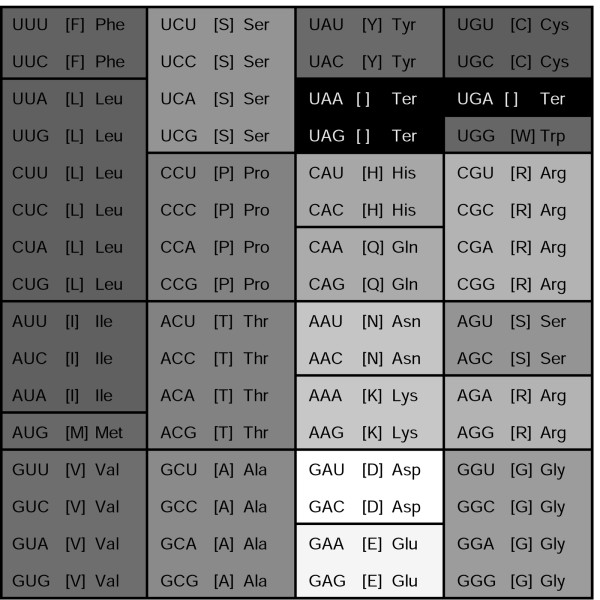
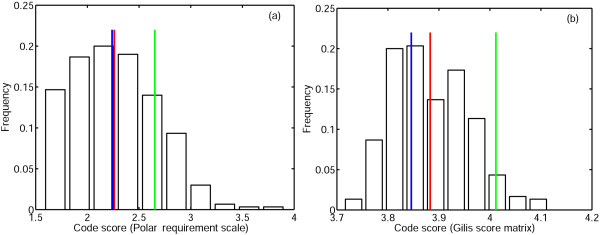
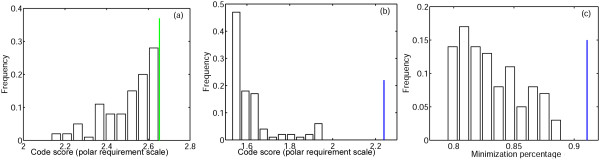
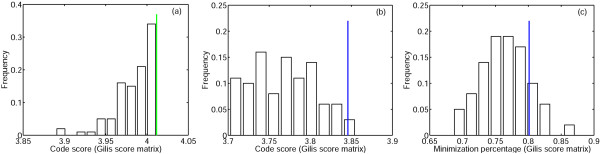
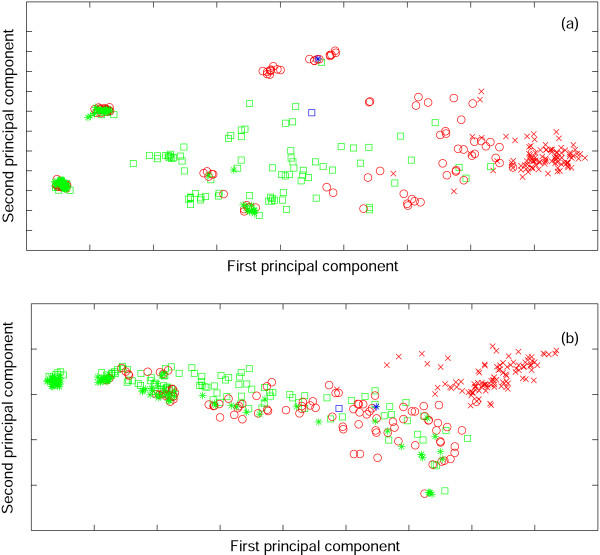
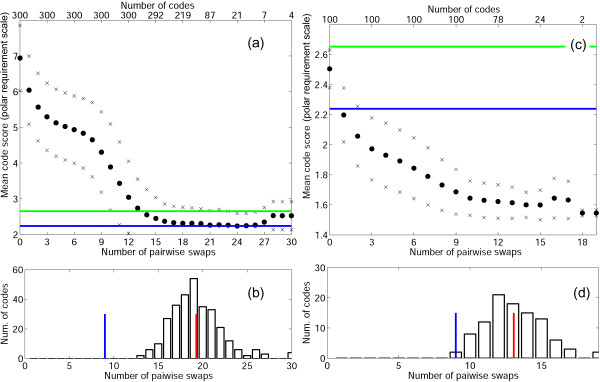
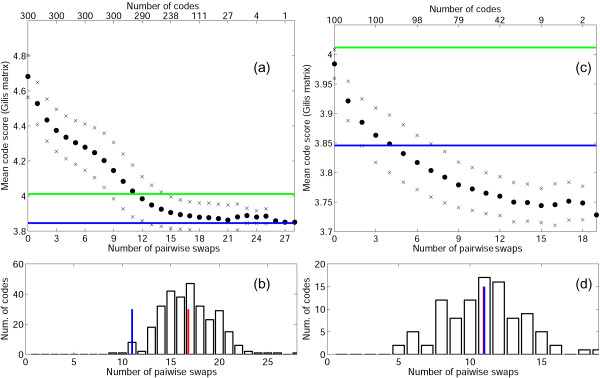
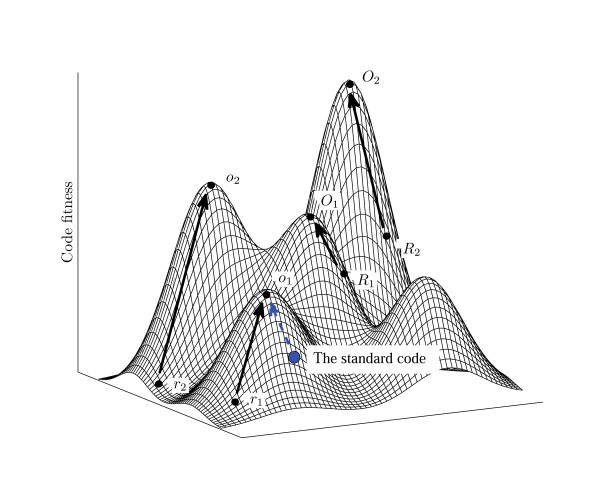
Background: The standard genetic code table has a distinctly non-random structure, with similar amino acids often encoded by codons series that differ by a single nucleotide substitution, typically, in the third or the first position of the codon. It has been repeatedly argued that this structure of the code results from selective optimization for robustness to translation errors such that translational misreading has the minimal adverse effect. Indeed, it has been shown in several studies that the standard code is more robust than a substantial majority of random codes. However, it remains unclear how much evolution the standard code underwent, what is the level of optimization, and what is the likely starting point. Results: We explored possible evolutionary trajectories of the genetic code within a limited domain of the vast space of possible codes. Only those codes were analyzed for robustness to translation error that possess the same block structure and the same degree of degeneracy as the standard code. This choice of a small part of the vast space of possible codes is based on the notion that the block structure of the standard code is a consequence of the structure of the complex between the cognate tRNA and the codon in mRNA where the third base of the codon plays a minimum role as a specificity determinant. Within this part of the fitness landscape, a simple evolutionary algorithm, with elementary evolutionary steps comprising swaps of four-codon or two-codon series, was employed to investigate the optimization of codes for the maximum attainable robustness. The properties of the standard code were compared to the properties of four sets of codes, namely, purely random codes, random codes that are more robust than the standard code, and two sets of codes that resulted from optimization of the first two sets. The comparison of these sets of codes with the standard code and its locally optimized version showed that, on average, optimization of random codes yielded evolutionary trajectories that converged at the same level of robustness to translation errors as the optimization path of the standard code; however, the standard code required considerably fewer steps to reach that level than an average random code. When evolution starts from random codes whose fitness is comparable to that of the standard code, they typically reach much higher level of optimization than the standard code, i.e., the standard code is much closer to its local minimum (fitness peak) than most of the random codes with similar levels of robustness. Thus, the standard genetic code appears to be a point on an evolutionary trajectory from a random point (code) about half the way to the summit of the local peak. The fitness landscape of code evolution appears to be extremely rugged, containing numerous peaks with a broad distribution of heights, and the standard code is relatively unremarkable, being located on the slope of a moderate-height peak. Conclusion: The standard code appears to be the result of partial optimization of a random code for robustness to errors of translation. The reason the code is not fully optimized could be the trade-off between the beneficial effect of increasing robustness to translation errors and the deleterious effect of codon series reassignment that becomes increasingly severe with growing complexity of the evolving system. Thus, evolution of the code can be represented as a combination of adaptation and frozen accident. Reviewers: This article was reviewed by David Ardell, Allan Drummond (nominated by Laura Landweber), and Rob Knight. Open Peer Review: This article was reviewed by David Ardell, Allan Drummond (nominated by Laura Landweber), and Rob Knight.
Overview
The claims and statistics of this paper haven’t been checked yet.
Free: it reads the open-access text and checks the first 5 claims that cite a source we can check. Create a free account to check every claim.
Integrity signals
Registry
Cites
Statistics
Figures
Verification
Claims the paper makes
The claims and statistics of this paper haven’t been checked yet.
Free: it reads the open-access text and checks the first 5 claims that cite a source we can check. Create a free account to check every claim.
Claims other papers make about this one
Each is checked against this paper’s own text: does it say what the citing paper says it does?
The source backs part of the claim, not all of it — or backs it for a different population, condition or comparison.
In the citing paper
“Using the language of fitness landscapes, the frozen accident perspective implies that there can be many different codes occupying fitness peaks, but these are separated by deep valleys of low fitness (60).”
From Origin and Evolution of the Universal Genetic Code (2017) · cites this paper as [60]
Experimental — accuracy not yet measuredThe source backs part of the claim, not all of it — or backs it for a different population, condition or comparison.
In the citing paper
“Using the language of fitness landscapes, the frozen accident perspective implies that there can be many different codes occupying fitness peaks, but they are separated by deep valleys of low fitness [15] (Figure 1).”
From Frozen Accident Pushing 50: Stereochemistry, Expansion, and Chance in the Evolution of the Genetic Code (2017) · cites this paper as [15]
Experimental — accuracy not yet measuredThe source backs part of the claim, not all of it — or backs it for a different population, condition or comparison.
In the citing paper
“Quantitative analyses of the code using cost functions derived from physico-chemical properties of amino acids or their evolutionary exchangeability have confirmed the exceptional robustness of the standard genetic code (SGC): the probability to reach the same level of error minimization as in the SGC by random permutation of codons is below 10−6 [10,13,14,15].”
From Frozen Accident Pushing 50: Stereochemistry, Expansion, and Chance in the Evolution of the Genetic Code (2017) · cites this paper as [15]
Experimental — accuracy not yet measuredThe cited source says what the claim attributes to it.
In the citing paper
“a quantitative estimate has shown that the SGC is positioned roughly halfway from an average random code to the summit of the corresponding local peak (60).”
From Origin and Evolution of the Universal Genetic Code (2017) · cites this paper as [60]
The cited source says what the claim attributes to it.
In the citing paper
“Obviously, however, among the ~1084 possible random codes, there is a huge number with a higher degree of error minimization than the SGC.”
From Frozen Accident Pushing 50: Stereochemistry, Expansion, and Chance in the Evolution of the Genetic Code (2017) · cites this paper as [15]
2 more claims about this paper
Create a free account to see every claim other papers make about this one.
Self-check
Percentages, sums and reported differences re-computed from the paper’s own numbers.
The self-check needs the paper’s full text.
Citations
Cites
The origin of the genetic code
Crick, F. H. C. (1968) · Journal of Molecular Biology · doi:10.1016/0022-2836(68)90392-6 · Cited by 2,320
Codon—anticodon pairing: The wobble hypothesis
Crick, F. H. C. (1966) · Journal of Molecular Biology · doi:10.1016/s0022-2836(66)80022-0 · Cited by 2,029
King, J. L., & Jukes, T. H. (1969) · Science · doi:10.1126/science.164.3881.788 · Cited by 1,768
MICROBIOLOGY AND MOLECULAR BIOLOGY REVIEWS: 2011 INSTRUCTIONS TO AUTHORS
(2011) · Microbiology and Molecular Biology Reviews · doi:10.1128/mmbr.00038-10 · Cited by 1,313
Recognition of Cognate Transfer RNA by the 30 S Ribosomal Subunit
Ogle, J. M., Brodersen, D. E., Clemons, W. M., Tarry, M. J., Carter, A. P., & Ramakrishnan, V. (2001) · Science · doi:10.1126/science.1060612 · Cited by 1,162
A co-evolution theory of the genetic code
Wong, J. T.-F. (1975) · Proceedings of the National Academy of Sciences · doi:10.1073/pnas.72.5.1909 · Cited by 649 · cited 1×
“The coevolution hypothesis [34-38] posits that the structure of the standard code reflects the biosynthetic pathways of amino acid formation.”
BackgroundSTRUCTURAL INSIGHTS INTO TRANSLATIONAL FIDELITY
Ogle, J. M., & Ramakrishnan, V. (2005) · Annual Review of Biochemistry · doi:10.1146/annurev.biochem.74.061903.155440 · Cited by 588
The genetic code is one in a million
Freeland, S. J., & Hurst, L. D. (1998) · Journal of Molecular Evolution · doi:10.1007/pl00006381 · Cited by 563 · cited 11×
“Haig and Hurst [12] let p ( c '| c ) = 1 for any two codons that differ by one base and p ( c '| c ) = 0 otherwise, not taking into account that transitions (i.e., translational misreading between two purines or two pyrimidines) might occur more often than transversions (interchange between purines and pyrimidines) [4…”
BackgroundMethodInfluentialOn the evolution of the genetic code.
Woese, C. R. (1965) · Proceedings of the National Academy of Sciences · doi:10.1073/pnas.54.6.1546 · Cited by 487
STREPTOMYCIN, SUPPRESSION, AND THE CODE
Davies, J., Gilbert, W., & Gorini, L. (1964) · Proceedings of the National Academy of Sciences · doi:10.1073/pnas.51.5.883 · Cited by 474 · cited 1×
“The initial evidence for the translation-error hypothesis consists of the aforementioned fact that related codons (codons that differ by one base only), typically, code for related amino acids (amino acids with similar physicochemical properties) and the experimental observations that translational errors occur more f…”
Background
Cited by
Origin and evolution of the genetic code: The universal enigma
Koonin, E. V., & Novozhilov, A. S. (2009) · IUBMB Life · doi:10.1002/iub.146 · Cited by 392
“Recently, we explored possible evolutionary trajectories of the genetic code within a limited domain of the vast space of possible codes (only codes that possess the same block structure and the same level of degeneracy as the standard code were analyzed) (86).”
BackgroundSelf-citationOrigin and Evolution of the Universal Genetic Code
Koonin, E. V., & Novozhilov, A. S. (2017) · Annual Review of Genetics · doi:10.1146/annurev-genet-120116-024713 · Cited by 200
Self-citationHiggs, P. G. (2009) · Biology Direct · doi:10.1186/1745-6150-4-16 · Cited by 137
“Dynamical models have also been studied [12,13] in which the code changes by swapping the amino acids assigned to two codon blocks.”
BackgroundMethodKoonin, E. (2017) · Life · doi:10.3390/life7020022 · Cited by 85
“Usi g the language of fitness landscapes, the frozen accident perspective implie that there can b many different codes occupying fitness peaks, but they are separated by deep valleys of low fitness [15] (Figure 1).”
BackgroundInfluentialSelf-citationKoonin, E. (2017) · doi:10.20944/preprints201705.0121.v1 · Cited by 85
Self-citationImprints of the genetic code in the ribosome
Johnson, D. B. F., & Wang, L. (2010) · Proceedings of the National Academy of Sciences · doi:10.1073/pnas.1000704107 · Cited by 83
“Several methods have been devised to generate random genetic codes for analyzing code properties (18–20), and different generators have yielded different results in some cases (19, 21, 22).”
BackgroundMethodA general model on the origin of biological codes
Barbieri, M. (2019) · Biosystems · doi:10.1016/j.biosystems.2019.04.010 · Cited by 79
Coenzyme world model of the origin of life
Sharov, A. A. (2016) · Biosystems · doi:10.1016/j.biosystems.2016.03.003 · Cited by 55
“It is also likely that genetic code evolved towards lower rates of translation errors (Novozhilov et al., 2007).”
BackgroundEvolution of the genetic code: The ambiguity-reduction theory
Barbieri, M. (2019) · Biosystems · doi:10.1016/j.biosystems.2019.104024 · Cited by 56
Błażej, P., Wnętrzak, M., Mackiewicz, D., & Mackiewicz, P. (2018) · PLoS ONE · doi:10.1371/journal.pone.0201715 · Cited by 64
On Primordial Sense–Antisense Coding
Rodin, A. S., Rodin, S. N., & Carter, C. W. (2009) · Journal of Molecular Evolution · doi:10.1007/s00239-009-9288-4 · Cited by 45
“One can propose a number of explanations for this sub-optimality (see reviewers’ comments in (Novozhilov et al., 2007); most of these apologetics invoke the event of an original frozen accident and subsequent selection for robustness to translation errors.”
BackgroundBłażej, P., Wnętrzak, M., & Mackiewicz, P. (2016) · Biosystems · doi:10.1016/j.biosystems.2016.08.008 · Cited by 43
Shannon information entropy in the canonical genetic code
Nemzer, L. R. (2016) · Journal of Theoretical Biology · doi:10.1016/j.jtbi.2016.12.010 · Cited by 40
The optimality of the standard genetic code assessed by an eight-objective evolutionary algorithm
Wnętrzak, M., Błażej, P., Mackiewicz, D., & Mackiewicz, P. (2018) · BMC Evolutionary Biology · doi:10.1186/s12862-018-1304-0 · Cited by 52
High Fidelity Base Pairing at the 3′-Terminus
Patra, A., & Richert, C. (2009) · Journal of the American Chemical Society · doi:10.1021/ja9033654 · Cited by 41
Massey, S. (2015) · Life · doi:10.3390/life5021301 · Cited by 38
“A debate has centered on the extent of the error minimization in the SGC, with some workers claiming that the code is “one in a million” [7] and optimal [8–12], with other studies showing that the code is “near optimal” [13] (though see [14]), [15–21].”
ResultDevelopment of the genetic code: Insights from a fungal codon reassignment
Moura, G. R., Paredes, J. A., & Santos, M. A. S. (2009) · FEBS Letters · doi:10.1016/j.febslet.2009.11.066 · Cited by 44
“The observation that amino acids with similar chemical properties are assigned to similar codons plus statistical and computational evidence for a strong bias towards error minimization pressure in the code provide important support for this theory [12,23,24].”
BackgroundExceptional error minimization in putative primordial genetic codes
Novozhilov, A. S., & Koonin, E. V. (2009) · Biology Direct · doi:10.1186/1745-6150-4-44 · Cited by 37
“Indeed, Trphas the value 5.2 on the Polar Requirement scale, Glyhas a value of 7.9, and Arghas a value of 9.1.”
BackgroundMethodInfluentialSelf-citationTetracoding increases with body temperature in Lepidosauria
Seligmann, H., & Labra, A. (2013) · Biosystems · doi:10.1016/j.biosystems.2013.09.002 · Cited by 37
“…Haig and Hurst, 1991; Szathmary and Zintzaras, 1992; Freeland and Hurst, 1998; Freeland et al., 2000; Woese et al., 2000; Sella and Ardell, 2006; Novozhilov et al., 2007), deletion mutations (Jestin and Kempf, 1997), amino acid misinsertions due to tRNA misloading and codon-anticodon mismatch…”
BackgroundRooted tRNAomes and evolution of the genetic code
Pak, D., Du, N., Kim, Y., Sun, Y., & Burton, Z. F. (2018) · Transcription · doi:10.1080/21541264.2018.1429837 · Cited by 35
“A tightly folded RNA such as the tRNA cloverleaf is subject to rugged evolution in which many or most substitutions are catastrophic for folding [34,35].”
BackgroundAminoacyl-tRNA synthetase evolution and sectoring of the genetic code
Pak, D., Kim, Y., & Burton, Z. F. (2018) · Transcription · doi:10.1080/21541264.2018.1467718 · Cited by 37
A unified model of the standard genetic code
José, M. V., Zamudio, G. S., & Morgado, E. R. (2017) · Royal Society Open Science · doi:10.1098/rsos.160908 · Cited by 31
“Indeed, most living organisms still contain relics of these primeval codes, which are a palimpsest over which the evolving codes were later additions in order to arrive at the frozen SGC [16,17].”
BackgroundLength-dependent translation initiation benefits the functional proteome of human cells
Guo, J., Lian, X., Zhong, J., Wang, T., & Zhang, G. (2014) · Molecular BioSystems · doi:10.1039/c4mb00462k · Cited by 29
Wnętrzak, M., Błażej, P., & Mackiewicz, P. (2019) · Biosystems · doi:10.1016/j.biosystems.2019.04.012 · Cited by 35
Evolution of the Genetic Code: The Ribosome-Oriented Model
Barbieri, M. (2015) · Biological Theory · doi:10.1007/s13752-015-0225-z · Cited by 29
“Novozhilov et al. (2007) have pointed out that there are 1084 possible codes and that a huge number of them are more robust than the modern code.”
BackgroundSantos, J. C. A., & Monteagudo, Á. (2011) · BMC Bioinformatics · doi:10.1186/1471-2105-12-56 · Cited by 37
“This choice of a small part of the vast space of possible codes, with these conservative restrictions, as Novozhilov et al. [24] indicate, “ is based on the notion that the block structure of the standard code is a consequence of the structure of the complex between the cognate tRNA and the codon…”
BackgroundBłażej, P., Wnętrzak, M., Mackiewicz, D., Gagat, P., & Mackiewicz, P. (2018) · Journal of Theoretical Biology · doi:10.1016/j.jtbi.2018.12.030 · Cited by 31
Emergent properties as by-products of prebiotic evolution of aminoacylation ribozymes
Janzen, E., Shen, Y., Vázquez-Salazar, A., Liu, Z., Blanco, C., Kenchel, J., & Chen, I. A. (2022) · Nature Communications · doi:10.1038/s41467-022-31387-0 · Cited by 27
Evolvability signatures of generative encodings: Beyond standard performance benchmarks
Tarapore, D., & Mouret, J.-B. (2015) · Information Sciences · doi:10.1016/j.ins.2015.03.046 · Cited by 29
Study of the genetic code adaptability by means of a genetic algorithm
Santos, J. C. A., & Monteagudo, Á. (2010) · Journal of Theoretical Biology · doi:10.1016/j.jtbi.2010.02.041 · Cited by 29
The “Wow! signal” of the terrestrial genetic code
Shcherbak, V. I., & Makukov, M. A. (2013) · Icarus · doi:10.1016/j.icarus.2013.02.017 · Cited by 31
“This is thought to be due to the specifics of interaction between the ribosome, mRNA and tRNA (Novozhilov et al ., 2007).”
BackgroundAnalysis of the optimality of the standard genetic code
Kumar, B., & Saini, S. (2016) · Molecular BioSystems · doi:10.1039/c6mb00262e · Cited by 31
Optimization of amino acid replacement costs by mutational pressure in bacterial genomes
Błażej, P., Mackiewicz, D., Grabińska, M., Wnętrzak, M., & Mackiewicz, P. (2017) · Scientific Reports · doi:10.1038/s41598-017-01130-7 · Cited by 24
KLUMP, H. H., Völker, J., & Breslauer, K. J. (2020) · Quarterly Reviews of Biophysics · doi:10.1017/s0033583520000098 · Cited by 22
“In this way, one can converge to a nearly singular genetic code out of the potential of more than 1084 alternative code tables (Novozhilov et al., 2007; Koonin and Novozhilov, 2009).”
BackgroundQuantum Indeterminism, Mutation, Natural Selection, and the Meaning of Life
Stamos, D. N. (2010) · Wiley eBooks · doi:10.1002/9783527629213.ch31 · Cited by 24
Kondratyeva, L. G., Dyachkova, M. S., & Galchenko, A. V. (2022) · Biochemistry (Moscow) · doi:10.1134/s0006297922020079 · Cited by 21
Some Mathematical Refinements Concerning Error Minimization in the Genetic Code
Buhrman, H., van der Gulik, P. T. S., Kelk, S. M., Koolen, W. M., & Stougie, L. (2011) · IEEE Transactions on Computational Biology and Bioinformatics · doi:10.1109/tcbb.2011.40 · Cited by 24
“Note that the use of the word “block” is different from the use in studies such as [ 7 ], [8].”
ResultJosé, M. V., Morgado, E. R., & Govezensky, T. (2010) · Bulletin of Mathematical Biology · doi:10.1007/s11538-010-9571-y · Cited by 19
“Considering this criterion, other authors (Novozhilov et al. 2007) have found that the SGC is a suboptimal random code in regard to robustness to error of translations.”
BackgroundSantos, J. C. A., & Monteagudo, Á. (2017) · BMC Bioinformatics · doi:10.1186/s12859-017-1608-x · Cited by 22
“For example, Novozhilov et al. stated that a huge number of taller fitness peaks (with respect to the peak in which the canonical code is situated) exist in the landscape [21].”
BackgroundMethodInfluentialSelf-similarity and the maximum entropy principle in the genetic code
Kak, S. C. (2023) · Theory in Biosciences · doi:10.1007/s12064-023-00396-y · Cited by 18
“…2017; Sella and Ardell 2006) related to physicochemical affinity between amino acids and the codons or anticodons, as well as a trade-off between the beneficial effect of increasing robustness to translation errors and the deleterious effect of codon series reassignment (Novozhilov et al 2007).”
BackgroundFroese, T., Campos, J., Fujishima, K., Kiga, D., & Virgo, N. (2018) · Scientific Reports · doi:10.1038/s41598-018-21973-y · Cited by 20
“Any theory of why the standard genetic code is the way it is and how it came to be must address three key facts: (1) the code’s regularity as expressed in non-random amino acid assignments, (2) its optimality as expressed in its robustness against errors in translation from code sequences to proteins and in replicatio…”
BackgroundThe information capacity of the genetic code: Is the natural code optimal?
Kuruoğlu, E. E., & Arndt, P. F. (2017) · Journal of Theoretical Biology · doi:10.1016/j.jtbi.2017.01.046 · Cited by 25
A Realistic Model Under Which the Genetic Code is Optimal
Buhrman, H., van der Gulik, P. T. S., Klau, G. W., Schaffner, C., Speijer, D., & Stougie, L. (2013) · Journal of Molecular Evolution · doi:10.1007/s00239-013-9571-2 · Cited by 24
The influence of different types of translational inaccuracies on the genetic code structure
Błażej, P., Wnętrzak, M., Mackiewicz, D., & Mackiewicz, P. (2019) · BMC Bioinformatics · doi:10.1186/s12859-019-2661-4 · Cited by 17
Aggarwal, N., Bandhu, A. V., & Sengupta, S. (2016) · Physical Biology · doi:10.1088/1478-3975/13/3/036007 · Cited by 15
On the Uniqueness of the Standard Genetic Code
Zamudio, G. S., & José, M. V. (2017) · Life · doi:10.3390/life7010007 · Cited by 17
A metric space for semantic containment: Towards the implementation of genetic firewalls
Schmidt, M. R. (2019) · Biosystems · doi:10.1016/j.biosystems.2019.104015 · Cited by 16
Rare-event sampling analysis uncovers the fitness landscape of the genetic code
Omachi, Y., Saito, N., & Furusawa, C. (2023) · PLoS Computational Biology · doi:10.1371/journal.pcbi.1011034 · Cited by 16
“Such studies have examined, for instance, evolutionary simulation of the genetic code [8], and methods to improve the cost function to incorporate protein amino-acid frequency [4, 11].”
BackgroundMethodBandhu, A. V., Aggarwal, N., & Sengupta, S. (2013) · Origins of Life and Evolution of Biospheres · doi:10.1007/s11084-014-9353-x · Cited by 14
“However, this result does not in imply there is anything special about the structure of CSGC.”
BackgroundInfluentialNontriplet feature of genetic code in Euplotes ciliates is a result of neutral evolution
Gaydukova, S., Moldovan, M. A., Vallesi, A., Heaphy, S. M., Atkins, J. F., Gelfand, M. S., & Baranov, P. V. (2023) · Proceedings of the National Academy of Sciences · doi:10.1073/pnas.2221683120 · Cited by 16
The structure of the genetic code as an optimal graph clustering problem
Błażej, P., Kowalski, D. R., Mackiewicz, D., Wnętrzak, M., Aloqalaa, D. A., & Mackiewicz, P. (2022) · Journal of Mathematical Biology · doi:10.1007/s00285-022-01778-4 · Cited by 14
Morgens, D. W., & Cavalcanti, A. R. O. (2013) · Journal of Molecular Evolution · doi:10.1007/s00239-013-9542-7 · Cited by 14
“These have concluded that the fitness landscape is ‘‘rugged,’’ containing numerous peaks, each representing a local optimum (Novozhilov et al. 2007).”
BackgroundInfluentialOrigin and evolution of the genetic code: The universal enigma
Koonin, E. V., & Novozhilov, A. S. (2009) · IUBMB Life · doi:10.1002/iub.190 · Cited by 96
Self-citationGenetic codes optimized as a traveling salesman problem
Attie, O., Sulkow, B., Di, C., & Qiu, W. (2019) · PLoS ONE · doi:10.1371/journal.pone.0224552 · Cited by 13
Rosandić, M., & Paar, V. (2014) · Gene · doi:10.1016/j.gene.2014.04.009 · Cited by 13
Massey, S. E. (2010) · Journal of Molecular Evolution · doi:10.1007/s00239-009-9313-7 · Cited by 12
Certain Non-Standard Coding Tables Appear to be More Robust to Error Than the Standard Genetic Code
Kurnaz, M. L., Bilgin, T., & Kurnaz, I. A. (2009) · Journal of Molecular Evolution · doi:10.1007/s00239-009-9303-9 · Cited by 11
“…that most of the random codes reach much higher levels of optimization than the standard code with respect to ‘‘robustness to translational mistakes’’ (Novozhilov et al. 2007), and they conclude that the standard genetic code appears to be ‘‘half-way’’ to the summit of a local peak of…”
BackgroundThe Standard Genetic Code Facilitates Exploration of the Space of Functional Nucleotide Sequences
Tripathi, S., & Deem, M. W. (2018) · Journal of Molecular Evolution · doi:10.1007/s00239-018-9852-x · Cited by 9
Facchiano, A. M., & Giulio, M. D. (2018) · Journal of Theoretical Biology · doi:10.1016/j.jtbi.2018.09.021 · Cited by 8
Katoh, T., & Suga, H. (2023) · Nucleic Acids Research · doi:10.1093/nar/gkad707 · Cited by 11
The modular biochemical reaction network structure of cellular translation
Cuevas-Zuviría, B., Fer, E., Adam, Z. R., & Kaçar, B. (2023) · npj Systems Biology and Applications · doi:10.1038/s41540-023-00315-3 · Cited by 10
“Translation is a molecular information decoding process that begins with a ribonucleotide sequence as input and a peptide sequence as output, with remarkable robustness, accuracy and adaptability 21 – 27 .”
BackgroundOn the Origin of Frameshift-Robustness of the Standard Genetic Code
Xu, H., & Zhang, J. (2021) · Molecular Biology and Evolution · doi:10.1093/molbev/msab164 · Cited by 11
“Although the SGC is far from being optimal in mismatch error mitigation and can be easily improved further (Archetti 2004; Novozhilov et al. 2007; Massey 2008; Santos and Monteagudo 2010; Bła _ zej et al. 2016, 2018, 2019; Wne R trzak et al. 2018), there is no doubt that it better alleviates the…”
A crescendo of competent coding (c3) contains the Standard Genetic Code
Yarus, M. (2022) · RNA · doi:10.1261/rna.079275.122 · Cited by 13
“However, the SGC is only partially optimized (Novozhilov et al. 2007), standard optimization routes require many steps (Massey 2010), apparent optimization to errors readily occurs as a by-product of other goals (Massey 2008; B ł az ̇ ej et al. 2018), and full optimization is not physically…”
MethodStability of the genetic code and optimal parameters of amino acids
Chechetkin, V. R., & Lobzin, V. V. (2010) · Journal of Theoretical Biology · doi:10.1016/j.jtbi.2010.10.015 · Cited by 12
“The theory provides also the opportunity of complete enumeration of the small modifications of the standard genetic code and its variants (Novozhilov et al., 2007; Chechetkin and Lobzin, 2009).”
BackgroundPhenotypic Graphs and Evolution Unfold the Standard Genetic Code as the Optimal
Zamudio, G. S., & José, M. V. (2017) · Origins of Life and Evolution of Biospheres · doi:10.1007/s11084-017-9552-3 · Cited by 8
Little Evidence the Standard Genetic Code Is Optimized for Resource Conservation
Rozhoňová, H., & Payne, J. L. (2021) · Molecular Biology and Evolution · doi:10.1093/molbev/msab236 · Cited by 9
“…Freeland and Hurst 1998; Freeland et al. 2000; Gilis et al. 2001; Archetti 2004; Caporaso et al. 2005; Goodarzi et al. 2005a; Goodarzi et al. 2005b; Novozhilov et al. 2007; Butler et al. 2009; Tripathi and Deem 2018), generates alternative codes that preserve a different key property of the SGC,…”
BackgroundEssential Logic and Facts Behind the Expansion of the Genetic Code: A Critical Assessment
Luu, H. T. L., Karbalaei‐Heidari, H. R., & Budiša, N. (2025) · ChemCatChem · doi:10.1002/cctc.202500809 · Cited by 9
Rosandić, M., & Paar, V. (2021) · Journal of Theoretical Biology · doi:10.1016/j.jtbi.2021.110748 · Cited by 7
Massey, S. E. (2018) · Natural Computing · doi:10.1007/s11047-017-9669-3 · Cited by 7
“In a related procedure, Novozhilov et al. (2007) used a greedy minimization algorithm that also utilized pairwise codon swapping.”
BackgroundMethodSymmetrical Properties of Graph Representations of Genetic Codes: From Genotype to Phenotype
José, M. V., & Zamudio, G. S. (2018) · Symmetry · doi:10.3390/sym10090388 · Cited by 7
The Organization of the Genetic CodePreprint
Kak, S. C. (2022) · doi:10.36227/techrxiv.19224741.v1 · Cited by 6
Basic principles of the genetic code extension
Błażej, P., Wnętrzak, M., Mackiewicz, D., & Mackiewicz, P. (2020) · Royal Society Open Science · doi:10.1098/rsos.191384 · Cited by 5
Symmetrical distributions of aminoacyl-tRNA synthetases during the evolution of the genetic code
José, M. V., Bobadilla, J. R., Zamudio, G. S., & de Farías, S. T. (2023) · Theory in Biosciences · doi:10.1007/s12064-023-00394-0 · Cited by 5
Space ethics to test directed panspermia
Makukov, M. A., & shCherbak, V. I. (2014) · Life Sciences in Space Research · doi:10.1016/j.lssr.2014.07.003 · Cited by 9
The genetic robustness of RNA and protein from evolutionary, structural and functional perspectivesPreprint
Coray, D. S., Sibaeva, N., McGimpsey, S., & Gardner, P. P. (2018) · bioRxiv (Cold Spring Harbor Laboratory) · doi:10.1101/480087 · Cited by 4
Local conditions for global stability in the space of codons of the genetic code
Salinas, D. G., Gallardo, M. O., & Osorio, M. I. (2016) · Biosystems · doi:10.1016/j.biosystems.2016.08.007 · Cited by 4
Local stability and evolution of the genetic code
Chechetkin, V. R., & Lobzin, V. V. (2009) · Journal of Theoretical Biology · doi:10.1016/j.jtbi.2009.08.031 · Cited by 5
“Using different cost functions and swaps of codon batches between coding sets as permissible modifications of the genetic code, Novozhilov et al. (2007) studied possible evolutionary trajectories starting from a random code and from the standard one.”
BackgroundResultInfluentialModels of genetic code structure evolution with variable number of coded labels
Pawlak, K., Wnętrzak, M., Mackiewicz, D., Mackiewicz, P., & Błażej, P. (2021) · Biosystems · doi:10.1016/j.biosystems.2021.104528 · Cited by 4
Probable relationship between partitions of the set of codons and the origin of the genetic code
Salinas, D. G., Gallardo, M. O., & Osorio, M. I. (2014) · Biosystems · doi:10.1016/j.biosystems.2014.01.007 · Cited by 3
Some theoretical aspects of reprogramming the standard genetic code
Nowak, K., Błażej, P., Wnętrzak, M., Mackiewicz, D., & Mackiewicz, P. (2021) · Genetics · doi:10.1093/genetics/iyab040 · Cited by 3
Model of Genetic Code Structure Evolution under Various Types of Codon Reading
Błażej, P., Pawlak, K., Mackiewicz, D., & Mackiewicz, P. (2022) · International Journal of Molecular Sciences · doi:10.3390/ijms23031690 · Cited by 3
Coenzyme World Model of the Origin of Life
Sharov, A. A. (2018) · Elsevier eBooks · doi:10.1016/b978-0-12-811940-2.00017-4 · Cited by 3
Alignment free characterization of the influenza-A hemagglutinin genes by the ISSCOR method
Radomski, J. P., & Słonimski, P. P. (2012) · Comptes Rendus Biologies · doi:10.1016/j.crvi.2012.01.001 · Cited by 2
Salinas, D. G., Gallardo, M. O., & Osorio, M. I. (2012) · Biosystems · doi:10.1016/j.biosystems.2012.02.007 · Cited by 3
Radomski, J. P., & Słonimski, P. P. (2009) · Comptes Rendus Biologies · doi:10.1016/j.crvi.2008.11.008 · Cited by 2
A model-independent approach to infer hierarchical codon substitution dynamics
Görnerup, O., & Jacobi, M. N. (2010) · BMC Bioinformatics · doi:10.1186/1471-2105-11-201 · Cited by 2
“Background Ever since its discovery by Nirenberg and Matthaei [1], the structure [2-8] and evolution [9-18] of the genetic code from nucleotide triplets in DNA to amino acid residues in proteins has been studied extensively.”
BackgroundPawlak, K., Błażej, P., Mackiewicz, D., & Mackiewicz, P. (2023) · International Journal of Molecular Sciences · doi:10.3390/ijms24021185 · Cited by 3
Aloqalaa, D. A., Kowalski, D. R., Błażej, P., Wnętrzak, M., Mackiewicz, D., & Mackiewicz, P. (2020) · Communications in computer and information science · doi:10.1007/978-3-030-46970-2_9 · Cited by 2
Molecular Complexity Constrained Early Amino Acid Recruitment into the Genetic Code
Hashmi, S. A., Chok, H., Cabrera, R., & Blanco, C. (2026) · Genome Biology and Evolution · doi:10.1093/gbe/evag012 · Cited by 1
“Because translation errors are more frequent than DNA mutations and disproportionately affect the first and third codon positions (Novozhilov et al. 2007), early selection pressures may have favored codon arrangements that preserve molecular complexity across substitutions.”
Miyachi, R., & Ichihashi, N. (2026) · eLife · doi:10.7554/elife.111164.3 · Cited by 2
Clayworth, P., & Kornilov, S. A. (2026) · Biosystems · doi:10.1016/j.biosystems.2026.105919 · Cited by 2
Mapping of the influenza A hemagglutinin serotypes evolution by the ISSCOR method.
Radomski, J. P., Słonimski, P. P., Zagórski‐Ostoja, W., & Borowicz, P. (2014) · Acta Biochimica Polonica · doi:10.18388/abp.2014_1862 · Cited by 1
“Possible factors and forces driving synonymous codons usage postulated so far include, among many others: translational optimization [2-6], mRNA structural effects [7], protein composition [8], and protein structure [9], gene expression levels [2, 10], the tRNA abundance differences between different genomes, and tRNA…”
BackgroundMierke, C. T. (2020) · Biological and medical physics, biomedical engineering · doi:10.1007/978-3-030-58532-7_11 · Cited by 1
Genetic code noise immunity features: Degeneracy and frameshift correction
Borah, C., & Ali, T. (2022) · Gene Reports · doi:10.1016/j.genrep.2022.101707 · Cited by 1
SETIin vivo: testing the we-are-them hypothesis
Makukov, M. A., & Shcherbak, V. I. (2017) · International Journal of Astrobiology · doi:10.1017/s1473550417000210 · Cited by 4
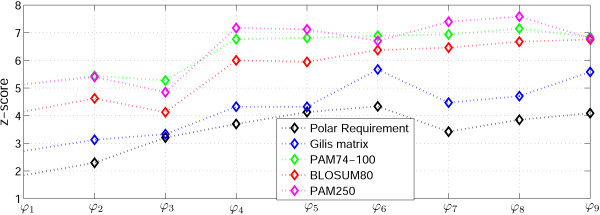
“…codes, we first populate blocks with amino acids randomly, then calculate the value φ of the cost function of the resulting code as described in Novozhilov et al. (2007) using polar requirement scale as a measure, and leave in the sample only those codes which have cost function value not…”
MethodSalinas, D. G. (2021) · Acta Biotheoretica · doi:10.1007/s10441-021-09427-x · Cited by 2
Borah, C., & Ali, T. (2022) · Gene Reports · doi:10.1016/j.genrep.2022.101652 · Cited by 1
On the possible origin and evolution of genetic codingPreprint
Daniel, J. (2019) · arXiv (Cornell University) · doi:10.48550/arxiv.1910.13622 · Cited by 2
“The genetic code is thought to be robust (although not among the most robust; Novozhilov et al. 2007), such that it can minimize the effect of single mutations via modification to another codon specifying either the original amino acid, or one in the same chemical family.”
BackgroundJanzen, E., Shen, Y., Liu, Z., Blanco, C., & Chen, I. A. (2021) · bioRxiv (Cold Spring Harbor Laboratory) · doi:10.1101/2021.05.14.444235 · Cited by 1
Metadata
- Authors
- Novozhilov, A. S., Wolf, Y. I., & Koonin, E. V.
- Affiliations
- National Institutes of Health (US)
- Corresponding author
- Koonin, Eugene V
- Venue
- Biology Direct
- Published
- 2007-10-23
- Volume
- 2
- Issue
- 1
- Pages
- 24-24
- ISSN
- 1745-6150 (ISSN-L)
- PMC
- PMC2211284
- OpenAlex
- W2163198599
- Cited by
- 122
- References
- 67
- Citations by year
- 2026: 13 · 2025: 3 · 2024: 1 · 2023: 7 · 2022: 10 · 2021: 8 · 2020: 5 · 2019: 7 · 2018: 13 · 2017: 9 · 2016: 7 · 2015: 4 · 2014: 6 · 2013: 6 · 2012: 2
- FWCI
- 2.39
- Type
- journal article
- Language
- en
- Open access
- gold
- doi.org
- Licence
- cc-by
- Locations
- Biology Direct (publishedVersion, cc-by)
- PubMed Central (publishedVersion, cc-by)
- PubMed (publishedVersion)
- DOAJ (DOAJ: Directory of Open Access Journals) (submittedVersion, cc-by-sa)
- Funders
- U.S. Department of Health and Human Services
- National Institutes of Health
- U.S. National Library of Medicine
- Topics
- Life Sciences › Biochemistry, Genetics and Molecular Biology › Molecular Biology › RNA and protein synthesis mechanisms
- Life Sciences › Biochemistry, Genetics and Molecular Biology › Genetics › Evolution and Genetic Dynamics
- Physical Sciences › Physics and Astronomy › Astronomy and Astrophysics › Origins and Evolution of Life
- Keywords
- genetic code evolution, codon degeneracy, fitness landscape ruggedness, evolutionary trajectories, evolutionary algorithms, origin of the genetic code, codon usage bias
- MeSH terms
- Algorithms, Codon, Genetic Code, RNA, Messenger, RNA, Transfer, Selection, Genetic, Protein Biosynthesis, Evolution, Molecular
About these checks
Registry, retraction, Cites and statistics results are computed, not judged, with one exception: a printed reference that no index lists is read once by a model before it counts as a citation error. Claims are extracted by a model and kept only when their quote appears verbatim in the text; each cited source is then checked, with a model’s help, for whether it says what the claim relies on. Those verdicts can be wrong — read the claim’s quote and the cited source before relying on one.
Statistics and arithmetic are recomputed, not judged.
Confidence bands are shown only for fields calibrated on our annotated test set. None is calibrated yet, so no band is shown.
What counts as a claim ›How we measure confidence ›How we check this ›
Are you an author, or do you see a problem with this page? Request a review
Data sources
Bibliographic data: Semantic Scholar, OpenAlex, Crossref.
Contains information from the Semantic Scholar Academic Graph Datasets, made available under the ODC Attribution License (ODC-BY 1.0).
Semantic Scholar’s data is described in: Kinney, R., et al. (2023). The Semantic Scholar Open Data Platform. arXiv:2301.10140.
