

Sample size requirements to estimate key design parameters from external pilot randomised controlled trials: a simulation study
Open accessThe DOI matches its Crossref record; 31 of the 31 references it cites were found in a registry or an index.
Abstract
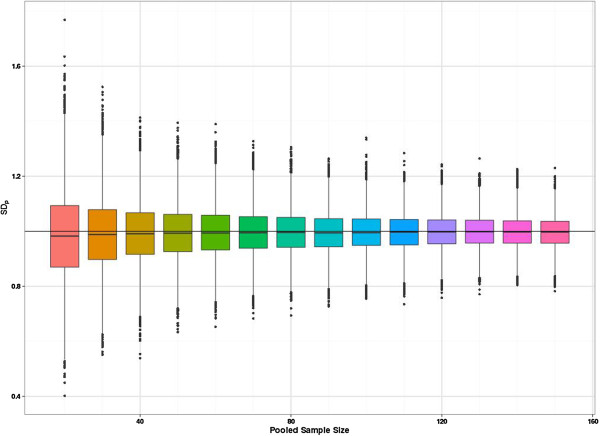
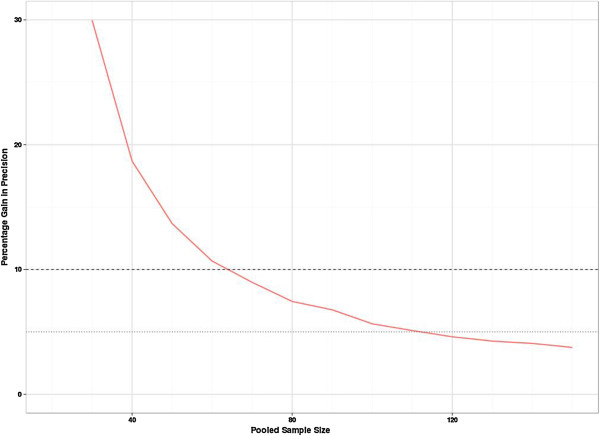
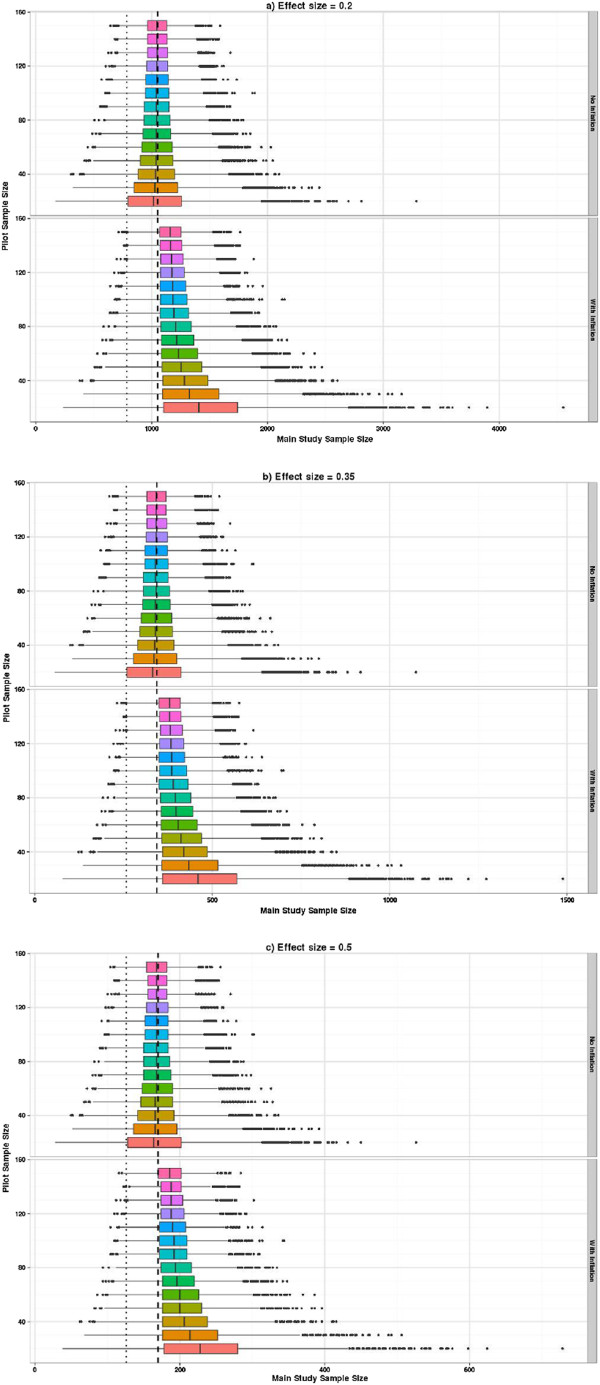
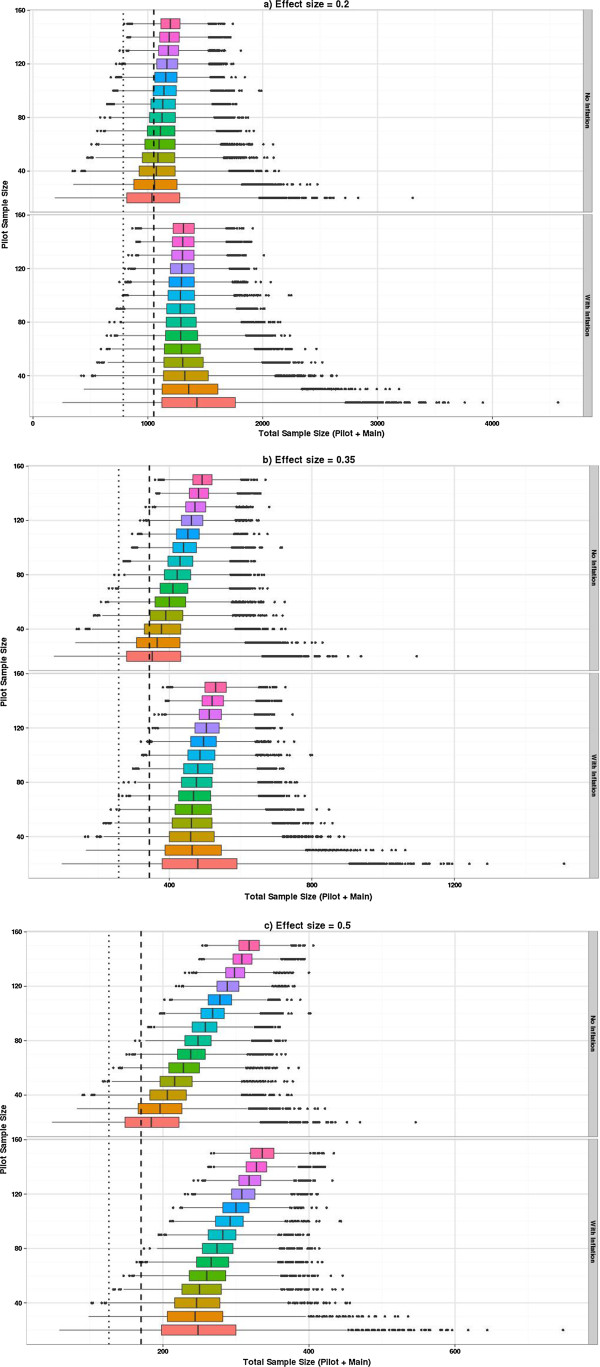
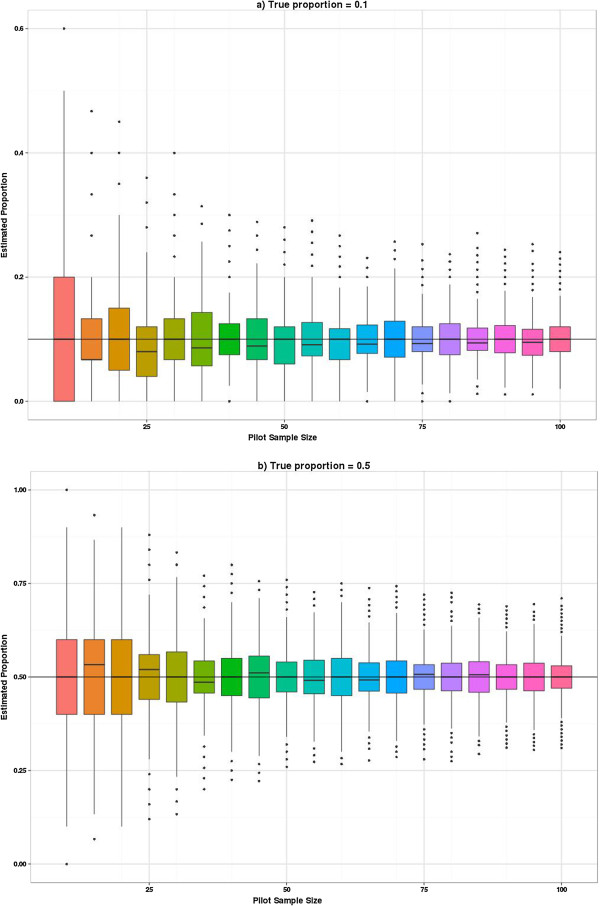
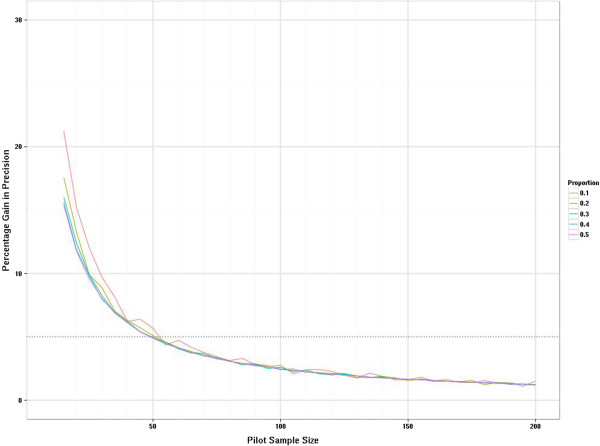
BACKGROUND: External pilot or feasibility studies can be used to estimate key unknown parameters to inform the design of the definitive randomised controlled trial (RCT). However, there is little consensus on how large pilot studies need to be, and some suggest inflating estimates to adjust for the lack of precision when planning the definitive RCT. METHODS: We use a simulation approach to illustrate the sampling distribution of the standard deviation for continuous outcomes and the event rate for binary outcomes. We present the impact of increasing the pilot sample size on the precision and bias of these estimates, and predicted power under three realistic scenarios. We also illustrate the consequences of using a confidence interval argument to inflate estimates so the required power is achieved with a pre-specified level of confidence. We limit our attention to external pilot and feasibility studies prior to a two-parallel-balanced-group superiority RCT. RESULTS: For normally distributed outcomes, the relative gain in precision of the pooled standard deviation (SDp) is less than 10% (for each five subjects added per group) once the total sample size is 70. For true proportions between 0.1 and 0.5, we find the gain in precision for each five subjects added to the pilot sample is less than 5% once the sample size is 60. Adjusting the required sample sizes for the imprecision in the pilot study estimates can result in excessively large definitive RCTs and also requires a pilot sample size of 60 to 90 for the true effect sizes considered here. CONCLUSIONS: We recommend that an external pilot study has at least 70 measured subjects (35 per group) when estimating the SDp for a continuous outcome. If the event rate in an intervention group needs to be estimated by the pilot then a total of 60 to 100 subjects is required. Hence if the primary outcome is binary a total of at least 120 subjects (60 in each group) may be required in the pilot trial. It is very much more efficient to use a larger pilot study, than to guard against the lack of precision by using inflated estimates.
Overview
The claims and statistics of this paper haven’t been checked yet.
Free: it reads the open-access text and checks the first 5 claims that cite a source we can check. Create a free account to check every claim.
Integrity signals
Registry
Cites
Statistics
Figures
Verification
Claims the paper makes
The claims and statistics of this paper haven’t been checked yet.
Free: it reads the open-access text and checks the first 5 claims that cite a source we can check. Create a free account to check every claim.
Claims other papers make about this one
Each is checked against this paper’s own text: does it say what the citing paper says it does?
The cited source doesn’t support the claim as written.
In the citing paper
“Another limitation is that the sample size was relatively small, although this was consistent with previous recommendations of 24-35 participants for pilot and feasibility studies to provide sufficient data and precision of means and variances.117,134,135”
From Acceptance and commitment therapy for older people with treatment-resistant generalised anxiety disorder: The FACTOID feasibility study (2021) · cites this paper as [117]
Checked by a reasoning model — may be wrong.
Experimental — accuracy not yet measuredThe cited source doesn’t support the claim as written.
In the citing paper
“A sample size of 40 was chosen following conventional recommendations for feasibility studies [26] and an estimated 12.5% loss to follow-up based on a preliminary study of ACT in older people with GAD [15].”
From Acceptance and commitment therapy for late-life treatment-resistant generalised anxiety disorder: a feasibility study. (2021) · cites this paper as [26]
Checked by a reasoning model — may be wrong.
Experimental — accuracy not yet measuredThe source backs part of the claim, not all of it — or backs it for a different population, condition or comparison.
In the citing paper
“A sample size of 35 is generally recommended for feasibility studies to provide sufficient data and precision of means and variances.117”
From Acceptance and commitment therapy for older people with treatment-resistant generalised anxiety disorder: The FACTOID feasibility study (2021) · cites this paper as [117]
Experimental — accuracy not yet measuredThe source backs part of the claim, not all of it — or backs it for a different population, condition or comparison.
In the citing paper
“This is sufficient to inform the sample size of the optimisation trial assuming adherence data are pooled across conditions.96”
From Refining and optimising a behavioural intervention to support endocrine therapy adherence (ROSETA) in UK women with breast cancer: Protocol for a pilot fractional factorial trial (2023) · cites this paper as [96]
Experimental — accuracy not yet measuredThe source backs part of the claim, not all of it — or backs it for a different population, condition or comparison.
In the citing paper
“previous guidelines suggesting that 60 to 100 participants per intervention arm are optimal for estimating binary outcomes in pilot RCTs [54]”
From Feasibility and Preliminary Efficacy of Web-Based and Mobile Interventions for Common Mental Health Problems in Working Adults: Multi-Arm Randomized Pilot Trial (2022) · cites this paper as [54]
Experimental — accuracy not yet measured
9 more claims about this paper
Create a free account to see every claim other papers make about this one.
Self-check
Percentages, sums and reported differences re-computed from the paper’s own numbers.
The self-check needs the paper’s full text.
Citations
Cites
R: A Language and Environment for Statistical Computing
R Core Team (2025) · doi:10.32614/r.manuals · Cited by 352,181
An Approximate Distribution of Estimates of Variance Components
Satterthwaite, F. E. (1946) · Biometrics Bulletin · doi:10.2307/3002019 · Cited by 4,373
THE GENERALIZATION OF ‘STUDENT'S’ PROBLEM WHEN SEVERAL DIFFERENT POPULATION VARLANCES ARE INVOLVED
WELCH, B. L. (1947) · Biometrika · doi:10.1093/biomet/34.1-2.28 · Cited by 4,135 · cited 1×
“For sample size calculations, we generally assume the variability of the outcome is the same or equal in both groups, although this assumption can be relaxed and methods are available for calculating sample sizes assuming unequal SDs in each group [26,27].”
MethodA tutorial on pilot studies: the what, why and how
Thabane, L., Ma, J., Chu, R., Cheng, J., Ismaila, A., Rios, L. P., Robson, R., Thabane, M., Giangregorio, L., & Goldsmith, C. H. (2010) · BMC Medical Research Methodology · doi:10.1186/1471-2288-10-1 · Cited by 3,384
Approximate is Better than “Exact” for Interval Estimation of Binomial Proportions
Agresti, A., & Coull, B. A. (1998) · The American Statistician · doi:10.1080/00031305.1998.10480550 · Cited by 3,223 · cited 1×
“Third, due to the relatively small sample size of the pilot trials, we computed the mean width of the 95% confidence interval of the true success probability averaged over Ns simulations using the Wilson’s score method [31] for a fixed sample size, which is given by:”
MethodSample size of 12 per group rule of thumb for a pilot study
Julious, S. A. (2005) · Pharmaceutical Statistics · doi:10.1002/pst.185 · Cited by 3,068 · cited 13×
“A frequently reported problem with publicly funded RCTs is that the recruitment of participants is often slower or more difficult than expected, with many trials failing to reach their planned sample size within the originally envisaged trial timescale and trial-funding envelope.”
BackgroundInfluentialKirkwood, B. R., & Sterne, J. A. C. (2014) · Bristol Research (University of Bristol) · Cited by 2,820
Sim, J., & Lewis, M. (2012) · Journal of Clinical Epidemiology · doi:10.1016/j.jclinepi.2011.07.011 · Cited by 1,036 · cited 17×
“A frequently reported problem with publicly funded RCTs is that the recruitment of participants is often slower or more difficult than expected, with many trials failing to reach their planned sample size within the originally envisaged trial timescale and trial-funding envelope.”
BackgroundMethodInfluentialOn the use of a pilot sample for sample size determination
Browne, R. H. (1995) · Statistics in Medicine · doi:10.1002/sim.4780141709 · Cited by 1,007 · cited 15×
“A frequently reported problem with publicly funded RCTs is that the recruitment of participants is often slower or more difficult than expected, with many trials failing to reach their planned sample size within the originally envisaged trial timescale and trial-funding envelope.”
BackgroundMethodInfluentialMcDonald, A. M., Knight, R. C., Campbell, M. K., Entwistle, V. A., Grant, A. M., Cook, J. A., Elbourne, D. R., Francis, D., Garcia, J., Roberts, I., et al. (2006) · Trials · doi:10.1186/1745-6215-7-9 · Cited by 946
Research works printed but not linked: 2
- StataCorp Statistical Software: Release 12 2011 TX: College Station
- Cohen J Statistical Power Analysis for the Behavioural Sciences 1988 2 Hillsdale, NJ: Lawrence Erlbaum
Cited by
Items 201–300 of 803
Shen, Q., Deng, D., Li, G., Ruan, J., Shao, X., Wang, P., Li, X., Li, R., Bao, W., Chen, W., et al. (2025) · The Oncologist · doi:10.1093/oncolo/oyaf262 · Cited by 16
Kaur, N., Gupta, M., Malhi, P., & Grover, S. (2021) · JMIR Research Protocols · doi:10.2196/24106 · Cited by 13
“estimated using the following formula [38]: nI= (σ1 (2)+σ2 (2))”
BackgroundMethodOzmen, S., Amarnath, A., Struijs, S. Y., de Wit, L. M., & Cuijpers, P. J. (2023) · JMIR Research Protocols · doi:10.2196/44907 · Cited by 14
“Studies have suggested sample sizes ranging from at least 12 participants [60,61] to 35 or more participants [62].”
Sensory Stimulation of the Foot and Ankle Early Post-stroke: A Pilot and Feasibility Study
Aries, A., Pomeroy, V. M., Sim, J., Read, S. M., & Hunter, S. M. (2021) · Frontiers in Neurology · doi:10.3389/fneur.2021.675106 · Cited by 15
Ribeiro, D. C., Milosavljevic, S., & Abbott, J. H. (2017) · BMJ Open · doi:10.1136/bmjopen-2016-015568 · Cited by 11
“may have inflated the true effect size for the intervention.(31)”
BackgroundGould, R. L., Rawlinson, C., Thompson, B., Weeks, K., Gossage-Worrall, R., Cantrill, H., Serfaty, M. A., Graham, C. D., McCracken, L. M., White, D., et al. (2023) · Pilot and Feasibility Studies · doi:10.1186/s40814-023-01354-7 · Cited by 10
Smith, T. O., Khoury, R., Hanson, S., Welsh, A., Grant, K., Clark, A., Ashford, P., Hopewell, S., Pfeiffer, K., Logan, P., et al. (2023) · BMJ Open · doi:10.1136/bmjopen-2023-073611 · Cited by 10
“We originally designed the study approach pre-COVID 19 with an initial approach occurring when both patient and caregiver were together, during visiting hours.”
MethodAnalytical Accuracy of a Continuous Glucose Monitor in Adult Diabetic Ketoacidosis
Haas, N. L., Ang, L. P., Esfandiari, N. H., Khan, A. M., Cranford, J. A., Cohen, A., Sell, J. J., Abdel-Hamid, M., Romanchik, K. E., & Korley, F. K. (2024) · CHEST Critical Care · doi:10.1016/j.chstcc.2024.100109 · Cited by 11
Smith, T. O., Clark, L., Khoury, R., Man, M., Hanson, S., Welsh, A., Clark, A., Hopewell, S., Pfeiffer, K., Logan, P., et al. (2021) · Bone & Joint Open · doi:10.1302/2633-1462.211.bjo-2021-0136 · Cited by 10
Moore, S. A., Flynn, D., Jones, S., Price, C., & Avery, L. (2022) · Pilot and Feasibility Studies · doi:10.1186/s40814-022-01139-4 · Cited by 11
Singer, J., Tunbridge, M. J., Perkins, G. B., Salehi, T., Ying, T., Wu, H., Coates, P. T., & Chadban, S. J. (2022) · BMJ Open · doi:10.1136/bmjopen-2022-062747 · Cited by 11
Effectiveness of Nintendo Wii on Balance in People with Parkinson’s Disease: A Systematic Review
Shahhar, A. Z. M., Qasheesh, M., & Shaphe, M. A. (2022) · Journal of Lifestyle Medicine · doi:10.15280/jlm.2022.12.3.105 · Cited by 10
Sorsdahl, K. R., van der Westhuizen, C., Hornsby, N., Jacobs, Y., Poole, M., Neuman, M., Weiss, H. A., & MYERS, B. J. (2023) · Psychotherapy Research · doi:10.1080/10503307.2023.2169083 · Cited by 11
“Recommendations for sample size requirements to estimate key design parameters from external feasibility and pilot randomized controlled trials suggest that at least 70 measured participants (35 per group) are required when estimating the SD for a continuous outcome (Teare et al., 2014).”
BackgroundClair‐Sullivan, N. S., Bristowe, K., Adler, Z., Bremner, S. A., Harding, R., Levett, T. J., Maddocks, M. M., Pargeter, G., Roberts, J., Yi, D., et al. (2023) · BMJ Open · doi:10.1136/bmjopen-2022-070590 · Cited by 10
Singer, J., Tunbridge, M. J., Shi, B., Perkins, G. B., Chai, C. S., Salehi, T., Sim, B., Kireta, S., Johnston, J. K., Akerman, A., et al. (2024) · Vaccines · doi:10.3390/vaccines12060608 · Cited by 10
Valencia‐Agudo, F., Urbiola, E., Romero-González, M., Navas, I., Elías, M., Garriz-Luis, A., Ramírez‐Martín, A., & Villalta, L. (2021) · Trials · doi:10.1186/s13063-021-05229-1 · Cited by 11
Sauer, C., Krauß, J., Jäger, D., Zschäbitz, S., Haag, G. M., Walle, T., Sauer, S., Kiermeier, S., Friederich, H., & Maatouk, I. (2021) · BMJ Open · doi:10.1136/bmjopen-2020-047277 · Cited by 10
Young, H., Mehta, T. S., Herman, C., Baidwan, N. K., Lai, B. W., & Rimmer, J. H. (2021) · Archives of Rehabilitation Research and Clinical Translation · doi:10.1016/j.arrct.2021.100160 · Cited by 10
“A sample size of 60 was determined for the purpose of estimating effect sizes for future studies.(33) Potential participants who expressed interest were enrolled if they were between the ages of 18 to 65 years and more than 6 months poststroke (self-reported).”
MethodMassey, H. C., Denton, H., Burlingham, A., Violato, M., Bibby-Jones, A.-M., Cunningham, R., Ciccognani, S., Robertson, S., & Strauss, C. (2023) · Pilot and Feasibility Studies · doi:10.1186/s40814-023-01358-3 · Cited by 11
Mitsuyoshi, T., Matsuo, Y., Shintani, T., Iizuka, Y., Ueki, N., Nakamura, M., & Mizowaki, T. (2017) · Clinical Lung Cancer · doi:10.1016/j.cllc.2017.11.008 · Cited by 10
“Statistical Analysis Estimating the rate of grade 2 or higher RP within 1 year at 10%, the number of samples was calculated to predict a 2-sided 95% confidence interval at an accuracy of within 10%.(11,12,19) The study design called for enrollment of 35 patients.”
AlMuhaya, A. H., Albarrati, A., Alhowimel, A., & Alodaibi, F. (2023) · International Journal of Sports Physical Therapy · doi:10.26603/001c.68141 · Cited by 11
Ying, X., Robinson, K. A., & Ehrhardt, S. (2023) · BMJ Evidence-Based Medicine · doi:10.1136/bmjebm-2023-112358 · Cited by 9
Chong, Y. Y., Chien, W. T., Mou, H., Ip, C. K., & Bressington, D. T. (2024) · Schizophrenia Research · doi:10.1016/j.schres.2024.11.007 · Cited by 10
Turner, G., Jones, R., Collis, P., Patel, S., Jowett, S. M., Tearne, S., Foy, R., Atkins, L., Mant, J., & Calvert, M. (2022) · BMJ Open · doi:10.1136/bmjopen-2021-060280 · Cited by 12
Horne, M., Hardy, M., Murrells, T., Ugail, H., & Hill, A. J. (2022) · JMIR Formative Research · doi:10.2196/36275 · Cited by 11
“The target sample size for the feasibility study trial was between 30 and 60 patients, overall [42].”
BackgroundA Pilot Randomized Trial of an Obesity Prevention Program for High-Risk Infants in Primary Care
Rybak, T. M., Modi, A. C., Mara, C. A., Herbst, R. B., Lauer, B. A., Burkhardt, M. C., & Stark, L. J. (2022) · Journal of Pediatric Psychology · doi:10.1093/jpepsy/jsac075 · Cited by 10
Peinado-Rubia, A. B., Osuna‐Pérez, M. C., Cortés‐Pérez, I., Rojas-Navarrete, A., Ibancos‐Losada, M. D. R., & Lomas‐Vega, R. (2023) · Biomedicines · doi:10.3390/biomedicines11051297 · Cited by 10
“Sample Size Calculation Because this study is the first to analyze the effectiveness of VR in patients with FMS and in accordance with current recommendations for sample size in pilot studies, to achieve a power of 80% with an alpha error of 5%, under the precision and efficiency considerations, a total of 20 subjects…”
MethodLai, I., Chang, L., Lee, C., & Liao, L. (2023) · Public Health Nutrition · doi:10.1017/s1368980023002471 · Cited by 10
Poetar, C.-R., Dobrean, A., & Andersson, G. (2024) · Child and Adolescent Psychiatry and Mental Health · doi:10.1186/s13034-024-00721-3 · Cited by 11
“To achieve a more precise estimate, recent recommendations for pilot studies with continuous outcomes suggest that at least 70 participants should be included [56].”
BackgroundKoskela, S., Jones, F., Clarke, N., Anderson, L., Kennedy, B., Grant, R., Gage, H., & Hurley, M. (2015) · Physiotherapy · doi:10.1016/j.physio.2015.12.001 · Cited by 11
Lambert, J., Ghadiry-Tavi, R., Knuff, K., Jutras, M., Siever, J. E., Mick, P. T., Roque, C., Jones, G. R., Little, J. P., Miller, H. B., et al. (2017) · Trials · doi:10.1186/s13063-017-1792-z · Cited by 13
“The sample size for this pilot trial [56, 57] is based upon anticipated numbers of potential participants who contact the trial center within an 8-week recruitment period.”
MethodBall, E., Newton, S., Kahan, B. C., Forbes, G., Wright, N., Calvete, C. C., Gibson, H. A. L., Rogozińska, E., Rivas, C. A., Taylor, S. J., et al. (2018) · JMIR Research Protocols · doi:10.2196/resprot.7720 · Cited by 9
“However, 90 participants should provide a reliable estimate for the standard deviation (SD) of the primary clinical outcome (likely to be pain acceptance) [43,44], which can be used to inform the sample size calculation of the main trial.”
MethodGillespie, D. C., Barber, M., Brady, M., Carson, A. J., Chalder, T., Chun, Y., Cvoro, V., Dennis, M. S., Hackett, M. L., Haig, E. L., et al. (2020) · Pilot and Feasibility Studies · doi:10.1186/s40814-020-00622-0 · Cited by 11
“This number is consistent with recommended sample sizes for pilot randomised controlled trials (RCTs) [24], 60–100 participants generally being required to estimate event rates in a single group.”
BackgroundAnderson, D. J., Sturt, J. A., McDonald, N., White, C., Porter‐Steele, J., Rogers, R. L., Temple, A., Seib, C. A., McGuire, A., Tjondronegoro, D., et al. (2020) · Diabetes Research and Clinical Practice · doi:10.1016/j.diabres.2020.108541 · Cited by 11
Murphy, S., Joffe, V. L., Donald, L., Radley, J., Sunthararajah, S., Welch, C., Bell, K. J., Messer, D. J., Crafter, S., Fairhurst, C. M., et al. (2021) · Pilot and Feasibility Studies · doi:10.1186/s40814-020-00724-9 · Cited by 11
Fuller, G. W., Keating, S., Goodacre, S. W., Herbert, E., Perkins, G. D., Rosser, A., Gunson, I. M., Miller, J., Ward, M., Bradburn, M. J., et al. (2021) · Health Technology Assessment · doi:10.3310/hta25070 · Cited by 11
Baudinet, J., Eisler, I., Simic, M., & Schmidt, U. H. (2021) · Journal of Eating Disorders · doi:10.1186/s40337-021-00426-4 · Cited by 13
Alderson, H., McGovern, R., Brown, R., Howel, D., Becker, F., Carr, L. J., Copello, A. G., Fouweather, T., Kaner, E., McArdle, P., et al. (2017) · Pilot and Feasibility Studies · doi:10.1186/s40814-017-0138-7 · Cited by 12
Albrecht, L., Scott, S. D., & Hartling, L. (2018) · Pilot and Feasibility Studies · doi:10.1186/s40814-018-0318-0 · Cited by 9
Oakeshott, P., Kerry-Barnard, S. R., Fleming, C. F., Phillips, R., Drennan, V. M., Adams, E. J., Majewska, W., Harding-Esch, E. M., Cousins, E., Planche, T., et al. (2018) · Clinical Microbiology and Infection · doi:10.1016/j.cmi.2018.10.019 · Cited by 9
“sufficiently narrow confidence intervals) in a feasibility study [15,17].”
BackgroundMoula, Z., Karkou, V., & Powell, J. (2019) · Arts & Health · doi:10.1080/17533015.2019.1703198 · Cited by 10
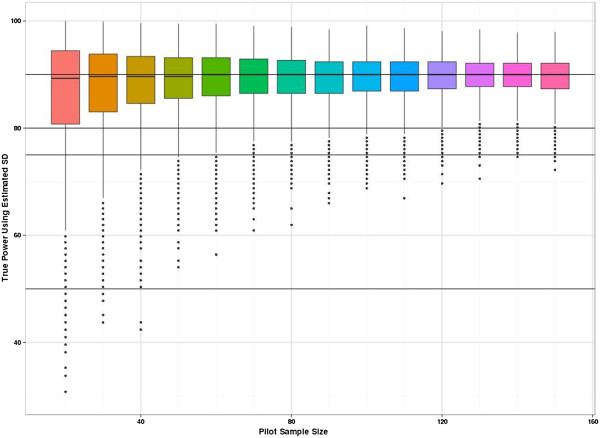
“Teare et al. (2014) further suggest that if the definitive RCT is planned for continuous outcome requiring a power of 90% then the true power will be 80% provided the estimates come from a pilot study with at least 20 participants.”
Backgroundvon Kaeppler, E. P., Donnelley, C. A., Ali, S. H., Roberts, H. J., Ibrahim, J. M., Wu, H., Eliezer, E. N., Porco, T. C., Haonga, B. T., Morshed, S., et al. (2021) · Pilot and Feasibility Studies · doi:10.1186/s40814-021-00766-7 · Cited by 9
Oldershaw, A., Lavender, T., Basra, R. S., & Startup, H. M. (2022) · BMJ Open · doi:10.1136/bmjopen-2021-050350 · Cited by 12
Nadkarni, A., Gaikwad, L., Sequeira, M., D’souza, J., Lopes, M., Haldankar, R., Murthy, P., Velleman, R. D. B., Bhatia, U., & Naughton, F. (2024) · Nicotine & Tobacco Research · doi:10.1093/ntr/ntae056 · Cited by 8
“Thematic analysis was used to analyze the qualitative data, using N-vivo version 12.”
MethodChan, A., Chan, D., Ng, D. Q., Zheng, H. F., Tan, Q. M., Tan, C. J., Toh, J. H. M., Yap, N. Y., Toh, Y. L., Ke, Y., et al. (2025) · Integrative Cancer Therapies · doi:10.1177/15347354251314514 · Cited by 11
Kearns, N., Raigal‐Aran, L., O’Connell, K., Davis, A., Bermingham, K., O’Reilly, S., Collins, D. C., Corrigan, M. A., Coulter, J., Cleary, V., et al. (2022) · Pilot and Feasibility Studies · doi:10.1186/s40814-022-01186-x · Cited by 8
“, robust estimation of estimator variability), even for binary outcomes [36].”
BackgroundFennema, D., Barker, G. J., O’Daly, O., Duan, S., Carr, E., Goldsmith, K., Young, A. H., Moll, J., & Zahn, R. (2024) · Biological Psychiatry Global Open Science · doi:10.1016/j.bpsgos.2024.100308 · Cited by 9
“Lastly, we had a relatively modest sample size, which limits generalizability and can result in biased estimates, low reproducibility, and a lack of statistical power to detect small effects (90,91).”
Spiritual Interventions Among Pediatric Patients With Cancer: A Systematic Review And Meta-Analysis
Liu, Q., Jiang, L., Ho, K. Y., Lam, K. K. W., Lam, W., Yang, F., Mao, T., Sun, M., Shen, B., Ho, J. M. C., et al. (2024) · Journal of Pain and Symptom Management · doi:10.1016/j.jpainsymman.2024.03.015 · Cited by 11
Bayesian design and analysis of external pilot trials for complex interventions
Wilson, D. T., Wason, J. M. S., Brown, J. M., Farrin, A. J., & Walwyn, R. E. A. (2021) · Statistics in Medicine · doi:10.1002/sim.8941 · Cited by 10
“Alternatively, one of several rules-of-thumb for choosing pilot sample size [3, 9, 11, 13] could be used, with the resulting operating characteristics evaluated using the proposed method.”
MethodHealthy Summer Learners: An explanatory mixed methods study and process evaluation
von Klinggraeff, L., Dugger, R., Brazendale, K., Hunt, E. T., Moore, J. B., Turner‐McGrievy, G. M., Vogler, K. E., Beets, M. W., Armstrong, B., & Weaver, R. G. (2022) · Evaluation and Program Planning · doi:10.1016/j.evalprogplan.2022.102070 · Cited by 8
Hewson, D. W., Nightingale, J., Ogollah, R. O., Ollivere, B. J., Costa, M. L., Craxford, S., Bates, P., & Bedforth, N. M. (2022) · BMJ Open · doi:10.1136/bmjopen-2022-062935 · Cited by 8
Feasibility and Acceptability of a Novel Online Program for Mental Health Carers
Fitzgeraldson, E., Triandafilidis, Z., Franklin, Y., Palazzi, K. L., KAY‐LAMBKIN, F. J., & Fitzpatrick, S. (2023) · International journal of psychological research · doi:10.21500/20112084.5733 · Cited by 9
Oldershaw, A., Basra, R. S., Lavender, T., & Startup, H. M. (2023) · European Eating Disorders Review · doi:10.1002/erv.3034 · Cited by 11
Quah, P. L., Tan, L. K., Lek, N., Tagore, S., Chern, B. S. M., Ang, S. B., Wright, A., Thain, S. P. T., & Tan, K. H. (2024) · American Journal of Perinatology · doi:10.1055/s-0043-1778664 · Cited by 10
“…primary hypothesis despite achieving our minimum recruitment number of 60 participants in each study arm based on the rule of thumb for pilot RCTs. 24 Furthermore, the pilot study ’ s results unexpectedly showed a higher rate of GDM among participants in the unblinded group, contrary to our…”
ResultHubbard, G., Munro, J., O’Carroll, R. E., Mutrie, N., Kidd, L., Haw, S. J., Adams, R., Watson, A. J. M., Leslie, S. J., Rauchhaus, P., et al. (2016) · Health Services and Delivery Research · doi:10.3310/hsdr04240 · Cited by 8
Fulton, A. S., Coates, A. M., Williams, M., Howe, P. R. C., Garg, M. L., Wood, L. G., Frith, P. A., & Hill, A. M. (2017) · Pilot and Feasibility Studies · doi:10.1186/s40814-017-0211-2 · Cited by 8
“More recent research proposes other methods of determining an appropriate sample size for pilot and feasibility studies including a stepped estimate based on effect size [9], computer simulation [10] and confidence intervals [11].”
MethodThyer, N. J., Watson, J., Jackson, C., Hickson, L. M. H., Maynard, C., Förster, A., Clark, L., Bell, K. J., Fairhurst, C. M., Cocks, K., et al. (2018) · BMJ Open · doi:10.1136/bmjopen-2018-021502 · Cited by 8
“This sample size will allow the SD of the proposed outcome measures to be estimated with reasonable certainty to inform future sample size calculations.(54) Collectively, the two study sites fit approximately 4300 hearing aids a year and based on their experience we estimate 10% will require extra help at follow-up an…”
MethodRidd, M. J., Edwards, L., Santer, M., Chalmers, J. R., Waddell, L., Marriage, D., Müller, I., Roberts, K., Garfield, K., Coast, J., et al. (2019) · BMJ Open · doi:10.1136/bmjopen-2018-028428 · Cited by 8
Littlewood, E., Ali, S., Badenhorst, J., Bailey, D., Bambra, C. L., Chew-Graham, C. A., Coleman, E., Crosland, S., Gascoyne, S., Gilbody, S. M., et al. (2019) · Pilot and Feasibility Studies · doi:10.1186/s40814-019-0457-y · Cited by 10
Murphy, S., Joffe, V. L., Messer, D. J., Crafter, S., Radley, J., Sunthararajah, S., Bell, K. J., Corbacho, B., Fairhurst, C. M., Rodgers, S., et al. (2019) · Pilot and Feasibility Studies · doi:10.1186/s40814-019-0456-z · Cited by 12
Do radiological research articles apply the term “pilot study” correctly? Systematic review
Kenis, S. F., Abeyakoon, O., Plumb, A., & Halligan, S. (2019) · Clinical Radiology · doi:10.1016/j.crad.2019.11.010 · Cited by 9
Woodford, J., Norbäck, K., Hagström, J., Grönqvist, H., Parker, A., Arundel, C., & von Essén, L. (2020) · Contemporary Clinical Trials Communications · doi:10.1016/j.conctc.2020.100572 · Cited by 9
Daley, A., Jolly, K. B., Bensoussane, H., Ives, N. J., Jebb, S. A., Tearne, S., Greenfield, S., Yardley, L., Little, P. S., Tyldesley‐Marshall, N., et al. (2020) · Trials · doi:10.1186/s13063-020-04673-9 · Cited by 9
Sharif, S., Chen, B., Brewster, P. S., Chen, T., Dworkin, L. D., & Gong, R. (2021) · Frontiers in Medicine · doi:10.3389/fmed.2021.639402 · Cited by 8
Al‐Jabr, H., Windle, K., Thompson, D. R., Jenkins, Z., Castle, D. J., & Ski, C. F. (2022) · JMIR Research Protocols · doi:10.2196/36673 · Cited by 9
“The sample size has been determined according to the recommendations that at least 30-35 patients be included per group for pilot and feasibility studies [63-66].”
MethodReddington, M., Walters, S. J., Cohen, J., Baxter, S. K., & Cole, A. (2018) · BMJ Open · doi:10.1136/bmjopen-2018-021631 · Cited by 10
“outcome.(29) A sample size of 80 patients, with approximately 10% allowance for loss to follow-up allows the SD of an outcome to be estimated to within a precision of approximately ±16% of its true underlying value with 95% CI.”
BackgroundSelf-citationFennema, D., Barker, G. J., O'Daly, O., Duan, S., Carr, E., Goldsmith, K., Young, A. H., Moll, J., & Zahn, R. (2023) · NeuroImage: Clinical · doi:10.1016/j.nicl.2023.103453 · Cited by 7
“Another limitation concerns the relatively modest sample size of the current study, which, depending on fMRI quality control threshold used, fluctuated around the minimum recommend size of n = 35 for a pilot study to estimate effect size (Teare et al., 2014).”
BackgroundHayward, M., Berry, C., Cameron, B., Arnold, K., Berry, K., Bremner, S., Cavanagh, K., Fowler, D., Gage, H., Greenwood, K., et al. (2020) · Trials · doi:10.1186/s13063-020-4181-y · Cited by 7
Philip, S. T., Thimmapuram, J., Thakur, K., Dayal, N., Patil, Y., Sabbu, K., Surve, S., Patil, P., & Thakur, M. (2025) · Medicine · doi:10.1097/md.0000000000045559 · Cited by 7
“An expected effect size of d = .75 ( P = .05 and statistical power = .80) was taken, based on the results of a brief mindfulness session on several biological markers, with a 20% dropout [21] and Sample size group 1 = 29 Sample size group 2 = 29 was obtained.”
Lapid, M. I., Pagali, S. R., Basso, M. R., Croarkin, P. E., Geske, J. R., Huston, J., Islam, K., Joseph, B., Kennebeck, W. W., Kang, D., et al. (2025) · Pilot and Feasibility Studies · doi:10.1186/s40814-025-01625-5 · Cited by 7
“Similarly, Teare et al. [55] emphasize that pilot study sizes should be large enough to estimate key feasibility parameters with reasonable precision while remaining practical given resource constraints.”
Pera, F., Suman, C., Cosma, M., Mazza, S., Brunani, A., & Cancello, R. (2025) · Journal of Cosmetic Dermatology · doi:10.1111/jocd.70161 · Cited by 7
“A 1% success rate in the control group is assumed, in line with the methodology proposed by Teare et al. [21].”
Dwan-O'Reilly, M., Harrington, S. M., Gavin, C., Godfrey, E., Cowman, M., Gleeson, C., O’Mahony-Sinnott, A., McCormack, J., Frawley, E., Burke, T., et al. (2025) · Journal of Medical Internet Research · doi:10.2196/73269 · Cited by 9
“Previous guidance on sample size estimation for pilot studies [37,38] has suggested a minimum of 60 participants as an adequate sample.”
Wu, J., Shao, C., Dong, Y., Meng, J., Zhang, H., Lu, L., Lin, L., & Fang, C. (2025) · Phytomedicine · doi:10.1016/j.phymed.2025.157143 · Cited by 10
Abhishek, A., Fuller, A., Nakafero, G., Zhang, W., Dumbleton, J., Hawkey, C. J., Coupland, C. A. C., Terkeltaub, R. A., & Doherty, M. (2022) · Rheumatology Advances in Practice · doi:10.1093/rap/rkac086 · Cited by 7
The Just-About-Right Pilot Sample Size to Control the Error Margin
Obodo, S. C., Toher, D., & White, P. (2023) · International Journal of Statistics and Probability · doi:10.5539/ijsp.v12n3p1 · Cited by 7
Franzoi, M. A., Pagès, A., Papageorgiou, L., Meglio, A. D., Laparra, A., Martin, É., Barbier, A., Renvoisé, N., Arvis, J., Scotté, F., et al. (2024) · JMIR Research Protocols · doi:10.2196/52841 · Cited by 9
“According to the sample size requirements for pilot studies proposed by Teare et al [42], pilot evaluations with a minimum of 70 patients will be performed to generate NCCN’s Distress Thermometers mean scores and SDs before and after going through a SC pathway (70 patients for each SC pathway).”
MethodHealy, K. L., Payne, K., & Kirby, J. N. (2024) · Australian Journal of Management · doi:10.1177/03128962241270860 · Cited by 7
“Although this sample was less than what we estimated would be required for a full RCT, it was sufficient for a pilot study to reliably estimate parameters required of a full RCT (Teare et al., 2014).”
Thompson, T., Callaghan, L., Hazeldine, E., Quinn, C., Walker, S., Byng, R., Wallace, G., Creanor, S., Green, C., Hawton, A., et al. (2018) · BMJ Open · doi:10.1136/bmjopen-2018-023123 · Cited by 7
“When considering binary outcomes, a total of at least 120 participants is recommended.(26) For the pilot RCT (phase 2), we believe that over 3 months, and across the two sites, we will be able to approach around 330 potential participants.”
Nkangu, M., Okwen, P., Mbuagbaw, L. C. E., Weledji, D., Roberts, J. H., & Yaya, S. (2020) · Pilot and Feasibility Studies · doi:10.1186/s40814-020-00589-y · Cited by 7
Yamgai, P. F., Pouokam, G. B., Foudjo, B. U. S., Mazzanti, F., Sando, J. T., Samuel, C., Kamda, A. G. S., Fokou, É., & Frazzoli, C. (2022) · Journal of Global Health Reports · doi:10.29392/001c.33812 · Cited by 7
Hewage, K., Fosker, S., Leckie, T., Venn, R. M., Gonçalves, A., Koulouglioti, C., & Hodgson, L. E. (2023) · Future Healthcare Journal · doi:10.7861/fhj.2022-0101 · Cited by 9
Mazumdar, P., Zavala, G. A., Aslam, F., Muliyala, K. P., Chaturvedi, S. K., Kandasamy, A., Nizami, A. T., Haq, B. U., Kellar, I., Jackson, C., et al. (2023) · PLoS ONE · doi:10.1371/journal.pone.0287185 · Cited by 7
Ranjani, H., Avari, P., Nitika, S., Jagannathan, N., Oliver, N. S., Valabhji, J., Mohan, V., Chambers, J. C., & Anjana, R. M. (2025) · Journal of Diabetes Science and Technology · doi:10.1177/19322968241310861 · Cited by 12
Fulton, E. A., Newby, K. V., Gokal, K., Kwah, K., Schumacher, L. T., Jackson, L. J., Naughton, F., Coleman, T. J., & Brown, K. (2019) · BMJ Open · doi:10.1136/bmjopen-2018-028721 · Cited by 7
“Researchers have recommended that external pilot and feasibility studies with binary outcome measures recruit at least 60 participants in each group (minimum n=120) and a maximum of 100 participants in each group (maximum n=200).(32) In addition, our sample size calculations, based on similar definitive RCT data about…”
MethodKeeves, J., Gadowski, A. M., McKimmie, A., Bagg, M. K., Antonic‐Baker, A., Hicks, A. J., Clarke, N., Brown, A., McNamara, R., Reeder, S. C., et al. (2024) · Journal of Neurotrauma · doi:10.1089/neu.2023.0465 · Cited by 7
“12 Following the title and abstract screening, to limit the review to high-quality trials likely to influence clinical practice, study designs other than RCTs were excluded.”
Faulkner, J., Prouty, D., Devlin, L., Appleton, D., Roche, M., Below, K., Moffat, J., Snell, D., Williams, M. N., Barker-Collo, S., et al. (2025) · BMJ Open · doi:10.1136/bmjopen-2024-089727 · Cited by 7
Purcell, A., Buckley, T., King, J., Moyle, W., & Marshall, A. P. (2018) · Pilot and Feasibility Studies · doi:10.1186/s40814-018-0312-6 · Cited by 6
Bannerjee, S. S., Pillai, R., Tabash, M. I., & Al-Absy, M. S. M. (2025) · Economies · doi:10.3390/economies13030066 · Cited by 7
Mathur, P., Thomas, H., Cooper, A., Chechlacz, M., Stathi, A., Goodyear, V. A., Miller, C., Krauss, T., Ives, N. J., Magill, L., et al. (2025) · PLoS ONE · doi:10.1371/journal.pone.0314829 · Cited by 9
Targeting Investigation and Treatment in Type 2 Myocardial Infarction
Taggart, C., Ferry, A. V., Barker, S., Williams, K., Souter, G., Bularga, A., Wereski, R., McDermott, M. J., Williams, M. A., Boeddinghaus, J., et al. (2025) · JACC Advances · doi:10.1016/j.jacadv.2025.101738 · Cited by 10
Avery, L., Smith, H., Livingston, R., McPherson, S., Innerd, A. L., & Hallsworth, K. (2025) · BMJ Open Gastroenterology · doi:10.1136/bmjgast-2025-001771 · Cited by 8
Hamilton, J., Arnott, B., Aynsworth, C., Barclay, N. A., Birkett, L., Brandon, T., Dixon, L., Dudley, R. E. J., Einbeck, J., Gibbs, C., et al. (2023) · BMJ Open · doi:10.1136/bmjopen-2023-076101 · Cited by 6
Law, M., Villar, S. S., Oscroft, N. S., Stoneman, V. E. A., Fox-Rushby, J. A., Chiu, Y., Steele, J., Devine, T., Francis, C. E., Claydon, T., et al. (2023) · Trials · doi:10.1186/s13063-023-07484-w · Cited by 7
Mascio, L. D., Hamborg, T., Mihaylova, B., Kassam, J., Shah, B., Stuart, B. L., & Griffin, X. L. (2024) · Bone & Joint Open · doi:10.1302/2633-1462.53.bjo-2023-0114 · Cited by 6
The RELIEF feasibility trial: topical lidocaine patches in older adults with rib fractures
Clout, M., Turner, N. L., Clement, C., Braude, P., Benger, J. R., Gagg, J., Gendall, E., Holloway, S., Ingram, J. C., Kandiyali, R., et al. (2024) · Emergency Medicine Journal · doi:10.1136/emermed-2024-213905 · Cited by 6
Mangalore, R. P., Chai, M. G., Pope, J. D., Lee, S. J., Padiglione, A. A., Diehl, A., Roberts, L., Sim, K., Rawson-Harris, P., Wicha, S. G., et al. (2024) · BMJ Open · doi:10.1136/bmjopen-2023-083635 · Cited by 6
“As this is an exploratory study, we were guided by the sample size recommendations for pilot studies 17–19 and the number of eligible patients anticipated to present to the Alfred Hospital’s ICU over a 6-month period.”
MethodProviding Care to People With Intellectual and Developmental Disabilities in Medical Education
Lunsky, I. O., Gutiérrez, G., Rabu, O., Gemmill, M., & Hamer, D. M. (2024) · American Journal on Intellectual and Developmental Disabilities · doi:10.1352/1944-7558-129.6.476 · Cited by 7
“As such the literature reports that this type of study would require a minimum sample of 10 – 12 participants per treatment arm, considering a main study with a power estimate of 90% and a confidence interval of 95% (Julious, 2005; M. Dawn Teare et al., 2014; Whitehead et al., 2016).”
BackgroundBilek, E. L., Iturra-Mena, A. M., Becker, H. C., Phan, K. L., Monk, C. S., & Fitzgerald, K. D. (2025) · JAACAP Open · doi:10.1016/j.jaacop.2025.04.003 · Cited by 7
“23 Additionally, the initial report was not suf fi ciently powered to examine predictors of treatment outcome.”
Bijker, L., Kleiboer, A. M., Riper, H. M., Cuijpers, P. J., & Donker, T. (2016) · Trials · doi:10.1186/s13063-016-1320-6 · Cited by 6
“On the basis of a simulation study [18], a sample size of 70 participants is recommended to estimate pooled standard deviations for a continuous variable.”
BackgroundWilson, D. T., Brown, J., Farrin, A. J., & Walwyn, R. E. A. (2021) · Statistics in Medicine · doi:10.1002/sim.9091 · Cited by 6
“dversely affected by large rates of attrition, poor adherence to the allocated treatment [2], and incorrect specification of a nuisance parameter such as the standard deviation of a continuous endpoint [3]. A common approach to anticipate these problems is to run a small version of the intended trial, known as an extern…”
BackgroundMethodResult
Metadata
- Authors
- Teare, M. D., Dimairo, M., Shephard, N., Hayman, A., Whitehead, A., & Walters, S. J.
- Affiliations
- University of Sheffield (GB)
- Corresponding author
- Teare, M Dawn
- Venue
- Trials
- Published
- 2014-07-03
- Volume
- 15
- Issue
- 1
- Pages
- 264-264
- ISSN
- 1745-6215 (ISSN-L)
- PMC
- PMC4227298
- OpenAlex
- W2170036462
- Semantic Scholar
- 4b2fbafae462d72b25c4366c5bd529eeaefae10c
- Cited by
- 773
- References
- 31
- Citations by year
- 2026: 84 · 2025: 118 · 2024: 109 · 2023: 120 · 2022: 59 · 2021: 89 · 2020: 78 · 2019: 36 · 2018: 34 · 2017: 24 · 2016: 12 · 2015: 7 · 2014: 1
- FWCI
- 15.49
- Type
- journal article
- Language
- en
- Open access
- gold
- doi.org
- Licence
- cc-by
- Locations
- Trials (publishedVersion, cc-by)
- Europe PMC (PubMed Central) (publishedVersion, cc-by)
- PubMed Central (publishedVersion, cc-by)
- PubMed (publishedVersion)
- VU Research Portal (publishedVersion, other-oa)
- White Rose Research Online (University of Leeds, The University of Sheffield, University of York) (acceptedVersion)
- ePrints Soton (University of Southampton) (acceptedVersion)
- Data Archiving and Networked Services (DANS) (submittedVersion, other-oa)
- Newcastle University ePrints (Newcastle Univesity) (cc-by)
- Funders
- National Institute for Health and Care Research (DRF-2012-05-182)
- University of Sheffield
- Topics
- Physical Sciences › Mathematics › Statistics and Probability › Statistical Methods in Clinical Trials
- Social Sciences › Decision Sciences › Statistics, Probability and Uncertainty › Meta-analysis and systematic reviews
- Physical Sciences › Mathematics › Statistics and Probability › Statistical Methods in Epidemiology
- Keywords
- feasibility study, sample size determination, standard deviation estimation, event rate estimation, statistical power, continuous outcomes, binary outcomes
- MeSH terms
- Computer Simulation, Data Interpretation, Statistical, Feasibility Studies, Humans, Pilot Projects, Models, Statistical, Randomized Controlled Trials as Topic, Sample Size
About these checks
Registry, retraction, Cites and statistics results are computed, not judged, with one exception: a printed reference that no index lists is read once by a model before it counts as a citation error. Claims are extracted by a model and kept only when their quote appears verbatim in the text; each cited source is then checked, with a model’s help, for whether it says what the claim relies on. Those verdicts can be wrong — read the claim’s quote and the cited source before relying on one.
Statistics and arithmetic are recomputed, not judged.
Confidence bands are shown only for fields calibrated on our annotated test set. None is calibrated yet, so no band is shown.
What counts as a claim ›How we measure confidence ›How we check this ›
Are you an author, or do you see a problem with this page? Request a review
Data sources
Bibliographic data: Semantic Scholar, OpenAlex, Crossref.
Contains information from the Semantic Scholar Academic Graph Datasets, made available under the ODC Attribution License (ODC-BY 1.0).
Semantic Scholar’s data is described in: Kinney, R., et al. (2023). The Semantic Scholar Open Data Platform. arXiv:2301.10140.
