

Sample size requirements to estimate key design parameters from external pilot randomised controlled trials: a simulation study
Open accessThe DOI matches its Crossref record; 31 of the 31 references it cites were found in a registry or an index.
Abstract
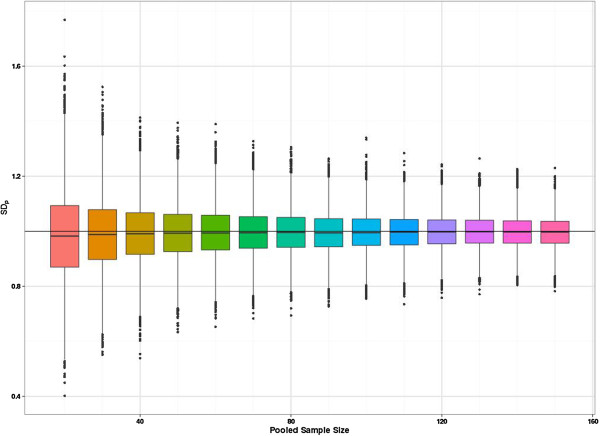
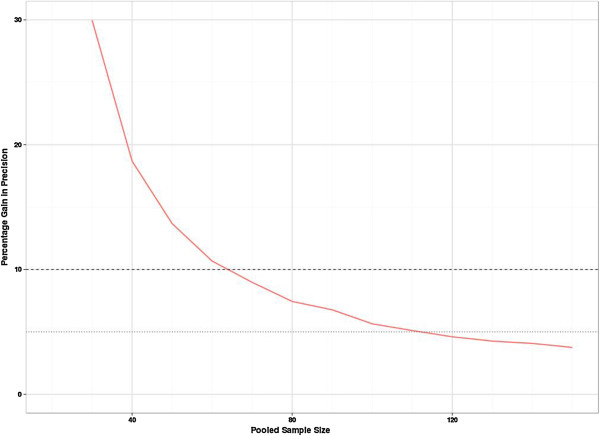
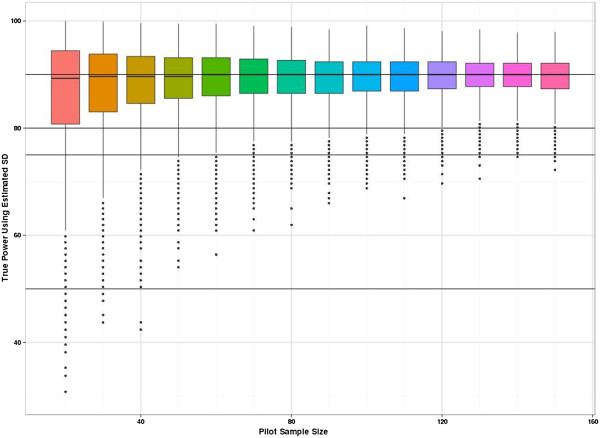
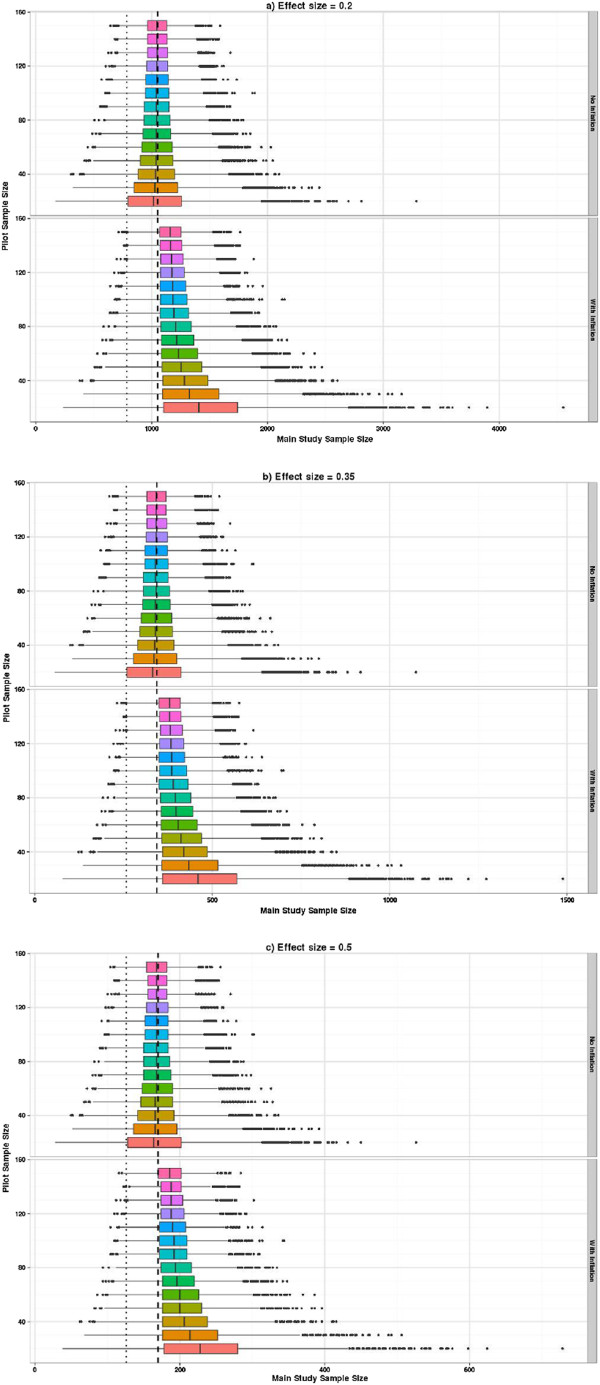
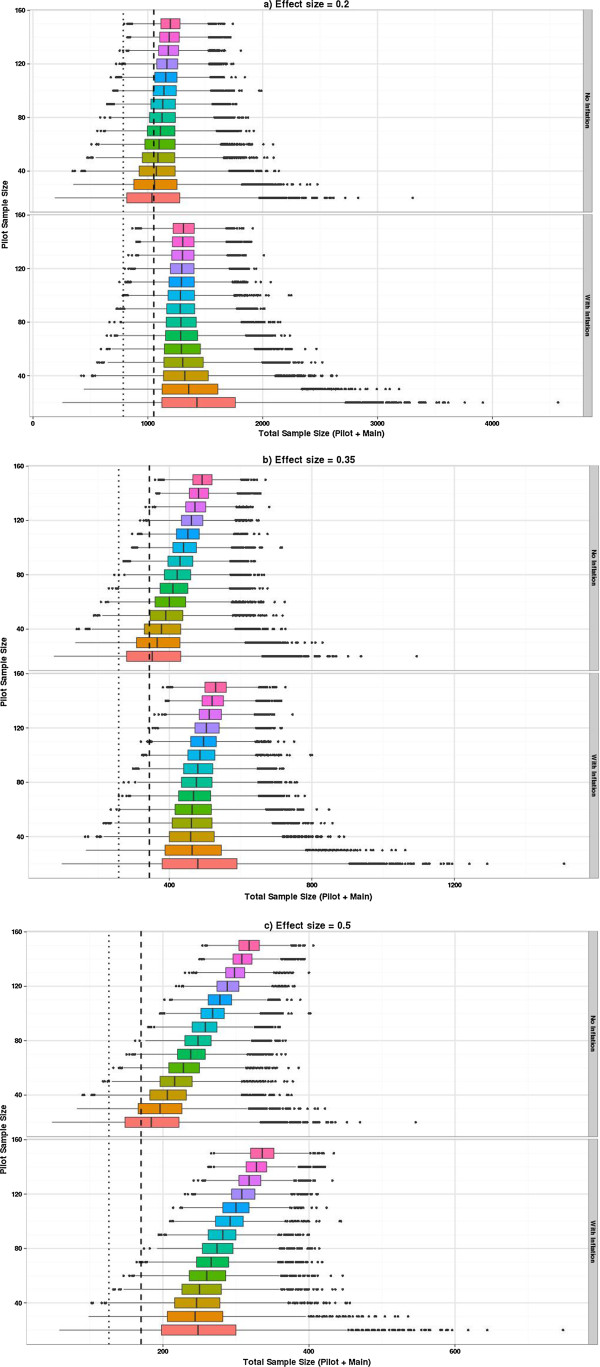
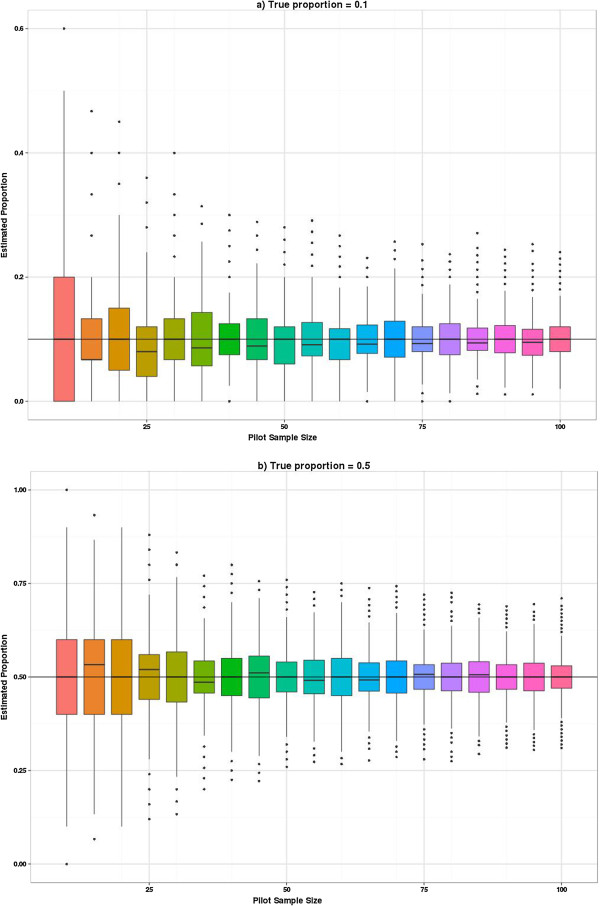
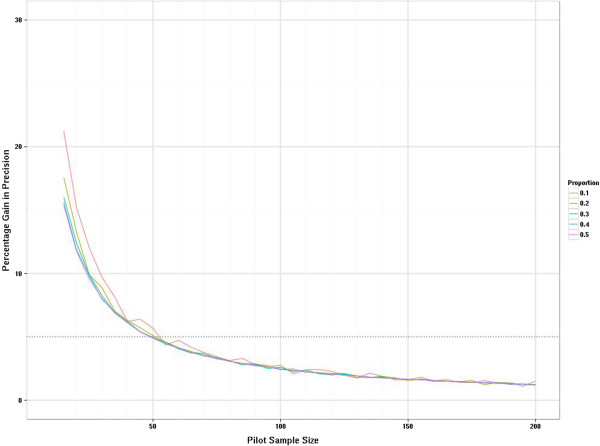
BACKGROUND: External pilot or feasibility studies can be used to estimate key unknown parameters to inform the design of the definitive randomised controlled trial (RCT). However, there is little consensus on how large pilot studies need to be, and some suggest inflating estimates to adjust for the lack of precision when planning the definitive RCT. METHODS: We use a simulation approach to illustrate the sampling distribution of the standard deviation for continuous outcomes and the event rate for binary outcomes. We present the impact of increasing the pilot sample size on the precision and bias of these estimates, and predicted power under three realistic scenarios. We also illustrate the consequences of using a confidence interval argument to inflate estimates so the required power is achieved with a pre-specified level of confidence. We limit our attention to external pilot and feasibility studies prior to a two-parallel-balanced-group superiority RCT. RESULTS: For normally distributed outcomes, the relative gain in precision of the pooled standard deviation (SDp) is less than 10% (for each five subjects added per group) once the total sample size is 70. For true proportions between 0.1 and 0.5, we find the gain in precision for each five subjects added to the pilot sample is less than 5% once the sample size is 60. Adjusting the required sample sizes for the imprecision in the pilot study estimates can result in excessively large definitive RCTs and also requires a pilot sample size of 60 to 90 for the true effect sizes considered here. CONCLUSIONS: We recommend that an external pilot study has at least 70 measured subjects (35 per group) when estimating the SDp for a continuous outcome. If the event rate in an intervention group needs to be estimated by the pilot then a total of 60 to 100 subjects is required. Hence if the primary outcome is binary a total of at least 120 subjects (60 in each group) may be required in the pilot trial. It is very much more efficient to use a larger pilot study, than to guard against the lack of precision by using inflated estimates.
Overview
The claims and statistics of this paper haven’t been checked yet.
Free: it reads the open-access text and checks the first 5 claims that cite a source we can check. Create a free account to check every claim.
Integrity signals
Registry
Cites
Statistics
Figures
Verification
Claims the paper makes
The claims and statistics of this paper haven’t been checked yet.
Free: it reads the open-access text and checks the first 5 claims that cite a source we can check. Create a free account to check every claim.
Claims other papers make about this one
Each is checked against this paper’s own text: does it say what the citing paper says it does?
The cited source doesn’t support the claim as written.
In the citing paper
“Another limitation is that the sample size was relatively small, although this was consistent with previous recommendations of 24-35 participants for pilot and feasibility studies to provide sufficient data and precision of means and variances.117,134,135”
From Acceptance and commitment therapy for older people with treatment-resistant generalised anxiety disorder: The FACTOID feasibility study (2021) · cites this paper as [117]
Checked by a reasoning model — may be wrong.
Experimental — accuracy not yet measuredThe cited source doesn’t support the claim as written.
In the citing paper
“A sample size of 40 was chosen following conventional recommendations for feasibility studies [26] and an estimated 12.5% loss to follow-up based on a preliminary study of ACT in older people with GAD [15].”
From Acceptance and commitment therapy for late-life treatment-resistant generalised anxiety disorder: a feasibility study. (2021) · cites this paper as [26]
Checked by a reasoning model — may be wrong.
Experimental — accuracy not yet measuredThe source backs part of the claim, not all of it — or backs it for a different population, condition or comparison.
In the citing paper
“A sample size of 35 is generally recommended for feasibility studies to provide sufficient data and precision of means and variances.117”
From Acceptance and commitment therapy for older people with treatment-resistant generalised anxiety disorder: The FACTOID feasibility study (2021) · cites this paper as [117]
Experimental — accuracy not yet measuredThe source backs part of the claim, not all of it — or backs it for a different population, condition or comparison.
In the citing paper
“This is sufficient to inform the sample size of the optimisation trial assuming adherence data are pooled across conditions.96”
From Refining and optimising a behavioural intervention to support endocrine therapy adherence (ROSETA) in UK women with breast cancer: Protocol for a pilot fractional factorial trial (2023) · cites this paper as [96]
Experimental — accuracy not yet measuredThe source backs part of the claim, not all of it — or backs it for a different population, condition or comparison.
In the citing paper
“previous guidelines suggesting that 60 to 100 participants per intervention arm are optimal for estimating binary outcomes in pilot RCTs [54]”
From Feasibility and Preliminary Efficacy of Web-Based and Mobile Interventions for Common Mental Health Problems in Working Adults: Multi-Arm Randomized Pilot Trial (2022) · cites this paper as [54]
Experimental — accuracy not yet measured
9 more claims about this paper
Create a free account to see every claim other papers make about this one.
Self-check
Percentages, sums and reported differences re-computed from the paper’s own numbers.
The self-check needs the paper’s full text.
Citations
Cites
R: A Language and Environment for Statistical Computing
R Core Team (2025) · doi:10.32614/r.manuals · Cited by 352,181
An Approximate Distribution of Estimates of Variance Components
Satterthwaite, F. E. (1946) · Biometrics Bulletin · doi:10.2307/3002019 · Cited by 4,373
THE GENERALIZATION OF ‘STUDENT'S’ PROBLEM WHEN SEVERAL DIFFERENT POPULATION VARLANCES ARE INVOLVED
WELCH, B. L. (1947) · Biometrika · doi:10.1093/biomet/34.1-2.28 · Cited by 4,135 · cited 1×
“For sample size calculations, we generally assume the variability of the outcome is the same or equal in both groups, although this assumption can be relaxed and methods are available for calculating sample sizes assuming unequal SDs in each group [26,27].”
MethodA tutorial on pilot studies: the what, why and how
Thabane, L., Ma, J., Chu, R., Cheng, J., Ismaila, A., Rios, L. P., Robson, R., Thabane, M., Giangregorio, L., & Goldsmith, C. H. (2010) · BMC Medical Research Methodology · doi:10.1186/1471-2288-10-1 · Cited by 3,384
Approximate is Better than “Exact” for Interval Estimation of Binomial Proportions
Agresti, A., & Coull, B. A. (1998) · The American Statistician · doi:10.1080/00031305.1998.10480550 · Cited by 3,223 · cited 1×
“Third, due to the relatively small sample size of the pilot trials, we computed the mean width of the 95% confidence interval of the true success probability averaged over Ns simulations using the Wilson’s score method [31] for a fixed sample size, which is given by:”
MethodSample size of 12 per group rule of thumb for a pilot study
Julious, S. A. (2005) · Pharmaceutical Statistics · doi:10.1002/pst.185 · Cited by 3,068 · cited 13×
“A frequently reported problem with publicly funded RCTs is that the recruitment of participants is often slower or more difficult than expected, with many trials failing to reach their planned sample size within the originally envisaged trial timescale and trial-funding envelope.”
BackgroundInfluentialKirkwood, B. R., & Sterne, J. A. C. (2014) · Bristol Research (University of Bristol) · Cited by 2,820
Sim, J., & Lewis, M. (2012) · Journal of Clinical Epidemiology · doi:10.1016/j.jclinepi.2011.07.011 · Cited by 1,036 · cited 17×
“A frequently reported problem with publicly funded RCTs is that the recruitment of participants is often slower or more difficult than expected, with many trials failing to reach their planned sample size within the originally envisaged trial timescale and trial-funding envelope.”
BackgroundMethodInfluentialOn the use of a pilot sample for sample size determination
Browne, R. H. (1995) · Statistics in Medicine · doi:10.1002/sim.4780141709 · Cited by 1,007 · cited 15×
“A frequently reported problem with publicly funded RCTs is that the recruitment of participants is often slower or more difficult than expected, with many trials failing to reach their planned sample size within the originally envisaged trial timescale and trial-funding envelope.”
BackgroundMethodInfluentialMcDonald, A. M., Knight, R. C., Campbell, M. K., Entwistle, V. A., Grant, A. M., Cook, J. A., Elbourne, D. R., Francis, D., Garcia, J., Roberts, I., et al. (2006) · Trials · doi:10.1186/1745-6215-7-9 · Cited by 946
Research works printed but not linked: 2
- StataCorp Statistical Software: Release 12 2011 TX: College Station
- Cohen J Statistical Power Analysis for the Behavioural Sciences 1988 2 Hillsdale, NJ: Lawrence Erlbaum
Cited by
Items 501–600 of 803
Ehrlich, S. F., Hallenbeck, B. R., Zite, N. B., Fortner, K. B., PAUDEL, A. M., Raynor, H. A., Crouter, S. E., & Maples, J. M. (2025) · Journal of Pregnancy · doi:10.1155/jp/7485092 · Cited by 1
Nothacker, J., Paucke, V., Lezius, S., Zapf, A., Lühmann, D., Scherer, M., & Schäfer, I. (2025) · JMIR Aging · doi:10.2196/79767 · Cited by 1
“This is suitable according to general recommendations for minimum sample sizes [18,19].”
Lindsay, E. K., Damon, S., Low, C. A., & Marsland, A. L. (2025) · Behavior Therapy · doi:10.1016/j.beth.2025.08.004 · Cited by 1
“…by rules of thumb for pilot trial sample size, which range from 25– 35 participants per treatment arm estimating a small between-group effect size (Teare et al., 2014; Whitehead et al., 2016), with larger pilot trials more accurately estimating variance and allowing for smaller sample sizes in…”
Vinette, B., Côté, J., & Bilodeau, K. (2025) · Journal of Continuing Education in the Health Professions · doi:10.1097/ceh.0000000000000631 · Cited by 1
Hedemann, T. L., Lu, Y., Campitelli, S., Hawke, L. D., Shen, N., Saperia, S., Jones, B. D. M., Strudwick, G., Wilks, C. R., Wang, W. M., et al. (2025) · PLoS ONE · doi:10.1371/journal.pone.0339163 · Cited by 1
Decision support training for chronic kidney disease dyads: the ImPart Study protocol
Gazaway, S. B., Wells, R. D., Gutiérrez, O. M., Azuero, A., Cole, A., Parker, T. N., Pitts, L. N., Lyas, C., Lang‐Lindsey, K., Knight, R., et al. (2025) · Pilot and Feasibility Studies · doi:10.1186/s40814-025-01749-8 · Cited by 1
“The sample size is not powered for formal statistical inference, but the sample of 64 dyads is consistent with recommendations for pilot studies [60, 61] of sample sizes ≤ 70.”
Amarti, K., Čihařová, M., Provoost, S., Schulte, M. H. J., Kleiboer, A. M., el Hassouni, A., Gonçalves, G., & Riper, H. M. (2025) · Internet Interventions · doi:10.1016/j.invent.2025.100900 · Cited by 1
Turner, K., Somasundaram, A., Small, B. J., Milano, J., Santiago, C., Sprow, O., Hume, E., Khajoueinejad, N., McKinnie, N., Pereira, A. L., et al. (2025) · Journal of Health Population and Nutrition · doi:10.1186/s41043-025-01208-3 · Cited by 1
“Guidance for conducting pilot randomized trials suggests 25–35 participants per arm is sufficient to estimate feasibility outcomes, such as recruitment and retention, and to provide preliminary estimates of intervention effect and variation [130–132].”
Turner, K. L., Milano, J., Santiago, C., Coutinho, J., Sprow, O., Hume, E., Nardella, N., Tabriz, A. A., Islam, J. Y., & Hodul, P. J. (2026) · BMJ Open · doi:10.1136/bmjopen-2025-113207 · Cited by 1
“114 Data monitoring and interim analysis The principal investigator (PI) and study staff will meet weekly to review recruitment and retention, intervention adherence, adherence to study procedures, observed harms and data completion.”
Menezes, C. A., Casaes, A. C., Silva, B. R. B. C., dos Santos, M. G. B., Martins, C. D., Francisco, I. M. O., dos Santos, K. R., Souza, B. O. L., Pinho, A. G. S. F., Mayer, D. M. O. B., et al. (2026) · BMJ Open · doi:10.1136/bmjopen-2025-104706 · Cited by 1
Faires, M., Jones, G., Beeken, R. J., Burke, T., Cooper, C., Copeland, R., Guy, Z., Hill, A. J., Hillison, E. Z., Hodgson, P., et al. (2026) · Mental health and physical activity · doi:10.1016/j.mhpa.2026.100765 · Cited by 1
Self-citationKinfe, M., Semrau, M., Mengiste, A., Ali, O., Ajeme, T., Bremner, S. A., Hounsome, N., Anagnostopoulou, V., Brewster, M., Rugema, L., et al. (2026) · BMC Family Practice · doi:10.1186/s12875-026-03259-9 · Cited by 2
“These numbers will provide good precision of estimated retention proportions that will be used to inform the sample size and other design elements in Stage 3 of the study [44].”
McAlpine, R. G., Jaglinska, M., Jedlovszky, K., Kuc, J., Castro, A., Piot, A., Timmermann, C., Skipper, J. I., Sacchet, M. D., & Kamboj, S. K. (2026) · BMJ Open · doi:10.1136/bmjopen-2025-107512 · Cited by 2
Rosendahl-Riise, H., Gravrok, E. O., Rung, S. L., Dierkes, J., & Aakre, I. (2026) · Nutrition Journal · doi:10.1186/s12937-026-01314-w · Cited by 1
“The size was considered feasible with general guidance on sample sizes for pilot and feasibility studies [20–25].”
Akan, A., & Korkut, N. H. (2026) · Translational Behavioral Medicine · doi:10.1093/tbm/ibag010 · Cited by 1
“We based our sample size on the study by Teare et al. [39], which recommended 60 participants per group for stable estimates of binary feasibility outcomes.”
Falzarano, F. B., Greenfield, A., Saviano, S. C., Kolla, S., Korian, S., Osso, F., Miller, J., Maciejewski, P. K., Whitson, H. E., & Prigerson, H. G. (2026) · Pilot and Feasibility Studies · doi:10.1186/s40814-026-01781-2 · Cited by 1
“A sample size of 35 per arm ( N = 70) is at the upper end recommended for feasibility trials [31], and provides adequate precision for estimating key feasibility parameters (recruitment, retention/attrition, and platform usability) needed to inform prespecified progression (Go/No-Go) criteria for a…”
Blumberger, D. M., Vila‐Rodriguez, F., McClintock, S. M., Thorpe, K. E., Burhan, A. M., Foley, K., Goodman, M. S., Gregory, E., Kaster, T. S., Knyahnytska, Y., et al. (2026) · American Journal of Psychiatry · doi:10.1176/appi.ajp.20250955 · Cited by 2
Lederer, M. L., Barbe, A. G., Janson, M., von Kohout, M., & Schoppmeier, C. M. (2026) · BMC Medical Education · doi:10.1186/s12909-026-10035-x · Cited by 2
Sharpe, H., Allen, K. L., Goldsmith, K., Lawrence, V. C., Byford, S., Monssen, D., Davies, M. R., Grycuk, L., Prasad, V., Potterton, R., et al. (2026) · BJPsych Open · doi:10.1192/bjo.2026.12113 · Cited by 2
Fulton, E. A., Newby, K. V., Kwah, K., Schumacher, L. T., Gokal, K., Jackson, L., Naughton, F., Coleman, T. J., Owen, A., & Brown, K. (2021) · Public Health Research · doi:10.3310/phr09050 · Cited by 1
Knowledge Reuse in Organizations: The Role of Governance Mechanisms
Kayhan, V. O., & Bhattacherjee, A. (2009) · AIS Electronic Library (AISeL) · Cited by 1
DOES CHRONIC URTICARIA AFFECT BODY IMAGE IN SEXUAL ACTIVITIES? A CASE-CONTROL STUDY
Uzdıl, N., Şimşek, N., Evli, M., & Borlu, M. (2023) · Sağlık Bilimleri Dergisi · doi:10.34108/eujhs.1090840 · Cited by 1
Pollux, P. M. J., Surr, C., Cohen, J., Huang, C., Wolverson, E., Mountain, P., Turner, R., Hawkesford-Webb, E., Winter, B., & Hudson, J. M. (2023) · Pilot and Feasibility Studies · doi:10.1186/s40814-023-01256-8 · Cited by 1
Willett, M., Rushton, A., Stephens, G., Fenton, S. A. M., Rich, S., Greig, C. A., & Duda, J. L. (2023) · Pilot and Feasibility Studies · doi:10.1186/s40814-023-01274-6 · Cited by 3
Jo, H.-R., Kim, Y., Sung, W.-S., Park, K. S., Lee, Y. J., Cho, S. Y., Seo, B.-K., Kwon, Y.-E., & Kim, E. (2023) · Journal of Pain Research · doi:10.2147/jpr.s400682 · Cited by 1
“Teare et al suggested that pilot randomized controlled trials require a total of at least 70 for estimating a continuous outcome with good precision.(19) In addition, previous studies assessing the efficacy of herbal medicine as an add-on therapy for PHN set sample size from 30 to 35 per group.”
BackgroundLittlewood, C., Moffatt, M., Beckhelling, J., Davis, D., Burden, A., Pitt, L., Lalande, S., Maddocks, C., Stephens, G., Tunnicliffe, H., et al. (2023) · Musculoskeletal Science and Practice · doi:10.1016/j.msksp.2023.102874 · Cited by 1
Graham, H., Madigan, C. D., & Daley, A. (2023) · Journal of Behavioral Medicine · doi:10.1007/s10865-023-00455-1 · Cited by 2
“A sample size of at least 70 participants has been recommended for feasibility trials (Teare et al., 2014).”
BackgroundGrech, J. L., Norman, I. J., Azzopardi, C., Grixti, M., & Sammut, R. (2024) · BMJ Open · doi:10.1136/bmjopen-2023-083235 · Cited by 1
“For estimating the CIs for feasibility outcomes, such as the recruitment rate and rate of consent to the study, and the compliance to the study protocol, Hertzog 38 suggests having 30–40 participants per group, while Teare et al 39 recommend having 60 participants per group.”
BackgroundMethodWoodward, A., Coleman, E., Ronaldson, S. J., Zoltie, T., Bartlett, P., Wilson, L. K., Archer, T., Kawalek, J. C., Boele, F. W., Chang, B., et al. (2024) · Eye · doi:10.1038/s41433-024-03273-0 · Cited by 1
(2024) · Frontiers research topics · doi:10.3389/978-2-8325-5842-3 · Cited by 1
Reducing childhood externalizing behavior: A feasibility RCT of the being a Parent program
Maciel, L., Basto-Pereira, M., & Day, C. (2025) · Behaviour Research and Therapy · doi:10.1016/j.brat.2025.104737 · Cited by 1
Kinfe, M., Semrau, M., Mengiste, A., Ali, O., Ajeme, T., Bremner, S., Hounsome, N., Anagnostopoulou, V., Brewster, M., Rugema, L., et al. (2024) · ASEAN Journal of Psychiatry · doi:10.54615/2231-7805.18.s11.001 · Cited by 3
Jerez-Jerez, M. J., Aguiar-Castillo, L., & Sevilla, C. (2025) · International Journal of Hospitality Management · doi:10.1016/j.ijhm.2025.104231 · Cited by 1
Salisbury, T. T., Maguele, M. S. B., Chissale, F., de Melo, M. S. I., Hanselmann, M., Lamahewa, K., Langat, E. C., Mandlate, F., Nyaga, L., Seward, N., et al. (2025) · Pilot and Feasibility Studies · doi:10.1186/s40814-025-01617-5 · Cited by 1
“This will enable estimation of the loss of follow-up rate with a 95% CI of ± 17% for mentor mothers and ± 11% for adolescent girls [14, 15].”
Ruamviboonsuk, P., Chotcomwonse, P., Nganthavee, V., Pattanapongpaiboon, W., & Hemarat, K. (2020) · Springer eBooks · doi:10.1007/978-981-15-2213-0_20 · Cited by 1
Duasa, J., & Husin, A. M. (2020) · The International Islamic University Malaysia Repository (The International Islamic University Malaysia) · Cited by 1
Masa, R., Baca-Atlas, S. N., & Hangoma, P. (2021) · Journal of Transport & Health · doi:10.1016/j.jth.2021.101140 · Cited by 1
Sample Size determination for Censored Data
Asghar, N., Khalil, U., Khan, D. M., Khan, Z., & Din, I. U. (2021) · International Journal of Ayurvedic Medicine · doi:10.47552/ijam.v12i3.1859 · Cited by 1
Riquin, É., Sandnes, R., Bacro, F., Vinay, A., Miljkovitch, R., Rouger, V., Rakotonjanahary, J., Gascoin-Lachambre, G., & Muller, J. (2022) · Frontiers in Pediatrics · doi:10.3389/fped.2022.896103 · Cited by 1
Machado, N. M., Gomide, H. P., Bernardino, H. S., & Ronzani, T. M. (2022) · JMIR Formative Research · doi:10.2196/30327 · Cited by 1
“Studies suggest a minimum sample size of 12 subjects per treatment arm [26] or at least 30 [27] to 70 participants [28] in pilot trials based on the rules of thumb.”
BackgroundSiddique, M. A. E., Rahman, M., Islam, M. S., Islam, M. W., Islam, N., Uddin, Z., Hossain, S., Akter, S., Ali, M., & Hossain, K. M. A. (2023) · F1000Research · doi:10.12688/f1000research.129158.1 · Cited by 1
Adjustment of selection bias for clinical trials: a simulation study
Lu, Y., Chen, H., Wang, W., Huang, Y., Cheng, F., & Daley, E. M. (2024) · Communications in Statistics - Simulation and Computation · doi:10.1080/03610918.2024.2316281 · Cited by 1
“%) achieved less than 80% of their original size (Clark, Berger, and Mansmann 2013; Teare et al. 2014).”
Newby, K. V., Kwah, K., Schumacher, L. T., Crutzen, R., Jackson, L., Bremner, S. A., Bailey, J., & Brown, K. (2025) · Journal of Medical Internet Research · doi:10.2196/71611 · Cited by 2
“In line with recommendations [25], the fRCT aimed to have primary outcome data for 60 participants per group to enable design parameters for a full trial to be estimated with good precision.”
Haegens, L. L., Bekker, C. L., Flendrie, M., van den Bemt, B. J. F., & Huiskes, V. J. B. (2025) · JMIR Human Factors · doi:10.2196/66514 · Cited by 1
“Although previous studies regarding sample sizes in feasibility studies advise sample sizes ranging from 12 to 35 participants per group [18,19], we aimed to include 60 participants (30 new and 30 existing users) distributed evenly among the 3 groups of DMARDs.”
Schumacher, L. T., Kwah, K., Gill, R., Crutzen, R., Brown, K., Bremner, S., Jackson, L., & Newby, K. V. (2026) · PLOS Digital Health · doi:10.1371/journal.pdig.0001202 · Cited by 1
“The target sample size of 230 participants was based on the recommended number of participants required to estimate design parameters for a full trial with good precision, inflated to allow for expected drop-out [15].”
An mHealth Walking Intervention for Pregnant Women with Obesity
Senek, M. (2018) · Sheffield Hallam University · doi:10.7190/shu-thesis-00181 · Cited by 2
Pilot Studies in Clinical Research
Whitehead, A. L., & Julious, S. A. (2020) · Wiley eBooks · doi:10.1002/9781118445112.stat08205 · Cited by 2
Self-citationExploring the force-frequency relationship in people with chronic heart failure
Lowry, J. E. (2021) · White Rose eTheses Online (University of Leeds, The University of Sheffield, University of York) · Cited by 1
Machin, D., Campbell, M. J., Tan, S. B., & Tan, S. H. (2018) · Wiley eBooks · doi:10.1002/9781118874905.ch16 · Cited by 1
Iorfino, F., Turner, A., Varidel, M., de Haan, Z., Roberts, A., Zhang, T., An, V., Huntley, S., Marchant, R., Crouse, J. J., et al. (2026) · medRxiv · doi:10.64898/2026.05.12.26353058 · Cited by 1
Iyaye, M., Parajuli, A., Alnabhan, A., & Butt, A. L. (2026) · Journal of Anesthesia · doi:10.1007/s00540-026-03836-3 · Cited by 1
Turner, J. R., Karnad, D. R., & Kothari, S. (2016) · Springer eBooks · doi:10.1007/978-3-319-40347-2_7
Nguyen‐Feng, V. N. (2016) · University of Minnesota Digital Conservancy (University of Minnesota)
How to Assess a Pilot Trial in Surgery
Li, G., Lancaster, G., & Thabane, L. (2019) · Springer eBooks · doi:10.1007/978-3-030-05120-4_12
Bell, I. (2019) · Minerva Access (University of Melbourne)
Saugui, A. O. (2017) · UTHM Institutional Repository (Universiti Tun Hussein Onn Malaysia) · Cited by 3
Choosing the Target Difference (“effect size”) for a Randomised Controlled Trial - DELTA2 GuidancePreprint
Cook, J. A., Julious, S. A., Sones, W. R., Hampson, L. V., Hewitt, C. E., Berlin, J. A., Ashby, D., Emsley, R., Fergusson, D. A., Walters, S. J., et al. (2018) · Preprints.org · doi:10.20944/preprints201808.0521.v1 · Cited by 1
Self-citationAlbrecht, L. (2020) · ERA: Education and Research Archive (University of Alberta) · doi:10.7939/r3-xeyn-2f38
High spatial frequency information in primes hastens happy faces categorization in autistic adults.Preprint
Lacroix, A., Nalborczyk, L., Dutheil, F., Kovarski, K., Sylvie Chokron, A., Garrido, M. I., Gomot, M., & Mermillod, M. (2021) · PsyArXiv (OSF Preprints) · doi:10.31234/osf.io/vqy2u
Micronutrient intervention effects on cognitive outcomes in post-acute traumatic brain injury
Denniss, R. J. (2020) · Sheffield Hallam University · doi:10.7190/shu-thesis-00356 · Cited by 2
Robinson, H. (2020) · Lincoln Repository (University of Lincoln) · doi:10.24385/lincoln.24326446
Wiles, J. D., Rees-Roberts, M., O’Driscoll, J. M., Doulton, T. W. R., McInness, D., Short, V., Pellatt‐Higgins, T., Saxby, K. L., Gousa, K., West, A., et al. (2021) · Research Square · doi:10.21203/rs.3.rs-149399/v1
Ball, E., Newton, S., Kahan, B. C., Forbes, G., Wright, N., Calvete, C. C., Gibson, H. A. L., Rogozińska, E., Rivas, C. A., Taylor, S. J., et al. (2017) · doi:10.2196/preprints.7720
An Innovative TRIZ Insight on the Pilot Test Run Issue in NPI Through Intelligent System
Ng, W. C., Teh, S. Y., Jun, T. C., & Teoh, P. C. (2022) · Lecture notes in electrical engineering · doi:10.1007/978-981-16-8129-5_31
Machin, D., Campbell, M. J., Tan, S. B., & Tan, S. H. (2018) · Wiley eBooks · doi:10.1002/9781118874905.refs
Machin, D., Fayers, P. M., & Tai, B. C. (2021) · Wiley eBooks · doi:10.1002/9781119524687.refs
Proof-of-Concept Canvas: How To Turn a Blurry Idea Into a Real-Life ApplicationPreprint
Zaitsava, M., Marku, E., & DiGuardo, M. C. (2022) · SSRN Electronic Journal · doi:10.2139/ssrn.4116838
Gamadey, F. M. K., Anygiba, H., & Abbey, V. (2022) · SN Business & Economics · doi:10.1007/s43546-022-00321-3
(2022) · NIHR Open Research · doi:10.3310/nihropenres.14404.r28838
(2022) · NIHR Open Research · doi:10.3310/nihropenres.14404.r28873
Gout, T., Zoltie, T., Woodward, A., et al. (2022) · University of Aberdeen · doi:10.3310/nihropenres.14436.r28899
Almutairi, A., Eddy, T. L., Wilson, V., & Lambert, J. H. (2023) · ASCE-ASME Journal of Risk and Uncertainty in Engineering Systems Part A Civil Engineering · doi:10.1061/ajrua6.rueng-771
"Outcome evaluation of physiotherapy & drug management for chronic cervical radiculopathy"
Siddique, M. A. E., Rahman, M., Islam, M. S., & Islam, M. W. (2023) · MOJ Sports Medicine · doi:10.15406/mojsm.2023.06.00138
Statistical considerations for testing automated sphygmomanometers in special patient populations
Alpert, B. S., Matsumura, P., Wu, C. O., Friedman, B., Flotzinger, D., & Osborn, D. (2023) · Blood Pressure Monitoring · doi:10.1097/mbp.0000000000000644
(2023) · University of Glasgow · doi:10.3310/nihropenres.14394.r29120
Gout, T., Zoltie, T., Woodward, A., et al. (2023) · University of Aberdeen · doi:10.3310/nihropenres.14534.r29107
(2023) · Monash University · doi:10.3310/nihropenres.14394.r29073
Gout, T., Zoltie, T., Woodward, A., et al. (2023) · NIHR Open Research · doi:10.3310/nihropenres.14436.r28963
(2023) · NIHR Open Research · doi:10.3310/nihropenres.14489.r28945
(2023) · NIHR Open Research · doi:10.3310/nihropenres.14489.r28946
(2023) · University of Glasgow · doi:10.3310/nihropenres.14565.r29198
(2023) · Monash University · doi:10.3310/nihropenres.14565.r29197
Elucidating the Effects of Methotrexate Therapy on Serum Cytokeratin-18 Levels in RheumatologyPreprint
Balakrishnan, K., Sakthiswary, R., Deborah, C. C. H., Wahab, A. A., Yaacob, Y., & Sutan, R. (2023) · Preprints.org · doi:10.20944/preprints202305.1962.v1
Effectiveness of Videos and Infographics in Education of Lower Back Pain
En, H. R., & Teng, K. S. Y. (2023) · Springer eBooks · doi:10.1007/978-981-19-7222-5_25
Lewis, A., Clout, M., Benger, J., et al. (2023) · NIHR Open Research · doi:10.3310/nihropenres.14576.r30071
Lewis, A., Clout, M., Benger, J., et al. (2023) · NIHR Open Research · doi:10.3310/nihropenres.14576.r30065
Empirical and Translational Pilots
Reynolds, P. S. (2023) · Wiley eBooks · doi:10.1002/9781119800002.ch6
Lewis, A., Clout, M., Benger, J., et al. (2023) · NIHR Open Research · doi:10.3310/nihropenres.14641.r30446
Lewis, A., Clout, M., Benger, J., et al. (2023) · NIHR Open Research · doi:10.3310/nihropenres.14641.r30447
My Best Alaskan Life: Addressing Adolescent Mental and Reproductive Health in Alaska
Lessard, L. N., Jessen, C. M., Buckingham, S. L., Russell, R. M., Morgan, S. A., & Baker, J. (2024) · Health Promotion Practice · doi:10.1177/15248399231221769
“The sample size is also sufficiently large enough to inform the design of a randomized control trial with two categories in each case and control grouping in the event the next phase of this project is a large-scale RCT (Pearson et al., 2020; Teare et al., 2014).”
Biggin, K., Marian, I. R., Lamb, S. E., et al. (2024) · University College London · doi:10.3310/nihropenres.14657.r31006
Biggin, K., Marian, I. R., Lamb, S. E., et al. (2024) · University of Liverpool · doi:10.3310/nihropenres.14657.r31005
Harper, R., Armstrong, M., Sheppard, S., Stewart, C., & Clark, C. (2024) · Research Square · doi:10.21203/rs.3.rs-3879015/v1
Biggin, K., Marian, I. R., Lamb, S. E., et al. (2024) · University of Liverpool · doi:10.3310/nihropenres.14751.r31492
Orofo, C. E. (2024) · Digital Repository Service (Northeastern University) · doi:10.17760/d20652993
Veale, E. L., Theron, J., Rees-Roberts, M., Hedayioglu, J. H., Santer, E., Hulbert, S., & Short, V. J. (2024) · NIHR Open Research · doi:10.3310/nihropenres.13716.1
“…that the proposed number is able to detect significant differences of the expected effect size and is in line with the recommended sample size of 70 to estimate key parameters, bench-marked from external pilot randomised controlled trials 40 and will allow for participant loss, to follow-up.”
Piloto de ensaios clínicos randômicos: o que precisamos saber?
dos Santos, L. M., Silva, B. S. M., de Souza, E. R., Bittencourt, I. S., Rocha, P. K., & Kusahara, D. M. (2024) · Revista Enfermagem Contemporânea · doi:10.17267/2317-3378rec.2024.e5654 · Cited by 1
Sadia, H., Srisatidnarakul, B., & Liaw, J. (2024) · Natural Hazards Research · doi:10.1016/j.nhres.2024.10.002 · Cited by 2
Metadata
- Authors
- Teare, M. D., Dimairo, M., Shephard, N., Hayman, A., Whitehead, A., & Walters, S. J.
- Affiliations
- University of Sheffield (GB)
- Corresponding author
- Teare, M Dawn
- Venue
- Trials
- Published
- 2014-07-03
- Volume
- 15
- Issue
- 1
- Pages
- 264-264
- ISSN
- 1745-6215 (ISSN-L)
- PMC
- PMC4227298
- OpenAlex
- W2170036462
- Semantic Scholar
- 4b2fbafae462d72b25c4366c5bd529eeaefae10c
- Cited by
- 773
- References
- 31
- Citations by year
- 2026: 84 · 2025: 118 · 2024: 109 · 2023: 120 · 2022: 59 · 2021: 89 · 2020: 78 · 2019: 36 · 2018: 34 · 2017: 24 · 2016: 12 · 2015: 7 · 2014: 1
- FWCI
- 15.49
- Type
- journal article
- Language
- en
- Open access
- gold
- doi.org
- Licence
- cc-by
- Locations
- Trials (publishedVersion, cc-by)
- Europe PMC (PubMed Central) (publishedVersion, cc-by)
- PubMed Central (publishedVersion, cc-by)
- PubMed (publishedVersion)
- VU Research Portal (publishedVersion, other-oa)
- White Rose Research Online (University of Leeds, The University of Sheffield, University of York) (acceptedVersion)
- ePrints Soton (University of Southampton) (acceptedVersion)
- Data Archiving and Networked Services (DANS) (submittedVersion, other-oa)
- Newcastle University ePrints (Newcastle Univesity) (cc-by)
- Funders
- National Institute for Health and Care Research (DRF-2012-05-182)
- University of Sheffield
- Topics
- Physical Sciences › Mathematics › Statistics and Probability › Statistical Methods in Clinical Trials
- Social Sciences › Decision Sciences › Statistics, Probability and Uncertainty › Meta-analysis and systematic reviews
- Physical Sciences › Mathematics › Statistics and Probability › Statistical Methods in Epidemiology
- Keywords
- feasibility study, sample size determination, standard deviation estimation, event rate estimation, statistical power, continuous outcomes, binary outcomes
- MeSH terms
- Computer Simulation, Data Interpretation, Statistical, Feasibility Studies, Humans, Pilot Projects, Models, Statistical, Randomized Controlled Trials as Topic, Sample Size
About these checks
Registry, retraction, Cites and statistics results are computed, not judged, with one exception: a printed reference that no index lists is read once by a model before it counts as a citation error. Claims are extracted by a model and kept only when their quote appears verbatim in the text; each cited source is then checked, with a model’s help, for whether it says what the claim relies on. Those verdicts can be wrong — read the claim’s quote and the cited source before relying on one.
Statistics and arithmetic are recomputed, not judged.
Confidence bands are shown only for fields calibrated on our annotated test set. None is calibrated yet, so no band is shown.
What counts as a claim ›How we measure confidence ›How we check this ›
Are you an author, or do you see a problem with this page? Request a review
Data sources
Bibliographic data: Semantic Scholar, OpenAlex, Crossref.
Contains information from the Semantic Scholar Academic Graph Datasets, made available under the ODC Attribution License (ODC-BY 1.0).
Semantic Scholar’s data is described in: Kinney, R., et al. (2023). The Semantic Scholar Open Data Platform. arXiv:2301.10140.
