

Sample size requirements to estimate key design parameters from external pilot randomised controlled trials: a simulation study
Open accessThe DOI matches its Crossref record; 31 of the 31 references it cites were found in a registry or an index.
Abstract
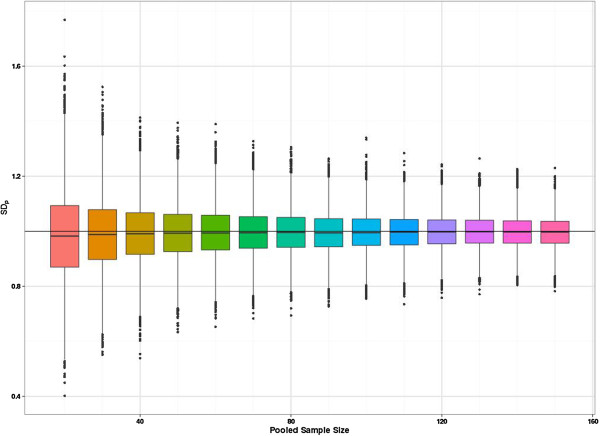
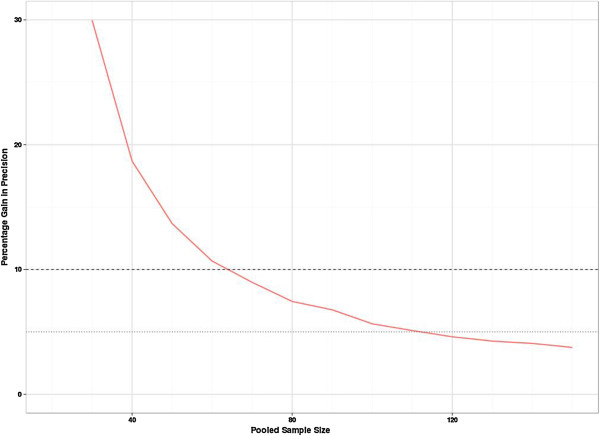
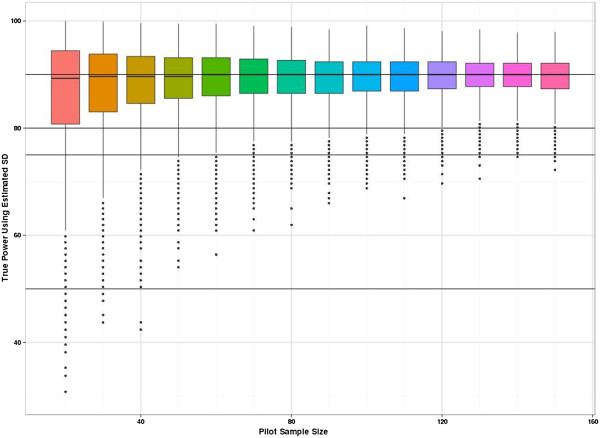
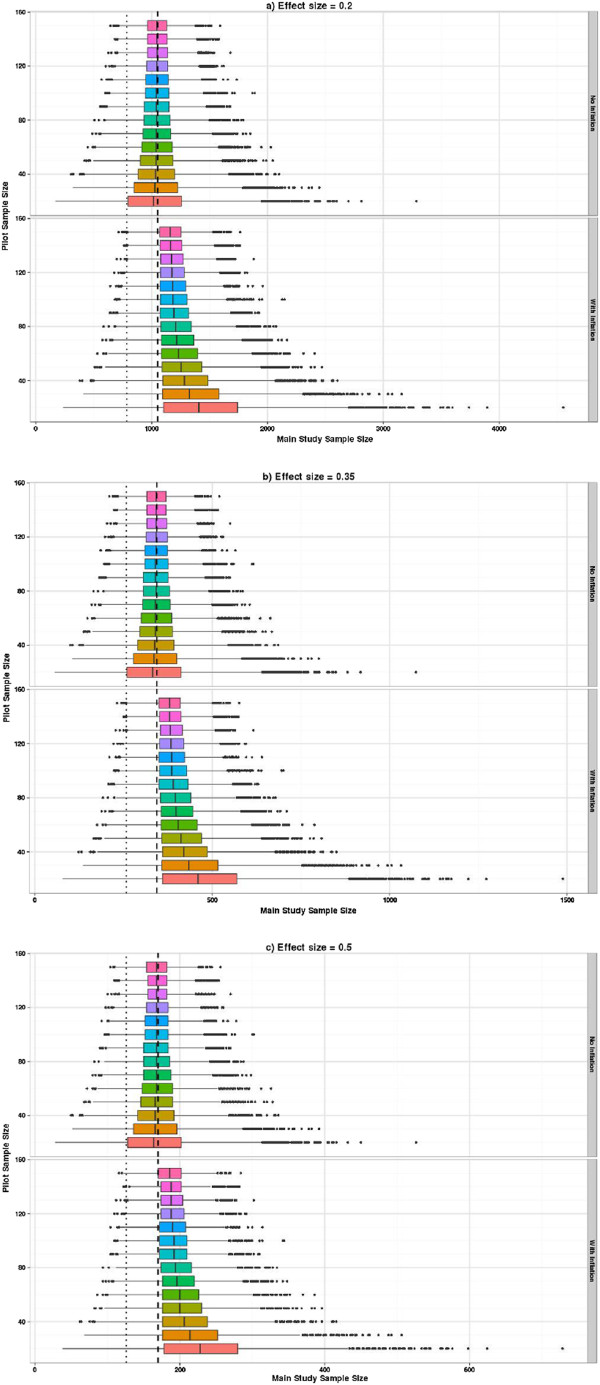
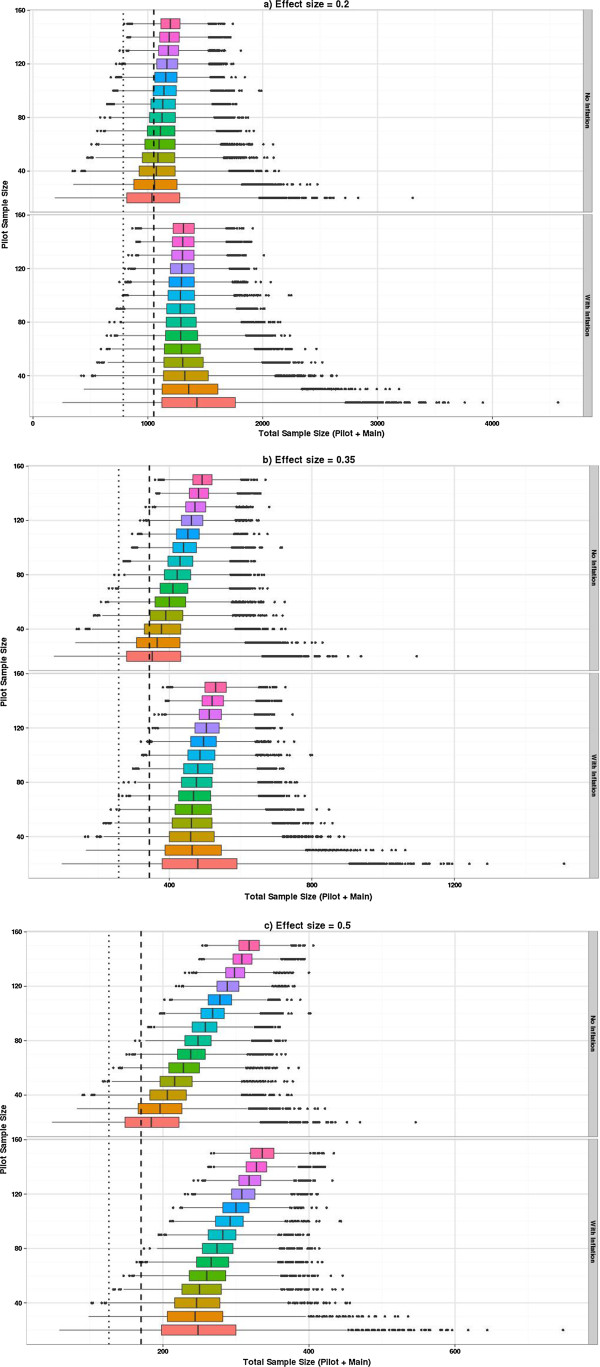
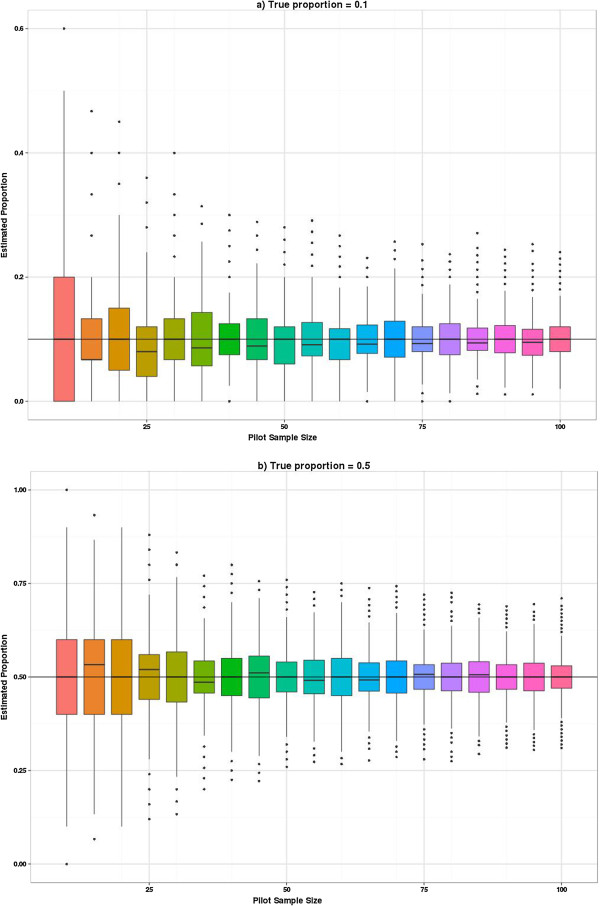
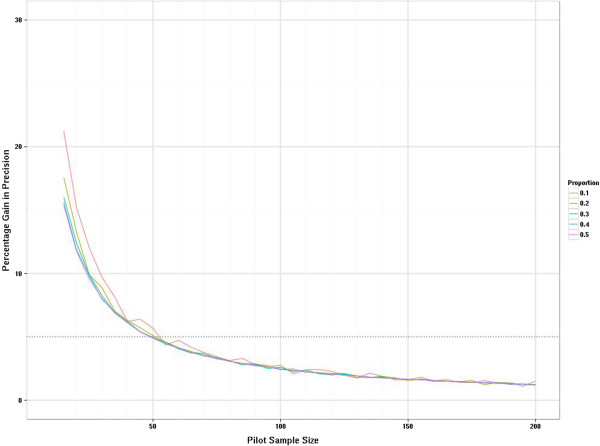
BACKGROUND: External pilot or feasibility studies can be used to estimate key unknown parameters to inform the design of the definitive randomised controlled trial (RCT). However, there is little consensus on how large pilot studies need to be, and some suggest inflating estimates to adjust for the lack of precision when planning the definitive RCT. METHODS: We use a simulation approach to illustrate the sampling distribution of the standard deviation for continuous outcomes and the event rate for binary outcomes. We present the impact of increasing the pilot sample size on the precision and bias of these estimates, and predicted power under three realistic scenarios. We also illustrate the consequences of using a confidence interval argument to inflate estimates so the required power is achieved with a pre-specified level of confidence. We limit our attention to external pilot and feasibility studies prior to a two-parallel-balanced-group superiority RCT. RESULTS: For normally distributed outcomes, the relative gain in precision of the pooled standard deviation (SDp) is less than 10% (for each five subjects added per group) once the total sample size is 70. For true proportions between 0.1 and 0.5, we find the gain in precision for each five subjects added to the pilot sample is less than 5% once the sample size is 60. Adjusting the required sample sizes for the imprecision in the pilot study estimates can result in excessively large definitive RCTs and also requires a pilot sample size of 60 to 90 for the true effect sizes considered here. CONCLUSIONS: We recommend that an external pilot study has at least 70 measured subjects (35 per group) when estimating the SDp for a continuous outcome. If the event rate in an intervention group needs to be estimated by the pilot then a total of 60 to 100 subjects is required. Hence if the primary outcome is binary a total of at least 120 subjects (60 in each group) may be required in the pilot trial. It is very much more efficient to use a larger pilot study, than to guard against the lack of precision by using inflated estimates.
Overview
The claims and statistics of this paper haven’t been checked yet.
Free: it reads the open-access text and checks the first 5 claims that cite a source we can check. Create a free account to check every claim.
Integrity signals
Registry
Cites
Statistics
Figures
Verification
Claims the paper makes
The claims and statistics of this paper haven’t been checked yet.
Free: it reads the open-access text and checks the first 5 claims that cite a source we can check. Create a free account to check every claim.
Claims other papers make about this one
Each is checked against this paper’s own text: does it say what the citing paper says it does?
The cited source doesn’t support the claim as written.
In the citing paper
“Another limitation is that the sample size was relatively small, although this was consistent with previous recommendations of 24-35 participants for pilot and feasibility studies to provide sufficient data and precision of means and variances.117,134,135”
From Acceptance and commitment therapy for older people with treatment-resistant generalised anxiety disorder: The FACTOID feasibility study (2021) · cites this paper as [117]
Checked by a reasoning model — may be wrong.
Experimental — accuracy not yet measuredThe cited source doesn’t support the claim as written.
In the citing paper
“A sample size of 40 was chosen following conventional recommendations for feasibility studies [26] and an estimated 12.5% loss to follow-up based on a preliminary study of ACT in older people with GAD [15].”
From Acceptance and commitment therapy for late-life treatment-resistant generalised anxiety disorder: a feasibility study. (2021) · cites this paper as [26]
Checked by a reasoning model — may be wrong.
Experimental — accuracy not yet measuredThe source backs part of the claim, not all of it — or backs it for a different population, condition or comparison.
In the citing paper
“A sample size of 35 is generally recommended for feasibility studies to provide sufficient data and precision of means and variances.117”
From Acceptance and commitment therapy for older people with treatment-resistant generalised anxiety disorder: The FACTOID feasibility study (2021) · cites this paper as [117]
Experimental — accuracy not yet measuredThe source backs part of the claim, not all of it — or backs it for a different population, condition or comparison.
In the citing paper
“This is sufficient to inform the sample size of the optimisation trial assuming adherence data are pooled across conditions.96”
From Refining and optimising a behavioural intervention to support endocrine therapy adherence (ROSETA) in UK women with breast cancer: Protocol for a pilot fractional factorial trial (2023) · cites this paper as [96]
Experimental — accuracy not yet measuredThe source backs part of the claim, not all of it — or backs it for a different population, condition or comparison.
In the citing paper
“previous guidelines suggesting that 60 to 100 participants per intervention arm are optimal for estimating binary outcomes in pilot RCTs [54]”
From Feasibility and Preliminary Efficacy of Web-Based and Mobile Interventions for Common Mental Health Problems in Working Adults: Multi-Arm Randomized Pilot Trial (2022) · cites this paper as [54]
Experimental — accuracy not yet measured
9 more claims about this paper
Create a free account to see every claim other papers make about this one.
Self-check
Percentages, sums and reported differences re-computed from the paper’s own numbers.
The self-check needs the paper’s full text.
Citations
Cites
R: A Language and Environment for Statistical Computing
R Core Team (2025) · doi:10.32614/r.manuals · Cited by 352,181
An Approximate Distribution of Estimates of Variance Components
Satterthwaite, F. E. (1946) · Biometrics Bulletin · doi:10.2307/3002019 · Cited by 4,373
THE GENERALIZATION OF ‘STUDENT'S’ PROBLEM WHEN SEVERAL DIFFERENT POPULATION VARLANCES ARE INVOLVED
WELCH, B. L. (1947) · Biometrika · doi:10.1093/biomet/34.1-2.28 · Cited by 4,135 · cited 1×
“For sample size calculations, we generally assume the variability of the outcome is the same or equal in both groups, although this assumption can be relaxed and methods are available for calculating sample sizes assuming unequal SDs in each group [26,27].”
MethodA tutorial on pilot studies: the what, why and how
Thabane, L., Ma, J., Chu, R., Cheng, J., Ismaila, A., Rios, L. P., Robson, R., Thabane, M., Giangregorio, L., & Goldsmith, C. H. (2010) · BMC Medical Research Methodology · doi:10.1186/1471-2288-10-1 · Cited by 3,384
Approximate is Better than “Exact” for Interval Estimation of Binomial Proportions
Agresti, A., & Coull, B. A. (1998) · The American Statistician · doi:10.1080/00031305.1998.10480550 · Cited by 3,223 · cited 1×
“Third, due to the relatively small sample size of the pilot trials, we computed the mean width of the 95% confidence interval of the true success probability averaged over Ns simulations using the Wilson’s score method [31] for a fixed sample size, which is given by:”
MethodSample size of 12 per group rule of thumb for a pilot study
Julious, S. A. (2005) · Pharmaceutical Statistics · doi:10.1002/pst.185 · Cited by 3,068 · cited 13×
“A frequently reported problem with publicly funded RCTs is that the recruitment of participants is often slower or more difficult than expected, with many trials failing to reach their planned sample size within the originally envisaged trial timescale and trial-funding envelope.”
BackgroundInfluentialKirkwood, B. R., & Sterne, J. A. C. (2014) · Bristol Research (University of Bristol) · Cited by 2,820
Sim, J., & Lewis, M. (2012) · Journal of Clinical Epidemiology · doi:10.1016/j.jclinepi.2011.07.011 · Cited by 1,036 · cited 17×
“A frequently reported problem with publicly funded RCTs is that the recruitment of participants is often slower or more difficult than expected, with many trials failing to reach their planned sample size within the originally envisaged trial timescale and trial-funding envelope.”
BackgroundMethodInfluentialOn the use of a pilot sample for sample size determination
Browne, R. H. (1995) · Statistics in Medicine · doi:10.1002/sim.4780141709 · Cited by 1,007 · cited 15×
“A frequently reported problem with publicly funded RCTs is that the recruitment of participants is often slower or more difficult than expected, with many trials failing to reach their planned sample size within the originally envisaged trial timescale and trial-funding envelope.”
BackgroundMethodInfluentialMcDonald, A. M., Knight, R. C., Campbell, M. K., Entwistle, V. A., Grant, A. M., Cook, J. A., Elbourne, D. R., Francis, D., Garcia, J., Roberts, I., et al. (2006) · Trials · doi:10.1186/1745-6215-7-9 · Cited by 946
Research works printed but not linked: 2
- StataCorp Statistical Software: Release 12 2011 TX: College Station
- Cohen J Statistical Power Analysis for the Behavioural Sciences 1988 2 Hillsdale, NJ: Lawrence Erlbaum
Cited by
CONSORT 2010 statement: extension to randomised pilot and feasibility trials.
Eldridge, S. M., Chan, C. L., Campbell, M. J., Bond, C. M., Hopewell, S., Thabane, L., & Lancaster, G. A. (2016) · BMJ · doi:10.1136/bmj.i5239 · Cited by 3,404
CONSORT 2010 statement: extension to randomised pilot and feasibility trials
on behalf of the PAFS consensus group, Eldridge, S. M., Chan, C. L., Campbell, M. J., Bond, C. M., Hopewell, S., Thabane, L., & Lancaster, G. A. (2016) · Pilot and Feasibility Studies · doi:10.1186/s40814-016-0105-8 · Cited by 2,843
Lakens, D. (2022) · Collabra Psychology · doi:10.1525/collabra.33267 · Cited by 1,962
Whitehead, A. L., Julious, S. A., Cooper, C. L., & Campbell, M. J. (2016) · Statistical Methods in Medical Research · doi:10.1177/0962280215588241 · Cited by 1,936
“Julious(16) 24 Kieser and Wassmer(12) 20–40 Browne(10) 30 Sim and Lewis(11) 55 Teare et al.(17) 70 Whitehead et al.”
BackgroundInfluentialSelf-citationGuidance for conducting feasibility and pilot studies for implementation trials
Pearson, N., Naylor, P.-J., Ashe, M. C., Fernandez, M., Yoong, S. L., & Wolfenden, L. (2020) · Pilot and Feasibility Studies · doi:10.1186/s40814-020-00634-w · Cited by 475
Hammersley, V., Donaghy, E., Parker, R., McNeilly, H., Atherton, H., Bikker, A., Campbell, J., & McKinstry, B. (2019) · British Journal of General Practice · doi:10.3399/bjgp19x704573 · Cited by 366
Lewis, M., Bromley, K., Sutton, C. J., McCray, G., Myers, H. L., & Lancaster, G. A. (2021) · Pilot and Feasibility Studies · doi:10.1186/s40814-021-00770-x · Cited by 330
A brief overview of pilot studies and their sample size justification
Kunselman, A. R. (2024) · Fertility and Sterility · doi:10.1016/j.fertnstert.2024.01.040 · Cited by 263
Pilot and feasibility studies come of age!
Lancaster, G. A. (2015) · Pilot and Feasibility Studies · doi:10.1186/2055-5784-1-1 · Cited by 260
“These are (i) to test the integrity of the study protocol for the future trial (which gives a valid reason for randomisation) and (ii) to gain initial estimates for sample size calculation, and it is helpful to note here recent work in this area [16,17] (iii) to test data collection forms or questionnaires, (iv) to te…”
BackgroundChampion, L., Economides, M., & Chandler, C. (2018) · PLOS ONE · doi:10.1371/journal.pone.0209482 · Cited by 225
“First, although we attempted to recruit a sample size in keeping with guidelines for pilot RCTs [27], our outcome measures were assessed online, and relied on self-reported questionnaires, which are noisy and open to interpretation [64].”
MethodInfluentialA Step-by-Step Process on Sample Size Determination for Medical Research
Bujang, M. A. (2021) · Malaysian Journal of Medical Sciences · doi:10.21315/mjms2021.28.2.2 · Cited by 163
Totton, N., Lin, J., Julious, S. A., Chowdhury, M., & Brand, A. (2023) · Pilot and Feasibility Studies · doi:10.1186/s40814-023-01416-w · Cited by 188
“These values have increased in more recent work by Sim and Lewis [12] which has suggested 55 participants in total considering a traditional two-arm study and Teare et al. [13] stating 35 patients per arm for continuous outcomes and 60 per arm for binary outcomes will ensure suitable precision.”
BackgroundResultInfluentialSelf-Management of Postnatal Hypertension: The SNAP-HT Trial
Cairns, A. E., Tucker, K. L., Leeson, P., Mackillop, L. H., Santos, M., Velardo, C., Salvi, D., Mort, S., Mollison, J., Tarassenko, L., et al. (2018) · Hypertension · doi:10.1161/hypertensionaha.118.10911 · Cited by 151
How big should the pilot study for my cluster randomised trial be?
Eldridge, S. M., Costelloe, C. E., Kahan, B. C., Lancaster, G. A., & Kerry, S. M. (2016) · Statistical Methods in Medical Research · doi:10.1177/0962280215588242 · Cited by 135
“This has included investigations to assess how large such studies should be.(4) However, none of these investigations have focussed on cluster randomised trials.”
BackgroundResultVosoughi, K., Ichkhanian, Y., Benias, P., Miller, L., Aadam, A. A., Triggs, J. R., Law, R., Hasler, W., Bowers, N., Chaves, D., et al. (2022) · Gut · doi:10.1136/gutjnl-2020-322756 · Cited by 128
Willcox, J., Wilkinson, S., Lappas, M., Ball, K., Crawford, D., McCarthy, E., Fjeldsoe, B., Whittaker, R., Maddison, R., & Campbell, K. (2017) · BJOG: An International Journal of Obstetrics & Gynaecology · doi:10.1111/1471-0528.14552 · Cited by 115
Li, I.-C., Chang, H., Lin, C., Chen, W.-P., Lu, T., Lee, L., Chen, Y., Chen, Y., Chen, C., & Lin, D. P. (2020) · Frontiers in Aging Neuroscience · doi:10.3389/fnagi.2020.00155 · Cited by 137
Tomlinson, S., Behrmann, S., Cranford, J., Louie, M., & Hashikawa, A. (2018) · Telemedicine and e-Health · doi:10.1089/tmj.2017.0166 · Cited by 106
“This was based on simulation work showing that this sample size provides a reasonable balance between maximizing precision of parameter estimates, and minimizing resources required for adequate assessment of feasibility.(12) A small subset of patient data was obtained by two members of the study team, with the goal of…”
Gilbody, S. M., Littlewood, E., McMillan, D., Chew-Graham, C. A., Bailey, D., Gascoyne, S., Sloan, C., Burke, L., Coventry, P. A., Crosland, S., et al. (2021) · PLoS Medicine · doi:10.1371/journal.pmed.1003779 · Cited by 93
Sample size justification in feasibility studies: moving beyond published guidance
Montgomery, R. N. (2025) · Pilot and Feasibility Studies · doi:10.1186/s40814-025-01675-9 · Cited by 88
Blood pressure self-monitoring in pregnancy: examining feasibility in a prospective cohort study
Tucker, K. L., Taylor, K. S., Crawford, C., Hodgkinson, J. A., Bankhead, C., Carver, T., Ewers, E., Glogowska, M., Greenfield, S. M., Ingram, L., et al. (2017) · BMC Pregnancy and Childbirth · doi:10.1186/s12884-017-1605-0 · Cited by 79
“Feasibility studies do not require a formal sample size calculation but a sample of 200 women was considered sufficient to both allow experience with self-monitoring and to include women who developed pregnancy induced hypertension subsequently [25].”
BackgroundGumley, A. I., Bradstreet, S., Ainsworth, J., Allan, S., Alvarez-Jimenez, M., Aucott, L., Birchwood, M., Briggs, A., Bucci, S., Cotton, S. M., et al. (2022) · The Lancet Psychiatry · doi:10.1016/s2215-0366(22)00103-1 · Cited by 71
Nguyen, L. T., Alexander, K. E., & Yates, P. M. (2018) · Journal of Pain and Symptom Management · doi:10.1016/j.jpainsymman.2018.02.019 · Cited by 88
Pealing, L. M., Tucker, K. L., Mackillop, L. H., Crawford, C., Wilson, H. M., Nickless, A., Temple, E., Chappell, L. C., & McManus, R. J. (2019) · Pregnancy Hypertension · doi:10.1016/j.preghy.2019.09.018 · Cited by 78
“No formal sample size calculation was used but we aimed for a target sample size of 160, consistent with the feasibility design [approximately half with gestational hypertension and half with chronic hypertension] [27].”
MethodBell, I. H., Rossell, S. L., Farhall, J., Hayward, M., Lim, M. H., Fielding-Smith, S. F., & Thomas, N. (2020) · Schizophrenia Research · doi:10.1016/j.schres.2019.10.026 · Cited by 69
Fança‐Berthon, P., Tenon, M., Bouter, S. L., Manfré, A., Maudet, C., Dion, A., Chevallier, H., Laval, J., & van Breemen, R. B. (2021) · Journal of Nutrition · doi:10.1093/jn/nxab087 · Cited by 83
Consolidated guidance for behavioral intervention pilot and feasibility studies
Pfledderer, C. D., von Klinggraeff, L., Burkart, S. A., Bandeira, A. D. S., Lubans, D. R., Jago, R., Okely, A. D., van Sluijs, E. M. F., Ioannidis, J. P. A., Thrasher, J. F., et al. (2024) · Pilot and Feasibility Studies · doi:10.1186/s40814-024-01485-5 · Cited by 73
“Definition Sample size refers to the number of participants (or groups/clusters) in a given study [188].”
BackgroundMetcalfe, A., Jones, B., Mayer, J., Gage, H., Oyebode, J., Boucault, S., Aloui, S., Schwertel, U., Böhm, M., Tezenas du Montcel, S., et al. (2019) · International Journal of Geriatric Psychiatry · doi:10.1002/gps.5154 · Cited by 60
Schramm, E., Zobel, I., Schoepf, D., Fangmeier, T., Schnell, K., Walter, H., Drost, S., Schmidt, P., Brakemeier, E.-L., Berger, M., et al. (2015) · Psychotherapy and Psychosomatics · doi:10.1159/000381957 · Cited by 59
Effects of horticultural therapy on elderly’ health: protocol of a randomized controlled trial
Chan, H. Y., Ho, R., Mahendran, R., Ng, K. S., Tam, W., Rawtaer, I., Tan, C. H., Larbi, A., Feng, L., Sia, A., et al. (2017) · BMC Geriatrics · doi:10.1186/s12877-017-0588-z · Cited by 74
Mbuagbaw, L., Kosa, S. D., Lawson, D. O., Stalteri, R., Olaiya, O. R., Alotaibi, A., & Thabane, L. (2019) · Pilot and Feasibility Studies · doi:10.1186/s40814-019-0500-z · Cited by 57
Determining sample size for pilot trials: a tutorial
Ying, X., Freedland, K. E., Powell, L. H., Stuart, E. A., Ehrhardt, S., & Mayo‐Wilson, E. (2025) · BMJ · doi:10.1136/bmj-2024-083405 · Cited by 77
Young, H., Mehta, T. S., Herman, C., Wang, F., & Rimmer, J. H. (2018) · Archives of Physical Medicine and Rehabilitation · doi:10.1016/j.apmr.2018.06.032 · Cited by 61
Pervez, M. A., Khan, D. A., Ijaz, A., & Khan, S. (2018) · The Turkish Journal of Gastroenterology · doi:10.5152/tjg.2018.17297 · Cited by 55
Kaur, N., Figueiredo, S. M., Bouchard, V., Moriello, C., & Mayo, N. E. (2017) · Clinical Rehabilitation · doi:10.1177/0269215517692129 · Cited by 66
Yao, L.-Q., Kwok, S. W. H., Tan, J.-Y. B., Wang, T., Liu, X., Bressington, D. T., Chen, S.-L., & Huang, H. (2022) · European Journal of Oncology Nursing · doi:10.1016/j.ejon.2022.102202 · Cited by 53
Pandey, S., Olsen, A., Pérez-Cueto, F. J. A., & Thomsen, M. (2023) · Journal of Nutrition Education and Behavior · doi:10.1016/j.jneb.2023.09.006 · Cited by 59
Dombrowski, S. U., McDonald, M., Pol, M. M. V. D., Grindle, M., Avenell, A., Carroll, P., Calveley, E., Elders, A., Glennie, N., Gray, C. M., et al. (2020) · BMJ Open · doi:10.1136/bmjopen-2019-032653 · Cited by 53
Adams, R., Ohlsen, S., & Wood, E. (2020) · European Journal of Psychotraumatology · doi:10.1080/20008198.2019.1711349 · Cited by 63
“These differences could be explained by small sample sizes and subsequent lack of power leading to skewed results (Teare et al., 2014).”
BackgroundNg, T. K. S., Gan, D. R. Y., Mahendran, R., Kua, E. H., & Ho, R. (2021) · Social Science & Medicine · doi:10.1016/j.socscimed.2021.114191 · Cited by 50
Bettariga, F., Turner, A. N., Maloney, S. J., Maestroni, L., Jarvis, P. T., & Bishop, C. J. (2022) · Strength and conditioning journal · doi:10.1519/ssc.0000000000000701 · Cited by 58
“, youth, adults, male subjects, female subjects) in well-designed randomized controlled trials (82), (b) using control groups to compare efficacy of training interventions, (c) adopting consistent and reliable metrics and physical tests to measure interlimb asymmetries (15), (d) more long-term interventions with consi…”
MethodTayfur, İ., & Afacan, M. A. (2019) · The American Journal of Emergency Medicine · doi:10.1016/j.ajem.2019.03.021 · Cited by 50
“Similar to that simulation study, we targeted the highest estimable rate using the least possible resources [8].”
MethodKim, M., Lee, H., Kiang, P. N., Aronowitz, T. B., Sheldon, L. K., Shi, L., & Allison, J. J. (2020) · Health Education & Behavior · doi:10.1177/1090198119894589 · Cited by 43
“Teare et al. (2014), whose work examined appropriate pilot sample size, suggest a total of 60 to 100 participants per group in pilot RCT studies to increase retention rates and improve the validity of study findings.”
BackgroundPervez, M. A., Khan, D. A., Slehria, A. U. R., & Ijaz, A. (2020) · Complementary Therapies in Medicine · doi:10.1016/j.ctim.2020.102494 · Cited by 43
Downey, C. L., Croft, J., Ainsworth, G., Buckley, H., Shinkins, B., Randell, R., Brown, J. M., & Jayne, D. G. (2020) · Pilot and Feasibility Studies · doi:10.1186/s40814-020-00709-8 · Cited by 42
“[13] recommends that 60 participants per group is sufficient to estimate event rates in feasibility trials with binary endpoints.”
BackgroundThe importance of pilot studies, how to write them and what they mean
Vogel, S. K., & Draper‐Rodi, J. (2017) · International journal of osteopathic medicine · doi:10.1016/j.ijosm.2017.02.001 · Cited by 71
Bell, I., Arnold, C., Gilbertson, T., D’Alfonso, S., Castagnini, E., Chen, N. A., Nicholas, J., O’Sullivan, S., Valentine, L., & Álvarez‐Jiménez, M. (2023) · Journal of Medical Internet Research · doi:10.2196/47860 · Cited by 45
“A target sample size of 30 participants was initially deemed sufficient to meet the aims as a pilot study and is consistent with the guidelines in the literature for pilot trials [46-48] and similar pilot RCTs of smartphone interventions [49,50].”
Willcox, J. C., Campbell, K. J., McCarthy, E. A., Wilkinson, S. A., Lappas, M., Ball, K., Fjeldsoe, B. S., Griffiths, A., Whittaker, R., Maddison, R., et al. (2015) · Trials · doi:10.1186/s13063-015-0730-1 · Cited by 48
Downey, C. L., Croft, J., Buckley, H., Randell, R., Brown, J. M., & Jayne, D. G. (2018) · Pilot and Feasibility Studies · doi:10.1186/s40814-018-0299-z · Cited by 38
Rennick‐Egglestone, S., Elliott, R. A., Smuk, M., Robinson, C., Bailey, S., Smith, R., Keppens, J., Hussain, H., Pollock, K., Cuijpers, P. J., et al. (2020) · Trials · doi:10.1186/s13063-020-04428-6 · Cited by 42
Langford, D., Ashe, M., Fleig, L., Panagiotopoulos, K., Cho, N., Ledoyen, M., Frost, M., Sharpe, N., Lehn, J., & Brown, K. (2015) · Patient Preference and Adherence · doi:10.2147/ppa.s86922 · Cited by 36
Kurz, A., Bakker, C., Böhm, M., Diehl‐Schmid, J., Dubois, B., Ferreira, C. B., Gage, H., Graff, C., Hergueta, T., Jansen, S., et al. (2016) · International Psychogeriatrics · doi:10.1017/s1041610216001186 · Cited by 42
“A sample size of 60 participants is considered to be adequate for the pilot study (30 per group, 20 in each country) (Lancaster et al., 2004; Teare et al., 2014).”
BackgroundScott, W., Guildford, B. J., Badenoch, J., Driscoll, E., Chilcot, J., Norton, S., Kemp, H. I., Lee, M. J., Lwanga, J., Boffito, M., et al. (2021) · European Journal of Pain · doi:10.1002/ejp.1762 · Cited by 36
Accuracy of Postresuscitation Team Debriefings in a Pediatric Emergency Department
Mullan, P. C., Cochrane, N. H., Chamberlain, J. M., Burd, R. S., Brown, F. D., Zinns, L. E., Crandall, K. M., & O’Connell, K. J. (2017) · Annals of Emergency Medicine · doi:10.1016/j.annemergmed.2017.01.034 · Cited by 40
“The study period ended after our pilot study had 100 sequential debriefings that met inclusion criteria.(19) A postresuscitation debriefing program began in both EDs in August 2013 and used the plus-delta model of debriefing.”
MethodJaeckle, T., Williams, S., Barker, G. J., Basilio, R., Carr, E., Goldsmith, K., Colasanti, A., Giampietro, V., Cleare, A. J., Young, A. H., et al. (2021) · Psychological Medicine · doi:10.1017/s0033291721004797 · Cited by 36
“To determine precise effect sizes, a larger study is needed which should include at least 70 participants in order to estimate the pooled standard deviation for continuous outcomes in RCTs (Teare et al., 2014).”
Liu, J. Y. W., Kwan, R. Y. C., Yin, Y., Lee, P. H., Siu, J. Y., & Bai, X. (2021) · International Journal of Environmental Research and Public Health · doi:10.3390/ijerph181910344 · Cited by 38
“However, given that the secondary aim of this pilot study was to estimate the pre‐ liminary effects of the intervention, the sample size should be reasonable enough to pro‐ vide a valuable estimation of parameters to calculate the sample size for a future main study [47].”
BackgroundWoodhouse, C., Patel, V., Goldenberg, S. D., Fueyo, A. S., China, L., O'Brien, A. J., Flach, C., Douiri, A., & Shawcross, D. L. (2019) · BMJ Open · doi:10.1136/bmjopen-2018-023518 · Cited by 38
Forbes, G., Newton, S., Cantalapiedra Calvete, C., Birch, J., Dodds, J., Steed, L., Rivas, C., Khan, K., Röhricht, F., Taylor, S., et al. (2020) · BMJ Open · doi:10.1136/bmjopen-2019-030164 · Cited by 35
Gould, R. L., Wetherell, J. L., Kimona, K., Serfaty, M. A., Jones, R., Graham, C. D., Lawrence, V., Livingston, G., Wilkinson, P., Walters, K., et al. (2021) · Age and Ageing · doi:10.1093/ageing/afab059 · Cited by 33
“A sample size of 40 was chosen following conventional recommendations for feasibility studies [26] and an estimated 12.”
MethodNagraj, S., Kennedy, S., Jha, V., Norton, R., Hinton, L., Billot, L., Rajan, E., Abdul, A., Phalswal, A., Arora, V., et al. (2023) · JMIR Formative Research · doi:10.2196/44362 · Cited by 34
Vankov, D., & Wang, L. (2024) · International Journal of Innovation Studies · doi:10.1016/j.ijis.2024.07.002 · Cited by 36
Damery, S. L., Jones, J. E., Francischetto, E. O., Jolly, K. B., Lilford, R. J., & Ferguson, J. (2021) · Journal of Medical Internet Research · doi:10.2196/19232 · Cited by 39
“However, the actual number of eligible patients, as well as the recruitment rate, were substantially lower than expected, and the decision was made to formally change the study design to a feasibility RCT in which as many participants as possible would be recruited over 4 months without a formal sample size target [35…”
BackgroundKoite, N. L. N., Sanogo, N. I., Lépine, O., Bard, J., & Ouguerram, K. (2022) · Marine Drugs · doi:10.3390/md20070441 · Cited by 35
Cook, J. A., Julious, S. A., Sones, W. R., Hampson, L. V., Hewitt, C. E., Berlin, J. A., Ashby, D., Emsley, R., Fergusson, D. A., Walters, S. J., et al. (2019) · Health Technology Assessment · doi:10.3310/hta23600 · Cited by 43
Self-citationWeber, F. P., Kloek, C. J. J., Stuhrmann, S., Blum, Y., Grüneberg, C., & Veenhof, C. (2024) · Arthritis Research & Therapy · doi:10.1186/s13075-024-03291-z · Cited by 37
“A minimum of twelve to 35 subjects per group is advised for pilot studies [45, 46].”
BackgroundHauspurg, A. K., Seely, E. W., Rich-Edwards, J. W., Hayduchok, C., Bryan, S. D., Roche, A. T., Jeyabalan, A., Davis, E. M., Hart, R. E., Shirriel, J., et al. (2023) · BJOG An International Journal of Obstetrics & Gynaecology · doi:10.1111/1471-0528.17381 · Cited by 37
Koutoukidis, D. A., Beeken, R. J., Manchanda, R., Burnell, M., Ziauddeen, N., Michalopoulou, M., Knobf, M. T., & Lanceley, A. (2019) · International Journal of Gynecological Cancer · doi:10.1136/ijgc-2018-000039 · Cited by 33
“Thus, we performed a secondary analysis of our trial to explore its potential effectiveness for improving health behaviors, and health-related quality of life and report standard deviation for these outcomes to allow for sample size calculations for a fully-powered trial.(16)”
MethodShah, A., Chester‐Jones, M., Dutton, S., Marian, I. R., Barber, V. S., Griffith, D. M., Singleton, J., Wray, K., James, T. J., Drakesmith, H., et al. (2021) · British Journal of Anaesthesia · doi:10.1016/j.bja.2021.11.010 · Cited by 32
McSweeney, L., Araújo‐Soares, V., Rapley, T., & Adamson, A. (2017) · BMC Public Health · doi:10.1186/s12889-017-4167-1 · Cited by 38
“aim is to run a pilot study with at least 35 participants in each group [66].”
BackgroundKishita, N., Gould, R. L., Farquhar, M., Contreras, M., Van Hout, E., Losada, A., Cabrera, I., Hornberger, M., Richmond, E., & McCracken, L. M. (2022) · Aging & Mental Health · doi:10.1080/13607863.2021.1985966 · Cited by 30
“A sample size of 30 is consistent with recommendations for sample sizes of 24–35 participants for pilot and feasibility studies when estimating the standard deviation for a continuous outcome (Julious, 2005; Teare et al., 2014; Whitehead et al., 2016).”
MethodMatthews, C. E., Freeman, C., Sharples, L. D., Fox-Rushby, J. A., Tod, A., Maskell, N. A., Edwards, J. G., Coonar, A. S., Sivasothy, P. R., Hughes, V. F., et al. (2019) · BMJ Open Respiratory Research · doi:10.1136/bmjresp-2018-000368 · Cited by 31
Bell, I. H., Fielding-Smith, S. F., Hayward, M., Rossell, S. L., Lim, M. H., Farhall, J., & Thomas, N. (2018) · Trials · doi:10.1186/s13063-018-2607-6 · Cited by 28
Toddler Screen Use Before Bed and Its Effect on Sleep and Attention: A Randomized Clinical Trial
Pickard, H., Chu, P., Essex, C., Goddard, E. J., Baulcombe, K., Carter, B., Bedford, R., & Smith, T. J. (2024) · JAMA Pediatrics · doi:10.1001/jamapediatrics.2024.3997 · Cited by 28
Amanvermez, Y., Karyotaki, E., Cuijpers, P. J., Salemink, E., Spinhoven, P., Struijs, S. Y., & de Wit, L. M. (2021) · Internet Interventions · doi:10.1016/j.invent.2021.100369 · Cited by 34
“Some studies suggest a sample of at least 12 participants (Julious, 2005; Moore et al., 2011) while others recommend 35 or more participants (Teare et al., 2014).”
BackgroundJockusch, J., Hopfenmüller, W., & Nitschke, I. (2021) · Journal of Oral Rehabilitation · doi:10.1111/joor.13231 · Cited by 28
Antonini, A., Gentile, G., Giglio, M., Marcante, A., Gage, H., Touray, M., Fotiadis, D. I., Gatsios, D. A., Konitsiotis, S., Timotijević, L., et al. (2018) · Trials · doi:10.1186/s13063-018-2767-4 · Cited by 29
Naughton, C., Beard, C., Tzouvara, V., Pegram, A. M., Verity, R., Eley, R., & Hingley, D. (2018) · Nurse Education Today · doi:10.1016/j.nedt.2018.01.024 · Cited by 31
Koutoukidis, D. A., Beeken, R. J., Manchanda, R., Burnell, M., Knobf, M. T., & Lanceley, A. (2016) · Trials · doi:10.1186/s13063-016-1260-1 · Cited by 27
“Lastly, it will allow a certain degree of precision in calculating standard deviations for the secondary outcomes that will be the key design parameters for the main study [49].”
BackgroundRucker, J., Jafari, H., Mantingh, T., Bird, C., Modlin, N. L., Knight, G., Reinholdt, F., Day, C., Carter, B., & Young, A. H. (2021) · BMJ Open · doi:10.1136/bmjopen-2021-056091 · Cited by 29
Rodgers, J., Goodwin, J., Nielsen, E., Bhattarai, N., Heslop, P., Kharatikoopaei, E., O’Connor, R. C., Ogundimu, E. O., Ramsay, S. E., Steele, K., et al. (2023) · Pilot and Feasibility Studies · doi:10.1186/s40814-023-01264-8 · Cited by 33
Sexual health promotion in people with severe mental illness: the RESPECT feasibility RCT
Hughes, E. A., Mitchell, N., Gascoyne, S., Moe‐Byrne, T., Edmondson, A., Coleman, E., Millett, L., Ali, S., Dare, C. R. J., Hewitt, C. E., et al. (2019) · Health Technology Assessment · doi:10.3310/hta23650 · Cited by 28
Moore, S. A., Avery, L., Price, C., & Flynn, D. (2020) · Pilot and Feasibility Studies · doi:10.1186/s40814-020-00603-3 · Cited by 27
Effect of different treatments on recurrent aphthous stomatitis: laser versus medication
Huo, X., Han, N., & Liu, L. (2020) · Lasers in Medical Science · doi:10.1007/s10103-020-03166-0 · Cited by 33
Carroll, S. L., Stacey, D., McGillion, M. H., Healey, J. S., Foster, G., Hutchings, S., Arthur, H. M., BROWNE, G. B., & Thabane, L. (2017) · Pilot and Feasibility Studies · doi:10.1186/s40814-017-0189-9 · Cited by 27
“for this study was determined based on feasibility considerations [45, 46].”
MethodButler, A. E., Obaid, J., Wasif, P., Varghese, J. V., Abdulrahman, R., Alromaihi, D., Atkin, S. L., & Alamuddin, N. (2022) · Nutrients · doi:10.3390/nu14173491 · Cited by 28
“Probability theory from the normal distribution suggests 12–35 subjects per group for pilot randomized controlled trials (RCTs) [18,19] with power = 90% and significance = 5% (two-tailed).”
BackgroundKerr, J. I., Weibel, R. P., Naegelin, M., Ferrario, A., Schinazi, V. R., Marca, R. L., Hölscher, C., Nater, U. M., & von Wangenheim, F. (2023) · BMC Digital Health · doi:10.1186/s44247-023-00042-z · Cited by 29
“…the analysis (i.e., multilevel models), we determined the sample size based on propositions concerning the number of participants for randomized controlled trial pilot studies [81] and studies analyzed with multilevel models, which recommend a minimum total sample size of 70 participants [82–84].”
MethodRodgers, J., Cassidy, S., Pelton, M., Goodwin, J., Wagnild, J. M., Bhattarai, N., Gordon, I., Wilson, C., Heslop, P., Ogundimu, E. O., et al. (2024) · EClinicalMedicine · doi:10.1016/j.eclinm.2024.102662 · Cited by 32
“25,26 However, due to dif fi culties recruiting during the COVID-19 pandemic, the fi nal sample was 53.”
BackgroundNaughton, F., Hope, A., Brown, C., Grant, K., Barton, G., Notley, C. J., Mascolo, C., Coleman, T. J., Shepstone, L., Sutton, S. R., et al. (2023) · Nicotine & Tobacco Research · doi:10.1093/ntr/ntad032 · Cited by 26
Dawson, R., Suen, J., Sherrington, C., Kwok, W. S., Pinheiro, M. B., Haynes, A. S., McLennan, C., Sutcliffe, K., Kneale, D., & Dyer, S. M. (2024) · British Journal of Sports Medicine · doi:10.1136/bjsports-2023-107505 · Cited by 27
“9 Additionally, many trials did not meet the standards of the Consolidated Standards of Reporting Trials (CONSORT) statement.”
Facet-joint injections for non-specific low back pain: a feasibility RCT
Snidvongs, S., Taylor, R. S., Ahmad, A., Thomson, S., Sharma, M. L., Farr, A., Fitzsimmons, D. F., Poulton, S., Mehta, V., & Langford, R. (2017) · Health Technology Assessment · doi:10.3310/hta21740 · Cited by 23
Guided self-help for depression in autistic adults: The ADEPT feasibility RCT
Russell, A., Gaunt, D., Cooper, K., Horwood, J., Barton, S., Ensum, I., Ingham, B., Parr, J., Metcalfe, C., Rai, D., et al. (2019) · Health Technology Assessment · doi:10.3310/hta23680 · Cited by 22
Baldwin, S., Malone, M., Murrells, T., Sandall, J., & Bick, D. (2021) · BMC Public Health · doi:10.1186/s12889-021-11870-x · Cited by 29
Gierula, J., Lowry, J. E., Paton, M. F., Cole, C. A., Byrom, R. J., Koshy, A. O., Chumun, H., Kearney, L. C., Straw, S., Bowen, T. S., et al. (2020) · Circulation · doi:10.1161/circulationaha.119.045066 · Cited by 28
Using a peer evaluation system to assess faculty performance and competence.
Rosenbaum, M., Ferguson, K. J., Kreiter, C. D., & Johnson, C. A. (2005) · PubMed · Cited by 26
Stulz, V. M., Campbell, D., Yin, B., Omari, W. A., Burr, R., Reilly, H., & Lawson, K. D. (2018) · Pilot and Feasibility Studies · doi:10.1186/s40814-018-0346-9 · Cited by 23
Perkins, L., Felstead, C., Stott, J. C. H., & Spector, A. E. (2021) · Journal of Clinical Nursing · doi:10.1111/jocn.16175 · Cited by 23
Mehta, T. S., Young, H., Lai, B. W., Wang, F., Kim, Y., Thirumalai, M., Tracy, T., Motl, R. W., & Rimmer, J. H. (2019) · Healthcare · doi:10.3390/healthcare7010027 · Cited by 21
“Furthermore, a sample size above 70 would provide robust estimates of effect size that would help us plan a well-powered probative study in the future [26].”
BackgroundProvoost, S., Kleiboer, A. M., Ornelas, J., Bosse, T., Ruwaard, J., Rocha, A., Cuijpers, P. J., & Riper, H. M. (2020) · Trials · doi:10.1186/s13063-020-04777-2 · Cited by 22
“Following the recommendation of Teare and colleagues [51], we plan to recruit 70 participants to determine the group means and standard deviations required for an estimation of the effect and sample sizes in a future RCT.”
Sample size planning for pilot studiesPreprint
Tseng, C., & Sim, D. (2021) · arXiv (Cornell University) · doi:10.48550/arxiv.2105.05483 · Cited by 29
“Teare et al.(16) used simulations to characterize the gain in estimation precision and power of main studies as sample size increases in pilot studies.”
MethodSmith, S. G., Green, S. M. C., Ellison, R., Foy, R., Graham, C. D., Mason, E., French, D. P., Hall, L. H., Wilkes, H., McNaught, E., et al. (2023) · BMJ Open · doi:10.1136/bmjopen-2022-069971 · Cited by 20
Metadata
- Authors
- Teare, M. D., Dimairo, M., Shephard, N., Hayman, A., Whitehead, A., & Walters, S. J.
- Affiliations
- University of Sheffield (GB)
- Corresponding author
- Teare, M Dawn
- Venue
- Trials
- Published
- 2014-07-03
- Volume
- 15
- Issue
- 1
- Pages
- 264-264
- ISSN
- 1745-6215 (ISSN-L)
- PMC
- PMC4227298
- OpenAlex
- W2170036462
- Cited by
- 773
- References
- 31
- Citations by year
- 2026: 84 · 2025: 118 · 2024: 109 · 2023: 120 · 2022: 59 · 2021: 89 · 2020: 78 · 2019: 36 · 2018: 34 · 2017: 24 · 2016: 12 · 2015: 7 · 2014: 1
- FWCI
- 15.49
- Type
- journal article
- Language
- en
- Open access
- gold
- doi.org
- Licence
- cc-by
- Locations
- Trials (publishedVersion, cc-by)
- Europe PMC (PubMed Central) (publishedVersion, cc-by)
- PubMed Central (publishedVersion, cc-by)
- PubMed (publishedVersion)
- VU Research Portal (publishedVersion, other-oa)
- White Rose Research Online (University of Leeds, The University of Sheffield, University of York) (acceptedVersion)
- ePrints Soton (University of Southampton) (acceptedVersion)
- Data Archiving and Networked Services (DANS) (submittedVersion, other-oa)
- Newcastle University ePrints (Newcastle Univesity) (cc-by)
- Funders
- National Institute for Health and Care Research (DRF-2012-05-182)
- University of Sheffield
- Topics
- Physical Sciences › Mathematics › Statistics and Probability › Statistical Methods in Clinical Trials
- Social Sciences › Decision Sciences › Statistics, Probability and Uncertainty › Meta-analysis and systematic reviews
- Physical Sciences › Mathematics › Statistics and Probability › Statistical Methods in Epidemiology
- Keywords
- feasibility study, sample size determination, standard deviation estimation, event rate estimation, statistical power, continuous outcomes, binary outcomes
- MeSH terms
- Computer Simulation, Data Interpretation, Statistical, Feasibility Studies, Humans, Pilot Projects, Models, Statistical, Randomized Controlled Trials as Topic, Sample Size
About these checks
Registry, retraction, Cites and statistics results are computed, not judged, with one exception: a printed reference that no index lists is read once by a model before it counts as a citation error. Claims are extracted by a model and kept only when their quote appears verbatim in the text; each cited source is then checked, with a model’s help, for whether it says what the claim relies on. Those verdicts can be wrong — read the claim’s quote and the cited source before relying on one.
Statistics and arithmetic are recomputed, not judged.
Confidence bands are shown only for fields calibrated on our annotated test set. None is calibrated yet, so no band is shown.
What counts as a claim ›How we measure confidence ›How we check this ›
Are you an author, or do you see a problem with this page? Request a review
Data sources
Bibliographic data: Semantic Scholar, OpenAlex, Crossref.
Contains information from the Semantic Scholar Academic Graph Datasets, made available under the ODC Attribution License (ODC-BY 1.0).
Semantic Scholar’s data is described in: Kinney, R., et al. (2023). The Semantic Scholar Open Data Platform. arXiv:2301.10140.
