

A qualitative systematic review of studies using the normalization process theory to research implementation processes
Open accessThe DOI matches its Crossref record; 69 of the 69 references it cites were found in a registry or an index.
Abstract
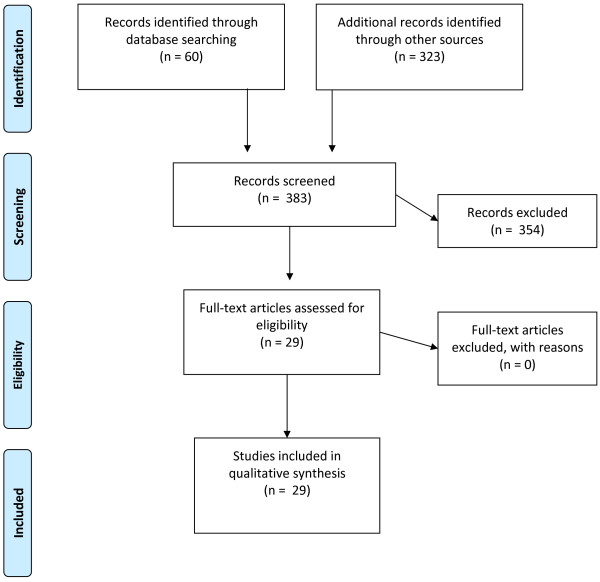
BACKGROUND: There is a well-recognized need for greater use of theory to address research translational gaps. Normalization Process Theory (NPT) provides a set of sociological tools to understand and explain the social processes through which new or modified practices of thinking, enacting, and organizing work are implemented, embedded, and integrated in healthcare and other organizational settings. This review of NPT offers readers the opportunity to observe how, and in what areas, a particular theoretical approach to implementation is being used. In this article we review the literature on NPT in order to understand what interventions NPT is being used to analyze, how NPT is being operationalized, and the reported benefits, if any, of using NPT. METHODS: Using a framework analysis approach, we conducted a qualitative systematic review of peer-reviewed literature using NPT. We searched 12 electronic databases and all citations linked to six key NPT development papers. Grey literature/unpublished studies were not sought. Limitations of English language, healthcare setting and year of publication 2006 to June 2012 were set. RESULTS: Twenty-nine articles met the inclusion criteria; in the main, NPT is being applied to qualitatively analyze a diverse range of complex interventions, many beyond its original field of e-health and telehealth. The NPT constructs have high stability across settings and, notwithstanding challenges in applying NPT in terms of managing overlaps between constructs, there is evidence that it is a beneficial heuristic device to explain and guide implementation processes. CONCLUSIONS: NPT offers a generalizable framework that can be applied across contexts with opportunities for incremental knowledge gain over time and an explicit framework for analysis, which can explain and potentially shape implementation processes. This is the first review of NPT in use and it generates an impetus for further and extended use of NPT. We recommend that in future NPT research, authors should explicate their rationale for choosing NPT as their theoretical framework and, where possible, involve multiple stakeholders including service users to enable analysis of implementation from a range of perspectives.
Overview
The claims and statistics of this paper haven’t been checked yet.
Free: it reads the open-access text and checks the first 5 claims that cite a source we can check. Create a free account to check every claim.
Integrity signals
Registry
Cites
Statistics
Figures
Verification
Claims the paper makes
The claims and statistics of this paper haven’t been checked yet.
Free: it reads the open-access text and checks the first 5 claims that cite a source we can check. Create a free account to check every claim.
Claims other papers make about this one
Each is checked against this paper’s own text: does it say what the citing paper says it does?
The source backs part of the claim, not all of it — or backs it for a different population, condition or comparison.
In the citing paper
“Although evaluation frameworks may be considered in a category of their own, theories, models and frameworks from the other four categories can also be applied for evaluation purposes because they specify concepts and constructs that may be operationalized and measured.”
From Making sense of implementation theories, models and frameworks (2015) · cites this paper as [129]
Experimental — accuracy not yet measuredThe source backs part of the claim, not all of it — or backs it for a different population, condition or comparison.
In the citing paper
“McEvoy et al. [17] pointed to the ways that early studies using NPT did little work to justify the choice of theory, called for the prospective application of NPT to data analysis and collection and stressed the importance of moving beyond single stakeholder perspectives.”
From Using Normalization Process Theory in feasibility studies and process evaluations of complex healthcare interventions: a systematic review (2018) · cites this paper as [17]
Experimental — accuracy not yet measuredThe cited source says what the claim attributes to it.
In the citing paper
“For instance, Theoretical Domains Framework (e.g. [127,128]), and Normalization Process Theory [129] and COM-B (e.g. [130,131]) have all been widely used as evaluation frameworks.”
From Making sense of implementation theories, models and frameworks (2015) · cites this paper as [129]
The cited source says what the claim attributes to it.
In the citing paper
“McEvoy et al. [17] pointed to the ways that early studies using NPT did little work to justify the choice of theory, called for the prospective application of NPT to data analysis and collection and stressed the importance of moving beyond single stakeholder perspectives.”
From Using Normalization Process Theory in feasibility studies and process evaluations of complex healthcare interventions: a systematic review (2018) · cites this paper as [17]
The cited source says what the claim attributes to it.
In the citing paper
“A review by McEvoy et al. [17], published in 2014, provided a qualitative synthesis of 29 early and heterogeneous studies in which NPT was used.”
From Using Normalization Process Theory in feasibility studies and process evaluations of complex healthcare interventions: a systematic review (2018) · cites this paper as [17]
5 more claims about this paper
Create a free account to see every claim other papers make about this one.
Self-check
Percentages, sums and reported differences re-computed from the paper’s own numbers.
The self-check needs the paper’s full text.
Citations
Cites
The theory of planned behavior
Ajzen, I. (1991) · Organizational Behavior and Human Decision Processes · doi:10.1016/0749-5978(91)90020-t · Cited by 90,587
Liberati, A., Altman, D. G., Tetzlaff, J., Mulrow, C., Gøtzsche, P. C., Ioannidis, J. P. A., Clarke, M., Devereaux, P. J., Kleijnen, J., & Moher, D. (2009) · PLoS Medicine · doi:10.1371/journal.pmed.1000100 · Cited by 28,164
Communities of Practice: Learning, Meaning, and Identity
Wenger, E. (1998) · doi:10.1017/cbo9780511803932 · Cited by 23,500
Liberati, A., Altman, D. G., Tetzlaff, J., Mulrow, C., Gotzsche, P. C., Ioannidis, J. P. A., Clarke, M., Devereaux, P. J., Kleijnen, J., & Moher, D. (2009) · BMJ · doi:10.1136/bmj.b2700 · Cited by 17,648
Reassembling the Social: An Introduction to Actor-Network-Theory
Latour, B. (2005) · doi:10.1093/oso/9780199256044.001.0001 · Cited by 16,778
Qualitative research in health care: Analysing qualitative data
Pope, C. (2000) · BMJ · doi:10.1136/bmj.320.7227.114 · Cited by 8,131
Reassembling the social: An introduction to actor‐network‐theory
Turnbull, J. (2008) · New Zealand Geographer · doi:10.1111/j.1745-7939.2008.00151_4.x · Cited by 7,617
Diffusion of Innovations in Service Organizations: Systematic Review and Recommendations
GREENHALGH, T., ROBERT, G., MACFARLANE, F., BATE, P., & KYRIAKIDOU, O. (2004) · The Milbank Quarterly · doi:10.1111/j.0887-378x.2004.00325.x · Cited by 7,448
Qualitative data analysis for applied policy research
(2002) · Analyzing Qualitative Data · doi:10.4324/9780203413081-14 · Cited by 4,964 · cited 1×
“, the four NPT constructs), we adopted a framework analysis approach [26].”
Qualitative data analysis for applied policy research
Ritchie, J., & Spencer, L. (2010) · Analyzing qualitative data · doi:10.4324/9780203413081_chapter_9 · Cited by 4,800
Cited by
Making sense of implementation theories, models and frameworks
Nilsen, P. (2015) · Implementation Science · doi:10.1186/s13012-015-0242-0 · Cited by 4,447
A systematic review of the use of the Consolidated Framework for Implementation Research
Kirk, M. A., Kelley, C., Yankey, N., Birken, S. A., Abadie, B., & Damschroder, L. (2015) · Implementation Science · doi:10.1186/s13012-016-0437-z · Cited by 1,496
May, C. R., Cummings, A., Girling, M., Bracher, M., Mair, F. S., May, C. M., Murray, E., Myall, M., Rapley, T., & Finch, T. (2018) · Implementation Science · doi:10.1186/s13012-018-0758-1 · Cited by 683
“’s [17] review of NPT studies, we found that authors were justifying their choice of theory, and NPT was more frequently embedded in study protocols and thus being operationalised prospectively.”
BackgroundInfluentialSelf-citationUsing the Knowledge to Action Framework in practice: a citation analysis and systematic review
Field, B., Booth, A., Ilott, I., & Gerrish, K. (2014) · Implementation Science · doi:10.1186/s13012-014-0172-2 · Cited by 454
“Conventional views support the use of theories, models and conceptual frameworks to underpin the process of change, yet in practice, their application seems more limited [40,43-45].”
InfluentialFinch, T. L., Girling, M., May, C. R., Mair, F. S., Murray, E., Treweek, S., McColl, E., Steen, I. N., Cook, C., Vernazza, C. R., et al. (2018) · BMC Medical Research Methodology · doi:10.1186/s12874-018-0591-x · Cited by 337
Self-citationAl Maghaireh, D. F., Abdullah, K. L., Chan, C. M., Piaw, C. Y., & Al Kawafha, M. M. (2016) · Journal of Clinical Nursing · doi:10.1111/jocn.13259 · Cited by 328
Lund, S., Richardson, A., & May, C. (2015) · PLOS ONE · doi:10.1371/journal.pone.0116629 · Cited by 325
“Normalization Process Theory (NPT) [9,10] is a formal grounded theory that characterizes a set of mechanisms that have been empirically demonstrated to be important to the behaviour of clinicians [11,12] and patients [13,14].”
BackgroundMaking Sense of Implementation Theories, Models, and Frameworks
Nilsen, P. (2020) · Implementation Science 3.0 · doi:10.1007/978-3-030-03874-8_3 · Cited by 322
May, C. R., Albers, B., Bracher, M., Finch, T. L., Gilbert, A., Girling, M., Greenwood, K., MacFarlane, A., Mair, F. S., May, C. M., et al. (2022) · Implementation Science · doi:10.1186/s13012-022-01191-x · Cited by 234
Self-citationLennon, M. R., Bouamrane, M.-M., Devlin, A. M., O'Connor, S., O'Donnell, C., Chetty, U., Agbakoba, R., Bikker, A., Grieve, E., Finch, T., et al. (2017) · Journal of Medical Internet Research · doi:10.2196/jmir.6900 · Cited by 264
“Qualitative data analysis was informed by a framework approach [35], using a coding frame informed by NPT [23].”
InfluentialSelf-citationInnovations in framework synthesis as a systematic review method
Brunton, G., Oliver, S., & Thomas, J. (2020) · Research Synthesis Methods · doi:10.1002/jrsm.1399 · Cited by 222
Lynch, E. A., Mudge, A., Knowles, S., Kitson, A. L., Hunter, S. C., & Harvey, G. (2018) · BMC Health Services Research · doi:10.1186/s12913-018-3671-z · Cited by 220
Mathieson, A., Grande, G., & Luker, K. (2019) · Primary Health Care Research & Development · doi:10.1017/s1463423618000488 · Cited by 176
Gotlib Conn, L., McKenzie, M., Pearsall, E. A., & McLeod, R. S. (2015) · Implementation Science · doi:10.1186/s13012-015-0289-y · Cited by 196
Porter, A., Kingston, M. R., Evans, B. A., Hutchings, H., Whitman, S., & Snooks, H. (2016) · BMC Family Practice · doi:10.1186/s12875-015-0398-3 · Cited by 193
Rapley, T., Girling, M., Mair, F. S., Murray, E., Treweek, S., McColl, E., Steen, I. N., May, C. R., & Finch, T. L. (2018) · BMC Medical Research Methodology · doi:10.1186/s12874-018-0590-y · Cited by 193
Self-citationOverbeck, G., Davidsen, A. S., & Kousgaard, M. B. (2016) · Implementation Science · doi:10.1186/s13012-016-0519-y · Cited by 152
Huddlestone, L., Turner, J., Eborall, H., Hudson, N., Davies, M. J., & Martin, G. P. (2020) · BMC Family Practice · doi:10.1186/s12875-020-01107-y · Cited by 170
Ross, J., Stevenson, F., Dack, C., Pal, K., May, C., Michie, S., Barnard, M., & Murray, E. (2018) · BMC Health Services Research · doi:10.1186/s12913-018-3615-7 · Cited by 144
O’Reilly, P., Lee, S. H., O’Sullivan, M., Cullen, W., Kennedy, C. M., & MacFarlane, A. E. (2017) · PLoS ONE · doi:10.1371/journal.pone.0177026 · Cited by 170
Self-citationHooker, L., Small, R., Humphreys, C., Hegarty, K., & Taft, A. (2015) · Implementation Science · doi:10.1186/s13012-015-0230-4 · Cited by 132
“We chose to expand the components of this construct in the analysis, as it pragmatically describes the enactment of the work and has been the most widely used aspect of the theory [22].”
BackgroundMethodRoudsari, R. L., Sharifi, F., & Goudarzi, F. (2023) · BMC Public Health · doi:10.1186/s12889-023-15692-x · Cited by 127
Hall, A., Wilson, C. B., Stanmore, E., & Todd, C. (2017) · International Journal of Nursing Studies · doi:10.1016/j.ijnurstu.2017.04.008 · Cited by 103
Herbert, G., Sutton, E. J., Burden, S. T., Lewis, S. J., Thomas, S. J., Ness, A., & Atkinson, C. (2017) · BMC Health Services Research · doi:10.1186/s12913-017-2547-y · Cited by 122
Higgins, A., Downes, C., Monahan, M., Gill, A., Lamb, S. A., & Carroll, M. (2018) · Journal of Clinical Nursing · doi:10.1111/jocn.14252 · Cited by 114
Connell, L. A., McMahon, N. E., Harris, J. E., Watkins, C. L., & Eng, J. J. (2014) · Implementation Science · doi:10.1186/s13012-014-0090-3 · Cited by 99
Tierney, E., McEvoy, R., Brún, M. O.-D., de Brún, T., Okonkwo, E., Rooney, M., Dowrick, C. F., Rogers, A. E., & MacFarlane, A. E. (2014) · Health Expectations · doi:10.1111/hex.12237 · Cited by 96
Self-citationVis, C., Ruwaard, J., Finch, T. L., Rapley, T., Beurs, D. P. D., van Stel, H. F., van Lettow, B., Mol, M., Kleiboer, A. M., Riper, H. M., et al. (2019) · Journal of Medical Internet Research · doi:10.2196/12376 · Cited by 90
Understanding the impact of accreditation on quality in healthcare: A grounded theory approach
Desveaux, L., Mitchell, J. I., Shaw, J., & Ivers, N. M. (2017) · International Journal for Quality in Health Care · doi:10.1093/intqhc/mzx136 · Cited by 104
Coupe, N., Anderson, E., Gask, L., Sykes, P., Richards, D. A., & Chew-Graham, C. (2014) · BMC Family Practice · doi:10.1186/1471-2296-15-78 · Cited by 74
D’Lima, D., Soukup, T., & Hull, L. (2022) · Frontiers in Public Health · doi:10.3389/fpubh.2021.755738 · Cited by 87
Elf, M., Nordmark, S., Lyhagen, J., Lindberg, I., Finch, T. L., & Åberg, A. C. (2018) · Implementation Science · doi:10.1186/s13012-018-0835-5 · Cited by 81
Nadav, J., Kaihlanen, A., Kujala, S., Laukka, E., Hilama, P., Koivisto, J., Keskimäki, I., & Heponiemi, T. (2021) · Journal of Medical Internet Research · doi:10.2196/31668 · Cited by 94
Mork, P. J., Bach, K., & SelfBACK Consortium (2018) · JMIR Research Protocols · doi:10.2196/resprot.9379 · Cited by 67
Ibrahim, K., May, C. R., Patel, H. P., Baxter, M. A., Sayer, A. A., & Roberts, H. C. (2018) · BMC Geriatrics · doi:10.1186/s12877-018-0768-5 · Cited by 74
Kaler, J., & Ruston, A. (2019) · Preventive Veterinary Medicine · doi:10.1016/j.prevetmed.2019.104715 · Cited by 69
The Implementation of Internet Interventions for Depression: A Scoping Review
Drozd, F., Vaskinn, L., Bergsund, H. B., Haga, S. M., Slinning, K., & Bjørkli, C. A. (2016) · Journal of Medical Internet Research · doi:10.2196/jmir.5670 · Cited by 61
Røsstad, T., Garåsen, H., Steinsbekk, A., Håland, E., Kristoffersen, L., & Grimsmo, A. (2015) · BMC Health Services Research · doi:10.1186/s12913-015-0751-1 · Cited by 76
Jeffries, M., Keers, R. N., Phipps, D. L., Williams, R., Brown, B. C., Avery, A. J., Peek, N. B., & Ashcroft, D. M. (2018) · PLoS ONE · doi:10.1371/journal.pone.0205419 · Cited by 66
McNaughton, R. J., Steven, A., & Shucksmith, J. (2019) · Qualitative Health Research · doi:10.1177/1049732319863420 · Cited by 69
Mareeuw, F. A. V. D. D., Vaandrager, L., Klerkx, L., Naaldenberg, J., & Koelen, M. A. (2015) · BMC Public Health · doi:10.1186/s12889-015-2271-7 · Cited by 68
McEvoy, R., Tierney, E., & MacFarlane, A. E. (2019) · BMC Health Services Research · doi:10.1186/s12913-019-4331-7 · Cited by 66
Self-citationThe implementation of medical revalidation: an assessment using normalisation process theory
Tazzyman, A., Ferguson, J., Hillier, C., Boyd, A., Tredinnick-Rowe, J., Archer, J., de Bere, S. R., & Walshe, K. (2017) · BMC Health Services Research · doi:10.1186/s12913-017-2710-5 · Cited by 60
Tsang, J. Y., Blakeman, T., Hegarty, J., Humphreys, J., & Harvey, G. (2015) · Implementation Science · doi:10.1186/s13012-016-0413-7 · Cited by 63
McCrorie, C., Benn, J., Johnson, O. A., & Scantlebury, A. (2019) · BMC Medical Informatics and Decision Making · doi:10.1186/s12911-019-0952-3 · Cited by 67
Taylor, J., Coates, E., Wessels, B., Mountain, G., & Hawley, M. S. (2015) · BMC Health Services Research · doi:10.1186/s12913-015-1195-3 · Cited by 48
the members of the Guidelines International Network Implementation Working Group, Vernooij, R. W. M., Willson, M. L., & Gagliardi, A. R. (2015) · Implementation Science · doi:10.1186/s13012-016-0419-1 · Cited by 70
Gillespie, B. M., Harbeck, E., Lavin, J., Gardiner, T. M., Withers, T. K., & Marshall, A. P. (2018) · BMC Health Services Research · doi:10.1186/s12913-018-2973-5 · Cited by 59
Ross, J., Stevenson, F. A., Dack, C., Pal, K., May, C. R., Michie, S., Yardley, L., & Murray, E. (2019) · BMJ Open · doi:10.1136/bmjopen-2019-029961 · Cited by 57
de Brún, T., Brún, M. O.-D., O’Donnell, C. A., & MacFarlane, A. E. (2016) · BMC Health Services Research · doi:10.1186/s12913-016-1587-z · Cited by 66
Self-citationSutton, E. J., Herbert, G., Burden, S. T., Lewis, S. J., Thomas, S. J., Ness, A., & Atkinson, C. (2018) · PLoS ONE · doi:10.1371/journal.pone.0195890 · Cited by 55
Overview of theories, models and frameworks in implementation science
Nilsen, P. (2020) · Edward Elgar Publishing eBooks · doi:10.4337/9781788975995.00008 · Cited by 75
Robinson, C., & Damschroder, L. J. (2023) · Implementation Science Communications · doi:10.1186/s43058-022-00380-5 · Cited by 58
the CAREDEM team, Bamford, C., Poole, M., Brittain, K., Chew-Graham, C., Fox, C., Iliffe, S., Manthorpe, J., & Robinson, L. (2014) · BMC Health Services Research · doi:10.1186/s12913-014-0549-6 · Cited by 53
Shulver, W., Killington, M., & Crotty, M. (2016) · BMC Medical Informatics and Decision Making · doi:10.1186/s12911-016-0373-5 · Cited by 50
May, C. R., Finch, T. L., & Rapley, T. (2020) · Edward Elgar Publishing eBooks · doi:10.4337/9781788975995.00013 · Cited by 52
Jones, C. H. D., Glogowska, M., Locock, L., & Lasserson, D. S. (2016) · BMC Health Services Research · doi:10.1186/s12913-016-1834-3 · Cited by 49
“Further research planned by the authors will explore patients’ experiences in this unit in detail, since the perspectives of all stakeholders are important when analysing implementation of new practices [17].”
BackgroundAraujo, G. D. T. T., Peralta-Mamani, M., Moraes-da-Silva, A. D. F., Rubira, C. M. F., Honório, H. M., & Rubira‐Bullen, I. R. F. (2019) · International Journal of Oral and Maxillofacial Surgery · doi:10.1016/j.ijom.2019.04.003 · Cited by 48
Hooker, L., Small, R., & Taft, A. (2016) · Journal of Advanced Nursing · doi:10.1111/jan.12851 · Cited by 47
Scientometrics Recent Advances
Kunosić, S., & Zerem, E. (2019) · IntechOpen eBooks · doi:10.5772/intechopen.77450 · Cited by 47
Segrott, J., Murphy, S., Rothwell, H., Scourfield, J., Foxcroft, D., Gillespie, D., Holliday, J., Hood, K., Hurlow, C., Morgan‐Trimmer, S., et al. (2017) · SSM - Population Health · doi:10.1016/j.ssmph.2017.01.002 · Cited by 52
The REFReSH study group, Drew, S., Judge, A., May, C., Farmer, A., Cooper, C., Javaid, M. K., & Gooberman-Hill, R. (2015) · Implementation Science · doi:10.1186/s13012-015-0243-z · Cited by 43
Holtrop, J. S., Potworowski, G., Fitzpatrick, L., Kowalk, A., & Green, L. A. (2016) · BMC Health Services Research · doi:10.1186/s12913-016-1613-1 · Cited by 40
Qualitative Methods in Health Policy and Systems Research: A Framework for Study Planning
Fisher, M., & Hamer, M. K. (2020) · Qualitative Health Research · doi:10.1177/1049732320921143 · Cited by 49
Holmes, J. A., Logan, P., Morris, R. P. G., & Radford, K. (2020) · Systematic Reviews · doi:10.1186/s13643-020-01508-1 · Cited by 44
Myall, M., May, C. R., Grimmett, C., May, C., Calman, L. A., Richardson, A. M., & Foster, C. L. (2015) · BMC Medical Informatics and Decision Making · doi:10.1186/s12911-015-0214-y · Cited by 44
Waller, G., Finch, T. L., Giles, E. L., & Newbury‐Birch, D. (2017) · Implementation Science · doi:10.1186/s13012-017-0659-8 · Cited by 45
Parkes, T., Matheson, C., Carver, H., Foster, R., Budd, J., Liddell, D., Wallace, J., Pauly, B., Fotopoulou, M., Burley, A., et al. (2022) · Health Technology Assessment · doi:10.3310/wvvl4786 · Cited by 42
Palmer, V. J., Piper, D. A., Richard, L., Furler, J., Herrman, H., Cameron, J., Godbee, K., Pierce, D., Callander, R., Weavell, W., et al. (2016) · International Journal of Qualitative Methods · doi:10.1177/1609406916672216 · Cited by 40
Intimate Partner Violence and Intergenerational Trauma Among Indigenous Women
Hoffart, R., & Jones, N. A. (2017) · International Criminal Justice Review · doi:10.1177/1057567717719966 · Cited by 51
Knowles, S. E., Ercia, A., Caskey, F. J., Rees, M., Farrington, K., & van der Veer, S. N. (2021) · BMC Health Services Research · doi:10.1186/s12913-021-06702-y · Cited by 43
Remawi, B. N., Gadoud, A., & Preston, N. J. (2023) · BMC Palliative Care · doi:10.1186/s12904-023-01241-1 · Cited by 41
Bagot, K. L., Moloczij, N., Barclay, K., Vu, M. H., Bladin, C. F., & Cadilhac, D. A.-M. (2018) · Journal of Telemedicine and Telecare · doi:10.1177/1357633x18792380 · Cited by 42
Implementing a digital patient feedback system: an analysis using normalisation process theory
Ong, B. N., Hodgson, D. E., Small, N., Nahar, P., & Sanders, C. (2020) · BMC Health Services Research · doi:10.1186/s12913-020-05234-1 · Cited by 41
Howell, D., Powis, M., Kirkby, R. L., Amernic, H., Moody, L., Bryant‐Lukosius, D., O’Brien, M. A., Rask, S., & Krzyzanowska, M. K. (2021) · BMJ Quality & Safety · doi:10.1136/bmjqs-2020-012051 · Cited by 41
Kousgaard, M. B., Olesen, J. A., & Arnold, S. H. (2022) · BMC Geriatrics · doi:10.1186/s12877-022-02977-w · Cited by 38
Childs‐Fegredo, J., Burn, A., Duschinsky, R., Humphrey, A., Ford, T. J., Jones, P. B., & Howarth, E. (2020) · School Mental Health · doi:10.1007/s12310-020-09398-3 · Cited by 41
Perreault, G., & Hanusch, F. (2023) · Digital Journalism · doi:10.1080/21670811.2022.2152069 · Cited by 41
Williams, A., Lennox, L., Harris, M. J., & Antonacci, G. (2023) · Implementation Science · doi:10.1186/s13012-023-01311-1 · Cited by 40
Jung, S., Murthy, D., Bataineh, B. S., Loukas, A., & Wilkinson, A. V. (2024) · Journal of Medical Internet Research · doi:10.2196/55591 · Cited by 39
Extent and application of ICU diaries in Germany in 2014
Nydahl, P., Knueck, D., & Egerod, I. (2014) · Nursing in Critical Care · doi:10.1111/nicc.12143 · Cited by 36
Chambers, S., Boydell, N., Ford, A., & Eadie, D. R. (2020) · Food Policy · doi:10.1016/j.foodpol.2020.101936 · Cited by 36
Burau, V., Carstensen, K., Fredens, M., & Kousgaard, M. B. (2018) · BMC Health Services Research · doi:10.1186/s12913-018-2850-2 · Cited by 40
MacFarlane, A. E., Ogoro, M., de Freitas, C., Niranjan, V. R., Severoni, S., & Waagensen, E. (2021) · Tropical Medicine & International Health · doi:10.1111/tmi.13643 · Cited by 35
Self-citationGould, D. J., Hale, R., Waters, E., & Allen, D. A. (2016) · Journal of Hospital Infection · doi:10.1016/j.jhin.2016.09.015 · Cited by 33
Fulop, N., Ramsay, A. I. G., Hunter, R. M., McKevitt, C., Perry, C., Turner, S., Boaden, R., Papachristou, I., Rudd, A. G., Tyrrell, P. J., et al. (2019) · Health Services and Delivery Research · doi:10.3310/hsdr07070 · Cited by 38
Nordstoga, A. L., Bach, K., Sani, S., Wiratunga, N., Mork, P. J., Villumsen, M., & Cooper, K. (2020) · JMIR Rehabilitation and Assistive Technologies · doi:10.2196/18729 · Cited by 34
Duncanson, E., Bennett, P. N., Viecelli, A. K., Dansie, K. B., Handke, W. A., Tong, A., Palmer, S. C., Jesudason, S., McDonald, S. P., & Morton, R. L. (2020) · BMJ Open · doi:10.1136/bmjopen-2020-039014 · Cited by 33
A practitioner behaviour change intervention for deprescribing in the hospital setting
Scott, S., May, H. M., Patel, M., Wright, D. J., & Bhattacharya, D. (2020) · Age and Ageing · doi:10.1093/ageing/afaa169 · Cited by 36
Igwesi-Chidobe, C. N., Bishop, A., Humphreys, K., Hughes, E., Protheroe, J., Maddison, J., & Bartlam, B. (2020) · Physiotherapy · doi:10.1016/j.physio.2020.07.002 · Cited by 32
Watkinson, F., Dharmayat, K., & Mastellos, N. (2021) · BMC Health Services Research · doi:10.1186/s12913-021-06771-z · Cited by 35
Huda, M. N., Hailemariam, T. G., Hossain, S. Z., Malo, J. S., Khan, S., Hadisuyatmana, S., Ferdous, A., Akombi-Inyang, B. J., Islam, R. M., & Renzaho, A. M. N. (2022) · BMJ Open · doi:10.1136/bmjopen-2021-056037 · Cited by 33
Peralta-Mamani, M., Terrero-Pérez, Á., Tucunduva, R. M. A., Rubira, C. M. F., Santos, P. S. D. S., Honório, H. M., & Rubira‐Bullen, I. R. F. (2022) · Archives of Oral Biology · doi:10.1016/j.archoralbio.2022.105544 · Cited by 32
Miuli, A., Stigliano, G., Lalli, A., Coladonato, M., D’Angelo, L., Esposito, F., Cappello, C., Pettorruso, M., Martinotti, G., Schifano, F., et al. (2020) · Journal of Psychoactive Drugs · doi:10.1080/02791072.2020.1797250 · Cited by 36
Barriers and facilitators to reducing anticholinergic burden: a qualitative systematic review
Stewart, C., Gallacher, K., Nakham, A., Cruickshank, M., Newlands, R. S. N., Bond, C. M., Myint, P. K., Bhattacharya, D., & Mair, F. S. (2021) · International Journal of Clinical Pharmacy · doi:10.1007/s11096-021-01293-4 · Cited by 31
Self-citationGibson, J., Lightbody, E., McLoughlin, A., McAdam, J., Gibson, A., Day, E., Fitzgerald, J., May, C., Price, C., Emsley, H., et al. (2016) · Health Expectations · doi:10.1111/hex.12333 · Cited by 25
Viecelli, A. K., Duncanson, E., Bennett, P. N., D’Antoine, M., Dansie, K. B., Handke, W. A., Tong, A., Palmer, S. C., Jesudason, S., McDonald, S. P., et al. (2022) · American Journal of Kidney Diseases · doi:10.1053/j.ajkd.2021.12.007 · Cited by 30
Translating healthcare research evidence into practice: The role of linked boundary objects
Melo, S., & Bishop, S. (2019) · Social Science & Medicine · doi:10.1016/j.socscimed.2019.112731 · Cited by 33
Parkes, T., Matheson, C., Carver, H., Budd, J., Liddell, D., Wallace, J., Pauly, B., Fotopoulou, M., Burley, A., Anderson, I., et al. (2019) · Pilot and Feasibility Studies · doi:10.1186/s40814-019-0447-0 · Cited by 30
Hunter, P. V., Thorpe, L., Hounjet, C. D., & Hadjistavropoulos, T. (2018) · The Gerontologist · doi:10.1093/geront/gny103 · Cited by 29
Metadata
- Authors
- McEvoy, R., Ballini, L., Maltoni, S., O’Donnell, C. A., Mair, F. S., & MacFarlane, A.
- Affiliations
- University of Limerick (IE)
- Agenzia Sanitaria e Sociale Regionale (IT)
- University of Glasgow (GB)
- Corresponding author
- McEvoy, Rachel
- ORCID
- Venue
- Implementation Science
- Published
- 2014-01-02
- Volume
- 9
- Issue
- 1
- Pages
- 2-2
- ISSN
- 1748-5908 (ISSN-L)
- PMC
- PMC3905960
- OpenAlex
- W2107174149
- Cited by
- 413
- References
- 69
- Citations by year
- 2026: 24 · 2025: 30 · 2024: 60 · 2023: 36 · 2022: 38 · 2021: 40 · 2020: 45 · 2019: 28 · 2018: 35 · 2017: 22 · 2016: 25 · 2015: 19 · 2014: 11
- FWCI
- 4.37
- Type
- journal article
- Language
- en
- Open access
- gold
- doi.org
- Licence
- Locations
- Implementation Science (publishedVersion, cc-by)
- Europe PMC (PubMed Central) (publishedVersion, cc-by)
- PubMed Central (publishedVersion, cc-by)
- PubMed (publishedVersion)
- ENLIGHTEN (Jurnal Bimbingan dan Konseling Islam) (acceptedVersion)
- University of Limerick Institutional Repository (University of Limerick) (acceptedVersion, other-oa)
- Arrow@dit (Dublin Institute of Technology) (submittedVersion, cc-by-nc-sa)
- Lenus, The Irish Health Repository (Dr Steevens Hospital Library) (submittedVersion)
- Topics
- Health Sciences › Health Professions › General Health Professions › Health Policy Implementation Science
- Health Sciences › Health Professions › General Health Professions › Health Sciences Research and Education
- Health Sciences › Medicine › Public Health, Environmental and Occupational Health › Clinical practice guidelines implementation
- Keywords
- Normalization Process Theory, implementation research, implementation theory, complex interventions, healthcare implementation, e-health, telemedicine, stakeholder engagement
- MeSH terms
- Health Services Administration, Health Services Research, Humans, Models, Theoretical, Practice Patterns, Physicians', Systems Theory, Policy
About these checks
Registry, retraction, Cites and statistics results are computed, not judged, with one exception: a printed reference that no index lists is read once by a model before it counts as a citation error. Claims are extracted by a model and kept only when their quote appears verbatim in the text; each cited source is then checked, with a model’s help, for whether it says what the claim relies on. Those verdicts can be wrong — read the claim’s quote and the cited source before relying on one.
Statistics and arithmetic are recomputed, not judged.
Confidence bands are shown only for fields calibrated on our annotated test set. None is calibrated yet, so no band is shown.
What counts as a claim ›How we measure confidence ›How we check this ›
Are you an author, or do you see a problem with this page? Request a review
Data sources
Bibliographic data: Semantic Scholar, OpenAlex, Crossref.
Contains information from the Semantic Scholar Academic Graph Datasets, made available under the ODC Attribution License (ODC-BY 1.0).
Semantic Scholar’s data is described in: Kinney, R., et al. (2023). The Semantic Scholar Open Data Platform. arXiv:2301.10140.
