

Adaptive design methods in clinical trials–a review
Open accessThe DOI matches its Crossref record; 59 of the 60 references it cites were found in a registry or an index.
Abstract
In recent years, the use of adaptive design methods in clinical research and development based on accrued data has become very popular due to its flexibility and efficiency. Based on adaptations applied, adaptive designs can be classified into three categories: prospective, concurrent (ad hoc), and retrospective adaptive designs. An adaptive design allows modifications made to trial and/or statistical procedures of ongoing clinical trials. However, it is a concern that the actual patient population after the adaptations could deviate from the originally target patient population and consequently the overall type I error (to erroneously claim efficacy for an infective drug) rate may not be controlled. In addition, major adaptations of trial and/or statistical procedures of on-going trials may result in a totally different trial that is unable to address the scientific/medical questions the trial intends to answer. In this article, several commonly considered adaptive designs in clinical trials are reviewed. Impacts of ad hoc adaptations (protocol amendments), challenges in by design (prospective) adaptations, and obstacles of retrospective adaptations are described. Strategies for the use of adaptive design in clinical development of rare diseases are discussed. Some examples concerning the development of Velcade intended for multiple myeloma and non-Hodgkin's lymphoma are given. Practical issues that are commonly encountered when implementing adaptive design methods in clinical trials are also discussed.
Overview
The claims and statistics of this paper haven’t been checked yet.
Free: it reads the open-access text and checks the first 5 claims that cite a source we can check. Create a free account to check every claim.
Integrity signals
Registry
Cites
Statistics
Figures
Verification
Claims the paper makes
The claims and statistics of this paper haven’t been checked yet.
Free: it reads the open-access text and checks the first 5 claims that cite a source we can check. Create a free account to check every claim.
Claims other papers make about this one
Each is checked against this paper’s own text: does it say what the citing paper says it does?
The cited source says what the claim attributes to it.
In the citing paper
“This flexibility can improve the efficiency of trials, potentially saving time and resources, and can lead to more ethical studies by minimizing patient exposure to less effective treatments [23].”
From The Work-life Check-ins randomized controlled trial: a leader-based adaptive, semi-structured burnout intervention in primary care clinics (2024) · cites this paper as [23]
Self-check
Percentages, sums and reported differences re-computed from the paper’s own numbers.
The self-check needs the paper’s full text.
Citations
Cites
Continual Reassessment Method: A Practical Design for Phase 1 Clinical Trials in Cancer
O'Quigley, J., Pepe, M., & Fisher, L. (1990) · Biometrics · doi:10.2307/2531628 · Cited by 1,577 · cited 1×
“For adaptive dose finding design, the method of continual re-assessment method (CRM) in conjunction with Bayesian approach is usually considered [34-36].”
Group Sequential Methods with Applications to Clinical Trials
Jennison, C., & Turnbull, B. W. (1999) · Chapman & Hall/CRC eBooks · doi:10.1201/9780367805326 · Cited by 1,336 · cited 3×
“Various stopping boundaries based on different boundary functions for controlling an overall type I error rate are available in the literature (see, e.g., Lan and DeMets, 1987; Wang and Tsiatis, 1987; Rosenberger et al., 2001; Jennison and Turnbull, 2000, 2005; Chow and Chang, 2006).”
Forcing a sequential experiment to be balanced
EFRON, B. (1971) · Biometrika · doi:10.1093/biomet/58.3.403 · Cited by 873 · cited 2×
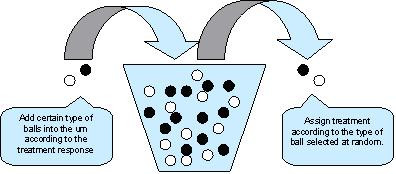
“Commonly applied adaptive randomization procedures include treatment-adaptive randomization [3,4], covariate-adaptive randomization, and response-adaptive randomization [5,6].”
Adaptive Sample Size Calculations in Group Sequential Trials
Lehmacher, W., & Wassmer, G. (1999) · Biometrics · doi:10.1111/j.0006-341x.1999.01286.x · Cited by 598 · cited 2×
“In recent years, the concept of two-stage adaptive design has led to the development of the adaptive group sequential design (e.g., Cui, Hung, and Wang, 1999; Posch and Bauer, 1999; Lehmacher and Wassmer, 1999; Liu, Proschan, and Pledger, 2002).”
Modification of Sample Size in Group Sequential Clinical Trials
Cui, L., Hung, H. M. J., & Wang, S. (1999) · Biometrics · doi:10.1111/j.0006-341x.1999.00853.x · Cited by 574
Designed Extension of Studies Based on Conditional Power
Proschan, M. A., & Hunsberger, S. A. (1995) · Biometrics · doi:10.2307/2533262 · Cited by 534
Continual Reassessment Method: A Likelihood Approach
O'Quigley, J., & Shen, L. Z. (1996) · Biometrics · doi:10.2307/2532905 · Cited by 382 · cited 1×
“For adaptive dose finding design, the method of continual re-assessment method (CRM) in conjunction with Bayesian approach is usually considered [34-36].”
Approximately Optimal One-Parameter Boundaries for Group Sequential Trials
Wang, S. K., & Tsiatis, A. A. (1987) · Biometrics · doi:10.2307/2531959 · Cited by 341 · cited 1×
“Various stopping boundaries based on different boundary functions for controlling an overall type I error rate are available in the literature (see, e.g., Lan and DeMets, 1987; Wang and Tsiatis, 1987; Rosenberger et al., 2001; Jennison and Turnbull, 2000, 2005; Chow and Chang, 2006).”
Adaptive Designs in Clinical Drug Development—An Executive Summary of the PhRMA Working Group
Gallo, P., Chuang-Stein, C., Dragalin, V., Gaydos, B., Krams, M., & Pinheiro, J. (2006) · Journal of Biopharmaceutical Statistics · doi:10.1080/10543400600614742 · Cited by 323
The Evaluation of Surrogate Endpoints
(2005) · Statistics for Biology and Health · doi:10.1007/b138566 · Cited by 310
Research works printed but not linked: 2
- Whitehead J Bayesian decision procedures with application to dose-finding studies International Journal of Pharmaceutical Medicine 1997 11 201 208
- Wang SJ Regulatory experience of adaptive designs in well-controlled clinical trials Presented at Adaptive Designs: Opportunities, Challenges and Scope in Drug Development, Washington, DC 2006
Cited by
Items 301–400 of 481
Emerging Trends in US Oncological Approvals: A 13-Year Review (1999–2011)
Huang, J., Zhang, W., Bowen, D. L., Tam, J. T., Wu, H., & Fung, M. (2012) · Drug Information Journal · doi:10.1177/0092861512441391 · Cited by 3
STATISTICAL CONSIDERATIONS FOR CLINICAL TRIALS IN RARE DISEASES
Alemayehu, D., Levenstein, M., & Knirsch, C. A. (2014) · Cited by 3
Exploratory trials in mental health: anything to learn from other disciplines?
Trelle, S. (2017) · Evidence-Based Mental Health · doi:10.1136/eb-2016-102581 · Cited by 3
A comparison between two treatments in a clinical trial with an ethical allocation design
Bandyopadhyay, U., & Das, R. (2017) · Journal of Statistical Computation and Simulation · doi:10.1080/00949655.2017.1367394 · Cited by 3
Mentzelopoulos, S. D., Vrettou, C. S., & Sprung, C. L. (2021) · Resuscitation · doi:10.1016/j.resuscitation.2021.09.007 · Cited by 4
Adaptive Design Across Stages of Therapeutic Development
Coffey, C. S. (2012) · Cambridge University Press eBooks · doi:10.1017/cbo9781139032445.010 · Cited by 6
Complementary Strengths of Health Psychology and Positive Psychology
Salsman, J. M., & Moskowitz, J. T. (2015) · Wiley eBooks · doi:10.1002/9781118996874.ch24 · Cited by 3
Commentary: Arguing for Adaptive Clinical Trials in Sepsis
Kesselmeier, M., & Scherag, A. (2018) · Frontiers in Immunology · doi:10.3389/fimmu.2018.02507 · Cited by 4
Felice, F. D., Musio, D., Tombolini, V., & Cortesi, E. (2019) · International Journal of Colorectal Disease · doi:10.1007/s00384-019-03364-5 · Cited by 3
Brown, A. R., Gajewski, B. J., Mudaranthakam, D. P., Pasnoor, M., Dimachkie, M. M., Jawdat, O., Herbelin, L. L., Mayo, M. S., & Barohn, R. J. (2023) · Contemporary Clinical Trials Communications · doi:10.1016/j.conctc.2023.101220 · Cited by 2
“Adaptive trial designs, unlike fixed trial designs, allow scheduled reviews of the accumulating data while the trial is ongoing for pre-specified changes to flexible components of the trial without under-mining its integrity or validity [1 – 3].”
BackgroundFleming, S., Mwandigha, L., & Fanshawe, T. R. (2024) · Diagnostic and Prognostic Research · doi:10.1186/s41512-024-00174-4 · Cited by 2
“…for futility or efficacy generally requires a stronger level of evidence that would be used at the planned end of the study, so as to be confident further data would be unlikely to change interpretation of the study results and to ensure the type I error rate is correctly controlled [8].”
BackgroundCiprofol pharmacology and dosing in various populations
Jiang, T., Miao, M., Huang, J., Li, Y., Han, Y., Jiang, L., Chang, E., Yang, Y., Mao, T., Li, W., et al. (2025) · Expert Opinion on Pharmacotherapy · doi:10.1080/14656566.2025.2608080 · Cited by 2
Replicable Bandits for Digital Health Interventions
Zhang, K. W., Closser, N., Trella, A. L., & Murphy, S. A. (2025) · Statistical Science · doi:10.1214/25-sts1017 · Cited by 18
“There is a long history of works on adaptive experimentation in the biostatistics literature [8, 12–14, 27, 32, 36, 59, 71, 94].”
Vain, N. E. (2013) · Archivos Argentinos de Pediatria · doi:10.5546/aap.2013.372 · Cited by 2
Adaptive designs in clinical research
Ossorio, F. (2013) · Archivos Argentinos de Pediatria · doi:10.5546/aap.2013.374 · Cited by 1
Kaptein, M. C., van Emden, R., & Iannuzzi, D. (2017) · PLoS ONE · doi:10.1371/journal.pone.0174182 · Cited by 3
Tests and classification methods in adaptive designs with applications
Chen, D. Q., Mao, S., & Niu, X. (2022) · Journal of Applied Statistics · doi:10.1080/02664763.2022.2026898 · Cited by 5
“Chow and Chang [7] provided a review on adaptive design methods in clinical trials, and pointed out that the popularity of adaptive designs is mainly due to three reasons: (1) it reflects themedical practice in the real world; (2) it is ethical with respect to both efficacy and safety (toxicity) of the test treatments…”
BackgroundNew Approaches in Translational Medicine for Phase I Clinical Trials of CNS Drugs
Macaluso, M., Krams, M., Savitz, J. B., Drevets, W. C., & Preskorn, S. (2019) · Handbook of behavioral neuroscience · doi:10.1016/b978-0-12-803161-2.00006-0 · Cited by 3
Phase I trials: from traditional to newer approaches
Macaluso, M., Krams, M., & Preskorn, S. (2012) · Cambridge University Press eBooks · doi:10.1017/cbo9780511977640.005 · Cited by 2
Shuffling Adaptive Clinical Trials
Gokhale, S. G., & Gokhale, S. (2013) · American Journal of Therapeutics · doi:10.1097/mjt.0b013e31827e978a · Cited by 2
A Bayesian multi-stage cost-effectiveness design for animal studies in stroke research
Cai, C. C., Ning, J., & Huang, X. (2016) · Statistical Methods in Medical Research · doi:10.1177/0962280216657853 · Cited by 2
Conduct of Stroke-Related Clinical Trials
Tilley, B. C., & Palesch, Y. Y. (2011) · Elsevier eBooks · doi:10.1016/b978-1-4160-5478-8.10060-0 · Cited by 2
Richman, J., & Boughey, J. C. (2017) · Springer eBooks · doi:10.1007/978-3-319-53877-8_11 · Cited by 2
Orphan Drugs: Neue Möglichkeiten zur Behandlung seltener Erkrankungen
Beck, M. (2016) · Der Internist · doi:10.1007/s00108-016-0114-y · Cited by 2
Statistics and Clinical Trials
Wu, W., & Sargent, D. J. (2012) · Elsevier eBooks · doi:10.1016/b978-1-4377-1637-5.00012-2 · Cited by 2
Chen, X., Lee, K. M., Villar, S. S., & Robertson, D. S. (2022) · PLoS ONE · doi:10.1371/journal.pone.0274272 · Cited by 5
“The use of bandit algorithms is thus increasingly being considered in the context of adaptive clinical trials [9], potentially in combination with other adaptive features such as early stopping or sample size re-estimation [10].”
Optimal Weighted Multiple-Testing Procedure for Clinical Trials
Hammouri, H., Alquran, M., Muhsen, R. A., & Altahat, J. (2022) · Mathematics · doi:10.3390/math10121996 · Cited by 2
Optimizing Rescheduling Intervals Through Using Multi-Armed Bandit Algorithms
Lin, F. O., Dewan, M. A. A., & Nguyen, M. (2018) · IEEE International Conference on Internet of Things (iThings) and IEEE Green Computing and Communications (GreenCom) and IEEE Cyber, Physical and Social Computing (CPSCom) and IEEE Smart Data (SmartData) · doi:10.1109/cybermatics_2018.2018.00148 · Cited by 2
“The MAB problem has been used in different applications such as in clinical trials [6], web searches [7], internet advertisement [8], and bidding in electronic commerce [9].”
MethodBritton, P. C., Conner, K. R., & Maisto, S. A. (2019) · Archives of Suicide Research · doi:10.1080/13811118.2019.1632232 · Cited by 2
The Quality of Quality Research
Simpson, L. (2011) · Archives of Pediatrics and Adolescent Medicine · doi:10.1001/archpediatrics.2011.53 · Cited by 2
Some ethical implications of "adaptive" trials.
Petrini, C. (2015) · PubMed · doi:10.7417/ct.2015.1860 · Cited by 2
Building Behavioral Experimentation Engines
Liu, Y.-E. (2015) · ResearchWorks at the University of Washington (University of Washington) · Cited by 3
The Promising Future for Complex Innovative Trial Design in Clinical Research
Sathian, B., van Teijlingen, E., Banerjee, I., Asim, M., & Kabir, R. (2023) · Nepal Journal of Epidemiology · doi:10.3126/nje.v13i1.53722 · Cited by 2
Changes in Research and Development of Medicinal Products since the Paediatric Regulation
Ceci, A., Catapano, M., Manfredi, C., Wong, I. C. K., Orlu, M., Meneguz, A., Baiardi, P., Pasqua, O. E. D., Iolascon, A., Scarpa, M., et al. (2011) · InTech eBooks · doi:10.5772/28797 · Cited by 2
“Reports show that it has been used for dose-finding studies, for phase III trials and for phase IV trials in which the method allows the saving of up to a half of the subjects required by the traditional design (Chow & Chang, 2008).”
MethodManchon, P., Belhadi, D., Mentré, F., & Laouenan, C. (2021) · BMC Medical Research Methodology · doi:10.1186/s12874-021-01287-w · Cited by 2
Formulation and device lifecycle management of biotherapeutics—decision architecture
Bittner, B., & Schmidt, J. F. M. (2022) · Elsevier eBooks · doi:10.1016/b978-0-12-823741-0.00003-8 · Cited by 1
Shah, A., & Vingan, P. S. (2023) · Elsevier eBooks · doi:10.1016/b978-0-323-91259-4.00079-5 · Cited by 1
A systematic survey of adaptive trials shows substantial improvement in methods is needed
Wang, Y., Yao, M., Liu, J., Liu, Y., Ma, Y., Luo, X., Mei, F., Xiang, H., Zou, K., Sun, X., et al. (2024) · Journal of Clinical Epidemiology · doi:10.1016/j.jclinepi.2024.111257 · Cited by 2
A Simulation Study on Adaptive Assignment Versus Randomizations in Clinical Trials
Lin, C., Li, Y., & Hong, Y.-J. (2024) · Mathematics · doi:10.3390/math13010044 · Cited by 1
“…into randomization and adaptive designs can be found in Berry and Eick [11], Rosenberger and Lachin [12], Hu and Rosenberger [13], Chow and Chang [14], Porcher et al. [15], Laage et al. [16], Bhatt and Mehta [17], Chang and Balser [18], Pallmann et al. [19], Kelly et al. [20], Thorlund et al.…”
Approaches to reduce the uncertainty in the clinical efficacy of orphan drugs
Omelyanovskiy, V. V., Kutsev, S. I., Мухортова, П. А., Kharitonova, A. G., Slabikova, A. A., Ignatyeva, N. V., Александровна, К. А., Teptsova, Т. S., & Bogdanova, V. O. (2025) · Kachestvennaya Klinicheskaya Praktika = Good Clinical Practice · doi:10.37489/2588-0519-2024-4-82-96 · Cited by 1
Multiplicity Control in Clinical Trials with Adaptive Selection Followed by Group-Sequential Testing
Hua, K., Wang, X., & Luo, X. (2026) · Statistics in Biopharmaceutical Research · doi:10.1080/19466315.2026.2634636 · Cited by 1
Translational Equation-Based Modeling
Clermont, G. (2013) · Springer eBooks · doi:10.1007/978-1-4614-8008-2_2 · Cited by 1
Development: Pharmacokinetics—Systems Biology in Health and Disease III
Prokop, A., & Michelson, S. (2012) · SpringerBriefs in pharmaceutical science & drug development · doi:10.1007/978-94-007-2849-3_7 · Cited by 1
Group sequential and adaptive designs: a novel, promising tool for nursing research
Baldi, I., Gouchon, S. M., Giulio, P. D., Buja, A., & Gregori, D. (2011) · Journal of Advanced Nursing · doi:10.1111/j.1365-2648.2011.05651.x · Cited by 1
Adaptive Designs: A True Panacea for the Common Clinical Trial?
Durkalski, V. (2012) · Annals of Emergency Medicine · doi:10.1016/j.annemergmed.2012.05.018 · Cited by 1
Early Phase Metabolic Research with Reference to Special Populations
Morrow, L., & Krentz, A. J. (2014) · Springer eBooks · doi:10.1007/978-1-4471-4920-0_9 · Cited by 1
Efficient Two-Stage Designs and Proper Inference for Animal Studies
Cai, C. C., Piao, J., Ning, J., & Huang, X. (2017) · Statistics in Biosciences · doi:10.1007/s12561-017-9212-1 · Cited by 1
Regulatory Perspectives - A Review of FDA Draft Guidance
Chow, S.-C., & Chang, M. (2011) · Chapman & Hall/CRC eBooks · doi:10.1201/b11505-19 · Cited by 1
Self-citationHickey, G. L., Parvu, V., Zhang, Y., Cooper, C. K., & Wan, Y. (2022) · Journal of Biopharmaceutical Statistics · doi:10.1080/10543406.2022.2080690 · Cited by 1
Miyagi, Y., Fujiwara, K., Nomura, H., Yamamoto, K., & Coleman, R. L. (2023) · British journal of healthcare and medical research · doi:10.14738/bjhmr.101.14061 · Cited by 1
Methodological Foundations of Clinical Research
Bacchieri, A., & Cioppa, G. D. (2023) · Health informatics · doi:10.1007/978-3-031-27173-1_3 · Cited by 1
Sample size determination for adaptive crossover trial in detecting gene-drug interactions
Chen, H. Y., & Darbar, D. (2023) · Statistical Methods in Medical Research · doi:10.1177/09622802231181704 · Cited by 1
“Then n1 = nrP(G = R), (13) n2 = n(1 − r)P(G = R), (14) n3 = nrP(G = W ), (15) n4 = n(1 − r)P(G = W ), (16)”
Landscape of Phase II Trials in Alzheimer’s Disease
Lee, A., Shan, D., Castle, D. J., Rajji, T. K., & Ma, C. (2023) · Journal of Alzheimer s Disease · doi:10.3233/jad-230660 · Cited by 2
“Adaptive designs in clinical research became more attractive to investigators with the aims of increase in flexibility and efficiency of trials [16].”
Peri-operative cardiac arrest and resuscitation
Chalkias, A. F., Mentzelopoulos, S. D., Tissier, R., & Mongardon, N. (2024) · European Journal of Anaesthesiology · doi:10.1097/eja.0000000000001944 · Cited by 1
Adaptive designs were primarily used but inadequately reported in early phase drug trials
Wang, Y., Yao, M., Liu, J., Liu, Y., Ma, Y., Luo, X., Mei, F., Xiang, H., Zou, K., Li, L., et al. (2024) · BMC Medical Research Methodology · doi:10.1186/s12874-024-02256-9 · Cited by 1
“Supporting documents could provide detailed information on adaptive designs, including the adaptive design type, statistical methods, and pre-planned decision-making criteria [29, 30], and these would increase the transparency and credibility of adaptive design trials.”
MethodYu, M., Man, R., Zhu, H., & Wang, L. (2024) · Communications in Statistics - Simulation and Computation · doi:10.1080/03610918.2024.2407889 · Cited by 1
“One such adaptive design is the seamless adaptive design, that combines phase 2 and phase 3 into a unified study design (Chow and Chang 2008; Bhatt and Mehta 2016; Millen and Yap 2020).”
Characterization of medical device randomized controlled trials with adaptive designs
Su, G., Shen, D., Deng, D., Bai, Q., & Xie, H. (2024) · Journal of Comparative Effectiveness Research · doi:10.57264/cer-2024-0011 · Cited by 1
“Despite the advantages of GSD, statistical considerations, such as appropriately adjusting the significant level and ensuring the sufficiency of safety data, must be implemented to support a scientifically valid early termination [12 , 27] .”
Crea, D., Dedja, A., Ponzoni, M., Padalino, M. A., Rizzo, S., Pilichou, K., Marinas, M. B., Cipriani, A., Bariani, R., & Azzolina, D. (2024) · Congenital Heart Disease · doi:10.32604/chd.2025.057014 · Cited by 1
“This approach provides a more fl exible and informative analysis, particularly bene fi cial in small sample studies, like this research context, by enabling direct probability statements about the hypotheses and accommodating uncertainty coherently [14].”
Kent, R. D. (2013) · the Clinical Research Education Library · doi:10.1044/cred-pvd-c13005 · Cited by 1
Methodological Foundations of Clinical Research
Bacchieri, A., & Cioppa, G. D. (2012) · Computers in health care · doi:10.1007/978-1-84882-448-5_4 · Cited by 2
Chakraborty, B., & Moodie, E. E. M. (2013) · Statistics in the health sciences · doi:10.1007/978-1-4614-7428-9_8 · Cited by 1
Colavincenzo, J. (2013) · Cited by 1
Dose optimisation with simultaneous pharmacokinetic estimation in adaptive clinical trials
Soeny, K., Bogacka, B., & Jones, B. C. (2019) · Statistical Methods in Medical Research · doi:10.1177/0962280219852582 · Cited by 1
Evolution of global clinical trials with adaptive design
Wang, S., Ma, P., Lei, Q., Fang, Y., Huang, H., Chen, K., Jiang, N., Yang, Y., Qiyu, T., Zhang, L., et al. (2021) · Clinical Research and Trials · doi:10.15761/crt.1000353 · Cited by 2
“…design [7]; d) adaptive enrichment [8]; e) master protocol with adaptive design [9]; f) multiple adaptive design [10]; g) adaptive dose escalation [11]; h)Drop-the-loser design [12]; i)Adaptive treatment-switching [13]; j) Adaptive-hypothesis design(Chow, 2014); k)Biomarker-adaptive design{Chen,…”
Wasser, T. (2021) · Advances in Clinical Medical Research and Healthcare Delivery · doi:10.53785/2769-2779.1035 · Cited by 1
Hoffman, J. I. E. (2019) · Elsevier eBooks · doi:10.1016/b978-0-12-817084-7.00024-3 · Cited by 1
Statistical Analysis and Design of Crowdsourcing Applications
Kapelner, A. D. (2014) · ScholarlyCommons (University of Pennsylvania) · Cited by 1
A Two-Stage Patient-Focused Study Design for Rare Disease Controlled TrialsPreprint
Yong, J., Mohammad, S. H., & Yuan, Y. (2016) · arXiv (Cornell University) · doi:10.48550/arxiv.1607.00046 · Cited by 1
Ryan, T. P. (2013) · Wiley series in probability and statistics · doi:10.1002/9781118439241.ch7 · Cited by 1
Cutler, N. R., Sramek, J. J., Murphy, M. F., Riordan, H., Bieck, P. R., & Carta, A. (2010) · Wiley eBooks · doi:10.1002/9781444318579.ch6
Matching on-the-fly in Sequential Experiments for Higher Power and EfficiencyPreprint
Kapelner, A. D., & Krieger, A. Μ. (2013) · arXiv (Cornell University) · doi:10.48550/arxiv.1305.4981
Methodology and Application of Adaptive and Sequential Approaches
Chen, Z., Zhao, Y., Cui, Y., & Kowalski, J. (2012) · Digital Archive @ GSU
Adaptive and Sequential Methods for Clinical Trials
Zhao, Y., Chen, Z., Huang, X., & Tighiouart, M. (2013) · Journal of Probability and Statistics · doi:10.1155/2013/386058 · Cited by 1
Ghebretinsae, A. H., Molenberghs, G., Dmitrienko, A. A., Offen, W., & Sethuraman, G. (2014) · Journal of Biopharmaceutical Statistics · doi:10.1080/10543406.2014.888570
Optimal Designs for Two-Arm Randomized Phase II Clinical Trials with Multiple Constraints
Jiang, W. (2014) · KU ScholarWorks (University of Kansas)
Designing robust clinical trials for orphan drugs
Tankovic, G. (2013) · Elsevier eBooks · doi:10.1533/9781908818393.187
Adaptív klinikai vizsgálati technikák a gyógyszerfejlesztésben
Antal, J. (2015) · Orvosi Hetilap · doi:10.1556/650.2015.30295
Faulconer, L. (2009) · Carolina Digital Repository (University of North Carolina at Chapel Hill) · doi:10.17615/jqr7-t659
Implementation Issues in Adaptive Design Trials
Danielson, L., Carlier, J., Burzykowski, T., & Buyse, M. E. (2014) · Statistics for biology and health · doi:10.1007/978-1-4939-1100-4_12
Reeve, R. (2016) · Journal of Biopharmaceutical Statistics · doi:10.1080/10543406.2016.1140531
The Evolution of Research Design
Ziemba, S. (2015) · doi:10.14524/cr-14-0046
Optimal sample size determination in adaptive seamless phase II/III design
Xu, Z. (2016) · D-Scholarship@Pitt (University of Pittsburgh)
(2010) · Chapman & Hall/CRC biostatistics series · doi:10.1201/ebk1584889175-c5
Statistics and Clinical Trials
Shi, Q., Wu, W., & Sargent, D. J. (2015) · Elsevier eBooks · doi:10.1016/b978-0-323-24098-7.00013-7
Ghebretinsae, A. H. (2013) · Document Server@UHasselt (UHasselt)
Controversial (Unresolved) Issues in Noninferiority Trials
Wiens, B. L. (2014) · Chapman & Hall/CRC eBooks · doi:10.1201/b17716-7
Canadian Initiatives and Recommendations
Pietro, N. C. D., & Illes, J. (2015) · Elsevier eBooks · doi:10.1016/b978-0-12-800016-8.00008-8
Biostatistical Methods in Hematopoietic Cell Transplantation
Palmer, J. M., & Gooley, T. A. (2015) · Wiley eBooks · doi:10.1002/9781118416426.ch27
New initiatives in critical care: distinguishing hype from hope
Moran, J. L., & Solomon, P. J. (2016) · Critical Care and Resuscitation · doi:10.1016/s1441-2772(23)00939-0
Pediatric Clinical Trial Design and Dosing
Green, D. J., & Amspacher, V. (2016) · Springer eBooks · doi:10.1007/978-3-319-43754-5_4
Bayesian Monitoring For Experimental Study in Women with Abnormal Uterine Bleeding
Supawattan, B., Ingsrisawa, L., & Tangitgamo, S. (2015) · Journal of Applied Sciences · doi:10.3923/jas.2015.1251.1255
Ungar, W. J. (2016) · Springer eBooks · doi:10.1007/978-3-319-39205-9_13
Design of Clinical Studies in Early Development
Landis, M. S. (2017) · AAPS advances in the pharmaceutical sciences series · doi:10.1007/978-3-319-50042-3_9
Wie können Medikamente für seltene Erkrankungen entwickelt werden?
Beck, M. (2017) · Public Health Forum · doi:10.1515/pubhef-2017-0024
Statistical inference for adaptive designs in multi-center clinical trials
Selvaratnam, S. (2018) · Memorial University Research Repository (Memorial University)
Small Simple Trials: A Strategy for Orthopaedic Randomized Trials
Wright, J. G. (2018) · Journal of Bone and Joint Surgery · doi:10.2106/jbjs.17.01107
Imaging of Neurocutaneous Diseases
Tonsgard, J. H., Xiao, A., & Ginat, D. T. (2018) · Springer eBooks · doi:10.1007/978-3-319-90931-8_3
A distribution-free approach for selecting better treatment through an ethical allocation
Das, R. (2019) · Journal of nonparametric statistics · doi:10.1080/10485252.2019.1597083
Metadata
- Authors
- Chow, S.-C., & Chang, M.
- Affiliations
- Duke University (US)
- Takeda Oncology (United States) (US)
- Corresponding author
- Chow, Shein-Chung
- Venue
- Orphanet Journal of Rare Diseases
- Published
- 2008-05-02
- Volume
- 3
- Issue
- 1
- Pages
- 11-11
- ISSN
- 1750-1172 (ISSN-L)
- PMC
- PMC2422839
- OpenAlex
- W2044439361
- Cited by
- 482
- References
- 60
- Citations by year
- 2026: 20 · 2025: 21 · 2024: 25 · 2023: 26 · 2022: 27 · 2021: 27 · 2020: 38 · 2019: 25 · 2018: 26 · 2017: 35 · 2016: 30 · 2015: 34 · 2014: 32 · 2013: 36 · 2012: 36
- FWCI
- 2.11
- Type
- journal article
- Language
- en
- Open access
- gold
- doi.org
- Licence
- cc-by
- creativecommons.org/licenses/by/2.0 (tdm)
- Locations
- Orphanet Journal of Rare Diseases (publishedVersion, cc-by)
- PubMed Central (publishedVersion, cc-by)
- PubMed (publishedVersion)
- National University of Singapore (submittedVersion, cc-by)
- DOAJ (DOAJ: Directory of Open Access Journals) (submittedVersion)
- Funders
- School of Medicine, Duke University
- Takeda Oncology
- Topics
- Physical Sciences › Mathematics › Statistics and Probability › Statistical Methods in Clinical Trials
- Health Sciences › Medicine › Pediatrics, Perinatology and Child Health › Pharmaceutical studies and practices
- Physical Sciences › Mathematics › Statistics and Probability › Statistical Methods and Bayesian Inference
- Keywords
- adaptive trial design, protocol modification, type I error control, rare disease drug development, bortezomib, multiple myeloma, non-Hodgkin lymphoma
- MeSH terms
- Clinical Trials as Topic, Humans, Random Allocation, Research Design, Statistics as Topic, Clinical Trials, Phase II as Topic, Clinical Trials, Phase III as Topic, Rare Diseases
About these checks
Registry, retraction, Cites and statistics results are computed, not judged, with one exception: a printed reference that no index lists is read once by a model before it counts as a citation error. Claims are extracted by a model and kept only when their quote appears verbatim in the text; each cited source is then checked, with a model’s help, for whether it says what the claim relies on. Those verdicts can be wrong — read the claim’s quote and the cited source before relying on one.
Statistics and arithmetic are recomputed, not judged.
Confidence bands are shown only for fields calibrated on our annotated test set. None is calibrated yet, so no band is shown.
What counts as a claim ›How we measure confidence ›How we check this ›
Are you an author, or do you see a problem with this page? Request a review
Data sources
Bibliographic data: Semantic Scholar, OpenAlex, Crossref.
Contains information from the Semantic Scholar Academic Graph Datasets, made available under the ODC Attribution License (ODC-BY 1.0).
Semantic Scholar’s data is described in: Kinney, R., et al. (2023). The Semantic Scholar Open Data Platform. arXiv:2301.10140.
