

The generation and function of soluble apoE receptors in the CNS
Open accessThe DOI matches its Crossref record; 177 of the 178 references it cites were found in a registry or an index.
Abstract
More than a decade has passed since apolipoprotein E4 (APOE-ε4) was identified as a primary risk factor for Alzheimer 's disease (AD), yet researchers are even now struggling to understand how the apolipoprotein system integrates into the puzzle of AD etiology. The specific pathological actions of apoE4, methods of modulating apolipoprotein E4-associated risk, and possible roles of apoE in normal synaptic function are still being debated. These critical questions will never be fully answered without a complete understanding of the life cycle of the apolipoprotein receptors that mediate the uptake, signaling, and degradation of apoE. The present review will focus on apoE receptors as modulators of apoE actions and, in particular, explore the functions of soluble apoE receptors, a field almost entirely overlooked until now.
Overview
The claims and statistics of this paper haven’t been checked yet.
Free: it reads the open-access text and checks the first 5 claims that cite a source we can check. Create a free account to check every claim.
Integrity signals
Registry
Cites
Statistics
Figures
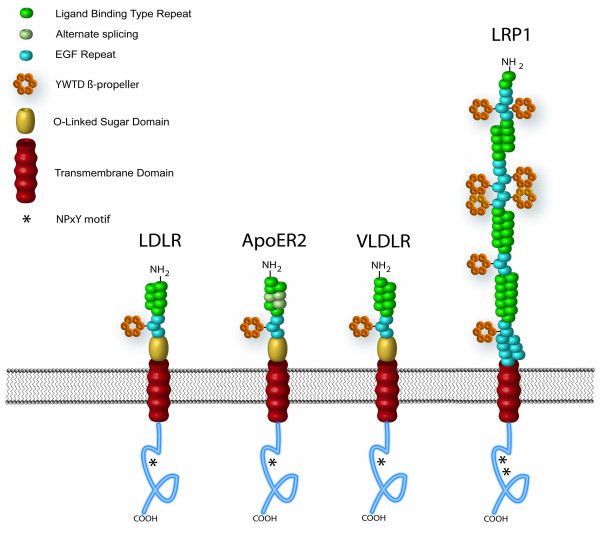
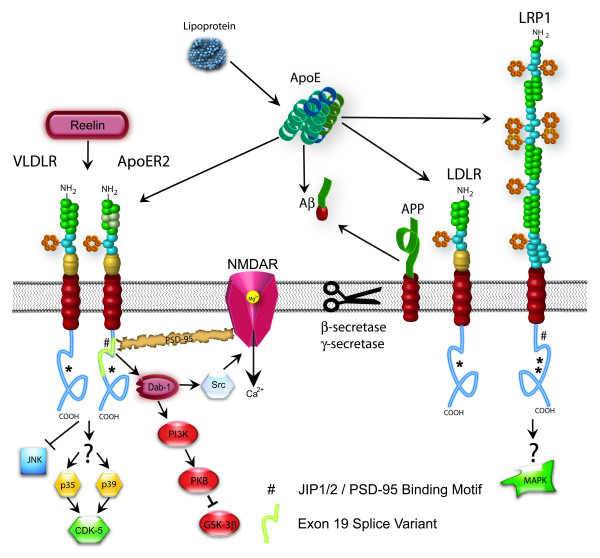
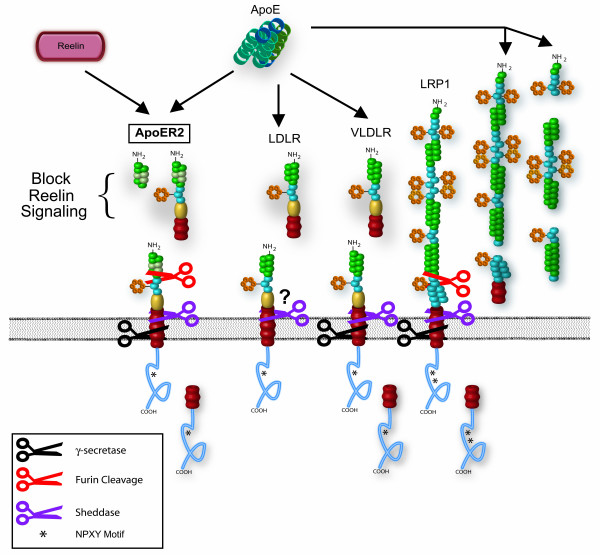
Verification
Claims the paper makes
The claims and statistics of this paper haven’t been checked yet.
Free: it reads the open-access text and checks the first 5 claims that cite a source we can check. Create a free account to check every claim.
Claims other papers make about this one
Each is checked against this paper’s own text: does it say what the citing paper says it does?
The source backs part of the claim, not all of it — or backs it for a different population, condition or comparison.
In the citing paper
“Microglia also express several families of receptors that enable phagocytosis or endocytosis of apoptotic cells, protein aggregates, and lipoprotein particles. These receptors include scavenger receptors, such as CD36, SR1, and MARCO (20); LDL receptor family members, such as LDLR, ApoER2, and VLDL (21); and three receptor tyrosine kinases, Tyro3, Axl, and Mertk (TAM) (22).”
From Microglia Function in the Central Nervous System During Health and Neurodegeneration (2017) · cites this paper as [21]
Experimental — accuracy not yet measuredThe source backs part of the claim, not all of it — or backs it for a different population, condition or comparison.
In the citing paper
“The shed ectodomains of VLDLR and apoER contain the ligand-binding domain and can bind to their ligand, Reelin, functioning as a competitive negative regulator to block binding of Reelin to the cell surface receptors29,30,40.”
From Membrane type 1 matrix metalloproteinase promotes LDL receptor shedding and accelerates the development of atherosclerosis (2021) · cites this paper as [30]
Experimental — accuracy not yet measuredThe cited source says what the claim attributes to it.
In the citing paper
“LDLR and its family members such as VLDLR, apoER and LRP1 undergo ectodomain shedding to release their soluble forms into the extracellular milieu such as cerebrospinal fluid and blood12,29,30.”
From Membrane type 1 matrix metalloproteinase promotes LDL receptor shedding and accelerates the development of atherosclerosis (2021) · cites this paper as [30]
Self-check
Percentages, sums and reported differences re-computed from the paper’s own numbers.
The self-check needs the paper’s full text.
Citations
Cites
Corder, E. H., Saunders, A. M., Strittmatter, W. J., Schmechel, D. E., Gaskell, P. C., Small, G. W., Roses, A. D., Haines, J. L., & Pericak-Vance, M. A. (1993) · Science · doi:10.1126/science.8346443 · Cited by 9,429 · cited 1×
“APOE-ε2 is associated with reduced odds and delayed onset of AD while APOE-ε4 is associated with increased odds and earlier onset of AD [3].”
Twenty years of the Alzheimer's disease amyloid hypothesis: a genetic perspective
Tanzi, R. E., & Bertram, L. (2005) · Cell · doi:10.1016/j.cell.2005.02.008 · Cited by 1,849 · cited 1×
“rarity, on the order of hundreds of families worldwide (reviewed in [1]).”
Schmechel, D. E., Saunders, A. M., Strittmatter, W. J., Crain, B. J., Hulette, C. M., Joo, S. H., Pericak-Vance, M. A., Goldgaber, D., & Roses, A. D. (1993) · Proceedings of the National Academy of Sciences · doi:10.1073/pnas.90.20.9649 · Cited by 1,525 · cited 2×
“ApoE4 increases levels of amyloid deposition in humans [6,18] and accelerates amyloid deposition in transgenic mice [8,25,26].”
McGeer, P. L., Schulzer, M., & McGeer, E. G. (1996) · Neurology · doi:10.1212/wnl.47.2.425 · Cited by 1,367 · cited 1×
“(reviewed in [13]) may decrease risk of AD.”
Strittmatter, W. J., Weisgraber, K. H., Huang, D. Y., Dong, L. M., Salvesen, G. S., Pericak-Vance, M., Schmechel, D., Saunders, A. M., Goldgaber, D., & Roses, A. D. (1993) · Proceedings of the National Academy of Sciences · doi:10.1073/pnas.90.17.8098 · Cited by 1,363
Understanding RAGE, the receptor for advanced glycation end products
Bierhaus, A., Humpert, P. M., Morcos, M., Wendt, T., Chavakis, T., Arnold, B., Stern, D. M., & Nawroth, P. P. (2005) · Journal of Molecular Medicine · doi:10.1007/s00109-005-0688-7 · Cited by 1,297 · cited 1×
“A soluble version of the receptor for advanced glycation end products (RAGE) can block the interactions of ligands with the membrane bound forms of RAGE, preventing their endocytosis [166], and a soluble version of the leptin receptor blocks leptin signaling [167].”
Trommsdorff, M., Gotthardt, M., Hiesberger, T., Shelton, J., Stockinger, W., Nimpf, J., Hammer, R. E., Richardson, J. A., & Herz, J. (1999) · Cell · doi:10.1016/s0092-8674(00)80782-5 · Cited by 1,261
Namba, Y., Tomonaga, M., Kawasaki, H., Otomo, E., & Ikeda, K. (1991) · Brain Research · doi:10.1016/0006-8993(91)91092-f · Cited by 1,157 · cited 2×
“In vivo, early evidence for an involvement of apoE in AD came from immunohistochemical localization of apoE to senile plaques [24].”
A proteolytic pathway that controls the cholesterol content of membranes, cells, and blood
Brown, M. S., & Goldstein, J. L. (1999) · Proceedings of the National Academy of Sciences · doi:10.1073/pnas.96.20.11041 · Cited by 1,134 · cited 1×
“luminal and intramembranous sites [162].”
Apolipoprotein E in sporadic Alzheimer's disease: Allelic variation and receptor interactions
William Rebeck, G., Reiter, J. S., Strickland, D. K., & Hyman, B. T. (1993) · Neuron · doi:10.1016/0896-6273(93)90070-8 · Cited by 1,107 · cited 4×
“Furthermore, APOE-ε4 is associated with increased brain Aβ in affected individuals [6].”
InfluentialSelf-citation
Research works printed but not linked: 1
- Teter B Apolipoprotein E isotype-specific effects in neurodegeneration Alzheimer's Reports 2000 3 199 212
Cited by
Microglia Function in the Central Nervous System During Health and Neurodegeneration
Colonna, M., & Butovsky, O. (2017) · Annual Review of Immunology · doi:10.1146/annurev-immunol-051116-052358 · Cited by 2,894
Alzheimer's disease as homeostatic responses to age-related myelin breakdown
Bartzokis, G. (2011) · Neurobiology of Aging · doi:10.1016/j.neurobiolaging.2009.08.007 · Cited by 546
Fernández-Calle, R., Konings, S. C., Frontiñán-Rubio, J., García-Revilla, J., Camprubí-Ferrer, L., Svensson, M., Martinson, I., Boza-Serrano, A., Venero, J. L., Nielsen, H. M., et al. (2022) · Molecular Neurodegeneration · doi:10.1186/s13024-022-00566-4 · Cited by 278
Apolipoproteins in the brain: implications for neurological and psychiatric disorders
Elliott, D. A., Weickert, C. S., & Garner, B. (2010) · Clinical Lipidology · doi:10.2217/clp.10.37 · Cited by 194
Lipid nanoparticle-mediated drug delivery to the brain
Khare, P., Edgecomb, S. X., Hamadani, C. M., Tanner, E. E. L., & S Manickam, D. (2023) · Advanced Drug Delivery Reviews · doi:10.1016/j.addr.2023.114861 · Cited by 187
Apolipoprotein E Regulates Amyloid Formation within Endosomes of Pigment Cells
van Niel, G., Bergam, P., Di Cicco, A., Hurbain, I., Lo Cicero, A., Dingli, F., Palmulli, R., Fort, C., Potier, M. C., Schurgers, L. J., et al. (2015) · Cell Reports · doi:10.1016/j.celrep.2015.08.057 · Cited by 143
Marzolo, M.-P., & Bu, G. (2009) · Seminars in Cell & Developmental Biology · doi:10.1016/j.semcdb.2008.10.005 · Cited by 122
Self-citationActivated protein C ligation of ApoER2 (LRP8) causes Dab1-dependent signaling in U937 cells
Yang, X. V., Banerjee, Y., Fernández, J. A., Deguchi, H., Xu, X., Mosnier, L. O., Urbanus, R. T., de Groot, P. G., White-Adams, T. C., McCarty, O. J. T., et al. (2009) · Proceedings of the National Academy of Sciences · doi:10.1073/pnas.0807594106 · Cited by 116
Pharmacogenomics in Alzheimer's Disease
Cacabelos, R. (2008) · Methods in Molecular Biology™ · doi:10.1007/978-1-59745-205-2_10 · Cited by 109
The Involvement of DNA-Damage and -Repair Defects in Neurological Dysfunction
Kulkarni, A., & Wilson, D. M. (2008) · The American Journal of Human Genetics · doi:10.1016/j.ajhg.2008.01.009 · Cited by 100
ApoE isoform-dependent changes in hippocampal synaptic function
Korwek, K. M., Trotter, J. H., LaDu, M. J., Sullivan, P. M., & Weeber, E. J. (2009) · Molecular Neurodegeneration · doi:10.1186/1750-1326-4-21 · Cited by 89
Self-citationLipid Metabolism and Glial Lipoproteins in the Central Nervous System
Hayashi, H. (2011) · Biological and Pharmaceutical Bulletin · doi:10.1248/bpb.34.453 · Cited by 80
Association between the LRP1B and APOE loci and the development of Parkinson’s disease dementia
Real, R., Martinez-Carrasco, A., Reynolds, R. H., Lawton, M. A., Tan, M. M. X., Shoai, M., Corvol, J.-C., Ryten, M., Bresner, C., Hubbard, L., et al. (2023) · Brain · doi:10.1093/brain/awac414 · Cited by 61
Genomics of Dementia:APOE- andCYP2D6-Related Pharmacogenetics
Cacabelos, R., Martínez, R., Fernández‐Novoa, L., Carril, J. C., Lombardi, V., Carrera, I., Corzo, L., Tellado, I., Leszek, J., McKay, A., et al. (2012) · International Journal of Alzheimer s Disease · doi:10.1155/2012/518901 · Cited by 68
Neuroglialpharmacology: white matter pathophysiologies and psychiatric treatments
Bartzokis, G. (2011) · Frontiers in Bioscience · doi:10.2741/3881 · Cited by 61
Alabi, A., Xia, X.-D., Gu, H.-M., Wang, F., Deng, S.-J., Yang, N., Adijiang, A., Douglas, D. N., Kneteman, N. M., Xue, Y., et al. (2021) · Nature Communications · doi:10.1038/s41467-021-22167-3 · Cited by 63
Isoform-specific proteolysis of apolipoprotein-E in the brain
Elliott, D. A., Tsoi, K., Holinkova, S., Chan, S. L., Kim, W. S., Halliday, G. M., Rye, K., & Garner, B. (2009) · Neurobiology of Aging · doi:10.1016/j.neurobiolaging.2009.02.006 · Cited by 63
Central nervous system cholesterol metabolism in health and disease
Ho, W. Y., Hartmann, H., & Ling, S. (2022) · IUBMB Life · doi:10.1002/iub.2662 · Cited by 62
Apolipoprotein E Isoform-Specific Effects on Lipoprotein Receptor Processing
Bachmeier, C., Shackleton, B., Ojo, J., Paris, D., Mullan, M., & Crawford, F. (2014) · NeuroMolecular Medicine · doi:10.1007/s12017-014-8318-6 · Cited by 50
Functional interactions of APP with the apoE receptor family
Hoe, H., & William Rebeck, G. (2008) · Journal of Neurochemistry · doi:10.1111/j.1471-4159.2008.05517.x · Cited by 41
Self-citationReelin and apoE actions on signal transduction, synaptic function and memory formation
Rogers, J. T., & Weeber, E. J. (2008) · Neuron Glia Biology · doi:10.1017/s1740925x09990184 · Cited by 49
Self-citationCholesterol dyshomeostasis in amyotrophic lateral sclerosis: cause, consequence, or epiphenomenon?
Hartmann, H., Ho, W. Y., Chang, J., & Ling, S. (2022) · The FEBS Journal · doi:10.1111/febs.16175 · Cited by 45
Alfonso, S., Cigliano, L., Carlucci, A., Bucci, E. M., & Abrescia, P. (2009) · Journal of Neurochemistry · doi:10.1111/j.1471-4159.2009.06121.x · Cited by 49
Iron Regulates Apolipoprotein E Expression and Secretion in Neurons and Astrocytes
Xu, H. J., Perreau, V. M., Dent, K. A., Bush, A. I., Finkelstein, D. I., & Adlard, P. A. (2016) · Journal of Alzheimer s Disease · doi:10.3233/jad-150797 · Cited by 47
Influence of Matrix Metallopeptidase 9 on Beta-Amyloid Elimination Across the Blood-Brain Barrier
Shackleton, B., Ringland, C., Abdullah, L. I., MULLAN, M. J., Crawford, F., & Bachmeier, C. J. (2019) · Molecular Neurobiology · doi:10.1007/s12035-019-01672-z · Cited by 43
Rivero, M. R., Miras, S. L., Quiroga, R., Ropolo, A. S., & Touz, M. C. (2011) · Molecular Microbiology · doi:10.1111/j.1365-2958.2010.07512.x · Cited by 40
Role for apolipoprotein E in neurodegeneration and mercury intoxication
Lopez, M. E. C. (2017) · Frontiers in Bioscience-Elite · doi:10.2741/e819 · Cited by 37
Reelin in Alzheimer’s Disease, Increased Levels but Impaired Signaling: When More is Less
Cuchillo‐Ibáñez, I., Balmaceda, V., Mata‐Balaguer, T., López‐Font, I., & Sáez‐Valero, J. (2016) · Journal of Alzheimer s Disease · doi:10.3233/jad-151193 · Cited by 37
The Interplay Between Apolipoprotein E4 and the Autophagic–Endocytic–Lysosomal Axis
Schmukler, E., Michaelson, D. M., & Pinkas-Kramarski, R. (2018) · Molecular Neurobiology · doi:10.1007/s12035-018-0892-4 · Cited by 35
Chuang, S. T., Cruz, S., & Narayanaswami, V. (2020) · Nanomaterials · doi:10.3390/nano10050906 · Cited by 35
Microglia in retinal diseases: From pathogenesis towards therapeutic strategies
Xiao, R., Huang, X., Gao, S., Duan, J., Zhang, Y., & Zhang, M. (2024) · Biochemical Pharmacology · doi:10.1016/j.bcp.2024.116550 · Cited by 34
Genetically Altering Aβ Distribution from the Brain to the Vasculature Ameliorates Tau Pathology
Oddo, S., Caccamo, A., Cheng, D., & LaFerla, F. M. (2009) · Brain Pathology · doi:10.1111/j.1750-3639.2008.00194.x · Cited by 33
(2007) · Cited by 33
The role of lipoprotein receptors on the physiological function of APP
Wagner, T., & Pietrzik, C. U. (2011) · Experimental Brain Research · doi:10.1007/s00221-011-2876-8 · Cited by 34
Verbrugghe, P., Bouwer, S., Wiltshire, S., Carter, K. W., Chandler, D., Cooper, M. N., Morar, B., Razif, M. F. M., Henders, A. K., Badcock, J. C., et al. (2012) · American Journal of Medical Genetics Part B Neuropsychiatric Genetics · doi:10.1002/ajmg.b.32042 · Cited by 32
Early detection and personalized medicine: Future strategies against Alzheimer's disease
Meco, A. D., & Vassar, R. J. (2020) · Progress in molecular biology and translational science · doi:10.1016/bs.pmbts.2020.10.002 · Cited by 29
Budny, V., Ruminot, I., Wybitul, M., Treyer, V., Barros, L. F., & Tackenberg, C. (2025) · Translational Psychiatry · doi:10.1038/s41398-025-03550-w · Cited by 25
Regulated Proteolysis of APP and ApoE Receptors
Hoe, H., & Rebeck, G. W. (2008) · Molecular Neurobiology · doi:10.1007/s12035-008-8017-0 · Cited by 24
Self-citationAssociation of TTR polymorphisms with hippocampal atrophy in Alzheimer disease families
Cuenco, K. T., Friedland, R. P., Baldwin, C. T., Guo, J., Vardarajan, B. N., Lunetta, K. L., Cupples, L. A., Green, R. C., DeCarli, C. S., & Farrer, L. A. (2009) · Neurobiology of Aging · doi:10.1016/j.neurobiolaging.2009.02.014 · Cited by 24
Girona, J., Rodríguez-Borjabad, C., Ibarretxe, D., Heras, M., Amigo, N., Feliu, A., Masana, L., Plana, N., Amigó, E., Andrés, P., et al. (2018) · Journal of Clinical Lipidology · doi:10.1016/j.jacl.2017.10.003 · Cited by 22
Study of Exosomes Shed New Light on Physiology of Amyloidogenesis
van Niel, G. (2016) · Cellular and Molecular Neurobiology · doi:10.1007/s10571-016-0357-0 · Cited by 20
A Review of APOE Genotype-Dependent Autophagic Flux Regulation in Alzheimer’s Disease
Chen, H., Chen, F., Zhang, M., Chen, Y., Cui, L., & Liang, C. (2021) · Journal of Alzheimer s Disease · doi:10.3233/jad-210602 · Cited by 15
Neurometabolic roles of ApoE and Ldl-R in mouse brain
Lee, J., Choi, J., Wong, G. W., & Wolfgang, M. J. (2016) · Journal of Bioenergetics and Biomembranes · doi:10.1007/s10863-015-9636-6 · Cited by 12
Significance of VLPs in Vlp-circRNA vaccines: a vaccine candidate or delivery vehicle?
Gupta, R., Arora, K., Arora, N. M., & Kundu, P. K. (2024) · RNA Biology · doi:10.1080/15476286.2024.2399307 · Cited by 12
Differences in Recycling of Apolipoprotein E3 and E4—LDL Receptor Complexes—A Mechanistic Hypothesis
Kim, M., & Bezprozvanny, I. (2021) · International Journal of Molecular Sciences · doi:10.3390/ijms22095030 · Cited by 11
Guevara, J., Romo, J., McWhorter, T., & Guevara, J. (2015) · Journal of Viruses · doi:10.1155/2015/646303 · Cited by 11
Nontraditional Signaling Mechanisms of Lipoprotein Receptors
Rebeck, G. W. (2009) · Science Signaling · doi:10.1126/scisignal.268pe28 · Cited by 8
Self-citationGui, Y., Duan, Z., Qiu, X., Tang, W., Gober, H.-J., Li, D., & Wang, L. (2016) · BioScience Trends · doi:10.5582/bst.2016.01006 · Cited by 9
Xie, T., Akbar, S., Stathopoulou, M. G., Oster, T., Masson, C., Yen, F. T., & Visvikis‐Siest, S. (2018) · Neurobiology of Aging · doi:10.1016/j.neurobiolaging.2018.04.013 · Cited by 9
Touré, M., Diouf, N. N., Thiam, S., Diop, J. P. D., Coly, M. S., Mbengue, A., Sar, F. B., Bâ, A., Diallo, F. A., & Samb, A. (2022) · Cureus · doi:10.7759/cureus.24063 · Cited by 8
Lipids and Lipoproteins in Alzheimer’s Disease
Stukas, S. K., Kulić, I., Zareyan, S., & Wellington, C. L. (2015) · InTech eBooks · doi:10.5772/59808 · Cited by 6
Altered lipid metabolic homeostasis in the pathogenesis of Alzheimer’s disease
Marian, O. C., Tran, C., & Don, A. S. (2020) · Elsevier eBooks · doi:10.1016/b978-0-12-819404-1.00023-3 · Cited by 5
Apolipoprotein E gene polymorphism influenced glycemic status among Malaysians
Rahman, K. M. H., Hossain, M. S., Haque, N., Razak, T. B. A., & Ahmad, H. (2019) · Biomedical Research and Therapy · doi:10.15419/bmrat.v6i7.557 · Cited by 4
Touré, M., Agne, F. D., Dieng, A., Diallo, R. N., Guéye, L., & Samb, A. (2023) · Journal of Diabetes Mellitus · doi:10.4236/jdm.2023.134023 · Cited by 2
Beyond Cholesterol: Statin Benefits in Alzheimer's Disease
Soares, H. D., & Sparks, D. L. (2007) · Springer eBooks · doi:10.1007/7355_2007_013 · Cited by 2
Saravanan, J., Easwaran, V., Selvaraj, D., Gunasekaran, V., Soumya, V., Thiruselvi, M., Prasanth, M. L., Singh, S., Ellaiyarasu, C., Rai, P. K., et al. (2026) · Molecular and Cellular Neuroscience · doi:10.1016/j.mcn.2026.104108 · Cited by 1
Searcy, J. L. (2009) · UKnowledge (University of Kentucky) · Cited by 1
The effect of chicken extract on ERK/CREB signaling is ApoE isoform-dependent
Yong, S. M., Ong, Q.-R., Siew, B. E., & Wong, B. (2014) · Food & Function · doi:10.1039/c4fo00428k · Cited by 1
Identification and Functional Characterization of Genetic Risk Factors in Alzheimer´s Disease
Eckart, K. (2009) · Electronic Theses of LMU Munich (Ludwig-Maximilians-Universität München) · doi:10.5282/edoc.10259 · Cited by 1
Pocivavsek, A. (2009) · DigitalGeorgetown (Georgetown University Library) · Cited by 1
Doumit, J. (2011) · Archipel (Université du Québec à Montréal)
Age, Sex, and Genetic Architecture of Human Gene Expression in EBV Transformed Cell LinesPreprint
Rivas, M. A., Daly, M. J., & Pe’er, I. (2009) · arXiv (Cornell University) · doi:10.48550/arxiv.0911.0215
Advancing Biomarker Science in the 21st Century
Becker, R. C. (2009) · Circulation Cardiovascular Interventions · doi:10.1161/circinterventions.109.849067
Rodriguez, G. A. (2014) · DigitalGeorgetown (Georgetown University Library)
The characterisation of the ectodomain shedding of the low density lipoprotein receptor
Parker, A. (2009) · Open University of Cape Town (University of Cape Town)
Identifikation und funktionelle Charakterisierung genetischer Risikofaktoren der Alzheimer Krankheit
Konta, L. (2009) · mediaTUM (Technical University of Munich)
Association between polymorphisms 3' of ApoE and susceptibility to schizophrenia and its subtypes
Razif, M., & Fazril, M. (2008) · Murdoch University Research Portal
Cochran, B. J. (2011) · Research Online (University of Wollongong)
Role of CD63 in the biogenesis and the function of exosomes
Palmulli, R. (2019) · theses.fr (ABES) · doi:10.70675/bf9b07cbz66d2z4a12zbbb1zfa2d8f83bdb6
Fotiadou, E. H. (2010) · Νημερτής
Novel biological functions of apolipoprotein-E
Elliott, D. A. (2009) · UNSWorks (University of New South Wales, Sydney, Australia) · doi:10.26190/unsworks/20103
The Impact of INPP5D on Microglia Response to Tau Pathology in Alzheimer's Disease
Soni, D. (2025) · IUScholarWorks (Indiana University) · doi:10.7912/ga1a-ga83
The Role of ApoE Genetics in Glial Lipid Metabolism and Inflammation
Julia, T. C. W., Negi, R., & Kurkela, M. (2025) · Springer eBooks · doi:10.1007/978-3-031-52641-1_74-1
The Role of ApoE Genetics in Glial Lipid Metabolism and Inflammation
Julia, T. C. W., Negi, R., & Kurkela, M. (2026) · Springer eBooks · doi:10.1007/978-3-031-96089-5_74
Sha, L., & Jha, S. (2026) · Advances in immunology · doi:10.1016/bs.ai.2026.04.008
Cholesterol at the Center of Alzheimer’s Disease: A Unifying Hypothesis on the Pathogenic Mechanism
Zhu, B. T. (2026) · Molecules · doi:10.3390/molecules31142418
虚血性脳障害時の LRP1 の病態生理学的変化と furin 阻害薬による神経保護の可能性
Yamada, M. (2019) · Institutional Repositories DataBase (IRDB)
Metadata
- Authors
- Rebeck, G. W., LaDu, M. J., Estus, S., Bu, G., & Weeber, E. J.
- Affiliations
- Georgetown University (US)
- University of Illinois Chicago (US)
- University of Kentucky (US)
- Washington University in St. Louis (US)
- Vanderbilt University (US)
- Corresponding author
- Weeber, Edwin J
- Venue
- Molecular Neurodegeneration
- Published
- 2006-10-24
- Volume
- 1
- Issue
- 1
- Pages
- 15-15
- ISSN
- 1750-1326 (ISSN-L)
- PMC
- PMC1635701
- OpenAlex
- W2151926406
- Cited by
- 66
- References
- 178
- Citations by year
- 2026: 3 · 2025: 2 · 2024: 2 · 2023: 2 · 2022: 4 · 2021: 4 · 2020: 3 · 2019: 2 · 2018: 2 · 2017: 3 · 2016: 4 · 2015: 4 · 2014: 3 · 2012: 2
- FWCI
- 4.42
- Type
- journal article
- Language
- en
- Open access
- gold
- doi.org
- Licence
- cc-by
- Locations
- Molecular Neurodegeneration (publishedVersion, cc-by)
- PubMed (publishedVersion)
- Digital Commons@Becker (Washington University School of Medicine) (submittedVersion)
- UKnowledge (University of Kentucky) (submittedVersion, cc-by)
- DOAJ (DOAJ: Directory of Open Access Journals) (submittedVersion)
- Rare & Special e-Zone (The Hong Kong University of Science and Technology) (submittedVersion)
- Funders
- National Institute on Aging (P01AG030128, R01AG019121)
- Topics
- Life Sciences › Neuroscience › Cellular and Molecular Neuroscience › Alzheimer's disease research and treatments
- Life Sciences › Neuroscience › Neurology › Neuroinflammation and Neurodegeneration Mechanisms
- Health Sciences › Medicine › Psychiatry and Mental health › Dementia and Cognitive Impairment Research
- Keywords
- apolipoprotein E, APOE ε4, Alzheimer's disease, synaptic function, receptor signaling, receptor degradation
About these checks
Registry, retraction, Cites and statistics results are computed, not judged, with one exception: a printed reference that no index lists is read once by a model before it counts as a citation error. Claims are extracted by a model and kept only when their quote appears verbatim in the text; each cited source is then checked, with a model’s help, for whether it says what the claim relies on. Those verdicts can be wrong — read the claim’s quote and the cited source before relying on one.
Statistics and arithmetic are recomputed, not judged.
Confidence bands are shown only for fields calibrated on our annotated test set. None is calibrated yet, so no band is shown.
What counts as a claim ›How we measure confidence ›How we check this ›
Are you an author, or do you see a problem with this page? Request a review
Data sources
Bibliographic data: Semantic Scholar, OpenAlex, Crossref.
Contains information from the Semantic Scholar Academic Graph Datasets, made available under the ODC Attribution License (ODC-BY 1.0).
Semantic Scholar’s data is described in: Kinney, R., et al. (2023). The Semantic Scholar Open Data Platform. arXiv:2301.10140.
