

Initial characterization of the human central proteome
Open accessThe DOI matches its Crossref record; 60 of the 60 references it cites were found in a registry or an index.
Abstract
Background: On the basis of large proteomics datasets measured from seven human cell lines we consider their intersection as an approximation of the human central proteome, which is the set of proteins ubiquitously expressed in all human cells. Composition and properties of the central proteome are investigated through bioinformatics analyses. Results: We experimentally identify a central proteome comprising 1,124 proteins that are ubiquitously and abundantly expressed in human cells using state of the art mass spectrometry and protein identification bioinformatics. The main represented functions are proteostasis, primary metabolism and proliferation. We further characterize the central proteome considering gene structures, conservation, interaction networks, pathways, drug targets, and coordination of biological processes. Among other new findings, we show that the central proteome is encoded by exon-rich genes, indicating an increased regulatory flexibility through alternative splicing to adapt to multiple environments, and that the protein interaction network linking the central proteome is very efficient for synchronizing translation with other biological processes. Surprisingly, at least 10% of the central proteome has no or very limited functional annotation. Conclusions: Our data and analysis provide a new and deeper description of the human central proteome compared to previous results thereby extending and complementing our knowledge of commonly expressed human proteins. All the data are made publicly available to help other researchers who, for instance, need to compare or link focused datasets to a common background.
Overview
The claims and statistics of this paper haven’t been checked yet.
Free: it reads the open-access text and checks the first 5 claims that cite a source we can check. Create a free account to check every claim.
Integrity signals
Registry
Cites
Statistics
Figures
Verification
Claims the paper makes
The claims and statistics of this paper haven’t been checked yet.
Free: it reads the open-access text and checks the first 5 claims that cite a source we can check. Create a free account to check every claim.
Claims other papers make about this one
Each is checked against this paper’s own text: does it say what the citing paper says it does?
In the citing paper
“Burkard et al. defined a “central proteome” in a comparison of seven cell lines (1). It consisted of the 1124 proteins that were identified in all these cell systems and that were preferentially involved in protein expression, metabolism and proliferation.”
From Comparative Proteomic Analysis of Eleven Common Cell Lines Reveals Ubiquitous but Varying Expression of Most Proteins (2012) · cites this paper as [1]
In the citing paper
“It also did not attempt to quantify expression differences between the proteomes.”
From Comparative Proteomic Analysis of Eleven Common Cell Lines Reveals Ubiquitous but Varying Expression of Most Proteins (2012) · cites this paper as [1]
In the citing paper
“This study identified 2000–4000 proteins per cell line, and was therefore limited to the more abundant proteins in the cell.”
From Comparative Proteomic Analysis of Eleven Common Cell Lines Reveals Ubiquitous but Varying Expression of Most Proteins (2012) · cites this paper as [1]
Self-check
Percentages, sums and reported differences re-computed from the paper’s own numbers.
The self-check needs the paper’s full text.
Citations
Cites
Cytoscape: A software Environment for integrated models of biomolecular interaction networks
Shannon, P., Markiel, A., Ozier, O., Baliga, N. S., Wang, J. T., Ramage, D., Amin, N., Schwikowski, B., & Ideker, T. (2003) · Genome Research · doi:10.1101/gr.1239303 · Cited by 51,888
Gene Ontology: tool for the unification of biology
Ashburner, M., Ball, C. A., Blake, J. A., Botstein, D., Butler, H., Cherry, J. M., Davis, A. P., Dolinski, K., Dwight, S. S., Eppig, J. T., et al. (2000) · Nature Genetics · doi:10.1038/75556 · Cited by 43,206 · cited 2×
“To measure fluxes between GO [31] biological processes (BPs) mediated by PPIs, we counted pairs of GO terms.”
MethodSystematic and integrative analysis of large gene lists using DAVID bioinformatics resources
Huang, D. W., Sherman, B. T., & Lempicki, R. A. (2009) · Nature Protocols · doi:10.1038/nprot.2008.211 · Cited by 35,890
Mass Spectrometric Sequencing of Proteins from Silver-Stained Polyacrylamide Gels
Shevchenko, A., Wilm, M., Vorm, O., & Mann, M. (1996) · Analytical Chemistry · doi:10.1021/ac950914h · Cited by 8,995 · cited 1×
“After visualization of the proteins by Coomassie Blue, entire gel lanes were sliced into 50 equal pieces and digested in situ with modified porcine trypsin [41].”
MethodProtein Identification and Analysis Tools on the ExPASy Server
Gasteiger, E., Hoogland, C., Gattiker, A., Duvaud, S., Wilkins, M. R., Appel, R. D., & Bairoch, A. (2005) · The Proteomics Protocols Handbook · doi:10.1385/1-59259-890-0:571 · Cited by 8,681
Perkins, D. N., Pappin, D. J. C., Creasy, D. M., & Cottrell, J. S. (1999) · Electrophoresis · doi:10.1002/(sici)1522-2683(19991201)20:18<3551::aid-elps3551>3.0.co;2-2 · Cited by 8,203
KEGG for linking genomes to life and the environment
Kanehisa, M., Araki, M., Goto, S., Hattori, M., Hirakawa, M., Itoh, M., Katayama, T., Kawashima, S., Okuda, S., Tokimatsu, T., et al. (2007) · Nucleic Acids Research · doi:10.1093/nar/gkm882 · Cited by 6,782 · cited 4×
“Prot by using a slimmed gene ontology (generic GO slim) [31] and KEGG [32,33].”
MethodInfluentialProtein Identification and Analysis Tools in the ExPASy Server
Wilkins, M. R., Gasteiger, E., Bairoch, A., Sanchez, J.-C., Williams, K. L., Appel, R. D., & Hochstrasser, D. F. (2003) · 2-D Proteome Analysis Protocols · doi:10.1385/1-59259-584-7:531 · Cited by 6,155
An automated method for finding molecular complexes in large protein interaction networks
Bader, G. D., & Hogue, C. W. (2003) · BMC Bioinformatics · doi:10.1186/1471-2105-4-2 · Cited by 6,072 · cited 1×
“the centrality of a node increases when it is connect to nodes that are central themselves; Node degree is the number of neighbors of a node; Clustering coefficient [53] measures the ratio between the maximum number of edges theoretically possible in the sub-network spanned by a node and its immediate neighbors and th…”
BackgroundThe Large-Scale Organization of Metabolic Networks
Jeong, H., Tombor, B., Albert, R., Oltvai, Z. N., & Barabási, A.-L. (2000) · Nature · doi:10.1038/35036627 · Cited by 4,972 · cited 1×
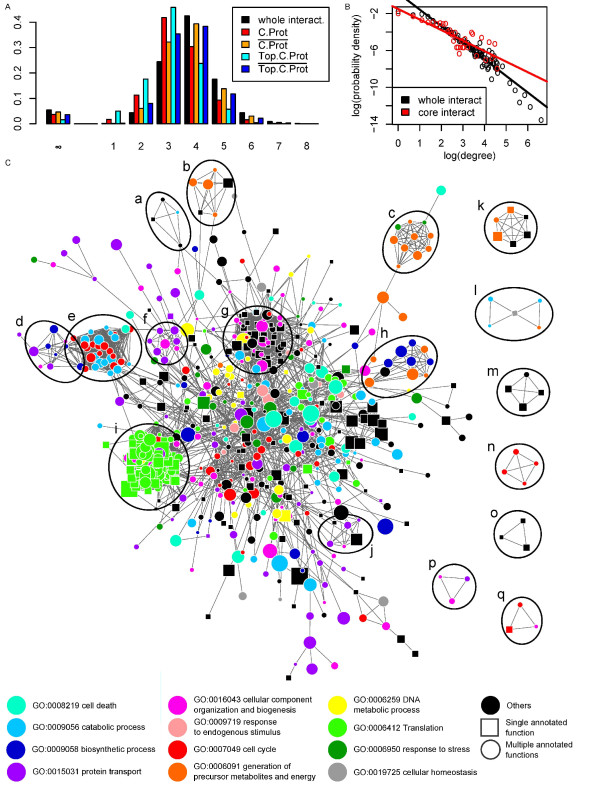
“We also found both the central and whole interactome to be scale-free [37], with the central interactome comprising more highly-connected regions (protein complexes), see Figure 2B.”
Background
Cited by
Structure and dynamics of molecular networks: A novel paradigm of drug discovery
Csermely, P., Korcsmáros, T., Kiss, H. J. M., London, G., & Nussinov, R. (2013) · Pharmacology & Therapeutics · doi:10.1016/j.pharmthera.2013.01.016 · Cited by 892
“…interactions of the human interactome (Stumpf et al., 2008) is an ongoing, key step in networkrelated drug design efforts (see Rual et al., 2005; Stelzl et al., 2005; Chautard et al., 2009; Burkard et al., 2011; De Las Rivas & Prieto, 2012; Havugimana et al., 2012 and databases of Table 6).”
BackgroundUnderstanding multicellular function and disease with human tissue-specific networks
Greene, C. S., Krishnan, A., Wong, A. K., Ricciotti, E., Zelaya, R. A., Himmelstein, D. S., Zhang, R., Hartmann, B. M., Zaslavsky, E., Sealfon, S. C., et al. (2015) · Nature Genetics · doi:10.1038/ng.3259 · Cited by 832
“Sets T and U were made disjoint by retaining only genes in T genes that were not in U.”
Geiger, T., Wehner, A., Schaab, C., Cox, J., & Mann, M. (2012) · Molecular & Cellular Proteomics · doi:10.1074/mcp.m111.014050 · Cited by 797
“[1] Submitted to the special PROSPECTS issue in MCP”
BackgroundGlobal Proteome Analysis of the NCI-60 Cell Line Panel
Gholami, A. M., Hahne, H., Wu, Z., Auer, F. J., Meng, C., Wilhelm, M., & Kuster, B. (2013) · Cell Reports · doi:10.1016/j.celrep.2013.07.018 · Cited by 302
Viral immune modulators perturb the human molecular network by common and unique strategies
Pichlmair, A., Kandasamy, K., Alvisi, G., Mulhern, O., Sacco, R., Habjan, M., Binder, M., Stefanovic, A., Eberle, C.-A., Goncalves, A., et al. (2012) · Nature · doi:10.1038/nature11289 · Cited by 262
Self-citationCoscia, F., Watters, K. M., Curtis, M., Eckert, M. A., Chiang, C. Y., Tyanova, S., Montag, A., Lastra, R. R., Lengyel, E., & Mann, M. (2016) · Nature Communications · doi:10.1038/ncomms12645 · Cited by 212
Proteome-wide drug and metabolite interaction mapping by thermal-stability profiling
Huber, K. V. M., Olek, K. M., Müller, A. C., Tan, C. S. H., Bennett, K. L., Colinge, J., & Superti-Furga, G. (2015) · Nature Methods · doi:10.1038/nmeth.3590 · Cited by 210
Self-citationInterlaboratory reproducibility of large-scale human protein-complex analysis by standardized AP-MS
Varjosalo, M., Sacco, R., Stukalov, A., van Drogen, A., Planyavsky, M., Hauri, S., Aebersold, R., Bennett, K. L., Colinge, J., Gstaiger, M., et al. (2013) · Nature Methods · doi:10.1038/nmeth.2400 · Cited by 200
Self-citationProcessing peptidases in mitochondria and chloroplasts
Teixeira, P. F., & Glaser, E. (2013) · Biochimica et Biophysica Acta (BBA) - Molecular Cell Research · doi:10.1016/j.bbamcr.2012.03.012 · Cited by 186
“Furthermore, recent proteomic analysis revealed that hPreP is part of the human “central proteome,” a set of proteins that is common to seven different cells lines, and considered to be an approximation to the proteins ubiquitously expressed among different human cells [160].”
BackgroundRichards, A. L., Merrill, A. E., & Coon, J. J. (2015) · Current Opinion in Chemical Biology · doi:10.1016/j.cbpa.2014.10.017 · Cited by 106
Licker, V., Turck, N., Kövari, E., Burkhardt, K., Côte, M., Surini‐Demiri, M., Lobrinus, J. A., Sanchez, J., & Burkhard, P. R. (2014) · PROTEOMICS · doi:10.1002/pmic.201300342 · Cited by 105
“The same analysis was performed using a dataset approximating the human “central” proteome that comprised 1124 proteins ubiquitously expressed and experimentally identified in seven human nonneuronal cells lines [22].”
MethodAnalysis of gene expression profiles of lung cancer subtypes with machine learning algorithms
Yuan, F., Lü, L., & Zou, Q. (2020) · Biochimica et Biophysica Acta (BBA) - Molecular Basis of Disease · doi:10.1016/j.bbadis.2020.165822 · Cited by 111
Genetics of Proteasome Diseases
Gomes, A. V. (2013) · Scientifica · doi:10.1155/2013/637629 · Cited by 98
Fariello, R. M., Pariz, J. R., Spaine, D. M., Gozzo, F. C., Pilau, E. J., Fraietta, R., Bertolla, R. P., Andreoni, C., & Cedenho, A. P. (2012) · Human Reproduction · doi:10.1093/humrep/des287 · Cited by 74
“ALBU_HUMAN is an important element of the seminal plasma and participates in the dissipation of cholesterol when it is removed from the sperm membrane during capacitation (Mann, 1964), while NPC2_HUMAN may be involved in the regulation of the membrane lipid composition during maturation of spermatozoa in the epididymi…”
BackgroundBezerra, G. A., Dobrovetsky, E., Viertlmayr, R., Dong, A., Binter, A., Abramić, M., Macheroux, P., Dhe‐Paganon, S., & Gruber, K. F. (2012) · Proceedings of the National Academy of Sciences · doi:10.1073/pnas.1118005109 · Cited by 81
“Recently, DPP III was found among the approximately 1,100 proteins that constitute the human central proteome, which is the set of proteins ubiquitously and abundantly expressed in all human cell lines (23).”
BackgroundRecent advances on constraint-based models by integrating machine learning
Rana, P., Berry, C., Ghosh, P., & Fong, S. S. (2019) · Current Opinion in Biotechnology · doi:10.1016/j.copbio.2019.11.007 · Cited by 80
Szilagyi, A., Nussinov, R., & Csermely, P. (2013) · Current Topics in Medicinal Chemistry · doi:10.2174/1568026611313010007 · Cited by 65
Substrate complexes of human dipeptidyl peptidase III reveal the mechanism of enzyme inhibition
Kumar, P., Reithofer, V., Reisinger, M., Wallner, S., Pavkov‐Keller, T., Macheroux, P., & Gruber, K. F. (2016) · Scientific Reports · doi:10.1038/srep23787 · Cited by 56
Identification of LACTB2, a metallo-β-lactamase protein, as a human mitochondrial endoribonuclease
Levy, S., Allerston, C. K., Liveanu, V., Habib, M., Gileadi, O., & Schuster, G. (2016) · Nucleic Acids Research · doi:10.1093/nar/gkw050 · Cited by 56
“A literature search confirmed that LACTB2 is found in the mouse mitochondrial proteome (63,64) and in the human proteome project of mitochondria protein contents (65).”
The emerging role of dipeptidyl peptidase 3 in pathophysiology
Malovan, G., Hierzberger, B., Suraci, S., Schaefer, M. M., Santos, K. F., Jha, S., & Macheroux, P. (2022) · FEBS Journal · doi:10.1111/febs.16429 · Cited by 58
Assignment of Protein Interactions from Affinity Purification/Mass Spectrometry Data
Pardo, M., & Choudhary, J. S. (2012) · Journal of Proteome Research · doi:10.1021/pr2011632 · Cited by 56
Vázquez‐Martín, A., Anatskaya, O. V., Giuliani, A., Erenpreisa, J. A., Huang, S., Salmiņa, K., Inashkina, I., Huna, A., Nikolsky, N. N., & Vinogradov, A. E. (2016) · Oncotarget · doi:10.18632/oncotarget.12118 · Cited by 51
“Modules and protein interaction networks can offer a link between genes and biological functions, thus consitute a key step in connecting genotype and phenotype [55].”
Drug target deconvolution by chemical proteomics
Raida, M. (2011) · Current Opinion in Chemical Biology · doi:10.1016/j.cbpa.2011.06.016 · Cited by 44
“com lines, the so-called ‘core-proteome’ proteins [47], are removed from the list.”
BackgroundSystems biology analysis of protein‐drug interactions
Colinge, J., Rix, U., Bennett, K. L., & Superti‐Furga, G. (2011) · PROTEOMICS - CLINICAL APPLICATIONS · doi:10.1002/prca.201100077 · Cited by 37
“…target [84, 85] Subtract core proteome Will not remove medium-abundant no nspecific binders completely; no chance to find abundant targets [23, 86, 87] Pulldown enrichment versus core proteome Will not remove medium-abundant nonspecific binders completely [8] Competition with free compound [13, 31]”
BackgroundSelf-citationInteraction of Proteins Identified in Human Thyroid Cells
Pietsch, J., Riwaldt, S., Bauer, J. W., Sickmann, A., Weber, G., Grosse, J., Infanger, M., Eilles, C., & Grimm, D. G. (2013) · International Journal of Molecular Sciences · doi:10.3390/ijms14011164 · Cited by 35
“information from proteome data [41–43].”
Rish, I., Cecchi, G., Thyreau, B., Thirion, B., Plaze, M., Martinot, M. P., Martelli, C., Martinot, J. L., & Poline, J. (2013) · PLoS ONE · doi:10.1371/journal.pone.0050625 · Cited by 33
Permanent proteins in the urine of healthy humans during the Mars-500 experiment
Larina, I. M., Pastushkova, L. K., Tiys, E., Kireev, K. S., Kononikhin, A. S., Starodubtseva, N. L., Popov, I. A., Custaud, M., Доброхотов, И. В., Николаев, Е. Н., et al. (2014) · Journal of Bioinformatics and Computational Biology · doi:10.1142/s0219720015400016 · Cited by 32
“Keratin, type II cytoskeletal 1 (K2C1 HUMAN) is a member of the keratin family, it is a component of the central proteome.(38) Keratins are major components of the epithelial cytoskeleton.”
BackgroundSchaefer, M. H., Yang, J., Serrano, L., & Kiel, C. (2014) · PLoS Computational Biology · doi:10.1371/journal.pcbi.1003659 · Cited by 28
“This is in agreement with previous proteomics studies [20,21] identifying a central proteome of ubiquitously and abundantly expressed proteins, which are correlated in their abundances across different species.”
ResultChitta, K. R., Figueroa, J. A. L., Caruso, J. A., & Merino, E. J. (2013) · Metallomics · doi:10.1039/c3mt20213e · Cited by 29
“Its important biological functions include: nucleotide metabolism through cleavage of the N-glycosidic bond, cell proliferation, deoxyribonucleoside monophosphate catabolic process and positive regulation of cell growth [56, 57].”
BackgroundHigh spatial resolution proteomic comparison of the brain in humans and chimpanzees
Bauernfeind, A. L., Reyzer, M. L., Caprioli, R. M., Ely, J. J., Babbitt, C. C., Wray, G. A., Hof, P. R., & Sherwood, C. C. (2015) · The Journal of Comparative Neurology · doi:10.1002/cne.23777 · Cited by 29
The contribution and perspectives of proteomics to uncover ovarian cancer tumor markers
de Carvalho, V. P., Grassi, M. L., Palma, C. D. S., Carrara, H. H. A., Faça, V. M., dos Reis, F. J. C., & Poersch, A. (2018) · Translational research · doi:10.1016/j.trsl.2018.11.001 · Cited by 23
Mischnik, M., Boyanova, D., Hubertus, K., Geiger, J., Philippi, N., Dittrich, M. T., Wangorsch, G., Timmer, J., & Dandekar, T. (2013) · Molecular BioSystems · doi:10.1039/c3mb25597b · Cited by 21
MoCps1 is important for conidiation, conidial morphology and virulence in Magnaporthe oryzae
Wang, Y., He, D., Chu, Y., Zuo, Y.-S., Xu, X., Chen, X., Zhao, W., Zhang, Y., Yang, J., & Peng, Y. (2016) · Current Genetics · doi:10.1007/s00294-016-0593-3 · Cited by 21
“Its expression has tissue specificity and was moderately expressed in adult brain, placenta, and skeletal muscle, and weakly expressed in adult liver, kidney, and spleen (Burkard et al. 2011; Nagase et al. 2000).”
BackgroundChaousis, S., Leusch, F. D. L., Nouwens, A. S., Melvin, S. D., & van de Merwe, J. P. (2020) · The Science of The Total Environment · doi:10.1016/j.scitotenv.2020.141680 · Cited by 21
A Self-Organized Model for Cell-Differentiation Based on Variations of Molecular Decay Rates
Hanel, R., Pöchacker, M., Schölling, M., & Thurner, S. (2012) · PLoS ONE · doi:10.1371/journal.pone.0036679 · Cited by 20
“Also the abundance of proteins and whether certain proteins are produced or not is again cell-type specific [32,33].”
BackgroundZaza, G., Neri, F., Bruschi, M., Granata, S., Petretto, A., Bartolucci, M., Bella, C. D., Candiano, G., Stallone, G., Gesualdo, L., et al. (2023) · Scientific Reports · doi:10.1038/s41598-023-33194-z · Cited by 21
Colinge, J., César‐Razquin, A., Huber, K., Breitwieser, F. P., Májek, P., & Superti‐Furga, G. (2014) · Journal of Proteomics · doi:10.1016/j.jprot.2014.03.028 · Cited by 18
“It has been already observed that commonly expressed proteins tend to have more PPIs [46,47].”
BackgroundSelf-citationQi, T., Zhang, W., Luan, Y., Kong, F., Xu, D., Cheng, G., & Wang, Y. (2013) · Molecular & Cellular Proteomics · doi:10.1074/mcp.m113.027813 · Cited by 18
“Because of the fact that all of the short-lived proteins we identified during the early phase of acute apoptosis in A431 cells are members of the central proteome of human cells (47), and they all have important role in multiple vital processes of the cell, we suppose that the protein levels of these short-lived membe…”
BackgroundForler, S., Klein, O., & Klose, J. (2014) · Journal of Proteomics · doi:10.1016/j.jprot.2014.04.003 · Cited by 18
Kiel, C., & Serrano, L. (2012) · Structure · doi:10.1016/j.str.2012.10.002 · Cited by 15
“to be enriched in evolutionary-conserved proteins, including signaling-related proteins (Burkard et al., 2011).”
BackgroundInfluentialInformatics View on the Challenges of Identifying Missing Proteins from Shotgun Proteomics
Choong, W.-K., Chang, H.-Y., Chen, C.-T., Tsai, C.-F., Hsu, W.-L., Chen, Y., & Sung, T.-Y. (2015) · Journal of Proteome Research · doi:10.1021/acs.jproteome.5b00482 · Cited by 16
Analysis of K-Ras Interactions by Biotin Ligase Tagging
Ritchie, C., Mack, A. R., Harper, L., Alfadhli, A., Stork, P. A., Nan, X., & Barklis, E. (2017) · Cancer Genomics & Proteomics · doi:10.21873/cgp.20034 · Cited by 15
Salt induced reduction of lysozyme adsorption at charged interfaces
Göhring, H., Paulus, M., Salmen, P., Wirkert, F. J., Kruse, T., Degen, P., Stuhr, S., Rehage, H., & Tolan, M. (2015) · Journal of Physics Condensed Matter · doi:10.1088/0953-8984/27/23/235103 · Cited by 13
Lachén-Montes, M., Mendizuri, N., Ausín, K., Pérez-Mediavilla, A., Azkargorta, M., Iloro, I., Elortza, F., Kondo, H., Ohigashi, I., Ferrer, I., et al. (2020) · Journal of Proteome Research · doi:10.1021/acs.jproteome.0c00452 · Cited by 12
Kim, J. S., Lee, Y.-J., Lee, M. Y., Shin, J., Han, J. M., Yang, E. G., Yu, M., Kim, S., Hwang, D., & Lee, C. (2013) · Journal of Proteome Research · doi:10.1021/pr3011414 · Cited by 13
Proteomic Study to Survey the CIGB-552 Antitumor Effect
Rodríguez‐Ulloa, A., Gil, J., Ramos, Y., Alvarez, L. H., Flores-Aldama, L., Argüelles, B. O., García, D., Sánchez-Puente, A., Musacchio, A., Fernández-de-Cossío, J., et al. (2015) · BioMed Research International · doi:10.1155/2015/124082 · Cited by 13
“The central proteome is mainly enriched in cell vital processes [12].”
BackgroundMethodWen, M., Jin, Y., Manabe, T., Chen, S., & Tan, W. (2017) · Electrophoresis · doi:10.1002/elps.201700261 · Cited by 10
Zhao, M., Wang, Q., Lai, W., Zhao, X., Shen, H., Nie, F., Zheng, Y., Wei, S., & Ji, J. (2013) · Journal of Materials Chemistry B · doi:10.1039/c3tb00266g · Cited by 10
Jin, Y., Zhang, J., Yuan, Q., Manabe, T., & Tan, W. (2015) · Electrophoresis · doi:10.1002/elps.201400573 · Cited by 10
Structural Insights into the Recognition of Phosphopeptide by the FHA Domain of Kanadaptin
Xu, Q., Deller, M. C., Nielsen, T. K., Grant, J. C., Lesley, S. A., Elsliger, M., Deacon, A. M., & Wilson, I. A. (2014) · PLoS ONE · doi:10.1371/journal.pone.0107309 · Cited by 11
“Kanadaptin (kidney anion exchanger adaptor protein), also known as solute carrier family 4 anion exchanger member 1 adapter protein (SLC4A1AP), human lung cancer oncogene 3 protein (HLC-3) or NADAP, is widely expressed in almost all mammal tissues [1,2], localizes to the cell nucleus and mitochondria [2,3], and is par…”
BackgroundExperimental characterization of the human non-sequence-specific nucleic acid interactome
Dürnberger, G., Bürckstümmer, T., Huber, K., Giambruno, R., Doerks, T., Karayel, E., Burkard, T. R., Kaupe, I., Müller, A. C., Schönegger, A., et al. (2013) · Genome biology · doi:10.1186/gb-2013-14-7-r81 · Cited by 9
“The returned protein identifications were integrated as previously described [19] with an imposed false discovery rate of 1% on the identified protein groups.”
MethodSelf-citationJin, Y., Zhang, J., Manabe, T., & Tan, W. (2018) · Journal of Chromatography B · doi:10.1016/j.jchromb.2018.12.025 · Cited by 8
Bakhtina, A. A., Wippel, H. H., Chavez, J. D., & Bruce, J. E. (2024) · Journal of Proteome Research · doi:10.1021/acs.jproteome.4c00503 · Cited by 7
Comparative proteome analysis across non-small cell lung cancer cell lines
Grundner‐Culemann, K., Dybowski, J. N., Klammer, M., Tebbe, A., Schaab, C., & Daub, H. (2015) · Journal of Proteomics · doi:10.1016/j.jprot.2015.09.003 · Cited by 7
Jajčanin-Jozić, N., Tomić, S., & Abramić, M. (2013) · The Journal of Biochemistry · doi:10.1093/jb/mvt093 · Cited by 4
Collet, B., Avril, T., Aubry, M., Hamlat, A., Reste, P. L., Chiforeanu, D. C., Vauléon, É., Mosser, J., & Quillien, V. (2014) · Journal of Proteomics · doi:10.1016/j.jprot.2014.07.022 · Cited by 5
Polypeptide N-acetylgalactosamine transferase 3: a post-translational writer on human health
Garay, Y. C., Cejas, R. B., Lorenz, V., Zlocowski, N., Parodi, P., Ferrero, F. A., Angeloni, G., García, V. A., Sendra, V. G., Lardone, R. D., et al. (2022) · Journal of Molecular Medicine · doi:10.1007/s00109-022-02249-5 · Cited by 3
Polyploidy activates biological pathways related to morphogenesis in mammalian tissues
Anatskaya, O. (2018) · MOJ Immunology · doi:10.15406/moji.2018.06.00200 · Cited by 4
Waś, J., Gawor-Prokopczyk, M., Sioma, A., Szewczyk, R., Pel, A., Krzysztoń-Russjan, J., Niedolistek, M., Sokołowska, D., Grzybowski, J., & Mazurkiewicz, Ł. (2025) · Biomedicines · doi:10.3390/biomedicines13071647 · Cited by 2
“Carboxylic ester hydrolase is crucial for drug metabolism and lipid degradation because it is involved in the hydrolysis of ester bonds [20–22].”
Complexities in Quantitative Systems Analysis of Signaling Networks
Kiel, C., & Serrano, L. (2013) · Elsevier eBooks · doi:10.1016/b978-0-12-405926-9.00005-8 · Cited by 2
Human Apolipoprotein A1 at Solid/Liquid and Liquid/Gas Interfaces
Dogan, S., Paulus, M., Forov, Y., Weis, C., Kampmann, M., Cewe, C., Kiesel, I., Degen, P., Salmen, P., Rehage, H., et al. (2018) · The Journal of Physical Chemistry B · doi:10.1021/acs.jpcb.7b12481 · Cited by 2
Fu, Y., Kang, Y., Shen, C., Wang, R., Yu, L., Li, X., Cui, D., Yang, J., Yao, Y., & Gou, L. (2016) · Oncology Letters · doi:10.3892/ol.2016.5298 · Cited by 2
“Human desumoylating isopeptidase 2 (DESI-2), also known as PPPDE peptidase domain-containing protein 1 (PPPDE-1) was initially identified through large‐scale genome sequencing (1-3).”
“Performance Evaluation of Variant Calling Tools for Human and Microbial Genomes”
Bhadhadhara, K., Balamurugan, M., Bharti, N., Banerjee, R., Kasibhatla, S. M., & Joshi, R. (2023) · International Conference on Emerging Trends in Networks and Computer Communications (ETNCC) · doi:10.1109/etncc59188.2023.10284935 · Cited by 2
Hunting Molecular Targets for Anticancer Reagents by Chemical Proteomics
Sun, B., & He, Q. (2015) · Elsevier eBooks · doi:10.1016/b978-0-12-416603-5.00014-6 · Cited by 1
Forler, S., Klein, O., Köhler, S., Robinson, P. N., Witt, H., Sultan, M., Eravci, M., Regitz‐Zagrosek, V., Lehrach, H., & Klose, J. (2015) · EuPA Open Proteomics · doi:10.1016/j.euprot.2015.03.002
Analysis of Labeled Quantitative Mass Spectrometry Proteomics Data
Breitwieser, F. P., & Colinge, J. (2012) · Springer eBooks · doi:10.1007/978-3-7091-0947-2_5
Self-citation
Metadata
- Authors
- Burkard, T. R., Planyavsky, M., Kaupe, I., Breitwieser, F. P., Bürckstümmer, T., Bennett, K. L., Superti-Furga, G., & Colinge, J.
- Affiliations
- Austrian Academy of Sciences (AT)
- Corresponding author
- Colinge, Jacques
- Venue
- BMC Systems Biology
- Published
- 2011-01-26
- Volume
- 5
- Issue
- 1
- Pages
- 17-17
- ISSN
- 1752-0509 (ISSN-L)
- PMC
- PMC3039570
- OpenAlex
- W1975345997
- Cited by
- 67
- References
- 60
- Citations by year
- 2025: 1 · 2024: 1 · 2023: 2 · 2022: 2 · 2020: 4 · 2019: 1 · 2018: 4 · 2017: 2 · 2016: 6 · 2015: 10 · 2014: 8 · 2013: 15 · 2012: 9
- FWCI
- 4.93
- Type
- journal article
- Language
- en
- Open access
- gold
- doi.org
- Licence
- cc-by
- Locations
- BMC Systems Biology (publishedVersion, cc-by)
- PubMed Central (publishedVersion, cc-by)
- PubMed (publishedVersion)
- DOAJ (DOAJ: Directory of Open Access Journals) (submittedVersion)
- Topics
- Physical Sciences › Chemistry › Spectroscopy › Advanced Proteomics Techniques and Applications
- Life Sciences › Biochemistry, Genetics and Molecular Biology › Molecular Biology › Bioinformatics and Genomic Networks
- Life Sciences › Biochemistry, Genetics and Molecular Biology › Molecular Biology › Genomics and Phylogenetic Studies
- Keywords
- human cell lines, proteostasis, primary metabolism, cell proliferation, alternative splicing, protein-protein interaction network, functional annotation, therapeutic target, protein conservation
- MeSH terms
- Cell Line, Exons, Humans, Proteome, Proteomics
About these checks
Registry, retraction, Cites and statistics results are computed, not judged, with one exception: a printed reference that no index lists is read once by a model before it counts as a citation error. Claims are extracted by a model and kept only when their quote appears verbatim in the text; each cited source is then checked, with a model’s help, for whether it says what the claim relies on. Those verdicts can be wrong — read the claim’s quote and the cited source before relying on one.
Statistics and arithmetic are recomputed, not judged.
Confidence bands are shown only for fields calibrated on our annotated test set. None is calibrated yet, so no band is shown.
What counts as a claim ›How we measure confidence ›How we check this ›
Are you an author, or do you see a problem with this page? Request a review
Data sources
Bibliographic data: Semantic Scholar, OpenAlex, Crossref.
Contains information from the Semantic Scholar Academic Graph Datasets, made available under the ODC Attribution License (ODC-BY 1.0).
Semantic Scholar’s data is described in: Kinney, R., et al. (2023). The Semantic Scholar Open Data Platform. arXiv:2301.10140.
