

Initial characterization of the human central proteome
Open accessThe DOI matches its Crossref record; 60 of the 60 references it cites were found in a registry or an index.
Abstract
Background: On the basis of large proteomics datasets measured from seven human cell lines we consider their intersection as an approximation of the human central proteome, which is the set of proteins ubiquitously expressed in all human cells. Composition and properties of the central proteome are investigated through bioinformatics analyses. Results: We experimentally identify a central proteome comprising 1,124 proteins that are ubiquitously and abundantly expressed in human cells using state of the art mass spectrometry and protein identification bioinformatics. The main represented functions are proteostasis, primary metabolism and proliferation. We further characterize the central proteome considering gene structures, conservation, interaction networks, pathways, drug targets, and coordination of biological processes. Among other new findings, we show that the central proteome is encoded by exon-rich genes, indicating an increased regulatory flexibility through alternative splicing to adapt to multiple environments, and that the protein interaction network linking the central proteome is very efficient for synchronizing translation with other biological processes. Surprisingly, at least 10% of the central proteome has no or very limited functional annotation. Conclusions: Our data and analysis provide a new and deeper description of the human central proteome compared to previous results thereby extending and complementing our knowledge of commonly expressed human proteins. All the data are made publicly available to help other researchers who, for instance, need to compare or link focused datasets to a common background.
Overview
The claims and statistics of this paper haven’t been checked yet.
Free: it reads the open-access text and checks the first 5 claims that cite a source we can check. Create a free account to check every claim.
Integrity signals
Registry
Cites
Statistics
Figures
Verification
Claims the paper makes
The claims and statistics of this paper haven’t been checked yet.
Free: it reads the open-access text and checks the first 5 claims that cite a source we can check. Create a free account to check every claim.
Claims other papers make about this one
Each is checked against this paper’s own text: does it say what the citing paper says it does?
In the citing paper
“Burkard et al. defined a “central proteome” in a comparison of seven cell lines (1). It consisted of the 1124 proteins that were identified in all these cell systems and that were preferentially involved in protein expression, metabolism and proliferation.”
From Comparative Proteomic Analysis of Eleven Common Cell Lines Reveals Ubiquitous but Varying Expression of Most Proteins (2012) · cites this paper as [1]
In the citing paper
“It also did not attempt to quantify expression differences between the proteomes.”
From Comparative Proteomic Analysis of Eleven Common Cell Lines Reveals Ubiquitous but Varying Expression of Most Proteins (2012) · cites this paper as [1]
In the citing paper
“This study identified 2000–4000 proteins per cell line, and was therefore limited to the more abundant proteins in the cell.”
From Comparative Proteomic Analysis of Eleven Common Cell Lines Reveals Ubiquitous but Varying Expression of Most Proteins (2012) · cites this paper as [1]
Self-check
Percentages, sums and reported differences re-computed from the paper’s own numbers.
The self-check needs the paper’s full text.
Citations
Cites
Cytoscape: A software Environment for integrated models of biomolecular interaction networks
Shannon, P., Markiel, A., Ozier, O., Baliga, N. S., Wang, J. T., Ramage, D., Amin, N., Schwikowski, B., & Ideker, T. (2003) · Genome Research · doi:10.1101/gr.1239303 · Cited by 51,888
Gene Ontology: tool for the unification of biology
Ashburner, M., Ball, C. A., Blake, J. A., Botstein, D., Butler, H., Cherry, J. M., Davis, A. P., Dolinski, K., Dwight, S. S., Eppig, J. T., et al. (2000) · Nature Genetics · doi:10.1038/75556 · Cited by 43,206 · cited 2×
“To measure fluxes between GO [31] biological processes (BPs) mediated by PPIs, we counted pairs of GO terms.”
MethodSystematic and integrative analysis of large gene lists using DAVID bioinformatics resources
Huang, D. W., Sherman, B. T., & Lempicki, R. A. (2009) · Nature Protocols · doi:10.1038/nprot.2008.211 · Cited by 35,890
Mass Spectrometric Sequencing of Proteins from Silver-Stained Polyacrylamide Gels
Shevchenko, A., Wilm, M., Vorm, O., & Mann, M. (1996) · Analytical Chemistry · doi:10.1021/ac950914h · Cited by 8,995 · cited 1×
“After visualization of the proteins by Coomassie Blue, entire gel lanes were sliced into 50 equal pieces and digested in situ with modified porcine trypsin [41].”
MethodProtein Identification and Analysis Tools on the ExPASy Server
Gasteiger, E., Hoogland, C., Gattiker, A., Duvaud, S., Wilkins, M. R., Appel, R. D., & Bairoch, A. (2005) · The Proteomics Protocols Handbook · doi:10.1385/1-59259-890-0:571 · Cited by 8,681
Perkins, D. N., Pappin, D. J. C., Creasy, D. M., & Cottrell, J. S. (1999) · Electrophoresis · doi:10.1002/(sici)1522-2683(19991201)20:18<3551::aid-elps3551>3.0.co;2-2 · Cited by 8,203
KEGG for linking genomes to life and the environment
Kanehisa, M., Araki, M., Goto, S., Hattori, M., Hirakawa, M., Itoh, M., Katayama, T., Kawashima, S., Okuda, S., Tokimatsu, T., et al. (2007) · Nucleic Acids Research · doi:10.1093/nar/gkm882 · Cited by 6,782 · cited 4×
“Prot by using a slimmed gene ontology (generic GO slim) [31] and KEGG [32,33].”
MethodInfluentialProtein Identification and Analysis Tools in the ExPASy Server
Wilkins, M. R., Gasteiger, E., Bairoch, A., Sanchez, J.-C., Williams, K. L., Appel, R. D., & Hochstrasser, D. F. (2003) · 2-D Proteome Analysis Protocols · doi:10.1385/1-59259-584-7:531 · Cited by 6,155
An automated method for finding molecular complexes in large protein interaction networks
Bader, G. D., & Hogue, C. W. (2003) · BMC Bioinformatics · doi:10.1186/1471-2105-4-2 · Cited by 6,072 · cited 1×
“the centrality of a node increases when it is connect to nodes that are central themselves; Node degree is the number of neighbors of a node; Clustering coefficient [53] measures the ratio between the maximum number of edges theoretically possible in the sub-network spanned by a node and its immediate neighbors and th…”
BackgroundThe Large-Scale Organization of Metabolic Networks
Jeong, H., Tombor, B., Albert, R., Oltvai, Z. N., & Barabási, A.-L. (2000) · Nature · doi:10.1038/35036627 · Cited by 4,972 · cited 1×
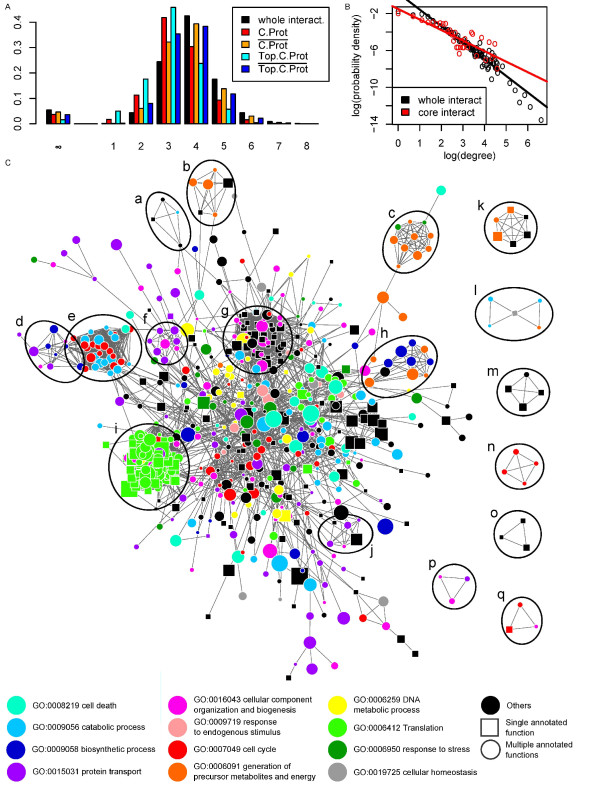
“We also found both the central and whole interactome to be scale-free [37], with the central interactome comprising more highly-connected regions (protein complexes), see Figure 2B.”
BackgroundA faster algorithm for betweenness centrality*
Brandes, U. (2001) · The Journal of Mathematical Sociology · doi:10.1080/0022250x.2001.9990249 · Cited by 4,936
The Proteomics Protocols Handbook
(2005) · Humana Press eBooks · doi:10.1385/1592598900 · Cited by 3,538
Goh, K.-I., Cusick, M. E., Valle, D., Childs, B., Vidal, M., & Barabási, A.-L. (2007) · Proceedings of the National Academy of Sciences · doi:10.1073/pnas.0701361104 · Cited by 3,242
Lauer, G. M., & Walker, B. D. (2001) · New England Journal of Medicine · doi:10.1056/nejm200107053450107 · Cited by 2,973
Global landscape of protein complexes in the yeast Saccharomyces cerevisiae
Krogan, N. J., Cagney, G., Yu, H., Zhong, G., Guo, X., Ignatchenko, A., Li, J., Pu, S., Datta, N., Tikuisis, A. P., et al. (2006) · Nature · doi:10.1038/nature04670 · Cited by 2,952 · cited 1×
“The understanding of living cells at a systemic level is being recognized more and more as an important component of biology and medicine research [1-9].”
BackgroundDrugBank: a knowledgebase for drugs, drug actions and drug targets
Wishart, D. S., Knox, C., Guo, A. C., Cheng, D., Shrivastava, S., Tzur, D., Gautam, B., & Hassanali, M. (2008) · Nucleic Acids Research · doi:10.1093/nar/gkm958 · Cited by 2,861 · cited 4×
“There was a significant association of C.Prot with drug targets as listed in DrugBank [35] (176 targets among the 1465 listed, P = 1.6E-23, bootstrapped c2 see Methods).”
BackgroundInfluentialRappsilber, J., Ishihama, Y., & Mann, M. (2003) · Analytical Chemistry · doi:10.1021/ac026117i · Cited by 2,644
Proteome survey reveals modularity of the yeast cell machinery
Gavin, A.-C., Aloy, P., Grandi, P., Krause, R., Boesche, M., Marzioch, M., Rau, C., Jensen, L. J., Bastuck, S., Dümpelfeld, B., et al. (2006) · Nature · doi:10.1038/nature04532 · Cited by 2,575 · cited 1×
“The understanding of living cells at a systemic level is being recognized more and more as an important component of biology and medicine research [1-9].”
BackgroundSelf-citationCharacterization of complex networks: A survey of measurements
Costa, L. D. F., Rodrigues, F. A., Travieso, G., & Villas Boas, P. R. (2007) · Advances in Physics · doi:10.1080/00018730601170527 · Cited by 2,475
Improved scoring of functional groups from gene expression data by decorrelating GO graph structure
Alexa, A., Rahnenführer, J., & Lengauer, T. (2006) · Bioinformatics · doi:10.1093/bioinformatics/btl140 · Cited by 2,188
Ishihama, Y., Oda, Y., Tabata, T., Sato, T., Nagasu, T., Rappsilber, J., & Mann, M. (2005) · Molecular & Cellular Proteomics · doi:10.1074/mcp.m500061-mcp200 · Cited by 2,055 · cited 2×
“It is well-known that spectral and peptide counts can provide reasonable estimates of protein abundance [43-45].”
BackgroundMethodYıldırım, M. A., Goh, K.-I., Cusick, M. E., Barabási, A.-L., & Vidal, M. (2007) · Nature Biotechnology · doi:10.1038/nbt1338 · Cited by 1,708
PID: the Pathway Interaction Database
Schaefer, C. F., Anthony, K., Krupa, S., Buchoff, J., Day, M., Hannay, T., & Buetow, K. H. (2009) · Nucleic Acids Research · doi:10.1093/nar/gkn653 · Cited by 1,603
Some Unique Properties of Eigenvector Centrality
Bonacich, P. (2007) · Social Networks · doi:10.1016/j.socnet.2007.04.002 · Cited by 1,572 · cited 1×
“how likely it is that a sequence of protein interactions - a pathway - goes through this node; Eigenvector centrality [52] measures centrality in dependence of neighbors own centrality, i.”
BackgroundLarge-scale analysis of the human and mouse transcriptomes
Su, A. I., Cooke, M. P., Ching, K. A., Hakak, Y., Walker, J. R., Wiltshire, T., Orth, A. P., Vega, R. G., Sapinoso, L. M., Moqrich, A., et al. (2002) · Proceedings of the National Academy of Sciences · doi:10.1073/pnas.012025199 · Cited by 1,466 · cited 4×
“Trans) [15] was associated with different biological processes related to signaling and multicellular organization, whereas vital biological processes were much less prevalent (Suppl.”
BackgroundMethodInfluentialAssembly of Cell Regulatory Systems Through Protein Interaction Domains
Pawson, T., & Nash, P. (2003) · Science · doi:10.1126/science.1083653 · Cited by 1,422 · cited 1×
“Biological pathways and networks of protein interactions are key paradigms to link molecules to biological functions and by so doing bridging the genotype-to-phenotype gap as well as understanding properties of the organization of biological matter [10-13].”
BackgroundComparison of Label-free Methods for Quantifying Human Proteins by Shotgun Proteomics
Old, W. M., Meyer-Arendt, K., Aveline-Wolf, L., Pierce, K. G., Mendoza, A., Sevinsky, J. R., Resing, K. A., & Ahn, N. G. (2005) · Molecular & Cellular Proteomics · doi:10.1074/mcp.m500084-mcp200 · Cited by 1,206 · cited 1×
“It is well-known that spectral and peptide counts can provide reasonable estimates of protein abundance [43-45].”
BackgroundLu, P., Vogel, C., Wang, R., Yao, X., & Marcotte, E. M. (2007) · Nature Biotechnology · doi:10.1038/nbt1270 · Cited by 1,139 · cited 1×
“mechanisms of regulation can significantly decouple protein and transcript abundance [22].”
BackgroundThe Universal Protein Resource (UniProt): an expanding universe of protein information
Wu, C. H. (2006) · Nucleic Acids Research · doi:10.1093/nar/gkj161 · Cited by 1,110 · cited 4×
“Searches were performed against UniProtKB/Swiss-Prot (vers.”
BackgroundMethodInfluentialSystems Biology and New Technologies Enable Predictive and Preventative Medicine
Hood, L., Heath, J. R., Phelps, M. E., & Lin, B. (2004) · Science · doi:10.1126/science.1104635 · Cited by 1,108 · cited 1×
“The understanding of living cells at a systemic level is being recognized more and more as an important component of biology and medicine research [1-9].”
BackgroundMINT: the Molecular INTeraction database
Chatr-aryamontri, A., Ceol, A., Palazzi, L. M., Nardelli, G., Schneider, M. V., Castagnoli, L., & Cesareni, G. (2007) · Nucleic Acids Research · doi:10.1093/nar/gkl950 · Cited by 1,026 · cited 1×
“We have integrated five public databases containing human protein-protein interactions (PPIs) (MINT [46], IntAct [47], HPRD [48], BioGRID [49], protein complexes found in NCI-PID [36]) mapping all accession codes onto Swiss-Prot.”
MethodLarge-Scale Proteomic Analysis of the Human Spliceosome
Rappsilber, J., Ryder, U., Lamond, A. I., & Mann, M. (2002) · Genome Research · doi:10.1101/gr.473902 · Cited by 943
Desiere, F. (2006) · Nucleic Acids Research · doi:10.1093/nar/gkj040 · Cited by 910 · cited 1×
“We could not find comparable human datasets from public repositories [38,39] to complement our data and cover more cell lines or tissues.”
BackgroundSpontaneous evolution of modularity and network motifs
Kashtan, N., & Alon, U. (2005) · Proceedings of the National Academy of Sciences · doi:10.1073/pnas.0503610102 · Cited by 878 · cited 1×
“The understanding of living cells at a systemic level is being recognized more and more as an important component of biology and medicine research [1-9].”
BackgroundReactome knowledgebase of human biological pathways and processes
Matthews, L., Gopinath, G., Gillespie, M., Caudy, M., Croft, D., de Bono, B., Garapati, P., Hemish, J., Hermjakob, H., Jassal, B., et al. (2009) · Nucleic Acids Research · doi:10.1093/nar/gkn863 · Cited by 873 · cited 1×
“Reactome [55] pathways in addition to NCI-PID unique pathways.”
MethodIntAct--open source resource for molecular interaction data
Kerrien, S., Alam-Faruque, Y., Aranda, B., Bancarz, I., Bridge, A., Derow, C., Dimmer, E., Feuermann, M., Friedrichsen, A., Huntley, R., et al. (2007) · Nucleic Acids Research · doi:10.1093/nar/gkl958 · Cited by 800 · cited 3×
“Protein interaction data and pathways We have integrated five public databases containing human protein-protein interactions (PPIs) (MINT [46], IntAct [47], HPRD [48], BioGRID [49], protein complexes found in NCI-PID [36]) mapping all accession codes onto Swiss-Prot.”
Tong, A. H. Y., Drees, B., Nardelli, G., Bader, G. D., Brannetti, B., Castagnoli, L., Evangelista, M., Ferracuti, S., Nelson, B., Paoluzi, S., et al. (2002) · Science · doi:10.1126/science.1064987 · Cited by 700
The BioGRID Interaction Database: 2008 update
Breitkreutz, B.-J., Stark, C., Reguly, T., Boucher, L., Breitkreutz, A., Livstone, M., Oughtred, R., Lackner, D. H., Bahler, J., Wood, V., et al. (2007) · Nucleic Acids Research · doi:10.1093/nar/gkm1001 · Cited by 698 · cited 3×
“Protein interaction data and pathways We have integrated five public databases containing human protein-protein interactions (PPIs) (MINT [46], IntAct [47], HPRD [48], BioGRID [49], protein complexes found in NCI-PID [36]) mapping all accession codes onto Swiss-Prot.”
MethodNetwork modeling links breast cancer susceptibility and centrosome dysfunction
Pujana, M. A., Han, J.-D. J., Starita, L. M., Stevens, K. N., Tewari, M., Ahn, J. S., Rennert, G., Moreno, V., Kirchhoff, T., Gold, B., et al. (2007) · Nature Genetics · doi:10.1038/ng.2007.2 · Cited by 618 · cited 1×
“The understanding of living cells at a systemic level is being recognized more and more as an important component of biology and medicine research [1-9].”
BackgroundHuman protein reference database--2006 update
Mishra, G. R. (2006) · Nucleic Acids Research · doi:10.1093/nar/gkj141 · Cited by 601
Correlations between RNA and protein expression profiles in 23 human cell lines
Gry, M., Rimini, R., Strömberg, S., Asplund, A., Pontén, F., Uhlén, M., & Nilsson, P. (2009) · BMC Genomics · doi:10.1186/1471-2164-10-365 · Cited by 522 · cited 1×
“It is well known that correlation between transcripts and protein abundance is variable [21] and, as a general rule of thumb, a good correlation is observed in one third of the observed entities only.”
BackgroundKislinger, T., Cox, B., Kannan, A., Chung, C., Hu, P., Ignatchenko, A., Scott, M. S., Gramolini, A. O., Morris, Q., Hallett, M. T., et al. (2006) · Cell · doi:10.1016/j.cell.2006.01.044 · Cited by 482
Expression analysis of G Protein-Coupled Receptors in mouse macrophages
Lattin, J. E., Schroder, K., Su, A. I., Walker, J. R., Zhang, J., Wiltshire, T., Saijo, K., Glass, C. K., Hume, D. A., Kellie, S., et al. (2008) · Immunome Research · doi:10.1186/1745-7580-4-5 · Cited by 438 · cited 1×
“Prot) [14] display properties that are distinct from the rest? iii) Can one identify global features of this central proteome? Gene expression microarrays allow analyzing a large variety of transcriptomes [15] and several studies using mRNA detection or abundance as a proxy for protein expression or concentration have…”
BackgroundHepatitis C virus infection protein network
de Chassey, B., Navratil, V, Tafforeau, L., Hiet, M. S., Aublin‐Gex, A., Agaugué, S., Meiffren, G., Pradezynski, F., Faria, B. F., Chantier, T., et al. (2008) · Molecular Systems Biology · doi:10.1038/msb.2008.66 · Cited by 384
In The Proteomics Protocols Handbook
Gasteiger, E., Hoogland, C., Gattiker, A., Duvaud, S., Wilkins, M. R., Appel, R., & Bairoch, A. (2005) · Cited by 356
Regulatory networks define phenotypic classes of human stem cell lines
Müller, F.-J., Laurent, L. C., Kostka, D., Ulitsky, I., Williams, R., Lu, C., Park, I.-H., Rao, M. S., Shamir, R., Schwartz, P. H., et al. (2008) · Nature · doi:10.1038/nature07213 · Cited by 343 · cited 1×
“Prot) [14] display properties that are distinct from the rest? iii) Can one identify global features of this central proteome? Gene expression microarrays allow analyzing a large variety of transcriptomes [15] and several studies using mRNA detection or abundance as a proxy for protein expression or concentration have…”
BackgroundTissue specificity and the human protein interaction network
Bossi, A., & Lehner, B. (2009) · Molecular Systems Biology · doi:10.1038/msb.2009.17 · Cited by 316 · cited 3×
“Lehner B, Fraser AG: Protein domains enriched in mammalian tissuespecific or widely expressed genes.”
BackgroundInfluentialOLAV: Towards high‐throughput tandem mass spectrometry data identification
Colinge, J., Masselot, A., Giron, M., Dessingy, T., & Magnin, J. (2003) · PROTEOMICS · doi:10.1002/pmic.200300485 · Cited by 297
Self-citationLage, K., Hansen, N. T., Karlberg, E. O., Eklund, A. C., Roque, F. S., Donahoe, P. K., Szallasi, Z., Jensen, T. S., & Brunak, S. (2008) · Proceedings of the National Academy of Sciences · doi:10.1073/pnas.0810772105 · Cited by 292 · cited 1×
“Biological pathways and networks of protein interactions are key paradigms to link molecules to biological functions and by so doing bridging the genotype-to-phenotype gap as well as understanding properties of the organization of biological matter [10-13].”
BackgroundAn integrated workflow for charting the human interaction proteome: insights into the PP2A system
Glatter, T., Wepf, A., Aebersold, R., & Gstaiger, M. (2009) · Molecular Systems Biology · doi:10.1038/msb.2008.75 · Cited by 259 · cited 1×
“In fact, HEK293 cells provide a convenient system for expressing many proteins, notably in affinity purification MS experiments [28].”
BackgroundSchirle, M., Heurtier, M.-A., & Kuster, B. (2003) · Molecular & Cellular Proteomics · doi:10.1074/mcp.m300087-mcp200 · Cited by 229 · cited 4×
“[14], who first coined the term central proteome and used human cell lines as we did, though they limited their analysis to technical aspects related to the proteomics technology.”
BackgroundInfluentialA global view of protein expression in human cells, tissues, and organs
Pontén, F., Gry, M., Fagerberg, L., Lundberg, E., Asplund, A., Berglund, L., Oksvold, P., Björling, E., Hober, S., Kampf, C., et al. (2009) · Molecular Systems Biology · doi:10.1038/msb.2009.93 · Cited by 222 · cited 3×
“Another related project is the Human Protein Atlas [24] that maps protein expression in human tissues through a selected set of antibodies.”
BackgroundInfluentialCharting the molecular network of the drug target Bcr-Abl
Brehme, M., Hantschel, O., Colinge, J., Kaupe, I., Planyavsky, M., Köcher, T., Mechtler, K., Bennett, K. L., & Superti-Furga, G. (2009) · Proceedings of the National Academy of Sciences · doi:10.1073/pnas.0900653106 · Cited by 170 · cited 1×
“Biological pathways and networks of protein interactions are key paradigms to link molecules to biological functions and by so doing bridging the genotype-to-phenotype gap as well as understanding properties of the organization of biological matter [10-13].”
BackgroundSelf-citationPRIDE: new developments and new datasets
Jones, P., Cote, R. G., Cho, S. Y., Klie, S., Martens, L., Quinn, A. F., Thorneycroft, D., & Hermjakob, H. (2007) · Nucleic Acids Research · doi:10.1093/nar/gkm1021 · Cited by 134 · cited 1×
“We could not find comparable human datasets from public repositories [38,39] to complement our data and cover more cell lines or tissues.”
BackgroundApplications of a Rat Multiple Tissue Gene Expression Data Set
Walker, J. R., Su, A. I., Self, D. W., Hogenesch, J. B., Lapp, H., Maier, R. M., Hoyer, D., & Bilbe, G. (2004) · Genome Research · doi:10.1101/gr.2161804 · Cited by 106 · cited 1×
“Prot) [14] display properties that are distinct from the rest? iii) Can one identify global features of this central proteome? Gene expression microarrays allow analyzing a large variety of transcriptomes [15] and several studies using mRNA detection or abundance as a proxy for protein expression or concentration have…”
BackgroundIntroduction to Computational Proteomics
Colinge, J., & Bennett, K. L. (2007) · PLoS Computational Biology · doi:10.1371/journal.pcbi.0030114 · Cited by 85
Self-citationHackl, H., Burkard, T. R., Sturn, A., Rubio, R., Schleiffer, A., Tian, S., Quackenbush, J., Eisenhaber, F., & Trajanoski, Z. (2005) · Genome Biology · doi:10.1186/gb-2005-6-13-r108 · Cited by 68 · cited 1×
“This indicates that abundant proteins are more likely at non-rate limiting central positions while the key steps are under tighter expressional control [40].”
BackgroundSelf-citationIntegrative analysis for finding genes and networks involved in diabetes and other complex diseases
Bergholdt, R., Størling, Z. M., Lage, K., Karlberg, E. O., Ólason, P. Í., Aalund, M., Nerup, J., Brunak, S., Workman, C. T., & Pociot, F. (2007) · Genome Biology · doi:10.1186/gb-2007-8-11-r253 · Cited by 51 · cited 1×
“Biological pathways and networks of protein interactions are key paradigms to link molecules to biological functions and by so doing bridging the genotype-to-phenotype gap as well as understanding properties of the organization of biological matter [10-13].”
BackgroundFrom systems biology to synthetic biology
Church, G. M. (2005) · Molecular Systems Biology · doi:10.1038/msb4100007 · Cited by 51 · cited 1×
“The understanding of living cells at a systemic level is being recognized more and more as an important component of biology and medicine research [1-9].”
BackgroundProtein domains enriched in mammalian tissue-specific or widely expressed genes
Lehner, B., & Fraser, A. G. (2004) · Trends in Genetics · doi:10.1016/j.tig.2004.08.002 · Cited by 32
Cited by
Structure and dynamics of molecular networks: A novel paradigm of drug discovery
Csermely, P., Korcsmáros, T., Kiss, H. J. M., London, G., & Nussinov, R. (2013) · Pharmacology & Therapeutics · doi:10.1016/j.pharmthera.2013.01.016 · Cited by 892
“…interactions of the human interactome (Stumpf et al., 2008) is an ongoing, key step in networkrelated drug design efforts (see Rual et al., 2005; Stelzl et al., 2005; Chautard et al., 2009; Burkard et al., 2011; De Las Rivas & Prieto, 2012; Havugimana et al., 2012 and databases of Table 6).”
BackgroundUnderstanding multicellular function and disease with human tissue-specific networks
Greene, C. S., Krishnan, A., Wong, A. K., Ricciotti, E., Zelaya, R. A., Himmelstein, D. S., Zhang, R., Hartmann, B. M., Zaslavsky, E., Sealfon, S. C., et al. (2015) · Nature Genetics · doi:10.1038/ng.3259 · Cited by 832
“Sets T and U were made disjoint by retaining only genes in T genes that were not in U.”
Geiger, T., Wehner, A., Schaab, C., Cox, J., & Mann, M. (2012) · Molecular & Cellular Proteomics · doi:10.1074/mcp.m111.014050 · Cited by 797
“[1] Submitted to the special PROSPECTS issue in MCP”
BackgroundGlobal Proteome Analysis of the NCI-60 Cell Line Panel
Gholami, A. M., Hahne, H., Wu, Z., Auer, F. J., Meng, C., Wilhelm, M., & Kuster, B. (2013) · Cell Reports · doi:10.1016/j.celrep.2013.07.018 · Cited by 302
Viral immune modulators perturb the human molecular network by common and unique strategies
Pichlmair, A., Kandasamy, K., Alvisi, G., Mulhern, O., Sacco, R., Habjan, M., Binder, M., Stefanovic, A., Eberle, C.-A., Goncalves, A., et al. (2012) · Nature · doi:10.1038/nature11289 · Cited by 262
Self-citation
Metadata
- Authors
- Burkard, T. R., Planyavsky, M., Kaupe, I., Breitwieser, F. P., Bürckstümmer, T., Bennett, K. L., Superti-Furga, G., & Colinge, J.
- Affiliations
- Austrian Academy of Sciences (AT)
- Corresponding author
- Colinge, Jacques
- Venue
- BMC Systems Biology
- Published
- 2011-01-26
- Volume
- 5
- Issue
- 1
- Pages
- 17-17
- ISSN
- 1752-0509 (ISSN-L)
- PMC
- PMC3039570
- OpenAlex
- W1975345997
- Cited by
- 67
- References
- 60
- Citations by year
- 2025: 1 · 2024: 1 · 2023: 2 · 2022: 2 · 2020: 4 · 2019: 1 · 2018: 4 · 2017: 2 · 2016: 6 · 2015: 10 · 2014: 8 · 2013: 15 · 2012: 9
- FWCI
- 4.93
- Type
- journal article
- Language
- en
- Open access
- gold
- doi.org
- Licence
- cc-by
- Locations
- BMC Systems Biology (publishedVersion, cc-by)
- PubMed Central (publishedVersion, cc-by)
- PubMed (publishedVersion)
- DOAJ (DOAJ: Directory of Open Access Journals) (submittedVersion)
- Topics
- Physical Sciences › Chemistry › Spectroscopy › Advanced Proteomics Techniques and Applications
- Life Sciences › Biochemistry, Genetics and Molecular Biology › Molecular Biology › Bioinformatics and Genomic Networks
- Life Sciences › Biochemistry, Genetics and Molecular Biology › Molecular Biology › Genomics and Phylogenetic Studies
- Keywords
- human cell lines, proteostasis, primary metabolism, cell proliferation, alternative splicing, protein-protein interaction network, functional annotation, therapeutic target, protein conservation
- MeSH terms
- Cell Line, Exons, Humans, Proteome, Proteomics
About these checks
Registry, retraction, Cites and statistics results are computed, not judged, with one exception: a printed reference that no index lists is read once by a model before it counts as a citation error. Claims are extracted by a model and kept only when their quote appears verbatim in the text; each cited source is then checked, with a model’s help, for whether it says what the claim relies on. Those verdicts can be wrong — read the claim’s quote and the cited source before relying on one.
Statistics and arithmetic are recomputed, not judged.
Confidence bands are shown only for fields calibrated on our annotated test set. None is calibrated yet, so no band is shown.
What counts as a claim ›How we measure confidence ›How we check this ›
Are you an author, or do you see a problem with this page? Request a review
Data sources
Bibliographic data: Semantic Scholar, OpenAlex, Crossref.
Contains information from the Semantic Scholar Academic Graph Datasets, made available under the ODC Attribution License (ODC-BY 1.0).
Semantic Scholar’s data is described in: Kinney, R., et al. (2023). The Semantic Scholar Open Data Platform. arXiv:2301.10140.
