

Differential susceptibility of PCR reactions to inhibitors: an important and unrecognised phenomenon
Open accessThe DOI matches its Crossref record; 24 of the 24 references it cites were found in a registry or an index.
Abstract
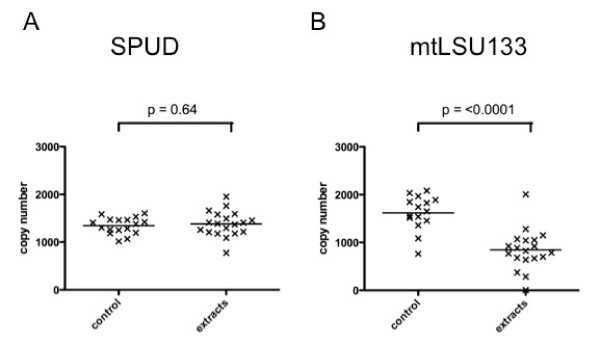
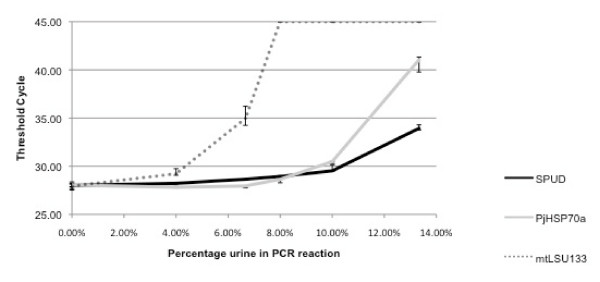
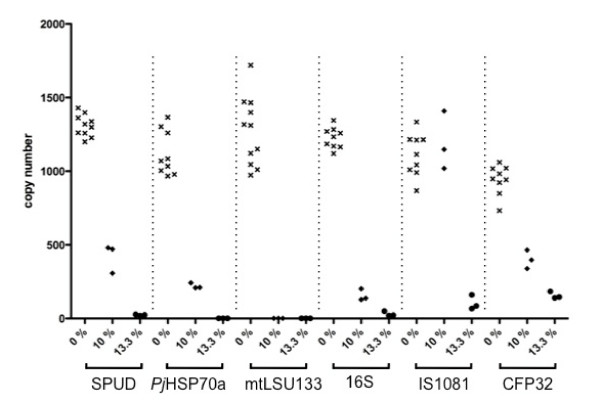
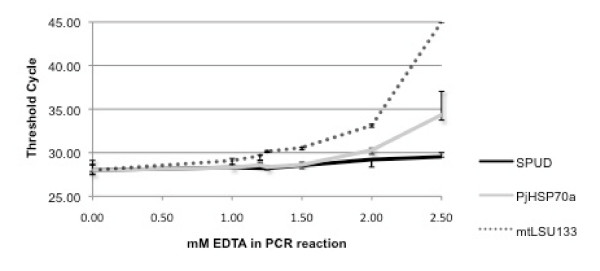
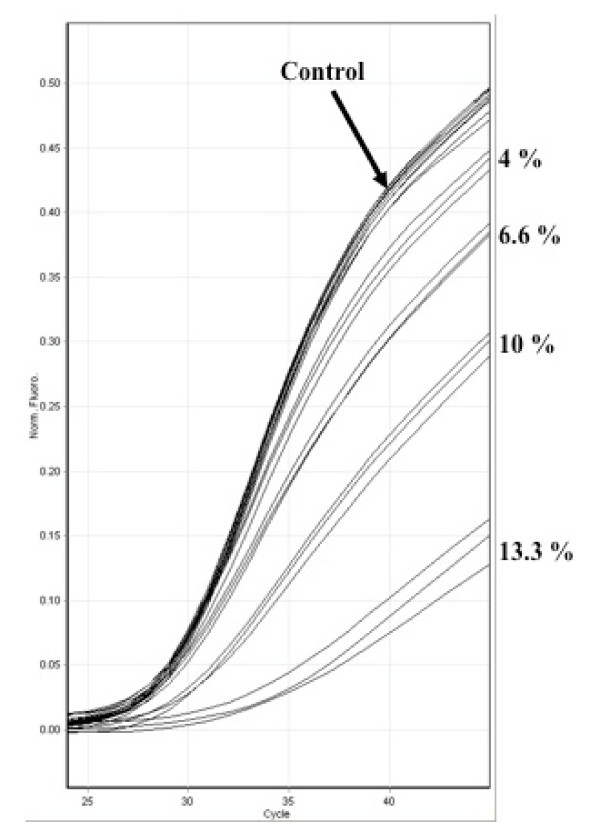
BACKGROUND: PCR inhibition by nucleic acid extracts is a well known yet poorly described phenomenon. Inhibition assessment generally depends on the assumption that inhibitors affect all PCR reactions to the same extent; i.e. that the reaction of interest and the control reaction are equally susceptible to inhibition. To test this assumption we performed inhibition assessment on DNA extracts from human urine samples, fresh urine and EDTA using different PCR reactions. RESULTS: When copurified inhibitors were assessed using two different PCR reactions one reaction appeared to be inhibited whilst the other was not. Further experiments using various concentrations of unextracted urine to inhibit six different PCR reactions revealed that susceptibility to inhibition was highly variable between reactions. Similar results were obtained using EDTA as the PCR inhibitor. We could find no obvious explanation why one reaction should be more susceptible to inhibition than another, although a possible association with amplicon GC content was noted. CONCLUSION: These findings have serious implications for all PCR-based gene expression studies, including the relatively new PCR array method, and for both qualitative and quantitative PCR-based molecular diagnostic assays, suggesting that careful consideration should be given to inhibition compatibility when conducting PCR analyses. We have demonstrated unequivocally that it is not safe to assume that different PCR reactions are equally susceptible to inhibition by substances co-purified in nucleic acid extracts.
Overview
The claims and statistics of this paper haven’t been checked yet.
Free: it reads the open-access text and checks the first 5 claims that cite a source we can check. Create a free account to check every claim.
Integrity signals
Registry
Cites
Statistics
Figures
Verification
Claims the paper makes
The claims and statistics of this paper haven’t been checked yet.
Free: it reads the open-access text and checks the first 5 claims that cite a source we can check. Create a free account to check every claim.
Claims other papers make about this one
Each is checked against this paper’s own text: does it say what the citing paper says it does?
The source backs part of the claim, not all of it — or backs it for a different population, condition or comparison.
In the citing paper
“The root cause of poor quality data is typically associated with inadequate dilution of residual protein and chemical contaminants that variably inhibit Taq polymerase and primer annealing.”
From Droplet Digital PCR versus qPCR for gene expression analysis with low abundant targets: from variable nonsense to publication quality data (2017) · cites this paper as [19]
Experimental — accuracy not yet measuredThe source backs part of the claim, not all of it — or backs it for a different population, condition or comparison.
In the citing paper
“However, there are frequently subtle differences in the level of impurities between samples even under highly rigorous RNA extraction procedures that can alter Taq activity, imparting gross variability on the resulting data18, 19.”
From Droplet Digital PCR versus qPCR for gene expression analysis with low abundant targets: from variable nonsense to publication quality data (2017) · cites this paper as [19]
Experimental — accuracy not yet measuredThe cited source says what the claim attributes to it.
In the citing paper
“different PCR reactions may not be equally susceptible to inhibition by substances copurified in nucleic acid extracts (56,57 ).”
From The MIQE guidelines: minimum information for publication of quantitative real-time PCR experiments (2009) · cites this paper as [56]
Self-check
Percentages, sums and reported differences re-computed from the paper’s own numbers.
The self-check needs the paper’s full text.
Citations
Cites
Mfold web server for nucleic acid folding and hybridization prediction
Zuker, M. (2003) · Nucleic Acids Research · doi:10.1093/nar/gkg595 · Cited by 13,404 · cited 2×
“Amplicon secondary structure was analysed using Mfold [15].”
MethodQuantification of mRNA using real-time RT-PCR
Nolan, T., Hands, R. E., & Bustin, S. A. (2006) · Nature Protocols · doi:10.1038/nprot.2006.236 · Cited by 2,247 · cited 2×
“Background It is well known that the polymerase chain reaction (PCR) is susceptible to inhibitors [1-4] and many publications describe methods for assessing inhibition using spiked alien molecules of various types [5-9].”
BackgroundReal-time RT-PCR normalisation; strategies and considerations
Huggett, J., Dheda, K., Bustin, S., & Zumla, A. (2005) · Genes & Immunity · doi:10.1038/sj.gene.6364190 · Cited by 1,856 · cited 2×
“If two different PCR reactions are to be compared, or one is to be used as a reference reaction for the other, as in the 'normalisation' procedure commonly used in quantitative gene expression studies [11], it is important that the two reactions are affected by potential inhibitors to the same extent; we describe this…”
BackgroundMethodSelf-citationPredicting DNA duplex stability from the base sequence
Breslauer, K. J., Frank, R., Blöcker, H., & Marky, L. A. (1986) · Proceedings of the National Academy of Sciences · doi:10.1073/pnas.83.11.3746 · Cited by 1,837 · cited 1×
“Primers were further assessed for Tm, 3' end stability, enthalpy, entropy and free energy, calculated by the nearest neighbour method [16] using NetPrimer software (Premier Biosoft International).”
MethodQuantitative real-time RT-PCR – a perspective
Bustin, S. A., Benes, V, Nolan, T., & Pfaffl, M. W. (2005) · Journal of Molecular Endocrinology · doi:10.1677/jme.1.01755 · Cited by 1,321 · cited 1×
“cycle (Ct) or crossing point (Cp) relative to an uninhibited control [10].”
BackgroundReal-time reverse transcription PCR (qRT-PCR) and its potential use in clinical diagnosis
Bustin, S. A., & Mueller, R. (2005) · Clinical Science · doi:10.1042/cs20050086 · Cited by 529 · cited 1×
“Discussion Co-purification of inhibitors of PCR during nucleic acid extraction is a well recognised phenomenon [17,2-4] that can be caused by numerous substances [18,19].”
BackgroundStandardized determination of real-time PCR efficiency from a single reaction set-up
Tichopad, A. (2003) · Nucleic Acids Research · doi:10.1093/nar/gng122 · Cited by 455 · cited 2×
“Background It is well known that the polymerase chain reaction (PCR) is susceptible to inhibitors [1-4] and many publications describe methods for assessing inhibition using spiked alien molecules of various types [5-9].”
BackgroundAbu Al-Soud, W., & Rådström, P. (1998) · Applied and Environmental Microbiology · doi:10.1128/aem.64.10.3748-3753.1998 · Cited by 382 · cited 1×
“These measures include the careful selection of type of thermostable DNA polymerase [ 22 ], reduction in the amount of DNA template added to the reaction and the use of certain additives such as bovine serum albumin, which provide some resistance to inhibitors that may be present in blood [23].”
MethodDNA Extraction Strategies for Amplified Fragment Length Polymorphism Analysis
Comey, C., Koons, B., Presley, K., Smerick, J., Sobieralski, C., Stanley, D., & Baechtel, F. (1994) · Journal of Forensic Sciences · doi:10.1520/jfs13711j · Cited by 265 · cited 1×
“These measures include the careful selection of type of thermostable DNA polymerase [22], reduction in the amount of DNA template added to the reaction and the use of certain additives such as bovine serum albumin, which provide some resistance to inhibitors that may be present in blood [ 23 ].”
MethodSPUD: A quantitative PCR assay for the detection of inhibitors in nucleic acid preparations
Nolan, T., Hands, R. E., Ogunkolade, W., & Bustin, S. A. (2006) · Analytical Biochemistry · doi:10.1016/j.ab.2006.01.051 · Cited by 257 · cited 2×
“Background It is well known that the polymerase chain reaction (PCR) is susceptible to inhibitors [1-4] and many publications describe methods for assessing inhibition using spiked alien molecules of various types [5-9].”
Background
Cited by
Items 101–200 of 252
Hrdý, J., & Vašíčková, P. (2021) · Food Control · doi:10.1016/j.foodcont.2021.108764 · Cited by 27
Inhibition monitoring in veterinary molecular testing
Yan, L., Toohey-Kurth, K. L., Crossley, B. M., Bai, J., Glaser, A. L., Tallmadge, R. L., & Goodman, L. B. (2019) · Journal of Veterinary Diagnostic Investigation · doi:10.1177/1040638719889315 · Cited by 26
“Ethylenediamine tetra-acetic acid (EDTA), which is a common component in many blood collection, transport, and nucleic acid elution buffers, is known to have an inhibitory effect on downstream PCR applications,(38,50) although EDTA is typically diluted or removed during the nucleic acid extraction process.(19) The mec…”
BackgroundMacPhail, D. P. C., Koppenstein, R., Maciver, S. K., Paley, R. K., Longshaw, M., & Henriquez, F. L. (2020) · Aquaculture · doi:10.1016/j.aquaculture.2020.736083 · Cited by 20
Hu, W.-P., Chen, Y., & Chen, W. (2020) · Scientific Reports · doi:10.1038/s41598-020-78202-8 · Cited by 29
Shrivastava, P., Jain, T., & Kumawat, R. K. (2021) · Scientific Reports · doi:10.1038/s41598-021-86633-0 · Cited by 22
A standardized method for plasma extracellular vesicle isolation and size distribution analysis
Diehl, J. N., Ray, A., Collins, L. B., Peterson, A., Alexander, K. C., Boutros, J. G., Ikonomidis, J. S., & Akerman, A. W. (2023) · PLoS ONE · doi:10.1371/journal.pone.0284875 · Cited by 22
“Thus, this protocol has selected to use blood plasma collected in the presence of ethylenediaminetetraacetic acid (EDTA) and stored at -80˚C. EDTA has less effects on downstream biochemical applications in comparison to other anti-coagulants, such as heparin or sodium citrate [13–17].”
Improved detection and quantitation of norovirus from water
Gregory, J. B., Webster, L. F., Griffith, J. F., & Stewart, J. R. (2010) · Journal of Virological Methods · doi:10.1016/j.jviromet.2010.12.011 · Cited by 22
Influence of Temperature, Medium, and Storage Duration on Chlamydia trachomatis DNA Detection by PCR
van Dommelen, L., Wolffs, P. F. G., van Tiel, F. H., Dukers–Muijrers, N. H. T. M., Herngreen, S. B., Bruggeman, C. A., & Hoebe, C. J. P. A. (2012) · Journal of Clinical Microbiology · doi:10.1128/jcm.02631-12 · Cited by 22
“This might reflect a decrease in the amount of PCR-inhibiting substances known to be present in urine samples (6).”
BackgroundRoux, G., Varlet‐Marie, E., Bastien, P., & Sterkers, Y. (2018) · International Journal for Parasitology · doi:10.1016/j.ijpara.2018.03.011 · Cited by 22
“PCR inhibition caused by the same DNA extract may be highly variable depending on the PCR method (Chabbert et al., 2004; Huggett et al., 2008; Pionzio and McCord, 2014).”
MethodDetection of Enteric Viruses from Wastewater and River Water in Botswana
Tubatsi, G., & Kebaabetswe, L. P. (2022) · Food and Environmental Virology · doi:10.1007/s12560-022-09513-4 · Cited by 21
Caduff, L., Dreifuss, D., Schindler, T., Devaux, A. J., Ganesanandamoorthy, P., Kull, A., Stachler, E. N., Fernández-Cassi, X., Beerenwinkel, N., Kohn, T., et al. (2022) · Dipòsit Digital de la Universitat de Barcelona (Universitat de Barcelona) · doi:10.3929/ethz-b-000538593 · Cited by 21
Recent advances and developments in monitoring biological agents in water samples
Amini, K., & Kraatz, H. (2014) · Reviews in Environmental Science and Bio/Technology · doi:10.1007/s11157-014-9351-5 · Cited by 26
“Environmental samples may contain a number of molecular inhibitors, such as humic and fulvic acid, complex polysaccharides, bacterial debris, metal ions, and nucleases (Huggett et al. 2008; Monteiro et al. 1997; Queiroz et al. 2001).”
BackgroundMéndez, K., Romaguera, J., Ortiz, A. P., López, M., Steinau, M., & Unger, E. R. (2013) · International Journal of Gynecology & Obstetrics · doi:10.1016/j.ijgo.2013.07.036 · Cited by 20
“While PCR inhibitors in nucleic acid extracts from urine have been reported [10], there was no evidence of this in the present study because urine DNA did not have a different effect on the amplification efficiency of the external templates.”
BackgroundRoux, G., Ravel, C., Varlet‐Marie, E., Jendrowiak, R., Bastien, P., & Sterkers, Y. (2019) · PLoS ONE · doi:10.1371/journal.pone.0219276 · Cited by 20
Griffiths, K. R., Burke, D. G., & Emslie, K. R. (2011) · Analytical Methods · doi:10.1039/c1ay05069a · Cited by 22
Isham, I. M., Najimudeen, S. M., Cork, S. C., Gupta, A. V., & Abdul-Careem, M. F. (2023) · Journal of Virological Methods · doi:10.1016/j.jviromet.2023.114859 · Cited by 20
Humphrey, B., McLeod, N. P., Turner, C., Sutton, J. M., Dark, P. M., & Warhurst, G. (2015) · PLoS ONE · doi:10.1371/journal.pone.0132954 · Cited by 19
“As primer pairs often respond differently to PCR inhibitors [22], testing of more primer pairs or utilisation of emerging nucleic acid technologies such as LNA [23] could help produce assays that can tolerate higher concentrations of these chemicals.”
BackgroundAdaptive PCR Based on Hybridization Sensing of Mirror-Image l -DNA
Adams, N. M., Gabella, W., Hardcastle, A. N., & Haselton, F. R. (2016) · Analytical Chemistry · doi:10.1021/acs.analchem.6b03291 · Cited by 20
Lee, K., & Tripathi, A. (2020) · Frontiers in Genetics · doi:10.3389/fgene.2020.00374 · Cited by 19
“Wash buffers typically contain ethanol, which has been shown to inhibit PCR (Huggett et al., 2008).”
BackgroundPierce, L. R., Willey, J. C., Palsule, V. V., Yeo, J., Shepherd, B. S., Crawford, E. L., & Stepien, C. A. (2013) · PLoS ONE · doi:10.1371/journal.pone.0071851 · Cited by 21
“and/or unmonitored effects from interfering substances in the PCR or reverse transcription reactions (rxn), which circumvented detection of the target gene [35].”
Winters, M., Torkelson, A., Booth, R. K., Mailand, C., Hoareau, Y., Tucker, S., & Wasser, S. K. (2018) · Forensic Science International · doi:10.1016/j.forsciint.2018.04.036 · Cited by 19
Rapid qPCR-Based Water Quality Monitoring in New York State Recreational Waters
Fernández-Baca, C. P., Spirito, C. M., Bae, J. S., Szegletes, Z. M., Barott, N., Sausele, D. J., Brooks, Y. M., Weller, D. L., & Richardson, R. E. (2021) · Frontiers in Water · doi:10.3389/frwa.2021.711477 · Cited by 18
Lage, D. P., Martins, V. T., Duarte, M. C., Costa, L. E., Tavares, G. D. S. V., Ramos, F. F., Chávez‐Fumagalli, M. Á., Menezes‐Souza, D., Roatt, B. M., Tavares, C. A. P., et al. (2016) · Acta Tropica · doi:10.1016/j.actatropica.2016.03.011 · Cited by 18
Okino, C. H., Giglioti, R., Silva, P. C., de Oliveira, H. N., & Oliveira, M. C. D. S. (2018) · Molecular Biology Reports · doi:10.1007/s11033-018-4436-9 · Cited by 18
Li, B., Kalinowski, P., Kim, B., Pauls, A. D., & Poburko, D. (2021) · Pharmacology & Therapeutics · doi:10.1016/j.pharmthera.2021.107995 · Cited by 25
Raczkowska, J., Bielska, A., Kretowski, A. J., & Niemira, M. (2023) · Frontiers in Oncology · doi:10.3389/fonc.2023.1209299 · Cited by 19
Zhu, L., Zhang, S., Xun, Y., Jiang, Y., Xia, B., Chen, X., Wang, L., Jiang, H., & Ma, S. (2017) · Pathology & Oncology Research · doi:10.1007/s12253-017-0286-3 · Cited by 16
Comparison of DNA extraction methods for identification of human remains
Pagan, F., Lim, C., Keglovic, M., & McNevin, D. B. (2011) · Australian Journal of Forensic Sciences · doi:10.1080/00450618.2011.610821 · Cited by 15
MIQE 2.0 and the Urgent Need to Rethink qPCR Standards
Bustin, S. A. (2025) · International Journal of Molecular Sciences · doi:10.3390/ijms26114975 · Cited by 18
“Nucleic acid quality and integrity are not properly assessed [11–13].”
Solvent-selective routing for centrifugally automated solid-phase purification of RNA
Dimov, N., Clancy, E., Gaughran, J., Boyle, D., Auley, D. M., Glynn, M. T., Dwyer, R. M., Coughlan, H., Barry, T., Barrett, L. M., et al. (2014) · Microfluidics and Nanofluidics · doi:10.1007/s10404-014-1477-9 · Cited by 14
“Nucleic acid modification enzymes and polymerases are inhibited by organic species such as phenol (Katcher and Schwartz 1994), ethanol (Huggett et al. 2008) and the presence of guanidinium salts.”
BackgroundRapid Detection of the Laurel Wilt Pathogen in Sapwood of Lauraceae Hosts
Parra, P. P., Dantes, W., Sandford, A., de la Torre, C., Pérez, J., Hadziabdic, Ð., Schaffer, B. A., & Gazis, R. O. (2020) · Plant Health Progress · doi:10.1094/php-06-20-0049-rs · Cited by 14
Rescue PCR: Reagent-rich PCR recipe improves amplification of degraded DNA extracts
Johnson, B. M., & Kemp, B. M. (2017) · Journal of Archaeological Science Reports · doi:10.1016/j.jasrep.2017.01.006 · Cited by 14
Tozaki, T., Ohnuma, A., Kikuchi, M., Ishige, T., Kakoi, H., HIROTA, K.-I., Kusano, K., & NAGATA, S.-I. (2021) · Drug Testing and Analysis · doi:10.1002/dta.3131 · Cited by 14
When Two-Fold Is Not Enough: Quantifying Uncertainty in Low-Copy qPCR
Bustin, S. A., Kirvell, S. L., Nolan, T., Mueller, R. D., & Shipley, G. L. (2025) · International Journal of Molecular Sciences · doi:10.3390/ijms26167796 · Cited by 17
“However, these early stages account for a significant proportion of total technical variability in quantitative molecular workflows, particularly when RNA quality is variable [38–40], inhibitors are present [41,42], or RT enzyme performance is suboptimal [43,44].”
Bauer, M. J., Peri, A. M., Lüftinger, L., Beisken, S., Bergh, H., Forde, B. M., Buckley, C., Cuddihy, T., Tan, P., Paterson, D. L., et al. (2022) · Journal of Clinical Microbiology · doi:10.1128/jcm.01012-22 · Cited by 14
Rivas-Macho, A., Eletxigerra, U., Diez‐Ahedo, R., Merino, S., Goñi‐de‐Cerio, F., & Olabarrı́a, G. (2024) · Food Control · doi:10.1016/j.foodcont.2024.110546 · Cited by 13
Capacity of rTth polymerase to detect RNA in the presence of various inhibitors
Cai, D., Behrmann, O., Hufert, F. T., Dame, G., & Urban, G. A. (2018) · PLoS ONE · doi:10.1371/journal.pone.0190041 · Cited by 13
Matson, M. J., Ricotta, E., Feldmann, F., Massaquoi, M. B. F., Sprecher, A., Giuliani, R., Edwards, J. K., Rosenke, K., de Wit, E., Feldmann, H., et al. (2022) · The Lancet Microbe · doi:10.1016/s2666-5247(22)00065-9 · Cited by 13
Napoletano, S., Battista, E., Martone, N., Netti, P. A., & Causa, F. (2023) · Talanta · doi:10.1016/j.talanta.2023.124468 · Cited by 13
“In addition, weak signals caused by low miRNA abundance in biofluids decrease the signal-to-noise ratio and complicate the measurement of rare miRNAs [11].”
BackgroundDo we need to screen Egyptian voluntary blood donors for toxoplasmosis?
El‐Sayed, N. M., Abdelwahab, M. M., Kishik, S. M., & Alhusseini, N. F. (2016) · Asian Pacific Journal of Tropical Disease · doi:10.1016/s2222-1808(15)61027-1 · Cited by 13
Hwang, J. Y., Ahn, S. J., Kwon, M., Seo, J. S., Hwang, S. D., & Jee, B. Y. (2020) · Journal of Fish Diseases · doi:10.1111/jfd.13150 · Cited by 12
Pugnière, P., Banzet, S., Chaillou, T., Mouret, C., & Peinnequin, A. (2011) · Analytical Biochemistry · doi:10.1016/j.ab.2011.04.008 · Cited by 15
“As stated previously, qPCR inhibition was both assay and template dependent [19].”
BackgroundGuan, X., Britzke, E. R., Piaggio, A. J., Bergman, D. L., Pelt, L. I. V., & Lance, R. F. (2020) · Journal of Mammalogy · doi:10.1093/jmammal/gyaa059 · Cited by 13
A standard additions method reduces inhibitor-induced bias in quantitative real-time PCR
Ellison, S. L. R., Emslie, K. R., & Kassir, Z. (2011) · Analytical and Bioanalytical Chemistry · doi:10.1007/s00216-011-5460-y · Cited by 11
Chin, J. H., Ssengooba, W., Grossman, S. N., Pellinen, J., & Wadda, V. (2019) · Journal of Clinical Tuberculosis and Other Mycobacterial Diseases · doi:10.1016/j.jctube.2019.01.002 · Cited by 12
“A large number of substances can inhibit PCR including additives to blood collection tubes; EDTA (purple/lavender top tubes) and heparin (green top tubes) [4,5].”
BackgroundSchröder, H. M., Niebergall‐Roth, E., Norrick, A., Esterlechner, J., Ganss, C., Frank, M. H., & Kluth, M. A. (2023) · Cells · doi:10.3390/cells12131788 · Cited by 10
Scott, G., Ryder, D., Buckley, M., Hill, R., Treagus, S., Stapleton, T. A., Walker, D. I., Lowther, J. A., & Batista, F. M. (2024) · Food and Environmental Virology · doi:10.1007/s12560-024-09611-5 · Cited by 12
“These data should be used with caution as inhibitor susceptibility may change between different enzymes and amplicons; quantitative performance gains for this metabarcoding approach cannot be inferred (Huggett et al. , 2008; Kermekchiev et al. , 2009).”
MethodMancusi, A., Giordano, A., Bosco, A., Girardi, S., Proroga, Y. T. R., Morena, L., Pinto, R., Sarnelli, P., Cringoli, G., Rinaldi, L., et al. (2022) · Parasitology Research · doi:10.1007/s00436-022-07477-9 · Cited by 20
“Therefore, the ddPCR is more reproducible than qPCR, indeed it is less operator or laboratory dependent, because there is a lower possibility of errors related to pipetting steps to prepare serial dilutions or misinterpretation due to incorrect preparation of standard curve, so a reliable comparison of quantification…”
BackgroundHorák, D., Hlídková, H., Trachtová, Š., Šlouf, M., Rittich, B., & Španová, A. (2015) · European Polymer Journal · doi:10.1016/j.eurpolymj.2015.03.036 · Cited by 10
“Generally, increasing the inhibitor concentration decreases the DNA amplification efficiency and reaction curve slope [39,60].”
BackgroundGiovanardi, D., Sutton, S. A., Stefani, E., & Walcott, R. R. (2017) · Seed Science and Technology · doi:10.15258/sst.2018.46.1.09 · Cited by 13
Circulating microRNA-197-3p as a potential biomarker for asbestos exposure
Frontini, F., Bononi, I., Torreggiani, E., Mauro, G. D., Mazzoni, E., Stendardo, M., Boschetto, P., Libener, R., Guaschino, R., Grosso, F., et al. (2021) · Scientific Reports · doi:10.1038/s41598-021-03189-9 · Cited by 10
Sources of error in molecular diagnostic analyses
Hsiao, S. J. (2019) · Elsevier eBooks · doi:10.1016/b978-0-12-813776-5.00021-2 · Cited by 13
External and semi-internal controls for PCR amplification of homologous sequences in mixed templates
Kalle, E., Gulevich, A. A., & Rensing, C. (2013) · Journal of Microbiological Methods · doi:10.1016/j.mimet.2013.09.014 · Cited by 10
“Huggett et al. (2008) stated that if two PCRs are compared it is important that both reactions are affected by potential inhibitors to the same extent.”
BackgroundSchulz, A., Lautner, S., Fromm, J. H., & Fischer, M. J. (2018) · PLoS ONE · doi:10.1371/journal.pone.0198513 · Cited by 10
Yeo, J., Crawford, E. L., Blomquist, T. M., Stanoszek, L. M., Dannemiller, R. E., Zyrek‐Betts, J., Casas, L. E. D. L., Khuder, S., & Willey, J. C. (2014) · PLoS ONE · doi:10.1371/journal.pone.0089395 · Cited by 10
“However, theMYC NT and ACTB NT values calculated relative to their respective IS were constant, and due to the loss of signal for IS at highest EDTA concentration, no false negative values were reported.”
BackgroundMethodInfluentialAnalysis of qPCR Data: From PCR Efficiency to Absolute Target Quantity
Ruijter, J. M., & van den Hoff, M. J. B. (2025) · International Journal of Molecular Sciences · doi:10.3390/ijms262411885 · Cited by 13
Borgmästars, E., Persson, S., Hellmér, M., Simonsson, M., & Eriksson, R. (2021) · Food and Environmental Virology · doi:10.1007/s12560-021-09477-x · Cited by 8
“PCR efficiency can be affected by an increased EDTA concentration (Huggett et al. 2008).”
BackgroundLiu, F., Cheng, J., Liu, X., & Wang, Q. (2021) · International Journal of Molecular Sciences · doi:10.3390/ijms222212487 · Cited by 7
“The use of poor-quality genomic DNA produces qPCR results that are not accurate [43].”
BackgroundGuan, X., Lance, R. F., & Feist, S. M. (2023) · Conservation Genetics Resources · doi:10.1007/s12686-023-01321-7 · Cited by 7
“…substances influence eDNA detection rates across assays, sample types, and different environments/locations (Goldberg et al. 2016; but see Huggett et al. 2008; Lance and Guan 2020); additional optimization may be required to ensure Exo-IPC is introduced at an appropriate concentration so…”
BackgroundBermond, C., Cherrad, S., Trainoy, A., Ngari, C., & Poulet, V. (2021) · Journal of Applied Microbiology · doi:10.1111/jam.15310 · Cited by 7
“Yet, biological repeats and triplicate real- time qPCR on cream bases supplemented with EDTA show very low variations in the ΔCq values immediately after inoculation, indicating that, in our case, the inhibitory effect of EDTA cannot be invoked (Huggett et al., 2008).”
BackgroundOffornedo, Q., Menkir, A., Babalola, D., & Gedil, M. A. (2022) · Gates Open Research · doi:10.12688/gatesopenres.13338.3 · Cited by 7
Kaniappan, P., Ahmed, S. A., Rajasekaram, G., Citartan, M., Ch’ng, E. S., Lee, L. P., Raabe, C. A., Rozhdestvensky, T. S., & Tang, T. H. (2017) · Journal of Cellular and Molecular Medicine · doi:10.1111/jcmm.13148 · Cited by 7
Correction: Targeted RNA-Sequencing with Competitive Multiplex-PCR Amplicon Libraries
Blomquist, T. M., Crawford, E. L., Lovett, J. L., Yeo, J., Stanoszek, L. M., Levin, A. M., Li, J., Lu, M., Shi, L. M., Muldrew, K. L., et al. (2013) · PLoS ONE · doi:10.1371/annotation/f77a351e-f57b-4102-b80c-6c4507beaba6 · Cited by 7
Optimisation and evaluation of an automated system for extraction of viral RNA from oysters
Persson, S., Nybogård, L., Simonsson, M., & Eriksson, R. (2019) · International Journal of Food Microbiology · doi:10.1016/j.ijfoodmicro.2019.108386 · Cited by 6
Pressure cycling technology (PCT) reduces effects of inhibitors of the PCR
Marshall, P., King, J. L., Lawrence, N. P., Lazarev, A. V., Gross, V., & Budowle, B. (2012) · International Journal of Legal Medicine · doi:10.1007/s00414-012-0770-y · Cited by 6
“addition, reduced PCR performance can result in a number of short tandem repeat (STR) typing problems, including heterozygote allele imbalance, allele dropout, and sequencespecific inhibition, all of which can impact negatively the interpretation of a DNA profile [4–9].”
BackgroundYang, J., Qi, X., & Wu, Y. (2019) · Blood Purification · doi:10.1159/000495780 · Cited by 6
Simonovic, S., Hinze, C., Schmidt-Ott, K. M., Busch, J. F., Jung, M., Jung, K., & Rabien, A. (2020) · BMC Urology · doi:10.1186/s12894-019-0542-9 · Cited by 6
Molecular diagnostic methods for Detection of Encephalitozoon cuniculi in pet rabbits
Reabel, S. N. (2012) · The Atrium (University of Guelph) · Cited by 12
Seimon, T. A., Long, N. V., Lê, M. Đ., McCormack, T. E. M., Nguyen, T. T., Ngo, H. T., Thang, N. T., Hoang, T., Platt, S. G., Ha, H. V., et al. (2024) · Environmental DNA · doi:10.1002/edn3.70011 · Cited by 5
Salam, L. B. (2023) · Elsevier eBooks · doi:10.1016/b978-0-323-96122-6.00003-7 · Cited by 8
Goodwin, C., Wotherspoon, A., Gahan, M. E., & McNevin, D. B. (2020) · Forensic Science Medicine and Pathology · doi:10.1007/s12024-020-00251-2 · Cited by 5
COVID-19 PCR: frequency of internal control inhibition in clinical practice
Pasqualotto, A. C., & Seus, A. L. (2023) · Access Microbiology · doi:10.1099/acmi.0.000478.v3 · Cited by 5
First field study using Strong-LAMP for diagnosis of strongyloidiasis in Cubal, Angola
Crego-Vicente, B., Febrer‐Sendra, B., Nindia, A., Pessela, A., Aixut, S., Martínez‐Campreciós, J., Mediavilla, A., Silgado, A., Sulleiro, E., Treviño, B., et al. (2023) · Parasites & Vectors · doi:10.1186/s13071-023-06009-3 · Cited by 7
“Moreover, the same inhibitory sub-stances might not always be equally inhibitory for all PCR reactions or initial sample types [46].”
BackgroundKeuckelaere, A. D., Stals, A., Baert, L., & Uyttendaele, M. (2013) · Food Analytical Methods · doi:10.1007/s12161-013-9647-z · Cited by 5
“As different assays respond differently to potential inhibitors (Cao et al. 2012; Huggett et al. 2008), an assessment on the target assay itself was performed.”
BackgroundBrito, B. P., Gardner, I. A., Hietala, S. K., & Crossley, B. M. (2011) · Journal of Veterinary Diagnostic Investigation · doi:10.1177/1040638711407881 · Cited by 5
“This finding highlights the importance of validating each assay for every species, and that no assumptions can be made about equivalent efficiency and performance of real-time qRT-PCR assays in different sample matrices.(9) In conclusion, it is recommended that assay validation should be performed for each species and…”
BackgroundEpigenetic biomarkers for disease diagnosis
García‐Giménez, J. L., Beltrán-García, J., Mateo, C. R., Seco-Cervera, M., Pérez-Machado, G., & Mena, S. (2019) · Elsevier eBooks · doi:10.1016/b978-0-12-814259-2.00002-9 · Cited by 9
Variation in inhibitor effects on qPCR assays and implications for eDNA surveys
Lance, R. F., & Guan, X. (2021) · doi:10.21079/11681/41740 · Cited by 5
Scott, G., Evens, N. P., Porter, J., & Walker, D. I. (2025) · Microorganisms · doi:10.3390/microorganisms13020229 · Cited by 4
“SARS-CoV-2 detection rates were high for all methods but lowest for AS at 84.75% (Supplementary Table S1).”
InfluentialTan, N. K., Carrington, D., & Pope, C. F. (2023) · Journal of Medical Virology · doi:10.1002/jmv.29081 · Cited by 4
“This could be due to the use of different dilution medium, variation in PCR methods and inhibition compatibility, or sample differences.(38)”
Current approaches to development of real-time qPCR test-kits
Игоревич, Д. М., Валерьевич, М. Д., Sprygin, A. V., Mazloum, A., Zhbanova, Т. V., Gruzdev, K. N., & Chernyshova, Е. V. (2023) · Veterinary Science Today · doi:10.29326/2304-196x-2023-12-3-197-207 · Cited by 5
Assessment of Commercial DNA Extraction Kits for Porcine Gelatin Detection Using RT-PCR and ddPCR
Gina, S., Rahmagiarti, C., Ummah, I. M., Sumantri, C., Suparto, I. H., & Darmawan, N. (2024) · Science & Technology Indonesia · doi:10.26554/sti.2024.9.3.605-612 · Cited by 4
“In addition to assessing purity based on the A260/280 ratio, we also investigated the purity of extracted DNA using the A260/230 ratio to discern the presence or absence of chemical (Huggett et al., 2008; Opel et al., 2010).”
MethodRoux, G., Ravel, C., Varlet‐Marie, E., Jendrowiak, R., Bastien, P., & Sterkers, Y. (2019) · bioRxiv (Cold Spring Harbor Laboratory) · doi:10.1101/681585 · Cited by 4
Effects of solvent-based adhesive removal on the subsequent dual analysis of fingerprint and DNA
Gausterer, C., Birnbaumer, G. M., Ondrovics, W., & Stein, C. (2023) · International Journal of Legal Medicine · doi:10.1007/s00414-023-03042-w · Cited by 5
“However, differential susceptibility to PCR inhibition across different assays has been reported [37], thus the effects of inhibitors on the IPC are not necessarily predictive of the effects on other targets [38].”
BackgroundA qPCR Method to Assay Endonuclease Activity of Cas9-sgRNA Ribonucleoprotein Complexes
Nguyen, M. T., Kim, S.-A., Cheng, Y., Hong, S. H., Jin, Y., & Han, N. S. (2023) · Journal of Microbiology and Biotechnology · doi:10.4014/jmb.2305.05010 · Cited by 4
“However, it should be noted that both EDTA and Protease K inhibited the DNA polymerase activity in the qPCR assay [27].”
BackgroundVine, T., Carpenter, R. E., & Bridges, D. (2025) · Diagnostic Microbiology and Infectious Disease · doi:10.1016/j.diagmicrobio.2025.116939 · Cited by 4
Sources of Errors in Molecular Testing
Chandler, L. J. (2013) · Elsevier eBooks · doi:10.1016/b978-0-12-415783-5.00021-9 · Cited by 3
Pucci, N., Scala, V., Tatulli, G., L’Aurora, A., Lucchesi, S., Salustri, M., & Loreti, S. (2022) · International Journal of Molecular Sciences · doi:10.3390/ijms23094975 · Cited by 3
“The presence of inhibitors has the potential to increase errors, reducing the method resolution and producing false negative results [20].”
BackgroundAguirre, C., Sánchez, E., Olivares, N., & Hinrichsen, P. (2020) · Journal of Economic Entomology · doi:10.1093/jee/toaa251 · Cited by 3
Moreno, L. I. (2015) · FIU - Digital Commons (Florida International University) · doi:10.25148/etd.fi15032192 · Cited by 3
“It has been noted however, that such assumption might not be an accurate forecaster of inhibition [18, 19].”
BackgroundDietary DNA Metabarcoding From Animal Fecal Samples
McConnell, R. D., Jarrett, C., Ferreira, D. F., Powell, L. L., Quiñones, A. L. S., Dominoni, D. M., & Welch, A. J. (2026) · Current Protocols · doi:10.1002/cpz1.70226 · Cited by 2
“This is especially important for taxa like birds, amphibians, and reptiles that excrete both feces and uric acid through the cloaca, as uric acid can degrade DNA and inhibit PCR amplification (Huggett et al., 2008; Khan et al., 1991).”
Offornedo, Q., Menkir, A., Babalola, D., & Gedil, M. A. (2022) · Gates Open Research · doi:10.12688/gatesopenres.13338.1 · Cited by 4
Phillips, J., Bodaghi, S., Vidalakis, G., & Blaha, G. M. (2025) · Plant Disease · doi:10.1094/pdis-12-24-2714-re · Cited by 2
Ellis-Connell, A. L., Stauss, M. R., Tiburcio, P. B., Emmen, I. E., Edlefsen, P. T., Kosmider, E., Barlow, S., Goss, M. D., Temte, J. L., Stachler, E. N., et al. (2026) · Applied and Environmental Microbiology · doi:10.1128/aem.02117-25 · Cited by 2
“…of target genetic material present (36, 37), different target sequences, differential target amplification efficiency with multiplex PCR compared to single-plex PCR (25–27), and potential differential sensitivity of the Cas13 and Taq polymerase enzymes to residual PCR inhibitors (8, 22, 38).”
Polak, M., Wiatrzyk, A., Krysztopa-Grzybowska, K., Sobiecka, K., Mosiej, E., Prygiel, M., Ziółkowski, R., Jańczak, D., Pancer, K. W., Skiba, A., et al. (2026) · Biosensors · doi:10.3390/bios16040195 · Cited by 2
“Clinical nasopharyngeal samples contain various endogenous (e.g., mucins, host proteins, enzymes, and blood components) and exogenous (e.g., intranasal medications and components of transport media) inhibitors that can interfere with nucleic acid extraction and amplification [26,30,31].”
Specifications of qPCR based epigenetic immune cell quantification
Schildknecht, K., Samans, B., Gussmann, J., Baron, U., Raschke, E. E., Babel, N., Oppatt, J., Gellhaus, K., Chornet, A. R., Janack, I., et al. (2023) · Clinical Chemistry and Laboratory Medicine (CCLM) · doi:10.1515/cclm-2023-1056 · Cited by 2
Manning, J. C., Chu, X., Boza, J., Ayanga, R., Muwando, H., Lukande, R. L., Horenstein, M. G., Maurer, T. A., Cesarman, E., Semeere, A., et al. (2025) · Infectious Agents and Cancer · doi:10.1186/s13027-025-00671-1 · Cited by 2
Applications of Digital PCR in Clinical Microbiology
Brazelton, J. N., & Hayden, R. T. (2018) · Springer eBooks · doi:10.1007/978-3-319-95111-9_29 · Cited by 4
Popovski, Z. T., Nestorovski, T., Svetozarević, M., & Miskoska-Milevska, E. T. (2017) · Macedonian Journal of Chemistry and Chemical Engineering · doi:10.20450/mjcce.2017.1147 · Cited by 2
“It is well known that the polymerase chain reaction (PCR) is susceptible to inhibitors and there are methods described for assessing inhibition using spiked alien molecules of various types [11].”
Jennings, C., Wager, C. G., Scianna, S. R., Zaccaro, D. J., Couzens, A., Mellors, J. W., Coombs, R. W., & Bremer, J. W. (2018) · Journal of Clinical Microbiology · doi:10.1128/jcm.00120-18 · Cited by 2
“EDTA is known to have a high affinity for cations, including heavy metals (13), and so it is thought that EDTA carried through the extraction may chelate manganese or magnesium and thereby impact the PCR efficiency (14).”
BackgroundGene Expression Quantification from Pathogenic Bacterial Biofilms by Quantitative PCR
França, Â., & Cerca, N. (2023) · Methods in molecular biology · doi:10.1007/978-1-0716-3358-8_11 · Cited by 2
Metadata
- Authors
- Huggett, J. F., Novak, T., Garson, J. A., Green, C., Morris-Jones, S. D., Miller, R. F., & Zumla, A.
- Affiliations
- University College London (GB)
- University College London Hospitals NHS Foundation Trust (GB)
- Corresponding author
- Huggett, Jim F
- ORCID
- Venue
- BMC Research Notes
- Published
- 2008
- Volume
- 1
- Issue
- 1
- Pages
- 70
- ISSN
- 1756-0500 (ISSN-L)
- PMC
- PMC2564953
- OpenAlex
- W2019331497
- Cited by
- 250
- References
- 24
- Citations by year
- 2026: 16 · 2025: 13 · 2024: 6 · 2023: 17 · 2022: 15 · 2021: 18 · 2020: 21 · 2019: 12 · 2018: 16 · 2017: 14 · 2016: 10 · 2015: 9 · 2014: 19 · 2013: 19 · 2012: 15
- FWCI
- 3.98
- Type
- journal article
- Language
- en
- Open access
- gold
- doi.org
- Licence
- cc-by
- Locations
- BMC Research Notes (publishedVersion, cc-by)
- PubMed Central (publishedVersion, cc-by)
- PubMed (publishedVersion)
- DOAJ (DOAJ: Directory of Open Access Journals) (submittedVersion)
- UCL Discovery (University College London) (submittedVersion)
- Funders
- European Commission
- Dr Hadwen Trust for Humane Research
- Dr Hadwen Trust
- Topics
- Life Sciences › Biochemistry, Genetics and Molecular Biology › Molecular Biology › Molecular Biology Techniques and Applications
- Health Sciences › Health Professions › Medical Laboratory Technology › Clinical Laboratory Practices and Quality Control
- Health Sciences › Medicine › Infectious Diseases › SARS-CoV-2 detection and testing
- Keywords
- PCR inhibition, PCR inhibitors, EDTA, PCR array, gene expression assay, molecular diagnosis, nucleic acid extraction
About these checks
Registry, retraction, Cites and statistics results are computed, not judged, with one exception: a printed reference that no index lists is read once by a model before it counts as a citation error. Claims are extracted by a model and kept only when their quote appears verbatim in the text; each cited source is then checked, with a model’s help, for whether it says what the claim relies on. Those verdicts can be wrong — read the claim’s quote and the cited source before relying on one.
Statistics and arithmetic are recomputed, not judged.
Confidence bands are shown only for fields calibrated on our annotated test set. None is calibrated yet, so no band is shown.
What counts as a claim ›How we measure confidence ›How we check this ›
Are you an author, or do you see a problem with this page? Request a review
Data sources
Bibliographic data: Semantic Scholar, OpenAlex, Crossref.
Contains information from the Semantic Scholar Academic Graph Datasets, made available under the ODC Attribution License (ODC-BY 1.0).
Semantic Scholar’s data is described in: Kinney, R., et al. (2023). The Semantic Scholar Open Data Platform. arXiv:2301.10140.
