

Differential susceptibility of PCR reactions to inhibitors: an important and unrecognised phenomenon
Open accessThe DOI matches its Crossref record; 24 of the 24 references it cites were found in a registry or an index.
Abstract
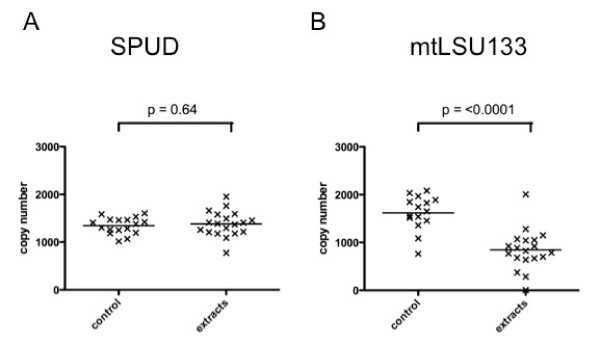
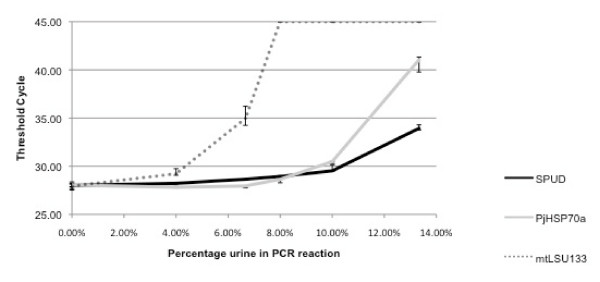
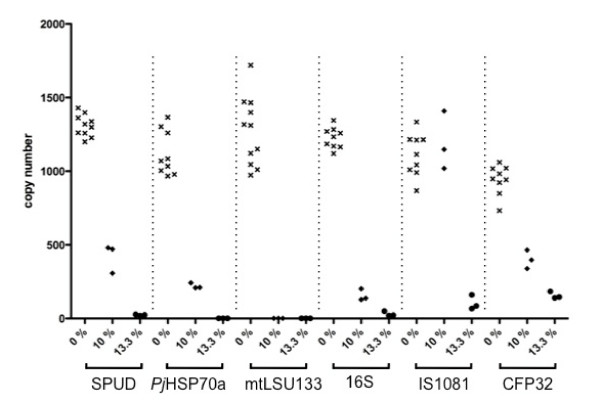
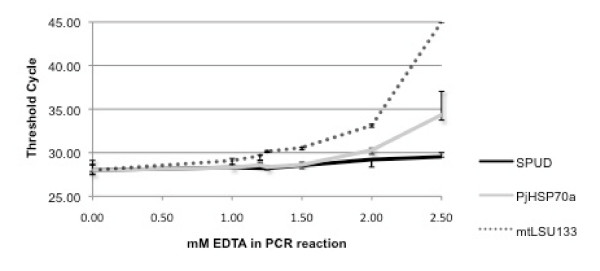
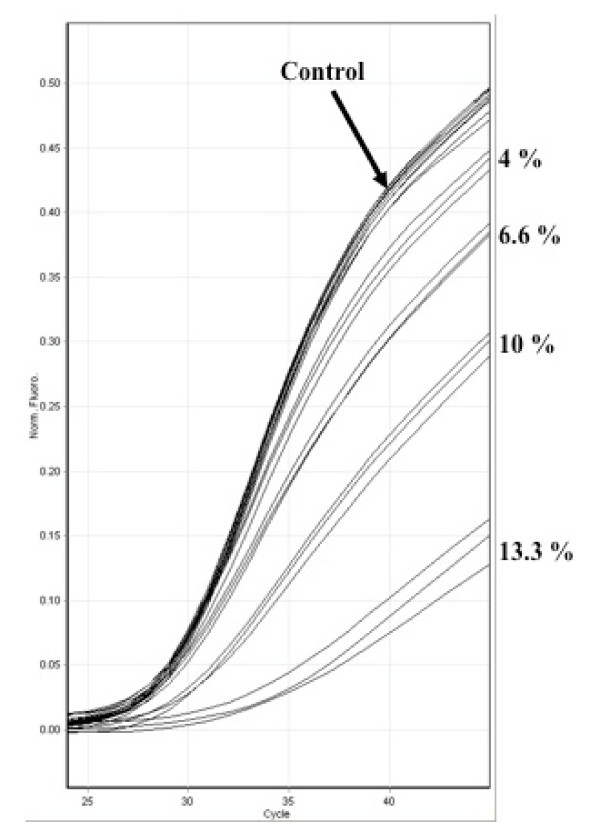
BACKGROUND: PCR inhibition by nucleic acid extracts is a well known yet poorly described phenomenon. Inhibition assessment generally depends on the assumption that inhibitors affect all PCR reactions to the same extent; i.e. that the reaction of interest and the control reaction are equally susceptible to inhibition. To test this assumption we performed inhibition assessment on DNA extracts from human urine samples, fresh urine and EDTA using different PCR reactions. RESULTS: When copurified inhibitors were assessed using two different PCR reactions one reaction appeared to be inhibited whilst the other was not. Further experiments using various concentrations of unextracted urine to inhibit six different PCR reactions revealed that susceptibility to inhibition was highly variable between reactions. Similar results were obtained using EDTA as the PCR inhibitor. We could find no obvious explanation why one reaction should be more susceptible to inhibition than another, although a possible association with amplicon GC content was noted. CONCLUSION: These findings have serious implications for all PCR-based gene expression studies, including the relatively new PCR array method, and for both qualitative and quantitative PCR-based molecular diagnostic assays, suggesting that careful consideration should be given to inhibition compatibility when conducting PCR analyses. We have demonstrated unequivocally that it is not safe to assume that different PCR reactions are equally susceptible to inhibition by substances co-purified in nucleic acid extracts.
Overview
The claims and statistics of this paper haven’t been checked yet.
Free: it reads the open-access text and checks the first 5 claims that cite a source we can check. Create a free account to check every claim.
Integrity signals
Registry
Cites
Statistics
Figures
Verification
Claims the paper makes
The claims and statistics of this paper haven’t been checked yet.
Free: it reads the open-access text and checks the first 5 claims that cite a source we can check. Create a free account to check every claim.
Claims other papers make about this one
Each is checked against this paper’s own text: does it say what the citing paper says it does?
The source backs part of the claim, not all of it — or backs it for a different population, condition or comparison.
In the citing paper
“The root cause of poor quality data is typically associated with inadequate dilution of residual protein and chemical contaminants that variably inhibit Taq polymerase and primer annealing.”
From Droplet Digital PCR versus qPCR for gene expression analysis with low abundant targets: from variable nonsense to publication quality data (2017) · cites this paper as [19]
Experimental — accuracy not yet measuredThe source backs part of the claim, not all of it — or backs it for a different population, condition or comparison.
In the citing paper
“However, there are frequently subtle differences in the level of impurities between samples even under highly rigorous RNA extraction procedures that can alter Taq activity, imparting gross variability on the resulting data18, 19.”
From Droplet Digital PCR versus qPCR for gene expression analysis with low abundant targets: from variable nonsense to publication quality data (2017) · cites this paper as [19]
Experimental — accuracy not yet measuredThe cited source says what the claim attributes to it.
In the citing paper
“different PCR reactions may not be equally susceptible to inhibition by substances copurified in nucleic acid extracts (56,57 ).”
From The MIQE guidelines: minimum information for publication of quantitative real-time PCR experiments (2009) · cites this paper as [56]
Self-check
Percentages, sums and reported differences re-computed from the paper’s own numbers.
The self-check needs the paper’s full text.
Citations
Cites
Mfold web server for nucleic acid folding and hybridization prediction
Zuker, M. (2003) · Nucleic Acids Research · doi:10.1093/nar/gkg595 · Cited by 13,404 · cited 2×
“Amplicon secondary structure was analysed using Mfold [15].”
MethodQuantification of mRNA using real-time RT-PCR
Nolan, T., Hands, R. E., & Bustin, S. A. (2006) · Nature Protocols · doi:10.1038/nprot.2006.236 · Cited by 2,247 · cited 2×
“Background It is well known that the polymerase chain reaction (PCR) is susceptible to inhibitors [1-4] and many publications describe methods for assessing inhibition using spiked alien molecules of various types [5-9].”
BackgroundReal-time RT-PCR normalisation; strategies and considerations
Huggett, J., Dheda, K., Bustin, S., & Zumla, A. (2005) · Genes & Immunity · doi:10.1038/sj.gene.6364190 · Cited by 1,856 · cited 2×
“If two different PCR reactions are to be compared, or one is to be used as a reference reaction for the other, as in the 'normalisation' procedure commonly used in quantitative gene expression studies [11], it is important that the two reactions are affected by potential inhibitors to the same extent; we describe this…”
BackgroundMethodSelf-citationPredicting DNA duplex stability from the base sequence
Breslauer, K. J., Frank, R., Blöcker, H., & Marky, L. A. (1986) · Proceedings of the National Academy of Sciences · doi:10.1073/pnas.83.11.3746 · Cited by 1,837 · cited 1×
“Primers were further assessed for Tm, 3' end stability, enthalpy, entropy and free energy, calculated by the nearest neighbour method [16] using NetPrimer software (Premier Biosoft International).”
MethodQuantitative real-time RT-PCR – a perspective
Bustin, S. A., Benes, V, Nolan, T., & Pfaffl, M. W. (2005) · Journal of Molecular Endocrinology · doi:10.1677/jme.1.01755 · Cited by 1,321 · cited 1×
“cycle (Ct) or crossing point (Cp) relative to an uninhibited control [10].”
BackgroundReal-time reverse transcription PCR (qRT-PCR) and its potential use in clinical diagnosis
Bustin, S. A., & Mueller, R. (2005) · Clinical Science · doi:10.1042/cs20050086 · Cited by 529 · cited 1×
“Discussion Co-purification of inhibitors of PCR during nucleic acid extraction is a well recognised phenomenon [17,2-4] that can be caused by numerous substances [18,19].”
BackgroundStandardized determination of real-time PCR efficiency from a single reaction set-up
Tichopad, A. (2003) · Nucleic Acids Research · doi:10.1093/nar/gng122 · Cited by 455 · cited 2×
“Background It is well known that the polymerase chain reaction (PCR) is susceptible to inhibitors [1-4] and many publications describe methods for assessing inhibition using spiked alien molecules of various types [5-9].”
BackgroundAbu Al-Soud, W., & Rådström, P. (1998) · Applied and Environmental Microbiology · doi:10.1128/aem.64.10.3748-3753.1998 · Cited by 382 · cited 1×
“These measures include the careful selection of type of thermostable DNA polymerase [ 22 ], reduction in the amount of DNA template added to the reaction and the use of certain additives such as bovine serum albumin, which provide some resistance to inhibitors that may be present in blood [23].”
MethodDNA Extraction Strategies for Amplified Fragment Length Polymorphism Analysis
Comey, C., Koons, B., Presley, K., Smerick, J., Sobieralski, C., Stanley, D., & Baechtel, F. (1994) · Journal of Forensic Sciences · doi:10.1520/jfs13711j · Cited by 265 · cited 1×
“These measures include the careful selection of type of thermostable DNA polymerase [22], reduction in the amount of DNA template added to the reaction and the use of certain additives such as bovine serum albumin, which provide some resistance to inhibitors that may be present in blood [ 23 ].”
MethodSPUD: A quantitative PCR assay for the detection of inhibitors in nucleic acid preparations
Nolan, T., Hands, R. E., Ogunkolade, W., & Bustin, S. A. (2006) · Analytical Biochemistry · doi:10.1016/j.ab.2006.01.051 · Cited by 257 · cited 2×
“Background It is well known that the polymerase chain reaction (PCR) is susceptible to inhibitors [1-4] and many publications describe methods for assessing inhibition using spiked alien molecules of various types [5-9].”
Background
Cited by
The MIQE guidelines: minimum information for publication of quantitative real-time PCR experiments
Bustin, S. A., Benes, V., Garson, J. A., Hellemans, J., Huggett, J., Kubista, M., Mueller, R., Nolan, T., Pfaffl, M. W., Shipley, G. L., et al. (2009) · Clinical Chemistry · doi:10.1373/clinchem.2008.112797 · Cited by 16,303
“Although such approaches such as spiking samples with positive controls (52) can be used to detect inhibition, different PCR reactions may not be equally susceptible to inhibition by substances copurified in nucleic acid extracts( 56 , 57).Consequently,itisbettertoroutinely use dilutions of nucleic acids to demonstrat…”
BackgroundSelf-citationPCR inhibitors - occurrence, properties and removal
Schrader, C., Schielke, A., Ellerbroek, L., & Johne, R. (2012) · Journal of Applied Microbiology · doi:10.1111/j.1365-2672.2012.05384.x · Cited by 2,118
“As this effect is because of a competitive binding of the inhibitor to the template, appropriate primer design leading to higher melting points can overcome this problem (Huggett et al. 2008; Opel et al. 2010).”
BackgroundHuggett, J. F., Foy, C. A., Benes, V., Emslie, K., Garson, J. A., Haynes, R., Hellemans, J., Kubista, M., Mueller, R. D., Nolan, T., et al. (2013) · Clinical Chemistry · doi:10.1373/clinchem.2013.206375 · Cited by 859
Self-citationQuan, P.-L., Sauzade, M., & Brouzes, E. (2018) · Sensors · doi:10.3390/s18041271 · Cited by 664
“Although PCR is established as the method of choice for molecular diagnostics, it presents several fundamental limitations such as high cost of equipment and sensitivity to inhibitors [110].”
MethodTaylor, S. C., Laperriere, G., & Germain, H. (2017) · Scientific Reports · doi:10.1038/s41598-017-02217-x · Cited by 638
“However, there are frequently subtle differences in the level of impurities between samples even under highly rigorous RNA extraction procedures that can alter Taq activity, imparting gross variability on the resulting data 18, 19 .”
BackgroundPCR inhibition in qPCR, dPCR and MPS—mechanisms and solutions
Sidstedt, M., Rådström, P., & Hedman, J. (2020) · Analytical and Bioanalytical Chemistry · doi:10.1007/s00216-020-02490-2 · Cited by 397
“It has been reported that different PCR assays, including different primer and target sequences, may be affected differently by inhibitors [28, 29].”
BackgroundGreen, H. C., Haugland, R. A., Varma, M., Millen, H. T., Borchardt, M. A., Field, K. G., Walters, W. A., Knight, R., Sivaganesan, M., Kelty, C. A., et al. (2014) · Applied and Environmental Microbiology · doi:10.1128/aem.04137-13 · Cited by 298
Devonshire, A. S., Whale, A. S., Gutteridge, A., Jones, G., Cowen, S., Foy, C. A., & Huggett, J. F. (2014) · Analytical and Bioanalytical Chemistry · doi:10.1007/s00216-014-7835-3 · Cited by 299
“This is in agreement with our earlier observations [51].”
ResultSelf-citationForensic implications of PCR inhibition—A review
Alaeddini, R. (2012) · Forensic Science International: Genetics · doi:10.1016/j.fsigen.2011.08.006 · Cited by 292
“Differential susceptibility to PCR inhibition between assays has been reported [54], therefore the effects of inhibitors on the IPC may not be predictive of those on other targets in the assay [106].”
BackgroundBorchardt, M. A., Boehm, A. B., Salit, M., Spencer, S. K., Wigginton, K. R., & Noble, R. T. (2021) · Environmental Science & Technology · doi:10.1021/acs.est.1c01767 · Cited by 254
Minas, K., McEwan, N. R., Newbold, C. J., & Scott, K. P. (2011) · FEMS Microbiology Letters · doi:10.1111/j.1574-6968.2011.02424.x · Cited by 237
Hamza, I. A., Jurzik, L., Stang, A., Sure, K., Überla, K., & Wilhelm, M. (2009) · Water Research · doi:10.1016/j.watres.2009.03.020 · Cited by 217
“…reduces the risk, that HAdV present in the samples might escape detection due to sequence variability, it might lead to detection of non-human adenoviruses that have been shown to contaminate surface water (Hundesa et al., 2006), presumably through drainage, runoff, and slaughterhouse wastewater.”
Wastewater-Based Estimation of the Effective Reproductive Number of SARS-CoV-2
Huisman, J. S., Scire, J., Caduff, L., Fernandez-Cassi, X., Ganesanandamoorthy, P., Kull, A., Scheidegger, A., Stachler, E., Boehm, A. B., Hughes, B., et al. (2022) · Environmental Health Perspectives · doi:10.1289/ehp10050 · Cited by 198
Overcoming Inhibition in Real-Time Diagnostic PCR
Hedman, J., & Rådström, P. (2013) · Methods in Molecular Biology · doi:10.1007/978-1-60327-353-4_2 · Cited by 164
Methods for Applying Accurate Digital PCR Analysis on Low Copy DNA Samples
Whale, A. S., Cowen, S., Foy, C. A., & Huggett, J. F. (2013) · PLoS ONE · doi:10.1371/journal.pone.0058177 · Cited by 160
“Other sources of error in dPCR that may also contribute to the variability in the measurement include chamber volume variation and sample distribution within a panel [38], degradation of the template due to prolonged periods of heating [39,40], PCR inhibitors that affect one assay more than the other [3] as well as po…”
BackgroundSelf-citationCampomenosi, P., Gini, E., Noonan, D. M., Poli, A., D’Antona, P., Rotolo, N., Dominioni, L., & Imperatori, A. (2016) · BMC Biotechnology · doi:10.1186/s12896-016-0292-7 · Cited by 159
“It has also been proposed that ddPCR might be less sensitive to differences in sample quality and to the presence of PCR inhibitors, two factors known to influence qPCR amplification efficiency [36, 45, 47].”
BackgroundMochizuki, H., Shapiro, S. G., & Breen, M. (2015) · PLoS ONE · doi:10.1371/journal.pone.0144170 · Cited by 184
“It is well-known that PCR inhibitors are co-purified when isolating DNA from urine, compromising PCR efficiencies at various degrees [27,28].”
BackgroundMa, H., Bell, K. N., & Loker, R. N. (2020) · Molecular Therapy — Methods & Clinical Development · doi:10.1016/j.omtm.2020.11.007 · Cited by 174
“However, intrinsic properties of the assay components such as GC-rich amplicons and primermelting temperatures can still affect amplification efficiency.(28,31) Therefore, when conducting biodistribution sample analysis, the control reaction should be spiked with a known concentration of target DNA as recommended by F…”
BackgroundGibson, K. E., Schwab, K. J., Spencer, S. K., & Borchardt, M. A. (2012) · Water Research · doi:10.1016/j.watres.2012.04.030 · Cited by 150
“Molecular inhibitors potentially present in environmental samples include humic and fulvic acid, complex polysaccharides, bacterial debris, metal ions, and nucleases (Huggett et al., 2008; Monteiro et al., 1997; Queiroz et al., 2001; Wilson, 1997).”
BackgroundNixon, G., Garson, J. A., Grant, P., Nastouli, E., Foy, C. A., & Huggett, J. F. (2014) · Analytical Chemistry · doi:10.1021/ac500208w · Cited by 148
Self-citationZhao, Y., Xia, Q., Yin, Y., & Wang, Z. (2016) · PLoS ONE · doi:10.1371/journal.pone.0159004 · Cited by 162
“The presence of inhibitors has the potential to increase error, reduce assay resolution and produce misleading results, including false negative results in both quantitative and qualitative PCR assays[29].”
Cao, Y., Griffith, J. F., Dorevitch, S., & Weisberg, S. B. (2012) · Journal of Applied Microbiology · doi:10.1111/j.1365-2672.2012.05305.x · Cited by 137
“The foundation of this approach is the assumption that the exogenous DNA assay is inhibited the same way as the target assay (Huggett et al. 2008).”
MethodDirect Quantification of Cell-Free, Circulating DNA from Unpurified Plasma
Breitbach, S. A., Tug, S., Helmig, S., Zahn, D., Kubiak, T., Michal, M., Gori, T., Ehlert, T., Beiter, T., & Simon, P. D. (2014) · PLoS ONE · doi:10.1371/journal.pone.0087838 · Cited by 152
“DNA purification methods have been proven to be time consuming and susceptible for errors or DNA losses [15,18,21].”
BackgroundDNA extract characterization process for microbial detection methods development and validation
Olson, N. D., & Morrow, J. B. (2012) · BMC Research Notes · doi:10.1186/1756-0500-5-668 · Cited by 127
“qPCR assay susceptibility to inhibition varies by polymerase, primer regions, and target sequence [39-41].”
Multi-template polymerase chain reaction
Kalle, E., Kubista, M., & Rensing, C. (2014) · Biomolecular Detection and Quantification · doi:10.1016/j.bdq.2014.11.002 · Cited by 119
Use and Misuse of Cq in qPCR Data Analysis and Reporting
Ruiz‐Villalba, A., Ruijter, J. M., & van den Hoff, M. J. B. (2021) · Life · doi:10.3390/life11060496 · Cited by 162
Bustin, S., & Nolan, T. (2017) · European Journal of Clinical Investigation · doi:10.1111/eci.12801 · Cited by 113
Advances and insights in the diagnosis of viral infections
Dronina, J., Samukaitė-Bubnienė, U., & Ramanavičius, A. (2021) · Journal of Nanobiotechnology · doi:10.1186/s12951-021-01081-2 · Cited by 139
Breitbach, S., Sterzing, B., Magallanes, C., Tug, S., & Simon, P. (2014) · Journal of Applied Physiology · doi:10.1152/japplphysiol.00002.2014 · Cited by 109
Sanders, R., Mason, D. J., Foy, C. A., & Huggett, J. F. (2014) · Analytical and Bioanalytical Chemistry · doi:10.1007/s00216-014-7857-x · Cited by 124
“Studies show that PCR inhibition can be assay-specific, with an inhibitor completely inhibiting one assay but having no effect on another [76], so where internal positive controls are used they need to be representative of the targets of interest.”
BackgroundSelf-citationVerhaegen, B., De Reu, K., De Zutter, L., Verstraete, K., Heyndrickx, M., & Van Coillie, E. (2016) · Toxins · doi:10.3390/toxins8050157 · Cited by 103
“(2008) who demonstrated that the robustness of an assay has an important impact on the susceptibility of a PCR reaction to inhibitors [19].”
BackgroundA Quantitative Approach to Detect and Overcome PCR Inhibition in Ancient DNA Extracts
King, C. E., Debruyne, R., Kuch, M., Schwarz, C., & Poinar, H. N. (2009) · BioTechniques · doi:10.2144/000113244 · Cited by 99
de Bruin, A., de Groot, A., de Heer, L., Bok, J., Wielinga, P. R., Hamans, M. A. W. M., van Rotterdam, B. J., & Janse, I. (2011) · Applied and Environmental Microbiology · doi:10.1128/aem.05097-11 · Cited by 100
“It has been reported that PCRs for different target sequences are not equally susceptible to inhibition by coextracted substances (12).”
BackgroundChoopara, I., Suea‐Ngam, A., Teethaisong, Y., Howes, P. D., Schmelcher, M., Leelahavanichkul, A., Thunyaharn, S., Wongsawaeng, D., deMello, A. J., Dean, D., et al. (2021) · ACS Sensors · doi:10.1021/acssensors.0c01405 · Cited by 103
The quest for absolute abundance: The use of internal standards for DNA‐based community ecology
Harrison, J. G., Calder, W. J., Shuman, B. N., & Buerkle, C. A. (2020) · Molecular Ecology Resources · doi:10.1111/1755-0998.13247 · Cited by 109
“However, Huggett et al. (2008) report variation in inhibition across PCR reactions.”
BackgroundMinimum Information Necessary for Quantitative Real-Time PCR Experiments
Johnson, G. L., Nour, A. M. A., Nolan, T., Huggett, J. F., & Bustin, S. A. (2014) · Methods in molecular biology · doi:10.1007/978-1-4939-0733-5_2 · Cited by 97
Self-citationDNA Binding to Hydroxyapatite: A Potential Mechanism for Preservation of Microbial DNA
Brundin, M., Figdor, D., Sundqvist, G., & Sjögren, U. (2012) · Journal of Endodontics · doi:10.1016/j.joen.2012.09.013 · Cited by 104
“A high concentration of EDTA interferes with the PCR reaction (17, 18).”
BackgroundNiessen, L. (2014) · Applied Microbiology and Biotechnology · doi:10.1007/s00253-014-6196-3 · Cited by 99
“Moreover, proper standards must be included in order to control the influence of a DNA sample on the outcome of the analysis since inhibitive potential of different compounds may widely vary between different PCR assays (Huggett et al. 2008).”
BackgroundImpact of metal ions on PCR inhibition and RT-PCR efficiency
Kuffel, A., Gray, A., & Daéid, N. N. (2020) · International Journal of Legal Medicine · doi:10.1007/s00414-020-02363-4 · Cited by 102
Acharya, K. R., Dhand, N. K., Whittington, R. J., & Plain, K. M. (2017) · Frontiers in Microbiology · doi:10.3389/fmicb.2017.00115 · Cited by 76
Bali, L. E., Diman, A., Bernard, A., Roosens, N. H. C., & Keersmaecker, S. C. J. D. (2014) · Journal of Biomolecular Techniques JBT · doi:10.7171/jbt.14-2504-002 · Cited by 88
Application of next generation qPCR and sequencing platforms to mRNA biomarker analysis
Devonshire, A. S., Sanders, R., Wilkes, T. M., Taylor, M. S., Foy, C. A., & Huggett, J. F. (2012) · Methods · doi:10.1016/j.ymeth.2012.07.021 · Cited by 83
Self-citationVariation in inhibitor effects on qPCR assays and implications for eDNA surveys
Lance, R. F., & Guan, X. (2019) · Canadian Journal of Fisheries and Aquatic Sciences · doi:10.1139/cjfas-2018-0263 · Cited by 85
“For example, Huggett et al. (2008) conducted a series of experiments demonstrating that 365 different assays responded differently to inhibitors associated with human urine samples.”
BackgroundResultInfluentialSensitive detection of sample interference in environmental qPCR
Green, H., & Field, K. G. (2012) · Water Research · doi:10.1016/j.watres.2012.03.041 · Cited by 70
“…differential response to inhibitors has been a problem when comparing Cqthreshold values between qPCR assays (control versus assay of interest) (Hugget et al., 2008), we circumvent this problem by using a more sensitive measure that identifies the presence of inhibition before it has an effect…”
BackgroundMethodImamovic, L., Ballesté, E., Jofre, J. T., & Muniesa, M. (2010) · Applied and Environmental Microbiology · doi:10.1128/aem.00107-10 · Cited by 82
“Finally, there are no guarantees that inhibitors affect the sample and IC in the same way, reducing IC usefulness (21).”
BackgroundAnalytical Comparison of Methods for Extraction of Short Cell-Free DNA from Urine
Oreskovic, A. K., Brault, N. D., Panpradist, N., Lai, J. J., & Lutz, B. R. (2019) · Journal of Molecular Diagnostics · doi:10.1016/j.jmoldx.2019.07.002 · Cited by 79
“Consequently, quantification using the Norgen kit is unreliable because each individual PCR assay will be uniquely affected by inhibition.(42) As an example, the differential inhibition of the 40- and 25-nt qPCR assays is given in Supplemental Figure S4.”
MethodCirculating miRNAs as Biomarker in Cancer
Andersen, G. B., & Tost, J. (2019) · Recent results in cancer research/Recent Results in Cancer Research · doi:10.1007/978-3-030-26439-0_15 · Cited by 75
Maheshwari, Y., Selvaraj, V., Hajeri, S., & Yokomi, R. K. (2017) · PLoS ONE · doi:10.1371/journal.pone.0184751 · Cited by 77
Milosevic, D., Mills, J. R., Campion, M. B., Vidal‐Folch, N., Voss, J. S., Halling, K. C., Highsmith, W. E., Liu, M. C., Kipp, B. R., & Grebe, S. K. (2018) · Clinical Chemistry · doi:10.1373/clinchem.2018.291278 · Cited by 68
Hargreaves, S. K., Roberto, A. A., & Hofmockel, K. (2013) · Soil Biology and Biochemistry · doi:10.1016/j.soilbio.2013.01.007 · Cited by 74
Recommendations following a multi-laboratory comparison of microbial source tracking methods
Stewart, J. R., Boehm, A. B. B., Dubinsky, E. A., Fong, T.-T., Goodwin, K. D., Griffith, J. F., Noble, R. T., Shanks, O. C., VIJAYAVEL, K., & Weisberg, S. B. (2013) · Water Research · doi:10.1016/j.watres.2013.04.063 · Cited by 64
Ståhl, M., Kokotovic, B., Hjulsager, C. K., Breum, S. Ø., & Angen, Ø. (2011) · Veterinary Microbiology · doi:10.1016/j.vetmic.2011.03.013 · Cited by 58
“Recently it has been shown that different PCR reactions may show different susceptibility to inhibitors (Huggett et al., 2008).”
King, M. D., & McFarland, A. R. (2011) · Aerosol Science and Technology · doi:10.1080/02786826.2011.605400 · Cited by 64
“As EDTA was involved in the impactor but not the WWC experiments, the EDTA does not have an effect on the impactor results presented herein.”
MethodInfluentialAssays and enumeration of bioaerosols-traditional approaches to modern practices
King, M. D., Lacey, R. E., Pak, H., Fearing, A., Ramos, G. E., Baig, T. A., Smith, B. L., & Koustova, A. (2020) · Aerosol Science and Technology · doi:10.1080/02786826.2020.1723789 · Cited by 63
“tions of EDTA inhibit PCR (Huggett et al. 2008), therefore a procedure should be used to reduce the EDTA content before the PCR process.”
MethodRayamajhee, B., Sharma, S., Willcox, M. D. P., Henriquez, F. L., Rajagopal, R. N., Shrestha, G. S., Subedi, D., Bagga, B., & Carnt, N. A. (2022) · BMC Infectious Diseases · doi:10.1186/s12879-022-07741-4 · Cited by 53
“The method was slightly modified to exclude the addition of EDTA which can interfere with PCR assay by sequestering Mg2+ ions [37].”
MethodImplications of Storing Urinary DNA from Different Populations for Molecular Analyses
Cannas, A., Kalunga, G., Green, C. K., Calvo, L., Katemangwe, P., Reither, K., Perkins, M. D., Maboko, L., Höelscher, M., Talbot, E. A., et al. (2009) · PLoS ONE · doi:10.1371/journal.pone.0006985 · Cited by 53
“Evaluation of the presence of inhibitors in the DNA extracts was performed using the SPUD protocol as previously described [26].”
MethodSelf-citationIwobi, A. N., Gerdes, L., Busch, U., & Pecoraro, S. (2016) · Food Control · doi:10.1016/j.foodcont.2016.04.048 · Cited by 57
RNA isolation from precision-cut lung slices (PCLS) from different species
Niehof, M., Hildebrandt, T., Danov, O., Arndt, K., Koschmann, J., Dahlmann, F., Hansen, T., & Sewald, K. (2017) · BMC Research Notes · doi:10.1186/s13104-017-2447-6 · Cited by 56
“If the ratio is appreciably lower, it may indicate the presence of contaminants with absorbance at 230 nm, such as guanidinium isothiocyanate or phenol [13, 18, 19].”
BackgroundTechnical and Methodological Aspects of Cell-Free Nucleic Acids Analyzes
Pös, Z., Pös, O., Styk, J., Mocova, A., Striešková, L., Budiš, J., Kádaši, Ľ., Radvánszky, J., & Szemes, T. (2020) · International Journal of Molecular Sciences · doi:10.3390/ijms21228634 · Cited by 56
“Therefore, this kit is unreliable for quantification [265].”
MethodLee, C., Marion, J. W., & Lee, J. (2013) · The Science of The Total Environment · doi:10.1016/j.scitotenv.2013.03.003 · Cited by 50
Optimization of Chelex 100 resin-based extraction of genomic DNA from dried blood spots
Simon, N., Shallat, J., Williams-Wietzikoski, C. A., & Harrington, W. E. (2020) · Biology Methods and Protocols · doi:10.1093/biomethods/bpaa009 · Cited by 50
Moreau, V., Voirin, É., Paris, C., Kotera, M., Nothisen, M., Rémy, J.-S., Behr, J., Erbacher, P., & Lenne‐Samuel, N. (2009) · Nucleic Acids Research · doi:10.1093/nar/gkp661 · Cited by 52
“Thus, to counteract the presence of excess magnesium, we have chosen to add EDTA, a known inhibitor of PCR shown to affect differentially PCR reactions, partly depending on amplicon GC content and primer Tm’s (20).”
BackgroundPalmirotta, R., Ludovici, G., Marchis, M. L. D., Savonarola, A., Leone, B., Spila, A., Angelis, F. D., Della‐Morte, D., Ferroni, P., & Guadagni, F. (2011) · Biopreservation and Biobanking · doi:10.1089/bio.2010.0027 · Cited by 48
“3 Compared to other biological fluids, fresh whole blood is usually the most used biological material due to its high availability in medical centers and for its property to provide a high quantity of DNA.”
InfluentialChallenges in environmental detection of human viral pathogens
Julian, T. R., & Schwab, K. J. (2011) · Current Opinion in Virology · doi:10.1016/j.coviro.2011.10.027 · Cited by 45
Combs, L. G., Warren, J. E., Huynh, V., Castaneda, J., Golden, T. D., & Roby, R. K. (2015) · Forensic Science International Genetics · doi:10.1016/j.fsigen.2015.06.013 · Cited by 44
“It has been demonstrated that the effect of inhibitors on different PCR reactions is variable and there is no correlation between amplicon characteristics and the extent of inhibition, making it imperative to match the susceptibility to inhibitors between reference and experimental reactions to increase the accuracy a…”
BackgroundA review of the epidemiology, diagnosis and evidence-based management of Mycoplasma genitalium
Weinstein, S. A., & Stiles, B. G. (2011) · Sexual Health · doi:10.1071/sh10065 · Cited by 45
Comparative Aspects of BRAF Mutations in Canine Cancers
Mochizuki, H., & Breen, M. (2015) · Veterinary Sciences · doi:10.3390/vetsci2030231 · Cited by 54
“It is well-known that PCR inhibitors are co-purified when isolating DNA from urine, compromising PCR efficiencies at various degrees [73,74].”
BackgroundSidstedt, M., Romsos, E. L., Hedell, R., Ansell, R., Steffen, C. R., Vallone, P. M., Rådström, P., & Hedman, J. (2017) · Analytical Chemistry · doi:10.1021/acs.analchem.6b03746 · Cited by 42
Cao, Y., Sivaganesan, M., Kinzelman, J. L., Blackwood, A. D., Noble, R. T., Haugland, R. A., Griffith, J. F., & Weisberg, S. B. (2012) · Water Research · doi:10.1016/j.watres.2012.09.056 · Cited by 45
“The second assumption is that the eukaryotic DNA, used as control, experiences similar qPCR inhibition as the target bacterial DNA (Huggett et al. 2008).”
BackgroundPotential Approaches and Recent Advances in Biomarker Discovery in Clear-Cell Renal Cell Carcinoma
Majer, W., Kluzek, K., Bluyssen, H. A. R., & Wesoły, J. (2015) · Journal of Cancer · doi:10.7150/jca.12145 · Cited by 45
Luna, G. M., Dell’Anno, A., Pietrangeli, B., & Danovaro, R. (2011) · Journal of Biotechnology · doi:10.1016/j.jbiotec.2011.07.033 · Cited by 38
El-Kadi, S. M., Elbagory, M., EL-Zawawy, H. A. H., El-Shaer, H., Shoukry, A. A., El-Nahrawy, S., Omara, A. E.-D., & Ali, D. F. I. (2021) · Polymers · doi:10.3390/polym13213801 · Cited by 41
“Egypt is one of the largest date producers among Arab and world countries.”
BackgroundMethodInfluentialRegan, J. F., Furtado, M. R., Brevnov, M. G., & Jordan, J. A. (2012) · Journal of Molecular Diagnostics · doi:10.1016/j.jmoldx.2011.10.001 · Cited by 37
Patel, P., Garson, J. A., Tettmar, K. I., Ancliff, S., McDonald, C. P., Pitt, T. L., Coelho, J., & Tedder, R. S. (2011) · Transfusion · doi:10.1111/j.1537-2995.2011.03484.x · Cited by 37
Self-citationImproving the standardization of mRNA measurement by RT-qPCR
Sanders, R., Bustin, S. A., Huggett, J. F., & Mason, D. J. (2018) · Biomolecular Detection and Quantification · doi:10.1016/j.bdq.2018.03.001 · Cited by 41
Self-citationTargeted RNA-Sequencing with Competitive Multiplex-PCR Amplicon Libraries
Blomquist, T. M., Crawford, E. L., Lovett, J. L., Yeo, J., Stanoszek, L. M., Levin, A., Li, J., Lu, M., Shi, L., Muldrew, K., et al. (2013) · PLoS ONE · doi:10.1371/journal.pone.0079120 · Cited by 37
“systematic analytical variation and false negative reporting [15,16].”
BackgroundMurphy, S. C., Hermsen, C. C., Douglas, A. D., Edwards, N. J., Petersen, I., Fahle, G. A., Adams, M., Berry, A. A., Billman, Z. P., Gilbert, S. C., et al. (2014) · PLoS ONE · doi:10.1371/journal.pone.0097398 · Cited by 38
“This type of matrix effect has been reported in biological samples [65].”
BackgroundAbsolute Quantification of Enterococcal 23S rRNA Gene Using Digital PCR
Wang, D., Yamahara, K. M., Cao, Y., & Boehm, A. B. B. (2016) · Environmental Science & Technology · doi:10.1021/acs.est.5b05747 · Cited by 38
Detecting Malaria Parasites outside the Blood
Sutherland, C. J., & Hallett, R. (2009) · The Journal of Infectious Diseases · doi:10.1086/598857 · Cited by 39
“This necessitates not only the design of PCR based around shorter amplicons [4, 5] but also stringent empirical evaluation of the impact of PCR inhibitors on candidate tests [11].”
BackgroundKemp, B. M., Monroe, C., Judd, K. G., Reams, E., & Grier, C. (2013) · Journal of Archaeological Science · doi:10.1016/j.jas.2013.11.023 · Cited by 39
“second issue is that Kemp et al. (2006) did not evaluate the efficacy of repeat silica extraction relative to other methods, such as diluting potentially inhibited extractions with water, a common approach taken by other researchers (Kemp et al.”
Waberski, M. B., Lindhurst, M. J., Keppler‐Noreuil, K. M., Sapp, J. C., Baker, L., Gripp, K. W., Adams, D. M., & Biesecker, L. G. (2018) · Genetics in Medicine · doi:10.1038/gim.2017.228 · Cited by 35
Monjure, C. J., Tatum, C., Panganiban, A. T., Araínga, M., Traina‐Dorge, V., Marx, P. A., & Didier, E. S. (2013) · Journal of Medical Primatology · doi:10.1111/jmp.12088 · Cited by 32
Park, S., Rana, A., Sung, W., & Munir, M. (2021) · Applied Microbiology · doi:10.3390/applmicrobiol1030028 · Cited by 40
Guardado, A. L. P., Sweeney, C. L., Hayes, E. K., Trueman, B. F., Huang, Y., Jamieson, R., Rand, J. L., Gagnon, G. A., & Stoddart, A. K. (2021) · Environmental Science Water Research & Technology · doi:10.1039/d1ew00539a · Cited by 30
Scott, G. A. M., Evens, N. P., Porter, J., & Walker, D. I. (2023) · Food and Environmental Virology · doi:10.1007/s12560-022-09542-z · Cited by 32
Screening ancient tuberculosis with qPCR: challenges and opportunities
Harkins, K. M., Buikstra, J. E., Campbell, T., Bos, K. I., Johnson, E. D. M., Krause, J., & Stone, A. C. (2015) · Philosophical Transactions of the Royal Society B Biological Sciences · doi:10.1098/rstb.2013.0622 · Cited by 37
“[63]: ‘It is possible for one PCR to be unaffected by a potential inhibitor whilst another is completely suppressed’.”
BackgroundDetection of Mycobacterium tuberculosis in Blood by Use of the Xpert MTB/RIF Assay
Banada, P. P., Koshy, R., & Alland, D. (2013) · Journal of Clinical Microbiology · doi:10.1128/jcm.00332-13 · Cited by 31
“EDTA can chelate the Mg(2) present in PCR buffer, thus affecting PCR assay performance (45).”
BackgroundPark, K. T., Allen, A. J., & Davis, W. C. (2014) · Journal of Microbiological Methods · doi:10.1016/j.mimet.2014.02.003 · Cited by 29
“The different susceptibilities of RT-PCRs to PCR inhibitors have been studied previously (Huggett et al., 2008; Opel et al., 2009).”
BackgroundHamza, I. A., & Leifels, M. (2023) · Water Air & Soil Pollution · doi:10.1007/s11270-023-06821-8 · Cited by 28
“However, there is a difference in susceptibility of the reverse transcriptase (RT)-qPCR reactions to co-concentrated environmental inhibitors as previously reported by Huggett et al. (2008).”
Patel, K., Nagel, M., Wesolowski, M., Dees, S., Rivera‐Milla, E., Geldmacher, C., Dheda, K. U. J., Höelscher, M., & Labugger, I. (2017) · Journal of Molecular Diagnostics · doi:10.1016/j.jmoldx.2017.11.005 · Cited by 31
Huggett, J. F., O’Grady, J., & Bustin, S. A. (2015) · Biomolecular Detection and Quantification · doi:10.1016/j.bdq.2015.01.001 · Cited by 31
Self-citationMee, P. T., Wong, S., O’Riley, K. J., da Conceição, F., Jong, J. B. D. C., Phillips, D. E., Rodoni, B., Rawlin, G., & Lynch, S. E. (2020) · Viruses · doi:10.3390/v12121444 · Cited by 28
“As a result, an assessment of whole blood collected in a series of different anticoagulants was tested to determine if they would inhibit the LAMP reactions, as has been observed with other molecular assays such as PCR [47,48].”
Caduff, L., Dreifuss, D., Schindler, T., Devaux, A. J., Ganesanandamoorthy, P., Kull, A., Stachler, E., Fernandez-Cassi, X., Beerenwinkel, N., Kohn, T., et al. (2022) · Eurosurveillance · doi:10.2807/1560-7917.es.2022.27.10.2100806 · Cited by 27
“Strain-specific variation in the efficiency of amplification of the universal probe, for example because of mutations or differential sample inhibition [31], would result in inaccurate estimation of the total number of amplicons and corresponding inaccuracy of the proportion of the target variant.”
BackgroundBasic Concepts and Validation of Digital PCR Measurements
Pinheiro, L. B., & Emslie, K. R. (2018) · Methods in molecular biology · doi:10.1007/978-1-4939-7778-9_2 · Cited by 29
Jue, E., Witters, D., & Ismagilov, R. F. (2020) · Scientific Reports · doi:10.1038/s41598-020-58586-3 · Cited by 38
Arezi, B., McCarthy, M., & Hogrefe, H. H. (2010) · Analytical Biochemistry · doi:10.1016/j.ab.2010.01.024 · Cited by 25
Abundance of Naegleria fowleri in roof-harvested rainwater tank samples from two continents
Waso, M., Dobrowsky, P. H., Hamilton, K. A., Puzon, G. J., Miller, H. C., Khan, W., & Ahmed, W. (2017) · Environmental Science and Pollution Research · doi:10.1007/s11356-017-0870-9 · Cited by 25
“As inhibition is associated with reduced end point fluorescence that is inversely correlated with quantification cycle (Cq) (Huggett et al. 2008), undiluted samples that showed an end-point fluorescence (EPF) value of less than 3.15 (due to the presence of possible inhibitors) were diluted…”
BackgroundInfluentialCoulter, S. J. (2018) · BioTechniques · doi:10.2144/btn-2018-0058 · Cited by 26
The detection of different Dirofilaria species using direct PCR technique
Silbermayr, K., Eigner, B., Duscher, G. G., Joachim, A., & Fuehrer, H. (2013) · Parasitology Research · doi:10.1007/s00436-013-3682-y · Cited by 29
CTAB influenced differential elution of metagenomic DNA from saltpan and marine sediments
Kachiprath, B., Gopi, J., Solomon, S., & Sarasan, M. (2018) · 3 Biotech · doi:10.1007/s13205-017-1078-x · Cited by 24
Metadata
- Authors
- Huggett, J. F., Novak, T., Garson, J. A., Green, C., Morris-Jones, S. D., Miller, R. F., & Zumla, A.
- Affiliations
- University College London (GB)
- University College London Hospitals NHS Foundation Trust (GB)
- Corresponding author
- Huggett, Jim F
- ORCID
- Venue
- BMC Research Notes
- Published
- 2008
- Volume
- 1
- Issue
- 1
- Pages
- 70
- ISSN
- 1756-0500 (ISSN-L)
- PMC
- PMC2564953
- OpenAlex
- W2019331497
- Cited by
- 250
- References
- 24
- Citations by year
- 2026: 16 · 2025: 13 · 2024: 6 · 2023: 17 · 2022: 15 · 2021: 18 · 2020: 21 · 2019: 12 · 2018: 16 · 2017: 14 · 2016: 10 · 2015: 9 · 2014: 19 · 2013: 19 · 2012: 15
- FWCI
- 3.98
- Type
- journal article
- Language
- en
- Open access
- gold
- doi.org
- Licence
- cc-by
- Locations
- BMC Research Notes (publishedVersion, cc-by)
- PubMed Central (publishedVersion, cc-by)
- PubMed (publishedVersion)
- DOAJ (DOAJ: Directory of Open Access Journals) (submittedVersion)
- UCL Discovery (University College London) (submittedVersion)
- Funders
- European Commission
- Dr Hadwen Trust for Humane Research
- Dr Hadwen Trust
- Topics
- Life Sciences › Biochemistry, Genetics and Molecular Biology › Molecular Biology › Molecular Biology Techniques and Applications
- Health Sciences › Health Professions › Medical Laboratory Technology › Clinical Laboratory Practices and Quality Control
- Health Sciences › Medicine › Infectious Diseases › SARS-CoV-2 detection and testing
- Keywords
- PCR inhibition, PCR inhibitors, EDTA, PCR array, gene expression assay, molecular diagnosis, nucleic acid extraction
About these checks
Registry, retraction, Cites and statistics results are computed, not judged, with one exception: a printed reference that no index lists is read once by a model before it counts as a citation error. Claims are extracted by a model and kept only when their quote appears verbatim in the text; each cited source is then checked, with a model’s help, for whether it says what the claim relies on. Those verdicts can be wrong — read the claim’s quote and the cited source before relying on one.
Statistics and arithmetic are recomputed, not judged.
Confidence bands are shown only for fields calibrated on our annotated test set. None is calibrated yet, so no band is shown.
What counts as a claim ›How we measure confidence ›How we check this ›
Are you an author, or do you see a problem with this page? Request a review
Data sources
Bibliographic data: Semantic Scholar, OpenAlex, Crossref.
Contains information from the Semantic Scholar Academic Graph Datasets, made available under the ODC Attribution License (ODC-BY 1.0).
Semantic Scholar’s data is described in: Kinney, R., et al. (2023). The Semantic Scholar Open Data Platform. arXiv:2301.10140.
