

The DOI matches its Crossref record; 99 of the 100 references it cites were found in a registry or an index.
Canine and feline vector-borne diseases in Italy: current situation and perspectives
Open accessAbstract
In Italy, dogs and cats are at risk of becoming infected by different vector-borne pathogens, including protozoa, bacteria, and helminths. Ticks, fleas, phlebotomine sand flies, and mosquitoes are recognized vectors of pathogens affecting cats and dogs, some of which (e.g., Anaplasma phagocytophilum, Borrelia burgdorferi, Dipylidium caninum, Leishmania infantum, Dirofilaria immitis, and Dirofilaria repens) are of zoonotic concern. Recent studies have highlighted the potential of fleas as vectors of pathogens of zoonotic relevance (e.g., Rickettsia felis) in this country. While some arthropod vectors (e.g., ticks and fleas) are present in certain Italian regions throughout the year, others (e.g., phlebotomine sand flies) are most active during the summer season. Accordingly, control strategies, such as those relying on the systematic use of acaricides and insecticides, should be planned on the basis of the ecology of both vectors and pathogens in different geographical areas in order to improve their effectiveness in reducing the risk of infection by vector-borne pathogens. This article reviews the current situation and perspectives of canine and feline vector-borne diseases in Italy.
Overview
The claims and statistics of this paper haven’t been checked yet.
Run the check — free, no account needed. It reads the open-access text and checks the sources it cites.
Integrity signals
Registry
Cites
Statistics
Figures
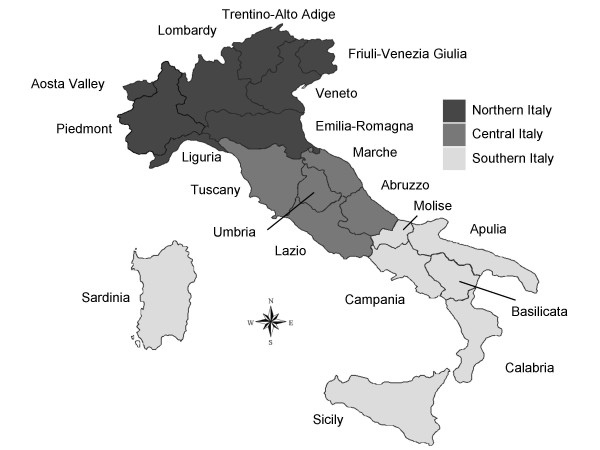
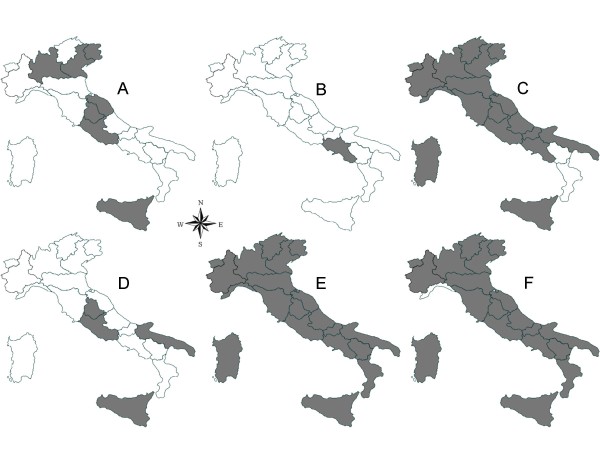
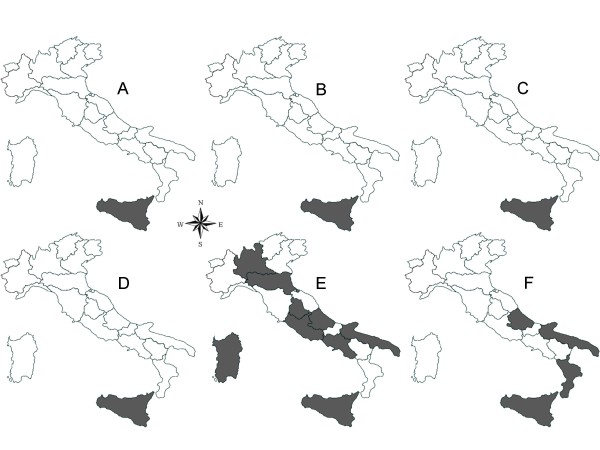
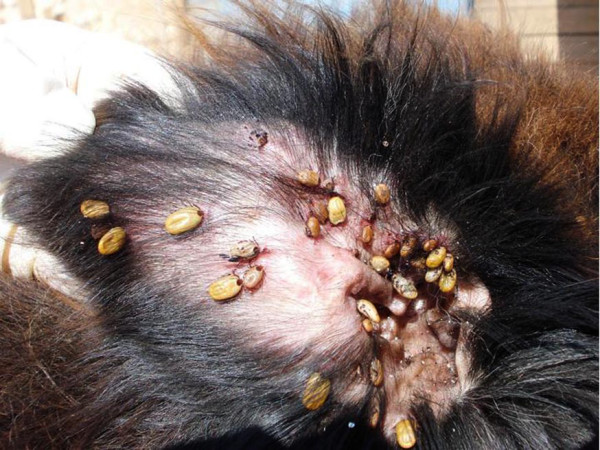
Verification
Claims the paper makes
The claims and statistics of this paper haven’t been checked yet.
Run the check — free, no account needed. It reads the open-access text and checks the sources it cites.
Claims other papers make about this one
Each is checked against this paper’s own text: does it say what the citing paper says it does?
The source backs part of the claim, not all of it — or backs it for a different population, condition or comparison.
In the citing paper
“These factors caused new autochthonous foci of heartworm disease that have recently been reported in previously non-endemic areas of southern Italy [8, 30].”
From Dirofilaria immitis and Angiostrongylus vasorum: the contemporaneous detection in kennels (2015) · cites this paper as [30]
Experimental — accuracy not yet measured
Self-check
Percentages, sums and reported differences re-computed from the paper’s own numbers.
The self-check needs the paper’s full text.
Citations
Cites
Dantas‐Torres, F. (2008) · Veterinary Parasitology · doi:10.1016/j.vetpar.2007.12.030 · Cited by 580 · cited 3×
“felis has received a renewed attention from the scientific community in recent years [10,77].”
BackgroundSelf-citationClimate Change and Vector-Borne Diseases
Rogers, D. J., & Randolph, S. E. (2006) · Advances in Parasitology · doi:10.1016/s0065-308x(05)62010-6 · Cited by 362 · cited 1×
“For long time VBDs have been believed to be strictly linked to the seasonality in temperate areas and the role of climate and environmental factors on arthropod infection rate has been documented [39].”
BackgroundManaging canine vector-borne diseases of zoonotic concern: part one
Otranto, D., Dantas‐Torres, F., & Breitschwerdt, E. B. (2009) · Trends in Parasitology · doi:10.1016/j.pt.2009.01.003 · Cited by 310 · cited 3×
“Some VBDs might be lifethreatening in cats and dogs, they might develop after long incubation period making their diagnosis challenging, particularly because their clinical signs are not pathognomonic [1,2].”
BackgroundInfluentialSelf-citationMaroli, M., Rossi, L., Baldelli, R., Capelli, G., Ferroglio, E., Genchi, C., Gramiccia, M., Mortarino, M., Pietrobelli, M., & Gradoni, L. (2008) · Tropical Medicine & International Health · doi:10.1111/j.1365-3156.2007.01998.x · Cited by 305 · cited 10×
“variegata) display a typical seasonal activity [29,36].”
BackgroundInfluentialManaging canine vector-borne diseases of zoonotic concern: part two
Otranto, D., Dantas‐Torres, F., & Breitschwerdt, E. B. (2009) · Trends in Parasitology · doi:10.1016/j.pt.2009.02.005 · Cited by 295 · cited 2×
“Some VBDs might be lifethreatening in cats and dogs, they might develop after long incubation period making their diagnosis challenging, particularly because their clinical signs are not pathognomonic [1, 2 ].”
BackgroundMethodSelf-citationCoutinho, M. T. Z., Bueno, L. L., Sterzik, A., Fujiwara, R. T., Botelho, J. R., de María, M., Genaro, O., & Linardi, P. M. (2004) · Veterinary Parasitology · doi:10.1016/j.vetpar.2004.11.011 · Cited by 213 · cited 1×
“infantum via their ingestion [78] and a recent study has reported the detection of L.”
Aedes albopictus is a natural vector of Dirofilaria immitis in Italy
Cancrini, G., Frangipane di Regalbono, A., Ricci, I., Tessarin, C., Gabrielli, S., & Pietrobelli, M. (2003) · Veterinary Parasitology · doi:10.1016/j.vetpar.2003.10.011 · Cited by 206 · cited 1×
“repens [41,42], during the 1990s has been implicated in the appearance of new autochthonous foci of heartworm disease that have recently been reported in previously non-endemic areas of southern Italy (i.”
BackgroundDirofilariasis due to Dirofilaria repens in Italy, an emergent zoonosis: report of 60 new cases
Pampiglione, S., Rivasi, F., Angeli, G., Boldorini, R., Incensati, R. M., Pastormerlo, M., Pavesi, M., & Ramponi, A. (2001) · Histopathology · doi:10.1046/j.1365-2559.2001.01099.x · Cited by 202 · cited 2×
“repens [65] and dogs have been regarded as natural reservoirs of this filarid [71].”
BackgroundInfection of sandflies by a cat naturally infected with Leishmania infantum
Maroli, M., Pennisi, M. G., Muccio, T. D., Khoury, C., Gradoni, L., & GRAMICCIA, M. (2006) · Veterinary Parasitology · doi:10.1016/j.vetpar.2006.11.009 · Cited by 192 · cited 2×
“perniciosus under laboratory conditions [32].”
BackgroundOtranto, D., Capelli, G., & Genchi, C. (2009) · Parasites & Vectors · doi:10.1186/1756-3305-2-s1-s2 · Cited by 177 · cited 5×
“However, in the past decades, the ‘seasonality paradigm’ has been extensively debated and nowadays it cannot be considered more valid for many VBDs in the Mediterranean area [33].”
BackgroundInfluentialSelf-citation
Research works printed but not linked: 1
- Pampiglione S Villani M Fioravanti ML Rivasi F La dirofilariasi umana nel sud Italia. III regione Molise Pathologica 1995 87 139 141 8532405
Cited by
Sorted by citations
Vector-borne helminths of dogs and humans in Europe
Otranto, D., Dantas-Torres, F., Brianti, E., Traversa, D., Petrić, D., Genchi, C., & Capelli, G. (2013) · Parasites & Vectors · doi:10.1186/1756-3305-6-16 · Cited by 336
“[47,53] and/or an upsurge of the prevalence in dogs compared to”
Self-citationDantas‐Torres, F., Latrofa, M. S., Annoscia, G., Giannelli, A., Parisi, A., & Otranto, D. (2013) · Parasites & Vectors · doi:10.1186/1756-3305-6-213 · Cited by 310
Self-citationThe Biology and Ecology of Cat Fleas and Advancements in Their Pest Management: A Review
Rust, M. Κ. (2017) · Insects · doi:10.3390/insects8040118 · Cited by 164
“However, the prevalence of flea-borne diseases has been greatly underestimated by health practitioners and agencies [149,150].”
BackgroundTick-borne infections in dogs—An emerging infectious threat
Chomel, B. B. (2011) · Veterinary Parasitology · doi:10.1016/j.vetpar.2011.03.040 · Cited by 150
Otranto, D., Napoli, E., Latrofa, M. S., Annoscia, G., Tarallo, V. D., Greco, G., Lorusso, E., Gulotta, L., Falsone, L., Basano, F. S., et al. (2017) · Veterinary Parasitology · doi:10.1016/j.vetpar.2017.01.019 · Cited by 131
Self-citation
Metadata
- Authors
- Otranto, D., & Dantas-Torres, F.
- Affiliations
- University of Bari Aldo Moro (IT)
- Corresponding author
- Otranto, Domenico
- ORCID
- Otranto, Domenico
- Venue
- Parasites & Vectors
- Published
- 2010
- Volume
- 3
- Issue
- 1
- Pages
- 2
- ISSN
- 1756-3305 (ISSN-L)
- PMC
- PMC2818618
- OpenAlex
- W2120432890
- Cited by
- 201
- References
- 100
- Citations by year
- 2026: 6 · 2025: 8 · 2024: 15 · 2023: 11 · 2022: 9 · 2021: 21 · 2020: 20 · 2019: 13 · 2018: 8 · 2017: 17 · 2016: 9 · 2015: 11 · 2014: 8 · 2013: 10 · 2012: 16
- FWCI
- 10.84
- Type
- journal article
- Language
- en
- Open access
- gold
- doi.org
- Licence
- cc-by
- Locations
- Parasites & Vectors (publishedVersion, cc-by)
- PubMed Central (publishedVersion, cc-by)
- PubMed (publishedVersion)
- DOAJ (DOAJ: Directory of Open Access Journals) (submittedVersion, cc-by-sa)
- CINECA IRIS Institutional Research Information System (University of Bari Aldo Moro) (submittedVersion)
- Funders
- Università degli Studi di Padova
- Royal Veterinary College
- Topics
- Life Sciences › Immunology and Microbiology › Parasitology › Vector-borne infectious diseases
- Health Sciences › Medicine › Public Health, Environmental and Occupational Health › Research on Leishmaniasis Studies
- Health Sciences › Medicine › Infectious Diseases › Bartonella species infections research
- Keywords
- vector-borne diseases, dogs, cats, ticks, fleas, sand flies, mosquitoes, zoonoses, Anaplasma phagocytophilum, Borrelia burgdorferi, Dipylidium caninum, Leishmania infantum, Dirofilaria immitis, Dirofilaria repens, Rickettsia felis, acaricides, insecticides, vector ecology, Italy
About these checks
Registry, retraction, Cites and statistics results are computed, not judged, with one exception: a printed reference that no index lists is read once by a model before it counts as a citation error. Claims are extracted by a model and kept only when their quote appears verbatim in the text; each cited source is then checked, with a model’s help, for whether it says what the claim relies on. Those verdicts can be wrong — read the claim’s quote and the cited source before relying on one.
Statistics and arithmetic are recomputed, not judged.
Confidence bands are shown only for fields calibrated on our annotated test set. None is calibrated yet, so no band is shown.
What counts as a claim ›How we measure confidence ›How we check this ›
Are you an author, or do you see a problem with this page? Request a review
