

The male germ cell gene regulator CTCFL is functionally different from CTCF and binds CTCF-like consensus sites in a nucleosome composition-dependent manner
Open accessThe DOI matches its Crossref record; 64 of the 65 references it cites were found in a registry or an index.
Abstract
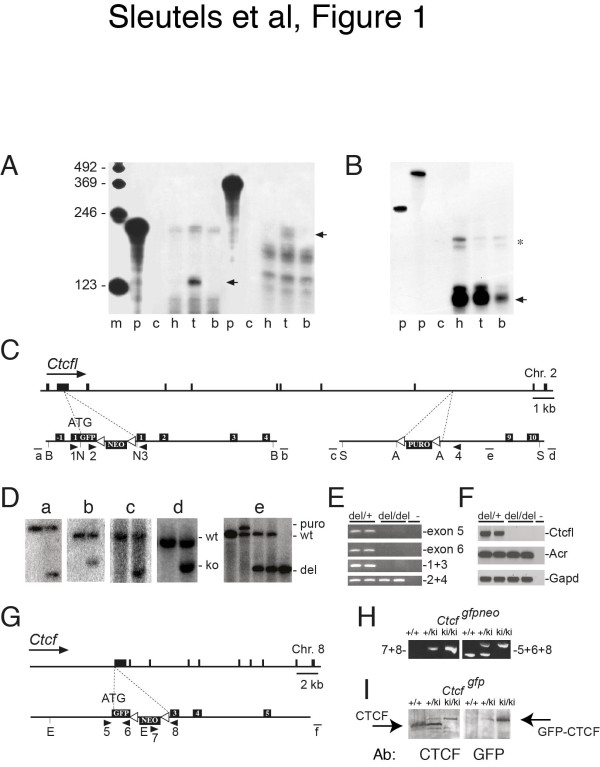
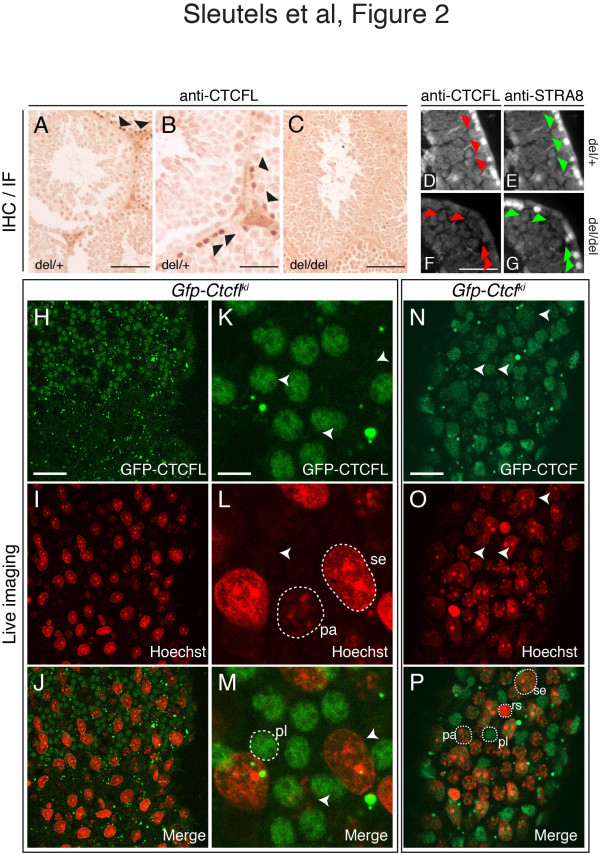
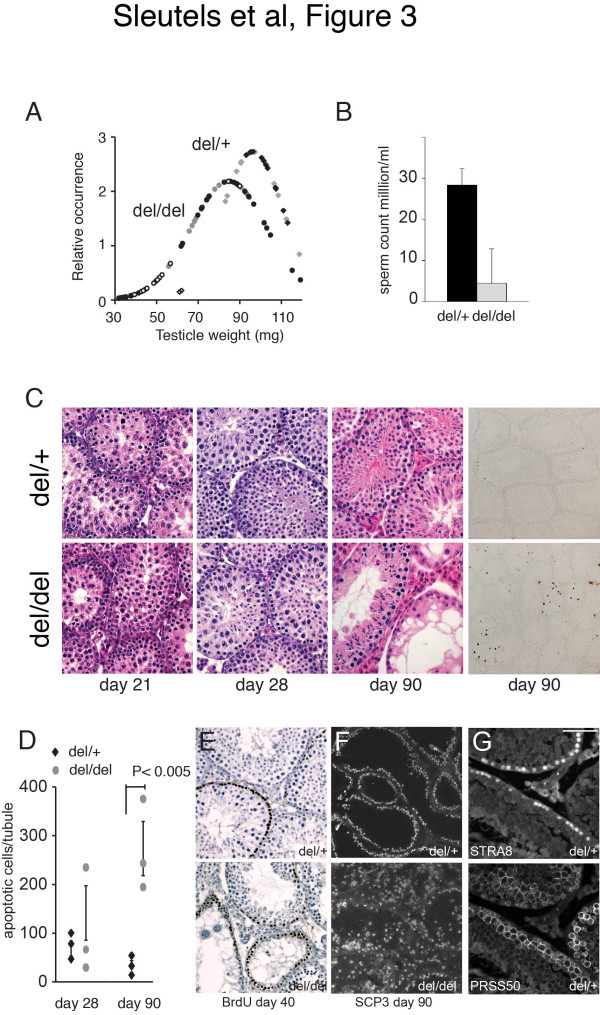
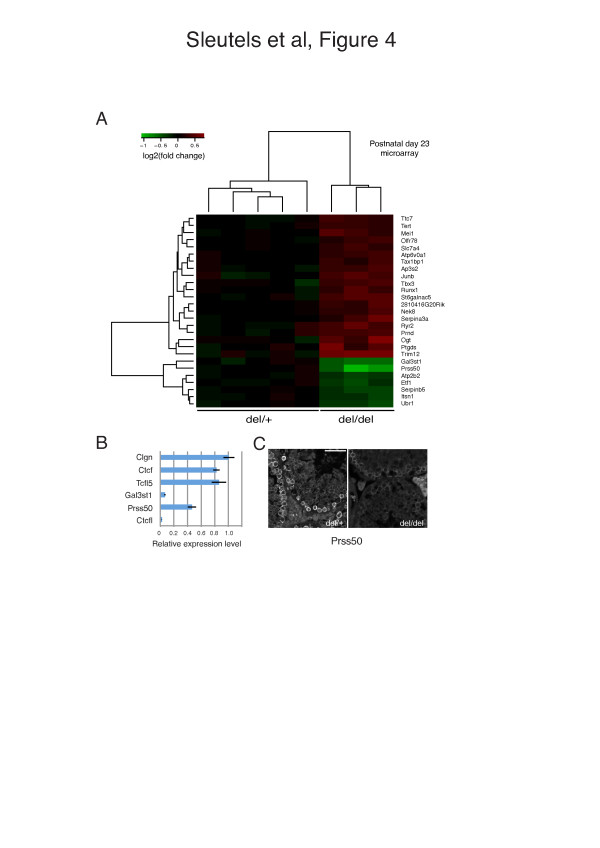
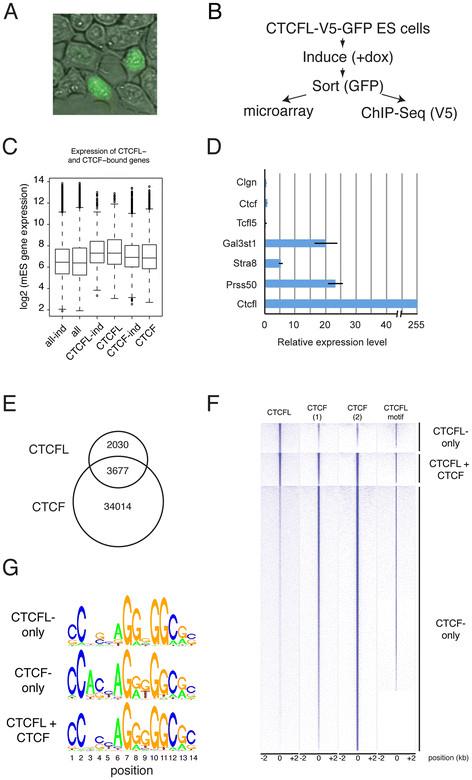
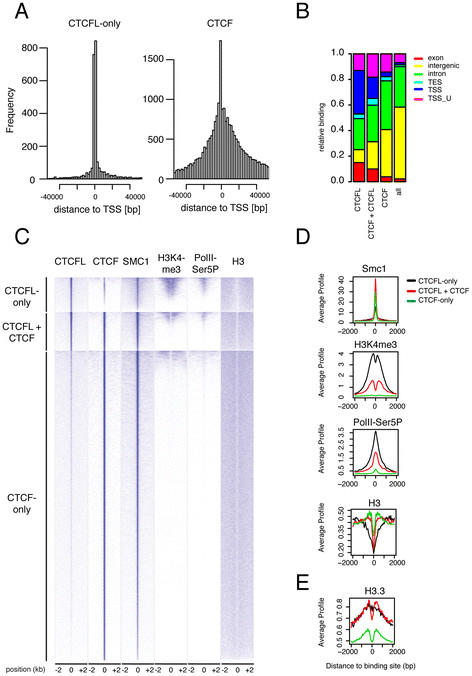
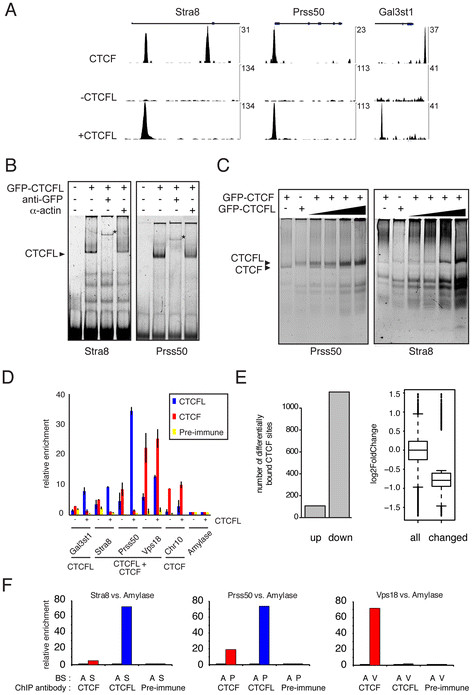
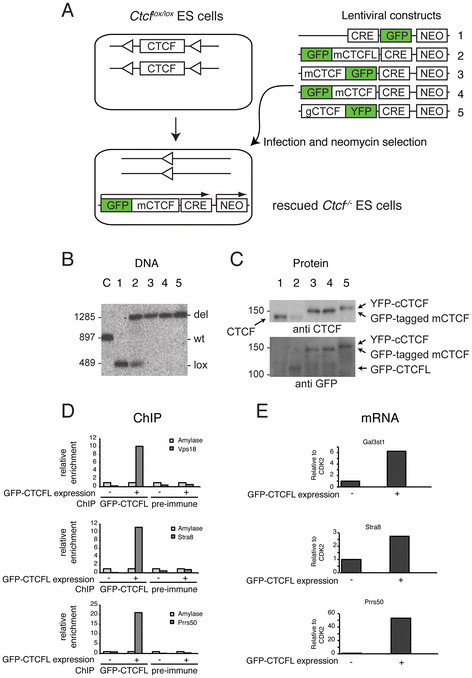
BACKGROUND: CTCF is a highly conserved and essential zinc finger protein expressed in virtually all cell types. In conjunction with cohesin, it organizes chromatin into loops, thereby regulating gene expression and epigenetic events. The function of CTCFL or BORIS, the testis-specific paralog of CTCF, is less clear. RESULTS: Using immunohistochemistry on testis sections and fluorescence-based microscopy on intact live seminiferous tubules, we show that CTCFL is only transiently present during spermatogenesis, prior to the onset of meiosis, when the protein co-localizes in nuclei with ubiquitously expressed CTCF. CTCFL distribution overlaps completely with that of Stra8, a retinoic acid-inducible protein essential for the propagation of meiosis. We find that absence of CTCFL in mice causes sub-fertility because of a partially penetrant testicular atrophy. CTCFL deficiency affects the expression of a number of testis-specific genes, including Gal3st1 and Prss50. Combined, these data indicate that CTCFL has a unique role in spermatogenesis. Genome-wide RNA expression studies in ES cells expressing a V5- and GFP-tagged form of CTCFL show that genes that are downregulated in CTCFL-deficient testis are upregulated in ES cells. These data indicate that CTCFL is a male germ cell gene regulator. Furthermore, genome-wide DNA-binding analysis shows that CTCFL binds a consensus sequence that is very similar to that of CTCF. However, only ~3,700 out of the ~5,700 CTCFL- and ~31,000 CTCF-binding sites overlap. CTCFL binds promoters with loosely assembled nucleosomes, whereas CTCF favors consensus sites surrounded by phased nucleosomes. Finally, an ES cell-based rescue assay shows that CTCFL is functionally different from CTCF. CONCLUSIONS: Our data suggest that nucleosome composition specifies the genome-wide binding of CTCFL and CTCF. We propose that the transient expression of CTCFL in spermatogonia and preleptotene spermatocytes serves to occupy a subset of promoters and maintain the expression of male germ cell genes.
Overview
The claims and statistics of this paper haven’t been checked yet.
Free: it reads the open-access text and checks the first 5 claims that cite a source we can check. Create a free account to check every claim.
Integrity signals
Registry
Cites
Statistics
Figures
Verification
Claims the paper makes
The claims and statistics of this paper haven’t been checked yet.
Free: it reads the open-access text and checks the first 5 claims that cite a source we can check. Create a free account to check every claim.
Claims other papers make about this one
Each is checked against this paper’s own text: does it say what the citing paper says it does?
In the citing paper
“In contrast, auxin-mediated degradation of CTCF prevented subcloning of CTCF-AID cells, recapitulating the full CTCF knockout phenotype in mESCs (Sleutels et al., 2012) (Figure 1D).”
From Targeted Degradation of CTCF Decouples Local Insulation of Chromosome Domains from Genomic Compartmentalization (2017) · cites this paper as Sleutels et al., 2012
Self-check
Percentages, sums and reported differences re-computed from the paper’s own numbers.
The self-check needs the paper’s full text.
Citations
Cites
Ultrafast and memory-efficient alignment of short DNA sequences to the human genome.
Langmead, B., Trapnell, C., Pop, M., & Salzberg, S. L. (2009) · Genome Biology · doi:10.1186/gb-2009-10-3-r25 · Cited by 21,849
Model-based Analysis of ChIP-Seq (MACS)
Zhang, Y., Liu, T., Meyer, C. A., Eeckhoute, J., Johnson, D. S., Bernstein, B. E., Nusbaum, C., Myers, R. M., Brown, M., Li, W., et al. (2008) · Genome Biology · doi:10.1186/gb-2008-9-9-r137 · Cited by 18,386
Smyth, G. K. (2004) · Statistical Applications in Genetics and Molecular Biology · doi:10.2202/1544-6115.1027 · Cited by 11,829
High-Resolution Profiling of Histone Methylations in the Human Genome
Barski, A., Cuddapah, S., Cui, K., Roh, T.-Y., Schones, D. E., Wang, Z., Wei, G., Chepelev, I., & Zhao, K. (2007) · Cell · doi:10.1016/j.cell.2007.05.009 · Cited by 6,845 · cited 3×
“The whole genome DNA-binding profile for CTCF has been elucidated in several cell systems (see, for example, [6-9]).”
BackgroundHistone H3K27ac separates active from poised enhancers and predicts developmental state
Creyghton, M. P., Cheng, A. W., Welstead, G. G., Kooistra, T., Carey, B. W., Steine, E. J., Hanna, J., Lodato, M. A., Frampton, G. M., Sharp, P. A., et al. (2010) · Proceedings of the National Academy of Sciences · doi:10.1073/pnas.1016071107 · Cited by 4,302
Chen, X., Xu, H., Yuan, P., Fang, F., Huss, M., Vega, V. B., Wong, E., Orlov, Y. L., Zhang, W., Jiang, J., et al. (2008) · Cell · doi:10.1016/j.cell.2008.04.043 · Cited by 2,501
Mediator and cohesin connect gene expression and chromatin architecture
Kagey, M. H., Newman, J. J., Bilodeau, S., Zhan, Y., Orlando, D. A., van Berkum, N. L., Ebmeier, C. C., Goossens, J., Rahl, P. B., Levine, S. S., et al. (2010) · Nature · doi:10.1038/nature09380 · Cited by 1,939
CTCF: Master Weaver of the Genome
Phillips, J. E., & Corces, V. G. (2009) · Cell · doi:10.1016/j.cell.2009.06.001 · Cited by 1,552
Distinct Factors Control Histone Variant H3.3 Localization at Specific Genomic Regions
Goldberg, A. D., Banaszynski, L. A., Noh, K.-M., Lewis, P. W., Elsaesser, S. J., Stadler, S., Dewell, S., Law, M., Guo, X., Li, X., et al. (2010) · Cell · doi:10.1016/j.cell.2010.01.003 · Cited by 1,280
c-Myc Regulates Transcriptional Pause Release
Rahl, P. B., Lin, C. Y., Seila, A. C., Flynn, R. A., McCuine, S., Burge, C. B., Sharp, P. A., & Young, R. A. (2010) · Cell · doi:10.1016/j.cell.2010.03.030 · Cited by 1,279
Cited by
Nora, E. P., Goloborodko, A., Valton, A.-L., Gibcus, J. H., Uebersohn, A., Abdennur, N., Dekker, J., Mirny, L. A., & Bruneau, B. G. (2017) · Cell · doi:10.1016/j.cell.2017.05.004 · Cited by 1,709
“Genetic manipulation of CTCF has proven difficult as it is essential for development (Moore et al., 2012; Sleutels et al., 2012; Soshnikova et al., 2010; Wan et al., 2008) and proliferation of cultured cells (GonzálezBuendía et al., 2014), hampering the understanding of the exact role of CTCF in…”
A Comprehensive Roadmap of Murine Spermatogenesis Defined by Single-Cell RNA-Seq
Green, C. D., Ma, Q., Manske, G. L., Shami, A. N., Zheng, X., Marini, S., Moritz, L., Sultan, C., Gurczynski, S. J., Moore, B. B., et al. (2018) · Developmental Cell · doi:10.1016/j.devcel.2018.07.025 · Cited by 521
CTCF and Cohesin in Genome Folding and Transcriptional Gene Regulation
Merkenschlager, M., & Nora, E. P. (2016) · Annual Review of Genomics and Human Genetics · doi:10.1146/annurev-genom-083115-022339 · Cited by 518
Characterizing mutagenic effects of recombination through a sequence-level genetic map
Halldorsson, B. V., Palsson, G., Stefansson, O. A., Jonsson, H., Hardarson, M. T., Eggertsson, H. P., Gunnarsson, B., Oddsson, A., Halldorsson, G. H., Zink, F., et al. (2019) · Science · doi:10.1126/science.aau1043 · Cited by 361
Staged developmental mapping and X chromosome transcriptional dynamics during mouse spermatogenesis
Ernst, C., Eling, N., Martinez-Jimenez, C. P., Marioni, J. C., & Odom, D. T. (2019) · Nature Communications · doi:10.1038/s41467-019-09182-1 · Cited by 289
High-Resolution Mapping of Chromatin Packaging in Mouse Embryonic Stem Cells and Sperm
Carone, B. R., Hung, J.-H., Hainer, S. J., Chou, M.-T., Carone, D. M., Weng, Z., Fazzio, T. G., & Rando, O. J. (2014) · Developmental Cell · doi:10.1016/j.devcel.2014.05.024 · Cited by 255
Molecular basis of CTCF binding polarity in genome folding
Nora, E. P., Caccianini, L., Fudenberg, G., So, K., Kameswaran, V., Nagle, A., Uebersohn, A., Hajj, B., Saux, A. L., Coulon, A., et al. (2020) · Nature Communications · doi:10.1038/s41467-020-19283-x · Cited by 213
Sharifi‐Zarchi, A., Gerovska, D., Adachi, K., Totonchi, M., Pezeshk, H., Taft, R. J., Schöler, H. R., Chitsaz, H., Sadeghi, M., Baharvand, H., et al. (2017) · BMC Genomics · doi:10.1186/s12864-017-4353-7 · Cited by 163
Common and low-frequency variants associated with genome-wide recombination rate
Kong, A., Þorleifsson, G., Frigge, M. L., Másson, G., Gudbjartsson, D. F., Villemoes, R., Magnúsdóttir, E., Olafsdottir, S. B., Þorsteinsdóttir, U., & Stefánsson, K. (2013) · Nature Genetics · doi:10.1038/ng.2833 · Cited by 149
High-Throughput Single-Cell Sequencing with Linear Amplification
Yin, Y., Jiang, Y., Lam, K.-W. G., Berletch, J. B., Disteche, C. M., Noble, W. S., Steemers, F. J., Camerini-Otero, R. D., Adey, A. C., & Shendure, J. (2019) · Molecular Cell · doi:10.1016/j.molcel.2019.08.002 · Cited by 124
Pugacheva, E. M., Rivero-Hinojosa, S., Espinoza, C. A., Méndez-Catalá, C. F., Kang, S., Suzuki, T., Kosaka-Suzuki, N., Robinson, S., Nagarajan, V., Ye, Z., et al. (2015) · Genome biology · doi:10.1186/s13059-015-0736-8 · Cited by 110
Altemose, N., Noor, N., Bitoun, E., Tumian, A., Imbeault, M., Chapman, J. R., Aricescu, A. R., & Myers, S. (2017) · eLife · doi:10.7554/elife.28383 · Cited by 109
Debaugny, R. E., & Skok, J. A. (2020) · Current Opinion in Genetics & Development · doi:10.1016/j.gde.2020.02.021 · Cited by 92
Defining the relative and combined contribution of CTCF and CTCFL to genomic regulation
Nishana, M., Ha, C. J., Rodriguez-Hernaez, J., Ranjbaran, A., Chio, E., Nora, E. P., Badri, S., Kloetgen, A., Bruneau, B. G., Tsirigos, A., et al. (2020) · Genome biology · doi:10.1186/s13059-020-02024-0 · Cited by 82
Singh, S., Narayanan, S. P., Biswas, K., Gupta, A., Ahuja, N., Yadav, S., Panday, R. K., Samaiya, A., Sharan, S. K., & Shukla, S. (2017) · Proceedings of the National Academy of Sciences · doi:10.1073/pnas.1708447114 · Cited by 76
Loda, A., Brandsma, J. H., Vassilev, I., Servant, N., Loos, F., Amirnasr, A., Splinter, E., Barillot, E., Poot, R. A., Heard, É., et al. (2017) · Nature Communications · doi:10.1038/s41467-017-00528-1 · Cited by 75
Decoding the Spermatogenesis Program: New Insights from Transcriptomic Analyses
Rabbani, M., Zheng, X., Manske, G. L., Vargo, A., Shami, A. N., Li, J. Z., & Hammoud, S. S. (2022) · Annual Review of Genetics · doi:10.1146/annurev-genet-080320-040045 · Cited by 74
Snake Recombination Landscapes Are Concentrated in Functional Regions despite PRDM9
Schield, D. R., Pasquesi, G. I. M., Perry, B. W., Adams, R. H. J., Nikolakis, Z. L., Westfall, A. K., Orton, R. W., Meik, J. M., Mackessy, S. P., & Castoe, T. A. (2020) · Molecular Biology and Evolution · doi:10.1093/molbev/msaa003 · Cited by 70
Transcriptional programs that control expression of the autoimmune regulator gene Aire
Herzig, Y., Nevo, S., Bornstein, C., Brezis, M. R., Ben‐Hur, S., Shkedy, A., Eisenberg‐Bord, M., Levi, B. Z., Delacher, M., Goldfarb, Y., et al. (2016) · Nature Immunology · doi:10.1038/ni.3638 · Cited by 64
CTCF induces histone variant incorporation, erases the H3K27me3 histone mark and opens chromatin
Weth, O., Paprotka, C., Günther, K., Schulte, A., Baierl, M., Leers, J., Galjart, N., & Renkawitz, R. (2014) · Nucleic Acids Research · doi:10.1093/nar/gku937 · Cited by 63
Self-citationLiu, Q., Chen, K., Liu, Z., Huang, Y. C., Zhao, R., Wei, L., Yu, X., He, J., Liu, J., Qi, J., et al. (2017) · Cancer Letters · doi:10.1016/j.canlet.2017.06.017 · Cited by 62
Gambetta, M. C., & Furlong, E. E. M. (2018) · Genetics · doi:10.1534/genetics.118.301350 · Cited by 62
Soochit, W., Sleutels, F., Stik, G., Bartkuhn, M., Basu, S., Hernández, S. C., Merzouk, S., Vidal, E., Boers, R., Boers, J., et al. (2021) · Nature Cell Biology · doi:10.1038/s41556-021-00722-w · Cited by 61
Self-citationCTCF and BORIS in genome regulation and cancer
Marshall, A. D., Bailey, C. G., & Rasko, J. E. J. (2013) · Current Opinion in Genetics & Development · doi:10.1016/j.gde.2013.10.011 · Cited by 60
The Role of CCCTC-Binding Factor (CTCF) in Genomic Imprinting, Development, and Reproduction1
Franco, M. M., Prickett, A. R., & Oakey, R. J. (2014) · Biology of Reproduction · doi:10.1095/biolreprod.114.122945 · Cited by 60
Székvölgyi, L., Ohta, K., & Nicolas, A. G. (2015) · Cold Spring Harbor Perspectives in Biology · doi:10.1101/cshperspect.a016527 · Cited by 60
BORIS: a key regulator of cancer stemness
Soltanian, S., & Dehghani, H. (2018) · Cancer Cell International · doi:10.1186/s12935-018-0650-8 · Cited by 56
The Role of Insulation in Patterning Gene Expression
Özdemir, I., & Gambetta, M. C. (2019) · Genes · doi:10.3390/genes10100767 · Cited by 55
The cancer‐testis antigen BORIS phenocopies the tumor suppressor CTCF in normal and neoplastic cells
Tiffen, J. C., Bailey, C. G., Marshall, A. D., Metierre, C., Yue, F., Wang, Q., Watson, S. L., Holst, J., & Rasko, J. E. J. (2013) · International Journal of Cancer · doi:10.1002/ijc.28184 · Cited by 52
Verver, D. E., van Pelt, A. M. M., Repping, S., & Hamer, G. (2013) · Cell Death and Disease · doi:10.1038/cddis.2013.269 · Cited by 50
Preservation of Chromatin Organization after Acute Loss of CTCF in Mouse Embryonic Stem Cells
Kubo, N., Ishii, H., Gorkin, D., Meitinger, F., Xiong, X., Fang, R., Liu, T., Ye, Z., Li, B., Dixon, J. R., et al. (2017) · bioRxiv (Cold Spring Harbor Laboratory) · doi:10.1101/118737 · Cited by 48
Rivero-Hinojosa, S., Kang, S., Lobanenkov, V. V., & Zentner, G. E. (2017) · Scientific Reports · doi:10.1038/srep46891 · Cited by 46
Expression of the cancer‐testis antigen BORIS correlates with prostate cancer
Cheema, Z. A., Hari‐Gupta, Y., Kita, G.-X., Farrar, D., Seddon, I., Corr, J., & Klenova, E. M. (2013) · The Prostate · doi:10.1002/pros.22738 · Cited by 46
Ghieh, F., Barbotin, A., Swierkowski-Blanchard, N., Leroy, C., Fortemps, J., Gerault, C., Hue, C., Mambueni, H. M., Jaillard, S., Albert, M., et al. (2022) · Human Reproduction · doi:10.1093/humrep/deac057 · Cited by 45
CTCF contributes in a critical way to spermatogenesis and male fertility
Hernández‐Hernández, A., Lilienthal, I., Fukuda, N., Galjart, N., & Höög, C. (2016) · Scientific Reports · doi:10.1038/srep28355 · Cited by 45
Self-citationTargeting CTCFL/BORIS for the immunotherapy of cancer
Loukinov, D. I. (2018) · Cancer Immunology Immunotherapy · doi:10.1007/s00262-018-2251-8 · Cited by 44
Induced DNA demethylation can reshape chromatin topology at the IGF2-H19 locus
Ito, Y., Nativio, R., & Murrell, A. (2013) · Nucleic Acids Research · doi:10.1093/nar/gkt240 · Cited by 44
Høivik, E. A., Kusonmano, K., Halle, M. K., Berg, A., Wik, E., Werner, H. M. J., Petersen, K., Oyan, A. M., Kalland, K., Krakstad, C., et al. (2014) · Oncotarget · doi:10.18632/oncotarget.1697 · Cited by 44
BORIS/CTCFL promotes a switch from a proliferative towards an invasive phenotype in melanoma cells
Janssen, S. M., Moscona, R., Elchebly, M., Papadakis, A. I., Redpath, M., Wang, H., Rubin, E., van Kempen, L. C. L. T., & Spatz, A. (2020) · Cell Death Discovery · doi:10.1038/s41420-019-0235-x · Cited by 42
Hillman, J. C., Pugacheva, E. M., Barger, C. J., Sribenja, S., Rosario, S. R., Albahrani, M., Truskinovsky, A. M., Stablewski, A. B., Liu, S., Loukinov, D. I., et al. (2019) · Molecular Cancer Research · doi:10.1158/1541-7786.mcr-19-0310 · Cited by 40
The combined action of CTCF and its testis-specific paralog BORIS is essential for spermatogenesis
Rivero-Hinojosa, S., Pugacheva, E. M., Kang, S., Méndez-Catalá, C. F., Kovalchuk, A. L., Strunnikov, A. V., Loukinov, D. I., Lee, J. T., & Lobanenkov, V. V. (2021) · Nature Communications · doi:10.1038/s41467-021-24140-6 · Cited by 38
Nuclease Footprints in Sperm Project Past and Future Chromatin Regulatory Events
Johnson, G. D., Jodar, M., Piqué-Regi, R., & Krawetz, S. A. (2016) · Scientific Reports · doi:10.1038/srep25864 · Cited by 38
Pugacheva, E. M., Teplyakov, E., Wu, Q., Li, J., Chen, C., Meng, C., Liu, J., Robinson, S., Loukinov, D., Boukaba, A., et al. (2016) · Epigenetics & Chromatin · doi:10.1186/s13072-016-0084-2 · Cited by 36
The epigenetic factor BORIS/CTCFL regulates the NOTCH3 gene expression in cancer cells
Zampieri, M., Ciccarone, F., Palermo, R., Cialfi, S., Passananti, C., Chiaretti, S., Nocchia, D., Talora, C., Screpanti, I., & Caiafa, P. (2014) · Biochimica et Biophysica Acta (BBA) - Gene Regulatory Mechanisms · doi:10.1016/j.bbagrm.2014.06.017 · Cited by 36
Umer, N., Arévalo, L., Kosterin, I., Phadke, S., Lohanadan, K., Kirfel, G., Sons, D., Witke, W., & Schorle, H. (2021) · Frontiers in Cell and Developmental Biology · doi:10.3389/fcell.2021.749559 · Cited by 34
CTCF and Its Multi-Partner Network for Chromatin Regulation
Moral‐Morales, A. D., Salgado-Albarrán, M., Sánchez-Pérez, Y., Wenke, N. K., Baumbach, J., & Soto‐Reyes, E. (2023) · Cells · doi:10.3390/cells12101357 · Cited by 32
Large-scale chromatin organisation in interphase, mitosis and meiosis
MacGregor, I. A., Adams, I. R., & Gilbert, N. (2019) · Biochemical Journal · doi:10.1042/bcj20180512 · Cited by 29
A tour of 3D genome with a focus on CTCF
Wang, D. C., Wang, W. Y., Zhang, L., & Wang, X. (2018) · Seminars in Cell and Developmental Biology · doi:10.1016/j.semcdb.2018.07.020 · Cited by 29
Choice of binding sites for CTCFL compared to CTCF is driven by chromatin and by sequence preference
Bergmaier, P., Weth, O., Dienstbach, S., Boettger, T., Galjart, N., Mernberger, M., Bartkuhn, M., & Renkawitz, R. (2018) · Nucleic Acids Research · doi:10.1093/nar/gky483 · Cited by 28
Self-citationEctopic expression of meiotic cohesin generates chromosome instability in cancer cell line
Boukaba, A., Liu, J., Ward, C., Wu, Q., Arnaoutov, A., Liang, J., Pugacheva, E. M., Dasso, M., Lobanenkov, V. V., Esteban, M. A., et al. (2022) · Proceedings of the National Academy of Sciences · doi:10.1073/pnas.2204071119 · Cited by 28
Narita, T., Kilic, S., Higashijima, Y., Scherer, N. M., Pappas, G., Maskey, E., & Choudhary, C. (2025) · Nature Genetics · doi:10.1038/s41588-025-02404-x · Cited by 27
Farini, D., & Felici, M. D. (2022) · International Journal of Molecular Sciences · doi:10.3390/ijms232012571 · Cited by 27
Discovering a binary CTCF code with a little help from BORIS
Lobanenkov, V. V., & Zentner, G. E. (2017) · Nucleus · doi:10.1080/19491034.2017.1394536 · Cited by 24
Rivero-Hinojosa, S., Kang, S., Lobanenkov, V. V., & Zentner, G. E. (2017) · Scientific Reports · doi:10.1038/srep41279 · Cited by 24
Aberrant DNA Methylation of Tumor Suppressor Genes and Oncogenes as Cancer Biomarkers
Alshammari, E. S., Zhang, Y., Sobota, J., & Yang, Z. (2022) · Wiley eBooks · doi:10.1002/9781119807704.ch12 · Cited by 23
SOHLH1 and SOHLH2 directly down-regulate STIMULATED BY RETINOIC ACID 8 (STRA8) expression
Desimio, M. G., Campolo, F., Dolci, S., Felici, M. D., & Farini, D. (2015) · Cell Cycle · doi:10.1080/15384101.2015.1007721 · Cited by 20
Cohesin complexes with a potential to link mammalian meiosis to cancer
Strunnikov, A. V. (2013) · Cell Regeneration · doi:10.1186/2045-9769-2-4 · Cited by 20
Pugacheva, E. M., Bhatt, D. N., Rivero-Hinojosa, S., Tajmul, M., Fedida, L. M., Price, E., Ji, Y. J., Loukinov, D. I., Strunnikov, A. V., Ren, B., et al. (2024) · Genome biology · doi:10.1186/s13059-024-03175-0 · Cited by 18
The Bromodomain Containing 8 (BRD8) transcriptional network in human lung epithelial cells
Browne, J. A., NandyMazumdar, M., Paranjapye, A., Leir, S., & Harris, A. (2021) · Molecular and Cellular Endocrinology · doi:10.1016/j.mce.2021.111169 · Cited by 18
Zhang, Y., Wu, S., Wang, G.-W., Wan, R.-D., & Yang, Q. (2024) · Journal of Dairy Science · doi:10.3168/jds.2023-24442 · Cited by 18
(2016) · doi:10.1101/095802 · Cited by 17
Barsoum, M., Stenzel, A. T., Bochyńska, A., Kuo, C., Tsompanidis, A., Sayadi-Boroujeni, R., Bussmann, P., Lüscher‐Firzlaff, J., Costa, I. G., & Lüscher, B. (2022) · Scientific Reports · doi:10.1038/s41598-022-25881-0 · Cited by 17
Hadžiselimović, F., Cathomas, G., Verkauskas, G., Dasevičius, D., & Stadler, M. B. (2018) · Genes · doi:10.3390/genes9080391 · Cited by 14
Satı, L., Zeiss, C. J., Yekkala, K., Demir, R., & McGrath, J. M. (2015) · Molecular and Cellular Biology · doi:10.1128/mcb.00381-15 · Cited by 13
BTApep-TAT peptide inhibits ADP-ribosylation of BORIS to induce DNA damage in cancer
Zhang, Y., Fang, M., Li, S., Xu, H., Ren, J., Tu, L., Zuo, B., Yao, W., & Liang, G. (2022) · Molecular Cancer · doi:10.1186/s12943-022-01621-w · Cited by 12
von Stromberg, K., Seddar, L., Ip, W.-H., Günther, T., Gornott, B., Weinert, S.-C., Hüppner, M., Bertzbach, L. D., & Dobner, T. (2023) · Proceedings of the National Academy of Sciences · doi:10.1073/pnas.2310770120 · Cited by 11
The Diverging Routes of BORIS and CTCF: An Interactomic and Phylogenomic Analysis
Jabbari, K., Heger, P., Sharma, R., & Wiehe, T. (2018) · Life · doi:10.3390/life8010004 · Cited by 11
Zhang, Y., Song, Y., Li, C. R., Ren, J., Fang, M., Fang, J., & Wang, X. (2020) · Oncology Letters · doi:10.3892/ol.2020.12114 · Cited by 11
Schultz, B., Yao, X., Deng, Y., Waner, M., Spock, C. R., Tom, L. K., Persing, J. A., & Narayan, D. (2015) · PLoS ONE · doi:10.1371/journal.pone.0113168 · Cited by 10
Niu, C., 东北师范大学药物基因与蛋白筛选国家工程实验室, 吉. 长. 1., Li, J.-W., Li, X.-L., Zhang, L., Yan, L., Song, Z., Yu, C., Yang, X., Zhao, H.-F., et al. (2024) · 动物学研究 · doi:10.24272/j.issn.2095-8137.2023.388 · Cited by 8
Teplyakov, E., Wu, Q., Liu, J., Pugacheva, E. M., Loukinov, D., Boukaba, A., Lobanenkov, V. V., & Strunnikov, A. V. (2017) · Oncotarget · doi:10.18632/oncotarget.20627 · Cited by 7
Tong, X., Gao, Y., & Su, Z. (2024) · PeerJ · doi:10.7717/peerj.18240 · Cited by 7
Soltanian, S., Dehghani, H., Matin, M. M., & Bahrami, A. R. (2014) · Acta Biochimica et Biophysica Sinica · doi:10.1093/abbs/gmu045 · Cited by 6
Akhtar, S., Akhter, N., Talat, A., Alharbi, R., Sindi, A. A. A., Klufah, F., Alyahyawi, H. E., Alruwetei, A. M., Ahmad, A., Zamzami, M. A., et al. (2023) · Oncotarget · doi:10.18632/oncotarget.28442 · Cited by 5
CTCFL expression is associated with cerebral vascular abnormalities
Satı, L., Soygur, B., Goksu, E. T., Başsorgun, C. İ., & McGrath, J. M. (2021) · Tissue and Cell · doi:10.1016/j.tice.2021.101528 · Cited by 4
Activation of the Androgen Receptor gene by BORIS/CTCFL in prostate cancer cellsPreprint
Hari‐Gupta, Y., Kita, G.-X., Farrar, D., & Klenova, E. M. (2017) · bioRxiv (Cold Spring Harbor Laboratory) · doi:10.1101/195875 · Cited by 2
Price, E., Pugacheva, E. M., Bhatt, D. N., Ji, Y. J., Yeboah, S., Scott, A., Loukinov, D. I., & Lobanenkov, V. V. (2025) · bioRxiv (Cold Spring Harbor Laboratory) · doi:10.64898/2025.12.24.696438 · Cited by 2
A novel sorting method for the enrichment of early human spermatocytes from clinical biopsies
Robinson, M., Zhou, K., Kung, S. H. Y., Karaoğlanoğlu, F., Golin, A. P., Safa, A., Cai, C., Witherspoon, L., Hach, F., & Flannigan, R. K. (2024) · F&S Science · doi:10.1016/j.xfss.2024.02.002 · Cited by 2
CTCF-anchored chromatin loop dynamics during human meiosis
Kaiser, V. B., & Semple, C. A. M. (2025) · BMC Biology · doi:10.1186/s12915-025-02181-3 · Cited by 1
Decay of the CTCF paralog BORIS in neognathous birdsPreprint
Palitzsch, K., Wiehe, T., & Heger, P. (2025) · bioRxiv (Cold Spring Harbor Laboratory) · doi:10.1101/2025.02.12.637905 · Cited by 1
Effects of aging on sperm chromatin
Fice, H. E., & Robaire, B. (2023) · Elsevier eBooks · doi:10.1016/b978-0-323-91380-5.00029-0 · Cited by 1
The function of brother of the regulator of imprinted sites in cancer development
Zhou, S., Li, L., Zhang, M., Qin, Y., & Li, B. (2022) · Cancer Gene Therapy · doi:10.1038/s41417-022-00556-0 · Cited by 1
ENVIRONMENTAL EFFECTS ON SPERMATOGENESIS
Horan, T. (2018) · Research Exchange (Washington State University) · Cited by 1
The evolution and regulation of the chordate ParaHox cluster
Garstang, M. G. (2016) · St Andrews Research Repository (St Andrews Research Repository) · Cited by 1
Kenter, A. L. (2019) · Faculty Opinions – Post-Publication Peer Review of the Biomedical Literature · doi:10.3410/f.727626056.793558059
Nishana, M., Ha, C. J., Rodriguez-Hernaez, J., Ranjbaran, A., Chio, E., Nora, E. P., Badri, S., Kloetgen, A., Bruneau, B. G., Tsirigos, A., et al. (2020) · Figshare · doi:10.6084/m9.figshare.12284870
Nishana, M., Ha, C. J., Rodriguez-Hernaez, J., Ranjbaran, A., Chio, E., Nora, E. P., Badri, S., Kloetgen, A., Bruneau, B. G., Tsirigos, A., et al. (2020) · Figshare · doi:10.6084/m9.figshare.12284840
Nishana, M., Ha, C. J., Rodriguez-Hernaez, J., Ranjbaran, A., Chio, E., Nora, E. P., Badri, S., Kloetgen, A., Bruneau, B. G., Tsirigos, A., et al. (2020) · Figshare · doi:10.6084/m9.figshare.12284861
Expression and role of BORIS/CTCFL in human cancer stem cells
Alberti, L. (2014) · IRIS
A single-molecule view of CTCF-mediated DNA looping
Bloznelyte, K. (2017) · Spiral (Imperial College London) · doi:10.25560/67679
Zhang, Y., Fang, M., Li, S., Xu, H., Ren, J., Tu, L., Zuo, B., Yao, W., & Liang, G. (2022) · Figshare · doi:10.6084/m9.figshare.20423713
Zhang, Y., Fang, M., Li, S., Xu, H., Ren, J., Tu, L., Zuo, B., Yao, W., & Liang, G. (2022) · Figshare · doi:10.6084/m9.figshare.20423710
Hillman, J. C., Pugacheva, E. M., Barger, C. J., Sribenja, S., Rosario, S. R., Albahrani, M., Truskinovsky, A. M., Stablewski, A. B., Liu, S., Loukinov, D. I., et al. (2023) · doi:10.1158/1541-7786.22512804.v1
The interplay between chromosome structure and meiotic integrity
Lilienthal, I. (2014) · Figshare
Evolution of 3D Chromatin Architecture: the Role of CTCF Across Taxa
Astica, L. (2023) · edoc Publication server (Humboldt University of Berlin) · doi:10.18452/27560
Characterising large-scale chromatin looping in mouse meiotic prophase I
MacGregor, I. A. (2020) · ERA · doi:10.7488/era/218
SMC5/6: Shaping, protecting and preparing the genome for safe reproduction
Verver, D. E. (2015) · UvA-DARE (University of Amsterdam)
Epigenetische Untersuchung von Tumorsuppressorgenen und deren Regulation durch CTCF
Haag, T., & Justus Liebig University Giessen (2014) · University writing server of the Justus Liebig University Giessen (Justus-Liebig-Universität Gießen) · doi:10.22029/jlupub-10327
Fingers in action! Chromatin Organization and Transcriptional Regulation by CTCF and CTCFL
Soochit, W. (2013) · RePub (Erasmus University Rotterdam)
Self-citation
Metadata
- Authors
- Sleutels, F., Soochit, W., Bartkuhn, M., Heath, H., Dienstbach, S., Bergmaier, P., Franke, V., Rosa-Garrido, M., van de Nobelen, S., Caesar, L., van der Reijden, M., Bryne, J. C., van IJcken, W., Grootegoed, J. A., Delgado, M. D., Lenhard, B., Renkawitz, R., Grosveld, F., & Galjart, N.
- Affiliations
- Erasmus MC (NL)
- Justus-Liebig-Universität Gießen (DE)
- University of Bergen (NO)
- Universidad de Cantabria (ES)
- Corresponding author
- Sleutels, Frank
- Galjart, Niels
- ORCID
- Venue
- Epigenetics & Chromatin
- Published
- 2012-06-18
- Volume
- 5
- Issue
- 1
- Pages
- 8-8
- ISSN
- 1756-8935 (ISSN-L)
- PMC
- PMC3418201
- OpenAlex
- W2145380712
- Cited by
- 96
- References
- 65
- Citations by year
- 2026: 1 · 2025: 4 · 2024: 6 · 2023: 5 · 2022: 11 · 2021: 5 · 2020: 9 · 2019: 10 · 2018: 8 · 2017: 11 · 2016: 6 · 2015: 5 · 2014: 8 · 2013: 7
- FWCI
- 7.47
- Type
- journal article
- Language
- en
- Open access
- gold
- doi.org
- Licence
- cc-by
- creativecommons.org/licenses/by/2.0 (tdm)
- Locations
- Epigenetics & Chromatin (publishedVersion, cc-by)
- PubMed Central (publishedVersion, cc-by)
- PubMed (publishedVersion)
- LA Referencia (Red Federada de Repositorios Institucionales de Publicaciones Científicas) (publishedVersion, cc-by)
- EUR Research Repository (Erasmus University Rotterdam) (acceptedVersion, other-oa)
- Apollo (University of Cambridge) (submittedVersion, cc-by)
- EUR Research Repository (Erasmus University Rotterdam) (submittedVersion, other-oa)
- RePub (Erasmus University Rotterdam) (submittedVersion, other-oa)
- NORA - Norwegian Open Research Archives (submittedVersion, cc-by)
- DIGITAL.CSIC (Spanish National Research Council (CSIC)) (submittedVersion, cc-by)
- DOAJ (DOAJ: Directory of Open Access Journals) (submittedVersion, cc-by-sa)
- eScholarship (California Digital Library) (submittedVersion)
- UCrea (University of Cantabria) (submittedVersion, cc-by)
- Funders
- Cancer Genomics Centre
- ZonMw
- Nederlandse Organisatie voor Wetenschappelijk Onderzoek
- KWF Kankerbestrijding
- Topics
- Health Sciences › Medicine › Reproductive Medicine › Sperm and Testicular Function
- Life Sciences › Biochemistry, Genetics and Molecular Biology › Molecular Biology › Genomics and Chromatin Dynamics
- Life Sciences › Biochemistry, Genetics and Molecular Biology › Genetics › Genetic and Clinical Aspects of Sex Determination and Chromosomal Abnormalities
- Keywords
- CTCFL, BORIS, CTCF, spermatogenesis, male germ cells, DNA binding sites, testicular atrophy, Stra8, spermatogonia, preleptotene spermatocytes, transcriptional regulation, zinc finger proteins, epigenetic regulation
About these checks
Registry, retraction, Cites and statistics results are computed, not judged, with one exception: a printed reference that no index lists is read once by a model before it counts as a citation error. Claims are extracted by a model and kept only when their quote appears verbatim in the text; each cited source is then checked, with a model’s help, for whether it says what the claim relies on. Those verdicts can be wrong — read the claim’s quote and the cited source before relying on one.
Statistics and arithmetic are recomputed, not judged.
Confidence bands are shown only for fields calibrated on our annotated test set. None is calibrated yet, so no band is shown.
What counts as a claim ›How we measure confidence ›How we check this ›
Are you an author, or do you see a problem with this page? Request a review
Data sources
Bibliographic data: Semantic Scholar, OpenAlex, Crossref.
Contains information from the Semantic Scholar Academic Graph Datasets, made available under the ODC Attribution License (ODC-BY 1.0).
Semantic Scholar’s data is described in: Kinney, R., et al. (2023). The Semantic Scholar Open Data Platform. arXiv:2301.10140.
